Theories of Punishment in Indian Penal Code,1860

Introduction

Punishment is the sanction imposed on an accused for the infringement of the established rules and norms of the society.

Objective

The object of punishment is to protect society from mischievous and undesirable elements by deterring potential offenders, by preventing the actual offenders from committing further offences and by reforming and turning them into law abiding citizens.

Types of Theories

  1. Deterrent Theory
  2. Preventive Theory
  3. Retributive Theory
  4. Reformative Theory
  5. Multi Approach Theory

a) Deterrent Theory: According to this theory, the object of punishment is not only to prevent the wrong-doer from doing a wrong second time, but also to make him an example to others who have criminal tendencies. Salmond considers deterrent aspects of criminal justice to be most important for control of crime. Deterrent punishment is likely to harden the criminal instead of creating in his mind a fear of law. Hardened criminals are not afraid of imprisonment.

b) Preventive Theory: According to Paton:’The theory concentrates on the prisoner and seeks to prevent him from offending again in the future. The death penalty and exile serve the same purpose of disabling the offender’. Critics point out that preventive punishment has the undesirable effect of hardening first offenders, or juvenile offenders, when imprisonment is the punishment, by putting them in association of hardened criminals.

c) Retributive Theory: In primitive society punishment was mainly retributive. The person wronged was allowed to have revenge against the wrong-doer. The principle of ‘an eye for an eye’, ‘a tooth for tooth’, was the basis of criminal administration. According to Justice Holmes: ‘It is commonly known that the early forms of legal procedure were grounded in vengeance’. The advocates of this theory plead that the criminal deserves to suffer.

d) Reformative Theory: According to this theory, the object of punishment is reformation of criminals. The object of the punishment should be to reform the offender. The criminal must be educated and taught some art and craft or industry during his term of imprisonment, so that he may be able to lead a good life and become a responsible and respectable citizen after release from jail.

e) Multi Approach Theory: In fact, a perfect system of criminal justice could never be based on any single theory of justice. Every theory has its own merits and every effort should be made to extract the good points of each and integrate it so that best of all could be achieved. Punishment should be proportionate to the nature and gravity of the crime. The object of any concession given to an offender should be to convince him that normal and free life is better than life in jail.

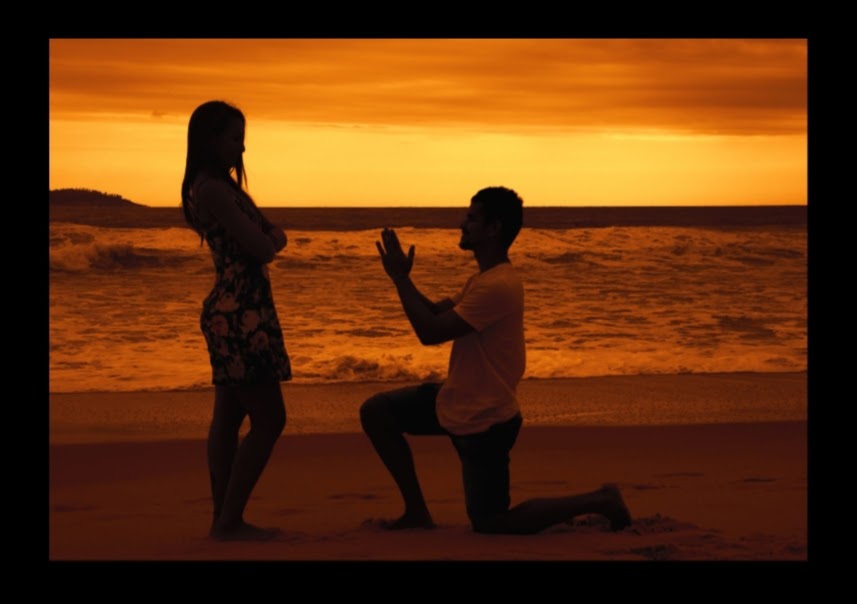
“I’m sorry”

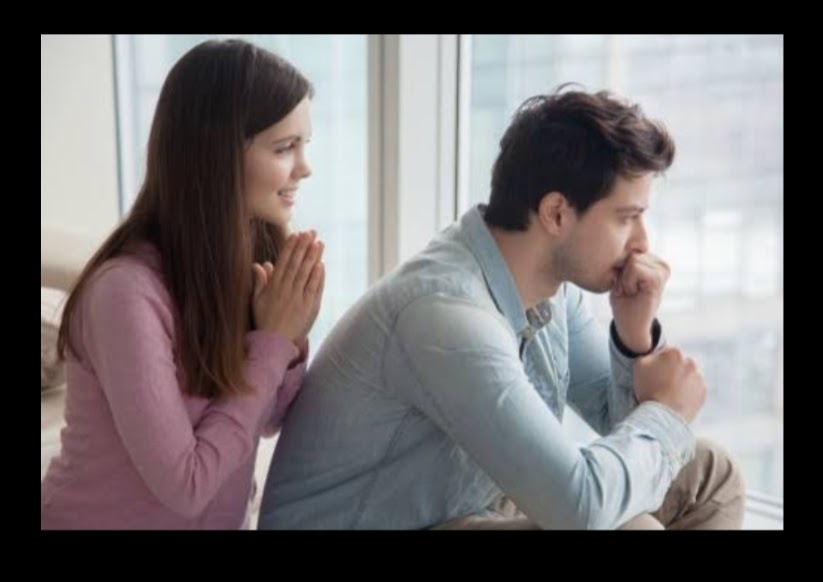
Would ‘sorry’ have made any difference? Does it ever? It is just a word but one word against a thousand actions. Anyone is not perfect, we all make mistakes, we hurt people but when we say sorry ,we really mean it.

The art of a sincere and heartfelt apology is one of the greatest skills you will ever learn. When anger and bitterness overpower your goodness, you can neither apologize nor forgive.

Apologizing does not always mean that you are wrong and the other one is right. It just means that you value your relationship more than your ego. If you apologize to your true relationship then you will never apologize for your apology because it is worth.

Apologies are great, they don’t really change anything when it is just a word instead it changes everything when it becomes action.

If an apology is followed by an excuse or reason, it means they are going to commit same mistake again they just apologized for, the only correct actions are those that demands no explanations.

I’m sorry” is not just a word, it means take me back into your arms, hold me close tightly, feel my heavy breath , hold my hands and never leave me alone.

Never try to dominate the one who says sorry to you for their mistake because they understand that you are more important than their ego. Life becomes easier when you learn to accept an apology you have never got.

Learn to apologize and also learn to accept apologies when it is sincerely made…

It is never too late to say a sorry… somebody is waiting for yours…

Are online classes worth it?

As you know COVID-19 destroyed the world economy to a great extent and still we are not fully back on our track. The major impact of this can be seen on education as well. All the schools and universities shut down causing the harm to the students. They are forced to complete their education by the means of internet only just by sitting at their homes. Internet no doubt provides us with alot of opportunities and ed-tech is one of them but it also leads to huge destruction of students carrier and their mind. When the virus hitted the economy the teachers started taking the classes online by the way of various available platforms and both the negative as well as the positive impact for the students were observed.

Agree that there are various advantages of online classes that a student can learn on their time just by sitting at their homes but it has a disadvantage in itself because most of the students just join the classes but don’t give due care to the lectures.Some students don’t feel comfortable asking their queries in class so in an online class they can pause videos or return to concepts covered in previous modules. But this opportunity is not taken by most of the students because they are one who are completely ignoring the lectures and doing something else in their home.

Teachers are also facing alot of issues in this as the network issues hits alot while taking the classes. Also video can’t be open by the students who are living in remote areas. If we also look up in the worst ground then there are students who are even not having the proper equipment to attend the classes and also not able to give exams which is the reason of stress and anxiety among them.

We can just pray together that everything comes back on the track very soon so that we can see the happy faces going to schools and universities rather attending classes just by being on their bed.

Design Thinking

How did we end up here? In a technologically advanced era? With people that are aware of our progression towards a more electronically-enabled environment? Would it be possible without asking simple questions and analyzing?

Design thinking has been helping us solve problems and develop for personal, national, even global use. Design thinking is a systematic approach of empathizing with the user, observing problems, and creating innovative solutions. Human beings have limited brainpower. Due to habituation, our brains convert everyday things into habits to make space for learning new things. It’s a human tendency to get used to everything that we see every day normally.

It would be exhausting to notice everything as if it was for the first time. But you would have to notice the littlest details for user empathy and problem-solving. All great innovators in literature, art, music, science, engineering, and business have practiced it. Observing and noticing takes practice and constant thought. You could start by consciously putting effort into staying a beginner.

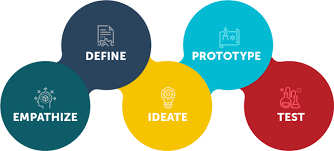
Design thinking has been conveniently divided into five steps: empathize, define, ideate, prototype, test.

The process begins with empathizing with the user: finding more about the concerns to gain a deeper understanding. Then, we proceed to define the problem statement and brainstorm ideas that could potentially solve.

Always try and reiterate the problems and questions. Always try to find a new perspective that could’ve been missed. Then we make a prototype after checking feasibility, functionality, user-friendliness, and other factors and test how it works with people.  Now, the steps do not have to be followed in the same order, depending upon the success rate of each step, you could repeat previous steps too.

Design thinking is important because it is the cause of innovation. It instills observation skills and helps in tackling creative challenges. Over the last decade, the practice of design thinking has made its way into a variety of other disciplines and industries. It is not only for designers or artists, it is for anyone or anything looking for improvement.

It is about seeing the invisible problem. It’s usually about looking broader and looking closer. Focusing on how things ought to be versus how things are.

Sometimes the solution to the problem is very basic and simple. Think younger, think about things as if they are new and you are looking at them for the first time. Think every day about how I can experience the world better.

It is essential to standout and think out of the box, to try and introduce new things, which might have been impossible due to the lack of technological and electronic advancement. We have all imagined what the future could possibly look like. There could be massive changes in how a city looks, functions, and develops. But, surely, this would be a result of design thinking shaping the experiences of innovators.

Mariana Trench

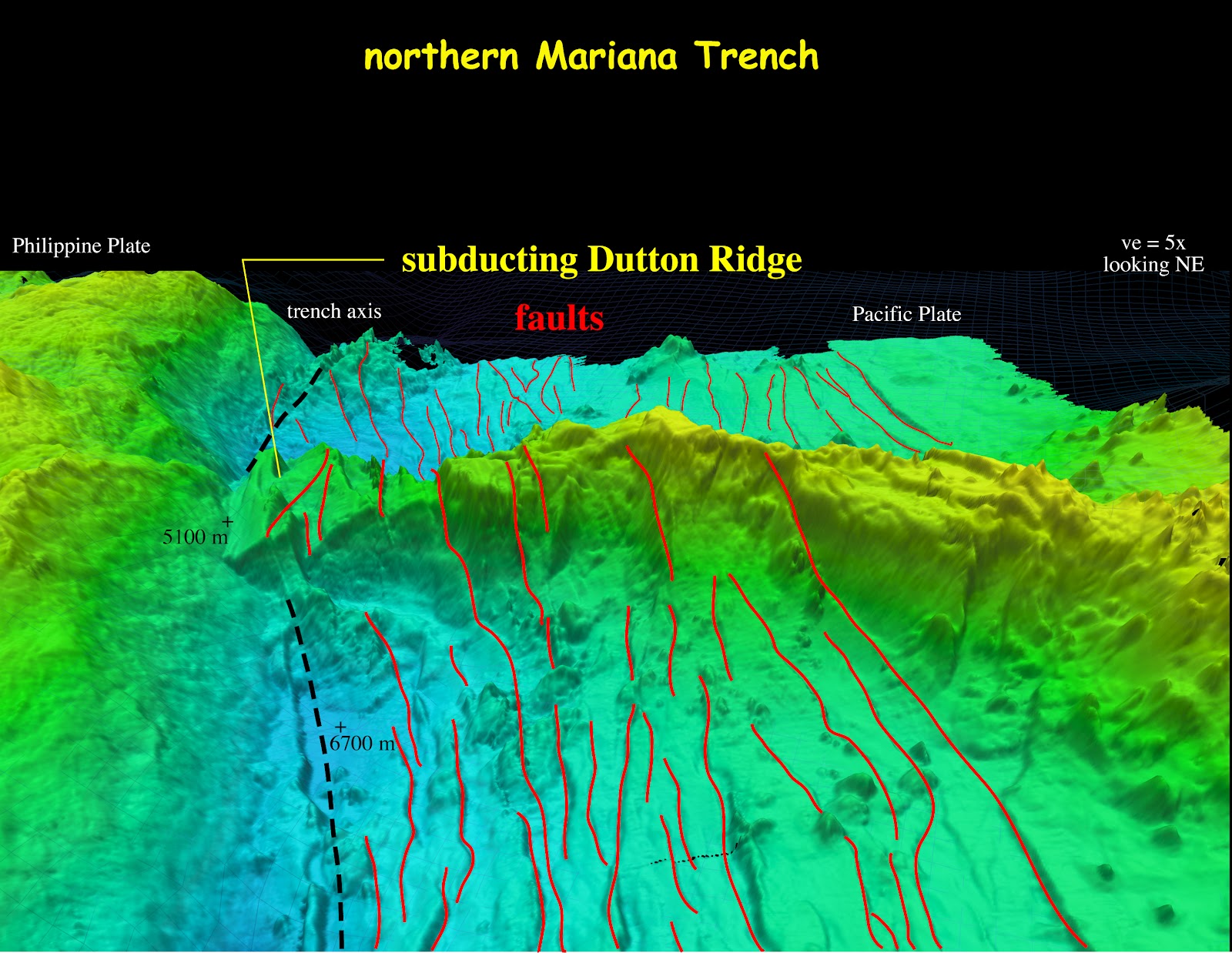
The Mariana Trench is a crescent-shaped trench located in the western Pacific, just east of the Mariana Islands near Guam. The region surrounding the trench is very remarkable and is the cradle for many unique environments. The Mariana Trench contains the deepest points on Earth, bubbling vents of liquid sulfur and carbon dioxide, active mud volcanoes, and marine life adapted to pressures a thousand times greater than sea level. The Mariana Trench is the deepest place you can find in the ocean. Its depth is difficult to measure from the surface, but modern estimates vary by less than 1,000 feet.

Discovery

In 1860, Charles Wyville Thomson, wanted to make a boat trip to conduct oceanographic studies. On December 21, 1872, he sailed on the HMS Challenger, a modified warship for the voyage carrying everything from fishing gear to microscopes. The main objective was to travel the oceans to measure depth, temperature and salinity. On March 23, 1875, while the team was conducting studies near the Mariana Islands, the sea literally swallowed 8 kilometers of a measuring line they were carrying. It was at that moment that the researchers had managed to discover the abyss. In the nineteenth century, it was discovered that there was a place where no one had yet arrived, the deepest place that existed in the ocean, known as the black hole or the Mariana Trench. In 2012, the first expedition was made by James Cameron, who was the first person in charge of continuing studies on the grave.

Characteristics

The main characteristics of the Mariana Trench are as follows:

  • It is considered to be the deepest area in the oceans.
  • It is located in the Pacific Ocean, east of the Mariana Islands.
  • They coincide with a subduction zone, a place where two tectonic plates collide.
  • It is approximately 2,550 kilometers long and 69 kilometers wide.
  • The deepest part of the pit is known as the Challenger Abyss.
  • They have an amount of water equivalent to 1000 times more than the earth has.
  • It lacks illumination.

Location

The Mariana Trench is located in the Pacific Ocean, east of the well-known Mariana Islands. It lies at the bottom of the Pacific Ocean, on the north western side, east and south of the islands. It has 11° 21´ north latitude and 142° 12´de east longitude, near Guam, a place located between the coast of Indonesia and China.

Fauna & Fauna

Image taken by James Cameron’s Odyssey

In 2016, the U.S. National Oceanic and Atmospheric Administration carried out an expedition with the aim of trying to gather information on the area. Some of the creatures they found are:

  • Bellota worms: it is a mollusk with a snail shell. It is considered as a new species, although there is no idea about its geology, habitat or origin.
  • Elf Shark: Its color is pink, and its consistency is very viscous. They are capable of growing several meters.
  • Dumbo Octopus: The most eye-catching thing are their jumped eyes and their furrowed mouth. It can swallow its prey whole.
  • Dragon Fish: Its teeth are large, and it is a hunter by nature. It has no scales and its skin is slippery, very similar to an eel.
  • Eel Shark: Its body is rounded, and its head flattened, it is very similar to a dinosaur. Apparently it has been living for 80 million years. It has 20 rows of teeth and gills in its body.

Challenger’s Abyss

At 10,994 meters deep, it is considered the deepest point in the ocean. Its name was given in 1872. Only one man has managed to reach 10,898 meters in the submarine Deepsea ChallengerJames Cameron. He described the trench as an environment very much like a lunar desert. The only thing he could see were blind worms that had adapted to the situation. In 2013, scientists discovered that the abyss was full of life. onar beams sent to the ocean floor are updated many times per second, and verified by Global Positioning Satellites. These maps clearly indicate the Mariana Trench as the deepest of its kind, and so far the Challenger Deep is its lowest measured point.

GENDER AND EDUCATION


Abstract

 This article aims to documented and understand how education is not an easy task for girls mainly in poor families. We talk about the various major issues revolving around the high dropout rates amongst girls in India. And many initiatives by the government to strengthen the education system of India.

Introduction

Education is the single most important factor to ensure gender equality and empowerment. But, gender inequality in education is a persistent problem in Indian society- especially for girls residing in rural areas, belonging to lower socioeconomic backgrounds, and lower castes. India has succeeded in many ways to address the educational inequalities- like moving towards universal school enrollments and coming up with educational policies based on gender. However, education gaps still exist.

And gender is not only about males and females but it is also about the third gender called transgender. They also faced much discrimination regarding education as they are not much appreciated in studies.

Gender education gaps 

According to census 2011, a person above 7 years is considered literate if he/she can read and write in any language with understanding. A person is not considered literate if he/she can only read but cannot write. The Census also states that it is not necessary that a person should have received formal learning or minimum education to be considered literate. 

Women constitute 48.5% of the country’s population. According to Census 2011, the female literacy rate is only 64.64% (as opposed to the male literacy rate of 80.89%) of the total female population of India, with Kerala being at the highest with 91.98% rate, and, Bihar and Rajasthan being at the lowest levels with 53.33% and 52.66% respectively 

Indian women having the most illiteracy rates in Asia as there is discrimination among girls and boy child among most of the Indian families as they don’t allow girls for higher education some due to patriarchy and some due to economic crises, the huge gender gap in enrolment for science subjects, the value of quality in school, etc.

Following are the major issues revolving around the high dropout rates amongst girls in India:

  • Poverty

Poverty happens to be the single biggest cause of illiteracy in India and a precursor to all other effects. In a poor family, girls are the main victims; they are malnourished and are denied the opportunity of better education. The poor parents are unable to afford the education of their children. It is very difficult for them to meet the daily expenses. In such a situation they cannot buy textbooks, pencils, erasers, etc., and pay school fees. Even if they can afford to educate one child, the son would always be preferred over the daughter. . Illiteracy and poverty go together because they are similar expressions of lack of access to resources in society.

  • Poor school facilities

Inadequate school facilities can sometimes serve as a deterrent for the girl child’s participation in formal schooling. 

Lack of basic sanitation and privacy is driving girls out of school. According to UDISE 2013-14 data for the Swachh Bharat Swachh Vidyalaya mission, 9.27% of schools in the entire country do not have a separate toilet for girl students, while 8.03% of toilets are dysfunctional. The lack of water, inadequate sanitation, unhygienic common or separate toilets, and absence of separate toilets for girls reflect in their extremely low attendance in schools.

  • Lack of Transport

Some villages do not have schools and the students need to travel long distances to study. This is also one of the main reasons behind female illiteracy as the family does not find it safe for girls to travel such long distances every day. Due to staggered habitations, children are forced to travel more than 3 km. Thus, the daughters are usually discouraged due to unsafe environments and the fear of sexual harassment and violence on way.

  • Patriarchy

Patriarchy refers to a system of society in which men hold the power and women are largely excluded from it. The normality of covert forms of discrimination, and how everyday form of oppression determine institutional spaces, present a great challenge for women and girls to negotiate spaces and rights in public life. Patriarchy sees women as nothing more than domestic workers, which in turn discourages them right at a young age, to not pursue education and rather help in cooking, washing, and other household chores- which they are meant to do at later stages of life; after marriage as well. Thus, parental reluctance to educate girls is a huge factor inhibiting their access to education.

  • Lack of teachers

Girls are more likely to attend schools if they have female teachers. Girls are more comfortable and more local with female staff, thus are found to be active in focusing and participating in the learning process. Also, the parents – especially in rural areas- are hesitant to send their daughters to schools that majorly have male teachers. The dearth of female teachers is a concerning issue. Nearly all committees and commissions that have looked into illiteracy have recommended increased recruitment of female teachers.

  • Household chores 

Fixed school hours do not suit many girls in rural areas; as they are required to lend a helping hand at household chores, at farms, and fields during those hours. Girls are even expected to take care of their younger siblings, while their parents are out on their daily wage. This is one of the causes of the low participation of girls in education. The enrolment rates of girls and their retention can be improved if the schools offer flexible hours. Flexible school timings have been tried in Rajasthan under the Shiksha Karmi Project and Lok Jumbish, and the results are quite encouraging.

  • Sexual Harassment and Violence

Parents often complain about the security issues of girls attending schools. Instances of abduction, rape, and molestation of girls dampen the enthusiasm of girls and their parents in pursuing education beyond a particular age; thereafter they are bound to sit at home and save their chastity.

  • Early marriage:

The patriarchal society still endorses the idea of pubescent marriages of girls. Most child marriage involves underage women, many of whom are in poor socio-economic conditions. Jharkhand is the state with the highest child marriage rates in India. 

  • Menarche and Menstruation:

A national study by AC Nielsen and NGO Plan India in 2012 found that lack of facilities causes widespread absenteeism each month, stating that girls miss an average of 50 days of school each year because of menstruation. It also found that 23% of girls in India drop out of school when they hit puberty.

The Government of India has taken many initiatives to strengthen the education system of India.

The major centrally sponsored schemes are the Sarva Shiksha Abhiyan (SSA), National Program for Education of Girls at Elementary Education (NPEGEL), Midday Meal Scheme, Right to Education (RTE) Act, Beti Bachao, Beti Padhao,  Kasturba Gandhi Balika Vidyalaya, etc to improve the educational situation of India but somewhere we are still lacking behind and more work is needed to improve the quality of education in India, as well as the condition of girls, is more worst than boys in case of education as they are getting the equity, not equality.

Conclusion 

A women’s life is better when she is educated as she can take her own decision not dependent on others as this study shows that still, the literacy rate is low of women more work is needed to be done to improve the condition.

References

  1. .https://www.thehindu.com/opinion/open-page/gender-equity-in-education/article31600127.ece
  2. http://www.create-rpc.org/pdf_documents/PTA18.pdf
  3. http://www.jcreview.com/fulltext/197-1582715201.pdf
  4. Bashin, K. (2003). Understanding gender. New Delhi: Women Unlimited

“ADAM SMITH” Biography

“Adam Smith” was an Economist and Philosopher. He was born in Kirkcaldy, Fife, Scotland, on 15 June, 1723. His father’s name was Adam Smith and Mother’s name was Margaret Douglas. His father was a lawyer which mother had a great influence on this education.

He went to Burgh School of Kirkcaldy where he learnt writing, mathematics and history he later studied philosophy from University of Glasgow when he turned 14. He also attended Balliol college at Oxford to study European literature. Soon after Smith finished graduation a series of public lectures delivered by at Edinburgh led him to collaborate with clause about David Hume during the Scottish Enlightenment in 1750. Smith shared a very close intellectual Bond with Hume and they wrote on politics, history religion and economics Smith became a professor of moral philosophy Glasgow in 1751. He wrote his Classic ” Theory of Moral Sentiments” around this time. He was elected as a member of Philosophical Society of Edinburgh in 1752. Smith spent the next thirteen years as an academic which he recalled as his best years. In 1763, Smith resigned from his professorship to tutor Henry Scott’s step son. Henry Scott was introduced to Smith through David Hume. He was elected a fellow of the Royal Society of London and was elected as a member of the literary club in 1775 the wealth of nations was published in next year and it become an instant success in 1788 Smith returned to France where was Mother was living and he was appointed as commissioner of customs between 1787 and 1789 he was given the position of Lord Rector of University of Glass gow. During Smith professorship at Glassgow in 1759, he wrote and published one of his classic theory of moral sentiments. His bestseller the wealth of nations which was published in 1776 was a powerful and very influential book Smith never married in his life. Smith was conferred with the title of “Father of modern economics” the book came to be known as the first modern work of Economics. He died in Edinburg Scotland on 17 July 1790, at the age of 67.”ALL MONEY IS A MATTER OF BELIEF”.

HARD WORK

Live the life of your dreams. When you start living the life of your dreams,there will always be obstacles, doubters, mistakes and setback along the way , but with hard work , perseverance and self belief there is no limit to what you can achieve.

The three great things essential to achieve anything worthwhile are, first: hard work; second: stick to your dreams, third: common sense. Believe that talent means nothing, while experience, acquired in humility and with hard work, means everything.

The major difference between ordinary and extraordinary is that little extra hard work. There are no secrets to success. It is the result of preparation, hard work and learning from failure. Success is not always about greatness , it is about consistency. Consistent hard work leads to success. Greatness comes automatically.

Don’t give up after sometimes of your hard work, perseverance is the hard work you have to do after getting tired of doing the hard work you already did. Hard work always pays off, whatever you do.

Everybody wants to become famous, but nobody wants to do hard work. At the end of the day ,you put all the hard work in and eventually it will pay off .It could be in a year, it could be in 30 years, but your hard work never fails.

The only thing that can overcome hard luck is hard work.
Never give up. Never stop believing. Never stop fighting. Self belief and hard work will always earn you success. Without hard work nothing grows but weeds. There is no substitute for hard work.

It is wonderful how much may be done, if you keep on doing. The fruit of your own hard work is the most sweetest thing in this world. Wait for the right time to taste it…

Most Efficient Source of Energy

In today’s world, energy consumption increases by the minute. New technology and equipment are required in all aspects of our lives. Our population is also growing which is increasing the need for energy. What are the different sources of energy and which one is the most efficient?

Human beings have been using fossil fuels as the main energy source for a few centuries now, especially in the past couple of decades. But this source is finite. The planet is going to run out of it soon and it is of utmost importance now to make a shift to other sources of energy before it is too late. On top of that, the burning of the fossil fuels for energy is the main contributor to the rapidly rising level of carbon dioxide that is driving the climate change. As the burning of fossil fuel increases, the climatic condition will change and increase the temperature. Fossil fuel extraction, processing, and burning can have negative health effects on all living beings on Earth. Some of the safe and renewable sources of energy that we can harness are solar, wind, tidal and hydroelectric.

  • Solar Energy

Solar energy is generated by harnessing the rays of the sun. Generating solar energy does not cause pollution and is efficient for both residential and commercial use. Maintaining solar panels is easy. The disadvantage of solar energy is that it can be generated effectively only in places that get large amounts of sunshine. If the residence or commercial establishment is in a location that gets an abundance of sunlight, a solar company will install panels to help continuous and efficient solar power generation.

  • Wind Energy

Wind energy is generated using wind turbines. The energy generated by the turbines provides large amounts of energy to homes and commercial establishments. Installing a turbine and getting it up and running is a comparatively easy and inexpensive process. Wind energy is weather dependent. Winds are not reliable, and one cannot guarantee that the turbines can generate enough power at a given time. They can work only in a location where there is sufficient wind speed and it will only be worth the space and investment if the location has good weather throughout the year.

  • Tidal Energy

Tidal energy is a renewable form of energy generated from the movement of tides in the ocean. It is a safe form of energy that does not emit harmful gases. Tidal power plants are long lasting and generate large amounts of energy. Building tidal power plants, however, is expensive and it has to be constructed near land. Additionally, tidal power plants manipulate the movement of the ocean and as a result harm the living organisms in the ocean.

  • Hydroelectric

Hydroelectricity is generated from dams built on rivers that generate power using the flow of water. Transmission lines transport the generated electricity to give power to houses and commercial establishments. Hydroelectric energy is inexpensive, renewable and efficient.

So, which of these is the most efficient renewable source of energy? Some would argue that it is solar, followed by wind. Although this is true, governments and policy makers need to make sure all renewable sources are installed in suitable locations to maximize the output from the sources. For instance, solar panels set up in places that receive sunlight, whereas wind turbines can be installed in areas that have lesser sunlight but more wind speeds, and tidal plants where the water pressure is high. With these strategies, we can completely shift from harmful fossil fuels to a sustainable future.  

The all-new Mobility copter

Airbus’s new ‘CityAirbus’, a 4-seater urban mobility copter, just took to the skies for the first time in public during a demonstration flight.

The electric aircraft is part of Airbus’s vision for “flying taxi” aircraft and currently being developed by the manufacturer’s helicopter division. Airbus Helicoper’s Twitter handle wrote: “New #CityAirbus videoDown pointing backhand index. Our full-scale #UAM demonstrator took off at 2,310 kg – the highest take-off weight of a full electric VTOL aircraft with a distributed drive system. The 4-minute demo saw the 4-seat #eVTOL fly at an altitude of 20 metres. .”

a small plane sitting on top of a grass covered field
The Flying taxi

The idea for a compact “flying taxi” first came from our desire to take city commuting into the air in a sustainable way. Our team began by rethinking traditional aircraft architecture, creating a multirotor design based on electric motors. Thus, CityAirbus was born. To date, the CityAirbus sub-scale model has flown more than 100 test flights, which has proven the aerodynamic configuration of the full-scale prototype.

CityAirbus has a multicopter configuration that features four ducted high-lift propulsion units. Its eight propellers are driven by electric motors at around 950 rpm to ensure a low acoustic footprint. The single failure tolerant architecture ensures safety. Its cruise speed will be approximately 120 Km/h on fixed routes with up to 15 minutes of autonomy. It has a capacity of four passengers that is ideal for aerial urban ridesharing. 

The world’s deepest diving pool

The world’s deepest swimming pool for underwater diving has opened in Dubai. According to Deep Dive Dubai, it is 15 metres deeper than any other pool in the world. The pool has been verified by Guinness World Records as the world’s deepest swimming pool and holds the equivalent of six Olympic swimming pools. The pool has been verified by Guinness World Records as the world’s deepest swimming pool and holds the equivalent of six Olympic swimming pools.

People visiting this pool can practice both scuba diving- with a tank of air- and freediving- where divers simply hold their breath. As the divers go down, they witness a landscape of a sunken city with sound and lighting effects. Further, there are two air-filled dry rooms on the way down. This underwater diving facility in Dubai is shaped like an Oyster in reference to the UAE’s pearl diving heritage. The company says that the facility also holds the region’s largest underwater film studio. 

Slide 6 of 6: This underwater diving facility in Dubai is shaped like an Oyster in reference to the UAE's pearl diving heritage. The company says that the facility also holds the region's largest underwater film studio. (Source: Text and image/Reuters)
UAE’s pearl diving heritage

Located in Nad Al Sheba neighborhood in Dubai, this massive pool features a sunken city that divers across all levels can explore. The pool features sound and mood lighting systems as well as a unique filtration system. To maintain fresh water, it gets filtered and circulated every six hours using a siliceous volcanic rock. NASA-developed technology and UV radiation is also used within the filtration system. The pool’s water temperature is maintained at 30 degrees Celsius to ensure divers comfort. With a massive size of 1,500sqm, the facility features a diving shop, a gift shop and a restaurant that will be open to the public later this year. It also hosts a variety of meeting, event and conference spaces.

SCIENCE AND TECHNOLOGY

Science and Technology have now become crucial parts of our life and our life has many luxuries and we are able to utilize them because of science and technology. It has helped us to do all these in short time because of the advancement in science and technology. Every day new technologies get introduced in the field of science and technology which makes human life easier and comfortable. And now it is difficult to imagine our loves without science and technology. Because of this we are now living in modern civilization and our evolution has occurred. This development in the field of Science and Technology is present in every aspect of our life and has great contributions in it.

There have been many new inventions in the field of Science and Technology which has changed the overall perspective of humans towards life and helps in modernizing the human civilization. Hence, people get the chance to enjoy the lives more comfortably and make it more pleasurable. In other days, humans now have a simple life because of science and technology. It has now expanded its wings into the fields of medical, education, manufacturing and many other areas.

WHAT IS SCIENCE ?

Science is the consists of systematic study of the behavior and structure of physical and natural world through observation, experiment and technology with the application of scientific knowledge for practical purposes. And Like everything, Science also has a journey and it has long lasting impact on the humans. Science has large contributions in the evolution of human.

WHAT IS TECHNOLOGY ?

“Technology” is the application of this scientific knowledge for practical purposes. Thee mobile, laptop etc. have now become the essential parts of our life and make use of connectivity or communication or smart technology for doing our activities. From the machines used in industries to the robots created, all fall under technological invention. So, in simpler words we can say that technology has made our lives comfortable.

Science and Technology: India

Ever since British rule, India was famous for many things and after gaining independence, science and technology, played a great role in shaping the present and future of India. Now, it has emerged as an essential source of creative and scientific developments all over the worlds. All these advancements have led to the improvement of Indian economy and assisted development in various fields including Space Technology, Mathematics, Space Technology and many more. Some of the prominent examples of these developments are railway system, smart phones etc. Such advancements only helped in launching Chadrayaan 2 and helped India earn critical acclaim from all over the world.

In conclusion, we must admit that science and technology have led human civilization to achieve perfection in living. However, we must utilize everything in wise perspectives and to limited extents. Misuse of science and technology can produce harmful consequences. Therefore, we must monitor the use and be wise in our actions.

Advancement in science and technology has changed the modern culture and the way we live our daily life.

The future of Yachts

The yacht dates back to almost the 14th century, the Dutch were the inventors of this marvelous boat that roared over the waters for centuries together. A yacht is actually a sailing or power vessel used either for pleasure, cruising, racing or even for trade and travel. There was a category of yachts used as armed cargo carriers by the European states from the 16th to late 18th century, they were known as Galleons.

Recently, a Californian designer has spun up a futuristic look to this gigantic 520-foot yacht. The Galleon by Steve Kozloff is the largest design in his Goliath series of superyachts and would measure 520ft long and include a mammoth eight decks. The luxurious ship, designed as a modern version of a Spanish 16th century Galleon cargo carrier, would suit multi-millionaires hosting extravagant parties with accommodation for up to 200 guests and 150 crew members.

The ship would provide hours of entertainment for its guests as it includes an indoor sports centre, which comes fitted with a full-sized basketball court, a tennis court, and four handball courts below deck. Its massive size gives it the flexibility of being a cruise ship for up to 200 guests, a sailing vessel with up to 20 private residences, or a large sailing yacht for one owner.

On the upper deck, guests will find a lounging area, a full luxury bar, and a 74’ by 32’ pool while a 44.5’ by 25’ indoor pool is located on the level below the bridge deck. Both pools featured an automated hard cover designed by Kozloff that can seal them in order to avoid draining them in rough conditions. On the upper forward decks are two lazy river pools connected by a waterslide. The Galleon has four full-beam garages designed for six luxury speedboat tenders, four U-boat Worx NEMO submarines, six rib tenders, and 21 personal water crafts. Each garage is equipped with a launch and recovery system for all water vessels.

The 4,500sq ft fully-enclosed hangar includes space for 10 helicopters and an aircraft maintenance facility. Twelve free-fall lifeboats for both crew and guests can accommodate up to 30 people each. It surely is the Yacht of the future!!!

Travel to space?

Mankind initially entered into space in the early 1960’s, to be precise it was on the 12th of April 1961 when Yuri Gagarin in the Vostok 1 entered space. His journey lasted for an hour and 48 minutes. This was just the beginning of space travel, satellite launches, exploration missions and finally colonization out of the planet.

Space travel is currently in dreams of many conmen and women around the globe.  Recently, Amazon founder Jeff Bezos blasted in space on his rocket company Blue Origin’s first flight. He is now a second billionaire to ride his own spacecraft. This raised several speculations all around the world.

The Nehru Science Centre (Mumbai) in association with the Aeronautical Society of India, Mumbai Branch organised an online lecture on ‘Space Tourism: The Next Frontier’ on Tuesday (July 27, 2021). Dr. Punita Masrani, Aerospace Medicine Specialist, V. M. Medical Centre, Mumbai in the online discussion took note of various aspects of the commercial space travel in the lecture.

Dr. Punita stated that NASA and the Russian Space Agency had earlier started taking tourists for space travel calling the process exorbitant and stringent. A spacecraft called Russian Soyuz used to take tourists every 6 months. ‘Space Adventures was the first agency in the field of Space Tourism. The agency was started by US billionaire Richard Garriot in 1998. The agency offered brokered rides aboard the Russian Soyuz Rockets’ Dr. Punita said. While both NASA and the Russian Space Agency halted space tourism, industrialists and entrepreneurs thought they could start private missions so that more and more people could travel to space. This gave birth to the concept of Space tourism, Dr Punita added.

Further, Dr. Punita while concluding the lecture, also discussed that the science involved risk, awareness, concerns, and medical informed consent which are essential parts of tourism. She further explained possible post flight medical conditions and impact of space travel on the human body and brain.

Although currently it might seem next to impossible to travel to space, in the coming future technological advancements and the changing conditions on earth will teach us to adapt to these new things.

Five new heritage sites!!

The world heritage committee recently added four cultural sites situated in Russia, Italy, Slovenia and the UK. They have also added one natural site in Africa. These sites have been added to UNESCO’s world heritage list. These additions were made in the previous week during the extended 44th session of the World Heritage Committee.

In Russia, “Petroglyphs of Lake Onega and the White Sea”, containing 4,500 petroglyphs carved in the rocks during the Neolithic period dated 6,000 to 7,000 years ago, is one of the largest such sites in Europe with petroglyphs that document Neolithic culture in Fennoscandia. The serial property encompasses 33 sites in two component parts 300 km apart: 22 petroglyph sites at Lake Onega in the district of Pudozhsky featuring a total of over 1,200 figures and 3,411 figures in 11 sites by the White Sea in the district of Belomorsky. “They show significant artistic qualities and testify to the creativity of the Stone Age,” said the committee.

In Italy, the “Porticoes of Bologna” comprises 12 component parts consisting of ensembles of porticoes and their surrounding areas built from the 12th century to the present. “Together, the selected porticoes reflect different typologies, urban and social functions and chronological phases. Defined as private property for public use, the porticoes have become an expression and element of Bologna`s urban identity,” said the committee.

The urban design work of Joze Plecnik carried in Ljubljana, capital of Slovenia, between World War I and World War II were inscribed on the list as it consists of a series of public spaces and public institutions that were sensitively integrated into the pre-existing urban, natural and cultural context and contributed to the city`s new identity. The Slate Landscape of Northwest Wales in the UK became a World Heritage site as it “offers an important and remarkable example of interchange of materials, technology and human values”.

The new natural site is Ivindo National Park situated on the equator in northern Gabon. The largely pristine site encompasses an area of almost 300,000 hectares crossed by a network of picturesque blackwater rivers.

It features rapids and waterfalls bordered by intact rainforest, which make for a landscape of great aesthetic value. The site`s aquatic habitats harbour endemic freshwater fish species, 13 of which are threatened, and at least seven species of Podostemaceae riverweeds, with probable micro-endemic aquatic flora at each waterfall.