POLITICS

 When we hear the term politics, we usually think of the government, politicians and political parties. For a country to have an organized government and work as per specific guidelines, we require a certain organization. This is where politics comes in, as it essentially forms the government. Every country, group and organization use politics to instrument various ways to organize their events, prospects and more.

Essay on Politics

Politics does not limit to those in power in the government. It is also about the ones who are in the run to achieve the same power. The candidates of the opposition party question the party on power during political debates. They intend to inform people and make them aware of their agenda and what the present government is doing. All this is done with the help of politics only.

Dirty Politics

Dirty politics refers to the kind of politics in which moves are made for the personal interest of a person or party. It ignores the overall development of a nation and hurts the essence of the country. If we look at it closely, there are various constituents of dirty politics.

The ministers of various political parties, in order to defame the opposition, spread fake news and give provocative speeches against them. This hampers with the harmony of the country and also degrades the essence of politics. They pass sexist remarks and instill hate in the hearts of people to watch their party win with a majority of seats.

Furthermore, the majority of politicians are corrupt. They abuse their power to advance their personal interests rather than that of the country. We see the news flooded with articles like ministers and their families involving in scams and illegal practices. The power they have makes them feel invincible which is why they get away with any crime.

Before coming into power, the government makes numerous promises to the public. They influence and manipulate them into thinking all their promises will be fulfilled. However, as soon as they gain power, they turn their back on the public. They work for their selfish motives and keep fooling people in every election. Out of all this, only the common suffers at the hands of lying and corrupt politicians.

Lack of Educated Ministers

If we look at the scenario of Indian elections, any random person with enough power and money can contest the elections. They just need to be a citizen of the country and be at least 25 years old. There are a few clauses too which are very easy.

The strangest thing is that contesting for elections does not require any minimum education qualification. Thus, we see how so many uneducated and non-deserving candidates get into power and then misuse it endlessly. A country with uneducated ministers cannot develop or even be on the right path.

We need educated ministers badly in the government. They are the ones who can make the country progress as they will handle things better than the illiterate ones. The candidates must be well-qualified in order to take on a big responsibility as running an entire nation.
In short, we need to save our country from corrupt and uneducated politicians who are no less than parasites eating away the development growth of the country and its resources. All of us must unite to break the wheel and work for the prosperous future of our country.

8 Emerging Plastic Alternatives We Need To Start Using

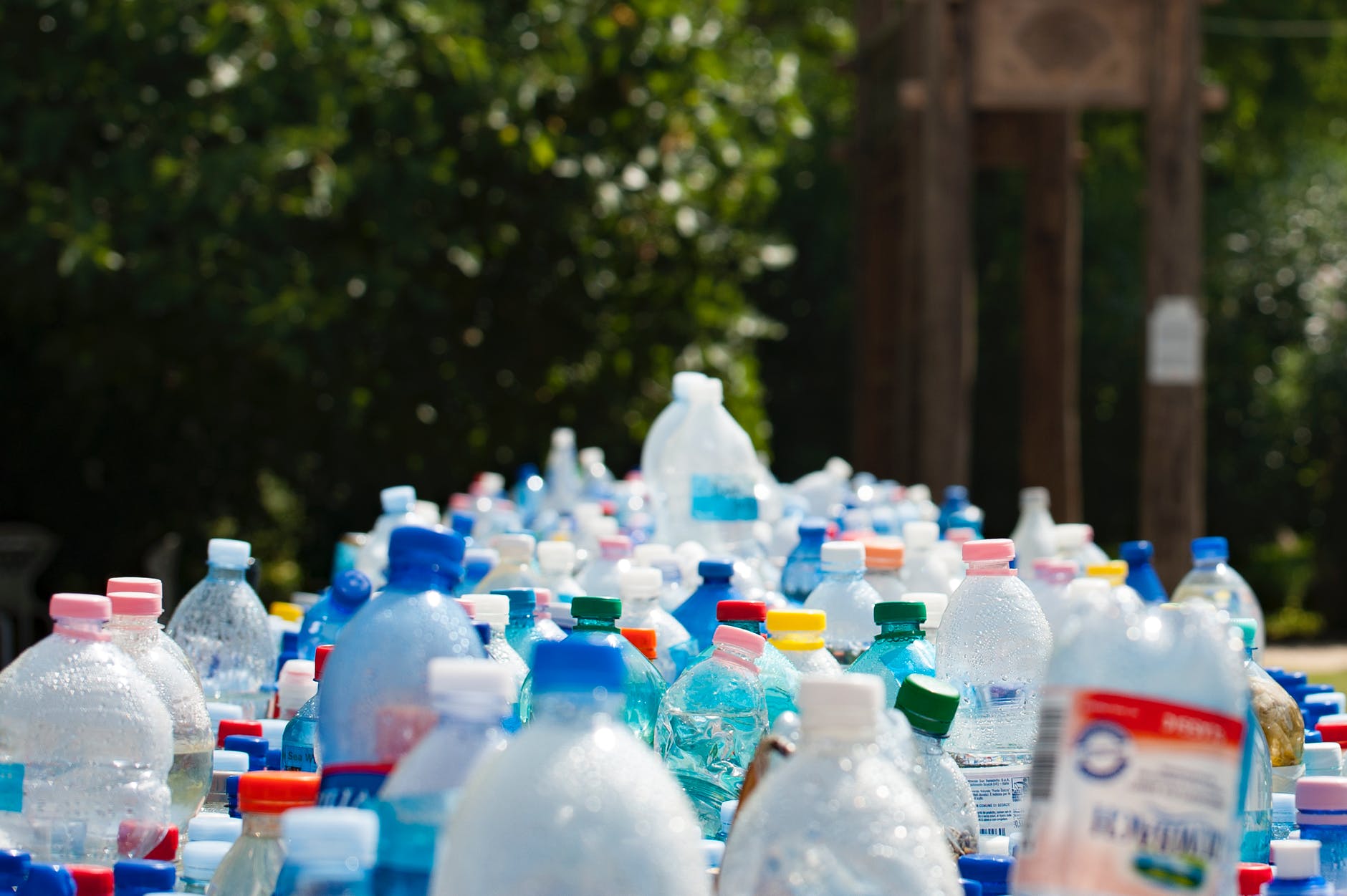
Plastics is currently one of the world’s most significant challenges. Consumers are becoming more aware of the thousands of tonnes of plastic that are polluting the ocean thanks to David Attenborough’s Blue Planet. Due of the widespread usage of plastic, particularly in packaging, firms will need to act quickly to identify plastic alternatives. In fact, 25% of customers are extremely concerned about plastic packaging, and 42% believe manufacturers should prioritise making packaging recyclable, while 21% believe the industry should move toward completely plastic-free packaging (Kantar). As plastic continues to be featured in the news on a regular basis, this figure will only climb. Brands must be seen to be taking a responsible approach; else, their hard-earned equity will be harmed.

Photo by mali maeder on Pexels.com

With so many plastic alternatives being produced, we’ve compiled a list of 13 of the most interesting plastic replacement technologies.

1. Plant Based Plastic: Bioplastics are created from a range of materials, including corn that has been broken down into PLA (polylactic acid). Because it’s manufactured from waste products from maize cultivation – which is also easy to grow – it’s highly sustainable to make. PLA can be used to produce beverage bottles, food-grade containers, and films. Innocent, the eco-heroes, are now using 15% PLA in their bottles.

2. Bagasse: Bagasse is a sugarcane manufacturing waste product. It may be easily moulded into packaging ideal for food delivery and food service, comparable to polystyrene, because to its malleability and stickiness. It’s guaranteed biodegradable and compostable, and because it’s a by-product, it’s considerably more environmentally friendly to make than polystyrene.

3. Seaweed Water Bubbles: Ooho, a British firm, has developed a seaweed-based edible (and, by default, biodegradable) water bubble. “To provide the convenience of plastic bottles while minimising environmental impact,” they say. They’ve devised manufacturing methods that are both more efficient and less expensive than creating plastic bottles. When compared to PET manufacture, the process emits 5 times less CO2 and consumes 9 times less energy.

4. Shower Friendly Paper: L’Oréal, the beauty juggernaut, has now introduced Seed Phytonutrients, an eco-beauty line. The products themselves sound wonderful (crafted with 93-100 percent natural ingredients, cruelty-free, paraben-free, etc. ), but it’s the packaging that stands out. The exterior card is made by Ecologic and is recyclable, compostable, glue-free, and water-resistant. The inner liner is composed of recyclable plastic and consumes 60% less material than standard plastic bottles.

5. Stone Paper and Plastic: You might be surprised to learn that stone can be used to make paper. It obviously had an effect on me. I have a stone paper notepad with a lovely smooth finish that feels almost chilly to the touch. This wonderful invention might be used in a variety of packaging applications. It can be used as a paper or plastic substitute because it is printable, recyclable, and water-resistant… and it also has good eco credentials. It’s created from calcium carbonate, one of the world’s most common minerals, and the manufacturing process consumes less water, has a lower carbon footprint, and is more energy efficient than traditional papermaking. FDA-approved food packaging can also be made with stone paper. Paper (supermarket singlet) bags, takeaway food cartons, greaseproof paper wraps, and Ziplock bags can all be made with this.

6. Palm Leaves: The oyster-like casings for Holy Lama’s handmade soaps are constructed from palm leaves from the areca palm. The areca palm’s leaves naturally fall to the ground, where they are collected and shaped into the required shape. They’re brilliantly environmentally friendly because they employ a natural areca palm waste product and the final packaging is biodegradable. Arekapak, a Berlin-based firm, is working on palm leaf packaging for foods like fresh fruit, vegetables, and nuts.

7. Mushroom Root: Packaging is physically grown with Mycelium (mushroom roots, which is also the same substance that Quorn is comprised of). Ecovative Design collects agricultural waste, mixes it with mycelium in moulds, and then watches as the packaging grows. You can see how it works here, but I’m not convinced it’s not magic.

8. Wood Pulp Cellophane: NatureFlex is the more environmentally friendly younger sibling of cellophane, created from FSC-approved wood pulp and certified biodegradable. It is available in three different types: uncoated, which is ideal for chocolate and confectionery as well as household items; semi-permeable, which is suitable for fresh produce and dairy; and barrier, which is suitable for bakery, snacks, coffee, tea, chocolate, confectionery, as well as home and personal care items.

The Ultimate Productivity Hack

The ultimate productivity hack is saying no. Not doing something will always be faster than doing it. This statement reminds me of the old computer programming saying, “Remember that there is no code faster than no code.” The same philosophy applies in other areas of life. For example, there is no meeting that goes faster than not having a meeting at all. This is not to say you should never attend another meeting, but the truth is that we say yes to many things we don’t actually want to do. There are many meetings held that don’t need to be held. There is a lot of code written that could be deleted. How often do people ask you to do something and you just reply, “Sure thing.” Three days later, you’re overwhelmed by how much is on your to-do list. We become frustrated by our obligations even though we were the ones who said yes to them in the first place. It’s worth asking if things are necessary. Many of them are not, and a simple “no” will be more productive than whatever work the most efficient person can muster.

Why we say Yes?

We agree to many requests not because we want to do them, but because we don’t want to be seen as rude, arrogant, or unhelpful. Often, you have to consider saying no to someone you will interact with again in the future—your co-worker, your spouse, your family and friends. Saying no to these people can be particularly difficult because we like them and want to support them. Collaborating with others is an important element of life. Do whatever favors you can, and be warm-hearted and direct when you have to say no. But even after we have accounted for these social considerations, many of us still seem to do a poor job of managing the tradeoff between yes and no. We find ourselves over-committed to things that don’t meaningfully improve or support those around us, and certainly don’t improve our own lives. Perhaps one issue is how we think about the meaning of yes and no.

Difference between Yes and No

The words “yes” and “no” get used in comparison to each other so often that it feels like they carry equal weight in conversation. In reality, they are not just opposite in meaning, but of entirely different magnitudes in commitment. When you say no, you are only saying no to one option. When you say yes, you are saying no to every other option. I like how the economist Tim Harford put it, “Every time we say yes to a request, we are also saying no to anything else we might accomplish with the time.” Once you have committed to something, you have already decided how that future block of time will be spent. In other words, saying no saves you time in the future. Saying yes costs you time in the future. You have to pay back your commitment at some point. No is a decision. Yes is a responsibility.

Saying No

Saying no is an important skill to develop at any stage of your career because it retains the most important asset in life: your time. As the investor Pedro Sorrentino put it, “If you don’t guard your time, people will steal it from you.” You need to say no to whatever isn’t leading you toward your goals. You need to say no to distractions. Nobody embodied this idea better than Steve Jobs, who said, “People think focus means saying yes to the thing you’ve got to focus on. But that’s not what it means at all. It means saying no to the hundred other good ideas that there are. You have to pick carefully.” There is an important balance to strike here. Saying no doesn’t mean you’ll never do anything interesting or innovative or spontaneous. It just means that you say yes in a focused way. Once you have knocked out the distractions, it can make sense to say yes to any opportunity that could potentially move you in the right direction.

Upgrading Your No

Over time, as you continue to improve and succeed, your strategy needs to change. The opportunity cost of your time increases as you become more successful. At first, you just eliminate the obvious distractions and explore the rest. As your skills improve and you learn to separate what works from what doesn’t, you have to continually increase your threshold for saying yes. You still need to say no to distractions, but you also need to learn to say no to opportunities that were previously good uses of time, so you can make space for great uses of time. It’s a good problem to have, but it can be a tough skill to master. In other words, you have to upgrade your “no’s” over time. Upgrading your no doesn’t mean you’ll never say yes. It just means you default to saying no and only say yes when it really makes sense. The general trend seems to be something like this: If you can learn to say no to bad distractions, then eventually you’ll earn the right to say no to good opportunities.

How to say No

Most of us are probably too quick to say yes and too slow to say no. It’s worth asking yourself where you fall on that spectrum. If you have trouble saying no, you may find the following strategy proposed by Tim Harford, the British economist. He writes, “One trick is to ask, “If I had to do this today, would I agree to it?” It’s not a bad rule of thumb, since any future commitment, no matter how far away it might be, will eventually become an imminent problem.” If an opportunity is exciting enough to drop whatever you’re doing right now, then it’s a yes. If it’s not, then perhaps you should think twice. This is similar to the well-known “Hell Yeah or No” method from Derek Sivers. If someone asks you to do something and your first reaction is “Hell Yeah!”, then do it. If it doesn’t excite you, then say no. It’s impossible to remember to ask yourself these questions each time you face a decision, but it’s still a useful exercise to revisit from time to time. Saying no can be difficult, but it is often easier than the alternative. What is true about health is also true about productivity: an ounce of prevention is worth a pound of cure.

5 Main Problems faced by Small Scale Industries

Just because of their nature and size, small-scale industries do not have many of the advantages that large-scale firms do. They have contributed significantly to economic development, but they have not reached their full potential. They have a lot of issues with how they operate, and a lot of small businesses are sick.

Certain commodities were set aside by the government for exclusive production by Small Scale Industries. Large-scale businesses were not permitted to create commodities reserved for the SSI sector. Many things have been successively De-reserved as the economy has opened up and followed the principles of liberalization and globalization. As a result, small-scale industries must now contend with the dual pressures of rivalry from both Indian large-scale firms and overseas competitors.

In this blog, we are going to learn about the problems faced by Small Scale Industries.

Problems of Small Scale Industries

1. Funding Shortage

When it comes to fundraising, small businesses confront numerous challenges. It is one of the most serious issues. Many of these businesses are unable to raise cash from the capital market due to a lack of creditworthiness. Banks are also wary of lending money to these businesses because many of them lack proper collateral security or guarantees.

A lack of cash can cause a small firm to fail before it even gets off the ground. Following nationalization, several banks make loans to these types of businesses. The situation is still deteriorating due to the sudden outbreak of covid-19, which resulted in a lockdown and a drop in the economy. Entrepreneurs are obliged to seek funds from money lenders at unreasonably high-interest rates, which throws their business calculations into disarray.

2. Idle Capacity 

In the case of small-scale industries, installed capacity is underutilized to the tune of 40 to 50 percent. Various factors contribute to this underutilization, including a lack of raw materials, a lack of cash, and even a lack of power. Small scale units, unlike their large-scale counterparts, are not completely able to deal with all of these issues.

3. Management abilities

A tiny business is started and run by a single person. As a result, that person may lack all of the managerial skills required to run a business. They cannot afford to hire competent managers or staff due to a lack of finances. This can cause minor disruptions in the business’s operations. Delays, errors, poor decision-making, and other factors can all contribute to the company’s demise. This could also be considered unprofessional behavior on the part of the client, which is bad for the company’s market reputation. All of these requirements are easily met in major corporations thanks to various specialized teams.

4. Sickness

It’s heartbreaking to see the majority of the small units succumb to illness. There is a lack of forethought. Another stumbling block is the lack of qualified and trained employees. They have no choice but to sell on credit. Their clients fail to pay them on schedule. There are a lot of terrible debts. As a result, they are unable to maintain the production process due to a lack of operating capital. This results in illness.

5. Unpredictable raw material supply

Small businesses have a difficult time obtaining raw materials, whether they use locally available or imported raw resources. The issues develop as a result of defective and irregular raw material delivery. Other obstacles for the small-scale sector include a lack of sufficient quantities of raw materials, occasionally poor quality of raw materials, rising raw material costs, foreign exchange crisis, and, most importantly, entrepreneurs’ lack of awareness of government policies.

Conclusion

Small-scale entrepreneurs face a slew of issues, including excessive reliance on institutional agencies for finances and consulting services, a lack of creditworthiness, a lack of education and training, reduced profitability, and a slew of marketing and other issues. The Indian government has launched a number of initiatives targeted at enhancing the overall performance of these institutions.

Said “I love you” more -Positive thinking

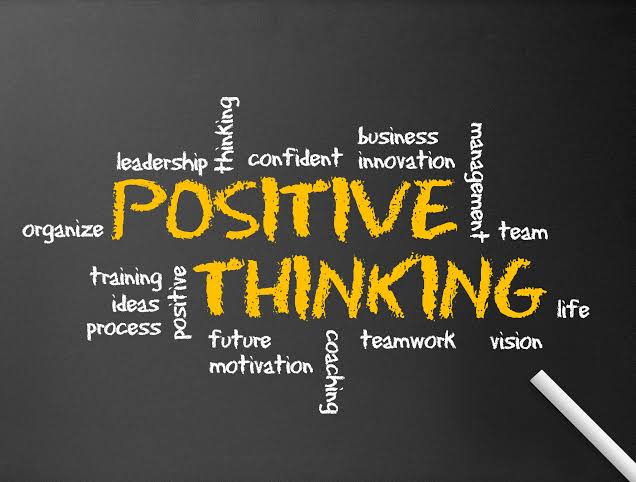
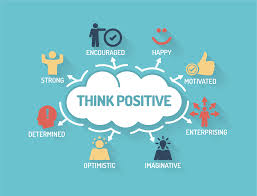
Positive thinking refers to a belief or mental attitude which makes us think that good things will happen eventually and our efforts will pay off sooner or later. It is the opposite of negative thinking which makes our mind full of stress and fear. Thus, an essay on positive thinking will show us how it reinforces thoughts like optimism and hope and works wonders.

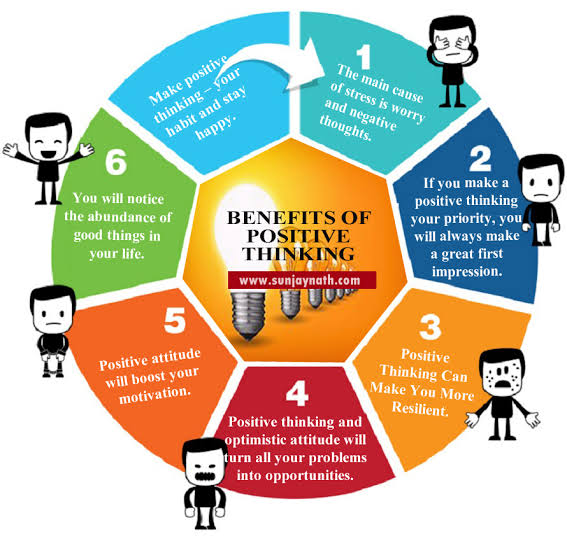
Benefits of Positive Thinking

Let it be clear that positive thinking does not mean you do not notice the bad things in life. It means you try to find a solution in a productive way instead of whining about it. There are many benefits of positive thinking.

The first one is better health. Negative thinking gives rise to anxiety, stress, frustration and more. However, positive thinking helps you avoid all this and focus on staying healthy and doing better in life.

Further, it is essential for us to fight depression which positive thinking helps with. Similarly, it will also help us to relieve stress. Positive thinking overwhelms stress and it will allow you to get rid of stress.

As a result, positive thinking helps you live longer. It is because you will be free from diseases that form due to stress, anxiety and more. Moreover, it is also the key to success. Meaning to say, success becomes easier when you don’t bash yourself up.

Similarly, it also gives us more confidence. It boosts our self-esteem and helps in becoming more confident and self-assured. Therefore, we must certainly adopt positive thinking to make the most of our lives.

How to Build a Positive Thinking

There are many ways through which we can build positive thinking. To begin with, we must inculcate the habit of reading motivational and inspiring stories of people who are successful.

All this will help in motivating and inspiring you and showing you the right path. Moreover, it is important to never let negative thoughts thrive in your mind and work towards putting end to this habit.

You can do so by replacing your negative thoughts with constructive and positive reviews. Start to pay attention to your ideas and don’t pay heed to negative thoughts. Further, it is helpful to use affirmations.

These positive statements will truly sink into your subconscious mind and guide you to take better action. It will also help in visualising your dreams and getting the right means to achieve them fast.

Finally, always stay guard and gatekeep your mind to make important changes in life. In other words, do not be afraid to take actions. Keep yourself busy and do different things to avoid becoming cynical and remaining positive.

Conclusion of the Essay on Positive Thinking

To conclude, we must change our attitude and believe that we will succeed one day. Moreover, we also need to implement positive thinking techniques which will help us learn from our failures and stay focused. As positive thinking plays an essential role in our lives, we must make sure to adopt in our lives.

Positive thinking helps you stand back up again when you are knocked down by bad luck or negativity.

. —Tom Laurie

USAGE OF BOTTLED WATER

SHOULD WE AVOID IT?

For a long time now, bottled water has become a trend amongst people all around the world. Mostly, it is cheap and advertised as healthy. Unfortunately, the water is actually not always as healthy as it might seem. Many companies use tap water sealed into bottles, sometimes purified, sometimes not. Many people who buy water bottles never reuse them and the plastic ends up polluting the environment. The cost for transporting millions of empty bottles each month is huge, and ultimately pollutes the air. Therefore, harming the environment, polluting the air and wasting plastic and fuel are strong arguments that why should not sell bottle water.

“Drinking water is like washing out your insides. The water will cleanse the system, fill you up, decrease your caloric load and improve the function of all your tissues.” – Kevin R. Stone

Even though recycling is something everyone should be doing, many people still throw away their water bottles. Millions use plastic bottles each month, causing transport to waste lands costing great amounts of money for fuel. The wastelands pollute the air, and so does the fuel when used. If our school sells and uses these plastic bottles normally, that demonstrates that we are helping to pollute the environment.

I believe that bottled water should be banned, because of the environmental impact & the health effects they cause. Bottled water is obviously not a healthier or cleaner option to normal tap water. Also, bottled water is despicably expensive when you compare it to the cost per gallon of tap water.

Almost all bottled water sold is tap water, which is put in plastic bottles and sold at huge profits. So pretty much what you’re doing is buying the same water that you could drink at your house for FREE. Also, if a person is choosing between tap water and bottled water, tap water is clearly the more economical and the healthier option.

According to a 2001 report of the World-Wide Fund for Nature, approximately 1.5 million tons of plastic are used in the bottling of 89 billion liters of water each year. Other than the amount of plastic bottles produced each year, the energy essential to produce and transfer these bottles to the market uncontrollably drains limited fossil fuels.

Did you know that each year the making of the plastic water bottles takes sufficient oil and energy to fuel a million cars? Millions of gallons of fuel are wasted daily transporting filtered tap water around the world and across countries. All the energy to make the bottle, even more to ship it around the planet and then we drink it in about two minutes? And do you know what happens when you’re finished with that bottle?

Ninety percent of water bottles end up in landfills where they sit for thousands of years or in incinerators where they’re burned releasing toxic pollution. I don’t see this as being recycling; real recycling would be turning the bottles back into bottles, which happens to only ten percent of the water bottles.

Pretty much what the government is doing, is wasting so much money and energy to pollute our earth. Bottled water companies have made a momentous strain on the environment, due to their tolerant use of precious resources and their manufacturing of billions of plastic bottles.

Around the globe, a billion people don’t have access to clean water. However cities all over the world are spending millions of dollars to deal with all the plastic bottles thrown out. What if we spent that money improving our water systems or even better, developing better water systems in third world countries?

Just remember it could be the beginning of this change, but after cities would be banning water bottles and maybe even countries.

Mental Illnesses doubled among youth : Latest Study

 Latest study by JAMA Pediatrics, a medical journal, reveals that Anxiety and Depression has doubled among the youth globally, as compared to the pre-Covid period. The analysis was published on 9th August, 2021 after collecting empirical clinical data on depression and anxiety in East Asia, Europe, North America, Middle East, Central and South America.

As per the data given in the study, one in four adolescents worldwide, have shown symptoms of depression. While one in five youth suffer from symptoms of anxiety. The data has sparked concern among the mental health experts and psychologists. “Results from this analysis suggest that the pandemic has likely instigated a global mental health crisis in Youth” said Sheri Madigan, professor of psychology at University of Calgary. 

The mental health of youngsters was already deteriorating before the pandemic. Experts said that the mental health of children and youngsters have gotten worse with the passage of time in the pandemic. Some reasons that have made the situation worse include persistent isolation, disruption in education, and financial problems in the family. The pandemic has created conditions in which the youth feels hopeless and have accumulated a negative feeling inside them.

The closure of schools and online learning from home has adversely impacted the children. Loss of interaction with the peers, lack of support from the teachers along with chronic stress and instability in daily routine are also major contributors to mental illnesses. It has led to an increase in symptoms of depression like sadness, loss of interest in activities, difficulty in sleeping, loss of appetite etc. 

An uncontrollable fear and constant worry about the health of family and friends have also affected the children and youngsters, leading to an increase in the symptoms of anxiety. According to the data, these symptoms of depression and anxiety are more prevalent in young females as compared to males. Number of females affected by mental health issues was higher than males even prior to the pandemic. 

These symptoms have affected the older children more than the younger ones. Factors like loss of interaction, along with puberty related hormonal changes have affected the elder children.  Adolescents and youngsters are the most affected age group. This can be a constraint in their personal growth as well as for the society as a whole. Mental wellbeing should be promoted among the youth before they step into adulthood. Issues related to mental health can have long lasting consequences if that persists without being properly addressed. 

Children and youngsters are finding it difficult to cope up with the disruptions in their routine in these difficult and unprecedented times of pandemic. It is important to monitor and keep a check on the mental health status of children globally with the help of data, research, and studies. The collective support from parents, teachers, researchers, medical facilities and policy makers can surely develop a better future in terms of mental health for the children and youth worldwide. 


Plastic Ban: An Initiative Towards Better Results!

Reducing Millions of Tons of CO2: EU Single-Use Plastic Ban

Plastic bags are a major cause of environmental pollution. Plastic as a substance is non-biodegradable and thus plastic bags remain in the environment for hundreds of years polluting it immensely. It has become very essential to ban plastic bags before they ruin our planet completely. Many countries around the globe have either put a ban on the plastic bag or imposed tax on it. However, the problem hasn’t been solved completely because the implementation of these measures hasn’t been as successful as expected.

People are more aware of the fact that plastic is harmful to the environment and if we keep increasing the use of plastic it is possible that we are creating a more harmful environment sooner than later. In this aticle on should plastic be banned it is important to understand that plastic in itself is not harmful when used, or recycled and reused, it is rather the littering of plastic on the streets, on land and water bodies, and the single-use plastic bags which are disposed in the same manner and cannot be recycled. Plastic is a non-biodegradable matter and takes lots of efforts to get decomposed so it is only natural that when such matter is only increasing then the threat to nature also rises.

Many countries like Italy, Bangladesh, China, and Kenya have taken the initiative to ban the use of plastic and are not given any to the public at any check out counter. However, there are many countries that have not adopted this, as it is also difficult to find an alternative to plastic that is easily decomposable and safer for the environment. So, rather than completely banning the use of plastic, we must find ways of recycling and reusing the plastic so that the dumping of plastic does not deteriorate the natural environment.

Important Reasons to Ban Plastic Usage:-

  1. Plastic can endure every climate and when littered travels through wind or water and reaches ocean bodies or gets stuck on lands and trees and harms these environments as it is non-biodegradable since it is made of non-renewable materials.
  2. The energy required to drive a car for 1 kilometre is used to make 9 plastic bags and this ratio is irrational as the plastic bag used is rather useful for only 11 minutes to carry materials and then discarded.
  3. An Environment Health Perspective reports that the components of plastic mimic hormones like estrogen and this causes severe damage to our health as it disrupts the natural hormonal balance in our body.
  4. It is a threat to wildlife who in negligence sometimes consume plastic which is littered along with their food. Many aquatic animals like turtles suffer a great deal as their digestive system is entangled in plastic and die.
  5. Plastic bags are not easy to recycle as the recycling rate by the recycling facilities is only 5% so it is tedious work.

Some Major Problems caused due to Plastics:-

  1. They are Non-Biodegradable

Plastic bags are made up of elements that are extremely hard to be degraded by the microbes in the environment. They take hundreds of years to be completely decomposed, which essentially means that almost all of the plastic ever made still exists in the environment causing pollution! In fact, plastic bags are a major source of pollution of land and water presently across the world. 

2. Effect of Plastic on Human Health

Due to the excessive use of plastics, there are a number of ways in which plastic finds its way into our food chain. Accumulation of nano plastics over a long period of time can cause organ failure, intoxication and respiratory and gastrointestinal distress. Burning of plastics also produces harmful smoke that can cause poisoning in humans. 

3. Harmful for Animals

Animals, both terrestrial and aquatic, consume a lot of plastic wastes unknowingly. Consuming large chunks of plastic often cause blockage in their respiratory tract. This may result in respiratory failure due to choking. After consuming plastic bag, an animal is not able to digest it and it stays inside its intestine causing complications and ultimately, untimely death.

4. Clogged Sewage

Another major problem of plastic bags is that it accumulates in waterways and clogs drains and sewages. This can result in overflowing drains which can then breed various vectors of diseases. Afterwards, from this accumulation of plastic bags oxygen supply to the water is reduced and aquatic animals die due to the lack of oxygen as well.

Conclusion:-

Although plastic is becoming a big threat for all of us, still this problem has often been overlooked and underestimated. This is because people do not look at the long term effect of these small, easy to carry bags they use in their everyday life. Besides all of these people keep using bags due to their convenience. But now everyone has to completely stop using the plastic bag to save our environment and earth.

It is safe to say that like any global problems affecting the environment and the people all over it is not easy to find a particular solution so we can only trust time to see what works and what doesn’t and in the meantime find alternatives which are biodegradable and instead of dumping reuse and recycle and spread awareness about its importance, in this way you can contribute to maintaining nature’s sanctity.

Areas of gender discrimination:


(Gender discrimination refers to the discrimination against a person or group on the basis of his/ her sex or gender identity. In other words, it is the practice of granting or denying rights or privileges to a person based on his or her gender. Discrimination based on sex or gender can also be defined as adverse action against another person, which would not have occurred had the person been of another sex. This is considered a form of prejudice and is illegal in certain circumstances in most countries. Gender discrimination can arise in different contexts. For instance, an employee may be discriminated against by not being hired, promoted, or being wrongfully terminated based on his
or her gender. Socially, sexual differences have been used to justify different roles for men and women, in some cases giving rise to claims of primary and secondary roles. While there are alleged non-physical differences between men and women, major reviews of academic literature on gender difference find only a tiny minority of characteristics where there are consistent psychological differences between men and women, and these relate directly to experiences grounded in biological difference. However, there are also some psychological differences in regard to how problems are dealt with and emotional perceptions and reactions which may relate to hormones. Unfair discrimination usually follows gender stereotyping held by a society. Gender discrimination exists to different extents in all societies. Whether it occurs in a blatant or subtle way, gender discrimination has a negative impact on individuals
and the community.


Although gender discrimination is traditionally viewed by as problem normally encountered by women, it affects
men as well. For instance, job customarily and historically held mainly by women, like nurses, childcare providers and flight mainly are often denied to men based on social stigmas. In many countries while widows get bereavement benefit, there is no equivalent benefit for widowers. Paternity leave for men is quite no rare and is offered only in certain countries or sectors.


Family and Home:


Gender discrimination often begins at home, Son preference, as we know, is widespread in India. It is also
prevalent in China, North Korea and Pakistan. Female infants girls and women are prejudiced against when it comes to
nutrition, health care or education. Due to the advances in technology, determining the sex of
the foetus in the womb is now possible. Though sex determination tests are illegal in India, the practice of finding
out the sex of the foetus is quite common. This often leads t aborting fetuses if it is female (female foeticide). The killing of female infants (female infanticide) is also common widespread practice of female foeticide and infanticide has led to a skewed sex ratio in countries like India and China. Sex ratio is the ratio of females to males in a population
Sex ratio is an important social indicator to measure the extent of prevailing equity between males and females at a given point of time.


Sex Ratio is defined as the number of females perI000 the males. extent Sex of Ratio prevailing is an equity important between social males indicator and female measures a given point of time. It is mainly the outcome of the interplay of
sex differentials in mortality, sex selective migration, sex ratio at birth and at times the sex differential in population
enumeration, The average natural sex ratio for humans from birth is approximately 105:100. Scientists are not sure why there are 105 males born for every 100 females around the world.


Sex ratio (females per thousand males)


India 933 Rural 946 Urban 9000
State with Highest Female Sex Ratio Kerala 1,058
State with Lowest Female Sex Ratio Haryana 861
UT with Highest Female Sex Ratio
Pondicherry 1,001
UT with Lowest Female Sex Ratio
Daman & Diu 710
District with Highest Female Sex Ratio Mahe
(Pondicherry) 1,147
District with Lowest Female Sex Ratio Daman
(Daman& Diu) 591
Source: Census Data 2001

According to the 2001 census, the sex ratio of India stands at 933:1000 (there are 933 females for every 1000 males). It is heavily skewed in favor of males, showing that Indian society is still prejudiced against females. The population sex ratio for Tamil Nadu has increased from 974 females per 1,000 males in 1991 to 986 in 2001. This is true of most States. Only four States among those with a population exceeding 20 million in 2001 Haryana, Gujarat, Maharashtra and Punjab decline in population sex ratios between 1991 and 2001. However, Tamil Nadu’s child sex ratio – defined as the number of girls per 1,000 boys in the age group of 0-6 years shows a decline from 948 in 1991 to 939 in 2001. The decline in child sex ratios in some districts of the State is quite alarming report . The family can be seen as one of the main sites of gender a discrimination as most human behavioral patterns can be traced to what people learn at home. Women and men are often treated unequally in the family. In most households, the father or some other male member, is considered the head of the family, and hence, the center of authority.
Women, as we know, generally do most of the domestic chores like cooking and cleaning and are responsible for child
care. In most Indian households, domestic work is considered woman’s area of sphere, while work done outside the home is the man’s sphere. The distribution of work and roles in the family based on sex is called gender division of l

To understand the problems with gender division of labor one must understand the concept of social reproduction or simply ‘reproduction’. As opposed to production (which is work done in the market, for instance, work done in a factory manufacturing cars), reproduction refers to the whole range of activities that allow human beings to continue their lives household wort cooking, cleaning, washing, caring for children, ill, old socializing of the new generation. Without these things, it impossible for any production to happen.

Know About ITR-1

ITR-1 can be filed by Resident Individual who has:-

1.Total income less than 50lakh rupees during the financial year. 
2. Income from salary.
3.Income from one house property.
4.Family pension scheme.
5.Agriculture income upto 5000 rupees.
6.Income from other sources that is:-
           – Interest from Saving Accounts
           – Interest from deposit (Bank/Cooperative Society/ Post Office)
           – Interest from income tax refund
           – Interest received enhanced compensation.
           – Any other interest income   
           – Family Pension 
 7.Income of Spouse (other than those covered under Portuguese Civil Code) or Minor is clubbed (only if the source of income is within the specified limits as mentioned above).
ITR-1 cannot be filed by any individual who:-
1.Is a Resident Not Ordinarily Resident (RNOR), and Non-Resident Indian (NRI).
2.has total income exceeding 50 lakh rupees.
3.has agricultural income exceeding 5000/- rupees.
4.has income from lottery, racehorses, legal gambling etc.
5.has taxable capital gains (short term and long term).
6.has invested in unlisted equity shares.
7.has income from business or profession.
8.is a Director in a company.
9.has tax deduction under section 194N of Income Tax Act.Section 194N is applicable in case of cash withdrawals of more than Rs. 1 crore during a financial year. This 
section will apply to all the sums of money or an aggregate of sums withdrawn from a particular customer in a 
financial year. Further, while calculating the limit of Rs 1 crore, cash withdrawals from all accounts maintained 
by a person with one bank are to be considered. 
8.has deferred income tax on ESOP received from employer being an eligible start-ups.
9.owns and has income from more than one house property.
10.is not covered under the eligibility conditions for ITR-1.
The precautions to be taken while filing return of income are:-
1.Download Form 26AS (Annual Information Statement) and check the actual TDS / TCS / tax paid. If you see any discrepancy, you should reconcile it with the Employer / Tax Deductor / Bank.
2.Compile and carefully study the documents to be referred to when filing your ITR, like bank statement / passbook, interest certificates, receipts to claim exemptions or deductions, Form 16, Form 26AS (Annual Information Statement), investment proofs, etc.
3.Ensure details like PAN, permanent address, contact details, bank account details, etc. are correct in the pre-filled data.
4.Identify the correct return for you (from ITR-1 to ITR-7). Provide all the details in the return such as total income, deductions (if any), interest (if any), taxes paid / collected (if any), etc. No documents are to be attached along with ITR-1. However, you need to keep these documents for situations where they need to be produced before tax authorities such as assessment, inquiry, etc.
5.e-File the return of income on or before the due date. The consequences of delay in filing returns include late filing fees, losses not getting carried forward, deductions and exemptions not being available.
6.After e-Filing the return, e-Verify it. If you want to manually verify your return, send the signed physical copy of ITR-V Acknowledgement (by ordinary post or speed post) within 120 days of filing the return to Centralized Processing Center, Income Tax Department, Bengaluru 560500 (Karnataka).
Changes in itr 1:-
In ITR-1 for AY 2021-22, there is an addition of section 115BAC. If you wish to opt for the new tax regime under section 115BAC, select Yes in the new ITR form, else select No. Please note that option for new tax regime u/s 115BAC will be available only till due date of filing of return u/s 139(1).
Documents needed to file ITR-1 are:-
1.Form 16
2.House Rent Receipt (if applicable)
3.Investment payment premium receipt (if applicable).
  • In case you miss filing the ITR within the due date u/s 139(1), you can still file your Income Tax Return but you maybe required to pay a late filing fee of up to 5000/- rupees. Additionally, you will also be required to pay interest on the tax liability (if any).
  • Different tax returns are prescribed for filing by individual taxpayers depending on their source of income and residential status. To determine the correct ITR to file, you can use the Help me decide which ITR Form to file option. You can then proceed based on questions displayed to determine the correct ITR to file.

SPIRITUAL CIRCUIT: BIHAR

GURU CIRCUIT 

TAKHAT SRI HARMANDIR SAHIB 

Maharaja Ranjit Singh Ji, the first king of the Sikh Empire, took up the reconstructions of this sacred birthplace of the great Guru in 1839. The present gorgeous edifice of Harmandir Takhat was reconstructed in 1954 as the earthquake of 1934 destroyed some part of it.

GURDWARA PAHILA BARI AKA GURUDWARA GAE GHAT 

Popularly known as Gurudwara Gae Ghat, it is dedicated to Guru Nanak Dev Ji, who stayed here during his visit to Patna in the early 1500’s

GURDWARA BAL LILA MAINI SANGAT 

Situated close to Takhat Sri Harmandir Sahib ji, this shrine stands at the former home of Raja Faateh Chand Maim. His wife or the Rani treated young Gobind Rai as her own son. When Gobind Rai left Patna, the Rani had a Gurdwara built in her home. 

GURDWARA SHRI GURU GOBIND SINGH GHAT

This Gurdwara commemorates the arrival of Guru Tegh Bahadur to Patna. After four years of touring Eastern India, the na Guru returned to Patna to join his family. 

GURDWARA HANDI SAHIB DANAPUR 

The Gurdwara was built in the memory of Shri Guru Gobind Singh Ji. An old lady whose name was Mata Jasni cooked khichdi in a handi and for Guru Ji offered it to Satguru Ji. So this place is known as Handi Sahib. 


GURDWARA BARI SANGAT SHRI GURU TEGH BAHADUR JI CHAUKI 

Gurdwara Bari Sangat Shri Guru Tegh Bahadur Ji Chauki – Bhagalpur has two Sikh Sangats where Guru Tegh Bahadur visited it in 1667. An old hand-written copy of Guru Granth Sahib acquired from the former Udasi priest of the Shrine is preserved in Gurudwara Singh Sabha.


SHRI GURU TEGH BAHADUR AITIHASIK GURDWARA, KATIHAR 

This historical gurdwara is situated at Lakshmipur Panchayat of Barari Block of Katihar District. It is approx 40km from the district headquarters. Many people visit this village as it is associated with Guru Tegh Bahadur Sahib. An ild volume of Guru Granth Sahib is also preserved here.

ALSO VISIT: Gurdwara Chacha Phaggu Mal- Sasaram, Gurdwara Pakki Sangat and Gurdwara Shri Guru Tegh Bhashur Ji- Gaya.

JAIN CIRCUIT 

KAMALDAH, PATNA 

In the area called Kamaldah (Gulzarbagh, Patna) is a high mound of brick ruins on which two Jain temples stand. There is mausoleum of Jain saint Sthoolhdbhadra and the temple of Sudarshan Swami.

KUND GRAM, MUZAFFARPUR 

As per Jain scriptures, Lord Mahavira, the 24th Tirthankar, was born at Kundagrama and his residence was at Vaniyagrama. Both the places were part of or near Vaishali. The modern Village of Bania is at the site of ancient Vaniagrama and Kund Gram is identified with the modern Village of Vasokund, about 2km northeast of the gadh mound. 

KUNDALPUR, NALANDA

A beautiful Jaisalmer stone temple is situated close to the ruins of ancient Nalanda University at Kundalpur. This houses statues of Lord Mahavira, Adinath Swami and Gautam Gandharva. This place is believed to be birthplace of Gautam Gandharva, the first disciple of Lord Mahavira. An ancient Jain temple is also here.

JALMANDIR, PAWAPURI 

Also known as Apapapuri, the sinless town, is a very sacred Jain pilgrimage center. As per Jainism belief, Lord Mahavira, the greatest propounder of Jainism, attained Nirvana at Pawapuri. Hundreds of thousands of his disciples and devotees took away the ashes after his cremation here. The rush was so great even the soils of the area were taken away and it became a tank. Later on, a beautiful temple known as Jalmandir with white marble was constructed at the center of the tank to commemorate the Lord’s Nirvana.


SAMOSARAN

This beautiful temple honors the place where Lord Mahavira sat to teach his disciples. The temple is constructed with white marble, rising by low steps into several concentric terraces with a beehive shaped shrine on the top containing the footprints of Lord Mahavira.


GONAVA JEE, NAWADA 

Gonava village is situated at around 1km north of Nawada on Patna-Ranchi road. This is a pilgrimage site for the Jains of both sections. The Digambar Jain temple is just by the side of the main road while the Shwetambar Jain temple is behind it. The temple is famous and known as a place of Nirvana of Lord Mahavira’s first disciple Gautam Gandharva. 

BISRAM, BHOJPUR

This place in the town called Arrah houses 45 Jain temples. Lord Mahavira, the 24th Jain Tirthankara, took rest here for some time during his wanderings and hence this place is called Bisram (rest).

MANDAR HILLS, BANKA 

The Mandar hills is about 700ft high that consists of a huge mass of granite overgrown near the summit with low jungle. The Sakand Purana associates Mandar or Sumeru with the old story of Amrita Manthana or churning of the ocean. Due to this religious association, the hills has assumed considerable sacred significance and is a place of pilgrimage. Two Jain Temples are situated on the summit of the hill where the Jain pilgrims worship Lord Vasupujyanatha. 
ALSO EXPLORE: Champanagar, Kundghat, Maniyar Math, Sone Bhandar, Lachhaur and Masadh. 

BUDDHIST CIRCUIT 

VAISHALI 

Vaishali was made immortal by numerous visits of Lord Buddha who came here to give sermons and lectures.He also delivered his last sermon and announced his Parinirvana (attainment of enlightment) on this holy soil. Buddha Stupa is present in this city. 

NALANDA 

Nalanda came into prominence when Lord Buddha visited here to deliver sermons and speeches. Here is Nalanda Archaeological Museum, which houses Hindu and Buddhist bronze statues, some of which are undamaged. The main attraction in the museum is the two huge terracotta jars of the first century. One can also visit Nava Nalanda Mahavira, which is an institute  completely dedicated to study and research in Pali Literature and Buddhism. 

BODH GAYA 

Bodh Gaya is the place where Prince Siddhartha attained enlightenment under a Bodhi Tree and became Lord Buddha, and gave rise to a new religion called Buddhism. Bodh Gaya is scattered with numerous stupas carved with statues of Lord Buddha in different postures. There are many international monasteries and temples here that belong to different countries. The most beautiful and grand one is the Thai Temple situate on the western side of Mahabhodi Temple. 

KESARIA, EAST CHAMPARAN 

Kesaria has a lofty brick mound capped by a solid brick tower of considerable size, which is the remains of Buddhist Stupa. Kesariya stupa is believed to be built to honour the place where Lord Buddha has spent last days of his journey, before attaining Nirvana. It is said that Lord Buddha handed over his begging bowl to the Lichhivis, people of Vaishali and requested them to go back to Vaishali after his death. To venerate the end of the life of Lord Buddha the Lichhivis are said to have build this Stupa. While formerly, it was only a mud stupa, it gain its present structure in the Maurya, Sunga and Kushana period. 

LAURIA NANDANGARH 

Lauria Nandangarh is a rural community in the region of Champaran. An attractive skeleton of an enormous stupa is present here. It is a 26m elevated ancient block reflected to be the stupa where the remains of Lord Buddha were preserved. 

RAMAYAN CIRCUIT 


JANKI TEMPLE (SITAMARHI)

This more than 100 years old Hindu temple, situated near Sitamarhi, is related to Goddess Sita’s life. The temple is believed to be the birth place of Goddess Sita.

PANTH PAKAR (SITAMARHI)

An age old banyan tree still stands here about 8km north east of Sitamarhi. It is said that when Sita left Janakpur in a planquin for Ayodhya after the marriage with Shri Ram, she was given rest for a while under this very Banyan tree. 


CHANKI GARH (WEST CHAMPARAN)

It is also known as Janaki Garh. There is a large mound in the eastern part of the village. It is a mass of solid brickwork and is 90 feet high. It was probably originally a fort and the remains of fortification can still be seen. The local tradition asserts that it was a fort of King Janak. 

VALMIKI NAGAR (WEST CHAMPARAN)

It is a place where Maharishi Valmiki lived. On the ocassion of Makar Sankranti every year a fair is held on the bank of River Gandak. There is also ancient temples of Nara Devi and Gauri Shankar at Valmiki Nagar. 

PHULLAHAR (MADHUBANI) 

It is believed that Sita, the daughter of King Janak, used to come here everyday to worship the Goddess. Lord Rama saw her first time at this place. 


KAKO (JEHANABAD) 

It is believed that Lord Ramchandra’s stepmother, Rani Kaikeyi of Ayodhya lived here for some time and the village took its name after her. 


RAINCHURA (VAISHALI)

Ram Chandra had stopped at Rainchur for a bath on his way to Janakpur. There are some marks on stone, which are said to be his footprints. 


AHIRAULI (BUXUR)

Ahirauli has a temple of Devi Ahilya. According to the legend, Rishi Gautam cursed his wife and she turned into a stone. When Lord Ram’s feet touched the stone, Ahilya became alive out of it.


TAR (BHOJPUR)

The village derives its name from Tarka, a demon killed by Lord Rama. There is a old tank in a village that is said to be the wrestling ground of Tarka. 


GIDDHESHWAR (JAMUI)

According to local legends, on Ravan’s way back to Lanka after abducting Sita, the epic fight between the vulture Jatayu and Ravan took place here on the hill tat is situated about 13km south of Jamui. 
ALSO VISIT: Sita Kund (Munger), Pretshila Hills (Gaya), Haleshwarsthan (Sitamarhi), Ahilyasthan (Darbhanga).


SUFI CIRCUIT 


MANER SHARIF (MANER, PATNA)

In the early ages, Maner was a centre of learning and it is said that grammarian Panini, and also Bararuchi, live and studied here. Maner contains two well-known Sufi tombs, that of Shah Daulat or Makhdum Daulat, known as Chhoti Dargah and the other that of Sheikh Yahia Maneri or Makhdum Yahia, called the Bari Dargah.


KHANQUAH MUJIBIA (PHULWARI SHARIF, PATNA)

Khankah Muzibia is founded by Hazrat Pir Muzibullah. An old Madrasa here has been the most important center for teaching of Islamic philosophy since its establishment. Sacred hairs of the beard of Paigamber Hazrat Muhammad Saheb are preserved here that attracts throngs of his followers. 


DARGAH SHARIF, MITHAN GHAT (PATNA CITY, PATNA)

The beautiful double storied mosque was built by Mughal Prince Azim for his teacher Mulla Mittan. It was the place where the great Sufi Saint Hazrat Makhdum Munnem used to preach his disciples during the 18th century. The ancient mosque still exist and is popularly known as Dargah Sharif. 

BIBI KAMAL SAHIBS (KAKO, JEHANABAD)

This village has the tomb of Hazrat Bibi Kamal Sahiba, a great Muslim lady saint. It is said that this lady was the aunt of Hazrat Makhdum Saheb of Bihar Sharif and possessed divine powers.
ALSO VISIT:Khanquah Emadia, Hajipur Karbala, Hasanpura, Baddi Dargah and Chhoti Dargah. 

International Conference on Technological Advancement in Science, Engineering, Management & Pharmaceutics – 2021 (ICTASEMP-21)


ISBN NO. for Print Proceedings of Conference

978-81-951121-8-0


Publisher of Print Proceedings of Conference Papers

Technoarete Research & Development Association

Imprint

Technoarete

Name of Conference

International Conference on Technological Advancement in Science, Engineering, Management & Pharmaceutics – 2021 (ICTASEMP-21)


Date of Conference

15th – 16th July 2021

Venue of Conference

Virtual Conference

Conference Organizers Name and Details  

Department of Electronics and Communication Engineering

Holy Mary Institute of Technology & Science

in Association with

Institute For Engineering Research and Publication (IFERP)

Brief About Conference (100 to 500 words)

International Conference on Technological Advancement in Science, Engineering, Management & Pharmaceutics – 2021 (ICTASEMP’21) aims to bring together leading academic scientists, researchers and research scholars to exchange and share their experiences and research results about all aspects of Electronics & Communication Engineering, Electrical Engineering, Computer Science & Engineering, Information Science & Engineering, Biotechnology, Mechanical Engineering, Civil Engineering, Basic Science Engineering and Master of Business Administration (MBA). Now-a-days the academia and researchers are not only pondering but also experiencing the overwhelming outcomes of interdisciplinary researches. Moreover, it has been ubiquitously encouraged by the governments, research agencies and by the academic institutions. The context of the conference is to foster as well as exaggerate the research culture among academia and industry facilitated by sprinkled out ideas by exchange of the intellect during conduct of the conference.

For more Details: https://ictasemp.com/


Editor of Conference Proceedings

Mr. Y. David Solomon Raju, Head of the Department, ECE, Holy Mary Institute of Technology & Science (Autonomous), Hyderabad


e-RUPI : A DIGITAL VOUCHER

e-RUPI is a digital solution launched by the Hon’ble PM via video conferencing to allow cashless payment solution for COVID-19 vaccination. The digital payment solution has been developed with the support of DFS (Department of Financial Services) and NHA (National Health Authority) and is powered by NPCI (National Payment Corporation of India).
This particular digital token does not require someone to have a bank account or any particular mobile app, it works even for the non-smartphone using population. With nearly 80 per cent of the population in India having mobile connection, e-RUPI may revolutionize the digital payment system in the country.
 This digital payment instrument is in the form of pre-paid digital vouchers, which is directly delivered to the phones of beneficiaries by organizations via SMS or QR code, and may be used for purchase of specific goods or services, but can’t be converted to cash or transferred to another person.
The system has been built by NPCI on its UPI platform, and has on boarded banks that will be the issuing entities. Any corporate or government agency will have to approach the partner banks, which are both private and public-sector lenders, with the details of specific persons and the purpose for which payments have to be made. The beneficiaries will be identified using their mobile number and a voucher allocated by a bank to the service provider in the name of a given person, would only be delivered to that person.
This contact less e-RUPI is easy, safe and secure as it keeps the details of the beneficiaries completely confidential. The entire transaction process through this voucher is relatively faster and at the same time reliable, as the required amount is already stored in the voucher.
PM Modi expressed happiness, that e-Rupi initiative has come at a time when the country is celebrating the Amrit Mahotsav on the  75th anniversary of independence.
Banks with e-Rupi are:-
  • State Bank of India
  • HDFC Bank
  • Axis Bank
  • Punjab National Bank
  • Bank of Baroda
  • Canara Bank
  • IndusInd Bank
  • ICICI Bank
  • Union Bank of India
  • Kotak Bank 
  • Indian Bank
Benifits of e-Rupi :-
1.e-Rupi will provide more transparency than cash.
2.It helps corporate to enable well being of their employees.
3.Voucher redemption can be tracked by issuer.
4.It is a contactless payment, so there is no need of cash handling.
5.It does not require beneficiary to carry print out of the voucher.
6.e-Rupi does not require digital payment app or a bank account to redeem the voucher.
7.Redemption of voucher is a quick and easy process.                                              
8.It is expected to be a revolutionary initiative in the direction of ensuring a leak-proof delivery of welfare services.      
9.It can also be used for delivering services under schemes meant for providing drugs and nutritional support under Mother and Child welfare schemes, TB eradication programmes, drugs & diagnostics under schemes like Ayushman Bharat Pradhan Mantri Jan Arogya Yojana, fertilizer subsidies etc. Even the private sector can leverage these digital vouchers as part of their employee welfare and corporate social responsibility programmes.
10.It keep the details of beneficiaries confidential.

Karnataka Trails: Part 2

HANDICRAFT TRAILS 

SANDALWOOD CARVING

Undoubtedly one of the most exquisite arts associated with Karnataka, sandalwood carvings has an illustrious thousand year history. Elegantly carved and scented sandalwood figurines, tables, boxes, caskets, stationery and even furniture has found patrons around the world. The Gudigar families of shimoga, Uttara Kannada and Mysore specialise in this craft. 


BIDRIWARE

In the historical town of Bihar, under the rule of the Bahamani Sultans in the 14th century, originated a unique metalware- the Bidriware. Hookahs, goblets, plates and even bangles with patterns of vines are made out of an alloy of zinc, tin, lead and copper, inlaid with the sheets of pure silver. 


CHANNAPATNA LACQUERWARE 

Channapatna or ‘gombegala ooru’, is the small town of toys. Everyday, over 300 local craftsmen produce colorful lacquerware including wooden toys, powder boxes, napkin rings and jewellery.

SILK SAREES                                                                        

Karnataka’s silk history dates back to the time of Tipu Sultan’s reign. The Silk produced in the Kingdom of Mysore was the most grossing and widely popular culture during his period. However, the Great Depression saw the decline of the Silk due to intense competition from imported silk and rayon.The popular Silk from Karnataka now called Mysore Silk saw its revival in the 20th century. 

NAVALGUND DHURRIE                

Jamkhanas (durries) in Kannada means floor covering mats which are usually used during marriages and functions. These durries from Navalagund near Dharwad, Karnataka are well known for their structure, bold colors and form that makes them unique as compared to other durries. This craft is believed to have originated during the time of Ali Adil Shah of Bijapur. In the sixteenth century during the tussle between Deccan Sultanate and Vijayanagar Empire in 1565 AD, Jamkhana weavers migrated from Bijapur to Navalgund and continued this craft. Navalgund or Navelu in Kannada means peacock. These birds are found in abundance in this area and later got incorporated as a part of the pattern in the jamkhana.

ALSO BUY: Rosewood carving and metalware.

CULINARY TRAILS 


MANGALORE                                 

 Mangalore and love rice in all forms- red grain rice, pancakes, rice rotti and neer dosaa are extremely popular. Do not miss the mouth watering Mangalorean seafood preparations, which have taken a global appeal, and Patrode, a special dish prepared by steaming stuffed colocasia leaves.

UDUPI                                                        

The very common masala dosa has its origin in Udupi, and a whole school of South Indian vegetarian cousine taken its name from this town. This is pure vegetarian food, sans onion or garlic. Adyes, ajayinas and chutneys, including one made of the skin of the ridge gourd, are the specialties of this region.

KODAGU                                                         

Kodava cuisine is very distinctive, just as the costumes, customs and festivals of the Kodavas. Pandi curry and kadumbuttu are arguably the most delicious dishes in the Kodava repertoire. The juicy Koli curry, book putty and bembla curry are also worth trying.

ALSO TRY: Uppittu, Kori Rotti and Sandige.

CULTURE TRAILS 

YAKSHANANA                                         

The ‘celestial song’ or ‘Yakshagana’ is the most enchanting combination of dance, music and literature. The traditional theater form with a history of over 400 years is known for its extemporaneous dialogue delivery, hued costumes and dynamic dance forms. Bhagavantha, the main storyteller, accompanies a group of musicians- ‘chande’ and ‘mavdale’ as they weave mythological stories. 

DOLLU KUNITHA                                              

The Dollu Kunitha is a powerful drum dance accompained by arobatic movements, synchronised group formations and occasional screams. The shepherd community of ‘Kurubas’ performs the dance to honour their deity, Beereshwara, a form of the Hindu God, Shiva.

VEERAGAASE    

 Veeragaase gets its name from the Hindu legendary warrior, Veerabhadra, where dancer narrate the story of Daksha Yajna. Dressed in colorful garb and traditional headgear, the dancers carry a  wooden plaque of Veerabhadra in their left hand and a sword in their right.

KRISHNA PARIJATHA                                    

Krishna Parijatha is a fascinating theatrical art form and is most popular in the northern part of Karnataka. The folk art narrates the adventure of Lord Krishna and Lord Indra and is quite popular throughout the whole country. Along with the vibrant and distinct costumes, Krishna Parijatha has the capability to enchant the viewer with its powerful performance. Moreover, the simple dialogues and the exciting plot add to the charm of the performance.

BEESU KAMSALE                                          

Kamsale refers to the musical instrument, which is made of brass and is used in the performance of the art form of Beesu Kamsale. The dance is performed with rhythmic and synchronized movements of the performers in tune with the music. This art form requires the performer to have intense training and concentration to present a powerful performance.

CHOWDIKE MELA                                            

The devotees of Yellama, the patron goddess of the rural folk of North Karnataka, perform Chowdike Mela. ‘Chowdike’, a unique stringed instrument, partners their mesmerizing praise of the Goddess. The singers usually dedicate their entire lives solely to singing the heavenly glory.

OTHER ART FORMS: Puja Luniya, Jaggahalige Kunita, Suggi Kubota and Ummaattaattu. 

DASARA                                                            

The town of Mysore transforms dramatically into city of lights and celebration during the Dasara festival, held annually to commemorate the victory of Goddess Chamundi over the demon mahishasura. The ten day festival culminates in a magnificent display of horsemanship and the ever memerising torchlight parade. 

HAMPI UTSAV                                                  

The ancient, mystic charm usually sported by the village of Hampi is traded with three days of dance, music and art during the Vijaya Utsav, bringing back the grandeur of the erstwhile Vijayanagar Empire. The festival is held annually by the state government. 

BENGALURU UTSAV                                        

This nine- day long festival is conducted by the Thigalar community, in the heart of city Bangalore. The festival is dedicated to Shakthi Devi, Draupathi in her godly form. The main priest is dressed in female attire, complete with a large pyramid of flowers on the head to symbolize her. He leads a spectacular procession of Thigalars who, with swords in hands, play the mythical roles of fearless soldiers of the Goddess, once more.

OTHER FESTIVALS: Kambala, Vairamudi, Tula Sankramana, Huthri &Kadalekayi Parishe.

AQUA TRAILS 

JOG FALLS                                                       

 Visit to nature’s headlong tumble as the Sharavati River takes a spectacular drop of 956ft. In four distinct waterfalls to create highest waterfall in India.

SHIVANASAMUDRA FALLS                            

Discover nature’s creation in the form of this tiny island- town, 65km south-east of Mysore. Here the Cauvery River plummets from a height of 75m into a rocky gorge with the deafening roar. It is also home to Asia’s first hydro- electric project.

IRRUPU FALLS                                                  

Nesting beside the Nagarahole National Park, Irrupu Falls presents a stunning sight during the monsoons. The falls plunge 170 ft. In two distinct stages. It is a great picnic spot.

UNCHALLI FALLS                                            

 A 5km trek from Heggarne, a dreamy hamlet in Uttara Kannada District, through dense forests brings you to the picturesque Unchalli Falls. The sound of the large waterfall hurtling down the hilly tract shatters the silence of forests, making it an unforgettable sight. 

ALSO VISIT: Gokak Falls, Hebbe Falls, Abbey Falls, Kalhatti Falls, Magod Falls, Sathodi Falls and Lalguli Falls. 

KARWAR                                                            

With gentle waves, miles of golden sand, rugged hill ranges, thick woods and acres of emerald greenery, Karwar is a great holiday destination.

GOKARNA                                                        

This coastal town draws Hindu pilgrims, Sanskrit scholars and beach buff. Visit Om beach, which is in the shape of ‘Om’, a spiritual symbol. 

KAUP                                                               

Situated 12km south of Udupi, on the coastal belt that passes through the West Coast National Highway, Kaup has a lovely beach, a ruined fort and an old 100ft. light house. The two temples of Goddess Marianna and the Jain Basadis her, though in ruins, are worth visiting. 

ST. MARY’S ISLAND                                        

The 300m long and 100m wide palm- fringed St. Mary’s Island bears the cross placed by Vasca de Gama when he landed in 1498. Famous for its unique salt rock formations and geological importance, it has been declared National Geological Monument.

ALSO VISIT: Maple, Murudeshwara, Marawanthe, Ullal Beach, Suratkal Beach and Bhatkal. 

ADVENTURE TRAILS 

WHITE WATER RAFTING & OTHER SPORTS                                                

Indulge in the thrills of white water rafting on some unpredictable stretches of the Kali River at Dandeli, an experience so far unavailable this side of the Ganga. Kemphole, Sitanadi and Netravati are other popular destinations for white water enthusiasts. The azure waters of the Cauvery also provide for some great river rafting.                                              

Karnataka is a haven for all kinds of water sports. If you are looking for activities like coarcling, canoeing, kayaking and wind surfing, visit Honnemaradu. For scuba diving, power sailing, water skiing, sailing and water sledging, Devbagh is the ultimate  destination.

TREKKING                                                  

Die-hard trekkers can explore the coastline on foot via the enchanting Golden Trek from Karwar to Gokarna. If you want to view the distant Arabian Sea, trek to Tadiyendamol, the tallest peak in Kodagu. When it comes to rock climbing areas like Ramanagar, Savanadurga, Tumkur, Yana, Hampi and Kanakapura are the best places for it. 

JUNGLE TRAILS          


BANDIPUR NATIONAL PARK   
                

This was the private hunting ground of the Mysore Maharaja. Set against the picturesque backdrop of enchanting Nilgiris, with its mist covered peaks, this reserve is a playground for wildlife, with elephants taking lead role. Also found are tigers and other rare wild animals.

BHADRA WILDLIFE SANCTUARY                    

It is a great place to sight the tiger, the Indian bison, striped hyena and the rare flying lizard. The southern part of the sanctuary is rich in birds, butterflies and reptiles. More than 250 species of birds can be spotted here. 

RAJIV GANDHI NATIONAL PARK (NAGARAHOLE)                                  

Explore the surroundings of Nagarahole, which means ‘Snake River’ in Kannada. The park derives its name from winding course of the River Kabini that flows through the forests. Nagarahole has astonishing abundance of wildlife, especially the Asiatic elephant. It also has the backdrop of distant misty blue Brahmagiri. 

ALSO VISIT: Cauvery Wildlife Sanctuary, Anshi National Park, Daroji Bear Sanctuary, Ranganath ittu Bird Sanctuary.

NATURE TRAILS 

COORG                                                   

Coorg (also called Kodagu) is the land of coffee, cardamon, and colonels, located in beautiful hilly area settings, surrounded by the forested slopes of the Western Ghats. Kodagu seems to be a little corner of England. It is the place where River Cauvery originates. 

CHIKMAGALUR  

Nested in the Baba Budan Giri Hills, where India’s first coffee seeds were planted is a calm, serene town full of scenic surprises with hills, valleys, streams and coffee plantations. Chilamagalur is a trekker’s due to its rugged mountain trails.

KUDREMUKH  

Kudremukh or Horse Face Range gets its name from the unique shape of its peak. It is a trekker’s paradise. This wonderland of lush green forests interspersed with rivers, grassy slopes, rare orchids, caves, cascades, ruins and traces of old civilizations amaze you as you trek your way through it.

ALSO VISIT: Agumbe, Kundadri, Kemmanagundi, Nandi Hills, BR Hills and Kodachadri.


Karnataka Trails: Part 1

Karnataka is a paradise with lush green forest that want you to delve, cool blue seas that calm you down, heritage sites that take you to a fore time era, hills that challenge you to conquer, wildlife that invites you to explore, beaches that make you feel exotic, and a culture that helps you celebrate.
Capital of Karnataka is Bangalore. It has 30 districts and English is widely spoken here. Other languages spoken here are Kannada, Tula, Konkani, Kodava and Hindi. Bangalore, Mangalore, Hubli, Belgaum, Mysore and Bellary are the airports in Karnataka. Rainy season in Karnataka is from June to September.

Luxury Trails 

The Golden Chariot 

Rated by vanity as one of the top seven luxury train journeys in the world, The Golden Chariot defines luxury on wheels. It has premium facilities such as a spa, a gym, restaurants, good  ambiance rooms and a bar.
Journeys given by Golden Chariot :-
1.Pride of Karnataka                                                                                                            
 Itinerary-                                                                                              
Bengaluru — Bandipur — Mysore — Halebidu — Chikamgaluru — Hampi — Pattadakal and Aihole   –Goa — Bengaluru

2.Jewels of South                                                                                                                     
Itinerary-                                                                                                                              
 Bengaluru — Mysore –Hampi — Mahabalipuram –Thanjavur– Chettinad — Cochin –Kumarakom — Bengaluru
3.Glimpses of Karnataka                                                                                                            
Itinerary-                                                                                                                                       
 Bengaluru — Bandipur –Mysore — Hampi– Bengaluru

Health and Wellness

 Karnataka holds its own as a leading wellness destinations. Right from allopathy to alternate healing such as Ayurveda, siddha, unani and naturopathy, a variety of unconventional forms of therapy are offered around the state. 

Shopping                                                                                                                             

With its shimmering silks, sandalwood and rosewood carvings, and exquisite handicrafts, Karnataka is a shopper’s paradise. The world’s best and most popular brands line  the Bangalore’s streets.

URBAN TRAILS 

BANGALORE                                                                                                         

Bangalore  presents a cityscape that layers diverse culture with historic monuments, pubs and shopping malls with arts and craft markets, and technology parks with sprawling entertainer centers. The multi-faceted city is also one of the Asia’s most preferred cities for health care services, the array of choices ranging from specialty hospitals to traditional methods of treatments preserved intact through the centuries 

MYSORE                                                                                                                           
Once the capital of the eminent Wadiyar kings, the city of Mysore still evokes memories of grandeur and glory. Mysore continues to be hub of great activity in industry, education and the arts.The Dasara celebrations in the ‘City Royale’ are matchless- each evening during 10 day celebrations, the Mysore Palace is adorned with approximately 98000 light diyas. It is known for its magnificent palaces, majestic buildings sprawling gardens and tree lined Avenue, shimmering silks and sandalwood.

HERITAGE TRAILS 

HAMPI 

Hampi was the magnificent capital of the mighty Vijayanagara Empire. It was described as a city with extremely rich palaces, marvelous temples, aquaducts, pavilions and elegantly carved pillars. A city where merchants traded diamonds, pearls, brocades and horses. Though it lies in ruins today, one can experience rich architecture at this UNESCO World Heritage Site.
     

PATTADAKAL


Pattadakal lies on the banks of the Malaprabha River and bears testimony to the richness of Chalukyan architecture. Temples of Jambulinga, Kadasiddeshvara and Galaganatha with their curvilinear shikaras or spires are worth watching. The embellished Papanatha Temple is yet another impressive piece of architecture, with delicately chiselled ceilings and a 16- pillared main hall.


AIHOLE   

 A peaceful village on the banks of Malaprabha River, Aihole is acclaimed as the cradle of Hindu temple architecture. The most impressive one is Durga Temple with its semicircular apse, elevated plinth and the gallery encircling the sanctum.

BADAMI

It is situated at the mouth of ravine between two Rocky hills, the beautiful sculptures and rust red sandstone cliff of Badami tell many a tale of bygone era. Climb  a flight of steps to reach the four ancient rock- cut caves replete with carved pillars and bracket figures. Welcoming you will be the 18- armed Nataraja striking 81 dance poses in the first cave. The largest of these caves in the third cave, dedicated to Lord Vishnu. Below the caves in the Agastya Theertha Tank, its banks dotted with a cluster of Boothanatha temples.


BIDAR

Bidar Fort is surrounded by a triple- moated wall carved out of red rock, with complex battlements and an imposing gateway. Take a look at the ruins of royal bath, kitchen and pleasure pavilions. Experience the Rang Mahal with its elaborately carved wooden pillar, Persian couplets engraved in tiles and beautiful mother-of-pearl inlay work.

 BELUR, HALEBEEDU

Ancient capital of the Hoysalas, Belur and Halebeedu are adorn with the beauty of magnificent temples built by the dynasty. Temples here are great examples of sculptors art. There is a star- shaped Chennakesava Temple, with its 3.7m image of Lord Vijaya Narayana.

CHITRADURGA FORT

Chitradurga is known for its massive kallina kote (stone fort). It has 19 gateways, 38 posterior entrance, a palace, a mosque, granaries, four secret entrance and water tanks. The Ekanatha Temple and Chandravati Caves are worth seeing.

KITTUR CHENNAMMA FORT 

The tiny town of Kittur with its tumbledown palace, monuments, statues and horse tongas tell us about the bygone era. The fort is a  evidence  to the great freedom struggle led by Rani Chennamma.
ALSO VISIT: Bijapur, Basava kalyana, Srirangapatna & Bellary Fort. 

PILGRIMAGE TRAILS 

DHARMASTHALA

It is a  beautiful historic temple that is 8 centuries old. The temple is mainly dedicated to Lord Shiva. Besides the primary diety there are other idols like Dharma Daivas and Shakti or Ammanavaru as well as the four guardian of spirits of Lord Dharma such as Kalarkayi, Kanyakumari, Kalarahu and Kumaraswamy.
SHRAVANABELAGOLA 
That the Mastakabhisheka, the sacred head anointing ceremony of Lord Gomateshwara, is held only once in 12 years, speaks of the importance tied to the event. One of the major Jain pilgrimages of the nation, the city of sharvanabelagola sees thousands of devotees making their visit to the 57ft. tall statue of Lord every year.

ST. PHILOMENA’S CATHEDRAL, MYSORE

Krishnaraj Wadiyar IV laid the foundation for this imposing Roman Catholic Church in 1933. The stained glass windows of this imposing Roman Catholic Church in 1933. The stained glass window of this Gothic structure depict biblical scenes. It is believed that a piece of bone and drapery of St. Philomena from Rome is preserved here. 


KOLLUR MOOKAMBIKA TEMPLE 

The village of kollur lies 130km from Mangalore, amid the green canopy of the Western Ghats. Here the, Mookambika Temple, one of the seven most sacred spots of the costal region, is dedicated to the Goddess of emotional power and strength. Adi Shankaracharya, the great philosopher, is said to have visited this temple to perform penance.

GURUDWARA NANAK JHIRA SAHIB, BIDAR

It is said that Guru Nanak halted in Bidar, at a time when the area was suffering a severe drought. The Muslims saints requested him to invoke the blessings of the divine in order to obtain water. The crystal clear stream that flows out of the rock near the Gurudwara is believed to be the God’s answer to the Guru’s prayers.
ALSO VISIT: Udupi, Iskon Temple, Kudala Sangama and Madani Dargah.
                                    To be continued……….