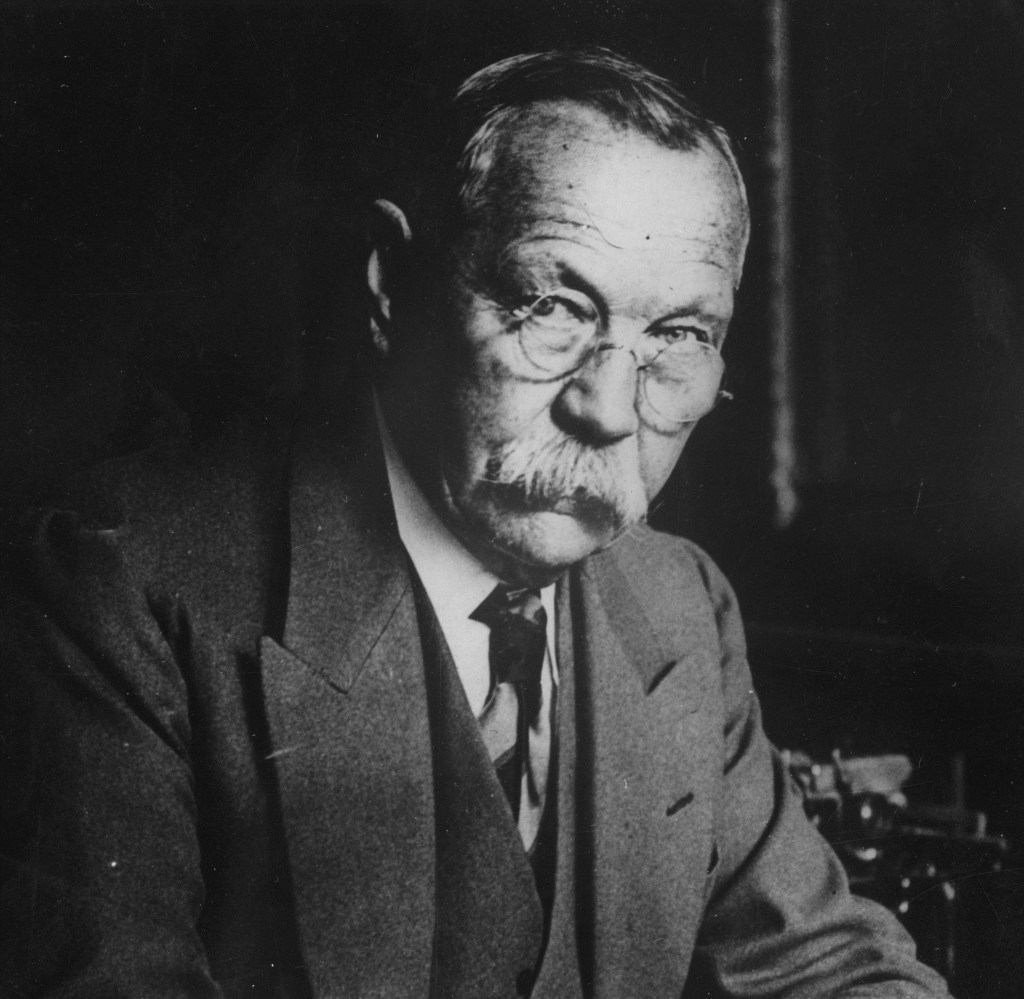
About the Author – Sir Arthur Conan Doyle

Sir Arthur Ignatius Conan Doyle was born on 22nd May, 1859 in Edinburgh (the capital of Scotland). He was a bristish writer and physician by profession. His early education was completed at Jesuit Preparatory School at Lancanshire. Later in life, he took education at Stella Matutina in Feldkirch. This was the period of time when he rejected the Catholic faith and turned agnostic.
Sir Arthur Doyle studied medicine at the University of Edinburgh Medical School in 1876-1881. He also pursued practical botany at the Royal Botanic Garden. Sir graduated with a Bachelor of Medicine and Master of Surgery Degree from the University of Edinburgh and later obtained his Doctor of Medicine Degree. He worked as a ship surgeon during a voyage to West African Coast. Later on, he began practicing independently and while waiting for his clients, he would write literary content. Sir Arthur also tried his hands on Opthalmology but his efforts did not turn out successful.

At the age of 27, he wrote his first successful piece of writing – A Study In Scarlet. He received positive reviews in the Scotsman and Glasgow Herald. Sir Arthur created the iconic character – Sherlock Holmes, by trying to mirror his former University teacher, Joseph Bell. He wrote a plethora of Sherlock Holmes and Watson series and decided to discontinue it. He felt, these two major characters is all what his stories revolved around and that is distracting him from other topics. This prominent writer attempted to raise the price of his Sherlock Holmes writings in order to check whether his audience would still buy his writings. He was pleasantly surprised to learn that, his readers were ready to pay larger sums to read more of Sherlock Crime Fiction. Hence, he became one of the finest paid authors.
Sir Arthur Conan Doyle has written five narratives, short stories, novels such as The White Company, The Sign of Four, and works for the stage such as The Waterloo, The Speckled Band, etc.

He has been honoured with several awards such as – Knight of Grace of the most venerable order of the hospital of Saint John of Jerusalem, Queens’s South Africa Medal, Knight of the Order of the Crown of Italy, Order of the Medjidie.
Sir Arthur succumbed to a heart attack on 7th July, 1930 in East Sussex at the age of 71. He was buried in Minstead Churchyard in Hampshire. A statue in the honour of the writer has been constructed at Crowborough and a statue of the character Sherlock Holmes has also been raised at Edinburgh. Though Sir Arthur Conan Doyle is not physically present today, his remarkable writings still continue to be read by masses.


Positive effects of Covid Lockdown

Covid 19 a name which has changed the life of every individual in this world. It has changed the way we live, the way we work the way we think.When we hear covid-19 we get anxious, sad and always look at the negative side of it. Which is right because we have lost so many lives, jobs, increase in the number of of depression cases, which has ultimately made everyone’s life a Topsy-turvy.

But as we know there is always two sides of a coin, so there is always two sides of any situation too. We have already looked at the negative side and we know about it but now let’s look at the positive sides too.

Reduction in air pollution : there was reduced in air pollution which improve the air quality of whole world, as all of the big factories where close up and there was no emission of carbon dioxide, Sulphur and other toxic gases in the atmosphere.

Clearance of water body : the water bodies have cleaned themselves during this time as the industries and factories when not releasing any toxic chemicals and materials in the water bodies which even increased the number of water organism.

Reduction in use of energy : again due to the close down of all the factories and industries the energy consumed earlier was reduced and which lead to saving a lot of energy.

Improve in health facilities : as this covid-19 broke out we actually realised that we need a better health facilities and to provide these facilities many new firms were established to provide this medical and health facilities leading to its improvement. India was one of the largest producer of mass and PPE kits.

Technological advancement : when the spender make broke out everything has switched to online platforms which lead to to its improvement. As we know necessity is the mother of invention and in these time when we were not able to meet each other physically technology help us a lot to overcome this hindrance

Removal of place hindrance : we were able to take online classes, meetings, webinars and other events online which actually remove the hindrance of place as we can attend it being in any part of this world.

Spend more time with family : we were able to give more time to our family members and loved ones which earlier was not possible due to a busy work schedule.

Getting a break from busy life : this actually gave us a break from our busy life and think about ourselves and enjoy quality time with her family which actually make us very happy.

Chances for learning new skills : this also provided as to improve our skills through online courses which was earlier difficult for us to focus upon because of our busy life.

Just look at the positive sides of it. There are many more which I may not be able to cover right now, but you know it. So in order to get inspiration in the difficult time we should look at the positive points of it. Because this is what life is about facing difficulties with a smile on your face and a positive attitude in your mind.

Global Warming a Global Threat

“Global warming, a global threat”. We have heard a lot about global warming in the news debates general discussion and international discussions too. But are we really serious about it, we just hear it and leave it we never try to understand the seriousness of it. It has just turn to be a debate topic for us.

The temperature of the Earth is increasing drastically, even in Antarctica whoes normal temperature remain +10°C in summer experience 18.3 degree Celsius record temperature which is an alarm in one. Even Canada is facing about 50 degree celsius temperature which is the record highest in the history of Canada.

Cause of global warming is the CFC gases which are released by the AC, refrigerators and cars that we use. The clearing of forests that leads to deforestation is another cause of global warming as carbon dioxide is not been able to use by the trees. Global warming leads to melting of glaciers which ultimately leads to increase in sea level which is the main cause of tsunamis and other problems.

We always hear that action speaks Louder Than words and this is the real problem to take action upon. There are many steps taken internationally for this cause but we should contribute from our side too.

We can contribute by planting a tree or any small plant or by reducing the use of ACs, refrigerators and cars. Just think about it it might be a very small step from your side but will cause a great difference to this earth. Just bring the first step forward and other get inspired by you and will ultimately E result in reduction of the Global temperature.

Water A Priceless Resource

Water an absolute necessity of life. How weird, a thing which doesn’t have taste, colour or smell plays the most important part in our life. It is our daily basic necessity, it is so basic that even we have started ignoring it’s presence. The importance of anything is only realise when we are deprived of that.

We have started misusing this resource. We waste a lot of water while brushing, bathing and even pollute water bodies by contaminating it with harmful Chemicals and industrial waste which, leads to death of water organism. We have forgot that what is not our property it belongs to everyone who is present on earth.

The value of water is realised by those who are deprived of it. Almost 90% of the world’s population to not have access to clean drinking water they are forced to drink muddy and dirty water. Those people use every drop of water very cautiously. We should at least think of them if we save even a single drop of water if we can, this will contribute to a great cause.

We should take a youth from today itself that we should not waste a single drop of water. Saving water means saving life, there are many people who died because of drought and many other reason like drinking contaminated water. Do think about them and please save water if you can. Be a responsible citizen and it is our responsibility.

Everything you need to know about the classical dances of India.

There are a lot of misconceptions about what actually the classical dances of India are, what are its types and forms, and I am here to clear those confusions and let you know more about the ethereal culture of India.

there are 7 classical dances of India.

kathak

A dance form originated in the area of the present state of Uttar Pradesh, nearly 2000 years ago. Kathak literally means, one who tells a story, and that’s what it is all about. Stories and chronicles from the ancient era. It is usually known for its swift spins, bolting footwork and lightning movements. one of the fastest performing dances in the country, it is also the one of the most complex art forms. the techniques are the most important thing in the whole dance form, to practice them, there are special algorithms, for example, tarana, thumri, tukda, tatkaar, that, gat bhav, gat nikas etc. It predominantly has 3 gharanas included in it- Jaipur Gharana, Banaras Gharana and Lucknow Gharana. Jaipur gharana mainly focuses on the footwork while Banaras gharana concentrates more on the spins, and Lucknow, of course is all for the expressions or adaa. It consists of both theoretical and practical branches extending so widely that it is difficult to study all of it even in a lifetime. This prestigious dance has now spread in not only India but also the whole world. In almost every innovating country, you could find at least one Kathak dance institute. Late Pandit Chitresh das is primarily responsible for it fanning out in the US. The renowned Hindi film industry of India, or more commonly known as Bollywood, is most influenced by this form of dance. we can trace that in the songs like, kaahe chhed, aaja nachle, etc. Basically, around all Madhuri Dixit’s songs.

kathakali

A dance form originated from the area of Malabar(now Kerala), it uses vivid costumes and vibrant makeup when performed and has less theoretical knowledge when compared to any other dance forms. It mainly centralizes around depicting the stories of Krishna and usually is performed by male dancers. roots of the origin of Kathakali are not clear, but we do know that the style of Kathakali that is performed today was established in the 17th century. Most people have a misconception between the two dance forms of Kathak and Kathakali, but if you see the dance yourself, they are almost contradictory.

Bharatanatyam

The birthplace of this dance being ancient Tamil Nadu, Bharatanatyam highly focuses on the rigid and tight postures, the movement of the eyes, and the lithe of the dancer. it is more of a theoretical dance, rather than storytelling, but the latter has become fairly prominent in the 20th- 21st century. Bharatanatyam was initially exclusive only in the Hindu temples till the eighteenth century, but when the British declared on banning the dance, The people of India revolted, and started spreading the dance outside of temples and places of worship. And look now where it has brought us, Bharatanatyam is now the most famous Indian dance form in the world, and the most widely spread, and we hope it will remain so in the future.

Mohiniyattam

Another dance from the cultural state of Kerala, Mohiniyattam is a dance that follows the lasya style of dancing( soft, eros-filled and delicate) and is mostly performed by women after extensive training. First seen in the manuscripts written in the 16th century, it started systemizing in the 18th century but decreased popularity when the British Raj banned it in the years of 1931-1938. It regained its importance in the 21st century and is still thriving sprightly.

Manipuri

As it name suggests, Manipuri is originated in the ethereal state of Manipur, one of the seven sisters in the eastern side of India. It is also known as Raas Leela in some parts of the country, for its  culture fusion between various local folk dance forms. It is a dance drama for most parts, with dresses like none other. it mainly consists of the torso working arduously and the legs no moving that much, with flowy, graceful and fluid movements, it’s beauty just reflects the state it comes from.

this is it for today!

next up, we have the following dances left, I’ll also add a special segment about little details on Natyashastra.

Kuchipudi

Odissi

How optics changed the world?

The formal study of light began as an effort to explain vision. Early Greek thinkers associated with a ray emitted from the human eye. A surviving work from Euclid, the Greek geometrician, laid out basic concepts of perspective, using straight lines to show why objects at a distance appear shorter or slower than they actually are. Eleventh-century Islamic scholar Abu Ali al Hasan Ibn Al-Haytham known also by the Latinized name Alhazen revisited the work done by Euclid and Ptolemy and advanced the study of reflection, refraction, and color. He argued that light moves out in all directions from illuminated objects and that vision results when light enters the eye. In the late 16th and 17th centuries, researches including Dutch mathematician Willebrord Snel noticed that light bent as it passed through a lens or fluid. Although he believed the speed of light to be infinite, Danish astronomer Ole Romar in 1676 used telescopic observations of Jupiter moons to estimate the speed of light as 140,000 miles a second. Around the same time, Sir Isaac Newton used prisms to demonstrate that white light could be separated into a spectrum of basics colors. He believed that light was made of particles, where as Dutch mathematician Christiaan Huygens described light as a wave.

The particle versus the wave debate advanced in the 1800s. English physician Thomas young’s experiments with vision suggested wavelike behavior, since sources of light seemed to cancel out or reinforce each other. Scottish physicist James Clerk Maxwell’s research united the forces of electromagnetism fell along a single spectrum. Te arrival of quantum physics in late 19th and early 20th century prompted the next leap in understanding light. By studying the emission of electrons from a grid hit by a beam of light known as the photoelectric effect Albert Einstein concluded that light came from what he called photons, emitted as electrons changed their orbit around an atomic nucleus and then jumped back to their original state. Through Einstein’s finding seemed to favor the particle theory of light, further experiments showed that light and matter itself behave both as waves and as particles.

How do lasers works?

Einstein’s work on the photoelectric effect led to the laser, an acronym for “light amplification by stimulated emission radiation.” As electrons are exited from one quantum state to another, they emit a single photon when jumping back. But Einstein predicted that when an already excited atom was hit with the right type of stimulus, it would give off two identical photons. Subsequent experiments showed that certain source materials, such as ruby, not only did that but also emitted photons that were perfectly coherent-not scattered like the emissions of a flashlight, but all of the same wavelength and amplitude. These powerfully focused beams are now common-place, found in grocery store scanners, handheld pointers, and cutting instruments from the hospital operating room to the shop floors of heavy industry.

Future trends in fiber optics communication

Fiber optics communication is definitely the future of data communication. The evolution of fiber optic communication has been driven by advancement in technology and increased demand for fiber optic communication. It is expected to continue into the future, with the development of new and more advanced communication technology.

Another future trend will be the extension of present semiconductor lasers to a wider variety of lasing wavelengths. Shorter wavelength lasers with very high input powers are of interest in some high density optical applications. Presently, laser sources which are spectral shaped through chirp managing to compensate for chromatic dispersion are available. Chirp managing means that the laser is controlled such that it undergoes a sudden change in its wavelength when firing a pulse, such that the chromatic dispersion experienced by the pulse is reduced. There is need to develop instruments to be used to characterize such lasers. Also, single mode tunable lasers are of great importance for future coherent optical systems. These tunable lasers laser in a single longitudinal mode that can be tuned to a range of different frequencies.

“Music is the arithmetic of sounds as optics is the geometry of light.” – Claude Debussy

THE CANTERBUERY TALES

SHORT ANALYSIS

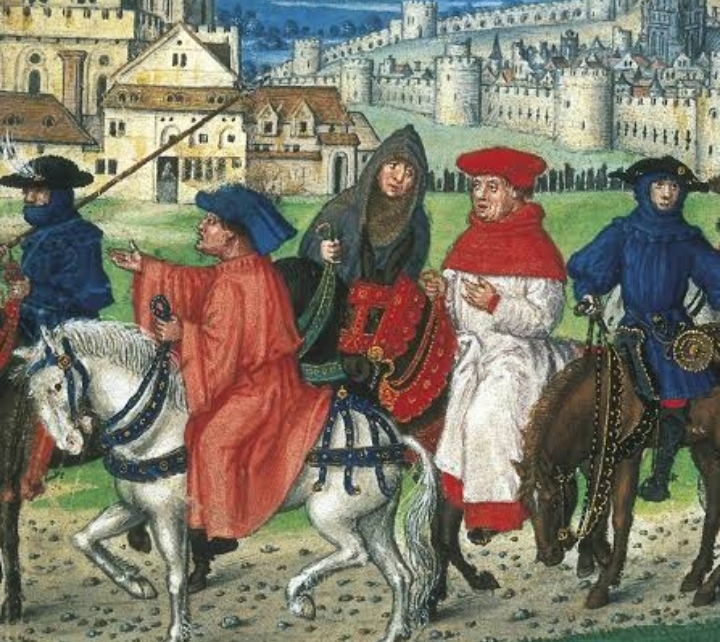
Geoffrey Chaucer was widely considered as the greatest English poet in the 14th century. His poem “Canterbury Tales” reflects his own age and forms a wonderful commentary upon the life in the Middle Ages.

           The group of pilgrims described in the Prologue  is itself an unequaled picture of the society of Chaucer’s time. During the Middle Ages, Church was a major part of everyday life. The church served to give people spiritual guidance. Chaucer introduced the characters which form the part of the society and represent various aspects of the society. The Prolgue is often referred to as a social chronicle. The thirty pilgrims set off to visit the relics of Saint Thomas Becket in Canterbury Cathdral, where they thank to the martyr for having helped them when they where in need. Chaucer alludes the 14th century England, in this period England saw the Great Famine, Black Death, catastrophic events that killed around half of England’s population. Chaucer employed the form of ‘estate satire ‘- a common literary genre in the Middle Ages -that classified people according to their occupation or position in society, with an accompanying list of flaws and virtues  associated with each category.

    The characters all came from different class backgrounds. Society in England is divide in to three estates:the Clergy, the Nobility and the Peasantry. The use of a pilgrimage as the framing device enabled Chaucer to bring together people from many walks of life: knight, prioress, monk; merchant, man of law, franklin, scholarly clerk; miller, reeve, pardoner; wife of Bath and many others. The Knight has the highest position among the pilgrims. Knight, Squire and yeoman represent the feudal chivalry of the time. Chaucer also represents the reigous order of medieval England through his representstion of the persons of some religious professions. They include ;Monk, Friar, Clerk, Parson, Pardoner, and Summoner.

The knight is the symbol of medieval world of chivalry. The Knight’s son, The Squire, who represents the new trends. The Knight participated in the religious wars or the The Crusades fought against infidels.The chivalric Knight were judged on the basis of the wars they fought for the religion and the old knight  falls in this group where as young Squire who loves singing, dancing, drawing and playing flute. The Knight serves in three broad areas; Sothern Spain, Northern Africa, the Eastern Mediterranean and Northen Europe. Each campaign was conduted for the expansion of both the Church and European civilization. The Squire represents the youth of all the ages.

HOUYHNHNMS

CHARACTER ANALYSIS

Houyhnhnms are a fictional race of intelligent horses described in the last part  of the novel. The word ‘Houyhnhnmn’ etymologically means ‘perfection of Nature’ .Houyhnhnms are rational equine beings and are masters of the land contrasting strongly with Yahoos. Here Swift uses anthropomorphism.The Houyhnhnm’s society is based upon reason and they have no religion .The master horse teaches Gulliver their language. Gulliver is impressed by their intelligence  and good behaviour.The Houyhnhnms have an orderly and peaceful society. They have a language and they speak clearly they act justly and they have simple laws.They had no word for lie. Houyhnhnms have also have a form art that is derived from Nature.They are untroubled  by greed, politics  or lust. They lives a life of cleanliness and exist in peace and serenity. Houyhnhnms live by the maxim “cultivate Reason  and be totally governed  by it”. According  to them the only word for evil is Yahoo.

       Houyhnhnms are untarnished  by the greedy, politically motivated or lustful intentions, that Gulliver  has observed in humankind. Houyhnhnm’s hooves are able to use tools or do farming work as humans do. They live upto 70-75 years and they usually die of old age. The Houyhnhnms train up their youth to strength, speed, and hardiness, by exercising them in running races up and down steep hills, and over hard stony grounds.Two principal virtues in Houyhnhnms culture  are friendship and benevolence. As a result  war is completely unknown in the Houyhnhnms culture. The Houyhnhnms believe that Nature and reason are sufficient guides for a reasonable animal.These are the reason why ,Gulliver  entered on a firm resolution never to return to humankind, but to pass the rest of his  life among these admirable Houyhnhnms, in the contemplation and practice of every virtue.

MASTER IN HOUYHNHNM’S LAND

The Houyhnhnm  who first discovers Gulliver and takes him into his own home. Wary of Gulliver’s Yahoo like appearance at first, the master was hesitant to make contact with him, but Gulliver’s ability to mimic the Houyhnhnm’s own words persuades the master to protect Gulliver. The master’s domestic cleanliness, propriety, and tranquil reasonableness of speech have an extraordinary impact on Gulliver. It is through this horse that Gulliver is led to revaluate the differences between humans and beasts and to question humanity’s claims to rationality.

YAHOO

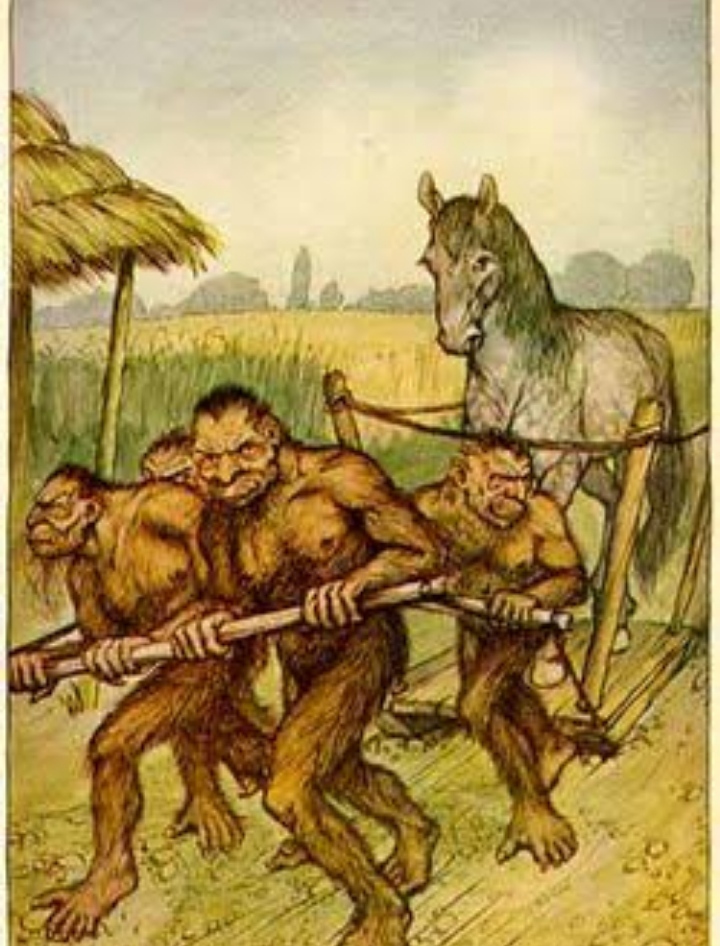
The term yahoo is a synonym for  a rude, noisy, or violent person.Yahoos are humanlike beasts who live in servitude to the Houyhnhnms.Yahoos seems to belong to various ethnic groups,as they  there are blond Yahoos as well as dark haired and read headed ones.They are naked filthy and extremely primitive in their eating habits.They are unteachable among all animals. They are cunning ,malicious,treacherous  and also revengeful. They are strong and hardy, but of a cowardly spirit, and by consequence, insolent, abject, and cruel. When Gulliver  thought of his family,  friends,  countrymen, or the human race in general, he considered them as they really were Yahoos in shape and disposition, perhaps a little more civilized, and qualified with the gift of speech; but making no other use of reason.Yet despite Gulliver’s   revulsion for these disgusting  creatures,he ends his writing referring to himself as a yahoo.

DON PEDRO DE MENDEZ

Don Pedro de Mendez is the  Portuguese captain who takes Gulliver back to Europe after he is forced to leave the land of Houyhnhnm.Don pedro is naturally benevolent and generous ,he offered Gulliver his own best suit of clothes. Gulliver meets his generosity with repulsion as he cannot bear the company of Yahoos .

JAMES BATES

An eminent  London surgeon under  whom Gulliver serves as an apprentice after graduating from Cambridge. Bates helps get Gulliver his first job as a ship’s surgeon and then offers to set up a practice with him. After Bates’s death, Gulliver has trouble maintaining the business, a failure. Bates is hardly mentioned in the travels.

WILLIAM PRICHARD

William Prichard is the master of the Antelope, the ship on which Gulliver embarks for the South Seas at the outset of his first journey, in 1699. When the Antelope sinks, Gulliver is washed ashore on Lilliput. No details are given about the personality of Prichard, and he is not important in Gulliver’s life or in the unfolding of the novel’s plot.

LAPUTIAN’S

CHARACTER ANALYSIS

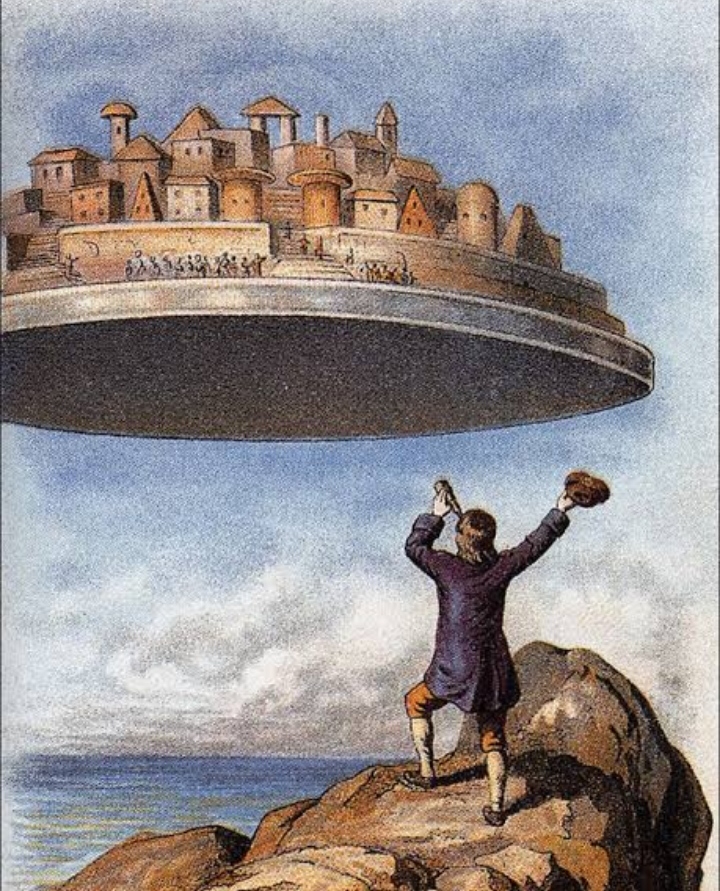
Laputian’s are the   absentminded intellectuals who live on the floating island of Laputa, encountered by Gulliver on his third voyage. The Laputans are parodies of theoreticians, who have scant regard for any practical results of their own research. During Gulliver’s stay among them, they do not mistreat him, but are generally unpleasant and dismiss him as intellectually deficient. They do not care about down-to-earth things like the dilapidation of their own houses, but worry intensely about abstract matters like the trajectories of comets and the course of the sun. They are dependent in their own material needs on the land below them, called Lagado, above which they hover by virtue of a magnetic field. In the larger context of Gulliver’s journeys, the Laputians are a parody of the excesses of theoretical pursuits and the uselessness of purely abstract knowledge.

THE KING OF LAPUTA

 The King of Laputa is a man of Mathematical obsession who explains the laws of his land to Gulliver. He thinks that the island below Laputa must obey the instructions and laws made by him,and if the people did not obeyed him, he would punish them.

LORD MUNODI

Lord Munodi  is a person of the first rank.He had been Governor of Lagado but was  discharged for insufficiency.King of Laputa treated him with tenderness and as a well meaning man.He fell from grace with ruling elite by counselling  an approach to agriculture and land management in  Lagado, an approach that was rejected eventhough it proved successful when applied to his own estate.

GOVERNOR OF GLUBBDRUBDRIB

 Governor of Glubbdrubdrib  has the power of calling  whom he pleases from the dead and commanding their service for twenty four hours.Glubbdrubdrib is the Island of sorcers and magicians.It is governered by the head of  a certain tribe,who  are all magicians. This tribe marries only among each other, and the eldest in succession is prince or governor.

KING OF LUGGNAG

Luggnagg is an island kingdom. Those who appear before the king are required to lick the dust on the floor of his throne room. The king is so pleased with Gulliver that he arranges for him to stay in the palace and gives him some money to spend.Infact the king shows his affection for Gulliver by giving him money and presenting a letter of recommendation for his voyage to Japan.

WILLIAM ROBINSON

William Robinson is a Cornish man and commander of the Hopewell.  He had always treated Gulliver  more like a brother, than an inferior officer.He is an honest man. William Robinson has commanded ships on which Gulliver has travelled before and always treated him well, even as an equal rather than a subordinate.

BROBDIGNAGIANS

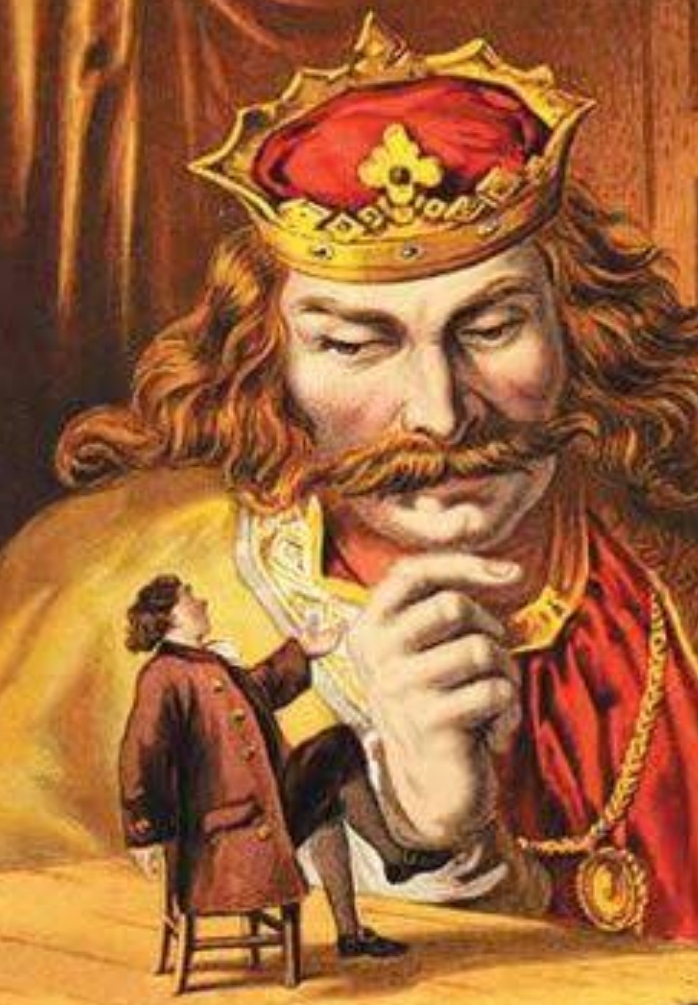
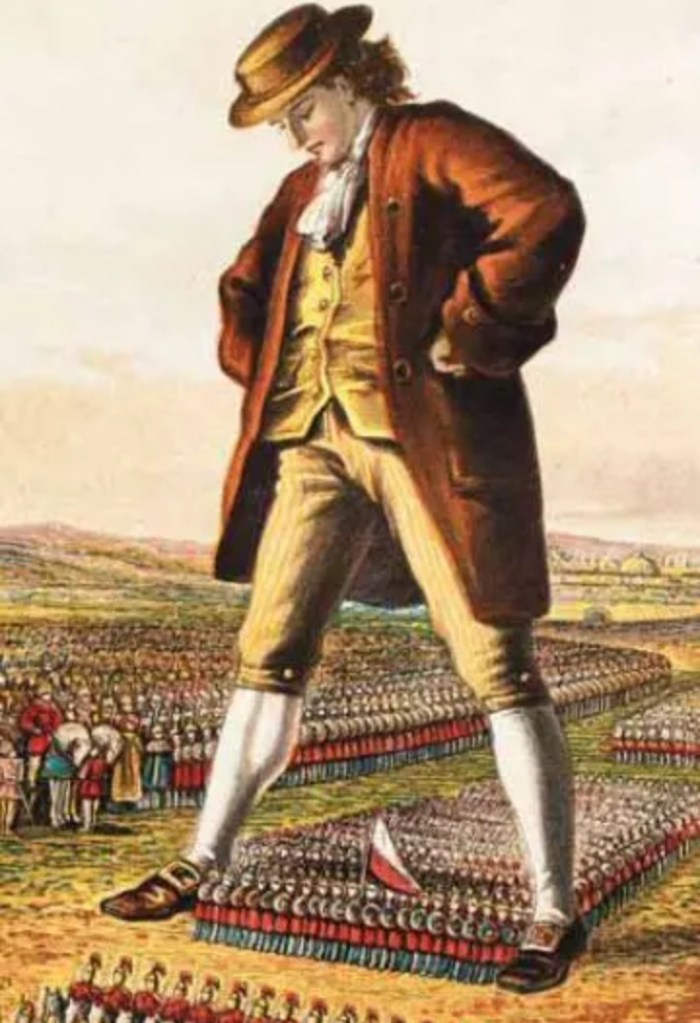
Brobdignagians are the giants  whom Gulliver meets on his second voyage. Brobdingnagians are basically a reasonable and kindly people governed by a sense of justice. Even the farmer who abuses Gulliver, at the beginning he is gentle with him. The farmer’s daughter, Glumdalclitch, gives Gulliver perhaps the most kindhearted treatment he receives on any of his voyages. The Brobdingnagians do not exploit him for personal or political reasons, as the Lilliputians do. The Brobdingnagians do treat Gulliver as a plaything. When Gulliver tries to speak seriously with the king of Brobdingnag  about England, the king dismisses the English as odius, showing that deep discussion is not possible for Gulliver here.

FARMER

 Gulliver’s first master in brobdignag.  The farmer speaks to Gulliver ,showing that he is willing to believe that the relatively tiny Gulliver may be as rational as he himself and treats him with gentlenss. However farmer puts Gulliver on display around brobdignag  which clearly shows that he would profit  from his discovery than converse with him as an equal.His exploitation of Gulliver  as a labourer, which nearly starves Gulliver to death,thus Gulliver’s health deteriorates.Generally farmer represents the average Brobdignagian of no great gifts or intelligence ,wielding an extraordinary power over  Gulliver simply by his virtue of his immense size.The farmer has  wife, three children and an old grandmother.He treats Gulliver as a slave.

GLUMDALCLITCH

Glumdaclitch  is farmer’s  daughter and she is nine years old. Gulliver called her ‘Glumdaclitch’, which is the word for ‘little nurse’ in their language.She is tender hearted amd taught Gulliver  many things. She gave him lessons  in their language.When queen discovers that no one is at court ,is suited to care for Gulliver ,she invites Glumdalclitch to live at court and she performs the function with great seriousness and attentiveness. She called Gulliver ‘Grildrig’, which means ‘little man’ in their language.According to Glumdaclitch Gulliver is a living doll ,symbolizing the general status Gulliver has in Brobdignag. She was a very talented and caring girl. She was quite concerned about him when her father’s greed to earn money by conducting Gulliver’s performances were having an adverse effect upon his health. She took Gulliver’s extra care after his life was in danger due to his small size. When a giant monkey abducted Gulliver, mistaking him for baby monkey, he got injured. Glumdalclitch nursed him back to health.

QUEEN OF BROBDINGNAG

 The queen of Brobdignag , who is so delighted by Gullivers beauty and charms she agrees to buy him from the farmer for 1000 pieces of Gold.Gulliver  was out of all fear of being ill treated , under the protection of so great and good empress. Gulliver  appreciates her kindness. Gulliver describes the queen as an ornament of Nature,darling of the world and the phoenix of the creation.Gulliver also found his spirit revived by the august presence of the queen of Brobdingnag.

KING OF BROBDIGNAG

King of Brobdignag  is well educated  and he is an expert in Mathematics and in Philosophy.He seems to be true intellectual ,well versed in political science and  among other disciplines .The king’s relation to Gulliver is limited to serious discussions about the history and institutions of Gulliver’s native land.

QUEENS DWARF

 The queen’s dwarf is generally malevolent and conceives a particular antipathy for Gulliver. He is whipped several times for mistreating the only man at court smaller than he is, a proceeding which only increases his dislike.

 Mr. THOMAS WILCOCKS 

Thomas Wilcocks is a captain  from Shropshire  and who saved Gulliver  from the bird  like  cage .He also entertained  Gulliver with great kindness  and comforted him.Thomas Wilcock is an educated person and he  have a good sense to understand others. He is an intelligent man who listens patiently to Gulliver’s story.

LILLIPUTIANS

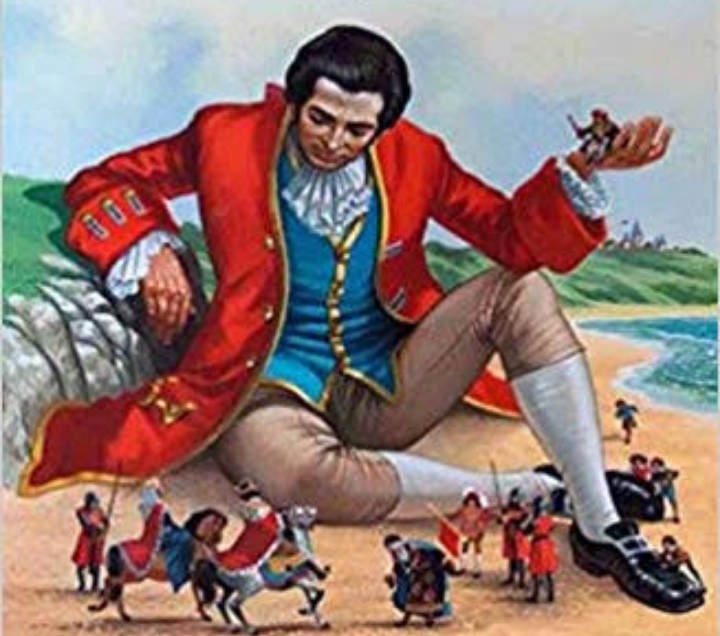
Gulliver describes Lilliputians  as ingenious people.They treated him with so much expense and magnificence. These people are most excellent Mathematicians, and arrived to a great perfection in Mechanics, by the countenance and encouragement of the emperor, who is a renowned patron of learning.Lilliputians  considered fraud as greater crime than theft.They always punish fraud with death. The nurseries for males of noble or eminent birth, are provided with brave and learned professors, and their several deputies. The clothes and food of the children are plain and simple. They are bred up in the principles of honour,justice, courage, modesty, clemency, religion, and love of their country. The cottagers and labourers keep their children at home, their business being only to till and cultivate the earth, and therefore their education is of little consequence to the them.Lilliputians are talented  engineers because  they have been able to inveny and construct  an enormous carriage.Lilliputians tests physical power  and agility, instead of moral power and reason to  determine who will hold its governmental offices.The laws of Lilliput are also very different  to English laws. They regard trade as very important  and they think that trade depends on honesty. Lilliputians are tiny people and Swift draws an analogy upon their physical size by linking that their smallness in character.

EMPEROR OF LILLIPUT

Emperor of Lilliput  is an excellent horse man.He is strong,masculine and all his motions are graceful and his deportment is majestic.He is twenty eight years and three quarters old. The Emperor has  good leadership qualities such as he frequently conducts councils inorder to debate about what course should be taken with Gulliver,because his diet is very expensive and might cause  a famine.As Gulliver made great progress in learning their language ,Emperor frequently  honoured him with his visits.He also gives permission to Gulliver to move around  in the kingdom only on the condition that he will not hurt anyone. The Emperor takes  wisest decisions  according to the advise of council.He strictly implemented  laws of kingdom.The emperor gives Gulliver the land’s highest honor,’Nardac’.He longed to reduce the whole empire of Blefuscu in to a province and to govern it by a viceroy.He is very ambitious and wished to become the monarch of the whole world.

               The emperor is also deceptive,when Gulliver goes away to visit Blefuscu,the emperor seems as though he remains Gulliver’s friend ; however ,the emperor with other malicious courtiers  plot how to  rid the kingdom of their giant.The emperor  accuse him of treason and plan to execute him upon his return to Lilliput.This shows that the emperor is savage,merciless and selfish.He clearly thinks of highly himself and much less of practically everyone else. We can understand that  the Emperor only  sees Gulliver in terms of what Gullliver can do to bring him more power .The emperor is also egocentric and acts much like a despotic ruler.He demands that his officials walk on tight ropes and perform other dangerous acts to obtain and keep their jobs . The emperor shows lack of appreciation  for Gulliver both saving his wife’s life in the burning castle  and for repelling an attack on Lilliput by impeaching him.The emperor loves war and really wants to enslave people of his neighbouring Island.When  Gulliver refuses  to help him destroy Blefuscus freedom ,the emperor starts to hate Gulliver.

FILMNAP

Filmnap is the treasurer in Lilliput,he had always been Gulliver’s secret enemy. He conceives a jealous hatred for Gulliver when he starts believing that his wife is having an affair with  Gulliver.He represented the low condition of treasury inorder to dismiss Gulliver from their country. Flimnap is a portrait of the weaknesses of character to which any human is prone but that become especially dangerous in those who wield great power. High- admiral, Filmnap is also described as Gulliver’s mortal enemy since his arrival.His hatred increased  since Gulliver’s great success against Blefuscu.

REDRESEL

 Redresel ,Pricipal secretary of private affairs  in Lilliput .He is Gulliver’s true friend. He explains  the history of the political tensions between the two principal parties in the realm, the High-Heels and the Low-Heels to Gulliver.

SKYRESH BOLGOLAM

Skyresh Bolgolam, High- admiral, who is the only member of the administration to oppose Gulliver’s liberation. Gulliver imagines that Skyresh’s enmity is simply personal, though there is no apparent reason for such hostility.

BLEFUSCIANS

The empire of Blefuscu is an Island situated to the North-East of Lilliput. Blefuscians are prone to conspiracies and jealousies, and while they treat Gulliver well enough materially, they are quick to take advantage of him in political intrigues of various sorts. The two races have been in a longstanding war with each other in the interpretation of  proper way to  cut the eggs. Gulliver helps the Lilliputians defeat the Blefuscian navy, but he eventually leaves Lilliput and receives a warm welcome in the court of Blefuscu. by which Swift satirizes the arbitrariness of international relations.

EMPEROR OF BLEFUSCU

Emperor of Blefuscu helped Gulliver to return to his native country. The emperor of Blefuscu is kind, as he grants Gulliver supplies to outfit the ship that Gulliver has found. The emperor of Blefuscu promises  protection t0o Gulliver , and he is sincere about granting it. However, when Gulliver decides that he would rather leave Blefuscu, the emperor agrees to Gulliver’s wishes, showing that the emperor is gracious and beneficent. In fact, the emperor gives Gulliver fifty purses filled with money. Gulliver trusts him and remarks on his generosity and grace.

LEMUEL GULLIVER

CHARACTER ANALYSIS

   Lemuel Gulliver is the protagonist and narrator in the novel “Gulliver’s Travels”.Gulliver is the son of a small landowner and he was born and brought up in a middle- class family in Nottinghamshire,England.He is  well educated and he was ship’s surgeon.Gulliver is married  to Mary Burton and have two children. Gulliver’s remarkable travels begin in 1699 and end in 1715, having changed Gulliver’s personality to that of a recluse. He claims to have written his memoirs five years following his last return to England, in 1720 or 1721.He made several voyages and spent his leisure hours by reading best authors ,observing the manners and dispositions of people as well as learning their language.In his education and travels, Gulliver acquired some knowledge of High and Low Dutch, Latin, French, Spanish, Italian, and Lingua Franca; he later states that he “understood some Greek, and  Portuguese very well”.

                     Gulliver  is good at adapting himself to other cultures .Gulliver provides a huge context and interpretation for the different  people he encounters over the course of his travels.Gulliver quickly adapts to new situations and he is an obedient person.Although  Lilliputians  treats him cruelly, he responds in a submissive manner.He is a person concerned with honor, gratitude, common sense and kindness. Eventhough he is a foreigner to Lilliput Island, he was ready to defend his person and state against all invaders, this shows his helping mentality.Gulliver received the highest title of honour ‘Nardac’  in the realm of Lilliput, by carrying off the whole fleet of the Blefuscudians.When the emperor compelled him to destroy Blefuscians he refused it and  said that; “I would never be an instrument of bringing a free and brave people in to slavery”.

                                                                                                        (Part 1,chapter 5,para-3)

                According to him war is a terrible thing.Gulliver always take wisest decisions and he is outspoken and  very bold to declare his opinion.He is an honest man and he expects others  to be honest. When Gulliver arrives in Brobdingnag ,he discovers a race of giants that dwarf him in the same way that he dwarfed the Lilliputians.This change in circumstance  and perspective show him that all concepts ,including size exist only in proportion to context.Gulliver  agrees that philosophers are in the right,when they told  that nothing is greater or little otherwise than by comparison.Gulliver confesses that he felt neglected when he was in Laputa because he  feels far inferior than Laputians in  knowledge of Mathematics and music. He was weary of being confined to an Island ,where he received little countenanace.

                 Gulliver’s  motive behind narrating the account of travels to the world: it might help a philosopher to enlarge his thought  and imagination.In his final journey , he spends four years with the horses and falls in love with their society and reason, never wanting to leave. Gulliver mentions  motives behind  war to Houyhnhnmns ;  it might be   the ambition of a prince to get more land to govern or sometimes due to the corruption of ministers, this shows his hatred towards war and  corruption. When he is expelled from this Island, he returns to Engalnd altered. In his final adventure, he discovers the deep flaws of the human race or Yahoos, primitive  human like creatures.Having learned about the evils of his own species Gulliver becomes a misanthrope. He identifies himself with Houyhnhnms and tries to become  one. Although  the horses are alien to him :yet Gulliver thinks of the Yahoos as alien and animalistic.He no longer cares to look upon his family  and spends all his time with two horses in nearby stable.

              Gulliver laboriously tells how clothes himslef in each country :in Lilliput he wears clothes patched together from hundreds of tiny pieces of  fabric, in Brobdingnag his child nurse sews him clothes as though he were a doll and in Laputa he mentions that nine of his suits fit. When he is expelled  from Houyhnhnmns land, he no longer cares what he is wearing. He learns to be content with simplicity while he was in Houyhnhnmn’s Land. The four adventures change Gulliver forever, bringing him new perspective on the laws of humanity and stark commentary on the ways of European life.One modern critic has described ; Gulliver as possessing the smallest will in all of Western literature: he is simply devoid of a sense of mission, a goal that would make his wandering into a quest.

                  Gulliver believes that it is his evil destiny to go to sea. Gulliver says that he needs to make money after  the failure of his business  but he rarely mentions finances throughout the work, indeed never  even  mentions home.  Odysseus’s goal is to get home again, Aeneas’s goal in Virgil’s Aeneid is to found Rome, but Gulliver’s goal on his sea voyage is uncertain. Gulliver is gullible as his name suggests.He is held captive several times throughout his voyages, but he is never once released through his own stratagems, relying instead on chance factors for his liberation.Through  Gulliver’s  character  Swift criticizes humanity. In part one he is portrayed as a typical 18th century  voyager, he is bold practical and unromantic. His homely  outlook  skillfully impressed on the reader by the biographical details at the beginning.Gulliver’s  character is dynamic and always developing  .Overall as a good narrator he tries not to trouble his readers with all the curiosities he had observed.

AMIRI BARAKA’S POEMS

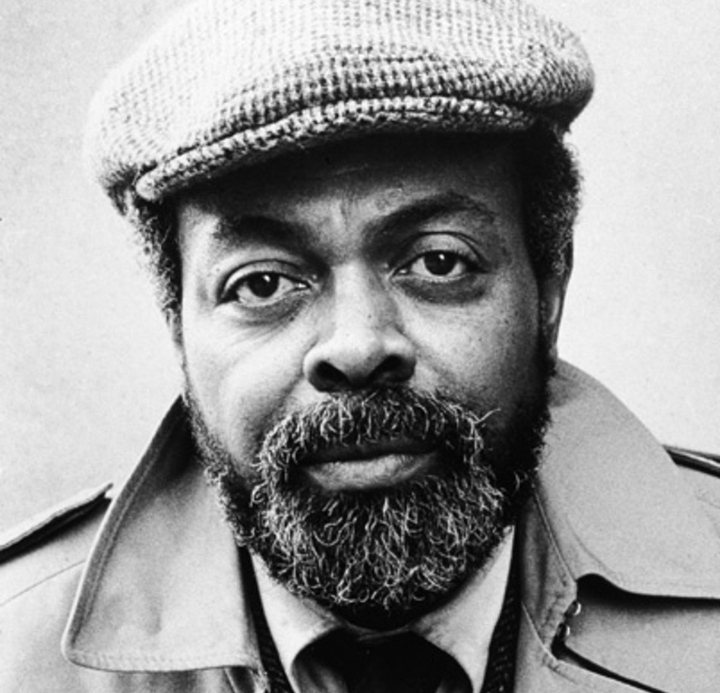
    Imamu Ameer previously known as leroi jones.(  Baraka, was an American writer of poetry, drama, fiction, essays,music criticism and a  political activist. In African – American community, some compare Baraka to James Baldwin due to his writing style (he was also an African American writer) and recognize him as  one of the most respected widely published Black writers of his generation. Critics said that his work is an expression of violence, misogyny and homophobia. He  became a leading advocate and theorist for the burgeoning Black Art during that period . The Black Arts Movement (BAM) was an African –American  art movement formally established in 1965 when Amiri  Baraka opened the Black Art Repertoty Theatre in Harlem.ht would help you to understand the poem if you keep in mmind this concept of black art   Before reading this poem. (The Black Power Movement of the 1960s and 1970s was a political and social movement whose advocates believed in racial pride, self-sufficiency, and equality for all people of Black and African descent.it envisions an art that speaks directly to the needs and aspirations of black America.

              The poem Black Art (1965) became  the major poetic manifesto of the Black  Art Literary  Movement.The poem is written in an imperative tone and Baraka used  this poem as a weapon against  racism. He used enjambment  in this poem to keep the attention of the readers. In this poem he used the language of Black Community for example ; “girdle mamma”, “mulatto bitches”. As an American writer Baraka emphasizes that the Whites could not separate them from their language and culture.The poetic persona in this poem is Baraka himself  and written the poem in an aggressive tone. By writing this poem in an unconventional way, Baraka encourages the readers to protest for their freedom.(  also to fight against the rules deliberately prepared by the whites)  AS William words worth said poetry is the sponataneous overflow of powerful emptions recollected in tranquillity,like that The spontaneous overflow of his words enhances the emotional impact of the poem. Baraka addresses Black American aritists to follow their own methods instead of depending on White’s  culture.

          The style of language   used  in the poem  Black Art alludes the emergence of Hip – Hop music during that time.Hip-Hop was  a recognized salient musical form of the Black Aesthetic. Baraka said that “music was explaining the history as the history was explaining the music”This method of expression in music parellels significantly with Baraka’s ideals presented in Black Art .Use of uneven lines, punctuations and  spelling in this poem  focuses on the violence and allows the readers to understand the mindset of the poetic persona. In general,  Baraka tried to teach the idea of equality among races and classes through his poems, plays and speeches.        Baraka’s  poetry  falls in to three periods ; each reflects what he viewed as a corrupt culture. Baraka’s three creative phases are ; the intellectual avant – garde , the Black Nationalists and the radically political.

                  The hatred towards the Whites can be seen in the mentioning of Elizabeth Taylor’s name, who was a White American actress and had acted in many films .He uses lot of verbal violence in this poem. Baraka said that only a Black consciousness can save Black people from annihilation at the White man’s hands and that no other nation is safe unless the Blacks in America is safe. Baraka argues that  the artist must use the language and semantics unique to his culture to create his art, and that the work should also be understood within the context of that culture. In this poem Black Art ,dedicated to African American to wake up and reverse the situation by taking control over everything.

              Baraka interconnects  art  with racial identity .Black Art Movement promoted arts and crafts for the Black community and allowed them to participate to the full extent. As a Black Art writer, he puts his literary writings to serve for political and social aims. As Larry Neal  (scholar of African American theatre) put in his essay, The Black Arts Movement (1968) “Black Art is the aesthetic and spiritual sister of the Black Power Concept. As such it envisions an art that speaks directly to the needs and aspiraitons of Black America and to Afro – American desire for self – determination and nationhood”. In this poem, Baraka demands to assassin the poems that shoot guns.Here he personifies ‘poems’ as Whites who shoot guns towards Blacks. With the rise of Civil Rights Movement Baraka’s work take on a more militant tone.

               Baraka calls for realism in Black Poetry  and  to stop over glorifying  the lives  that Black people must live in a racist nation.Baraka places realism in his poem to create a  world that would reflect the lives of Black people.It helps to recognize themselves and inspires them to revolt against their circumstances. By this poem Baraka crtiticizes  racism and demands the African- Americans to rise from the race constraints. He had used onomatopoeic words in this poem to express the need for violence. The poetic persona criticizes the poems that are not useful. He describes prominent Black leaders on the steps of white house,kneeling between the sheriff’s thighs negotiating coolly for his people. Poet also presents Euro – centric mentality by referring to Elizabeth Taylor as an epitome of Whites in the society.

          To conclude, Amiri Baraka expresses his anger and frustration and demands the Black artists to  react against oppression.The poem is in a conversational style and used informal words. Barka had used many poetic innovations in form, language and style to react against the negative stereotyping of African-Americans. The slogan such as “Black is beautiful” was prominent during that time. The use of slag in this poem  denotes the mindset of poetic persona. Werner Sollors (professor) criticized his peom as an expression of Black aesthetic , but is striking for its venomous language and for its rhetorical violence.

MARGARET LAURENCE

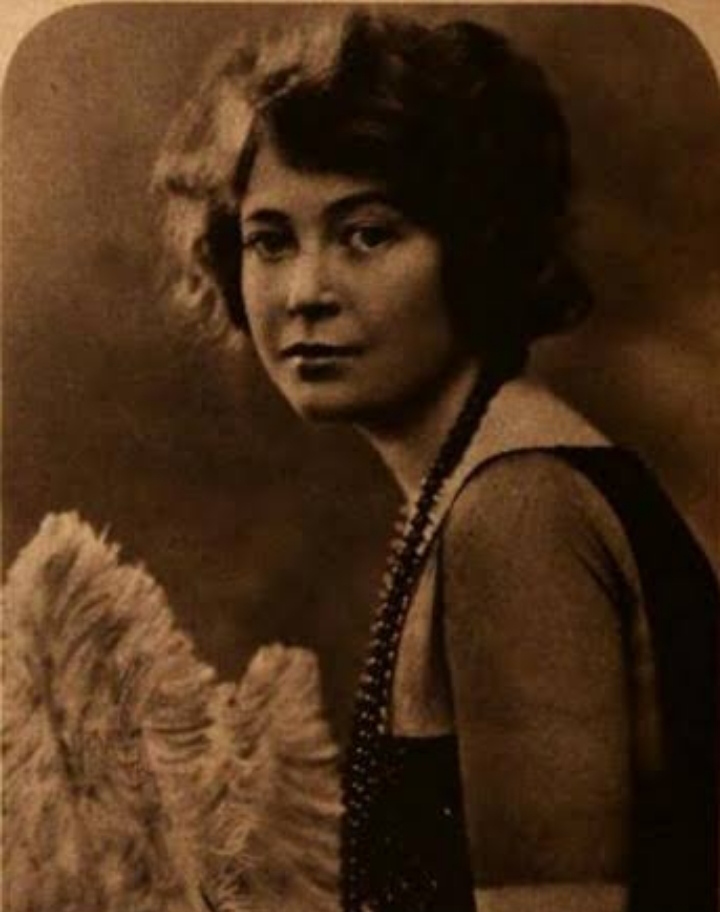
         Jean Margaret Laurence  was a Canadian novelist and short story writer, and is one of the major figures in Canadian literature. She was also a founder of the Writers’ Trust of Canada, a non-profit literary organization that seeks to encourage Canada’s writing community. Margaret Laurence was born  on 18 July 1926 in Neepawa, Manitoba, as the daughter of solicitor Robert Wemyss and Verna Jean Simpson. In 1944, Laurence attended Winnipeg’s United College and she had studied ; English, History, Ethics, and Psychology. Laurence had published works of poetry in the University of Manitoba’s publication “The Manitoban”. She  had submitted this work under the pseudonym “Steve Lancaster”. Laurence graduated with a Bachelor of Arts in English Literature in 1947.She aslo had joined in  Christian  socialist movement known as the Social Gospel.

        Laurence worked at a leftist weekly newspaper, The Westerner, and then at a new independent newspaper, the Winnipeg Citizen in which  she reported numerous social and political issues. Laurence was so moved by the oral literature of Somalia that she began recording and translating poetry and folk tales, which would later be compiled into the work “A Tree for Poverty: Somali Poetry and Prose” (1954). Laurence   began writing short stories in her teenage years while, her first published piece is “The Land of Our Father”.  Her first novel was   “The Side Jordan” (1960) (Britannica) Laurence’s another works are ; “The Prophet’s Camel Bell”(19 63), “The Stone Angel”(1964) (1966) , “The Fire Dwellers” and  “The Diviners” (1974). She was the subject of a National Film Board of Canada documentary, Margaret Laurence: First Lady of Manawaka. Laurence served as Chancellor of Trent University in Peterborough from 1981 to 1983.She also wrote sequential short stories, which she collected under the title “A Bird in the House”(1974).

          Laurance was known for her outspoken support for peace, women’s rights and other progressive causes. Laurence’s novels portray strong women striving for self –realization while immersed in the daily struggle to make a living in a male –dominated world. Her stories feature strong women and their struggle for self – understanding and acceptance. Throughout all her works, Laurence explores themes concerning the role of women, the injustices of sex –role stereotyping and the   equality of opportunity .The point of view is limited to the female  protagonist’s  consciousness. Laurence’s protagonists are oppressed, they never blame the men in their lives or the male –dominated society. All of Laurence’s heroines come to realize that the environment has also given them the strength and the courage to endure.

                  “Manawaka” is a fictional  town in the Canadian province of Manitoba, frequently used as a setting in novels and short stories by Margaret Laurence. The name is an amalgam of Manitoba and Neepawa. The town was based on Laurence’s real life hometown. Margaret Laurence’s Manawaka, like Hardy’s Wessex or Faulkner’s Yocknapatawpha County, universalises human experience through mythologizing it. Laurence certainly brings  back  the old names from the Old Testament.Laurence spent years seven  in Africa ,in Somaliland and Ghana and the experience was a catalyst to her own best writing. Her early novels were influenced by her experience as a minority in Africa. Laurence developed an admiration for Africa and its various populations.

OUR COUNTRY’S GOOD

DRAMATIC TECHNIQUE

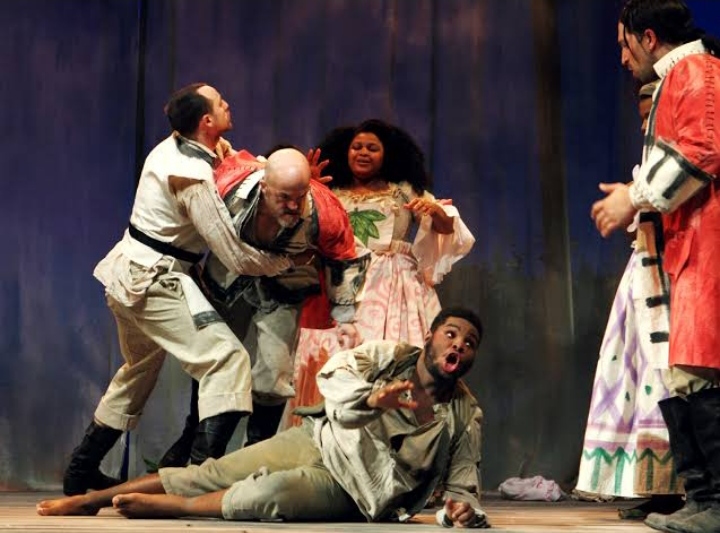
Timberlake  Wertenbaker is a British playwright ,screenplay writer and translator who has written play for the Royal court, the Royal Shakespeare Company and others. “Our Country’s Good” (1988) is  her historical play based on the real events that took place in the eighteenth century among the first convicts transported from England to Australian penal colonies.Wertenbaker uses the play-with-in-a-play to expolre themes of crime and punishment,the impact of colonial expansion,hierarchies of class and gender.The play also emphasis on the theater’s potential to transform individuals and societies .

                Dramatic techniques are used to increase the dramatic tension in the novel or short story.This can be done by placing the characters in time –sensitive situations, diverting the  reader’s  attention or appealing directly to the reader’s  emotion to elicit sympathy for the main character.  In “Our Country’s Good” the cast usually doubles up roles so that convicts and officers are obviously played by the same actors.The play opens with flogging of Robert Sideway and goes on to present stark inequalities between the convicts and officers, between the poor and the better-off, and between men and women. Wertenbaker  uses the  dramatic techniquesin epic theatre , yet it uses mostly naturalistic characterisation. It’s a historical dramatization based on fact and the locations of scenes changes rapidly.

         The play alludes how it connects past and present through documentary information and meta-theatrical  performance.The play creates  tension and insight suffered by it’s  cast of convicts,while suggesting the potential of education and theatre.Each act of play opens with one of the convicts struggling to express the violence of his or her existence with adequate language. “Our Country’s Good” is divided in to two acts that jump forward in time.Each one bears a title that alludes what happens in the episode.This technique encourages readers and spectators to focus on how the events unfold,not just on suspenseful revelations.In these scenes Wertenbaker introduces and reveals the system of beliefs, values and ideas behind the actions of the colonial authorities.With these techniques, it draws spectators  attention to consider this history through the multiple perspectives of the convicts, the colonists and the colonised.Actors signalled their change of character and status simply by taking-off  or putting on a uniform coat and hat.

          To conclude the play  “Our Country’s Good”  enhances the options for stories to be  retold revised.The play concludes with beginning of the first scene of interlude “The Recruiting Officer”.Theatre critics praised this play as a celebration of “the redemptive powers of theatre’’.