PSYCHOLOGY – DEFENSE MECHANISM

What is defense mechanism? How psychology looks into this aspects? Defense mechanism are something that is studied under topic stress. What do you do when you are stress? You meditate, or listen to your favourite music, etc your some how try to divert your mind or make your mind and fight it. According to psychology defense mechanism are the unconscious strategies used to protect the ego from shattering due to unacceptable and harsh reality, it’s a face saving device. Excessive used of defense mechanism leads us to a habit of escaping from the reality and indulge in falsehood about’s one own self which causes lack of concentration eventually leading to symptoms of mental disorder. Let’s see some of the defense mechanism described by Dr. Sigmund Freud;

1) REPRESSION

Suppose a person has underwent a traumatic experience it’s called repression. It’s an unconscious mechanism devise by the ego to keep disturbing the thoughts outside our conscious awareness. Thoughts that are often repressed are those that would result in feelings of guilt from superego.

2) DISPLACEMENT

Displacement is the redirection of an impulse onto to less powerful target. In this case the person can’t retaliate against the actual source of their impulse and that person redirects it to a less powerful target. Example if your working parent is scolded by the boss in the office they come n vent out that anger on you.

3) SUBLIMATION

It is considered to be the a more adaptive defense mechanism in that it can be transform the negative thoughts and emotions into a more positive energy. It’s like redirecting your emotion into a productive endeavour.

4) DAYDREAMING

A person day dreams to escape the reality. It’s when life appears to be tough and unfair a person often uses fantasy to escape the reality. Adolescent is a stage when they get more into this defense mechanism which can be dangerous for their mental health. If they day dream excessively they may lose touch with the actual world and surrounding.

ROLE OF QUAD IN SOUTH CHINA SEA

BY DAKSHITA NAITHANI

The Quadrilateral Dialogue was established in 2007 when four countries—the United States, India, Japan, and Australia—joined forces. However, it did not take off at first due to a variety of factors, and it was resurrected in 2017 after almost a decade due to factors such as growing country convergence, the expanding importance of the Indo-Pacific area, and rising threat sentiments toward China, amongst many others.

The origins of QUAD may be traced back to the Malabar Exercise. Malabar began as a modest Passage Exercise named PASSEX between the Indian and US Navies in 1992, but was halted after India’s nuclear testing in Pokhran in 1998. It was later restarted in 2002. Since its inception in 2002, QUAD has become an annual event. With the addition of Japan in 2015, it has become a trilateral practice.

The Quad’s goal remains intact: to promote the economic and security objectives of those nations with genuine and essential interests, to devise a new approach for keeping the Indo-key Pacific’s maritime lanes free of foreign influence. It has become necessary in view of the increased need for information exchange in the maritime sector. With the growing presence of the Chinese Navy in the Indian Ocean, awareness is a key subject for the Navy. After 2008, China increased its presence in the Region under the pretext of anti-piracy operations, even deploying submarines for the objective. In 2017, China formally established its first overseas facility near Djibouti, in the Horn of Africa.

What are the underlying challenges?

The environment in which QUAD has been resurrected, as well as subsequent engagements like as Malabar Exercise 2020, are regarded as governed by a counter-China narrative. There are several features that may not constitute sites of convergence, despite how they appear.

China’s influence: China has significant economic links with Quad partners, particularly Australia, which is what it may use to compel or sway nations to its side. This might prove to be an issue for India.

Maritime orientation: Quad is a marine rather than a land-based organisation because of its strong concentration on the Indo-Pacific. This raises some important concerns about the basis of collaboration with Asia-Pacific and Eurasian countries.

Differing perspectives. There are conflicting viewpoints on certain situations, such as the Myanmar crisis as seen through the eyes of the United States and India. India has remained silent in the face of Japan’s expressed worry that China is attempting to alter the status quo in the East and South China Seas.

Advantages in Space- When QUAD representatives join forces in space, they have significant benefits and are able to fight China. This includes (a) lowering the extremely high expenses of building a dock in order to promote the development of interplanetary vehicles (IPVs). (b) One member state has benefits that will compliment each other and will lead to a successful Mars exploration and the construction of support facilities that will be necessary for effective asteroid belt mining. (c) All member countries bring a high degree of convergence in space applications, for example, the United States has the advanced technological base required for advanced avionics, which will form the backbone for both the construction of a space dock and the construction of IPVs; India has a highly educated and inexpensive working population, which will lower the cost of space; and Australia has the natural resources required for exploration.

The Quad met in Tokyo on October 6, 2020, for the second time since the organisation revived in November 2017. It was the second such gathering, following the inaugural virtual meeting in June, and the first high-level Quad meeting since the 2019 foreign ministers’ meeting in New York on the margins of the UN General Assembly meeting. Furthermore, given mounting worries about Beijing’s hostile conduct and growing suspicions about China’s management of the COVID-19 outbreak in Wuhan, the meeting’s timing and circumstances added to its relevance.

China’s ‘incremental encroachment strategy’ in the South China Sea (SCS) is a source of worry not only for the countries currently affected by the loss of influence over the Exclusive Economic Zone (EEZ), but also for the rest of the world, as China may be able to exercise a monopoly over SCS Sea Lines of Communication (SLOC). Affected nations lack the necessary power to stand up to China, and so will be forced to accept a one-sided agreement such as the China-driven “Code of Conduct” (COC).

As a result, Chinese adventurism must be restrained by other major maritime countries in the global interest. The fact that China could establish a military facility in the SCS despite the existence of the US Navy shows that worldwide criticism and more effort are required to prevent the SCS from becoming “China’s lake.”

Quad may not have the fangs it needs right now, but there is no other option than to establish a prospective structure like this involving likeminded maritime countries with shared strategic objectives in the Indo-Pacific. Various perspectives on the Quad’s role, viability, and prospects have been expressed on several occasions. Because Quad is a security conversation platform rather than a military alliance, aspirations from it must be suitably limited for the time being. 

In the Indo-Pacific, each Quad member sees a distinct threat. While three of the Quad’s warships (Australia, the United States, and Japan) operate under the NATO military alliance structure, India is not a member of any military alliance, while being a reliable ally of two of them. Without India, the trilateral conversation between the three NATO partners has been since 2002. Because India is the only Quad member with an unresolved land boundary with China, it will take a different strategy to dealing with China.

The Quad has emphasised the importance of ASEAN in the Indo-Pacific; nevertheless, their membership in it is a contentious topic owing to Chinese influence. In reaction to China’s claim to the nine-dash line in the SCS, there are divisions within the ASEAN grouping. Some of the ASEAN nations that have been harmed had previously raised a faint voice opposing Chinese aggressiveness, expecting international powers to rein in China’s antics.

Quad’s shared goal of putting its vision of a free and open Indo-Pacific on a “rules-based” legal framework to ensure freedom of passage in the global SLOC requires some reflection and strengthening. The United Nations Convention on the Law of the Sea (UNCLOS III) has been ratified by Australia, India, and Japan, but the United States has yet to do so. This ratification will be required in order to maintain a high moral ground when implementing the agreement.

China is relatively certain that the US and any other country would not employ military action against it, given the current world geopolitical situation. Beijing is also beefing up its naval capabilities. Quad aims to upgrade beyond its Malabar workouts in this situation.

In the Indo-Pacific, Quad members must maintain freedom of navigation exercises and military posture as China continues to do so. Chinese expansion must continue to be condemned by the international community. Quad may not be powerful enough to stop Chinese adventurism in its current form, but it has the potential to become one of the most effective instruments if the afflicted nations and the international community band together to address their mutual concerns.

The navies of Australia, India, Japan, and the United States conducted their largest naval drills this month, sending warships, submarines, and aircraft to the Indian Ocean, signalling the four countries’ seriousness in countering China’s military and political influence in the Indo-Pacific region, according to analysts. Officials in Beijing were silent, but Chinese state media denounced the Malabar naval manoeuvres, calling them a threat to regional stability, according to the Global Times newspaper.

Conclusion

The Quad is developing as one of the major multilateral which is committed to increased security collaboration in the post–COVID-19 international order, given the rising pace and scope of the group’s work. Furthermore, having an active Quad dispels the long-held belief that the Indo-Pacific is mainly inert. With the stakes higher than ever, each of the Quad’s four members must play a larger role in balancing the Indo-threats Pacific’s and power moves. Every step made by the Quad will make it more difficult for Beijing to realise its great-power goals. As a result, China will be unnerved by the Quad’s emergence as a united front championing a free and open Indo-Pacific. Furthermore, if China continues to push the security boundaries and put the Quad members to the test, the organisation will morph into the anti-China squad Beijing fears.

Academic news

My another article is about education and academic news. Education is one of the most important pillar in the life of an individual. An educated person is respected everywhere. Every organization appoints such a person who can be an asset for the organization in the long time. Education is important for everyone and it’s the fundamental right of every child to access it.

Education – A major transformation has been taken place in the field of academics. The National Education Policy 2020 (NEP 2020) , which was approved by the Union Cabinet Of India in 29 July 2020, outlines the vision of India’s new education system. The new policy replaces the previous National Policy on Education, 1986. The policy is a comprehensive framework for elementary education to higher education as well as vocational training in both rural and urban India. The policy aims to transform India’s education system by 2040.

Vision – National Education Policy 2020 envisions an India – centric education system that contributes directly to transforming our nation sustainably into an equitable and knowledge society by providing high quality education to all. The National Education Policy 2020 has “emphasised” on the use of mother language or local language as the medium of instruction till Class 5 while, recommending it’s continuance till Class 8 beyond. Sanskrit and foreign languages will also be given emphasis. The policy recommends that all students will learn three languages in their school under the ‘formula ‘. At least two of the three languages should be native to India. It also states that now language will be imposed on the students.

Conclusion – The Policy focussed on all the levels of education and recommended prior changes that will be helpful to students in future. The basic idea is to generate competition and feeling of decision making since childhood. Every form of education (since childhood to Masters) is categorized and formed. Hope you will read more about it and clear your doubts.

Thank you for today!!!!!

VACCINE TECHNOLOGY

BY DAKSHITA NAITHANI

ABSTRACT

The immune system is a system that operates 24 hours a day, seven days a week to keep assaults at bay and diseases at bay. The whole system is made up of organs, tissues, and a variety of cell types that work together to defend the body. Immune cells must be able to tell the difference between native and non-native cells and proteins. Microbial cells have antigens that serve as identifiers. Antigens can induce an immune response in the human body. Each species has its own set of characteristics. Vaccines function by inducing an antibody memory response in the body without producing illness. As a result, you build immunity without becoming sick. It must include at least one antigen from the target species to trigger a response.

INTRODUCTION TO VACCINE TECHNOLOGY

A vaccination, often known as an immunisation, is a biological substance that protects people from disease-causing microorganisms. They make advantage of our immune system’s built-in ability to fight infection.

They’re produced from the same pathogens that cause the disease. They have, however, been destroyed or reduced to the point that they are no longer a source of it. Certain medicines just contain a part of the microorganism.

This is why they work so well as medications. They don’t treat or cure diseases like conventional medications; instead, they prevent them. They deceive the immune system that it has been invaded by a real intruder. When real germs enter our bodies, the same thing happens, but you don’t become ill. If you ever come into touch with a pathogen, your immune system will remember it and eradicate it before it can damage you.

TYPES

Vaccines are made using a number of techniques. Various vaccine types need different techniques to development. Antigens can be used in a variety of ways, including:

These can be delivered by a needle injected into the human skin, or ingested orally or through the nasal route.

LIVE (CHICKEN POX AND MMR)

Attenuated vaccines can be made in a variety of ways. All methods involving the transmission of a virus to a non-human host result in a virus that can be recognised by the immune system but cannot replicate in humans. When given to a human, the resulting will not be able to proliferate sufficiently to cause disease, but it will protect the individual from infection in the future. Its protection outlasts that of a dead or inactivated vaccination in most cases.

INACTIVATED (POLIO VIRUS)

A pathogen is inactivated using heat or chemicals to create this sort of vaccination. Because destroyed viruses are unable to replicate, they cannot revert to a more virulent form capable of causing disease. They are, however, less effective than live vaccines and are more likely to require renewals in order to acquire long-term protection.

RECOMBINANT (HPV)

They have been genetically modified in a lab. This method may be used to duplicate a certain gene. The HPV vaccine may be tailored to protect against strains that cause cervical cancer.

SUBUNIT (INFLUENZA AND ACELLULAR PERTUSSIS) AND CONJUGATE VACCINES (HAVING ONLY PIECES OF THE PATHOGEN)

Subunit vaccines use only a fraction of a target pathogen to elicit a response. This can be accomplished by isolating and administering a specific pathogen protein as a stand-alone antigen.

Conjugate vaccines, like recombinant vaccines, are made up of two different components. The “piece” of microbe being supplied would not typically elicit a substantial reaction on its own, but the carrier protein would. The bacterium is not the sole cause of the disease, but when combined with a carrier protein, it can render a person resistant to subsequent infections.

TOXOIDS (DIPHTHERIA AND TETANUS)

Some diseases are caused by a toxin produced by bacterium rather than by the bacterium themselves. Toxoids are inactivated toxoids that are used in vaccinations. Toxoids are classed as killed vaccines, although they are sometimes given their own category to emphasise the fact that they include an inactivated toxin.

DEVELOPMENT AND PRODUCTION

Vaccine development is a lengthy process that involves both public and private parties and takes almost a decade. Millions of individuals receive them each year, and the most of them have been in use for decades. Before being included in a country’s vaccination programme, they must undergo extensive testing to ensure their safety. Each vaccine in development must first go through screenings and evaluations to determine which antigen should be utilised to elicit a reaction. This step is completed without the use of humans. Animals are used to assess the safety and disease-prevention potential of experimental vaccinations.

STAGE 1

It takes around 2-4 years to produce and necessitates some fundamental research. Antigens, whether natural or synthetic, are identified by scientists and may help in disease prevention or therapy. Antigens might be virus-like particles, attenuated viruses or bacteria, weakened bacterial toxins, or other pathogen-derived substances.

STAGE 2

Using tissue or cell-culture techniques and animal testing, studies assess the candidate vaccine’s safety or ability to elicit an immune response. Animal topics include fish, monkeys, and mice. These studies give an idea of what to expect in terms of cellular responses in people. This period often lasts 1-2 years.

PHASE I TRIALS

The vaccine is administered to a small number of volunteers to determine its safety, confirm that it induces a reaction, and determine the optimum dosage. This round of testing is carried out on young, healthy adult participants. The goals are to determine the type and number of reactions generated by the candidate vaccine, as well as to assess the candidate vaccine’s safety.

PHASE II TRIALS

The vaccine is then given to several hundred participants to assess its safety and ability to elicit a response. Participants in this phase share the same traits as the vaccine’s intended recipients. Several studies are often undertaken during this phase to test various age groups and vaccination formulations. In most studies, a non-vaccinated group is included as a comparison group to check if the changes in the vaccinated group were due to chance or medicine.

PHASE III TRIALS

The goal is to assess vaccine safety in a large group of patients. Certain rare side effects may not have showed themselves in the low numbers of people tested in the first phase. Thousands of volunteers are given the vaccination compared to a similar number of individuals who did not receive the injection but received a comparator product to assess the vaccine’s efficacy against the illness. It is meant to protect against and to examine its safety in a much bigger group of people. To guarantee that the performance findings are applicable to a wide variety of persons, the bulk of phase three trials are conducted across various countries and different sites within a country.

PHASE IV TRIALS

Firms may conduct optional studies following the launch of a vaccine. The producer may do additional testing to determine the vaccine’s safety, efficacy, and other potential applications.

REVERSE VACCINOLOGY

Reverse vaccinology is the use of genetic information combined with technology to make vaccines without the use of microorganisms. It assists in the study of an organism’s genome for the purpose of identifying novel antigens and epitopes that may be utilised as prospective candidates. This method has been around for at least a decade. By unravelling the entire genomic sequence, it is possible to determine what molecules make up the genomic sequence. Without needing to grow the pathogen for a longer amount of time, candidate antigens can be discovered.

Reverse vaccinology has been used to create vaccines for meningococcal and staphylococcal diseases all over the world. Infections are caused by Staphylococcus bacteria, which can be found on the skin or in the nose of even healthy persons. The bacteria Neisseria meningitidis causes a serious infection of the thin covering of the brain and spinal cord.

PRODUCTION QUALITY CONTROL AND COMMERCIALIZATION

Vaccines are biological compounds that are frequently hybridised and complex to understand. They are made through a succession of manufacturing and formulation steps, with the finished product often containing a large number of component items. As a result, unlike a tiny molecule medicine, the finished product is impossible to classify. This needs a highly controlled production system as well as a personnel capable of performing such processes on a continual basis. Control testing takes over two years and occupies more than half of the time in the subsequent manufacturing process.

 STEP 1- PRODUCTION

Following clinical trials, when a vaccine reaches the pre-approval stage, it is evaluated by the applicable regulatory authority for quality, safety requirements.

STEP -2 MAKING

Businesses will create development plans for a vaccine on their own. Once a vaccine is approved, production begins to pace up. The antigen has been rendered inactive. All of the components are mixed to make the final product. The entire process, from testing to manufacturing, can take a lengthy time to complete.

STEP- 3 PACKAGING

It is then bottled in glass vials and packed for safe cold storage and transportation once it is produced in bulk. It must be able to resist severe temperatures as well as the dangers associated with international shipping. As a result, glass is the most often used material for vials since it is robust and can keep its integrity under severe extrinsic factors.

 STEP- 4 STORAGE

When it is excessively hot or cold, it loses its effectiveness and may even become inert. Vaccinations can be destroyed or rendered dangerous to use if kept at the improper temperature. Most vaccinations must be kept chilled between 2 and 8 degrees Celsius, necessitating the use of specialist medical freezers.

STEP-5 SHIPPING

They are transported out using particular equipment so as to maintain its integrity. Lorries deliver them from the airport to the warehouse cool room after supplies arrive in the market. New innovations have resulted in the development of portable devices that can keep vaccines cold for several days without the need of power.

QUALITY CONTROL

Once they are given out, authorities continuously check for – and assess the severity of – any potential side effects and responses from the recipients. Safety is a top priority, with frequent reviews and post-approval clinical trials reporting on its effectiveness and safety.

CAREER SCOPE

There are several prospects in vaccine research and development, clinical trials, vaccine manufacturing, and public distribution. These jobs are available at universities, companies, government laboratories and agencies, hospitals, and on the front lines of vaccine distribution all around the world. When different components of a project are handled by different groups at the same time in industry, greater teamwork is usually required, whereas a scientist in an academic lab may be a lone worker overseeing all parts of a project.

The balance between creative science and all of the business administration that comes with securing money, maintaining a budget, and overseeing other scientists or assistants is the most challenging aspect.

 Research allows scientists to work on a project that has the potential to have a direct influence on public health, whether it’s on a lab bench, a production line, or to support a clinical trial.


Culture and history : Hampi !!!

So today we will talk and know about UNESCO World Heritage Site. Hampi is famous for its ruins belonging to erstwhile medieval Hindu kingdom of Vijayanagar. The temples of Hampi, it’s monolithic sculptures and monuments, attract the traveler because of their excellent workmanship. The Hindu style of architecture found at Hampi reflects the splendor of the Vijayanagar Empire. The rugged landscape adds to the historic ambiance of this site.

Location – Hampi is situated on the banks of the Tungabhadra River in the eastern part of central Karnataka near the state border with Andhra Pradesh. It is 376 kilometers from Bengaluru, and 165 kilometers from Hubli, and 13 km from Hospet (Railway Station). It is located on top of the rugged terrain and is 467 m above sea level.

History – The first settlement in Hampi dates back to 1st Century AD and several Buddhist sites belonging to that time have been found nearby. Hampi was the capital of the mighty Vijayanagar Empire. Vijayanagar was one of the largest Hindu empires in India. Two brothers, Harihar and Bukka , founded it in 1336. Krishnadevaraya (1509-1529) was the greatest ruler and controlled almost all of peninsular India south of Tungabhadra River.

Town – The town of Hampi in the 14th century had a population of half a million people. Seven concentric lines of fortifications protected the city. It maintained a huge army to protect it from other kingdoms. Vijayanagar Empire flourished, as it controlled both cotton and spice trade routes of southern India. Medieval historians refer to Hampi as an important center of trade. However the glory was short – lived and the empire was destroyed in 1565.

Main attractions – Hampi is famous for Purandara Festival . This annual festival is held in January – February in the Vittal temple to celebrate the birth anniversary of the medieval poet – composer, Purandar. The best time to visit Hampi is from October to March. I hope by reading about Hampi you will like to visit this place once…!!!

Thank you… Keep reading…..

India’s brilliant performance at Paralympics 2020

It will be fair to say that Paralympics 2020 is India’s most extraordinary Paralympics ever. From 1968 to 2016, India won 12 medals at Paralympics, at Tokyo India have already secured 15 members and counting. 30th august will go down as golden day in history of Indian para sports as India claimed 5 medals in a single day. Let’s have a look at India’s journey at Paralympics till now,

Bhavina Patel created history as she won silver medal in women’s single table tennis C4. She won medal in her maiden Paralympics on august 29. Chinese paddler Ying Zhou ended her impressive run at the games in class 4 final with 0-3 win.

India’s next medal came from men’s high jump T47. India’s Nishad kumar clinched a silver medal in the event with an Asian record effort. The 21 year old cleared 2.06 m to win the silver and set an Asian record. He lost his right hand due to an accident at the age of 8.

Shooter Avani Lekhra made history as she became the first Indian woman to win a gold medal at the Paralympics as she won gold in women’s 10m air rifle shooting standing SH1. The 19 year old finished with a world record equaling total of 249.6, which is also a new Paralympic record. Also it was her maiden Paralympics.

India’s medal favorite, two time gold winning javelin throw veteran Devendra jhajharia didn’t disappointed and clinched a silver in men’s javelin throw F46. 40 year old Devendra already India’s greatest Paralympian pulled off a new personal best throw of 64.35 m for silver. Sundar Singh Gurjar, another Indian secured third place with a best effort of 64.01 m in the same event.

24 year old Yogesh Kathuniya started India’s golden day in para sports history with a silver in Men’s discus throw F56. He sent the discus to the best distance of 44.38 m and clinch the silver.

30th august didn’t stopped producing amazing moments for Indians as Sumit Antil upgraded his own world record in the Men’s javelin throw F64 category with a throw of 68.55m to hand India second gold medal of Paralympics 2020. Singhraj added to India’s medal tally by winning bronze medal in the men’s 10 m air pistol shooting SH1. He started shooting only 4 years ago and it was his debut Paralympics.

Mariyappan Thangavelu and Sharad kumar secured silver and bronze for India in men’s high jump T42 on 31th august. Mariyappan cleared 1.86m while Sharad succeeded in clinching bronze with 1.83m jump. 18 year old Parveen kumar also won silver in T64 classification of men’s high jump with the best jump of 2.07m. It was his personal best performance and his first major medal.

Avani Lekhra added 12th medal to India’s medal tally as she won bronze in women’s 50m rifle three positions SH1. She also became India’s most successful women para-athlete as it was her second medal after winning gold in women’s 10m air rifle.

We can hope for more as many more events are yet to come. India’s para-athletes are on a dream run and we hope it doesn’t stop.

Mukesh Ambani guarantees a ‘Jio’ for energy change

authorrishabhsharma's avatarTrack2Training

Reliance Industries Ltd administrator Mukesh Ambani on Friday revealed his arrangement to do a ‘Jio’ in energy change by delivering green hydrogen for under $1 per Kg, or generally Rs 73 at Friday’s dollar conversion scale, for quicker reception of the cleanest versatility arrangement accessible to the world now.

“Green hydrogen is zero-carbon energy. It is awesome and cleanest wellspring of energy, which can assume a crucial part on the planet’s decarbonisation designs,” India’s most extravagant man revealed to International Climate Summit 2021, adding Reliance will seek after the objective of first lessen the expense to underneath $2 per kg and eventually to under $1 in 10 years.

Ambani’s vision for green hydrogen has a natural ring to it. It can possibly disturb the portability and energy change showcases the manner in which Reliance did when it entered the telecom market with Jio, which diminished taxes and got buyers snared…

View original post 452 more words

BLESSING IN DISGUISE

BY DAKSHITA NAITHANI

The year 2020, as we all know, will be a major change in our life. It has also demonstrated the opposite side of existence. We continued to count things for the future, and when the pandemic struck, it reminded us of how unexpected life can be; different aspects of life were affected, and working conditions were significantly altered. There was a lot of misunderstanding in the education industry about how to teach pupils, how to start lessons, and so on. However, technology was the solution to all problems.

People have used mobile phones for social interactions and pleasure in the past, but they have now evolved into a source of information, and we can say that school has come within our grasp. This situation is very similar to one of the chapters in NCERT’s English course book for class 9 called “The fun they had,” in which two children from the future (2050) got their hands on a real hardcover book from their grandfather and were amused by the idea of a real school and school building where all the children of the same age group used to study together under one roof and thought that happiness was being together with their friends. Did the pupils in this circumstance realise that this narrative would become so relevant and genuine to them? Many parents used to refuse to let their children to use cell phones, but it has now become a necessity.

Although there are always two sides to a coin, sales of smart phones soared as a result of the epidemic, since every home needed one additional one for their children to attend courses. Technology has also played a significant role in education, and how we use it can have positive or negative consequences. Phones have evolved into more than simply a means of communication; they have also become a lifeline and an indispensible component of our lives in some manner. It was a struggle for teachers to not only teach their material but also to engage with their pupils throughout these testing periods. They’ve also learned to utilise technology in a variety of ways, including not just communicating but also using various digital classrooms, boards, and audio and visual teaching and learning methods. They were not only effective in speaking with pupils, but also with their guardians, and despite the challenges, they were able to establish an emotional bond with them.

Many parents lost their jobs as a result of industry losses and were obliged to shift their children from private to government schools, but many were pleased to do so because the curriculum is on par with top institutions. The government and teachers have made it a point to link each and every kid with them. Many teachers aided their students financially as well as academically. Many teachers have also attempted to offer phones or internet connections to their kids, demonstrating that humanity bears primary responsibility in any scenario.

The desire for change in school education emerges as a result of continual changes in society on psychological, social, and economic levels. As a result, we must constantly introduce and upgrade a framework. As you can see with the current pandemic, a lot of adjustments are required both during and after the crisis. With this in mind, the Delhi government began giving curriculum-based work sheets to children of all grades, as well as training their teachers.

Teachers’ ability and efficiency have been improved via the use of webinars and online seminars on a regular basis. Regular trainings were provided to demonstrate how to use Google products to make the teaching and learning process more engaging and beneficial. The government has also launched a number of applications, such as Chalklit and Diksha, to provide a platform for various trainings and to keep instructors informed about innovative ways of teaching and learning. It was remarkable that students continued to attend courses on a regular basis, whether they were in the same city or in their village; their desire to study grew day by day, and they began to respond positively.

Personality development!!

So today’s post is about you, about us. I mean about our personality , about our identity, our views , our behavior, etc. Personality development encompasses the dynamic construction and deconstruction of integrative characteristics that distinguish an individual in terms of interpersonal behavioral traits.

Indeed , personality development is ever -changing and subject to contextual factors and life altering experiences. Personality development is also dimensional in description and subjective in nature. The dominant viewpoint in personality psychology indicates that personality emerges early and continues to develop across one’s lifespan.

We all possess certain personality traits that set us apart from the rest. A mix of good and bad, these traits define how we respond to situations and people. Now I tell 13 personality development ‘tips’. I hope you will enjoy reading it and become the most terrific version of you.

13 ways of personality development :

  • Know you are incomparable – Know that you and the other person are unique and are just incomparable
  • Be kind to yourself – Self compassion brings positive traits in life.
  • Give space to imperfections – Find your peace amidst the world’s flaws even as you strive to make a change.
  • Be spontaneous – Spontaneity makes one to be fun around and be per cent aware in the present moment.
  • Be light in mind and heart – Be happy and don’t overthink and overanalyze yourself.
  • Stay enthusiastic – Enthusiasm is infectious and appealing so one must never give up enthusiasm.
  • Be a better communicator – A skillful communicator can win over people and adverse situations through his words.
  • Be warm and approachable – We all like people whom we can easily mingle and talk to. Be friendly and be ready to share and help.
  • Do things with style – Doing things with style adds zing to your personality. At the same time, stay relaxed.
  • Learn to let go – After you’re done with your task, let go of your attachment with the result.
  • Be a lion in the face of danger – Don’t give into pressure and face every challenge confidently.
  • Stay calm with the power of breath – Being calm strengthens one’s personality and your stress will diminish.
  • Remember you’re a proton! – A proton never lose its positivity, nor can you. Your inner core continues to radiate positivity.

That’s all for today hope you will like it!! Thank you…

SOME OF THE MAJOR PSYCHOLOGICAL DISORDERS

1) ANXIETY DISORDERS

The word anxiety is derived from Latin word ‘Anxietas’ which means uneasy or troubled mind. When a person feels nervous without any obvious reason for a long time and it affects the person daily life it is termed as Anxiety Disorder. There are many types of Anxiety Disorder let’s look at few;

GENERALIZED ANXIETY DISORDER

Humans feels tension in their daily life it can be termed as a a good pressure as it compels us to face difficult situation in a systematic and planned manner like studying for exams or some responsibilities. But when this pressure becomes too intense and start to interfere with our daily routine it can be called as generalized anxiety disorder.

– PHOBIC DISORDER

The word phobia is derived from Phobos the name of a Greek god of fear. When an individual has an intense and irrational fear of some object or situation which they are not able to overcome it is termed as phobia; there are many types of phobia like fear of heights, fear of water , social phobia, etc.

2) DEPRESSIVE DISORDER

When a person experiences an extreme feeling of sadness as well as guilt due to some negative incidences or some other external factors for atleast two weeks it is called depressive disorder. People may experience suicidal thoughts, feeling of hopelessness, lack of sleep and many more.

3) BIPOLAR DISORDER

This is also called Manic depressive disorder. An individual experiences alternate phases of extreme sadness, hopelessness, stress at one time and extreme happiness, enthusiasm, and elation at other times. In some cases this conditions happens one after the other. Genetic factors, imbalance in neurotransmitter in brain, mainly norepinephrine, serotonin and dopamine are found to be the main causative factors.

OZONE LAYER

Ozone layer depletion

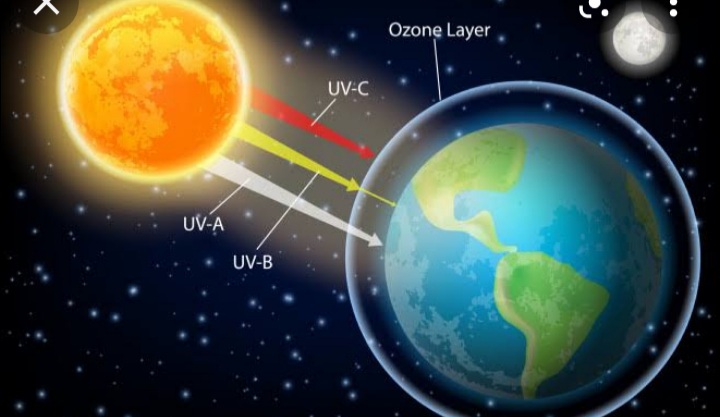
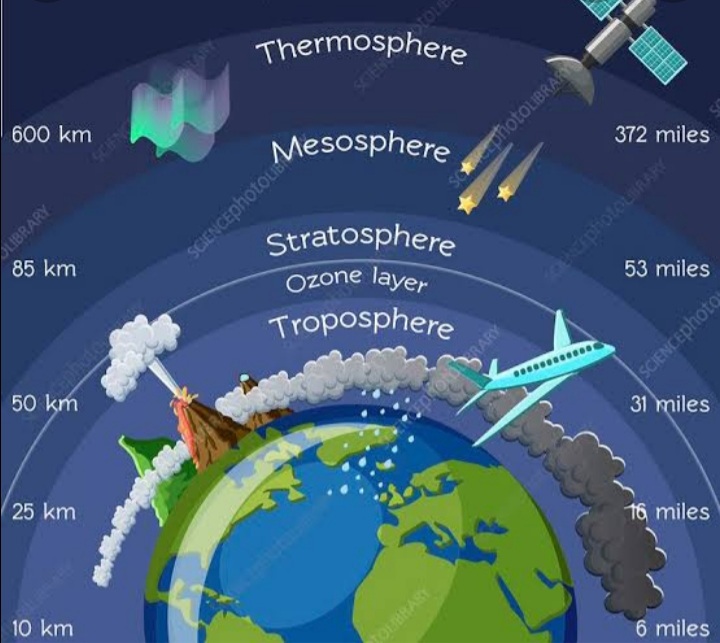
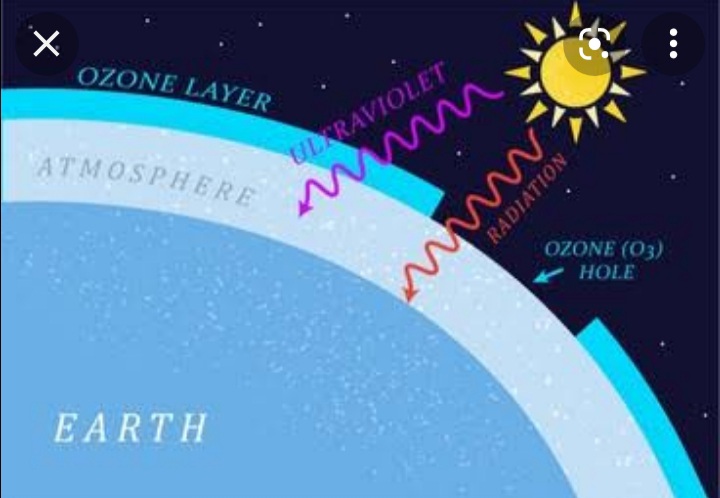
Ozone is a form of oxygen (O3). In the stratosphere (Ozonosphere),ozone blocks out the sun’s ultraviolet rays and is a life saver.

Ozone as a natural sun block

The electromagnetic radiation emitted from the sun includes ultraviolet radiation, which is potentially harmful to most living things since it can damage DNA. The ozone layer screen out the sun’s harmful ultraviolet radiation. Even 1% reduction in the amount of ozone in the upper stratosphere causes a measurable increase in the ultraviolet radiation that reaches the earth surface. If there was a no ozone at all ,the amount of ultraviolet radiation reaches us would be catastrophically high. All living things would suffer radiation burns,unless they were underground, or in the sea.

In the stratosphere, small amount of ozone are constantly being made by the action of sunlight on oxygen. At the same time, ozone is being broken down by natural processes. The total amount of ozone usually stays constant because its formation and destruction occur at about the same rate. But unfortunately human activity has recently changed that natural balance. Some manufactured substances such as chloroflurocarbons and hydrochloroflurocarbons can destroy stratosphere ozone much faster than it is formed.

Ozone hole

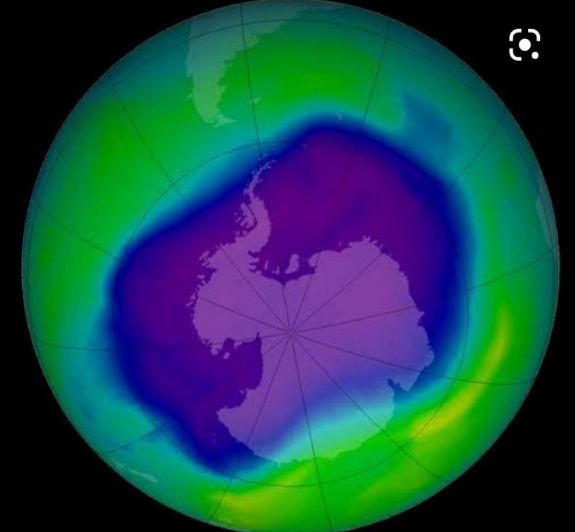
Ozone loss was first detected in the stratosphere over the Antarctic. The part of the atmosphere where Ozone is most depleted is referred as ” Ozone hole” but it is not a real hole just a vast region of the upper atmosphere where there is less Ozone than elsewhere.

Ozone-poor air can spread out from the polar regions and move above others areas. In addition, direct Ozone less elsewhere is slowly increasing.

Ozone-poor air can spread out from the polar regions and move above other areas. In addition, direct Ozone depleted area is also slowly increasing.

Reason for Antarctic Ozone hole

Scientific observation prove that the ozone hole formed over Antarctic is due to compounds of chlorine and bromine formed in the atmosphere. Nearly all of the chlorine and half of the bromine in the stratosphere comes from the human activities. The chlorofluorocarbons released due to human activities get transported up into the upper stratosphere.

The most common ozone depleting substances (ODS) are chlorofluorocarbons (CFC) or freon gases,certain bromine compounds, nitrogen oxides and methyl bromide. These compounds are liberally released from air-conditioners,freezers,foam insulation, aerosol products, industrial solvents, fire extinguishers and pesticides.

Effects of ozone depletions

If the ozone is depleted more ultraviolet radiation (especially ultraviolet B (UVB) will reach the earth’s surface.

Effect on plants – will affect crop yield and forest productivity.

Effect on animals – will cause damage to fish larvae and other Small animals.

Effect on human health – results in non – melanoma skin cancer and melanoma ,acute erythemia(sun burn), ocular abnormalities, cataract,poor immune responses.

Preventing ozone depletion

1. CFC’s ( Chloro Fluoro Carbons) should be replaced by HCFC’s (Hydro Chloro Fluro Carbons). If over used could damage ozone, HFC’s ( Hydro Flouro Carbons), Hydrocarbons such as butane and propane ( but flammable and poisonous), Ammonia ( must be handled carefully), water and steam.

2. Production, use and emission of ozone-depleting chemicals should be controlled.

3. Recycling of these chemicals should be increased.

4. Servicing of refrigerators and air-conditioners should be regulated.

5. Refrigerants should be recaptured and used .

6. Adopt protection measures from sun’s radiation.