Get More Done : Strategies for an Effective To-Do List

The term ‘To-Do List’ evokes different images for different people. For some it is that of a never-ending-ever-growing scroll of magic paper that gives them nightmares. For others it might come across as something only the boring folks, who schedule even their loo breaks, do. And then there is another bunch who considers it to be their life saviour which keeps them sane through the madness of their daily chores and tasks. 

Whatever be the image that you have conjured up, a fact that one cannot deny is that an effective to-do list is one of the simplest yet powerful productivity tools that can work wonders in increasing your overall productivity. 

Though it is one of the best and most efficient productivity techniques around, the success of it depends on how effectively it is being used. Moreover, if not used in the correct way, it can do more harm than good. 

Photo by Breakingpic on Pexels.com

So, let’s now see some of the strategies to help you kick-start your art-of-making-the-perfect-list journey 

Pick a suitable medium

Choosing a medium that you are comfortable with is the first and foremost thing to be considered while making a list. It may differ according to the personal preferences of people. It doesn’t matter whether you choose an app or the good old pen and paper, what is important is to stick to the one that you have chosen.Having your tasks scattered across different mediums makes managing and tracking the tasks difficult.

Dump all those tasks eating up your brain to the list

Transfer all those ideas, goals and tasks to the medium that you have chosen. Don’t bother assessing its value or prioritising it (yet). For now, just dig out every single thing from your brain and dump it onto your list.

Identify the ones which align with your purpose

It’s important that you need to have a clear idea about what you want to accomplish in life and accordingly pick tasks that’ll help you realise your goals. Write down clearly why you need to do the task and how it adds value to your life. Identifying your whys gives the brain the much needed motivation and energy to tackle the task.

Break the list into multiple lists

So now you have a big list of all the items that aligns with your long-term goals listed right in front of you. This list will contain all your goals listed out together. Let’s now split them into separate lists . Three basic lists that you can use are : 

  • The Master List , where you keep a list of your long term goals .For eg: Write a novel. Here, you could categorise the goals as personal, professional, finance, health etc. 
  • The Weekly List contains all those items that need to be ticked off by the end of the week. This would essentially contain tasks which would help in achieving your long term goals, plus other things that need your attention during the week. 
  • High Impact List is the one that contains the tasks which are of the highest priority and needs your immediate attention. These might or might not be related to the other two lists. 

Apart from these you could also keep a separate list for the daily activities that you need to track. For eg : If Doing exercise is something that you want to track on a daily basis, then instead of adding this item to your high impact list, add it to a separate list which is meant solely for daily activities. 

You can come up with as many lists as you want. But I would suggest not to overdo it (then you might end up having to come up with another list to track the list of lists ! ). 

List down tasks, not goals on your list

Your master list is the one where you have all the goals listed and when it comes to creating weekly lists, you need to make sure that you break your goals down into actionable items and put those on the list. In this way, you get clarity on how to go about with achieving the long term goals. Make it as specific as possible.

Prioritize 

From the weekly list, identify the items that are of the highest priority and move them to the High Impact List. This is the list that you need to follow to keep track of the items that need to be completed by the end of the day. Sit with your list and identify the ones that are urgent and important and rank them accordingly. Setting priorities makes sure that you don’t end up cleaning your kitchen drawer when you have an important assignment due for the day.

Photo by Suzy Hazelwood on Pexels.com

The shorter the better

One of the mistakes people make while creating a list is to cram up the list with as many items as they can think of. By doing so chances are high that you may end up not finishing most of the tasks on your list. And, there is nothing more depressing than staring at a long list of pending tasks at the end of the day. So keep it short. There is no hard and fast rule as to the maximum number of items that you can put on your list. Start with as low as three and experiment and find out the number that works for you. 

Set a time limit for each task and measure the time taken

Each person has a different pace at which he works. To find out yours, roughly estimate the time you think you would need to complete a task and once you are done with the task, compare it with the actual time taken. This way, you will have a realistic idea about how many tasks you can complete in a day and can accordingly decide the length of your list. 

Break bigger tasks into a set of smaller tasks

While you time your tasks, you might come across some tasks which need more time.Say for example, writing a blog post might not fit into the two hour window that has been allotted to it. In such cases, break the task down into a number of smaller tasks – research the topic, write, edit, select pictures etc. By breaking it down, you will have a clear step-by-step strategy listed right in front of you.Also, instead of waiting to check off that one big monstrous item, you can now check off 3-4 small items. That’s a pleasure in itself, isn’t it ?

Create a May-Be-Later-If-I-Feel-Like list

This is one of my personal favourites. All those items that you want to do but which are neither urgent nor important go on this list. Say for eg: learn to knit, may be something you might want to do but definitely not when you have a project release coming up the following week. 

Always expect the unexpected

As much as we all want everything to go as planned, in reality that’s not always possible. At times, unexpected events may pop up. So, it’s always a good idea to leave a bit of cushion time between your tasks. Not just that it leaves you with some wiggle room in case of emergencies but also provides you that much needed breather from the tasks on normal days.
Block time for yourself

Always always always make sure to take some time out of your schedule to relax. Burnout is real ! So it’s really important that you find time to pause, breathe and relax. Adding break time to your list is essential to help the brain maintain its focus and energy levels. 

Revisit and Re-evaluate your list periodically

Constant evaluations and reevaluations are needed for this productivity tool to work effectively. At the end of each day set aside some time to sit with your list and reflect on what worked and what didn’t. Move those items which you feel are of low priority to your may-be list. Re-prioritise the list, play around with it and you will eventually figure out a strategy that works best for you. It’s all about experimenting, buddy !

 Make the list the day before

Though it is not a rule that you should make the list on the previous day, it is always better if you can do so. At the end of each day, after you evaluate your list for that day, you would already be in a state of mind where it is easier for you to figure out what items need to go on the list for the next day. Also, if you have a list of tasks ready right in front of you in the morning, you know exactly what’s on your plate for the day and hence you can use your morning energy on productive stuff rather than wasting it on planning your day.

Create a Done List

Even if you hate every other list mentioned above, this is one list that you are gonna love. It is a list of all the tasks that you have accomplished. Once you complete a task, along with crossing it off from the main list, add it to your Done List. That’s double the euphoria, you see ! This list is a reminder to yourself of how close you have come to your end goal and is an instant mood booster on days you feel low. Also, do not forget to celebrate even the smallest of your milestones.

Bottom line

Learning to make an effective to do list is not something that you can master overnight. It takes a lot of experimenting to figure out the strategies that work for you. There are no hard and fast rules here. Remember not to obsess too much with the idea of making that perfect list in the first go. Have patience and keep experimenting until you figure out a strategy that best suits your needs. Good Luck !
World Children’s Day and its significance

Photo by samer daboul on Pexels.com

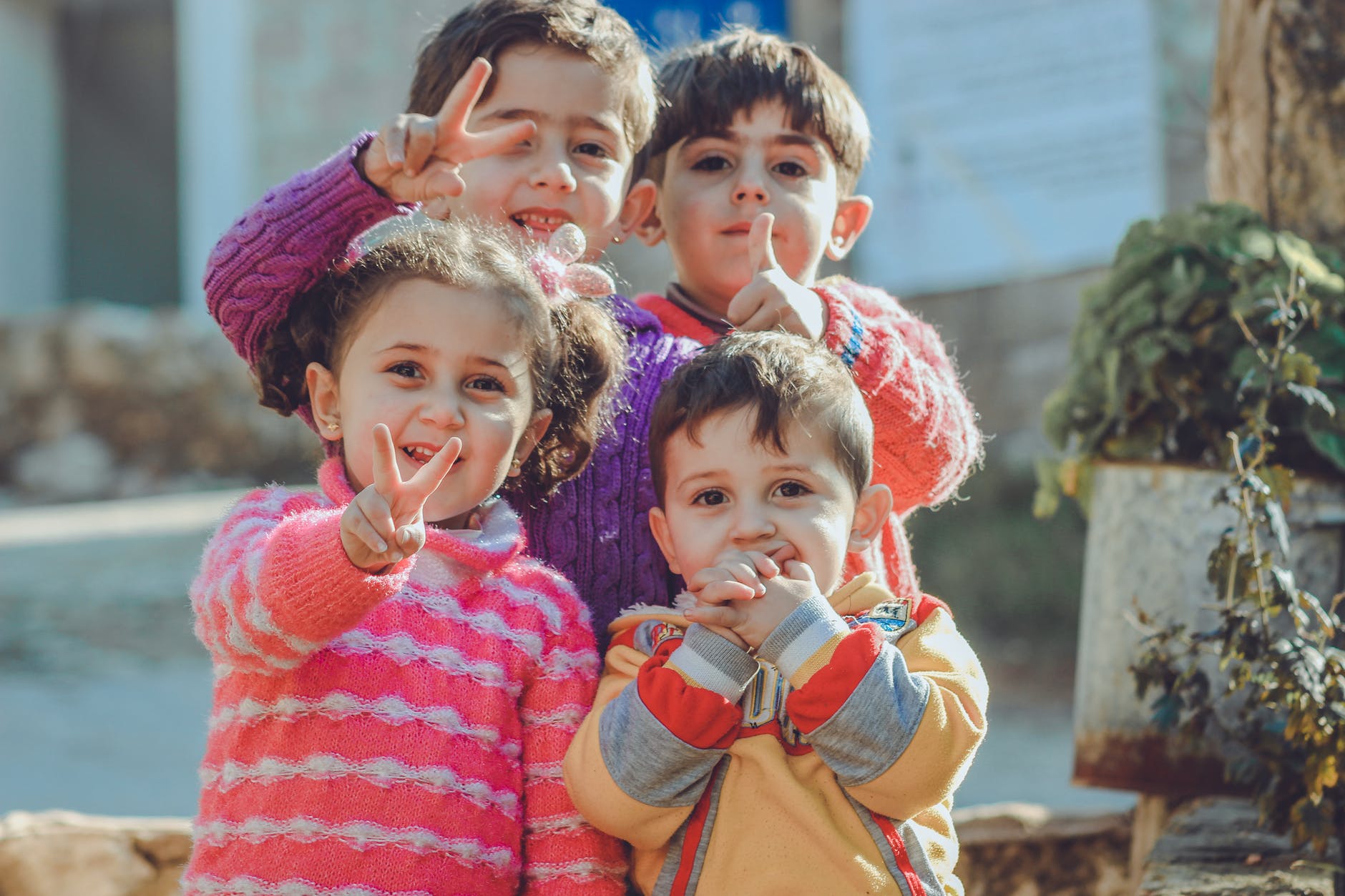
Children are called as the leaders of the future generations. They are also known to be the torch bearers for the future of the human society.  Universal Children’s Day is celebrated every year on the 20th of November as an observance to promote children rights and welfare. Every year, the United Nations (UN) provides a particular theme for this day to improve the conditions of children and build a better environment for them. It was first celebrated in the year 1954 to encourage unity and friendliness among children across various nations. In the year 1959, the United Nations General Assembly accepted the Declaration of the children’s rights on the 20th of November. Therefore, this day is celebrated as Universal Children’s Day.

The theme

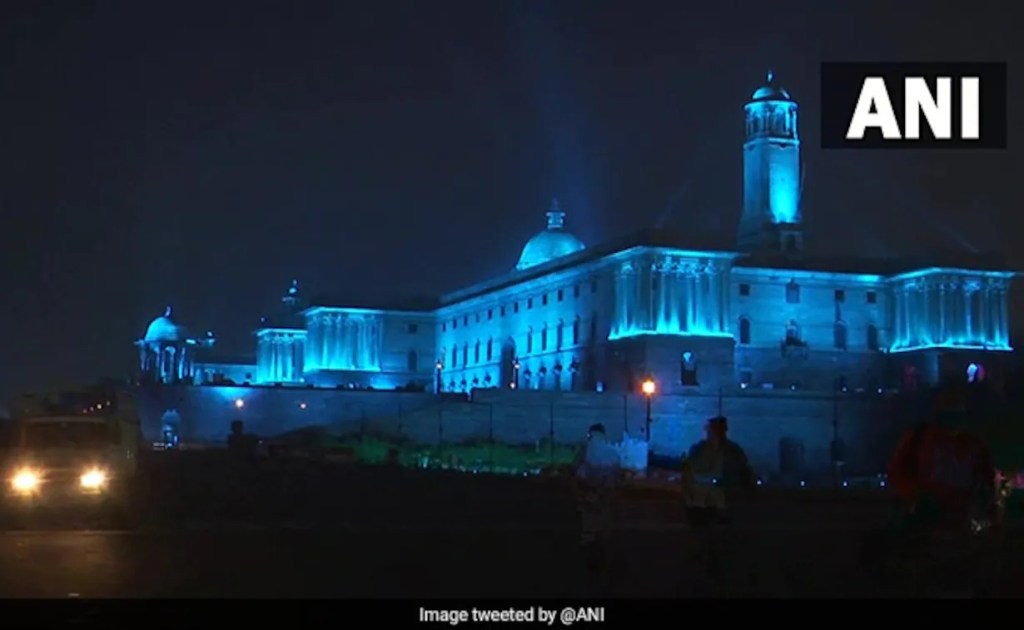
The theme for this year by UNICEF is to help children to recover from interruptions and learning losses experienced through the pandemic in the last two years and contribute towards the betterment of the children. Hence, the UNICEF has started a #GoBlue Campaign to highlight the issues faced by children due to the COVID-19 pandemic. This pandemic has shown us how unequal and unfair things have been for the children of the nation. From climate change to racism, many children have been deprived from their basic rights and the youngsters have been raising their voices against such injustices to lead the world towards a better future. Hence, the UNGA has requested several countries to support this cause so the children will be able to lead a better life. To support this cause, the United Nations Children’s Fund (UNICEF) will be holding a parliamentary meeting today at 7:30 pm to raise awareness regarding such issues.  

India’s Contribution

IMAGE: ANI

India has also supported this campaign by illuminating monuments like Qutub Minar and Rashtrapati Bhavan with blue lights. The parliament buildings like North block and south block have also been lit up in the capital city of India on the occasion of World Children’s Day.

Conclusion

This purpose of this year’s theme is to encourage children and youngsters to highlight the issues faced by them and urges adults to understand and take the required actions for the future generations’ well-being. This World Children’s Day, it is extremely important to raise awareness against the discrimination and the racism faced by little children. it is more important than ever, that the leaders listen to their ideas and demands and take actions accordingly. It is our responsibility as a human being to create and build a better world for the children and we must work extremely hard towards achieving that goal.

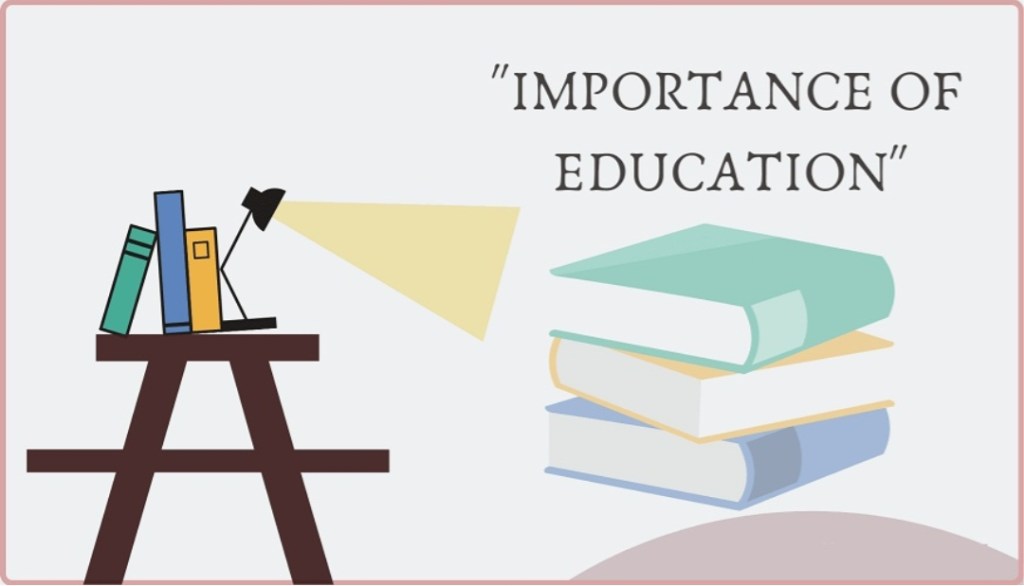
IMPORTANCE OF EDUCATION:-

Education is one of the important thing in this world.Without education we cannot lead a good life.Education is the key to success in life.

Education plays the significant role in the human race.Educated people are responsible for the better future for Society and country.An educated person has the ability to decision making.Education teaches us writing and reading.Reading and writing is the first step in education.Education improves the person mentally to handle the difficult situation.

Education improve the humans personality.Educated person is brave, confident to face any situation.Most of the well known persons are educated.Education helps in the development and innovation of technology.

The technology,science, millitary all are improved because of the education.Without education nothing happened in this world.Education help us to acquire knowledge.knowledge can be used to make better living.Education is the weapon which cannot be break by anyone.

Education teaches us to be honest and polite.Educated peoples are always respected in the society.

Education teaches us to be civilized. Education helps us to understand the feelings.It provides the manpower like police, doctor and millitary.Education improves us mentally strong to face the hard situation in both outer and inner life.Education brings peace in the world.

A DISCOURSE ON ECO-FEMINISM

Ecofeminism is a concept, a movement bringing out the relationship between women and nature. It claims that both the women and nature have been overexploited by patriarchy and the culture. However, it in no way flows in one single course, with the basic concept, it has many dimensions to it and many proponents and variations to it as well. The relationship between women and nature, as constructed by various scholars, is based on three claims – ‘Empirical’, ‘Conceptual’ and ‘Epistemological’ in nature (Sharnappa, 2016). The first claim which is empirical in nature relates socio-economic and political poverty of women with the destruction of nature. It has been observed that the women are the firsthand victim of consequence of destruction of environment – given the dependency of women on nature. The conceptual claim brings out the “hierarchy and dualism” on which society is structured. It throws light on ‘patriarchy’ as the root cause of domination of women and exploitation of nature. The third claim, epistemological in character, focuses on the knowledge of nature which women possess more when compared to any other. Being the humans residing in the rural areas more while men migrating for other works, they have been agrarian cultivators, thus, possessing more knowledge regarding the sustenance of nature.

The Eco-feminism has been documented well in the western world; however, it doesn’t mean that it didn’t exist in the other part. The theory of eco-feminism has evolved over the years and the socio-economic as well as the political concerns of the region has influenced its course. For instance, the differences in the ‘Western Eco-Feminist Discourse’ and ‘Indian Ecofeminist Discourse’ have been brought out by many. The basic departure in the conceptualization of ecofeminism is related to the emphasis on the kind of environmental crisis (Sharnappa, 2016). It has been pointed out that while ecofeminism in the West has emphasised on the direct impact of science and technology on the nature and the consequent impact on women, ecofeminist discourse in India has more or less revolved around the threat to traditional methods of production and subsistence since majority of population still depends on it. The threat that has been taken into account pertains to the building of dams, industrialization, impact of logging. So, the scholars have pointed out that the environment crisis in India revolves around the attempt to reduce the impact of such threats on the victims, generally the peasants.

The exploitation of women, especially the peasants has been stressed by many scholars. Vandana Shiva, one of the pioneers of eco-feminism movement in India focuses on this aspect – the way in which technological development has robbed many peasants, especially women of the ‘third world’ of their traditional practices. She believes that “only path to survival and liberation for women is an ecological one of harmony, sustainability, diversity, as opposed to domination, exploitation and surplus”. Bina Agarwal, an Indian Economist and also one of the critiques of ecofeminist’ arguments, too, provides three-fold explanation to why women are most affected – highlighting the class-gender dimensions to the effect of environmental degradation. She asserts that given the pre-existing gendered division of labour, women in the poor households are worse hit. The disparities in the distribution of ‘sustainable resources’ (for e.g., healthcare) which actually deprive women to access the basics, adds to the burden. Furthermore, the women also have limited rights to private properties, access to employment opportunities and others which only aggravates the plight. She asserts that due to the exploitation and destruction of the nature, women have to work longer in order to gather woods; have to walk longer distance to access to water and the caste factor only adds to the woes; becoming more prone to water-borne disease or the un-healthy environment are some of the effect. Given these conditions and their condition in the labour markets well as their position in accessing the resources and basics, women, especially those of lower caste bear and face the most severe outcome of the exploitation of nature.

The assumptions and principles of ecofeminism has its own share of constructive criticism and variations to it. Bina Agarwal, while critiquing ecofeminists’ argument puts forward a different argument, or say perspective than those of Shiva’s. She contests that ecofeminism does not cover the structure in its entirety. She argues that ecofeminism sees women as a single entity – ‘in unitary’, it does not see her in the context of differences in caste, class, race, etc. Furthermore, it also does not take into account the material reality of women and just interrelates the nature and women ideologically; neither it talks about how ideological shifts are caused by the dominant groups and ‘how such shifts get embedded’. Thus, at this juncture she brings in the concept of ‘feminist environmentalism’ wherein she presents the relationship between men and women rooted in material reality as well. She brings in the elements of how gender and class change the course of any discourse especially which involves women. Thus, women’s interaction with nature must be located within the material reality of caste, class and gender along with all other concerns and not just seeing her(s) as ‘unitary’.

Another point that has been raised is that ecofeminism assigns the responsibility of fighting against the environmental threat solely on women without even taking into account if the women are equipped enough for it. It thus, needs to call for sharing the responsibility between both the gender and not just on the women. The discourse, the impact of the movement should not just be confined to the saving of nature or as Bhasin said’ “clearing up the mess all the time”. It should extend to granting of rights, skill-upgradation and involvement of women in the decision-making process. Thus, in order to strengthen the force or the movement, the diversity as well the different concerns need to be taken into account.

Image Credit: Google

Peer Pressure

More Harm Than Good

Peer pressure is the direct influence on people by peers, or an individual who gets encouraged to follow their peers by changing their attitude, values or behaviour just for the sake of acceptance. The section of society which is most vulnerable to the effects of peer pressure is teenagers. The fact of peer pressure is that when your peers start trying to get you do things which you otherwise wouldn’t do. For instance, in our society we have people who pressurise us to do things we don’t want to do, hence causing us to not being able to think for ourselves. If you neglect being able to think for yourself and let others do that job then it could have a good outcome for them, but for your well being and for you as a person it can turn out to be a disaster.

Ill effects and Impact

Peer pressure can harm the group by making it too uniform. When all the members think and act alike, the group does not have access to alternative opinions creating a barrier in solving problems.

Peer pressure is a rite of passage that all of us go through but its impact varies from person to person. Some are able to brush it off without any issues while it negatively impacts others. Peer pressure affects the lives of teenagers in a number of ways. It can take a self-confident child and make him or her someone who is not sure about themselves and has a low self esteem. It affects their academic skills too because despite being capable of performing well, they choose not to because in the eyes of their peers, it would seem uncool. In an effort to fit in with their peer group, they place more emphasis on being social rather than working on their academics.

Adolescence and Peer Pressure

The desire to be accepted by their peer group is one of the strongest motivating forces during adolescence. The reason that negative peer pressure happens, especially during adolescence, is because humans are social beings and ‘WE’ want to belong. We do what we believe others want us to do for the sake of acceptance and to ‘fit in’. Extreme peer pressure may lead you to follow what your peers feel right, thereby, you end up losing your own identity.

Conclusion

It honestly depends on the people you surround yourself with. Peer pressure is influenced from a members peers. So it is up to you who you hang around with. It is only a bad thing if you make it one.

Is offline mode of learning relatively better than online learning?

Now that schools and colleges are limping back to offline mode after long perturbation of Covid 19 pandemic, a question may strike whether offline mode of learning is really better when compared to online learning process. However,  both forms of education have their own advantages and disadvantages.

Advantages of online education:
1) It is flexible. All you need is a device with internet connection and can attend your classes from anywhere across the world.
2) Class recordings are available for later reference.
3) It is budget friendly and saves the cost of transportation , lodging and other necesseties that one has to pay whilst physically attending classes.

Advantages of offline learning:
1) Face to face student and teacher interaction helps in better understanding as teacher can give full attention to students, address their issues and solve them.
2) No distractions whilst studying since there are no other modes of entertainment where students might focus on whilst stidying.

Disadvantages of online learning:
1) Students might induldge in other activities such as surfing net, visiting social media platforms etc whilst attending classes which in turn will hamper their learning process.
2) Another disadvantage is technical glitches. Internet connectivity issues might arise during online classes thus disrupting smooth learning.

Disadvantages of offline learning:
1) No recording is available for students for later references.
2) Time management becomes an issue for students living faraway.

IMPORTANCE OF COMMUNICATION:-

Communication is the integral part of our life.It is the process of share whatever we want and sharing ideas,feelings. communication is the key to directing function of the management.

TYPES OF COMMUNICATION:-

There are three types of communication:-

* Formal communication.

* Informal communication.

FORMAL COMMUNICATION:-

Formal communication divided into two types,

* Horizontal communication.

* Vertical communication.

Formal communication is usually takes between the manager to sub manager,sub manager to manager.Who are in the same level of post.

HORIZONTAL COMMUNICATION:-

It is also called as lateral communication.It takes place between one division to another division.

VERTICAL COMMUNICATION:-

Vertical communication as the name suggests flows vertically upwards or downwards through formal channels. Upward communication refers to the flow of communication from a subordinate to a superior whereas downward communication flows from a superior to a subordinate.

INFORMAL COMMUNICATION:-

Informal communication is nothing but the communication takes place without following the formal types is called informal communication.It is also called as grapevine.

HOW COMMUNICATION IS EFFECTIVE:-

Communication is very effective tool.With communication we can able to understand others feelings And delivery of message.If false message delivered it becomes rumor and cause problems in life.

IMPORTANCE OF COMMUNICATION:-

* Basis of Decision-Making and Planning.

* Smooth and Efficient Working of an Organisation.

* Facilitates Co-Ordination.

* Increases Managerial Efficiency.

* Promotes Co-operation and Industrial Peace.

Preparation through education is less costly than learning through tragedy

In this era, where humanisation of nature is taking place at a tremendous rate, where the nature is altered at an alarming rate for the so – called benefits of “we” humans, disturbances are created in the normal functioning of nature and so nature rises in its fury and the fury of nature is not magnanimous but rather too destructive to ignore.

                 According to Max Mayfield, “Preparation through education is less costly than learning through tragedy”. The point that he is trying to bring into the notice of so- called enlightened society is that if our learning through education is put into action, we would avoid any tragedy, we would invite less destruction. If the foundation is strong, the building won’t be shaken easily.

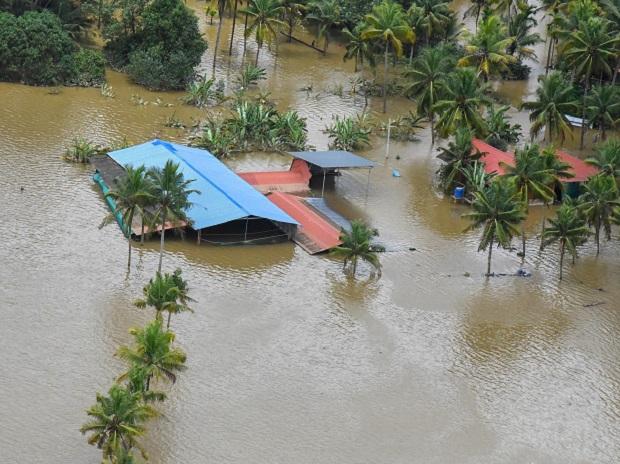
                If we look at the recent cases of natural calamities, we would get a better picture of what he is trying to bring into notice. In India itself, we could trace the tragedy that took away the life of many.  In the Kerala floods, death toll rose to around 417 people, which was the worst natural calamity to strike the southern states in decades. Kerala faced the flash flooding which occurred due to heavy downpour, but this four months of torrential rain in Kerala became destructive because the situation was aggravated due to the ignorance of local officials.

                “This could have been avoided if the dam operators had start releasing water in advance rather than waiting for the dam to be filled up, when they have no alternative but to release water”, water expert Himanshu Thakkar told the BBC.

                  The ignorance of the local officials along with the failure of India’s Central Water Commission to introduce a flood forecasting system to issue warning gave a major setback not only to the southern states but also to the entire nation.

                   More than one million people were displaced and kept in relief camp. The money that the Central Government directed towards the recovery of Kerala, could have been avoided if the system, if the infrastructure were in place. Millions of people would have not lost their home if there was some preparedness, if there was some warning, if at all the learning were in place. There are many other places in different parts of the world where such calamities are taking the life of many because we tend to over push the limits of nature.

                  This is what Max Mayfield tried to explain through his words. The cost not only in terms of money but also in terms of lives could have been less if there was proper crisis preparedness.

                Another case or why not say another calamity which is not respecting any so – called political boundaries and the effect of which is slowly taking a drastic grip on us is ‘Global Warming’. It’s high time to realise that, “Global Warming is Global Warning”. Global warming is the increase in the general level of earth’s temperature. Our earth has its own mechanism to combat the disturbances in its functioning but “we” humans tend to aggravate the situation to the extent that the mechanism is at the verge of breaking down.

          Burning of fossil fuels like coal, gas to create electricity or to power the cars or for the industrial purpose, results in the emission of profound amount of carbon dioxide in the atmosphere which results in carbon pollution and contribute in making the quality of air severe. It is quite clear the way urban expansion is encroaching upon the wilderness. We clear large patch of forest for the purpose of settlement and other things. When vegetation is cleared or burnt, the stored carbon is released into the atmosphere as CO2, contributing in global warming. The list would be never ending if we look for the causes that involve humans.

           The effect of global warming can already be seen clearly – the melting of glaciers, consecutively rise in the sea level and simultaneously flooding of coastal areas, the quality of air from being worse to severe, droughts, expansion of deserts.

             The call of the time is “Sustainable Development” which is in par with nature. It was in 1980s that the bad health of environment and consecutively bad health of ours and the concept of sustainable way of living was realised. But why is it that in the last 50 years more species became extinct than ever!

              Education is not something which is limited to books, specific to getting qualifications. It would really be a bliss if we would start bringing the knowledge into action, if we would move towards sustainability that we have been learning, if we would start preventing the tragedies through preparedness rather than learning through its cure.

             When disaster takes place, timings is essential. Many lives can be saved; destruction can be minimized if actions are taken quickly. But the action can be taken quickly only if there is some preparedness, if there is some alertness. There should be efficient communication system in place for destruction to be minimized.

            The government is not always to be blamed for the crisis. We as educated citizens can do a lot, we can channel our learning, our talent through joining various humanitarian organisations that works towards better development, toward preventing and reducing the crisis.

            The Kerala case was a big setback to the nation. Though it was a lesson for everyone but it could have been better if we could have prevented it, the southern state could have focussed on other major social issues grouping the society. And the global warming, before it scales to a height, where we would be left helpless, with no idea of what to do next, it would be better if we try to work together to reduce the harmful industrialisation, if we would walk in the path of sustainable development.

          So, it’s high time to realise that in this era, we got to be more conscious of what we learn and how do we channel it. As the saying goes, “Learning is a treasure that will follow it’s owner everywhere”. So let it follow your action and put it into right use. It is the collective work in which each and every individual needs to come together to make this world a better place.

Image Credit: Business Standard News

Retrieved from: Google

NATIONAL PRINCESS DAY

National Princess Day comes around annually on November 18, so clear your schedule and prepare for a magical day of pampering and fabulousness. Everyone has a favorite princess (real or fake) and dreams of being treated like one (at least for a day). A dream is a wish your heart makes, and it’s time to make that wish come true.

National Princess Day Wishes Images - Whatsapp Images

HISTORY

The first princess to come to our TV screens was Snow White in 1937’s Snow White and the Seven Dwarfs. Based on the fairy tale by the Brothers Grimm, this movie was also the first full length traditional animation film as well as the earliest Disney animated feature film. When Xena: Warrior Princess came out in 1995 and Mulan was released in 1998, they showed everyone that a princess can do more than wear a pretty dress. These two iconic women let children everywhere know that a princess can also be a strong and adventurous warrior. New wave princesses like Moana and Frozen’s Elsa show us that you can still be a princess while maintaining your independence.

We all grew up with animated, and live action, princesses guiding us through life. When thinking of our favorite princesses, our minds instantly go to Disney. However, when it comes to National Princess Day, Disney had very little involvement in its inception. Nest Family Entertainment, a Texas based entertainment company, teamed up with Rich Animation in 1994 to create the animated film The Swan Princess, a musical adaptation of Swan Lake. The studio wanted people of every age to have a day to celebrate like royalty, embodying the kindness and grace that we all associated with princess at the time — and thus, National Princess Day was created.

The definition of a princess is constantly changing. From the 1930s until the 1990s, princesses were meant to be saved by a prince and live happily ever after. Nowadays, princesses create their own happily ever after, save the prince, and then put the prince squarely in the friend zone. So basically, embodying a princess on National Princess Day is to embody, what the kids call, the G.O.A.T (greatest of all time)

FACTS

Almost everyone is fascinated by princesses but few people know everything there is to know about some of the famous fictional princesses of all time. That’s why we’re listing some of the top facts about princesses below. 

  • The only Disney princesses based on a real person is Pocahontas.
  • Almost all Disney princesses wear blue.
  • Snow White is the youngest princess and is 14-years old.
  • Jasmine is the next youngest princess and is 15-years old.
  • The oldest princesses are Cinderella and Tiana and both of them are 19-years old.
  • Snow White And Rapunzel are both from Bavaria.

PATHWAY

TIME MAGAZINE RECOGNIZED THIS PRINCESS INFLUENCE – 2013

​Princess Kate made Time’s “100 Most Influential People in the World” list for the second time.

PRETTY SMART PRINCESS – 2012

After earning a B.A. in International Relations at Sukhothai Thammatirat University and a Masters of Law and Doctor of Juridical Science degree at Cornell Law School, Princess Bajrakitiyabha of Thailand received an honorary Doctor of Law degree.

A HUMANITARIAN AWARD – 2011

Princess Ameera, a Saudi Arabian princess, received the ITP Special Humanitarian Award for her work with the Alwaleed Bin Talal Foundation.

THIS POPULAR PRINCESS ADVOCATED FOR AIDS – 1987

​Princess Diana opened the first hospital unit dedicated to AIDS in Middlesex Hospital. This is the same location where she famously hugged an AIDS patient four years later.

PRINCESS ANN TOOK ON CAUSE – 1970

Princess Ann of England served as president of the Save the Children organization, an non-governmental group that advocates for children rights and supports children in developing countries.

Landslides in the Himachal Himalayas

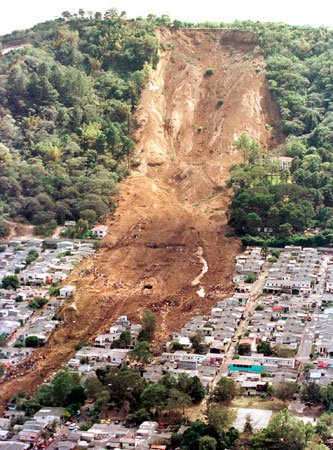
The subject of the article pertains to the landslides with reference to the Himachal Himalayas. Himachal Pradesh due to its location, foots of the Himalayas is extremely vulnerable to landslides – the reason for the same being both natural and anthropogenic. The article explores the frequency of landslides in the state, bringing out the vulnerable districts based on secondary sources, discusses about few life-threatening landslides and the prevention plans along with some recommendations.

Landslides is a type of mass movement which involves, in simple words, downslope movement of rock wastes including soil and ice under the influence of gravity. Some of the reasons for the same among many includes – slope saturation by water is a primary cause of landslides. Flooding can also cause landslides by undercutting banks of streams and rivers and by saturation of slopes by surface water. Human activities tend to disturb the slope by removing of vegetation or by excessive loading of the slope and as such.

Himachal Pradesh is situated in Western Himalayas between 30-degree 22 N to 33-degree 12 N latitude and 75-degree 45 East to 79-degree 4 East. Given its location in the Western Himalayas, it is one of the most multi – hazard prone states – spanning over the area 55673 sq. Km and population of 68,64,602 (Himachal Pradesh State Disaster Management plan, 2017). Vulnerable roadways, human settlements and hydroelectric power plants are most at risk of landslides. About 22% of built-up areas are in high-risk zone; 32% in medium risk zone and 3% in low-risk zone. Almost all the urban areas of the state are prone to the risks of landslides. The reason for the same might be the unscientific land use and unplanned expansion of urban areas leading to overloading and destabilising the slopes.

A large chunk of areas in all the districts fall in High-risk zone followed either by Moderate or Severe risk zone. There are areas which do fall in No Risk Zone but it does not cover large extent. The state has a large network of State Highways and village roads with total length of 2178.988 Kms, of which 1111.552 kms fall in Highly vulnerable zone. Most of the tourist spots in the state are well connected by roads – but many of these roads have recurring problems of landslides which often disrupt flow of tourist traffic.

If we analyse the trend of landslides between 1971-2010, it will be observed that since 1970s, the frequency has only been increasing. Nearly 525 people were killed during 1971-2010. In terms of human casualties, Kullu district is the most affected where 142 people were killed by landslides followed by Shimla (119 people). Bilaspur, Mandi, Chamba, Kinnaur and Kangra were other major landslides affected districts in terms of human casualty.

Post 2010, if we take up the landslide in Kullu district in 2015, it will come to view that the effects are still severe. The landslide in Kullu district was majorly due to excessive rainfall. After a building adjoining the historic Manikaran Sahib Gurdwara caved in due to a massive landslide – it led to the death of 8 persons and 10 injured, the source states (NDTV news). In 2020, in the landslides in Manali, five family members were buried, as per the news article released by Times of India. Yet another landslide case in 2021 in Kinnaur left many people stranded, damaging transport and communication lines severely.

various newspaper clippings point out that the locals are very detestable when it comes to development project. In one of the clippings (The Statesman, 2018), the locals are questioning why is there a need for highway which destabilize hills in the state – after all hills are meant to be climbed. The people are not very in favour of such projects because according to them these tend amplify the adverse effects if natural calamity. So, the government need to go for more inclusive planning with regard to development.

One of the ways through which involvement of local community can be ensured is by bringing them into decision making process – which in turn can be ensured by adopting suitable policies.  Transparency in the process of taking suitable steps is extremely necessary; co-operation between local communities, local government and NGOs and other such agencies can be very helpful in proper implementation of government’s plan. It will allow to bridge the gap in communication between various stakeholders. One of the most important suggestions forwarded by many is the implementation of education programme regarding hazard management, specially landsides among the residents.

Various article highlights the need to rethink the model of development being followed – particularly with regard to the exploitation of its hydroelectric potential. For instance, an article published by Down to Earth, 2021 highlights that Erratic rainfall due to climate change or de-glaciation are exacerbated by several anthropogenic factors. According to State Disaster Management Authority – most of Himachal Pradesh hydroelectric power projects in operation or under constitution fall in areas highly-vulnerable to various hazards like landslides. Another article by The Citizen, 2021 too highlights that if reserved forests or Eco sensitive zones are used for hydropower dams and multi-lane roads then this area of the state could be devastated like Uttarakhand. It has been suggested that government need to consider and seek the pinion and advice of geologists, meteorologists, environmentalist and people who live in the affected area before embarking on the projects.

Note: The article is based on secondary sources and has taken the perspectives and viewpoints of various articles and due credit has been ensured.

Image Credit: Google

DATA SCIENCE

Introduction:-

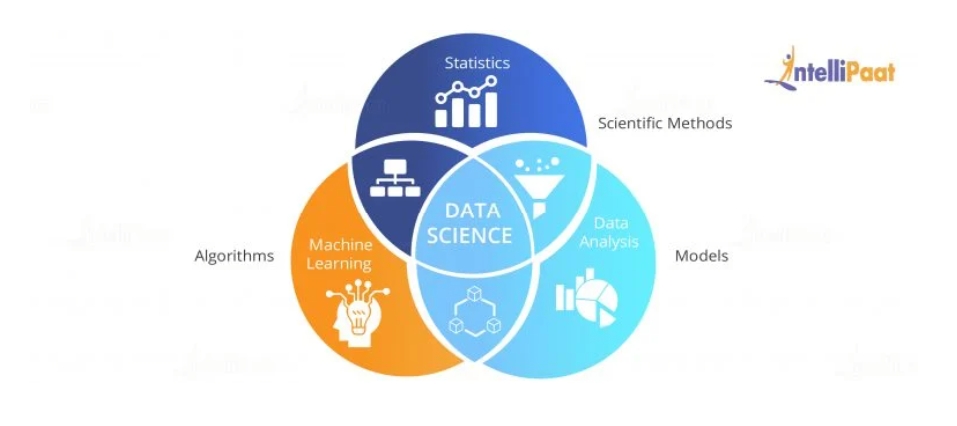
Data scientists combine mathematics, statistics and the use of computer science to extract,analyze data from thousands of data sources in order to build creative and innovative business solutions.Data Scientist’s job involves solving the problems of his or her client by providing solutions using real time data and tools and algorithms.

Industries and Departments in which Data Scientist are hired:-

Data scientists and analysts are largely employed by IT companies, marketing, finance and retail sectors.
Companies use Data Scientists to give them a report on what their clients demands and needs and give them innovative solutions on how to cater to them. Oil, gas and telecommunication companies also have started employing data scientists to better cater to their clients.
Other sectors and departments that employ data scientists are
● NHS
● Government offices
● Research institutions and universities.

The roles and responsibilities of a data scientist:-

● To handle vast amounts of data and choose reliable sources.

● Developing prediction models and advanced machine learning algorithms

● Verifying data using data investigation and data analysis.

● Using data visualization techniques to present findings.

● Finding solutions to business problems by working with data engineers and data analysts.

Educational qualification For data scientist:-

● Should have a BSc/BA degree in the field of Computer Science/ Software Engineering/Information Science/Mathematics.


● Should have a postgraduate degree/diploma certification in Data Science/Machine Learning.

Career growth of a Data Scientist:-

The life of a Data Scientist starts from an associate data analyst and can go up to the role of Chief Data Scientist.Promotion can take two to five years it is based on the performance.After some experience they get into some higher position.

CONCLUSION:-

Data Scientists are one of the most in demand people in the world. They can skyrocket companies’ shares and make them reach new heights.Data Science is a very high paying industry thus finding a job with a seven-figure salary won’t be a problem. Data Science as an industry has a very bright future.Data Scientists have the ability to change the world’s future.

Dubal Collaboration Plans To Build ‘Food Secure Future’ Centers Around India


Food secure future is a significant issue for the United Arab Emirates (UAE) yet in addition for India. Worldwide Food Policy Research Institute (IFPRI), truth be told, cautions that evolving environment, developing worldwide populace, rising food costs and natural stressors will uncertainly affect food security in the coming many years. Notwithstanding, industry specialists and strategy creators accept that the UAE and India can up their synergistic endeavors to handle food security issues towards accomplishing food independence.


This is because the United Arab Emirates is India’s third largest trading partner with the bilateral trade of US$ 59.1 billion in 2019-20. Furthermore, it is a well-known fact that India wants to work very closely with the UAE as a reliable partner in food security. India’s food corridor is slated to attract investments to the tune of US$ 7 billion. Dubai can be a gateway for Indian companies in agriculture and food processing sector to take their products and services globally. This is the opinion of Dr Aman Puri council general of India.

According to him the UA should not be looked at as just a market of 10 million consumers rather it is is beneficial to the entire middle East and North African region. It is considered food secure due to its ability to import food from international markets.


The food technology valley aims at promoting innovation in agriculture to achieve food security from sustainable sources. Dubai is already adopting the new age farming technologies, vertical farming, smart farming, aeroponics, hydroponics, LOT and other new technologies have resulted in a 53% increase in output in agriculture.

The capital intensive nature of the Emirates aptly suits India which needs funding infusions for infrastructure creation. All the sovereign wealth funds have an investor bill capacity of around US$ 1.2 trillion which is growing at a rate of 18 % per annum.


India is on the threshold of a landmark change in the nature of food processing it is now moving towards value-added process and ready to eat foods. Thus, there has never been a better time for the Indian companies to tap the opportunities that the UAE and Dubai throw up. With the peceeding opportunities, both UAE and India face a common challengeas well, in the creation of value chain perspective, that is, end-to-end, farm-to-fork. So, moving forward, the two countries can deepen their collaboration and help each other in achieving this goal.

-Ananya Kaushal

Covid Cases on the rise in post-Diwali week


NEW DELHI: The end of the Diwali week marked a steady increase in new Covid-19 infections. India recorded 80,614 new cases of the coronavirus this week. With 10,789 new cases in the last 24 hours.

While cases in the southern states, namely Kerela and Tamil Nadu continue to gradually drop, a number of states observed a significant spike in cases. Jammu & Kashmir recorded a 34% increase in new cases in the past week.


Other states where the count increased in the current week are Karnataka, with a 17% increase, Maharashtra, Punjab, Delhi, Uttar Pradesh, Bengal, Rajasthan. Experts claim the increase in cases is a result of increased contact among people in the festive period. A major credit for the over-all spike can also be credited to increase in population in the markets. As most people connect the festival with an incentive to shop.

-Ananya Kaushal

The problem of poverty in India

In India, poverty is presently estimated by fixing a poverty line based on a differentiated calorie-norm. This means that the level of poverty depends upon the capacity of a person to purchase food and a person who can buy specific amount of food to cross the poverty line margin for nutrients and calorie intake is above the poverty line. Whereas, the person who cannot buy enough food to meet the required nutrition value of calories and carbohydrates is below the poverty line. This level is not the correct parameter to check the level of poverty.

A task force of the Planning Commission in 1979 defined the poverty line as that per capita expenditure at which the average per capita per day calorie intake was 2400 calories in rural areas and 2100 calories in urban areas. Average per capita expenditures incurred by that population group in each State which consumed these quantities of calories, as per the 1973-74 survey of NSSO, were used as the poverty lines.

The debate on the extent of poverty in India has been a matter of global interest in the recent years. The primary reason for the global interest in the debate is that the levels of poverty in India and China have come to exert significant influence over the trends in world poverty itself.

Within India too, there has been growing contestation around poverty estimates, particularly in the period of economic reforms. First, there are persistent disagreements among economists on whether the rate of poverty decline after economic reforms was slower than in the preceding period. Secondly, the shift to targeted, rather than universal, welfare schemes has witnessed the use of poverty estimates to decide on the number of households eligible to access these schemes. The report of the Expert Group on the estimation of poverty, chaired by Suresh Tendulkar, is the latest input to the “Great Indian Poverty Debate.”

It is to be noted here that many subsidies and programs are launched by the government but these additional increments do not reach the actual people that are in need of them. Instead it is sent back to the businessman and thus a lot of profit is earned on these subsidized goods. Thus, to lower the level of poverty in India, schemes have to be launched in order to directly benefit the people in need.

The Hindu states that, “A final issue with the report, of much long-term consequence, relates to the wisdom of abandoning the calorie norm. It is indeed true that the levels of calorie intakes are not well correlated with nutritional outcomes. However, abandoning the calorie norm altogether and taking solace from the fortuitous fact that calorie intakes appear adequate at the new poverty lines is an arbitrary proposition. It is unclear whether there is any basis, theoretical or empirical, for this relationship to hold true across time.”

the Tendulkar Committee has pitched for a policy position that is stranded between the harsh realities of poverty in India and the fiscal conservativeness of a neo-liberal framework. The real challenge lies in preserving the positives from the report, and strongly persisting with the demand for a universal social security system.

– Ananya Kaushal

Cargo Control Room

The cargo control room, CCR, or cargo office of a tankship is where the person in charge (PIC) can monitor and control the loading and unloading of the ship’s liquid cargo. Prevalent on automated vessels, the CCR may be in its own room, or located on the ship’s bridge. Among other things, the equipment in the CCR may allow the person in charge to control cargo and stripping pumps, control and monitor valve positions, and monitor cargo tank liquid levels.
Many systems allow the PIC to monitor the ballast system and ship’s stability during load and discharge
Cargo control rooms began to appear on U.S.-flag tankers in the mid-1960s. Prior to this time, valves were operated manually on deck by reach rods and liquid levels were monitored by a roving watch consisting of the mate and seamen on watch. The use of computers in the cargo control room began in the 1980s. As technology developed, computerized systems began to centralize tasks such as cargo control per se, tank level monitoring, and real-time computation of hull stress information in the cargo control room.
Schematic showing various cargoes loaded, trim, and list.
Monitoring systems that do not use computers are still often seen
The design and layout of an individual cargo control room is determined by the ship’s design, owner’s requirements and the capabilities of the shipyard in which the ship is built. Modern cargo control rooms offer some or all of these components: main cargo pump and stripping pump control, valve control, tank level monitoring, and auxiliary functions.
Main cargo pumps and stripping pumps are used to discharge cargo from the ship. From the cargo control room, the person in charge of the discharge can typically turn pumps on and off, set pump speeds, and monitor pipeline pressures on the suction- and discharge-sides of pumps. 
A Cargo Contol system is a highly integrated system that controls and monitors cargo activities. 
By actuating cargo valves, the person in charge can control where cargo is pumped from, where it is pumped to, and in systems that use throttle valves, can control the relative flow rates of cargo through the valves. Modern cargo control rooms allow the person in charge to remotely control some or all of the valves in the cargo system and monitor the state of all valves. Valve indicators are typically laid out on a “mimic panel” which displays the cargo system piping, valves and pumps in a schematic diagram.
Tank level monitoring is another key functionality often provided in modern cargo control rooms. One aspect of tank level monitoring is overfill alarms, which sound throughout the ship when cargo levels exceed the ship’s design specifications. Many systems allow the person in charge to monitor tank levels at all tank levels. Tank level monitoring allows the person in charge to take early action to avoid oil spills, especially when loading the ship. Tank level information is often sent to computers that calculate hull stresses such as shear forces and bending moments.
Various other functions are available in some cargo control rooms. Many offer the person in charge additional monitoring and control systems, the ability to monitor inert gas systems, and tank pressures. Modern cargo control rooms typically allow the person in charge to control ballast pumps and valves, and monitor oil content of ballast water by the use of oily water separators. In cases where ships carry specialty products, specialized monitoring systems are available in the cargo control room.