Achievements of women in Aviation Sector

 Ministry of Civil Aviation, in association with Federation of Indian Chambers of Commerce Industry (FICCI),today organized an event to acknowledge and felicitate the contribution of women and to celebrate Women’s Achievements in Indian Aviation sector.

The event was graced byUnion Minister of Civil Aviation, Shri Jyotiraditya M. Scindia asthe Chief Guest. Other dignitaries include Shri Rajiv Bansal, Secretary, Ministry of Civil Aviation, Smt. Usha Padhee, Joint Secretary, Ministry of Civil Aviation, Smt. AshmitaSethi, Co-Chairman, FICCI Aviation Committee & Managing Director of Pratt & Whitney India and Smt. Radha Bhatia, President, Women in Aviation – India Chapter.The ceremony was also attended by the members of Women in Aviation International – India chapter, top dignitaries of MoCA, FICCI and representatives of airlines.

The Indian Civil Aviation sector has seen an increase in the participation of women. They are showing their mark in the airline industry and are pursuing careers as aircraft engineers, pilots, firefighters, ground crew, airport security etc registering their presence in the aviation industry.
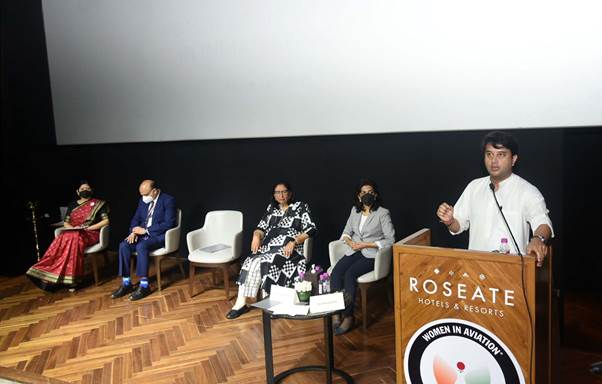
Dwelling on the achievement of women in the sector, Shri Jyotiraditya M. Scindia, Union Minister of Civil Aviation said “This is a landmark day to be remembered. The success of women in aviation is not confined to airports or airplanes but to a much larger ecosystem. 15% of our pilots in India are women which is 3 times more than the global average. But this 15% is not good enough as women have surpassed various odds and stereotypes and I firmly believe there must come a day in India that this 15% must reach 50% of our pilot strength in our country. For this to achieve, we must start from having easy access to STEM education to our young girls in their early education”.

The Minister further added “In next decade, the backbone of Indian infrastructure is going to be civil aviation which transports roughly 144 million people and have a growth potential double that of Indian Railways. Therefore, there is a need to train more pilots. For this, we have come out with a new FTO policy in which we are looking to setup 9 new FTOs in 5 new cities as this will help in reducing the outflow of foreign exchange in training our pilots abroad and unleashing another avenue for our women to participate much greater in civil aviation.”
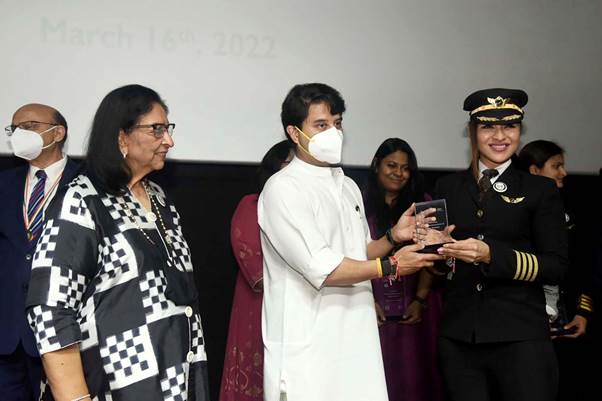
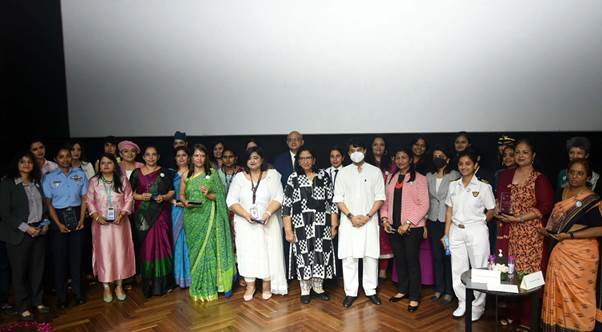
20 women achievers who have played a significant role in the aviation sector, were felicitated during the event. (List in Annexure I)Apart from Felicitation ceremony, a book was also released titled “From Sarees to Strip – TrueStories of Commercial Women Pilots in India”authored by Manisha Puri depicting the ascendency of women in Indian Aviation.


Annexure-I

Ms. Neerja Sodhi

Manager Commercial (Retd.) Air India

Neerja has over 33 years of rich, diverse experience in various aspects of public relations, airline operations and management with Air India. Neerja has also spearheaded the Premium Care Unit at Delhi Airport

Capt. Kunjal Bhatt

Capt.Bhatt is the first woman ‘Head of Training’ at Indira Gandhi RashtriyaUranAkademi. She is currently the Chief Flying Instructor at IGRUA.

Ms. Shital Mahajan Rane

Shital Mahajan is a professional woman skydiver and Padmashri awardee 2011. Since 2012, Shital has represented India in Skydiving Championships around the world. Shital Mahajan is the first Indian woman to perform a parachute jump at the North Pole & the bottom of the world, South Pole in minus 37/38 degrees Celsius.

Dr. Sarita Ahlawat

Dr Sarita Ahlawat is the Co-Founder of Botlab Dynamics Pvt. Ltd. a Robotics start-up specializing in building drone swarm technology incubated at IIT Delhi. She is responsible for the swarm drone show at the Beating Retreat 2022.

Capt. Nivedita Bhasin (Retd.)

Capt. Nivedita Bhasin is India’s pioneer Woman Pilot of Indian Airlines (now Air India). Capt Nivedita Bhasin became the world’s youngest Woman Jet Commander, and the world’s first Woman Airline Pilot to fly the Dreamliner, Boeing 787. Recently, Capt. Nivedita Bhasin superannuated after a glorious Airline flying career that spanned more than 37 years. Nivedita is one of the founding members of the women in aviation India chapter.

Ms. Neelu Khatri

Neelu Khatri – Co-Founder and Senior Vice President, Akasa Air. Akasa Air is scheduled to commence operations in the summer of 2022 . Prior to this, Ms.Khatri was the President of Honeywell Aerospace in India handling the defence, aerospace, aviation and space business.

Captain Anushree Varma

Chief of Flight Safety, Safety Manager, SpiceJet

Captain Varma literally grew up in SpiceJet to become one of the youngest Chief of Flight Safety professionals for a scheduled airline in the history of Indian Civil Aviation. She is a trainer on Boeing 737 aircraft and has headed the Pilot Recruitment Cell.

Flt. Lt. Shivangi Singh

Flt Lt Shivangi Singh was born on 24th July 1995, in Varanasi(Uttar Pradesh). She has done schooling from St. Josephs’ Convent School, B.Sc. (Phy and Maths) from Sunbeam College (Varansi). Shivangi has taken part in Republic Day Parade through NCC Air wing and had the privilege of representing my country as Youth Ambassador through Youth Exchange Program in Bangladesh. She joined IAF academy at Dundigal in Jul 2016. After doing basic military training and studying ground subjects related to aviation, she started flying Pilatus PC-7 Mk-II as part of stage-1 training, in Jan 2017. By the end of stage-1 training, she was shortlisted to join Fighter Stream of Indian Airforce. After successful completion of training, Shivangi got commissioned in Fighter Streams in Dec 2017. Afterwards she flew Basic Fighter Jet, Hawk Mk-132 and got posted to a Fighter Sqn in Feb, 2019 where she flew Mig-21 Bison and became the youngest fully Operational pilot in Mig-21 Bison. She currently flies Rafale.

Tulsi Nowlakha Mirchandaney

She is the MD and Accountable Manager of Blue Dart Aviation, India’s only scheduled domestic cargo airline and longest serving private carrier. She has been actively associated with India’s airline industry for the past 52 years and with Blue Dart for 27 years.

Ritika Modi

Uniglobe Travel

Ritika as an entrepreneur, launched her own travel company – Mod Travels, in the early nineties PAN India, which today is a leading name in the Indian travel industry diaspora. She led it to confer as the Most Preferred Operator for Business Travel by CNBC Award in 2013. Under the leadership and able guidance of a travel veteran, UNIGLOBE in no time has expanded to 50+ locations across India and Bangladesh, with an annualized turnover of over INR 2,000+ Crores, making it the largest single-brand travel franchise network in the South Asia Region.

MrsSophiya T V

Mrs. Sophiya Anil is a heavy equipment operator at Bird Worldwide Flight Services . She holds a heavy equipment driving license and operates the DBT/EBT and Ramp Vehicles.

Mrs. Bini T I

Bini T. I. is the General Manager, Civil Engineering, Cochin International Airport. She has been instrumental in the planning and construction of the airport from inception to full operational capability in 1999. She spearheaded the development of the New International and Domestic Terminals. She constituted a team of lady engineers to complete the runway re-carpeting in 2020.

Capt. Mayuri Deshmukh

Capt. Mayuri Deshmukh of Pawan Hans Ltd, has created history in India by becoming the country’s first female Off Shore Captain. Through organizations like Pawan Hans Ltd and ONGC Capt. Deshmukh fulfilled her dream of flying offshore.

Capt. Ashima Mendiratta

Capt Ashima Mendiratta is a passionate and dedicated helicopter pilot for Pawan Hans Ltd . She is the youngest female to become Pilot In Command in Indian Civil Aviation Industry on multi engine helicopters.

Capt. Neha Malhotra

Ms. Neha is one of the first few approved DGCA Drone Instructors. She has started a DGCA approved Remote Pilot Training Organization (Drone Academy) by the name of Ganpati Aviation Solutions LLP.

Ms. Kanika Tekriwal

Ms. Kanika Tekriwal, CEO & Co-Founder, JetSetGo, which currently manages and operates India’s largest private jet and helicopter fleet.

Lt. Commander Pushpa Pandey

Lt. Commander Pushpa Pandey is with Bangalore International Airport Limited, with experience in Air Traffic Control, Airspace redesignation, Airside Operations, Aircraft Safety and Emergency Response Planning. Prior to joining BIAL, she was working as Commissioned Officer in Indian Navy (2002-2023).

Ms. Kiranjeet Jain

Ms. Kiran Jain is an aviation management professional with over 25 years of experience in aviation, in both airports and airlines. Currently, Kiran is the Chief Operating Officer of Noida International Airport, one of the first woman COOs at an airport in India and is part of the founding members of the women in aviation India chapter.

Mrs. M. Sathiyavathy

Smt. M. Sathiyavathy who hails from Chennai, is a Post Graduate & gold medalist in Mathematics from Indian Institute of Technology, Madras. She then joined the Indian Revenue Service in 1981 and thereafter the Indian Administrative Service in 1982. Ms.Sathiyavathy was the first and only female DGCA, Ministry of Civil Aviation.

Ms. Parul Kulshreshtha

Head of GMR Aviation Academy.

Ms. ParulKulshreshtha is an awarded young leader with experience in Aviation, Air Cargo, Vaccine Logistics, Infrastructure, Aviation Education and Training. She is currently the Chief of GMR Aviation Academy. She is also currently the Chairman of Air Cargo Forum India (ACFI), Hyderabad Chapter.

Lt. Cdr. Swati Bhandari

Lt. Cdr. Swati Bhandari is a commissioned Indian Navy Officer. She is fully qualified on P8I Long Range Maritime Reconnaissance &Anti Submarine Warfare (LRMR-ASW) aircraft. She holds the highest CAT ‘A’ qualification and is also the youngest woman in India to be awarded Mission Controller and Captain of Aircraft clearance on P8I Aircraft.

Capt. Zoya Aggarwal:

Captain Zoya Agarwal is a Commander with Air India and the youngest woman to fly Boeing 777 in 2013. In 2021 Zoya led the historic Polar flight where she led an all-women’s crew across the North Pole over the longest route in the world creating World Aviation history. Zoya is a global spokesperson with UN women for generation equality. Zoya has given 11 Ted X and Ted Talks and has also been covered by platforms such as BBC, CNN, and Forbes etc.

Capt. Vandita Verma

Line Training Captain, Flight Operations, Indigo Airlines Capt. Vandita Verma, took the lead to be proactive and resourceful during the second wave of Covid and developed a website that provided extended support regarding RTPCR test, Plasma, Food for patients and family, setup of Home care unit and many more. This website validates the authenticity of such information from various sources before sharing with people who needed the most.

Ms Yasmin Ali

Lead Cabin Attendant, Inflight services, Indigo Airlines, Ms. Yasmin Ali is being felicitated for her courage, presence of mind and compassion she displayed during a road accident in which she also coordinated with the base and transport team and arranged for the casualty to be taken to a hospital while she reported to the base to operate this rescue flight she had willingly agreed to undertake.

Lucky Verrma Bhasker

Head-Airside Operations, DIAL

Started her career with Airport Authority of India and has successfully led several critical functions of Aviation business such as Airport Operations (Airside & Terminals), Hub development for Aviation Services, Course Developer & Business Development for GMR Aviation Academy. Her key achievements include first ISO certification of IGI Airport. She was also the core task force member during IC-814 hijack.

Bibiana Audreydas

Head Terminal Operations, GHIAL (RGIA)

Bibiana is a seasoned professional in the field of Quality Management, Customer Services and Operations. She has a diversified experience of around 30 years in hospitality, Tourism & Travel and aviation sector including airlines and airports. She was awarded ‘Woman Leader of the Year 2018’, by UBS Transformance.

Charulatha Pasupuleti

GM / Sr. Specialist, GHIAL (RGIA)

Charulatha, joined as GET and is currently working as GM. She is Technical Specialist in Airport Development Strategy and Design Management with Degree in Mechanical Engineering having rich expertise in design and assessment of Mechanical & Airport Systems, Aerodrome Master Planning, Operations & Terminal Planning, Capacity Planning. A core project management professional, who has spent 17 years in GMR Group. Charulatha has led various Airport Concession bids on behalf of GMR such as, Ibrahim Nasir International Airport, Male Mactan-Cebu International, Airport-Philippines, Mopa Airport, Kasteli Airport Crete – Greece, etc.

Gayathri Venkteshwaran

Jt. General Manager (Finance), AAI

Geeta Gauba

Deputy General Manager (Land Management), AAI

Jyoti Dhingra, Sr. Manager (Customer Engagement), Vistara

With Vistara since 2015 (inception phase)

COVID-19 outbreak disrupted airline operations and with that, the travel plans of thousands of our customers. Announcement of lockdown further added to the problem. She took up the challenge and was able to shift the contact center team, telephony system and technology to the homes of customer service agents within a day. Throughout Wave 1 and Wave 2 lockdown, contact center operations were running seamlessly.


***

 National Pharmaceutical Pricing Authority (NPPA) under the aegis of the Department of Pharmaceuticals fixes the ceiling price of scheduled medicines as per provisions of the Drugs (Prices Control) Order, 2013. In case of non-scheduled medicines, a manufacturer is at liberty to fix the Maximum Retail Price (MRP) launched by it, but is not allowed to increase the MRP of such formulations by more than 10% per annum. NPPA has fixed ceiling prices of 886 scheduled formulations & 4 scheduled medical devices and fixed retail prices of 1,817 new drugs. In addition, it has fixed the ceiling price of Orthopedic Knee Implants under Para 19 of DPCO, 2013 in public interest. Moreover, under “Trade Margin Rationalisation” Approach, the NPPA has fixed Trade Margin of non-scheduled formulations of 42 select Anti-cancer medicines and recently during COVID-19 pandemic, regulated the prices of Oxygen Concentrators, Pulse Oximeter, Blood Pressure Monitoring Machine, Nebulizer, Digital Thermometer and Glucometer.

With an objective of making quality generic medicines available at affordable prices to all, Pradhan Mantri Bhartiya Janaushadhi Pariyojana (PMBJP) has been launched by the Government wherein dedicated outlets are opened to provide quality generic medicines at cheaper rates to the citizens. Under the Scheme, till 28.02.2022, about 8,689 Pradhan Mantri Bhartiya Janaushadhi Kendras (PMBJKs) have been opened across the country, covering all districts of the country.  Jan Aushadhi Medicines are cheaper by 50 -90% of market prices of branded medicines. During the current financial year (till 28.02.2022), total sales of Rs. 814.21 cr. has been achieved, which has led to estimated savings of approximately Rs. 4,800 cr. to the citizens.

In order to attain self-reliance in the pharmaceutical sector, develop global champions and to retain the position of the country as ‘Pharmacy of the world’, the government has launched two Production Linked Incentive (PLI) schemes. PLI scheme for promotion of domestic manufacturing of critical Key Starting Materials (KSMs)/ Drug Intermediates (DIs)/ Active Pharmaceutical Ingredients (APIs) was launched with a total financial outlay of Rs. 6,940 crore.  Under the scheme, 49 applicants have already been approved. The other PLI Scheme for Pharmaceuticals has a total financial outlay of Rs. 15,000 crore. Under this scheme, 55 applicants have been selected. In addition, the department has launched a Scheme for Promotion of Bulk Drug Parks with a total outlay of Rs. 3,000 cr wherein financial assistance is to be provided for creation of Common Infrastructure Facilities in 3 Bulk Drug Parks.


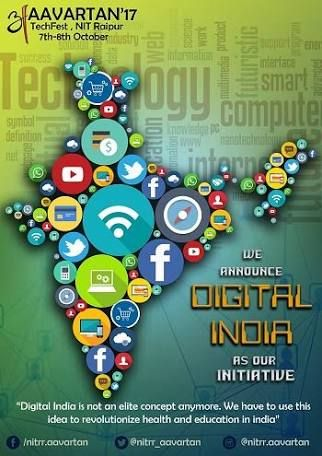
Digital India

Digital India is a massive campaign that the Government of India launched in the year 2015. The implementation of this would give easy access to government services in different regions of the country.

The “Digital India” campaign was launched by the government of India to uplift the usage of technology in India. The objective was to make Government services easily available to the citizens electronically by improving its online infrastructure all over the country. The process would be structured to increase internet connectivity to make the country digitally empowered. It helps to reach out to the masses and encourages them to use technology in their daily lives. Prime Minister Mr. Narendra Modi launched the campaign on July 1, 2015. The initiative aims at connecting rural India with the help of high-speed internet connectivity.

Those days are gone, when people had to stand in long queues and wait for months to get a single work done. No wonder, that technology today has made the life of people convenient. But a country like India could not have imagined a future like today a few years back. Six years back in time, the scenario was quite different as it is of today. The technology was there, but it was limited to only a small fraction of the country.

According to the prime minister of India, “technology first” is the focus of the government and it very well goes with the motto of “Power to empower”. The key vision of this government campaign is broadly divided into three heads:

  • E-Governance for all citizens of India
  • Digitally Empowering citizens
  • Providing a digital Infrastructure for all

The movement of Digital India was made possible with the help of top Industrialists and commerce companies in India like Wipro, Tata Industries, and Reliance Industries. The major concern was to make people use electronic services. Through the campaign of Digital India, the government targeted, e-services to cover more than 600 districts, with the help of major IT companies.

There are three components at the core of the “Digital India” campaign. 

  • Creation of Digital Infrastructure 

To be able to deploy various digital services across the country, it is necessary to create a strong digital infrastructure, especially in rural areas of the country. The interior regions of the country either have very little or mostly do not have any electronic network. This is the reason behind establishing a digital network across the country. Bharat Broadband Network Limited, the governmental body that is responsible for the execution of the National Optical Fiber Network project is responsible for the Digital India project as well. Bharat Net aims to connect 2,50,500 gram panchayats across the country to a high-speed internet network via an optical fiber network. 4,00,000 internet points will be established all across the country as part of the program, from which anybody will be able to access the internet. 

  • Delivery of Digital Service 

A major component of the Digital India campaign is to deliver government services and other essential services digitally. It is easier to change the way of delivering services from physical to digital. Many services of the Government of India were digitized under the Digital India Campaign. 

All ministries would be linked under this scheme, and all departments will be able to reach out to the people with fundamental services like health care, banking, education, scholarships, gas cylinders, water and electricity bills, and judicial services. The daily monetary transactions of people were also converted into digital mode. To ensure transparency in the transactions and curb corruption all the money transactions are being made online, and are supported by one-time passwords. 

  • Digital Literacy 

For full participation of the people of India, the competency that they need to have is called Digital Literacy. The basic behavior, knowledge, and skills required to effectively use digital devices are mandatory. Desktop PCs, laptops, tablets, and smartphones are the digital devices used for the purpose of communicating, expressing, collaborating, and advocating. The mission of Digital Literacy will be covering over six crore rural households. 

Bengali Mishtis: The Delectable Sweet Affair of Bengal

Traditional Sweets of Bengal

Introduction

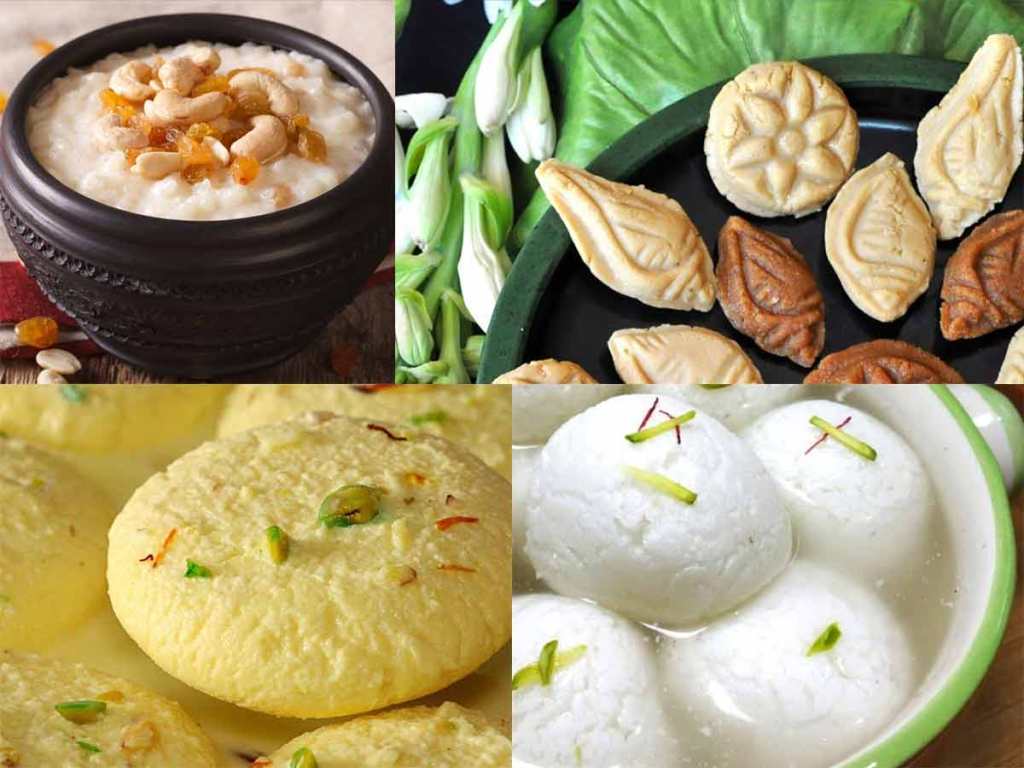
Bengal is well-known for its music, cinema and delicious food, especially the mouth-watering sweets. In fact, it’s rather hard not to run into a sweet shop in almost every corner of the land, including the narrowest of the lanes. And, it’s equally hard to find a Bengali who is not in love with their ‘mishti’. Bengalees are incredibly proud of the sweets of Bengal and their unique appeal. And for a good reason too — Bengali sweets have wooed Indians and foreigners alike.

Bengali Mishtis

History of Sweets in Bengal

The prominent presence of sweets in Bengali cuisine can be noted throughout history. Ancient Bengal was known as ‘Gauda Banga’, a name believed to be originated from the term ‘Gur’ or molasses that were harvested in abundance in the region. The early Bengali sweets were made from the delicious jaggery or molasses and coconuts. There were several sweets made from ‘khoya and kheer’, which are Bengali names for milk solids and condensed milk, respectively. Sweets like ‘Naru’, ‘Moya’ and ‘Takti’  were popular in ancient Bengal. The uses of different fruits to make a variety of sweets were also prevalent. Books like Manasa Vijaya Kavya, written by 15th-century Bengali poet Bipradas Pipilai, also account for how varieties of ‘pithe’ or Indian Cake made from rice flour, jaggery, kheer and milk solids have been an integral part of Bengali rituals and festivals.

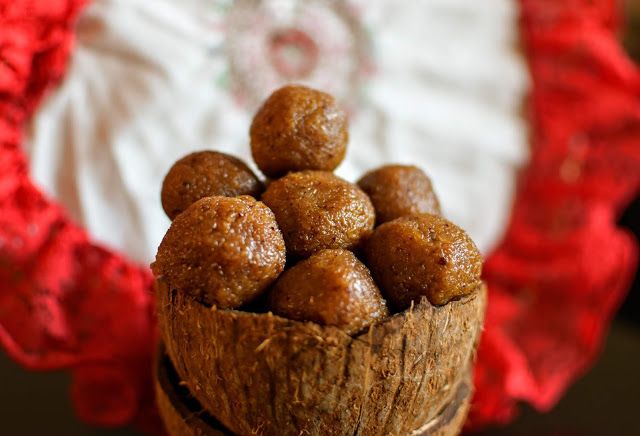
Traditional Coconut Balls or Narkel Naru
Patisapta or Eggless Crepes
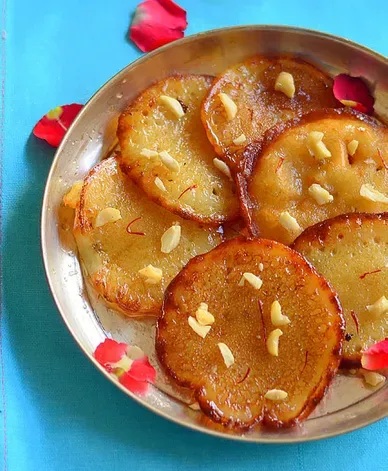
Malpua or Indian Pancakes

The introduction of ‘Chhana’ (Cottage Cheese) in Bengali cuisine happened after the Portuguese invaded Bengal, yet it’s interesting how today most of the characteristic Bengali sweets are made primarily from fresh ‘chhana’ (cottage cheese) and sugar. The curdling of milk with an acidic substance was forbidden according to Hindu cultures, but the Portuguese loved their cheese. After settling down in and around Kolkata in the 17th century, the Portuguese tradition of making sweets with cheese inspired the local cuisine as well. The Bengali confectioners then picked up this incredible art of curdling milk and creating mouth-watering ‘Sandesh’ and ‘Rosogollas’ among others.

Some Famous Bengali Sweets

Bengalees love all their sweets but among those, some are all time winners who can brighten up moods on a tiring day, and can even spoil a diet that you are maintaining for too long! Let’s dive deep into the varieties of some scrumptious and unique Bengali Mishtis.

Sandesh

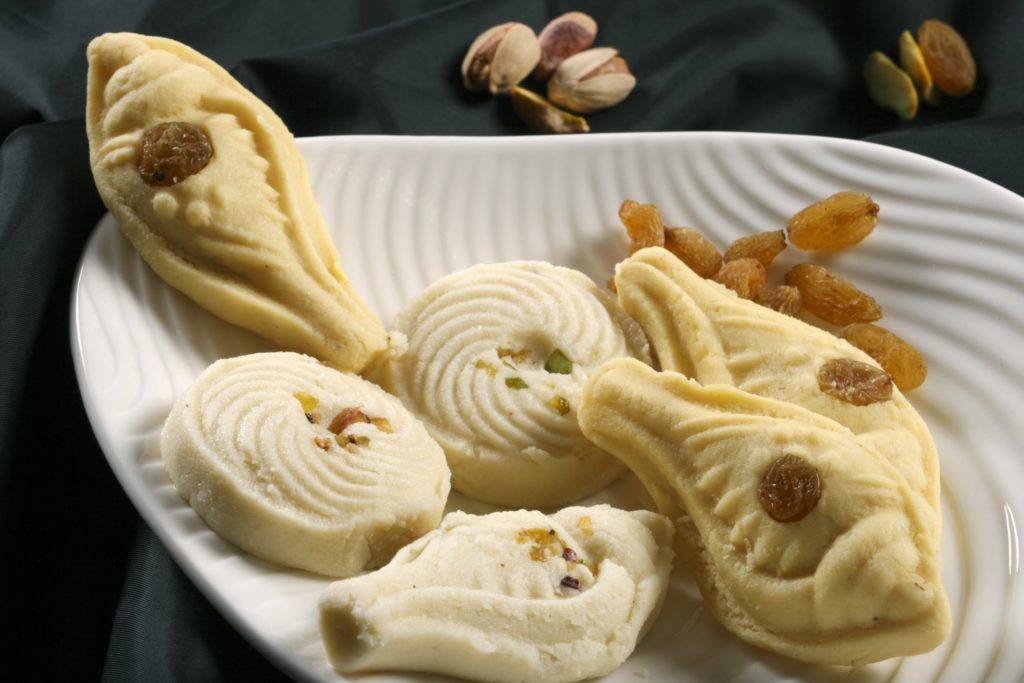
The simplest yet one of the most loved sweet of Bengal, is Sandesh. Generally, made by fine kneading of fresh cottage cheese along with sugar powder, cardamom essence and pistachios to garnish. If jaggery is used, instead of sugar then, it’s called Nolen Gurer Sandesh.

Sandesh

Pantua

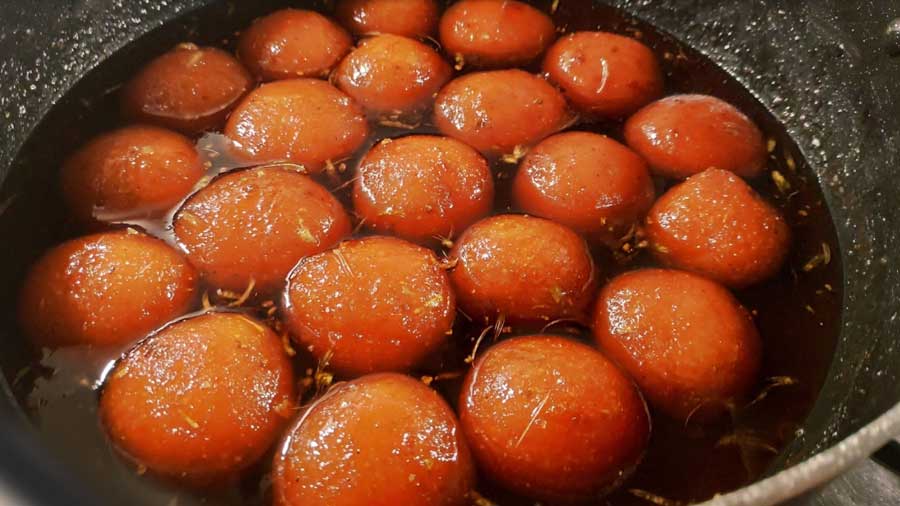
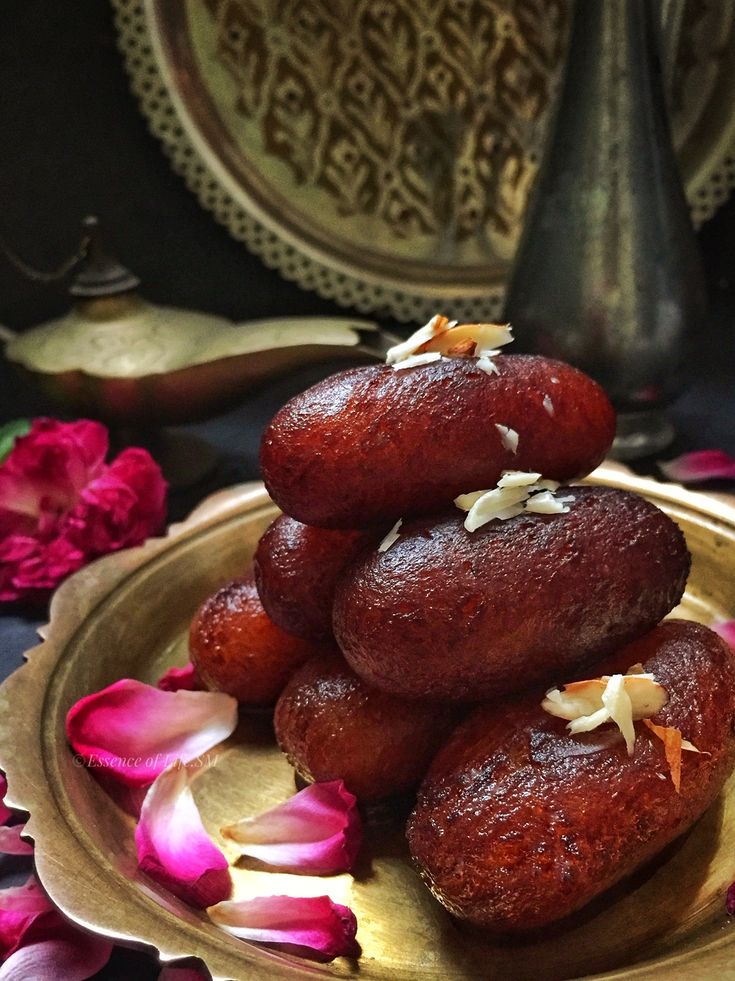
One of Bengal’s most loved syrupy sweets, is Pantua. Though it has an uncanny similarity with North India originated Gulab Jamun, taste and procedure wise they are quite different. Balls made of cottage cheese, semolina are deep fried and then tossed in sugar syrup until completely soaked in. And unlike Gulab Jamun, they can be served cold too.

Pantua

Kheer Kadam

The name of this sweet is suggestive of a flower named Kadamphool in Bengal. The flower is bright yellow in colour cover by soft, white spikes and has a distinctive smell. This Mishti resembles the flower, and has a layer of Sandesh covered over small Rosogollas .

Kheer Kadam

Lyangcha

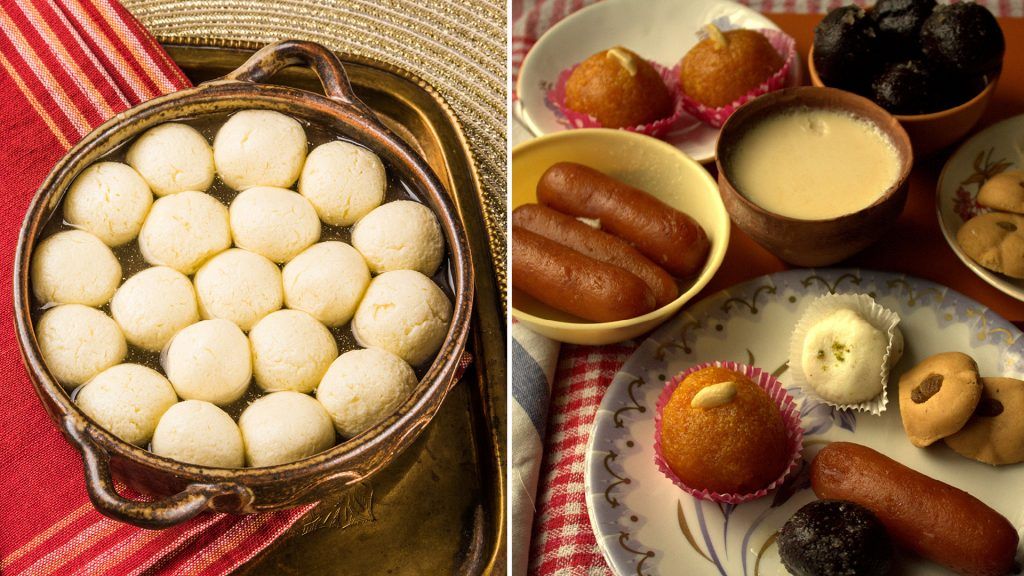
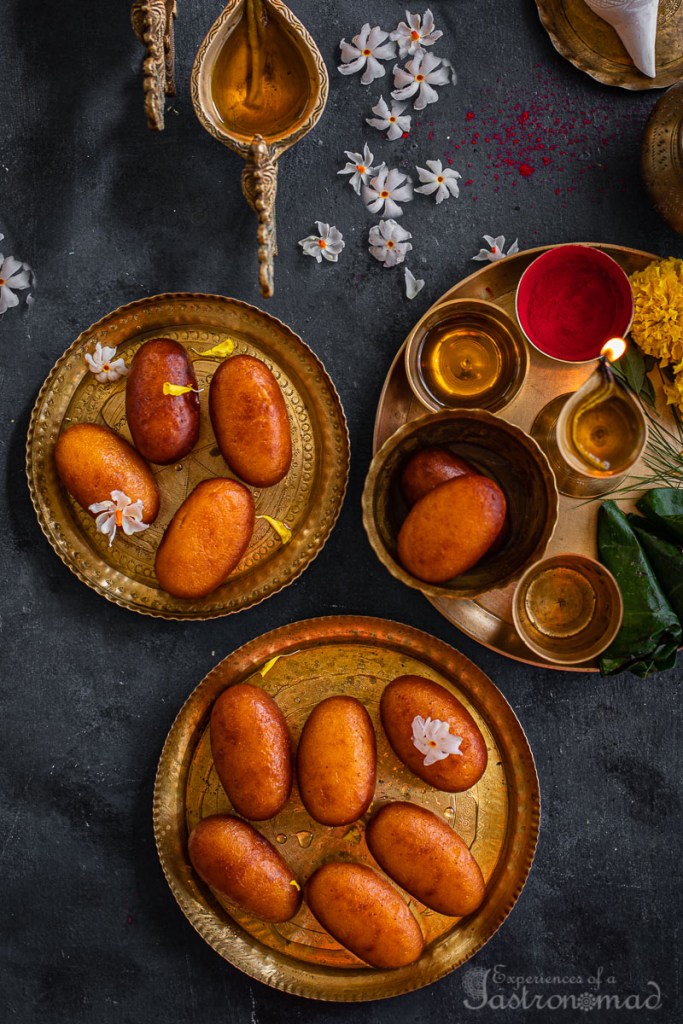
Lyangcha is a cylindrical fried sweet, soaked in sugar syrup and prepared with Fresh Chhena (Cottage cheese) and Mawa/ Khowa. To make soft and tasty Lyangcha use of Fresh Chhena is must. Originated from Shaktigarh, around 80kms from Burdwan in West Bengal, Lyangcha is a staple of Traditional Bengali Mishtis.

Lyangcha

Komola Bhog

As the name suggests, Komola Bhog is literally the orange flavored Rosogolla, (Komola means Orange in Bengali) with the sweetness of Rosogollas and the tanginess of Orange. And of course, they are bright Orange in colour.

Komola Bhog

Jolbhora Sandesh

Jolbhora Sandesh, also known as Taalsas, is a sweet shaped like a ‘taal’ or kernel of the palm fruit. The sweet was created on the event of ‘Jamaisasthi’ by Surjya Modak. It is filled with sweet ‘Nolen gur’ inside and thus got its name. According to stories, Bandopadhay family of Chandernagar requested these sweets for their son-in-law. When he took his first bite of the sweet, the sweet juice spilled out. The sweet, thus, got well-known among the Bengalis.

Jol Bhora or Taal sas Sandesh

Sitabhog

Originated from Burdwan in Bengal, Sitabhog, according to Legends, was Goddess Sita’s favourite dessert and hence the name. Sita Bhog is prepared by frying a dough made of cottage cheese and powdered rice in ghee and then soaking it in sugar syrup. The final product looks like vermicelli served along with mini Gulab jamuns.

Sitabhog

Mihi-Dana

Originated from Burdwan in Bengal , these are one of the famous sweets, that has similarities with Motichur. These are granular, deep fried and soaked into sugar syrup. Recently, Mihi-Dana has received GI Tag from UNESCO and has received its first enormous foreign order to export to The Kingdom of Bahrain.

Mihi-Dana

Ledikeni/ Lady Kenny

Ledikeni or lady Kenny has been a popular Bengali dish since the British rule. The dish is named after Lady Canning, the wife of Charles Canning who was the Governor-General of India during the 19th century. The dish a light brown sweet ball made of Chenna which is fried and then soaked in sugar syrup. It tastes divine and is prepared on most auspicious days. 

Lady Kenny

Rosogollas

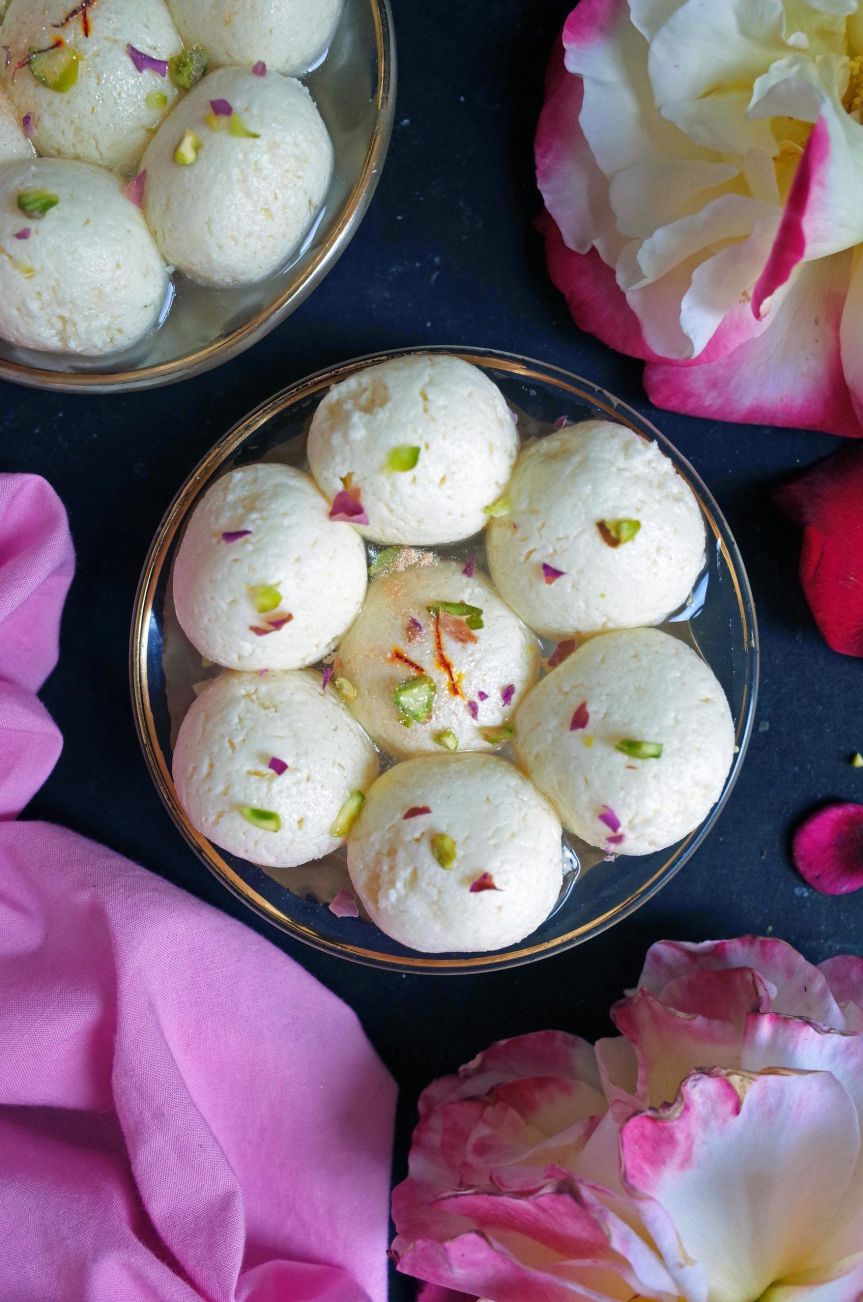
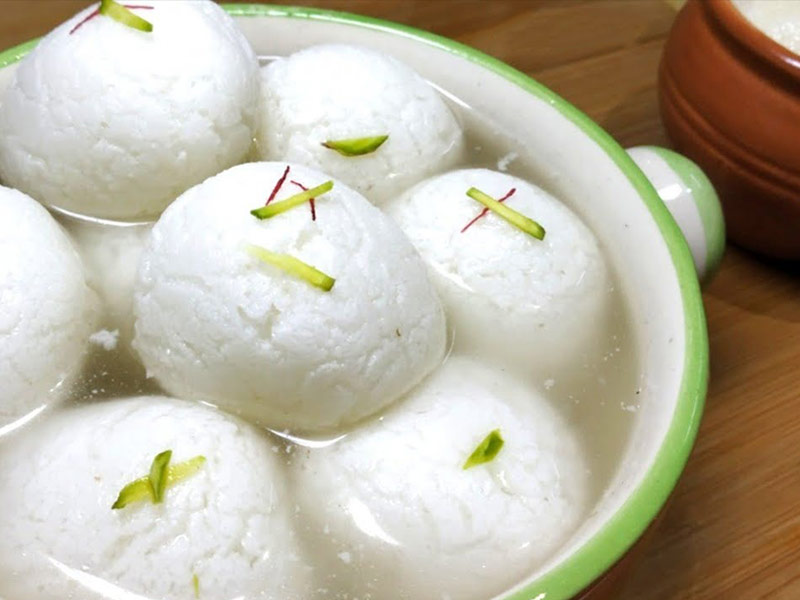
Rosogollas has done the honourable deed of introducing many, if not all, North Indians to the Bengali cuisine. These magical balls are prepared by dipping a mixture of cottage cheese and semolina dough into a sweet sugar syrup. The mere thought of those soft and spongy balls makes the mouth water.

Rosogollas

Laal Mishti Doi (Caramelized Sweet Yogurt)

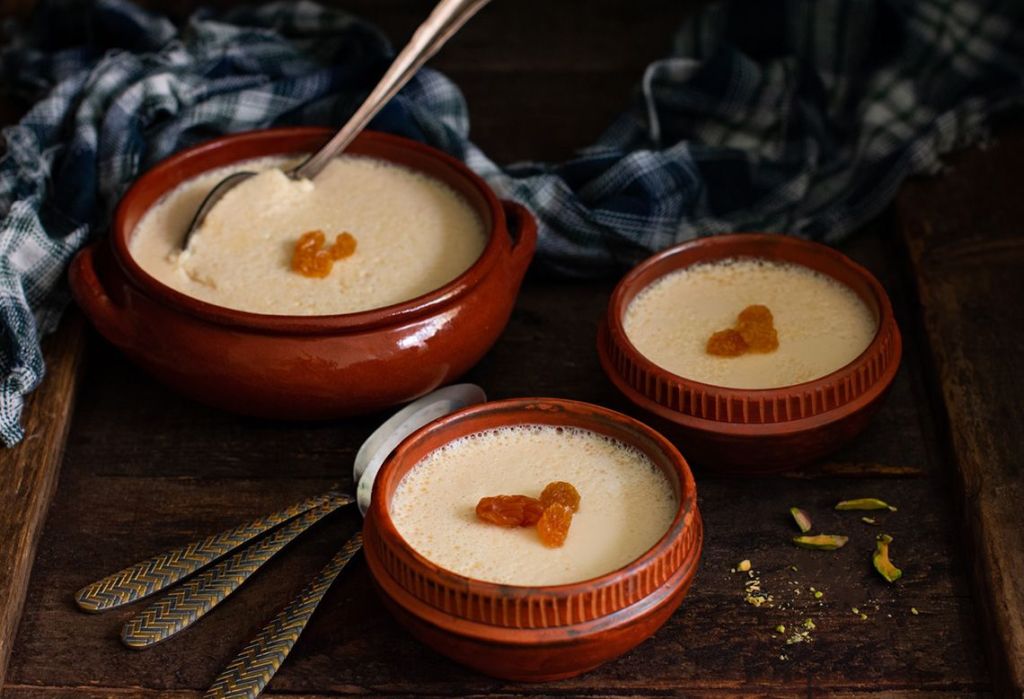
Just like the name, this Bengali dessert is extremely simple and sweet. Mishti Doi is essentially sweetened yogurt which is prepared by adding sugar to boiling milk, then leaving it to ferment overnight and is served chilled. This quintessential dessert is often served in small earthen pots which add to the aesthetics of this dish.

Laal Mishti Doi

Conclusion

Ending on a sweet note, Mishtis are also an important part of the culture and tradition of Bengal. Be it during the festivals or weddings or just greeting guests, Bengali Mishtis are always the stars of the show. If you’re a sweet-tooth, you should try these once in a while. And good news is, that many of them are now available online to order from in India and abroad.

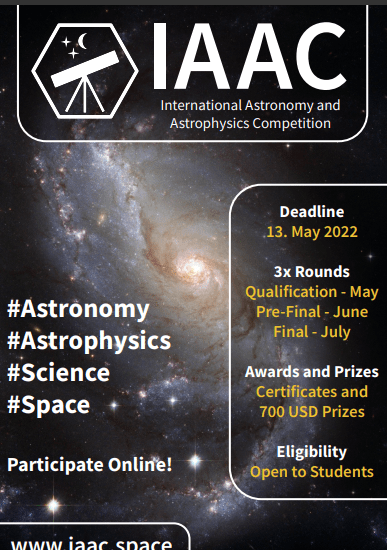
International Astronomy and Astrophysics Competition 2022

What is IAAC?

The International Astronomy and Astrophysics Competition is a global competition for science and astronomy enthusiasts.

Online Submission: The competition uses the possibilities of the modern world to allow all students to participate regardless of nation, region, school, or affiliation. Every student may participate independently – there is no affiliation of your school or teacher to IAAC required to participate in this competition.

Research Problems: The pre-final round includes two research problem types. They require participants to get in touch with real scientific research papers and learn about recent scientific results to solve the problems. They encourage students for more advanced science and give them insights into actual research material.

Teacher Support and Online Tools: We supply teachers and schools with additional materials and an online teacher interface that allows teachers to make better use of IAAC problems in class. We also generate performance reports for each individual student.

Information for Teachers and Schools

Teachers and schools are invited to share this opportunity with their students to make talented students in particular benefit from IAAC. There are also special school awards.

Process and Rounds

1. Qualification Round : 5 Problems: Knowledge, Calculation, Research, Free

2. Pre-Final Round : 3x Basic, 3x Advanced, 2x Research Problems, 4 Days, 8 EUR Registration Costs

3. Final Round :  Final Exam with 20 Multiple-Choice Questions, 60 Seconds/Question, Teacher Supervision 

 Note: The Qualification round is free. The 8EUR Registration cost covers both the Pre-final and Final round. DIgital participation certificates are awarded for all rounds.

Who can participate?

You have to be at least 10 years old and you have to be a student (this includes high school, college, and university). There are two age categories:

  Junior: under 18 years on 13. May 2022.

  Youth: over 18 years on 13. May 2022

Students from both categories will receive the same problems in all rounds, however, students that are youths (18 years or older) will have to reach more points to qualify for the next round (e.g. to qualify for the pre-final round, students that are under 18 years have to reach 15 points and students that are over 18 years have to reach 20 points). 

If you are a science enthusiast and love astronomy this competition is the way to go!

Contact me for further details at-yutsawant@amb.iaac.space

Strong Women In Film Industry: Deepika Padukon

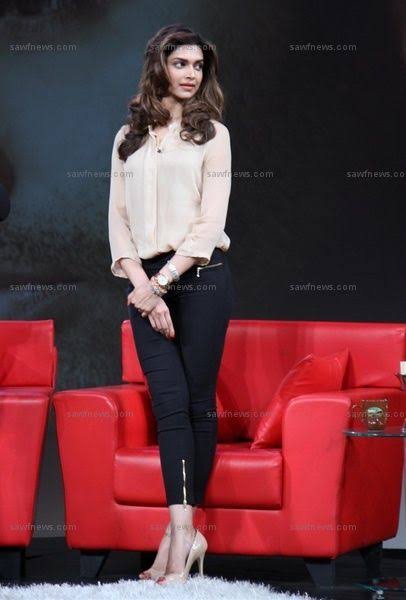
Deepika Padukon is Indian actress in hindi films. she is the highest-paid actress in India. She is the daughter of badminton player Prakash Padukon. Deepika comes in Nation’s most popular personalities. She is the 100 most influential person in the world in2018. Deepika got three filmfare award. She is also known as the strongest woman.
Deepika was born in Copenhagen, Denmark on 5th January 1986. She has done her education in Bangalore’s Sophia high school. and her college is Mount Carmel college. She did her graduated from Indira Gandhi National University. On school days she plays badminton. she is the national champion in badminton as a teenager. She decided to be a model. And she becomes a fashion model. Her first famous Bollywood film is Om Shanti Om with Shah Rukh Khan. Deepika also did Hollywood action films. In 2018 she married Ranvir Singh. She is a successful actress.

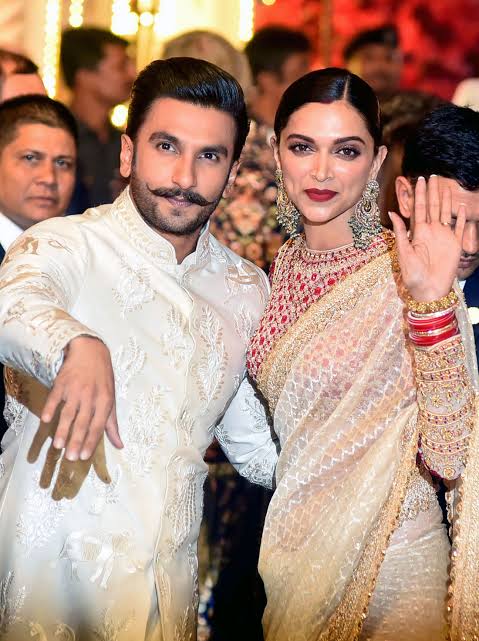
Deepika with her husband Ranvir Singh


Apart from films, she is also a good social worker. Deepika is the founder of triple L that is the Live Love Laugh foundation. It is the foundation that creates awareness of mental health in India. Lots of people are in depression. to treat such patients is the role of the foundation. Deepika is also the brand ambassador for Indian Psyciytric society which is NGO. She is focused on the mental health of people. and working for them. Deepika adopted Maharashtrian village Ambegoan as a part of the Grreenthan campaign and provide regularly supply of electricity.
During shearing, she thought she said, “We should communicate with each other in our traditional way as possible as even in WhatsApp. because in front of the phone we are ignoring our relationships. For that self-discipline is very important. Avoid the use of mobiles in the house and on the dining table. It is our responsibility to maintain relationships. ” What is success? she said,” The success for me is to be at peace with myself and to be happy every day. Peaceful with yourself is the success” Her advice to youth is – You should have clarity with life. never give up until you get it. there are lots of people who distract you but you have to be focused. most importantly self-motivated.

The Art of Organizing Things

Some may think about why this is so relevant or what could possibly happen by organizing things around us. Actually, it does a lot. By organizing things around us we could save a lot of time saved instead of searching for something important while doing a job. It increases our productivity and efficiency. Just like keeping phones away from the work desk helps, this too helps in our day-to-day life. It is not a difficult and hectic process but neither easy. We must carefully choose what is necessary and what is not. It is indeed an art in organizing things around us.

Photo by Ken Tomita on Pexels.com

Tips to organize things :

  1. Make it minimum : The things at our desk must not be too much and must not be too low. Take a pen and a paper. Write down things which is necessary and which are not. Organize the desk according to that list. The things must not occupy all the places of the table and should not look messy. It will bring down our productivity and confidence.
  2. Must be spacious : When we look at our table , we must know what are the things in our table and in which place they are. That is the main purpose of organization of things in our table. To achieve that purpose, keep the things with enough space between them such that they look neat and arranged well. It must not be too , it will not look good.
  3. Around your hand : The things we listed as important and which are frequently used must be reachable to our hand without getting up from the place. If it was, then there is no purpose of arranging things.
  4. Use sticky notes : Sticky notes are one of the best ways to remember things we tend to forget and to create a easy to-do list of that day. It must be sticked to the wall and the daily tasks with timing must be noted down in that. It must be created during early morning or before the day before night. Whenever we finish that task, we must strike it down and take a small break. And then we can resume on other tasks.
  5. Similar things together : Grouping similar things together makes the table look neat and organized.
  6. Don’t rely on perfectness : This is the most important point than above all points. Nothing is perfect either be life or job. The thing which looks perfect may not looks like that tomorrow. Thinking about perfectness is a good habit. But over thinking on it, waste a lot of time and make us lose our interest in organizing things.

Conclusion

The task of organizing things around us is indeed an art. It increases our productivity, focus, efficiency, mental stability, and likelihood to sleep better. It reduces work pressure and stress. And most importantly, keep your table away from distractions like television, speaker etc.. Keep the phone a little bit far from hand. Keep it organized always !!

For every minute spend in organizing, an hour is earned.

Benjamin Franklin

The Success Story of Sugar Cosmetics

When Vineeta Singh and her partner, Kaushik Mukherjee started fab Bag in 2012, it was their second entrepreneurial venture. It was a monthly makeup and beauty subscription for women in which a subscriber would receive a bag of 4 to 5 beauty products every month. These products would be selected from various brands based on the customer’s preferences and skin type. It was in 2015 that they made another attempt and began Sugar Cosmetics. With Fab Bag, Vineeta realized that a lot of the foreign and local makeup brands were not suited for Indian skin tones. This is how they set up Sugar cosmetics with the aim of providing affordable and compatible products catered to Indian complexion. This meant a lot of their products could be used by consumers even if they had to use public transport for long distances to go to work. In 2022, it has established its place in India’s beauty industry, competing with famous brands like L’Oreal and Lakme.

Vineeta Singh, CEO and Co-founder of Sugar Cosmetics

For the initial two years, Sugar stayed as an online-only brand, after which, it started to move into offline retail. Today, this Mumbai-based D2C (Direct to Customer) brand has over 2500 outlets in over 120 cities across India. In five years, it has managed to cross Rs.100 crore revenue, with the company witnessing its biggest leap in success right after the COVID-19 lockdown.

According to Abhay Pandey, general partner at A91 Partners and one of the backers of the cosmetic company, what really helped this brand was its perfectly timed beginning when India was witnessing two major trends- a rapidly growing beauty business and increasing internet usage by consumers. By launching as a digital-only start-up, they were able to gain a set of loyal consumers. These consumers, mostly millennials, felt empowered by the consumer-oriented products of the company. The founders began Sugar based on three core ideas – listening to consumers, staying away from discounting and focusing on content for consumers. This is the strategy they have always stuck to and it has proved very useful for them. The company sells basic makeup products like foundation cream, concealer, eyeliner, lip-liners, mascara, lipsticks, as well as skin-care products and makeup kits. Lipsticks and Lip crayons contribute to 65% of their revenue, with best-selling brands like ‘Matte as Hell’, ‘Nothing Else Matters’, and ‘Seal the Show’.

The COVID-19 situation saw the company depend strongly on social media marketing to survive and strengthen its relationship with consumers. Sugar had always managed an omnichannel presence even before the lockdown. They collaborated with a lot of YouTube and Instagram influencers when they started to attract millennials and urban Indian women to their products. When COVID-19 hit, it was not the easiest time, with many companies being forced to shut down their operations. Sugar also saw a complete halt in sales during the lockdown in the months of April and May. Warehouses and retail outlets were shut down. However, they started to get an increasing amount of sales from June onwards as the retail team at Sugar figured out how to make the entire sales online. They made full use of their app which was launched in 2020, and their social media presence to continue with customer engagement. Their app has been downloaded 100,000 times and they boast a huge online presence, with 2 million followers on Instagram. According to Vineeta Singh, content was and is one of their main focus points. They aim to build a brand with great influencer and social media marketing.

While their products are manufactured across USA, Germany, India and South Korea, and they have distributors in America, Sugar Cosmetics remains focused on the Indian market.          

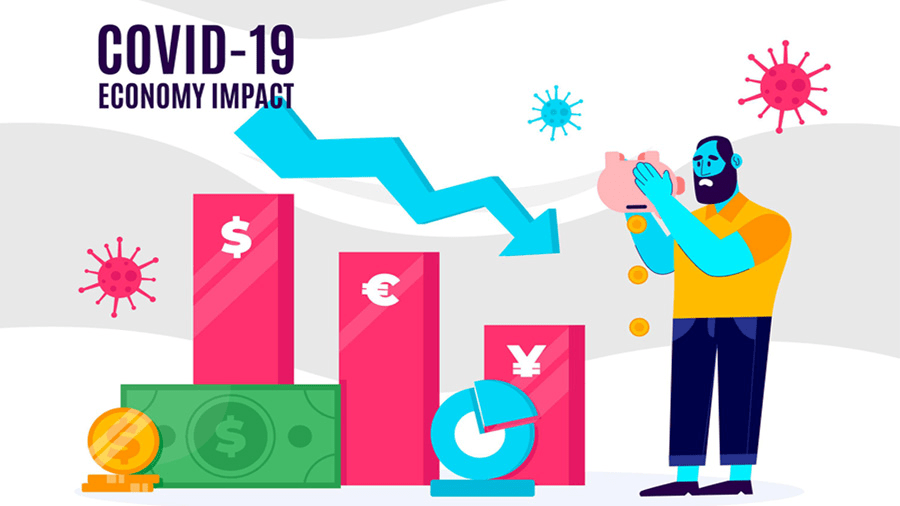
Impact of Covid-19 on India’s economy

The impact of the coronavirus pandemic on India has been largely disruptive in terms of economic activity as well as a loss of human lives. Almost all the sectors have been adversely affected as domestic demand and exports sharply plummeted with some notable exceptions where high growth was observed. India’s growth in the fourth quarter of the fiscal year 2020 went down to 3.1% according to the Ministry of Statistics. The Chief Economic Adviser to the Government of India said that this drop is mainly due to the coronavirus pandemic effect on the Indian economy. Notably, India had also been witnessing a pre-pandemic slowdown, and according to the World Bank, the current pandemic has “magnified pre-existing risks to India’s economic outlook”.

From April to June 2020, India’s GDP dropped by a massive 24.4%. According to the latest national income estimates, in the second quarter of the 2020/21 financial year (July to September 2020), the economy contracted by a further 7.4%. The recovery in the third and fourth quarters (October 2020 to March 2021) was still weak, with GDP rising 0.5% and 1.6%, respectively. This means that the overall rate of contraction in India was (in real terms) 7.3% for the whole 2020/21 financial year.

In the post-independence period, India’s national income has declined only four times before 2020 – in 1958, 1966, 1973, and 1980 – with the largest drop being in 1980 (5.2%). This means that 2020/21 is the worst year in terms of economic contraction in the country’s history, and much worse than the overall contraction in the world.

The Indian Oil & Gas industry is quite significant in the global context – it is the third-largest energy consumer only behind USA and Chine and contributes to 5.2% of the global oil demand. The complete lockdown across the country slowed down the demand for transport fuels (accounting for 2/3rd of demand in the oil & gas sector) as auto & industrial manufacturing declined and goods & passenger movement (both bulk & personal) fell. Though the crude prices dipped in this period, the government increased the excise and special excise duty to make up for the revenue loss, additionally, road cess was raised too. As a policy recommendation, the government may think of passing on the benefits of decreased crude prices to end consumers at retail outlets to stimulate demand.

HELPING TO REDUCE TEACHER ABSENCES WITH ELECTRONIC HEALTH RECORDS

 In 2019, over 900,000 K-12 teachers were absent from their classes for the whole school year.

This equates to 28 percent of teachers across the country who are chronically absent.

With the increased number of instructors quitting as a result of COVID 19, this figure is likely to be considerably higher.

Every school year, teachers’ absences reach a tipping point of 10 days, when they cross the line from tolerable to problematic chronic. Teachers are currently absent for an average of 11.8 days each year.

According to the National Bureau of Economic Research, 10 days of teacher absence might result in a considerable drop in student results.

The detrimental impact extends beyond children to their peers and the whole school community.

Students are more likely to observe poor accomplishment levels without consistency in class and high-quality education, increasing their chances of not graduating. Furthermore, when instructors are frequently absent, colleagues are compelled to work harder and take up the slack.

What are the Most Common Causes of Teacher Absence?

Timing, sick days, maternity breaks, personal days, professional development, colleagues’ attendance norms, and caring for children/elderly parents are all factors that impact teachers’ absence decisions.

Others blame the problem on a hostile or permissive school atmosphere. When instructors are unmotivated to go to school, they choose to skip class.

Stress and infections caused by dealing with young children who are prone to sickness are also considered occupational risks.

Absences due to COVID 19

And, as a result of COVID 19, many instructors have decided not to return to work this year. Educators have been applying for retirement or taking leaves of absence in droves in many states.

Some instructors are concerned that schools are not sufficiently devoted to ensuring social separation and that there is insufficient safety equipment for children and teachers.

Others have stated that one of the reasons for their absence was due to technological constraints and the pressure to capture lessons on video.

Teacher absences can be reduced using electronic health records.

To a large degree, schools may use technological solutions such as electronic health records to tackle these issues.

In schools, electronic health records (EHR) can aid in the monitoring of staff health and absence. They are capable of managing healthcare data and assisting in the improvement of care delivery. EHRs are especially important for keeping kids healthy and in school. It’s also a fact that when children in schools are healthy, so are their instructors.

Another advantage is that electronic health data might assist school nurses in analyzing absence trends that may indicate stress or other issues that teachers confront in the classroom. Once the underlying causes of absences have been discovered, school administrators may take the necessary actions to ensure that teachers are working in a safe and happy atmosphere.

Another advantage is that electronic health data might assist school nurses in analyzing absence trends that may indicate stress or other issues that teachers confront in the classroom. Once the underlying causes of absences have been discovered, school administrators may take the necessary actions to ensure that teachers are working in a safe and happy atmosphere.

Students suffer as a result of high teacher absenteeism. In addition, teachers who are frequently absent might cause their courses to stagnate, forcing colleagues to come in as substitutes. EduHealth, an electronic health record software programme, might be a critical investment in turning things around. EHRs ensure the safety of our children and schools. Teachers are safe and present when schools are safe.

How might electronic health records (EHRs) assist in the creation of mandated school health reports?

EHRs are real-time patient-centered health records that make health and medical information available to authorized users promptly and securely. The system includes a broader perspective of a patient’s care than just a record of medical and treatment history. It:

Is a book that keeps track of a patient’s medical history, diagnosis, prescriptions, treatment plans, vaccination dates, allergies, radiological pictures, and laboratory and test results.

Provides physicians with access to evidence-based tools for making decisions regarding a patient’s treatment.

Provider workflows are automated and streamlined.

An EHR system may create a variety of reports, and most systems make it simple for authorized users to enter a requirement and generate a report with only the information they need.

Forms containing student health data are frequently gathered in a school setting around the beginning of the school year, when students can submit a form indicating their health statuses. And the necessary data is extracted and compiled into a report.

While this procedure was previously conducted manually, it has proven to be time-consuming due to the number of steps involved.

How EduHealth assists schools in meeting their reporting obligations

To ensure the safety of children and employees in the school environment, meticulous reporting on student health and collaboration between schools, school districts, local health authorities, and state health administrations are essential. Because the reports generated by EHR systems are standardized, they may be coordinated.

Most common reports are included into EduHealth’s comprehensive reporting module, allowing authorized school health staff to easily assemble this data and send it to the appropriate authorities in a uniform format.

The EduHealth EHR’s standardization of reporting ensures that no information is overlooked. Health officials have accurate and up-to-date health information on kids and staff, allowing them to make critical choices on crucial health-related issues for school systems.


Stem Cell Therapy – Working and Future technology

 Our bodies contain many specialized cells that carry out specific functions. These specialized cells are called differentiated cells. Stem cells are cells with the potential to develop into many different types of cells in the body. They act as a repair system for the body. They are unspecialized cells, so they cannot do specific functions in the body. It can create the potential for the cells to be used to grow replacement tissues. American development biologist James Thomson (1958), from the University of Wisconsin School of medicine, won the race to isolate and human embryonic stem cells. On November 6 1998, the ‘journal science’ published the results of Thompson’s research. It described how he used embryos from fro fertility clinics which were donated by couples who no longer needed them, and developed ways to extract stem cells and keep them reproducing indefinitely.

With the ability to develop into any one of the 220 cell types in the body, stem cells hold great promise for treating a host of debilitating illness, including diabetes, leukemia, Parkinson’s disease, heart disease, and spinal cord injury. They also provide scientists with models of human disease and a new ways of testing drugs more effectively in living organisms. But for all the hopes invested, progress has been slow. It has helped that stem cell research has been steeped in controversy, with different groups questing the ethics of harvesting stem cells from human embryos.

In 2007 Thomson and Shinya Yamanaka, from Kyoto university, Japan, both independently found a way to turn ordinary human skin cells into stem cells. Both groups used four genes to reprogram human skin cells. Their work is being heralded as an opportunity to overcome problems including the shortage of human embryonic stem cells and restrictions on U.S. federal funding for research.

How stem cell therapy works?

Researches grow stem cells in lab. These developed stem cells are manipulated to specialize into specific types of cells, such as heart muscle cells, blood cells or nerve cells. These manipulated specialized cells can be implanted into the heart muscle. The healthy implanted heart muscle could then contribute to repairing defective heart muscle. The first stem cell therapy was a bone marrow transplant performed by French oncologist Georges Mathew in 1958 on five workers at the Vinca nuclear institute in Yugoslavia who had been affected by a criticality accident.

Stem cell therapies have become very popular in recent years, as people are seeking the latest alternative treatments for their many conditions. Stem cell therapies are very expensive to pursue. Even simple joint injections can cost $1,000 and more advancement treatments can rise in cost up to $100,000 depending on the condition. Patients must do their research and ask as many questions as they can before financially committing to treatment. Since it is a life changing treatment, it will effectively cost high.

Future stem cell treatments

 The stem cell treatment can helps us curing various diseases in the future. But it is important not to overhype the potential of stem cells and to accurately communicate findings to the public. We must not allow the misleading of some people says that we can cure the untreatable diseases with stem cell treatments. However with more research and investment, I believe that stem cell therapy could transform disease outcomes of many patients.

“The regenerative medicine revolution is upon us. Like iron and steel to the industrial revolution, like the microchip to the tech revolution, stem cells will be the driving force of this next revolution.”   -Cade Hildreth


History of Motorcars – Karl Benz

It is difficult, to imagine a world without the motorcar. When German engineer Karl Benz drove a motorcar tricycle I 1885 and fellow Germans Gottlieb Daimler and Wilhelm Maybach converted a horse down carriage into a four wheeled motorcar in august 1886, none of them could have imagined the effects of their invention. Benz recognized the great potential of petrol as a fuel. His three wheeled car had a top speed of just ten miles (16 km) per hour with its four-stroke, one cylinder engine. After receiving his patent in January 1886, he began selling the Benz velo, but the public doubted its reliability. Benz’s wife bertha had a brilliant idea to advertise the new car. In 1886 she took it on a 60mile (100) trip from Mannheim to near Stuttgart. Despite having to push the car up hills, the success of the journey proved to a skeptical public that this was a reliable mode of transport.

Daimler and Maybach did not produce commercially feasible cars until 1889. Initially the German inventions did not meet with much demand, and it was French companies like Panhard at Levassor that redesigned and popularized the automobile. In 1926 Benz’s company merged to form the Daimler Benz company. Benz had left his company in 906 and, remarkably, he and Daimler never met. Due to higher incomes and cheaper, mass produced cars, the United States led in terms of motorization for much of the twentieth century. This kind of movement has, however, come at a cost. Some 25 million people are estimation to have died in car accidents worldwide during the twentieth century. Climate changing exhaust gases and suburban sprawl are but two more of the consequences of a heavy reliance on the automobile.

Invention of the clutch

Almost all historians agree that clutch was developed in Germany in the 1880s. Daimler met Maybach while they were working for Nikolaus Otto, the inventor of the internal combustion engine. In 1882 the two set up their own company, and from 1885 to 1886 they built a four-wheeled vehicle with a petrol engine and multiple gears. The gears were external, however, and engaged by winding belts over pulleys to drive each selected gear. In 1889, they developed a closed four- speed gearbox and a friction clutch to powers the gears, this car was the first to be marketed by the Daimler motor campy in 1890. Without a clutch, if the car engine is running the wheels keep turning. For the car to stop without stalling, the wheels and engine must be separated by a clutch. A friction clutch consists of a flywheel mounted to engine side. The clutch originates from the drive shaft and is a large metal plate covered with a frictional material. When the flywheel and clutch make contract, power is then transmitted to the wheels.

Gears in Motorcars

Karl Benz was the first to add a second gear to his machine and also invented the gear shift to transfer between the two. The suggestion for this additional gear came from Benz’s wife, bertha, who drove the three-wheeled Motorwagen 65 miles from Mannheim to Pforzheim – the first long distance automobile trip. The gears allow the engine to the maintained at its most efficient rpm while altering the relative speed of the drive shaft to the wheels. Gears originally required double clutching, where the clutch had to be depressed to disengage the first gear from the drive shaft, and then released to allow the correct rpm for the new gear to be selected. The clutch was then pressed again to engage the drives shaft with the new gear. Modern cars use synchronized which use friction to match the speeds of the new gear and he shaft before the teeth of the gears engage, meaning that the clutch only needs to be presses once.

“One thing I fell most passionately about: love of invention will never die” – Karl Benz

Emotional Intelligence or Intelligence Quotient

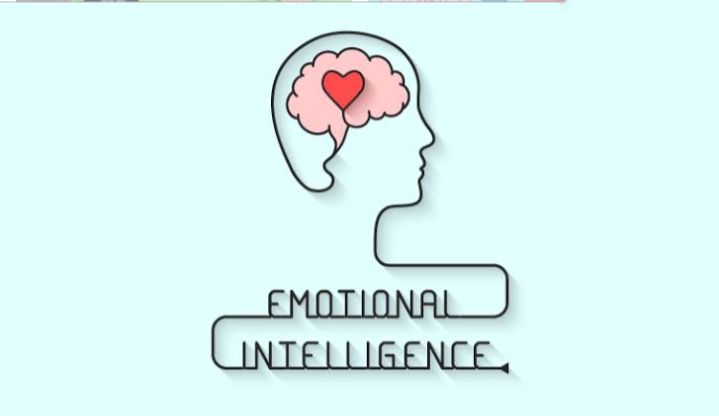
Emotional Intelligence refers to the capacity of a person to manage and control emotions and possess the ability to control the emotions of others as well. In other words, they can influence the emotions of other people too. Emotional Intelligence is the capacity to understand and manage emotions. Skill like self-awareness, self-regulation, social skills, motivation is included in emotional intelligence. It is commonly defined by four attributes. Those are self-management, self-awareness, social awareness, and relationship management. Emotional intelligence has actually been a known fact for more than the last few decades. In fact, our perception of its importance predates the coining of the phrase in the 1964 paper by Michael Beldoch. It has different names from social intelligence to emotional strength but its importance has always been undeniable. According to some research, emotional intelligence is responsible for 58% of job performance, and 90% of top performers have high emotional intelligence.

Earlier studies like one from CareerBuilder found that 71% of employers (HR professionals and hiring managers) viewed emotional intelligence as more important than IQ. In 2017 study published in Human Performance Journal also found that emotional intelligence is a predictor of job performance in social jobs. Research also believed that emotional intelligence came naturally to some people but could also be enhanced in others with training and performance. Having an emotionally intelligent workforce promotes progress. Better teamwork is undeniable that employees are able to work better. Morale boosting is one of the many benefits in the workplace.

The Deepest Image ever taken – Hubble Space Telescope

The Hubble space telescope is the most famous telescope in the world. It was named after the famous astronomer Edwin Hubble who changed our understanding of the universe proving the existence of other galaxies. It is an automatic observatory, has discovered millions of new objects in space. It helped us to witness the birth of new stars, found planets outside the solar system and see super massive black holes. Hubble was launched in 199o, and from December 1993 to may 2009, the telescope was repaired and updated four times. Astronauts visited HST five times in order to make repairs and new instruments.

Hubble holds the record for the longest range of observation. The light from the most distant galaxies has taken billions of years to travel across the universe and reach Hubble. By taking this picture, Hubble was literally looking back in time to the very early universe. You can notice on the right side of the image, there is a galaxy very much like the Milky Way that galaxy is about five billion years away, so we are looking back in time by five billion years. In March 4th, 2016, NASA releases a historic image, one that many believed was impossible. It captured the farthest away of all known galaxies; it’s located about 13.4 billion light years away from us. The light from his galaxy has just reached the earth crossing the distance that separates us; hat is now we can observe it as it was 400 million years after the big bang. This galaxy is 25 times smaller than our galaxy, the Milky Way.  It helped to find the age for the universe now known to be 13.8 billion years, roughly three times the age of earth.

With the advanced camera of the NASA’s Hubble space telescope, it discovered a new planet called Fomalhaut b which orbiting is parent star Fomalhaut. Fomalhaut is 2.3 times heavier and 6 times larger than the sun around it is a disc of cosmic dust which creates the resemblance of an ominous eye. Fomalhaut b lies 1.8 billion miles inside the ring’s inner edge and orbits 10.7 billion miles from its star. Astronomers have calculated that Fomalhaut b completes an orbit around its parent star every 872 years. The Fomalhaut system is 25 light years away in the constellation Piscis Australis. But in April 2020, astronomers began doubting its existence; the planet is missing in the new Hubble pictures. Scientists believe that this planet was a cloud of dust and debris formed as a result of a collision of two icy celestial bodies.

In 1994, Hubble captured the most detailed image of the iconic feature called the pillars of creation. The pillars of creation are fascinating but relatively small feature of the entire eagle nebula. The blue color in the image represent oxygen, red is sulfur, and green represents both nitrogen and hydrogen. The nebula was discovered in 1745 by the Swiss astronomer jean Philippe Loys de cheseaux, is located 7,000 light years from earth in the constellation serpens. During its work Hubble has presented millions of images but unfortunately NASA has suspended missions to repair and modernize the telescope. It is assumed that in 2021, Hubble will be replaced with the new James Webb space telescope.

Are Perpetual Machines Really Work?

Most of us might have had this idea, that magnets attract each other in opposite poles, so why can’t we use this to create free energy. Like placing a magnet or a metal in a car and attach the other magnet with a rod or something and place it in front of the car that keeps them attract each other. With this idea, we can move the car without any energy, forever. A perpetual motion machine is a device that is supposed to work indefinitely without any external energy source. Imagine a windmill that produced the breeze it needed to keep rotating or a light bulb whose glow provided its own electricity. These devices have captured many inventers’ imaginations because they could transform our relationship with energy. It sounds cool right? But there is only one problem, it won’t work.

In countless instances in history, people have claimed that they have made a perpetual motion machine. Around 1159 A.D. a mathematician called Bhaskara the learned sketched a design for a wheel containing curved reservoirs of mercury. He reasoned that as the wheels spun, the mercury would flow to the bottom of each reservoir, leaving one side of the wheel perpetually heavier than the other. The imbalance would keep the wheel turning forever. Bhaskara’s drawing was one of the earliest designs for a perpetual motion machine. And more people have claimed that they made a perpetual motion machine, like Zimara’s self blowing windmill in the1500s, the capillary bowl where capillary action forces the water upwards, the oxford electric bell, which takes back and forth due to charge repulsion, and so on. In fact the US patent office stopped granting patents for perpetual motion machines without a working prototype.

Why perpetual motion machines won’t work?

Ideas of perpetual motion machine all violate one or more fundamental laws of thermodynamics. These laws describe the relationship between different forms of energy. The first law of thermodynamics says that “Energy neither be created nor be destroyed”. You can’t get out more energy than you put in. that rules out a useful perpetual motion machine right away because a machine could only ever produce as much as it consumed. There wouldn’t be any leftover energy to power a car or charge a phone. But what if you just wanted the machine to keep itself moving? Let’s take the Bhaskara’s wheel, the moving parts that make one side of the wheel heavier also shift its center of mass downward below the axle. With a low center of mass, the wheel just swings back and forth like a pendulum and will stop. In the 17th century, Robert Boyle came up with an idea for a self watering pot. He theorized that capillary action, the attraction between liquids and surfaces that pulls water through thin tubes, might keep the water cycling around the bowl. But if the capillary action is strong enough to overcome gravity and draw the water up, it would also prevent it from falling back into the bowl.

For each of these machines to keep moving, they had to create some extra energy to nudge the system past its stopping point, breaking the first law of thermodynamics. There are ones that seems to keep moving, but in reality, they invariably turn out to be drawing energy from some external source. Even if engineers could design a machine that didn’t violate the first law of thermodynamics, it still wouldn’t work in the real world because of the second law. The second law of thermodynamics tells us that energy tends to spread out through processes like friction, heating. Any real machine would have moving parts or interactions with air or liquid molecules that would generate tiny amount of friction and heat, even in a vacuum. That heat is energy escaping, and it would keep leeching out, reducing the energy available to move the system itself until the machine inevitably stopped. Like I said about the idea of a car with magnets, the magnets in it won’t able to move the car. Even if the magnet is so powerful to move the car, the friction came into action and will eventually stops the car. So these two laws of thermodynamics will destroy every idea for perpetual motion. With these, we can conclude that perpetual motion machines are impossible.

  YOU  CAN’T  GET  SOMETHING  FOR  NOTHING.