History of Television in India.

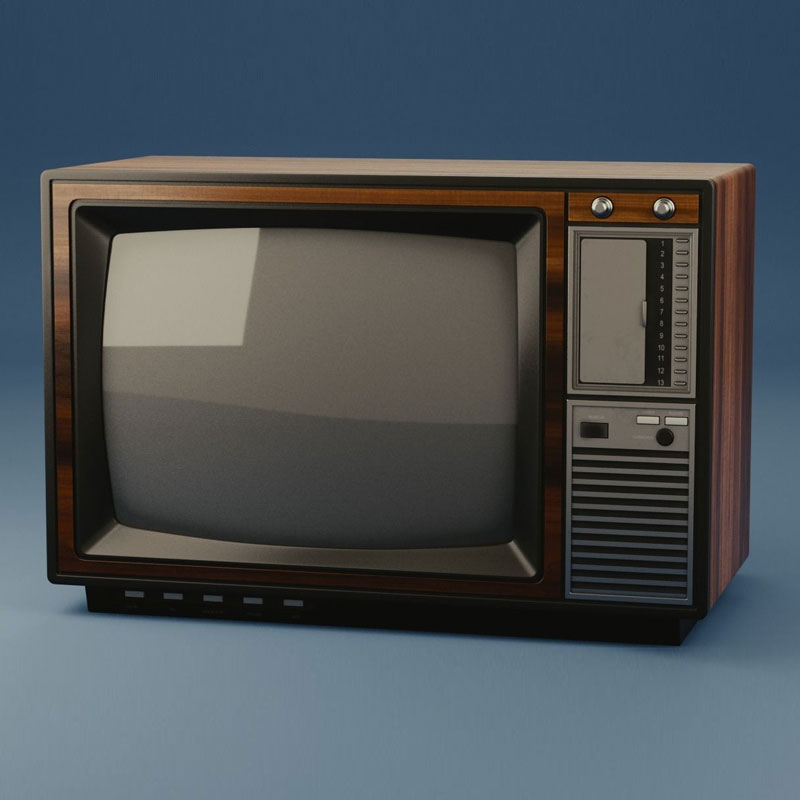
Television was founded by John Baird. The first television service was started in 1936 by British Broadcasting Corporation (BBC) of Britain . In 1939, television broadcasts began in the United States. In 1953 the first successful programme in colour was transmitted by Columbia Broadcasting System (CBS) in USA. In today՚s world, television has become one of the most powerful means of mass communication . It can impart education, information and entertainment . Television has end up becoming an necessary a part of our lives.



HISTORY
India’s first television station was established on October 24, 1951, in the Department of Electronics and telecommunications at Government Engineering College in Jabalpur. Television began in India as an experiment on September 15, 1959. It was first started as two hours programmes a week under the authority of AIR. Early programs of these experimental broadcasts were generally educational programs for children and farmers. By 1975, only seven Indian cities were using television services. The Satellite Instructional Television Experiment (SITE) was an important step by India for the use of television for the development of people and the country. Initially, the show was mainly produced by Doordarshan (DD), who was part of AIR at the time. Transmissions were made twice a day, morning and evening. In addition to information on agriculture, health and family planning, other important topics covered in these programs were audience education and awareness raising. Entertainment was also included in the form of dance, music and cinema. In 1976 Television services were separated from radio . Color television was introduced to the Indian market in 1982.

In the late 1980s, more and more people began to own televisions. There was only one channel, but the TV show was saturated. Therefore, the government opened another channel, partly broadcasting nationally and locally. This channel was called DD2 and was later renamed to DD Metro. Both channels were broadcast on the ground. In 1997, Prasar Bharati, was established.Doordarshan, along with AIR, was incorporated into a state-owned enterprise under Prasar Bharati. Transponders of the American satellites PAS-1 and PAS-4 assisted in the transmission and broadcasting of shows on DD. An international channel called DD International was launched in 1995 and broadcasts programs abroad 19 hours a day to Europe, Asia and Africa via PAS-4 and to North America via PAS-1.The 1980s were the prime time for DD, with shows like comedies such as Hum Log (1984-1985), Wagle Ki Duniya (1988), Buniyaad (1986-1987). Epics like Ramayan (1987–1988) and Mahabharat (1989–1990) brought millions to Doordarshan and later on Chandrakanta (1994–1996). Song-based programs for Hindi movies such as Chitrahaar and Rangoli, and crime thrillers such as Karamchand and Byomkesh Bakshi. Children’s shows such as Tenali Rama ,Vikram Betal and Malgudi Days .


Private Channels influence:
The introduction of communication channels was a revolutionary move to reach so many people. It became an opening for Private and Commercial broadcasters in our country. The emergence of private channels began in India in the 1990s after CNN aired the Gulf War. Hong Kong-based STAR (Satellite Telivision Asia Region ) enterned in a contract between an Indian company and Zee TV. It became the first Private Indian Hindi satellite channel. During this time, several local stations have emerged. Apart from local ones various international channels such as Channel, CNN, BBC, Discovery, etc were also available for Indian TV viewers. Their were various categories of channels available for viewers,such as the 24-hour news channel, Religious channels, cartoon channels, movie channels, something for everyone .



Changes and Evolution:
A significant change that has occurred is the use of different methods of delivering television programming. Just a while ago their were satellite-based antennas, but now the mode has converted to dishes. Other shipping methods are are delivery via cable network and direct satellite transmission. Now you can watch TV shows on your mobile phone , the technology behind it is called Internet Protocol Television. The emergence and spread of televisions and computers and the access to content anytime, anywhere, everyone has brought revolutionary change and access to the world of entertainment.

“I always say film is art, theater is life and television is furniture .”

Kenny Leon
Community: meaning and characteristics

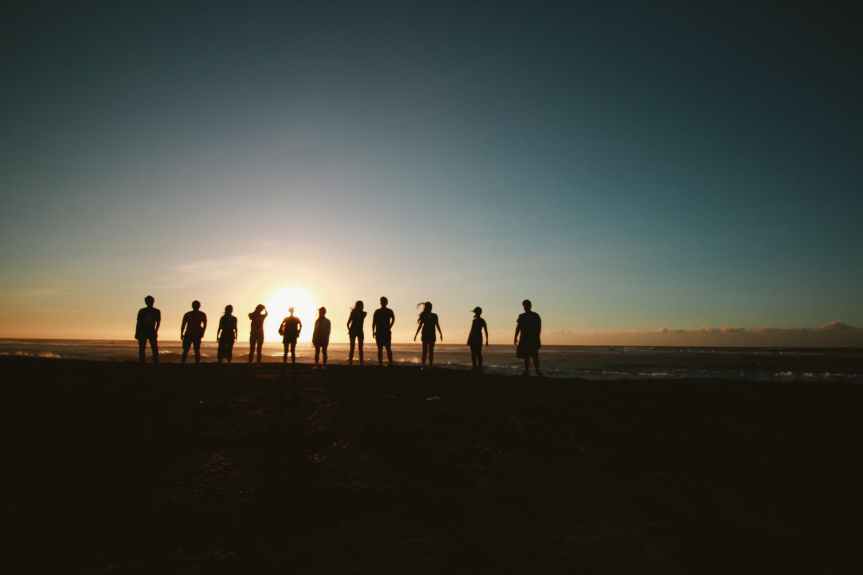
Photo by Keith Wako on Pexels.com

The term ‘community’ is given different interpretations and used in different ways to mean different things. People often use the term community to refer to a racial community, or a religious community, or a national community, etc. It is used in various contexts.

Some definitions of community:

1. Bogardus defined community as “a social group with some degree of ‘we-feeling’ and living in a given area”.

2. Talcott Parsons said “Community is the aspect of all social units.”

3. Lundberg defined community as “a human population living in a limited geographical area and carrying on a common interdependent life”.

4. MacIver said “Community is an area of social living marked by some degree of social coherence”.

5. According to Duncan Mitchell, “community denotes the collectivity of people who occupied a geographical area, are engaged in economic and political activities and constitute a self- governing social unit.

A community is essentially an area of social living. It is marked by some sorts of social coherence. ‘Community’ is an all-inclusive term. It includes all our social relationships. Elements of community: The main bases of community are: 1. Locality and 2. Community sentiment.

1. LOCALITY: A community is a territorial group. It always occupies some geographical area. Locality is the physical basis of community. In contrast to a society, a community is more or less locally limited. Even the wandering tribe or nomad community, for example, has a locality, though changing habitation. A group of people forms community only when it begins to reside definite locality. For example, caste is not a community since it is not necessary that all the members belonging to a certain cast live together in a definite location, whereas a village and a city can be called a community under certain conditions. Living together facilitates people to develop social contacts, gives protection, safety and security. It helps the members to promote and fulfil their common interests.

2. COMMUNITY SENTIMENT: Locality alone cannot make a group, a community. There are cases where people do live together but do not have any contacts or communications. These cannot be placed under community. For example, in a city there can be different localities. The members of these locality need not be sharing any common interests or may not have common outlook. A community is essentially an area of common living with a feeling of belonginess. ‘Community sentiment’ means a feeling of belonging together. The members must be aware of their staying together and sharing common interests. The members develop a sense of ‘we-feeling’. Without a sense of identification, a sense of awareness, a sense of living and sharing some common interests in life, there cannot be a community.

Other Aspects of Community:

1. Stability: A community is not a temporary group like a crowd or a mob. It is relatively stable. It includes a permanent group life in a definite place.

2. Naturalness: Communities are not created deliberately. They are not created by an act of will or by planned efforts. Individuals become its members by birth itself. Membership, hence, is not voluntary. This does not mean that caste is a community.

3. Size of the community: A community can be big or small. A small community can be included in a bigger community. For example, a city and a village may be included in a wider community called district. Thus, the term community is used in a relative sense.

4. Regulation of relations: System of traditions, customs, morals as well as set of rules and regulations are there to regulate the relation between its members.

Garhwali Language it’s time to save it from getting fade.

Garhwali is the Indo-Aryan language of the Central Pahari Region which is mainly spoken by more than 2.5 million people in the Garhwal region of Uttarakhand, northern India, in the Himalayas of India, Uttarakhand. Garhwali is also spoken by Garhwali people living in other parts of India, such as Himachal Pradesh, Delhi, Hariyana, Punjab and Uttar Pradesh. According to various estimates, at least 3.5 million Garhwali migrants live in Delhi and other cities.


HISTORY
During the Middle Indo-Aryan era, there were various languages called Prakrit. Of which, Khas Prakrit language is believed to be the source of Garhwali language.The earliest forms of Garhwali can be traced back to the 10th century and can be found in temple stones, including numismatics, royal seals, copper plate inscriptions, royal orders and grants. An example is the inscription of King Jagatpal’s Temple Grant in Dev Prayag in 1335 AD. Most Garhwali literature survives in vernacular form and is transmitted verbally. But since the 18th century, Garhwali has developed a literary tradition.


LITERETURE & WRITERS
Among the famous Garhwali writers in hiastory of literature are Sudarsan Shah, Kumdanand Bahguna, Hari Dutt Sharma (Nautiyal), Hari Krishna Daurga Dutti Rudra, Urvi Dutt Shastri ,Mahidhar Dangwal, etc. , Satyasaran Raturi, Atma Ram Gairola, Devendra Dutt Raturi, Suradutt Saklani and more. Among historians are Mola Ram, Miya Prem Singh, Hari Dutt Shastri, Hari Krishna Raturi and Vijaya Ram Raturi.
Garhwali literature is thriving despite the ignorance of the government. Today, newspapers like Uttarakhand Khabarsar and Rant Raibaar are published entirely in Garhwali. Magazines such as Baduli, Hilaans, Chitti-patri and Dhaad have contributed to the development of GarhwaliGarhwali language.

Some Notable works of Gharwali writers:
•)Abodh Bandhu Bahuguna – (1927–2004) Garhwali writer. Some nitable writings include Gaad, Myateki Ganga, and Bhumyal.
•)Bachan Singh Negi – “Garhwali translation of Mahabharata and Ramayana”.
•)Lalit Mohan Thapalyal – “Achhryun ku taal”
•)Leeladhar Jagudi – (1944) Writer and novelist. PadmaShri
•)Lokesh Nawani – “Phanchi”
•)Madan Mohan Duklaan – “Aandi-jaandi saans”
•)Chandramohan Raturi – “Phyunli”
•)Chinmay Sayar – “Aunar”
•)Dr. Narendra Gauniyal – “Dheet”
•)Durga Prasad Ghildiyal – “Bwari”, “Mwari” and “Gaari”
•)Gireesh Juyal ‘Kutaj’ – “Khigtaat”.

Struggle of Official RecogItion:
Since the establishment of Uttarakhand in 2000, the state governments have made slow progress in promoting and developing the regional language of Uttarakhand. Like other languages in Uttarakhand, Garhwali, the most widely spoken language, is not officially recognized. In 2010, Hindi became the official language and Sanskrit became the second official language of Uttarakhand. In 2014, after making Garhwali the official language of Uttarakhand and demanding that it be taught at schools and universities for many years, the Uttarakhand State Government established Kumaoni and Garhwali departments at Kumaoni and Garhwali universities, respectively, to study the regional languages. At the national level, Garhwali is always required to be included in the 8th schedule of the Indian Constitution in order to be one of India’s schedule languages. In July 2010, Parliamentary member Satpal Maharaj of Pauli Garhwal submitted a legislative bill to Lok Sabha to include the languages of Garhwali and Kumaoni in the eighth schedule of the Constitution. Like most private citizen bills, the bill has not been discussed in Parliament and has since expired.

SpaceX Claims 5G Plan Could ‘render Starlink Unusable For Most Americans’

SpaceX has said its U.S.-based Starlink customers will see their broadband service badly disrupted if Dish Network is allowed to use the 12GHz band for its 5G cellular network.

The decision is in the hands of the Federal Communications Commission (FCC) as Dish Network and others such as New York-based RS Access lobby the agency to let them use the 12GHz band. But SpaceX isn’t happy.

“If Dish’s lobbying efforts succeed, our study shows that Starlink customers will experience harmful interference more than 77% of the time and total outage of service 74% of the time, rendering Starlink unusable for most Americans,” the company said in a message posted on its website on Tuesday, June 21.

The long-running dispute involves a number of companies that are trying to gain access to the 12GHz band that SpaceX already uses for its internet-from-space Starlink service.

Dish has previously published data suggesting that ground-based 5G networks could comfortably share the frequency with low-Earth orbit satellite networks operated by the likes of SpaceX for its Starlink service.

But this week, SpaceX said that technical studies “dating back as far as 2016” suggest that opening up the band to ground-based 5G networks could adversely impact its Starlink service, and it even accused Dish of attempting to “mislead the FCC with faulty analysis in hopes of obscuring the truth.”

The company led by billionaire entrepreneur Elon Musk also shared a 12-page technical analysis explaining how mobile services envisioned by Dish would “cause massive disruptions to users of next-generation satellite services,” such as Starlink.

It explained that a high-gain antenna, like the SpaceX user terminal, is “designed with sufficient sensitivity to receive very weak signals coming from a desired transmitter,” adding that “such antennas do not, however, ‘reject’ interference coming from other directions.” The result is that interference would “completely wipe out the desired signal.”

In widely reported comments, a Dish spokesperson said its “expert engineers are evaluating SpaceX’s claims.”

Dish announced last week that it has launched commercial 5G services in more than 100 U.S. Cities — covering around 20% of the nation’s population — by using frequencies in other spectrum bands. But whether it can access the 12GHz band as part of its 5G rollout remains to be seen.

SpaceX has launched more than 2,500 Starlink satellites into orbit for its broadband service, which currently serves more than 400,000 customers in 34 countries.

SpaceX Claims 5G Plan Could ‘render Starlink Unusable For Most Americans’

SpaceX has said its U.S.-based Starlink customers will see their broadband service badly disrupted if Dish Network is allowed to use the 12GHz band for its 5G cellular network.

The decision is in the hands of the Federal Communications Commission (FCC) as Dish Network and others such as New York-based RS Access lobby the agency to let them use the 12GHz band. But SpaceX isn’t happy.

“If Dish’s lobbying efforts succeed, our study shows that Starlink customers will experience harmful interference more than 77% of the time and total outage of service 74% of the time, rendering Starlink unusable for most Americans,” the company said in a message posted on its website on Tuesday, June 21.

The long-running dispute involves a number of companies that are trying to gain access to the 12GHz band that SpaceX already uses for its internet-from-space Starlink service.

Dish has previously published data suggesting that ground-based 5G networks could comfortably share the frequency with low-Earth orbit satellite networks operated by the likes of SpaceX for its Starlink service.

But this week, SpaceX said that technical studies “dating back as far as 2016” suggest that opening up the band to ground-based 5G networks could adversely impact its Starlink service, and it even accused Dish of attempting to “mislead the FCC with faulty analysis in hopes of obscuring the truth.”

The company led by billionaire entrepreneur Elon Musk also shared a 12-page technical analysis explaining how mobile services envisioned by Dish would “cause massive disruptions to users of next-generation satellite services,” such as Starlink.

It explained that a high-gain antenna, like the SpaceX user terminal, is “designed with sufficient sensitivity to receive very weak signals coming from a desired transmitter,” adding that “such antennas do not, however, ‘reject’ interference coming from other directions.” The result is that interference would “completely wipe out the desired signal.”

In widely reported comments, a Dish spokesperson said its “expert engineers are evaluating SpaceX’s claims.”

Dish announced last week that it has launched commercial 5G services in more than 100 U.S. Cities — covering around 20% of the nation’s population — by using frequencies in other spectrum bands. But whether it can access the 12GHz band as part of its 5G rollout remains to be seen.

SpaceX has launched more than 2,500 Starlink satellites into orbit for its broadband service, which currently serves more than 400,000 customers in 34 countries.