The difference between Epidemic and Pandemic

EPIDEMIC

The word epidemic is derived from Greek word ‘epi’ meaning upon or above and ‘demos’ meaning people. The term is used to describe a situation where a disease spreads rapidly to a large number of people in a given population over a short time period. When the term epidemic is used in connection with infectious disease, it is due to the sudden rise in cases usually resulting from a new infectious agent or a change in an existing agent. Epidemic can follow predictable patterns and these trends are often used to monitor, predict and control the spread of the infection. A typical example of this is “seasonal flu”.

PANDEMIC

The word pandemic is derived from Greek word ‘pan’ meaning all and ‘demos’ meaning people. The term is used to describe the rapid spread of a transmissible infection or communicable disease worldwide. Once an epidemic becomes global and affects a large percent of the population, it becomes known as Pandemic.

The terms pandemic and epidemic are used to describe the rate and distance of the spread of the disease and not the severity of the disease.

Significant features of Pandemic:

  • Affects a wider geographical area, often global.
  • Infects a very large number of people.
  • Often caused by a new virus or a new star in of a virus that has been dormant for many years.
  • Spreads quickly in humans as there is little to no existing immunity.
  • It causes high number of deaths.
  • Due to the need to control the spread of the disease, there is often social disruption, unrest and economic loss.

Stages of Pandemic:

The WHO has identified six phases that it follows before declaring a pandemic.

  • Phase I: A virus is seen I animals but has not been showing infections in humans.
  • Phase II: A known animal virus has caused an infection in humans.
  • Phase III: Scattered or isolated incidents of cases or small clusters of the disease occurs in humans; possible cases of human to human transmission is seen, but not at a level to cause community level outbreaks.
  • Phase IV: Human to human transmission starts at a rate that causes an outbreak in communities.
  • Phase V: The spread of the disease between humans is evident in more than one country.
  • Phase VI: Community level outbreaks are in at least one additional county other than the one seen in phase V.

Once phase VI is reached preparation is then made for a global pandemic. The most recent example of a pandemic is Covid 19.

Photo by Edward Jenner on Pexels.com

HUSTLE CULTURE A TREND OR TRENDING PROBLEM FOR THE YOUTH?

Image courtesy : thesolmag.com
http://thesolmag.com

The youth are more affected by this culture & it’s making their life miserable and the most important thing is they just don’t know how to stop worrying enough about it. 

The Orthodox or popular opinion of becoming successful and achieving it all very fast ; the ultimate respect status that comes with being the all achiever is Hustle culture, driven by the desire for more. 

We are compelled to believe that time is running out and that we must do more, achieve more in less time. The most essential goal in your life should be to prioritise achievement over anything else. It shouldn’t be a big deal to sacrifice your mental and physical health for your life satisfaction. As a consequence, the youth begins to believe. We are constantly seeking more from ourselves, others, and our life. Hustle culture arose from this constant desire for more. It’s also on the upswing.

Now wanting more isn’t necessarily a bad thing, but when it becomes excessive, it’s time to act.

Signs that you are a hustler :

1. You never stop overthinking –
Overanalyzing your life and ambitions lead you to constantly put self-limiting beliefs on yourself. Resulting in dread of the judgement, and assumption of the consequences which makes it worse.


2. You want to accomplish everything in one day – Being impatient with your goals and believing that completing more tasks more quickly than others will give you greater recognition and popularity.

3.You want to attain long-term goals in the short term- You focus on making the big leap instead of comprehending that it takes time, patience, and efforts to accomplish anything. Trying to skip the intermediate phases but fail and are left feeling unmotivated.


4. Trying to do all and more at once – You multitask all the time and put your work and aspirations before your needs for rest, sleep, and self-care.


5. Validation is what matters most to you – when people appreciate your achievements and proficiencies, your desire is stoked, but when it doesn’t, you spiral into self-doubt.

6.You are a materialistic life seeker – Quality of life and ideas don’t interest you & latest trends do. You are leading a typical life because you don’t know how to live otherwise

7.You feel guilty for not being productive enough– Often you feel terrible for putting comfort before your goals. Exhausting yourself completely is part of the process towards success.

8. Being ignorant about you mental health– As you pursue a career-oriented lifestyle, believing that this is the only way to gain respect and prestige, you start comparing yourself to others who are ahead of you and the seeds of self-doubt begin to grown in you.

9.You don’t put your health first – Your health is your most valuable asset and should always be prioritised above all else. Unfortunately, people frequently disregard this and endanger it in pursuit of mediocre accomplishments.

If you think you’re hustler, it’s time to take a moment and reflect. Hope you found this helpful.

CHALLENGES OF CORRUPTION

Corruption is a global phenomenon and it’s everywhere. Corruption has increased progressively and is now spreading more and more in our society. Corruption around the world is believed to be endemic and is universal and is a important contributor to slow economic growth, to restrain investment, to inhibit the provision of public services and to increase inequality to such an extent that international organisations like the World Bank have identified corruption as ‘The single greatest obstacle to economic and social development’. Theorists believe that ”corruption is most prevalent during the most intense phase of modernization of a country and tends to decline with institutionalisation of advanced democracy”. Basically, Corruption is offence on the part of an authority or powerful party through means that are not legitimate, immoral, or not compatible with ethical standards.

In a broader sense, Corruption is not just the bad behaviour of government officials stealing off money for their own benefit. It also includes cases where the systems do not work efficiently , and ordinary people are left in a dilemma, needing to give a bribe to get a work done. The economy of the state also plays an important role in increasing corruption. Inequality of wealth distribution, exploitation by employers, and low wages and salaries provide ideal breeding ground for corruption. Corruption also violates human rights, challenges the rule of law, distorts the development process, and dis-empowers the Indian state. Corruption is a hindrance in the process of fulfilling civil, political, economic, social and cultural rights.

FORMS OF CORRUPTION

  • Embezzlement: The theft of resources by people itself who are put to administer it. It happens When unfaithful employees steal from their employers. This is a serious offence where a public officials is misappropriating public resources, when a state official steals from the public institution in which he or she is employed and from resources he is supposed to administer on behalf of the public.
  • Nepotism: Nepotism is typical favouritism, in which an officer prefers his proper kinfolk and family members. Many unrestricted presidents have tried to secure their power position by nominating family members to key political, economic and military/security positions in the state apparatus.
  • Favouritism: Favouritism is a tool of power abuse implying “privatisation” and a highly improper distribution of state resources, no matter how these resources have been accumulated in the first place. Favouritism is the natural human tendency to favour friends, family. Favouritism is closely related to corruption so far as it implies a corrupted distribution of resources. It can be said that this is the other side of the coin where corruption is the accumulation of resources.
  • Fraud: Fraud is a financial crime that involves some kind of deception or deceit. Fraud involves a manipulation or distortion of information, facts and expertise, by public officials positioned between politicians and inhabitants, who seek to draw a private profit. Fraud is when a public official, who is responsible for carrying out the orders or tasks assigned by his superiors , manipulates the flow of information to his private profit.
  • Bribery: This form of corruption is the payment that is given or taken in a corrupt relationship. A bribe is a fixed sum, a certain percentage of a contract, or any other favour in money of kind, usually paid to a state official who can make contracts on behalf of the state or otherwise distribute benefits to companies or individuals, businessmen and clients.

Characteristics of Corruption

  1. It is a gap between group and their individual interest.
  2. It is between two or more parties since one can hardly be corrupt with one’s own self.
  3. Consenting adults that have a common understanding.
  4. It is Beneficial in future.
  5. The Existence of power that could be grabbed, entrusted or otherwise available.
  6. The misuse of the power that often drives a wedge between intended and stated positions, for benefits that is unintended.

Corruption in India is a consequence of the nexus between bureaucracy, politics and criminals. It has been observed that in cities and villages throughout India, there is “mafia raj” consisting of municipal and government officials, elected politicians, judicial officers, real estate developers and law enforcement officials, who acquire, develop and sell land in illegal ways. Many state-funded construction activities in India, such as constructing roads, flyovers, are dominated by the construction mafia, which are groupings of corrupt public works officials, materials suppliers, politicians and construction contractors.

It is now well recognized that the State is mainly responsible for both formulating and enforcing policies relating to good governance and human rights. Good governance is a key factor. The good governance agenda includes protection and promotion of human rights and rule of law. Both these functions will not be fully accomplished if corruption is widespread in government. Major challenge is that Corruption is a strong violator of human rights, particularly the economic and social rights of individuals as well as those of the State. It not only weakens development and growth, it also hinders efforts aimed at poverty eradication, socio-economic transformation and creation of an egalitarian society in accordance with the Directive Principles of the State Policy.

CAPITALISM

Capitalism is a political and economic system where a country’s trade and industry are controlled by private owners and not by the state. It is basically a system where there is private ownership of property. Capitalistic ownership means owners control the factors of production and derive their income from their ownership. That gives them the ability to operate their companies efficiently. It works for profit maximisation rather than public benefit. Capitalism needs a free market to work efficiently and succeed.   In a capitalist society, the distribution of goods and services is according to the laws of demand and supply. According to the law of demand, when the demand for a particular product increases then it also leads to an increase in its price. In a capitalist society there are a number of competitors. When these competitors realise that they can make a higher profit since the demand is high then, they increase production . The greater supply reduces prices to a level where only the best competitors remain.

EMERGENCE OF CAPITALISM

Capitalism emerged during the 16th century and expanded during the Industrial Revolution, pushed forward by colonialism, the nascent factory system, and the Atlantic Slave Trade. This system generated wealth and prestige for owners, but also exploited people who had very little or no power like the workers in the factory and people indigenous to Africa and the Americas. The expansion of Capitalism in America in the 19th-century relied on economic growth and was generated through the labour of enslaved people on land that were forcefully taken from Native Americans.

The United States is one example of capitalism. The other examples of capitalist countries are: Singapore, New Zealand, Australia, Switzerland, Ireland , United Kingdom, Canada, Denmark etc.

HOW CAPITALISM WORKS

In a capitalist society the owner of supply competes against each other to earn the highest profit by selling the goods at the highest possible price while keeping their costs as low as possible. Competition keeps prices moderate and production efficient, although it can also lead to worker exploitation and poor labour conditions. As there are a number of options for the consumer in the market due to competition then the consumer has a lot of choices.

Another component of capitalism is the free operation of the capital markets. The laws of supply and demand set fair prices for stocks, bonds, derivatives, currency, and commodities. Capital markets also  allow the companies to raise funds to expand.

According to the  economic theory Laissez- faire it argues that the government should take a hands-off approach to capitalism and should only intervene to maintain a level playing field. The government’s role is to protect the free market. It should prevent the unfair advantages obtained by monopolies or oligarchies. It ought to prevent the manipulation of information, making sure it is distributed equitably.

ADVANTAGES OF CAPITALISM

  • It creates healthy competition in the market.
  • Due to the number of companies and products in the market consumers have more choices.
  • Since the consumer’s demands are high and they will pay more for what they want, Capitalism results in the best products for the best prices.
  • It results in efficient production. In a capitalist system, firms have incentives to be productively efficient by cutting costs to improve competitiveness and productivity. If firms don’t remain productive and efficient they will run out of business.
  • Capitalism encourages trade between different nations and different people which is a mechanism for overcoming discrimination and bringing people together.
  • It raises the standard of living.
  • As the capitalist economy is dependent on the push factor of individuals, there is no limit to the level of wealth an individual can accumulate through progression within the economy.
  • Through capitalism, firms and companies are inclined to produce with greater efficiency, by cutting cost and improving efficiency. This is done with an aim to prevent losses in an industry where competition is high, bettering the economy as a whole.

DISADVANTAGES OF CAPITALISM

  • Private ownership of capital enables firms to gain a monopoly power in product and labour markets. Firms with monopoly power can exploit their position to charge higher prices.
  • Social benefit is ignored, as the owner cares about profit maximisation, public good is ignored, the poor people who cannot afford expensive products have no option.
  • A capitalist society argues it is good if people can earn more leading to income and wealth inequality. However, this ignores the diminishing marginal utility of wealth.
  • In a capitalist system where the means of production and distribution of goods and services are owned by just a few members of the society, the wealth of an entire nation could be controlled by just a few wealthy individuals and families and hence there is unequal distribution of wealth.
  • Due to the market being profit and demand driven, negative externalities such as pollution are generally ignored until they become a serious issue within the economy.
  • Socialists and communists are people who do not support capitalism. They say it hurts workers, because businesses make more money by selling things than they pay the workers who make the things. Business owners become rich while workers remain poor and exploited. 

Source: https://www.thebalance.com/capitalism-characteristics-examples

Indian captain Rohit Sharma has tested positive for covid 19

Indian captain Rohit Sharma has been found positive for Covid-19 on the Rapid Antigen Test (RAT) and has been placed in quarantine ahead of the “fifth test” against England. This was announced by the Board of Control for Cricket in India (BCCI) on Sunday. The test match begins July 1 in Birmingham and if Rohit remains in quarantine for six days, fast bowler Jasprit Bumrah or wicket-keeper batsman Rishabh Pant may be asked to lead the team. When Bumrah becomes captain, a record is also added to him.He would become India’s first Test captain as a fast bowler in Test cricket in 35 years.BCCI Secretary Jay Shah said: “Rohit was found positive for Covid-19 in the Rapid Antigen Test (RAT) conducted on Saturday.He is currently in quarantine at the team hotel and is being cared for by the BCCI medical team.On Sunday, an RT-PCR test will be performed to determine the CT value.Rohit continued to bat on day one of the warm-up against Leicestershire but did not appear on the field on day two.It was expected to debut and now their representation in this game will depend on the result of the RT-PCR test and their recovery.off-spinner Ravichandran Ashwin also joined the England team late as he tested positive for COVID-19 before the team embarked on the UK tour.No bio-bubble (a safe environment for players to protect against Covid) has been prepared for these games in England.Also India had not prepared a biobubble to house So uth Africa recently.

Integration of Indian States of Independent India.

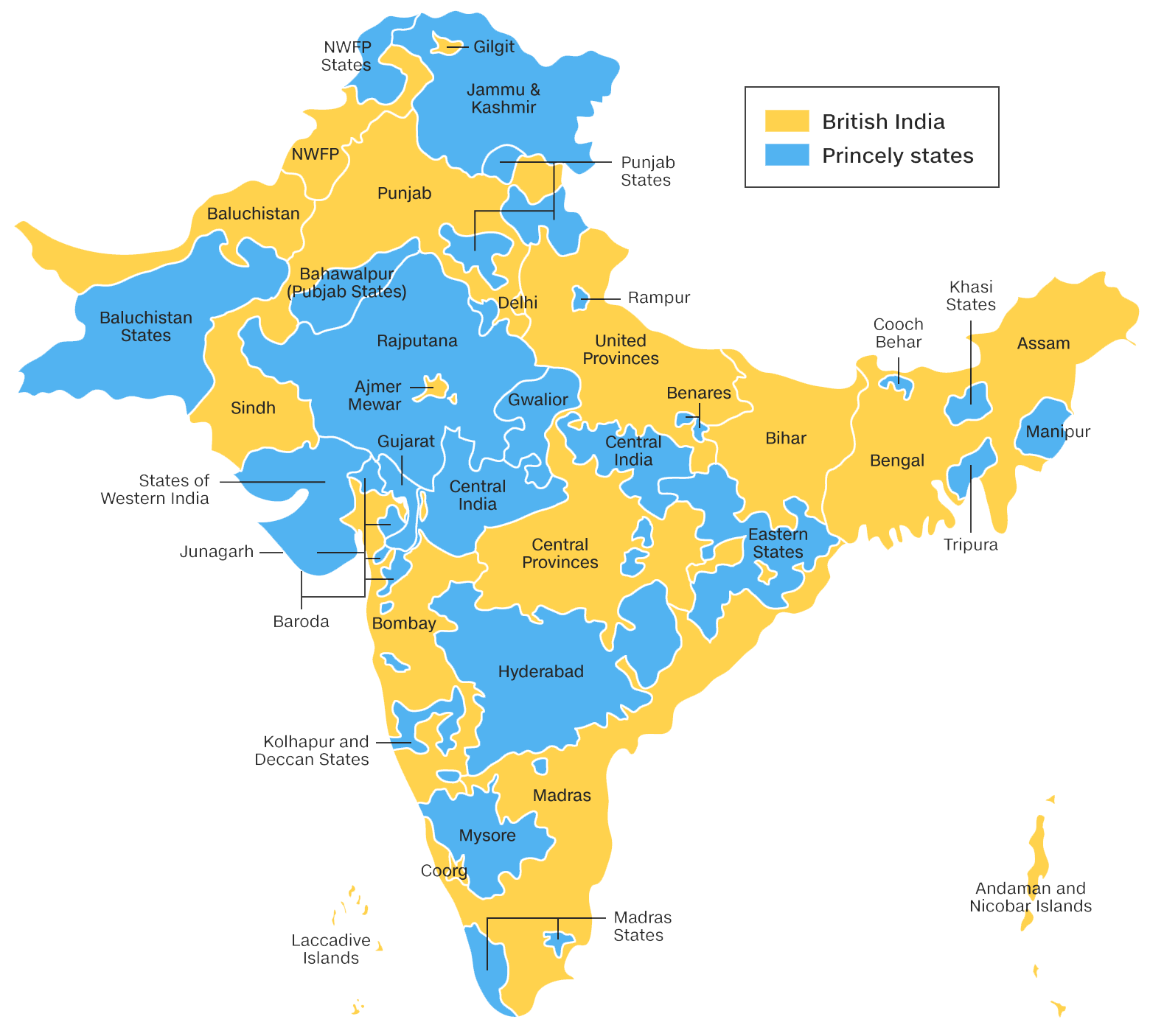
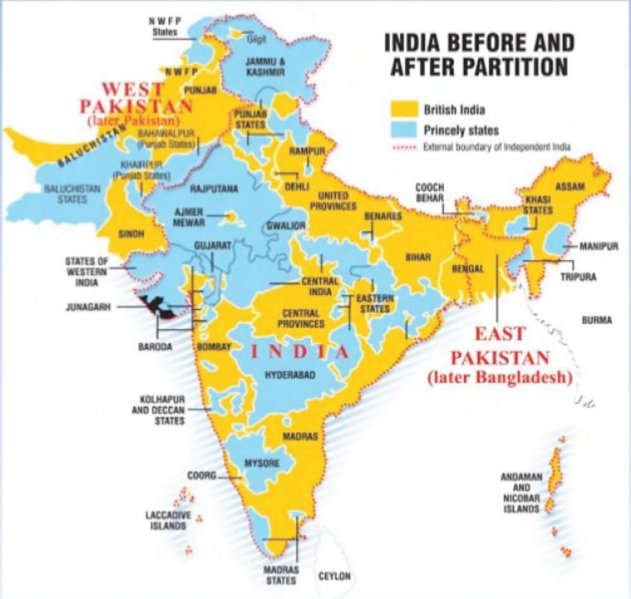
Sardar Vallabhbhai Patel played an important role in the integration of the princely state into the Dominion of India. This achievement laid the foundation for Patel’s popularity in the post-independence era. He is still remembered as the man who united India today. In this respect he is compared to Otto von Bismarck, who united many German states in 1871. The June 3 plan gave more than 565 princely states the option of joining India or Pakistan or choosing independence. Most Indian nationalists and the masses were afraid that most people and territories would be fragmented without the participation of these states. Parliament and British officials considered Patel to be the best man on a mission to secure the conquest of the princely state from Indian rule. According to Gandhi only Patel could solve this problem. Patel had practical insight and determination to accomplish monumental work. Patel asked V.P. Menon, a senior official involved in the division of India, to become his right-hand man as Principal Secretary of State. Patel used a social gathering and informal setting to involve most monarchs and invite them to their home in Delhi for lunch and tea. At these meetings, Patel stated that there was no essential conflict between Congress and the prince’s order. Patel aroused the patriotism of the Indian monarchs and urged them to embrace the independence of their country and act as responsible rulers who care for their people’s future. He persuaded the rulers of 565 states about the impossibility of independence from the Republic of India, especially in the face of rising opposition from their subject. He proposed favorable conditions for the merger, including the creation of a secret purse for the descendants of the ruler. Patel encouraged the rulers to act patrioticly, and to thought about his states people and their futur, but he did not rule out violence. He emphasized the need for the princes to join India in good faith and gave them to sign the membership certificate until August 15, 1947. All but three states were willing to join the Indian Union. Only Jammu and Kashmir, Junagad and Hyderabad were States which were tough to brought under Indian Dominion.


Junagadh being situated in Gujrat it was very important for Patel to bring it under Indian’s dominion. This was also important because there was the super-rich Somnath Temple (a temple where different stones were their including emeralds, diamonds, and gold which were looted by Mohd. Ghazni) in the Kathiawar district. Bieng under the pressure from Sir Shah Nawas Bhutto, a Nawab who joined Pakistan. However, it was far from Pakistan, with 80% of its state population being Hindus.Patel combining diplomacy and power, Pakistan invalidated Pakistan’s accession and demanded that Nawab join India. Patel sent troops to occupy the three principalities of Junagadh to show his determination. After widespread protests and the formation of the civilian government, or Aarzi Hukumat, both Bhutto and Nawab fled to Karachi, and under Patel’s orders, Indian troops and police forces invaded the state. A later organized referendum resulted in 99.5% of the votes in favor of the merger with India. After taking over, Patel, who spoke at the University of Bahauddin in Junagad, emphasized his sense of urgency regarding Hyderabad. He believes this is more important to India than Kashmir.


Hyderabad was the largest of the princely states and which included States parts of which are now Telangana, Arndra Pradesh, Karnataka and Maharashtra. Its ruler, Nizam Osman Ali Khan, was Muslim, but more than 80% of the population of state was Hindu. Nizam called for independence or accession to Pakistan. Under Kasim Razvi, an army of Nizam-faithful Islamic troops called Razakar urged Nizam to confront India and at the same time organize an attack on the people of India’s soil. The standstill agreement was signed by Lord Mountbatten’s in desperate efforts to avoid the war, but Nizam refused to trade and changed his position. At a cabinet meeting in September 1948, Patel emphasized that India should stop speaking and reconciled Nehru and Governor Chakravarti Rajgoparachari with military action. After preparation, Patel ordered the Indian troops to invade Hyderabad (in his position on behalf of the Prime Minister) when Nehru traveled to Europe. This action, called Operation Polo, in which thousands of Razakar troops were killed , but Hyderabad was secured and integrated into the Republic of India. Mountbatten and Nehru’s main goal was to avoid forced annexation to prevent the outbreak of Hindu and Muslim violence. Patel argued that if Hyderabad was allowed to survive as an independent state surrounded by India, the government’s fame would decline and neither Hindus nor Muslims would feel reassured in their empire. After defeating the Nizam, Patel held him as the head of state of the ritual and met with him. India had 562 princely states after addition of Junagarh, Heydrabad and Jammu& Kashmir.

Article 370 & Article 35A

Article 370
The first accession of Jammu and Kashmir, like all other princely states, involved three issues: defense, diplomacy, and communications. All princely states were invited to send representatives to the Constitutional Parliament, which drafted the Constitution across India. They were also encouraged to establish a constituent parliament for their own state. Most states were unable to establish a parliament in time, but some states, especially Saurashtra Union, Travancore-Cochin, and Mysore. The State Department had drafted a model state constitution, but on May 19, 1949, the governors and Chief ministers of each state met in the presence of the State Department and agreed that no separate state constitution was needed. They accepted the Indian Constitution as their own constitution. The state in which the elected constituent council proposed some changes that were accepted. Therefore, the status of all states has been placed on par with the status of ordinary Indian states. In particular, this meant that the subjects available for legislation by central and state governments were consistent and same throughout India.

In the case of Jammu and Kashmir, state politicians have decided to establish a separate constitutional council for the state. Representatives of the Indian Constitutional Assembly applied only the provisions of the Indian Constitution corresponding to the original accession documents to the state, and demanded that the state Constitutional Assembly decide on other matters. The Government of India agreed to the request shortly before its meeting with the other states on 19 May. Therefore, Article 370 was included in the Constitution of India, which provided that other provisions of the Constitution empowering the central government would apply to Jammu and Kashmir only with the approval of the State Constitutional Assembly.This was a “provisional provision” because it was applicable until the State Constitution was enacted and adopted. However, the State Constitutional Assembly was dissolved on January 25, 1957, and did not recommend the abolition or amendment of Article 370. This article was considered an integral part of the Indian Constitution, as confirmed by various recent April 2018 rulings by the Supreme Court of India and the Supreme Court of Jammu & Kashmir.

Article 35A
Article 35A of the Constitution of India was a provision authorized by state to define the “permanent residents” of Jammu and Kashmir State and to give them special rights and privileges. It was added to the Constitution by an Executive Order, the 1954 Constitutional Order (application to Jammu and Kashmir). It was issued by the President of India under Article 370. Jammu & Kashmir has these privileges, the ability to acquire land and real estate, vote and participate in elections, pursue government employment, and receive the benefits of other governments such as higher education and medical expenses. Defined to include. Non-permanent residents of the state were not eligible for these “privileges”, even if they were Indian citizens.