DREAM ON…..

N kavya

Dream is a succession of images, ideas, emotions, and sensations that usually occur involuntarily in the mind during certain stages of sleep.

The content and function of dreams have been topics of scientific, philosophical, and religious interest throughout recorded history. Dream interpretation was practiced by the Babylonians in the third millennium BCE and even earlier by the ancient Sumerians. .Dreams figure prominently in major world religions. The dream experience for early humans, according to one interpretation, gave rise to the notion of a human ‘soul’ as a central element in much religious thought.

Psychologist Calvin S. Hall considered dreams part of the cognition process or a type of thinking that happens as you sleep. Hall believed dreams could offer important insight into how you view yourself and others, your problems and conflicts, and the world in general. Many psychologists believed dreams played an important role in cognitive processes including memory and emotion regulation. Domhoff also noted that, although dreams may shed some light on heavy concerns, they might not have any real purpose, because he stated normally human beings forget most of their dreams. William Dement, who helped found the field of sleep medicine, suggested that, while dreams may lack a clear purpose, they can still convey meaningful messages.

Many experts do not believe dreams have much meaning but believe they still serve a purpose. The existing theories outline a few of these purposes.

1. Threat simulation theory
2. Activation-Synthesis theory
3. Dreams as emotional regulation
4. Continual-activation theory

Psychotherapist, Eliza Boquin, states “For vivid dreamers, our body can often experience what is happening in the dream.”
Certified dream analyst and speaker Lauri Loewenberg says while you are sleeping your brain is conjuring up around five dreams per night. That is a lot of subconscious thoughts to unpack. And although every dream is unique, they do tend to follow certain symbolic patterns.

How to examine your own dreams -:


1. Make sure you are getting proper sleep –: Research says that if we get enough sleep (7 to 9 hours) each night. This may, in turn, boost dream recall.


2. Review the dream –: when you wake up from the dream, lie calmly and analyze the visions, emotions, people, and places and mainly pay attention to small details because it would play a significant role in examining the dream.


3. Write it down –: Have a journal and start writing what all you saw the colors and visions, also your moods and feelings.


4. Make connections to your own life -: connecting these facts to your everyday life, would connect to your past life experiences and in some cases might even show some glimpses of your future. There are also many dreams interpretation books that you can interpret and gain more insights into.

Dreaming and sleep are intertwined. Dreams occur mainly in the rapid-eye movement (REM) stage of sleep when brain activity is high and resembles that of being awake. No one knows for certain what purposes dream serve. But at the end of the day, their true function might not really matter. It depends on each individual If you find them meaningful, then they add value to you or do not concern you.

Image credits- Google

DIVERSITY OF INDIA


India is uniquely characterized by its unity and diversity. A grand synthesis of cultures, religions and languages of the people belonging to different castes and communities has upheld its unity and cohesiveness despite multiple foreign invasions. National unity and integrity have been maintained even through sharp economic and social inequalities have obstructed the emergence of egalitarian social relations. It is this synthesis which has made India a unique mosque of cultures. Thus, India present seemingly multicultural situation within in the framework of a single integrated cultural whole.
The term ‘diversity’ emphasizes differences rather than inequalities. It means collective differences, that is, differences which mark off one group of people from another. These differences may be of any sort: biological, religious, linguistic etc. Thus, diversity means variety of races, of religions, of languages, of castes and of cultures.
Unity means integration. It is a social psychological condition. It connotes a sense of one- ness, a sense of we-ness. It stands for the bonds, which hold the members of a society together.
Unity in diversity essentially means “unity without uniformity” and “diversity without fragmentation”. It is based on the notion that diversity enriches human interaction.
When we say that India is a nation of great cultural diversity, we mean that there are many different types of social groups and communities living here. These are communities defined by cultural markers such as language, religion, sect, race or caste.

India is a land of diversity each state in the country is home to several communities who live in harmony with each other while preserving and upholding their own distinct culture and traditions. From Delhi, the capital of India, to Tamil Nadu, the southernmost state of India, the land, is blessed with amazing scenic beauty. The country is also home to several historical monuments which add to the varied heritage of India.
India is also classified by the Dravidian and the Nagara architectural styles as the focal focus of Hindu architecture. In the empires, in the South of India, the Dravidian style prospered, whilst in the North of India, the Nagara style predominately appeared.
India’s history, culture and religion are ingrained in its architecture.
India have cultural domains all over the nation.Few are listed below:

The inheritance of diversity of languages: The relationship between language and culture is perfectly embedded. In fact they are entangled. Peoples Linguistic Survey of India identified 780 languages of which 50 got extinct in past five decades. Officially there are 122 languages but 22 languages in the Eighth Schedule of the constitution give cultural pockets like Assamese, Gujarati, Konkani, Maithili, Manipuri, Oriya, Tamil, Telugu etc.
Religious diversity: According to the data on Population by Religious Communities of Census 2011, Hindu 96.63 crores (79.8%); Muslim 17.22 crores (14.2%); Christian 2.78 crores (2.3%); Sikh 2.08 crores (1.7%); Buddhist 0.84 crores (0.7%); Jain 0.45 crores (0.4%) are dispersed all over the nation forming cultural pockets.
Racial diversity: Most contemporary anthropologists categorize Indians as belonging to racial admixture. Mongoloids are largely confined to the North-eastern region whereas Negritos are found on the Andaman Islands.
Ethnic diversity: As per the 1901 census, the eight different ethnic groups found in India are: 1. Pre-Dravidian 2. Dravidian 3. Indo-Aryan 4.Turko-Iranian 5.Scytho-Dravidian 6. Arya- Dravidian 7. Mongoloid 8.Mongoloid-Dravidian. Because of this, India has been termed as an ethnological museum. A particular ethnic group shared a common culture, common language or dialect, a common religion, a common norm, practices, customs and history. Such multiple groups appeared as cultural pockets.

Advantages of diversity:
• It helps in strengthening love and tolerance promoting amity and unity and openness to other diverging views
• It is the identity that India had asserted for long in three international foras
• Diversity of culture translates into diversity of ideas and innovations
• The rich heritage and culture resultant of this diversity has enormous potential for tourism capable of creating large scale employment
• Geographical diversity creates rich reserve of flora and fauna benefiting the environment, tourism, pharmaceutical etc.
Disadvantages:
• The social tension and conflicts arising from this diversity leading to growth of divisive tendencies like communalism, regionalism, linguism etc. present a major that to the social fabric, economic development and survival of democracy

Threats:
Disputes are inevitable in any diverse society and when not managed properly they can turn into conflict, threatening the very survival of society as was the case in Balkan Peninsula. Similarly Indian society faces following challenges which endanger its ‘unity in diversity’.
• Communalism: the rising majoritarian tendencies such as call for a ‘Hindu rashtra’, cow vigilantism, love jihad claims against inter-religion marriages threaten the secular fabric of Indian society
• Regionalism: the demands of new states and even secession based on language (gorkhaland, Dravidnaad), religion (khalistan), ethnicity (nagalim) continue to mar the unity and integrity of nation
• Linguism: perceived threats to the local language and recent attempts the Fife Hindu on non-willing sections have in the past led to movements like Dravidian movement and can be seen in recent times as well such as Gokhaland and Bodoland movements
• Casteism: caste oppression had continued for long time with scant attempts to challenge it until recently. With the opportunities provided by increasing literacy rate and economic reforms and excessive politicisation, caste identities are becoming more pronounced than before. While some use it to challenge the oppression they have faced (Bhima-koregaon), others use it to claim benefits of reservation (Jat, Patidar, Maratha)
• Racism: discrimination against people of North-east, people of south in northern states and vice versa threatens a whole section of the society, dissipating discrimination into division
• Separatist movements: The ongoing separatist movements in J&K and North-East along with Naxalism have for long and continue to pose significant risks to India’s unity.

Ensure this unity:
A society based on justice, liberty, equality and fraternity only can stay united for long, especially society as diverse as India. As the Sachar committee report has pointed out, minorities continue to fare poorly in socio-economic indicators as compared to majority. Similar is the case with tribals and Dalits where high GDP growth has not translated into development and improvement in quality of life.

It is therefore necessary that principles espoused in directive principles are realised in spirit. Investments in the social sector including health and education, electoral reforms to keep out the divisive tendencies, providing for development needs of deprived sections such as tribals and Dalits, inclusive and equitable urbanization and curbing the majoritarian tendencies through appropriate legal measures is the only way forward to ensure a united and integrated India.

MICROBIOLOGY AND ITS BRANCHES

MICROBIOLOGY:
microbiology, study of microorganisms, or microbes, a diverse group of generally minute simple life-forms that include bacteria, archaea, algae, fungi, protozoa, and viruses. The field is concerned with the structure, function, and classification of such organisms and with ways of both exploiting and controlling their activities.

HISTORY OF MICROBIOLOGY:

The 17th-century discovery of living forms existing invisible to the naked eye was a significant milestone in the history of science, for from the 13th century onward it had been postulated that “invisible” entities were responsible for decay and disease. The word microbe was coined in the last quarter of the 19th century to describe these organisms, all of which were thought to be related. As microbiology eventually developed into a specialized science, it was found that microbes are a very large group of extremely diverse organisms.
Microorganisms have played a key role in the evolution of the planet earth.
Microorganisms affect animals, the environment, the food supply and also the healthcare industry. There are many different areas of microbiology including environmental, veterinary, food, pharmaceutical and medical microbiology, which is the most prominent.
Microorganisms are very important to the environment, human health and the economy. Few have immense beneficial effects without which we could not exist. Others are really harmful, and our effort to overcome their effects tests our understanding and skills. Certain microorganisms can be beneficial or harmful depending on what we require from them.
There are both useful and harmful microorganisms in the environment.

Microbiology Careers :
Most jobs in microbiology require at least a bachelor’s degree. An individual who is interested in microbiology may obtain a bachelor’s degree in biology or microbiology. The courseload is very similar for each of these majors; while a microbiology major may be more specific to the interests of someone who wants to study microbiology, it is also possible to achieve a similar level of specificity in the biology major by taking upper-level microbiology courses. The biology major may be preferred if one has interests in other subfields of biology, or if he or she is double majoring in biology and in another field. In both the microbiology and biology majors, students must take numerous biology courses and laboratories, and usually they must also take courses in chemistry (including organic), physics, mathematics, and statistics.
With a bachelor’s degree, one can become employed as a research technician in an academic or industry laboratory and provide technical support. One could also become a quality assurance technician in the food, environmental, pharmaceutical, or biotechnology industries, or with some additional training, become a medical technologist. However, many individuals with bachelor’s degrees in microbiology or biology go on to do further schooling. With a master’s degree in microbiology, an individual may go on to become a laboratory manager/coordinator or a biosafety officer. Further schooling leading to a PhD opens up opportunities in teaching and doing research at a university. Being a professor requires a PhD. Most heads of research laboratories in industry have PhDs as well. Other high-level careers involving microbiology include becoming a consultant/adviser, administrator, or lab director.

BRANCHES OF MICROBIOLOGY:
There are various different branches of microbiology and these include the following:
1. Bacteriology- The study of bacteria
2. Mycology –The study of fungi
3. Phycology- The study of photosynthetic eukaryotes. (Algae- Seaweed)
4. Protozoology – The study of protozoa (Single-celled eukaryotes)
5. Virology- The study of viruses, non-cellular particles which parasitize cells.
6. Parasitology- The study of parasites which include pathogenic protozoa certain insects and helminth worms.
7. Nematology- The study of nematodes.

India’s Performance in Commonwealth game 2022

 India’s Performance in Commonwealth game 2022

Commonwealth games were held in Birmingham, United Kingdom. India performs really good in commonwealth games 2022, with 22 Gold Medals, 16 Silver, and 23 Bronze. 215 Indian athletes participate in CWG and the star athletes of the country proudly marked themselves in the multi-sport event. From Table Tennis to Badminton to Wrestling, India Medal Tally at the Commonwealth Games 2022 reached to total of 61 medals by grabbing 4th position in the medal standings.

Commonwealth Games 2022 started with the opening ceremony on July 28 while, the closing ceremony of the event will be held on August 8, 2022. CWG 2022 saw the athletes competing in 20 sports and India had successfully named over 200 athletes or players who participated in 16 sports including hockey, cricket, badminton, and athletics, to name a few.

Various Indian sportsperson who participates in CWG 2022:

Mirabai Chanu

Mirabai Chanu, a star weightlifter from India, went on a record-smashing spree in Commonwealth Games 2022, claiming four of them in a power-packed performance. Mirabai Chanu claimed India’s first Gold Medal at Commonwealth Games 2022 in Birmingham on July 30, 2022.

Anchita Sheuli

Weightlifter Anchita Sheuli continued India’s victory spree at Commonwealth Games 2022 as he clinched India’s third Gold Medal in CWG 2022.

Bindyarani Devi

Weightlifter Bindyarani Devi won a Silver in the women’s 55 kg as India continued its medal rush at the Commonwealth Games 2022.

Vijay Kumar Yadav

The 26-years old Vijay Kumar Yadav produced a superlative performance and grabbed Bronze Medal in Men’s 60-kg class at the ongoing CWG 2022. He pounded on the mistake of his opponent and pinned him down for 10 seconds to end the contest in just 58 seconds.

Harjinder Kaur

India’s Harjinder Kaur won Bronze Medal in the women’s 71 kg weightlifting competition after the dramatic climax at the Commonwealth Games 2022.

Lovepreet Singh

India’s weightlifter Lovepreet Singh has won Bronze Medal in the men’s 109 kg category at the ongoing Commonwealth Games 2022.

Tejaswin Shankar

Tejaswin Shankar, a National Record holder, opened the Indian athletics team’s medal account with a Bronze in the men’s high jump event in the Commonwealth Games 2022.

Bajrang Punia

Tokyo Olympics Bronze Medalist Bajrang Punia defended his title in the 65 kg competition that he won three of his four bouts inside first rounds. Wrestler Bajrang Punia made the country proud by winning Gold in Men’s 65 Kg category.

Sakshi Malik

Wrestler Sakshi Malik won Gold in the Women’s 62 Kg category in the Commonwealth Games 2022. Her winning gave a boost to the country’s increasing medal tally.

Deepak Nehra

Deepak Nehra outplayed Pakistan’s Tayab Raza 10-2 in the bronze play-off as the country signed off from the wrestling competition with a high success rate.

Kidambi Srikanth

World Championship Silver Medallist Kidambi Srikanth signed off with the Bronze Medal in the Badminton competition of the Commonwealth Games 2022.

PV Sindhu

PV Sindhu has once again made the country proud by winning Gold Medal in the ongoing Commonwealth Games 2022 in Birmingham. The badminton player defeated Michelle Li of Canada 21-15 21-13 in the final of Women’s Singles to win a Gold Medal at CWG 2022.

The names of our stars are not limited. Their performance has made India proud. It was their hard work and courage which took our country at the height.


Central Government to remove air fair cap from 31st august.

India will remove the fare caps it imposed on domestic airlines in 2020 during the COVID-19 pandemic from August 31, the country’s civil aviation ministry said on Wednesday, lifting restrictions on ticket prices. The government, in a rare move, had regulated fares by imposing a minimum and maximum band based on the flight’s duration to prevent ticket prices from spiking due to pent-up demand arising from restrictions on air travel easing. Given the current situation, airfares may go up as carriers as jet or aviation turbine fuel (ATF) prices have almost tripled in the last two years.

The ministry had imposed lower and upper limits on air fare after the resumption of services in May, 2020 following the two-month nationwide lock-down to contain the spread of Covid-19. Thereafter, the limits were relaxed in a phased manner as per the improvement in air traffic in the country. The lower caps were meant as a relief for airlines struggling after the pandemic. At the same time, the upper caps on air fare were fixed ensuring that passengers do not have to pay a hefty amount for air travel.

Earlier, discussions on removing the fare bands for domestic air fare were held among the stakeholders, including the government authorities and airlines. The airlines were of the view that removal of the pricing cap is required for the full-fledged recovery of domestic air traffic.

Central Government to remove air fair cap from 31st august.

India will remove the fare caps it imposed on domestic airlines in 2020 during the COVID-19 pandemic from August 31, the country’s civil aviation ministry said on Wednesday, lifting restrictions on ticket prices. The government, in a rare move, had regulated fares by imposing a minimum and maximum band based on the flight’s duration to prevent ticket prices from spiking due to pent-up demand arising from restrictions on air travel easing. Given the current situation, airfares may go up as carriers as jet or aviation turbine fuel (ATF) prices have almost tripled in the last two years.

The ministry had imposed lower and upper limits on air fare after the resumption of services in May, 2020 following the two-month nationwide lock-down to contain the spread of Covid-19. Thereafter, the limits were relaxed in a phased manner as per the improvement in air traffic in the country. The lower caps were meant as a relief for airlines struggling after the pandemic. At the same time, the upper caps on air fare were fixed ensuring that passengers do not have to pay a hefty amount for air travel.

Earlier, discussions on removing the fare bands for domestic air fare were held among the stakeholders, including the government authorities and airlines. The airlines were of the view that removal of the pricing cap is required for the full-fledged recovery of domestic air traffic.

Top 10 MBA colleges in India

 Top 10 MBA colleges in India

In India, MBA is one of the popular courses after completing graduation in youth. it is the best course if you want to build your career to the next level. the best thing about an MBA course is that it does not matter what stream you opt for your graduation whether it’s engineering or the law still you can pursue it which attracts a lot of aspirants to opt for it as a career option. the other thing which influences the student about MBA is it has good placement and one of the high paying jobs. MBA course includes theoretical, practical, and peer learning. presently in India, there are 20 IIMs and 6000 B-Schools operating in India.

the facility, infrastructure, availability of courses, and faculty might vary among all institutions but the process of admission is quite similar. it is divided into 5 steps:

  • Register and apply for the MBA entrance exam like CAT/GMAT/MAT/XAT/NMAT.
  • attempt the exam
  • the college will shortlist on the basis of merit
  • appear in the final round conducted by the college like GD, PI, and aptitude exam.
  • now after considering all the factors like scores for the entrance exam, 12 and 10, and graduation the college will select suitable candidates.

Top 10 colleges for MBA in India:

  • Indian Institute of Management, Ahmedabad
  •  Indian Institute of Management, Bangalore
  •  Indian Institute of Management, Calcutta
  •  Faculty of Management Studies, Delhi
  •  Indian Institute of Management, Lucknow
  • Indian Institute of Management, Kozhikode
  •  SP Jain Institute of Management and Research, Mumbai
  •  Indian Institute of Foreign Trade, New Delhi
  • Jamnalal Bajaj Institute of Management Studies, Mumbai
  •  Narsee Monjee Institute of Management Studies – School of Business Management, Mumbai

1: Indian Institute of Management, Ahmedabad:

IIT Ahmedabad is one of the top MBA colleges in India. it is a B-School which is situated in Ahmedabad, Gujarat. it provides Master’s degree programs in management, marketing, HR, and many more. it offers placement from international companies. if you want to study at this college then you need to qualify CAT/GMAT entrance exam. it is a well-reputed college for providing MBA /PGDM  programs to students and for working professionals if you are a working person then you can opt it part-time MBA program.

Tuition fees:- 2320000

duration- 24 months

total seats – 60

2: Indian Institute of Management, Bangalore:

it is also one of the leading colleges in India that caters to MBA courses while adopting high technology .it offers a doctorate and MBA program. it is the high tech business school in India for MBA. it always has a motive to provide the best exposure to the students of its program and ensure placement to each and every student as it scales the career of the student to the next level.

Tuition fees:- 2320000

duration- 24 months

total seats – 60

3:Indian Institute of Management, Calcutta:

it is the first national institute for pursuing postgraduate and research study programs in management. it offers high-quality education as it is the leader in the business world for giving expert professionals managers and entrepreneurs.

Tuition fees:- 2260000

duration- 24 months

total seats – 390

4: Faculty of Management Studies, Delhi:

it is one of the oldest b-school in India offering an MBA. it provides quality education and has very fees and a good placement record which attracts the candidates to this college. over the years I have built a strong bond with students, staff, and faculty.

Tuition fees:- 192000

duration- 24 months

total seats -251

5 Indian Institute of Management, Lucknow:

Since 1984, it has been a leading and top college in India that offers MBA. it has molded its students into sharpened leaders, leading professionals, and excellent managers. it offers placement from both domestic and international companies.

Tuition fees:- 1925000

duration- 24 months

total seats -405

Indian Institute of Management, Kozhikode:

the institute trains its students as business leaders through its consulting, teaching, and learning. since 1996 it has innovated itself over the years which makes them special. it offers MBAs in various specializations along with that is also caters to doctoral programs.

Tuition fees:- 1900000

duration- 24 months

total seats -375

7: SP Jain Institute of Management and Research, Mumbai:

the institute offers a diverse range of programs and courses for postgraduates, NPO, entrepreneurs, and family businesses. it is a part of Vidhya Bhavan and operates as a self-contained institute .it consistently ranked among 10 colleges.

Tuition fees:- 1900000

duration- 24 months

total seats -276

 8: Indian Institute of Foreign Trade, New Delhi:

it is a well-known college for providing an MBA in the specialization of international business. it has two campuses in India Kolkata and in Delhi. it also strives to bring companies for placement into the campus domestically and internationally. if someone who is looking for doing MBA in foreign trade mgmt then can opt this college thorgh qualify the entrance exam.

Tuition fees:- 1825000

duration- 24 months

total seats -258

9: Jamnalal Bajaj Institute of Management Studies, Mumbai:

The institute is also known as the CEO factory and one of the top MBA colleges in India. it has built many business leaders. industry leaders, entrepreneurs. it is a leading college in Maharashtra and is always ranked on the top of the B-Schools list.

Tuition fees:- 600000

duration- 24 months

total seats -120

10:Narsee Monjee Institute of Management Studies – School of Business Management, Mumbai:

For the last 40 years, it has been a leading college because of its expertise and experience and ranked among the top colleges’ list of MBAs. here a strong focus is given to the teaching process. over the years it has grown and expanded itself and become the best college for MBA aspirants.

Tuition fees:- 20280000

duration- 24 months

total seats -600

Top 10 Engineering Collage in India

 Top 10 Engineering collage in India

Getting admission to an engineering college is a dream for a lot of students in India. IITs and NITs are engineering colleges that provide education in the field of engineering.


These are the top ten engineering collage in India:

1. Indian Institute of Technology, Madras

It is an internationally complemented institution and stands in the top five engineering institutions by the ranking system of NIRF. The IIT Madras has all the basic amenities including a beautiful garden which is always taken care of and the Central library present at the hostel. As the students are excellent in their technical efficiency and have a very good practical knowledge in their field of engineering, there are always pre-placement offers and many workshops are conducted by these companies to hire the students. Interaction seminars are also conducted and internships are also a medium for the placement procedure.

2. Indian Institute of Technology, Delhi      

 Indian Institute of Technology Delhi has bagged the second position in the NIRF ranking for its efficient faculties and excellent teaching content. The knowledge provided is not only commendable but also layered up with technical enhancements so that theoretical, as well as practical knowledge, grows up simultaneously. A total of 11 hostels for the boys and three hostels for the girls are present on the campus with the facilities of a beautiful launch, areas of gaming, computer rooms, and study rooms provided. The placements are based on a procedure and over 500 companies come to the campus to hire the students. The placement is totally on campus and more than 60% of the students get selected for the offers which provide a dream package. Unlike all other IITs, it has a beautiful robotics room, a gymnasium for fitness awareness, and swimming pools with a central library that is always open. All the laboratories work according to the latest technologies.

3.Indian Institute of Technology, Bombay 

As it is one of the most reputed engineering institutions in India, it stands within the top 10 engineering institutions by the ranking system of NIRF. Not only it is highly qualified faculty members but also innovative methods in the field of teaching and practical application. A total of 16 hostels with all the facilities are provided on the campus. Generally, the placement records show a 100% placement rate, and the companies which offer and provide packages in lakhs are very popular including Amazon, Flipkart, and Cadbury. The placement as well as the professional board of IIT Bombay with all the companies is not only strong but also provides commendable statistics for building up the career of the students. The infrastructure is not only beautiful but has all the amenities including the staff room, library, lecture halls and seminar halls, and E consortium.

4.Indian Institute of Technology, Kanpur  

Academically, the IIT Kanpur bags its position in the top five of the NIRF ranking and it is also complimented for its extracurricular activities. Students not only better themselves in the field of engineering but also polish their extracurricular talents. The placement records stand is very high and the packages of the salary increase arithmetically each year. Sometimes there are international companies that provide packages in crores.


5. Indian Institute of Technology, Kharagpur

Like all other IITs, it also provides quality education along with commendable teachers Who are highly educated in the field of teaching with many years of experience. Apart from this, it is fully facilitated with fans that work according to the Wi-Fi and the campus LANs. The highest packages are offered to the students in lakhs and around 15 LPA is the average score of the batch Income.       

6. Indian Institute of Technology, Roorkee

It has multi-variant courses along with 14 undergraduate and 24 post-graduate courses. It also provides Ph.D. courses which is not only restricted to engineering but also extend to the field of science and architecture, social studies, and business management. With a total of 13 hostels among which two are for girls and 11 are for male students, it facilitates the mess, stationery shop, a salon, gymnasium, gaming room, reading space, and laundry. It also facilitates a guest room which is provided in every single hostel. For the history of placements, 85% of the students are completely placed and both international, as well as domestic offers, are received. The average amount goes to INR 2.17 crores for the international packages and 1.92 crores for the domestic packages.

7. Indian Institute of Technology, Guwahati

It has highly skilled professors along with experienced teachings are provided in the IIT Guwahati. It comprises a canteen, mess, a juice corner, an in-campus shop of stationery, a gymnasium, and a laundry room. The central library and TV room are common in every IIT. The Wi-Fi connections are very efficient. For the enhancement of the sports activities, various basketball, football, and volleyball courts are available on the campus.


8. Birla Institute of Technology and Science (BITS)

The Birla Institute of science and technology has a very good bond with both the students as well as the teachers. The first campus was situated at Pilani on the year 1943. Later it stretched its branches all over India and outside like Dubai, Hyderabad, etc. The BITS Pilani is the most famous institution for the engineering field and various courses including BE, management, B pharma, M.Sc. Every year, the Birla Institute of technology and science conducts its entrance examinations for the students to get admitted for these courses.


9. Vellore Institute of Technology

 This institute provides many courses including graduate, postgraduate, and also research programs. It also gives dual integrated courses for the students. The placement records are excellent and the whole average batch is being offered jobs from various companies. The B.Tech courses are the most popular in the field of biotechnology, electronics and communication, and computer science engineering. The Vellore Institute of Technology conducts its examination and students have to achieve the minimum cut-off to get admitted to this college.

10. Delhi Technological University

This college was previously known as Delhi College of engineering. After it had got its affiliated with the University of Delhi the year of 1962 it came to be known as Delhi Technological University. It also provides a lot of courses including BTech, MTech, MBA, and BBA courses, and offers research programs. The facility of both shifts is provided while conducting the classes. The mode of admission is by the scores of the joint entrance examination and students have to achieve the minimum cut-off to get into this college.

Thus, if you want to get admission to an engineering college you can choose the best collage of your choice.

Online learning platforms

What do you mean by an online learning platform?

The online learning platform is a website where students can learn online. They can attend all the lectures, recordings, live classes and tests. Online learning platform are very easy to attend. It is very helpful because you can do from your own comfort zone.

From 2020 onwards when covid – 19 came from that time the online learning platforms are very much active and have came forward to help the students with their academics.

Some of the best online learning platforms are below –

1. Skill share

Skill share is a online learning platform where you can get free trial for 1 month and you can cancel at any time before the month get over to not being charged. In skill share you get all the courses on ver high quality. The lectures are very good. You can easily learn from their videos

2. Unacademy

Unacademy is an Indian online platform where you can get all the live classes and recordings after you get subscription. They take a fee from Rs 1200 to Rs 6200 per annum. They also prepare for all the competitive exams like UPSC, NEET, JEE, CUET and many more.

3. Udemy

Udemy is a online learning platform where you can learn various course in all the particular fields. In udemy there are 49 millions students have been enrolled. You can learn various programmes like python, programming, photography and more.

4. Coursera

Coursera is a online learning platform where that provide top learning courses from top educators around the world. It has 23 million users. Coursera provides university level courses and certification programmes.

5. edX

edX is a MOOC platform that offers university level online courses. You can enroll onedX and learn various courses according to your interests and make you career growth personally and professionally.


A brief history of Yoga in India

 One cannot imagine Indian culture and heritage without the presence of Yoga. Tracing its root in ancient India, Yoga is known as an art of attaining spiritual and mental peace.

Yoga has evolved over the course of time and is considered an effective means of maintaining physical, spiritual, and mental wellbeing. The word ‘Yoga’ is derived from the Sanskrit word ‘Yuj’, which means ‘to unite’. Every Yogic mudra focuses on spiritual alignment between the mind and body, for attaining inner peace. 

A brief history of Yoga in India

Yoga traces down its history thousands of years ago in India, early traces were found in the Pre-Vedic period (2700 B.C.). Yoga developed prominently between 500 BC-800 A.D. and has evolved since then. Sage Maharshi Patanjali codified the existing Yoga practices that had been in practice, and which are now performed worldwide. Today in contemporary times, Yoga is a means to preserve and maintain health. It has helped individuals with their well-being, from generation to generation.

Yoga and Indian Culture

Yoga has a presence in the folk traditions, Vedic, and Upanishadic heritage of India. Yoga tends to the body, mind, emotions, and energy and follows four major oaths namely: Karma Yoga focused on the body; Bhakti Yoga focused on emotions; Gyana Yoga, which focused on intellect; and Kriya Yoga, which focused on energy.

In olden times, Yoga education was imparted by gurus in ashrams. In today’s time, several Yoga institutes and colleges are providing lessons on Yoga across India.

Actions@75, The Future of Yoga in India!

“Yoga guarantees wellness as well as fitness. Yoga is not merely an exercise but a way to attain peace through physical, mental, and spiritual well-being.”

―  Hon’ble Prime Minister Narendra Modi

India is referred to as the land of Yoga and is continuing to take initiative for promoting the importance of Yoga education. The United Nations General Assembly honored the suggestion of Hon’ble Prime Minister Narendra Modi and declared ‘21st June’ as the International Day of Yoga. This aims to make people aware of the significance of Yoga and the positive changes it can yield in everyday life.

The International Day of Yoga in India is celebrated every year since 2015 with distinct themes such as ‘Yoga for Harmony and Peace’, ‘Connect the Youth’, ‘Yoga for Health, and Yoga at Home’ reflecting the emergence of Yoga as a path for maintaining well-being.

The government aims to equip more and more people with the knowledge of Yoga, preserve Yogic heritage, and introduce it to future generations. Yoga has become a part of the curriculum in schools across the country.  The Central Council for Research in Yoga and Naturopathy (CCRYN), an autonomous body under the Ministry of AYUSH, has created eight Yoga outpatient clinics in Delhi and Haryana Government hospitals.

Summing it up

At a time when the world is facing the wrath of the COVID-19 pandemic, Yoga can have positive effects on the mind and physical well-being of individuals. Increasing the involvement of youth in Yoga can yield a generation of Yoga instructors, learners, and promoters who can be the future flag bearers of Yogic culture and heritage.

Shri Anurag Thakur urges youth to hoist Tiranga at their homes from 13-15th August

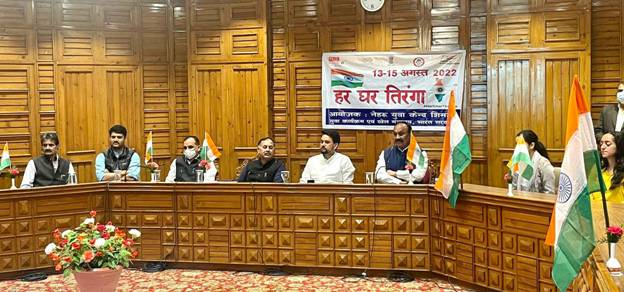
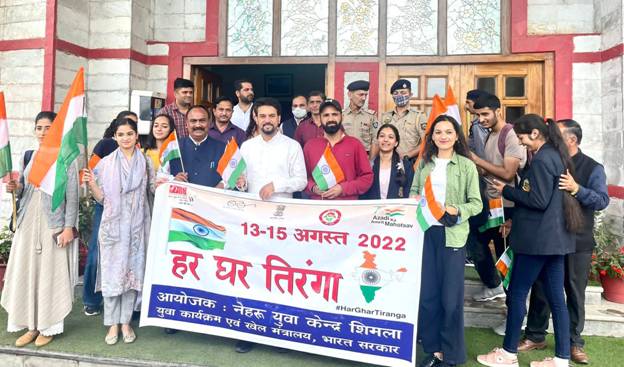
 Union Minister for Information and Broadcasting, and Youth Affairs and Sports Shri Anurag Singh Thakur  urged the youth to unfurl Tiranga at their homes from 13th to 15th August 2022  as a part of the celebration of “Har Ghar Tiranga” campaign in the country. He said that today being the “August Kranti” Diwas  our youth should take oath to hoist Tiranga at the top of the world by contributing with their dedication and hard work in their respective field.   Shri Anurag said that our national flag is not mere a piece of cloth but the power of Tricolour unites 130 crore Indians. He further said that our youth should take pledge that they will keep the country united and will take India forward and make India stronger. He was addressing during a Youth conference  held with the members of Nehru Yuva Kendra, NSS volunteers and different Yuva Mandals in Shimla today. The programme was organized by the Nehru Yuva Kendra, Shimla (HP).

While interacting with the youth, he called for inculcating the feeling of patriotism and national integration among the younger generation through Bharat Darshan programme. He said that every youth should visit and see the other places and  parts of their State and the country which will infuse a sense of belonging and patriotism among them and help them becoming responsible citizens. He also mentioned about the role of the “EK Bharat Shreshth Bharat” (EBSB) programme in breaking the barriers of language, culture and different cuisines of different states thus bringing youths of different states closer to each other. The Minister said that it will work towards maintaining  the unity and integrity of the nation and thus will enhance the glory of India.

In a candid discussion with the participants, Shri Anurag Thakur tried to know the views of the youth on the different issues and problems in the country.  He discussed the issues of women empowerment, Ek Bharat Shreshth Bharat, skill development, role of sports, Fit India movement and carrier counseling threadbare with the youths of Nehru Yuva Kendra, NSS volunteers and different Yuva Mandals. He expressed hope that such meetings will continue in future also so that youth of this country can come to know about the Government schemes and can approach the Government.

The Minister also mentioned about the achievements of the  Central  Government schemes like the Har Ghar Jal Yojna,  sanitation drive Ujala, Ujwala Yojna,  and Digital India etc.  He said that to promote the Fit India movement he has established 250 gyms in his parliamentary constituency.

While replying to the questions of the media persons, he said that under the leadership of Prime Minister, Shri Narendera Modi India  has done remarkable progress in every sphere. He said that in sports our achievements have increased manifold as results of the recent Commonwealth Games show that India got 61 medals and scored 4th position in the tournament.


******

WIPS (Forum for Women in Public Sector) formation day celebrated at Visakhapatnam Steel Plant

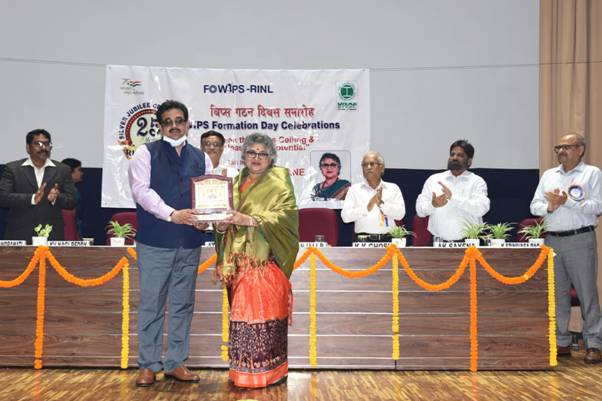
 Silver Jubilee of WIPS (Forum for Women in Public Sector) formation day was celebrated in VSP today in a grand manner. Addressing the women employees of RINL, Shri Atul Bhatt, CMD, RINL-VSP in his address, lauded the exceptional contribution by the women fraternity of RINL in turning around the company after six years of making losses.” I am very happy to note that Women in Public Sector (WIPS) of RINL, which was established in 1997 has completed 25 long and successful years and is celebrating silver Jubilee this year”, Shri Atul Bhatt said.  He congratulated all the women employees of RINL on this special occasion and appreciated them for their active role in improving the awareness on the role of women in the society.

Shri Atul Bhatt congratulated Ms.PV Sindhu, for bagging the prestigious gold at the Commonwealth Games in Badminton women’ singles competition and said that it is matter of pride for entire RINL family that Ms. PV Sindhu is the brand ambassador of RINL.

Shri Atul Bhatt complimented Ms. Sheela Priyadarsini, Chief General Manager & head of the department -Materials Management, RINL for efficiently handling the extremely complex supply chain management of steel plant. “It is heartening to note that more number of women are joining RINL and it is a matter of pride to note that women are increasingly and gradually seen marching into domains which were once reserved only for men like the armed forces.I would like to compliment WIPS of RINL for their active role in improving the awareness about the role of women in society and the various programmes they undertake for this cause.”, Shri Atul Bhatt added.

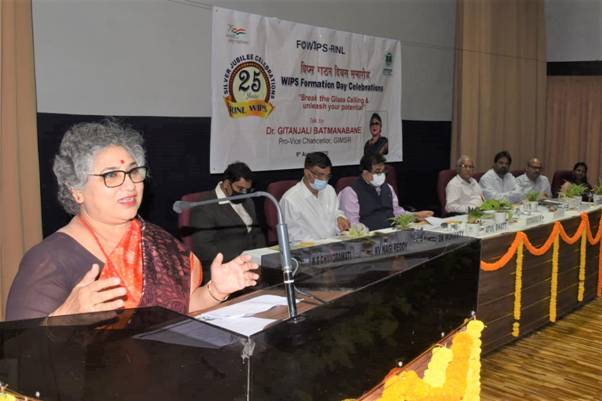
Shri Atul Bhatt thanked Dr.GitanjaliBatmanabane for her gracious presence and said that her presence and message will certainly inspire the women participants to scale greater height in professional life.

The Guest of honour, Dr Gitanjali Batmanabane, Pro-Vice Chancellor, GITAM Institute of Medical Sciences and Research(GIMSR) highlighted the need for women to develop the culture of courage to encounter the difficulties being faced in the society for success in their life. She said that India is known for youngest population and next gen women would play a dominant role in variety of fields. Dr.Gitanjali Batmanabane, Shri Atul Bhatt and Directors of RINL felicitated some of the women employees of RINL and also gave prizes to winners of various competitions held on the occasion.

*****

India and United States are committed to take the bilateral cooperation in Science, Technology and Innovation to next level

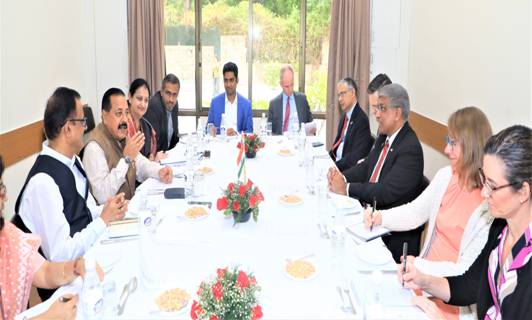
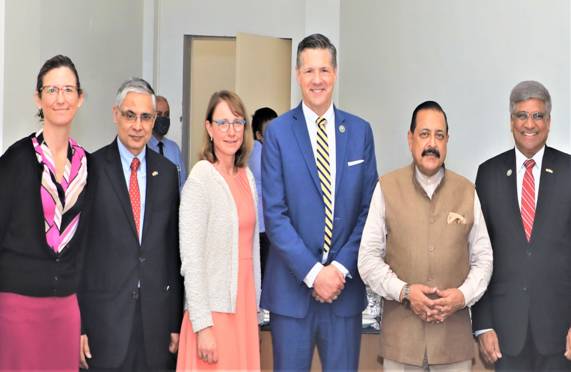
 A US delegation of the premier National Science Foundation (NRF), currently on visit to India, today called on Union Minister of State (Independent Charge) Science & Technology; Minister of State (Independent Charge) Earth Sciences; MoS PMO, Personnel, Public Grievances, Pensions, Atomic Energy and Space, Dr Jitendra Singh and discussed bilateral collaboration between the two countries as well as the ways to carry this collaboration to the next level.


Dr. Kendra Sharp, Head, Office of International Science and Engineering (OISE), National Science Foundation (NSF) of USA, Brian Stone, Chief of Staff, NSF, USA, Dr. Bridget Turaga Program Director, Office of International Science and Engineering (OISE), NSF, Drew Schufletowski, Minister Counselor for Economic, Environment, Science and Technology Affairs, United States Embassy in India, William Harford Chief of Environment, Science, and Technology Unit, United States Embassy and Dr. Sethuraman Panchanathan Director, National Science Foundation of United States, among others, were part of the delegation joined the meeting.

During the delegation level talks, Dr Jitendra Singh said, both the sides have already identified the sectors and collaboration is on in areas like healthcare, technology, Space, earth and ocean science, energy, emerging technologies and cooperation in Science & Technology education. The Minister underlined that India and the United States have a long-standing connection and shared interest when it comes to scientific discovery and technological innovations and time has come to strengthen and leverage these connects for larger global good.

Director, National Science Foundation (NSF) of United States and head of the delegation Dr. Sethuraman Panchanathan assured Dr Jitendra Singh that the subjects identified in the two-day brainstorming session would be taken to logical conclusion. He also promised to open new avenues of cooperation in areas like Artificial Intelligence, Biotechnology, Geosciences and Astrophysics.


Dr Jitendra Singh said, Prime Minister Narendra Modi has always accorded highest priority to scientific pursuits and takes keen personal interest in each of the subjects. He said, since 2014, in every Independence Day speech, PM Modi has flagged key scientific challenges and projects like Cleanliness, Hydrogen Mission, Digital Health Care system, clean energy, net zero emission and Start-ups.

Dr Jitendra Singh told the NSF delegation that both sides must focus on meaningful, targeted, deliverable-driven R&D partnerships in technology areas such Quantum, Metaverse, Clean Energy Technologies, Cyber-Physical Systems, Advanced Materials and Communications Technologies. The Minister pointed out that the Indian Scientific diaspora is one of the world’s largest and powerful diaspora communities in shaping global discourse, particularly in the technological innovation landscape. He said, both the countries must explore avenues for the US and India to jointly identify, nurture, and promote deep-tech start-ups in areas of mutual interest.

Dr Jitendra Singh also sought the support of NSF for the proposed Integrated Data System. He said, data collection at present is being done by various institutions in different ways, but the Integrated Data System will go a long way in data analytics and associated benefits. The Minister said, the knowledge partnership with NSF-National Centre for Science and Engineering Statistics will be of great value addition in terms of long-term capacity development in this area.

Dr Jitendra Singh also called for scaling up the cooperation in the Space sector and mainly in emerging areas like management of space debris. He also recalled that the NASA-ISRO Synthetic Aperture Radar satellite is expected to be launched in 2023. The Minister said, Science and technology education partnership has been another dimension of the outreach—to establish linkages between American and Indian institutions and students. Education Roundtable held last year with participation of a number of STEM-focused universities.

Prof. Ajay Kumar Sood, Principal Scientific Adviser (PSA) to the Government of India, Dr. Parvinder Maini, Scientific Secretary, Office of PSA, Dr. Preeti Banzal, Adviser, Office of PSA, Dr. Monoranjan Mohanty, Adviser, Office of PSA, Dr. Sindura Ganapathi, PSA Fellow, hri Shirish Panda, Scientist ‘D’, Office of PSA and Dr. B. Chagun Basha, Senior Specialist, Office of Principal Scientific Adviser to the Government of India joined the talks from Indian side.


Indo-US joint research projects to be implemented through TIHs

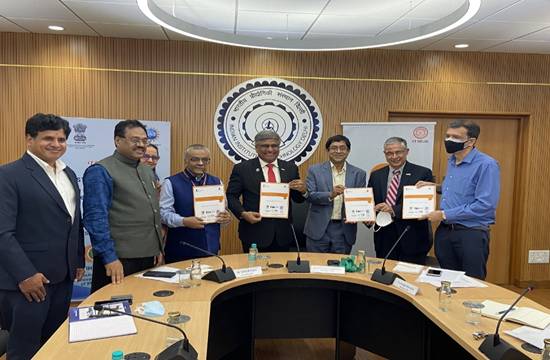
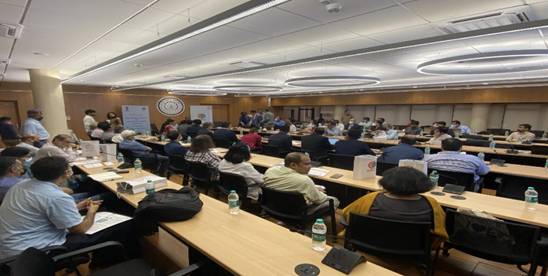
 Experts from the India and United States interacted to bring out the best plans for joint research projects that would be implemented through the Technology Innovation Hubs (TIH), at DST-NSF Joint Research and Development Projects Kick-off Workshop.

The workshop was organised by IIT Delhi in association with DST to discuss how the projects to be implemented by the six TIHs identified under NM-ICPS for collaborative research and development with NSF-supported institutions would leverage unique resources, such as testbeds and datasets available in India and in the US, expand collaborations on critical technologies like AI and advanced wireless, and encourage student and researcher exchange programs.

Dr Akhilesh Gupta, Senior Adviser, DST informed that a total of 35 joint projects have been identified which will be implemented by the Technology Innovation Hubs (TIHs) and research institutions from USA. “This endeavor will further help us to achieve collaborative research and development between the two countries in the area of CPS,” he added.


US is our natural partner. Especially in science we have traditionally partnered and through collaborative projects the engagement will more deeper at the institution level, government level and even people level,” Dr Gupta pointed out.

Six TIHs under NM-ICPS have been identified for collaborative research and development with NSF-supported institutions. These projects aim at adding the component of international collaboration to existing research projects in both countries. The Hubs are part of a five-year, nearly $430 million investment by DST under the National Mission on Interdisciplinary Cyber-Physical Systems and comprise academic researchers and industry partners.

“US is committed and proud to partner with India for prosperity and opportunity for all. These projects shall be aspirational and should be able to solve the societal problems,” NSF Director Dr. Sethuraman Panchanathan.

Prof. Rangan Banerjee, Director, Indian Institute of Delhi (IIT Delhi) said that this workshop will enable linkages and build up TIH to solve problems of society.


Department of Science and Technology (DST), Government of India, and National Science Foundation (NSF) joined hands for collaborative research and development in Sept 2021 in thematic areas of Agriculture, Autonomous systems technologies and applications, Health and Environment, Rehabilitation and assistive robotics, and Smart cities covering various cyber-physical systems.

DST is implementing National Mission-Interdisciplinary Cyber-Physical Systems (NMICPS) with an outlay of Rs. 3,660.00 crore for a period of five years to encourage innovation in new age technologies. As part of the Mission implementation, 25 Technology Innovation Hubs (TIHs) have been established in reputed institutes across the country in advanced technologies to create a strong foundation and a seamless ecosystem for Cyber-Physical Systems, leading a platform for policymakers, researchers/innovators, premier institutes, start-ups, entrepreneurs, investors, industries and global connect as well.

The workshop was attended by Shri Sanjeev K Varshney, Head, International Corporation, DST; Dr. Ekta Kapoor, Head FFT Division; Dr. JBV Reddy, Scientist F, DST; Dr. Kendra Sharp, Head, Office of International Science and Engineering; Dr. Bridget Turaga, Program Director, O/o International Science & Engineering; Dr. Gurdip Singh, Director of the Division of Computer and Network Systems along with the representatives from TIHs and institutes from US.

NSF to reach out to unrepresented education institutions

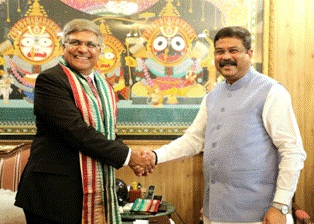
 The US National Science  Foundation has expressed keenness to deepen and widen its collaborations with India in the education and skilling sectors. NSF Director Shri  Sethuraman Panchanathan met the Union Minister of Education Shri Dharmendra Pradhan in New Delhi today, to discuss mutual areas of interest and India’s plans for STEM studies under the National Education Policy 2020. 

2022-08-09 15:59:31.677000

Speaking at the meeting Shri Pradhan emphasized that India’s strength lies in its young demographics and strong knowledge base. He said a wealth of  talent is available in various institutions across different regions of the  country, waiting to be nurtured. NSF should therefore  look at increasing its engagement with lesser known and hitherto unrepresented institutions  like NITs, Central Universities and State Universities in addition to the premier  institutions in the country.  Referring to the education- skill continuum that is being created in accordance with NEP 2020, Shri Pradhan also emphasized the necessity of  bringing the  skill sector within the ambit of such collaboration by reaching out to institutions like polytechnics, ITIs and community colleges. He said it was top priority and responsibility of his Government to ensure that all youth, whether in  mainstream academics or in the formal or informal skill sector, get equal opportunity to quality education and skilling so that they are equipped to face the twenty first century challenges. 

NSF is an independent federal agency with the responsibility of promoting  scientific discovery, technological innovation and STEM education. With a budget of  US$8.8 billion, NSF is the major source of federal funding in fields such as mathematics, computer science and the social sciences . India’s engagements with the NSF include six Technology Innovation Hubs under which 8 institutions like IITs, IISc Bangalore and others are collaborating in 30 projects and some projects on Cyber Security. Director NSF is in India to explore ways to enhance these engagements.

Echoing India’s priorities Shri Panchanathan said that like India, inclusivity and accessibility of quality education are  a priority with the US Government too. He assured that NSA would reach out for collaboration with unrepresented institutions including those involved in skilling, so that talent in these places can also be nurtured.

Shri Pradhan has asked the Ministry of Education, led by AICTE, to prepare a framework for further engagement with the NSF, also consulting other relevant Ministries  in this regard.

*****