Start-ups selected for support under the newly established guidelines in Quantum Technologies will be officially unveiled by the Union Minister of State (Independent Charge) for Science and Technology, Minister of State (Independent Charge) for Earth Sciences, MoS PMO, Department of Atomic Energy, Department of Space, Personnel, Public Grievances and Pensions, Dr. Jitendra Singh at an event, scheduled for 26th November 2024.
Department of Science and Technology (DST) has established detailed guidelines to support and nurture startups in the field of quantum technologies. These comprehensive guidelines provide a structured framework for startups to access essential resources, funding opportunities, mentorship, and infrastructure support, empowering them to accelerate innovation and contribute to India’s quantum ecosystem.
The unveiling of the startups by the Union Minister, who will be the Chief Guest for the occasion will showcase India’s growing prowess in quantum research, development, and commercialization.
A Call for Proposals was launched earlier this year by the I-HUB Quantum Technology Foundation, a Technology Innovation Hub (TIH) established at the Indian Institute of Science Education and Research (IISER), Pune, under the National Mission on Interdisciplinary Cyber-Physical Systems (NM-ICPS). The response from start-ups across the nation showcased the increasing interest in quantum technologies and the potential for ground-breaking advancements.
The selected start-ups, representing cutting-edge innovation across diverse domains such as quantum communication, computing, sensing, and materials, were chosen through a rigorous evaluation process. These pioneering ventures are poised to contribute significantly to India’s quantum ecosystem, addressing critical technological challenges and driving economic growth.
With the growing momentum in India’s start-up ecosystem, the National Quantum Mission is dedicated to nurturing ventures in quantum technology, and propelling the nation toward world-wide excellence in this transformative field.
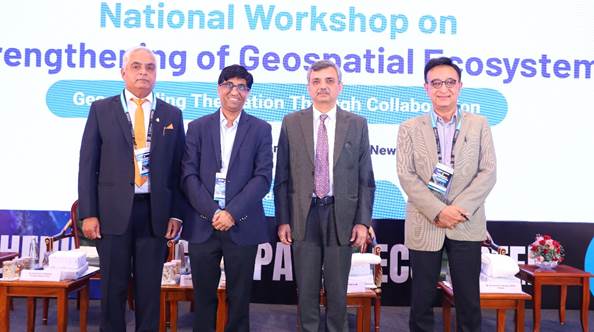
Policymakers, experts and industry leaders came together to discuss ways to advance India’s geospatial sector in alignment with the National Geospatial Policy (NGP) 2022 at the National Workshop on Strengthening the Geospatial Ecosystem today at Bharat Mandapam, New Delhi.
The workshop organised bythe Survey of India (SoI), the National Mapping Agency under the Department of Science and Technology (DST), featured extensive discussions on key aspects of geospatial development.
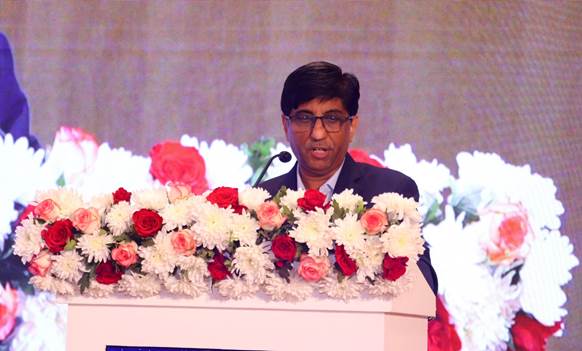
“The National Geospatial Policy 2022 is not just a government initiative; it is a collective responsibility. Every citizen, every institution, and every industry have a role to play in realizing the promise of this policy. As we embrace the power of geospatial technologies, let us work together to ensure that the benefits are felt by all,” said Secretary DST, Professor Abhay Karandikar.
“The focus now should be on working together, reducing duplication and cross-collaboration in Geospatial schemes. Avenues of collaborative funding should be sought out in the larger interest of the nation,” said Shri Hitesh Kumar S. Makwana, Surveyor General of India.
Participants explored the collaborative roles of central ministries and state governments in implementing NGP-22 to build a robust geospatial ecosystem. The event also highlighted the impact of Operation Dronagiri, launched on 13th November 2024, as a pioneering initiative leveraging geospatial technologies to address challenges in agriculture, infrastructure, transportation and livelihoods. The initiative is a step towards positioning India as a leader in geospatial innovation, driving economic growth and sectoral development through data-driven solutions.
The workshop laid special focus on the challenges and strategies for establishing a uniform and modernized National Geodetic Reference Frame to support integrated services and sustainable development. Discussions also addressed the importance of capacity development in the geospatial sector through curriculum standardization, skill-development programs and cutting-edge research initiatives.
The workshop in which Shri Manoj Joshi, Secretary Department of Land Resources and Shri Srikant Shastri, Chairman GDPDC participated, served as a significant step toward realizing the vision of NGP-22, fostering innovation, economic prosperity and technological leadership.
It reinforced India’s commitment to becoming a global leader in the geospatial sector by building a collaborative ecosystem involving government, academia and the private sector.
The Government is continuously working under the leadership of Prime Minister Shri Narendra Modi for the development of the country, especially the vulnerable tribal group families, through the ambitious Pradhan Mantri Jan Man Yojana (PM-Jan Man). Under this, Union Minister for Rural Development and Agriculture & Farmers’ Welfare Shri Shivraj Singh Chouhan giving a gift to the tribal families of Madhya Pradesh, has approved more than 30 thousand houses in Madhya Pradesh. Union Minister said that PM Modi’s government is fully committed and sensitive towards the deprived and exploited. He said that every possible work will be done continuously for the upliftment of this section.
Union Minister Shri Shivraj Singh Chouhan, while approving the allocation of additional targets for the year 2024-25 under the Pradhan Mantri Awas Yojana, Ministry of Rural Development, said that PM Janman Mission aims at the development of 75 Particularly Vulnerable Tribal Groups (PVTGs) who have been left out from the schemes of various Ministries/Departments. Shri Chouhan said that the full focus of the Modi government is to reach out to the last person in the country. He informed that the targeted housing (4.90 lakh houses) under PM-Janman is to be completed by March 2026.
Union Minister informed that earlier a target6 of 3,70,963 (2,18,890 in the year 2023-24 and 1,52,073 in the year 2024-25) has been allocated to the States4, out of which 3.38 lakh houses have been sanctioned and the first installment3 has been released to 2.71 lakh beneficiaries and 62,005 houses have been completed. After the survey, the states have identified 46,573 additional eligible families, out of which more than 30 thousand houses have been allotted additionally to Madhya Pradesh. Earlier, 1,44,200 houses have been approved for Madhya Pradesh.
Approval of roads in Andhra Pradesh under PM-Janman – Shri Shivraj Singh Chouhan has also approved 76 roads of 297.18 km length in the state of Andhra Pradesh under PM-Janman. The estimated cost of these 76 roads is Rs 275.07 crore, out of which the central share is Rs 163.39 crore and the state share is Rs 111.68 crore.
Additional sanctioned housing in Madhya Pradesh (district wise)
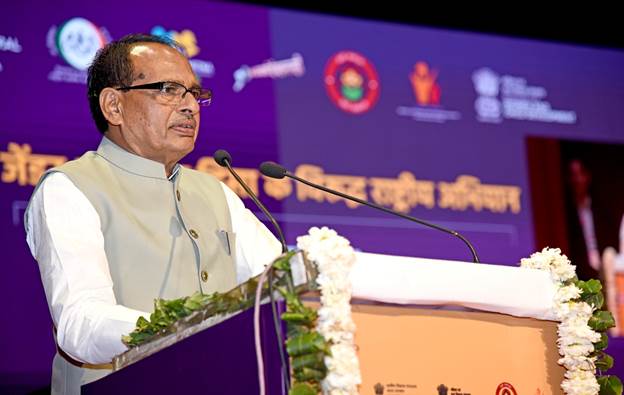
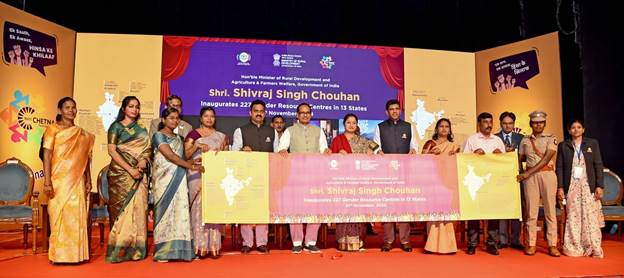
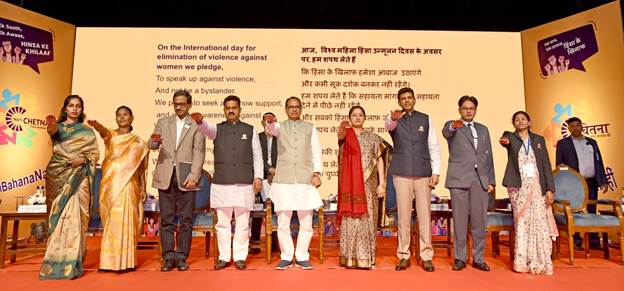
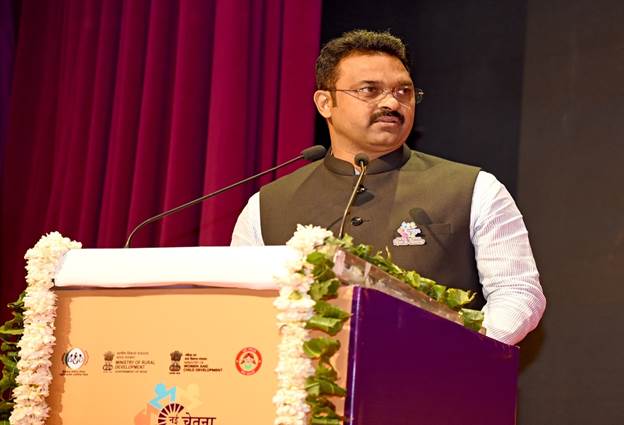
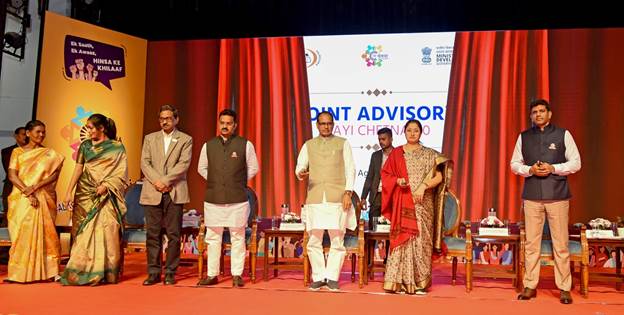
Union Minister of Rural Development and Agriculture & Farmers’ Welfare, Shri Shivraj Singh Chouhan launched the third edition of Nayi Chetna – Pahal Badlaav Ki, a one month long national campaign against gender-based violence in New Delhi today. Union Minister of Women and Child Development Smt. Annpurna Devi also graced the event with Ministers of states of Rural Development Shri Kamlesh Paswan and Dr. Chandra Sekhar Pemmasani. The campaign, organized by the Deendayal Antyodaya Yojana – National Rural Livelihoods Mission (DAY-NRLM) under the aegis of the Ministry of Rural Development, will run across all States and Union Territories until 23rd December 2024. This initiative, led by DAY-NRLM’s extensive Self-Help Group (SHG) network, embodies the spirit of Jan Andolan. The Nayi Chetna campaign aims to amplify awareness and drive informed action against gender-based violence through grassroots initiatives. Union Minister of Rural Development Shri Shivraj Singh Chouhan released Nayi Chetna 3.0 joint Advisory along with Union Minister of Women and Child Development Smt. Annpurna Devi and Ministers of state of Rural Development Shri Kamlesh Paswan and Dr. Chandra Sekhar Pemmasani. And they also inaugurated 227 new Gender Resource Centers in 13 states.
Shri Shivraj Singh Chouhan said that during his tenure as Chief Minister of Madhya Pradesh, he initiated numerous schemes aimed at women’s development. These initiatives brought about significant positive change in their lives, also enhancing their respect within their households.If women are to be completely empowered, then women empowerment, social empowerment, political empowerment, and educational empowerment must be achieved. Under the leadership of Prime Minister Shri Narendra Modi, women empowerment initiatives are being implemented as a campaign. I heartily congratulate Prime Minister Shri Narendra Modi for this endeavour. Programs like Nayi Chetna must be taken to society, as violence persists, affecting not only rural areas but also cities, where incidents like Nirbhaya occur. Daughters like Rubika Pahari and Ankita Sen are victims of heinous crimes. During my tenure as Chief Minister, I observed that 90% of rape cases involved acquaintances. Widespread public awareness is essential to combat this issue. Women self-help groups have sparked a revolution in women empowerment, uniting women as a force. This campaign must be taken to every village through these groups. To enhance its effectiveness, we will review and strategize its implementation in every village and city, with a focus on urban areas.
Shri Chouhan emphasizes the need for a new consciousness in India, where the tradition of respecting women seems to be dwindling. He stresses that there should be no tolerance for violence against women and no excuses for not taking action. To achieve this, he advocates for the death penalty for those convicted of rape, arguing that human rights are for humans, not for those who commit heinous crimes. He also highlights the importance of unity and collective effort among women, the Women Development Department, self-help groups, and society as a whole to ensure safety and end violence. Shri Chouhan envisions a future where women can live without fear of violence, and he urges everyone to work together to achieve this goal.
Shri Kamlesh Paswan highlighted the remarkable efforts of the Rural Development Ministry, under Prime Minister Shri Narendra Modi’s leadership, in empowering women, who constitutes half of India’s population. Notably, the housing scheme has made significant strides, allocating 75% of houses to women. This initiative is part of the rapid changes taking place in India to promote women’s equality.
Dr. Chandra Sekhar Pemmasani said that our nation’s progress hinges on the dignity, security, and freedom of every woman especially those in our rural heart land. Gender based violence is a global issue that knows no boundaries, taking many forms from physical and emotional abuse to online harassment and cyber bullying. Many gender based violence cases go unnoticed due to fear, social stigma, lack of awareness and inadequate support systems, therefore empowering women isn’t just a policy, and it’s our moral duty and societal necessity Dr. Pemmasani added.
Secretary of Rural Development Shri Shailesh Kumar emphasized the crucial role of women’s determination and dedication in driving this movement forward. He stressed that a strong movement can only be formed with the active participation and support of women. Shri Shailesh Kumar also acknowledged the current situation of gender-based violence and inequalities in India. Despite progress in women’s education, health, and political participation, women continue to face challenges like discrimination, social norms, high levels of violence, and unequal household workload. In rural India, the statistics are alarming, with 49% of women having no control over their income and 32% believing their opportunities are limited due to gender inequality.
The campaign is a collaborative effort in the spirit of “whole of government” approach and witness participation of 9 Ministries/Departments namely Ministry of Women and Child Development, Ministry of Health and Family Welfare, Department of School Education and Literacy, Ministry of Home Affairs, Ministry of Panchayati Raj, Ministry of Social Justice and Empowerment, Ministry of Youth Affairs and Sports, Ministry of Information and Broadcasting and Department of Justice.
The objectives of Nayi Chetna 3.0 include raising awareness of all forms of gender-based violence, encouraging communities to speak out and demand action, providing access to support systems for timely assistance and empowering local institutions to act decisively against violence.The campaign’s slogan, “Ek Saath, Ek Awaaz, Hinsa Ke Khilaaf,” embodies the call for collective action through convergence efforts, adopting a whole-of-society and whole-of-government approach.
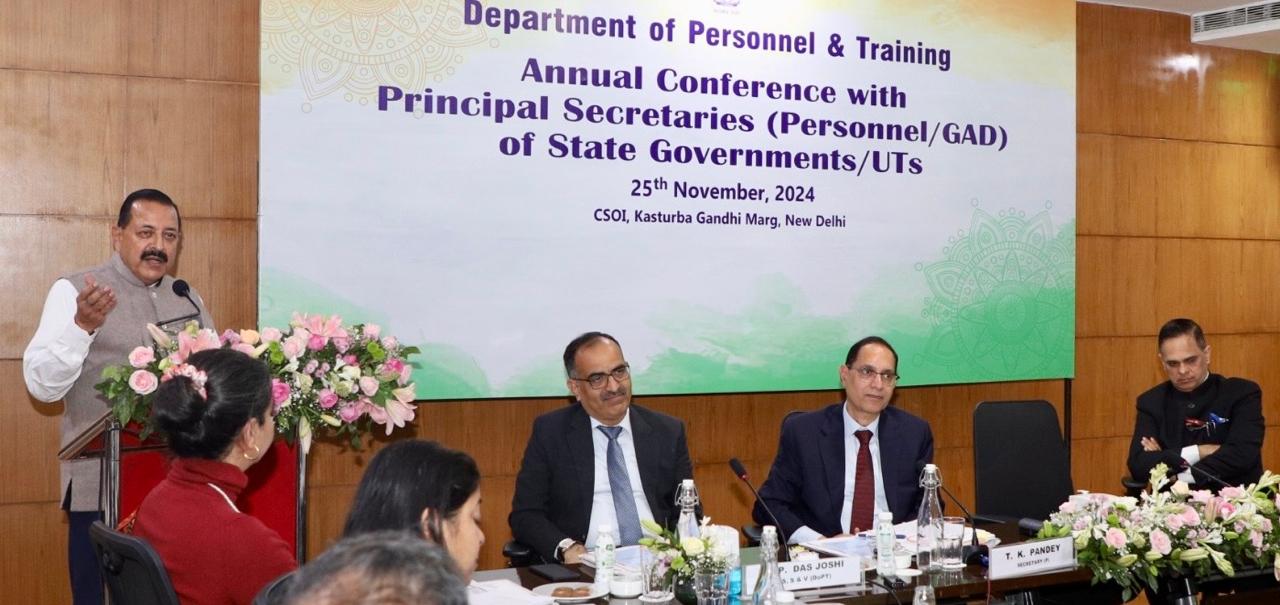
Union Minister of State (Independent Charge) for Science and Technology; Earth Sciences and Minister of State for PMO, Department of Atomic Energy, Department of Space, Personnel, Public Grievances and Pensions, Dr. Jitendra Singh convened a meeting of State GAD/ Personnel Secretaries to receive an update about the status of General Administration Department working in individual States and UTs as well as to familiarise them with new initiatives undertaken by the Central Government headed by Prime Minister Sh Narendra Modi.
The Union MoS DoPT shared a futuristic vision in governance driven by latest technology and motivated by the goal of Viksit Bharat 2047.
The meeting served as a platform for fostering knowledge exchange and collaboration among administrative leaders, with a focus on capacity building, technological integration, and reforms to enhance governance. The conference saw participation from almost all the States and Union Territories.
Addressing the participants, Dr. Jitendra Singh underscored the critical need for regular interactions to empower civil servants in meeting the evolving challenges of governance. He reaffirmed the government’s commitment to transparency, integrity, accountability, and efficiency, as reflected in initiatives like Mission Karmayogi, which has institutionalized capacity building for civil servants at all levels.
Highlighting the importance of grievance redressal mechanisms, the Minister noted that the centralized system has witnessed an unprecedented increase in public trust, with complaints handled annually growing from 2 lakh in 2014 to over 25 lakh in 2024. This surge demonstrates the government’s ability to address citizens’ concerns more effectively and in a timely manner.
During the meeting, Union Minister Dr. Jitendra Singh addressed several concerns raised by Principal Secretaries regarding administrative challenges and the development of civil servants. One key suggestion was the creation of a mentoring framework where senior officers could guide younger batches, helping them benefit from the knowledge and experience of their seniors. The Minister acknowledged this proposal and highlighted the importance of mentorship in shaping future leaders within the civil service.
Dr Jitendra Singh shared that the Department of Personnel and Training (DoPT) had already initiated a mentorship program in 2016, where officers undergo a three-month exposure to central government priorities, gaining a better understanding of national-level governance. This initiative has proven effective in boosting the confidence and initiative of younger officers, enabling them to interact with senior mentors and learn key aspects of governance practices.
In response to concerns about the lack of exposure for officers at the Deputy Secretary and Joint Secretary levels, Dr. Jitendra Singh emphasized ongoing efforts to address this gap. He highlighted initiatives like the National Learning Week and Mission Karmayogi, which now cater to various levels of civil servants, including those in state administrations. These programs are designed to equip officers with the necessary skills to navigate dynamic governance challenges.
Dr. Jitendra Singh also appreciated the development of online knowledge series aimed at providing essential information to officers and assured that the DoPT would collaborate with states to share best practices and resources, further enhancing the learning environment for civil servants nationwide.
The conference explored several key topics vital to governance and administrative reforms, with a focus on the increasing role of technology in administration. A major highlight was the implementation of centralized grievance mechanisms, which have greatly enhanced public trust in the system’s responsiveness. The discussions showcased success stories, such as the integration of face recognition technology and year-long capacity-building initiatives, both of which are helping civil servants adapt quickly to evolving governance needs. These reforms, along with Mission Karmayogi’s institutionalized framework, are equipping officers with the necessary skills to tackle modern administrative challenges effectively.
Sessions at the conference aimed to provide civil servants with the tools needed for contemporary governance. The Department of Personnel and Training (DoPT) presented key personnel reforms, and a discussion on Mission Karmayogi illustrated its transformative impact on civil services. The event also highlighted the use of electronic Human Resource Management Systems (eHRMS) to streamline personnel management, alongside discussions on the successful implementation of the Right to Public Grievance Redressal Act, which has boosted public service accountability.
Additionally, the Department of Administrative Reforms and Public Grievances (DARPG) conducted a session on digitalization, centralized grievance redressal, and special campaigns, aiming to modernize administrative processes.
Dr. Jitendra Singh emphasized the need for states to adopt technologies like face recognition systems to improve administrative efficiency. He also stressed that the capacity-building measures under Mission Karmayogi would help civil servants navigate the complexities of modern governance.
The Minister also highlighted the 2018 amendments to the Prevention of Corruption Act, which introduced accountability for both bribe-givers and bribe-takers, fostering a more balanced and just approach to corruption. He further emphasized the need for regular exchanges of best practices among states to replicate successful governance models nationwide.
The conference, organized by DoPT, saw the participation of DoPT Secretary Shri Tuhin Kanta Pandey, DARPG Secretary Shri V. Srinivas, and senior officials from both departments, enriching discussions on governance reforms.
Dr. Jitendra Singh concluded by expressing confidence that these collaborative efforts would drive progress and empower civil servants for more effective public service delivery.
The Ministry of Labour and Employment launched eShram portal (eshram.gov.in) nationwide on 26th August 2021 for creation of a comprehensive National Database of Unorganised Workers (NDUW) verified and seeded with Aadhaar. eShram portal is meant to register and support the unorganised workers by providing them a Universal Account Number (UAN).
In October 2024, on an average about 60,000 registrations happened on eShram per day and a single day registration reached 97,839 on 09.10.2024. As on 19th November 2024, over 30.40 crore unorganised workers have registered on eShram portal, on a self-declaration basis. The key social security benefits extended to the unorganised workers through eShram portal are as follows:
eShram has been integrated with National Career Service (NCS) Portal. An unorganised worker can register on NCS using his/ her Universal Account Number (UAN) and search for suitable job opportunities. An option/ link has also been provided to registrant on eShram portal to seamlessly register on NCS.
eShram is also integrated with Pradhan Mantri Shram Yogi Maandhan (PM-SYM). PM-SYM is a pension scheme for unorganised workers who are aged between 18-40 years. Using UAN (eShram), any unorganised worker can easily register on Maandhan portal.
To provide skill enhancement and apprenticeship opportunities to unorganised worker, eShram has been integrated with Skill India Digital portal of Ministry of Skill Development and Entrepreneurship.
eShram is also integrated with myScheme portal. myScheme is a National Platform that aims to offer one-stop search and discovery of the Government schemes. It provides an innovative, technology-based solution to discover scheme information based upon the eligibility of the citizen.
Further, Ministry of Labour and Employment has also launched the eShram– “One-Stop-Solution” on 21st October 2024. eShram– “One-Stop-Solution” entails integration of different Social Security/ Welfare schemes at single portal i.e., eShram. This enables unorganised workers registered on eShram to access social security schemes and see benefits availed by them, through eShram. So far, twelve (12) Social Security/ Welfare Schemes have been integrated/ mapped with eShram which includes: – One Nation One Ration Card, Mahatma Gandhi National Rural Employment Guarantee Act, National Social Assistance Programme (Indira Gandhi National Disability Pension Scheme, Indira Gandhi National Widow Pension Scheme, National Family Benefit Scheme) Pradhan Mantri Awas Yojana – Gramin (PMAY-G), etc.
eShram data is being shared with State/ UTs Labour Departments through integration and Data Sharing Portal (DSP) based on Standard Operating Procedure (SOP) and guidelines prepared by Ministry of Labour and Employment in consultation with National Informatics Centre (NIC), Unique Identification Authority of India (UIDAI) and States/ UTs. All States/UTs have been on boarded on Data Sharing Portal (DSP) and 10 States/UTs have completed integration.
Integration of Social Security/ Welfare Schemes with eShram is a continuous process.
The Government of India has introduced a pension scheme for unorganized workers namely Pradhan Mantri Shram Yogi Maan-dhan (PM-SYM) to ensure old age protection for Unorganised Workers. The scheme was launched in March, 2019. The third party evaluation of PM-SYM was done by Indian Institute of Public Administration that recommended inter-alia, to increase income limit from Rs.15000 to Rs.18000 and entry age for eligibility criteria to be relooked to 18 to 50 years.
For the first time, the definition of ‘gig workers’ and ‘platform workers’ and provisions related to the same have been provided in the Code on Social Security, 2020 which has been enacted by the Parliament. The Code provides for framing of suitable social security measures for gig workers and platform workers on matters relating to life and disability cover, accident insurance, health and maternity benefits, old age protection, etc.
The Ministry of Labour and Employment had launched the e-Shram-“One Stop-Solution” on 21st October 2024. This entails integration of different social security/welfare schemes at single portal i.e. e-Shram. This enables unorganised workers registered on e-Shram to access social security schemes and see benefits availed by them so far, on single portal i.e. e-Shram.
“Labour” as a subject is in the Concurrent List of the Constitution of India and under the Codes, the power to make rules has been entrusted to Central Government as well as State Governments. As a step towards implementation of the four Labour Codes, the Central Government has pre-published the draft Rules under Labour Codes. As per available information, 32, 31, 31 and 31 State/Union Territories have also pre-published the draft Rules under the Code on Wages, 2019, the Industrial Relations Code, 2020, the Code on Social Security, 2020 and the Occupational Safety, Health and Working Conditions Code, 2020, respectively.
The Labour Codes strengthen the protection available to workers, including unorganized workers in terms of statutory minimum wage, social security and healthcare of workers. The Code on Wages, 2019 has envisaged statutory right for minimum wages and timely payment of wages to all workers to support sustainable growth and inclusive development. Besides, the Code on Social Security, 2020 aims to extend social security benefits to all workers both in the organised and unorganised sectors. The Labour Codes have been aligned with the present economic scenario and technological advancements along with reduction in multiplicity of definitions & authorities. The Codes also ease compliance mechanism aiming to promote ease of doing business/setting up of enterprises and catalyze creation of employment opportunities while ensuring safety, health and social security of every worker. Use of technology, such as, web-based Inspection has been introduced in order to ensure transparency & accountability in enforcement. A provision for worker reskilling fund has been envisaged in the Industrial Relations Code, 2020 for re-skilling the retrenched workers which provides for crediting fifteen days’ wages last drawn by the worker.
The official data source on Employment and Unemployment is Periodic Labour Force Survey (PLFS) which is conducted by the Ministry of Statistics and Programme Implementation (MoSPI) since 2017-18. The survey period is July to June every year. As per the latest available Annual PLFS reports, the estimated Worker Population Ratio (WPR) and Unemployment Rate (UR) on usual status for persons of age 15 years and above in the country is as follows:
Year
WPR (in %)
UR (in %)
2017-18
46.8
6.0
2018-19
47.3
5.8
2019-20
50.9
4.8
2020-21
52.6
4.2
2021-22
52.9
4.1
2022-23
56.0
3.2
2023-24
58.2
3.2
Source: PLFS, MoSPI
The above data indicates that the WPR i.e. employment has increasing trend and Unemployment Rate has a decreasing trend over the years.
The KLEMS (K: Capital, L: Labour, E: Energy, M: Materials and S: Services) database published by Reserve Bank of India’s (RBI) provides employment estimates at all India level. As per the latest data of the database, provisional estimates for 2023-24, employment in the country increased to 64.33 crore in year 2023-24 compared to 47.15 crore in 2014-15. Total increase in employment during 2014-15 to 2023-24 is about 17 crore.
To provide various employment related services to the youth of the country on a single platform, Government of India has launched National Career Service (NCS) portal (www.ncs.gov.in) which includes services like job search & matching, career counselling, vocational guidance, information on skill development courses, internships etc through the portal. During the year 2024-25 (as on 15.11.2024), 1.12 crore vacancies were posted on NCS portal and more than 3.53 Crore number of vacancies mobilized on the portal since its launch in 2015.
Further, Government of India has also launched MY Bharat platform which provides myriad opportunities for youth engagement through various organizations onboarded on the portal with a view to involve them in meaningful activities. The MY Bharat portal is envisioned as a pivotal, technology-driven facilitator for youth development and youth-led development, with the overarching goal of providing equitable opportunities to empower the youth in realizing their aspirations.
Employment generation coupled with improving employability is the priority of the Government. Accordingly, the Government of India has taken various steps for generating employment in the country.
The various Ministries/ Departments of Government of India like Ministry of Micro, Small and Medium Enterprises, Ministry of Rural Development, Ministry of Housing and Urban Affairs, Ministry of Finance, Ministry of Textiles, Ministry of Electronics and Information Technology, etc. are implementing different employment generation schemes/ programmes like Prime Minister’s Employment Generation Programme (PMEGP), Mahatma Gandhi National Rural Employment Guarantee Scheme (MGNREGS), Deen Dayal Upadhyaya Grameen Kaushalya Yojana (DDU-GKY), Rural Self Employment and Training Institutes (RSETIs), Deendayal Antyodaya Yojana-National Urban Livelihoods Mission (DAY-NULM), Pradhan Mantri Mudra Yojana (PMMY), etc. including increase in capital expenditure to boost employment creation. The details of various employment generation schemes/programmes being implemented by the Government of India may be seen at https://dge.gov.in/dge/schemes_programmes.
Further, Government announced in the Budget 2024-25, the Prime Minister’s package of 5 schemes and initiatives to facilitate employment, skilling and other opportunities for 4.1 crore youth over a 5-year period with a central outlay of Rs. 2 lakh crore.
India Employment Report, 2024 of Institute for Human Development (IHD) – International Labour Organisation (ILO) mentioned that in ILO’s Global Report Trends for Youth, 2022, the worldwide youth unemployment rate was 15.6 per cent in 2021. Further, as per World Employment and Social Outlook Trends, 2024 by ILO, globally, in 2023, the youth unemployment rate was 13.3 per cent.
The official data source of Employment/ Unemployment indicator in India at present is the Periodic Labour Force Survey (PLFS) conducted by the Ministry of Statistics and Programme Implementation (MoSPI) since 2017-18. The survey period is July to June of the next year. As per the latest available Annual PLFS reports, the estimated Unemployment Rate (UR) on usual status for youth of age 15-29 years in the country in the year 2023-24 was 10.2% which is lower than global levels. Further, the Worker Population Ratio (WPR) for youth indicating employment has increased from 31.4% in 2017-18 to 41.7% in 2023-24.
Employees’ Provident Fund Organization (EPFO) Payroll Data gives an idea of the level of employment in the formal sector. More than 1.3 crore net subscribers joined EPFO during 2023-24. Moreover, during September 2017 to August, 2024, more than 7.03 crore net subscribers have joined EPFO, indicating increase in formalisation of employment.
All the labour force indicators are providing evidence of improved employment scenario in the country.
Employment generation coupled with improving employability is the priority of the Government. Accordingly, the Government of India has taken various steps for generating employment in the country.
The various Ministries/ Departments of Government of India like Ministry of Micro, Small and Medium Enterprises, Ministry of Rural Development, Ministry of Housing and Urban Affairs, Ministry of Finance, Ministry of Textile, etc. are implementing different employment generation schemes/ programmes like Prime Minister’s Employment Generation Programme (PMEGP), Mahatma Gandhi National Rural Employment Guarantee Scheme (MGNREGS), Pt. Deen Dayal Upadhyaya Grameen Kaushalya Yojana (DDU-GKY), Rural Self Employment and Training Institutes (RSETIs), Deen Dayal Antodaya Yojana-National Urban Livelihoods Mission (DAY-NULM), Pradhan Mantri Mudra Yojana (PMMY), etc. The details of various employment generation schemes/ programmes being implemented by the Government of India may be seen at https://dge.gov.in/dge/schemes_programmes.
The Department of Animal Husbandry and Dairying (DAHD) under the Ministry of Fisheries, Animal Husbandry and Dairying is celebrating “National Milk Day” on November 26, 2024, at Manekshaw Centre, New Delhi. This event honours the 103rd birth anniversary of Dr. Verghese Kurien, fondly remembered as the “Father of the White Revolution in India,” and highlights the pivotal contributions of the dairy sector to India’s economy and nutritional security. The celebration will be graced by Union Minister for Fisheries, Animal Husbandry, and Dairying, Shri Rajiv Ranjan Singh alias Lalan Singh, as the Chief Guest, along with Ministers of State for Fisheries, Animal Husbandry, and Dairying, Prof. S.P. Singh Baghel and Shri George Kurian and several other dignitaries.
On this occasion, Union Minister Shri Rajiv Ranjan Singh will also confer the prestigious National Gopal Ratna Awards (one of the highest National awards in the livestock and dairy sector) in 3 categories namely Best Dairy Farmer rearing indigenous cattle/buffalo breeds, Best Artificial Insemination Technician, and Best Dairy Cooperative Society (DCS)/ Milk Producer Company/ Dairy Farmer Producer Organization from across the country. A newly added Special award in each category would also be conferred on winners from the North Eastern Region. During the event some awardees will also share their experiences, providing valuable insights into the best practices, innovations, and sustainable approaches they have adopted in the sector.
The event will also witness the launch of two significant publications. The first being the Basic Animal Husbandry Statistics (BAHS)-2024, which offers vital insights into the livestock and dairy sector trends, underpinning data-driven policymaking. The second is a Manual on the Identification of Elite Cows, designed to guide the creation of a national Milch herd comprising of elitist of elite dairy animals. The same, underlines the government’s focus on evidence-based decision-making and technological advancement in the field of animal husbandry.
A special highlight of the celebration is the culmination ofAll IndiaMotor Rally, organised by Amul, the leading dairy co-operative in association with Bajaj Auto, which had been flagged off earlier by Union Minister of Home Affairs and Cooperation, Shri Amit Shah on 19th November 2024 from Himmatnagar in Sabarkantha District of Gujarat. The rally groups arriving from various parts of the country will gather at Dhaula Kuan, New Delhi for the last leg and will finally arrive at the Manekshaw Centre where they will be received by Union Minister Shri Rajiv Ranjan Singh.
The event will also host two thought-provoking panel discussions. The first titled “Women Led Livestock and Dairy Sector” will explore the transformative role of women in the livestock and dairy sector, emphasizing gender inclusivity and empowerment. The second panel discussion themed “ Empowering farmers through local Veterinary support” will delve into the strategies for empowering farmers by strengthening local veterinary support systems, a critical component of India’s rural economy.
This mega event will see countrywide participation including farmers, milk federations, dairy co-operatives etc. National Milk Day 2024 celebrates India’s leadership in the global dairy sector, emphasizing the importance of sustainable and inclusive growth in livestock and dairy industries. It recognizes the dedication of dairy farmers and stakeholders, while also inspiring innovation and fostering stronger partnerships. The event serves as a platform to honour the achievements of those involved, encouraging continued collaboration and progress in the sector.
About “Basic Animal Husbandry Statistics – 2024
DAHD is set to release its annual publication titled “Basic Animal Husbandry Statistics (BAHS) – 2024”. The BAHS – 2024 is an essential publication that provides comprehensive data on the livestock sector, based on the outcomes of the Integrated Sample Survey conducted for the period from 1st March 2023 to 29th February 2024. This survey, unique in the country, generates crucial data on the production estimates of Major Livestock Products (MLPs) such as Milk, Eggs, Meat, and Wool, which plays a pivotal role in policy formulation in the livestock sector. This publication includes state-wise estimation of production and per-capita availability of MLPs including insights into the estimated number of animals involved in milk production, poultry egg-laying birds, animals slaughtered, and sheep shorn. Further, it presents valuable data on veterinary hospitals, polyclinics, gaushalas, state farms, and other infrastructure details, along with the number of artificial inseminations performed, and a global perspective on the livestock sector.
The decision on the proposal involving development of Great Nicobar Island project has been taken after due consideration of potential environmental impacts on island ecology and also taking into account the significant strategic, defence and national importance of the developmental projects. As per EIA notification, 2006, as amended from time to time, prior environmental clearance is required for all new projects and/or activities or modernization of existing projects or activities as listed in the schedule to the Notification, 2006. The process of prior Environmental Clearance involves an examination of the project for assessment of impacts and preparation of an Environmental Management Plan through different stages such as screening, scoping, public consultation, and appraisal.
Several studies were conducted to carryout the environmental impact assessment and studies regarding their consequent mitigation measures were undertaken by the top statutory and non-statutory bodies like Zoological Survey of India (ZSI), Salim Ali Centre for Ornithology and Natural History(SACON), the Wildlife Institute of India (WII), Indian Institute for Science(IISc) as a part of the preparation of EIA/EMP report. Independent organization with specialized skill such as Indian Institutes of Technology (IIT), National Institute of Ocean Technology(NIOT), National Centre for Coastal Research(NCCR), National Institute of Oceanography(NIO), etc. were also involved during the appraisal process.
A detailed scrutiny of the EIA/EMP report took place during the appraisal of the project by an independent Expert Appraisal Committee (EAC) having experts from the field of science and engineering. The Environmental Clearance accorded contains as many as 42 specific conditions dealing with each component of the project for the safeguard of marine and terrestrial biodiversity.
Further, three independent Monitoring Committees to oversee the implementation of Environmental Management Plan is also prescribed in the Environmental Clearance letter namely (i) Committee to oversee pollution related matters (ii) Committee to oversee biodiversity related matters (iii) Committee to oversee welfare and issues related to Shompen and Nicobarese.
Further, also a High Power Committee (HPC) was constituted by the Ministry of Environment Forest and Climate Change pursuant to the order of the NGT dated 03/04/2023.
Air pollution in Delhi and NCR is a collective result of multiple factors including high level of anthropogenic activities in the high-density populated areas in NCR, arising from various sectors viz. Vehicular Pollution, Industrial Pollution, Dust from Construction and Demolition activities, Road and Open Areas Dust, Biomass Burning, Municipal Solid Waste burning, Fires in Landfills and air pollution from dispersed sources, etc. During post-monsoon and winter months, lower temperature, lower mixing heights, inversion conditions and stagnant winds lead to trapping of the pollutants resulting in high pollution in the region. This is further aggravated due to the emissions from episodic events like stubble burning, firecrackers, etc.
Incidences of paddy stubble burning in the northern states of Punjab, Haryana, NCR districts of UP and other areas in NCR are a matter of concern and impact the air quality in the NCR, particularly in the period between October and November.
Indian Space Research Organization (ISRO) developed a standard protocols, in consultation with major stake holders including Indian Council of Agricultural Research (ICAR), for recording and monitoring of crop residue burning events and paddy burnt area estimation, to avoid a diverse assessment of fire events/counts. As recorded through the standard ISRO protocol, the number of such incidents of paddy stubble burning, have witnessed a significant decline on year-to-year basis as evident from the following:
The Commission for Air Quality Management in National Capital Region and Adjoining Areas (CAQM) from time to time has appropriately communicated and issued directives & advisories to various stakeholders including the 11 Thermal Power Plants (TPPs) located within 300 km of Delhi, State Governments of Punjab, Haryana and Uttar Pradesh on “Ex-Situ Stubble Management” and to establish an ecosystem and robust supply chain mechanism to boost ex-situ utilisation of straw for tackling the problem of stubble burning. CAQM has also directed coal based TPPs including co-generating Captive TPPs situated in NCR to (i) initiate immediate steps to co-fire biomass-based pellets (with focus on paddy straw utilization) with coal through a continuous and uninterrupted supply chain targeting at least 5% co-firing of biomass pellets. (ii) TPPs to strictly comply with the standards of emissions, at all times and with immediate effect, as stipulated vide MoEFCC’s Notification S.O. 3305(E), dated 07.12.2015 and its amendments from, time to time.
Further, as per revised model contract for use of biomass in TPPs, issued by Ministry of Power, these power plants shall use minimum 50% of raw material as stubble/ straw/crop residue of rice paddy sourced from Punjab, Haryana or NCR. Further, emission standards for power plants have been notified and these are to be enforced by State Pollution Control Boards (SPCBs). As per last co-firing status obtained from MoP till October, 2024, out of targeted 22.64 LMT for FY 2024-25, 11 TPPS within 300 Km of Delhi co-fired 6.04 LMT till October, 2024 (~28%), compared to 2.58 LMT (~14 %) against targeted 18.03 LMT in FY 2023-24.
Ministry of Petroleum and Natural Gas (MoPNG) has launched a scheme to provide financial assistance to Compressed Bio-gas producers for procurement of biomass aggregation equipment for ex-situ management of paddy straw.
Further, Ministry of Agriculture & Farmers Welfare (MoA&FW) in 2018 launched scheme for providing subsidy for purchase of crop residue management machinery and establishment of custom hiring centres (CHCs) in NCT of Delhi and the States of Punjab, Haryana and Uttar Pradesh for in-situ management of paddy straw. During the period from 2018 to 2024-25 (till 15.11.2024), a total of Rs. 3623.45 crores have been released (Punjab – Rs. 1681.45 crores, Haryana – Rs. 1081.71 crores, Uttar Pradesh – Rs. 763.67 crores, NCT of Delhi – Rs. 6.05 Crores and ICAR-Rs. 83.35 crores). The states have distributed more than 3.00 lakh machines to the individual farmers and to more than 40000 CHCs in these 4 States, which also include more than 4500 Balers & Rakes which are used for collection of straw in the form of bales for further ex-situ utilization. MoA&FW in 2023 revised guidelines under the scheme to support establishment of crop residue/paddy straw supply chain, by providing financial assistance on the capital cost of machinery and equipment.
Based on the deliberations and discussions held in series of meetings with the State Governments of Punjab, Haryana, UP, Rajasthan, Government of NCT of Delhi, State Pollution Control Boards of NCR States and Delhi Pollution Control Committee (DPCC) and various other stakeholders viz. ISRO, ICAR, Indian Agricultural Research Institute (IARI), CAQM has provided a Framework to the states concerned for control / elimination of crop residue burning and directed these to draw up detailed state-specific action plans based on the major contours of the framework.
Based on the framework advised by CAQM through Direction dated 10.06.2021 to the concerned State Governments of Punjab, Haryana, Uttar Pradesh, Rajasthan and Government of NCT of Delhi to prepare state specific detailed, monitorable action plans based on learnings from the years 2021, 2022 and 2023. Action plans were reviewed, updated and finalised by the all-concerned State Governments for the year 2024. Accordingly, a statutory direction for strict implementation of the framework and revised action plan for prevention and control of paddy stubble burning during the year 2024, to eliminate the practice through strict enforcement was issued to the respective States on 12.04.2024. The Action Plans, inter-alia, comprises of following components: –
In-situ Crop Residue Management:
Availability and allocation of CRM machinery
High yield and short duration paddy varieties, as substitute of PUSA- 44.
Harvesting schedule staggered to improve machine utilization
Super SMS mandated with Combine harvester
Extensive use of Bio-decomposer developed by IARI
Ex-situ Crop Residue Management
CAQM, vide Direction dated 12.04.2024, has also asked the States concerned for effective implementation of revised action plan for control / elimination of crop residue burning. Further, to ensure effective enforcement mechanism for implementation of the plans of action for prevention and control of Paddy Stubble Burning, CAQM, in exercise of the powers conferred under Section 14(2), vide Direction dated 10.10.2024 has authorised the Deputy Commissioners / District Collectors / District Magistrates in the States of Punjab, Haryana, NCR areas of Rajasthan and Uttar Pradesh and in the NCT of Delhi to file a complaint/ prosecution before jurisdictional judicial magistrate, in case of inaction in respect of officials, including nodal officers and supervisory officers at various levels and Station House Officers, responsible for effective enforcement towards ensuring elimination of paddy stubble burning in their respective jurisdiction.
Various other corrective measures have been taken by the Government to tackle air pollution from stubble burning, which include:
Central Pollution Control Board (CPCB) has framed Guidelines for grant of one-time financial support under Environment Protection Charge funds for establishment of pelletization and Torrefaction plants to promote utilisation of paddy straw. In case of setting up of palletisation plant, Rs. 28 lakhs per tonne per hour (TPH), or 40% of the capital cost considered for plant and machinery of a 01 TPH plant, whichever is lower, is provided as one-time financial assistance with a maximum total financial support of Rs. 1.4 crore per proposal. In case of setting up of torrefaction plants, Rs. 56 lakhs per TPH, or 40% of the capital cost considered for plant and machinery of a 01 TPH plant, whichever is lower, is provided as one-time financial assistance with a maximum total financial support of Rs. 2.8 crore per proposal.
A total of 17 applications for establishment of pelletization and Torrefaction plants under the above mentioned CPCB Guidelines have been sanctioned so far, out of which 02 plants are not coming up. Pellet production capacity of 15 sanctioned plants is 2.07 lakh tonne/annum. These plants are expected to utilize 2.70 lakh tonne of paddy straw per annum.
CPCB has deployed 26 teams (in 16 districts of Punjab and 10 districts of Haryana) for the period 01st October – 30th November, 2024 to intensify monitoring and enforcement actions regarding stubble burning. These teams are coordinating with concerned authorities/ officers deployed at the district level by the State Govt. and reporting to CAQM.
MoH&FW had deputed 31 Central Teams, which have conducted Quality Survey work w.e.f. 1-15th September, 2024 in the States of Punjab, Haryana and Uttar Pradesh and the Teams had visited 275 manufacturers and conducted quality audit of 910 agricultural machines. Further, 10 Central Teams have conducted survey on utilization of machines in States of Punjab and Haryana during 15th October-31st October 2024. A Team comprising members from DA&FW, CAQM and ICAR and other stakeholders had visited to the State of Punjab to witness the activities of paddy straw management on 14th November, 2024.
The tiger population has increased as per the All India Tiger Estimation done in 2022, with an estimated number of 3682 (range 3167-3925) as compared to the 2018 estimation of 2967 (range 2603-3346) and 2014 estimation of 2226 (range 1945-2491). The tiger population is increasing at a rate of 6% per annum in India when consistently sampled areas are compared. The details of tiger estimation pertaining to tiger landscapes in the country, for the years 2006, 2010, 2014, 2018 and 2022 is at Annexure-I.
The Government of India, through the National Tiger Conservation Authority, has advocated a three pronged strategy to manage human-wildlife negative interactions as follows:-
(i) Material and logistical support: Funding support through the ongoing Centrally Sponsored Scheme of Project Tiger, is provided to tiger reserves for acquiring capacity in terms of infrastructure and material, to deal with tigers dispersing out of source areas. These are solicited by tiger reserves through an Annual Plan of Operation (APO) every year which stems out from an overarching Tiger Conservation Plan (TCP), mandated under Section 38 V of the Wildlife (Protection) Act, 1972. Inter alia, activities such as payment of ex-gratia and compensation, periodic awareness campaigns to sensitize, guide and advise the general populace on man-animal conflict, dissemination of information through various forms of media, procurement of immobilization equipment, drugs, training and capacity building of forest staff to deal with conflict events are generally solicited.
(ii) Restricting habitat interventions: Based on the carrying capacity of tigers in a tiger reserve, habitat interventions are restricted through an overarching TCP. In case tiger numbers are at carrying capacity levels, it is advised that habitat interventions should be limited so that there is no excessive spill over of wildlife including tigers thereby minimizing man-animal conflict. Further, in buffer areas around tiger reserves, habitat interventions are restricted such that they are sub-optimal vis-à-vis the core/critical tiger habitat areas, judicious enough to facilitate dispersal to other rich habitat areas only.
(iii) Standard Operating Procedure (SOPs): The National Tiger Conservation Authority has issued following three SOPs to deal with human-animal conflict, which are available in public domain:
i. To deal with emergency arising due to straying of tigers in human dominated landscapes
ii. To deal with tiger depredation on livestock
iii. For active management towards rehabilitation of tigers from source areas at the landscape level.
The three SOPs inter alia includethe issue of managing dispersing tigers, managing livestock kills so as to reduce conflict as well as relocating tigers from source areas to areas where density of tiger is low, so that conflict in rich source areas does not occur.
Also as per Tiger Conservation Plans need based and site-specific management interventions are undertaken by the tiger reserves for improving the quality of wildlife habitat and funding support for these activities is provided under the Project Tiger Component of the ongoing Centrally Sponsored Scheme of Integrated Development of Wildlife Habitats.
As reported by States, the details of tigers lost due to confirmed unnatural causes (poaching, seizures and unnatural not poaching) during last three years and current year are at Annexure-II.
Annexure-I
Details of tiger estimation pertaining to tiger landscapes in the country, for the years 2006, 2010, 2014, 2018 and 2022 (As per All India Tiger Estimation Reports)
State
Tiger Population
2006
2010
2014
2018
2022
Shivalik-Gangetic Plain Landscape Complex
Uttarakhand
178
227
340
442
560
Uttar Pradesh
109
118
117
173
205
Bihar
10
8
28
31
54
Shivalik Gangetic
297
353
485
646
819
Central Indian Landscape Complex and Eastern Ghats Landscape Complex
Andhra Pradesh
95
72
68
48
63
Telangana
–
–
–
26
21
Chhattisgarh
26
26
46
19
17
Madhya Pradesh
300
257
308
526
785
Maharashtra
103
169
190
312
444
Odisha
45
32
28
28
20
Rajasthan
32
36
45
69
88
Jharkhand
–
10
3
5
1
Central India
601
601
688
1033
1439
Western Ghats Landscape Complex
Karnataka
290
300
406
524
563
Kerala
46
71
136
190
213
Tamil Nadu
76
163
229
264
306
Goa
–
–
5
3
5
Western Ghats
412
534
776
981
1087
North Eastern Hills and Brahmaputra Flood Plains
Assam
70
143
167
190
229
Arunachal Pradesh
14
–
28
29
9
Mizoram
6
5
3
0
0
Nagaland
–
–
–
0
0
Northern West Bengal
10
–
3
0
2
North East Hills, and Brahmaputra
100
148
201
219
236
Sunderbans
–
70
76
88
101
TOTAL
1411
1706
2226
2967
3682
Annexure-II
Details of tiger lost due to confirmed unnatural causes (poaching, seizures and unnatural not poaching) during last three years and current, State-wise
Today, the Hon’ble Supreme Court vide its Order dated 25.11.2024 in WP (C) No. 13029 of 1985 titled as M. C. Mehta Vs. Union of India & Ors., inter alia, directed as under:
“…we direct the Commission to consider the grant of relaxation of actions in terms of clauses 5 and 8 of Stage IV measures (only in relation to educational institutions) as well as clause 11 of Stage III measures. The Commission may consider of grant of exemptions to certain classes from the aforesaid actions/measures. The Commission will have to consider the grant of relaxation/exemption as regards the actions under the aforesaid three clauses for various reasons, including the following:
A large number of students are being deprived of the facility of Mid Day Meals as the schools and anganwadis are closed;
A large number of students do not have the facilities to take benefit of online education. Many educational institutions do not have facilities to provide online education; and
The residences of many students do not have air purifiers, and therefore, there may not be any difference between the children sitting at home and the children attending school.
…We also leave it to the Commission to decide on the continuation of the ban on conducting physical classes of X and XII standards on the same grounds.
Various options can be considered by the Commission. One can be of granting relaxation to those schools and educational institutions which do not have the facility of online education, and the other can be of granting relaxation to those students who do not have the facilities of attending online education at their respective homes. We make it clear that we are leaving it to the Commission to decide to what extent, if any, the measures relating to education which are otherwise applicable in Stages III and IV of the GRAP can be either relaxed or exceptions can be carved out. We expect that a decision shall be taken by the Commission during the course of the day or, at the latest, by tomorrow morning so that it can be implemented…”
Further, in respectful compliance of the above noted directives of the Hon’ble Supreme Court, the Commission further deliberated upon the related issues and has taken note of the following key factors:
All the primary schools in the NCT of Delhi and also those in other areas of NCR do not have capabilities / access for conducting classes purely in an online mode;
The adverse air quality scenario, primarily owing to highly unfavourable meteorological and climatic conditions, generally prevails for a long duration during winter months typically from November till January and going by the AQI trend in Delhi during such periods, GRAP Stages – III / IV are required to be invoked for considerable periods of time during these months. Such restrictions have an impact on the functioning of the educational system and the quality of education;
Students of classes X and XII and the associated school authorities are most impacted by the GRAP Stage – IV restrictions, considering the Board examinations facing them and the various competitive exams which follow. These students are required to attend classes in a physical mode considering the practical classes as also the practical examinations. Besides, the students are also required to attend to extra classes / tutorials for the Board examinations;
The Commission also considered various representations relating to conduct of physical classes in schools during such restrictive GRAP stages.
Considering all the above noted aspects and in respectful compliance of the Hon’ble Supreme Court’s directives, the Commission, today has ordered the following with immediate effect and until further orders:
Clause 11 of GRAP Stage-III, Clause 5 of GRAP Stage-IV and Clause 8 of GRAP Stage-IV (to the extent it relates to colleges / educational institutions) are relaxed to the extent that State Govts. in the NCR and the GNCTD shall ensure that all classes upto 12th Standard in schools and those in colleges / educational institutions are conducted in a “Hybrid” mode i.e., both in “physical” and also in an “online” mode, wherever online mode is feasible, in the territorial jurisdiction of the NCT of Delhi and in the districts of Gurugram, Faridabad, Ghaziabad and Gautam Buddh Nagar in the NCR. The option to exercise online mode of education, wherever available, shall vest with the students and their guardians.
NCR State Governments may also consider conducting classes in a hybrid mode as above in all other areas in NCR.
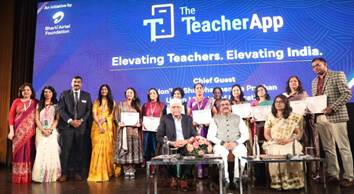
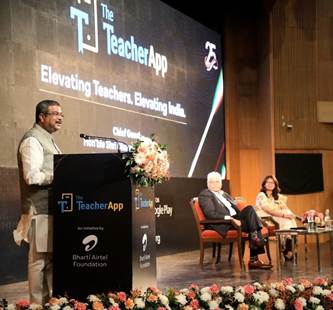
Union Minister for Education, Shri Dharmendra Pradhan, today in New Delhi unveiled the TeacherApp, an innovative digital platform designed to revolutionize education in India by equipping educators with future-ready skills to meet the demands of 21st-century classrooms. The Platform has been developed by Bharti Airtel Foundation, the philanthropic arm of Bharti Enterprises. Vice Chairman of Bharti Enterprises, Shri Rakesh Bharti Mittal; CEO of Bharti Airtel Foundation, Smt. Mamta Saikia, dignitaries from the education sector, school principals, teachers and B.Ed. students were also present at the event.
Addressing the gathering on the theme of “Elevating Teachers, Elevating India,” Shri Dharmendra Pradhan stated that this app will significantly empower teachers through continuous capacity building, leveraging innovative course content, technology, and community-building features. He emphasized that teachers are the real Karmayogis shaping the future generation, and the government is placing unprecedented focus on their continuous capacity building in line with the spirit of NEP 2020.
The Minister further highlighted that enlightened teachers create enlightened students. As India progresses in the knowledge-driven 21st century, teachers will play a pivotal role in identifying future opportunities and ensuring that our youth lead the nation’s growth story, he added.
Based on the on-ground experience and deep understanding of the challenges educators face, The TeacherApp has been conceptualised. This platform will equip them with both time-tested and future-ready skills through innovative digital resources. This user-centric, free app developed with direct inputs from teachers is accessible across the Web, iOS, and Android, ensuring seamless access for educators nationwide. The platform offers over 260 hours of high-quality resources, both created and curated including courses, learning bytes, short videos, podcasts, and interactive webinar formats such as thematic fests, webinars, competitions, and quizzes, all designed to foster future readiness, elevate pedagogical practices, and enhance student engagement in classrooms. Additionally, the app also features live expert sessions that provide practical classroom strategies and aims to build a community of teachers by highlighting their exceptional impact stories. The app combines tech innovation with partnerships across 12 states to transform education.
This platform has a unique section called Teaching Kits comprising content of 900 hours. This feature is designed to support teachers with tools Including teaching videos, project-based learning activities, worksheets, lesson plans, and question banks, among others for classroom delivery. With a mission to transform schools into safe and happy learning spaces, The TeacherApp not only supports teachers’ growth but also empowers schools’ leaders and administrators. Aligned with the National Education Policy 2020, the app aims to build future-ready educators equipped to meet the evolving needs of education.
Shri Rakesh Bharti Mittal, in his address, said that to make India thrive as a global economic leader, it is imperative that the education system equips educators to foster creativity, critical thinking, and innovation. The TeacherApp will offer teachers access to world-class resources and best practices that empower them to deliver exceptional learning experiences, he added.


GGGB.jpeg)


 Eduindex
You must be logged in to post a comment.