PROMOTION OF REGIONAL LANGUAGES

The Ministry of Culture is committed to the preservation, conservation and promotion of India’s rich cultural heritage, including regional languages, traditional art forms, and performing arts that are at risk of extinction. Through its autonomous bodies and Zonal Cultural Centres (ZCCs), several targeted initiatives are carried out by the ministry.

Sahitya Akademi (SA)works for the promotion of literature in24 recognized languages and various unrecognized and tribal languages by organizing language conventions and awarding the Bhasha Samman to scholars for their contributions to unrecognized languages like Haryanvi, Koshali-Sambalpuri, Paite, Magahi, Tulu, Kurukh, Ladakhi, Halbi, Saurashtra, Kumauni, Bhili, Warli, Banjara/Lambadi, Khasi, Mising, Kodava, Chakma, Rajbanshi, Awadhi, Bundeli, Garhwali, Kachchhi, Himachal, Ao, Karbi, Angami, Gondi, Ho, Chhattisgarhi, Gojri, Bhojpuri, Ahirani, Lepcha, Mundari, Garo, Bhili, Kui, Khasi, Mizo, Pahari, Kokborok.

Sangeet Natak Akademi (SNA) and Lalit Kala Akademi (LKA) undertake initiatives to preserve endangered performing arts and visual arts, respectively, by organizing workshops, exhibitions, and residencies, and creating platforms like Museum of Performing Arts and the PARI project to showcase regional art and talent. Several other initiatives like Kala Deeksha, Kala Dharohar, Museum of Performing Arts, Kala Pravah (Temple Festival Series), Jyotirgamaya, camps for puppetry, Dokra Casting, Mask Making, Rangoli Workshop, Tribal art conclave, have been undertaken by these autonomous bodies for the preservation of the dying and rare performing art forms across the country. 

Indira Gandhi National Centre for the Arts (IGNCA) focuses on documenting endangered languages and art forms through films, texts, digital archives, and workshops. National Mission on Manuscripts undertakes the works of conserving manuscripts to tap into the vast potential of Indian Knowledge Systems (IKS) and to make rare manuscripts accessible to scholars, researchers, and the general public.

Zonal Cultural Centres (ZCCs) play a pivotal role in reviving rare and vanishing art forms through schemes like Guru-Shishya Parampara, which trains disciples under eminent Gurus, and the Young Talented Artists Award to encourage young talents. Other notable initiatives include Theatre Rejuvenation, which supports stage shows and workshops, Shilpgram, which promotes rural crafts and organizes fairs, and National Cultural Exchange Programme (NCEP), which fosters cross-cultural understanding.

The Ministry’s plan of action includes sustained documentation of endangered art forms and languages, expanding digital archives for research, and ensuring intergenerational transmission through training programs like Guru-Shishya Parampara. It is envisaged to organize cultural festivals, exhibitions, and exchange programs across the country through public-private collaborations, and state-level partnerships to enhance awareness and appreciation of India’s diverse heritage with a view to safeguard the country’s cultural legacy for future generations. Honouring artists and scholars with awards like Bhasha Samman and promoting North-East cultural heritage through initiatives like Octave are among the integral parts of the Ministry’s strategy.

Bureau of Indian Standards addresses need for reliable, affordable medical assistive technology

Daily writing prompt
What is one thing you would change about yourself?

The Bureau of Indian Standards (BIS), India’s National Standards Body is addressing growing need for reliable and affordable medical assistive technology. The Bureau is developing standards for innovative products such as therapeutic footwear, portable ramps, braille displays, and fall detectors, which support individuals with disabilities and enhance their quality of life.

In line with the National Medical Device Policy, 2023, BIS is prioritizing standards development for 214 critical medical devices. These have been identified in consultation with the Department of Pharmaceuticals (DoP). It includes septal closure devices, plasma sterilizers, and phototherapy machines. The initiative is set for phased completion by December 2025.

The Bureau is also driving improvements in healthcare quality, safety, and reliability by developing robust medical device and service standards. By aligning with the Medical Devices Rules, 2017, and the National Medical Device Policy, 2023, BIS is proving to be instrumental in establishing a robust regulatory framework that prioritizes public safety while fostering innovation.

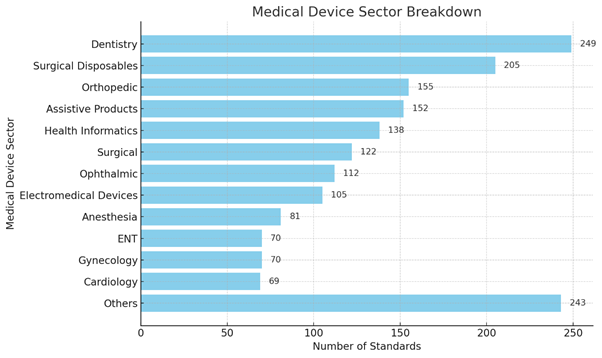
Output image

BIS has published over 1,700 standards for the medical sector, covering specialities such as cardiology, neurology, orthopaedics, ophthalmology, and more. Of these, around 1,200 standards specifically focus on medical devices critical to healthcare, including:

  • Life-saving devices: Cardiac pacemakers, heart valves, ventilators, and haemodialysis machines.
  • Advanced diagnostic tools: X-ray machines, CT scanners, MRI systems, and blood glucose monitors.
  • Assistive technology: Hearing aids, wheelchairs, Jaipur Foot, and tactile pathways for visually impaired individuals.

BIS standards in this sector ensure that Indian medical devices are safe, effective, and globally competitive. These efforts build trust among healthcare providers, consumers, and international stakeholders while solidifying India’s reputation as a leader in healthcare innovation.

Key Standards for Medical Devices:

Some of the key Indian Standards developed by BIS include:

  1. Cardiac Pacemakers: IS 13450 (Part 2/Sec 31): 2021
  2. Heart Valves: IS 17840
  3. Hip and Knee Implants: IS 12375
  4. Ventilators: IS 13450 (Part 2/Sec 12): 2023
  5. Infant Incubators and Radiant Warmers: IS 13450 (Part 2/Sec 19): 2023 for incubators and IS 13450 (Part 2/Sec 21): 2023 for radiant warmers
  6. Haemodialysis Machines: IS 13450 (Part 2/Sec 16) : 2019
  7. Infusion Pumps: IS 13450 (Part 2/Sec 24): 2019
  8. Advanced Diagnostic Tools:
    • X-ray and CT Machines: IS 7620 (Part 1) : 1986
    • MRI Systems: IS 13450 (Part 2/Sec 33) : 2018
    • Ultrasound Devices: IS 13450 (Part 2/Sec 37): 2019
    • ECG: Covered under IS 13450 (Part 2/Sec 25): 2018
  9. Monitoring Devices:
    • Blood Pressure Monitors: IS 13450 (Part 2/Sec 34): 2019
    • Blood Glucose Monitors: IS/ISO 15197: 2013
    • Pulse Oximeters: IS/ISO 80601-2-61: 2017

***

Global Cooperative Conference 2024 at Bharat Mandapam in New Delhi

Daily writing prompt
What is one thing you would change about yourself?

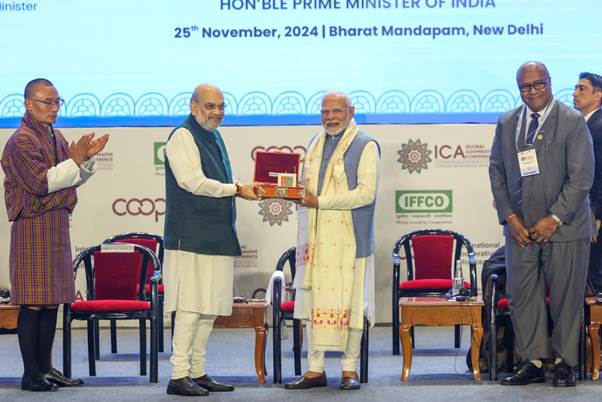
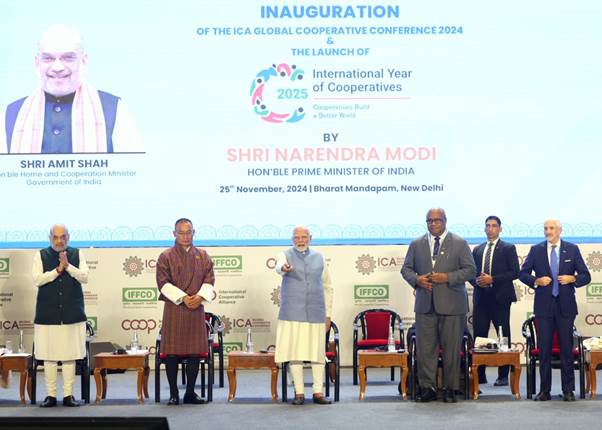
Prime Minister Shri Narendra Modi inaugurated the Global Cooperative Conference 2024 at Bharat Mandapam in New Delhi. Prime Minister Shri Narendra Modi also launched the United Nations’ International Year of Cooperatives 2025 and released a commemorative postal stamp. On this occasion, Union Home Minister and Minister of Cooperation Shri Amit Shah, the Prime Minister of Bhutan, the Deputy Prime Minister of Fiji, the President of International Cooperative Alliance (ICA), the Secretary of the Ministry of Cooperation, and several other dignitaries were present.

1.JPG

On this occasion, Union Home Minister and Minister of Cooperation Shri Amit Shah said in his address that the United Nations’ decision to observe 2025 as the International Year of Cooperatives is a timely step and will prove to be a blessing for millions of poor people and farmers worldwide. He added that the inauguration of the International Year of Cooperatives-2025 by Prime Minister Modi today and the hosting of the International Cooperative Conference of the ICA in India is a welcome step.

Shri Amit Shah said that Prime Minister Shri Narendra Modi three years ago gave the clarion call of “Sahkar Se Samriddhi” which reflects the essence of theme of this conference, which paved the way for the prosperity of millions of villages, women, and farmers. He said that in previous 3 years, many new activities have taken place in the cooperative sector of India, and after 75 years of independence, India’s cooperative movement has experienced a revival, bringing with it a new zeal.

Union Home Minister and Minister of Cooperation said that in next 3 years, through 2 lakh new Primary Agricultural Credit Societies (PACS), there will not be a single village panchayat in India without a cooperative society. He said that many steps have also been taken to make PACS modern, tech-enabled and economically-viable. He said that through 3 new cooperative bodies formed at the national level, the farmers of India will be able to increase their access to the domestic as well as global market. He said that National Cooperative Exports Limited (NCEL),  National Cooperative Organics Limited (NCOL) and Bharatiya Beej Sahakari Samiti Limited (BBSSL) will not only increase the participation of farmers in world trade in the coming days, but will also work to inspire cooperatives all over the World as to how a small farmer can reach all the markets of the World. Shri Shah said that Indian Farmers Fertiliser Cooperative (IFFCO), Krishak Bharti Cooperative (KRIBHCO) and Amul have set examples in the field of cooperatives all over the world and similarly these three cooperatives will also guide the people working in the cooperative sectors of the World.

2.jpeg

Shri Amit Shah said that after the formation of the Ministry of Cooperation three years ago, the entire legal framework of cooperatives has been strengthened, the White Revolution 2.0 and the Blue Revolution have also begun, in which the role of cooperatives is very important. He said that under the leadership of Prime Minister Modi, comprehensive changes have taken place in the last 3 years for the overall development of cooperatives. Shri Shah said that in the coming days, we are also going to build a cooperative university, through which trained and tech-enabled human resources will be created. In the “International Year of Cooperatives,” the Modi government will usher in new dimensions to India’s cooperative movement by introducing a new cooperative policy.

3.JPG

Union Home Minister and Minister of Cooperation said that in order to expand the reach of cooperatives, the Government of India is committed to connecting every village and farmer with the cooperative movement. He added that numerous efforts have been made to explore new areas and extend the scope of cooperatives.

Shri Shah stated that under the guidance of Prime Minister Modi, significant work has been done in the past three years to extend the reach of cooperatives to every individual and sector. He emphasized that the cooperative movement has opened several avenues for the empowerment of villages, farmers, women, and the underprivileged. Through this movement, the goal of “Sahkar se Samriddhi” envisioned by Prime Minister Modi, can be achieved in the coming times. He also said that the International Year of Cooperatives, inaugurated today by Prime Minister Shri Narendra Modi, will pave the way for the empowerment of millions of poor people, farmers, and women worldwide, enabling them to live with dignity and respect.

***

CREDAI to formalise its 14,000 members, says social security of labour crucial to real estate growth

Daily writing prompt
What is one thing you would change about yourself?

The real estate sector should look at a greater formalisation that will help the industry grow faster. This was stated by Union Minister of Commerce & Industry, Shri Piyush Goyal during his keynote address at the 25th Foundation Day of CREDAI (Confederation of Real Estate Developers’ Associations of India) in New Delhi today. He further urged the industry to engage the labour in formal employment, giving them the social security benefits of insurance (ESIC) and provident fund (EPFO). This will help in the number of employees getting reflected in annual reports and in national statistics. If social security, healthcare and post-retirement benefits are provided then the employees will align with the industry’s goals of enhancing their quality of work leading to better productivity and greater profits, he said. 

Photo by Alex Staudinger on Pexels.com

Commerce and Industry Minister also appealed to CREDAI to expedite formalisation of its 14,000 members. If everyone who works for CREDAI will receive salary through digital payment and if it is ensured that employees working in the ecosystem is a part of the national effort to meet the needs of the people, CREDAI’s contribution to employment will get recognised and rewarded, he said.

In his address, Shri Goyal raised the issue of environment pollution and urged CREDAI to consider setting up a team to study ways to adopt better construction techniques in the metropolitan cities of India. He further suggested the industry body to  take this up as a mission and report to the Government steps being taken in this direction. Adopting steel and precast fabrication will speed up construction benefitting the entire ecosystem. This can help in reducing AQI and pollution levels, he said.

Shri Goyal lauded CREDAI for its contribution to making India a powerhouse and also in its  journey towards Viksit Bharat and added that the industry has not only worked with brick and mortar to collectively prepare the nation for the future but has worked to provide opportunities and aspirations to the nation. Real estate contributes to the economy and jobs, he said.

Emphasising the difficulty citizens faced earlier in owning homes, Shri Goyal pointed out that a concerted effort has been undertaken in the last ten years to clean up processes, promote Ease of Doing Business and encourage businesses to expand. He also noted that bringing The Real Estate (Regulation and Development) Act (RERA) into effect in 2017 was a challenge, however, the regulations have enabled citizens to acquire homes without dispute. The Minister further highlighted CREDAI’s commitment to rectify the processes and pointed out that provisions like Goods and Services Tax (GST), RERA Act and efforts to eliminate irregular transactions have resulted in an organised growth of the real estate sector.

Hailing Prime Minister Shri Narendra Modi’s efforts to clean up the banking system, Shri Goyal noted that non-performing assets (NPAs) have decreased significantly and banks have strong credit portfolios with strong balance sheets, maintaining healthy profit each year. It shows how important the banking sector is for the real estate sector and for the economy to gain momentum in meeting the aspirations of the nation. As income levels rise, more people will take possession of their homes as they will be able to afford cheaper loans at  lower interest rates, he said.

Shri Goyal also spoke about affordable rental housing and announced that the Government would be engaging in discussions with the industry body to find ways to provide affordable rental to the citizens, besides working on the rehabilitations programme for slum dwellers. He said that affordable rental housing if made available would be able to stop the proliferation of slums in cities. Shri Goyal pointed out that aspects like parking lots and spaces for entertainment families should be looked into when planning layouts. He added that we need to recycle construction waste so that we move towards a circular economy as to be a net zero nation we have to begin from net zero localities and societies. 

Encouraging the industry leaders and participants to look for real estate opportunities abroad, Shri Goyal said that expanding the real estate footprint outside India will add to India’s exports and infrastructure services. He also urged the industry to expand its sector and the 250+ associate industries to make real estate a $1 trillion contributor to the nation.

***

Research Paper Editing Services

Daily writing prompt
Are you more of a night or morning person?

Research paper editing services offered by Eduindex.org are designed to assist students, researchers, and academic professionals in enhancing the quality of their research papers, dissertations, and academic articles. Their services focus on improving clarity, grammar, structure, and overall coherence of academic writing, helping to ensure that the final document is polished and ready for submission to journals, conferences, or academic institutions.

Eduindex.org offers a range of editing services, including:

  1. Grammar and Punctuation Check: Ensuring that the research paper adheres to proper grammar and punctuation rules, enhancing readability and professionalism.
  2. Structure and Organization: Reviewing the overall structure of the paper, ensuring logical flow, appropriate headings, and subheadings for easy comprehension.
  3. Clarity and Conciseness: Editing the content to make it clearer and more concise, removing redundant phrases and unnecessary jargon.
  4. Formatting: Ensuring the paper is formatted according to the required citation style (APA, MLA, Chicago, etc.) and meets specific institutional or publication guidelines.
  5. Referencing and Citations: Checking references and citations to ensure they are correctly formatted and consistent with the required style.
  6. Plagiarism Check: Providing a thorough plagiarism check to ensure the originality of the research paper.

How to Contact Eduindex.org for Research Paper Editing:

To make use of their professional editing services, you can reach out to the team at Eduindex.org by sending an email to editor@eduindex.org. You can share your research paper and any specific requirements or concerns you have regarding the editing process. The editorial team will respond with a tailored solution and discuss the next steps, including pricing and deadlines.

By availing of their editing services, researchers and students can ensure that their academic work is of the highest quality, increasing the chances of successful publication or submission.

Research Publication Free offer

Eduindex News has announced a unique opportunity for researchers and academicians. If you invite 100 people to join their official WhatsApp channel, available at Eduindex News Channel, you will be eligible for one free research paper publication in the International Journal of Research (IJR).

IJR is a reputed journal indexed and recognized for its quality research publications. This offer provides an excellent chance to share your research without incurring publication costs.

For further details or assistance, you can reach out to the editorial team at Editor@edupub.org or visit ijrjournal.com.

Collaborator.pro Platform to Streamline Digital Marketing, SEO, and public relations

Key Features and Benefits:

  1. Guest Posting and Backlink Building:
    • Advertisers: Purchase guest posts on niche-specific websites to improve SEO metrics, enhance domain authority (DA), and drive targeted traffic. Collaborator offers customizable filters to help select the most relevant sites based on factors like region, topic, and price.
    • Publishers: Monetize their websites by posting articles with backlinks or selling sponsored posts. Publishers retain control over the content they accept, ensuring alignment with their audience.
  2. Guest Posting and Backlink Building:
    • Advertisers: Purchase guest posts on niche-specific websites to improve SEO metrics, enhance domain authority (DA), and drive targeted traffic. Collaborator offers customizable filters to help select the most relevant sites based on factors like region, topic, and price.
    • Publishers: Monetize their websites by posting articles with backlinks or selling sponsored posts. Publishers retain control over the content they accept, ensuring alignment with their audience.
  3. Monetization Opportunities:
    • Website and Telegram channel owners can earn by offering backlink placements or advertisements. Collaborator ensures transparency and security in transactions, with the ability to set custom prices and communicate directly with clients.
  4. User-Friendly Interface:
    • The platform simplifies the guest posting process, offering tools for seamless collaboration between advertisers and publishers, from selecting sites to finalizing agreements.
  5. Global Reach:
    • Initially focused on CIS countries, Collaborator.pro has expanded its services globally, providing access to thousands of vetted online platforms and Telegram channels worldwide.
  6. Safe and Transparent Transactions:
    • The platform emphasizes secure and ethical link-building practices, avoiding the risks of penalties from search engines by focusing on high-quality, natural links.
  7. Community and Feedback:
    • Users can provide feedback and reviews, fostering trust and accountability within the Collaborator ecosystem.

Use Cases:

  • For Advertisers: Boost SEO rankings, build brand authority, and increase visibility through strategic guest posting and digital PR campaigns.
  • For Publishers: Generate revenue by selling links or hosting sponsored posts without compromising site quality or reputation.
  • For Agencies: Provide comprehensive SEO services, including guest posting and link promotion, to clients.

Collaborator.pro is a versatile tool for those aiming to enhance their digital presence and SEO strategies efficiently while maintaining quality and relevance in link-building efforts.

Collaborator.pro is a dynamic platform designed to streamline digital marketing, SEO, and public relations efforts through high-quality guest posting and link-building opportunities. It serves as a digital PR marketplace that connects advertisers, publishers, and SEO specialists, enabling effective content placement, monetization, and brand promotion.

Key Features and Benefits:

  1. Guest Posting and Backlink Building:
    • Advertisers: Purchase guest posts on niche-specific websites to improve SEO metrics, enhance domain authority (DA), and drive targeted traffic. Collaborator offers customizable filters to help select the most relevant sites based on factors like region, topic, and price.
    • Publishers: Monetize their websites by posting articles with backlinks or selling sponsored posts. Publishers retain control over the content they accept, ensuring alignment with their audience.
  2. Monetization Opportunities:
    • Website and Telegram channel owners can earn by offering backlink placements or advertisements. Collaborator ensures transparency and security in transactions, with the ability to set custom prices and communicate directly with clients.
  3. User-Friendly Interface:
    • The platform simplifies the guest posting process, offering tools for seamless collaboration between advertisers and publishers, from selecting sites to finalizing agreements.
  4. Global Reach:
    • Initially focused on CIS countries, Collaborator.pro has expanded its services globally, providing access to thousands of vetted online platforms and Telegram channels worldwide.
  5. Safe and Transparent Transactions:
    • The platform emphasizes secure and ethical link-building practices, avoiding the risks of penalties from search engines by focusing on high-quality, natural links.
  6. Community and Feedback:
    • Users can provide feedback and reviews, fostering trust and accountability within the Collaborator ecosystem.

Use Cases:

  • For Advertisers: Boost SEO rankings, build brand authority, and increase visibility through strategic guest posting and digital PR campaigns.
  • For Publishers: Generate revenue by selling links or hosting sponsored posts without compromising site quality or reputation.
  • For Agencies: Provide comprehensive SEO services, including guest posting and link promotion, to clients.

Collaborator.pro is a versatile tool for those aiming to enhance their digital presence and SEO strategies efficiently while maintaining quality and relevance in link-building efforts.

Loganix: A Comprehensive Overview

Daily writing prompt
What are your feelings about eating meat?

Loganix is a prominent digital marketing agency that specializes in providing a wide range of SEO (Search Engine Optimization) and link-building services tailored to help businesses improve their online visibility. Since its inception in 2010, Loganix has established itself as a trusted name in the digital marketing industry, catering to agencies, businesses, and individuals looking for high-quality, scalable, and results-driven solutions.

Key Services Provided by Loganix

  1. Link Building Services
    Loganix offers premium link-building services that prioritize quality over quantity. These include:
    • Authority Links: Secure backlinks from high-authority websites, enhancing domain credibility.
    • Guest Posting: Placement of well-researched, valuable articles on reputable websites, driving referral traffic and boosting SEO.
    • Niche Edits: Adding contextual links to existing content on relevant websites, ensuring seamless integration and relevance.
  2. Local SEO Services
    Loganix provides robust local SEO strategies to help businesses dominate local search results. This includes:
    • Citation Building and Cleanup: Creating and maintaining accurate business listings across directories and correcting outdated or duplicate information.
    • Google Business Profile Optimization: Enhancing Google My Business profiles for better visibility in local map packs and search results.
    • Local Link Building: Targeting region-specific backlinks to increase local relevancy and authority.
  3. SEO Audits and Content Marketing
    Loganix helps businesses identify gaps in their SEO strategies through detailed audits. They also specialize in content creation and optimization to improve rankings and engagement.
    • SEO Audits: Comprehensive analysis of a website’s on-page, off-page, and technical SEO performance.
    • Content Creation: Delivering high-quality, SEO-optimized content tailored to target keywords and audience intent.
  4. White Label Services for Agencies
    Loganix serves as a white-label partner for digital marketing agencies, enabling them to offer top-tier SEO and link-building services under their branding. This allows agencies to scale their offerings without overburdening internal resources.

What Sets Loganix Apart?

  1. Commitment to Quality
    Loganix emphasizes building relationships with reputable sites and delivering high-value links, ensuring long-term SEO gains rather than quick, unsustainable fixes.
  2. Scalability and Customization
    The agency provides scalable solutions, making it a preferred choice for small businesses and large enterprises alike. Services are customizable to fit the specific needs and goals of each client.
  3. Transparent Reporting
    Loganix ensures complete transparency in its processes, providing clients with detailed reports outlining the progress and results of campaigns.
  4. Experienced Team
    With over a decade of experience, Loganix’s team is composed of seasoned SEO experts, content creators, and digital marketers dedicated to delivering measurable results.
  5. White-Hat Practices
    The agency strictly adheres to ethical SEO practices, ensuring compliance with Google’s guidelines and protecting clients from penalties.

Why Choose Loganix?

  • Proven Track Record: Loganix has worked with businesses across various industries, demonstrating consistent success in improving search rankings and online presence.
  • Tailored Strategies: Every business is unique, and Loganix crafts strategies that align with individual business objectives.
  • Cost-Effectiveness: Loganix delivers value for money by focusing on strategies that drive sustainable growth.

Industries Served

Loganix caters to a diverse range of industries, including:

  • E-commerce
  • Healthcare
  • Legal Services
  • Real Estate
  • Technology Startups
  • Digital Marketing Agencies

Conclusion

Loganix stands out as a reliable partner for businesses looking to enhance their digital footprint. With its focus on ethical practices, scalable solutions, and transparent processes, the agency has earned a strong reputation in the SEO and digital marketing space. Whether you’re a business owner seeking to dominate local search results or an agency looking to expand your service offerings, Loganix is well-equipped to meet your needs and deliver tangible results.

For more information, visit Loganix’s official website.

Two-day knowledge sharing workshop under STARS

The Department of School Education & Literacy (DoSE&L), Ministry of Education, hosted a two-day Strengthening Teaching-Learning and Results for States (STARS) knowledge sharing workshop in Bhopal, Madhya Pradesh, from 30th September to 1st October 2024. The workshop, focusing on School-to-Work Transition and Strengthening the Assessment System, was inaugurated by Shri Uday Pratap Singh, Minister of Transport and School Education, Madhya Pradesh. The workshop emphasized the Ministry of Education’s commitment to fostering a robust educational ecosystem that prepares students for the challenges of the future workforce.

Shri Singh during his inaugural speech said that the National Education Policy 2020 emphasises on the overall development of children. He also mentioned that the STARS project will play a crucial role in the transformation of the education system.

Day 1: School-to-Work Transition

Shri Sanjay Kumar, Secretary, DoSE&L, in the inaugural session, provided essential context for the workshop, emphasizing the importance of bridging the gap between education and employment. Shri Vipin Kumar, Additional Secretary, DoSE&L, welcomed all the participants in the workshop providing great scope for learning. Dr. Sanjay Goyal, Secretary, Department of Education, Madhya Pradesh, highlighted the importance of this workshop and cross-learning which can happen between the states through such platforms.

The first panel discussion, moderated by Shri Vipin Kumar, focused on the role of policy frameworks such as National Education Policy 2020, National Curriculum Framework (NCF), and National Credit Framework (NCrF) in school-to-work transitions. Discussions highlighted the integration of skill education into school curricula, the role of the NCF in fostering multidisciplinary learning and adaptability, and the importance of continuous evaluation and updating of curricula to match industry standards. The panel also addressed the promotion of real-world exposure through internships and apprenticeships under NEP and NCrF, the flexibility of learning pathways through NCrF, and the role of policies in bridging the gap between academia and industry.

Prof. Dinesh Prasad Saklani, Director, NCERT, in his presentation, said that departments need to work in integration and not in silos, with a common vision of strengthening the education system for our future generations. He also highlighted the need to align the curriculum with the industry demands to make school-to-work transition more seamless for young learners.

Shri Biswajit Saha, Director, Skills, CBSE, talked about strengthening 21st century skills across CBSE schools and moderated a panel discussion on the challenges and potential solutions in integrating skill hubs into the educational landscape, sharing experiences and best practices, and discussing strategies for effective implementation within schools and communities.

A panel discussion on psychometric analysis and career counselling in skill education was moderated by Dr. Usha Titus, Managing Director, Additional Skill Acquisition Programme, Kerala. The discussion centred on assessing the effectiveness of career counselling programs using data from psychometric assessments, evolving trends in career counselling, and the challenges faced in preparing students for the future workforce.

Dr. Supriya A.R., SPD of Kerala, discussed the partnerships with industry and work-based learning opportunities, leading to a panel discussion moderated by Shri Rajesh Sharma, SPD, Himachal Pradesh. The panel discussed building effective partnerships between schools and industry bodies, collaborating on programs, internships, and job placement efforts, and identifying best practices to enhance work-based learning.

Day 2: Strengthening Assessment System

On the second day, in his opening remarks, Shri Vipin Kumar, Additional Secretary of DoSE&L, discussed  the current effectiveness and need for improvement in assessment models. Smt. Idzes Angmo Kundan, Principal Secretary, Maharashtra, delivered an insightful presentation on Psychometric Analysis and Career Counselling in Skill Education, where she highlighted the 3 P approach to career choice, i.e., Personal interest, Parental approach, and Possible Opportunities.

Shri Dinesh Singh Kushwaha, Director, Public Instructions, Madhya Pradesh, made a compelling presentation on enhancing student outcome through strengthening assessment systems for future education. Dr. Jonas Bertling, Director of Educational Testing Service (ETS), discussed innovations in educational assessment. Dr. Maj. Vishal Sharma, Secretary, Himachal Pradesh Board for Secondary Education, highlighted innovative assessment practices that empower students for future education.

A presentation on VSK implementation in the state of Chhattisgarh was presented by Shri Pardeshi Siddharth Komal, Principal Secretary, Chhattisgarh. He moderated a panel discussion on VSK Modes and Integrating Assessment Outcomes for Informed Decision-Making. The panel provided insights on objectives and components of VSK including data collection and analysis, and strategies for integrating assessment outcomes with learning objectives.

Shri Ashish Modi, Director, Secondary Education, Rajasthan, made a compelling presentation on the importance of an assessment cell. The presentation was followed by a panel discussion on the theme of Strengthening Assessment Cells in states, which was moderated by Dr. M.K. Shanmuga Sundaram, Principal Secretary – Basic Education, Uttar Pradesh. The panel discussed the role of assessment cells in enhancing educational effectiveness, innovative practices adopted by these cells and the challenges faced along with strategies for mitigation.

The workshop concluded with key takeaways summarized by Shri Vipin Kumar. He underlined strategies for enhancing assessment systems and school-to-work transitions.

The event was graced by Shri Nilambuj Sharan, Senior Economic Advisor, Ministry of Skill Development and Entrepreneurship, Government of India; Shri Deepak Paliwal, Joint Director, PSSCIVE; Col. Santosh Kumar, Director, NCVET; Shri Narayanan Ramaswamy, National Head (Education and Skilling), KPMG; Smt. R. Vimala, SPD, Maharashtra; Smt. Ananya Das, SPD of Odisha; Shri Somit Shrivastava, Joint Commissioner (Per), Kendriya Vidhyalaya Sangathan; Shri Nitin Kapoor, CEO and Head, NSDC Academy; Shri Marvell Doss, Regional Director, Regional Directorate of Skill Development and Entrepreneurship, Bhopal; Shri Vibhash Trivedi, General Manager, Strategy and Operations, Skill Council for Green Jobs; Shri Ambrish Datta, Founder & CEO of Skillsvarsity; Shri Rohit Tripathi, Additional Project Director, Samagra Shiksha, Uttar Pradesh; Shri Deepak Rai, State Assistant Director – OSEPA, Odisha; Shri Manoj Padhi, Director SCERT, Odisha and Shri Rahul Rekhawar, Director, SCERT, Maharashtra.

*****

Observance of International Day of Older Persons

On 14th December 1990, the United Nations General Assembly designated October 1st as the International Day of Older Persons. The International Day of Older Persons was observed for the first time on October 1, 1991. According to United Nations, with the life expectancy at birth now exceeding 75 years in half of the world’s countries, 25 years longer than in 1950, by 2030, older persons are projected to outnumber youth globally, with this increase most rapid in developing countries. The observance of this day provides an opportunity to acknowledge the contribution, wisdom, dignity and needs of our senior citizens and to rededicate our efforts to ensure their well-being.

The Department of Social Justice and Empowerment along with  Department of School Education& Literacy is proposing a range of activities for the entire month of October, 2024 to help inculcate values of respect and gratitude towards senior citizens among students from an early age. These initiatives will foster respect and care for senior citizen among youngsters. This will lead to inter-generational bonding and empathy. In this regard, the following key initiatives are proposed to be undertaken viz:

  • Educational Institutions may host annual Grandparents’ Day with activities like storytelling and games to connect generations. They can also hold pledge-taking ceremonies for students, teachers, and staff to pledge respect for senior citizens, with these pledges displayed prominently in the institutions as a reminder.
  • As part of morning assemblies or language classes, students may be encouraged to recite poems or shlokas that highlight the importance of respecting elders. These can be drawn from lndia’s rich cultural heritage, resonating deeply with students.
  • Educational Institutions may introduce regular sessions where students and senior citizens from the community interact through various activities, such as sharing stories, discussing history, or learning about traditional crafts. This will help students develop an appreciation for the experiences and knowledge that senior citizens possess.
  • Encouraging students to engage in community service with senior citizens fosters inter-generational solidarity, mutual respect, and understanding. Educational Institutions may collaborate with local communities to create mentorship programs where seniors guide students in arts, culture, and vocational skills. This initiative benefits both generations by giving students valuable insights and providing seniors with purpose and connection.

For the month-long celebration of the International Day of Older Persons starting from 01.10.2024, the above initiatives have been shared with the States/UTs and Educational Institutions to instil the values of care and concern for the senior citizens among the youth as well as to involve the community in addressing to the issues and challenges faced by the senior citizens.

*****

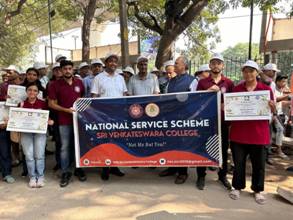
Ministry of Education in collaboration with NSS organises Swachhata Campaign under theme “Swabhav Swachhata, Sanskaar Swachhata ”at Sri Venkateswara College, University of Delhi

Shri K. Sanjay Murthy, Secretary, Department of Higher Education (DoHE), Ministry of Education, participated in a Swachhata Campaign under the theme of Swabhav Swachhata, Sanskaar Swachhata commemorating the birth anniversary of Mahatma Gandhi and Shri Lal Bahadur Shastri at the Sri Venkateswara College (SVC), University of Delhi, today. The Ministry of Education organised the event in collaboration with the National Service Scheme (NSS).

Additional Secretary, DoHE, Shri Sunil Kumar Barnwal; Joint Secretary (DoHE) Smt. Neeta Prasad; Joint Secretary (DoHE), Shri Ekram Rizvi; Joint Secretary (DoHE), Smt. Rina Sonowal Kouli; Shri Chaitanya Prasad, officials of the Ministry along with Prof. V Ravi, Principal, SVC; Prof. K Chandramani, Vice-Principal, SVC and other faculty members were also present at the event.

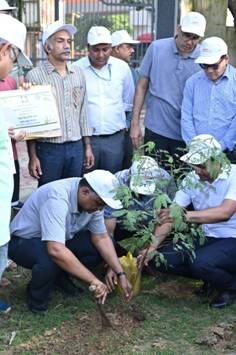
Shri K. Sanjay Murthy and other dignitaries planted five trees under the ‘Ek Ped Maa Ke Naam’ Campaign at the college premises. They also participated in cleaning a black spot/cleanliness target unit (CTU) near the Satyaniketan bus stand near the college. NSS members, NSS volunteers of the college, RWA representatives, social workers and MCD staff joined them in thoroughly cleaning the place.

The Secretary urged the locals to maintain the cleanliness of the place in future and also ensured the help of the College in this regard if needed. He also motivated the students to participate in the cleanliness drive in the future. He also answered their queries regarding the National Education Policy 2020. The students shared their experiences and teaching while working in the NSS. 

*****

SS/AK

Ministry of Education organizes workshop on ‘Volunteering for Ullas’

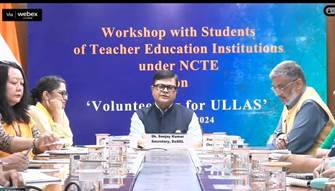
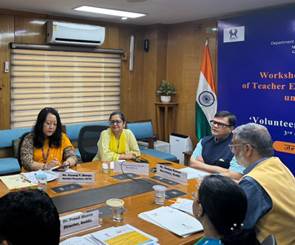
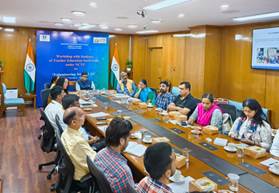
Shri Sanjay Kumar, Secretary, Department of School Education and Literacy (DoSE&L), Ministry of Education presided over a virtual workshop with students of Teacher Education Institutions (TEIs) under the NCTE on ‘Volunteering for Ullas’ today. The workshop aimed at fostering Youth Volunteerism from TEIs to achieve full literacy across India as enshrined in the NEP 2020. Smt. Archana Sharma Awasthi, Joint Secretary, DoSE&L; Prof. Pankaj Arora, Chairperson, NCTE; Ms. Kesang Y. Sherpa, Member Secretary, NCTE; Smt. Preeti Meena, Director, DoSE&L, and other officials were present at the meeting.

While addressing the students and teachers from TEIs, Shri Sanjay Kumar emphasized coming together to pay special attention to promoting literacy across the country in all sections of society. He exhorted that illiterate people in our society should be given the gift of literacy. Teacher Educators and administrators should support and guide the students at their institutes in registering on the ULLAS App, he added.

IMG-20241003-WA0040.jpg

Smt. Archana Sharma Awasthi presented on the agenda of the workshop of ‘ULLAS: Nav Bharat Literacy Programme’ and encouraged the students and teachers to join the program for community service and engagement.

IMG-20241003-WA0080.jpg

Prof. Pankaj Arora highlighted that the National Council for Teacher Education is fully committed to realizing the dream of Viksit Bharat by achieving the goal of ‘Jan Jan Saakshar’.

Ms. Kesang Y. Sherpa presented on the Role of Teacher Education Institutions in ULLAS. While presenting the role of NCTE in the context of the implementation of ULLAS, she highlighted that for the academic session 2023-24, NCTE had directed all Teacher Education Institutions to connect 8-10 students with the ULLAS initiative and motivate them to become volunteer teachers and contribute to nation building cause. The students can earn 2 Credits for Community Engagement & Service for active participation in activities related to ULLAS-New India Literacy Programme (NILP), NSS & Other community activities, she added.

udftr2.jpg

Smt. Preeti Meena gave a detailed presentation on Ullas which also covered the implementation steps of Ullas in TEIs.

More than 18,000 TEIs, faculty and student-teachers were inducted during the session.

*****

Ministry of Education organises workshops on NMMSS in Uttar Pradesh

The Department of School Education and Literacy (DoSEL), Ministry of Education, organized a workshop/training for Institute Nodal Officers (INOs) and Heads of Institutes (HoIs) of Prayagraj and Varanasi districts of Uttar Pradesh, along with a state-level workshop for District Nodal Officers (DNOs) of the State in Lucknow under the National Means-cum-Merit Scholarship Scheme (NMMSS). This initiative aimed to facilitate the completion of the application and verification process on the National Scholarship Portal (NSP) which commenced its activity with effect from 30.06.2024 for the project year 2024-25.

A District-level Workshop for the Institute Nodal Officers (INOs) of NMMSS, Prayagraj was conducted on 10 September 2024 at the Bureau of Psychology, Prayagraj, which was presided over by Smt. Hema Malini SK Deepak, Under Secretary, DoSEL. The State Nodal Officer of NMMSS, Smt. Usha Chandra, Director, Bureau of Psychology, Government of Uttar Pradesh and the District Nodal Officer (Prayagraj) of NMMSS joined the Workshop in physical mode. The INOs of the District participated in the meeting in virtual mode.

The Workshop, a hand-holding session, was held to review the status of fresh and renewal NMMSS applications for the year 2024-25 and expedite the registration and verification process on NSP and troubleshoot the technical queries arising in the course of registration. A District-level Workshop with the INOs was also conducted on 12 September 2024 at Government Queens’ Inter College in Lahurabir, Varanasi. The District Inspector of Schools, the State Nodal Officer, DNO, Varanasi, and 137 INOs participated in the workshop.

The Ministry also conducted a State-level Workshop with the District Nodal Officers (DNOs) of NMMSS on 20 September 2024 in Lucknow under the Chairmanship of Smt. Sreekala P Venugopal, Deputy Secretary, DoSEL. Shri Shailesh Kumar, Joint Director, NSP (NIC) and DNOs of UP were present at the workshop. It was organized to expedite the registration and verification process on the portal and to handhold officials in operating on the NSP hassle-free. UP has a scholarship quota of 15143 in NMMSS.

NMMSS is a Central Sector Scheme of DoSEL boarded on the National Scholarship Portal (NSP) – a one-stop platform for scholarship schemes given to students. NMMSS scholarships are disbursed directly into the bank accounts of selected students by DBT.

*****

Letter of Engagement between NCERT and Amazon

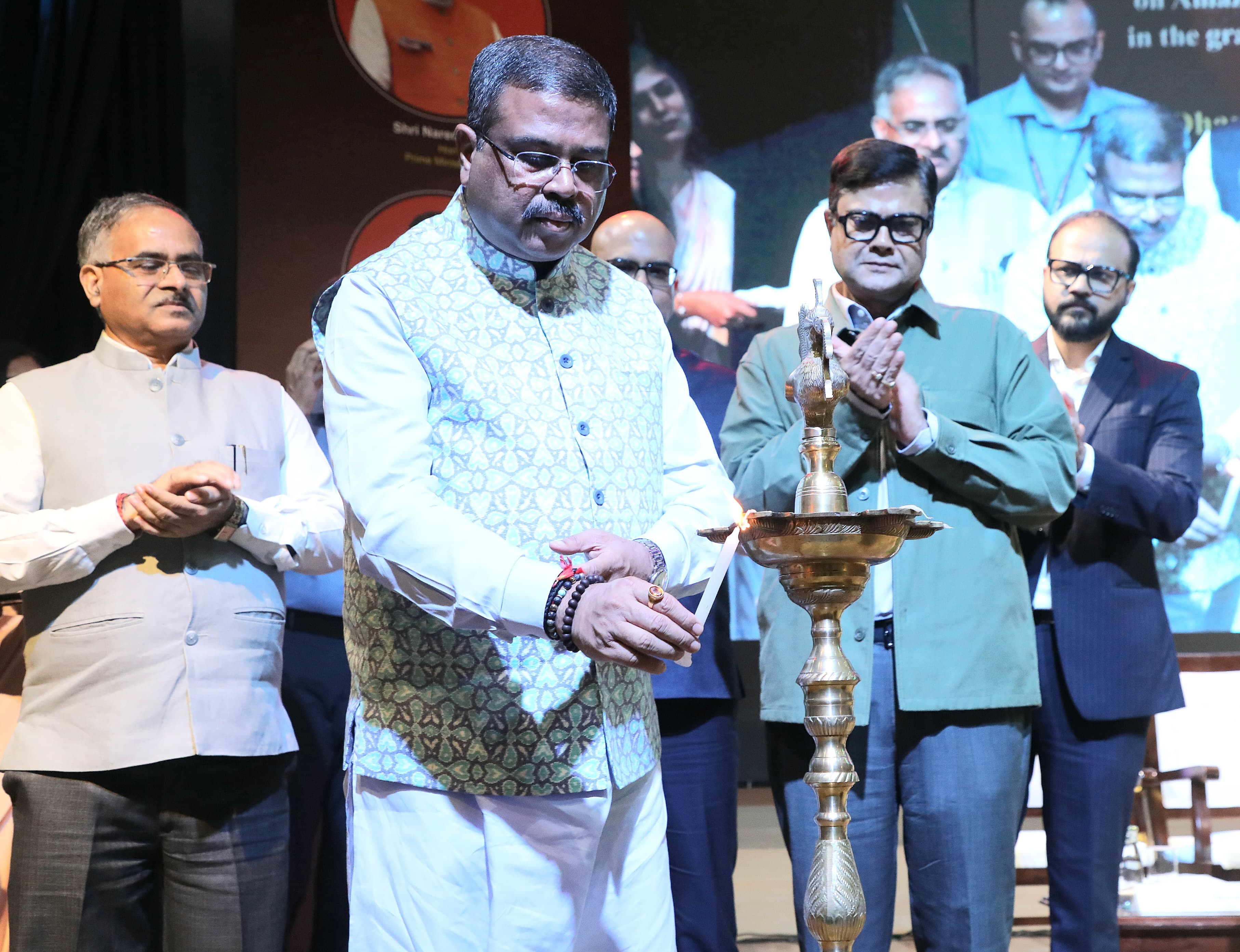
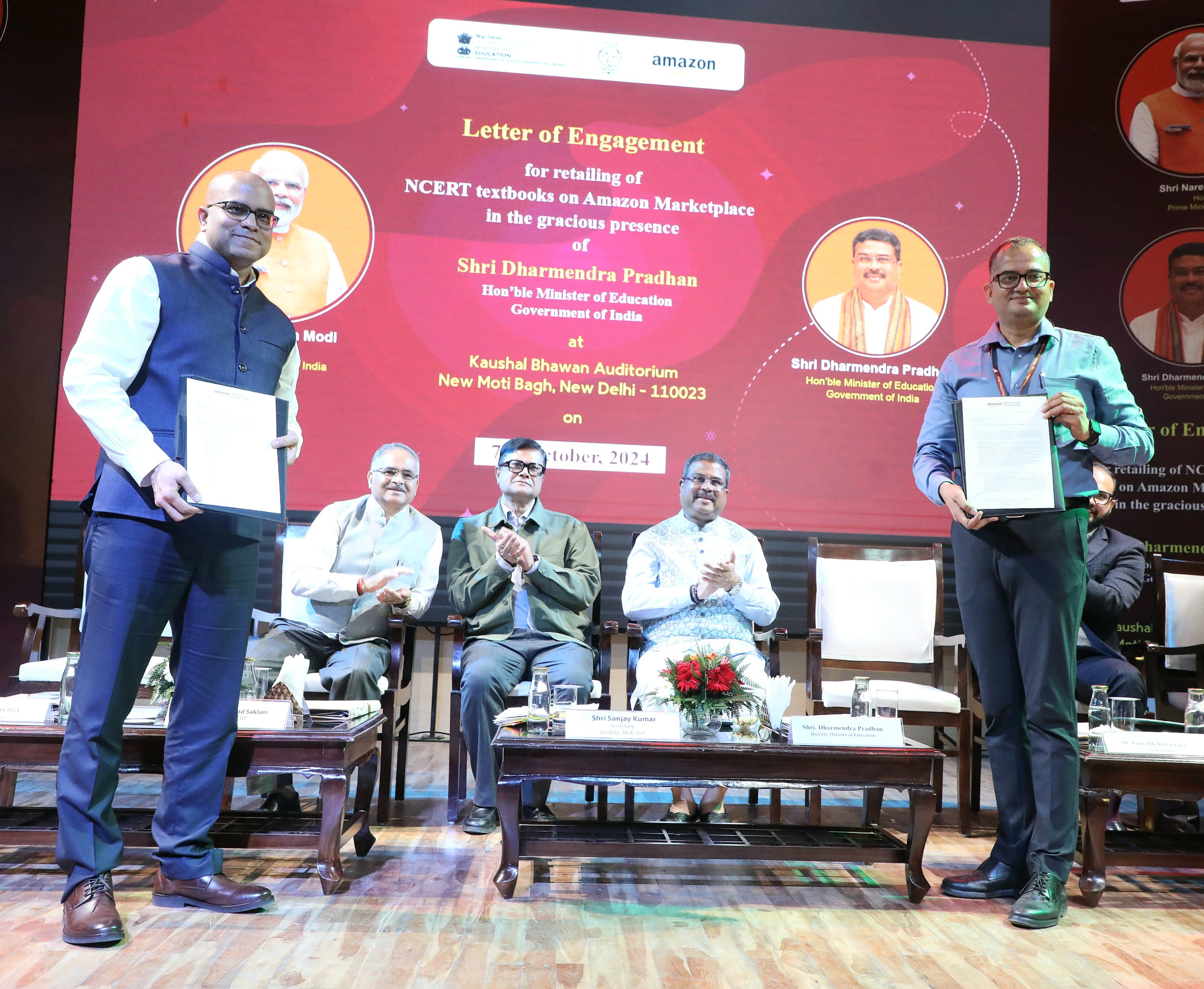
Union Minister for Education, Shri Dharmendra Pradhan, presided over the signing of the Letter of Engagement (LoE) today between NCERT and Amazon Seller Services Pvt Ltd. This is the first such tie-up, which will ensure access to original NCERT textbooks at the printed price on major e-commerce platforms. Secretary, Department of School Education and Literacy (DoSEL), Shri Sanjay Kumar; Joint Secretary, (DoSEL), Smt. Prachi Pandey; Director, NCERT, Prof. Dinesh Prasad Saklani; Vice President, Amazon, Shri Saurabh Shrivastava; Director, Public Policy, Amazon, Shri Aman Jain, other dignitaries and officials were also present at the event.

While addressing the audience, Shri Pradhan stated that today’s initiative will strengthen NEP2020’s vision of making education inclusive, accessible, and affordable. He added that with the increasing digital footprint across the country, this initiative will also support the Government’s vision of ‘ease of living.’ Shri Pradhan noted that NCERT has been shaping India’s education landscape by publishing textbooks since 1963, with a total of around 220 crore books and journals. He emphasized that NCERT is a major think tank for the country. Furthermore, he announced that these books will be made available across nearly 20,000 pin codes nationwide. He emphasized that these books should be available at MRP.

Shri Dharmendra Pradhan lauded NCERT’s partnership with Amazon calling it a step towards enhancing ease of living and accessibility to education. NCERT to triple-fold publication of books and publish 15 crore books for next academic session (2025-26), he added.

He also informed the audience that NCERT has been entrusted with the responsibility of developing 21st-century textbooks.

Stressing the importance of making learning joyful for the 300 million students of the Amrit Kaal, he urged the development of e-books that are interactive and AI-driven, featuring innovations like talking books. Expressing his gratitude to Prime Minister Shri Narendra Modi, he underscored the significance of books in all 23 languages, declaring that books will be the real soft power of India.

Highlighting the significance of textbooks in education, Shri Sanjay Kumar emphasized the need to strengthen the supply chain for these essential resources. He stressed that textbooks, which account for nearly 96% of the total volume of book sales in the country, should be made available through e-commerce platforms like Amazon to enhance accessibility for students.

NCERT textbooks of all grades shall be made available on the Amazon NCERT storefront (http://amazon.in/ncert), which was also launched today. The textbooks shall be retailed at a price not more than the rate printed on the textbooks. Only original NCERT textbooks shall be retailed on this platform, thereby helping curb the sale of pirated NCERT textbooks. Amazon will help NCERT monitor and take down unauthorized sellers who distribute counterfeit or overpriced books.

Through Amazon’s vast delivery network, students and schools, even in the most remote areas, will be able to purchase textbooks at the prescribed prices. This would address the challenges of supply gaps, delayed availability, and regional shortages of textbooks, ensuring equitable access to education.

This tie-up shall also enable NCERT to leverage customer reviews and feedback to improve the quality of its textbooks and other educational material. Moreover, anonymised sales and usage data will be shared with NCERT to facilitate informed decision-making regarding future print orders, distribution strategies, and selection of new distributors in States/districts where the demand for NCERT textbooks is more.

*****

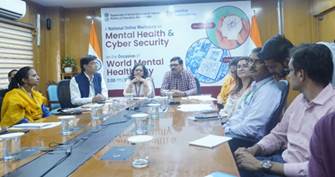
Workshop on Mental Health & Cyber Security on World Mental Health Day

The Department of School Education and Literacy (DoSEL), Ministry of Education, organized a national online workshop on Mental Health and Cyber Security for the engagement of youth on World Mental Health Day today. The workshop had two sessions on mental health by Dr. Rajesh Sagar, Professor (MD), Psychiatry Department at AIIMS Delhi and on cyber security by and Dr. Rashmi Sharma Yadav, DCP, Indian Cybercrime Coordination Centre, MHA. The workshop was broadcast live on YouTube, reaching over 20 lakh students and educators nationwide.

Shri Vipin Kumar, Additional Secretary, DoSEL, highlighted the importance of mental well-being and safe utilization of the internet among students. He emphasized the necessity of early intervention to mitigate the potential adverse effects of mental health challenges in today’s digital age.

Smt. Archana Sharma Awasthi, Joint Secretary, DoSEL, reinforced the commitment of the National Education Policy 2020 to prioritize student well-being. She highlighted the significance of mental health for both students and educators and exhorted everybody to attentively listen and follow the advice given by the experts to maintain good mental health and prevent themselves from being victims of cybercrime.

Dr. Rajesh Sagar provided valuable insights into prevalent mental health issues such as stress, anxiety, and depression. He emphasized that nearly 50% of mental health disorders emerge before the age of 14, advocating for early intervention. Dr. Sagar identified common stressors including academic pressure, parental conflicts, and bullying, and shared effective coping strategies, such as deep breathing and cognitive restructuring, to foster a happier childhood.

In her presentation, Dr. Rashmi Sharma Yadav highlighted the importance of cyber hygiene and security for children. She outlined preventive measures against cyberbullying, grooming, and fraudulent online gaming applications. She encouraged students to report cyber fraud through the helpline 1930 and @cyberdost, stressing the importance of responsible internet use, parental awareness, and safeguarding personal information. Both experts suggested that students should share any issues arising with their elders like parents and teachers.

The workshop engaged students from classes VI to XII from Navodaya Vidyalaya Samiti, Kendriya Vidyalaya Sangathan, Kasturba Gandhi Balika Vidyalayas, CBSE and state government schools across the country and was simultaneously presented in sign language, ensuring accessibility for all participants. The initiative received widespread appreciation from attendees, reflecting a collective commitment to fostering a safer and healthier educational environment.

*****