

I have followed Khan Sir’s journey closely, and I believe he is far more than just a popular teacher. From making education accessible and affordable for students from humble backgrounds to helping countless aspirants who could never afford expensive coaching institutes, his contribution has had a real impact on millions of lives. Over the years, he has also participated in various social welfare activities and has consistently remained connected to ordinary people.
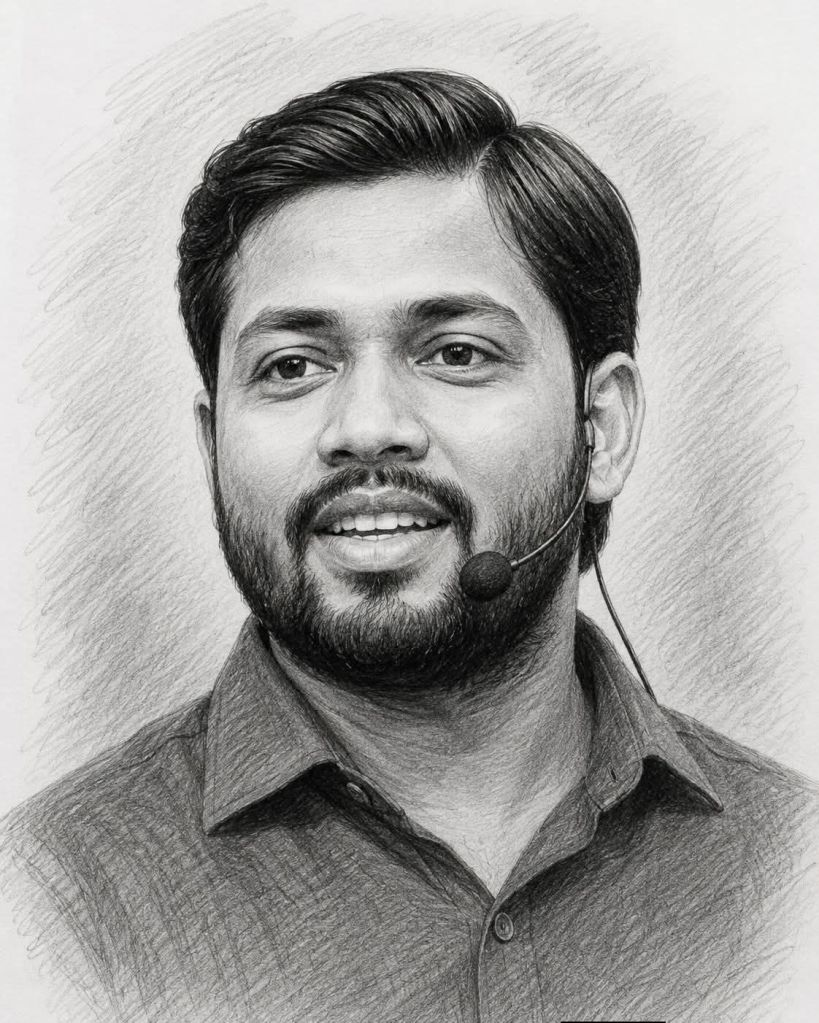
At the same time, I believe his greatest strength may also be his greatest weakness—he speaks openly, honestly, and often without filtering his thoughts through the lens of political correctness. There is an old saying:
“अति का भला न बोलना, अति की भली न चुप।
अति का भला न बरसना, अति की भली न धूप।”
The wisdom of this proverb lies in its emphasis on balance. Speaking excessively can create problems, but complete silence is not a virtue either. In my view, if Khan Sir has made mistakes, they have more likely arisen from speaking too much rather than from any malicious intent.
But in a democratic country, is speaking on public issues itself wrong? Citizens, teachers, journalists, doctors, lawyers, and public figures all have the right to express their opinions within the framework of the law. People are free to agree, disagree, criticize, or challenge those opinions. That is the essence of democracy. However, disagreement should not automatically lead to the assumption that a person is guilty, malicious, or deserving of condemnation.
What concerns me is how quickly public narratives can become fixed before all facts are known. A controversy emerges, selective clips circulate, opinions harden, and judgments are often delivered long before any fair examination of the facts takes place. Whether this perception is correct or not should be determined through evidence, not emotion.
I am not claiming that Khan Sir should be above scrutiny. No public figure should be. If mistakes have been made, they should be examined honestly. If any law has been violated, appropriate action should follow. But that process must be fair, transparent, impartial, and completely free from prejudice. Neither admiration nor hostility should influence the outcome. The standard must be facts, context, evidence, and due process.
What I find unfortunate is the tendency to judge an individual’s entire life and contribution through the lens of a single controversy while overlooking years of educational service and positive impact. A fair society should be capable of acknowledging both achievements and mistakes with equal honesty.
In a democracy, the answer to speech is more speech, the answer to disagreement is debate, and the answer to allegations is an unbiased investigation. Before conclusions are drawn, every relevant fact should be examined carefully and objectively. Justice demands neither blind support nor blind opposition—it demands fairness.Given the enormous public profile of Khan Sir and the national attention that these allegations have attracted, I believe there is a strong case for an investigation by an independent and highly credible agency such as the CID or, if legally warranted and approved by the competent authorities, the CBI. Such an investigation would not only help uncover the truth but would also inspire greater public confidence in the outcome, whatever that outcome may be.
History should judge people not only by their controversies but also by the lives they have touched and the contributions they have made. When viewed through that broader lens, Khan Sir’s contribution to education and the empowerment of ordinary students remains significant and deserves fair consideration.


You must be logged in to post a comment.