

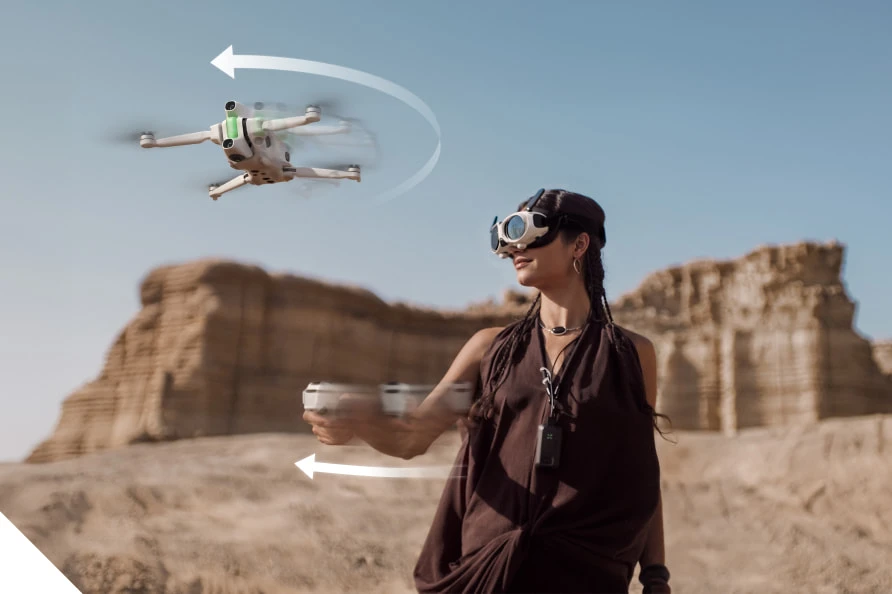
Beginners benefit most from foldable drone features that reduce risk, simplify control, and make carrying the drone effortless. The right model should help new pilots stay oriented, avoid common mistakes, and capture good footage without requiring advanced skills. Safety tools such as obstacle avoidance, return-to-home, stable navigation, and battery warnings matter more than raw speed. Portability also plays a big role, because a compact drone is easier to pack, store, and bring to practice sessions. Camera features can further lower the learning curve when they include automated shots, subject tracking, and flexible editing options. For example, the Antigravity A1 combines a foldable travel-friendly design with beginner-focused flying support and 8K panoramic capture, showing how modern features can make first flights more manageable and enjoyable.
What Safety Features Should Beginners Prioritize?
Obstacle Avoidance and Automatic Return to Home
The most helpful safety features for beginners are obstacle avoidance and automatic return to home. Obstacle sensing can detect nearby objects and help prevent collisions during forward flight, landing, or low-altitude maneuvering, which is where new pilots often make mistakes. Return-to-home adds another layer of protection by guiding the drone back automatically if the signal drops or the pilot becomes disoriented. On a beginner-friendly foldable drone, these tools reduce panic and make each practice session less stressful. The Antigravity A1 supports omnidirectional visual obstacle avoidance through forward and downward binocular vision sensing plus a bottom infrared sensor, giving new users stronger environmental awareness and added confidence when flying in unfamiliar open spaces.
Navigation Assistance and Low-Battery Alerts
Navigation assistance helps beginners hold position, understand location, and fly more predictably. Reliable satellite positioning improves hovering stability and makes it easier to stop, reframe, and return safely. This matters when a new pilot is still learning orientation and distance judgment. Clear low-battery alerts are equally important because beginners often lose track of remaining power while focusing on flight controls or the camera view. Early warnings create time to descend or trigger return procedures before battery levels become critical. The Antigravity A1 uses GPS, BeiDou, and Galileo for positioning support, which strengthens location accuracy. Combined with battery monitoring and automated safety responses, this type of guidance helps first-time users avoid rushed decisions and unsafe landings.
How Do Portability and Battery Life Help New Pilots?
Lightweight Foldable Designs for Easy Travel
A lightweight foldable drone is easier for beginners to live with, and that usually means more practice. Compact designs fit into small bags, store neatly at home, and feel less intimidating to carry to a park or travel destination. A lighter takeoff weight can also simplify compliance in some regions, which removes another barrier for first-time owners. The Antigravity A1 folds down to 141.3 × 96.2 × 81.4 mm and weighs 249g in its standard version, making it especially convenient for casual outings. When a drone is easy to pack and quick to deploy, new pilots are more likely to fly often and build confidence.
Flight Time, Battery Options, and Charging Convenience
Battery life directly affects how comfortable beginners feel while learning. Short flights create pressure, while longer endurance gives new pilots time to practice takeoffs, hovering, turns, and landing without rushing. Flexible battery options are also valuable because they let users choose between lighter everyday flying and extended sessions. The Antigravity A1 offers up to 24 minutes with the standard battery and up to 39 minutes with the high-capacity option, with charging times of roughly 45 to 103 minutes. That combination supports both quick practice flights and longer outings. For beginners, predictable endurance and manageable charging make regular training much easier to maintain over time.
Which Camera Features Make Aerial Filming Easier?
8K 360° Video and Flexible Post-Flight Framing
For beginners, easier aerial filming often starts with flexibility after the flight rather than perfect camera control in the air. An 8K 360° camera can capture everything around the drone, which means the pilot does not need to frame every shot precisely while also learning to fly. After landing, the footage can be reframed into standard angles, wide views, or social-ready clips without repeating the flight. The Antigravity A1 is a lightweight 8K panoramic drone co-incubated by Insta360, recording up to 8K at 30 fps, 5.2K at 60 fps, and 4K at 100 fps. That high-resolution spherical capture gives beginners more room to correct composition mistakes and still create polished results.
Automated Flight Shots, Subject Tracking, and Easy Editing
Automated flight shots are extremely helpful for beginners because they turn difficult camera moves into simple presets. Instead of manually controlling speed, direction, and framing at once, a new pilot can use guided movements to create smoother reveals, orbits, and cinematic passes. Subject tracking adds another layer of convenience by helping the drone keep a person or moving target in frame, reducing the need for constant corrections. Easy editing tools matter too, especially when they streamline trimming, reframing, and exporting clips for quick sharing. Together, these features lower the skill barrier between a first flight and a usable video. For beginners, that faster path to good results makes practice more rewarding and less frustrating.
Conclusion
The foldable drone features that help beginners most are clear: strong safety systems, dependable navigation, easy portability, useful battery life, and camera tools that simplify filming. Obstacle avoidance, return-to-home, and low-battery alerts reduce the chance of mistakes. Lightweight foldable construction makes it easier to carry the drone regularly, which leads to more practice and faster improvement. Longer flight times and convenient charging remove pressure during training sessions. On the camera side, 360 capture, automated shots, and editing flexibility help new pilots create better footage before they master advanced control. The Antigravity A1 shows how these features can work together in one beginner-friendly package. For most first-time buyers, ease of use and safety should come before speed or advanced manual performance.
What’s something you’ve done that your past self would be proud of?
View all responses


