From Clicks to Value: What the Next Stage of the Digital Economy Means for Learning and Careers

The rules of the digital economy are shifting, and this transformation is beginning to affect not only businesses and creators, but also education, skills development, and career building.

As reported by MSN, the long-standing model based on capturing attention is gradually losing relevance, as the volume of content grows and engagement becomes less meaningful as a measure of real value.

For decades, the internet operated on a simple premise: attention is limited, so whoever captures it gains influence and revenue. This idea shaped everything from social media algorithms to online learning platforms, where success was often measured by views, clicks, and completion rates. However, the explosion of digital content has fundamentally changed this equation. Today, learners, professionals, and consumers are exposed to overwhelming amounts of information, making it harder for any single piece of content to stand out or deliver lasting impact.

In education, this is particularly visible. Online courses, tutorials, and microlearning formats are more accessible than ever, yet completion rates remain low and retention is inconsistent. High enrollment numbers or video views no longer guarantee meaningful learning outcomes. This mirrors a broader trend: reach does not automatically translate into value.

The creator economy attempted to address some of these challenges by enabling individuals—educators, experts, and professionals—to monetize their knowledge directly. Through platforms offering subscriptions, paid courses, or community access, teachers gained new opportunities to earn independently. At the same time, learners benefited from more diverse and specialized content.

However, the limitations of this system quickly became apparent. Much like content creators in other industries, educators remain dependent on platforms for visibility and distribution. Algorithms determine which courses are promoted, while user data and audience relationships are often controlled by the platform itself. This makes it difficult for educators to build long-term, independent value around their expertise.

As a result, a new model is emerging—often referred to as the ownership or tokenized economy. In this framework, the focus shifts from content consumption to the individual as a core unit of value. For education, this means that skills, knowledge, experience, and reputation become structured assets that can be developed, verified, and transferred across different environments.

This approach changes how learning works in practice. Instead of relying solely on certificates issued by institutions or platforms, individuals can build portable records of their achievements. These records may include completed projects, demonstrated competencies, peer validation, and real-world results. Crucially, they are not tied to a single platform and can evolve over time.

One of the key enablers of this shift is the development of new technological infrastructure. Decentralized systems, including blockchain-based solutions, allow for secure and transparent storage of data related to skills and accomplishments. This makes it possible to verify credentials without relying on centralized authorities, reducing the risk of data loss or manipulation.

For students and professionals, this creates a more dynamic model of career development. Instead of following a linear path defined by degrees and job titles, individuals can build personalized portfolios that reflect their actual capabilities. Employers, in turn, gain access to more reliable indicators of performance, moving beyond traditional resumes toward verifiable, data-driven profiles.

Another important change is the evolution of metrics used to evaluate success. In the past, educational platforms focused on indicators such as enrollment numbers, completion rates, and user engagement. While still relevant, these metrics are increasingly complemented—or replaced—by more meaningful measures. These include long-term career outcomes, the ability to apply knowledge in real-world contexts, and the consistency of results over time.

This shift also highlights the growing importance of trust. As information becomes more abundant, learners are more selective about whom they follow and what sources they rely on. Individual educators, mentors, and experts are gaining prominence because they can build direct relationships with their audiences. Trust, once mediated by institutions, is increasingly centered around people.

Several factors are accelerating this transformation. First, the saturation of content makes it clear that simply producing more educational material is not enough. Quality, relevance, and applicability matter more than volume. Second, there is a growing demand for lifelong learning, driven by rapid changes in the labor market. People need flexible systems that allow them to continuously update their skills without starting from scratch. Third, technological innovation is making it possible to capture and manage personal value in new ways.

Platforms like Sl8 illustrate how these ideas can be implemented. By combining digital identity, financial tools, and mechanisms for tracking value, such systems allow users to turn their skills and reputation into structured assets. For educators, this means not just selling courses, but building ecosystems around their expertise. For learners, it provides new ways to demonstrate competence and participate in economic activity based on their knowledge.

Importantly, this model also changes incentives. Instead of optimizing for clicks or short-term engagement, participants are encouraged to focus on sustainable value creation. Educators are rewarded for delivering measurable results, while learners are incentivized to develop skills that have real-world impact.

At the same time, this transition introduces new challenges. Greater ownership over data and value requires stronger digital literacy. Individuals must understand how to manage their digital identity, protect their assets, and navigate decentralized systems. Educational institutions may also need to adapt, integrating new forms of credentialing and collaborating with emerging technologies.

Despite these challenges, the direction is clear. The digital economy is moving away from a model centered on attention toward one built on ownership, trust, and long-term value. For the education sector, this represents both a disruption and an opportunity.

In the coming years, the most successful learners and educators will not be those who simply attract the most views, but those who can build systems that demonstrate consistent, verifiable outcomes. Skills will matter more than signals, and reputation will become a measurable asset rather than an abstract concept.

Ultimately, this evolution redefines what it means to learn and to teach in the digital age. Education is no longer just about access to information—it is about the ability to transform knowledge into lasting value.

Daily writing prompt
What makes you nervous?

Public Perception of Factors Associated with Antenatal Care Utilization among Women in Awka South LGA of Anamabra State, Nigeria

Citation

Okeke, N. C., Chukwuemeka, G. N., Ubaezuonu, C. A., & Okocha, O. G. (2026). Public Perception of Factors Associated with Antenatal Care Utilization among Women in Awka South LGA of Anamabra State, Nigeria. Think India Quarterly, 29(1), 106–125. https://doi.org/10.26643/think/4

1Ngozi Chinenye Okeke, 2Gloria Nwakego Chukwuemeka, 2Chisom Anaestasi Ubaezuonu and 1Onyedikachi Goodness Okocha                                                                                           

cng.okeke@unizik.edu.ng; gn.chukwuemeka@unizik.edu.ng; ca.onwuamaeze@unizik.edu.ng;

1Department of Sociology, 2Department of Mass Communication

Nnamdi Azikiwe University, Awka, Anambra State.

Corresponding author: Ngozi Chinenye Okeke, Department of Sociology, Nnamdi Azikiwe University, Awka, Anambra, Nigeria. Email: cng.okeke@unizik.edu.ng. ORCID number: 0000-0001-6636-5166

Abstract

This paper examined public perception of the factors associated with antenatal care utilization among women in Awka South LGA. The objectives of this study were guided by conceptual issues such as; the state of antenatal care utilization among women, factors influencing antenatal care utilization among women, effects of poor antenatal care utilization among women, measures that could be put in place to improve antenatal care utilization among women in Awka South LGA. The research employed a mixed methods research design using a sample size of 204 respondents. Data collected from the questionnaire were processed using the Statistical Package for the Social Science (SPSS) software application version 23. The data were analyzed using descriptive statistics such as frequency tables and simple percentages. The hypotheses were tested using the Chi-square () statistics. The qualitative data collected from the field were transcribed which was thoroughly edited, analyzed thematically using narrative method of qualitative data analysis. The study identified distance to clinic as primary socio-cultural factors that determine the utilization of antenatal care service among women in Awka South Local Government Area. The study also found out that maternal death, pregnancy complications, infant death among others as effects of poor antenatal care services in Awka South Local Government Area. Finally, the research recommends that free and subsidized antenatal care service, improved facility infrastructure, community mobilization among others were listed as measures to improve antenatal care utilization among women in Awka South LGA.

Keywords: Antenatal care service, Antenatal care utilization, and Socio-economic factors

Introduction

Antenatal care (ANC) is the healthcare provided to women who are pregnant, for confirmation and monitoring of the progress of their pregnancy, and to promote their birth preparedness and complication readiness for ensuring optimal birth outcomes for both the mother and her baby (Marie, et. Al., 2022). Timely and quality antenatal care is a crucial determinant towards the prevention of maternal mortality, which is a significant developmental goal for developing countries, which contributes to more than 99% of maternal deaths worldwide (WHO, 2025).

Globally, ANC utilization has been recognized as an essential component of maternal healthcare, and efforts have been made to improve ANC utilization rates (World Health Organization, 2016). However, ANC utilization remains suboptimal in many low- and middle-income countries, including Nigeria (Federal Ministry of Health, 2013). According to the World Health Organization (2016), the ANC utilization rate in low- and middle-income countries is lower than the recommended standard. In Nigeria, the ANC utilization rate is lower than the World Health Organization’s recommended standard of at least four ANC visits per pregnancy (World Health Organization, 2016). According to the National Demographic and Health Survey (2018), only 58% of pregnant women in Nigeria attend ANC at least four times during their pregnancy. This low ANC utilization rate is attributed to various factors, including sociocultural, economic, and healthcare system-related factors.

Sociocultural factors, such as cultural beliefs, religious beliefs and practices, play a significant role in influencing ANC utilization among women in Nigeria. For instance, some women in Nigeria believe that pregnancy is a normal process that does not require medical attention, leading to low ANC utilization (Oladapo et al., 2019). Additionally, some cultural practices, such as the preference for traditional birth attendants, hinder ANC utilization among women in Nigeria (Egondi et al., 2017). Social factors, such as poverty and lack of access to healthcare facilities, are also significant barriers to ANC utilization among women in Nigeria. Many women in Nigeria cannot afford the cost of ANC services, leading to low ANC utilization (Adekanle et al., 2017). Furthermore, the lack of access to healthcare facilities, particularly in rural areas, hinders ANC utilization among women in Nigeria (Egondi et al., 2017). Healthcare system-related factors, such as the availability and quality of ANC services, also influence ANC utilization among women in Nigeria. The shortage of skilled healthcare providers, particularly in rural areas, hinders ANC utilization among women in Nigeria (Egondi et al., 2017). Additionally, the poor quality of ANC services, including the lack of essential equipment and supplies, deters women from utilizing ANC services (Adekanle et al., 2017). Lack of education further affects ANC use significantly as those without proper education are unable to see the benefits of ANC use.

In Anambra State the ANC utilization rate is lower than the national average. According to the Anambra State Ministry of Health (2020), only 50% of pregnant women in Anambra State attend ANC at least four times during their pregnancy. This low ANC utilization rate is attributed to various factors, including sociocultural, economic, and healthcare system-related factors. Awka South LGA is one of the areas in Anambra State where ANC utilization is a concern. The LGA has a population of over 200,000 people, with a significant proportion being women of reproductive age (National Population Commission, 2016). However, the ANC utilization rate in Awka South LGA is lower than the state average, with only 45% of pregnant women attending ANC at least four times during their pregnancy (Anambra State Ministry of Health, 2020). Therefore, there is a need to explore the public perception of the factors influencing ANC utilization among women in Awka South LGA.

Research Questions

The following research questions are put forward to guide the study

  1. What is the state of antenatal care utilization among women in Awka South LGA?
  2. What are the factors influencing antenatal care utilization among women in Awka South LGA?
  3. What are the effects of poor antenatal care utilization among women in Awka South LGA?
  4. What measures could be put in place to improve antenatal care utilization among women in Awka South LGA?

Study Hypotheses

The following hypotheses were formulated to guide this study

  1. Women with higher levels of education are more likely to utilize antenatal care than women with lower levels of education
  2. Women from low-income families are less likely to access antenatal care than their counterparts from high income families.

Research Methodology

The study adopted a mixed method research design, integrating quantitative and qualitative approach to provide a comprehensive understanding of public perception of the factors influencing antenatal care utilization among women. The study was conducted in Awka South Local Government Area of Anambra State, Nigeria, comprising nine towns and serving as the administrative center of the state. The target population include women of reproductive age (15years and above). The estimated target population was based on health records from local primary health centers, which indicated over 3,000 women fitting this description across the nine towns in the LGA. The scope of the study was limited to examining public perceptions of the state, influencing factors, effects, and improvement strategies regarding antenatal care utilization among women in the area. A sample size of 204 respondents was determined using Taro Ymane’s formula, while multi-stage sampling technique involving cluster, random and systematic sampling was used to select participants. Data were collected using structured questionnaire and in-depth interview guides. Questionnaires were administered face to face with the support of trained research assistants, while four purposely selected participants took part in in-depth interviews. Qualitative data were analyzed using SPSS with descriptive statistics and chi-square tests, while qualitative data were analyzed thematically and used to complement the quantitative findings.     

Results

In this study, 204 questionnaires were administered by the researcher, out of which 198 (96.56%) of the questionnaires were correctly filled and returned. Six questionnaires were not completely filled. The analysis is consequently based on the correctly filled and returned 198 questionnaires. The quantitative data were also complemented by data from the in-depth-interview.

Socio-demographic Data of Respondents

Table 1: Distribution of Respondents by their Socio-Demographic Characteristics

Social Demo-graphic Variables   Responses  Frequency            Percent
Age 15-2414472.7
  25 -34 3919.7
  35- 43  44 and above 8  7  4  3.5
 Total198100.0
Sex(Gender)  Male 0 0
 Female198100.0
 Total198100.0
Religious AffiliationChristianity19498
 Islam         10.5
 Traditional African religion   3  1.5
 Subtotal198100
 Total198  100.0
Education QualificationNo Formal Education00
 Primary 25 12.6
 Secondary Tertiary Post-Graduates        114         19         40  57.6  9.6  20.2
 Total198100.0
Marital StatusSingle19297
   Married3 3
 Divorced Separated Widowed      0       0       0 0  0  0
 Total    198 100.0  
 OccupationUnemployed    8643.4
 Civil Servant     6  3.5
 Trader Artisan Student Total     5      1   101   198 2.5  0.5 51 100.0  
 Income1000- 30000      133 67.1
 31000 – 60000      34 17.1
 61000 –  90000      5  2.5
 91000 and above      26 13.3
  Total      198 100.0

Field survey 2025

Table 1 show that 144(72.2%) constituting the majority of the respondents are within the age bracket of 15-24 years. The mean age of respondents is 19.5 years old. It could be seen also that Females are the gender of the study. 194(98%) of the respondents are Christians, 1(0.5%) respondent are Islam while 3(1.5%) respondents are of the Africa Traditional Religion. Similarly, 25(12.6%) respondents have primary certificate as the highest education qualification, 114(57.6%) respondents have secondary certificate, 9(9.6%) respondents have tertiary certificate, while 40(20.2%) respondents had Post-Graduate Degree. Also, 86(43.4%) of the respondents are unemployment, 6(3.5%) respondents are civil servant, 5(0.5%) respondents identified as trader, while 101(51%) respondents are unemployed. However, 133(67.2%) of the respondents earn s between #1000- #30000 monthly, 34(17.2%) respondents earn #31000 – #60000 monthly, 5(2.5%) respondents earn #61000 – #90000, while 26(13.3) earns #91000 and above. Table1also shows that majority of the respondents are single, 6(3%) are married, while there were no responses for, separated, divorced or widowed.

Substantive Issues of the Research

This section deals with the analysis of research question formulated to guide the study

Research Question One: What is the state of antenatal care utilization among women in Awka South LGA? To answer the research question, responses to research questionnaire 8 to 11 were analyzed on table and chart below.

Table 2: Distribution of respondents’ views on the awareness of the importance of antenatal care services

ResponsesFrequencyPercent
Yes 198100
No        00
Total  198100

Field survey 2025

Table 2 shows that 198 (100%) respondents held the view that they are aware of the importance of antenatal care services in Awka South LGA. Thus, all the respondents held the view that they are aware of the importance of antenatal care services in Awka South LGA.

Table 3: Distribution of respondents’ views on whether they have attended antenatal care during pregnancy

 ResponsesFrequencyPercent
   
Yes        7939.9
  No        11960.1
  Total        198100

Field survey 2025

The information on the above table shows that 119(60.1%) respondents held the view that they haven’t attended antenatal care services during pregnancy in Awka South LGA, while 79(39.9%) of the respondents indicated that they have attended antenatal during. Summarily, majority (60.1%) of the respondents were of the view that they haven’t attended antenatal care services during pregnancy in Awka South LGA.

Table 4: Distribution of respondents’ views on number of times they have attended antenatal care during pregnancy

ResponsesFrequencyPercent
Once1012.6
Twice45.1
Three times67.6
Four times or more5974.7
Total79100.0

Field survey 2025

Table 4 shows that 59(74.7%) of respondents held the view that they attended antenatal care services four times and more, while 4(5.1%) of the respondents indicated that they attended antenatal care services once in Awka South LGA. This implies that majority (74.7%) of the respondents opted that they attended antenatal care services four times and more in Awka South LGA

Table 5: Distribution of respondents’ views on where they usually attend antenatal care

ResponsesFrequencyPercent
  Government hospital Private clinic Traditional birth attendant Church/ Mosque-based center      129 56  0 1365.1 28.3  0 6.6
Total198100.0

Field survey 2025

Table 5 shows that 129(65.1%) of the respondents were of the view that they usually attend antenatal at government hospital in Awka South LGA, while 13(6.6%) of the respondents indicated church/ mosques-based centre in Awka South LGA. Thus, majority (65.1%) of the respondents indicated that they usually attend antenatal at government hospital in Awka South LGA.

Figure One. Distribution of respondents’ views on where they usually attend antenatal care

Research Question Two: What are the factors influencing antenatal care utilization among women in Awka South LGA? To answer the research question, responses to research questionnaire 12 to 19 were analyzed on table and chart below.

Table 6: Distribution of respondents’ views on major factors that influence their decision to attend antenatal care

ResponsesFrequencyPercent
Cost of service Distance to clinic Husband’s support      Health worker attitude Lack of Knowledge  42   83   7  66   021.2 42 3.5 33.3  0
Total198100

Field survey 2026

Table 6 shows that 83(42%) of the respondents held the view that distance to clinic influence their decision to attend care in Awka South LGA, while 7(3.5%) of the respondents chose husband support. Summarily, majority (42%) of the respondents were of the view that distance to clinic influence their decision to attend care in Awka South LGA; response from the qualitative instrument state

…….In my opinion, I think what mostly influences the decision to attended antenatal care is the partners’ support and financial cost of the services. Most pregnancy women seldom attend antenatal care until they 7-8month pregnant which is very wrong and when asked, they either make reference to their partner or cost(IDI, 26year, Female, Nurse, Single).

Table 7: Distribution of respondents’ views on whether cultural belief discourages the use of antenatal services

ResponsesFrequencyPercent
Yes 13266.8
  No   66  33.3
Total198100

Field survey 2025

Table 7 shows that 132 (66.8%) of the respondents held the view that cultural belief discourages the use of antenatal in Awka South LGA, while 66(33.3%) respondents indicated that it doesn’t. Thus, majority (66.8%) of the respondents were of the view that cultural belief discourages the use of antenatal in Awka South LGA.

Field survey 2025

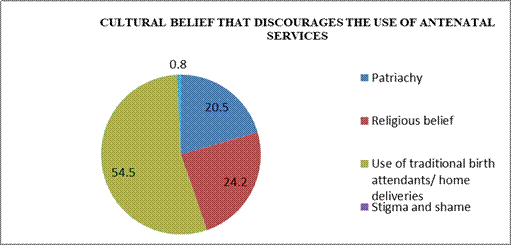
Figure Two: Distribution of respondents’ views on the cultural belief that discourages the use of antenatal services

Figure 2 illustrate that 72(54.5%) of respondents held the view that use of traditional birth attendants/ home deliveries discourages the use of antenatal services, while 1(0.8%) of the respondents indicated fear. Thus, majority (54.5%) of the respondents were of the view that use of traditional birth attendants/ home deliveries discourages the use of antenatal services in Awka South LGA.

Table 8: Distribution of respondents’ views on whether level of education affects decision to use antenatal services

ResponsesFrequencyPercent
Yes 198100
No 00
Total198100

Field survey 2025

Table 8 shows that 198 (66.8%) of the respondents held the view that level of education affects decision to use antenatal care in Awka South LGA. Thus, majority (100%) of the respondents were of the view that level of education affects decision to use antenatal care in Awka South LGA.

Field survey 2025

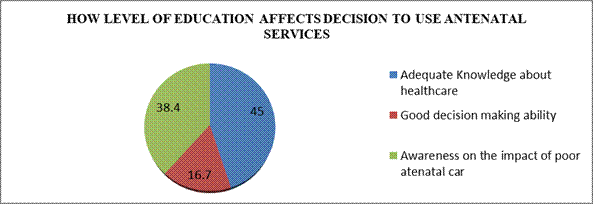
Figure Three: Distribution of respondents’ views on how level of education affects decision to use antenatal services

Figure 3 illustrate that 89(45%) of respondents held the view that academic knowledge about healthcare affect decision on the use of antenatal services, while 33(16.7%) of the respondent good decision-making ability. Thus, majority (45%) of the respondents were of the view that academic knowledge about healthcare affect decision on the use of antenatal services in Awka South LGA.

Table 9: Distribution of respondents’ views on whether employment status affects women’s antenatal care utilization

ResponsesFrequencyPercent
Yes 198100
No 00
Total198100

Field survey 2025

Table 9 shows that 198 (66.8%) of the respondents held the view that employment status affects women’s antenatal care utilization in Awka South LGA. Thus, majority (100%) of the respondents were of the view that employment status affects women’s antenatal care utilization in Awka South LGA.

Table 10: Distribution of respondents’ views on whether monthly income influences the use of antenatal care services

ResponsesFrequencyPercent
Yes 198100
  No   0  0
Total198100

Field survey 2025

Table 10 shows that 198 (66.8%) of the respondents held the view that monthly income influence the use of antenatal care service in Awka South LGA. Thus, majority (100%) of the respondents were of the view that monthly income influences the use of antenatal care service in Awka South LGA. Responses from the qualitative data states

…..It is very crystal clear that the level of wealth one has, have a long way of determining his/her lifestyle; so does it in health. You can’t speak of health insurance or antenatal care when you barely manage to feed or doing a diagnoses before buying medics for ailment. What am saying is that no matter your level of education or knowledge in health, once there’s no financial backing, you are going nowhere (IDI, 32year, Male, Health personnel, Married)

Research Question Three: What are the effects of poor antenatal care utilization among women in Awka South LGA? To answer the research question, responses to research questionnaire 20 and 21 were analyzed on table and chart below.

Table 11: Distribution of respondents’ views on the consequences of not attending antenatal care

ResponsesFrequencyPercent
Maternal death Infant death      0       60 3
Pregnancy complications All of the above    46     11423.2 73.7
Total    198100.0

Field survey 2025

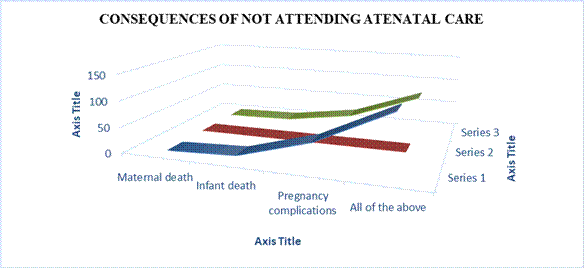
Table 11 shows that 114(73.7%) of respondents held the view that all of the above mention options are the consequences of not attending antenatal care in Awka South LGA, while 6(3%) of the respondents indicated infant death. Thus majority (73.7%) of the respondents were of the view that all of the above mention options are the consequences of not attending antenatal care in Awka South LGA; Responses from the qualitative data states;

…..there are consequences for everything which is vital but neglected, so it is for antenatal care for every pregnant women. There may be factors that might have prevented the utilization of antenatal care services but the effects are there and one of the numerous effects is health complications of the pregnant woman (IDI, 32year, Male, Health personnel, Married)

Figure Four. Distribution of respondents’ views on the consequences of not attending antenatal care

Table 12: Distribution of respondents’ views on whether they know any woman who have

experienced complications due to poor antenatal attendance

ResponsesFrequencyPercent
Yes 3316.7
No16583.3
Total198100

Field survey 2025

Table 12 shows that 165 (83.3%) of the respondents held the view that they don’t any woman who have experienced complications due to poor antenatal attendance, while 33(16.7%) of the respondents indicated that they have. Thus, majority (83.3%) of the respondents were of the view that they don’t any woman who have experienced complications due to poor antenatal attendance in Awka South LGA.

Research Question Four: What measures could be put in place to improve antenatal care utilization among women in Awka South LGA? To answer the research question, responses to research questionnaire 22 to 24 were analyzed on table and chart below

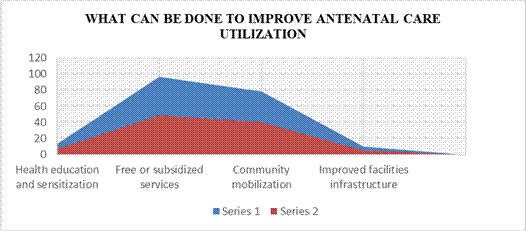
Table 13: Distribution of respondents’ views on what can be done to improve antenatal care utilization

ResponsesFrequencyPercent
Health education and sensitization    136.6
Free or subsidized services    9749
Community mobilization Improved facilities infrastructure  78   1040.4 5.1
Total  198100.0

Field survey 2025
Table 13 shows that 97(49%) respondents held the view that free or subsidized antenatal services can help improve antenatal care utility in Awka South LGA, while 13(6.6%) of the respondents indicated health education and sensitization. Thus, majority (49%) of the respondents were of the view that free or subsidized antenatal services can help improve antenatal care utility in Awka South LGA.

Figure Five:  Distribution of respondents’ views on what can be done to improve antenatal care utilization

Table 14: Distribution of respondents’ views on whether government and NGOs should collaborate to improve antenatal care service

ResponsesFrequencyPercent
Yes 198100
No  0 0
Total  198100

Field survey 2025

Table 14 shows that 198 (100%) respondents held the view that government and NGOs should collaborate to improve antenatal care service in Awka South LGA. Thus, all (100%) the respondents held the view that government and NGOs should collaborate to improve antenatal care service in Awka South LGA. Responses from the qualitative data states;

…….After God na government, I think the government are in the best position to improve the situation. Government self, na man dominant; but honestly, there are policies that could help to dicey the situation so as to improve antennal services. If not for one thing, at least the health sector knowing full well that women are the mechanism for population or reproduction. The government should make provision of fuctional primary healthcare centers accessible to every woman (IDI, 22year, female, Health personnel, Single).

Table 15: Distribution of respondents’ views on whether social workers and community leaders can play a role in encouraging antenatal care attendance

ResponsesFrequencyPercent
Yes 198100
No 0 0
Total198100

Field survey 2025

Table 15 shows that 198 (100%) of the respondents held the view that social workers and community leaders can play a role in encouraging antenatal care attendance. Thus, all (100%) of the respondents were of the view that social workers and community leaders can play a role in encouraging antenatal care attendance in Awka South LGA.

Test of Study Hypotheses

Details of test of the two hypotheses postulated for this study are shown hereunder:

Study Hypothesis One: Women with higher levels of education are more likely to utilize antenatal care than women with lower levels of education. Data on table 1 and 5 formed the basis for testing hypothesis one.

Table 16: Relationship between level of education and utilize antenatal care service in Awka South LGA

Educational QualificationDistribution of respondents’ views on where they usually attend antenatal care
Government HospitalPrivate ClinicTraditional birth attendantsChurch/ Mosque-Based centerTotal
No formal Education00000
Primary1940225
Secondary842406114
Tertiary970319
Post-Graduates17210240
Total X2=24.53,DF=12,Pvalue=0.00112956013198

Source: SPSS version 25

The computed value of the chi-square is 24.53 while the table value of chi-square at 0.05level of significance with a degree of freedom (DF) of 12 is 21.026. Since the computed value of chi-square is greater than the table value, the researcher accepted the alternative hypothesis. There is therefore a significant relationship between levels of education and utilize antenatal care in Awka South LGA.

Study Hypothesis Two: Women from low-income families are less likely to access antenatal care than their counterparts from high income families. Data on table 1 and 4 formed the basis for testing hypothesis two.

Table 17: Relationship between level of income and utilize antenatal care service in Awka South LGA

Level of IncomeDistribution of respondents’ views on where they usually attend antenatal care
Government HospitalPrivate ClinicTraditional birth attendantsChurch/ Mosque-Based centerTotal
1000 – 30000824605133
31000 – 600002660234
61000 – 9000031015
91000 and above1830526
Total X2=22.1,DF=9,Pvalue=0.00112956013198

Source: SPSS version 25

The computed value of the chi-square is 22.1 while the table value of chi-square at 0.05level of significance with a degree of freedom (DF) of 9 is 16.919. Since the computed value of chi-square is greater than the table value, the researcher accepted the alternative hypothesis. There is therefore a significant relationship between levels of income and utilize antenatal care in Awka South LGA.

Discussion of Findings

This paper investigated the factors influencing antenatal care utilization among women in Awka South LGA. Two hundred and four (204) respondents were the study population within ages ranging from 15years and above. Two hypotheses were tested; hypothesis one stated that women with higher levels of education are more likely to utilize antenatal care than women with lower levels of education, while hypothesis two stated that women from low-income families are less likely to access antenatal care than their counterparts from high income families in Awka South LGA, Anambra State. Findings in all hypotheses tested shows that there is a significant relationship between both variables in Awka South LGA, Anambra State. From the quantitative data of the respondents, the study found out that majority of the respondents are male between the age of 15 to 24 and are single and of the Christian religious affiliation with secondary school certificate as the highest education attained by the majority of the study participants.

Findings from the analysis done on the responses to the questionnaire schedule; all of the respondents 198 (100%) indicated that they are aware of the importance of antenatal care service, while majority of the respondents indicated that they have attended antenatal at least four times or more during pregnancy. This is in consonance with the Anambra State Ministry of Health (2020), which noted that only 50% of pregnant women in Anambra State attend ANC at least four times during their pregnancy. This low ANC utilization rate is attributed to various factors, including sociocultural, economic, and healthcare system-related factors.

Findings in research question two, which set out to determine factors influencing antenatal care utilization in Awka South LGA; found out that majority 83(42%) of the respondents indicated distance to clinic, while others include cost of service, lack of knowledge amongst others. This is in consonance with A study by Ononokpono and Odimegwu (2014) found that Nigerian women with secondary education were twice as likely to attend ANC services compared to women without formal education. This correlation is attributed to greater awareness of the benefits of maternal healthcare and increased autonomy in decision-making. Similarly, financial stability plays a crucial role in ANC uptake, as out-of-pocket healthcare expenses can deter low-income women from seeking care (Basha, 2019).

Furthermore, findings in research question three, which set out to find the effects of poor antenatal care utilization in Awka South LGA; found out that it could lead to maternal death, infant death, pregnancy complications amongst others, however majority 114(73.7%) of the respondents chose all of the mentioned effects. This is in consonance with a study by Say et al. (2014), who stated that inadequate ANC is a major contributor to maternal deaths worldwide, particularly in low- and middle-income countries. The lack of routine check-ups prevents early detection of complications such as pre-eclampsia, gestational diabetes, and infections, which can be fatal if left untreated. According to Lawn et al. (2014), nearly 45% of neonatal deaths globally are attributed to complications arising from inadequate prenatal care.

The study further suggested measures to improve antenatal care utilization in Awka South LGA and these may include; collaboration between the government and NGOs in healthcare sector, health education and sensitization, improved facility infrastructure among others while a good number 97(49%) of the respondents indicated free and subsidized services which also is in consonance with Aiga et al. (2024) who noted that policy interventions and government commitment are fundamental to improving ANC utilization. Implementing and enforcing policies that mandate comprehensive maternal healthcare services, increasing healthcare funding, and integrating ANC services into primary healthcare systems ensure sustainable improvements in maternal health.

Finally, two hypotheses were formulated and tested. It was found that level of education can significantly influence the utilization of antenatal care among women in Awka South Local Government Area. Similarly, the study also found that there is a significant relationship level of income of female respondents and the utilization of antenatal care among women in Awka South L.G.A. This is in consonance with the social determinants of health theory by Marmot and Wilkinson (1999). The SDH posit that, it becomes clear that public perceptions are deeply embedded in socioeconomic and cultural realities. In many communities, especially in Nigeria, factors such as poverty, education level, and rural-urban disparities play a significant role in determining whether a woman seeks ANC services. Ononokpono and Odimegwu (2014) found that women with higher levels of education and greater financial stability were significantly more likely to attend at least four ANC visits compared to women with low income and little education. Public perception of ANC is shaped by these realities—when healthcare is seen as expensive or unnecessary, women are less likely to seek services

Conclusion

Based on the findings of the study, the researchers has been able to conclude that the phenomenon of antennal utilization among women is not new. The study further affirms that there are certain factors that determine the utilization of antenatal care service among women and the study also identified some of the measures to put in place to improve antenatal care. In this study two hypotheses were tested. Thus, the first hypothesis which stated that women with higher levels of education are more likely to utilize antenatal care than women with lower levels of education was confirmed and therefore accepted. The second hypothesis which state that women from low-income families are less likely to access antenatal care than their counterparts from high income families was also confirmed and therefore accepted. Based on the findings, some recommendations were made. Lastly, the study identified the need to address the problem and the role that can be played by different stake holders such as the social workers, community leaders, NGOs and the government in order to improve antenatal care utilization in the study.

Recommendations

Based on the research findings, the researchers put forward the following recommendations:

  1. Through the Ministry of woman affair: through the ministry of woman affair, policies to eliminate existing socio-cultural disparities and existing gender relations and power disparities between women and men. For instance, programmes aiming at improving women’s access to health care services by developing locally-based facilities should make sure that women-to-women services will be available, with opening times adapted to women’s needs and activities. This will help resolve the state of antenatal care utilization among women in Awka South LGA
  • Mobilization of women’s organizations: women’s groups, unions, neighborhood associations and cooperatives in problem identification, strategy formulation and implementation. For instance, women’s organisations are likely to know which health problems women experience and which institutional, structural and cultural barriers impede their access to health care (e.g. in case of antenatal services). The will help checkmate the issue of patriarchy in resolving the factors influencing antenatal care utilization among women in Awka South LGA
  • Health Education and Sensitization: For instance, instead of devaluating their knowledge, traditional healthcare providers could be targeted by skills training programmes. Their participation in the development of health strategies should be sought. These measures will help ameliorate the effects of poor antenatal care utilization among women in Awka South LGA
  • Improved Facility Infrastructure; The government in collaboration with NGOs and stakeholder could join hand in improving our healthcare system and make it accessible and affordable for the low-income earners too because this strategy will improve antenatal care utilization among women in Awka South LGA

References

Adekanle, D. A., Isawumi, A. I., &Olayemi, O. O. (2017). Late antenatal care booking and its predictors among pregnant women in Nigeria. International Journal of Women’s Health, 9, 1–6. https://doi.org/10.2147/IJWH.S124766

Adepoju, A. O., Oladapo, O. T., &Iyaniwura, C. A. (2020). Barriers to antenatal care utilization in Nigeria: A qualitative study. BMC Pregnancy and Childbirth, 20(1), 1–10. https://doi.org/10.1186/s12884-020-03165-7

Aiga, H., Kawakatsu, Y., Kadoi, N., Obeng, E., Addai, F. T., Ofosu, F., Fujishima, K., Omachi, M., & Yamaguchi, E. (2024). Effectiveness of a community-based intervention package in maternal health service utilization: A cross-sectional quasi-experimental study in rural Ghana. PloS one, 19(11), e0311966. https://doi.org/10.1371/journal.pone.0311966

Anambra State Ministry of Health. (2020). ASMH antenatal care randomized trial: Manual for the implementation of the new model. ASMH.

Basha, G. W. (2019). Maternal healthcare utilization in Ethiopia: Trends and determinants. Ethiopian Journal of Health Development, 33(2), 1–8

Egondi, T., Oyolola, M., &Abuya, T. (2017). Cultural barriers to antenatal care in Nigeria. Journal of Biosocial Science, 49(4), 456–471. https://doi.org/10.1017/S0021932016000443

Federal Ministry of Health. (2013). National strategic health development plan framework (2010–2015). Federal Republic of Nigeria.

Izugbara, C. O., Wekesah, F. M., &Adedini, S. A. (2018). Male dominance and maternal healthcare in Nigeria. Culture, Health & Sexuality, 20(9), 981–995. https://doi.org/10.1080/13691058.2017.1407412

Lawn, J. E., Blencowe, H., Oza, S., You, D., Lee, A. C. C., Waiswa, P., Lalli, M., Bhutta, Z., Barros, A. J. D., Christian, P., Mathers, C., & Cousens, S. N. (2014). Every newborn: Progress, priorities, and potential beyond survival. The Lancet, 384(9938), 189–205. https://doi.org/10.1016/S0140-6736(14)60496-7⁠

Marmot, M., & Wilkinson, R. G. (Eds.). (1999). Social determinants of health. Oxford University Press.

Marie, S., et al. (2022). Antenatal care and maternal outcomes in developing countries. Journal of Global Health, 12(1), 1–10.

Nigeria Demographic and Health Survey (NDHS) (2018). Abuja, Nigeria, and Rockville, Maryland, USA: NPC and ICF. http://ngfrepository.org.ng:8080/jspui/handle/123456789/3145

National Population Commission. (2016). Nigeria demographic and health survey 2018. NPC.

Oladapo, O. T., Iyaniwura, C. A., & Sule-Odu, A. O. (2019). Sociocultural determinants of antenatal care utilization in Nigeria. BMC Pregnancy and Childbirth, 19(1), 1–9. https://doi.org/10.1186/s12884-019-2220-z

Ononokpono, D. N., & Odimegwu, C. O. (2014). Determinants of maternal healthcare utilization in Nigeria. African Journal of Reproductive Health, 18(3), 130–137.

Say L, Chou D, Gemmill A, Tunçalp Ö, Moller AB, Daniels J, et al Global causes of maternal death: a WHO systematic analysis. Lancet Glob Health. 2014;2(6):e323–33. doi: 10.1016/S2214-109X(14)70227-X

World Health Organization. (2002). WHO antenatal care randomized trial: Manual for the implementation of the new model. WHO.

World Health Organization. (2016). WHO recommendations on antenatal care for a positive pregnancy experience. WHO.

World Health Organization. (2025). Maternal Mortality. https://www.who.int/news-room/fact-sheets/detail/maternal-mortality

Daily writing prompt
What makes you nervous?

Examining the Use of Film in Nigerian Prisoners’ Social and Psychological Rehabilitation

Citation

Nwonovo, O. S. (2026). Examining the Use of Film in Nigerian Prisoners’ Social and Psychological Rehabilitation. Think India Quarterly, 29(1), 86–95. https://doi.org/10.26643/think/2

**Oluchukwu Sunday Nwonovo***

Department of Sociology and Anthropology,

Faculty of Social Sciences and Humanities,

Enugu State University of Science and Technology, Agbani

Email: oluchukwu.nwonovo@esut.edu.ng

Corresponding author***

 ORCID: https://orcid.org/0009-0007-7697-2323

Abstract

Movies are used to support social rehabilitation, improve self-awareness, and encourage psychological healing. In Nigeria, where there are few mental health resources and stigma persists, this study explores the potential of using films in rehabilitating prisoners. The study highlights how Nollywood may improve cinematic therapy by producing culturally relevant films that address social issues and mental health. Despite its potential, integrating cinematic therapy into Nigeria’s mental health system faces challenges like poor awareness, cultural barriers, and accessibility concerns. Incorporating films into mental health programs, training experts, improving infrastructure, and encouraging collaborations between Nollywood and mental health organisations are some of the policy recommendations.

Keywords: Films, Interventions, Psychological rehabilitation, Social rehabilitation, Stigma

Introduction

            In order to improve social and psychological well-being, a novel form of therapeutic intervention known as “cinematic therapy,” or “film therapy,” makes use of storytelling, emotions, and visual narratives (Ajah et al., 2024). According to Emeka et al (2025), this method allows those who are dealing with psychological discomfort, trauma, or social marginalisation to use films as a tool for healing, self-awareness, and social integration. In Nigeria, where there are little mental health services and psychological disorders are still stigmatised, cinematic therapy provides a new and accessible strategy to rehabilitation (Onyejegbu et al., 2024).The use of film as a therapeutic tool has its roots in early psychology research that examined how visual stimuli affect human emotions and thought processes. Important historical contributions have been made by Mark Micale and others that examine how modernist ideas in fields like psychology, psychiatry, and psychoanalysis were impacted by cinema (Obasi et al., 2024). This work has increased awareness of the influence of film on psychological science methodology (e.g Chinweze et al., 2024; Osadebe et al., 2024). These specialists acknowledged that films may elicit emotions, foster empathy, and improve cognitive abilities. In modern therapeutic contexts, film therapy has been effectively incorporated into drug rehab, mental health programs, and trauma treatment (Ajah et al, 2024). However, there is still much to learn about its use in Nigeria, which calls for more study and implementation.Nollywood, Nigeria’s film industry, is one of the largest in the world and has a great influence on cultural narratives and public opinion (Faidi, 2024). Because of its large audience and influence, Nollywood may greatly enhance cinematic therapy by making films that focus on social and psychological rehabilitation. Films that address topics including grief, addiction, mental health disorders, gender violence, and post-traumatic stress disorder (PTSD) may be beneficial therapeutic resources, especially for communities with limited access to traditional mental health care (Ilo et al., 2025).Furthermore, cinematic therapy is in line with native Nigerian storytelling customs, which have historically used play, folktales, and oral histories to teach, entertain, and provide moral guidance (Onyejegbu et al., 2025). According to Prendergast et al. (2024), the ability of traditional storytelling techniques—which are often presented through social gatherings and theatre productions—to depict complex human emotions and social realities is similar to that of cinematic therapy. By combining modern cinematic therapy with these ancient practices, Nigeria can develop culturally relevant therapeutic interventions that engage local populations. The psychological and social benefits of film therapy in Nigeria are examined in this study. It also addresses potential challenges and offers recommendations for its broader application in mental health and rehabilitation programs across the country.

Methodology

            In order to investigate the potential of cinematic therapy in Nigerian psychological and social rehabilitation, this study uses a qualitative research design. The study only uses secondary sources, such as books, papers, peer-reviewed academic articles, and pertinent case studies. A thorough grasp of the function of cinematic therapy in many rehabilitation contexts is made possible by the methodical examination and synthesis of data from the body of current literature using a thematic analysis technique.Finding and choosing pertinent material is the first step in the research process, which is then followed by a methodical analysis of the main ideas and conclusions. Academic databases, published reports from international health organisations, and case studies on the application of cinematic therapy in various international contexts are examples of data sources. By making sure that all secondary sources are appropriately cited, avoiding data manipulation, and upholding objectivity in analysis, ethical principles are adhered to. This study examines general patterns and uses of cinematic therapy using existing literature rather than analysing any particular movie.

The Idea of Film Therapy

            The idea that films can encourage reflection, offer emotional release, and facilitate conversations about challenging psychological and societal issues forms the basis of cinematic therapy (Chinweze et al., 2024). Social workers, mental health specialists, or certified moderators lead facilitated discussions after participants watch certain films that meet their therapeutic requirements during structured viewing sessions (Onyejegbu et al., 2025). Ajah (2026) claims that this method enables people to identify with characters, identify their own feelings, and create coping strategies for their own challenges. Furthermore, cinematic therapy ensures that the stories have meaning for the patients by using carefully chosen films that support therapeutic objectives (Xue et al., 2024). By interacting with relatable characters and stories, participants can express their feelings and obtain fresh insights on their own experiences. In group therapy settings, discussions about films improve relationships with the community and promote open communication, creating a healing environment (Sunderland et al., 2023).
Furthermore, Eweida et al. (2024) point out that cinematic therapy incorporates a number of psychological approaches, including cognitive reframing and emotional management procedures. Therapists utilise films as stimuli for structured reflection exercises to help patients build healthy coping strategies and alter their negative thought patterns. Incorporating cinematic therapy into current psychological and social rehabilitation programs would increase its efficacy and adaptability to various therapeutic contexts.

Film-Based Social Rehabilitation

            By fostering empathy, encouraging social inclusion, and resolving stigmatisation, cinematic therapy is essential to social rehabilitation. Social exclusion is a significant obstacle for those recuperating from mental illness, substance abuse, or other life-altering situations in many nations, including Nigeria. Without a question, films are a potent tool for increasing awareness, changing society perceptions, and giving people the social skills they need to reintegrate (Kubrak, 2020). Cinematic therapy can encourage good behavioural change and meaningful conversations through shared watching experiences. The following are some significant ways that films aid in social rehabilitation:

Integration of the community

            According to Hosseinbor et al. (2014), group film screenings and talks reduce social isolation among marginalised groups such internally displaced people, ex-convicts, and those in recovery from substance addiction by fostering a sense of belonging and shared experience. Social interaction is essential to healing since isolation might impede effective rehabilitation (Husain et al., 2024). As previously said, cinematic therapy fosters open communication and support among participants by bringing them together in a group environment. People can support their journey toward reintegration by strengthening social ties and creating a common understanding of their experiences through the sharing of film interpretations.

Improving social abilities

            By teaching people appropriate communication and conflict resolution techniques, films can serve as beneficial role models for social relationships. Due to extended seclusion or unpleasant experiences in the past, many people dealing with social reintegration—such as ex-offenders, trauma survivors, or those in recovery from addiction—struggle with interpersonal connections (Henry, 2020). Observing characters manage social obstacles, have productive conversations, and effectively communicate their feelings teaches important lessons about relationship-building and emotional intelligence. People can consider these depictions and practise using comparable tactics in real-life interactions through facilitated conversations.

Overcoming social stigma

            By depicting a variety of situations in a sympathetic and relevant way, cinematic therapy helps dispel cultural myths around mental health, disability, and social exclusion. Rehabilitation is still severely hampered by stigma, especially in Nigeria where mental health issues and disabilities are frequently misinterpreted or connected to unfavourable cultural beliefs (Fadele, 2024). A more tolerant and caring society can be promoted by films that show people overcoming hardship or adjusting to social reintegration. By humanising these experiences, cinematic therapy contributes to the destruction of damaging stereotypes, promoting inclusive public debate and legislative changes.

The advantages of film treatment

            Because it offers certain psychological benefits, cinematic therapy is a helpful tool for mental health and emotional well-being. Watching films can lead to better coping strategies, cognitive restructuring, and emotional release (Kong et al. 2024). Particularly in cultural situations where open discussions about mental health are rare, this kind of treatment provides a non-threatening alternative to analyse challenging emotions and psychological concerns (Sriwatanathamma et al., 2023). Through planned movie screenings, people can develop resilience, learn about their own emotions, and find comfort in shared human experiences. The following is a list of some of the primary psychological benefits of cinema therapy:

Decrease in depression and anxiety:

            Relatable or inspirational films can lower stress levels, promote happiness, and enhance general mental health. based on the results of Scott & Scott. In 2024, cinematic therapy allows individuals to engage with captivating stories that provide moments of happiness, inspiration, and comfort, giving them a brief reprieve from their concerns. Some films, especially those with amusing, uplifting, or inspirational themes, can elevate mood and reduce symptoms of anxiety and depression. By demonstrating to those who are struggling with mental health concerns that they are not alone, relatable films can also offer comfort. Seeing how successfully characters deal with challenges may inspire people to use similar coping strategies, which could enhance their mental health.

Recovery from trauma

            In order to help trauma survivors process their emotions and develop coping strategies, films that tackle themes of trauma, loss, or resilience can be quite helpful. According to Newby (2021), those who have experienced trauma often struggle to communicate their pain or understand their experiences. By letting spectators see their feelings reflected in made-up narratives, cinematic therapy provides a form of vicarious healing (Rohm et al., 2022). This process can help them feel less alone and standardise their experiences. When combined with professional assistance, therapeutic movie screenings can help trauma survivors explore their emotions in a safe and controlled setting, fostering emotional healing. Additionally, hearing about stories of tenacity and recovery can inspire hope and empower individuals to start their own recovery journeys.

Restructuring cognition

            People can reinterpret their own circumstances by seeing characters overcome personal obstacles, which may promote resilience and constructive cognitive restructuring. Cognitive restructuring entails identifying and challenging negative thought patterns and replacing them with more optimistic perspectives (Curtiss et al., 2021). People can develop a more optimistic outlook on their own circumstances by observing how movie characters deal with and overcome obstacles. Movies that emphasise perseverance, self-improvement, and change encourage viewers to see obstacles as opportunities for growth rather than insurmountable obstacles (Oye, 2024). This shift in perspective can be particularly beneficial for people who are experiencing self-doubt, low self-esteem, or hopelessness.

Processing and expressing emotions

            Cultural norms that inhibit emotional vulnerability make it difficult for many people, especially in Nigeria, to express their feelings (Abdulmalik et al., 2018). Feelings of loneliness and psychological suffering might result from suppressing emotions. People can project their emotions onto characters in films, which makes it simpler to talk about their experiences. Seeing a character go through comparable difficulties might operate as a mirror, helping viewers better comprehend and articulate their own feelings. This technique is further improved by the use of guided discussions following movie screenings. It might make it possible for people to express their feelings in a safe setting without worrying about being judged.

Conclusion

            In Nigeria, cinematic therapy presents a viable path to psychological and social recovery, especially when it comes to treating mental health issues and encouraging social reintegration. Because films can elicit intense emotions, encourage cognitive changes, and aid in healing, they are a useful tool for people suffering with psychological disorders. However, despite its potential advantages, cinematic therapy is still not widely used due to social attitudes regarding mental health treatment, accessibility concerns, and a lack of understanding. To properly include cinematic therapy within Nigeria’s framework for mental health and rehabilitation, strategic actions are required. This entails creating legislation that supports movie therapy, boosting financing for mental health programs, educating professionals to conduct therapeutic screenings, and promoting cooperation between lawmakers and the Nollywood sector. By tackling these problems, Nigeria can establish an environment where cinematic therapy thrives as a helpful addition to conventional treatment methods.Finally, people can process trauma, build resilience, and promote social cohesion by utilising cinematic therapy as a holistic strategy. Given that storytelling is still a potent tool for change, Nigeria may use its thriving film industry to raise awareness of mental health issues, lessen stigma, and offer accessible therapeutic options for a variety of communities. With targeted funding and legislative support, cinematic therapy has the potential to be a revolutionary catalyst in Nigeria’s social rehabilitation and mental health initiatives.

References

Magadze, T. O., & Ajah, B. O. (2025). From Protectors to Perpetrators: The Role of the   Nigerian State in Perpetuating Crime. International Journal of Criminal Justice         Science, 20(1),            109–126. DOI: 10.5281/zenodo.20107.

Ajah, B.O., & Magadze, T. O. (2025). The African Union and Organised Crime: Between            Normative Frameworks and Practical Constraints. Journal of African Union Studies    (JoAUS), 14(3), 23-47.

Ajah, B. O., & Magadze, T. O. (2025). Language as a Tool for Peace: Addressing Rising Bigotry and Criminality in Nigeria. Journal of African Dialects and Literary Studies      (JoALLS), 6(3), 51-67.

Ajah, B.O., & Magadze, T. O. (2025). Criminality in the Name of God: Investigating the Role of Religious Institutions in Perpetuating Violence in Nigeria. African Journal of             Religion, Philosophy and Culture (AJRPC), 6(4), 149-171.

Ajah, B. O., & Magadze, T. O. (2025). Screening the Streets: How Recurrent Narratives in           Nollywood Films Shape Public Perceptions of Crime and Law Enforcement. Journal    of African films and Diaspora Studies (JAFDIS) (Research on African Films, Diaspora      Studies, Performance Arts and Communication Studies), 8(3), 153 – 168.

Ajah, B. O., Ogar, J. A., Ojong-Ejoh, M. U., Ejimonye, J. C., Onwuchekwe, S. I., Ngwu, G.         E., Okoye, C. A. C., Obioji., J, N., & Asadu, N. (2025). Exploring the Legal Rights of             Expatriates on Taxation in Their Host Countries: The Case of Uganda. Journal of         Somali Studies (JoSS), 12(3), 9-29.

Ajah, B. O., Onyejegbu, D. C., Chinweze, U. C., Nwangwu, C., Nwonovo, O. S., Onoh, F.           C., Ugwu, I. P., Onwe, D. P., & Egbo, D. D. (2025). Critical Assessment of Trial De      Novo   and Its Implications for Justice Delivery in Nigeria. Journal of Nation-building        & Policy Studies (JoNPS), 9(1), 33-51.

Anierobi, C. M., Obasi, C. O., Obioha, E. E., Onyejegbu, D. C., & Ajah, B. O. (2025).      Community land conflicts and pro-poor urban land access in Enugu, Nigeria: Church   involvement for social inclusion. HTS Teologiese Studies/Theological Studies, 81(1), 1-        11.

Emeka, J., Etobe, E. I., Aloye, O. L., John-Okpa, P. A., Ozoemena, I. C., Enweonwu, O. A.,         Ilo, K. O., Nwonovo, O. S., Aigbe, D. S., & Ajah, B. O. (2025). African Union and    the Quest         for Socio-Economic Emancipation in the Face of Xenophobia. Journal     of African Union Studies (JoAUS), 14(2), 5-23.

Ajah, B. O. (2026). Cultural Syncretism and Crime: Exploring the Blending of Igbo          Practices and Modern Criminality in Uganda. Journal of Somali Studies (JOSS), 13(1), 1-25.

Ajah, B. O., & Magadze, T. O. (2026). State Failure and the Rise of Organised Crime: A Case    Study of Governance Gaps in Nigeria. African Renaissance, 23(1), 123-144.

Ajah, B. O., & Magadze, T. O. (2026). Combating Transnational Crime: Evaluating the Role       of ECOWAS in West African Security Architecture. An-Najah University Journal for           Research – B Humanities, 40(2), 1-15.

Ajah, B. O., Onyejegbu, C. O., Isife, C. T., Enweonwu, O. A., Chinweze, C. C., Anyadike, N.      K., Ilo, K. O., Omaliko, J. C., Asadu, N., Ugwu, C. C. O., Okemini, O. O., Leweanya,            K.        C., Ohabuenyi, J., Uzoigwe, O. U., Iloma, O., Madubuko, J. C., & Ngwu, G.   E. (2026). Narrative accounts, feelings, and perceptions of yahoo-plus offenders in          Enugu and Abakaliki correctional centers, Nigeria. International Journal of Law,           Crime and Justice, 84, 1-12. DOI: https://doi.org/10.1016/j.ijlcj.2025.100823

Ajah, B.O., Akwaji, F. N., Ogenyi, F., Nwonovo O. S., Antai, G. O., Shigaba, D. G.,         Onyejegbu,      D. C., Chinweze, U. C., & Ngwu, G. E. (2025). An Evaluation of the   Jurisprudential            Impact of the Administration of Criminal Justice Act 2015 on        the Implementation of             Restorative Justice Practices in Enugu State, Nigeria.      African Journal of Law and Justice    System (AJLJS), 4(2), 79-103.

Ajah, B. O., Obioha, E. E. Obioha, O. O., & Onyejegbu, D. C. (2025). The Cost of Insecurity:      How Terrorism Shapes Africa’s Economic Relations with Global Powers. Journal of     African Foreign Affairs (JoAFA), 12(2), 49-68.

Ajah, B. O., Morojele, R., Phokojoe, M., Thabane, S., Mundau, M., & Matele, M. J. (2025).             Strengthening Nation-Building in Nigeria Through Gender-Inclusive Health and   Crime Policies. Journal of Nation-building & Policy Studies (JoNPS), 9(2), 49-63.

Perbawa, K. S. L. P., Aidonojie, P. A., Ajah, B. O. (2025). Disability and electoral justice for       inclusive participation. Journal of Sustainable Development and Regulatory Issues, 3(2),    221-246. DOI: https://doi.org/10.53955/jsderi.v3i2.93

Ajah, B. O., Akwaji, F. N.,  Ossai, A., Ajah, M. C., Uzoigwe, C. O., Damina, J. J., Ugwu, I.         P.,             Nzewi, N. L., Chinweze, U. C. (2025). Potential strategies of using virtual and      augmented realities in Nigeria’s conflict resolution and interfaith dialogue. African       Journal of Religion, Philosophy and Culture (AJRPC), 6(2), 157-175. DOI:          https://doi.org/10.31920/2634-7644/2025/v6n2a9

Ajah, B.O., Okpa, J. T., Eneji, R. I., Morojele, R., Asomba, I. U.,  Nwonovo, O. S., Ajah, M.        C.,       Igwe, O., & Nweke, I. O. (2025). Incorporating Igbo Dialects into the       Rehabilitation and Reintegration of Inmates in Nigeria’s Correctional Centres. Journal of    African Dialects and Literary Studies (JoALLS), 6(1), 5-12.  DOI             https://doi.org/10.31920/2633-2116/2025/v6n1a1

Ilo, K.O., Ekwok, I. C., U. T. O., Ajah, B. O., Uzoigwe, C. O., Omaliko, C. J., Ukam, P. I., &      Isife, T. C. (2025).  How a Digital Repository Platform Can Be Used In the      Administration of Awaiting Trial Issues in Uganda. Journal of Somali Studies (JoSS),    12(1), 171-186.  DOI: https://doi.org/10.31920/2056-5682/2025/v12n1a8

Ajah, B. O., Obioha, E.E., Thaban, S., & Ogbuke, M. U. (2025). Exploring the Place of 4ir in       Preventing and Addressing Ethnoreligious Conflict in Nigeria. Parkistan Journal     of         Criminology, 17(2), 61-75. https://doi.org/10.62271/pjc.172.61.75  

Onah, C. C., Chekwube, O. M., Okechukwu, E., Olorunfemi, G. C., Asogwa, ,M. O., Ejim, E.      P.,        Ajah, B. O., Oluwasanmi, O. I. (2024).  Poverty and human capital    development:         The role of politico-administrative factors in a        failed/fragile state, Nigeria.           Journal of Somali Studies (JoSS), 11(3),      69-94.

Antai, G. O., Ajah, B. O., Onyejegbu, D. C., Nwonovo, O. S., Enweonwu, O. A., & Agwano,       D.        E. (2024). An Examination of the African Response to International Crimes   and      Extradition vis-à-vis Inter-Regional Cooperation. African Journal of Law and Justice             System (AJLJS), 3(2), 5-24.

Obasi C. O., Igbo, P., Onyenali, R., Enweonwu, O. A., Onyejegbu, D. C., Isife, C. T.,       Nwonovo,       O. S., & Ajah, B. O. (2024). Religion and Legitimization of Violence in Nigeria:       Towards Peace Education. African Journal of Religion, Philosophy and Culture            (AJRPC), 5(2), 133-150.

Ajah, B. O., Ekwok, I. C., Akwaji, F. N., Onyejegbu, D. C., Nwonovo, O. S., Isife, C. T., Nwangwu, C. N., Agwanwo, D. E., & Umahi, O. T. (2024). Assessing the Role of the          African Union in Addressing Democratic Recession in Africa. Journal of African           Union Studies (JoAUS).

Osadebe, N. O., Ajah, B. O., Onyejegbu, D. C., Obumunaeme, I. K., Theresa, I. C.,           Chuwkuka,      U. C., Ohabuenyi, J., & Ugwu, C. C. O. (2024). Incorporating virtual reality and       augmented reality into the rehabilitation and re-empowerment of           victims of Sudanese    political unrest. African Renaissance (AR), 21(4), 437-456.

Onyejegbu, D. C., Ajah, B.O., Ekwok, I. C., Obisessan, O. O., Uzoigwe, C. O., Isife, C.    T.,        Enweonwu, O. A., Okemini, O. O., & Eze, O. J. (2024). How Nollywood Can   Facilitate Criminal Justice Responses to Herdsmen Issues in Nigeria. Journal of          African            films and Diaspora Studies (JAFDIS) (Research on African Films,        Diaspora Studies,        Performance Arts and Communication Studies), 7(3), 291-306.

Chinweze, U. C., Ajah, B. O., Osadebe, N. O., Isife, C. T., Umahi, O. T., Enweonwu, O. A.,        Ogbodo, C. S., Chukwuanu, S. C., Aladokiye, E. G. (2024).
            Prospective Strategies for the use of Virtual and Augmented Realities by the Somali         Criminal Justice System in Bringing Al-Shabab Terrorists to Justice. Journal of        Somali             Studies (JoSS), 11(2), 79-104.

Anierobi, C. M., Obasi, C. O., Nnamani, R. G., Ajah, B. O.,  Iloma, D. O.,  Efobi, K. O., Nwaoga, C., Asadu, N., Okonkwo, U. T.,  Chigbe, E. I. (2024). Communal conflicts       in         Nigeria: Assessment of the impacts on internally displaced persons and    settlements      amidst COVID-19 pandemic. Heliyon, 10(1), e30200.             https://doi.org/10.1016/j.heliyon.2024.e30200

Eze, O.J., Onyejegbu, D.C., Chinweze, U.C., Nwokedi, M., Ajah, B.O., & Obi, D.O (2023).         Dark Figure: Traders’ Crime Reporting Behaviour in Enugu State, Nigeria. Journal of    African films and Diaspora Studies (JAFDIS) (Research on African Films, Diaspora       Studies, Performance Arts and Communication Studies), 6(4), 45-63.

Ugwuoke, C.O., *Ajah, B.O*., Akor, L., Ameh, S.O., Lanshima, C.A., Ngwu, C.E., Eze, U.A, &             Nwokedi, M. (2023). Violent Crimes and Insecurity on Nigerian     Highways: A Tale of Travelers’ Trauma, Nightmares and State Slumber. HELIYON,           HLY_e20489

Asogwa, U., Ajah, B. O., Okpa, J. T., Ugwu, I. P., Nnamani, R. G., & Okorie, A. (2023).         Examining the views and opinions of itinerary-traders on adherence to covid-19      lockdown in Enugu State, Nigeria.  Fudan Journal of the Humanities and Social     Sciences, 16, 1-24. doi: 10.1007/s40647-023-00376-y

Ezeanya, O.C.P., Ajah, B. O., Okpa, J.T., Chinweze, U. C., Onyejegbu, D.C., Enweonwu,        O.        A., & Obiwulu, A. C. (2023). Elite complicity in the non-egalitarian    structures,        occasioning violence and anarchy in the Nigerian State. African       Renaissance, 20(1), 77-          92.

Okpa, J.T., Ugwuoke, C.U., Ajah, O. B*., Eshioste, E., Igbe, J. E., Ajor, O.J., Ofem, N.O.,       Eteng, M.J., & Nnamani, R.G. (2022). Cyberspace, black-hat hacking and economic             sustainability of corporate organizations in Cross-River State, Nigeria. SAGE OPEN.          10.1177/21582440221122739.

Okpa, J. T., Ajah, B. O., Nzeakor, O.F., Eshioste, E., & Abang, T.A. (2022). Business E-         mail         compromise scam, cyber victimisation and economic sustainability of        corporate         organisations in Nigeria. Security Journal, 1-22.       https://doi.org/10.1057/s41284-022-   00342-5

Iloma, D.O., Nnam, M. U., Effiong, J. E., Eteng, M. J., Okechukwu, G. P., & Ajah, B. O.         (2022). Exploring socio-demographic factors, avoiding being a victim and fear of          crime   in a Nigerian university. Security Journal, 1-20.             https://doi.org/10.1057/s41284-022-   00336-3

Ajah, B. O., Chinweze, U.C., Ajah, A.I., Onyejegbu, D.C., Obiwulu, A., Onwuama, E.M.,       &         Okpa, J. T. (2022). Behind bars but not sentenced: the role of computerized           central repository in addressing awaiting-trial problems in Ebonyi state, Nigeria.        SAGE Open,    12(1). https://doi.org/10.1177/21582440221079822

Ajah, L.O., Ajah, M. I., Ajah, B. O., Onwe, E. O., Ozumba, B.C.,  Iyoke, C.A., & Nwankwo, T.C. (2022). A 20 Year retrospective review of rape pattern in Ebonyi State, South-East       Nigeria. Heliyon, 8, e08894.

Ezeanya, O.C.P., Ajah, B. O., Ibenwa, C.N., Onuorah, C. & Eze, U. (2022). A critical analysis           of the impact of religion on the Nigerian struggle for nationhood. HTS       Teologiese       Studies/Theological Studies, 78(4), a7225..

Ajah, B. O., Nnam, M. U., Ajah, I. A., Idemili-Aronu, N., Chukwuemeka, O. D., &      Agboti, C.       I. (2021). Investigating the awareness of virtual and augmented     realities as a criminal             justice response to the plight of awaiting-trial inmates    in Ebonyi State, Nigeria. Crime,        Law and Social Change.

Eze, O.J., Ajah, B. O., Nwonovo, O. S., & Atama, C.S. (2021). Health sector corruption and    COVID-19 outbreak: evidence from Anambra and Enugu States, Nigeria. Journal of           Contemporary African Studies, 40(1), 34-46. DOI:10.1080/02589001.2021.1921129

Nnam, M.U., Effiong, J.E., Iloma, D.O., Terfa, I.M., & Ajah, B. O. (2021). Hazardous drinking and the dark triad: an antidote for manipulative behaviour among            students. Current Psychology, 40(4), 1-7.

Anthony, E.O., Obasi, C.O., Obi, D.O., Ajah, B. O., Okpan, O.S., Onyejegbu, C.D. et al.,         (2021). Exploring the reasons for perennial attacks on churches in Nigeria through the victims’ perspective. HTS Teologiese Studies/Theological Studies, 77(1), a6207.

Ezeanya, O. C. P. & Ajah, B. O. (2021). Addressing the biblical and ecclesial obligation of      Nigerian Roman-Catholic priests in promotion of peace and social justice. HTS    Teologiese Studies/ Theological Studies, 77(4), a7138.         https://doi.org/10.4102/hts.v77i4.7138

Nnamani, G. R., Ilo, K. O., Onyejegbu, D. C., Ajah, B. O., Onwuama, M. E., Obiwulu, A. C., & Nzeakor, O. F. (2021). Use of noncustodial measure and independent monitoring body    as panacea to awaiting-trial problems in Ebonyi State, Nigeria. International Journal of        Criminal Justice Sciences, 16(1), 51-63.

Ugwuoke, C. O., Ajah, B. O., & Onyejegbu, C. D. (2020). Developing patterns of violent        crimes in Nigerian democratic transitions. Aggression and Violent Behavior, 53, 1-8.

Ajah, B. O., Ajah, A.I., & Obasi, C. O. (2020). Application of virtual reality (VR) and augmented reality (AR) in the investigation and trial of herdsmen terrorism in         Nigeria.           International Journal of Criminal Justice Sciences, 15(1), 1-20.

Okpa, J.T., Ajah, B. O., & Igbe, J. E. (2020). Rising trend of phishing attacks on corporate         organisations in Cross River State, Nigeria. International Journal of Cyber            Criminology,         14(2), 460–478.

Ajah, B. O., Dinne, C.E., & Salami, K. K. (2020). Terrorism in contemporary Nigerian            society: conquest of Boko-Haram, myth or reality. International Journal of Criminal     Justice Sciences, 15(1), 312-324.

Eze, O. J., Obi, D. O., & Ajah, B. O. (2020). Nigerian criminal justice system and victims        of         crime neglect in Enugu Urban. FWU Journal of Social Sciences 14(3), 41-53.

Ajah, B. O*, Uwakwe, E. E., Nwokeoma, B. N., Ugwuoke C. O., & Nnnamani, R. G.   (2020).         Ameliorating the plight of awaiting-trial inmates in ebonyi state,     nigeria through            reasonable bail condition.  Pertanika Jounal of Social Sciences         & Humanities, 28(4), 2897 – 2911.

Daily writing prompt
What makes you nervous?

The Importance of ISBNs in Book Publication: Understanding Its Benefits

Daily writing prompt
What makes you nervous?

In the world of book publishing, obtaining an International Standard Book Number (ISBN) is a critical step for authors and publishers alike. This unique identifier does more than just catalog a book; it facilitates its distribution, sales, and even its recognition in the literary market. This article explores what ISBNs are, how they function within the book publishing industry, and the myriad benefits they offer.

Photo by Suzy Hazelwood on Pexels.com

What is an ISBN?

An ISBN is a 13-digit number that uniquely identifies books and book-like products published internationally. Instituted in 1970, the ISBN standardizes the identification of books, making it easier for publishers, booksellers, libraries, and readers to find or reference a specific book.

How is an ISBN obtained?

Publishers apply for ISBNs from the ISBN agency in their country. In the United States, for instance, Bowker is the official source of ISBNs. Each ISBN is unique to a particular edition and format of a book. This means that the paperback, hardcover, e-book, and audiobook versions of the same title will each have different ISBNs.

Benefits of ISBNs

1. Market Accessibility

An ISBN is essentially a passport for entering the global book market. It allows books to be sold in bookstores, both physical and online, and to be included in the inventory systems of book retailers worldwide. Without an ISBN, a book’s reach is severely limited.

2. Efficient Distribution and Logistics

The ISBN system helps streamline the distribution and logistical processes involved in book selling. Retailers and distributors use ISBNs to track inventory, order stock, and manage sales records. This efficiency is crucial in the modern market where the accurate tracking of sales data is vital for success.

3. Data Collection and Sales Tracking

ISBNs facilitate the collection and analysis of sales data, enabling publishers and authors to measure a book’s performance in various markets. This data is crucial for making informed decisions regarding marketing strategies and future print runs.

4. Eligibility for Awards and Listings

Many literary awards and competitions require an ISBN for entry. Additionally, having an ISBN allows a book to be listed in various bibliographic databases which are used by libraries and academic institutions, thus increasing its potential audience.

5. Professional Credibility

Publishing a book with an ISBN lends professional credibility. It signals that the book meets international standards for publishing and is taken seriously by the industry stakeholders. This is particularly important for self-published authors who are looking to establish themselves.

6. International Recognition

An ISBN provides a book with international recognition, allowing it to be easily identified and ordered from anywhere in the world. This is invaluable for authors seeking to reach an international audience.

7. Rights Management

An ISBN helps in managing rights associated with a book, especially in the digital market. It helps delineate different formats and editions, ensuring that royalties are accurately distributed according to sales.

Conclusion

The use of ISBNs in book publication is more than just a procedural necessity; it is a strategic asset that enhances a book’s visibility, accessibility, and success in the market. For authors and publishers aiming to maximize their book’s potential, obtaining an ISBN is an essential step. Not only does it streamline sales and distribution processes, but it also opens doors to wider markets and provides the necessary tools for effective marketing and rights management. In the evolving landscape of publishing, the ISBN remains a cornerstone of professional and efficient publishing practice.