

Artificial intelligence has become one of the most talked-about technologies in corporate finance. From forecasting tools to automated reporting systems, vendors increasingly promote AI as a solution capable of transforming financial operations. Yet many organizations are discovering that successful adoption depends less on replacing people and more on combining technology with human expertise.
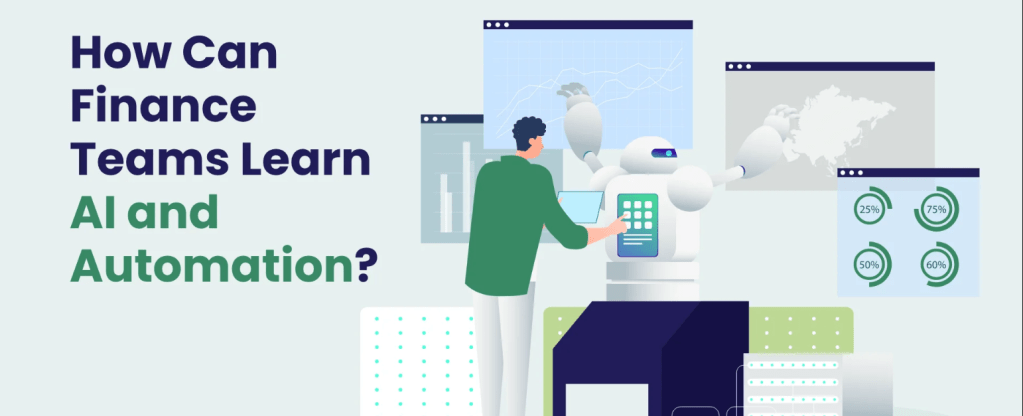
As reported by The Next Web, the most effective finance departments are not handing over decision-making to algorithms. Instead, they are using AI to streamline processes while keeping experienced professionals responsible for analysis and judgment.
One reason is the difference between forecasting and financial modeling. Forecasting relies on historical data and trend analysis, areas where AI performs exceptionally well. Financial modeling is more complex. It requires understanding how a business operates, identifying relationships between revenue and expenses, evaluating risks, and testing assumptions about future growth. These tasks often involve critical thinking that extends beyond data processing.
Modern AI tools already provide substantial value across finance workflows. They can collect information from multiple systems, reconcile data, identify unusual transactions, and generate forecasts in a fraction of the time required by traditional methods. Scenario planning has also become faster, allowing finance teams to assess the potential impact of changes in pricing, hiring, customer retention, or market conditions within seconds.
The technology is especially useful for eliminating repetitive work. Tasks such as data entry, categorization, formatting, and reconciliation have historically consumed significant portions of finance professionals’ time. By automating these activities, organizations allow their teams to focus on strategy, planning, and decision-making.
Despite these advantages, AI still faces important limitations. One challenge is its tendency to produce confident-looking results even when the underlying assumptions are flawed. A forecast may appear sophisticated and detailed while relying on unrealistic inputs. Unlike an experienced analyst, AI does not naturally question whether a sudden improvement in customer retention or revenue growth is realistic.
Another issue involves business dependencies. Financial outcomes rarely exist in isolation. Sales growth may depend on additional marketing investment, new hiring plans, or operational changes. Human analysts often recognize these connections and adjust their models accordingly. AI systems, however, may struggle to understand such relationships when evaluating future scenarios.
Transparency is another critical factor. Investors, executives, and board members frequently ask how specific figures were calculated. Finance leaders must be able to trace assumptions, formulas, and data sources behind every projection. In many cases, AI-generated outputs still require human validation to provide the level of accountability expected in corporate decision-making.
This reality is reflected in the strategies of major consulting firms. Organizations such as Deloitte and PwC continue investing heavily in artificial intelligence while maintaining a strong focus on human oversight. AI supports activities like document review, compliance checks, and baseline analysis, while professionals remain responsible for interpretation, strategic recommendations, and client guidance.
As a result, a hybrid model is emerging as the preferred approach across the industry. Under this framework, AI handles data collection, forecasting, anomaly detection, and routine analysis. Human experts review assumptions, challenge conclusions, and ensure that outputs align with business realities before they influence important decisions.
Companies evaluating AI-powered finance platforms should consider several key questions. They should determine whether the system explains how conclusions were reached, whether there is clear accountability when errors occur, and how the tool adapts when business conditions change. Answers to these questions often reveal the difference between practical solutions and marketing promises.
The future of finance is unlikely to be fully automated in the near term. Instead, the strongest results are coming from organizations that use artificial intelligence to remove operational friction while relying on experienced professionals for strategic judgment. This balance allows businesses to benefit from faster processes without sacrificing the critical thinking needed to navigate complex financial decisions.


 Eduindex
You must be logged in to post a comment.