The Importance of English

The British had to leave bag and baggage as the long drawn struggle for freedom came to an end. Now, India is a free and sovereign country with Hindi as its national language. And the importance of English as a second official and a link language continues. No doubt the British imposed English on India but now it is not a foreign language. It continues to play an important role within the country and outside in dealings with foreign countries. For more than two centuries English has been in India and many Indian writers and authors have made generous contribution in the development of English language and literature. Among great political leaders Mahatma Gandhi, Pandit Jawaharlal Nehru etc have been prolific writers in the language.

Though the percentage of English speaking people in India is very low, yet it is most widely used among the educated urban people. It is also the medium of instruction in the institutions of higher learning and education. Hindi in devanagari script is the official language of the union and it was stipulated in the Indian constitution that English shall continue to be used For all official purpose of the union till January 25, 1965 but a complete switchover to Hindi was not found practicable within the stipulated date and English in addition to Hindi continues to be used for all official purposes. However, over 44 crore people speak Hindi and it is their mother tongue followed by Bengali and Tamil. The regional languages are the official languages of the states. There are 22 statutory recognized languages in India. Many people are over enthusiastic about removing English and replacing it completely with Hindi and regional languages. They argue that English is a symbol of slavery and colonialism. But they forget that English is an international language and Hindi or regional languages just provide translated material in higher learning and training. Without English it would not be possible to keep pace with the rapid advancements and researchers in science and technology. The mother tongues are Important and so is Hindi and it is desirable that the students are imparted instructions and education in their mother tongues will stop but it does not mean that English is no more important or can be completely replaced by Hindi or any other Indian languages. Total abolition of English would leave India far behind other countries in the fields of medicine, engineering, communication, business, space technology, agriculture etc. It would be suicidal to remove it completely from the scene. Moreover southern states in particular would never tolerate it and there would be a sort of chaos.

Discretion is the better part of valour and it is advisable that English retains its present position an status for some more time to come. English is a link language and a means of communication between different educated linguistic and regional groups will stop it is a language of learning, higher studies, business, science and technology and opportunities. Even those who advocate Its removal in public send the sons and daughters to English medium schools. English is very rich, powerful, varied and widely used and understood language. It is spoken by the majority of the educated people all over the world. It can be called a window Upon the world of business, science and culture. As such, more and more Indians are learning English and there is a flood of institutions teaching Indians how to speak English will stop English is still an important instrument which provides us access to a wealth of knowledge and information of the world.

It was English which helped Indian renaissance beginning from the time of Raja Ram Mohan Roy and Rabindranath Tagore. English helped leaders and people come together inspired by patriotism and national feelings. It is this vehicle which carried their ideas dreams and cries to the other peoples of the world. Removal of English Would cut off India from other countries and international affairs. If we want to grow and develop, we will have to keep close contacts with the other nations of the world. We cannot lose the expertise, efficiency and advantage of English gained after many decades of efforts an exercise because we have inherited it from the British.

Man Does Not Live By Bread Alone

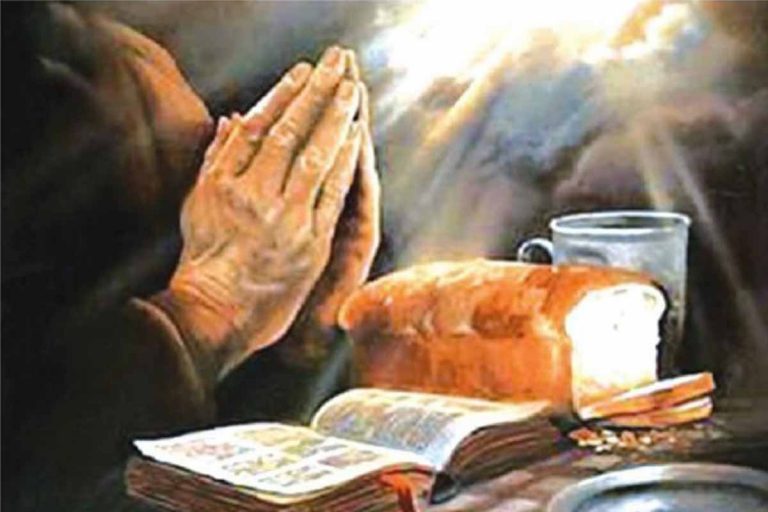
This is a Biblical quotation. The full quotation reads: “Man shall not live by bread alone; but by every word that proceedeth of the mouth of God”. Food is necessary to exist but mere existence cannot be the be-all and end-all of life. We eat in order to live but life is a means and not an end itself. Bread is like a staff and support to help us reach our destination. Man does not live simply to eat and drink. Eat, drink and be merry cannot be the aim and objective of life. We share the need of food and shelter with all other animals. But man is the crown of creation. God has created man in his own image. His intellectual and spiritual capacities and capabilities are limitless. There cannot be more majestic, wonderful, awe-inspiring and valuable thing than man in the whole creation. He signifies the ultimate in creation. Then, how can he be satisfied with mere bread?

Man is an intellectual being. His intelligence urges him to probe the mysteries of nature, To conquer the elements, reach to the moon and planets and go beyond them. It wants to unravel the mystery of life, death and creation. It inspires and stimulates him to evolve higher and higher and still higher till perfection is achieved. His Hunger for knowledge and thirst for enlightenment know no bounds. Even the sky is not the limit for him. His spiritual, ethical, aesthetic, social, cultural and technological urges are two strong to be resisted. He wants to create wonderful, fantastic and very beautiful things. He dreams of making a perfect example. Satisfaction, in ordinary sense, is not his cup of tea. It belongs to animals and beasts.

Had he being satisfied with the gratification of his senses alone, there would not have been such great religions, literature, piece of wonderful art, cultures ever reaching to greater heights and so wonderful technological, scientific and industrial advancements. He could have then not planted his foot on the moon or probed Mars and sent flying machines far beyond the planets. Today he is master of all that he surveys only because of these deep urges to reveal the secrets of nature and spirit. No doubt, man was at first a savage animal like all other animals. Then he lived in caves, under trees, covered himself with barks and leaves and satisfied his hunger by eating flesh of the animals. But is was just a beginning Of the long and triumphant march- a march from savagery to civilization, culture and great spiritual heights.

Obviously, Bread is important but not all important. Bread sustains us, but the purpose of life is far higher, nobler, subtle, refined and wonderful. Life becomes worthy of its name when it is dedicated to nobler aims, activities, achievements and struggles. Man is by nature a dreamer, an idealist and prophet. He wants to translate his dreams into a reality. He does not treat life as an empty dream. It is not a walking shadow or a poor player signifying nothing. He is ready to lose his life to discover its real meaning, to lace it with a nobler purpose and significance. Life of man anticipates all these and much more. Food, shelter, clothing are a mere Staff and man never wants to turn them into a crutch. He knows the difference between a mere tool and the higher goals it is meant to serve. He can never be satisfied with a good length of life but believes in quality, in its meaningfulness and which is why there is so much struggle, efforts, exertion and sweat. Man search for the truth, the ultimate reality leads him to higher and higher steps of evolution. He knows how to live but still better he knows how to die. He eats to live but never lives to eat.

The Art of Conversation

Among other things, what distinguishes man from other animals is speech and language. The very fact of being man signifies speech and conversation. Conversation as a tool and vehicle of expression of ideas, emotions and experience is of great importance. It lessens pain and suffering, multiplies joy, enjoyment and exaltation and enriches experience. Man can best reveal his mind, intentions, ideas, purpose and personality through words of the mouth or talk. A man is known by his words and talk. A talk reveals a man’s inner being, his thoughts and emotions. A conversation also means participation, cooperation and interaction. This is the best means of communication and expression and also the oldest and the richest. Our oldest and most cherished religious and spiritual works were originally in the form of oral communication, conversation and dialogues. Conversation is essential for success, social interaction, business, learning and education. In a broader and general sense conversation is very comprehensive and includes a talk, lecture and public speech. A lecture or talk may be termed as an extension of conversation. In a conversation a talk is confined to two-three persons but in a speech or lecture it extends to many persons forming a large audience. Moreover, a speech is more or less a one way traffic. While conversation implies intimacy, informality, equal participation, warmth etc. A good and enjoyable conversation is an art in which both heart and mind are involved in an intimate way. It is polite, sweet, intelligent, enjoyable and close.

The art of conversation is essential for influencing people, making friends and achieving success. It can be cultivated and developed. It is a great boon which can be possessed by training, practice, patience and perseverance. One who acquires this art, his labours are fully rewarded. He is welcomed wherever he goes. People like his company and he can become a leader among equals. He will be acceptable and his reputation will acquire wings.

A good conversation is always interesting, polite, warm, relaxed natural, spontaneous, rhythmic and comfortable. A good talker and conversationalist can take his message across successfully, convince the other party and leave long lasting impression. To possess this art one has to be self confident. Self confidence carries conviction, acceptability and popularity. Success in conversation arises from confidence. To attain self confidence read as much as possible, acquire knowledge and then practice talking about it with your friends, neighbours, parents and groups of people around you. Life is full of opportunities to develop this skill. Get yourself involved in others and then get them involved in your sweet, polite, meaningful and relevant talk. There is nothing like practice. Practice makes a man perfect. Any topic is good enough to converse and practice. Make your talk interesting, informative and relevant. Attend lectures, talks and addresses of well known speakers. It will give you a lot of experience, confidence and material to talk about. Be positive, hopeful and always think of the best.

The more you talk with various people, the more you possess knowledge, experience and confidence. Exchange of ideas, experience, emotions, opinions and concepts is likely to prove a great asset in your life and career. Your conversation even with a poor shoemaker , bus conductor, illiterate farmer or an uneducated house helper would not go waste. But talk with a purpose, be conscious of your aim and object and never lose sight of what you want to achieve. Nothing should be half hearted and half bake. Never monopolise the conversation and allow others to speak. Never dictate terms but be friendly, funny, considerate, liberal and polite

Corruption Unlimited

India has the dubious distinction of being one of the top ten corrupt countries of the world. The malaise is too deep and wide to be eradicated so much so that common people have become despondent to the point of apthy. India has become a country of scams, scandals, corruption, graft and gratification.

Bribery, gratification, illegal donations, kickbacks etc are now the order of the day. They have become endemic part and parcel of our life. Go to any department, ministry, office, school, college, police station law court, hospital or any any other place of work you can think of, you will find corruption ubiquitous. Even accident victims are not spared. People involved in train or plane accidents are robbed and plundered in very tragic and helpless conditions even by those who are supposed to be honest, helping and defender of the law and order. Can there be more degrading situation than this? Sometimes it looks as if the situation has reached the point of no return but then the inner conscience says “no” and urges to fight it.

Corruption has been eating into our vitals in spite of moral teachings, exhortations, slogans and learned lectures from the political platforms against the corrupt. No corrupt person has been hanged so far. The mills of law are too slow to grind and punish these political goons. It may take years even to take cognizance of corrupt practices, let alone punishing corrupt persons in top slots. Even our judiciary is not free from the malaise. Many a time a finger has been raised towards people sitting in the judgement.

Corruption percolates from above and gradually reaches all the lower levels of the society and administration. There is collusion and nexus between antisocial elements, mafias, criminals and politicians in power. There is no limit to hawalas, money laundering and a parallel economy exists there with their blessings. The criminals and the culprits are ruling the roost because of their high connections, contacts and money and muscle power. The long arm of corruption reaches everywhere. Neither politics, nor religion, nor elections, nor judiciary is beyond its reach. Dacoits and history sheeters are sitting in the Parliamentary and legislatures. Time has come when the people should wage a relentless war and crusade against corruption and corrupt practices. It is now or never.

The Prime Minister has given a clarion call to end this menace of corruption. Like him, all other honest Indian citizens, officials and workers hang their heads with shame. The Lok Pall Bill should be introduced in the Parliament at the earliest. There should be exemplary punishment for officers, ministers and all others who practice corruption. None should be spared, not even the highest. There should be transparency in decision making and implementation of policies. There should be one window clearance in big and vital contracts and licenses. There should be accountability and responsibility for all the actions and decisions. Right to information should find place among fundamental rights. Nepotism, red tapism, favouritism etc should be dealt with an iron hand. There should be no judicial hesitation, delay and procrastination in meeting out the due punishment to the corrupt. None can be above the law of the law of the land . There can be special courts to try the corrupt in the minimum possible time. The mills of justice should grind fine and fast too. Public should be aroused against the corrupt so that the people in authority do not become law in themselves and hold the country to ransom by their corrupt, selfish and narrow minded practices. This is the only way to have responsive government and clean leadership.

Making a Choice of Profession

In India it is a great problem to choose a profession best suited to one. In America there is a National Intelligence Test Bureau where everybody’s intelligence is tested. This test is carried on a mass scale. It is then quite easy for you to select the career that will suit you the most. The system will naturally save our national energy and our health. It will also help in overhauling our present educational system wh8ch is very defective.

When we look around, we see how our schools, colleges and universities are turning out innumerable young persons. They are not fit for any other job except those of clerks. We have to call these institutions as clerk-manufacturing factories. They do produce lawyers, doctors, engineers etc but ‘clerical line’, has the lion’s share on that side.

There are many factors which should determine the choice of a profession. The first and the foremost is a young man’s taste and aptitude. One who is made to follow a profession for which he has taste or liking is not likely to find himself a misfit therein. He will not be a square peg in a round hole, as the expression goes. One who has a taste for music is likely to shape well as a musician rather than as a lawyer. Rabindranath Tagore had a taste for poetry. If instead of allowing him to follow that line, he was put into some other profession, the result would have been disastrous both for himself and for the world. So aptitude is a great consideration.

Another determining factor is talent. A meritorious young man may go in for a learned profession. But there again a careful choice is to be made. For instance, if he has an argumentative brain and the gift of the gab, but no head for mathematics, he is more likely to make a successful lawyer than an engineer.

A third consideration is sufficiency or otherwise of financial resources of a young man’s family. He may have the aptitude for a particular profession, he may have the talents for it; but if his father or guardian cannot afford to pay for his education or training in that line, it is useless for him to think of joining that profession.

The competition to be faced in a particular profession has also to be taken into account in making a choice. Some professions are already overcrowded and one should try to avoid them unless there are special circumstances, which may help one’s mark in it.

After choosing a profession, there are two fundamentals for its success. First, we must be devoted to our work . We must be able to learn its secrets in the spirit of a devotee. Let us take to any vocation of life. We must work with all the zeal and enthusiasm to make our work a grand success. Secondly, we must be ready to stick to it and struggle for it. A rolling stone gathers no moss and so a drifting worker is rarely a success. The choice should be made after careful consideration, but once it is made, we must stick to it.

The choice of a profession is a matter of vital importance to every man. A right choice may make his future career bright while a wrong choice may mar it forever. It is, however, not possible for an inexperienced young man to assess his abilities for a profession or his chances of success in it. It is, therefore, the duty of his guadians and teachers to help him to make the choice.

Fashion!

Man is a social animal and always wants to show himself in the society in a very presentable way. He likes variety, change and novelty. Old, stale, stereotyped and typecast things are not liked by him. He wants things to suit his changing moods, likes and dislikes and therefore, takes recourse to fashions. His hunger for being new, novel, refreshing, different, sensational and attractive makes him a fashionable being. To be fashionable is an integral part of his complex psychology. He feels bored, tired, fed up and in a rut by using the same clothes, styles, designs, food, colours, lines and textures after a certain period of time. What has been in fashion for sometime appears dull and tiresome and then he wants a change, something different, new and uncommon. This search for something thrilling, new, offbeat and unconventional gives rise to fashions.

Fashions are never static. They are always changing. What is in fashion today will become obsolete and out of date the next day. And people never like to be out of fashion. They want to be in the mainstream and flow along the current of the fashion. Fashions work as a very powerful force in the society and also reflect change, progress, prosperity and advancement. They influence human behaviour, etiquettes, moods and ideology in a way as no other thing can do. They are of much social and psychological significance and which is why to be out of fashion is to be out of the stream.

People living in cities and towns are more fashion conscious than their counterparts in villages and rural areas. In city life thousands and thousands of men and women belong to different classes and cultures live and mix up with one another and they have a lot of opportunities to imitate one another’s fashion or can improve upon the existing fashions. Newspapers, magazines, fashion shows, movies, television viewing, social gathering etc are a great source of changes in style and designs. Young men and women imitate the style of their film or sports heroes or heroines in everything – in clothes, hair clothes, hair styles, shoes, ornaments, foods and drinks and also in manners.

In big cities and towns there are fashion designers in droves. They are ever engaged in creating new fashion, styles and designs to increase the sale of their goods. The beautiful men and women are used as models to display their latest designs and styles. Fashion shows and parades are held in five star hotels, exhibition grounds and halls. It is big and well organised business and big cities like Bombay, Bangalore, Delhi etc are big fashion centres in India. The expert fashion designers can well in advance recognise the incoming and outgoing trends in fashion and taking advantage of it , create new styles and fashions. They produce consumer items in latest fashion and styles which may be described as avant-garde.

Fashions also change according to seasons and environment. They have to be in harmony with the moods, needs and lifestyles of the people. Changes in fashion are evolutionary than revolutionary. Sometimes changes in fashion look sudden and abrupt but actually it is not the case. Thry are gradual and in stages. Fashion practitioners know full well this evolutionary nature of it and take full advantage and make a fast buck.

Fashions are part and parcel of our life. They are essential and appreciable but it never means aping the west or slavish and blind imitation of others. It simply means to satisfy our urges of change, novelty and the latest. The tyranny of fashions should never be allowed to prevail.

Influence of Films

Films wield immense influence on masses. Cinema is one of the mighty media and commands great popularity. It is a very popular means of cheap and easily available entertainment, thousands of men and women see films daily in cinema houses, theatres and on their televisions. The mass appeal of cinema is well known. Its influence on the audience is deep and abiding. People, particularly the young men and women have their film heroes and heroines. They are mad after them and follow them in fashions and way of living. They see the same film again and again which features their favourite stars.

Indian film industry is very big and is now almost 100 years old. India produces the largest number of films in Hindi and other Indian languages and thousands of people are employed in the Industry as cameraman, technicians, actors, producers, music directors, singers, editors, spot boys, helpers, financiers, distributors etc. It provides employment to a larger number of people in the country. Indian films are also popular in many foreign countries. India is the leader in the film production and so far has produced more than 28000 feature films followed by Pundalik. The first Indian talkie Alam Ara was produced in 1931. Since then Indian films have not looked back. The first International Film Festival of India was held in 1952.

As a form of popular and mass recreation and entertainment, films are unrivalled. Its impact on our social, personal, national and family life is abiding and far reaching. Films are an important topic of discussion among the people. Newspapers and magazines are full of articles, comments, reviews, pictures and features related to films and the people connected with them. Seeing films have become a craze among the youngsters. The spread of television and cable boom has further popularised the films.

Besides entertainment and amusement, cinema is also a good source of education, instruction, enlightenment and information. We can learn about the distant places of our country and those of foreign countries without actually visiting them. It also helps in spreading the awareness about social evils and their removal. Many superstitions and blind beliefs can be easily eradicated through films. It is a good means of forming public opinion on social, political and national issues. It can affect many changes in the society and cause a social and cultural renaissance. Educational films help students in increasing their knowledge. By screening good purposeful and cultural films, we can mould and build the character of the young men and women of India. All good and decent films would go a long way in removing such evils as dowry, casteism, communalism, hatred, untouchability etc. Cinema and films also help a great deal in national integration, unity and emotional harmony. Patriotic songs and films strengthen the bonds of nationalism and unity. Thus, cinema is a very potent means of influencing the masses. The vivid, concrete images and visuals leave permanent impressions on the minds of the viewers. People imbibe the ideas, concepts and emotions seen on the silver screen without making any physical effort. Even illiterate and uneducated persons can be taught new ideas. To understand things through reading requires education, efforts, books and mental effort but films make instructions easily digestible by blending them with pleasure and entertainment. Cinema speaks and speaks pleasantly and not to individuals but to masses spread over a large area.

This is so powerful means of mass education, entertainment and communication should be used wisely to spread education, enlightenment and morals. But unfortunately it has been increasingly used as an instrument of destruction and disintegration of human personality. Many such crimes as thefts, cheating, violence murders and kidnappings are being committed because of the evil influence of the movies. The cinemas have become schools where vice, violence and crime are taught openly. They have become the synonym of sin, moral degradation and violence.

People in greater number are becoming victims of the unhealthy influence of films. They encourage them to violate acceptable standards of decency, etiquette and social behaviour. Film makers should understand and follow their social obligations. Films should be so decent as a man may not hesitate to see it with his wife and children. The scenes depicting women as victims of rape, sexual abuse etc. Should be avoided or should be incorporated very imaginatively and suggestively. In the name of reality obscenity cannot be allowed.

An Ideal Student

Qualities of an ideal student

Many people regard bookish knowledge to be the ‘all and end-all’ of education. This is not correct. Real education means overall development of the personality of the student. Therefore, an ideal student is the person who takes interest in all activities of his educational institution. He is good not only at studies, but also at games and other activities outside the classroom. He does nothing, which may bring disgrace to him, his parents, his school or his nation. He tries his best to become an ideal citizen.

An ideal student is diligent. He always tries to excel others in his class. He sets an example for others by his actions and behaviour in the school and college. He brings name and fame to his school. Discipline, respect for elders and good manners are his chief characteristics. He makes his mind, body and spirit strong to meet the challenges of his future life. He believes that a sound mind lives in a sound body. He is very regular and punctual. He does everything at the right time and in the right manner. He does his duty faithfully and sincerely without thinking of the reward.

An ideal student always tries to develop good habits and pleasant manners. He is polite in speech. He is always ready to help all those who are in need of him. He is honest in his dealings with others. He always keeps only good company. He has an unquenchable thirst for knowledge and he is always keen on learning something new. An ideal student always devotes enough time to reading books of common interest, and the works of great men.

An ideal student is a model person. He is never proud of his achievements. He is confident and brave. He can express his views frankly without fear and favour. He is steadfast in the struggle of life and faces all challenges boldly and cheerfully. He can never think of using unfair means in an examination.

Restraint and self control are the chief characteristics of an ideal student. He thinks twice before he speaks or does a thing. He never uses impolite language. He never misses an opportunity to serve his fellowmen. He is objective and considerate in his approach. He hates the sin but not the sinner. He is God – fearing and does not have malice to anybody. He bears a good moral character. An ideal student is aware of the fact that,
“If wealth is lost, nothing is lost;
If health is lost, something is lost;
But if character is lost, everything is lost.”
An ideal student today is the citizen of tomorrow.

Evils of Dowry

Women for sale?

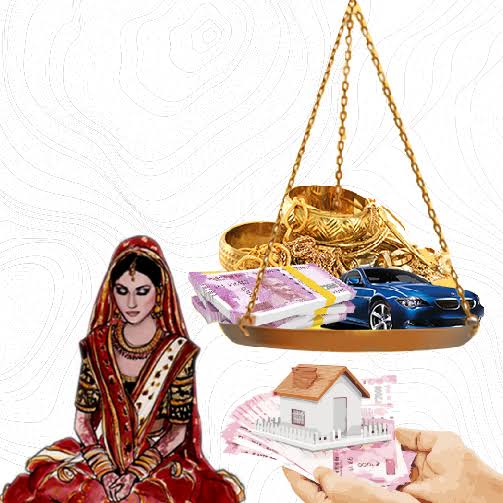
Dowry system is a great evil that afflicts India. Even after seventy three years of independence and freedom, the evil and menace of dowry system prevails and the parents of a bride are forced to give money, jewellery, costly articles etc in dowry to the bridegroom and his family. It has become very difficult to find a suitable match for a girl without payment of huge dowry. The parents of well educated and highly placed boys demand large amount of dowry both in cash and in kind. Brides are burned alive, tortured, harassed and abused to bring more and more money. In many cases a girl commits suicide to escape this devil of dowry.

Dowry is a crime against women and humanity and severe punishment should be meted out to all those who indulge in it. It is an extreme example of greed, selfishness, degeneration and social sin. It is an old, dead, useless and rotten system that should be done away with in one go. It reduces the status of women and girls to that of commodities which can be easily bought and sold. It is a great curse especially for poor parents. They have to borrow, beg or indulge in corrupt practices to have huge amount of money to arrange dowry for their daughters. That is why people feel sad, unhappy, miserable and unfortunate at the birth of a baby girl. That is why many baby girls are killed before or soon after their birth.

Such a social evil on such a vast scale is to be found nowhere else. It is a matter of great national shame and social decadence in this age. This immoral and vile custom has turned us all into an object of ridicule in the eyes of all other civilised nations of the world. People use double speak and double standards. They often condemn dowry in public in no uncertain terms but in practice and private life they demand dowry, arrange marriages purely on the basis of dowry. In ancient days it might have been relevant to some extent as the girls did not inherit property or were confined to the hearth and home. Therefore, to compensate this loss, a girl was given several gifts in cash and kinds by her parents, relatives and well wishers in dowry. These gifts ensured a sort of security to the newly married girls. New women have equal rights. Now giving and receiving dowry has no relevance, no meaning and sense.

Now, it is a cognizable offence under the Dowry Prohibition Act under which if any person who gives or takes dowry is punishable with imprisonment which may extend to six months, or with fine which may extend to five thousand rupees, or with both. Now, apart from the parents and relatives of the bride, the police and the registered social organisations can also lodge a complaint against the party demanding dowry. Moreover, there is no time limit for lodging such complaints. But laws are not enough. They are being violated blatantly and with impunity. There are over seventeen dowry deaths every day in the country and yet very few offenders are caught and punished. Besides these legislative measures, we need other meaningful and effective social measures. All out efforts need to be made to generate an effective public opinion against the evil. More and more heads of panchayats, priests, social groups, women organisations, leaders, elders etc should be involved in the agitation against dowry. The movement should be taken to villages and far flung areas of the country. Social boycott of those indulging in the evil custom can work as an effective deterrent. Group and mass marriages can also be a very useful in this respect. More and more girls should be made to enter schools. They should be trained to stand on their feet. They should be made aware of their social, family and conjugal rights and privileges. They should never feel weak, helpless, inferior or incapable. They should revolt and expose such antisocial elements who demand dowry. They should refuse to marry when dowry is demanded or given. They should wage a relentless war against all sorts of discriminations and unjust male domination.

Three new deaths in a row in Kerala; all three tortured for dowry. Link below:-

https://www.google.com/amp/s/indianexpress.com/article/india/kerala/the-horrors-of-kerala-dowry-deaths-7387077/lite/

AIDS Awareness

AIDS Awareness

AIDS or Acquired Immuno Deficiency Syndrome is a dreaded disease because it is not yet curable. This killer disease is spreading rapidly throughout the world. It is a disease which can strike anyone, anytime and anywhere unless proper precautions and preventive measures are taken. There are many misconceptions about the disease and the way it spreads. Even a majority of educated urban population is in the dark as far as this fatal and incurable disease is concerned. Many educated young men, women and adults are in the illusion that it can happen only to the prostitutes, rickshaw pullers, truck drivers, labourers or illiterate villagers. The illusion and ignorance is taking a heavy toll on the young men and women in school, colleges and universities and an increasing number of them are being attacked by HIV.

Human Immunodeficiency Virus

This killer disease is caused by a retrovirus called Human Immunodeficiency Virus (HIV). HIV attacks the human immune system by causing increasing loss of T-4 cells of blood. These cells are primarily responsible for energizing immune responses. The HIV infection gradually destroys the entire resistance system and then the patient succumbs to the diseases. The HIV remains somewhat dormant for 10-15 years and it makes its detection difficult in the early stages mainly because the victim remains totally unaware of it and does not go for diagnosis. It makes the diagnosis difficult and the problem more complicated. And then, finally the is caught unaware one day, when he proves HIV positive in the later stages. Within this period he might have transmitted the virus including many innocent children. This is the horrible nature of this disease.

There are about 30 million people affected with AIDS worldwide. In India, there are about 2.4 million confirmed AIDS patients in 2008 according to the statistics of UN AIDS and NACO. The disease is spreading fast in big cities and towns mainly because of lack of proper awareness among the masses. The disease spreads through homo and heterosexual contacts. Intravenous drug abuses, transfusion of blood products from infected persons are other causes of transmission of the dreaded disease. The other cause of its transmission is from infected mothers to their babies.

The disease is still incurable in spite of intensive and worldwide research. However, a patient’s life can be prolonged by 4-5 years by administration of certain drugs and medicines and proper and intensive care of the patient. But these medicines and care are very expensive and beyond the reach of most of the HIV patients. Moreover, the AIDS virus soon develops into a resistant strain to a particular medicine. And it necessitates the administration of a combination or cocktail of a number of drugs. It makes the patient’s care all the more expensive. For want of proper drugs and care the patient does a slow, lingering and painful death. Moreover, an AIDS patient is rejected by one and all. Even close relations refuse to accept an AIDS patient because of mainly misconception about the disease.

Casual contact like handshake or embrace of the HIV patient does not transmit the disease. It cannot be transmitted either by mosquito bite. Though there is no cure for the virus but still the patients deserve better care and treatment from the society. A combination of certain very costly drugs given to the patient can certainly minimise the complication yo certain extent and increase the life of an AIDS patient. These medicines should be produced on a large scale to make them less expensive. They should be made easily available on subsidised rates. The problem can be eased further by a mass movement in its awareness. The students in schools and colleges should be taught how to avoid the disease and help the infected people. There are many problems, issues and questions related to the AIDS patients which need to be discussed and debated before any decision can be taken about them. Really, it is a crisis of humanity and the mankind and should be treated as such. If not, no country or society can successfully fight the menace of AIDS.

Symptoms of AIDS

Advertisements

This is an age of advertisement, nay aggressive advertisement. There is virtually an advertisement invasion. It is all over the country influencing our ideas, lifestyles and decisions. There are more advertisements in the newspapers than the news and articles. On the small screen of television the programmes are heavily punctuated with advertisements. They are there on the silver screen of the cinema in large numbers. They can be seen on the walls, buildings, scaffolds, electric and telephone poles, trucks, buses airports and even in such places as cremation and burial grounds. Big, colourful and attractive advertisement balloons rise and float high in the sky. There are costly but very attractive laser advertisements. It has become a very big industry and there are huge profits and volumes. Corporate groups, business houses, film makers, shopkeepers, traders etc spend crores and crores on advertising. A great part of the annual budget of these people is spent on it.

Advertisements serve a great purpose. They promote sales, increase businesses and profits as nothing else can do. They catch the eyes, hearts and minds of the viewers and turn them into instant buyers. They appeal to their imagination, curiosity and purchasing urges. People are tempted to buy what they see advertised. Then there is pressure from ladies and children in the family. These pressures turn hesitation into immediate purchasing decisions even when the things are actually not needed. People buy on instalments, on credit or by borrowing money, such is the power of attractive advertisements. During festivals and social occasions their psychological appeal is at its best. They create a mood to buy and spend money. Then there are gift coupons, hampers, discounts, annual sales etc which the people find very hard to resist. Advertisements have ushered in a wave of consumerism in white, brown and other goods besides clothes and commodities.

Then there are big exhibitions in five star hotels, halls and sprawling grounds. Customers throng the exhibitions and enjoy themselves with their members of the family. When an environment of picnic prevails there, one can’t be easily on a spending spree. There is home delivery, buy now pay later offers. Such an onslaught can hardly be withstood. Advertisements also offer better products at reasonable rates. There is wider choice and vast range of things to choose from. People want value for their money and advertisements give them this opportunity. There is cheating as well but it soon exposed and cannot be repeated. In this age of global economy, international integration and fierce competition only the fittest can survive.

An advertisement to be successful, needs to be creative, novel, appealing and result oriented. Advertisements are prepared by experts by spending lakhs of rupees and keeping the target buyers in mind. Publicity aims at promoting sales by underlining certain unique qualities of a product and commodity. “Out of sight, out of mind” is a very old and time tested saying. It applies so well in the world of business, trade and commerce that nobody can ignore it. The more people see and listen about a product, the more they are sure to buy it.

Advertisements help in introducing new products as well as increasing the sales of established products. Advertisements create brand image and once a brand is established a commodity becomes a household word. Established brands have very strong appeal. And once one starts liking a particular brand, he or she sticks to it lifelong. It becomes a kind of addiction and hypnotism. Advertisements have revolutionized the business world.

But sometimes advertisements are really very dangerous and cause a lot of harm particularly to children and youngsters. They try to imitate dangerous advertisements seen on television, silver screen or in a magazine. Such visuals and advertisements should be banned and there should be heavy penalty on those advertisements which cause loss of life or injury among children.

A Stitch in time Saves Nine

“A stitch in time saves nine”

This is an old saying which means that immediate action taken as soon as something goes wrong saves a lot of work and expenses later. Like all other sayings and proverbs this saying is also steeped in great wisdom, lifelong experience and the truth. Sayings etc are like valuable pearls taken out from the deep ocean of life. Proverbs express human learning and wisdom so appropriately, exactly and briefly that the whole universe appears to be confined to a room. “What often was thought but never so well expressed”, applies very accurately to the sayings and proverbs.

Timely action is of great significance. An evil nipped in bud, a mistake corrected on the right time or a damage mended before it is too late would save us a lot of expense, trouble and time. In every walks of life timely action and remedies are of vital importance. We must set right a wrong immediately or else it would grow into a very serious problem difficult to be tackled in future. Problems not addressed in the very beginning often become unmanageable later. The same wisdom is being highlighted by another saying, “Prevention is better than cure”. We should not allow a disease to originate and develop at all. It should be prevented from being born. Why a problem should be allowed to crop up at all? The best is to prevent a bad situation from being arising. Cure and remedy is of secondary importance and it involves more efforts, expenditure, labour and time.

For example, let us take formation of bad habits- smoking, drinking, eating too much sweets, seeing too much of television programmes or indulging in playing cards. These bad habits can be very easily acquired but are very difficult to be eliminated and rooted out. If a child is found smoking or stealing or telling a lie, he or she must be immediately checked and the evil nipped in the very initial stage before it becomes a habit. Once a bad habit is formed it is very difficult to get rid of it. We should never connive at the bad habits of the children. They should be firmly rooted out and all possible steps taken so that the child does not become habitual of them. Similarly, we elders should always be at a guard and be ruthless in stamping out our bad and undesirable tendencies, attitudes, and ideas before they mature into habits and deep rooted practices. The force of habit is very powerful and obliges a person to practice that evil action again and again. If he does not repeat it, he feels very uncomfortable and restless. And one evil leads to so many other evils. A habit of stealing things would lead a person to telling lies, cheating, drinking, drug addiction, illegal and immoral activities and the company of anti social elements. It creates an endless vicious circle. Once you throw a stone into the water and then there endless waves in circles, one after the other, then more and still more. You cannot escape it. Things should be mended and set right then and there. Time or opportunity lost once, is lost forever.

Many of our tragedies, disasters, losses and evils are because we do not pay heed to this saying. In personal, social and national life, there are many examples which very well bring home the truth and wisdom of the saying. Evils in their very serious and devastating forms happen only because we allow them to grow and strike roots deeper and fail to nip them in the bud. A soldier lost the battle and was disgraced only because he did not nail the shoe of his horse in time. A small negligence and so much loss!

Superstitions!

Superstitions in India

The blind belief in omens, augury, magic, magic formulas, useless rituals and superstitions have given rise to a mushroom growth of babas, swamis, tantriks, priests and godmen. There are numerous divine babas – Balti baba, Bhoot baba, Satellite baba, Computer baba, to name a few. Then there are godmen like Surya Swami, Chandra Swami, Mangal Swami, etc. Even in this age of rapid advancement of science and technology, modern man is afraid like his primitive forefather living in the cave and connects his misfortunes with mysterious and unknown forces and seeks help of the tantriks and godmen to avoid them. Such a state of mind gives rise to various types of superstitions, blind faiths, rituals, practices etc which are not only absurd and ridiculous but sometimes quite horrible. Animal and occasionally human sacrifices to appease the unknown black forces reflect man’s intellectual bankruptcy, primitiveness and ignorance. It shows how people are still obsessed with superstitions. They wear stones, rings, armlets, believe in talismanic charms and pay through their nose to the soothsayers, crystal gazers, astrologers, tantriks, babas and godmen.

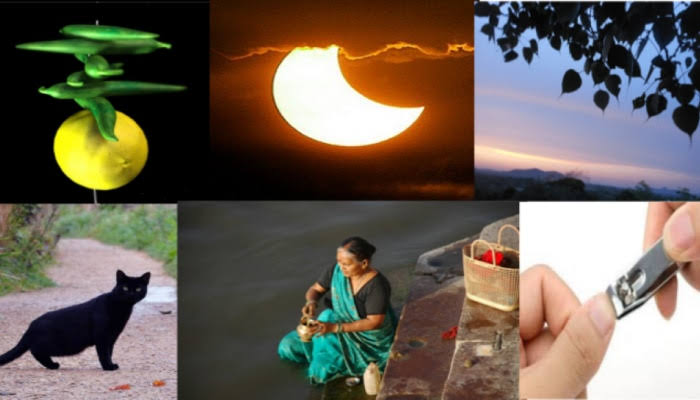
People still believe in omens and auguries. They are afraid of number 13, crossing of their path by a cat, or spilling of the salt. The eclipse of the sun and moon, the sight of a comet or shooting star, cries of owls, ravens, weeping of cats, howling of dogs, and jackals or braying of the donkey at certain hours still send a chill down their spine and they resort to all sorts of foolish practices to ward off the imagined harm and evil. All superstitions have their origin in human psychology of fear of ill luck, insecurity and the dread of inexplicable forces in nature. When some phenomena cannot be understood or explained, people start dreading them and assign them divine, supernatural and mysterious origins. Tantriks, preists, godmen and babas and other vested interests also help in spreading superstition to make fast buck out of gullible and credulous public. Some times ago the rumour and superstition that the idols of Hindu gods and goddesses were drinking offered milk caused quite a flutter and thousands and thousands of people were made fool and a laughing stock.

Superstitions find a fertile soil and breeding ground in human ignorance and lack of scientific knowledge. The less a community is educated and enlightened, the more it tends to be superstitious, backward and gullible. In such communities the astrologers, priests, magicians, babas, godmen and charlatans have a very good business.

Much fraud is being perpetrated in the name of astrology, palmistry, occult science, rituals and so called religious faiths. These weaken the faculty of human reasoning and make men more gullible, credulous, helpless and miserable. Superstitions are great curse. Superstitious fear, ignorance and lack of scientific temper have done immense damage to our progress and development. Superstitions are vile as they deprive us of self confidence, self control and rationality by weakening our will power and spirit.

Man is still afraid, awed and haunted by the fear of the unknown and inexplicable and wants to ward off the imagined trouble and suffering through the observation of the rituals, offering to ghosts, appeasement of the spirits of the dead and the worship of the stars and plants. There are lucky and unlucky numbers, days, animals and birds. A worn out horseshoe fixed the right way up the door of the house is supposed to bring good luck and prosperity. English people still think number 13 as inauspicious and ominous and refuse to occupy room no. 13 in hotels. Belief in charms, supernatural powers, ghosts, goblins, witches, evil spirits, spiritual healing etc have their deep roots in our superstitions.

Fortune telling has become a big business. Newspapers, magazines and periodicals have regular columns on weekly fortune of the readers. No newspaper or magazine can afford to miss it such is its popularity. Superstitions are thriving on a large scale under the auspices of various cults, religious sects, godmen, priests and so called babas swamis and prophets of gods. They prevail in every society, nation and community. Sometimes they are absurd, foolish and ridiculous to the limit of primitive ignorance. All superstitions have common origins. This is the age of reason and science and yet many old superstitions continue. Consequently, astrologers, soothsayers, godmen and priests are in great demand. We are actually the maker or spoilers of our destiny. The heaven or the hell lies within ourselves and yet we blame the stars and the constellations for our misfortune. And the vicious circle continues endlessly.

Leisures in Modern times

Leisure is an important part of life. Leisure is not idleness nor non activity but it implies an activity which is meaningful, fruitful and enjoyable. Leisure time is a time of personal fulfilment and pleasure. It is freedom from monotony, boredom and drudgery of life. It is a time when one pursues what one likes most. It is as important as the work itself which forms our means of livelihood.

The modern age of automation, better standard of living and longevity has further broadened and liberalized the concept of leisure. The wonderful scientific and technological inventions, discoveries and developments have reduced the hours of working and consequently man has now more time to enjoy leisure and hobbies. But to make a meaningful use of leisure time is nothing short of an art. Very few people know how to make best use of the leisure time. One needs to develop a proper perspective to make most meaningful and satisfying use of the spare moments.

Different people spend their leisure in different ways. Some people have no definite idea or plan in this respect. Some others may treat this period as a time of rest and sleep. To many others it is a time of some creative and aesthetic pursuit and inner fulfilment and growth. They play music, grow plants, write poems, practice meditation or render social service. To many it is time for simple entertainment and they go to theatres, see movies or exchange visits with friends and relatives.

But in this age of electronics most of the people spend their leisure before their television sets. The craze and popularity of television is rapidly increasing further and further. A great part of their free time is being spent in viewing programmes on the idiot box. There are interesting serials, spicy films, dances, chat shows, interviews, various types of information, latest news, weather forecasts, analysis of events and happenings and many more things all the 24 hours of the day. There are scores of channels to choose from. One has to do nothing. There is neither mental exercise nor physical activity. You have to just sit and watch things happen on the small screen. Even children are great TV enthusiasts. They have cartoon films and other programmes to keep them glued to their TV sets.

Such a craze and popularity of TV has created many social, psychological, physical, family and mental problems. It has marginalised reading, social activities and outdoor hobbies to a great extent. It is particularly harmful for children. They spend 3-4 hours or more daily in viewing television programmes. Consequently, they grow mature before their age, acquire lots of knowledge but never grow wisdom and lose much of their valuable fun, pleasure and enjoyment peculiar to childhood.

These days leisure has grown into a big business and industry. People have invested huge sums of money in developing luxury hotels, motels, holiday homes, video games resorts, golf courses, places of water sports, fun and health clubs. There are package tours, chartered flights and other attractions to make your spare time really interesting, enjoyable, exciting and memorable.

Our life is now far more free and leisurely than it was for our forefathers. But this abundance of leisure and spare time may turn into a curse if not used properly and wisely in some pleasant, enjoyable and healthy hobby. It is after day’s hard work that one enjoys one’s leisure the most. Rest is sweetest only after exhaustion. Leisure provides us with a rare opportunity to satisfy our inner spiritual and aesthetic demands. But problem is how many of us are really well equipped to meet these demands?

The Evils of Drinking

Drinking is one of the many evils our society from. It is a great social evil and needs to be eradicated. Habits die hard and once this evil habit is formed, it is very difficult to get rid of it. Sometimes people start drinking as a mark of fashion in the beginning and then gradually it becomes a habit. In most of the cases it is the result of bad company. Like any other addiction, drinking is also an addiction and deserves full condemnation. The bad effects of this evil habit are too many to be counted. It leads to bankruptcy, moral degradation, misery, untold suffering, loss of health and character.

Drinking disintegrates families. The families of drunkards undergo lot of suffering as their money is drained off and they become utterly poor and deprived. A drunkard spends his income in drinking and thereby deprives his wife and children of even basic needs of life. A drunkard loses his mental control and indulges in abuses, beating of his family members, specially wife and children. He does not hesitate to pick up a quarrel with others on any pretext under the influence of wine. Thus, a drunkard becomes a social and family nuisance and an undesirable person. Many other evils are closely associated with drinking, these include gambling, prostitution, lying, quarrelling, stealing, cheating etc. A drunkard can stoop to any depth to satisfy his urge for drinking. If need be, he can even commit murder, such is the force of this evil habit.

Mahatma Gandhi was a great social reformer. Drinking was one of the social evils he fought against. He was in favour of total prohibition because he said, “drinking makes a man forget himself. He ceases to be a man for the time being. He becomes less than a beast.” He started a mass movement against the evil. Again Mahatma Gandhi said, “Only those women who have drunkards as their husbands know what havoc the drink devil works in homes that were once orderly and peace loving.”

Drinking id undesirable even in moderation in a country like India where a hot climate prevails. There are many deaths every year in the country because of drinking and yet the evil is on increase. According to a report, in recent years it has increased from one in three hundred to one in twenty. This increase in alcoholism and booze, is alarming. Prohibition in India has failed because of many reasons. Firstly, it has been half-hearted. Secondly, when drinking is prohibited in one state, the other state in neighbourhood remains wet where the drunkards and alcoholics go and enjoy drinking. Thirdly, the corrupt officials, policemen etc take advantage of the prohibition and give protection to bootleggers against huge bribes and then it becomes a big business. The ill gotten money and wealth creates an evil force of mafias. For example, now there is prohibition in the state of Haryana, but wine is freely available there but at about three times the usual price and the political leaders and policemen are minting money. Simply passing laws against drinking and never work unless there is strong political will and public awareness behind the laws. The rules and regulations against the evil should be enforced strictly and both in letter and spirit.

The poor men, the daily labourers and wage earners suffer the most from the evil of drinking. They drink for intoxication to forget their worries and to remove fatigue. Since their diet is never rich, they soon become victims of heart, lung or liver disease and meet their income on booze and this in turn plays havoc with the welfare of their families.

Prohibition is essential and it is the need of the hour. Even alcoholics know that it is an evil and they curse their bad habit. Many of them want to get rid of it. Prohibition will help us in protecting the younger generation against the evil. Prohibition should be countrywide in spite of revenue losses to the States. All out efforts need to be made and short and long term measures taken to make prohibition a success.