Courses and jobs to do after B.com hons.

Lack of clarity in choosing future may haunt you at night. If not addressed properly it may cost you your career. Just having B.com degree is not enough in extremely competitive corporate. You must add more skills.

Some of you may choose to work right after graduation while some may decide to purse masters. So I have sorted some most popular courses and jobs that you can do after B.com hons. Hopefully this article will help you in clarification.

Courses

  1. Masters of commerce (M.com):It is the most popular course after doing b.com hons.  This course is most suitable for students who want to pursue career in academics or as a market researcher, economist, lecturer etc. Duration of this course is 2 years.
  2. Masters of business administration (MBA): Another very popular course. You get to learn about various aspects of business based on specialization you choose. In addition to your graduation you are required to have valid score in relevant exams like CAT, CMAT to pursue this course. Duration of this course is also 2 years.
  3. Chartered financial analyst (CFA): It is offered by CFA institute of America and is considered of highest standard. You can take up jobs like a financial analyst, statistician, market research etc. Duration of this course is 2.5 years.
  4. Business accounting and taxation (BAT): This course is well planned to give you practical understanding of accounting, taxation, reporting and other relevant skills. These skills are mandate for accounting firms, KPO, and other hardcore finance and accounting jobs. Duration of this course is only 8-12 weeks.
  5. Certified management accountant (CMA): It demonstrates your professional expertise in the field of financial planning, analysis, decision report etc. You need to clear two exams in order to become eligible for this course. You are also required to have 2 year work experience. Duration of this course is 6 months.

Jobs

  1. Financial risk manager: FRM is a globally recognized certification for finance and banking professionals. It provides many lucrative jobs in the field of risk management, wealth management etc. Average salary of this job is Rs. 10-18 LPA.
  2. Business analyst:  One more career option is to apply for job as a business analyst in MNCs and corporates.  These companies always look for graduates. You will also gain experience and skills. Average salary is Rs. 3.5 to 5.5 LPA.
  3.  Digital marketer: Due to rise in digital marketing platform, MNCs are looking for candidates with commerce background and certification in digital marketing. Average salary is Rs. 4.5 to 10 LPA.
  4. Public sector banking: You can apply in banks like IBPS, SBI RBI etc and earn handsome of money with additional perks. Average salary of this job profile is Rs. 5 -12 LPA.
  5. Accountant:  An accountant handles tax related tasks and examines financial statements. You need subject specific degree to become eligible for this job. Average salary is INR 3.5- 18 LPA.

International Literacy Day

Photo by JAI on Pexels.com

Literacy the way one defines it tells many things about the perception of that person on the topic, but what can’t change with the variety of thoughts and points of view is the motive, the base, and everything which can tell the sheer drive of why and what behind the subject.

“The man who won’t read has no advantage on the man who can’t read”, as the saying goes we can easily see the importance of one’s literacy. The power one can harness from the depth of reading and knowledge is far much greater than anything.

The boundness of our imagination and information about things restricts us from achieving many things at the higher fronts, so reading and knowing contributes to your personal growth as well as on the backends of things too.

International Literacy Day is celebrated on the 8th of September every year all over the United States started in the year 1966.

But before knowing some of the amazing facts and information about literacy shouldn’t we know the real meaning of what literacy is and what one can interpret from it.

Literacy means the ability of a person through which one can understand, read, write and interpret things that they never can think of without the means of literacy.

“ The more you read, the more you learn and more places you go” by Dr. Seuss

Says everything about the benefit of the reading and how it can affect one’s all over the status of mind and as well as living methods.

So, let’s dive into the amazing facts and important notes related to the world’s literacy day.

First, let’s talk about the facts which concern the literacy rate of the world’s populations.

According to the stats of the United Nation, there are around 75 million children which are either dropouts or they don’t go to school.

As of this year, there are around 250 children which still can’t read or write, but the amazing fact is that around 84% of the world’s population is literate.

Almost the major portion of illiterate adults are from the top 10 countries like Nigeria, China, Pakistan, and India. One in five adults is illiterate according to the stats.

International Literacy day is not a day to celebrate it as a Holiday but it is the day to observe and know the importance of reading.

The literacy of India is somehow not so good or bad but it is something for which we all are working together and we will achieve it in the upcoming years ahead.

But again there is something lethargic about the rate of our literacy as if though we want to achieve it but we are unable to do so or it’s we just don’t want to achieve it right away.

Even in times of the global crisis, we have come up with alternatives to let the flow of literacy continue and people get their basic right of reading and literacy.

Even though around everything we should celebrate the people who can read and spread awareness who can’t.

Fast Food Chains

Origin

The term Fast Food was considered by Merriam Webster in the 1951 dictionary. Fast Food chains are a specific type of quick service and self-service restaurants with bare minimum seating arrangements. People generally takeaway or orders food from them.

The ultimacy of takeaways

The devotion of Fast-Food Chains or to call them Quick Service Restaurants not border restricted but worldwide. Be it “not in home-food-mood” or morning office rush, fast food chains have proved to have descended from the heavenly abode just to assist humans in their crisis times. These restaurants produce in bulk the food items and keep it warm, fresh, and ready to get picked.

Pocketwatchers and Watchkeepers

The affordable rates and not so short fast-food variety A list of these Quick Service Restaurants is the main centre of attraction. These reasonable and instantly fast-food providing places captivates the major group of the population of The United States I.e. The Youth, both college and office goers.

Specific in Specials

These fast-food chains are both vegetarians and nonvegetarians friendly. Both Arby’s Meat and Burger King’s Whopper is equally respectable among fast-food lovers. McDonalds and Pizza Hut are among the top priority list of pizza lovers. Not to deny the reign of KFC in the hearts of non-vegetarians.

Fed-up of dining-in

The vast working-class singles when fed up of Hotel’s boring Dine-ins, step towards these fast-food chains for quick home deliveries at the comfort of their homes and enjoy their meal along with home theatres.

Boon For Time Lacking Mothers

With the ingrained notion assigning cooking to Moms, although which seems to having started fading away, students find it easy to pick up from takeaways on their way to schools. With serving burgers, pizzas, fries, shakes, beverages, fish, salads, chicken nuggets and much more, these fast-food chains have acquired both- Customers and controversies regarding being healthy. Say whatever to attack but the incredibility of these quick servers cannot be overlooked.

Agile for Non-Techies

Agile Methodology

Going by the term, agile denotes an active and fast process of performing a task. It is a method that can be applied in a variety of fields but nowadays it is gaining fame in Software development and Project Management areas. Let’s have a look at both distinctively:

Agile Methodology in Software Development

  • Agile Methodology in Software creation and development is a very effective and preferable method in present times. Agile enables the company to meet the software requirements of its customers in a very short span of time.
  • With this method, the company is flexible enough to handle N no. of requirement change at any given time, and the secret recipe for this flexibility is its working process. Agile is a iterative (repeats same process of requirement – design – development -testing) and incremental (keeps on adding new features and requirements during the iterative process) model where requirements keep changing.
  • In agile, a software demanded is broken into different pieces (called sprints) and are delivered to the customer in these sprints form and hence enabling the company to make any change desired by the customer at any stage of development.

Agile Methodology in Project Management

  • It is the same process as followed in Software Development where task of Software Building is replaced by any kind of project or in simple terms, to generalise the method for any field.
  • It has a flexible approach to build a project. A project is divided into mini-projects called sprints, and instead of delivering the complete major project as a whole to the customer, the company works on delivering the desired project in sprints on weekly or say monthly basis (whatever suitable).
  • It includes the following steps in Agile Development Cycle.
    • Sprint Backlog enlists the tasks to be completed in each sprint like planning, designing, execution, testing and development stages.
    • Product Backlog explains new features, changes in the existing features and several other significant improvements in the project.
    • Sprint includes the cycle of >>Planning >> Designing >> Testing >> Release >> Planning >>
    • Final Product received at the end of the whole mini-project deliveries.

Principles of Agile Methodology

  • Changes required by customers at any stage can be fulfilled.
  • Releases will be very fast.
  • Aims to achieve customer satisfaction.
  • Good communication link between customers, business analyst, developers and test engineers.
  • Easier to adopt than traditional Waterfall Method.
  • Modification at every stage result in best quality achievement.
  • Error in a small sprint can be easily corrected instead of error in a whole major project.

UPSC: 2021 & General

Exam & The Conducting Body

Civil Services Exam or CSE is a national level exam adorned with the title of “Most Difficult Exam to Crack”. It is conducted by UPSC – Union Public Service Commission and sometimes referred as just UPSC exam. UPSC CSE fills for 24 services ranging between 700-1400 annually. The top most All India service is that of an IAS officer and since most aspirants aim for this top post, it is simply known as IAS exam too. Although UPSC conducts several government exams every year in a variety of streams but only CSE gets the prestige of being this difficult for the level of position it bestows upon the officers. UPSC CSE or UPSC is a three-level exam which are: Preliminary (Two objective papers), Mains (Total nine papers) and a personality test (Interview). One sits for a total of 32 hours of examination to qualify the exam. On an average, the number of students that pass the first stage of exam is 11 to 12 times more than the number of vacancies. This demonstrates the competition & hype of UPSC among students. And this all hype is not inexplicable for the later highly respectful, well paying government job which the aspirants fancy for at the end of their struggle.

Examination News & Notifications

Such is the popularity and reputation of UPSC CSE exam that the news sources are not limited. There are n number of websites, portals, newspapers, coaching institutes’ sites, YouTube Channels, and several other offline & online sources that provide the news and notifications of UPSC exam without any cost. The official website of UPSC is https://upsc.gov.in/ . UPSC Aspirants and other interested students can visit the above given official website regularly to keep a check on the latest updates and notifications regarding the exam. The first notification regarding UPSC 2021 was issued on the official website on 4th march, 2021 along with the release of application form for the same.  The notification also informed the aspirants to fill the CSE 2021 application form by 23rd of March,2021 latest. Later, another notification was issued stating some changes in the exam dates caused due to novel Coronavirus. It is also given accompanying the updated schedule that even this date sheet can be subject to alterations in future if required. Keeping this in mind, students are advised to visit the official website regularly to not miss any news or announcements in future regarding the exam.

Examination Dates

Earlier the date for CSE exam phase 1 i.e., Preliminary exam was 27th of June, 2021. It seems COVID-19 like all other fields, affected UPSC CSE dates this year too and hence the date for the Preliminary exam that was scheduled to be conducted on June 27th will now be conducted on Oct. 10, 2021. Also, the Mains exam of UPSC Civil Services Exam will be held on the dates 7th, 8th, 9th, 15th & 16th of January, 2022. Apart from the form filling dates, UPSC has announced form withdrawal dates. Candidates who have filled the form can withdraw the form between 31st March, 2021 to 6th of April, 2021.

Application Fee

If we talk about the fees of the exam, it can be concluded that the fees asked for form filling in UPSC CSE exam is not as much as compared to other competitive exams, reasons being the conducting body and the difficulty level of the exam. The General Category, OBC & EWS belonging male candidates are required to pay a sum of Rs. 100 for Preliminary exam and Rs. 200 for the Mains exam. It must be clear that all category females, Persons with Benchmark Disabilities (PwBD) and SC/ST Candidates are exempted to pay fees at any phase of the examination.

Eligibility Criteria

For an UPSC aspirant, given below is the eligibility criteria based on various factors that make her/him eligible to appear in the most prestigious and India’s toughest government exam:

1.    Nationality

  • A person willing to sit for UPSC exam with the intention of getting into Indian Administrative Service or Indian Police Service must be a citizen of India.
  • Apart from IAS & IPS all other services require the candidate to be:
    • An Indian citizen.
      • A subject of Bhutan or a citizen of Nepal.
      • A refugee from Tibet who is living for permanent purpose in India before Jan. 1st, 1962.
      • A person of Indian Origin with a desire for permanent settlement in India from, Pakistan, Myanmar, Kenya, Tanzania, Uganda, Sri Lanka, Vietnam, Ethiopia, Malawi, Zaire & Zambia.

2.    Educational Qualifications

  • A candidate must have earned a graduation degree in any discipline from any open/private/central/deemed/state University.
  • A graduation degree from any foreign university that is recognized by Indian Association of Universities.
  • Graduation degree can be completed on a regular mode or through distance education.
  • A special recognition by the Govt, of India for a qualification as equivalent as above-mentioned graduation degree.

3.    Age

  • A person (male/female) is eligible to sit for the exam with a minimum age of 21 years as calculated on 1st of August, in the respective year of exam.
  • Age limits vary for different categories. The different upper age limits:
    •  For General category & EWS is 32 years.
      • For OBCs is 35 years.
      • For SCs/STs/PwDs is 37 years.
      • For Defence Services Personnel disabled in operations during hostilities, it is 40 years.

4.    Attempts

  • The number of attempts allowed to candidates (male/female) vary for different categories, which is as follows:
    • 6 attempts for General Category.
      • 9 attempts for OBCs.
      • Unlimited number of attempts for SCs/STs.

Vacancies

The vacancies for posts to be filled by UPSC through CSE exam is not fixed. The number of vacant positions is released by the Commission prior to the exam every year which vary in number. The vacant positions vary from minimum 700 to maximum 1500 approximately. Past data shows this sharp variation with exact number of vacancies. For instance, year 2018 saw a total vacancy of 759 and in 2014 vacancies were as much as 1364. This variation occurs every year. The number of vacant posts released by UPSC this year, i.e., 2021 is 712 which shows a decrease of 84 vacancies as in 2020, which was 796.

Salary

The salary offered by The Government of India to officers chosen through UPSC varies from post to post and service to service. The tag of government job and such a reputation that comes with the job, generally overshadow the salary question. For instance, the salary range of two top most services are given below:

  • For the top service like IAS, the salary range is 56,000 to 2,50,000 INR.
  • IPS officer’s salary ranges between 39,000 to 2,12,000 INR.

This trend of such large difference between the ranges of salaries is due to difference in posts, rank & no. of years in the service completed by the candidate.

Exam Pattern

As stated above, the UPSC conducts the Civil Services Exam in three stages. A detailed brief of the three stages is as follows:

A.    Preliminary or Prelims:

The first stage of this grand marathon kickstarts with Prelims exam. Prelims consists of two objective exams- General Studies I & General Studies II (CSAT). Both the papers involve negative marking. GS I is of 200 marks containing 100 MCQs, whereas GS II is of 200 marks containing 80 questions. One who clears both, qualifies for the second stage which is Mains exam.

B.    Mains:

The second stage has nine subjective type papers which are conducted approximately for a week.  The nine papers can be detailed as:

  1. Paper A – Compulsory Indian Language – 300 marks.
  2. Paper B – English – 300 marks.
  3. Paper I – Essay – 250 marks (till last)
  4. Paper II – General Studies I
  5. Paper III – General Studies II
  6. Paper IV – General Studies III
  7. Paper V – General Studies IV
  8. Paper VI – Optional I
  9. Paper VII – Optional II

All the nine papers mentioned above are of 3 hours each.

C.    Personality Test

The final stage of UPSC CSE exam is personality test or Interview of 275 marks.

Admit Card

Admit Card is the candidature document that students need to carry to the exam hall at the chosen exam center. Any student found without the admit card is not allowed to sit for the UPSC CSE. Admit card contain the name, picture, roll number and things allowed and not allowed to be carried on the day of the examination. Students can download the admit cards from the official website of UPSC https://www.upsc.gov.in/ . Generally, UPSC releases the admit cards for CSE exam four weeks prior to the exam scheduled to be held so that students get plenty of time in their hands to download & print the admit cards and also some might want to visit the exam center before the exam to avoid any kind of errors on the day of exam.

Result

Like every other information, UPSC releases the results of the exams conducted by it on the official website https://www.upsc.gov.in/ . Students can check the results by following the below given procedure:

  • Visit the official website of UPSC https://www.upsc.gov.in/ .
  • Scroll down to find the tag “FINAL RESULT”.
  • Look for the result link you are looking for.
  • Enter the roll no. and tap for search result.
  • Download and save the print for future requirements.

The marksheets of the students who haven’t qualified the last stage will be uploaded on the website within fifteen days of announcement of final result and will appear on the website for approximately 30 days. This is to help students to evaluate their weak subjects and to understand that where have they lost points.

How to Apply

Aspirants can visit the official website https://www.upsc.gov.in/ and fill out the forms.

Heal the world

I hope u all heard Micheal Jackson’s lines “Heal the world make it a better place, for u and for me and the entire world within..” Its really awesome song that makes me goosebumps! The concept of better world can be seen through the view of Ralph waldo Emerson , ” To leave the world a bit better, whether by a healthy child, a garden patch or a redeemed social conditions, to know that even one life has breathed easier becoz u have lived that is to hv succeed!” Something can be more better, beautiful or even extraordinary only if u start accepting the changes! That’s what Sir. Robert Baden in his last msg that, “Try to leave this world a little better than u found in it” Make changes over around you, perhaps only when you do something u haven’t done before! It has never been easier to make a difference untill you accept it, But every big things occur only when we took the first step! Respect the differences, raise well rounded human beings , encourage little good things happen around you, be the first voice to the voiceless! Make this world a better, a beautiful place..!Without pain no gain!

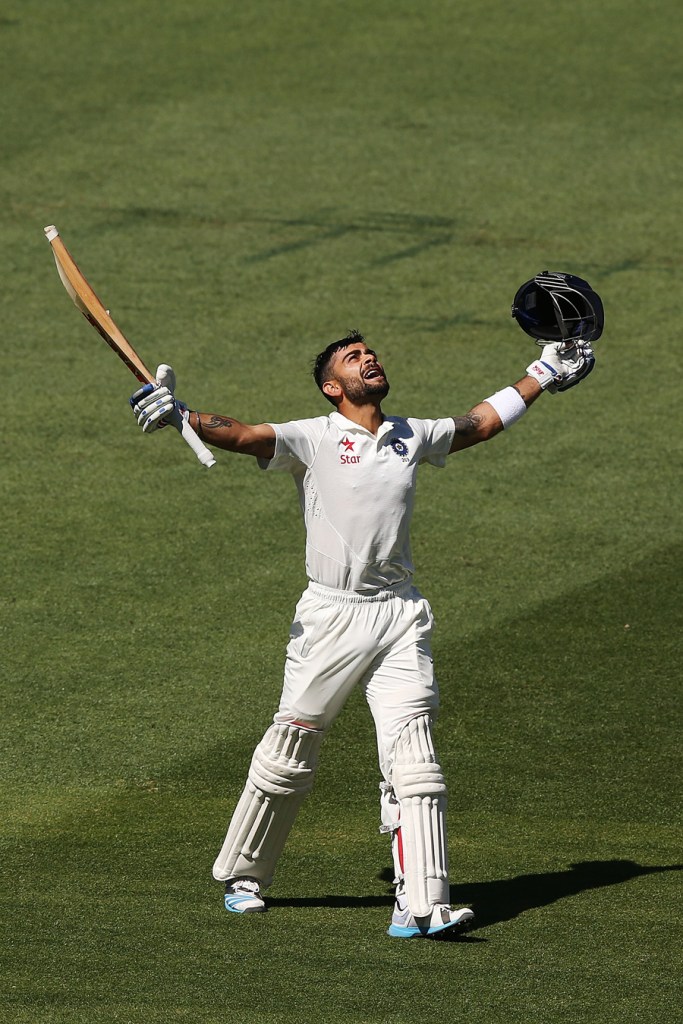
TOP 10 INNINGS OF VIRAT KOHLI

1-
141 vs Australia – Adelaide 2014


141 vs Australia – Adelaide 2014ia’s 2013-’14 tour of Australia remains significant as it saw Dhoni announce his retirement from Test cricket in the middle of the series. But that tour is also memorable for Kohli’s sensational run with the bat. In the first game at Adelaide, he got centuries in both the innings and almost took his team to an improbable win. After scoring 115 in the first innings, the right-hander played an absolute blinder in the second. India were set a target of 364 and even as wickets kept falling around him, Kohli believed in himself and kept chipping away at the target. India eventually suffered an agonising 48-run defeat but Kohli’s 141 off 175 became an instant classic.

2-169 Vs Australia (Melbourne)

After losing the first two Tests in the 2013-’14 tour of Australia, India arrived in Melbourne for the third game hoping to turn the tide. Kohli had a quiet second Test in Brisbane but he roared back at the MCG with a majestic 169 against an attack comprising Mitchell Johnson, Ryan Harris, Josh Hazlewood, Shane Watson and Nathan Lyon. He shared a mammoth 262-run fourth-wicket partnership with Ajinkya Rahane (147) and that went a long way in helping India draw the match. This was the Test after which Dhoni announced his retirement from the longest format. And thus began a new era in Indian cricket as Kohli took over the reins.

3- 82 vs Australia at Mohali 2016

The 82 he scored against Australia at the 2016 World T20 rates as the best T20 innings played by Virat Kohli.
. It was the 2016 World T20 at home and India were struggling against the mighty Australians. Despite only needing to chase 161 for victory, India found themselves 94-4, with only 6 overs left. Australia still had their key bowlers left with crucial overs. The likes of Josh Hazlewood, Nathan Coulter-Nile and James Faulkner were still to bowl out.

With the run rate above 11 already, another couple of wickets would probably have knocked India out. Instead, as he did right throughout that tournament, Kohli rose to the occasion. He was in sublime touch, as Nathan Coulter-Nile found out towards the end – toying with the bowling.
Kohli’s 82 saw India through to the Semi-Finals.

4- 133 Vs Srilanka

In fourth place is arguably Kohli’s most important innings ever. The 133 that Kohli made against Sri Lanka at Hobart catapulted the young maestro into stardom. A bowler of the quality of Lasith Malinga took full toll.

It came in just 86 balls, at a strike rate of 155 and it helped India cruise to victory, chasing 321 in just 36.4 overs. His innings gave India the chance of reaching the finals but it proved in vain in the end as other results didn’t go India’s way.

The best ODI innings played by Virat Kohli

5- 153 Vs South Africa

Number five on this list of best innings by Virat Kohli is his 153 vs South Africa. Against the best bowling attack in the world at the time, Kohli stood above all of his teammates and compiled a superb century that took India within touching distance of South Africa’s first innings total.

The innings came off just 217 balls, at a strike rate of 71. This was no mean feat. Despite Steyn being injured in the first test, Kohli was facing a bowling attack that included Kagiso Rabada, Morne Morkel, Vernon Philander, Keshav Maharaj and Lungi Ngidi.

On a slightly subcontinental that still had pace and bounce, Kohli was in complete control. The Supersport Park pitch could not stop him. His 153 came out of an Indian total of just 307. This meant that Kohli had scored nearly half of the runs in the innings. The second and third highest scores were 48 and 36, by Murali Vijay and Ravi Ashwin respectively.

6- 235 Vs England

Again a one sided series, but Kohli showed his class and maturity in the way he built his innings to get way ahead of England’s first innings total of 400. Once again, not taking much risks and scoring mostly of the ones and twos and the occasional boundary in between he went on to make another double hundred and after that what England witnessed was a batsman playing Test Cricket but thrashing their bowlers just like a batsman would in a T20 match. Kohli just unleashed on the bowlers and started hitting boundaries at ease, though he couldn’t do that for long as he was caught on 235 trying to hit a six, but this innings was as good as it could get. In that grand home season, he scored 4 double hundreds in 4 consecutive series and made another record.

7-The first hundred (2009 vs Sri Lanka)

India were looking to win the five-match series in Kolkata. Sri Lanka had registered a huge score of 315 and Suranga Lakmal had removed openers Virender Sehwag and Sachin Tendulkar in no time. India were reeling at 23/2 in the fourth over.

Despite having senior batsman Gautam Gambhir at the other end, Kohli pierced gaps at will and counter-punched with carefree abandon. Gambhir played an anchor role as the Delhi duo stitched a massive 224-run stand. Just weeks after turning 21, Kohli got to his first ODI hundred. He didn’t see the team across the line, though, falling for 107.
Gambhir did the rest, chasing down the total to hand India the series with a classy unbeaten 150. After winning the Man of the Match award, the southpaw handed it over to his younger teammate, a gesture seldom seen in international cricket.

8-The highest score (183 vs Pakistan 2012)

India had everything going against them at Mirpur in the Asia Cup after Mohammad Hafeez and Nasir Jamshed’s centuries put Misbah-ul-Haq’s side in command. India had to chase down 330 – a score they had never got to during the second innings – at the time.

Tendulkar was up and away, taking on the pacers early on to keep India on course. In a way, this knock may have been a watershed moment in the design of Kohli’s chases taking shape. During the powerplay overs, when Tendulkar was aggressive, Kohli was subdued. After the batting legend’s departure, Pakistan were sent on a leather hunt.

With Umar Gul, Wahab Riaz and Saeed Ajmal, the bowling attack had quality to hurt the Indian batsmen.
Rohit Sharma, at the other end, played a sheet anchor’s role. Who can forget Kohli’s celebrations after he reached the three-figure mark: Chest pumping out, swaying his bat with passion and letting out an expletive or two in Hindi.

Kohli departed for 183, his highest ODI score till date. The number has some significance in Indian cricket as former captains Sourav Ganguly and Dhoni’s highest ODI scores were 183 too.

9-Virat Kohli’s “notebook” celebration.

India captain Virat Kohli prefers his bat to do all the talking. But in a rare incident during the opening Twenty20 International against the West Indies in Hyderabad on Friday, he turned his arm into a virtual ‘notebook’ to celebrate.
In the 16th over of India’s run-chase at the Rajiv Gandhi International Stadium, Kohli smashed West Indies pacer Kesrick Williams for a six and then imitated the bowler’s famous notebook celebration. The Indian skipper used his arm as a notebook to sign, after hitting Williams over the ropes.
Kohli scored a masterful unbeaten 94 off 50 balls as India chased down the challenging target of 208 with eight balls to spare for a six-wicket win.

10-Virat Kohli’s unbeaten 254 Vs South Africa

Virat Kohli hit a clinical unbeaten double hundred (254 off 336b, 33x4s, 2x6s).It was his highest individual score in an innings.
Kohli’s was a captain’s innings of supreme will power and intensity. He concentrated on all aspects of batsmanship: surviving the rough period, mixed defence with offence, stole runs, encourage his batting partners and deflated the opposition morale.

HUMAN MICROFLORA

BY DAKSHITA NAITHANI

INTRODUCTION

Microorganisms that survive on another living thing (human or animal) or inanimate item without producing disease are referred to as normal flora. The human body, like most other ecosystems on the planet, provides a vital habitat for millions of microorganisms such as bacteria, fungus, protozoa, and viruses. 

From shortly after birth until death, every human being’s skin and mucous membranes are home to a varied microbial flora. The human body, which has around 1013 cells, is home to about 1014 microorganisms on a regular basis. The typical microbial flora is made up of this bacterial population. The typical microbial flora is very stable, with certain genera occupying different bodily areas at different times in a person’s life. Microorganisms from the typical flora may help, damage, or exist as commensals with the host. Despite the fact that most members of the natural microbial flora found on human skin, nails, eyes, oropharynx, genitalia, and gastrointestinal system are innocuous in healthy people, these organisms commonly cause disease in sick people. Most researchers do not consider viruses and parasites to be part of the normal microbial flora since they are not commensals and do not help the host.

The Human Microbiome Project takes on the task of sequencing the human microbiota’s genome, with an emphasis on the microbes that live in the skin, mouth, nose, digestive system, and vaginal area. When it released its early results in 2012, it marked a watershed moment in the project’s history.

SIGNIFICANCE

The host’s anatomy, physiology, susceptibility to infections, and morbidity are all influenced by the normal flora.

Until germ-free animals became accessible, it was not generally known that the normal flora has a significant impact on the host’s well-being. The investigator got germ-free animals by caesarean delivery and kept them in special isolators, allowing him to raise them in an environment devoid of detectable viruses, bacteria, and other organisms. Two intriguing discoveries regarding animals grown in germ-free environments were made. First, the animals which were free of germs survived nearly twice as long as their traditionally kept counterparts, and second, the principal reasons of mortality in the two groups were different. Infection commonly killed traditional animals, whereas intestinal atonia killed germ-free animals regularly.

Despite the fact that the bacterial flora may be unfavourable, research on antibiotic-treated animals show that the flora protects people against infections. Streptomycin was used to decrease the normal flora, and subsequently animals were infected with streptomycin-resistant Salmonella. Normally, around 106 organisms are required to develop a gastrointestinal infection, however infectious illness was caused by less than 10 organisms in streptomycin-treated mice with altered flora. After birth, humans’ typical flora normally develops in an orderly sequence, or succession, leading to stable populations of bacteria that make up the normal adult flora. The nature of the local environment, which is influenced by pH, temperature, redox potential, and oxygen, water, and nutrient levels, is the most important element influencing the makeup of the typical flora in a body area. The local setting is similar to a concerto in which one main instrument generally takes centre stage.

So, what does the regular flora have to do with anything? The flora appears to impact human anatomy, physiology, longevity, and, ultimately, cause of death, according to animal and human research. Although the causal link between flora and mortality and illness in humans is well established, the human microflora’s participation in these processes requires additional investigation.

FLORA PRESENT ON SKIN

The nature of the microenvironment influences the makeup of the dermal microflora, which differs from site to site. Each of the three areas of skin has its own bacterial flora: (1) axilla, perineum, and toe webs; (2) hand, face, and trunk; and (3) upper arms and legs. Partially occluded skin sites (axilla, perineum, and toe webs) contain more germs than non-occluded skin sites (legs, arms, and trunk). Gram-negative bacteria populate the axilla, perineum, and toe webs more commonly than dry skin regions.

The quantity of germs on a person’s skin remains essentially constant; bacterial survival and colonisation depend on a combination of factors, including skin exposure to a specific environment and innate and species-specific bactericidal action. Bacterial adhesion to epithelial surfaces also requires a high degree of specificity. Staphylococci, which make up the majority of the nasal flora, have a clear advantage over Viridans streptococci when it comes to colonising the nasal mucosa. Viridans streptococci, on the other hand, are rarely found in significant quantities on the skin or in the nose, but they dominate the oral flora.

The density of bacteria on the skin is inconsistent in the microbiology literature; one explanation for this is the diversity of techniques used to collect skin germs. For a particular skin area, the scrub technique produces the highest and most accurate counts. The majority of microorganisms dwell in the Stratum corneum surface layers and the higher portions of hair follicles. Some microbes, on the other hand, live in the deeper parts of the hair follicles and are immune to standard disinfection methods.

FLORA PRESENT IN NAIL

A typical nail’s microbiology is quite similar to that of the skin. Depending on what the nail comes into touch with, dust particles and other foreign things may become trapped behind it. These dust particles may contain fungus and bacilli in addition to existing skin flora. The most common fungus found beneath the nails are Aspergillus, Penicillium, Cladosporium, and Mucor.

FLORA IN ORAL AND UPPER RESPIRATORY TRACT

Dental caries and periodontal disease, which afflict roughly 80% of the people in the Western world, are caused by the oral flora. Many brain, face, and respiratory problems are caused by anaerobes in the oral flora, which are commonly characterised by abscess development.

Anaerobes, Staphylococci, Neisseriae, Diphtheroids, and other bacteria are found in the pharynx and trachea, as well as those found in the normal oral cavity. The pharynx may also include pathogenic organisms such as Haemophilus, mycoplasmas, and pneumococci. Anaerobic microbes are also commonly reported. Pathogens (Neisseria meningitides, C. diphtheriae, Bordetella pertussis, and others) frequently colonise the upper respiratory tract, and it may be regarded the primary point of assault for such organisms.

FLORA OF THE GASTROINTESTINAL TRACT

Bacteria find the stomach to be a hostile habitat. It comprises of germs that have been ingested with food as well as those that have been expelled from the mouth. Helicobacter species that may colonise the stomach are linked to gastritis type B and peptic ulcer disease. In most people, aspirates of duodenal or jejunal fluid contain around 103 organisms per millilitre. The majority of the bacteria cultivated (streptococci, lactobacilli, Bacteroides) are considered transients. The lack of organisms in the upper GI system may be explained in part by rapid peristalsis and the existence of bile. Bacterial populations begin to rise farther up the jejunum and into the ileum, reaching 106 to 108 organisms/ml at the ileocecal junction, with Streptococci, Lactobacilli, Bacteroides, and bifidobacteria predominating.

Although infections are inhibited by the natural flora, several of its members can cause disease in humans. Intra-abdominal abscesses and peritonitis are caused by anaerobes in the digestive system. Appendicitis, cancer, infarction, surgery, or gunshot wounds all cause bowel perforation, which nearly invariably seed the peritoneal space and surrounding organs with the normal flora. Anaerobes can also wreak havoc on the gastrointestinal tract.

The animal microbiota has more information than the human microbiome. According to animal studies, unique filamentous bacteria adhere to ileal epithelial cells and alter host membranes with few or no negative consequences. Microbes have been found on gastrointestinal surfaces and in the Lieberkuhn crypts in dense layers. Other research suggests that the gut flora might influence immune response.

FLORA IN THE UROGENITAL AREA 

Flora which is prevalent in the vaginal area is determined by the host’s age, pH, and hormone levels. During the first month of life, Lactobacillus spp. is predominant in female newborns (vaginal pH, about 5). Glycogen release appears to stop around the age of one month and continues till puberty. Diphtheroids, S. epidermidis, Streptococci, and E. coli prevail at a higher pH during this time (approximately pH 7). Glycogen secretion restarts at puberty, the pH decreases, and women develop an adult flora dominated by Lactobacillus acidophilus, Corynebacteria, Peptostreptococci, Staphylococci, Streptococci, and Bacteroides. The pH increases again after menopause and the flora recovers to that of prepubescent females due to less secretion of glycogen. Yeasts (Torulopsis and Candida) are present in the vaginal area on a regular basis (10 to 30% of women); they can grow and can induce vaginitis.

FLORA IN CONJUNCTIVAL AREA

Flora of the Conjunctiva is limited. Around 17 to 49% of culture specimens are found to be negligible. Lysozyme, which is produced in tears, may have a role in bacterial control by disrupting with the development of their cell walls. Corynebacteria, Neisseriae, and Moraxellae are cultivated when positive samples indicate bacteria. Staphylococci and streptococci are also prevalent, and Haemophilus parainfluenzae has been found in 25 percent of the total of Conjunctival samples, according to latest findings.

INFECTIONS IN THE HOST CAUSED BY NORMAL FLORA

The normal human flora has been briefly described; however, the infectious processes of a species and the clinical syndromes in which they have been implicated have not yet been explored. A breach in mucosal surface frequently leads to the host becoming infected by various members of the natural flora. Infections with species of the regular human flora include caries, periodontal disease, abscesses, foul-smelling discharges, and endocarditis. Furthermore, host impairment or host defences might cause the normal flora to fail to inhibit transitory infections or for members of the normal flora to infiltrate the host. Both the cases may result into the death of the host.


An introduction

By reading the title you must be thinking that what is the introduction about. A very important part of our lives which has lessons, memories, friends, guidance and path for a better future. Yes I think you must have guessed it…. It’s our schools, colleges and universities in which a major part of our lives is invested. We learn, innovate and implement the things with confidence in our lives and everyone has gone through this phase!…

Schools – What should write about it. For me it’s a place where a child is able to see a new world rather than family members. He is surrounded by unfamiliar and unknown faces. He has to prove himself there with his own sense and knowledge. School is always said to be a temple of learning and it is very true. We make mistakes and our teachers are present right at the moment to guide us and nurture us by what they have learnt with all their efforts for everyone at the same time.

Colleges and universities- The place where the competition begins and a teenager chooses his particular stream to build a better future. They provide the confidence to present things in the most effective way so that our knowledge and experiences are utilised. A vast area for ourselves to involve in more and more activities and create the ability to think. It provides a discussion about the topic and understanding it by the depth. The courses are available for everyone in any field they want to pursue.

This was a short detail about school, colleges and universities in our lives. Teenagers can easily develop and learn things. They can innovate things in a better version that may lead to a successful life. I hope you will relate this to your school and college days and smile a little more thinking about the memories.

Thank you !!!!!!

PSYCHOLOGY – DEFENSE MECHANISM

What is defense mechanism? How psychology looks into this aspects? Defense mechanism are something that is studied under topic stress. What do you do when you are stress? You meditate, or listen to your favourite music, etc your some how try to divert your mind or make your mind and fight it. According to psychology defense mechanism are the unconscious strategies used to protect the ego from shattering due to unacceptable and harsh reality, it’s a face saving device. Excessive used of defense mechanism leads us to a habit of escaping from the reality and indulge in falsehood about’s one own self which causes lack of concentration eventually leading to symptoms of mental disorder. Let’s see some of the defense mechanism described by Dr. Sigmund Freud;

1) REPRESSION

Suppose a person has underwent a traumatic experience it’s called repression. It’s an unconscious mechanism devise by the ego to keep disturbing the thoughts outside our conscious awareness. Thoughts that are often repressed are those that would result in feelings of guilt from superego.

2) DISPLACEMENT

Displacement is the redirection of an impulse onto to less powerful target. In this case the person can’t retaliate against the actual source of their impulse and that person redirects it to a less powerful target. Example if your working parent is scolded by the boss in the office they come n vent out that anger on you.

3) SUBLIMATION

It is considered to be the a more adaptive defense mechanism in that it can be transform the negative thoughts and emotions into a more positive energy. It’s like redirecting your emotion into a productive endeavour.

4) DAYDREAMING

A person day dreams to escape the reality. It’s when life appears to be tough and unfair a person often uses fantasy to escape the reality. Adolescent is a stage when they get more into this defense mechanism which can be dangerous for their mental health. If they day dream excessively they may lose touch with the actual world and surrounding.

ROLE OF QUAD IN SOUTH CHINA SEA

BY DAKSHITA NAITHANI

The Quadrilateral Dialogue was established in 2007 when four countries—the United States, India, Japan, and Australia—joined forces. However, it did not take off at first due to a variety of factors, and it was resurrected in 2017 after almost a decade due to factors such as growing country convergence, the expanding importance of the Indo-Pacific area, and rising threat sentiments toward China, amongst many others.

The origins of QUAD may be traced back to the Malabar Exercise. Malabar began as a modest Passage Exercise named PASSEX between the Indian and US Navies in 1992, but was halted after India’s nuclear testing in Pokhran in 1998. It was later restarted in 2002. Since its inception in 2002, QUAD has become an annual event. With the addition of Japan in 2015, it has become a trilateral practice.

The Quad’s goal remains intact: to promote the economic and security objectives of those nations with genuine and essential interests, to devise a new approach for keeping the Indo-key Pacific’s maritime lanes free of foreign influence. It has become necessary in view of the increased need for information exchange in the maritime sector. With the growing presence of the Chinese Navy in the Indian Ocean, awareness is a key subject for the Navy. After 2008, China increased its presence in the Region under the pretext of anti-piracy operations, even deploying submarines for the objective. In 2017, China formally established its first overseas facility near Djibouti, in the Horn of Africa.

What are the underlying challenges?

The environment in which QUAD has been resurrected, as well as subsequent engagements like as Malabar Exercise 2020, are regarded as governed by a counter-China narrative. There are several features that may not constitute sites of convergence, despite how they appear.

China’s influence: China has significant economic links with Quad partners, particularly Australia, which is what it may use to compel or sway nations to its side. This might prove to be an issue for India.

Maritime orientation: Quad is a marine rather than a land-based organisation because of its strong concentration on the Indo-Pacific. This raises some important concerns about the basis of collaboration with Asia-Pacific and Eurasian countries.

Differing perspectives. There are conflicting viewpoints on certain situations, such as the Myanmar crisis as seen through the eyes of the United States and India. India has remained silent in the face of Japan’s expressed worry that China is attempting to alter the status quo in the East and South China Seas.

Advantages in Space- When QUAD representatives join forces in space, they have significant benefits and are able to fight China. This includes (a) lowering the extremely high expenses of building a dock in order to promote the development of interplanetary vehicles (IPVs). (b) One member state has benefits that will compliment each other and will lead to a successful Mars exploration and the construction of support facilities that will be necessary for effective asteroid belt mining. (c) All member countries bring a high degree of convergence in space applications, for example, the United States has the advanced technological base required for advanced avionics, which will form the backbone for both the construction of a space dock and the construction of IPVs; India has a highly educated and inexpensive working population, which will lower the cost of space; and Australia has the natural resources required for exploration.

The Quad met in Tokyo on October 6, 2020, for the second time since the organisation revived in November 2017. It was the second such gathering, following the inaugural virtual meeting in June, and the first high-level Quad meeting since the 2019 foreign ministers’ meeting in New York on the margins of the UN General Assembly meeting. Furthermore, given mounting worries about Beijing’s hostile conduct and growing suspicions about China’s management of the COVID-19 outbreak in Wuhan, the meeting’s timing and circumstances added to its relevance.

China’s ‘incremental encroachment strategy’ in the South China Sea (SCS) is a source of worry not only for the countries currently affected by the loss of influence over the Exclusive Economic Zone (EEZ), but also for the rest of the world, as China may be able to exercise a monopoly over SCS Sea Lines of Communication (SLOC). Affected nations lack the necessary power to stand up to China, and so will be forced to accept a one-sided agreement such as the China-driven “Code of Conduct” (COC).

As a result, Chinese adventurism must be restrained by other major maritime countries in the global interest. The fact that China could establish a military facility in the SCS despite the existence of the US Navy shows that worldwide criticism and more effort are required to prevent the SCS from becoming “China’s lake.”

Quad may not have the fangs it needs right now, but there is no other option than to establish a prospective structure like this involving likeminded maritime countries with shared strategic objectives in the Indo-Pacific. Various perspectives on the Quad’s role, viability, and prospects have been expressed on several occasions. Because Quad is a security conversation platform rather than a military alliance, aspirations from it must be suitably limited for the time being. 

In the Indo-Pacific, each Quad member sees a distinct threat. While three of the Quad’s warships (Australia, the United States, and Japan) operate under the NATO military alliance structure, India is not a member of any military alliance, while being a reliable ally of two of them. Without India, the trilateral conversation between the three NATO partners has been since 2002. Because India is the only Quad member with an unresolved land boundary with China, it will take a different strategy to dealing with China.

The Quad has emphasised the importance of ASEAN in the Indo-Pacific; nevertheless, their membership in it is a contentious topic owing to Chinese influence. In reaction to China’s claim to the nine-dash line in the SCS, there are divisions within the ASEAN grouping. Some of the ASEAN nations that have been harmed had previously raised a faint voice opposing Chinese aggressiveness, expecting international powers to rein in China’s antics.

Quad’s shared goal of putting its vision of a free and open Indo-Pacific on a “rules-based” legal framework to ensure freedom of passage in the global SLOC requires some reflection and strengthening. The United Nations Convention on the Law of the Sea (UNCLOS III) has been ratified by Australia, India, and Japan, but the United States has yet to do so. This ratification will be required in order to maintain a high moral ground when implementing the agreement.

China is relatively certain that the US and any other country would not employ military action against it, given the current world geopolitical situation. Beijing is also beefing up its naval capabilities. Quad aims to upgrade beyond its Malabar workouts in this situation.

In the Indo-Pacific, Quad members must maintain freedom of navigation exercises and military posture as China continues to do so. Chinese expansion must continue to be condemned by the international community. Quad may not be powerful enough to stop Chinese adventurism in its current form, but it has the potential to become one of the most effective instruments if the afflicted nations and the international community band together to address their mutual concerns.

The navies of Australia, India, Japan, and the United States conducted their largest naval drills this month, sending warships, submarines, and aircraft to the Indian Ocean, signalling the four countries’ seriousness in countering China’s military and political influence in the Indo-Pacific region, according to analysts. Officials in Beijing were silent, but Chinese state media denounced the Malabar naval manoeuvres, calling them a threat to regional stability, according to the Global Times newspaper.

Conclusion

The Quad is developing as one of the major multilateral which is committed to increased security collaboration in the post–COVID-19 international order, given the rising pace and scope of the group’s work. Furthermore, having an active Quad dispels the long-held belief that the Indo-Pacific is mainly inert. With the stakes higher than ever, each of the Quad’s four members must play a larger role in balancing the Indo-threats Pacific’s and power moves. Every step made by the Quad will make it more difficult for Beijing to realise its great-power goals. As a result, China will be unnerved by the Quad’s emergence as a united front championing a free and open Indo-Pacific. Furthermore, if China continues to push the security boundaries and put the Quad members to the test, the organisation will morph into the anti-China squad Beijing fears.

Academic news

My another article is about education and academic news. Education is one of the most important pillar in the life of an individual. An educated person is respected everywhere. Every organization appoints such a person who can be an asset for the organization in the long time. Education is important for everyone and it’s the fundamental right of every child to access it.

Education – A major transformation has been taken place in the field of academics. The National Education Policy 2020 (NEP 2020) , which was approved by the Union Cabinet Of India in 29 July 2020, outlines the vision of India’s new education system. The new policy replaces the previous National Policy on Education, 1986. The policy is a comprehensive framework for elementary education to higher education as well as vocational training in both rural and urban India. The policy aims to transform India’s education system by 2040.

Vision – National Education Policy 2020 envisions an India – centric education system that contributes directly to transforming our nation sustainably into an equitable and knowledge society by providing high quality education to all. The National Education Policy 2020 has “emphasised” on the use of mother language or local language as the medium of instruction till Class 5 while, recommending it’s continuance till Class 8 beyond. Sanskrit and foreign languages will also be given emphasis. The policy recommends that all students will learn three languages in their school under the ‘formula ‘. At least two of the three languages should be native to India. It also states that now language will be imposed on the students.

Conclusion – The Policy focussed on all the levels of education and recommended prior changes that will be helpful to students in future. The basic idea is to generate competition and feeling of decision making since childhood. Every form of education (since childhood to Masters) is categorized and formed. Hope you will read more about it and clear your doubts.

Thank you for today!!!!!

VACCINE TECHNOLOGY

BY DAKSHITA NAITHANI

ABSTRACT

The immune system is a system that operates 24 hours a day, seven days a week to keep assaults at bay and diseases at bay. The whole system is made up of organs, tissues, and a variety of cell types that work together to defend the body. Immune cells must be able to tell the difference between native and non-native cells and proteins. Microbial cells have antigens that serve as identifiers. Antigens can induce an immune response in the human body. Each species has its own set of characteristics. Vaccines function by inducing an antibody memory response in the body without producing illness. As a result, you build immunity without becoming sick. It must include at least one antigen from the target species to trigger a response.

INTRODUCTION TO VACCINE TECHNOLOGY

A vaccination, often known as an immunisation, is a biological substance that protects people from disease-causing microorganisms. They make advantage of our immune system’s built-in ability to fight infection.

They’re produced from the same pathogens that cause the disease. They have, however, been destroyed or reduced to the point that they are no longer a source of it. Certain medicines just contain a part of the microorganism.

This is why they work so well as medications. They don’t treat or cure diseases like conventional medications; instead, they prevent them. They deceive the immune system that it has been invaded by a real intruder. When real germs enter our bodies, the same thing happens, but you don’t become ill. If you ever come into touch with a pathogen, your immune system will remember it and eradicate it before it can damage you.

TYPES

Vaccines are made using a number of techniques. Various vaccine types need different techniques to development. Antigens can be used in a variety of ways, including:

These can be delivered by a needle injected into the human skin, or ingested orally or through the nasal route.

LIVE (CHICKEN POX AND MMR)

Attenuated vaccines can be made in a variety of ways. All methods involving the transmission of a virus to a non-human host result in a virus that can be recognised by the immune system but cannot replicate in humans. When given to a human, the resulting will not be able to proliferate sufficiently to cause disease, but it will protect the individual from infection in the future. Its protection outlasts that of a dead or inactivated vaccination in most cases.

INACTIVATED (POLIO VIRUS)

A pathogen is inactivated using heat or chemicals to create this sort of vaccination. Because destroyed viruses are unable to replicate, they cannot revert to a more virulent form capable of causing disease. They are, however, less effective than live vaccines and are more likely to require renewals in order to acquire long-term protection.

RECOMBINANT (HPV)

They have been genetically modified in a lab. This method may be used to duplicate a certain gene. The HPV vaccine may be tailored to protect against strains that cause cervical cancer.

SUBUNIT (INFLUENZA AND ACELLULAR PERTUSSIS) AND CONJUGATE VACCINES (HAVING ONLY PIECES OF THE PATHOGEN)

Subunit vaccines use only a fraction of a target pathogen to elicit a response. This can be accomplished by isolating and administering a specific pathogen protein as a stand-alone antigen.

Conjugate vaccines, like recombinant vaccines, are made up of two different components. The “piece” of microbe being supplied would not typically elicit a substantial reaction on its own, but the carrier protein would. The bacterium is not the sole cause of the disease, but when combined with a carrier protein, it can render a person resistant to subsequent infections.

TOXOIDS (DIPHTHERIA AND TETANUS)

Some diseases are caused by a toxin produced by bacterium rather than by the bacterium themselves. Toxoids are inactivated toxoids that are used in vaccinations. Toxoids are classed as killed vaccines, although they are sometimes given their own category to emphasise the fact that they include an inactivated toxin.

DEVELOPMENT AND PRODUCTION

Vaccine development is a lengthy process that involves both public and private parties and takes almost a decade. Millions of individuals receive them each year, and the most of them have been in use for decades. Before being included in a country’s vaccination programme, they must undergo extensive testing to ensure their safety. Each vaccine in development must first go through screenings and evaluations to determine which antigen should be utilised to elicit a reaction. This step is completed without the use of humans. Animals are used to assess the safety and disease-prevention potential of experimental vaccinations.

STAGE 1

It takes around 2-4 years to produce and necessitates some fundamental research. Antigens, whether natural or synthetic, are identified by scientists and may help in disease prevention or therapy. Antigens might be virus-like particles, attenuated viruses or bacteria, weakened bacterial toxins, or other pathogen-derived substances.

STAGE 2

Using tissue or cell-culture techniques and animal testing, studies assess the candidate vaccine’s safety or ability to elicit an immune response. Animal topics include fish, monkeys, and mice. These studies give an idea of what to expect in terms of cellular responses in people. This period often lasts 1-2 years.

PHASE I TRIALS

The vaccine is administered to a small number of volunteers to determine its safety, confirm that it induces a reaction, and determine the optimum dosage. This round of testing is carried out on young, healthy adult participants. The goals are to determine the type and number of reactions generated by the candidate vaccine, as well as to assess the candidate vaccine’s safety.

PHASE II TRIALS

The vaccine is then given to several hundred participants to assess its safety and ability to elicit a response. Participants in this phase share the same traits as the vaccine’s intended recipients. Several studies are often undertaken during this phase to test various age groups and vaccination formulations. In most studies, a non-vaccinated group is included as a comparison group to check if the changes in the vaccinated group were due to chance or medicine.

PHASE III TRIALS

The goal is to assess vaccine safety in a large group of patients. Certain rare side effects may not have showed themselves in the low numbers of people tested in the first phase. Thousands of volunteers are given the vaccination compared to a similar number of individuals who did not receive the injection but received a comparator product to assess the vaccine’s efficacy against the illness. It is meant to protect against and to examine its safety in a much bigger group of people. To guarantee that the performance findings are applicable to a wide variety of persons, the bulk of phase three trials are conducted across various countries and different sites within a country.

PHASE IV TRIALS

Firms may conduct optional studies following the launch of a vaccine. The producer may do additional testing to determine the vaccine’s safety, efficacy, and other potential applications.

REVERSE VACCINOLOGY

Reverse vaccinology is the use of genetic information combined with technology to make vaccines without the use of microorganisms. It assists in the study of an organism’s genome for the purpose of identifying novel antigens and epitopes that may be utilised as prospective candidates. This method has been around for at least a decade. By unravelling the entire genomic sequence, it is possible to determine what molecules make up the genomic sequence. Without needing to grow the pathogen for a longer amount of time, candidate antigens can be discovered.

Reverse vaccinology has been used to create vaccines for meningococcal and staphylococcal diseases all over the world. Infections are caused by Staphylococcus bacteria, which can be found on the skin or in the nose of even healthy persons. The bacteria Neisseria meningitidis causes a serious infection of the thin covering of the brain and spinal cord.

PRODUCTION QUALITY CONTROL AND COMMERCIALIZATION

Vaccines are biological compounds that are frequently hybridised and complex to understand. They are made through a succession of manufacturing and formulation steps, with the finished product often containing a large number of component items. As a result, unlike a tiny molecule medicine, the finished product is impossible to classify. This needs a highly controlled production system as well as a personnel capable of performing such processes on a continual basis. Control testing takes over two years and occupies more than half of the time in the subsequent manufacturing process.

 STEP 1- PRODUCTION

Following clinical trials, when a vaccine reaches the pre-approval stage, it is evaluated by the applicable regulatory authority for quality, safety requirements.

STEP -2 MAKING

Businesses will create development plans for a vaccine on their own. Once a vaccine is approved, production begins to pace up. The antigen has been rendered inactive. All of the components are mixed to make the final product. The entire process, from testing to manufacturing, can take a lengthy time to complete.

STEP- 3 PACKAGING

It is then bottled in glass vials and packed for safe cold storage and transportation once it is produced in bulk. It must be able to resist severe temperatures as well as the dangers associated with international shipping. As a result, glass is the most often used material for vials since it is robust and can keep its integrity under severe extrinsic factors.

 STEP- 4 STORAGE

When it is excessively hot or cold, it loses its effectiveness and may even become inert. Vaccinations can be destroyed or rendered dangerous to use if kept at the improper temperature. Most vaccinations must be kept chilled between 2 and 8 degrees Celsius, necessitating the use of specialist medical freezers.

STEP-5 SHIPPING

They are transported out using particular equipment so as to maintain its integrity. Lorries deliver them from the airport to the warehouse cool room after supplies arrive in the market. New innovations have resulted in the development of portable devices that can keep vaccines cold for several days without the need of power.

QUALITY CONTROL

Once they are given out, authorities continuously check for – and assess the severity of – any potential side effects and responses from the recipients. Safety is a top priority, with frequent reviews and post-approval clinical trials reporting on its effectiveness and safety.

CAREER SCOPE

There are several prospects in vaccine research and development, clinical trials, vaccine manufacturing, and public distribution. These jobs are available at universities, companies, government laboratories and agencies, hospitals, and on the front lines of vaccine distribution all around the world. When different components of a project are handled by different groups at the same time in industry, greater teamwork is usually required, whereas a scientist in an academic lab may be a lone worker overseeing all parts of a project.

The balance between creative science and all of the business administration that comes with securing money, maintaining a budget, and overseeing other scientists or assistants is the most challenging aspect.

 Research allows scientists to work on a project that has the potential to have a direct influence on public health, whether it’s on a lab bench, a production line, or to support a clinical trial.

Culture and history : Hampi !!!

So today we will talk and know about UNESCO World Heritage Site. Hampi is famous for its ruins belonging to erstwhile medieval Hindu kingdom of Vijayanagar. The temples of Hampi, it’s monolithic sculptures and monuments, attract the traveler because of their excellent workmanship. The Hindu style of architecture found at Hampi reflects the splendor of the Vijayanagar Empire. The rugged landscape adds to the historic ambiance of this site.

Location – Hampi is situated on the banks of the Tungabhadra River in the eastern part of central Karnataka near the state border with Andhra Pradesh. It is 376 kilometers from Bengaluru, and 165 kilometers from Hubli, and 13 km from Hospet (Railway Station). It is located on top of the rugged terrain and is 467 m above sea level.

History – The first settlement in Hampi dates back to 1st Century AD and several Buddhist sites belonging to that time have been found nearby. Hampi was the capital of the mighty Vijayanagar Empire. Vijayanagar was one of the largest Hindu empires in India. Two brothers, Harihar and Bukka , founded it in 1336. Krishnadevaraya (1509-1529) was the greatest ruler and controlled almost all of peninsular India south of Tungabhadra River.

Town – The town of Hampi in the 14th century had a population of half a million people. Seven concentric lines of fortifications protected the city. It maintained a huge army to protect it from other kingdoms. Vijayanagar Empire flourished, as it controlled both cotton and spice trade routes of southern India. Medieval historians refer to Hampi as an important center of trade. However the glory was short – lived and the empire was destroyed in 1565.

Main attractions – Hampi is famous for Purandara Festival . This annual festival is held in January – February in the Vittal temple to celebrate the birth anniversary of the medieval poet – composer, Purandar. The best time to visit Hampi is from October to March. I hope by reading about Hampi you will like to visit this place once…!!!

Thank you… Keep reading…..