What Are Vitamins And Why We Need Them?

We must obtain vitamins from natural foods, or dietary supplements in order to sustain life.
When I mention the word vitamin, most people think pill. Thinking pill brings to mind confusing images of medicine and drugs. Though vitamins can and certainly often do the work of both medicine and drugs,they are neither.
Quite simply, vitamins are organic substances necessary for life. Vitamins
are essential to the normal functioning of our bodies and, save for a few exceptions, cannot be manufactured or synthesized internally. Necessary for
our growth, vitality, and general well-being, they are found in minute quantities in all natural food. We must obtain vitamins from these foods or from dietary supplements.
What you have to keep in mind is that supplements, which are available
in tablet, capsule, liquid, powder, spray, patch, and injection forms, are still just food substances, and, unless synthetic, are also derived from living plant sand animals.
It is impossible to sustain life without all the essential vitamins.
What Vitamins Are Not
Vitamins are neither pep pills nor substitutes for food.
A lot of people think vitamins can replace food. They cannot. In fact, vitamins cannot be assimilated without ingesting food. There are a lot of erroneous beliefs about vitamins, and I hope this book can clear up most of them.Vitamins are not pep pills and have no caloric or energy value of
their own.
Vitamins are not substitutes for protein or for any other nutrients, such as minerals, fats, carbohydrates, water or even for each other!
Vitamins themselves are not the components of our body structures.
You cannot take vitamins, stop eating, and expect to be healthy.

How They Work

If you think of the body as an automobile’s combustion engine and vitamins as spark plugs, you have a fairly good idea of how these amazing minute food substances work for us.
Vitamins regulate our metabolism through enzyme systems. A single deficiency can endanger the whole body.Vitamins are components of our enzyme systems which, acting like spar
plugs, energize and regulate our metabolism, keeping us tuned up and functioning at high performance.
Compared with our intake of other nutrients like proteins, fats, and carbo
hydrates, our vitamin intake (even on some mega dose regimens) is minuscule. But a deficiency in even one vitamin can endanger the whole human body.
But, you should always remember that supplements are supplements and not replacement of regular and healthy food. Without food, they will not work.
Dreams : Types & Facts

Dreams are stories and images that our minds create while we sleep. They can be entertaining, fun, romantic, disturbing, frightening, and sometimes bizarre.

Although it is hard to define what a dream is, for the purpose of this article, we will define dreams as our thoughts during sleep that we recall when we wake up. So, sleeping dreams are not the same as “daydreaming.” Dreams are mostly visual (made up of scenes and faces; sound, taste, and smell are rare in dreams). Dreams can range from truly strange to rather boring, snapshots from a recent event.

Facts on Dreams

  • We may not remember dreaming, but everyone is thought to dream between 3 and 6 times per night.
  • Dreams improve creativity and problem solving.
  • It is thought that each dream lasts between 5 to 20 minutes.
  • Dreams regulate our moods and emotions.
  • Around 95 percent of dreams are forgotten by the time a person gets out of bed.
  • Dreaming can help you learn and develop long-term memories.
  • Blind people dream more with other sensory components compared with sighted people.
  • Dreams support memories.

Types of Dreams

There are 5 main types of dreams : 

1. Normal Dreams

Common dreams about people and experiences that we can sometimes forget.

2. Day Dreams

When we escape from reality and visualise the past, present & future throughout the day.

3. Lucid Dreams

Being completely aware and in control of dream the dream you are having while you sleep.

4. False Awakening Dreams

A vivid type of dream that feels like you have woken up but you are actually still asleep.

5. Nightmares

The least favourite type of dream. Nightmares are disturbing and scary dreams that can feel realistic.

Whether you remember your dreams or not, most people dream every night during REM sleep. REM stands for rapid eye movements, which happen during this stage of sleep. During REM sleep, muscle and brain activity also differ from other sleep stages. Characteristics of dreams tend to be different for each of these sleep stages.

Conclusion

There are different ways scientists measure dreams from asking questions to using MRI. These studies show us that activity in the brain while we sleep gives us the interesting dreams we recall when we wake up. These dreams help us remember things, be more creative, and process our emotions.

We know most kids do not get enough sleep. Some diseases (like Alzheimer’s disease) also make people sleep less, while others (like REM sleep behaviour disorder and mood disorders) affect dreams directly. It is important to study sleep and dreams to understand what happens when we do not get enough sleep and how we can treat people with these diseases.

Teenagers & Anxiety

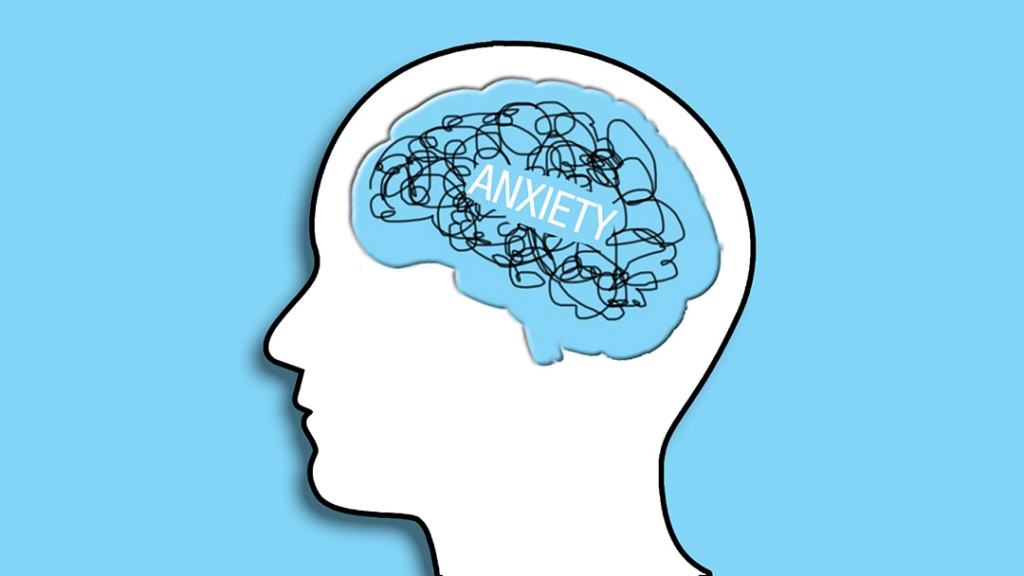
All teens experience some amount of anxiety at times. Anxiety is actually a normal reaction to stress, and sometimes it helps teens deal with tense or overwhelming situations. For many teens, things like public speaking, final exams, important athletic competitions, or even going out on a date can cause feelings of apprehension and uneasiness. They may also experience an increase in heartbeat or excessive sweating. That’s how the brain responds to anxious feelings.

For some teens, however, anxiety can go beyond these typical symptoms to negatively affect friendships and family relationships, participation in extracurricular activities, and even their schoolwork. When feelings of anxiety interfere with normal daily living, the presence of an anxiety disorder should be considered. According to the National Institute of Mental Health, approximately 25% of 13 to 18-year-olds have an anxiety disorder, and just under 6% have a severe anxiety disorder.

Given that teens experience a wide variety of physical and emotional changes as they grow, an anxiety disorder can be difficult to spot. Many red flags may seem like usual teens struggles or be chalked up to hormones. Watch for these hidden signs of anxiety in your teens :

1. Emotional Changes to Watch Out For in Teens

While some anxious teens express feelings of pervasive worry, others experience subtle emotional changes such as :

  • Feeling “keyed up”
  • Feeling on edge
  • Irritability
  • Difficulty concentrating
  • Restlessness
  • Unexplained outbursts

2. Social Changes

Anxiety can negatively affect friendships. If your once social teen suddenly avoids his favourite activities or stops making plans with friends, think twice. You might notice that he/she is :

  • Avoiding social interactions with usual friends
  • Avoiding extracurricular activities
  • Isolating from peer group
  • Spending increased time alone

3. Physical Changes

Many of the physical complaints that can occur with an anxiety disorder mimic average teen complaint, which tend to increase as they get older. Pay attention to patterns. A couple of headaches here and there shouldn’t be a cause for concern, for example, but frequent headaches are a red flag. Watch for these common psychosomatic complaints :

  • Frequent headaches, including migraines
  • Gastrointestinal problems
  • Unexplained aches and pains
  • Excessive fatigue
  • Complaints of not feeling well with no obvious medical cause
  • Changes in eating habits

4. Sleep Disturbances

Teens aged 13 to 18 get 8 to 10 hours of sleep on a regular basis to promote optimal health. It is also recommend shutting down screens 30 minutes prior to bedtime, and removing all electronics from the bedroom.

It’s no big secret that homework demands, changing brain structure, extracurricular activities, and screen time can all cut into the sleep habits of teens. Therefore, it can be difficult to know whether fatigue is a product of anxiety or of a busy schedule. Watch for these red flags :

  • Difficulty falling asleep
  • Difficulty staying asleep
  • Frequent nightmares
  • Not feeling refreshed after sleep

5. Poor School Performance

Given that anxiety can affect everything from sleep habits to eating habits to missing school due to physical issues, it should come as no surprise that poor academic performance can also result from untreated anxiety. School avoidance, missed days due to anxiety-related illness, and persistent worry can make it difficult for anxious teens to keep up with their workload. Watch for these changes in your teen :

  • Significant jump in grades (usually downward)
  • Frequently missed assignments
  • Describes feeling overwhelmed by workload
  • Procrastinates on, or has difficulty concentrating on, homework assignments more than usual

6. Panic Attacks : Know the Symptoms

Not all anxious teens experience panic attacks, and some experience mild symptoms of panic without enduring a full panic attack. The following symptoms are common among people with anxiety disorders :

  • Rapid heartbeat
  • Sweating and trembling
  • Dizziness
  • Upset stomach
  • Difficulty breathing
  • Chest pain
  • Feeling like they’re dying
  • Feeling like they’re “going crazy”
  • Numbness or tingling in arms and legs
  • Derealization.

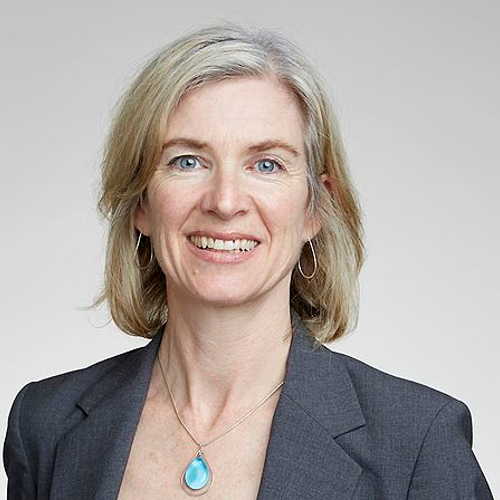
Jennifer A. Doudna

Jennifer Anne Doudna is an American biochemist who is known for her pioneering work in CRISPR gene editing. She also made many other fundamental contributions to biochemistry and genetics. She along with Emmanuelle Charpentier was awarded the 2020 Nobel Prize in Chemistry “for the development of a method for genome editing.

She was born on 19th February 1964 in Washington DC. She grew up in Hilo, Hawaii. She graduated from Pomona College in 1985 and earned a Ph.D. from Harvard Medical School in 1989. 

She received her primary education from Hilo High School where she developed her interest in science. She credits this to her 10th-grade chemistry teacher, Ms. Jeanette Wong, who according to Jennifer has been a significant influence in sparking her nascent scientific curiosity.

For her undergraduate studies, Doudna attended Pomona College in Claremont, California, where she studied biochemistry. She received her Bachelor of Arts degree in Biochemistry in 1985.

Post-graduation she went to Harvard Medical School for her doctoral study. There she earned a Ph.D. in Biological Chemistry in 1989. The topic of her Ph.D. was to develop a system that would increase the efficiency of self-replicating catalytic RNA.

Research Work

After pursuing her Ph.D., she joined Massachusetts General Hospital where she did research in molecular biology. She also did research in genetics from Harvard Medical School.
She went on to become a Postdoctoral Scholar in Biomedical Science at the University of Colorado Boulder. There she worked with Thomas Cech from 1991 to 1994.

CRISPR/Cas9

Apart from all the other works that she has done, Like Charpentier, Doudna is also best known for her work on CRISPR-Cas9. Doudna along with her colleagues discovered a new methodology that reduced the time and works needed to edit genomic DNA.

About CRISPR

As we know that the life processes of organisms are controlled by genes which are made up of sections of DNA. CRISPR, discovered by Emmanuelle Charpentier and Jennifer Doudna, is a methodology for high-precision changes to genes. 

It uses the immune defenses of bacteria and disables viruses by cutting their DNA up with a type of genetic scissors. 

It was made by extracting and simplifying the gene scissors’ molecular components. This tool can be used to cut any DNA molecule at a predetermined site. 

As such the CRISPR/Cas9 gene scissors can be helpful in many ways. It can lead to new scientific discoveries, better crop varieties, and also new weapons in the fight against cancer and genetic diseases.

Emmanuelle Charpentier

Infection Medicine, CRISPR-Cas9, Regulation in Infection Biology

Emmanuelle Marie Charpentier is a French professor and researcher in microbiology, genetics, and biochemistry. She along with American biochemist Jennifer Doudna won the Nobel Prize in Chemistry for 2020. She was awarded the Nobel prize “for the development of a method for genome editing”.

She was born on 11 December 1968 in Juvisy-Sur-Orge in France. She was brought up in Paris and since her childhood, she has had very diverse interests.
She did her undergraduate studies at the Pierre and Marie Curie University (which is currently known as Sorbonne University). There she studied biochemistry, microbiology, and genetics and earned a degree in biochemistry in 1992. 

Post-graduation she attended the Institut Pasteur from 1992 to 1995, and there she was awarded a research doctorate in microbiology. Her project dealt with molecular mechanisms involved in antibiotic resistance.

Research Work

From 1997 to 1999, Charpentier worked at the New York University Medical Center There she worked as an assistant research scientist in the lab of Pamela Cowin, who was a skin-cell biologist and was working on mammalian gene manipulation. She went on to publish a paper exploring the regulation of hair growth in mice. 

She also discovered an RNA molecule involved in the regulation of virulence-factor synthesis in Streptococcus pyogenes and published it in 2004.

CRISPR/Cas9

Apart from all the other works that she has done, Charpentier is best known for her work of deciphering the molecular mechanisms of a bacterial immune system, called Clustered Regularly Interspaced Short Palindromic Repeats (CRISPR/Cas9), and repurposing it into a tool for genome editing. She won the Nobel Prize for the same.

In particular, she uncovered a novel mechanism for the maturation of a non-coding RNA which is pivotal in the function of CRISPR/Cas9. 

Specifically, She demonstrated that a small RNA called tracrRNA is essential for the maturation of crRNA.

Sachin Tendulkar on Virat Kohli’s batting struggles in England Tests: The mind leads to technical errors

It won’t be wrong if you synchronize consistency with Kohli but his recent performance has made the synonym quite dubious and the reason being inconsistency of the one who is consistent.

India’s tour of England made the unnamed heroes while the hero, the conqueror was tame on the Mecca of Cricket.The facts justify the reason as he has managed just 62 runs from the 2 Tests so far. Kohli has scores of 0, 42 and 20 so far in 3 innings at an average of 20.66.

Indian skipper lean phase with the willow has been a worrisome problem as it’s been 629 days since Virat Kohli hit his last international century.In fact, in 2021, Kohli holds an average of just 25.44 in the 9 outings he has done for India. His last 15 innings numbers are all the more disappointing which include 3 ducks and 3 single-digit scores.

This brings criticism at his door and Sachin Tendulkar brought to light what was Kohli’s weakness and that being there improper movement of his feet while batting and even moving too far across the stumps leading to cheap dismissals.

“Virat hasn’t had a great start. It is the mind that leads to technical errors and if the start isn’t good you start thinking about a lot of things. Because anxiety levels are high you tend to over compensate your movements.
“When a batsman isn’t in good form you either go too far across or don’t move your feet at all. That happens to everyone. Form is also your state of mind along with the body working in harmony,”Tendulkar told PTI.

India beat England by 151 runs to win the second Test and take a 1-0 lead in the five-match series on Monday.

Chasing 272, England were bowled out for 120 in 51.5 overs with skipper Joe Root top-scoring with 33.India declared on 298-8 just after lunch to set England 272 to win in 60 overs.India’s pacemen starred with both bat and ball on Monday as Virat Kohli’s side thrashed England by 151 runs in the second Test at Lord’s. Victory gave India a 1-0 lead in a five-match series after just their third win in 19 Tests at the ‘home of cricket’ followed a rain-marred draw at Trent Bridge. England, set 272 to win in a minimum of 60 overs on the last day, were dismissed for 120. They were in dire straits at 1-2 after Jasprit Bumrah and Mohammed Shami removed openers Rory Burns and Dom Sibley for nought apiece.

Fellow paceman Mohammed Siraj then followed up with 4-32 — a return that saw him end the match by bowling No 11 James Anderson.

Earlier, Shami, with 56 not out, and Bumrah (34 not out) both hit their highest Test scores and shared an unbroken ninth-wicket stand of 89, during India’s secon innings which contributed to their win.

TEA, AROUND THE GLOBE

Disha Soni's avatarTrack2Training

Tea might be native to China , but the entire world relishes this beverage . Each country has its unique way of preparing and consuming tea. Here is how tea is consumed around the globe ,

CHINA – China is the country who introduced tea to the world . It is believed that Chinese emperor Shennong when consuming hot water noticed that dried leaf had fell from a plant and his water tasted really good , and that is how tea was discovered . China has a wide variety of tea leaves from which they make their tea.

TAIWAN – People in Taiwan enjoy bubble tea , which is a fairly modern innovation . It is an iced tea served with tapioca pearls . Bubble tea sure has a lot of calories , but it is worth the calorie gain.

JAPAN – Matcha tea is the most popular form of…

View original post 68 more words

WOMEN’S RIGHTS IN AFGHANISTAN IN PERIL?

By Moksha Grover

Ever since the Taliban has taken control over Afghanistan there is a big threat to the rights of afghan women & girls. Three Afghan women who worked at a media company were gunned down in Jalalabad in early March[1]. In January, unidentified gunmen killed two female Supreme Court judges in Kabul[2]. These are just some of the victims of the long list of assassinations of female activists and political leaders in Afghanistan. These assassinations have increased since the government of Afghanistan established connections with the Taliban.

The period of 1996-2001 when the Taliban ruled the country was the darkest time for afghan women. after Independence from the Taliban in 2001, Afghanistan had grown up a lot in terms of supporting women, educating them, and making them stand up for their feet. We have the famous women activists Sima Samar, Aryana Sayeed, and Roqia Abubakr all of who contributed a lot to the growth of Afghanistan. Today women compose around 27% of the Afghan Parliament, one of the highest rates of women’s political representation in the region[3].

Presently, as the Taliban have taken control over the country once again these women are at a worry for their safety and peace accord with the Taliban extremists. The oppressive rules of the Taliban for women make it their darkest times. Women are not being allowed to appear in the streets without a blood relative or without wearing a burqa, not allowing women’s to wear heels, not allowing women’s to speak or make any sound from their footsteps, depriving the right to education for women, these rules under the Sheria law are just too tyrannical. The fight with the Taliban is not just about women’s rights but about the basic rights that every human being needs which the afghan women are being disadvantaged under the rule of the Taliban.  It is a platitude to say that, as the Taliban were expanding their territory in Afghanistan on 15th August 2021 afghan women were facing an uncertain future. On 16th August 2021, this uncertainty was replaced by fear and despair as President Ashraf Ghani fled the country, leaving the country in control of the Taliban[4]. Taliban, coming into power once again would lead to Afghanistan being 200 years back.

Afghan women now find themselves in the untenable position of looking for help from the international community. Today, the whole world is following the turbulent scenario in Afghanistan with a heavy heart and deep disquiet about what lies ahead. There is a need for the global call on this issue. Now is the time to stand as one, it is a call on all the international communities to use all available tools to uphold human rights in Afghanistan.


[1] Mona Tajall and Homa hoodfar, ‘Women in Afghanistan worry peace accord with Taliban extremists could cost them hard-won rights’, The Conversation (6 March,2021) <https://theconversation.com/women-in-afghanistan-worry-peace-accord-with-taliban-extremists-could-cost-them-hard-won-rights-154149 > accessed 23rd August, 2021

[2] Ibid.

[3] Ibid.

[4] Heather Barr, ‘The Fragility of Women’s Rights in Afghanistan’, Inkstick Media (17 August,2021)< https://www.hrw.org/news/2021/08/17/fragility-womens-rights-afghanistan> accessed 23rd August, 2021.

THE USE OF MOBILE PHONES.

The invention of mobile phones is one of the greatest achievement of humankind. The first mobile phone service was started in Japan in 1979 and within 42 years it has revolutionized the lives of people. Mobile phones usage is growing at a rapid rate, today the world is unimaginable without mobile phones.

Mobile phones is one of the quickest means of communication device. A person can communicate with their friends or family who lives miles apart. It has eradicated the olden system of letter delivery. In morden generation assess to internet has acted as miracle to many tech company to accumulate wealth for their companies. We can take phones in our pocket and roam anywhere. By use of mobile phones life has become more comfortable also phones now do the work of laptop’s; we can do NetBanking, send our important documents to the required place through email and many more.

Parent’s encourage their children to use mobile phones as it promotes learning. People can assess to google or youtube for educational purposes. In the current pandemic situation the world has shifted to virtual meating and imparting knowledge as socializing is prohibited in peron/groups. Parents also encourage their children to use mobile phones as it has GPS system so that they are assured of their child safety when they venture out in the world alone. Phones also serves as an entertainment purposes. People can assess to different apps for movies and shows to keep themselves busy. People can save their money due to introduction of eBooks. Many important date can be stored in our phone which out mind can’t remember. It’s helps a person to captured their sweetest memory for them to cherish.

Mobile phones has connected the world digitally through internet. People can know what is happening around the world through news. The current scenario has changed a lot now the world is leading itself to globalization. Branding and advertising are done through online platform it’s has made growth in many different industries. Different countries set their own cyber security so that there is no breach of people’s privacy. Many tech company hires professional hackers for their companies digital data so that no one can hack into their companies system.

“Mobile phones are neither good or bad it depends on the individual how they use “.

Power of Meditation

Another much needed and the topic to be discussed -the power of meditation. To lead a stable and peaceful life mediation is important. Meditation enhances our ability to understand and think deeper. Meditation involves focusing. It can be anything a thought or an activity but the main aim is to focus on to focus on yourself.

Meditation is a boon for us and is practiced since old times. A tradition which was present yet lost. Meditation is a practice where an individual uses a technique – such as mindfulness, or focusing the mind of a particular object, thought or activity- to train attention and awareness ,to achieve a mentally clear and emotionally calm and stable state. It can also be called as “healing process ” which relaxes and calms the soul of an individual.

These days, with greater need to reduce stress in the midst of our busy schedules and demanding lives, meditation is increasing in popularity. Although there isn’t a right or wrong way to meditate, it’s important to find a practice that meets your needs and complements your personality. There are several types of meditation. Some of them are – Mindfulness meditation, spiritual meditation, focused meditation, mantra meditation, visualized meditation and movement meditation.

Meditation is proved to be a stress buster in our complicated lives. Where there is pressure everywhere, by the practice of meditation we can achieve inner peace and relaxation of mind. This practice increases our ability to think, understand and remember things for future. It also lowers blood pressure, reduces anxiety, decreases pain, ease of symptoms of depression and improve sleep. It is scientifically proven that meditation is beneficial to an individual.

Hope you will like reading it…. Thank you!!!

Evils of terrorism

Today’s article discusses about the evils of terrorism. Terrorism is a world wide problem. A terrorist is a person who tries to create fear and panic among the people to gain his own ends. Their aim is to frighten the people and the government. In order to create panic they explode bombs and spread rumours. Terrorists change their hideouts. Sometimes the hard-core terrorists commit suicide or kill their associates when arrested.

Terrorists are usually young and the old behind them. They coordinate and guide the terrorists activities. Terrorists are extremists who act with great zeal. But they are misguided people who sometimes do not know what they are really acting for. Sometimes terrorists are helped by some foreign agencies in order to create disorder inside the country. In such cases, they are trained in the use of sophisticated weapons. They are also supplied with money and arms by agencies.

Terrorism is threatening peace and security all over the world. Many countries in the world have been hit by the cult of violence. As terrorism is an international problem, we can solve it by with the help of international cooperation. The countries of the world should not allow terrorists activity against another country. Terrorists have no religion and no faith in human values. Their only philosophy is bloodshed for political gains.

The genuine grievance of the people must be redressed and justice should be done to all. Terrorism has crossed borders and he developed into a global issue. We hope we could fight the evils and come back with peace and harmony in the near future. Today’s generation don’t want such sort of fear in their minds and want to lead a stable and happy life. It’s the responsibility of the organizations of WHO, UNSC to maintain peace all over the world.

Hope you will support… Thank you!!

A Clock of Atoms

Photo by Maor Attias on Pexels.com

The tickling of the clock always says about the nearing of the time either away from something or close to something, but the same ticking can also show you the whole timeline graph of the past and future just with the perfect tool in hand.

So to tackle the navigation problem of many light-years from our home earth in the web of space a new technology has been introduced and to name it we call it Deep Space Atomic Clock, a new navigation device which can help us in exploring many untouched parts of the space with quick and precise calculations.

The error percentage of this atomic clock is just 1sec in a span of 100 million years and that’s what makes it the best in the whole of human civilization.

But to know what and why makes it this strong of the contender in the game of at least time calculations we need to know everything about it, so to know it let’s get this reading on with the whoop.

Working

To know any device and its diversity among the unity with another we need to know how does it work.

The working of this clock is based on the time it takes for a resonating frequency of atoms to keep up with the higher and extreme frequency by noticing the time it will take in changing the energy level of the atoms present.

It is the same as when a spacecraft is situated somewhere outside the earth in space we just going the send the radiation or the signal with the speed of the light which can make a two-way journey from the earth to that spacecraft and then we can calculate the distance with speed and the time taken by the wave to return to us.

Now repeat this same process we can locate the whole trajectory of the object with the knowledge of where it is going and from where it might come.

Yes, we get it but the connection between the atom and clock?

The connection, and how the concept explained above could make this atomic watch worthwhile?

If you have the same wondering questions then I guess we need to find the missing dots and try once again to catch the concept.

Our clock uses the quartz crystal to measure the accurate time from our wrist band to the clock on the satellites by counting the number of the vibration they make in the unit of time because the quartz can vibrate at the precise frequency when given the required volt of energy.

The vibration of the quartz shows the lapse of the time but to calculate the exact location of the spacecraft we need something which can count even the zillionth fraction of the time and does producing the error of just 1 sec in the large period.

The clock need for this purpose should be consistent and stable as if measured over the long span of different timelines it should not show any difference.

Conclusion

Nasa has yet again found something which we can use to be more correct about the upcoming threats to the earth and its whole surrounding.

Why Qatar shouldn’t organize football world cup

Football world cup will be organized in 2022 in Qatar. When FIFA announced Qatar as host of 2022 world cup, questions started rising on suitability of Qatar as host country. Many media outlets, sports experts and human rights groups criticized FIFA for this decision and even alleged of them being bribed. Former UEFA president was also arrested in 2019 in relation to bribing case.

In addition of bribing scandal there are several reasons why world at Qatar is a disgrace. Let’s discuss them one by one:

Human rights

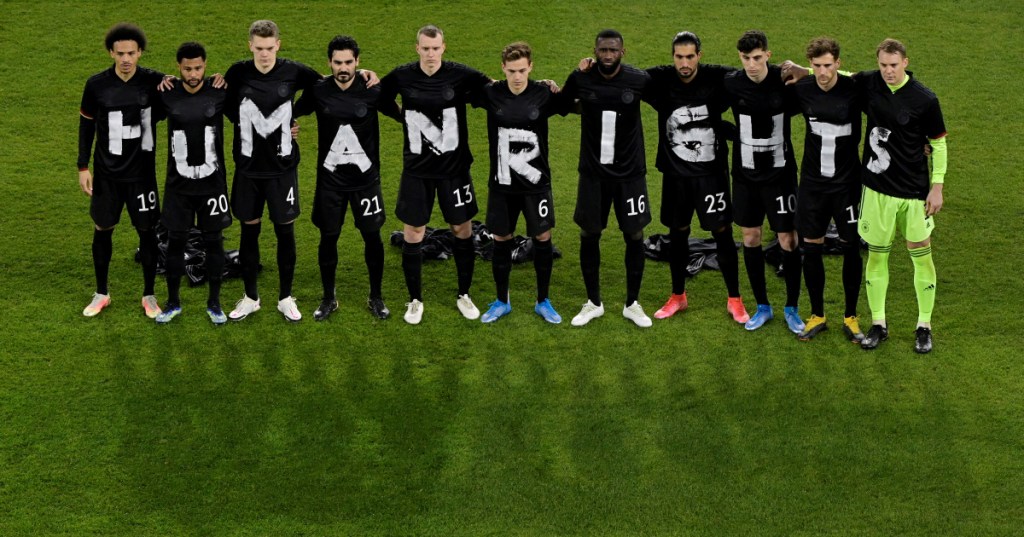
FILE PHOTO: Soccer Football – World Cup Qualifiers Europe – Group J – Germany v Iceland – MSV-Arena, Duisburg, Germany – March 25, 2021 Germany players pose for a photo displaying a Human Rights message on their t-shirts before the match Pool via REUTERS/Tobias Schwarz/File Photo

Violation of human rights is the biggest criticism of Qatar as world cup host. Treatment of workers hired to build infrastructure like stadium, hotels etc. was miserable. Kafala system left migrant workers vulnerable to systemic abuse. Workers may not change their job or even leave country. They were literally used as slaves in the process of building infrastructure. In 2013, Amnesty international reported serious exploitation of labors.

Due to heavy criticism, Qatar govt. stepped up and promised reforms in labor laws in 2014, But a little progress was made. The Nepalese ambassador to Qatar said that Qatar had become an open jail for migrant workers of south Asia. Companies forced workers to stay and work in poor conditions by denying them promised salaries and withholding worker ID permits. They faced exploitation to extent of modern day slavery. The Guardian did a investigation and found out horrible situations. Labors were forced to live in unsanitary conditions. Workers told the guardian that they were promised higher wages but their contracts were destroyed upon their arrival in Qatar. Some were not paid from months. They described having to beg for food and being beaten. Minimum monthly wage system was announced in 2020 , 10 years after announcement of hosting world cup. But this was also not sufficient to meet needs of workers as standard of living in Qatar is high.

Another problem is legal status of homosexuality in Qatar. Homosexuality is banned in Qatar with offenders facing fines and 7 years of imprisonment. LGBT fans may face problems. Many LGBT activists asked FIFA to cancel world cup but FIFA ensured that everyone will have right to watch the game in stadiums.

Climate

In addition to human rights violation climate is also a major problem as the world cup usually occurs during the northern hemisphere’s summer. Summer in Qatar sometimes become unbearable as temperature reaches 50 degree Celsius. It will affect the performance level of footballers and they will also need longer recovery time. Also lots of money will be required to create infrastructure of stadiums with cooling system

Solution of this problem is winter world world cup which is also a problem itself. World cup can’t be staged in January and February as it will clash with winter Olympics. Staging it in November December is also not feasible as it might clash with Christmas season. The Premier league also raised issues over moving world cup to winter as it will interfere with European domestic leagues and players from all over the world participates in these leagues. Broadcasters also raised voice as clash of world cup with major European leagues will be not profitable for them.

There are also some minor problems like transpiration, ban on use of alcohol in Qatar, huge cost etc. Qatar govt. is also taking some steps but they are not enough. So Qatar as a world cup hosting nation is a disgrace to football.

How COVID-19 affected our lives?

Have we ever thought there will be such a setback on our lives? It is really an unbelievable and unexplainable thing that affected our lives. This COVID-19 affected the whole world mentally as well as physically. The world has gone through so many but this is the most impacted pandemic. This pandemic has led to dramatic loss of human lives and an upredictable health issues and also the world of work. This economic and social distruption caused millions of people to fall into the line of extreme poverty, and the rate of malnourished also increased day by day.

Positive impacts of COVID-19

When we start to see the positive effects of COVID-19, we are running out time in our normal lives and spend very less time with families. This pandemic has paved way for that. Have you ever thought of sitting freely in your home and seeing the blue sky peacefully? No. But due to this pandemic has made that possible. We often get bored while we are at home. Now, we play carrom, chess and many indoor games and teach these 2k kids about these games. There is a high possiblity of addicted to mobile phones and due to the control of parents some may not get addicted. We get to try some new dishes every day so that we won’t get bored in our daily lives. Gardening, family time has become the major positive impacts of COVID-19.

Negative impacts of COVID-19

The first and foremost negative impact of this pandemic is the addiction to gadgets. Furthermore, mobile phone is the most addictive one. Pandemic has also affected knowledge of the students greatly. They find it more difficult to learn it online and enjoys the offline class more. The sadder impact is the students cannot get the knowledge of the subject they sutdy. There is also possiblity of getting sick often due to laziness. Heart attack, obesity, gastric problems, weight gain are very serious factors. Work from home make people very lazy and they are getting back pain, eye problems and so on.

Very happy that we have slightly overcame this pandemic stituation and return to our daily lives. Stay safe and be protective over yourselves.

Check this out for further;

https://timesofindia.indiatimes.com/readersblog/itsyourstory/how-covid-19-has-changed-our-lives-26030/

https://www.who.int/news/item/13-10-2020-impact-of-covid-19-on-people’s-livelihoods-their-health-and-our-food-systems

MUSIC : THE WONDER OF THE BEATS

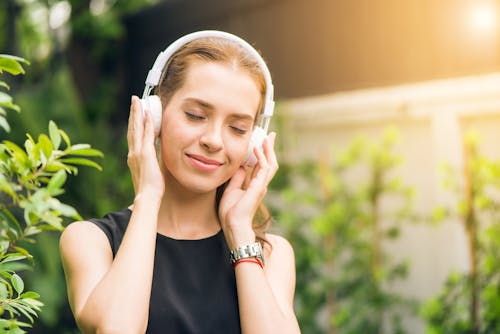
Woman Wearing Black Sleeveless Dress Holding White Headphone at Daytime

In the world that we live in today, we are always surrounded by music everywhere. From slow to fast, calm to upbeat, from rock to hip-hop to metal and country, people all over the world appreciate the music in all its different forms, style and distinctiveness. Music connects people all over the world, whatever language or genre that it may have. It carries a universal message of love and togetherness that unites people from different parts of the globe, as they find a common hobby to bond over amidst all the differences and diversity they may have among themselves. We do not overexaggerate when people claim that “Music has saved them”. It is like a boat in the middle of the storm of life that helps them sail through the difficult time with ease and offers them a place to relax and unwind, allowing them time to reflect and introspect to understand themselves a little better. Music is a remedy for all of us and it accepts us with open arms wherever we go.

Some of the ways in which music is beneficial are mentioned below. They are as follows:-

IT HELPS YOU CALM DOWN

Amidst the race and chaos we call life, we may not always get the time to relax and take out time for ourselves. In such situations, music can be our savior. A number of studies have suggested that listening to slow music for a minimum of 15 minutes a day can really help us ease down a bit, allowing our bodies to relax and live in the moment.

So, whenever you feel stressed, make sure to put your favorite tunes on and just relax!

MUSIC MAY HELP YOU IMPROVE YOUR PERFORMANCE WHILE EXERCISING

Often, people prefer listening to upbeat and groovy music while trying to get in a workout. This is highly beneficial as it can truly help us stay motivated to give our best while doing exercise and may help us improve our daily performance. Many researches have shown that listening to happy and motivational music may help us get motivated to run even faster while running as well as help build our strength and stamina.

MUSIC CAN HELP ELEVATE YOUR MOOD

Scientific studies have shown that music can actually help release dopamine, a feel good hormone, in our body and improve our mood a lot. Henceforth, listening to music about 30 minutes a day can make us significantly happier and elevate our mood!

MUSIC IS GOOD FOR YOUR HEART

A number of scholars and professionals have stated that while music does make US happy, it also makes our heart happy too. This evident through the fact that listening to music helps the blood in our body to flow more easily and efficiently, while at the same time, it lowers our blood pressure as well. Not only this, listening to music can also help in lowering the cortisol levels in our body as well as increase the production of serotonin in our lood stream, making us less stressed and happier.

So, listen to music everyday while enjoying the journey of life!