EduPub (Edupedia Publications Pvt Ltd) is a company dedicated to the development of the education, learning, research and innovation in the field of the research and books publication. We are pioneer in providing wide range of services to educational institutions, government agencies, individuals and corporates in the field of training and education, research and development, research and innovation. research and publication.
Dharavi is a slum locality in Mumbai, Maharashtra, India and considered to be a one of the largest slum area in the Asia. Dharavi has a population of 10 lakhs and area of just over 2.1 square km. Dharavi has a population density of over 277,136/km.sq with this density, Dharavi is one of the most densly populated area in the world.
Demographics
The total current population of Dharavi slum is unknown, and estimates vary widely. Some sources suggest it is 300,000 to about a million. With Dharavi spread over 200 hectares (500 acres), it is also estimated to have a population density of 869,565 people per square mile. With a literacy rate of 69%, Dharavi is the most literate slum in India.
About 30% of the population of Dharavi is Muslim, compared to 14% average population of Muslims in India. The Christian population is estimated to be about 6%, while the rest are predominantly Hindus (63%), with some Buddhists and other minority religions. Among the Hindus, about 20% work on animal skin production, tanneries and leather goods. Other Hindus specialise in pottery work, textile goods manufacturing, retail and trade, distilleries and other caste professions – all of these as small-scale household operations. The slum residents are from all over India, people who migrated from rural regions of many different states. The slum has numerous mosques, temples and churches to serve people of Islam, Hindu and Christian faiths; with Badi Masjid, a mosque, as the oldest religious structure in Dharavi.
Location and characteristics
Dharavi is a large area situated between Mumbai’s two main suburban railway lines, the Western and Central Railways. It is also adjacent to Bombay Airport. To the west of Dharavi are Mahim and Bandra, and to the north lies the Mithi River. The Mithi River empties into the Arabian Sea through the Mahim Creek. The area of Antop Hill lies to the east while the locality called Matunga is located in the South. Due to its location and poor sewage and drainage systems, Dharavi particularly becomes vulnerable to floods during the wet season.
Slum shacks in Dharavi.
Dharavi is considered one of the largest slums in the world.The low-rise building style and narrow street structure of the area make Dharavi very cramped and confined. Like most slums, it is overpopulated.
Economy
An embroidery unit in Dharavi.
In addition to the traditional pottery and textile industries in Dharavi, there is an increasingly large recycling industry, processing recyclable waste from other parts of Mumbai. Recycling in Dharavi is reported to employ approximately 250,000 people.While recycling is a major industry in the neighborhood, it is also reported to be a source of heavy pollution in the area. The district has an estimated 5,000 businessesand 15,000 single-room factories.Two major suburban railways feed into Dharavi, making it an important commuting station for people in the area going to and from work.
Dharavi exports goods around the world. Often these consist of various leather products, jewellery, various accessories, and textiles. Markets for Dharavi’s goods include stores in the United States, Europe, and the Middle East. The total (and largely informal economy) turnover is estimated to be between US$500 million, and US$650 million per year, to over US$1 billion per year. The per capita income of the residents, depending on estimated population range of 300,000 to about 1 million, ranges between US$500 and US$2,000 per year.
A few travel operators offer guided tours through Dharavi, showing the industrial and the residential part of Dharavi and explaining about the problems and challenges Dharavi is facing. These tours give a deeper insight into a slum in general and Dharavi in particular.
Utility services
Potable water is supplied by the MCGM to Dharavi and the whole of Mumbai. However, a large amount of water is lost due to water thefts, illegal connection and leakage. The community also has a number of water wells that are sources of non-potable water.
Cooking gas is supplied in the form of liquefied petroleum gas cylinders sold by state-owned oil companies,as well as through piped natural gas supplied by Mahanagar Gas Limited.
There are settlement houses that still do not have legal connections to the utility service and thus rely on illegal connection to the water and power supply which means a water and power shortage for the residents in Dharavi.
Sanitation issues
Inside Dharavi
Mosque in Dharavi
Dharavi has severe problems with public health. Water access derives from public standpipes stationed throughout the slum. Additionally, with the limited lavatories they have, they are extremely filthy and broken down to the point of being unsafe. Mahim Creek is a local river that is widely used by local residents for urination and defecation causing the spread of contagious diseases. The open sewers in the city drain to the creek causing a spike in water pollutants, septic conditions, and foul odors. Due to the air pollutants, diseases such as lung cancer, tuberculosis, and asthma are common among residents. There are government proposals in regards to improving Dharavi’s sanitation issues. The residents have a section where they wash their clothes in water that people defecate in. This spreads the amount of disease as doctors have to deal with over 4,000 cases of typhoid a day. In a 2006 Human Development Report by the UN, they estimated there was an average of 1 toilet for every 1,440 people.
Epidemics and other disasters
Dharavi has experienced a long history of epidemics and natural disasters, sometimes with significant loss of lives. The first plague to devastate Dharavi, along with other settlements of Mumbai, happened in 1896, when nearly half of the population died. A series of plagues and other epidemics continued to affect Dharavi, and Mumbai in general, for the next 25 years, with high rates of mortality. Dysentery epidemics have been common throughout the years and explained by the high population density of Dharavi. Other reported epidemics include typhoid, cholera, leprosy, amoebiasis and polio.For example, in 1986, a cholera epidemic was reported, where most patients were children of Dharavi. Typical patients to arrive in hospitals were in late and critical care condition, and the mortality rates were abnormally high. In recent years, cases of drug resistant tuberculosis have been reported in Dharavi.
Fires and other disasters are common. For example, in January 2013, a fire destroyed many slum properties and caused injuries. In 2005, massive floods caused deaths and extensive property damage.
The COVID-19 pandemic also affected the slum. The first case was reported in April 2020.
We have often heard about the word PTSD which is abbreviated as posttraumatic stress disorder. According to WHO, Posttraumatic stress disorder is a psychiatric disorder that may occur in individuals who have experienced or witnessed a distressing event such as a natural disaster , an accident ,maybe a war or rape or have been threatened with death, sexual assault or serious injury. In 1980,the American psychiatric association added PTSD to the third edition of its Diagnostic and Statistical Manual of Mental Disorder(DSM-III)
This kind of stress disorder can affect those people who have personally experienced such trauma which may have affected their mental health in an adverse manner. It can occur in the friends or family members of those who have went through such traumatic event.
What causes PTSD?
When you experiences a tough moment, your nervous system reacts with the fight-or-flight response. Your heart start beating faster and your blood pressure starts rising along your muscles getting tighten, increase your strength and reaction speed .Once the body feels the danger is passed your nervous system calms your body, lowering your heart and blood pressure, recovers to its normal state.
Signs and symptoms of PTSD
PTSD symptoms differ from person to person because everyone’s nervous system and level for stress tolerance can be different. Most likely to develop posttraumatic stress disorder symptom in the hours or days following a traumatic event. It can even take year before they appear. People having such disorder get triggered by something that reminds them of their original traumatic event, such as noise or an image, a word or even a smell.
While everyone experiencing PTSD differently, there are primarily three types of symptoms which are following
1.Re-experiencing the traumatic event through bad memories, flashback and nightmares
2.Avoidance and numbing , such as avoiding those thing which reminds you of the trauma, feeling emotionally numb and detached from others
3.Hyperarousal which includes sleeping problems, constantly getting irritated, anger issues, self destructive or reckless behaviour
Curative Measures for PTSD
There is no definite care for PTSD ,but there are many types of treatment available that can lessen the symptoms. Also there are various therapy techniques, as well as evidence shows right medication can be beneficial for people struggling with symptoms of PTSD.
These treatment method are used to minimize, or even eliminate, distressing symptoms that people with Posttraumatic Stress Disorder often experience.
Photography is nothing less than an art form of absolute purity. Silent poetry with the moments captured in an image is photography. The most memorable and beautiful way to remember the special things in life with full clarity. Photos are a way of preserving the best memories and moments for eternity. Photos are the permanent reminder of the past. Never get forgotten. They will always be alive. The past, the memories, everything is hidden in the photos. Hidden but so transparent in emotions. All the feelings just in a single place. They get old but are unforgettable. But on the bright side, photos are a way of expressing your emotions in a completely different and innovative way.
Photography is not just work, it is a passion filled with excitement and hope. It is a specific but not so specific piece of art. It can be done in various forms with no boundaries. There’s nothing to dislike in photography. It’s just another way to showcase talent of immense beauty. Everything, every moment can be captured and kept for the rest of your life. Photos have the finest texture and the most amazing depiction of a thing. It feels like it’s real. Photographers have the ability and power to make a photo so great that it magnifies the moment. They are able to drastically change the outcome of an image by using various equipment for high quality and definition. Every small detail is shown through photos. It gives pleasure to experience and relive the moments in life through photos.
Photos are not just a piece of paper or a file occupying a little space in your mobile or camera roll. They are an explicit version of your life in brief. The small moments to the big memories, all are stored in a single place for you to look after decades and enjoy living in the moment again. Photography depicts the vulnerability of the photographers through their art. Photographers use photography as a medium for creative expressions. They pour their heart out in the photos. They are artists of very fine quality and beauty in its purest form. The beauty and creativity can not be ignored by any living heart in this world. Embrace moments and capture them in real time with photography.
“Amateurs sit and wait for inspiration, the rest of us just get up and go to work” — Stephen King.
We all are possessed with the mixture of both the good and bad kind of qualities. Procrastination is one such thing which is impregnated in all of us, while we tend to gain something from our daily experiences. It is the act of delaying an important task for the sake of trivial matters. It can restrict one’s potential and undermine one’s career. Some tend to avoid any important meetings, some delay their work schedule and these people cannot reach the higher levels in their life.
Re-scheduling the works would inhibit the growth of oneself. It would lead one to loose their opportunities, affects the outcomes of the accomplished task and would also spoil one’s name. It really takes one to move backward, rather being prudent and moving forward. If one meets a person at 11.00 clock, who is supposed to meet at 10.00; then how would the other trust him/her?he value of time is important to be acknowledged. Each and every second that one go through in a leisure manner, is the time whence, others would be achieving something in some corner. There is something that a person should always consider and, it is known as the other end. We may take privilege upon our tasks and time but the particular thing has its own time to be done; or the other person who is involved may have many other works to be finished and they really don’t waste their time for anyone’s sake.
“Time is a storm in which we all are lost”, said by William Carlos Williams. The value of time is important to be acknowledged. Each and every second that one go through in a leisure manner, is the time whence, others would be achieving something in some corner. There is something that a person should always consider and, it is known as the other end. We may take privilege upon our tasks and time but the particular thing has its own time to be done; or the other person who is involved may have many other works to be finished and they really don’t waste their time for anyone’s sake.
Some reasons for the procrastination of works are : perceiving that the work is hard, fear of getting adapted to a new thing, exhaustion, annoying or uninteresting tasks, fetching for easier tasks, raunchy and carelessness.
Here are few steps to avoid procrastination: The work that should be done today, should not be delayed for the next day. The harder or boring work should be given the first preference, so that it would be finished off. One should always have in their mind that being responsible in our work is linked with our growth and success.
Those who procrastinate their task would lose their happiness and growth. Successful people won’t delay their task as they really long to taste it.
We, humans born on this planet through our beloved parents. We don’t know why and for what we were born for. Methodologically its said every human has its goal and purpose to be born in this world whether to improve the world or some destructing the nature and humans itself. Each has its own ambitious and aim after certain point of age. Yet, some don’t have but life goes on.
We don’t know the value of certain things at this growing parse of time, we forger to prioritize the most valuable things in our life. We take the steps and road from which turning point is very difficult. We make certain mistakes for which we take our or others life for granted. Yet humans takes such drastic steps to make another same human live a miserable just to calm the thirst of their power, jealousy, lust or other unnecessary goal. Setting a goal is great but harming other while achieving is not a part of nature but it has been at this period of time very casually. People miserably intentionally harm someone else. Yet for them life goes on.
There comes a certain point in life where victims become numb to such emotions of failure and takes step of ending their life which they think is the last option they have got but is it really the last option? We must take a moment to think before taking such drastic step of SELF HARMING. One might not know what you are going through or what is harming you but taking your own life is not the solution instead it is a BIGGEST crime one could take. You should take moment to think about your family, your loved ones with whom you shared one of most beautiful moment of your life if not at least think about those animals who are fighting for their life as a deer caught in lion yet they fight till their last breath for their freedom so we being a human. Humans can do anything from improving a country to cause of destructing other.
One must thoroughly sit and think about solution rather than taking certain harmful method. Life goes on once we face those hurdles and take step towards tomorrow a better tomorrow without any negative thoughts. Certain point of time each one will face such hurdles in their life so during that time always remember to fight back the demons instead of running away.
To those people who don’t know BTS. I would like to suggest to listen their songs which I’m 100% sure will give reason why LIFE GOES ON!!!!!
Smeared blood, shredded feathers. Clearly, the bird was dead. But wait the slight fluctuation of its chest, the slow blinking of its shiny black eyes. No, it was alive. I had been typing an English essay when I heard my dog’s loud barks and the flutter of wings. I had turned slightly at the noise and had found the barely breathing bird in front of me.
The shock came first. Mind racing, heart beating faster, blood draining from my face. I instinctively reached out my hand to hold it, like a long-lost keepsake from my youth. But then I remembered that birds had life, flesh, blood.
Death. Dare I say it out loud? Here, in my own home?
Within seconds, my reflexes kicked in. Get over the shock. Gloves, napkins, towels. Band-aid? How does one heal a bird? I rummaged through the house, keeping a wary eye on my dog. Donning yellow rubber gloves, I tentatively picked up the bird. Never mind the dog’s barks and protesting scratches, you need to save the bird. You need to ease its pain. But my mind was blank. I stroked the bird with a paper towel to clear away the blood, see the wound. The wings were crumpled, the feet mangled. A large gash extended close to its jugular rendering its breathing shallow, unsteady. The rising and falling of its small breast slowed. Was the bird dying? No, please, not yet.
Why was this feeling so familiar, so tangible?
Oh. Yes. The long drive, the green hills, the white church, the funeral. The Indo-Christian mass, the resounding amens, the flower arrangements. Me, crying silently, huddled in the corner. The Massey family huddled around the casket. Apologies. So many apologies. Finally, the body lowered to rest. The body. Sahil Elson Massey. Still familiar, still tangible.
Hugging Sahil, I was a ghost, a statue. My brain and my body competed. Emotion wrestled with fact. Sahil Elson Massey, aged 18, my friend of four years, had died in a car crash on Sep. 12, 2020. Sahil was dead, I thought. Dead.
But I could still save the bird. My frantic actions heightened my senses, mobilized my spirit. Cupping the bird, I ran outside, hoping the cool air outdoors would suture every wound, cause the bird to miraculously fly away. Yet there lay the bird in my hands, still gasping, still dying. Bird, human, human, bird. What was the difference? Both were the same. Mortal.
But couldn’t I do something? Hold the bird longer, de-claw the dog? I wanted to go to my bedroom, confine myself to tears, replay my memories, never come out. The bird’s warmth faded away. Its heartbeat slowed along with its breath. For a long time, I stared thoughtlessly at it, so still in my hands.
Slowly, I dug a small hole in the black earth. As it disappeared under handfuls of dirt, my own heart grew stronger, my own breath more steady. The wind, the sky, the dampness of the soil on my hands whispered to me, “The bird is dead. Sahil has passed. But you are alive.” My breath, my heartbeat, my sweat sighed back, “I am alive. I am alive. I am alive.”
First of all you need to evaluate what you love and what you want to do. Figure out your skills and interests and what you are good at. If you are not able to identify yourself then ask your friend or peers to help you out. Evaluating your past can also help you recall your critical moments you might have overlooked that would have made it clear you were not happy with your existing work. Also get in touch with personalities of the field in which you are interested and gain as much information as you can regarding demands from the job, their professional past and aspirations. Before actually pursuing that career you must attend workshops, take online classes, Read books and watch YouTube tutorials so that you may find out that you’re really into that career or not. Consider in which work environment you would like to work and which type of colleagues you want around, are you capable of cooperating with those people or not. And in the end think, what is that one thing that you will love doing and willing to do it for free and then start connecting it to paid possibilities in the same field. A job must be something which you love to do and will also provide a great pay in return and let you lead a prestigious life. Below are some suggestions you are looking for.
First Step
There are times when one is not able to pursue career which they always wished to do. There could be many reasons behind this. Not getting successful, family issues, financial problem or any such circumstances. One should always be passionate about their career, as quoted by Australian leadership coach Simon Reynolds in his book Why People Fail, “We need to understand failure if we are ever to master success”. Sometimes youngsters get demotivated and don’t find future anymore in the career they wanted and wish to switch their career but have no clue about what to pursue next. Worry not! We are here to suggest you some amazing jobs that could do wonders in your career life. So let’s begin.
1) Medical and Health Services Manager
While they work in the Healthcare sector, Medical and Health Services managers don’t provide clinical care. Instead, they manage how Healthcare businesses are run. Their work is to prepare budgets, oversea stuffing decisions and develop strategic goals for a hospital clinic or a similar organisations they are also known as executives or administrators. Medical and Health Services managers need a bachelor’s degree and largest organisations may prefer to hire someone with a masters degree. In some cases managers may begin in a clinical role such as nursing and later be promoted to an administrative position
2) Information Security Analyst Median Salary : $99,730 Expected Job growth by 2029 : 31.2%
The technology industry is another sector that has many jobs with unfamiliar titles. They are specialised workers who design and implement security measures for computer systems and networks. They research the latest security technology and educate system users on security protocols. Information Security analyst often have a bachelor’s degree in computer science or a similar field. Some companies may prefer to hire analysts who have a master’s degree.
3) Operations Research Analyst Median Salary : $84,810 Expected Job growth by 2029 : 24.8%
Operations research analysts have a straightforward job. They are given a problem, such as how to reduce costs or improve efficiency and ask to solve it to do so they may need to conduct extensive research, use some software and run hypothetical models using a variety of scenarios. It can be a challenging job, and operations research analyst are paid well for their problem solving ability. Workers in this occupation are expected to have at least a bachelor’s degree in a technical field such as engineering, analytics, computer science or mathematics. A few schools have dedicated degrees and operations research.
4) Computer System Analyst Median Salary : $90,920 Expected Job Growth by 2029 : 7.4%
They are also known as System architects, computer systems analysts are responsible for ensuring a business or organisation’s technology is appropriate for its needs. They identify Technology requirements, configure Software and Hardware and make recommendations to help systems operate more efficiently and effectively. A bachelor’s degree in a computer related field is the standard education for computer systems analyst. However, some employees may hire analyst with a variety of educational backgrounds.
5) Logistician Median salary : $74,750 Expected Job Growth by 2029 : 4.4%
These professionals are experts in supply chains. In other words they are the people who make sure products move smoothly from suppliers to consumers. They can oversee all aspects of acquiring product materials, storing inventory and transporting it to buyers. Some logisticians may be responsible for moving people as well, such as military personnel. Some people may become logisticians through work experience or by earning an associate degree. However, a bachelor’s degree is a more common entry point into this occupation.
6) Environmental science and protection technician Median salary : $46,540 Expected Job Growth by 2029 : 8.4%
Environmental science and protection technicians may be employed by consulting firms, the government or testing laboratories. Technicians may collect air, soil and water samples for analysis and present their findings to verify a site’s compliance with environmental regulations. To land one of these interesting jobs, workers typically need an associate degree or two years of post Secondary education. Majors in the field include environmental science environmental health and the public health.
7) Construction Managers Medium annual pay : $93,370 Projected Job growth through 2026 : 11% Also called general contractors or product managers these workers co-ordinate and supervise a wide variety of building projects from start to finish. the prepare cost estimates budgets and work time tables for the project collaborate with Architects engineers and other construction specialist select subcontractors and co-ordinate their activities in sure compliance with legal regulations and safety standards. You can enter this occupation in a variety of ways but it is becoming increasingly important for construction managers to have a bachelor’s degree in construction science, construction management, architecture or engineering as construction processes become more Complex and employers plays greater importance on specialised education.
8) Detectives and criminal investigators Median annual wage : $79.970 Projected job growth through 2026 : 5%
These types of law enforcement of officers collect evidence and gather facts for criminal cases. They conduct interviews, examine records, observe the activities of suspects and participate in raids and arrests. They typically specialize in one type of crime such as homicide or fraud and work on a case until an arrest and trial are completed or the cases is dropped. To become a detective you will need at least a high school diploma, although many federal agencies and some police departments require collage coursework or a college degree.
9) Elevator installers and repairs Median annual wage : $79,780 Projected job growth through 2026 : 12% These workers install, fix and maintain elevators and escalators moving walkways, chairlift and other lift. Elevator repairers typically earn a little more as their job requires a greater knowledge of Electronics, hydraulics and electricity than do installers, since a large part of maintenance and repair work is troubleshooting. Becoming an elevator installer or repairer starts with the four year apprenticeship program sponsored by union, industry association or individual contractor. To enter such a program, you will need a high school diploma, Even after the program, on-going training is required and 35 states, currently require an installer or repairer to be licensed.
10) First line supervisors of fire fighters Median annual wage : $76,330 Projected job growth through 2026 : 7%
As the name suggests, these fire fighters are responsible for supervising and coordinating the actions of other fire fighters engaged in battling blazes for those working on the prevention measures. They may also need to oversee rescue operations. Enforcing correct departmental procedures fall to them as well. To take this rank in a fire house, workers typically have attended some college but no degree is required and have done a fair bit of on-the-job training.
A LIST TO PREPARE
You must also know your skills and strengths, and not just the technical ones for that you must make a list as following: •Great at leading others •Organized •Hard working •Great at building new relationships •Quick learner •Excellent at multitasking •Proficient at Excel •Strong writing skills •Public speaking •Hard-working
Separating your career path from academics and identifying your key skills and positive past experiences will help you in exploring companies and reading through job descriptions. You might find yourself considering a role you did not even realise you were qualified for!
All the best for achieving great laurels in your near future.
Sigmund Freud (1856–1939) is probably the most controversial and misunderstood psychological theorist. When reading Freud’s theories, it is important to remember that he was a medical doctor, not a psychologist. There was no such thing as a degree in psychology at the time that he received his education, which can help us understand some of the controversy over his theories today. However, Freud was the first to systematically study and theorize the workings of the unconscious mind in the manner that we associate with modern psychology.
Levels of consciousness
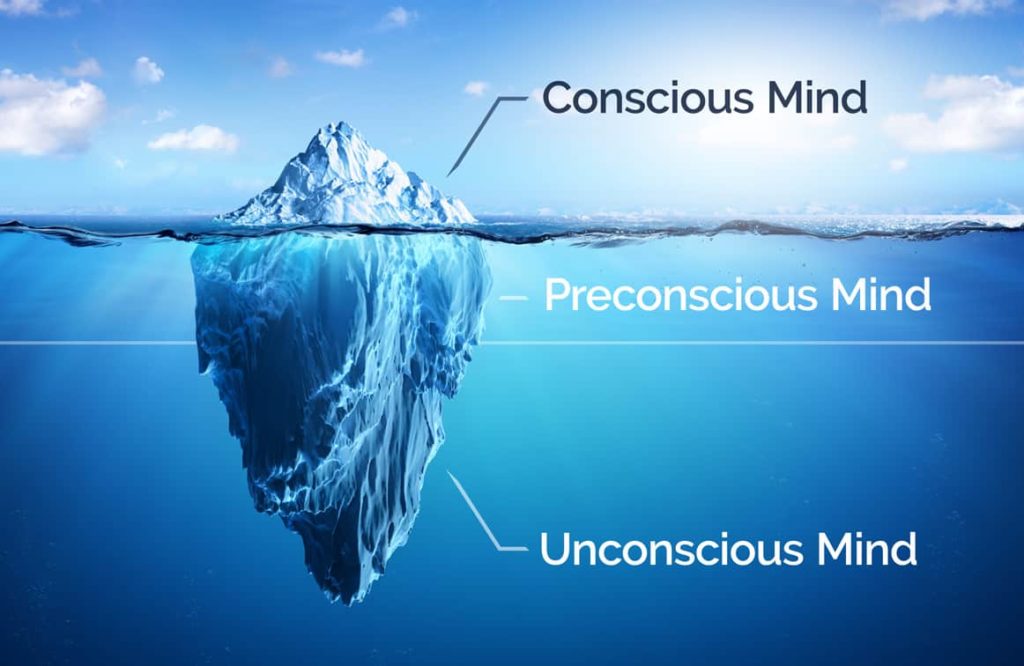
To explain the concept of conscious vs unconscious experience, Freud compared the mind to an iceberg and proposed 3 levels of consciousness.
Conscious mind
Conscious: This includes our current thoughts whatever we are thinking about or experiencing at a given moment.
Preconscious mind
Preconscious: Beneath the conscious is the much larger preconscious. This contains memories that are not the part of current thoughts but can be easily accessible with a moment’s reflection. For example, what we had for breakfast or our parents, first names.
Unconscious mind
Unconscious: Beneath the preconscious and forming the bulk of human mind is the unconscious.
(i) It includes thoughts, desires and impulses of which we remain largely unaware. Freud believed that much of it was once conscious but has been actively repressed driven from consciousness because it was too anxiety provoking. For example, Freud contended that shameful experiences or unacceptable sexual or aggressive urges are often driven deep within the unconscious.
(iii) The process of repression is itself unconscious and automatic. We do not choose to repress an idea or impulses, it just happens.
(iv) The fact that we are not aware of them, however in no way prevents them from affecting our behaviour. They continue to operate underground, often converting the repressed conflict into anxiety or even psychological disorders.
(v) It is storehouse of repressed libidinal energy.
Chess was the most important indoor game of the nineteenth century in England. It enjoyed centuries-old privileged status. It was considered as a ‘rational recreation’. Chess, unlike any other game, deals more with logic and rationality rather than fun, as we know, Rationalism had taken over the Victorian era abundantly.
(Alice playing Chess in Looking Glass world)
Alice, at once, recognizes the chess board stretched on the vast land in the Looking Glass World. It shows that although she is just seven and a half years, still familiar to the this game, which signifies the popularity of Chess in England in Victorian Era, especially among the bourgeois class(as it is also called ‘game of royals’) and Alice belonged to the same.
In life we make ‘choices’, in chess we make ‘moves’. In order to attain something valuable in life as to capture the opponent’s castle in chess, initiative has to be taken. Nobody can make decisions for me, I’ll have to play myself, it’s just suggestions that our people may put before us. Here, Alice makes a choice to participate in the game ‘imagining’ her goal where she wants to be in the end. Well, talking about imagination with reference to Victorian era, it significantly brought out a drastic change in society, though previously children along with adults were forced into realism. ‘Imagination’ is quite efficient to presume one’s position in the coming years and then working out to get there can be useful, because life makes it hard to calculate the further possibilities due to lack of information. Alice restrained herself asking the Queens about their arrival, thinking it would be obtrusive, which keeps her away from the information, also we see Alice not able to distinguish between Red Knight and White Knight and actually who’s there to save her declares her ignorance towards information.
Chess is symbolic to attributes of life, we see, there are (apparently) three stages in chess, that is, opening, middle game and the end game, similarly we have childhood, youth and adulthood in life. Alice joins the giant Chess game of life as a white pawn, that is, she holds very limited power and can move once at a time. We always need to start from the beginning, that is, from the very first ladder in order to earn it step by step. Alice has the freedom to setup her ‘goal’ to be a Queen, but she has no power over her inevitable maturation that’s leading her to womanhood. Within the framework of the chess game, Alice has almost no control over her path and she, with certain implied rules of the game, is driven by the corresponding characters in the book, as in chess, every piece moves in answer to the move of the other one. She is pushed towards her goal by the various situations occurring before her in every square, such as, the train ride, no-name forest, Humpty Dumpty and the White Knight. Thus, it can be traced from the narrative that in life, there is some invisible force that’s propelling every individual in the direction of set goal. It can be comprehended that collaboration is the biggest instrument to victory, for example, White Knight saved Alice from the attack of Red Knight without which it had been a Herculean task for her to reach to final square. We will have to rely on our people somehow, otherwise we can’t achieve our dreams just by our own self. In chess, one can take full credit for one’s victories, but in life it would be naive to say that what I achieved is all because of my sole efforts.
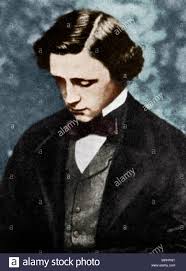
(Lewis Carroll)
The game of Chess in Through The Looking Glass represents the interest of Carroll in logics and mathematics, and the agent is ‘Alice’. This game is not about luck unlike other indoor/board games, rather brainy. In the same way, Life is more about randomness, it’s not alone in the hands of fate, though life is much more unpredictable. We need statistics as well as probability in both chess and life. Also, chess possesses two different colors, that is, one is light and the other one is dark, where I suppose, they stand for logic and nonsense respectively. Based on this idea, Alice often proves to be smarter, more prudent than the so-called adults she confronts in the Looking Glass world. This might also be a reverse-reflection of actual world, I guess, where we see adults inclined towards logic and children uttering stuff and nonsense and vice-versa, here, in the world of mirror.
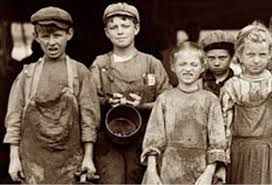
(Children doing factory chores in Victorian England)
Life of the children in Victorian period was totally opposite to that of present-day children. They were considered as miniature adults and were expected to be highly sophisticated, more in the case of rich class children. Children were not allowed to shout, complain, interrupt or disagree with anyone. The children of rich parents were usually looked after by governesses, no matter humble or strict, and they only used to teach them manners and the way of living. Here, in Looking Glass world, Red Queen, the first character to guide Alice in the reverse world,
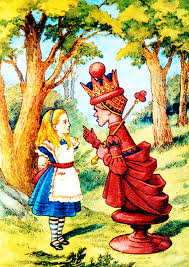
(Red Queen scolding Alice)
resembles very much like a governess of Alice when she teaches her how to not tweedle her fingers while speaking, how to behave, and to curtsey, and how Alice couldn’t go against her. She says, “when you’ve once said a thing, that fixes it, and you must take the consequences.”, because Alice is a Pawn and a Pawn cannot move backward, it is also allusion to the fact that once you have made the decision/choice, you can’t step back and stay committed bearing with it’s outcome, and she also asks Alice only to speak when she was asked to. Even we see TweedleDum-TweedleDee not ready to converse with Alice before she greets them. When Alice thinks that asking the Queens how they arrived would be impertinent, it shows again the social structure built for children in the real Victorian world.
When we are in a state of childhood, we want to turn into an adult soon. Similarly, Alice is excited about her lone-tour of adulthood through the Looking Glass world as she thinks she will be free of all the scolding, she says, “….no one here to scold me away from the fire….and can’t get me!” In the beginning, Alice was thrilled about her journey but as she is heading forward, she encounters the sense of loneliness in her journey to become a Queen(apparently) and acts adult herself. Though she is surrounded by different creatures many a times, but she feels alienated to their foreign ways. Hence, here Chess is a symbol of journey advancing from childhood to adulthood. She undergoes many crucial experiences, putting forward the idea of challenges one has to face in this journey of adulthood in one’s life. In the beginning, we see Alice being rude to Gnat about his jokes and later we see her kindness with White Knight that declares the change in her attitude as moving towards adulthood. When the Queen gives Alice directions as how to be a proper queen, it indicates that Alice wasn’t actually prepared to become a queen, just as it’s hard to prepare to be an adult in real world. Every square leads her to different characters and every character teaches Alice something significant, as we know, advice can come from the most unexpected places. For example, revelation of identity imposed by the situation in the woods of forgetfulness, the White Queen teaches her to believe in impossible, the fall of Humpty Dumpty symbolizes ‘the fall of man for pride’ and also ‘the fall of innocence’ proceeding towards maturity, and likewise all the other characters. These teachings help Alice to inherent the characteristics of adulthood within her. The crown here, symbolizes the transformation of Alice from childhood to adulthood.
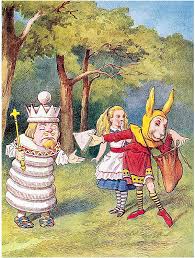
The Red King and the White King are almost doing nothing throughout the game as compared to their Queens. The Red King, as first encountered by Alice, is sleeping and his other pieces are performing their tasks to save him, whereas, the White King seems to be nervous not able to catch up with her Queen.
White King
Red King
Now these characters resemble in moves of both as that of the White and Red King in the real chess board. These actions of Queens and Kings in the world behind the mirror, may portray the position of women in the Victorian era. Women, at that time, used to engage themselves working for their husband and family, and also middle class and the working class women were employed to earn bread for their family, in support of their husbands. Red Queen saying to Alice, “…if you want to get somewhere else, you must run at least twice as fast as that!” may ascertain the idea that in a male-dominated society, women need to work double/toil harder in comparison to men in order to attain recognition. Women in the nineteenth century were not given much of the rights and privileges. This period is named after Queen Victoria, who was in the place of power. It is strange to encounter such a frivolous situation of women at the time when a lady herself was reigning over the society. When we behold Alice as a little woman moving from actual world to Looking Glass world, it may seem as she is struggling to change her confided world. She starts her journey all by herself which reflects the essence of independence in her. The characters like Live flowers resemble the social class structure that pushes Alice to follow their rules. When she chooses to be a Queen, she establishes the path for women/girls to upgrade their status because Alice learns that she must have a powerful authority to control Looking Glass world when one of the servants at once answers her after she turns into a Queen, so is the case for women in Victorian era, for example, Queen Victoria.
We need not be afraid of our high-rated opponents and feel incapable before them and it is then only that Alice is able to shake Red Queen in frustration and raises her voice against her rather than stitching her lips out of fear as evident in the beginning, that is, crown here, symbolizes her transformation from childhood to womanhood, gives her voice and finally renovates her status from a pawn to a queen. All the exclusive pieces are placed right behind the pawns. And a Pawn in comparison to them is just an ordinary, common piece that can slowly and gradually become a Queen. Even a pawn can cut down a King, pertaining to life, a single human being, regardless of his status, is enough to bring about revolution in the society, and win the castle of life. Alice suffering through all the odds, obstructions eventually made it, checkmated the Red King and turned into a Queen.
As a Queen in the game, the Red Queen and the White Queen are able to move swiftly and effortlessly. The White Queen, as she says, “jam-tomorrow and jam-yesterday, but never jam-today.”, and screams before pricking her thumb, travels in past and future which is true for the Queen,
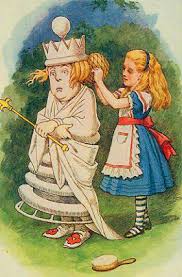
(Alice tying clumsy hair of White Queen)
in general, in chess that she can freely move in every direction possible, but she is seen nervous and messy all the time here, and ultimately at two points passes up a chance to checkmate and on another occasion she missed the opportunity to capture the Red Knight. Similarly, the Red Queen said to Alice, “Speak when you’re spoken to!”, and having supporting her words, she doesn’t announce it after putting White King on the check, hence, the check is ignored. Their individual character traits restrained them from performing their duties. This also discovers their absent-mindedness and reverse effect of the mirror world.
The Knight in the chess moves very distinctively and is allowed to jump over any other pieces. Riding and falling of the White Knight in looking glass world is signifying it’s unique L-shape movement. The inventions of White Knight are here to present his powerful character trait, like in chess board Knight is an only piece imbibed with many powers, unlike other pieces, not even a Queen can move in same way as Knight, though his inventions are unprofitable disclosing the touch of the illusionary world, still it is pointing to the fact that precaution is must, so his horse wears spikes on it’s ankles to protect it from shark bites and he collects things that might be useful in the difficult situation. The White Knight is the only character that is benevolent with Alice and saves Alice from the attack of Red Knight (stopping her to be a Queen/upgrade the position of women in society), but it can be an example of gender-biased society where a man is shown as a powerful figure and woman belongs to a weaker section. Alice, here, is represented as a weak girl and this action of White Knight throws light on the concept of feminism, and make Alice learn that a woman must stand for herself and must discover her own capabilities.
Chess wasn’t just one of the themes in Carroll’s story, indeed, it was the ground for the novel’s structure. The game of chess in real world is ‘logical’ while in looking glass world it can be called as ‘maddening game of chess’. Also as an inverted image created by the mirror, this indoor game is displayed as an outer giant field of chess. The pieces are definitely running and moving under the implied rules, but the pattern is not applied evenly. This game sets the deterministic way of life. Both life and chess are, more or less, synonymous in almost every aspect.
The speaker thinks about who owns the woods that he is passing through, and is fairly sure of knowing the landowner. However, the owner’s home is far away in the village, and thus he is physically incapable of seeing the speaker pause to watch the snowfall in the forest. The speaker thinks his horse must find it strange to stop so far from any signs of civilization. Indeed, they are surrounded only by the forest and a frozen lake, on the longest night of the year. The horse shakes the bells on its harness, as if asking if the speaker has made a mistake by stopping. The only other sound besides, is that of the wind and falling snowflakes. The speaker finds the woods very alluring, drawn both to their darkness and how vast and all-encompassing they seem. However, the speaker has obligations to fulfill elsewhere. Thus, though he or she would like to stay and rest, he knows there are many more miles to go before that is possible.
Themes
Nature vs. Society The speaker reflects on the natural world and its implicit contrast with society.The natural world it depicts is “lovely” and overwhelming. The fact that it seemingly lures the speaker to linger in the dark and cold suggests that nature is both a tempting and a threatening force, a realm that resists people’s efforts to tame it while also offering respite from the demands of civilized life. The complete lack of signs of civilization, meanwhile, further emphasizes the distance between society and nature. Far from the sights and sounds of the village, the speaker stands alone “Between the woods and frozen lake” on the “darkest evening of the year.” Together all these details present nature as a cold and foreboding space distinct from society. At the same time, however, the woods are “lovely” enough that they tempt the speaker to stay awhile, complicating the idea of nature as an entirely unwelcoming place for human beings. However raw and cold, nature also allows for the kind of quiet reflection people may struggle to find amidst the stimulation of society.
Social Obligation vs. Personal Desire(Hesitation vs. Choice)
Though the speaker is drawn to the woods and would like to stay there longer to simply watch the falling snow, various responsibilities prevent any lingering. The speaker is torn between duty to others and his wish to stay in the dark and lovely woods. The poem can thus be read as reflecting a broader conflict between social obligations and individualism. He seems worn by travel and social obligation, and the woods seem to represent his or her wish to rest. But this wish cannot be realized because of the oppressive “miles to go,” which must be traveled as a result of duty to others. He is torn between the tiresome duties of society, and the desire for individual freedom, that is manifested in the woods. This poem points to the reality of making decisions in complex situations in order to fulfill our responsibilities.
SettingAs the title makes clear, the poem is set in the “woods on a snowy evening.” It’s the “darkest evening of the year,” which suggests that this might be the winter solstice.The setting is also mostly silent, with the exception of the sound of wind and snowfall. The woods are expansive, as evidenced in the description “dark and deep.”
Tone
The poem conjures a tone of quiet reflection and wintry reminiscence. The last lines are not of pain or sadness, but more of a meditative appreciation and realization that there’s still much to be done that day.While most readers agree that the general tone is calm and serene, quiet and contemplative, others argue that this is dark and depressing.
Poetic Devices
Metaphor: The last line of the third stanza, “sweep of easy wind and downy flake” and the second metaphor is used in the last line with repetition, “and miles to go before I sleep.” Here, miles represent life’s journey, while sleep represents death.
Personification: Frost has personified the thinking of the horse mildly in the second stanza when it stops, and in the third stanza he gives a sign to the rider. “He gives his harness bells a shake/ to ask if there is some mistake.” It shows as if the horse is a human being who understands his owner’s needs or inquires if they have to stop.
Imagery: The poet has used the images for the sense of sights such as woods, houses, lakes, and they help readers see the woods as a source of solace and comfort to a lonely traveler.
Alliteration: “watch his woods”, “sound’s the sweep”, “His house”.
Euphony: It refers to the sound that is pleasing to the ears. While the journey through the forest is of loneliness, according to Robert Frost woods are not haunting or even scary but provide comfort and calmness. The woods also represent an uncorrupted world that the traveler wishes to stay in.
Structure
The whole poem follows the AABA rhyme scheme. Frost has used end rhyme in every first, second and fourth line of the poem. The third line of each stanza rhymes with the next stanza. Such as, “know”, “though” and “snow” rhymes with each other in the first stanza and” here” rhymes with “near” in the second stanza.
Repetition (Refrain): There is a repetition of the verse “and miles to go before I sleep” “and miles to go before I sleep “which has created a musical quality in the poem
Knock-kneed, coughing like hags, we cursed through sludge,
Till on the haunting flares we turned our backs,
And towards our distant rest began to trudge.
Men marched asleep. Many had lost their boots,
But limped on, blood-shod. All went lame; all blind;
Drunk with fatigue; deaf even to the hoots
Of gas-shells dropping softly behind.
Gas! GAS! Quick, boys!—An ecstasy of fumbling
Fitting the clumsy helmets just in time,
But someone still was yelling out and stumbling
And flound’ring like a man in fire or lime.—
Dim through the misty panes and thick green light,
As under a green sea, I saw him drowning.
In all my dreams before my helpless sight,
He plunges at me, guttering, choking, drowning.
If in some smothering dreams, you too could pace
Behind the wagon that we flung him in,
And watch the white eyes writhing in his face,
His hanging face, like a devil’s sick of sin;
If you could hear, at every jolt, the blood
Come gargling from the froth-corrupted lungs,
Obscene as cancer, bitter as the cud
Of vile, incurable sores on innocent tongues,—
My friend, you would not tell with such high zest
To children ardent for some desperate glory,
The old Lie: Dulce et decorum est
Pro patria mori.
Summary:
The speaker begins with a description of soldiers, bent under the weight of their packs like beggars, their knees unsteady, coughing like poor and sick old women, and struggling miserably through a muddy landscape. They turn away from the light flares and begin to march towards their distant camp, as lethargic as the walking dead. Many have lost their combat boots, yet continue on despite their bare and bleeding feet. They are tired to the point of hindered eyesight, and don’t even notice the sound of the dangerous poison gas-shells dropping just behind them. Somebody cries out an urgent warning about the poison gas, and the soldiers fumble with their gas masks, getting them on just in time. One man, however, is left yelling and struggling, unable to get his mask on. The speaker describes this man as looking like someone caught in fire or lime (an ancient chemical weapon used to effectively blind opponents). The speaker then compares the scene—through the panes of his gas-mask and with poison gas filling the air — to being underwater, and imagines the soldier is drowning. The speaker jumps from the past moment of the gas attack to a present moment sometime afterward, and describes a recurring dream that he can’t escape, in which the dying soldier races towards him in agony.
Theme:The Horror and Trauma of War The banal daily life of a soldier is excruciating, the brutal reality of death is unimaginable agony, and even surviving a war after watching others die invites a future of endless trauma.
The speaker thrusts the reader into the mundane drudgery and suffering of the wartime experience, as the speaker’s regiment walks from the front lines back to an undescribed place of “distant rest.” They are miserable: “coughing like hags,” cursing as they “trudge” through “sludge” with bloody feet. They march “asleep,” suggesting that these soldiers are like a kind of living dead. The terror and brutality of war have deadened them. The poem reveals another aspect of the horror of war: even surviving war offers ceaseless future torment. The speaker’s sleep is permanently haunted by the trauma of the death he has witnessed.
The Enduring Myth that War is Glorious This poem presents a vision of war—that is entirely brutal, bitter, and pessimistic. Owen wrote the poem with the belief that by highlighting the juxtaposition between a sanitized image of honorable death versus the messy, horrifying truth of actual war, perhaps the poem’s audience will change its attitude towards war and cease cheerfully sending young men to die in agony. The speaker suggests that if readers could experience their own such suffocating dreams,marching behind a wagon in which the other men have placed the dying soldier, seeing the writhing of the dying soldier’s eyes in an otherwise slack and wrecked face, and hearing him cough up blood from his ruined lungs at every bump in the path—a sight the speaker compares to the horror of cancer and other diseases that ravage even the innocent, they would not so eagerly tell children, hungry for a sense of heroism, the old lie that “it is sweet and fitting to die for one’s country.”
The poem demands that the readers face the truth and no longer be complicit with that old Lie, but even as it does so, it seems to bitterly perceive that nothing will change, because nothing ever has.
Structure:
The poem is a combination of two sonnets. In the first sonnet, the poet describes his experiences of the war, in the second sonnet he becomes analytic and attempts to correct the outlook of others about the war.
Sonnet: A sonnet is a fourteen-line poem in which a single idea floats throughout the poem.
Rhyme Scheme: The whole poem follows the ABAB, CDCD rhyme scheme.
Poetic Devices:
Alliteration: “But someone still was yelling out and stumbling” and /w/ sound in “And watch the white eyes writhing in his face.
Simile: Owen has used many self-explanatory similes in this poem such as,” Bent double, like old beggars under sacks”, “Knock-kneed, coughing like hags”, “like a man in fire or lime” and “like a devil’s sick of sin.”
Metaphor: “Drunk with fatigue; deaf even to the hoots.” It presents the physical state of the men.
Consonance: Consonance is the repetition of consonant sounds in the same line such as the /r/ sound in “Come gargling from the froth-corrupted lungs.”
Synecdoche: It is a figure of speech in which a part is made to represent the whole. For example, the word “sight” in the second stanza represents the speaker.
Imagery: Imagery is used to make the readers perceive things with their five senses. “old beggars under sacks”, “had lost their boots”, “His hanging face, like a devil’s sick of sin” and “white eyes.”
Setting:
Wilfred Owen wrote “Dulce et Decorum Est” while he was fighting as a soldier during World War I. The use of “flares” and “gas-shells” are specific to World War I, since they had not been used in combat before this time.The majority of British troops in WWI were deployed to France. Chlorine gas, with its distinctive green color, was first deployed by the German army in Belgium in 1915.The “clumsy helmets,” or gas masks, were developed in response to the introduction of gas.
Language:The way Owen uses language to put readers inside the experiences of a soldier helps them begin to understand the horrific experience of all of these awful aspects of war.If the audience could experience the trauma the speaker describes (“the white eyes writhing,” the “gargling from froth-corrupted lungs”), then they wouldn’t pass their patriotic militarism down to their children. But they don’t experience it, except through the language of the poem
Tone
The tone of this poem is angry and critical. Owen’s own voice in this poem is bitter – perhaps partly fuelled by self-recrimination for the suffering he could do nothing to alleviate. Owen dwells on explicit details of horror and misery in order to maximise the impact he wishes to have on those who tell the ‘old Lie’. The way in which he addresses as ‘My friend’ those with whom he so strongly disagrees is ironic.
The poem records a dying soldier asking for aid from the narrator. He is injured and about to meet the horn of death. He finds himself lucky as his injury is not severe as he is alive in comparison to those who met their death already, yet doesn’t deserve this fate only for fulfilling the ill-desires of some warmongers.
The young soldier was smiling at his best to hide his pain and asked for the narrator’s aid.The narrator saw a number of soldiers lying dead, who had fought a long and difficult battle throughout the night and had died in the battle.
The narrator finds a large reddish-brown stain of blood on the soldier’s shirt which is a mixture of his blood and the local Asian dirt. The soldier then describes his experience of the battle which took place at night, that he along with a troop of two hundred soldiers was climbing a hill and as they reached the top, there was an explosion and then he felt this small pain in his chest. The soldier then feels bad and tells the narrator that though he is an enthusiastic and big man, he was defeated and left with a small pain in his chest. It seemed that the soldier was injured in the explosion and the pain was of the injury that he went through, and was hiding the pain with his subtle yet brave smile. Finally,the soldier succumbs to the fatal pain, the world closed in on him.The narrator had put his arms around the dead soldier and as he pulled him towards himself, he could feel their wounds pressed against each other- the large one in the narrator’s heart due to the deep agony he was in after watching a soldier die for his country, against the small one in the soldier’s chest.
SETTING:
This poem is based on the prolonged struggle of the Vietnam War between 1955 and 1975. The word ‘HERE’ is written in capital letters to indicate the battlefield, which is of no use to humanity.
THEME:
“Small Pain in My Chest” is another addition to the ‘Anti-war’ poem group. This poem joins the crusade against the uselessness and negativity of war.
Irony: The title of the poem Small Pain in My Chest is used ironically. The expression “small pain” is repeatedly used in the poem only to make sure we get the irony. The pain was not at all a small one, rather it was a fatal injury that the soldier boy succumbed to. But, the poet is hinting that the injury of the soldier boy was small compared to the destruction war can cause.
The narrator felt extremely sad at the futility of war which takes away so many great young lives. He saw the soldier boy, helped him respond to his call, talked to him, felt his concerns and saw him yield to the injury. So he can’t, but feel the evils of war at heart, which overwhelmed him to an extent that his pain seemed greater than the physical pain of the soldier boy.
The pity of war is felt all over the poem. War cannot bring merriment; it always has a sad ending. The real pity is aroused when the soldier boy expresses his concern regarding what his mother and wife, who immensely depend on him, would think if they saw him in such helpless condition.War doesn’t have any productive potential; it only destroys. The soldier wouldn’t mind even dying for a noble cause, but to be sitting here without a good reason seems silly to him.
Theme of sacrifice: The soldier boy has been used as an idol of Sacrifice to portray the sacrifice made by the soldiers while fighting for their country which comes out of a sense of duty and bravery without having any grudge against anyone on the opposite side of the battle.He says:
We fought all day and fought all night with scarcely any rest –
I kept firing at them, sir. I tried to do my best,
But we see he has no complaints against anyone, not even any demand. He fought bravely and tried to do his best just from his sense of giving service for his motherland. We see him covering up his fatal pain with a subtle smile that only imparts strength to think of it as a “small” pain.
War takes away those lives for a wrong reason. All those lives are lost and spoiled. It’s a sacrifice more of a nation than for a nation. The love and spirit of sacrifice the soldier has within himself for his country does not consider his injury as fatal but just a small pain in his chest. He showed his bravery till which gives us the emotions of the poet on the sacrifice made by the soldier boy who died happily even after making such a huge sacrifice out of the sense of duty and responsibility.
TONE:
We find ‘Small Pain in My Chest’ to reflect strong condemnation against the war. This poem through the conversation between the two soldiers reflects that war brings pain, separation, agony, hatred and above all loss of all innocent lives.The death of the young soldier hints that warmongers do go in the battlefield and fight rather guileless young soldiers are sent to kill and to be killed. War does not bring any solution, it kills humans and humanity. Nothing influences a soldier on the battlefield than the fear of being killed and the task of killing the enemy.They have no space for emotion, feelings, sympathy or leisure. Food, rest, recreation etc. become baffling to them
STRUCTURE/STYLE/LANGUAGE:
“Small pain in my chest” is a ballad with a refrain. The poem has a musical tenet. The whole poem is of 36 lines and divided into nine four-line stanzas.It maintains the rhyme scheme of aa bb. It comprises stanzas that can be sung to musical instruments. We find the use of alliteration, inversion, enjambment, imagery, and refrain in the poem.
A Refrain is a repeated line or number of lines in a poem or in a song that comes typically at the end of each verse, which generally carries the main message of the poem. Here the refrain hints at the horrors of war, pain and suffering of a soldier in the war.
POETIC DEVICES:
Alliteration
Alliteration is repetition of consonant sounds in the beginning of nearby words.
What would my Wife be thinking…
Refrain
The poet has repeated the expression ‘a small pain in my chest’ at the end of each stanza beginning from the second one.
Symbolism
Can it be getting dark so soon?…
I thought that the day had just begun.
These two lines are symbolic. Here, ‘getting dark’ signifies the approaching death of the young soldier. ‘The day’ indicates his life which he thought had just begun.
The ill-fated soldier boy can no longer withstand the fatal wound and the great pain. He is nearing his death. ‘The day’ here symbolises the life of the soldier, which had just begun, and he had a long future ahead. He could not believe that it was ending so soon.
Euphemism
This is the use of good-sounding indirect words to substitute harsh and unpleasant ones.
They’re all gonewhile I feel this…
In the above example, ‘gone’ is used to mean ‘dead’ to make it sound milder.
Transferred Epithet
The night exploded and …
Here, the night didn’t really explode, rather the bombs that exploded at night.
Hyperbole
It is an exaggerated statement, generally to make an emphasis.
…the brightest that I’ve seen.
The speaker has described the soldier’s smile as the brightest smile he has ever seen. Clearly this is an exaggeration.
The speaker was walking aimlessly down the hills and valley when he stumbled upon a beautiful field of daffodils which sparked up his creative spirit. He is transfixed by the daffodils seemingly waving, fluttering, and dancing along the waterside. Albeit, the lake’s waves moved as fervently but the beauty of daffodils outdid with flying colors. The poet feels immensely gleeful and chirpy at this mesmerizing naturalistic sight. He remains transfixed at those daffodils wavering with full vigor, oblivious to the fact that this wondrous scenery brings the poet immense blithe and joy when he’s in a tense mood or perplexed. His heart breathes a new life and gives him exponential happiness at a sight worth a thousand words.The flowers were a “jocund company” to him that he could not find in humans. Their silent presence told more than the words of humans could convey to him. They had a purity that made the poet spellbound, and celebrated the beauty of nature along with the bliss of solitude, which he deems as an asset that inspires him to live a meaningful life.
STRUCTURE/FORM:
The poemis composed of four stanzas, six lines each. It is an adherent to the A-B-A-B-C-C (quatrain couplet rhyme scheme) as it uses consistent rhyming to invoke nature at each stanza’s end. Consonance and alliteration are used to create rhymes.
This poem is written from the first person point of view, therefore it is an ideal example of a lyric poem.
POETIC DEVICES and LITERARY TOOLS:
Similes are used since the poet alludes himself to an aimless cloud, as he takes a casual stroll.The poet metaphorically compares him to a cloud for describing his thoughtless mental state on that day. The daffodils are compared to star clusters in the Milky Way to explicate the magnitude of daffodils fluttering freely beside the lake.
Hyperbole is used to explain the immensity of the situation. By “ten thousand”, he meant a collection of daffodils were fluttering in the air. It’s just a wild estimation at best as he supposes ten thousand daffodils at a glance.
The poet makes an allusion to the Milky Way, our galaxy filled with its own planetary solar systems stretched beyond infinity. Along the Milky Way’s premises lie countless stars which the poet alludes to daffodils fluttering beside the lake.
The daffodils are even made anthropomorphous in order to create a human portrayal of Mother Nature in this instance.
He has also used personification, equating humans to clouds, and daffodils to humans with constant movement. He personifies the daffodils, dancing, a trait relatable to humans. The term “sprightly” comes from sprite which is primarily dandy little spirits, people deemed existed in such times. They are akin to fairies.
THEMES:
Symbolism: The poem begins with a symbolic reference to the cloud, wandering aimlessly and lonely. The poetic persona is the embodiment of such a cloud.Although the clouds mostly travel in groups, this cloud prefers singular hovering. Hence, it symbolises being lonely and thoughtless, free from mundane thoughts. The daffodils act as a symbol of rejuvenation and pure joy. In his pensive mood, they become a means for the poet’s self-reflection, through which the flowers express their vibrance.
The “inward eye” is a reference to the mind’s eyes. When one shuts his physical eyes, it unleashes those eyes. Wordsworth compares the daffodils to the “bliss” of his solitary moments.
According to him, the memory associated with the daffodils fills his heart with pleasure, making his heart leap up once again like a child. Blissful memories are so gripping that they stick with a person throughout his or her life.
Imagery: The image of the cloud describes the poet’s mental state, and the images that appear thereafter vividly portray the flowers. These images are visual and some have auditory effects (Example, “Fluttering and dancing in the breeze.”) The waves are sparkling due to the sunlight. This image is contrasted with the dance of daffodils.
The space continuum holds great mystery for our Romantic Era poet as he envisions the daffodils to be in a constant state of wonder as are the stars beyond the reach of humans.
TONE and MOOD:
The tone of this poem is emotive, hyperbolic, expressive, and thoughtful. Using this clever tactic of personification, the poet brings people closer to nature, becoming a hallmark of William Wordsworth’s most basic yet effective methods for leading the readers to appreciate nature’s pristine glory. Throughout, the poet maintains a calm and joyous mood. This poem is famous for its simplicity, sing-song-like rhythm, and thematic beauty.
We see a growth of English national spirit following the victories of Edward and the black prince on French soil during the Hundred Years War. It lead to England separating from the political ties of France, the mutual distrust and jealousy were swept aside momentarily by a wave of patriotic enthusiasm. The French lost its official prestige, and English became the speech not only of the common people but of courts and parliament as well. The literariness of the age clearly reflects the stirring life of the times. Langland voiced the social discontent preaching the equality of men and the dignity of labour, Wycliffe translated the gospel, Gower criticised the vigorous life and feared its consequences. While reading Chaucer we come across obsolete spellings, melody in almost every line, rough verses.
One result of the Norman conquest of 1066 was to place all four English dialects at bay. West Saxons lost its supremacy and the centre of culture and learning gradually shifted from Winchester to London. The old Northumbrian dialect became divided into Scottish and northern, although little is known of either of these divisions before the end of the 13th century. The old Mexican dialect was split into east and west midland. West Saxon dialect was named the south western dialect and Kentish dialect, south eastern dialect, they went their own way and developed their own characteristics.
This age also so the emergence of the Standard English language. English was previously heavily curbed by the influence of French and Latin. The east midland dialect became the accepted form of standardized English. The language saw great achievement and expression in the masterpieces of Chaucer. French and Latin saw a waning influence on the language of the day. The common examples from daily life account details of blooming gardens in spring to unique human characteristics. The language glorified the themes of beauty, vitality and secular sentiment.
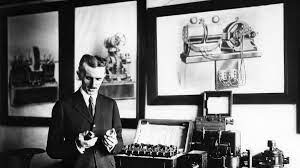
Many scientists have left their mark in the field of science. Their hardwork have led us to this development. Yes, if those scientists wern’t think of those different ideas, will you be able to live in this cosy and comfortable world. Think of those days, there were no mobile phones, mixer grinder, car and even current. When we think of this, the fullest credits goes to the scientists who invented this right? If there is no Edison, will there be any current now? If there is no Graham Bell, will there be a telephone? Have you ever thought if you can live without current and mobile phones? The answer would be no. Okay, let me get the point. You know about Edison, Graham Bell, Albert Einstein etc., and you know something about them. I will tell you about a scientist who left his mark in the field of physics. Yes. I’m to talk about our Nikola Tesla. He made many breakthrough in the production, application and transmission of the electric power. The first alternating current motor was invented by him. This made a breakthrough in the field of engineering. Come on! Let’s know something about him.
NIKOLA TESLA (1856 – 1943)
Nikola Tesla was born on 10th July 1856 in Croatia, America. His father, Milutin Tesla was preist in Eastern Orthodox Church. His mother,Đuka Mandić was very talented and she has the power to memorise Serbian epic poems. The crave for knowledge in Tesla came from his mother. Tesla was the fourth child of the family. He had three sisters and an older brother. His brother died when Tesla was five years old.
Tesla said that his interest in demonstration of electricity came from his physics teacher. He has a talent to calculate integral calculus in his head which prompted his teachers to believe that he was cheating. In 1875, Tesla enrolled at the Imperial Royal Technical College, Gauz, on a Military Frontier scholarship. During his first year, Tesla never missed a lecture, earned the highest grades possible, passed nine exams. He even got the letter of recommendations from his dean. After his father’s death in 1879, Tesla lost his scholarship and addicted to gambling. He never get through the final semester exams and didn’t finish of his degree. To hide fact, he severed the ties with his family and his friends thought that he was dead.
TESLA IN THE FIELD OF ELECTRICITY
In 1884, he reached America with the letter of inrtoduction to work with Thomas Edison, whose DC-based electrical works were fast becoming the standard in the country. Edison hired Tesla and the two worked hard tirelessly on Edion’s inventions. After some months, they two parted their ways due to some issues related to their business.
Tesla discovered, designed and developed ideas for a number of important inventions which were officially patented by other inventors including dynamos and the induction motor. Tesla designed the alternating-current (AC) electrical system, which had become the prominent power system of the 20th century and has remained the worldwide standard ever since.
In 1887, Tesla found funding for his new Tesla Electric Company, and by the end of the year, he had successfully filed several patents for AC-based inventions.
In 1895, Tesla designed what was among the first AC hydroelectric power plants in the United States.
In the 19th century, Tesla patented Tesla coil, which laid the foundation for wireless technologies and is still used in radio technology today. The heart of an electrical circuit, the Tesla coil is an inductor used in many early radio transmission antennas. The coil works with a capacitor to resonate current and voltage from a power source across the circuit.
Tesla died due to Chronic Thrombosis on 7th January 1943. He died in New York where he lived for sixty years. He worked hard to prove himself in the field of electricity. As the result of his hardwork, he was able to leave his marks in the field of elctricity. These are just a few information given by me. If you began to search on him, you can know various interesting facts about him.
















 Eduindex
You must be logged in to post a comment.