Author: 1111 EduPub
A Shift in Public Opinion on the Legalization of Marijuana
- Millennials today between the ages of 18 to 35 are more than twice as likely to support legalization of marijuana as they were in 2006 (71 percent today, up from 34 percent in 2006).
- Millennials are significantly more likely to support legalization than other generations.
- Support for marijuana legalization has also increased among members of Generation X and Baby Boomers (ages 36-51 and 52-70 in 2016, respectively).
- More than half of Gen Xers (57 percent) support legalization, a considerable jump from just 21 percent in 1990. A majority of Boomers (56 percent) also support legalization, up from just 17 percent in 1990.
- By more than two-to-one, Democrats favor legalizing marijuana over having it be illegal (66 percent vs. 30 percent). Most Republicans (55 percent) oppose marijuana legalization, while 41 percent favor it.
A California Chef Joins UVM Online Program to Learn the Science of Cannabis
Tell us how you got into cooking with cannabis.
Why did you enroll in the UVM Cannabis Science and Medicine Program?
What aspect of the program have you enjoyed the most so far?
After you complete the program, how will you apply what you have learned?
Why would you recommend the program to others?
What do you enjoy most about cooking with cannabis?
Collaborative Hearts And Minds Help Kids Cope
![]() |
| Source: ASIDE 2015 |
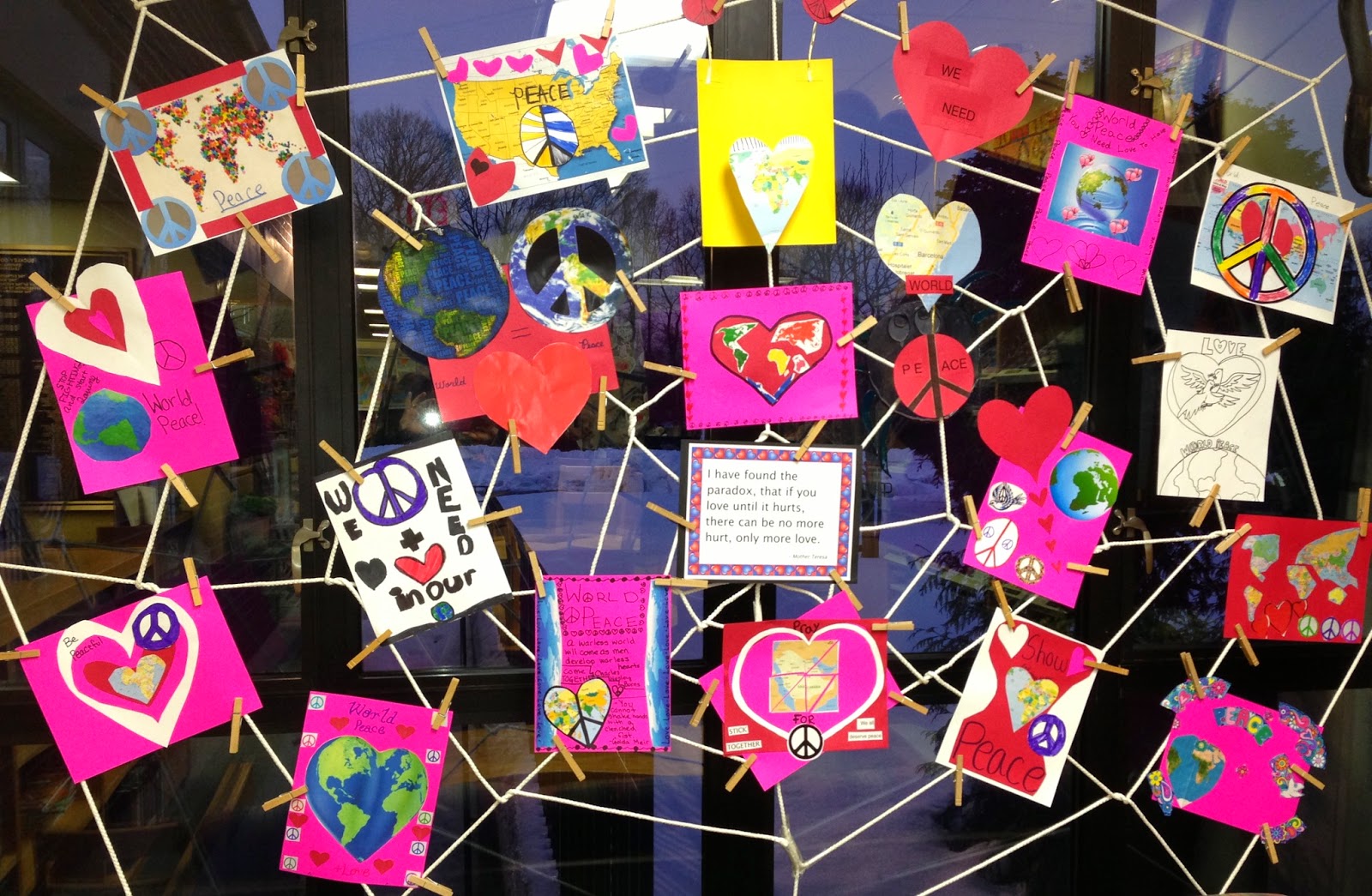
With the increasing questions we received from our sixth graders about the abhorrent news this past week, we realized they needed to do something to make them feel they were sending a positive message to help the world be a more peaceful place. Eleven- and twelve-year-olds hear the news, and most have far more access to content than their parents realize. Their questions abound and need an outlet. As middle school educators, we know this.
![]() |
| Source: ASIDE 2015 |
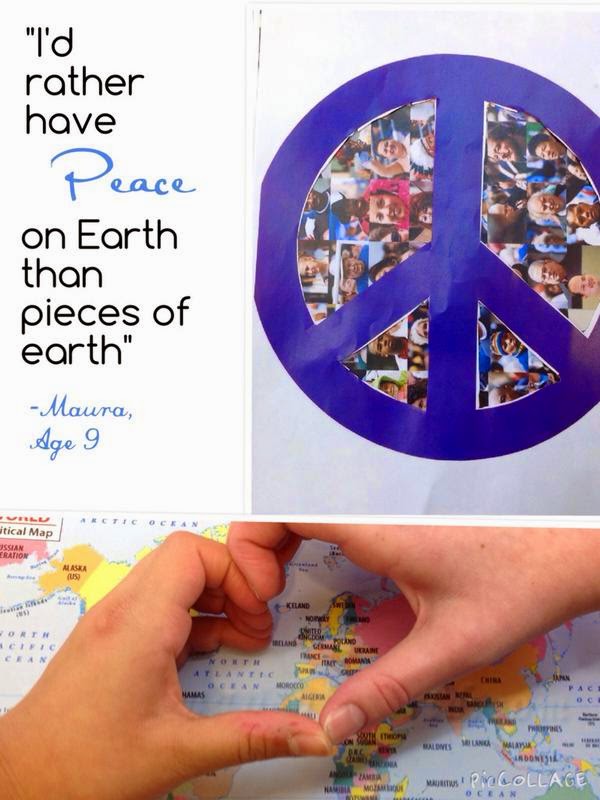
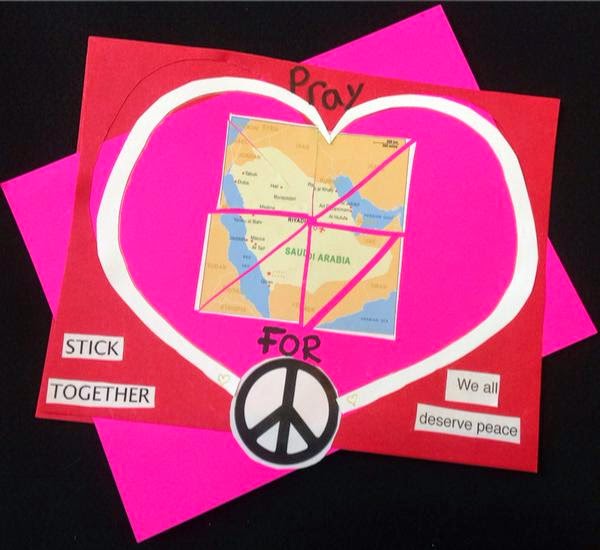
So with our friend and colleague, Francine Wisnewski (@fwisnewski), we decided to bring hearts and minds together to let the kids create a message to share on social media and with the school community. We asked them that each finished design somehow include a heart, map, and peace sign. That’s it. How they incorporated the criteria and with whom they worked, or not, was up to them.
We cherish the flexibility in our curricula that allows us to stop everything to promote mindfulness with our learners. It does not matter that the schedule listed math and history; we pulled the kids together to address their concerns about world conflict and violence.
![]() |
| Source: ASIDE 2015 |
We continually try to build the hearts and minds of our young learners to be peace builders, peacemakers, and peacekeepers. As adults, we understand the turmoil in the world, and sometimes we just have to stop to help them cope. It’s worth every minute. If we don’t, we lose the power of positive thinking that the world so much needs.
For other resources, please see:
Creating Logos With Students – Understanding Visual Metaphor And Symbolic Meaning
![]() |
| Source: DesignMantic (click for full-size image) |
Logos are short-hand, visual cues that companies use to evoke their brands. Effective logos represent automatic associations between a corporation and a customer. They connect a unique icon with an emotional reaction.
This type of tidy pictorial design can also be employed to winning effect in the classroom. Students can use logos to study visual metaphors and symbolic meanings. They can experiment with thesis and synthesis, in boiling down a range of meanings into a concise, original image.
![]() |
| Source: ASIDE 2015 |
History students, for example, can sketch logos to embody specific presidents or time periods. We had our U.S. history classes brainstorm logos for the era of the Great Depression. The designs featured in this post range from a juxtaposition of the Empire State Building going up while the stock market goes down, to a financial Dust Bowl of lost dollars.
In studying literature, learners can similarly design logos to accompany a book or a character. It’s no surprise that the Hunger Games mockingjay pin became so popular among fans. Science students can draft logos for key principles or elements, or global thinkers can draw emblems to capture current events.
![]() |
| Source: ASIDE 2015 |
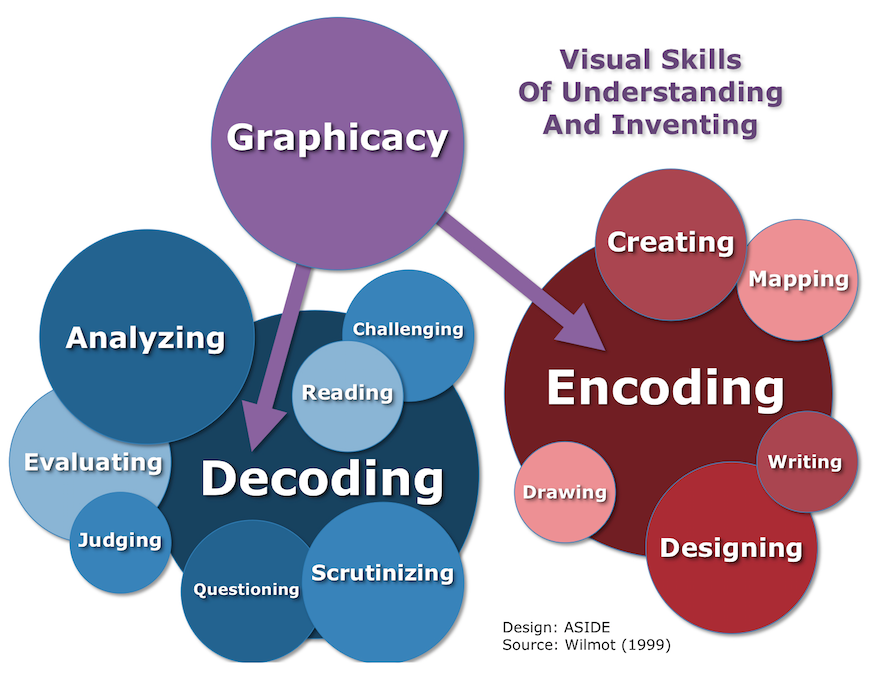
By translating their understanding into self-created icons, students can climb a level in their comprehension, from decoding to encoding. They can capture the essential significance or recurring tropes via clever designs that will in turn help educate their peers.
Steps for creating logos with students:
- Begin by having learners identify logos and brands from current media. We use these sheets of letters and symbols as games to get students excited and to introduce the range of possibilities.
- Invite students to rank their favorite logos and explain why some stand out in their minds. For example, we had children rate the logos of presidential candidates in 2012.
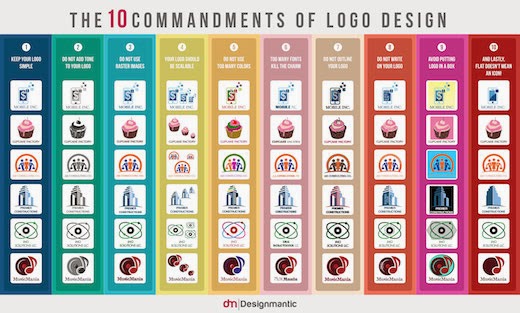
- Introduce some tips for contemporary design. DesignMantic has a helpful infographic of the “10 Commandments Of Logo Design.” FastPrint also offers a terrific infographic about “How To Design The Perfect Logo.”
- Ask them to brainstorm the key characters, themes, or takeaways that they would want a logo to evoke.
- Finally, give them a range of tools to use, from hands-on pen and paper to visual apps like Pencil by FiftyThree.
![]() |
| Source: FastPrint |
Above all, a logo should present a clear, somewhat unexpected relationship between picture and subject. The video below, “49 Years Of Super Bowl Logos,” reveals how images can evolve with the times to add layers of significance.
For further ideas, we recommend:
Heart-Shaped Maps – Valentine Primary Sources
![]() |
| Source: Wikipedia – Oronce Fine, 1531 |
It wasn’t until our students started making heart-shaped worlds as part of a way to promote peace that we wondered if there were any historical references. To our surprise, there were plenty. One of the earliest heart-shaped (cordiform) map projections by Oronce Fine, a French mathematician and cartographer, was created in the sixteenth century. According to Wikipedia, this might have been his most famous illustration and one that influenced other cartographers, such as Peter Apian and Gerardus Mercator.
We love when something our learners do triggers a curiosity in us. Instead of showing our students the many infographics we’ve collected about Valentine’s Day that tabulate the amount of money spent by men and women on items such as flowers, chocolate, and jewelry, we chose to show these beautiful heart-shaped maps that so wholly connected to their designs. As expected, our students delighted in seeing the connection to their creations, especially since they had no idea of their connections to history.
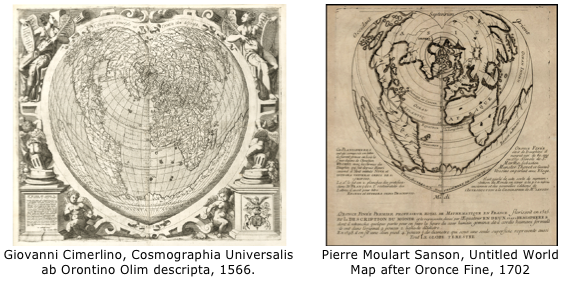
We uncovered other examples of cordiform map projections that obviously take their influence from Oronce Fine’s beautiful cartographic design. The maps below, illustrated by Giovanni Cimerlino and Pierre Moulart Sanson, were done more than a century apart.
![]() |
| Source: Rare Maps (Left) and Britain (Right) |
Two more recent uses of the heart-shaped map appeared on stamps issued in the United States (1991) and Venezuela (1972). We wonder if the graphic artists knew of Oronce Fine’s hand-drawn map of 1531.
![]() |
| Source: Dan’s Topical Stamps |
The “Love” stamp from the United States does not necessarily represent a cordiform projection, whereas the stamp from Venezuela celebrating World Health Day more closely resembles the heart-shaped designs from the fifteenth century.
![]() |
| Source: Biographile |
As we probed the Internet for other examples, we discovered a heart-shaped map of Seattle from 1905 and one of the New York City subway system from 2008.
These maps clearly illustrate the change in design from one era to another. The map of Seattle represents a more typical illustration at the turn of the twentieth century, whereas the subway map, completed more than a century later, closely follows the style of a modern visual illustration or infographic.
![]() |
| Source: Zero Per Zero |
Sometimes it’s the innocence of children that triggers inquiry in adults. We attribute our curiosity to them. Finding other models based on their creativity led to the discovery of historical references. Connecting history through primary sources reinforced their global view of the world.
With the continued onslaught of violence and terrorism in the news, we could all use a little more heart.
Design Principles For Students As They Create Visual Projects And Digital Stories
![]() |
| Source: DesignMantic (click for full-size image) |
Students are producing more projects than ever before. The proliferation of visual apps and the access to easy tech tools have allowed learners to create all sorts of digital stories and custom graphics. Yet, as Marvel Comics teaches us, with great power comes great responsibility.
It is tempting to assume that because children are growing up in a visual world, they automatically know how to decode and encode optical inputs. This proficiency is known as graphicacy, which is the key to visual thinking in a differentiated classroom. If educators are going to ask students to design posters and slideshows, then they also need to guide young learners in the skills of effective design. Any teacher who has seen children layer neon pink fonts on top of vertiginous purple backgrounds knows that kids don’t innately grasp the keys to clean layouts.
![]() |
| Source: DesignMantic (click for full-size image) |
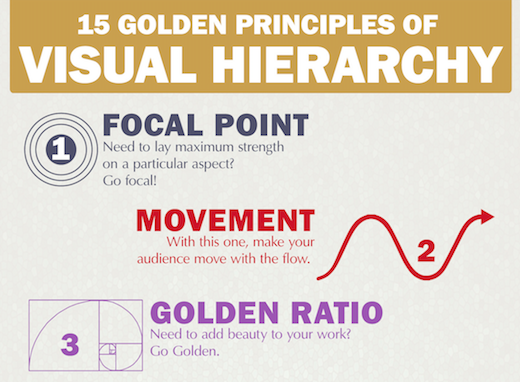
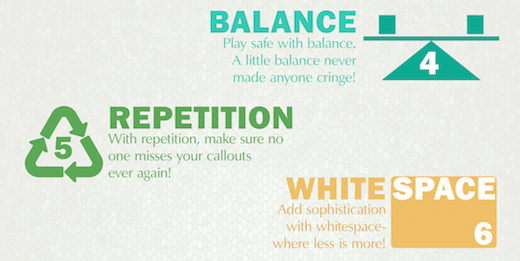
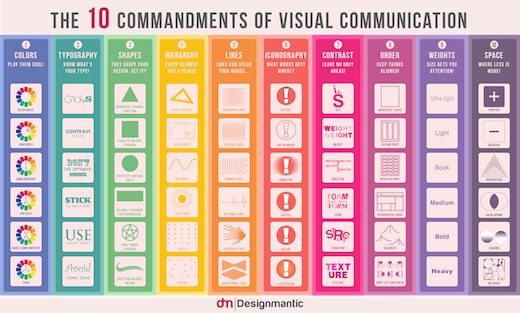
The logo design firm DesignMantic has published a series of extremely helpful infographics to help budding artists generate successful visuals. Even though these placards are intended for marketing and business purposes, they perfectly suit the needs of teachers looking for classroom resources.
DesignMantic‘s graphic of the “15 Golden Principles Of Visual Hierarchy” marches through a framework for art and imagination. As the firm notes:
![]() |
| Source: DesignMantic (click for full-size image) |
The company also offers a primer in “The 10 Commandments Of Visual Communication.” Much like its tenets for quality logos, these guidelines range from line and font choices to arrangement and sizing tips. In essence, it provides “a layperson’s handbook of visual communication.” It reminds us of similar advice from “The Design Of Project-Based Learning – Color Theory For Web 3.0.”
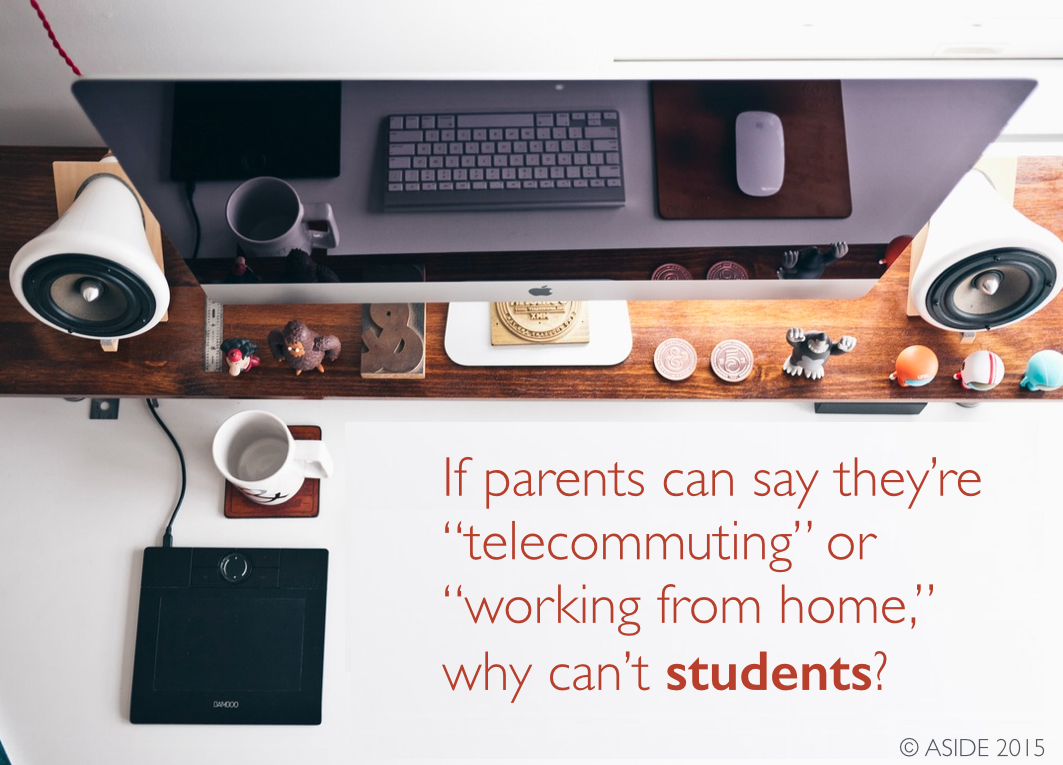
If Parents Can Work From Home, Why Can't Students? A Snow Day Doesn't Have To Be A "No" Day
![]() |
| Source: ASIDE 2015 |
Students frequently get sick and miss school. Consider, too, how many times you’ve seen a kid in your classroom who really shouldn’t be there. He has his head down, or has bags under his eyes, or has his mind clearly elsewhere. How many times have you noticed a student who truly needs a break? She’s been burning the candle at both ends, or has been bearing the weight of a bully, or has been negotiating a tough family situation.
![]() |
| Source: ASIDE 2015 |
Video conferencing and social media and collaborative documents all offer easy avenues to engage a class of home-bound learners. Many teachers use these resources daily inside of the classroom. Why can’t these tools also be tapped to coordinate a corps of kids, either in real-time or at the students’ own paces?
Tools for remote learning:
- TodaysMeet – The leading real-time channel, TodaysMeet creates discussion groups for instant message communication.
- Twitter – The ultimate social media tool for education, Twitter mimics the classroom environment with chats, text, links, images, and videos.
- Croak.it – Both teachers and students can create a 30-second audio file with a url that can be embedded in a backchannel, website, or tweet.
- Remind – This free way for teachers to text students protects everyone’s privacy and instantly reaches kids on their phones.
- Cel.ly – Cel.ly creates individual social networks via its texting feature that can be moderated directly from a smartphone.
![]() |
| Sources: Company Logos |
- Verso – Flipped learning with Verso can include videos, images, or links in self-contained classes with rich commenting features.
- eduCanon – This site collects videos from across the web and allows teachers to add flipped learning elements.
- EDpuzzle – Teachers can crop videos and add questions and explanations to fit any age group.
- Zaption – Zaption makes videos interactive by adding assessments.
- audioBoom – Teachers can record podcasts to pass lessons on to students, and kids can capture their own answers, readings, or projects.
![]() |
| Sources: Company Logos |
- Nearpod – The teacher guides the presentation, and students on their own devices see the slides progress as they interact from anywhere with polls and assessments.
- Issuu – Intended to publish webzines, Issuu turns any .pdf into a scrolling web document for students to read and save at their leisure.
- iBooks Author – The ability to publish customized content on iBooks is becoming easier and easier.
- Wikispaces – Still one of the most flexible platforms for a class website, Wikispaces accepts any media and any embedded content.
![]() |
| Sources: Company Logos |
- Skype – Teachers can broadcast themselves in full video and audio to reach students in their homes.
- Facetime – As more and more schools opt for iPads and Apple TVs, Facetime provides an easy way to videoconference.
- Google+ Hangouts – Multiple participants from any device can come together in a live-streaming video chat.
![]() |
| Sources: Company Logos |
- Google Docs – Google Drive keeps getting better and better, and the real-time collaboration is still the industry standard for essays, presentations, and spreadsheets.
- Padlet – Padlet is an infinitely customizable public space with customized urls to post text, links, images, videos, and student projects.
- Dropbox – The larger storage capacity of Dropbox makes it ideal for file-sharing.
- Email – When in doubt, simple email can allow students and teachers to swap instructions, questions, and assignments.
If Parents Can Work From Home, Why Can't Students? A Snow Day Doesn't Have To Be A "No" Day
![]() |
| Source: ASIDE 2015 |
Students frequently get sick and miss school. Consider, too, how many times you’ve seen a kid in your classroom who really shouldn’t be there. He has his head down, or has bags under his eyes, or has his mind clearly elsewhere. How many times have you noticed a student who truly needs a break? She’s been burning the candle at both ends, or has been bearing the weight of a bully, or has been negotiating a tough family situation.
![]() |
| Source: ASIDE 2015 |
Video conferencing and social media and collaborative documents all offer easy avenues to engage a class of home-bound learners. Many teachers use these resources daily inside of the classroom. Why can’t these tools also be tapped to coordinate a corps of kids, either in real-time or at the students’ own paces?
Tools for remote learning:
- TodaysMeet – The leading real-time channel, TodaysMeet creates discussion groups for instant message communication.
- Twitter – The ultimate social media tool for education, Twitter mimics the classroom environment with chats, text, links, images, and videos.
- Croak.it – Both teachers and students can create a 30-second audio file with a url that can be embedded in a backchannel, website, or tweet.
- Remind – This free way for teachers to text students protects everyone’s privacy and instantly reaches kids on their phones.
- Cel.ly – Cel.ly creates individual social networks via its texting feature that can be moderated directly from a smartphone.
![]() |
| Sources: Company Logos |
- Verso – Flipped learning with Verso can include videos, images, or links in self-contained classes with rich commenting features.
- eduCanon – This site collects videos from across the web and allows teachers to add flipped learning elements.
- EDpuzzle – Teachers can crop videos and add questions and explanations to fit any age group.
- Zaption – Zaption makes videos interactive by adding assessments.
- audioBoom – Teachers can record podcasts to pass lessons on to students, and kids can capture their own answers, readings, or projects.
![]() |
| Sources: Company Logos |
- Nearpod – The teacher guides the presentation, and students on their own devices see the slides progress as they interact from anywhere with polls and assessments.
- Issuu – Intended to publish webzines, Issuu turns any .pdf into a scrolling web document for students to read and save at their leisure.
- iBooks Author – The ability to publish customized content on iBooks is becoming easier and easier.
- Wikispaces – Still one of the most flexible platforms for a class website, Wikispaces accepts any media and any embedded content.
![]() |
| Sources: Company Logos |
- Skype – Teachers can broadcast themselves in full video and audio to reach students in their homes.
- Facetime – As more and more schools opt for iPads and Apple TVs, Facetime provides an easy way to videoconference.
- Google+ Hangouts – Multiple participants from any device can come together in a live-streaming video chat.
![]() |
| Sources: Company Logos |
- Google Docs – Google Drive keeps getting better and better, and the real-time collaboration is still the industry standard for essays, presentations, and spreadsheets.
- Padlet – Padlet is an infinitely customizable public space with customized urls to post text, links, images, videos, and student projects.
- Dropbox – The larger storage capacity of Dropbox makes it ideal for file-sharing.
- Email – When in doubt, simple email can allow students and teachers to swap instructions, questions, and assignments.
SXSWEdu 2015: Education For All – How Far Have We Come?
![]() |
| Source: TES Global |
An important and undeniable thrust of the 2015 SXSWEdu conference has been the attempt to reconcile the nation’s educational inequalities. Marquee panels and sofa conversations alike have centered on this notion of access – access to college, to technology, to careers, to mentors, to professional development, to contemporary learning tools.
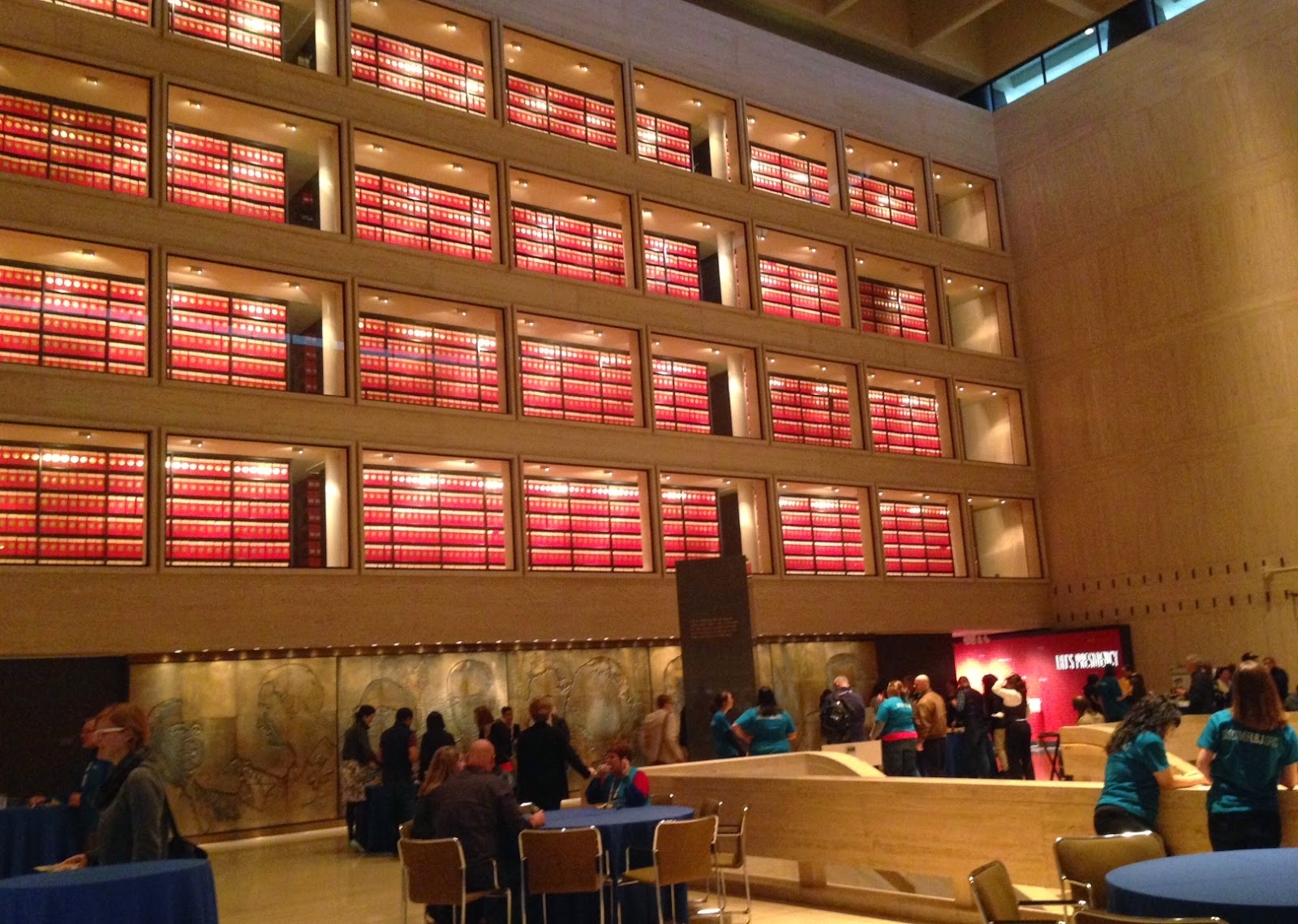
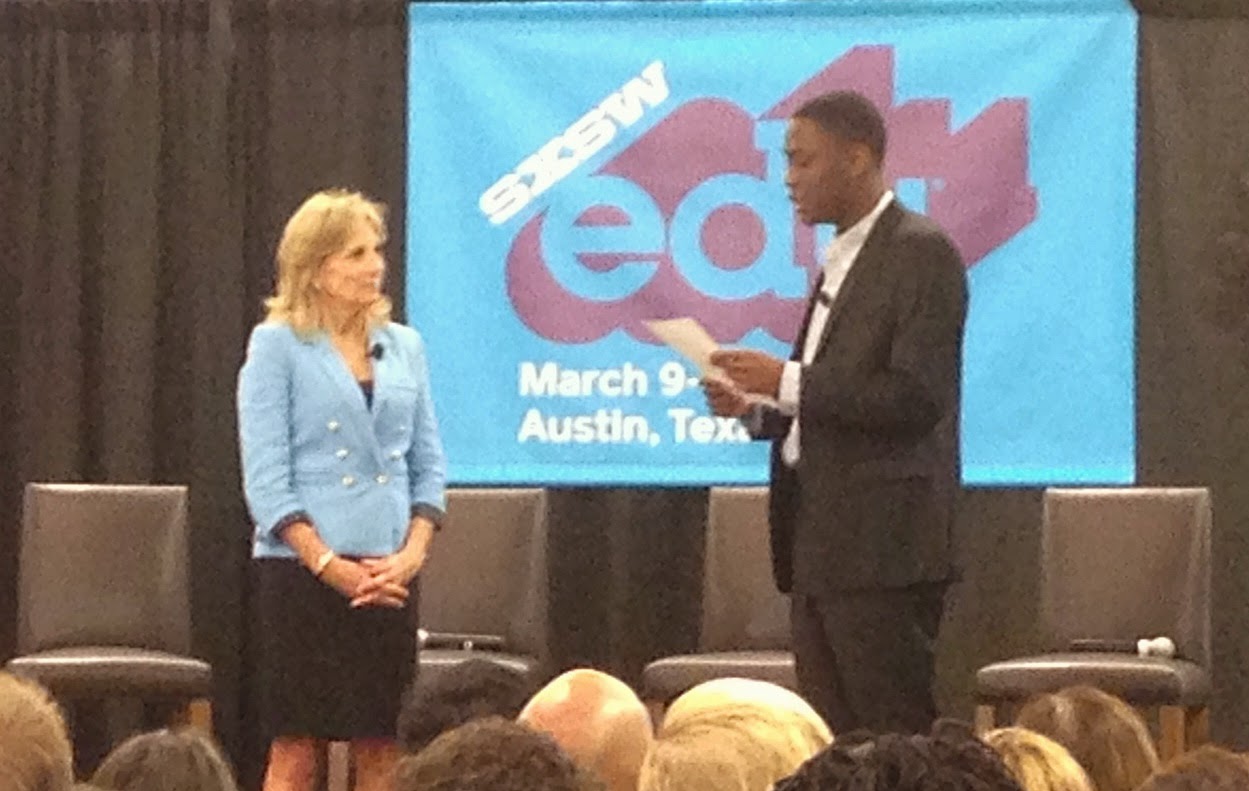
Last night’s reception at the Lyndon Baines Johnson Presidential Library made this theme immediate in bringing together historians and educators to commemorate the 50th anniversary of the Voting Rights Act.
![]() |
| Source: LBJ Presidential Library, ASIDE 2015 |
This morning, Second Lady Of The United States Dr. Jill Biden kept this dialogue moving forward in leading a summit by the Bill & Melinda Gates Foundation about redesigning higher education to fuel student success. Dr. Biden noted that education is the great equalizer, the basis for a better life. For this reason, she stressed, “Teaching is not what I do. It’s who I am.”
A panel discussion later with Jamie Casap, Timothy Jones, and Isis Stephanie Cerda focused more intently on the need for diversity within educational technology. Similar messages emerged in workshops on “Equal Opportunity For Deeper Learning,” “My Brother’s Keeper: One Year Later,” and “Teaching A New Narrative For Black Male Achievement.”
![]() |
| Source: ASIDE 2015 |
An equally critical thread appeared in the number of talks about empowering girls and women in technology and entrepreneurship. For example, EdTechWomen was named this year’s official SXSWEdu Change Maker. Other titles included: “Women Disruptors 2.0,” “Paying It Forward: Leveraging Today’s Female Voice,” “Empowering Girls And Women To Lead,” “Digital Diversity: Minority Women In EdTech,” and “EdTech For Educational Inclusion.”
Another highlight of the day was Kristin Ziemke’s and Cheryl Boes’ presentation of innovative project examples to engage young learners with voice, choice, and audience. Their use of easy apps and elementary blogging revealed the many avenues that let children demonstrate understanding in exciting, authentic ways.
A later workshop featured a panel of thought leaders who promoted creativity in schools. They championed “less talking and more doing.” The speakers paraded both theoretical and tangible ways to inspire kids as imaginative thinkers. As Jonathan Plucker, Professor at the University Of Connecticut, noted, “creativity is about constraints.” A teacher’s task, therefore, is to help students identify constraints and then decide which ones to get rid of, which ones to ignore, and which ones to live with.
Ultimately, after a day of education and introspection, of creativity and contemplation, we recalled John Ashbery’s lines from Three Poems, which speak to the impossibility of certainty and the elusiveness of knowing:
“The term ignorant is indeed perhaps an overstatement, implying as it does that something is known somewhere, whereas in reality we are not even sure of this: we in fact cannot aver with any degree of certainty that we are ignorant. Yet this is not so bad; we have at any rate kept our open-mindedness — that, at least, we may be sure that we have — and are not in any danger, or so it seems, of freezing into the pious attitudes of those true spiritual bigots whose faces are turned toward eternity and who therefore can see nothing.”
"What Is Graphicacy?" — An Essential Literacy Explained In An Animated Motion Graphic
What Is Graphicacy? from The ASIDE Blog on Vimeo.
![]() |
| Source: ASIDE 2015 |
![]() |
| Source: ASIDE 2011 |
![]() |
| Source: ASIDE 2015 |
"What Is Graphicacy?" — An Essential Literacy Explained In An Animated Motion Graphic
What Is Graphicacy? from The ASIDE Blog on Vimeo.
![]() |
| Source: ASIDE 2015 |
![]() |
| Source: ASIDE 2011 |
![]() |
| Source: ASIDE 2015 |
\’Jammu and Kashmir High Court\’ | \’High Court of Jammu and Kashmir\’ (171 Words)
The \’Jammu and Kashmir High Court\’ is the high court of the state of Jammu and Kashmir of India. High Court of Judicature for the Jammu and Kashmir State was established in the year 1928. The High Court of Judicature was established and for the first time the High Court was to consist of the Chief Justice and two Judges on 26.3.1928. Hon\’ble Justice Lala Kanwar Sein was the First Chief Justice of the Jammu and Kashmir High Court.
The seat of the High Court of Jammu and Kashmir shifts between its summer capital Srinagar and winter capital Jammu. From May to end October, the Chief Justice and the Administrative Wing of High Court shifts to Srinagar and from November to end April, the HQ is at Jammu. However, Court sections of both the Jammu and Srinagar Wings of the High Court function throughout the year. The High Court has at present a sanctioned strength of 14 Judges including 9 Permanent Judges and and 5 Additional Judges.
\’Jammu and Kashmir High Court\’ | \’High Court of Jammu and Kashmir\’ (171 Words)
The \’Jammu and Kashmir High Court\’ is the high court of the state of Jammu and Kashmir of India. High Court of Judicature for the Jammu and Kashmir State was established in the year 1928. The High Court of Judicature was established and for the first time the High Court was to consist of the Chief Justice and two Judges on 26.3.1928. Hon\’ble Justice Lala Kanwar Sein was the First Chief Justice of the Jammu and Kashmir High Court.
The seat of the High Court of Jammu and Kashmir shifts between its summer capital Srinagar and winter capital Jammu. From May to end October, the Chief Justice and the Administrative Wing of High Court shifts to Srinagar and from November to end April, the HQ is at Jammu. However, Court sections of both the Jammu and Srinagar Wings of the High Court function throughout the year. The High Court has at present a sanctioned strength of 14 Judges including 9 Permanent Judges and and 5 Additional Judges.
\’Jammu and Kashmir High Court\’ | \’High Court of Jammu and Kashmir\’ (171 Words)
The \’Jammu and Kashmir High Court\’ is the high court of the state of Jammu and Kashmir of India. High Court of Judicature for the Jammu and Kashmir State was established in the year 1928. The High Court of Judicature was established and for the first time the High Court was to consist of the Chief Justice and two Judges on 26.3.1928. Hon\’ble Justice Lala Kanwar Sein was the First Chief Justice of the Jammu and Kashmir High Court.
The seat of the High Court of Jammu and Kashmir shifts between its summer capital Srinagar and winter capital Jammu. From May to end October, the Chief Justice and the Administrative Wing of High Court shifts to Srinagar and from November to end April, the HQ is at Jammu. However, Court sections of both the Jammu and Srinagar Wings of the High Court function throughout the year. The High Court has at present a sanctioned strength of 14 Judges including 9 Permanent Judges and and 5 Additional Judges.


You must be logged in to post a comment.