EduPub (Edupedia Publications Pvt Ltd) is a company dedicated to the development of the education, learning, research and innovation in the field of the research and books publication. We are pioneer in providing wide range of services to educational institutions, government agencies, individuals and corporates in the field of training and education, research and development, research and innovation. research and publication.
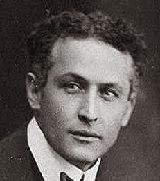
\’Harry Houdini\’ was born on March 24, 1874 in Hungary. His real name was \’Eric Weisz\’. His parents were Rabbi Mayer Samuel Weisz and Cecília Weisz. When Harry was still a baby, his parents decided to go and live in the U.S.A.
Harry Houdini was a great escape-artist. When he was nine years old he gave his first public performance. Houdini was so very interested in magic, that he practiced many tricks until they were perfect.
Houdini\’s most famous trick was to escape. On stage he would be tied up or locked up with chains and in a few minutes he would get free. He performed many other famous tricks. Some of his tricks were very dangerous.
Harry Houdini died on October 31, 1926 at the age of 52. He had shown in his life that he was ready to meet any challenge.
Spices have been used since ancient times. They have been mentioned in the ancient Hindu scriptures for example Vedas, ancient Egyptian papyruses and the Old Testament. Although it was not until the Roman conquests that western countries discovered their culinary possibilities. Spices have always been believed to have healing and magical qualities. They have been used to cast spells, as incense in religious rites, to embalm corpses, to add fragrance to perfumes and as medicines. The word Spice comes from Latin \’Species\’, meaning a commodity of value and distinction. During their long and fascinating history, spices have often been more valuable than gold or precious stones and the trade of Spices has been an extraordinarily influential factor in history.
Many researchers have attempted to explain why hot Spices are pleasant to taste. It seems the burning sensation is the pain of nerve endings on the tongue. This releases endorphins, the body\’s natural painkiller, giving rise to pleasurable and even euphoric sensations.
Flowers, leaves, roots, bark, seeds and bulbs (the simplest of natural ingredients) are used in endless combinations to produce an infinite variety of flavours: sweet, sharp, hot, sour, spicy, aromatic, tart, mild, fragrant and pungent. Their tastes and aromas combine to create a kaleidoscope of exotic flavours to delight the palate. It is best to obtain spices in whole seed form and to grind them just prior to use.
Indian spices offer significant health benefits and contribute towards an individual\’s healthy life. They add flavour and nutrients to dishes without fat or calories!
Spices have been used since ancient times. They have been mentioned in the ancient Hindu scriptures for example Vedas, ancient Egyptian papyruses and the Old Testament. Although it was not until the Roman conquests that western countries discovered their culinary possibilities. Spices have always been believed to have healing and magical qualities. They have been used to cast spells, as incense in religious rites, to embalm corpses, to add fragrance to perfumes and as medicines. The word Spice comes from Latin \’Species\’, meaning a commodity of value and distinction. During their long and fascinating history, spices have often been more valuable than gold or precious stones and the trade of Spices has been an extraordinarily influential factor in history.
Many researchers have attempted to explain why hot Spices are pleasant to taste. It seems the burning sensation is the pain of nerve endings on the tongue. This releases endorphins, the body\’s natural painkiller, giving rise to pleasurable and even euphoric sensations.
Flowers, leaves, roots, bark, seeds and bulbs (the simplest of natural ingredients) are used in endless combinations to produce an infinite variety of flavours: sweet, sharp, hot, sour, spicy, aromatic, tart, mild, fragrant and pungent. Their tastes and aromas combine to create a kaleidoscope of exotic flavours to delight the palate. It is best to obtain spices in whole seed form and to grind them just prior to use.
Indian spices offer significant health benefits and contribute towards an individual\’s healthy life. They add flavour and nutrients to dishes without fat or calories!
Spices have been used since ancient times. They have been mentioned in the ancient Hindu scriptures for example Vedas, ancient Egyptian papyruses and the Old Testament. Although it was not until the Roman conquests that western countries discovered their culinary possibilities. Spices have always been believed to have healing and magical qualities. They have been used to cast spells, as incense in religious rites, to embalm corpses, to add fragrance to perfumes and as medicines. The word Spice comes from Latin \’Species\’, meaning a commodity of value and distinction. During their long and fascinating history, spices have often been more valuable than gold or precious stones and the trade of Spices has been an extraordinarily influential factor in history.
Many researchers have attempted to explain why hot Spices are pleasant to taste. It seems the burning sensation is the pain of nerve endings on the tongue. This releases endorphins, the body\’s natural painkiller, giving rise to pleasurable and even euphoric sensations.
Flowers, leaves, roots, bark, seeds and bulbs (the simplest of natural ingredients) are used in endless combinations to produce an infinite variety of flavours: sweet, sharp, hot, sour, spicy, aromatic, tart, mild, fragrant and pungent. Their tastes and aromas combine to create a kaleidoscope of exotic flavours to delight the palate. It is best to obtain spices in whole seed form and to grind them just prior to use.
Indian spices offer significant health benefits and contribute towards an individual\’s healthy life. They add flavour and nutrients to dishes without fat or calories!
Old people say that childhood is the best part of life. They look back at their childhood and remember all its happy days. Perhaps these old folks are right. And yet they forget many things that were not so pleasant in their childhood.
Their is a funny story that tells of a boy who was crying because he had to go back to school after the holidays and the father scolded him and said, \”Why, I only wish I could be a boy and go to school again.\” And all in a moment, the father was a little boy and his son was a grown-up man like his father. And the father, in the shape of a little boy, had to go to school; and I can tell you he did not like it at all. A child\’s troubles may seem small to grown-ups but they were very big to him.
Old people say that childhood is the best part of life. They look back at their childhood and remember all its happy days. Perhaps these old folks are right. And yet they forget many things that were not so pleasant in their childhood.
Their is a funny story that tells of a boy who was crying because he had to go back to school after the holidays and the father scolded him and said, \”Why, I only wish I could be a boy and go to school again.\” And all in a moment, the father was a little boy and his son was a grown-up man like his father. And the father, in the shape of a little boy, had to go to school; and I can tell you he did not like it at all. A child\’s troubles may seem small to grown-ups but they were very big to him.
Old people say that childhood is the best part of life. They look back at their childhood and remember all its happy days. Perhaps these old folks are right. And yet they forget many things that were not so pleasant in their childhood.
Their is a funny story that tells of a boy who was crying because he had to go back to school after the holidays and the father scolded him and said, \”Why, I only wish I could be a boy and go to school again.\” And all in a moment, the father was a little boy and his son was a grown-up man like his father. And the father, in the shape of a little boy, had to go to school; and I can tell you he did not like it at all. A child\’s troubles may seem small to grown-ups but they were very big to him.
The \’Computer\’ is an automatic device that performs mathematical calculations that logical operations. Computers are being put to use in widely divergent fields such as book-keeping, spaceflight controls, passanger reservation service, language translation, etc. There are two broad categories: analong and digital. The former represents numbers by some physical quantity such as length, angular relation or electric current whereas the latter represent numbers by seperate devices for each digit.
The \’Computer\’ is an automatic device that performs mathematical calculations that logical operations. Computers are being put to use in widely divergent fields such as book-keeping, spaceflight controls, passanger reservation service, language translation, etc. There are two broad categories: analong and digital. The former represents numbers by some physical quantity such as length, angular relation or electric current whereas the latter represent numbers by seperate devices for each digit.
The \’Computer\’ is an automatic device that performs mathematical calculations that logical operations. Computers are being put to use in widely divergent fields such as book-keeping, spaceflight controls, passanger reservation service, language translation, etc. There are two broad categories: analong and digital. The former represents numbers by some physical quantity such as length, angular relation or electric current whereas the latter represent numbers by seperate devices for each digit.
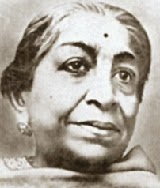
\’Sarojini Naidu\’ was born on 13th February 1879 in Hyderabad, Andhra Pradesh, India. Her father Aghore Nath Chattopadhyay was a carpenter of Science from Edinburgh University. From the years of her very early childhood, she showed signs of exceptional talent. She got married to Dr. Naidu of Andhra Pradesh in 1895. She was also known as the \’Nightingale of India\’. Her birthday is celebrated as \’National Women\’s Day\’ in India.
This great leader and freedom fighter used to write poems and also sing very well. Sarojini Naidu began writing poems in English while she was still in school. With the help and inspiration of Gopal Krishna Gokhale, she found her way into the politics of India. She got closely involved with the freedom movement of the INC (Indian National Congress). She became a member of the Royal Literary Society London. She also became the President of the Indian National Congress. Sarojini Naidu took active part in the Civil Disobedience Movement, Satyagraha Movement and the Quit India Movement. She was also sent to jail several times.
Lastly India got independence in 1947 and Sarojini Naidu was made the Governor of Uttar Pradesh State. She was the first Indian woman to become the President of the Indian National Congress. She was also the first Indian woman to become Governor of any State in India. Sarojini Naidu passed away on 2nd March 1949. She has left a great name for herself in the History of India.
\’Sarojini Naidu\’ was born on 13th February 1879 in Hyderabad, Andhra Pradesh, India. Her father Aghore Nath Chattopadhyay was a carpenter of Science from Edinburgh University. From the years of her very early childhood, she showed signs of exceptional talent. She got married to Dr. Naidu of Andhra Pradesh in 1895. She was also known as the \’Nightingale of India\’. Her birthday is celebrated as \’National Women\’s Day\’ in India.
This great leader and freedom fighter used to write poems and also sing very well. Sarojini Naidu began writing poems in English while she was still in school. With the help and inspiration of Gopal Krishna Gokhale, she found her way into the politics of India. She got closely involved with the freedom movement of the INC (Indian National Congress). She became a member of the Royal Literary Society London. She also became the President of the Indian National Congress. Sarojini Naidu took active part in the Civil Disobedience Movement, Satyagraha Movement and the Quit India Movement. She was also sent to jail several times.
Lastly India got independence in 1947 and Sarojini Naidu was made the Governor of Uttar Pradesh State. She was the first Indian woman to become the President of the Indian National Congress. She was also the first Indian woman to become Governor of any State in India. Sarojini Naidu passed away on 2nd March 1949. She has left a great name for herself in the History of India.
\’Sarojini Naidu\’ was born on 13th February 1879 in Hyderabad, Andhra Pradesh, India. Her father Aghore Nath Chattopadhyay was a carpenter of Science from Edinburgh University. From the years of her very early childhood, she showed signs of exceptional talent. She got married to Dr. Naidu of Andhra Pradesh in 1895. She was also known as the \’Nightingale of India\’. Her birthday is celebrated as \’National Women\’s Day\’ in India.
This great leader and freedom fighter used to write poems and also sing very well. Sarojini Naidu began writing poems in English while she was still in school. With the help and inspiration of Gopal Krishna Gokhale, she found her way into the politics of India. She got closely involved with the freedom movement of the INC (Indian National Congress). She became a member of the Royal Literary Society London. She also became the President of the Indian National Congress. Sarojini Naidu took active part in the Civil Disobedience Movement, Satyagraha Movement and the Quit India Movement. She was also sent to jail several times.
Lastly India got independence in 1947 and Sarojini Naidu was made the Governor of Uttar Pradesh State. She was the first Indian woman to become the President of the Indian National Congress. She was also the first Indian woman to become Governor of any State in India. Sarojini Naidu passed away on 2nd March 1949. She has left a great name for herself in the History of India.
We’re in the midst of our fifth season working with our elementary students on the entrepreneur project-based learning unit. Even with the flexibility in our curriculum to teach, we still find that each year it gets harder to get kids to extend themselves, to take a risk, and to dare to be different.
Not that a car commercial could change all that, but lucky for us, Cadillac launched its new ads during the Academy Awards to promote its latest luxury sedan. In all four commercials, the last frame appears with the line:
“Only those who dare drive the world forward.”
We wrote it on the board without the credit line. Surprisingly, kids, teachers, and even some administrators who visited the classroom remarked about the statement. Of course, we then gave credit to Cadillac. By not associating the carmaker with the word “drive,” it changed the interpretation of the quote, making it a far more powerful statement about human motivation.
Most of our students didn’t realize that the carmaker was a 112-year-old company, nor that the association with the word “dare” represented a company not afraid to reinvent itself by making connections with other innovators such as fashion designer Jason Wu, “Boyhood” director Richard Linklater, and Apple co-founder Steve Wozniak. It even promoted the social media connection with its #DareGreatly hashtag. Needless to say, it became our mantra for the spring. Those who dare to think, see, and do things differently change the way we think.
We piggybacked “The Daring, No Regrets” video from Cadillac with the motion graphic “What Is Innovation?”, designed by Rafa Galeano and written by Fast Company blogger David Brier. Brier’s post on the making of this video describes his own inspiration for the theme and the motivation to use his essay to make a motion graphic on innovation for others.
It provided our students with another view of how ideas, from the discovery of fire to their own electronic devices, came from the motivation of others who saw the potential in their creations.
Perhaps the last four lines of this video drive home the point we want our kids to understand:
“So what is innovation? Those other dots. The ones others miss. And having the certainty to know that the dots you see are not only valid, but necessary if the world is to move forward.”
Providing opportunities for students to see the potential of others driven by need, or a desire, helps them to let go, to dare. We want them to not only see the possibilities of being an entrepreneur, but also to embrace the notion that it can be a reality. That’s when we showed them 11-year-old Lily Born’s Kangaroo Cup. That made the most impact on the kids and their ideas.
Lily wanted to build a better cup to help her grandfather who has Parkinson’s disease. Lily’s advice to fellow pre-teen entrepreneurs actually applies to all ages: “Don’t freak out if you screw up or fail, because you’ll fail a lot before you get it right.” She also says, “Don’t be afraid to ask for help.” She used her ingenuity to rethink how best to change an ordinary cup to help others. She dared to make a change and never gave up on her idea. This video made an impact on the students.
With a little ingenuity, Lily redesigned an ordinary cup to function for someone with special needs. More importantly, she started making prototypes at the age of eight. It took three years and plenty of iterations before going to market.
Creativity takes time, and it’s not a simply “point and click.” Cultivating that initial idea remains the hardest part for our young entrepreneurs. We push them to think beyond the craft kit, bake sale, or carnival game. Frustration often sets in because immediate gratification isn’t the name of the game. It takes hard work, failure, and perseverance.
Accepting feedback, or a simple, “no, that idea won’t work,” sends some off in tears. They come back. Some build a prototype to prove their idea works, some return with a new iteration based on an earlier model, and others completely scrap an idea for a new one. Great! This is exactly what we want. We only have a semester, not three years, but nudging them out of their comfort zones is all part of the process. And sometimes, it’s not an easy thing for many a 10 year-old.
Steering learners away from settling on the status quo forces them to see the potential of taking a chance on their ideas. Dare to be different, dare to take a risk, and dare greatly. As educators, we believe it will foster their entrepreneurial spirit for a lifetime.
\’Collecting\’ has always been a pleasant pastime for children all over the world. Many different things can be made into collections. The world is full of interesting things. So, quite often children and adults too, become interested in collecting things.
People may collect anything and everything. Collecting is a great hobby. It can be different, unique for everyone. There is no rule that says a particular kind of object must not be collected.
Stamps, shells, butterflies, hats, feathers, leaves, flowers, stones, matchbox covers and antiques etc. are collected by people in every corner of the world. People also collect plates, costumes, cars and thousands of other things.
There are many ways of keeping a collection. Generally people begin collection as a hobby. Collection of things is an enjoyable way to spend free time. Sometimes this hobby develops into a profession.







You must be logged in to post a comment.