\’National Girl Child Day: 24 January\’ in India | \’Rashtriya Balika Diwas\’ (219 Words)

In India, \’National Girl Child Day\’ or \’Rashtriya Balika Diwas\’ is observed on 24th January every year. It is a day dedicated towards the welfare of the girl child in India. The day is observed to address the needs and concerns of a girl child’s health, nutrition and education among the masses.

The initiative of setting up this day as a Rashtriya Balika Diwas was undertaken by the Indian Government during 2009. The date 24th marks the day in 1966 when Indira Gandhi became the ‘First Woman Prime Minister of India’. The Ministry of Women and Child Development took the initiative of implementing and organizing the day.

Rashtriya Balika Diwas is a day dedicated towards the welfare of the girl child in India. On this day, many functions and events are organized by the NGOs all over the country. The government ministry participates by organizing functions for the cause along with NGO’s and other organizations. Public speeches are special part of these proceedings. Various state departments of child development, education, health, women, mahila mandals and others also organize functions and exhibitions. Cultural events comprising of song and dance sequence dedicated to the girl child are organized in various concerned institutions. Girl students are honoured for their outstanding achievements in various fields at State level functions organized by the respective departments. 

\’National Girl Child Day: 24 January\’ in India | \’Rashtriya Balika Diwas\’ (219 Words)

In India, \’National Girl Child Day\’ or \’Rashtriya Balika Diwas\’ is observed on 24th January every year. It is a day dedicated towards the welfare of the girl child in India. The day is observed to address the needs and concerns of a girl child’s health, nutrition and education among the masses.

The initiative of setting up this day as a Rashtriya Balika Diwas was undertaken by the Indian Government during 2009. The date 24th marks the day in 1966 when Indira Gandhi became the ‘First Woman Prime Minister of India’. The Ministry of Women and Child Development took the initiative of implementing and organizing the day.

Rashtriya Balika Diwas is a day dedicated towards the welfare of the girl child in India. On this day, many functions and events are organized by the NGOs all over the country. The government ministry participates by organizing functions for the cause along with NGO’s and other organizations. Public speeches are special part of these proceedings. Various state departments of child development, education, health, women, mahila mandals and others also organize functions and exhibitions. Cultural events comprising of song and dance sequence dedicated to the girl child are organized in various concerned institutions. Girl students are honoured for their outstanding achievements in various fields at State level functions organized by the respective departments. 

\’National Girl Child Day: 24 January\’ in India | \’Rashtriya Balika Diwas\’ (219 Words)

In India, \’National Girl Child Day\’ or \’Rashtriya Balika Diwas\’ is observed on 24th January every year. It is a day dedicated towards the welfare of the girl child in India. The day is observed to address the needs and concerns of a girl child’s health, nutrition and education among the masses.

The initiative of setting up this day as a Rashtriya Balika Diwas was undertaken by the Indian Government during 2009. The date 24th marks the day in 1966 when Indira Gandhi became the ‘First Woman Prime Minister of India’. The Ministry of Women and Child Development took the initiative of implementing and organizing the day.

Rashtriya Balika Diwas is a day dedicated towards the welfare of the girl child in India. On this day, many functions and events are organized by the NGOs all over the country. The government ministry participates by organizing functions for the cause along with NGO’s and other organizations. Public speeches are special part of these proceedings. Various state departments of child development, education, health, women, mahila mandals and others also organize functions and exhibitions. Cultural events comprising of song and dance sequence dedicated to the girl child are organized in various concerned institutions. Girl students are honoured for their outstanding achievements in various fields at State level functions organized by the respective departments. 
Short Essay on \’Importance of Advertisements\’ (160 Words)

Advertisements play a vital role in our lives. Advertisements are essential for starting a new business. Promoting sales is the main motive of a large enterprise. Advertisements rule every aspect of our lives and provide a link between an individual and the world.
 
Advertising, by the definition, is a paid form of non-personal communication to promote the goods and services. It simplifies the choice of consumers by creating an awareness among people about several brands and products available in the market. As advertisements help in business expansion, the companies spend crores or millions on them.
 
Advertisements are contained in various means of communication such as magazines, newspapers, television, radio, bill boards etc. Attractive pictures, slogans, taglines etc shown in the advertisements lure customers, thereby pushing up sales.
 
Advertisements are popularized by the government for betterment of the society in the field of education, providing better facilities, housing facilities for poor, medical facilities like polio drops and other vaccines etc. So, we can conclude by saying that advertisements greatly influence our lives. 

Short Essay on \’Importance of Advertisements\’ (160 Words)

Advertisements play a vital role in our lives. Advertisements are essential for starting a new business. Promoting sales is the main motive of a large enterprise. Advertisements rule every aspect of our lives and provide a link between an individual and the world.
 
Advertising, by the definition, is a paid form of non-personal communication to promote the goods and services. It simplifies the choice of consumers by creating an awareness among people about several brands and products available in the market. As advertisements help in business expansion, the companies spend crores or millions on them.
 
Advertisements are contained in various means of communication such as magazines, newspapers, television, radio, bill boards etc. Attractive pictures, slogans, taglines etc shown in the advertisements lure customers, thereby pushing up sales.
 
Advertisements are popularized by the government for betterment of the society in the field of education, providing better facilities, housing facilities for poor, medical facilities like polio drops and other vaccines etc. So, we can conclude by saying that advertisements greatly influence our lives. 

Short Essay on \’Importance of Advertisements\’ (160 Words)

Advertisements play a vital role in our lives. Advertisements are essential for starting a new business. Promoting sales is the main motive of a large enterprise. Advertisements rule every aspect of our lives and provide a link between an individual and the world.
 
Advertising, by the definition, is a paid form of non-personal communication to promote the goods and services. It simplifies the choice of consumers by creating an awareness among people about several brands and products available in the market. As advertisements help in business expansion, the companies spend crores or millions on them.
 
Advertisements are contained in various means of communication such as magazines, newspapers, television, radio, bill boards etc. Attractive pictures, slogans, taglines etc shown in the advertisements lure customers, thereby pushing up sales.
 
Advertisements are popularized by the government for betterment of the society in the field of education, providing better facilities, housing facilities for poor, medical facilities like polio drops and other vaccines etc. So, we can conclude by saying that advertisements greatly influence our lives. 

The Uber Generation Of Learning — Fast, Efficient, And Driven By Tech

Source: ASIDE 2015

It’s no surprise that the New York Taxi and Limousine Commission is lobbying for limits to Uber’s expansion. In fact, municipalities across the country are fretting over Uber’s intrusion.

Uber’s appeal — and its rapid, unmitigated ascent — is exactly like the edtech groundswell in contemporary learning.
Uber is a private car service currently taking the country by storm. It allows anyone with an app to instantly summon a professional ride. It takes away the guessing about street corners and hand-waving. It offers customized choices, such as a car seat or SUV. Uber provides real time, visual tracking of how far away the car is and how much the trip will cost. 
Uber takes the frustrating tasks of flagging a phantom taxi or confronting a gruff phone operator and replaces them with immediate, digital satisfaction.
This is exactly what today’s students expect from their lessons and teachers.
For better or for worse, children enter our classes with a ready affinity toward online tools and an understandable assumption of digital learning. They are used to texting in realtime, chatting in realtime, Googling in realtime, and creating in realtime. When anachronistic teachers give them paper worksheets and bubble tests, it’s no wonder they roll their eyes and feel like they’re being intentionally stranded on the side of a high-tech boulevard, while the wired world seems to be passing them by.
Kids (and adults) live on their smartphones. They demand instantaneous answers via Siri or Wikipedia to any question that might pique their curiosity. In this way, they are uber-researchers. They seek information more actively and more frequently than any prior generation. The gift of the Internet offers them answers, but they still need to know their end destination. They still need to have a conclusion in mind, to drive their scholarship in the right direction.
Source: ASIDE 2015

The greatest gift from laptops, iPads, SMARTboards, and phones is efficiency. What used to take a middle schooler an entire Saturday now takes a split second. Kids can diagram the locks of the Erie Canal or study the bricks of the Giza pyramids in the same time it takes to tie one’s shoelaces. The “Internet of things” is a powerful encyclopedia. Any school district that blocks access to YouTube or Twitter, therefore, is closing the doors to Alexandria, erecting antiquated barriers in the face of authentic learning.

We expect our Uber driver to know our name, know our route, and know our credit card number. We expect service with a smile and quiet satisfaction in skipping the crowded van to the airport or the late-night carpool quest.
This is modern education — personalized, differentiated, and affordable.
This is technological learning — satisfying, searchable, and immediate.
As a point of reference, check out this current ad for Microsoft Windows 10:

Many educators still fight against this disruption, against these invading technological hordes. They demand professional development and budget studies to delay the inevitable. Many administrators side with city districts, viewing apps as interlopers seeking to upset the status quo.

Many still resist the arrival of a learning alternative, because it’s not “the way we’ve always done it.”

But the rabid popularity of Uber speaks to a communal need. The instinctive embrace of real-time learning by students means that if educators don’t change, kids will be chauffeured off into the sunset without them.

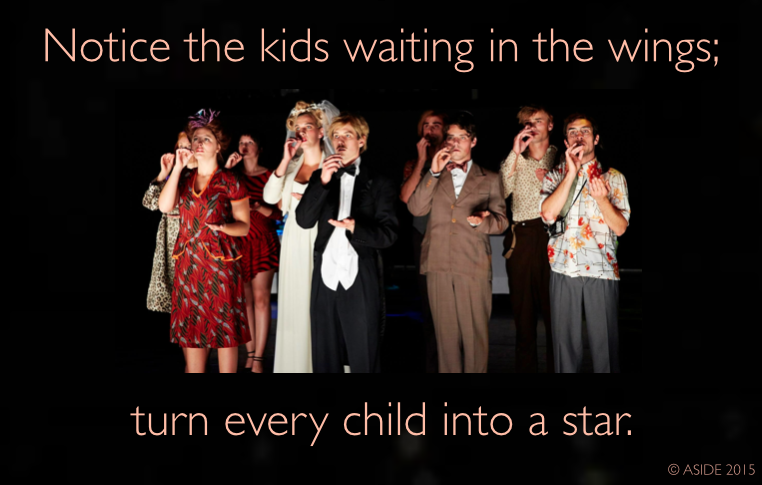
“The Understudent” — Notice The Kids Waiting In The Wings And Turn Every Child Into A Star

Source: ASIDE 2015
Every teacher knows the high-achieving students in his or her classroom. These are the trusted “high verbal” pupils who raise their hands, who answer each question, who quote the night’s reading, and who ferry the conversation. It’s a tacit trust between educator and child — the rewards are mutual. The lesson can proceed according to the teacher’s design, and the extroverts can succeed according to the traditional model.
But what about the introverts?
What about the “low verbals”?
What about the children who read the homework, who complete the worksheets, who memorize the vocabulary words, who post their projects, and who code their webpages — but who don’t speak up?
Most of a typical class is a chorus. Most of the kids who fill the seats and laugh at the jokes and fulfill their studies do not win awards. They do not give speeches at graduation. They do not take a bow with an audience on its feet.
Source: ASIDE 2015
The majority of learners will not play the leads. They will fill the background and be part of the cast. They will not see their names on the marquee, and they won’t even think to deserve it.

If school is a stage, then few actors will sing the solos or shine in soliloquies.

Most kids will be understudies — or “understudents.”
They will know their lines, they will be at every practice, they will work like heck — and yet they will receive little recognition. Because that’s how life is. And when they do step away from the ensemble and raise their hands to give a correct answer, it will be a surprise, an anomaly. 
The greatest challenge, therefore, for classroom teachers is to identify the talent waiting in the wings. Who is lurking behind the scenes? Who is quieting her voice within the chorus? Who is restraining herself within the dance?
Somewhere, a student just needs a break, some encouragement, and a teacher who believes in him to break out and become a star.
Think about the Tom Bradys and the Kurt Warners who needed a first string player to falter just so they could have a chance.
Source: ASIDE 2015
Too many times the demands of high stakes testing and rigid teacher evaluations throw educators into survival mode, where they can barely keep their own heads above water, much less look out for a glimmer of light among their docile classrooms.
But that’s the job. That’s the key. Getting to know each child on a personal level is more important than drilling rote facts into their heads. All of us can think back to the mentor who believed in us, who pulled us out of our comfort zones.
As the new school year gets underway, one of our resolutions is to seek out the understudents. We also strive to recognize the kids with underparents. They don’t make a fuss, they don’t complain, and too often, therefore, we attend to the squeaky wheels.

But the modest geniuses in our midst need us more than ever. If we don’t pluck them from obscurity, then they may end up seeing themselves as members of the throng — humble nodders in the choir, content not to speak up, not to dare, not to lead, and not to share all of the insights within their quick and boisterous minds.

Talk About Peace For Just One Day, Or More!

Source: Postcards For Peace

This Monday, September 21, marks the thirty-third anniversary of the United Nations International Day of Peace that invites all nations and people to cease hostilities by commemorating the day through awareness on issues related to peace. In our effort this year to bring mindfulness into our curricula, we see this day as an ideal place to connect our year-long endeavor to develop kind, empathetic, young citizens of the world.

We see taking the time to make room to recognize the importance of peaceful, non-violent solutions as imperative to learning. It’s worth every minute to talk about it, particularly in today’s world. The resource materials listed in this post provide a multitude of options for educators to integrate the International Day of Peace into classroom instruction.

Source: Peace On Day


Peace On Day, founded by Jeremy Gilley in 1999, is a good place to start for free, educational resources and curriculum guides. Check out its “Peace Projects” page for curriculum ideas that connect to subject areas with links to Postcards For PeaceFace To Faith, or Pinwheels For Peace.

Postcards For Peace’s mission is to improve the well-being of those people around the world whose lives are affected by violence or prejudice by promoting change and offering hope, support, and compassion through sending postcards of goodwill.

Its short, introductory video is just right for introducing the project to young learners, in addition to promoting writing and creativity. Download the postcard template, or make your own. Either way, it’s a wonderful opportunity to raise awareness with students through acts of kindness.


Postcards For Peace – An Introduction from Postcards For Peace on Vimeo.

Source: Kids For Peace

The last resource we’d like to bring attention to is the website called Kids For Peace. Its mission is to promote peace through youth leadership, community service, global friendships, and thoughtful acts of kindness. The Peace Pledge in this post can be easily downloaded from its website.

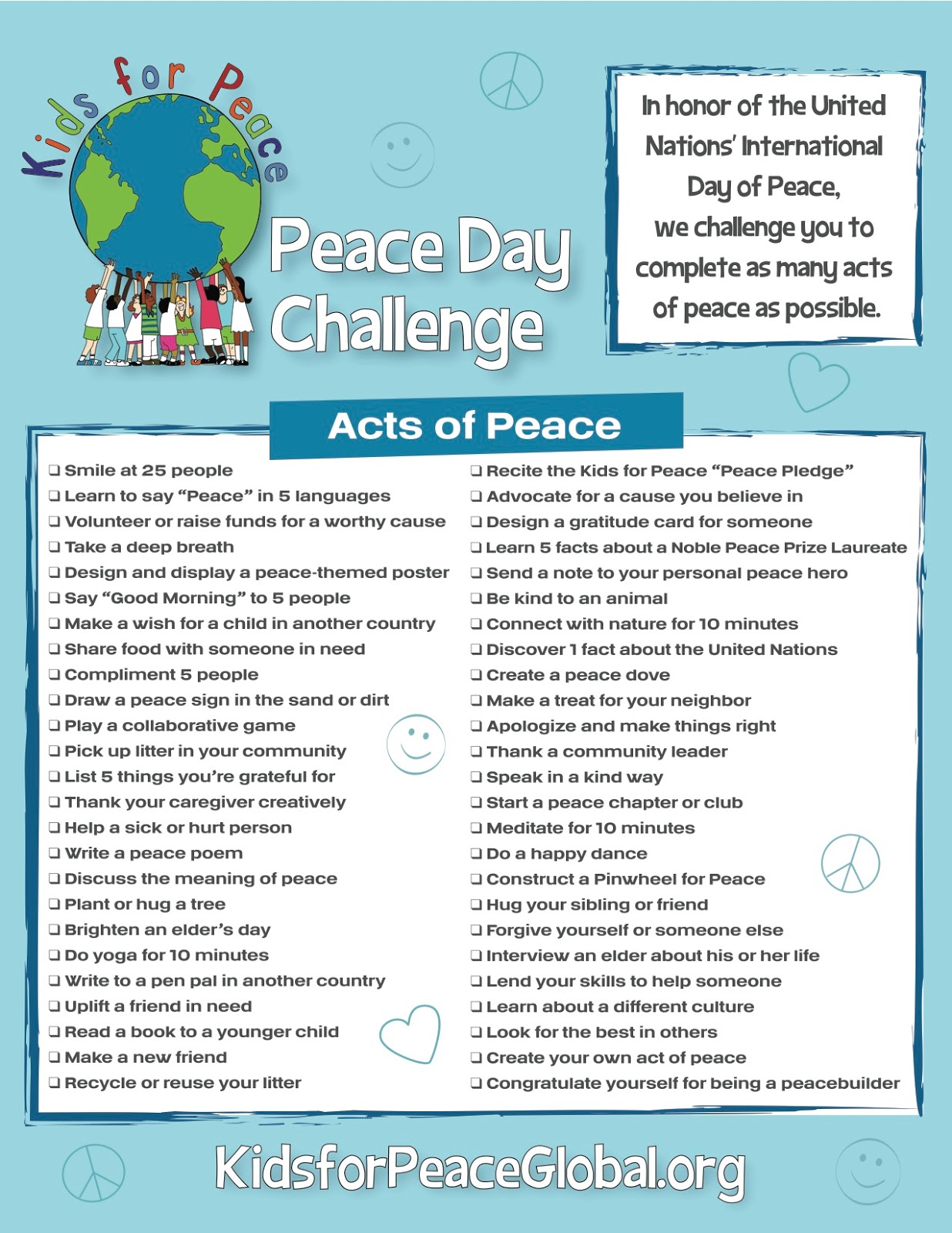
If you can do nothing else this Monday, try to have the students take the pledge. We are hoping to have everyone at our school take part in this. Kids For Peace also has a simple “Peace Day Challenge” to promote acts of peace. It’s perfect for any age level.

Source: Kids For Peace


Sometimes we feel crunched for time to cover course material, but sometimes the right thing to do should force us to stop for something so important as PEACE!

For other resources, please see:

You might also like:

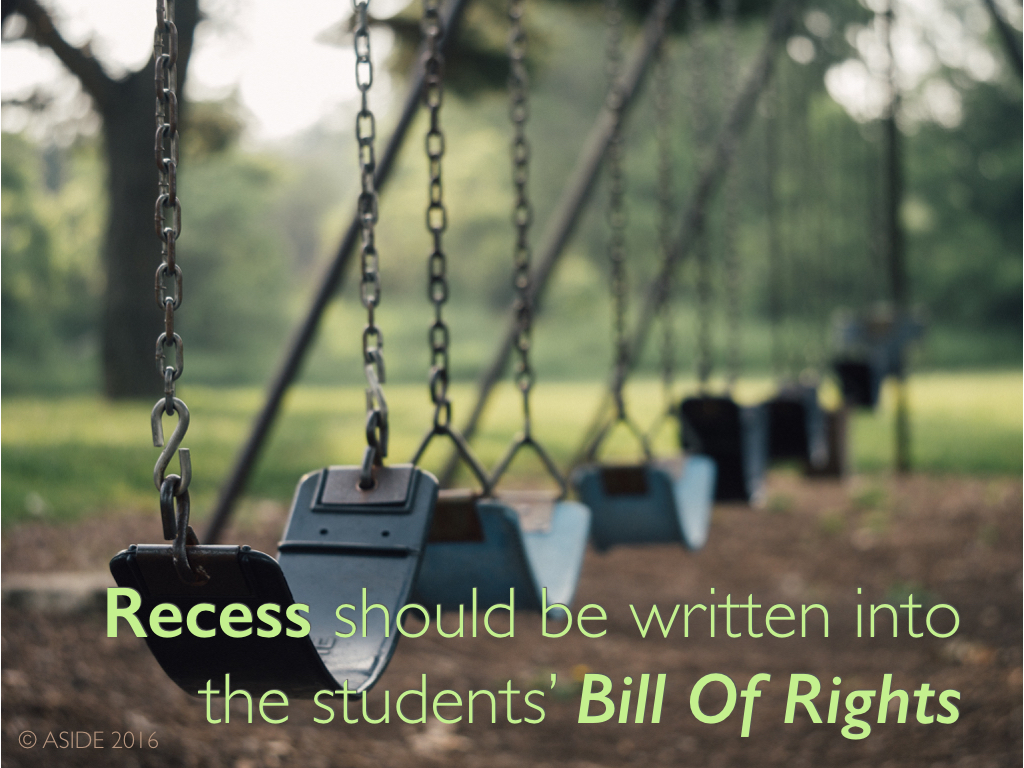
Recess Rescue: Why Play Time Should Be Written Into The Students\’ Bill Of Rights

Source: ASIDE 2016


As our nation’s children head to back to the classroom, many schools find themselves trying to rein in kids’ summer impulses. Strict conduct policies are emphasizing rules and enforcing straight lines on students who are used to gamboling in backyards and lolling for hours.

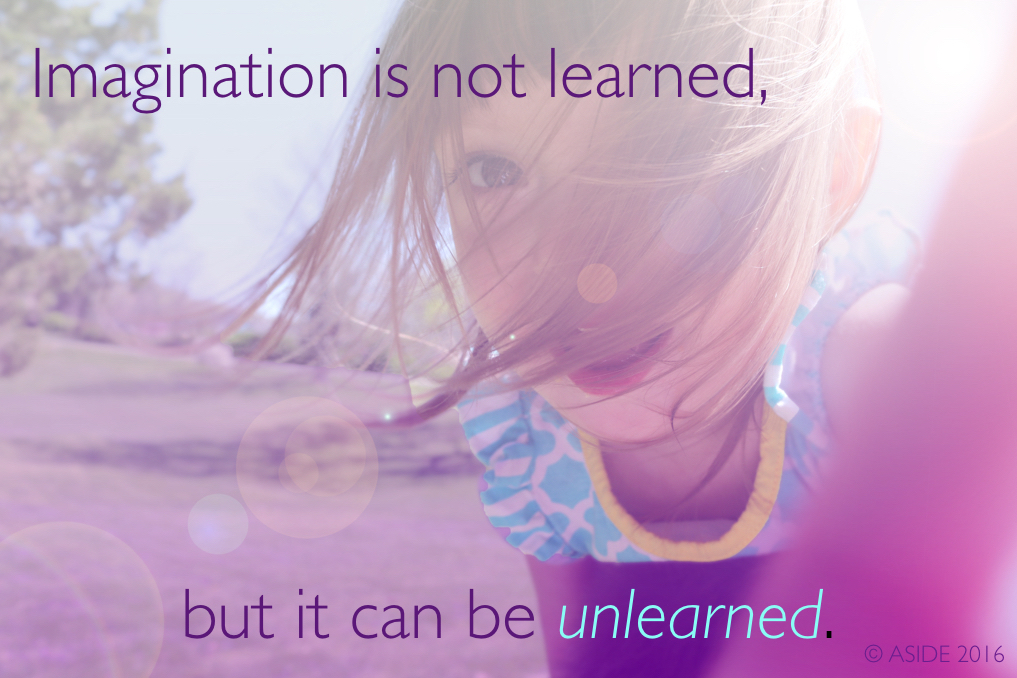
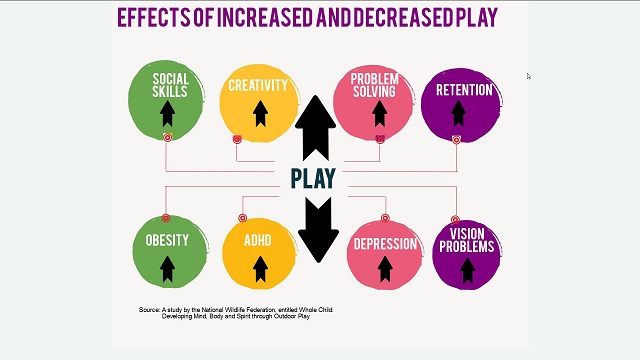
Many Scandinavian countries, most brain science, and all veteran teachers would encourage the exact opposite. They would argue that instead of limiting play, educators should expand the amount of free time dedicated to socialization and creativity. Imagination itself is not learned, but it can be unlearned due to the drone of worksheets and mandates.


Source: ASIDE 2016


While many schools nationwide are reducing free play opportunities, our neighboring Patchogue-Medford district here on Long Island has actually doubled recess time from 20 to 40 minutes. In fact, a few Texas and Oklahoma schools now schedule recess four times a day. These changes are not capricious; they are part of studies such as the LiiNK Project, which has found that physical activity increases students\’ emotional well-being and reduces instances of bullying and stress. The American Academy of Pediatrics supports these findings with its seminal white paper about \”The Crucial Role Of Recess In School.\”

Across the board, students, teachers, parents, administrators, kinesiologists, therapists, and test graders are all witnessing the positive outcomes of enhanced play time. The scientist Jaak Panksepp has devoted a career of research to answering two pivotal questions: Where in the brain does play come from? And is it a learned activity, or is it a basic function?

Source: ASIDE 2016


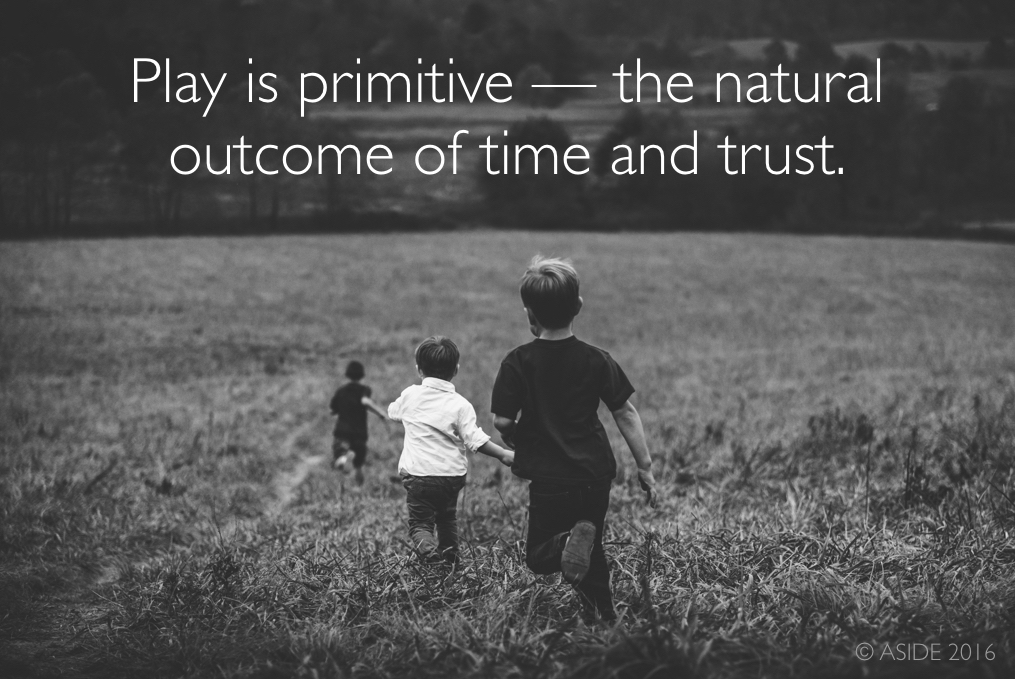
NPR has highlighted Panksepp’s studies, showcasing that play is deep and instinctive, shared across mammals, and integral to survival. Important social skills stem from play, in testing interactions, probing limits, and navigating hierarchies. In other words, play is primitive, the natural outcome of time and trust.

Children need this unstructured time to make mistakes and develop friendships on their own terms. The arena of the soccer field or the sand box is ideal in nurturing successful adults. Recess is not a privilege. It should not be an afterthought. It should instead be written into the students’ Bill Of Rights.

Source: KOIN


Otherwise, what are our playgrounds? Are they monuments to eras past? Are they the still testaments to the naivety of earlier generations? Are they just another hallmark of the sped-up modern day, the never-enough-time-for day, when the things we wish for are just that — wishes?

Recess Rescue: Why Play Time Should Be Written Into The Students\’ Bill Of Rights

Source: ASIDE 2016


As our nation’s children head to back to the classroom, many schools find themselves trying to rein in kids’ summer impulses. Strict conduct policies are emphasizing rules and enforcing straight lines on students who are used to gamboling in backyards and lolling for hours.

Many Scandinavian countries, most brain science, and all veteran teachers would encourage the exact opposite. They would argue that instead of limiting play, educators should expand the amount of free time dedicated to socialization and creativity. Imagination itself is not learned, but it can be unlearned due to the drone of worksheets and mandates.


Source: ASIDE 2016


While many schools nationwide are reducing free play opportunities, our neighboring Patchogue-Medford district here on Long Island has actually doubled recess time from 20 to 40 minutes. In fact, a few Texas and Oklahoma schools now schedule recess four times a day. These changes are not capricious; they are part of studies such as the LiiNK Project, which has found that physical activity increases students\’ emotional well-being and reduces instances of bullying and stress. The American Academy of Pediatrics supports these findings with its seminal white paper about \”The Crucial Role Of Recess In School.\”

Across the board, students, teachers, parents, administrators, kinesiologists, therapists, and test graders are all witnessing the positive outcomes of enhanced play time. The scientist Jaak Panksepp has devoted a career of research to answering two pivotal questions: Where in the brain does play come from? And is it a learned activity, or is it a basic function?

Source: ASIDE 2016


NPR has highlighted Panksepp’s studies, showcasing that play is deep and instinctive, shared across mammals, and integral to survival. Important social skills stem from play, in testing interactions, probing limits, and navigating hierarchies. In other words, play is primitive, the natural outcome of time and trust.

Children need this unstructured time to make mistakes and develop friendships on their own terms. The arena of the soccer field or the sand box is ideal in nurturing successful adults. Recess is not a privilege. It should not be an afterthought. It should instead be written into the students’ Bill Of Rights.

Source: KOIN


Otherwise, what are our playgrounds? Are they monuments to eras past? Are they the still testaments to the naivety of earlier generations? Are they just another hallmark of the sped-up modern day, the never-enough-time-for day, when the things we wish for are just that — wishes?

Recess Rescue: Why Play Time Should Be Written Into The Students\’ Bill Of Rights

Source: ASIDE 2016


As our nation’s children head to back to the classroom, many schools find themselves trying to rein in kids’ summer impulses. Strict conduct policies are emphasizing rules and enforcing straight lines on students who are used to gamboling in backyards and lolling for hours.

Many Scandinavian countries, most brain science, and all veteran teachers would encourage the exact opposite. They would argue that instead of limiting play, educators should expand the amount of free time dedicated to socialization and creativity. Imagination itself is not learned, but it can be unlearned due to the drone of worksheets and mandates.


Source: ASIDE 2016


While many schools nationwide are reducing free play opportunities, our neighboring Patchogue-Medford district here on Long Island has actually doubled recess time from 20 to 40 minutes. In fact, a few Texas and Oklahoma schools now schedule recess four times a day. These changes are not capricious; they are part of studies such as the LiiNK Project, which has found that physical activity increases students\’ emotional well-being and reduces instances of bullying and stress. The American Academy of Pediatrics supports these findings with its seminal white paper about \”The Crucial Role Of Recess In School.\”

Across the board, students, teachers, parents, administrators, kinesiologists, therapists, and test graders are all witnessing the positive outcomes of enhanced play time. The scientist Jaak Panksepp has devoted a career of research to answering two pivotal questions: Where in the brain does play come from? And is it a learned activity, or is it a basic function?

Source: ASIDE 2016


NPR has highlighted Panksepp’s studies, showcasing that play is deep and instinctive, shared across mammals, and integral to survival. Important social skills stem from play, in testing interactions, probing limits, and navigating hierarchies. In other words, play is primitive, the natural outcome of time and trust.

Children need this unstructured time to make mistakes and develop friendships on their own terms. The arena of the soccer field or the sand box is ideal in nurturing successful adults. Recess is not a privilege. It should not be an afterthought. It should instead be written into the students’ Bill Of Rights.

Source: KOIN


Otherwise, what are our playgrounds? Are they monuments to eras past? Are they the still testaments to the naivety of earlier generations? Are they just another hallmark of the sped-up modern day, the never-enough-time-for day, when the things we wish for are just that — wishes?

When Grammar Is Animated, Usage Sticks

Source: TED Ed

We are huge fans of TED Ed: Lessons Worthing Sharing. The short, animated videos on a variety of topics deliver the perfect dose of information to help students with content areas. Because educators write the scripts for these animations, they hit that sweet spot of just enough to make the point while engaging the eye as well. We also routinely publish some of these videos that don’t necessarily fit into our curriculum on our Humanities Enrichment Tumblr. As a result, our students have become big fans as well.

This summer, TED published a host of videos about grammar that we thought were extremely helpful with our learners. Two deal with punctuation, and the others talk about word usage. Emma Bryce is the author of three of the four, and she has a real knack for simplifying tricky grammatical problems.

When To Use Apostrophes 

In the first video, entitled “When To Use Apostrophes,” educator Laura McClure reviews the sometimes complicated usage. The visuals make it easy for learners to understand.


How To Use A Semicolon

Emma Bryce’s’s video called “How To Use A Semicolon” explains the correct way to use the semi-colon, and the animator, Mark Storer, creates a playful character that knocks out periods as if in an arcade game. She “clarifies best practices for the semi-confusing semicolon.”


When To Use Me, Myself, and I

In Bryce’s second video, she addresses “When To Use Me, Myself, and I.” Once again, she skillfully clarifies the different role each one plays in a sentence, even though all three refer to the same thing.


How Misused Modifiers Can Hurt Your Writing

The last Bryce video, called “How Misused Modifiers Can Hurt Your Writing,” follows in the same vein as the others. She uses her expertise to explain how misplaced modifiers create ambiguity. The animation makes it easy to see how words, phrases, and clauses in the wrong places create problems instead of adding helpful information.


Charts, Graphs, And Visual STEAM – Teaching The Super Bowl By The Numbers

Source: Asbury Park Press


Aside from the physical drama and the halftime theatrics, the Super Bowl provides prime fodder for data analytics. The enormous volume of communication and marketing around this shared cultural moment offers a case study for exploring numbers and significance.

These days, graphs are no longer the sole purview of math class. This fall, for example, we spent a “math week” in social studies talking about how historians incorporate statistics and charts in probing the details behind pivotal events. Similarly, the Super Bowl bridges academic disciplines as an appealing touchstone for students to get excited about analytical reasoning and data design. That’s how right-brained and left-brained mindsets can merge perfectly in a contemporary STEAM study.

Some examples of lessons and visual aids that use graphs and charts include:


Source: Yellowfin

On Super Bowl Sunday, 1.25 billion chicken wings are expected to be consumed. The number of tweets is predicted to top 25 million, up significantly from the 13.4 million last year. And the average American is projected to consume 2,400 calories of Super Bowl chow.

The emphasis here is on the visual presentation of numerical sets. Graphic literacy (or “graphicacy”) means that learners can “read” the grammar of lines and bars. Understanding trends and anomalies are key skills in interpreting mathematical and scientific figures.

As every educational institution searches for ways to blend STEAM proficiencies into the curriculum, the pop draw of the Super Bowl can be just the ticket to grab kids’ attentions in discovering the day’s dynamic details. Any of the tables or diagrams below would be terrific examples to show on Monday in kicking off a week of visual STEAM activities. The logical reasoning of numbers meets the illustrative narrative of the liberal arts:

Source: The New York Times


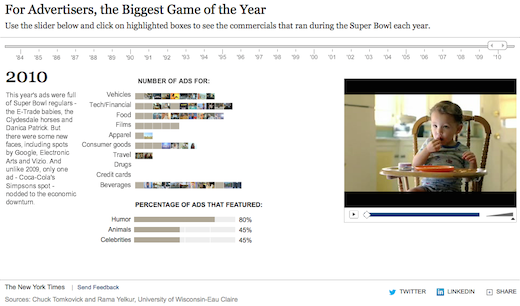
Super Bowl ads often get the most attention from both football diehards and passing revelers alike. This interactive tool from the New York Times allows students to compare a timeline of percentages as they parse the media blitz across the years.

Source: Yellowfin


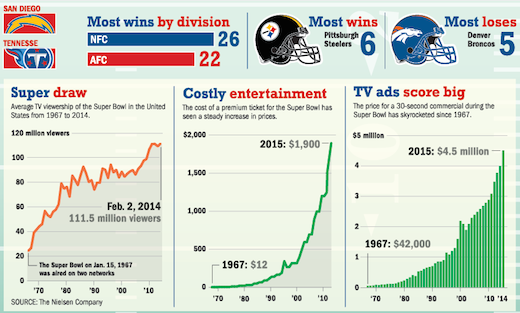
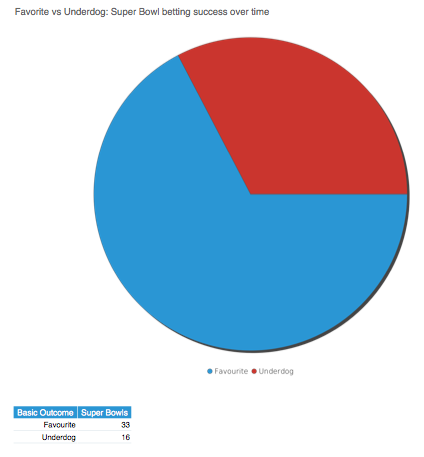
The media literacy component of Super Bowl mayhem cannot be overlooked. Many avenues exist for teachers to guide students in realizing the emotional tug of advertising during this high profile event. Yellowfin has designed an easily understood graph of Super Bowl ad prices to engage any student.

Source: Yellowfin


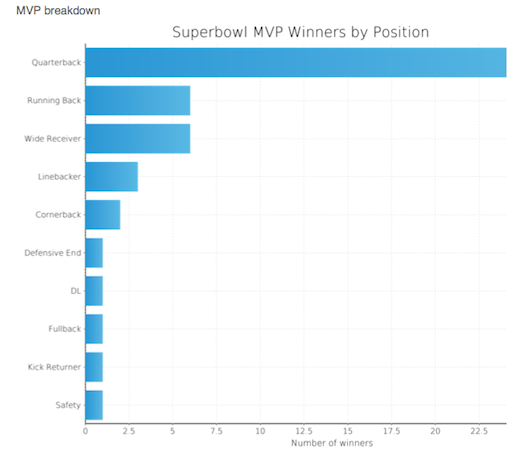
For aficionados of the sport itself, Yellowfin has assembled a horizontal bar chart of MVP winners by position. The results are familiar enough to let the content drive the comprehension. In other words, even the youngest mathematicians can expect QBs to win awards, and thus the extended blue bar becomes a visual signifier for their predictions. 

Source: Yellowfin


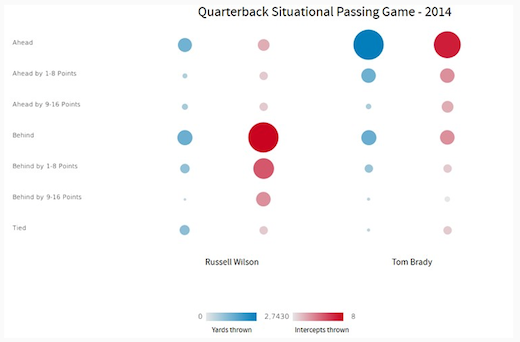
For strategists of team offenses, bubble graphs can blend with traditional tables to illuminate the choices of quarterbacks in certain situations.

For other Super Bowl educational resources, we recommend these posts:

Inspiration Plus Creativity Equals Innovative Teaching And Learning

Source: ASIDE, 2015

Education is smack in the middle of an earth swell of change. No matter how hard the system tries to maintain a rigid set of evaluative assessments, something has to give. Otherwise, we will lose too many teachers over restrictions, and worse, too many young people who know that outside of school the freedom to learn, experiment, and create exists.

Source: ASIDE, 2015

Sure, we know that the fundamentals of reading and writing are key to understanding complex information. We are not advocates for throwing the baby out with the bath water. But perhaps the recent change in Finland to dump teaching subjects in favor of topics should send shockwaves through a system that constantly tries to reinvent itself with nothing more than new standards.

Source: ASIDE, 2015

One of our mantras over the last few years with our learners has been to, “Look at more stuff. Think about it harder.” We don’t claim to take this as our own, but recently we felt compelled to revisit one of our favorite books, Look At More: A Proven Approach to Innovation, Growth, and Change, by Andy Stefanovich.

While we know that schools are not businesses, we also know that the insights Stefanovich tries to bring to companies apply to any institution with the desire to promote innovative thinking. His ideas and concepts cross over into any discipline. His fundamental formula:

 I + C = I, or Inspiration + Creativity = Innovation


This equation also applies to education. We seek to inspire our learners to use creative thinking to come up with innovative ideas; likewise, we hope to do the same with our approach to teaching.

To inspire others is, after all, why we teach. We rely on inspiration as the fuel for engagement. Just like a business, we want to encourage an environment of productivity for learners. To do this, we can no longer sacrifice inspiration for efficiency.

Source: ASIDE, 2015

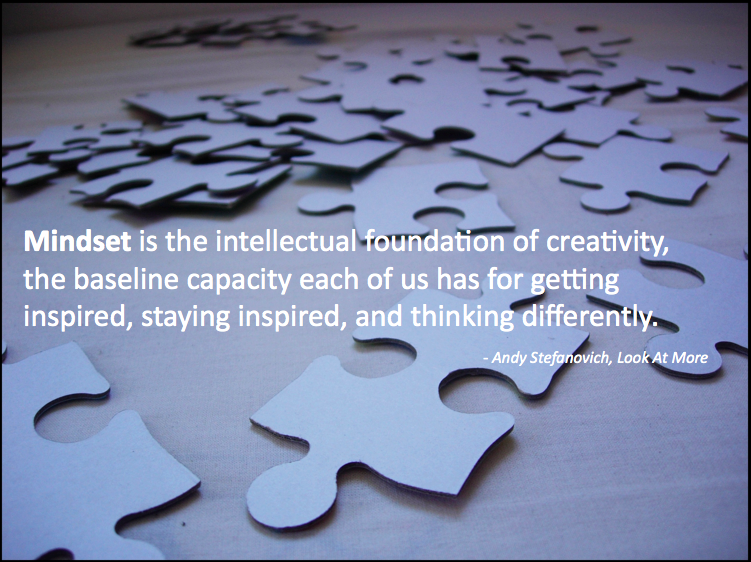
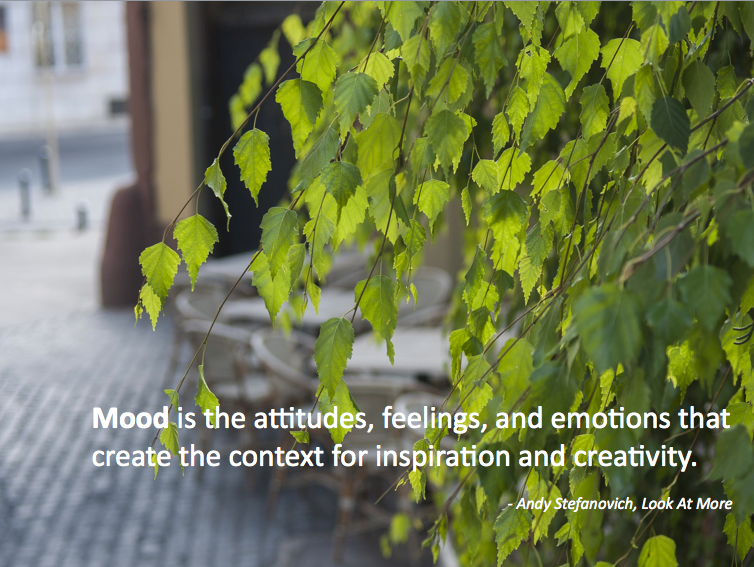
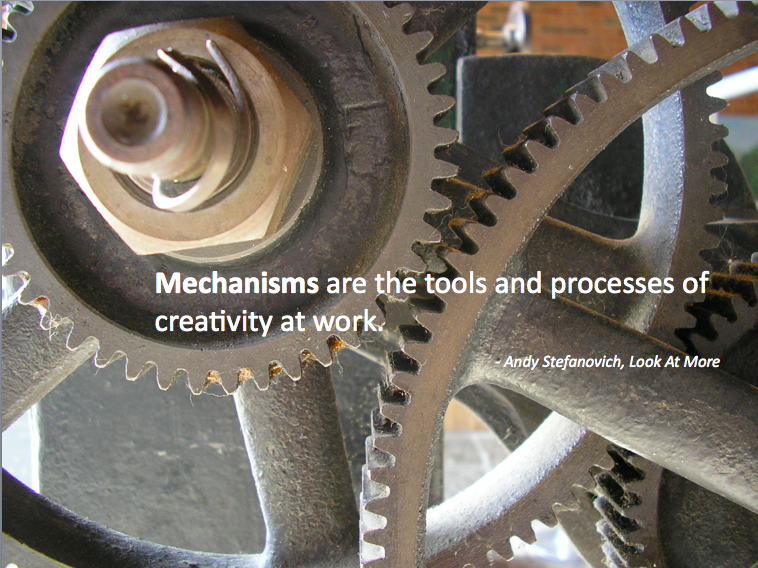
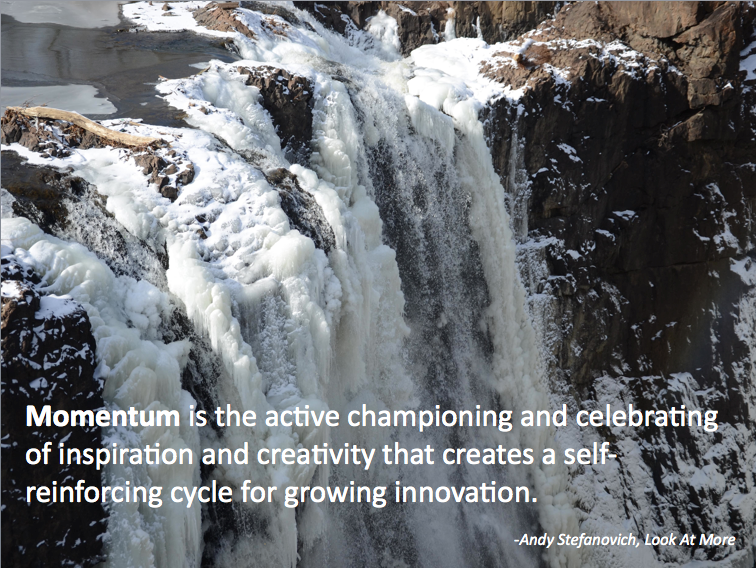
The framework behind LAMSTAIH includes five key drivers, including mood, mindset, mechanisms, measurement, and momentum to push the thinking and change the behavior in order to extract new ideas.

The concept behind each “M” not only provides a way for leadership to look at the needs of an institution, but it also helps to promote innovative ways of teaching and learning. Educational conversations circle around many of the same ideas.

So perhaps we could learn a thing or two by looking at more, including the insightful description of the three kinds of curators mentioned the book. On the one hand we have the traditionalist, who is the keeper of objects with the role of making sure that people of the future benefit from the collection of knowledge, and the Zeitgeist curator, who captures the essence of today and connects it to the not too distant future. This sounds like the role of the teacher. And then there is the hunter-gatherer curator, who constantly searches for anything that interests him or her and shares it with the world. Sound familiar? This represents most of the learners we teach.

Source: ASIDE, 2015

So where are teachers and learners as curators? More importantly, where do we want to be? At the moment, many educators are in the middle, yet our students outside of school are hunting and gathering.

Life-long learning is far more like the migrating hunter-gatherer, and technology has opened that door. We need to harness that energy, that inspiration, and that understanding of the power of connections to explore ideas. We can’t keep kids from exploring, connecting, and learning; we want them to be inspired,