how to become a content writer

Hello friends, today we are going to tell you about how to become a content writer, often many people want to become content writers, but people do not know how they can become content writers, due to which many people want to become content writers. The dream is not fulfilled and if you also work in this field, then you need to have some information about it.

Becoming a content writer is not a difficult task, if you have good writing experience, then you will be able to become a content writer in very easy way and you will be able to make a career in this field. You have to do what we will tell you in this article, for this you should read our article carefully.

how to become a content writer


how to become a content writer


If you have good experience in writing skills and language and you are exan part in writing, then the job of a content writer can prove to be very useful for you and in this you can make a very good career according to your experience and your hard work. If you want to learn content writing at an advanced level, then you can do Mass Communication and Journalism course after the 12th.

After doing this course, you become a professional content writer and after that, at you get a very good experience of writing, due to which later you can get the job of writing for any big company or any news agency etc. Also, if you want to do any business by yourself, then after doing this course you can easily do it and you can earn very well from it.

what is content writing


Before you become a content writer, you need to be aware of what content writer and content writing are not just writing articles, for this,  you have to write articles which can be understood well by the people and people get the right information. Giving and giving complete information is content writing and the more people like your article, the more benefit you will get to see.

If you want to move ahead in the field of content writing, then your writing experience is very important for this, the more experience you have, the more you will be able to achieve success in this field and your entire focus should Bonin that people can see your content the most. Like more and for this how you have to write content and what information to put in it, it all depends on you.

how to become a content writer


It is very important for you to be aware of some essential things to become a content writer, only then you can work in this field and what you will have to do for this and how you can work in the field of content writing. We are giving you information about what you will have to do for this.

To become a content writer, first of all you have to pass out of any recognized school, you should try to get good marks in 12th so that this score will prove to be very useful in your later life.

Do Diploma – You have to do a Mass  Communication course to become a content writer after the 12th and only after doing this course you can make a career in this field and course you will be given complete information related to content writing. With this, you can become a very good content writer and in this, you are also given a degree which will help you in getting a job.

Connected with technology – If you want to become a big content writer, then for this you need to know your information people and for this, you can connect with social media and share your information in front of people, so people will start reading your articles and you will make a good place for yourself in the mind of the people, which will help you to become a good content writer in life.

Give the right information – If you become a content writer, then it is most important that you provide correct and complete information to the people, this increases the trust in the mind of the people and people start believing in the information given by you. You should take special care of this thing.

Find trending topics – Trending topics are those which people are more liked or read recently, such as articles related to Diwali on Diwali and articles related to Rakshabandhan on Rakshabandhan in this way, if you write articles, then very little time In this, you can reach your article to most of the people and you can get success in this field quickly.


Career after becoming a content writer


If you become a content writer, then after that you have many different options to make a career in which you can become your best career and we are telling about some very popular work which you can do after becoming a content writer. can.

Working in Media – Recently media house is one such area where ca content writer is most in demand when you become a ca content writer and after that looking for a good job then you should get news.

Jobs are easily available on government agencies, news channels, news websites etc. And you are also given an very good salary in this so that you can make a great career in this field.

Creating your website – Often many content writers want to do their own business, for this, they can create their website, after that, you can put content on your website as per your wish and start earning from it. It is a very good option to earn.

Freelance Content Writer – After learning content writing, you can work for any company etc. Today many people work as Freelance Content writers, for this, you can join Fiverr and on social media, here you will find many companies etc. You get an offer to write content for them and you can work for them.


Content Writer Salary


Often people want to know about its salary before becoming a content writer and many people do not know how much salary can be found in it, so let us tell you that the salary depends on your experience and your writing. Depending on the method, you can be given a salary ranging from Rs 10000 to Rs 35000 in this and depending on which company you work for, how much salary you will get.

Conclusion – In this article, we have given you information about how to become a content writer, we hope that you will find the information given about becoming a content writer useful, if you like the information, then share it with your friends. If you want to ask any kind of question, then you can also tell through comment.

how to become a songwriter for beginners

Hello friends, today we are going to tell you about how to become a songwriter for beginners. This article can prove to be very useful for you, in this, we are going to tell you complete information related to becoming a songwriter.

Recently, the competition in this field has been very high, and due to this it has become very difficult to make a career in this field if you want to make a career as a songwriter, then for this, you have to work hard day and night, only then your chance to become a songwriter. The dream can be fulfilled and to get the information related to becoming a Songwriter, you should read the how to become a songwriter for beginners article carefully.

how to become a songwriter for beginners


how to become a songwriter for beginners


Songwriters work in many different fields including film, television, video games, and drama and make music for their personal use, the more popular the music of a songwriter, the more its demand and value. Increases more and after that, there are many different great career options in front of them.

A music writer has to do many types of work and sometimes when there are big programs etc., they are also hired for live shows, for which the songwriter is paid very well, so people who are dreaming of earning well. They can also come in this field, for this, you need the right guidance in the beginning.

Educational Qualification to become a Song Writer


If you want to become a Song Writer, then you do not need any special educational qualification for this, but if you have graduated in a subject related to music from a recognized university, then it can prove to be very useful for you, for this you can choose the following subject. can do.

A. Hons (Music)

A. (Musicology)

A. (Music Vocal)

A. (Instrumental Music)


The process to become a Song Writer


You have to follow some process to become a Song Writer, about which we are going to tell you if you fulfil these qualifications, then after that you will be able to make your future as a Song Writer, for this you have to do the following things. Have to keep in mind.

Listen to Songs – If you want to become a Songwriter, then you need to listen to songs, the more songs you listen to, the more benefit you will get and by listening to the songs, you will also get to learn a lot from which you will become a better Songwriter.

Learn the language – It is very important for you to know any language in which you are dreaming of becoming a songwriter, if you know that language then only you can write a great song in any language.

Learn the vocabulary of music – keep one thing in mind that you will never be able to write any music without vocabulary, so you need to have the correct knowledge of vocabulary and you will get the number of words, pronunciation, and the meaning of words and importance of words etc. It is necessary to have information.

Learn Ghazal Shayari etc. – If you want to make your music the best, then for this you should also use Ghazal and Shayari etc. By using different types of poetry and ghazals, you will be able to make great music.

Go to the poet’s conference etc. – Whatever you write, it is also necessary to reach the people, for this you can go to the poet’s conference etc., there you can present your music or article, from this you will get to learn a lot and your It will also help to know what is lacking in written music etc.

Write songs on the tune – Often many people think that the song is composed first, after that the tune is set on it, but it is not like that, one thing should be kept in mind that often before recording the song, you have to make a song on it. That’s why you should come to write the song on top of the tune so that your song can match properly with the tune.

Choose the right guide – To be successful in every field, it is very important to have some guide who gives you the right guideline, you will also need the right and experienced guide associated with this field to become a songwriter. You will be able to become a good songwriter only by adopting the methods mentioned by them.

Functions of Song Writer

A Song Writer has to do many different tasks, we are going to tell you about some of the main tasks that a Song Writer has to do during his work, and it is as follows.

Their main task is to compose music, sometimes it is also the musicians who write as well as sing.

The one who is a musician, by composing his music, himself becomes a singer of that music.

They work alone or with their team and they have to operate their team properly.

Sometimes, along with writing music, he also composes the tune of the music which matches his music.

After writing his music, the singer also has to explain well about that music.

These are some of their main tasks, all their work is related to music and it depends on the desire of the songwriter to sing or make music for it.

Song Writer Salary


You are not given any fixed salary for this work, in this money is given according to the amount of work you do and there is a different charge for writing per song and the one who is good and popular songwriter is very high for writing a song. You charge money, so how much money you can earn in this depends on your talent.

Conclusion – In this article, we have given you information about how to become a songwriter for beginners, we hope that you have found the information given by us useful, if you like the information, then do share it on social media and want to ask any kind of question-related to it. So you can also tell us by commenting.

“Black Tiger” Of India Ravindra Kaushik.

Ravindra Kaushik who served in (R&AW) ,famously known as Black Tiger was born in Sri Ganganagar, Rajasthan on 11 April 1952 in a Brahmin family.
Ravindra during his graduation days used to do drama plays and during this time Kaushik displayed his talent at the national level dramatic meet in Lucknow, Uttar Pradesh, which was witnessed by officials from the Research and Analysis Wing. After which he was contacted and offered a job of being an undercover Operative for Research and Analysis Wing in Pakistan.

After agreeing to work for R&AW Kaushik was given extensive training in Delhi for two years. He underwent circumcision so he could pass as a Muslim. He was taught Urdu, given Islamic religious education and acquainted with the topography and other details about Pakistan. Being from Sri Ganganagar, a city near Rajasthan’s border with Punjab, he was well versed in Punjabi, which is widely understood in Punjab and Pakistan as well., India. In 1975, at the age of 23, He was sent to Pakistan.
Kaushik was given the cover name “Nabi Ahmed Shakir” and entered Pakistan in 1975. He was successful in getting admission in Karachi University and from where he completed his LLB. He then joined Pakistan Army as a commissioned officer and eventually promoted to the rank of a major. While living in Pakistan under his cover he married a local girl named Amanat, the daughter of a tailor in one of the army units, and with whom he fathered a boy .

From 1979 to 1983, while working as an officer, he passed on valuable information to R&AW which was of great help to India. He was given the title of ‘Black Tiger’ by India’s then home minister late S. B. Chavan.

In September 1983, R&AW sent a low-level operative, Inyat Masih, to get in touch with Kaushik. However, Masih was caught by Joint Counterintelligence Bureau of Pakistan’s ISI and blew Kaushik’s cover. Kaushik was then captured, tortured for two years at an interrogation center in Sialkot. He was given the death sentence in 1985. His sentence was later commuted to a life term by the Supreme Court of Pakistan. He was kept in various jails in various cities, including Sialkot, Kot Lakhpat and in Mianwali jail for 16 years. He managed to secretly send letters to his family in India, which revealed his poor health condition and the trauma faced by him in Pakistani jails.He also adresses his thoughts on his country and department. In one of his letters he wrote:
“Kya Bharat jaise bade desh ke liye kurbani dene waalon ko yahi milta hai?” (Is this what people who sacrifice their lives for a big country like India get?”
In November 2001, he was caused with pulmonary tuberculosis and heart disease in Central Jail Mianwali in Pakistan.
He served for Research and Analysis Wing from 1975 to 1983.

“Writing about magic is harder than writing about spies because you’re dealing with something that doesn’t really exist.”

-Anthony Horowitz

EMPATHY, TOLERANCE AND COMPASSION TOWARDS WEAKER SECTION

Compassion is understanding or empathy for the suffering of others. Tolerance is respect, acceptance, and appreciation for those whose opinions, practices, race religion, nationality, etc. are different from one’s own. These qualities are very important for an individual living in a society.

India is a multicultural society with high numbers of vulnerable, Disadvantaged, and weaker sections. So efficient delivery of services and addressing their concerns are very important. India with its diverse cultures which traditionally evolved with the modern 21st century makes it unique in its existence. Tolerance and compassion have always played a major role throughout the transition of time for the unity of the nation in diversity. 

Weaker sections like SCs/STs and rural/urban poor are unaware of public policies, subsidies, and public utilities. Weaker sections are marginalized, deprived of justice, and illiterate. They have very low bargaining power and ability to assert their demands so helping them, being compassionate towards them, and supporting them can help them a lot.

The quality of being a compassionate persons is:

  • To understand the needs and the expectations of people.
  • Understanding the needs of marginalized and vulnerable sections of people living in a society.
  • To Undertake a faster approach and measures to address the issues of society.
  • To have an Unbiased approach to the distribution of government facilities.
  • To Make oneself accessible to all citizens and seeking for their feedback to improve better.
  • Respecting affirmative action toward the disadvantaged and implementing them with a positive attitude.

The quality of being a tolerant person is:

  • Freedom from Bigotry, respecting each other choices.
  • It helps in developing qualities like respect towards others, knowledge, openness, and communication between diverse sections of society.
  • Upholding natural rights which are Human rights, Democracy, Multiculturalism, Pluralism etc.
  • Protecting the constitutional principles of Fundamental Rights which forms the basic structure of the constitution.
  • Preventing tendency of intimidation, coercion, oppression, etc.

Poor and marginalized sections of the society that have faced negligence and left empty-handed for such a long duration of time have become afflicted that there is no one to listen to them and solve their issues. They have been dealt with harshness many times, and this behavior has inculcated in them a sense of inferiority and less importance they have stated attributing to themselves.

In a nation empowered and educated section perform better job and pay taxes to run a nation’s economy. This revenue are spent to alleviate poverty by enabling weaker section to become part of mainstream economy. This needs compassion to spend revenue on them and tolerance to provide them all chances for becoming self-sustaining. Hence, we must have tolerance and compassion toward them, as they are not exposed to newer technology, awareness of their own rights, nation’s outlook, programmes for themselves and nation’s expectation from them.

In egalitarian society, tolerance and compassion are two important qualities to be practiced by
every individual and Hence tolerance and compassion towards the weaker sections are
one of the basic qualities any individual should poses.

Equitable distribution of resources and welfare-oriented development should be among the primary goals of democratic government. To develop a country, not just the government but every individual in a society should have qualities like compassion, tolerance, and empathy towards the weaker section of the society.

Communalism

Communalism can be defined as an ideology stating the division of states on the Basis of ethnicity, religion, believes, values etc. The difference of two or more religious, Ethnic and social communities can sometimes produce clashes in the Society.

Communalism is a theory of government in which autonomous play song communities from Confederations. Communalism as a historical method follows the development of communities. It is a political trade in religion and an ideology On which communal politics is based. Communal Violence is conjectural consequence of communal ideology. Communalism has a major effect on the public it tends 2 separate people based on religion, language, territory, and ethnic origins. It leads to communal riots, Curfew situations, and can even cause terrorist activities. A communal Thought always tends to Establish political dominance Over a particular religious community. The country weakens when Political parties are formed and political activities are conducted on communal lines. The most negative impact of Communalism is riots, violence, and homicides. Communalism is a significant social issue in India, Bangladesh, Pakistan, and Sri Lanka.

When it comes to India, communal conflicts between religious communities in the country have Occurred since the period of British colonial rule, occasionally leading to serious inter communal Violence. Communalism is not just unique to South Asia as it can also be found in countries like Africa, America, Asia, Europe, and Australia.

The rising movement of communalism and the coexistence with violence have created a insecurity feeling between religious minorities among them Muslims, Sikhs and Christians in particular has feared of discrimination and confrontation in the coming days.

To prevent damages of the peace and integrity of the nation. It has many ways needed to analyse and debate the problem of communalism and communal violence. It’s became an absolute importance to be define communalism between people and also made equally pertinent to discovery of ‘commu-nal’.

The major factors towards the emergence and growth of communalism in modern India involves:

  • Indian Britishers create a new policy during the Indian colonial is ‘Divide and Rule’ this made division between two countries.
  • The disappointments and frustration among younger generations and aspiring middle class of youths, caused by static agriculture, absence of modern industrial development and inadequate employment opportunities, which is exploited by political opportunists.
  • Hindu and Muslim revivalist movements.
  • A communal and distorted view of Indian history, taught in school and colleges played a major role in rise and growth of communal feelings among the masses.
  • The separatism and isolation between religious communities.
  • The rise of communal and fundamentalist parties.

Factors that responsible for Communal Violence:

  • Politics division – Communalism is often defined as a political perspective that makes use of religious and cultural differences in achieving a political gains.
  • Economy problems – Uneven development, class divisions, poverty and unemployment aggravates insecurity in the common men which make them vulnerable to political manipulation.
  • History of Communal Riots – Probability of recurrence of communal riots in a town where communal riots have already taken place once or twice is stronger than in a town when such riots have never occurred.
  • Politics of Appeasement – Prompted by political considerations, and guided by their vested interests, political parties take decisions which promote communal violence.
  • Isolation and Economic Backwardness of minority religion Community – The failure to adopt the scientific and technological education and thus, insufficient representation in the public service, industry and trade etc has led to the feeling of relative deprivation among minorities.
  • The resurgence of religious economic competition, especially among the lower and middle class strata has fuelled the communal ideology.
  • The lack of Administrative – A weak law and order is one of the causes of communal violence.
  • Psychology problem between communities – The lack of inter-personal trust and mutual understanding between two communities often result in perception of threat, harassment, fear and danger in one community against the members of the other community , which in turn leads to fight, hatred and anger phobia.
  • Role of Media – It is often accused of sensationalism and disseminates rumours as “news” which sometimes resulted into further tension and riots between two rival religious groups.
  • Social media has also emerged as a powerful medium to spread messages relating to communal tension or riot in any part of the country.

Measures to Deal with Communalism

There is need to reform in present criminal justice system, speedy trials and adequate compensation to the victims, may act as deterrent.

Increase in representation of minority community and weaker sections in all wings of law-enforcement, training of forces in human rights, especially in the use of firearms in accordance with UN code of conduct.

Codified guidelines for the administration, specialised training for the police force to handle communal riots and setting up special investigating and prosecuting agencies can help in damping major communal disgruntlement.

Emphasis on value-oriented education with focus on the values of peace, non-violence, compassion, secularism and humanism as well as developing scientific temper (enshrined as a fundamental duty) and rationalism as core values in children both in schools and colleges/universities, can prove vital in preventing communal feelings.

Government can adopt models followed by countries like Malaysia that has developed early-warning indicators to prevent racial clashes.

The Malaysian Ethnic Relations Monitoring System (known by its acronym Mesra) that makes use of a quality of life index (included criteria such as housing, health, income and education) and a perception index to gauge people’s needs and feelings about race relations in their area.

Also the Hong Kong model of combating communalism by setting up a “Race Relation Unit” to promote racial harmony and facilitate integration of ethnic minorities, can be emulated by India.

RRU has established a hotline for complaints and inquiries on racial discrimination. Meanwhile, to create awareness about communal harmony, RRU talks to schools on culture of ethnic minorities and concept of racial discrimination.

Government can encourage and support civil society and NGOs to run projects that help create communal awareness, build stronger community relation and cultivating values of communal harmony in next generation.

There is a need for minority welfare schemes to be launched and implemented efficiently by administration to address the challenges and various forms of discrimination faced by them in jobs, housing and daily life.

A pro-active approach by National Foundation for Communal Harmony (NFCH), the body responsible for promoting communal harmony is needed.

NFCH provides assistance for the physical and psychological rehabilitation of the child victims of communal, caste, ethnic or terrorist violence, besides promoting communal harmony, fraternity and national integration.

A legislation is required to curb the communal violence. Communal Violence (Prevention, Control and Rehabilitation of Victims) Bill, 2005 must be enacted soon.

The enormous scope and changes for transformation due to our new generation and their progressive of the countries. The new generation can give new hopes and changes towards the making of new India which would help to free from all kinds of communal and caste conflicts, prejudices, hatred and discrimination, this may not possible through law but it can help us to have positive efforts of the new generation.

Everything about cancer

Photo by Miguel u00c1. Padriu00f1u00e1n on Pexels.com

Cancer is a group of diseases involving abnormal cell growth with a potential to invade or spread to other parts of the body. There are over a hundred types of cancer that affect humans. In2015, bout 90.5 million people had cancer. About 14.1million new cases occur every year causing 8.8 million deaths. The not common types of cancer in males are lung cancer, prostrate cancer and stomach cancer whereas in females, the most common types are breast cancer, lungs cancer and cervical cancer. In children, acute lymphoblastic leukemia and brain tumors are most common.

Possible symptoms of cancer include a lump ( a compact mass of a substance without a definite shape), abnormal bleeding, prolonged cough, unexplained weight loss, etc. These symptoms may differ according to the type of cancer.

Causes of cancer:

  1. Environmental Factors:
    1. Tobacco: Tobacco in various forms of its usage (smoking, chewing) is the major environmental cause of cancer of lungs, pancreas and kidney.
    2. Alcohol: Excessive intake of alcohol is associated with oesophagal and liver cancer. It is estimated that 3% of all cancer deaths are caused by alcohol.
  2. Dietary factors: These factors are depended on our food consumption. For example, smoked fish is related to stomach cancer, dietary fiber is related to intestinal cancer and high fat is related to breast cancer.
  3. Occupational exposure to chemicals: Exposure to a wide variety of chemicals such as asbestos, arsenic, benzene, chromium, cadmium, etc, through work environment also causes cancer.
  4. Other factors such as unlught, radiation, water pollution and exposure to pesticides are also some causes of cancer.

Prevention of cancer:

  1. Primary prevention:
    1. Control of tobacco and alcohol consumption.
    2. Improving personal hygiene.
    3. Reducing the exposure to radiation.
    4. Protection from occupational exposure to chemicals.
    5. Immunization
    6. Consumption of healthy food
    7. Medical treatment
    8. Education and awareness
  2. Secondary Prevention:
    1. Camcer registration
    2. Early detection of cases
    3. Proper healthcare facility and treatment.

“Freedon from cancer” is now considered as the right of cancer patients.

Coronary Heart Disease (CHD)

Photo by Karolina Grabowska on Pexels.com

Coronoary Heart Disease is defined as “the impairment of heart function due to the inadequate blood flow to the heart.” It causes 25-30% death in industrialized countries. The epidemicity, that is the relative ability to spread from one host to another in a locality, of CHD began at different times in different countries. The countries where the epidemic started early are showing a decline in the number of cases detected but still CHD poses as one of the largest health problems across the globe. CHD was the leading cause of death globally resulting in over 7million deaths. It may affect individuals of any age but becomes more common at progressively at older ages. It is estimated that 60% of the world’s cardiovascular disease occurs in the South Asian subcontinent. Males are at a higher risk of getting affected by CHD than the females.

CHD in India

The pattern of CHD in India is reported as follows:

  • CHD occurs in the population who have attained the age between 51-60 years.
  • Males are affected more than females.
  • Hypertension and diabetes account for about 40% of all the cases.
  • Heavy smoking is also reslonsible for CHD in higher number.

The risk factors that can lead to CHD include smoking, high blood pressure, diabetes, obesity, sedentary lifestyle and stress.

Prevention of CHD:

WHO has recommended the following strategies for the prevention of CHD:

  1. Population strategy:
    1. CHD is primarily a mass disease. The strategy should have a mass approach focusing mainly on the control of underlying risk factors.
    2. Small changes in the risk factor levels can achieve the biggest reduction in mortality.
    3. The population strategy is centered around the areas such as Dietary changes, smoke free society, blood pressure measurement and physical activity.
  2. High risk strategy: By means of simple tests such as blood pressure and serum cholesterol management, it is possible to identify individuals at a special risk.
  3. Secondary prevention: Secondary prevention must be seen s he continuation of primary prevention. The aim of secondary prevention is to prevent the recurrence and progression of CHD.

In a world where health risk factors are present everywhere, we should do our best to avoid falling prey to any kind of health risk.

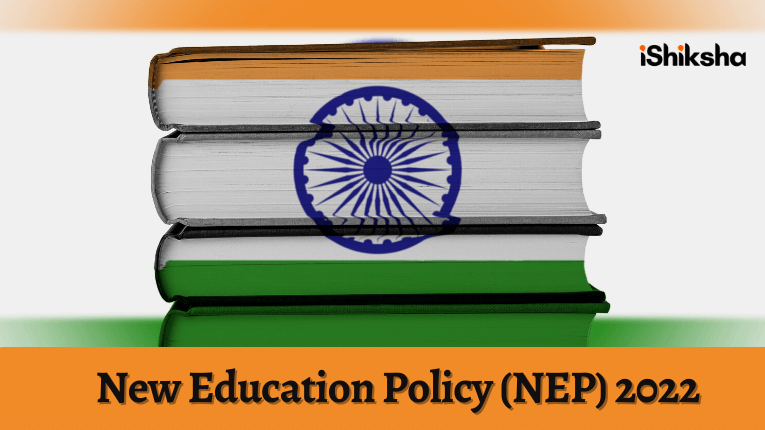
NEW EDUCATION POLICY TO BRING EVOLUTION IN THE EDUCATION SYSTEM.

NEW EDUCATION POLICY:
° Students are currently undergoing school exams conducted by responsible authorities in grades 3, 5, and 8.
° 10th and 12th grade board exams will continue, but will be redesigned for overall development.
° Mathematical reasoning and scientific temperament coding begins in 6th grade .Vocational training begins at school in sixth grade and includes internships.
° The 10 + 2 structure is replaced by 5 + 3 + 3 + 4. The new system consists of grades 12 and 3 years preschool / Anganwadi.
° Until 5th grade, this policy emphasizes the local / regional / native language as the teaching language.
° In schools and universities, Sanskrit is also included as a student option at all levels and consists of three language formulas.
° Under Graduate is now 3 or 4 years, with multiple degree options eligible for this period, such as a 1 year certificate, 2 years diploma, 3 years degree, 4 years bachelor’s degree in research, etc.
° An Academic Credit Bank (ABC) is created to store, transfer, and award bachelor’s degrees from digital learning achievements earned by students from various universities.
° The curriculum has been reduced to essentials for all subjects. They focus on critical thinking, discovery, inquiry, debate, and education based on analytical and holistic learning methods for education.
° Focus on e-learning so you can reduce your reliance on textbooks
Under the new policy, education will receive 6% of GDP, up from 1.7%. This definitely boosts the education system.
° By the end of 2040, all universities should be interdisciplinary institutions with more than 3000 students each. University affiliation will be phased out over the next 15 years.

Foucus on Regional /Mother Tongue Language:
As you know, young children learn new things as soon as they teach in their own language, not in another language they are unfamiliar with. This policy is aware of it, so children will be taught in their native language until the age of 5, but it can change to 8th grade .

NEW CURRICULUM STRUCTURE:
•) Rebuild the school curriculum and teaching methods into new 5 = 3 + 3 + 4 patterns.
•) The new curriculum structure is designed to attract the attention of learners at various developmental stages, such as 3-8 years old, 8-11 years old, 11-14 years old, 14-18 years old.
•) Elementary level lasts 5 years:
3 years before school, 1st and 2nd grade.
The preparatory stage lasts for 3 years: 3rd, 4th and 5th grade.
Middle school or high school lasts 3 years: 6th, 7th and 8th grade.
High school or junior high school lasts four years: 9th, 10th, 11th, 12th grade.
All of the above levels include Indian and regional traditions, ethical thinking, socio-emotional learning, quantitative and logical thinking, digital literacy, computational thinking, scientific manipulation, language and communication skills.

“Learning starts with failure; the first failure is the beginning of education.”

– John Hersey

Space Opera Universe : are we oblivious to the fact that we might as well be living in one ?

Space opera universe,the actual reality or the fictional reality is where we all are stuck at. Space opera is a science based fictional story about space,warfares,another world of existence where we humans can see the rays of life’s possibilities.

Space opera has been one of the most talked about topics in the past recent years because it is always seen as the alternative to the earth and human civilisation is still not aware of the new world which can be existing somewhere in reality too.

Many scientists and scientific researchers agreed on many aspects such as human civilization on any other planet but the obligation to live there may take many many years.

Think about yourself as a being having limitless and unimaginable power. Think about the scenarios where our whole planet or galaxy or universe is in danger or there is some sort of alien invasion and we, humans, have powers of Ironman,shield of Captain America that can help us to save the world. Won’t it be fascinating ? It will be. But is it really possible? The answer is no. The power of the new world of new species to whom we can ever connect to or can we ever know about them is not realistic and is best known to the fictional stories only.

Sci-fi movies or star wars movies have been depicting this as a strong portrayal that it’s the reality and when the real practical world talks about it then that becomes quite difficult to believe in. 

But we, the humans, are the superior species among all the living forms on the Earth. We don’t know if there is any other solar system or milky way galaxy or any other planet like our Earth where there is the presence of other living organisms and a superior living form like us. But if there is any , for them we are the outer space or extraterrestrial species or should I say Alien. Our technologies like Artificial intelligence, Robotic process automation, Quantum computing, Virtual reality will amaze them and may make us unparalleled in their eyes. They may consider us living in a space opera universe,different from theirs. Thus, we can say we might be living in a space opera universe without us realizing it.

Land Reforms in India

A Necessity for an Emerging Economy
Many people are not aware that a reform of land tenure is one of the steps in the economic policy of many countries to facilitate industrialization and promote agricultural growth. The problem with this is that it can lead to increased conflict between production and ownership rights. Yet, India’s Prime Minister Narendra Modi has made reforming the country’s outdated laws by going back to medieval-era customs a top priority for his government.

In May, he set up a five-member panel to recommend changes to the Hindu Succession Act, which is based on customary law and governs inheritance in India’s Hindu majority. The panel was created following the Bombay High Court’s decision that women could inherit ancestral property under the act. India has also rolled out land reform bills to facilitate transparency in transactions of agricultural land.
Under the tradition of a joint family system, or joint Hindu family system, one may wonder how land ownership and succession in India is regulated. This system has prevailed for centuries without outside interference or control. Joint families consists of males typically brothers and their wives who have to share property.
The main purpose of this system was to safeguard women’s rights to the property, in a country where the widow has been traditionally stigmatized and often impoverished by the death of her man.Land Reforms usually refers to redistribution of Land from rich to poor. Land reforms include Regulation of Ownership, Operation, Leasing, sale and Inheritance of Land. In an agrarian economy like India with massive inequalities of wealth and income, great scarcity and an unequal distribution of land, coupled with a large mass of people living below the poverty line, there are strong economic and political arguments for land reforms.

Land reform is the major step of government to assist people living under adverse conditions. It is basically redistribution of land from those who have excess of land to those who do not possess with the objective of increasing the income and bargaining power of the rural poor. The purpose of land reform is to help weaker section of society and do justice in land distribution.

The Indian Government was committed to land reforms and to ensure distributive justice as was promised during the freedom struggle. Consequently, laws were passed by all the State Governments during the Fifties with the avowed aim of abolishing landlordism, distributing land through imposition of ceilings, protection of tenants and consolidation of land- holdings.

Government land policies are implemented to make more rational use of the scarce land resources by affecting conditions of holdings, imposing ceilings and grounds on holdings so that cultivation can be done in the most economical manner.

Objectives of Land Reforms

From the beginning, land distribution has been a part of India’s state policy.
The abolition of the Zamindari system was perhaps the most revolutionary land policy of independent India (feudal landholding practices).

ZAMINDARI SYSTEM

Lord Cornwallis introduced the Permanent Settlement in 1793. Under this system, a class of landlords called Zamindars was created whose responsibility it was to pay a fixed rent to the government for the lands they owned. They gave out parcels of land to farmers who became their tenants. Their title to the land was hereditary. What was intended as a system beneficial for all parties concerned soon turned out to be exploitative? The State was only concerned with maximising revenue with minimum effort. The Zamindar too wanted maximum rent from his tenants irrespective of the land’s true potential. He could increase his own wealth by extracting most out of his farmer tenants since his due to the State was fixed. In addition, several layers of intermediaries were created between the Zamindar and the tenants adding to the burden. The landless farmers and labourers suffered greatly in poverty. Also, this led to the creation of a group of rich Indians whose loyalty lay largely with the British. As you can see the Permanent Settlement gave rise to the Zamindari system of tenancy in Bengal and soon was adopted in other regions.

RYOTWARI SYSTEM

Under this system, the proprietor of land gave the rent and taxes directly to the government in the absence of any middlemen. This started in Madras and was later adopted in Bombay as well.

MAHALWARI SYSTEM

This system was introduced by William Bentinck’s government under which landlords were responsible for the payment of revenue to the State. These landlords or Zamindars had a whole village or a group of villages under their control. The Mahalwari system prevailed in UP, the North Western Province, Punjab and parts of Central India.


India’s land reform policy had two specific goals:
The first is to remove any impediments to increasing agricultural production that arise from the agrarian structure that has been passed down from generation to generation.
The second goal, which is closely related to the first, is to “eliminate all elements of exploitation and social injustice from the agrarian system.
To provide security to the soil tiller, and to ensure equality of status and opportunity to all sections of the rural population.

Objectives of land reforms:

  • Redistribution of land across society so that land is not held in the hands of a few people.
  • Land ceiling to disburse surplus land amongst small and marginal farmers.
  • Removal of rural poverty.
  • Abolition of intermediaries.
  • Tenancy reforms.
  • Increasing agricultural productivity.
  • Consolidation of land holdings and prevention of land fragmentation.
  • Developing cooperative farming.
  • To ensure social equality through economic parity.
  • Tribal protection by ensuring their traditional land is not taken over by outsiders.
  • Land reforms were also for non-agricultural purposes like development and manufacturing.

Salient features of Indian Society, Diversity of India

Indian society is very unique and diverse. We have a lot of cultures, communities, religions, languages, etc

India is a plural society, characterized by its unity and diversity. A grand combination different cultures, religions and languages of the people belonging to different castes and communities has upheld its unity. This combination of different culture and ethnicities is what that has made India unique from other countries. Different events such as the foreign invasions, immigration from other parts of the world, and the existence of diverse languages, cultures and religions have made India’s culture open- minded , on the one hand, and a unique continuing and living culture, with its specificity and historicity, on the other. Not only we have diversity in racial compositions, religious and linguistic distinction but also in patterns of living, life styles, land tenure systems, occupational pursuits, inheritance and succession law, and practices and rites related to birth, marriage death etc. 

Post-Independent India is a nation united against several odds and obstacles. India is a secular state. It has one Constitution providing guarantees for people belonging to diverse regions, religions, cultures and languages. It covers people belonging to all socioeconomic strata. The Article 15 of the Indian Constitution talks about Prohibition of discrimination on grounds of religion, race, caste, sex or place of birth. Our Indian Constitution itself safeguards and protects the rights of every individual irrespective of their religion, race, caste sex or place of birth. It gives everyone opportunity and treats everyone equally.

DIFFERENT FEATURES OF INDIAN SOCIETY

MULTI RELIGIOUS SOCIETY

India consists of people from many different religions. Hinduism, Islam, Christianity, Buddhism, Jainism, Sikhism are some major religion in India, However there are other different religions as well. Hinduism is the most dominant religion in India.

As per the census 2021, there are approx. 110 crore people follow Hinduism in India. The Hindus are most numerous in 29 States/UTs except in Manipur, Arunachal Pradesh, Mizoram, Lakshadweep, Nagaland, Meghalaya, Jammu & Kashmir, and Punjab.

Approx.  20 crores of people are Muslims In India. The Muslims professing Islam are in majority in Lakshadweep and Jammu & Kashmir.

In 2021 approx. 3.20 Crores people are Christians in India. Christianity has emerged as the major religion in three North-eastern states, namely, Nagaland, Mizoram, and Meghalaya. 

In 2021 approx. 2.4 Crores people follow Sikhism in India.

In 2021 approx. 10 million or 1 Crore people are followers of Buddhism in India and In 2022 approx. 5 million or 50 Lakh people follow Jainism in India.

MULTI RACIAL SOCIETY

Race is a group of people with a set of distinctive physical features such as skin colour, type of nose, form of hair, etc. India is a country of people with different racial groups. The latest racial classification of the Indian people based on researches in this field has been given by B.S. Guha (1952). He has identified six racial types (1) the Negrito, (2) the Proto Australoid, (3) the Mongoloid, (4) the Mediterranean, (5) the Western Brachycephals, and (6) the Nordic.

MULTI LINGUAL SOCIETY

According to the latest analysis of a census more than 19,500 languages or dialects are spoken as mother tongue in India.

There are 121 languages which are spoken by 10,000 or more people in India, which has a population of 121 crore. Only 22 languages are listed in Schedule VIII of the Indian Constitution. The 96.71 per cent population in the country have one of the 22 scheduled languages as their mother tongue and the remaining 3.29 per cent is accounted for other languages. Not all these languages are, however, equally widespread. Many of them are tribal speeches and these are spoken by less than one percent of the total population so here we can clearly see see that in India there is a great deal of linguistic diversity as there are so many people of different languages and dialects.

MULTI CASTE SYSTEM

The term caste is generally used in two senses: sometimes in the sense of Varna and sometimes in the sense of Jati. In India, caste system is very much prevalent. The Varna system is basically a four fold system in the Hindu society based on their functional criteria, the four divisions are Brahmins, which is on the top of this system followed by kshatriya, Vaishyas and then shudra with their functions as learning or teaching, defense, trade and manual labour. We find castes among the Muslim, Christian, Sikh as well as other communities. One must have heard of the hierarchy of Shaikh, Saiyed, Mughal, Pathan among the Muslim. Similarly, caste consciousness among the Christian in India is not unknown. Since a vast majority of Christians in India are converted from Hindu fold, the converts have carried the caste system into Christianity. Among the Sikh again we have so many castes including Jat Sikh and Majahabi Sikh (lower castes).

In addition to the above described major forms of diversity, we have diversity of many other sorts like settlement patterns – tribal, rural, urban; marriage and kinship patterns along religious and regional lines; cultural patterns reflecting regional variations, and so on.

Some other of the salient features applicable to Indian Society are:

  1. Unity In Diversity
  2. Patriarchal Society
  3. Tribes
  4. Family
  5. Kinship System
  6. Balance between spiritualism and materialism
  7. Co-existence of traditionalism and modernity

India is a very diverse country and because of its unique feature it always attracts people from all parts of the world.

.

SUSTAINABLE DEVELOPMENT

Sustainable Development has been the buzzword for a while now. People are constantly asking what it looks like and how to implement it. There have been many differing opinions on what sustainable development actually is, however some key principles remain:

  • The concept of sustainable development is about making sure that you live in a world where people are able to stay self-sufficient and thrive indefinitely.
  • Sustainable development does not need to take the form of major changes, but rather building upon what we already have.
  • A major component of any successful Sustainable Development project is social-justice based thinking.

The Principles of a Sustainable Development Project:

A sustainable development project is one that will allow you to reach the following principles:
-Managing resources efficiently.
-Responsible consumption.
-Treating others with respect and dignity.
These four principles are what make up an overall healthy and productive society. The management of resources, responsible consumption, and treating others with respect and dignity can be applied to almost anything we do; whether it is being environmentally conscious, being respectful of your parents, or being a good soccer player. The real issue here is that these principles go hand in hand. If we constantly abuse a resource and consume in a way that hurts the environment, we are not being respectful of the Earth. If we are being very selfish in our consumption, then we are not being respectful of our fellow human beings. Lastly, if we do not treat people with respect and dignity, then they will not be treated with respect and dignity by their neighbors.

These four principles allow us to have a healthy society. This can be seen clearly in the following quote by E. F. Schumacher: “The great first commandment is to love the Earth and that means loving it enough to take care of it for the sake of future generations”.

The way we approach development affects everyone. The decisions that we make also impacts the society, and has very real consequences for people’s lives. Poor planning of communities, for example, reduces the quality of life for the people who live in them.

Sustainable development provides an approach to making better decisions on the issues that affect all of our lives. By incorporating health plans into the planning of new communities, for instance, we can ensure that residents have easy access to healthcare and other facilities.

Sustainable development should provide a solution in terms of meeting basic human
needs, integrating environmental development and protection, achieving equality,
ensuring social self-determination and cultural diversity, and maintaining ecological
integrity. Although the concept of sustainable development has undergone certain
changes during the past, its fundamental principles and goals have contributed to a
more conscious behaviour adapted to the limitations of the environment. This is the
reason of adopting the concept in different areas of human activities. Numerous international organizations have been involved in implementation of the concept, while
it has found positive implementation locally, but it did not produce significant results
on a global scale. This fact proves environmental problems which, 30 years after the
introduction of the concept, are still ongoing. Contemporary understanding of the
concept of sustainable development is considered through the United Nations Millennium Development Goals focused on a complex global situation, such as population
growth, hunger and poverty, wars and political instability, and further degradation
of the environment. There is a huge gap between developed and underdeveloped country and many of the countries are not even close to sustainable development. Fundamental constraints of the implementation of the concept of sustainable development are the degree of socio-economic development that many countries have not yet achieved, associated with a lack of financial resources and technology, but also the diversity of political and economic goals on a global scale.

Source: https://www.unesco.org/en/education/sustainable-development

Effective Journaling

Image courtesy: positivepsychology.com

We hear the word journaling very often. Almost every other day this term falls on our ears but we simply pay no heed to it. The reason is we humans have a tendency to think that the most ordinary or simplest things cannot bring us extraordinary greatness. Which is not true ofcourse.

When it comes to journaling, we sometimes underestimate how important it is to include this beneficial habit into our daily routines. Our lives can thrive from journaling in many different ways. From increased productivity overall to self-improvement and improved mental wellness, this habit is proven to be effective.

Writing down your thoughts, feelings, or anything else you want to in order to try to understand them better is what journaling is fundamentally all about. Every time we write down our thoughts in a journal, our mind starts to get more organised, making it simpler for us to prioritise our goals and every aspect of our lives that we want to work on. As a result, journaling helps us stay productive by allowing us to acknowledge what needs to be done after letting us self-assess ourselves in a way.

The ability to learn new things quickly, as well as your capacity for analytical and innovative thought, are more important indicators of productivity in today ’s digital economy than how much work you can get done in an hour. Journaling is therefore valuable spending a few minutes on, just like any practise that enables you to learn more acutely and think more effectively.

Outlining your goals in a journal enables you to think thoroughly about all aspects of it.
Journaling helps you keep motivated during the arduous process of actually achieving your goals by providing a track of the work you’ve made in that direction.
We refer to it as effective journaling for this reason.

Anyone who really wishes to deal with their emotions, possibly to prevent it from driving themselves in the realms of depression or anxiety, might benefit much from this mindful practice.

You can thoroughly examine your feelings, let out chaos, and mentally assimilate your experiences through writing.

Furthermore, it can support you in attaining a significant purpose or work with you to reduce certain sources of stress.
Creating and reflecting on the story of your life, including all of the decisions you have committed and the moments that have shaped who you are today, is something you may do by keeping a diary.

In a word, journaling’s healing effects are “enlightening.

You can’t change it all in your life instantly, and attempting to create healthy habits and break negative ones in a single day is probably not going to work. Legitimate, lasting change occurs when you only take on something that you can manage; frequently, altering one significant habit can have knock-on impacts that enhance your life and move you forward to your commitments in other aspects.

One such discipline is writing; it may help you stay focused, determine your capabilities and limitations, provide an outlet for awareness of self , but also much more. Merely keeping track of your ideas, emotions, and doings can change your life in unanticipated ways.

Source: positivepsychology.Com Courtney E. Ackerman, MA https://positivepsychology.com/benefits-of-journaling/

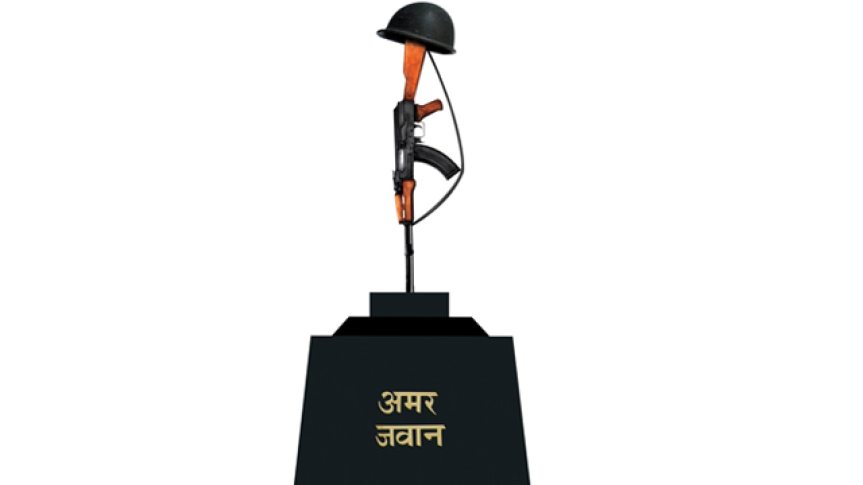
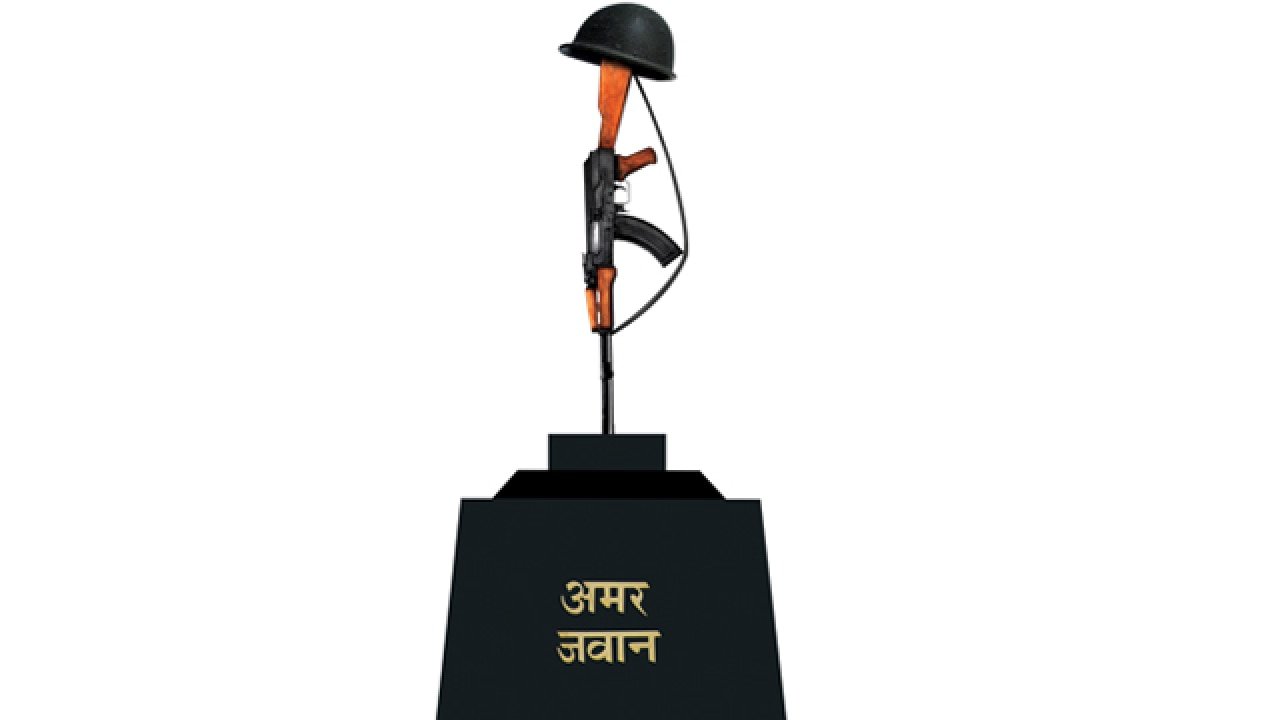
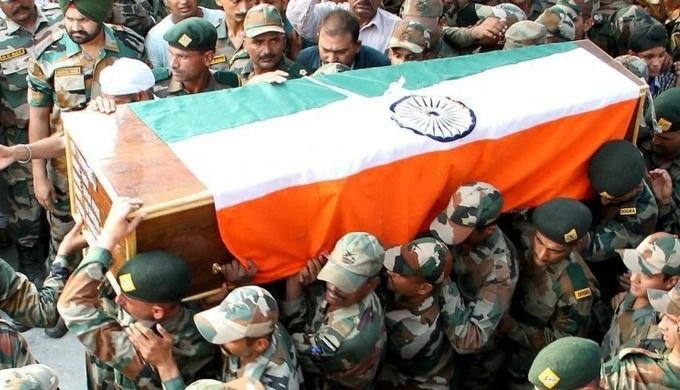
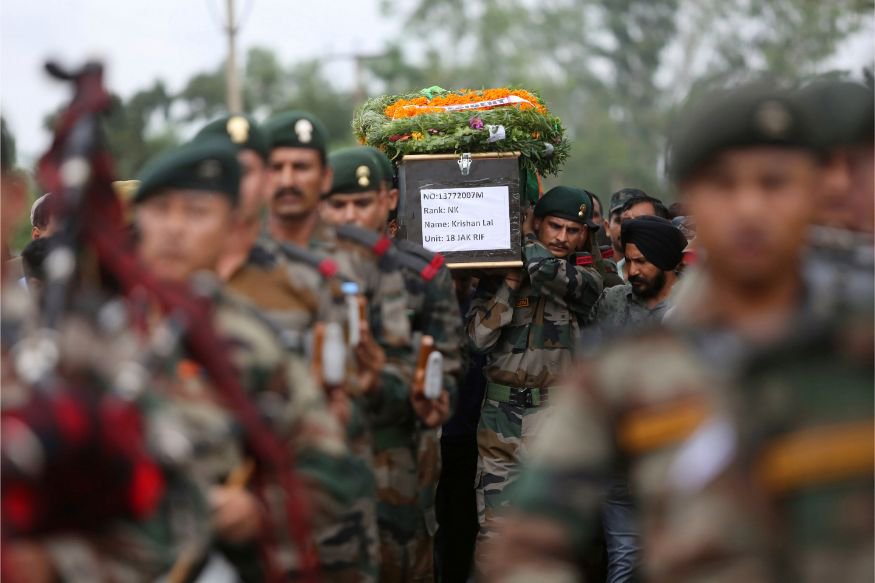
No use of ‘Martyr’ word in Army for death of on duty soldier .

History of the use of the word martyr:
The government has claimed for nearly a decade that the word “martyr” has not been officially recognized. In 2013 and 2014, in response to RTI’s request, the Ministry of Home Affairs revealed that the words “martyr” and “shahid” were not defined anywhere by the Government of India.
In December 2015, then Home Affair Minister Kireen Rijiju said in Lok Sabah that it is advised that the word “martyr” is not refer to any of the victims of the Indian army. He added that such terms were not used by Central Armed Police Forces (CAPF) and Assam Rifles personnel either.
In December 2021, Minister of State Home Nityanand Rai told Rajya Sabha again that there was no formal term like “martyr.”


Objections to the use of martyrs’ words:
The word “martyr” has religious implications and has historically been used to refer to people making sacrifices for their religious beliefs like in Christianity . The word “Shahid”, which is used as a Hindu alternative to the word “Martyr”, also has a religious meaning and is associated with the Islamic concept of Shahadat. The word “martyr” is said to be derived from the Greek word “martur”. In various dictionaries, “martyr” is defined as a person who is willing to die as a punishment for refusing to abandon religion.
Since the Indian army is not affiliated with any religion and does not sacrifice their lives for religious principles, the use of such words for their sacrifice is found wrong,including the supreme leader of the army. Using words like martyr may not be correct in context to armed forces especially in India according to many legal experts and prominent officers of army and retired officers.

Steps Taken By Government To Stop Use Of Martyr Word:
Despite the repeated assertions of the government about the word martyr having no official recognition, it was mostly used in government statements issued by various PR Officers for the defence services and the CAPFs. Many senior serving and retired officers also used it frequently to describe the death of soldiers in action. Thus, the word remained in common use.
The Army in 2022 issued a letter to all its commands asking them to abstain from using the word martyr as it may not be appropriate for soldiers who die in the line of duty. They have been, instead, asked to use phrases such as killed in action, supreme sacrifice for the nation, battle casualty, laid down their lives,veergati etc.

“Either I will come back after hoisting the tricolor, or I will come back wrapped in it, but I will be back for sure. “

-Late Captain Vikram Batra (PVC)