
History of Television in India.

Television was founded by John Baird. The first television service was started in 1936 by British Broadcasting Corporation (BBC) of Britain . In 1939, television broadcasts began in the United States. In 1953 the first successful programme in colour was transmitted by Columbia Broadcasting System (CBS) in USA. In today՚s world, television has become one of the most powerful means of mass communication . It can impart education, information and entertainment . Television has end up becoming an necessary a part of our lives.



HISTORY
India’s first television station was established on October 24, 1951, in the Department of Electronics and telecommunications at Government Engineering College in Jabalpur. Television began in India as an experiment on September 15, 1959. It was first started as two hours programmes a week under the authority of AIR. Early programs of these experimental broadcasts were generally educational programs for children and farmers. By 1975, only seven Indian cities were using television services. The Satellite Instructional Television Experiment (SITE) was an important step by India for the use of television for the development of people and the country. Initially, the show was mainly produced by Doordarshan (DD), who was part of AIR at the time. Transmissions were made twice a day, morning and evening. In addition to information on agriculture, health and family planning, other important topics covered in these programs were audience education and awareness raising. Entertainment was also included in the form of dance, music and cinema. In 1976 Television services were separated from radio . Color television was introduced to the Indian market in 1982.

In the late 1980s, more and more people began to own televisions. There was only one channel, but the TV show was saturated. Therefore, the government opened another channel, partly broadcasting nationally and locally. This channel was called DD2 and was later renamed to DD Metro. Both channels were broadcast on the ground. In 1997, Prasar Bharati, was established.Doordarshan, along with AIR, was incorporated into a state-owned enterprise under Prasar Bharati. Transponders of the American satellites PAS-1 and PAS-4 assisted in the transmission and broadcasting of shows on DD. An international channel called DD International was launched in 1995 and broadcasts programs abroad 19 hours a day to Europe, Asia and Africa via PAS-4 and to North America via PAS-1.The 1980s were the prime time for DD, with shows like comedies such as Hum Log (1984-1985), Wagle Ki Duniya (1988), Buniyaad (1986-1987). Epics like Ramayan (1987–1988) and Mahabharat (1989–1990) brought millions to Doordarshan and later on Chandrakanta (1994–1996). Song-based programs for Hindi movies such as Chitrahaar and Rangoli, and crime thrillers such as Karamchand and Byomkesh Bakshi. Children’s shows such as Tenali Rama ,Vikram Betal and Malgudi Days .


Private Channels influence:
The introduction of communication channels was a revolutionary move to reach so many people. It became an opening for Private and Commercial broadcasters in our country. The emergence of private channels began in India in the 1990s after CNN aired the Gulf War. Hong Kong-based STAR (Satellite Telivision Asia Region ) enterned in a contract between an Indian company and Zee TV. It became the first Private Indian Hindi satellite channel. During this time, several local stations have emerged. Apart from local ones various international channels such as Channel, CNN, BBC, Discovery, etc were also available for Indian TV viewers. Their were various categories of channels available for viewers,such as the 24-hour news channel, Religious channels, cartoon channels, movie channels, something for everyone .



Changes and Evolution:
A significant change that has occurred is the use of different methods of delivering television programming. Just a while ago their were satellite-based antennas, but now the mode has converted to dishes. Other shipping methods are are delivery via cable network and direct satellite transmission. Now you can watch TV shows on your mobile phone , the technology behind it is called Internet Protocol Television. The emergence and spread of televisions and computers and the access to content anytime, anywhere, everyone has brought revolutionary change and access to the world of entertainment.

“I always say film is art, theater is life and television is furniture .”

Kenny Leon
Community: meaning and characteristics

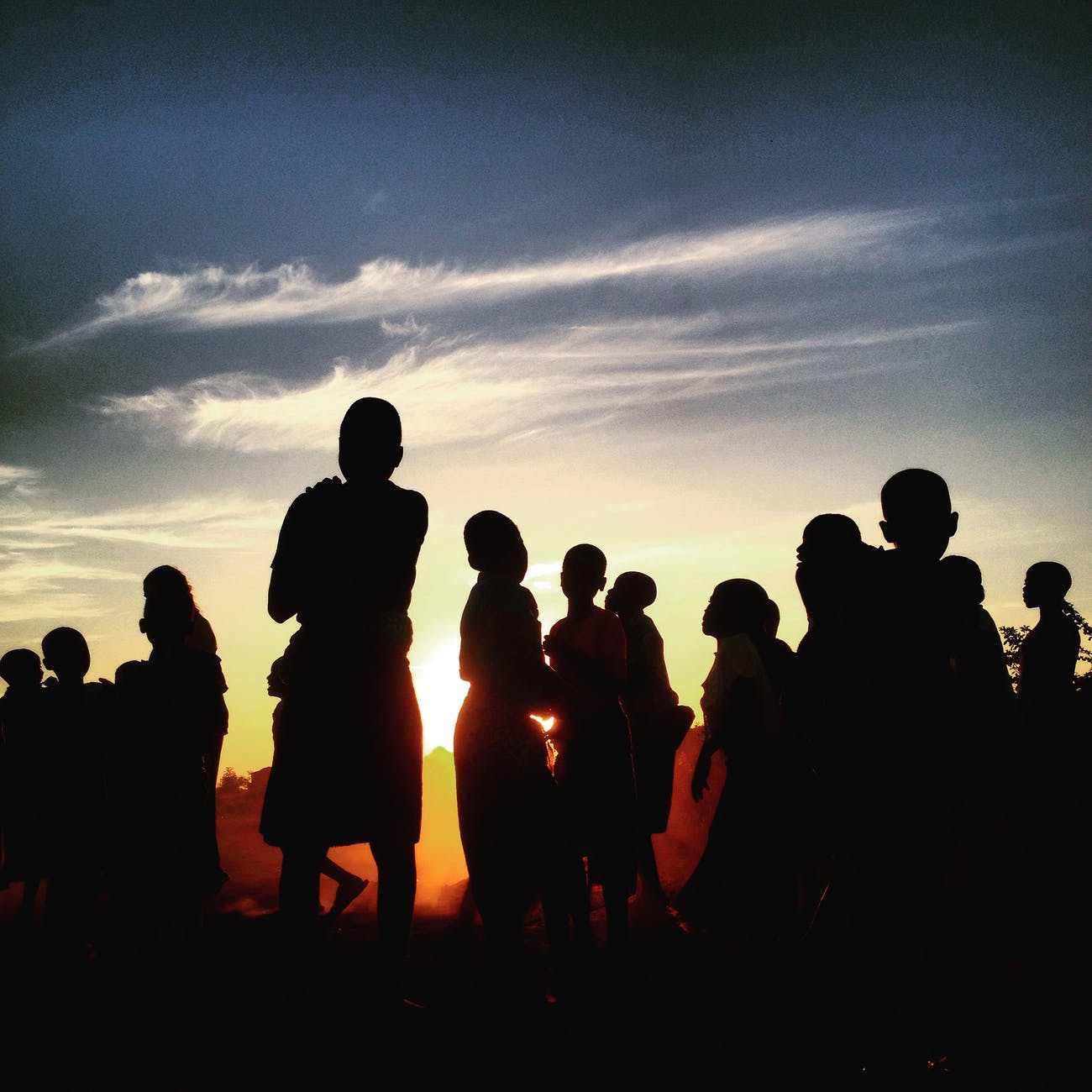
Photo by Keith Wako on Pexels.com

The term ‘community’ is given different interpretations and used in different ways to mean different things. People often use the term community to refer to a racial community, or a religious community, or a national community, etc. It is used in various contexts.

Some definitions of community:

1. Bogardus defined community as “a social group with some degree of ‘we-feeling’ and living in a given area”.

2. Talcott Parsons said “Community is the aspect of all social units.”

3. Lundberg defined community as “a human population living in a limited geographical area and carrying on a common interdependent life”.

4. MacIver said “Community is an area of social living marked by some degree of social coherence”.

5. According to Duncan Mitchell, “community denotes the collectivity of people who occupied a geographical area, are engaged in economic and political activities and constitute a self- governing social unit.

A community is essentially an area of social living. It is marked by some sorts of social coherence. ‘Community’ is an all-inclusive term. It includes all our social relationships. Elements of community: The main bases of community are: 1. Locality and 2. Community sentiment.

1. LOCALITY: A community is a territorial group. It always occupies some geographical area. Locality is the physical basis of community. In contrast to a society, a community is more or less locally limited. Even the wandering tribe or nomad community, for example, has a locality, though changing habitation. A group of people forms community only when it begins to reside definite locality. For example, caste is not a community since it is not necessary that all the members belonging to a certain cast live together in a definite location, whereas a village and a city can be called a community under certain conditions. Living together facilitates people to develop social contacts, gives protection, safety and security. It helps the members to promote and fulfil their common interests.

2. COMMUNITY SENTIMENT: Locality alone cannot make a group, a community. There are cases where people do live together but do not have any contacts or communications. These cannot be placed under community. For example, in a city there can be different localities. The members of these locality need not be sharing any common interests or may not have common outlook. A community is essentially an area of common living with a feeling of belonginess. ‘Community sentiment’ means a feeling of belonging together. The members must be aware of their staying together and sharing common interests. The members develop a sense of ‘we-feeling’. Without a sense of identification, a sense of awareness, a sense of living and sharing some common interests in life, there cannot be a community.

Other Aspects of Community:

1. Stability: A community is not a temporary group like a crowd or a mob. It is relatively stable. It includes a permanent group life in a definite place.

2. Naturalness: Communities are not created deliberately. They are not created by an act of will or by planned efforts. Individuals become its members by birth itself. Membership, hence, is not voluntary. This does not mean that caste is a community.

3. Size of the community: A community can be big or small. A small community can be included in a bigger community. For example, a city and a village may be included in a wider community called district. Thus, the term community is used in a relative sense.

4. Regulation of relations: System of traditions, customs, morals as well as set of rules and regulations are there to regulate the relation between its members.

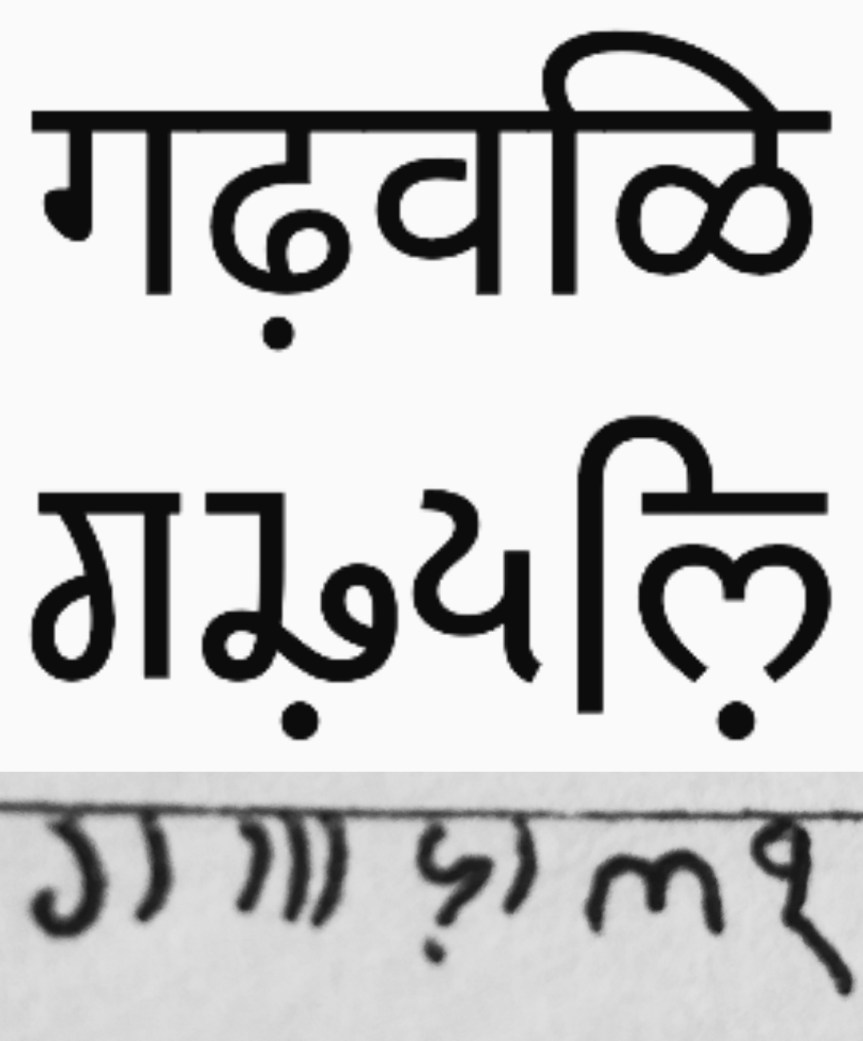
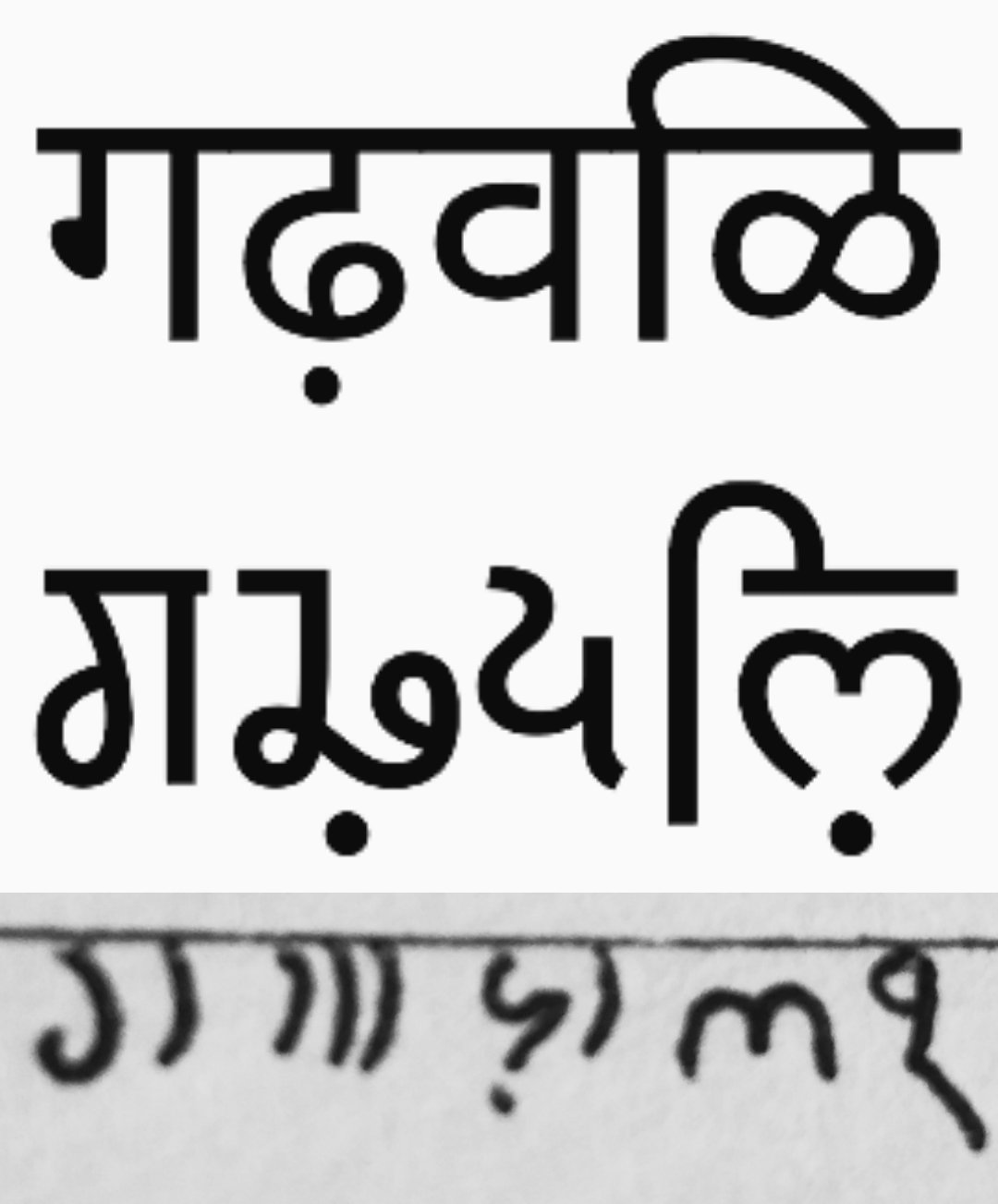
Garhwali Language it’s time to save it from getting fade.

Garhwali is the Indo-Aryan language of the Central Pahari Region which is mainly spoken by more than 2.5 million people in the Garhwal region of Uttarakhand, northern India, in the Himalayas of India, Uttarakhand. Garhwali is also spoken by Garhwali people living in other parts of India, such as Himachal Pradesh, Delhi, Hariyana, Punjab and Uttar Pradesh. According to various estimates, at least 3.5 million Garhwali migrants live in Delhi and other cities.


HISTORY
During the Middle Indo-Aryan era, there were various languages called Prakrit. Of which, Khas Prakrit language is believed to be the source of Garhwali language.The earliest forms of Garhwali can be traced back to the 10th century and can be found in temple stones, including numismatics, royal seals, copper plate inscriptions, royal orders and grants. An example is the inscription of King Jagatpal’s Temple Grant in Dev Prayag in 1335 AD. Most Garhwali literature survives in vernacular form and is transmitted verbally. But since the 18th century, Garhwali has developed a literary tradition.


LITERETURE & WRITERS
Among the famous Garhwali writers in hiastory of literature are Sudarsan Shah, Kumdanand Bahguna, Hari Dutt Sharma (Nautiyal), Hari Krishna Daurga Dutti Rudra, Urvi Dutt Shastri ,Mahidhar Dangwal, etc. , Satyasaran Raturi, Atma Ram Gairola, Devendra Dutt Raturi, Suradutt Saklani and more. Among historians are Mola Ram, Miya Prem Singh, Hari Dutt Shastri, Hari Krishna Raturi and Vijaya Ram Raturi.
Garhwali literature is thriving despite the ignorance of the government. Today, newspapers like Uttarakhand Khabarsar and Rant Raibaar are published entirely in Garhwali. Magazines such as Baduli, Hilaans, Chitti-patri and Dhaad have contributed to the development of GarhwaliGarhwali language.

Some Notable works of Gharwali writers:
•)Abodh Bandhu Bahuguna – (1927–2004) Garhwali writer. Some nitable writings include Gaad, Myateki Ganga, and Bhumyal.
•)Bachan Singh Negi – “Garhwali translation of Mahabharata and Ramayana”.
•)Lalit Mohan Thapalyal – “Achhryun ku taal”
•)Leeladhar Jagudi – (1944) Writer and novelist. PadmaShri
•)Lokesh Nawani – “Phanchi”
•)Madan Mohan Duklaan – “Aandi-jaandi saans”
•)Chandramohan Raturi – “Phyunli”
•)Chinmay Sayar – “Aunar”
•)Dr. Narendra Gauniyal – “Dheet”
•)Durga Prasad Ghildiyal – “Bwari”, “Mwari” and “Gaari”
•)Gireesh Juyal ‘Kutaj’ – “Khigtaat”.

Struggle of Official RecogItion:
Since the establishment of Uttarakhand in 2000, the state governments have made slow progress in promoting and developing the regional language of Uttarakhand. Like other languages in Uttarakhand, Garhwali, the most widely spoken language, is not officially recognized. In 2010, Hindi became the official language and Sanskrit became the second official language of Uttarakhand. In 2014, after making Garhwali the official language of Uttarakhand and demanding that it be taught at schools and universities for many years, the Uttarakhand State Government established Kumaoni and Garhwali departments at Kumaoni and Garhwali universities, respectively, to study the regional languages. At the national level, Garhwali is always required to be included in the 8th schedule of the Indian Constitution in order to be one of India’s schedule languages. In July 2010, Parliamentary member Satpal Maharaj of Pauli Garhwal submitted a legislative bill to Lok Sabha to include the languages of Garhwali and Kumaoni in the eighth schedule of the Constitution. Like most private citizen bills, the bill has not been discussed in Parliament and has since expired.

SpaceX Claims 5G Plan Could ‘render Starlink Unusable For Most Americans’

SpaceX has said its U.S.-based Starlink customers will see their broadband service badly disrupted if Dish Network is allowed to use the 12GHz band for its 5G cellular network.

The decision is in the hands of the Federal Communications Commission (FCC) as Dish Network and others such as New York-based RS Access lobby the agency to let them use the 12GHz band. But SpaceX isn’t happy.

“If Dish’s lobbying efforts succeed, our study shows that Starlink customers will experience harmful interference more than 77% of the time and total outage of service 74% of the time, rendering Starlink unusable for most Americans,” the company said in a message posted on its website on Tuesday, June 21.

The long-running dispute involves a number of companies that are trying to gain access to the 12GHz band that SpaceX already uses for its internet-from-space Starlink service.

Dish has previously published data suggesting that ground-based 5G networks could comfortably share the frequency with low-Earth orbit satellite networks operated by the likes of SpaceX for its Starlink service.

But this week, SpaceX said that technical studies “dating back as far as 2016” suggest that opening up the band to ground-based 5G networks could adversely impact its Starlink service, and it even accused Dish of attempting to “mislead the FCC with faulty analysis in hopes of obscuring the truth.”

The company led by billionaire entrepreneur Elon Musk also shared a 12-page technical analysis explaining how mobile services envisioned by Dish would “cause massive disruptions to users of next-generation satellite services,” such as Starlink.

It explained that a high-gain antenna, like the SpaceX user terminal, is “designed with sufficient sensitivity to receive very weak signals coming from a desired transmitter,” adding that “such antennas do not, however, ‘reject’ interference coming from other directions.” The result is that interference would “completely wipe out the desired signal.”

In widely reported comments, a Dish spokesperson said its “expert engineers are evaluating SpaceX’s claims.”

Dish announced last week that it has launched commercial 5G services in more than 100 U.S. Cities — covering around 20% of the nation’s population — by using frequencies in other spectrum bands. But whether it can access the 12GHz band as part of its 5G rollout remains to be seen.

SpaceX has launched more than 2,500 Starlink satellites into orbit for its broadband service, which currently serves more than 400,000 customers in 34 countries.

Preamble : The introductory part of the Constitution

The term Preamble refers to the introduction or preface to the Constitution. It explains the constitution’s philosophy and objectives and the core values and principle of the nation. Preamble to Indian Constitution is based on the Objective Resolution drafted by Jawaharlal Nehru and adopted by the framers of the Constitution.

The preamble basically gives idea of the following things :

• Source of the authority of the constitution – It derives it authority from the people of India.
• Nature of Indian State – It declares India to be sovereign,socialistic, secular, democratic and republican state.
• Statement of its objectives – It specifies justice, liberty, equality to all citizens and fraternity to maintain unity and integrity of the nation as the objectives.
• Date of its adoption – It was adopted on November 26, 1949.

Key terms in Preamble :

1. We, the people of India – It indicates that the power to run the government of India lies in the hands of the people of India. Their views are represented by the members of legislature elected by them.
2. Sovereign – The term refers to India is not governed or controlled by any external power. It has its own independent authority.
3. Socialist –  It refers to mixed economy where both Public and Private sector co-exist side by side. Indian style of socialism is a democratic socialism where both public and private enterprises is encouraged.
4. Secular –  The term implies that there is not a single religion for every indian. They have freedom to follow any religion. All the religions in India get equal respect, protection and support from the state.
5. Democratic – The term implies that the Constitution of India has an established form of Constitution which gets its authority from the will of the people expressed in an election.
6. Republic – It explains that the head of the country, President, is (indirectly) elected by the people.

Objectives of Indian Constitution :

The Constitution is the supreme law and it helps to maintain integrity in the society and to promote unity among the citizens to build a great nation.The main objective of the Indian Constitution is to promote harmony throughout the nation.
The factors which help in achieving this objective are:
• Justice: It is necessary to maintain order in society that is promised through various provisions of Fundamental Rights and Directive Principles of State Policy provided by the Constitution of India. It comprises three elements, which is social, economic, and political.
1. Social Justice – Social justice means that the Constitution wants to create a society without discrimination on any grounds like caste, creed, gender, religion, etc.
2. Economic Justice – Economic Justice means no discrimination can be caused by people on the basis of their wealth, income, and economic status. Every person must be paid equally for an equal position and all people must get opportunities to earn for their living.
3. Political Justice – Political Justice means all the people have an equal, free and fair right without any discrimination to participate in political opportunities.
• Equality: This term refers to no section of society has any special privileges and all the people have given equal opportunities for everything without any discriminations. Everyone is equal before the law.
• Liberty: This term means freedom for the people to choose their way of life, have political views and behavior in society. Liberty does not mean freedom to do anything, a person can do anything but in the limit set by the law.
• Fraternity: It means a feeling of brotherhood and an emotional attachment with the country and all the people. Fraternity helps to promote dignity and unity in the nation.

The Preamble of the Constitution is considered as part of the Constitution. The Preamble is not the supreme power or source of any restriction or prohibition but it plays an important role in the interpretation of statutes and provisions of the Constitution. So, it can be concluded that preamble is part of the introductory part of the Constitution but is not directly enforceable in a court of justice in India.
Amendment of the Preamble :
The preamble is only amended once through the 42nd Amendment Act, 1976. The term ‘Socialist’, ‘Secular’, and ‘Integrity’ were added to the preamble through 42nd Amendment Act, 1976.As a part of the Constitution, Preamble can be amended under Article 368 of the Constitution, but the basic structure of the preamble can not be amended.

Sources : The Hindu, Insights on India and Dristi IAS

Preamble is the soul of our constitution, which lays down the pattern of our political society. It contains a solemn resolve, which nothing but a revolution can alter’- Former Chief Justice of India, M Hidayatullah

The Jallianwala Bagh massacre

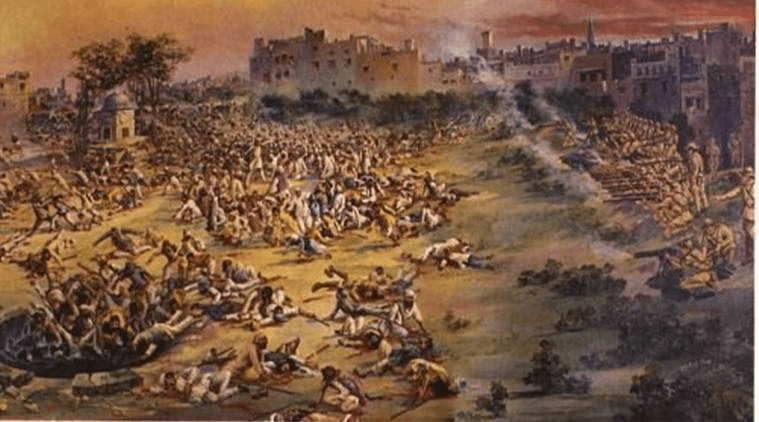
Jallianwala Bagh tragedy- a large peaceful crowd gathered at the Jallianwala Bagh, Amritsar on april 13, 1919 to protest against the arrest of leaders like Dr. Saifuddin kitchlu and Dr. Satya pal. jallianwala bagh had only one exit, it’s other three sides was enclosed with buildings.

General Dyer- the military commander of Amritsar, surrounded the Bagh(which means garden) with his soldiers. after closing the exit with his troops, he ordered them to shoot at the crowd. the troops kept on firing till their ammunition was exhausted.

Jallianwala Bagh Massacre took the lives of as many as 379 people, as Colonel Reginald Dyer ordered to open fire on them. Around 1200 people were injured during the firing.

People from the Sikh community gathered on the occasion of the Baisakhi festival near the Golden Temple.

As many as 90 British Indian Army soldiers, commanded by Colonel Reginald Dyer, opened fire on over 20,000 unarmed men, women, and children without any warning or order to disperse.

During the inquiry, Dyer said that it was a necessary measure as Punjab, along with Bengal, was the hub of anti-British rebels and anti-empire movements and that the firing was “not to disperse the meeting but to punish the Indians for disobedience.”

Such a heinous incident triggered a nationwide uproar. Rabindranath Tagore rejected his knighthood, Gandhi called for nationwide protests and generations awakened to the tune of independence. Even the British nationals were furious about the massacre. Colonel Dyer was dropped from the House of Commons.

After the massacre, the British government made a half hearted attempt at constitutional reform. But, it also made it clear that it had no intention of parting with political power or sharing it with indians. Also, the british government refused to annul the Rowlett Act and make amends for the atrocities in Punjab.

Jallianwala Bagh massacre happened 103 years ago, however, the day is registered in the heart of every Indian.

The first Indian university!!

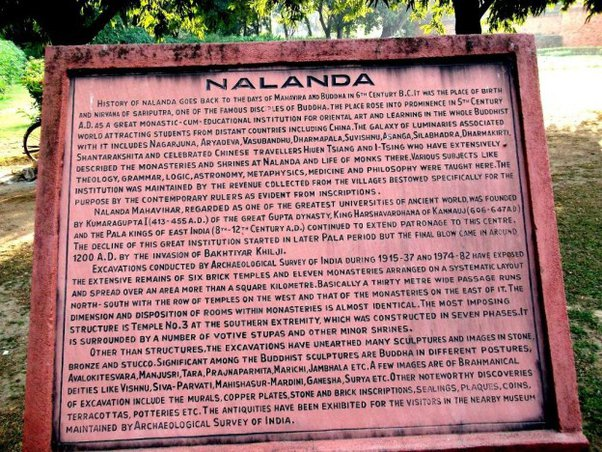
One of the most prehistoric Universities in the country that was established in the Gupta Dynasty era is the renowned and ancient Nalanda University. Located in the primeval Magadha region (modern Rajgirh), which is about 90 kilometers from Patna towards the Southeast, it is the world’s oldest residential university i.e. the students and scholars who came from all around the world, received On-campus facilities.

The university used to run in its prime state between 427 and 1197 CE. The patrons of this university consisted of many Indians and Japanese people, irrespective of them being Buddhists or not. Over 750 years, thousands of travelers, pilgrims, scholars, and students from Korea, China, Tibet have visited Nalanda University and cited their experience here in their very own literary documentation. Although sacked and destroyed to the ground by Bakhtiyar Khilji, the university was later restored.

At a time when Europe was mired in the Dark Ages, one lamp of learning shone brightly in the East, illuminating generations upon generations of minds. Nalanda University, an ancient seat of Buddhist learning and one of India’s lost glories, was founded in the fifth century and earned a reputation for intellectual excellence long before Oxford or Cambridge universities were built.

In the 12th century, that light went out. Muslim invaders rampaged through Bihar, in the northeast of India, sacking Nalanda. Legend has it that the multi-storey library and its great towers, bejewelled and gilded to reflect the rays of the sun, was so vast it took weeks to burn. Persian historian Minhaj-i-Siraj narrated how “smoke from the burning manuscripts hung for days like a dark pall over the low hills”.

They destroyed what many say was the world’s first university. Its name and reputation were known across Asia, even as far away as Greece. For 800 years, it was a centre of knowledge not only for Buddhist studies but for philosophy, medicine, astronomy and mathematics. Nalanda ceased to exist just when other universities were opening in Bologna, Italy, Paris, France, and Oxford, England.

This learning center was built by Buddhist monks during the reign of King Kumaragupta in 426 AD. The study of Buddhism, the practice of religion was the main. But besides, Hindu philosophy, Vedas, theology, logic, medical science, grammar, linguistics, science and many other subjects were taught. The cost of the university was in favor of the king. Merit and the only merit was the key to enter this university. Even in the case of members of the royal family, there was no room for bias. Students did not have to pay any salary for studying. On the contrary, they used to get nutritious food like milk, ghee, rice and butter from 200 grams.

Nalanda Burning

Nalanda also housed a library which held innumerable manuscripts and texts not only of Budhdhism but also of various literature and sciences like astronomy and medicine. It was said that the collection of texts were so huge in number, that the library burnt for three months when Bhaktiyar Khilji destroyed it.

One of the pride of this university was its library. The name was ‘Dharmaganj’. Here were three gigantic multi-storey buildings. The names of the buildings were ‘Ratnasagar’ (meaning ocean of gems), ‘Ratnodadhi’ (meaning sea of ​​gems) and ‘Ratnaranjak’ (meaning jeweled). It is unknown at this time what he will do after leaving the post. It is said that the authentic manuscripts of some parts of the Upanishads were here. There were also scriptures like Prajnaparamita Sutra and Guhya Samaj. How much! And those invaluable resources were finally swallowed up by the mad fire

NEWSPAPER MIRROR TO SOCIETY.

Newspaper can be defined as a print medium for conveying current news of various information .

History of newspaper in India:
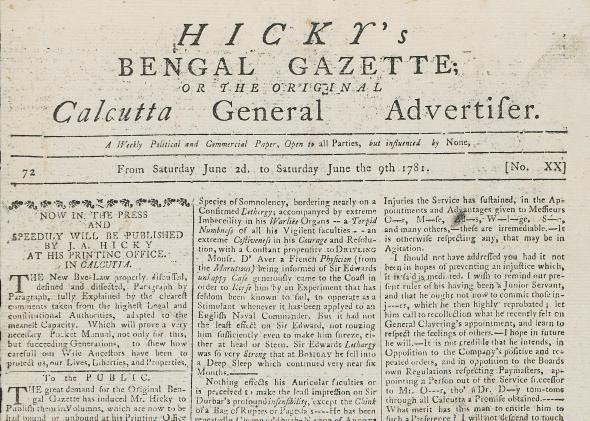
The first newspaper in India the Bengal Gazette was published in January 29, 1780 by James Augustus Hicky ,which was also known as”Calcutta Advertiser”. It was commonly known as “Bengal Gazette “. The first edition of the newspaper has two pages and was later expanded to page 4. Its size was 35 cm x 24 cm. East India Company did not considered Freedom of the Press good for society. They tried to curb the publication of newspapers. He was a very brave editor. He continued to criticize British authorities and publishing reports attacking East India Company officials for their way of working. British Authorities have arrested Hicky many times. Finally they finished his work of newspaper in 1782 and stopped publishing. Hicky was asked to leave Country. He was sent back to England. A copy of the Bengal Gazette is still preserved in the National Library of Calcutta and the British Museum in London.


Following in Hickey’s footsteps in 1780, a second newspaper was launched “The Indian Gazette” and “Calcutta Gazette” which begins publishing in 1784 and the “Bengali Journal” was started in 1785 which is also the third and fourth newspaper from Calcutta. The previous four newspaper were all published in English. Slowly Newspapers also begun to issue from other parts of the country in different languages and. The Tuesday “Madras Courier” (1785) and “Madras Gazette” (1795) starting from Madras. From Mumbai, “Bombay Herald” was started in 1789. The strict press regulations and censorship imposed by the UK hindered publication of more newspapers in India.In 1818, Lord Hastings abolished these strict censorship measures which leads to the appearance of many new newspapers in various Indian languages. Raja Ram Mohan Roy, who is known to have fought for the freedom of the press, edited a Persian weekly newspaper called “Mirat-ul-Akhbar”. But the editors of this newspaper were foreigners, not Indians. The first Indian language newspaper published by an Indian was “The Bengali Gazette” which was started in Calcutta by Gangadhar
Bhattacharjee in 1816. Pandit Jugal Kishore started Udant Martand the first Hindi newspaper published in India beginning on May 30, 1826, in Calcutta the weekly was published every Tuesday .


Importance of newspaper in India Freedom Struggle:
The newspaper and the press played a very important crutial role in the struggle for independence. The newspapers made the Indian public aware to the cruelty of the British Empire on the people . The press was the main tool for carrying out political tasks, propagating, political education, forming and spreading national ideology, mobilizing and consolidating national public opinion. The press is a powerful weapon in nationalist struggles, and Indian nationalists have led the struggle through the help of press. In fact, many of the great leaders of the freedom movement became journalists themselves and used the press as an instrument to spread their ideas to the masses and people in different parts of the country.


The Vernacular Press Act of 1878, against Indian-language newspapers, was passed in a meeting of the Royal Legislative Council. The law orders the seizure of a newspaper’s publications, papers, and other materials if the government believes the newspaper is publishing instigating material that could be harmful for the government. The Indian press enjoyed considerable freedom until 1908. However, due to the great growth of the nationalist movement, the Press Act was passed in 1908 and the Indian Press Act of 1910. Till 1930 the Indian press enjoyed relative freedom to give free opinion. However, the Press Act of 1932 and the Foreign Relations Act of 1932 refused India’s press freedom. The press was used as an effective weapon in the hands of social reform groups to expose social evils such as class restriction, child marriage, the prohibition of widows remarrying, social inequalities, laws and regulations.At that time it was very useful to uplift the society.


Newspaper at present:
Newspapers today occupy an important place in the world. The presence of newspapers is inevitable in today time. They are the reflections of the world. The press is considered the fourth pillar of democracy. The press is the most powerful of the powerful. They are defenders of truth and human rights. They act as spokespersons for the public. They are the link between the people and their government. It was still preferred by people over other media platforms because of its reliability, at a time when media was seen as a fake system that didn’t work properly.


“A good newspaper, I suppose , is a nation talking to itself ”

By Arthur Miller

What is society?

Photo by Krizjohn Rosales on Pexels.com

Man is a social animal. Psychologists like McDougall say that man is social because of the basic human instinct called gregarious instinct. Gregariousness refers to the tendency of man to live in groups. He lives in social groups, in communities and in societies. Various cases show that ‘man can become man only among men”. Man is biologically and psychologically equipped to live in groups and solitary life is unbearable to him. We very often use words such as groups, community, society, etc., in our day-to-day life. These are not merely words, they are concepts. They carry some precise meaning.

The term society is derived from the Latin word ‘socius’, which means companionship or friendship. Companionship means sociability. As George Simmel pointed out, it is this element of sociability which defines the true essence of society. It indicates that man always lives in the company of other people. Man needs society for his living, working and enjoying life. Society has become an essential condition for human life to arise and to continue. Human life and society always go together.

Some definitions of Society:

1. Morris Ginsberg said, “A society is a collection of individuals united by certain relations or mode of behavior which mark them off from others who do not enter into these relations or who differ from their behavior.”

2. MacIver defined society as “a web of social relationship”.

3. G.D.M. Cole said “Society is the complex of organized associations and institutions with a community”.

Characteristics of Society:

1. Society consists of people: Without people there can be no social relationships, no social life and hence no society.

2. Mutual interaction and mutual awareness: Mutual interaction refers to the reciprocal contact between two or more persons. An individual is a member of the society so long as he engages in relationship with other members of society. Social interaction is possible because of mutual awareness. Social relationships exist only when the members are aware of each other. Society exists only where social beings ‘behave’ towards one another in ways determined by their recognition of one another.

3. Society depends on likeliness: Likeliness refers to the similarities. Just as ‘birds of the same feather flock together’, men belonging to the species called homo-sapiens have many things in common. Society in brief, exists among like beings and likeminded.

4. Society rests on differences too: If men are exactly alike, their social relationships would be very much limited. There would be little give-and-take, little reciprocity. Life becomes boring, monotonous and uninteresting if differences are not there. However, differences alone cannot create society. It is subordinate to likeliness.

5. Co-operation and division of labor: Likeliness and differences create division of labor. It involves the assignment to each unit or group a specific share of common task. Division of labor needs specialization. Society is based on co-operation. It refers to the mutual working together for the attainment of a common goal.

6. Society is dynamic: Change is ever present in society. Changeability is an inherent quality of human society.

7. Social control: Society has its own ways of regulating the behavior of its members. These ways can be formal such as, law, legislation, police, court, etc., and informal such as customs, traditions, manners, etc.

8. Culture: Culture refers to, as Linton says, the social heritage of man. Culture is not society, but an element of society that binds together its component individuals.

Man depends on society for protection and comfort, for nurture and education from old age to death. Society makes our life livable. Society is, therefore, as MacIver puts it, more than our environment. It is within us as well as around us. It liberates and controls our talents and capacities. It stimulates the growth of our personality. Emotional development, intellectual maturity, satisfaction of physical needs and material comfort are unthinkable without society.

Apple Releases New Safari Technology Preview With MacOS Ventura Features

AppleInsider is supported by its audience and may earn commission as an Amazon Associate and affiliate partner on qualifying purchases. These affiliate partnerships do not influence our editorial content.

Apple has released a new version of Safari Technology Preview with features included in the company’s upcoming macOS Ventura update.

Safari Technology Preview is an experimental browser designed to test features that could be released in new versions of Safari. The company on Tuesday released Safari Technology Preview 147, with several macOS Ventura features.

The new browser version includes Live Text, support for Apple Passkeys, and improved Safari Web Extensions, among other features. However, some features are missing, such as Tab Groups syncing, Website Settings, and Web Extensions.

With the release, users who are currently on macOS Monterey will be able to test out some of those new features without downloading the beta version of macOS Ventura.

Apple’s full release notes for the Safari Technology Preview version are available below.

Live Text. Select and interact with text in videos or translate text in images on the web in macOS Ventura betas on Apple Silicon-based Macs.

Web technologies. Experience and test the HTML, CSS, JavaScript, and other web technologies that are available in Safari 16 Beta and included in previous Safari Technology Preview releases.

Web Push. Send notifications to people who opt-in on your website or web app with Safari Technology Preview on macOS Ventura betas.

Passkeys. Preview the new type of phishing-resistant credential that makes signing in to websites safer and easier. Available through Safari’s WebAuthn platform authenticator. To learn more about passkeys, see Meet passkeys.

Improved Safari Web Extensions. Test out API improvements including the ability to open a Safari Web Extension popover programmatically.

Web Inspector Extensions. Build custom tooling or convert existing developer tools extensions to use in Web Inspector.

Flexbox Inspector. Use the new visualization overlay in Web Inspector to help you more quickly and easily understand the layout of elements with Flexbox. It marks both the free space and gaps between flex items to reveal how they affect the result.

Should Anonymity be allowed on the Internet?

Yes – anonymity should be allowed on the Internet.
We live in a time where cyberbullying by fake news, trolls and anonymous users has become a common practice. This resulted in discussions about whether anonymity should be allowed on the Internet. Not everyone can freely express their opinion. If they do, they may face threats or bullying. Anonymity allows them to express their views without compromising on their safety and discretion.
Anonymity helps people have the right to privacy. The concept of anonymity is not new to our society. Over the years, many writers have chosen to remain anonymous to avoid the judgments of their community and society.
Removing the anonymity option exposes everyone to these negative sides of the internet. Some people who have fame want to live their life without being followed everywhere. On the Internet, they can choose to remain anonymous.
There are many advantages and disadvantages of anonymity on the Internet. But anonymity is important at least until everyone in the world is able to freely express their opinion. Children should be taught about internet ethics through schools. Furthermore, punishing those who misuse anonymity to harass others will act as a deterrent against such behavior.

Gender inequality: a hindrance to a better future

Gender is a widely used term in the society. No matter where we go, the term gender is mentioned in some way or the other, the very first place being the hospital where we are born. From there on gender becomes a persistent part of our life. However, with gender comes certain disparities which are faced by the people who are categorized under it.

Male and female, the two categories of gender, are assumed to do specific roles from which if they waver in some ways, then are heavily criticized. Male is visualized as the breadwinner in the society whereas the female is visualized as the one taking care of the household. Although in the modern world these assumptions do not hold a strong stance, there are still certain areas where gender inequality strongly prevails.

Whenever there is a talk about gender inequality the category that is affected the most by it is the female part. There are certain restrictions for the females which they are forced to abide by. In many parts of the society, a female child is seen as a burden to the family. She is not given proper educational, social as well as political opportunities in comparison to men. Although we say that our generation has rose above those stereotypes, we all know it is a big lie. People still do not see women to be skilled enough to hold higher positions than men or do any kind of skilled labor. Women are still seen as some fragile and weak section of the society who need to stay at home rather than go out and break the stereotypes and toxic social barriers. In many parts of the world, cases of female infanticide are still prevalent. The women in the certain areas are still denied access to education and most importantly proper health and sanitation. In the universal picture, no matter what field it is, the gender participation graph is not very promising for the case of women. Women also do not get equal pay as per men for the same work that they do. In many so-called developed as well as developing countries, the women are still criticized and are bashed publicly for being confident and breaking the socio political barriers. Although men also face certain discriminations, the struggles faced by women is an important global issue that needs to be solved as soon as possible.

In the world where the death does not discriminate between men and women, then why do we human still be bound by those stereotypes? Men and women both are the two faces of the same coin and are equally important for the smooth functioning of the society. Through the participation of women there can be a lot more opinions and solutions to many problems that are prevalent in the world. Gender equality today can prove to be beneficial in many ways and pave the way to a better and sustainable tomorrow.

Is Flex-Fuel Vehicles (FFV) worth it ?

A flex-fuel vehicle is a modified version of vehicle that could run both on gasoline and doped petrol with different levels of ethanol blends,which can include upto 100% ethanol. When FFV is integrated with strong hybrid electric technology, it is called Flex Fuel Strong Hybrid Electric Vehicles (FFV-SHEV). FFV-SHEV are the hybrid vehicles having capability to run solely on either electric or petrol modes. The central government has released an expert committee report on the roadmap for ethanol blending in India by 2025. The roadmap proposes a gradual rollout of ethanol-blended fuel to achieve E10 fuel supply by 2022 and phased rollout of E20 fuel supply by 2025. Currently, 9.45% of ethanol is blended with petrol in India. A 10% blending of petrol does not require major changes to engines but a 20% blend could require some changes and may even drive up the prices of vehicles. 

Ethanol is a renewable biofuel as made from biomass. It is a clear ,colorless alcohol made from a variety of biomass materials called feedstocks such as sugarcane. It is naturally produced by the fermentation of sugar by yeast or via petrochemical process such as ethylene hydration. In India, it is primarily produced from sugarcane-based raw materials or certain types of heavy molasses, surplus rice available with the Food Corporation of India and maize.

Benefits of FFV :
• Reduces pressure on oil import bill : It is expected to reduce the demands for petroleum products. India presently imports more than 80% of its petroleum requirement from gulf countries like Saudi Arabia, UAE etc. which is one of the biggest outflow of money from the country. This policy is likely to reduce the petroleum imports and the country can save upto ₹ 30,000 crores per year .
• Benefiting Farmers : It will create alternative sources of income for farmers and will encourage them to produce water-saving crop like maize to produce ethanol. If the crops are damaged by any means, it can also be used in producing ethanol.
• Boost to Atma Nirbhar Bharat : It is in line with Prime Minister’s vision ofAtma Nirbhar Bharat and government’s policy on promoting ethanol as a transport fuel. It will reduce our dependency on foreign countries over energy sources I.e., costly petroleum for automobiles and will be large step towards creating Atma Nirbhar Bharat.
• Reducing Greenhouse Gas & Tackling Climate Change: By using biofuel ( ethanol), the greenhouse gas emissions like carbon monoxide, nitrogen oxide , etc. on the daily basis will reduce drastically thus reducing the pollution and providing better air quality.

Possible challenges during implementation of the program :

• High cost of the flex fuel engine.
• Lower fuel efficiency as compared to fossil fuels like petroleum, coal and natural gas.
• Running cost will be higher due to lower fuel efficiency.
• Till now, most of the Indians are not ready to accept flex fuel vehicles due to higher cost and low efficiency reasons.
• Ethanol act as solvent and could wipe out the protective oil film of the engine thus leading to wear and tear and further causing more expenses.
• A greater percentage of blending could also mean more land being diverted for water-intensive crops such as sugar cane, which the government currently subsidises.
• The increased allocation of land also puts into question the actual reduction in emissions that blending ethanol with petrol brings about.
• Because flex fuel isn’t as economical as gasoline, gas stations are less likely to carry it. Only a small percentage of gas stations nationwide supply ethanol.

The debates surrounding the pros and cons of flex fuel vehicles aren’t going away anytime soon. However, there does seem to be a move toward using ethanol as an environmentally friendly and economical fuel source.More ethanol refining plants are opening up and it’s possible for more people to switch to FFV. Technology is always changing, so there’s no way to predict whether flex-fuel vehicles would emerge over the next few years.

Sources : The Hindu and Dristi IAS

Doing Yoga will not lead to serious disease

Today, entire nation is celebrating international yoga day. This day was considered such a long day.Yoga keeps our body full of energy and this keeps our colour and mind in a Normal control over the body.It makes the person active and body remains flexible.

First time, this day was celebrated on 21 June 2015 whose initiative was done by honourable PM Narendra Modi on 27 September 2014 in United Nation General Assembly during his speech he said-. “Yoga is an invaluable gift from the ancient tradition of India; it symbolizes the unity of mind and body; harmony between man and nature; thought, moderation and fulfillment; and a holistic approach to health and well-being.” It is not about exercise, but a sense of oneness within ourselves, discovering the world and nature. By becoming a consciousness in our changing lifestyles, it can help us deal with climate change. So Let’s work towards adopting an International Yoga Day.”

In 2011, the international humanistic meditation and yoga shri shri Ravishankar and it’s other mentors has representative of the confedaration of Portuguese industry and supported and tell the world to do yog together on the occasion of international yoga day which was held on 21 June and give suggestions to united nations to be announced soon.

Impact of Yoga in our life- Practicing yoga develops physical health.- It develops mental health.- It develops social health.- It develops spiritual health.- It helps in our self-realisation, etc.Yoga at the physical level comprises several postures or asanas to keep the body healthy. The mental techniques in Yoga include breathing exercises or pranayama and meditation to discipline the mind.

Governmental planning for Yoga Day 2022-

Minority affairs Mukhtar Abbas Naqvi will be at the Fatehpur Sikri in Uttar Pradesh whereas Giriraj Singh will be at Har Ki Pauri in Haridwar. Minister for State for Parliamentary Affairs Arjun Ram Meghwal will be in Jaipur, Minister of State for external affairs V Muraleedharan will be at the Padmanabhava Temple in Kerala, MOS Road and Transport VK Singh will be at the Kochi Fort.Minister for State for Defence Ajay Bhatt will be at the Wagah border. Minister of State for Science and Technology Jitendra Singh will be in Jammu and MOS Health Bharati Pawar will be at the Martand Sun Temple at Anantnag in Jammu and Kashmir. It was during his speech at the Keeping the overarching theme of the 75 years of India’s independence the Ministry for Ayush has identified 75 locations for Union Ministers to participate in the Yoga Day celebration. While Ayush Minister Sarbananda Sonowal will be joining the Prime Minister from Mysore, Defence Minister Rajnath Singh will be performing yoga at the IAF base in Coimbatore.Union Home Minister Amit Shah will be performing Yoga in Delhi. External Affairs Minister S Jaishankar will be present at Purana Qila in Delhi whereas Urban Affairs Minister Hardeep Singh Puri will be present at iconic red fort. Union Culture Minister G Kishan Reddy will join the Yoga celebrations from the Hussain Sagar Lake in Hyderabad whereas Minister for Information and Broadcasting Anurag Singh Thakur will be present in Hamirpur.Law Minister Kiren Rijiju will be performing yoga at Dong village in Arunachal Pradesh whereas Heavy Industries Minister Mahendra Nath Pandey will join the Yoga celebrations From the iconic Puri Beach.Railways Minister Ashwini Vaishnaw will be present at the Sun Temple in Konark in Odisha whereas Finance Minister Nirmala Sitharaman will be at Jantar Mantar in the national capital.

Commerce and Industry Minister Piyush Goyal will be at the Marine Drive in Mumbai whereas Health Minister Mansukh Mandaviya will be at the statue of unity in Kevadia Gujrat Parliamentary Affairs Minister Pralhad Joshi will be in Hampi while Civil Aviation Minister Jyotiraditya Scindia will be at the Gwalior Fort. Road and Transport Minister Nitin Gadkari will be at the Zero Milestone .

This year PM Narendra Modi rejoins all the ministers on the occasion of international yoga day 2022.

The Shepherd’s Fort – Golconda Fort

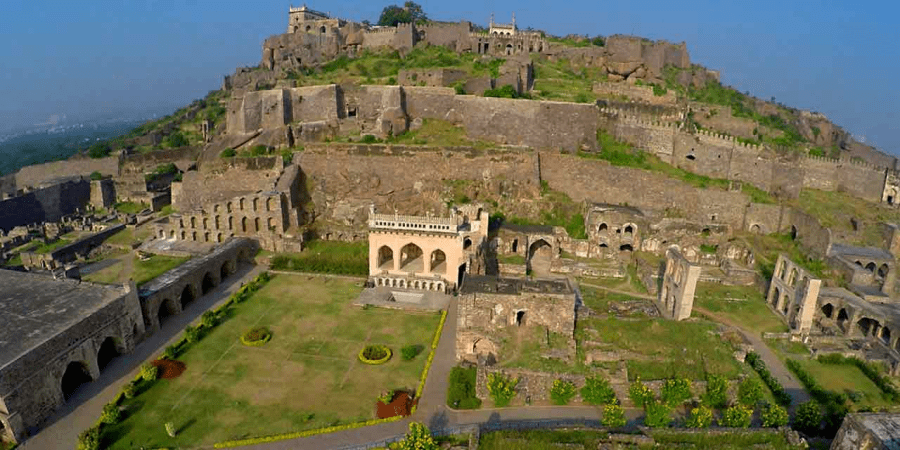
Golconda fort is located at 10 km away from the Hyderabad city. It was constructed during 13th century, on a hill which was once the territory of Kakatiya Kings of Warangal in 1143 A.D.

Among the ruins of Golconda Fort lies a history of half a millennium. It remains a thing of beauty despite the destruction it has gone through. It is 3 miles in circumference, and the granite hill that it is built on is 390 feet high. The glorious Golkonda fort in Hyderabad has cannons, gateways, majestic halls, drawbridges, and more. It was first built in 1143 by a Kakatiya king, but the Qutub Shahi Dynasty and Bahmani Sultans fortified it between the 14th and 17th centuries. The Qutub Shahi kings ruled the area in the 16th and 17th centuries. One of the most pivotal rulers in the Deccan Plateau, the Qutub Shahi Dynasty at its peak ruled Andhra Pradesh, Telangana, parts of Tamil Nadu and half of Karnataka. As the magnificent Golconda fort was built, it was the capital of the dynasty from 1518 to 1591. The Muslim sultanate was then overthrown by the Mughal emperor Aurangzeb in 1687. He destroyed the fort but the mosques and Qutub Shahi tombs remained safe enough to be visited as a tourist place.

History of Golconda fort:
As per legends, a shepherd found an idol in the area (now known as Golkonda Fort). Soon after, Kakatiyan king was informed about the same, and he gave the order to build a mud fort around the idol. The fort’s name is “GollaKonda” which meant Shepherd’s hill in Telugu. (Golla means shepered and Konda means Hill, thus Shepherd’s Hill)

The Golkonda fort was erected in the year 1143 under the Kakatiya Dynasty. However, it rose to importance when it came under the rule of Qutub Shahi Dynasty during the 16th century, i.e. when Quli Qutub Shah declared his independence from the Bahmani Sultanate in 1518. The striking fort since then expanded from a mud fortress to a structure to having a 10 km outer wall. After a failed attempt in the year 1686, the Mughal emperor Aurangzeb was finally able to opening the impregnable fort in 1687 after a long nine-month blockade.

Some Interesting Facts about Golconda fort:
1) The mud fort was rebuilt in iron and granite under Qutub Shahi kings.

2) The tombs of the Qutb Shahi rulers, mosques and the palaces are still standing tall.

3) The fort’s walls contain ventilators so that fresh air was available.

4) The fort consists of a secret underground path to one of the palaces that are located on the hill slope.

5) In the ancient times, the Golconda fort was a well-known trade centre for diamonds that were taken out from the rocks of the neighbouring hills. Moreover, the world-popular Kohinoor was found here.

6) This 800- year old fort is one of the architectural wonders of Hyderabad, the capital of Andhra Pradesh.

7) An interesting thing about the fort was that, if anyone clapped while standing at a certain point below the dome at the entrance, then its sound could be heard at the highest point of the hill-top, known as Bala Hissar. In the ancient times, people considered it a warning for the royals, if there was an attack. An amazing signalling device was in-built in the fort during the construction for important flow of information. The Golconda Fort is popular for its audio system.

8) The fort has 8 gates in the outer wall- the Fateh, Mecca, Bahmani, and Patancheru. In addition to Naya Qula Banjara, Moti, and Jamali.

9) The palaces, water supply system as well as the known ‘Rahban’ cannon, located within the fort are the prime attractions.