Minister for Tribal Affairs Sh. Arjun Munda to inaugurate tomorrow the two day National Tribal Research Conclave to be held virtually on 3rd and 4th September, 2020

The Minister for Tribal Affairs Sh. Arjun Munda will inaugurate tomorrow the two day National Tribal Research Conclave to be held virtually on 3rd and 4th September, 2020. The Conclave has been organized by Ministry of Tribal Affairs and Indian Institute of Public Administration(IIPA). The Minister of State for Tribal Affairs, Smt Renuka Singh Saruta will also address the participants at the conclave. This is the second workshop of its kind. The first such workshop was organized in January 2020.

IIPA is working on Tribal Talent Pool and on Strengthening of TRIs in partnership with Ministry of Tribal Affairs. The 2 days review workshop to be Chaired by Shri Arjun Munda will review the progress on the  outcome of various projects being implemented under different partnerships and the best practices to be show cased to all stakeholders.  Ten research partners will be sharing their projects in this conclave.  The road map of National Tribal Research Institutes will also be shared.  MoTA is also coming up with NTRI in collaboration with IIPA. 

Ministry of Tribal affairs is funding 24 TRIs for research under Grant to TRIs and  is engaged in quality research in collaboration with reputed Government and Non Government Organizations spread over the country.  These partner organizations are designated as Centres of Excellence.   MoTA along with such partner organisations designs workable models which provide end to end solution, like problem identification, finding solution and execution of the project as part of Action research which can be implemented by policy initiatives. The themes are Health, Livelihood, Education, digitalisation, water conservation, data sciences and development models for aspiration and model villages.

 Centre for Excellence for Data Analytics (CEDA) is analysing tribal data for various schemes and has developed “Performance and Monitoring Dashboard” (dashboard.tribal.gov.in) which was recently launched by Sh Amitabh Kant, CEO NITI Aayog and Sh. Ramesh Chand, Member NITI Aayog.   Bharat Rural Livelihood Foundation, an autonomous organisation under RD Ministry is working on gradation of NGOs and improving monitoring for NGO projects.   Piramal Foundation is working for creation of a consolidated health and nutrition data repository for tribal population and for providing data analytics support to facilitate evidence-based policy making and implementation strategies, and has helped MoTA launch Swasthya portal (swasthya.tribal.gov.in).  TERI is engaged with MoTA on developing an economical model for Community Rights under Forest right Act.   IIT Delhi has been given a project for development of a Data driven framework by using Data analytics to identify the villages that are having maximum socio-economic gaps, so that data drive planning can be made. Likewise NIT Rourkela, Indian Institute of Forest management, NIRTH, JNU, Jamia Milia Islamia, Bhasa, BAIF, FICCI, Assocham  are working on livelihood and Health projects in MP, Gujrat, Maharashtra, Jharkhand and other States.  Many other Civil Societies and Corporates have offered partnership with MoTA to work together for welfare of tribal in areas of Livelihood, Education, Health, Water Conservation, Organic Farming, Skill Developement, Tribal Culture & Festivals and are keen to become part of “Affirmative Action.  

MoTA has taken unique initiative in solving water problems and Livelihood problems of the tribal areas.  Action Research project has been given to SECMOL-LADAKH, wherein they would establish Ice stupa in 50 villages and which will solve problem of drinking water and water required for agriculture.  SECMOL will also plant trees through community participation.   UNDP is working on 1000 springs project with community participation to revive drying streams (https://thespringsportal.org/).  

Himmotthan Society, Uttarakhand, which is managed by Tata Foundation has been given project on sheep rearing, Packaging of Apricot and Peas as these are perishable items and locals do not get remunerative price for their products. 

Tribal Healers and Tribal medicines:    Tribals have vast traditional knowledge of treating diseases with locally available medicinal plants.  In order to protect this knowledge, which is fast vanishing,  Patanjali Research Institute has been given pilot project for research on Tribal Healers and Medicinal Plants in Uttarakhand.  Similar projects have been given to AIIMS-Jodhpur, Parvara Institute of Medical Science and Mata Amritamai Institute for Rajasthan, Maharashtra and Kerala. 

Through CII, FICCI, Assocham many Corporates and NGOs have also shown interest to support and act as mentor for such talent and offered to give Internships to interested Scholars. Many Civil Societies and Corporates have also offered partnership with MoTA to work together for welfare of tribal in areas of Livelihood, Talent pool, Tribal healers, Tribal Culture & Festivals and are keen to become part of “Affirmative Action”.   Philips India has offered scholarship to 30 medical students who could not be accommodated under the Top Class Scholarship scheme of MoTA.   GOAL (Going Online As Leaders) is also one such initiative of Facebook, which is funded by Facebook and various organisations working with MoTA are the Institutional partners in this project.


Minister for Tribal Affairs Sh. Arjun Munda to inaugurate tomorrow the two day National Tribal Research Conclave to be held virtually on 3rd and 4th September, 2020

The Minister for Tribal Affairs Sh. Arjun Munda will inaugurate tomorrow the two day National Tribal Research Conclave to be held virtually on 3rd and 4th September, 2020. The Conclave has been organized by Ministry of Tribal Affairs and Indian Institute of Public Administration(IIPA). The Minister of State for Tribal Affairs, Smt Renuka Singh Saruta will also address the participants at the conclave. This is the second workshop of its kind. The first such workshop was organized in January 2020.

IIPA is working on Tribal Talent Pool and on Strengthening of TRIs in partnership with Ministry of Tribal Affairs. The 2 days review workshop to be Chaired by Shri Arjun Munda will review the progress on the  outcome of various projects being implemented under different partnerships and the best practices to be show cased to all stakeholders.  Ten research partners will be sharing their projects in this conclave.  The road map of National Tribal Research Institutes will also be shared.  MoTA is also coming up with NTRI in collaboration with IIPA. 

Ministry of Tribal affairs is funding 24 TRIs for research under Grant to TRIs and  is engaged in quality research in collaboration with reputed Government and Non Government Organizations spread over the country.  These partner organizations are designated as Centres of Excellence.   MoTA along with such partner organisations designs workable models which provide end to end solution, like problem identification, finding solution and execution of the project as part of Action research which can be implemented by policy initiatives. The themes are Health, Livelihood, Education, digitalisation, water conservation, data sciences and development models for aspiration and model villages.

 Centre for Excellence for Data Analytics (CEDA) is analysing tribal data for various schemes and has developed “Performance and Monitoring Dashboard” (dashboard.tribal.gov.in) which was recently launched by Sh Amitabh Kant, CEO NITI Aayog and Sh. Ramesh Chand, Member NITI Aayog.   Bharat Rural Livelihood Foundation, an autonomous organisation under RD Ministry is working on gradation of NGOs and improving monitoring for NGO projects.   Piramal Foundation is working for creation of a consolidated health and nutrition data repository for tribal population and for providing data analytics support to facilitate evidence-based policy making and implementation strategies, and has helped MoTA launch Swasthya portal (swasthya.tribal.gov.in).  TERI is engaged with MoTA on developing an economical model for Community Rights under Forest right Act.   IIT Delhi has been given a project for development of a Data driven framework by using Data analytics to identify the villages that are having maximum socio-economic gaps, so that data drive planning can be made. Likewise NIT Rourkela, Indian Institute of Forest management, NIRTH, JNU, Jamia Milia Islamia, Bhasa, BAIF, FICCI, Assocham  are working on livelihood and Health projects in MP, Gujrat, Maharashtra, Jharkhand and other States.  Many other Civil Societies and Corporates have offered partnership with MoTA to work together for welfare of tribal in areas of Livelihood, Education, Health, Water Conservation, Organic Farming, Skill Developement, Tribal Culture & Festivals and are keen to become part of “Affirmative Action.  

MoTA has taken unique initiative in solving water problems and Livelihood problems of the tribal areas.  Action Research project has been given to SECMOL-LADAKH, wherein they would establish Ice stupa in 50 villages and which will solve problem of drinking water and water required for agriculture.  SECMOL will also plant trees through community participation.   UNDP is working on 1000 springs project with community participation to revive drying streams (https://thespringsportal.org/).  

Himmotthan Society, Uttarakhand, which is managed by Tata Foundation has been given project on sheep rearing, Packaging of Apricot and Peas as these are perishable items and locals do not get remunerative price for their products. 

Tribal Healers and Tribal medicines:    Tribals have vast traditional knowledge of treating diseases with locally available medicinal plants.  In order to protect this knowledge, which is fast vanishing,  Patanjali Research Institute has been given pilot project for research on Tribal Healers and Medicinal Plants in Uttarakhand.  Similar projects have been given to AIIMS-Jodhpur, Parvara Institute of Medical Science and Mata Amritamai Institute for Rajasthan, Maharashtra and Kerala. 

Through CII, FICCI, Assocham many Corporates and NGOs have also shown interest to support and act as mentor for such talent and offered to give Internships to interested Scholars. Many Civil Societies and Corporates have also offered partnership with MoTA to work together for welfare of tribal in areas of Livelihood, Talent pool, Tribal healers, Tribal Culture & Festivals and are keen to become part of “Affirmative Action”.   Philips India has offered scholarship to 30 medical students who could not be accommodated under the Top Class Scholarship scheme of MoTA.   GOAL (Going Online As Leaders) is also one such initiative of Facebook, which is funded by Facebook and various organisations working with MoTA are the Institutional partners in this project.
Metro Operations to Resume in a Graded Manner from 7th September 2020

Shri Hardeep S Puri, MoS, (I/C), Ministry of Housing and Urban Affairs has announced the SOP guidelines for metro operations in a media interaction today. As per MHA order No 40-3/2020-DM-I(A) dated 29.8.2020, metro services will resume from 7th September, 2020 in a graded manner.  For this purpose, SOP guidelines have been prepared by Ministry of Housing and Urban Affairs, which have been concurred by the Ministry of Home Affairs.  

              Broad features of the same are as below: –

a. Metro operations to be resumed in graded manner. Metros having more than one line should open different lines staring from 7th September, 2020 onwards in a graded manner so that all corridors become operational by 12th September 2020.  Daily hours of operations may be staggered initially, which needs to be increased gradually with resumption of full revenue service by 12th September, 2020. Frequency of trains to be regulated to avoid passenger crowding at stations and in trains.

b.​Stations/ entry-exit gates in containment zones to be closed.  

c.​​In order to ensure social distancing, suitable markings at stations and inside trains to be done.

d.​Wearing of face mask to be mandatory for all passengers and staff. Metro rail corporations may make arrangements for supply of masks on payment basis to the persons arriving without mask.

e.​Only asymptomatic persons to be allowed to travel after thermal screening at entry into the stations.  Symptomatic persons should be advised to go to nearby COVID Care Centre/Hospital for testing/medical attention. Use of Aarogya Setu App to be encouraged.

f.​Provision of sanitizers to be made at entry into the stations for use by passengers. Sanitization of all areas having human interface viz. equipment, train, working area, lift, escalators, handrail, AFC gate, toilets etc. needs to be done at regular intervals.

g.​Use of Smart Card and cashless/online transactions to be encouraged. Tokens and paper slips/ticket to be used with proper sanitization.

h.​Adequate dwell time at stations to be provided to enable smooth boarding/deboarding ensuring social distancing. Metro rail corporations may also resort to skipping of stations to ensure proper social distancing.

i.​Passengers to be advised to travel with minimum luggage and avoid carrying metallic items for easy and quick scanning.

j.​Operation of Heating, Ventilation and Air-Conditioning (HVAC) system as per the Central Public Works Department (CPWD) & Indian Society of Heating, Refrigerating and Air Conditioning Engineers (ISHRAE) guidelines. Intake of fresh air in air-conditioning system to be increased to the extent possible.

k.​Information, Education and Communication (IEC) campaign to be launched for passenger and staff through electronic/print/social media, poster, banner, hoarding, website etc.

l.​Metro rail corporations to keep close liaison with state police and local administration for regulating crowd outside station and to deal with contingencies.

             Based on above guidelines, Delhi, Noida, Chennai, Kochi, Bangalore, Mumbai Line-1, Jaipur, Hyderabad, Maha Metro (Nagpur) Kolkata, Gujarat and UP Metro (Lucknow) have prepared their SOPs. Government of Maharashtra has decided not to resume operation of metro during September, 2020.  Hence, Mumbai Line-1 and Maha Metro operations shall commence from October, 2020 or as State Government may decide further.

CBDT provides ITR Filing Compliance Check Functionality for Scheduled Commercial Banks

Central Board of Direct Taxes in exercise of powers conferred under section 138(1)(a) of Income Tax Act, 1961, has issued Order inF.No. 225/136/2020/ITA.II dated 31.08.2020, for furnishing information about IT Return Filing Status to Scheduled Commercial Banks, notified vide notification No. 71/2020 dated 31.08.2020 under sub-clause (ii) of clause (a) of sub-section (1) of section 138 of the Act.

The data on cash withdrawal indicated that huge amount of cash is being withdrawn by the persons who have never filed income-tax returns. To ensure filing of return by these persons and to keep track on cash withdrawals by the non-filers, and to curb black money, the Finance Act, 2020 w.e.f. 1st July, 2020 further amended Income-tax Act, 1961 to lower the threshold of cash withdrawal to Rs. 20 lakh for the applicability of TDS for the non-filers and also mandated TDS at the higher rate of 5% on cash withdrawal exceeding Rs. 1 crore by the non-filers.

Income Tax Department has already provided a functionality “Verification of applicability u/s 194N” on http://www.incometaxindiaefiling.gov.in for Banks and Post offices since 1st July, 2020.  Through this functionality, Bank/Post Office can get the applicable rate of TDS under section 194N of the Income-tax Act, 1961 by entering the PAN of the person who is withdrawing cash.

The Department has now released a new functionality “ITR Filing Compliance Check” which will be available to Scheduled Commercial Banks (SCBs) to check the IT Return filing status of PANs in bulk mode. The Principal Director General of Income-tax (Systems) has notified the procedure and format for providing notified information to the Scheduled Commercial Banks. The salient features of the using functionality are as under:

  1. Accessing “ITR Filing Compliance Check”:The Principal Officer & Designated Director of SCBs, which are registered with the Reporting Portal  of Income-tax Department (https://report.insight.gov.in) shall be able to use the functionality after logging into the Reporting Portal using their credentials. After successfully logging in, link to the functionality “ITR Filing Compliance Check” will appear on the home page of the Reporting Portal.
  2. Preparing request (input) file containing PANs: The CSV Template to enter PAN details can be downloaded by clicking on “Download CSV template” button on the “ITR Filing Compliance Check” page. PANs, for which IT Return filing status is required, are required to be entered in the downloaded CSV template. The current limit of PANs in one file is 10,000.
  3. Uploading the input CSV file: Input CSV file may be uploaded by clicking on Upload CSV button. While uploading, “Reference Financial Year” is required to be selected. Reference Financial Year is the year for which results are required. If selected Reference Financial Year is 2020-21 then results will be available for Assessment years 2017-18, 2018-19 and 2019-20. Uploaded file will start reflecting with Uploaded status.
  4. Downloading the output CSV file: After processing, CSV file containing IT Return Filing Status of the entered PANs will be available for download and “Status” will change to Available.  Output CSV file will have PAN, Name of the PAN holder (masked), IT Return Filing Status for last three Assessment Years. After downloading of the file, the status will change to Downloaded and after 24 hours of availability of the file, download link will expire and status will change to Expired.

Scheduled Commercial Banks can also use API based exchange to automate and integrate the process with the Bank’s core banking solution. Scheduled Commercial Banks are required to document and implement appropriate information security policies and procedures with clearly defined roles and responsibilities to ensure security of information.

Union Home Minister, Shri Amit Shah hails approval of Mission Karmayogi, the National Programme for Civil Services Capacity Building (NPCSCB), by the Cabinet

Union Home Minister, Shri Amit Shah has hailed the approval of the Mission Karmayogi, the National Programme for Civil Services Capacity Building (NPCSCB), by the Cabinet today, terming it as aimed at bringing about a “transformational change in Civil Services”.

Shri Amit Shah expressed gratitude to the Prime Minister Shri Narendra Modi, “for this visionary reform”. “This holistic & comprehensive scheme will focus on individual aswell as institutional capacity building”, he said.

The Union Home Minister said, “It is a landmark reform for the 21stcentury which will end the culture of working in silos and bring out a new work culture. Goal driven and constant training will empower and sensitize the civil servants to ensure accountability and transparency in the system”.

Shri Amit Shah said, “This reform will not only provide a mechanism for Government functionaries to improve their own performance but also enable them to fulfill and live upto the aspirations of NewIndia.”

“Modi Government is fully committed towards building of a future ready civil service, ‘Civil Service for a New India’,” he said.

NPCSCB has been carefully designed to lay the foundations for capacity building for Civil Servants so that they remain entrenched in Indian Culture and sensibilities and remain connected, with their roots, while they learn from the best institutions and practices across the world. The Programme will be delivered by setting up an Integrated Government Online Training Platform, “iGOTKarmayogi”. To cover around 46 lakh Central employees, a sum of Rs.510.86 crore will be spent over a period of 5 years from 2020-21 to 2024-25.

Mission Karmayogi to radically improve the Human Resource management in the Government says PM

In a series of tweets, Prime Minister Shri Narendra Modi said that Mission Karmayogi – National Program for Civil Services Capacity Building will radically improve the Human Resource management practices in the Government. It will use scale & state of the art infrastructure to augment the capacity of Civil Servants.

He tweeted “iGOT platform will enable the transition to a role-based HR management & continuous learning. Mission Karmayogi aims to prepare Civil Servants for the future by making them more creative, constructive & innovative through transparency and technology.”

Income Tax Department carries out searches in Srinagar and Kupwara

The Income Tax Department has carried out simultaneous search and seizure operations on 2nd September, 2020 in the case of three prominent businessmen in Srinagar and Kupwara. These operations have, prima facie, led to the detection of huge amount of undisclosed income, seizure of unaccounted assets and incriminating evidence and involvement in benami transactions by these three groups. 

The search action revealed that the key person of one of the groups, although engaged in Cross-LOC trade until the suspension of trade by the Government in April 2019, has not filed his Income Tax Returns. He was also found to be having two active PANs. His proprietory concern has made exports of over Rs. 25 crore in the last few years. However, no income tax has been paid at all. Incriminating documents related to the LoC trade have been seized from the Custodian of cross-LOC trade, indicating large-scale tax evasion. There are also evidences of unexplained expenditure on the education of his daughter in Pakistan.

In another case, the key person and his brother were engaged in Cross-LOC trade until the suspension of trade by the Government. He had made total exports of  Rs 3 crore in the last two years, while he had filed his Income Tax Return for only one year and that too, showing meager receipts. The Income Tax Return filed also does not match with the credits in multiple bank accounts which run into crores of rupees. Further, evidences showing illegal trade in violation of suspension of cross LoC trade have been seized. The passport of the assessee reveals that he had travelled to Pakistan for 20-25 days every calendar year since 2017 and the source of expenditure on this account is prima-facie unexplained.

In yet another case, it was seen that the group was engaged in Cross- LOC trade of vegetables and fruits. In this case, unaccounted cash of Rs. 15 lakh has been seized. The group is having multiple concerns. However, transactions of these concerns have not been reflected in their Income Tax Returns. In the case of a person of this group, who is a non-filer, documents pertaining to the unaccounted business transactions of about Rs.10 crore have been seized. In another case of a firm, one of the partners in the firm has admitted that his name was only being used, though he was not involved in any activity of the firm. The matter is being examined from the angle of Benami transactions. A locker has also been found which is yet to be searched and has been placed under restraint.

Further investigations are going on.

Shri Dharmendra Pradhan addresses USISPF-3rd annual leadership summit; Invites US companies to partner in Aatmanirbhar Bharat campaign

Minister of Petroleum and Natural Gas and Steel, Shri Dharmendra Pradhan today participated in the USISPF- 3rd Annual Leadership Summit on the theme of “Navigating New Challenges.”

Minister Pradhan talked about the unprecedented impact of the Covid-19 pandemic on the global economy and the consequent energy demand contraction. He added that with the gradual pick up of economic activity in India, energy consumption is anticipated to reach pre-Covid levels soon. 

Speaking about Aatmanirbhar Bharat campaign, Shri Pradhan said the campaign launched under the leadership of Prime Minister Modi calls for a self-reliant India, seeking to convert Covid-19 challenges into an opportunity, to merge domestic production and consumption with global supply chains, and aims to transform India into a global manufacturing hub of the 21st century.

The Minister underlined the importance of energy infrastructure as a key to transformation in India and invited US industry leaders to take advantage of the opportunities being created in Indian energy sector.

Shri Pradhan talked about the growing bilateral hydrocarbon trade between India and the US, which touched above US$ 9 billion during FY 2019-20 and is expected to increase further as companies are looking to source more crude oil and LNG from the US at competitive rates. 

The Minister talked about the importance of gas sector in the Strategic Energy Partnership as India is working to transform itself into a gas based economy by increasing the share of gas from 6% to 15% in the energy mix by 2030, with an estimated investment of $60 billion lined up in the sector, developing a “One Nation, One Gas Grid.”He also expressed happiness at global oil & gas majors like BP, Shell, Total, Exxon Mobil expanding their footprints in India and invited the US companies to take advantage of reforms in the exploration and production sector and participate in the next oil and gas block bidding rounds.

Minister Pradhan also added that India and the US have been working in close collaboration, including in stabilizing global energy markets and it is reassuring that despite the Covid-19 induced challenges, the industry leaders are quite optimistic about reinvigorating the energy linkages between the two countries.

Dr. Mukesh Aghi, CEO, USISPF said that the USISPF will facilitate greater collaborations between the US and Indian companies for the success of Aatmanirbhar Bharat.

Linguistics

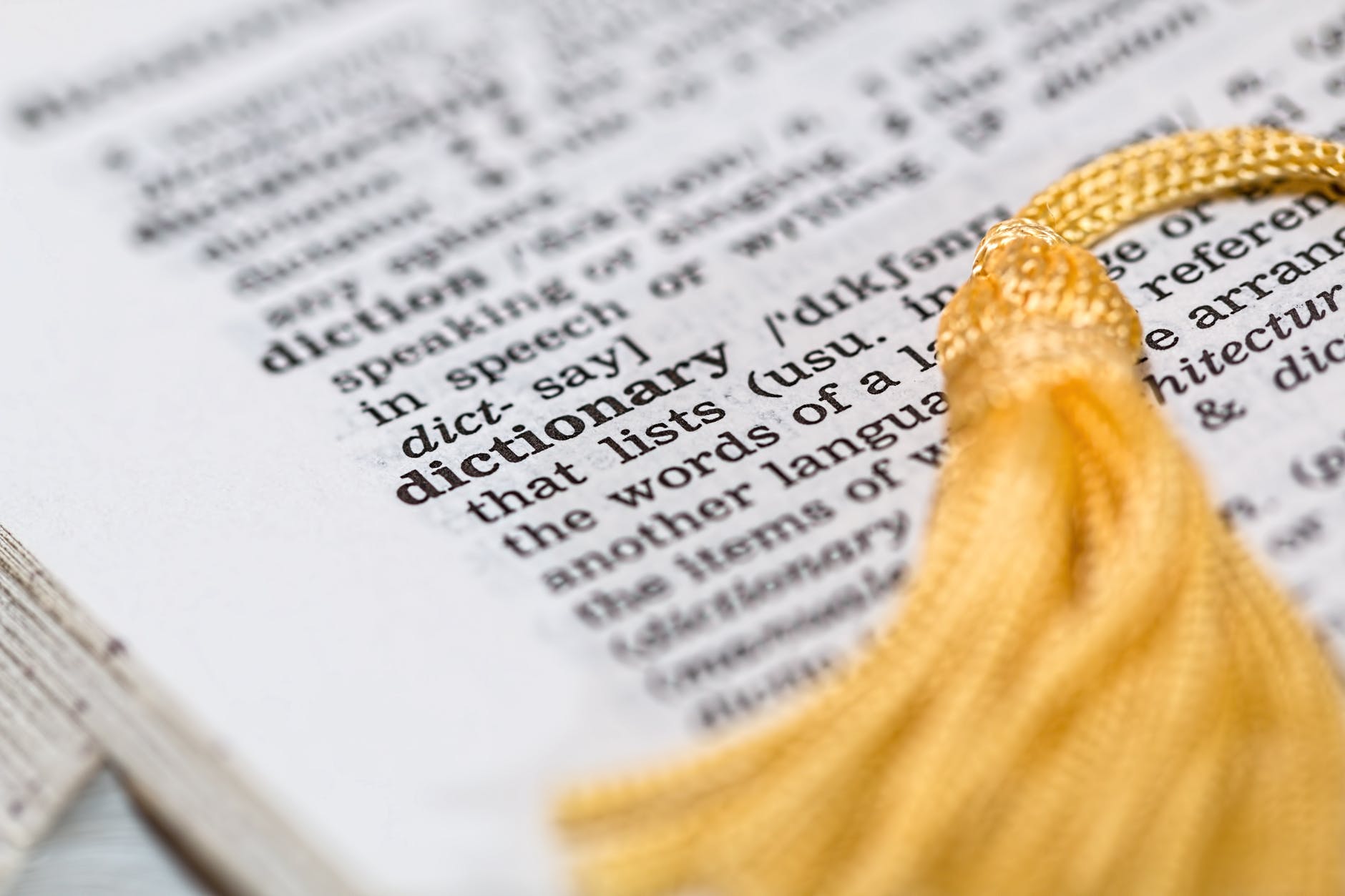
Linguistics is a discipline which involves the scientific study of language. This includes the analysis of form, meaning, and context of language. Traditionally it was done by observing an interplay between sound and meaning. The social, cultural, historical, and political factors that influence language are also studied. Linguistics is primarily a descriptive study and it describe and explain features of language without making subjective judgments on it. The earliest documentation and description of language studies were done by 6th century BC grammarian Panini. He wrote Astadhyayi which was a formal description of Sanskrit language. Contemporary linguists assume that spoken data and signed data are more fundamental than written data. Languages can undergo many internal changes which results in the development of subvarieties such as linguistic registers, accents, and dialects.

Related areas of language study are the disciplines of semiotics – the study of direct and indirect language through signs and symbols, literary criticism – the historical and ideological analysis of literature, cinema, art, or published material, translation – the conversion and documentation of meaning in text from one language to another, and speech-language pathology – a corrective method to cure phonetic disabilities and disfunctions at the cognitive level.

Photo by Matej on Pexels.com

Linguistics has several branches of study, namely,

Historical linguistics was one of the first sub disciplines and widely practiced form which was the study of language change over time with regards to a specific language or group of languages. Synchronic approach was focused on for some time which was the systemic study of the current stage in languages, and historical research was a field of linguistic inquiry. Language change and grammaticalization studies are other fields.

Photo by Ian Panelo on Pexels.com

Eco linguistics explores the role of language in the interactions of humans, other species and the physical environment. It sees humans not only as a part of society, but also as a part of the larger ecosystems that life depends on. It aims to connect with ecological issues, climate change, biodiversity and environmental justice. Historical and evolutionary linguistics focuses on how languages change and grow, over an extended period of time.

Sociolinguistics is the study of how language is influenced by social factors. It focuses on the synchronic approach of linguistics, and shows the variation and varieties within it at a given point in time. Sociolinguist researches include studying both style and discourse in language, along with the theoretical factors that are at play between language and society.

Developmental linguistics is the study of the development of linguistic ability in individuals, like the acquisition of language in childhood. Developmental linguistics looks into how children acquire different languages, how adults can acquire a second language, and the process of language acquisition.

Photo by Pixabay on Pexels.com

Neurolinguistics is the study of the structures in the human brain which help grammar and communication. It is the study of physiological mechanisms of the brain and how it processes information about language. It evaluates linguistic and psycholinguistic theories, by using aphasiology, brain imaging, electrophysiology, and computer modelling. The cerebellum contains the highest numbers of neurons and has a major role in terms of predictions required to produce language.

Evolutionary linguistics is the study of the emergence of language through human evolution, and the application of evolutionary theory to the study of cultural evolution among different languages. It is a highly interdisciplinary field which includes the working of linguists, biologists, neuroscientists, psychologists, mathematicians together.

Forensic linguistics is the application of linguistic studies to forensics. It is used to investigate the style, language, lexical use, linguistic and grammatical features used in the legal context to provide evidence in courts of law. Forensic linguists use their expertise in the framework of criminal cases.

Global Innovation Index 2020!!

Again on year by year India is winning the hearts of everyone all around the world with their new innovation and our startup ecosystem which is going to be more healthier in coming years.Despite hit by the pandemic we have moved in top 50s for the first time.It is remarkable feet for India and as this is due to the Make in India and Atmanirbhar Bharat type of work.

GII data is released by the World Intellectual Property Organization (WIPO) along with Cornell University and INSEAD Business School.It compiles data for almost around 131 economies.As we talk about allover data Switzerland is in 1st position followed by Sweden, United States,United Kingdom,Netherlands.India took the place at 48th position in the list of 131 economies.Last year we were placed at 52nd position.It ranks 3rd in the lower middle income level list.In the report it also stated that India ranked in top 15 indicators like ICT services exports,government online services,graduates in science and engineering and R&D intensive global companies.

The WIPO report thanked some of the important institutes in India like IIT Bombay,IIT Delhi and Indian Institute of Science in Bengaluru for their immense contribution,as well the top scientific publications.It also stated that India has the highest innovation quality despite being in lower middle income group.Basically the report stated that there is a shift in the eastward location such as Asia where there is high and good innovation technology has being seen in every year.This includes countries like China,Vietnam,India & Phillipines for the first all this Asia pacific countries are in top 50.

It is clearly seen due to this pandemic there is high pressure on every sector to bring some or the other innovation for the survival and growth.At present the most important sector which needs innovation is health sector and we have seen many new things as well.It is been hindered that in coming years too health sector will have great outcomes due to new innovation taking place.Every other sector are trying their best to keep up with the market of foreign as well as the competition in the domestic market.

Lets see till what kind of innovation is India aiming and what we can give to this society.It is important part and there are expectations from us.Hope for the best!!!.

The first woman : Lilith.

We all are well known with the tale of Adam and Eve. The first man and woman, however a very less among us are aware of the belief that Eve wasn’t the first woman. It was someone else. According to legend, Lilith was Adam’s first wife. Exiled from Eden for her refusal to submit to him, she was known for centuries as a baby-snatching demon. But contemporary feminists and religious scholars insist there’s more to the story.

Lilith has a curious and complicated history, even as spiritual beings go. If you search her name today, you’ll come up with hundreds of images of scantily clad demon women. She’s been a subject of debate for centuries, and of appreciation and homage in recent years.

The Tale relates that God created Lilith from the earth, just as he had created Adam.
When the first man, Adam, saw that he was alone, God made for him a woman like himself, from the earth.God called her name Lilith, and brought her to Adam. They immediately began to quarrel. Adam said: “You lie beneath me.” And Lilith said: “You lie beneath me! We are both equal, for both of us are from the earth.” And they would not listen to one another. As soon as Lilith saw this, she uttered the Divine name and flew up into the air and fled. So, God sent three angels to bring Lilith back, but Lilith didn’t return.

The Lilith of this story confronts both Adam and God: she defies patriarchy, refuses a submissive status,and in the end refuses marriage altogether, preferring to become a demon rather than live under Adam’s authority.
Some believe that Lilith was a demon who used to steal children’s souls at night, which she does out of envy for not being able to birth her own child. All she could birth according to history, are were demons.

However in the modern period, the tale of the put-upon wife who flees to a place of liberation became a celebrated paradigm. Numerous modern Jewish poets and authors, female and male, wrote accounts of Lilith that use old stories to express new ideas. Modern feminists celebrate her bold struggle for independence from Adam. Her name appears as the title of a Jewish women’s magazine and a national literacy program. An annual music festival that donates its profits to battered women’s shelters and breast cancer research institutes is called the Lilith Fair.

In 1976, Lilith Magazine was launched, proudly billing itself as “Independent, Jewish & Frankly Feminist”. In its first issue, Jewish feminist and activist Aviva Cantor Zuckoff wrote an op-ed explaining why a modern magazine would name itself after an ancient demon. “Lilith is a powerful female… By acknowledging Lilith’s revolt and even in telling of her vengeful activities, myth-makers also acknowledge Lilith’s power,” she said. “Even if we accept Lilith’s vengeful activities… we can regard them as having originated in self-defense against male domination and as a consequence of having to fight on alone, century after century, for her independence.

If the first male had only agreed to serve under the first female half of the time (that is all she asked of him) Lilith would have been Eve and the history would have been completely different than what it actually is.

Date yourself.

Going out alone intimidates a lot of people. Won’t people stare at the girl eating pasta all alone? Isn’t it creepy to go to a cafe all by myself? What will I even do? Doesn’t that seem lonely? You mean I have to be alone with my thoughts???
And here’s the crazy part: dating yourself has so many benefits!
Taking yourself out to do the things you love most just because you can really helps you to understand what you’re all about. What are the the things that fill you up and make you feel happiest? Where does your mind go when you’re sitting by yourself at dinner? Really paying attention to these things can play a huge role in helping you to truly know yourself.

We are all suckers for dreaming of one day doing this or one day doing that, but we never really reserve the time to seriously look at actioning our plans because there are so many things to factor, sacrifice and overcome, and quite frankly, this takes effort. Although initially exciting, when given more analysis, travelling the world alone, no one by our side is scary. At the very least, to do so would require time off from work, some financial security to fund the venture, the sacrifice of leaving your own comforts, and even if all this is possible, the ability to then overcome the anxieties associated with all of the above.

I remember, I was in college and out of nowhere I had this urge to go out somewhere alone, anywhere ; the point was to have a date, alone. At first I was extremely anxious, the thought that people could see me sitting alone was disturbing me. But then I wanted to experience how spending time with myself feels like. So after lecture, I ended up at a cafe sketching and sipping on my coffee. I felt like I have accomplished something big in my life. A lot of times, when I head out to coffee shops with no specific task to accomplish are the days when I really dig into what I’m passionate about. Sitting down and thinking about what I want to do with my life gets me hyped up to start making it happen.

So here’s a challenge: find at least one day in a month where you have no plans. Fill it with your favorite activities. Spend money on yourself. Buy yourself your favourite food.
Then, after you’re home that night, think about how you feel. Did you have a blast? Did you work through some hard thoughts you’ve been avoiding? Take note because you just learned a buttload about yourself. Now plan your next date.

Remember, when you take the time to intentionally date yourself, you actually start to find your identity. As a result, you start to feel more comfortable in your own skin – which ultimately leads to a successful and healthy relationship with not only yourself, but with others. Going against society’s ‘norm’ and dating yourself is one of the healthiest things you will ever do.

RAILWAYS to run special trains for JEE, NEET AND NDA candidates in Bihar

The Indian Railways has decided to run 20 pairs of special trains from September 2 to 15 for the convenience of the candidates appearing for JEE, NEET and NDA exams in Bihar, A day after the Railways permitted NEET and JEE candidates to avail special suburban services in Mumbai on exam days.

Announcing the move, Railway Minister Piyush Goyal said the facility will also be extended to students appearing for the National Defence Academy  (NDA) exam.

“Indian Railways has decided to run 20 pairs of MEMU / DEMU special trains from September 2 to 15 for the convenience of candidates joining JEE Mains, NEET and NDA in Bihar,” Goyal said in a tweet.

The East Central Railway said in a press release that, the station enroute will have unreserved ticket counters and tickets can also be bought on the UTS ( unreserved ticketing system ) mobile ticketing app.

On Monday, Goyal had said the students and one guardian each will be allowed to travel on the exam days and the admit card will act as their letter of authority.

Around 8.58 lakh candidates have registered for the Joint Entrance Examination (JEE)-Main and 15.97 lakh students for NEET. These exams were earlier postponed twice in this pandemic.

While the National Eligibility cum Entrance Test (NEET) is scheduled to be held on September 13, engineering entrance exam JEE-Main has been planned from September 1-6. The common NDA 2020 exam is scheduled to be held on September 6.

The Railways has suspended the passenger, mail and express train services from March 25 amid the nationwide lockdown to combat the spread of Covid-19 pandemic.

The national transporter has started to run Shramik Special trains from May 1 to transport the stranded migrant workers, pilgrims, tourists and students.

The railways also started to operate 15 pairs of special air conditioned trains from May 12 and 100 pairs of Special time tabled trains from June 1.

Australia-India-Japan Economic Ministers’ Joint Statement on Supply Chains Resilience

Following is the text of the Joint Ministerial Statement adopted during the Trilateral Ministerial Meeting on supply chain resilience held on 1.9.2020

“1. Australia’s Minister for Trade, Tourism and Investment, Senator the Honourable Simon Birmingham, India’s Minister of Commerce and Industry, His Excellency Piyush Goyal, and Japan’s Minister of Economy, Trade and Industry, His Excellency Kajiyama Hiroshi held a ministerial videoconference on September 1, 2020.

2. The Ministers reaffirmed their determination to take a lead in delivering a free, fair, inclusive, non-discriminatory, transparent, predictable and stable trade and investment environment and in keeping their markets open.

3.   In light of the COVID-19 crisis and the recent global-scale changes in the economic and technological landscape, the Ministers underscored the necessity and potential to enhance the resiliency of supply chains in the Indo-Pacific region.

4.   Recognizing the pressing need for regional cooperation on supply chain resilience in the Indo- Pacific, the Ministers shared their intention to work toward the launch of a new initiative to achieve the objective through cooperation. They instructed their officials to promptly work out the details of the new initiative for its launch later this year. The Ministers noted the important role of business and academia in realizing the objective.

5.   The Ministers called for other countries in the region, which share the afore-mentioned views, to participate in the initiative.”

Indian Astronomers discover one of the farthest Star galaxies in the universe.

As a landmark achievement in Space missions, Indian Astronomers have discovered one of the farthest Star galaxies in the universe.

Sharing this information here today, Union Minister of State (Independent Charge), Development of North Eastern Region (DoNER), MoS PMO, Personnel, Public Grievances, Pensions, Atomic Energy and Space, Dr Jitendra Singh said, it is a matter of pride that India’s first Multi-Wavelength Space Observatory “AstroSat” has detected extreme-UV light from a galaxy located 9.3 billion light-years away from Earth. The galaxy called AUDFs01 was discovered by a team of Astronomers led by Dr Kanak Saha from the Inter-University Centre for Astronomy and Astrophysics(IUCAA) Pune.

The importance and uniqueness of this original discovery can be made out from the fact that it has been reported in the leading international journal “Nature Astronomy” published from Britain. India’s AstroSat/UVIT was able to achieve this unique feat because the background noise in the UVIT detector is much less than one on the Hubble Space Telescope of US based NASA.

Dr Jitendra Singh has congratulated India’s Space Scientists for once again proving to the world that India’s capability in Space technology has risen to a distinguished level from where our scientists are now offering cues and giving leads to the Space scientists in other parts of the world. According to Professor ShyamTandon, the excellent spatial resolution and high sensitivity is a tribute to the hard work of the UVIT core team of scientists for over a decade.

According to Director of Inter-University Centre for Astronomy and Astrophysics (IUCAA) Dr Somak Ray Chaudhury, this discovery is a very important clue to how the dark ages of the Universe ended and there was light in the Universe. We need to know when this started, but it has been very hard to find the earliest sources of light, he said.

Pertinent to mention that India’s first Space Observatory AstroSat, which has made this discovery, was launched by the Indian Space Research Organization (ISRO) on September 28, 2015 during the first term of the Modi Government. It was developed by a team led by ShyamTandon, Ex Emeritus Professor, IUCAA with the full support of ISRO.