UNLOCK 4.0 !!

THE GOVERNMENT HAS INITIATED TO UNLOCK THE LOCKDOWN 4.0 BY RESUMING THE METRO SERVICES IN THE COMING DAYS . THE CASES ARE INCREASING IN DELHI AND REACHING THE HIGHEST PEAKS , TESTING IS GOING ON BUT NOT MORE THAN 6000 TO 7000 CASES PER DAYS , IT WAS DECIDED 11000 CASES PER DAY .

THE UNLOCKS ARE LISTED AS FOLLOWS :

  • METRO RAIL SERVICES WILL BE RESUMED FROM SEPTEMBER 7 WITH THE CEALING OF ONLY 100 PERSONS IN TOTAL , ALONG WITH ALL THE PRECAUTIONS TAKEN , LIKE WEARING OF MASKS , SANITISING ETC , NEED TO FOLLOW ALL THE SOCIAL DISTANCING NORMS .
  • THE POLITICAL RALLIES ARE ALSO PERMITTED FROM SEPTEMBER 21 , WITH ONLY THE SIZE OF 100 PERSONS PARTICIPATING IN THE RALLY.
  • SCHOOL , COLLEGES AND EDUCATIONAL INSTITUTIONS WILL STAND SHUT TILL THE END OF SEPTEMBER THAT IS 30TH OF THE SEPTEMBER MONTH .
  • IT IS IN THE NEW GUIDELINES THAT THERE WILL BE NO PROHIBITION ON THE CONSUMPTION OF ALCOHOL AND TOBACCO PRODUCTS IN PUBLIC PLACES , BARS ARE ALLOWED TO FUNCTION . IN MY OPINION , ALL THESE ARE INJURIOUS TO HEALTH , DUE TO THE CONSUMPTION BY THE PEOPLE , MOST , IT IS ADDING UP TO THE REVENUE . SOULD N’T WE STOP THE CONSUMPTION OF THESE KIND OF VENOMS ?
  • RESEARCH SCHOLARS AND STUDENTS OF TECHNICAL WHO ALL ARE IN NEED OF LABORATORIES , ALLOWED TO VISIT THE PREMISES WITH THE CONSULTATION OF DEPARTMENT OF HIGHER EDUCATION . DATES ARE NOT DECIDED YET .
  • STUDENTS OF CLASS 9 TO CLASS 12 CAN VISIT THE SCHOOLS VOLUNTARILY FOR THE GUIDANCE FROM THEIR RESPECTIVE TEACHERS , PROVIDED WRITTEN CONSENT FROM THEIR PARENTS . ONLY 50% OF THE FACULTY ALLOWED IN THE SCHOOL , IT INCLUDES BOTH TEACHING AND NON TEACHING STAFF , ALLOWED IN SCHOOLS OUTSIDE THE CONTAINMENT ZONES .
  • THE NUMBER OF PEOPLE HAS INCREASED FOR WEDDINGS FROM 50 TO 100 , SAME GOES FOR THE FUNERALS , THE NUMBER NOW IS AT 100 .
  • THEATRES CAN BE OPENED FROM SEPTEMBER 21 .
  • CINEMA HALLS AND SWIMMING POOLS WILL REMAIN SHUT ALONG WITH THE ENTERTAINMENT PARKS .
  • INTERNATIONAL AIR TRAVELS REMAIN SUSPENDED APART FROM THE FLIGHTS THAT ARE TAGGED AS SPECIAL FLIGHTS.

THEESE GUIDELINES WERE ISSUED BY THE HOME MINISTRY UNDER THE DISASTER MANAGEMENT ACT 2005 IN MARCH FOR THE FIRST TIME .

ANDAMAN &NICOBAR ADMINISTRATION ALERT TO THE SAFETY OF PVTGs AGAINST COVID PANDEMIC

The Andaman & Nicobar Administration has informed that it is alert to the safety of its tribes especially Particularly Vulnerable Tribal Groups (PVTGs). In a report submitted to Ministry of Tribal Affairs, the Andaman and Nicobar Islands Administration has informed that a number of steps have been taken proactively for the safety and protection of the tribes from mid March, 2020 onwards even before any case of COVID-19 was reported in the islands. There are six notified scheduled tribes in A&N islands. Except Nicobarese, rest of the 05 tribe viz., Great Andamanese, Jarawa, Sentinelese Onge and Shompen are recognized as PVTGs.

The Union Minister for Tribal Affairs Shri Arjun Munda in a Tweet has said that the Andaman & Nicobar Administration is alert to safety of its tribe, especially the Vulnerable Tribal Groups (PVTGs) through Integrated Tribal Development Authority and the Ministry of Tribal Affairs is in constant touch with the officials of A&N Administration in this regard.

MHA issues new Guidelines

The Ministry of Home Affairs (MHA) has issued new guidelines today for opening up of more activities in areas outside the Containment Zones. In Unlock 4, which will come into effect from September 1, 2020, the process of phased re-opening of activities has been extended further. The new guidelines, issued today, are based on feedback received from States and UTs, and extensive consultations held with related Central Ministries and Departments. 

Salient features of the new guidelines

  • Metro rail will be allowed to operate with effect from 7th September 2020 in a graded manner, by the Ministry of Housing and Urban Affairs (MOHUA)/ Ministry of Railways (MOR), in consultation with MHA. In this regard, Standard Operating Procedure (SOP) will be issued by MOHUA.
  • Social/ academic/ sports/ entertainment/ cultural/ religious/ political functions and other congregations will be permitted with a ceiling of 100 persons, with effect from 21st September 2020. However, such limited gatherings can be held with mandatory wearing of face masks, social distancing, provision for thermal scanning and hand wash or sanitizer.
  • Open air theatres will be permitted to open with effect from 21st September 2020.
  • After extensive consultation with States and UTs, it has been decided that Schools, colleges, educational and coaching institutions will continue to remain closed for students and regular class activity up to 30th September 2020. Online/distance learning shall continue to be permitted and shall be encouraged. However, following will be permitted, in areas outside the Containment Zones only, with effect from 21st September 2020 for which, SOP will be issued by the Ministry of Health & Family Welfare (MoHFW):
    1. States/ UTs may permit upto 50% of teaching and non-teaching staff to be called to the schools at a time for online teaching/ tele- counselling and related work.
    2. Students of classes 9 to 12 may be permitted to visit their schools, in areas outside the Containment Zones only, on voluntary basis, for taking guidance from their teachers. This will be subject to written consent of their parents/ guardians.
    3. Skill or Entrepreneurship training will be permitted in National Skill Training Institutes, Industrial Training Institutes (ITIs), Short term training centres registered with National Skill Development Corporation or State Skill Development Missions or other Ministries of Government of India or State Governments.

National Institute for Entrepreneurship and Small Business Development (NIESBUD), Indian Institute of Entrepreneurship (IIE) and their training providers will also be permitted.

  • Higher Education Institutions only for research scholars (Ph.D.) and post-graduate students of technical and professional programmes requiring laboratory/ experimental works. These will be permitted by the Department of Higher Education (DHE) in consultation with MHA, based on the assessment of the situation, and keeping in view incidence of COVID-19 in the States/ UTs.
  • All activities, except the following, shall be permitted outside containment zones: 
  1. Cinema halls, swimming pools, entertainment parks, theatres (excluding open air theatre) and similar places.
  2. International air travel of passengers, except as permitted by MHA.
  • Lockdown shall continue to be implemented strictly in the Containment Zones till 30th September, 2020.
  • Containment Zones shall be demarcated by the District authorities at micro level after taking into consideration the guidelines of MoHFW with the objective of effectively breaking the chain of transmission. Strict containment measures will be enforced in these containment zones and only essential activities will be allowed.
  • Within the containment zones, strict perimeter control shall be maintained and only essential activities allowed. 
  • These Containment Zones will be notified on the websites of the respective District Collectors and by the States/ UTs and information will also be shared with MOHFW.

States not to impose any local lockdown outside Containment Zones

State/ UT Governments shall not impose any local lockdown (State/ District/ sub-division/City/ village level), outside the containment zones, without prior consultation with the Central Government.

No restriction on Inter-State and intra-State movement

  • There shall be no restriction on inter-State and intra-State movement of persons and goods. No separate permission/ approval/ e-permit will be required for such movements.

National Directives for COVID-19 management

  • National Directives for COVID-19 management shall continue to be followed throughout the country, with a view to ensure social distancing.  Shops will need to maintain adequate physical distancing among customers. MHA will monitor the effective implementation of National Directives.

Protection for vulnerable persons

  • Vulnerable persons, i.e., persons above 65 years of age, persons with co-morbidities, pregnant women, and children below the age of 10 years, are advised to stay at home, except for meeting essential requirements and for health purposes.

Use of Aarogya Setu

  • The use of Aarogya Setu mobile application will continue to be encouraged.

PM inaugurates College and Administration Buildings of Rani Lakshmi Bai Central Agricultural University, Jhansi through video conferencing

The Prime Minister, Shri Narendra Modi, today inaugurated the College and Administration Buildings of Rani Lakshmi Bai Central Agricultural University, Jhansi, UP through video conferencing. He interacted with the students of the University.

PM congratulated everyone and expressed hope that students after graduating from this university will actively contribute in empowering the country’s agriculture sector. He hoped that new facilities provided due to the new building would encourage and motivate students to work harder.

Invoking Rani Lakshmi Bai’s Quote that “I will not give my Jhansi”, the Prime Minister urged the people of Jhansi and Bundelkhand to make Atmanirbhar Bharat Abhiyan a success.

The Prime Minister noted that Agriculture has a major role to contribute in Atmanirbhar Bharat Abhiyan. He said self reliance in Agriculture targets at making Farmers both- producer as well as entrepreneur. PM said in line with this spirit, several historic agricultural reforms were taken. Just like other industries, now Farmers can also sell their produce anywhere in the country, wherever they fetch better prices. He said a special dedicated fund of Rs 1 Lakh crore has been set up for providing better facilities and promoting industries in a cluster based approach.

Saying that steady efforts are continuing to connect farming with modern technology, the Prime Minister noted that Research Institutions and Agricultural Universities have a vital role to play. He said now there are three Central Agricultural Universities in the country, compared to just one Central University 6 years ago. Besides this, three more National Institutions viz. IARI Jharkhand, IARI Assam and Mahatma Gandhi Institute for Integrated Farming in Motihari, Bihar are also being established. He remarked that these institutes will not only give new opportunities to the students, but will also help in increasing their capacity, in providing technology benefits to the local farmers.

Speaking about use of modern technology in meeting agriculture related challenges, the Prime Minister gave an example of recent locust attack. He said the Government worked on war footing to control the spread of the attacks and to reduce the damage. He mentioned that dozens of control rooms were set up in several cities, arrangements were made to alert farmers in advance, drones to spray, dozens of modern spray machines used to kill locusts were procured and provided to farmers.

The PM said that in the last six years, the Government has endeavoured to establish a link between research and farming, and to provide scientific advice to the farmers, at the ground levels in the villages. He sought the cooperation of the universities in developing the ecosystem to streamline the flow of knowledge and expertise from campus to agriculture fields.

Stressing on the need to take knowledge related to agriculture and its practical application to school level, the Prime Minister said efforts are to introduce the Agriculture subject at Middle school level in villages. It will have two benefits- One, it will develop agriculture related understanding in the students and secondly, it will enable the students to give information about agriculture, its modern farming techniques and marketing, to their family members. This will promote Agro-entrepreneurship in the country, he added.

For Full Text of PM’s address at inauguration of the College and Administration Buildings of Rani Lakshmi Bai Central Agricultural University in Jhansi via video conferencing

Click https://www.pib.gov.in/PressReleasePage.aspx?PRID=1649484#.X0pe3jAecEg.gmail

Earlier in his welcome address, Union Minister of Agriculture & Farmers’ Welfare Shri Narendra Singh Tomar said that along with the the mantra of Sabka Saath Sabka Vikas, the efforts to correct the imbalances in the country under the leadership of Prime Minister Shri Narendra Modi since 2014 have now started showing results. Work on the Rani Laxmibai Central Agricultural University started in the year 2014 and now it has three affiliated colleges and students from 22 states are studying here. When it becomes fully operational, the whole country will benefit. Shri Tomar said that there is unlimited potential for organic farming in Bundelkhand area for which Central Government and UP Government are working together.

Speaking about the priority being given to expansion of agricultural education, Shri Tomar said that agricultural colleges are being opened all over the country including in the North East. Indian Agricultural Research Institutes have been opened in Jharkhand and Assam and have started functioning. Central Agricultural University, Imphal has been expanded by affiliating 6 new colleges with it. Giving importance to agriculture in bringing about development and security of livelihood in the North East, farming activities there are being strengthened by agricultural education and research. Scholarships for Ph.D. students have been increased to Rs. 31000 per month.

The Union Agriculture Minister said that to achieve the target of doubling farmers’ incomes by 2022, the Central Government is working in close coordination with the states.  Despite the lockdown due to Covid pandemic, there has been a bumper harvest, and kharif sowing has been done in 13 lakh ha more area as compared to last year. Under PM-KISAN scheme, about Rs 92000 crore have been deposited in the bank accounts of more than 10 crore farmers. For bringing about reforms in agriculture, several measures such as formation of 10000 FPOs, issuing Kisan Credit Cards to about 2.5 crore farmers, provision of Rs 1 lakh crore Agri Infrastructure Fund and bringing in new ordinances, have been taken under the leadership of the Hon’ble Prime Minister.

Chief Minister of Uttar Pradesh Shri Yogi Adityanath expressed gratitude for establishment of Central Agricultural University in the backward Bundelkhand region. He appreciated the efforts being taken under the Hon’ble Prime Minister for doubling farmers’ incomes, connecting farmers to technology, providing them basic infrastructure and good quality seeds.

Union Ministers of State for Agriculture Shri Parshottam Rupala and Shri Kailash Choudhary, Jhansi MP Shri Anurag Sharma, DG ICAR Dr Trilochan Mohapatra and other eminent persons and scientists were present during the function.

India withdraws from multilateral military exercise in Russia next month

India has announced that it is withdrawing from multilateral Military Exercise Kavkaz 2020 to be held in Russia next month. Defence Ministry said, Russia and India are close and privileged strategic partners and at Russia’s invitation India has been participating in many international events.
 
However, in view of Pandemic and consequent difficulties in exercise, including arrangements of logistics, India has decided not to send a contingent this year to Kavkaz-2020. The Ministry said, the decision has been conveyed to the Russian side.
 
India had earlier planned to send around 150 Indian Army troops, 45 Indian Air Force personnel and a number of Navy officers to the multilateral military exercise to be held in the Astrakhan region in southern Russia from 15th to 26th September.

Odisha government lifts lockdown in seven cities where JEE and NEET exams to be held

Odisha government has said there will be no lockdown in the entire state for 12 days till September 14 in two phases to ensure smooth conduct of JEE and NEET exams. State government said that there will be no lockdown or shutdown in force from August 30 to September 7 in the first phase and from September 12 to 14 in the next phase.
 
The move is aimed at facilitating free movement of candidates and their guardians, examination personnel andstaff/re presentatives of the service providers for the smooth conduct of the exams. However, COVID-19 protocols will have to be strictly followed, it said.
 
The JEE is scheduled to be held between September 1 and 6, and the NEET on September 13.
 
Chief Secretary AK Tripathy has announced that the state government will provide free transport and accommodation to students appearing in the examinations, but they will have to register beforehand to avail this facility. He said 37,000 candidates are likely to sit for the examinations at 26 centres spread across seven towns, including Bhubaneswar and Cuttack.

Health Minister says India has one of the lowest COVID fatality rates in world

Health Minister Dr Harsh Vardhan has said that India has one of the lowest global COVID fatality rates. Chairing the 20th Meeting of the high-level Group of Ministers (GoM) on COVID-19 in New Delhi, he said, the country’s case fatality rate is at its lowest 1.81 per cent.

Dr Harsh Vardhan said, the recovery rate of COVID cases in the country has reached to 76.47 per cent. He said, only 0.29 per cent of cases are on ventilators, 1.93 per cent on ICU and only 2.88 per cent of cases are on oxygen.

The Minister informed the GoM that more than 338 lakhs of N-95 masks, nearly 135 lakh of PPEs and about 27 thousand ventilators have been provided by the centre to the States and Union Territories.

Health Minister instructed officials to develop Standard Operating Procedures for the Members of Parliament and the Legislative Assembly Sessions comprising COVID protocols and preventive measures. The GOM also expressed concern about the forthcoming festival seasons and advised everyone to adopt safe and COVID appropriate behaviour.

The Chairperson of the Empowered Group-I on Medical Emergency Management Plan Dr. Vinod K Paul apprised the GoM of the process of COVID vaccine development in India and around the world. He stated that 29 candidates, including two Indian ones, are in Clinical Trials.

Out of which six are in Phase-3. In India, Bharat Biotech’s vaccine candidate based on inactivated virus procured by ICMR is in Phase-2 trial along with Zydus Cadila’s candidate which is based on viral DNA. The Oxford vaccine candidate developed by Serum Institute of India is already in Phase-3 trial in Maharashtra and some other states. Dr. Paul also informed the GoM of the progress made by the National Expert Group on Vaccine Administration for COVID-19.

During the meeting, External Affairs Minister Dr S. Jaishankar, Civil Aviation Minister Hardeep Singh Puri, Shipping Minister Mansukh Lal Mandaviya, Minister of State for Health Ashwini Kumar Choubey and Minister of State for Home Nityanand Rai were also present on the meeting.

Govt releases unlock 4 guidelines; Metro services to resume from September 7; School,Colleges to remain closed till Sep 30

The Home Ministry has issued new guidelines for opening up of more activities in areas outside the Containment Zones. In Unlock-4, which will come into effect from 1st of September, the process of phased re-opening of activities has been extended further.
 
Metro rail will be allowed to operate with effect from 7th September in a graded manner, by the Ministry of Housing and Urban Affairs, Ministry of Railways in consultation with Home Ministry. Standard Operating Procedure (SOP) in this regard will be issued by Ministry of Housing and Urban Affairs.
 
Social, academic, sports, entertainment, cultural, religious, political functions and other congregations will be permitted with a ceiling of 100 persons, from 21st of September. However, such limited gatherings can be held with mandatory wearing of face masks, social distancing, provision for thermal scanning and hand wash or sanitizer.  Open air theatres will be permitted to open with effect from 21st of September.
 
The Home Ministry said, after extensive consultation with States and Union Territories, it has been decided that schools, colleges, educational and coaching institutions will continue to remain closed for students and regular class activity up to 30th September. Online or distance learning shall continue to be permitted and shall be encouraged.
 
Lockdown will continue to be implemented strictly in the Containment Zones till 30th of September. All activities shall be permitted outside Containment Zones, except cinema halls, swimming pools, entertainment parks, theatres excluding open air theatre and similar places and international air travel of passengers, except as permitted by Home Ministry.
 
There will be no restriction on inter-state and intra-state movement of persons and goods. No separate permission or approval or e-permit will be required for such movements.
 
Home Ministry advised states not to impose any local lockdown outside Containment Zones.
 
National Directives for COVID-19 management shall continue to be followed throughout the country, with a view to ensure social distancing. Shops will need to maintain adequate physical distancing among customers. Home Ministry will monitor the effective implementation of National Directives.
 
Vulnerable persons, persons above 65 years of age, persons with co-morbidities, pregnant women and children below the age of 10 years, are advised to stay at home, except for meeting essential requirements and for health purposes.
 
The Ministry said that states and Union Territory governments may permit up to 50 per cent of teaching and non-teaching staff to be called to the schools at a time for online teaching or tele-counselling and related work.
 
Students of classes 9 to 12 may be permitted to visit their schools in areas outside the containment zones only on a voluntary basis for taking guidance from their teachers.
 
This will be subject to the written consent of their parents or guardians, according to the guidelines.
 
The Home Ministry said that states and Union Territory governments may permit up to 50 per cent of teaching and non-teaching staff to be called to the schools at a time for online teaching or tele-counselling and related work.
 
Students of classes 9 to 12 may be permitted to visit their schools in areas outside the containment zones only on a voluntary basis for taking guidance from their teachers.
 
This will be subject to the written consent of their parents or guardians.
 
Home Ministry said, the new guidelines, are based on feedback received from States and UTs, and extensive consultations held with related Central Ministries and Departments.

PM Narendra Modi to share his thoughts in ‘Mann Ki Baat’ programme on All India Radio at 11 AM today

Prime Minister Narendra Modi will share his thoughts with the people in the country and abroad in the ‘Mann Ki Baat’ programme on All India Radio at 11 AM today. It will be the 68th episode of the monthly radio programme.
 
It will be broadcast on the entire network of AIR and Doordarshan and also on AIR News website https://eduindexnews.com/ and newsonair Mobile App. It will also be streamed live on the YouTube channels of AIR, DD News, PMO and Information and Broadcasting Ministry.
 
AIR will broadcast the programme in regional languages immediately after the Hindi broadcast. The regional language versions will be repeated at eight in the evening.

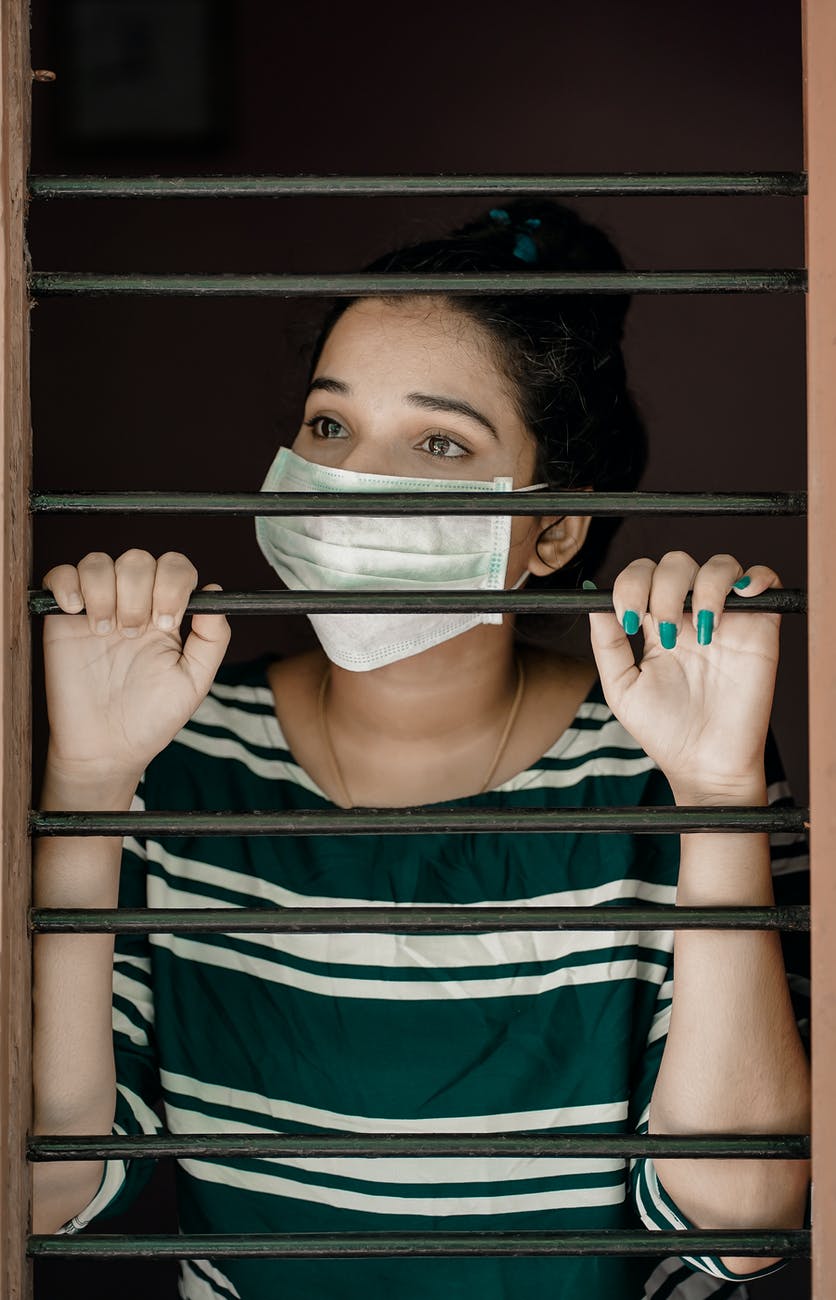
Unlock 4 : New Covid Rules

The Government of India had announced a lockdown over the last few months due to the Coronavirus pandemic. A lockdown was imposed on the whole country from the month of April. The lockdowns were imposed as a preventive measure for the pandemic. Since rates of infection have still not gone down, these measures are being continued.. Recently there has been a change in the guidelines and a new system of “Unlock” is being introduced in the country. Today, a new set of guidelines were announced regarding the unlock. The Ministry of Home Affairs has issued a new guideline about the opening up of more institutions and activities. Metro train services and open air theatres are to be allowed in areas other than Containment Zones. A new set of lockdowns is being extended in the country and the rules will apply to zones where there are active cases and places labelled as containment zones. Other zones will have less strict Unlock rules. These guidelines will be extended in the country till 30 September.

Photo by Nandhu Kumar on Pexels.com

The Centre has said,”The new guidelines, issued today, are based on feedback received from States and UTs, and extensive consultations held with related Central Ministries and Departments.” After issuing the guidelines, the Home ministry also announced opening up of more activities, like the resumption of Metro train services and open air theatres. Closed theatres have not been permitted to be kept open. Until further notice they will be closed. The re-opening of activities rule will only be applicable in areas outside the Containment Zones, said the Ministry. The Centre has allowed the states and Union Territories to permit up to 50 per cent of its teaching and non-teaching staff to be allowed to go to the schools for online teaching and other official and related work. States will also be allowed to permit students of classes 9 to 12 to visit their schools, but only in areas which are not included under the containment zones, said the government order. The Centre, however, has allowed reopening of higher education institutions. But this is only for research scholars and post-graduate students of technical and professional programmes which require necessary laboratory or experimental works in labs or other institutions. The previous Unlock3 guidelines which were issued on July 29 had allowed the opening up of yoga institutes and gymnasiums. It had also removed restrictions on movement of individuals during night curfew.

School, colleges and other educational institutions will continue to remain closed for students, said the Centre on Saturday as it issued the guidelines for the month-long fourth phase of easing down the restrictions for the pandemic – “Unlock4” – which begins from September 1. The Home Ministry, issuing the guidelines, announced opening up of more activities, like restarting of Metro train services and open air theatres. The re-opening of activities will only be allowed in areas outside the Containment Zones, according to the Ministry guidelines.

The Unlock3 guidelines issued on July 29 had allowed opening of yoga institutes and gymnasiums and removed restrictions on movement of individuals during night curfew. In its latest order, the States have also been asked not to impose any local lockdown restrictions in places outside Containment Zones. According to the government data, India’s COVID-19 numbers rose to 34,63,972 with a single-day spike of 76,472 new infections, while the death count climbed to 62,550 in 24 hours.

GST COMPENSATION DUES!

As in the meeting which was held by the Ministry of Finance headed by Nirmala Sitharaman announced the two borrowing options for the state.They can borrow this money to make up for the Rs 2.35 lakh crore shortfall in GST.The states can borrow this money from the process of RBI or through raising money from market.

As we all know that GST compensation issue is from August 2019 because of faltering of GST.In the time of current fiscal,the compensation that is required by the states is estimated at Rs 3 lakh crore from which around Rs 65000 crore would be generated through levy cess.This brings money shortfall of around Rs 2.35 lakh core.As the centre calculated the total amount and bifurcated in two ways one is GST and second is Covid-19 pandemic so the amount comes is like from GST rollout is Rs 97000 crore and the remaining amount is due to Covid-19 impact.

The statement from the centre states that government revenues are in great strain not just due to pandemic but also because of national security.In this it is the collectible interest for both state and centre that if the borrowing can be done at state level than there is no need to come for borrowing to the centre due to such tough situation going in the economy.

Lets see what are the Two options that centre has formed:

Option 1:

If the shortfall arising out of GST implementation(calculated to around Rs 97000crore) will be borrowed by the state under a special window which will be created by ministry of finance.It will be steady flow of resources as per on bi-monthly basis.The centre will try to keep the cost at or around g-sec yield,and in the event of the cost being higher.Government will special permission to the state under Article 293 for this amount or any special permission granted.The interest on this will be paid through the cess as and when it arises.The borrowing under this window will not be treated as debt.

Option 2:

The entire shortfal of Rs 2.35 lakh crore(including the covid impact portion) can be borrowed in the form of market debt.In which interest will be paid through state resources.Principal amount shall be from proceeds of cess.The extent of the shortfall arising due to implementation of GST(Rs 97000 crore which is estimated) the borrowing will not be treated as a debt.The compensation cess will be continued after the transition period.The first charge on the future cess would be the principal payment.

So this are the two options basically.States can choose either of them and give their preference with in seven working days.Already a meeting of state finance secretaries has scheduled on 1st September 2020 with the union finance secretary to clarify the doubts.These options are available only for this fiscal year.In April 2021 the council will review and decide action for the next year.

Is Technology Limiting Creativity?

Creativity, what exactly does it mean? It’s something which happens when people get motivated by certain things and make effective use of it. One does not have to get motivated only by his/her ideals or any kind of super heroes. They can get motivated and inspired by their surroundings, by friends, families or any other things. There is no limitation on creativity, it can flow easily.

Now the question arises, whether technology limits creativity? It can be considered as a common question among the people. Most people point that technology affects and limits creativity. Technology is introduced by people themselves and it also completely depends upon them how effectively they can make use of it. When technology itself is formed by the creativity of the person, how can it limit creativity? At present, people have started misusing their own creation because of which it can limit creativity and thinking of the person.

Earlier only s few people knew about technology and most of the work used to be done manually. But now the situation is completely different, as technology went on advancing, it created many useful machines yo help people know their workplace do as to save time. It has also made advancement in terms of communication from Pager to mobile Phones, laptop: from B&W T.V. to LED T.V. etc,. Technology is still advancing and launching new products to fascinate people are something that I’d impossible without creativity. But here we have one great disadvantage. Though these new technologies seem fascinating, it had resulted in many people becoming lazy.

Nowadays people totally rely upon advancing technology. They don’t want to come up with their own creation. Mobile phones are one of the greatest invention with advanced facilities like WhatsAppp, Facebook, etc,. Even money transaction can be done through these phones. One can get news from all over the world by simply browsing. Because of the these facilities people are completely engrossed in their mobile phones and neglect other work. Overusr of these technologies is not good for people. It can make people stressed, can affect their eyesight and also lead to lack of concentration in their work.

Technologies have also created various types of video games, mobile games etc,. which attract the interest of small kids. This makes the kids so involved in these games that they lose interest in their studies. They also lost interest in playing games physically. So it is very important to keep a control on the usage of these technological inventions.

Although technology helps ease the work of people, one should not completely rely upon it. They should also try to come up with their own creations and try to make use of those creations effectively. One should not forget that each and every one is gifted with certain talents and they should identify it. Technology itself is a creativity of some person: it can never limit creativity of any other person. It all depends on people, how they look at technology: a motivation or just a helping hand.

ECI bids farewell to Sh Ashok Lavasa

Election Commission of India today bade a warm farewell to outgoing Election Commissioner Sh Ashok Lavasa who is moving on to take up the prestigious assignment as Vice-President, Asian Development Bank at Manila, Philippines. Sh Ashok Lavasa had joined ECI as Election Commissioner on the 23rd of January 2018 and would hold the office of the Election Commission till 31st August 2020.

Bidding him farewell, CEC Sh Sunil Arora wished Sh Ashok Lavasa the very best ahead for meeting bigger challenges and achieving more milestones. He mentioned that ECI’s loss is ADB’s gain where Sh. Lavasa’s competence would now be available at the wider multilateral platform for the daunting task of restructuring economies in post-Covid scenario.

            On the occasion, Election Commissioner Sh. Sushil Chandra in his speech appreciated the  working of Sh. Ashok Lavasa in Ministry of Finance earlier. He specially applauded Sh Lavasa for his guidance in framing of broad guidelines for elections to be held in Covid times.

            Sh. Ashok Lavasa said he would remember his two and a half year stint at the Commission as a memorable experience. He acknowledged that it was a difficult choice for him whether to continue in ECI or move on to the global canvas of ADB.

            The Commission also bid farewell to outgoing Director Sh Vikram Batra, Director Election Expenditure as he returns to his cadre after completing his term at Election Commission of India.

            Volume VI of Landmark Judgments, a compendium of judgments delivered by Hon’ble Supreme Court and various High Courts from January 2017 to May 2019, that is, till the conclusion of Lok Sabha General Election 2019, was also released today. Commission released its e-version also https://eci.gov.in/ebooks/landmark-judgment/index.html for wider reach. It consists of 29 significant judgments covering various aspects of electoral process like nomination, affidavit, EVM VVPAT, Model Code of Conduct, corrupt practices and other related matters. This volume also lists the judgments already published by ECI in previous five volumes of Landmark Judgments. Additionally, the volume also lists 632 cases filed in the Hon’ble Supreme Court and Hon’ble High Courts during the period leading to General Election, 2019.

            Chief Election Commissioner Shri Sunil Arora in his message said “I harbour the sanguine hope that this publication would further illuminate us about the domain of election law and embolden the officials concerned to execute the gigantic exercise by taking solace in the fact that their actions have consistently earned the approbation of judiciary.”

            Sh. Ashok Lavasa, Election Commissioner, in his message said “This volume will broaden understanding of the laws governing the vast electoral exercise of our country.”

            Sh. Sushil Chandra, Election Commissioner, in his remarks hoped that thisvolume will benefit all citizens of the country in understanding the election process.

Dr. Harsh Vardhan digitally inaugurates Super Speciality Block of MGM Medical College, Indore

Dr. Harsh Vardhan, Union Minister of Health and Family Welfare along with Sh. Shivraj Singh Chouhan, Chief Minister of Madhya Pradesh digitally inaugurated the Super Speciality Block (SSB) in Mahatma Gandhi Memorial College, Indore in the presence of Sh. Ashwini Kumar Choubey, Minister of State, Health and Family Welfare. The Medical College was also the nodal agency for a NCDC sero-survey. The report was released today.

The SSB is built with an investment of Rs 237 crores under the Pradhan Mantri Swasthya Suraksha Yojana (PMSSY). It has departments of Neurology, Neurosurgery, Cardiology, Cardiothoracic surgery, Nephrology, Urology, Medical Gastroenterology, Surgical Gastroenterology, Plastic & Reconstructive surgery and an Organ Transplant unit. The new Block has 10 Operation Theaters, 327 Super Specialty Beds, 92 ICU Beds and has a training capacity of 30 DM/MCh and 28 PG students.

The Union Health Minister expressed deep gratitude for then Prime Minister Sh. Atal Bihari Vajpayee’s vision of a healthy nation. Reminding the audience of Sh. Vajpayee’s announcement in his Independence Day speech on 15th August 2003 to correct the imbalances in the availability of affordable healthcare facilities in different parts of the country and augmenting facilities for quality medical education in the existing ones, Dr. Harsh Vardhan elaborated on vision of Shri Vajpayee of “setting up of six AIIMS Institutions and up-gradation of existing Government Medical Colleges and Institutions. Since 2014, this scheme was pursued with renewed vigour and saw the setting up of 22 new AIIMS and projects for up-gradation of 75 Government Medical Colleges.” Eight Medical Colleges are set up in Madhya Pradesh while the government is committed to building another six in the aspirational districts of Rajgarh, Mandla, Mandsaur, Neemuch, Sheopur and Singrauli, he added. He also expressed confidence that the NCDC regional centre being built in Bhopal will be completed by the end of the year.

The Union Health Minister stated that the Centre has provided 13.99 lakh N95 masks, 7.97 lakh PPEs, 54 lakh HCQ and 679 ventilators to Madhya Pradesh to strengthen it efforts to fight COVID-19. This is supplemented by 2,32,620 RNA extraction kits,  5,87,140 RT-PCR kits, and 2,55,850 VTM kits provided by the Central Government.

Informing everyone of the massive development work undertaken in the health sector by Prime Minister Sh. Narendra Modi, Dr. Harsh Vardhan said, “We are poised and determined to eliminate TB by 2025, five years before the entire global deadline. Also, the innovative Mission Indradhanush aims to immunize every child against 12 diseases and replicate the success of Polio eradication campaign. The government hopes to push maternal mortality, infant mortality and under-five mortality to near zero.”

Elaborating on the Ayushman Bharat Yojana -HWC and the recently launched National Digital Health Mission, he said, “National Digital Health Mission has already been launched in 6 Union territories and will be rolled out in other states in the coming three to six months. This combined with telemedicine facilities available in the HWCs will be very helpful for big states like Madhya Pradesh to achieve the stated goal.” He impressed upon the State leadership present to personally supervise these schemes for their effective implementation.


Remembering the contribution of Ex-Speaker of Lok Sabha Smt. Sumitra Mahajan and former Health and Family Welfare Minister Sh. Jagat Prakash Nadda in this project, Sh. Ashwini Kumar Choubey expressed his happiness that “the hospital was completed one year before its schedule.”

Sh. Shivraj Singh Chouhan thanked the Union Government for its proactive role in strengthening the health infrastructure in Madhya Pradesh. He mentioned that the Central Health Ministry oversaw the installation of COVID testing facilities in 76 government labs after the State was forced to airlift swab-samples to other cities during the onset of the COVID Pandemic.

Ms. Usha Thakur, Cabinet Minister for Tourism, Culture, Adhyatm, Madhya Pradesh, Sh. Tulsiram Silawat, Cabinet Minister for Water Resources, Fisheries Welfare and Fisheries Development, Madhya Pradesh, Sh.Vishvash Sarang, Cabinet Minister for Medical Education, Bhopal Gas Tragedy Relief and Rehabilitation, Madhya Pradesh, Sh. Kailash Vijayvargiya, Ex-Cabinet Minister, Madhya Pradesh, Sh. Shankar Lalwani, Member of Lok Sabha from Indore and Sh. Akash Vijayvargiya, MLA, Indore were present at the event.

Indian Railways takes series of Initiatives in Tariff and Non-Tariff field to boost Freight OperationsSeries of Discounts offered

On mission mode, Indian Railways has taken a number of initiatives to boost  Freight Operations inspite of COVID 19 related challenges. Because of these initiatives, the freight loading in the month of August 2020(till 27th August 2020) is 4.3% higher, compare to last year for the same month. In the month of August 2020 (till 27th August 2020) the total freight loading was 81.33 million tonnes which is higher than last year for the same month (77.97 million tonnes).

Indian Railways has taken a series of  initiatives  in Tariff and  Non-Tariff  field.

Utilizing Covid period as an opportunity Indian Railways substantially increase the speed of Freight Trains. 72 % increase in average speed of Freight Trains in the year 2020-21 as compared to last year.  94 % increase took place in speed of Freight Trains in August 2020 compared to August 2019.  

Following are the latest Tariff Rationalisation  initiatives (measures) taken by Indian Railways to boost  Freight Operations:

1. 5% discount on loaded containers ( addition to 25% on empty ) for Containers from 03.08.2020.

2. Discount for Pond ash/ Moisturised ash – Open wagon – 40% for  Power plants, Cement from 03.08.2020.

3. Revision in classification of Industrial salt from 120 to 100A for Chemical Industry from 03.08.2020.

4. Stabling charges for private Container and Automobile trains waived off till 31st October 2020 for Containers and Automobile from 03.08.2020.

Following are some other Tariff Rationalisation initiatives (measures) taken by Indian Railways to boost  Freight Operations:

1. Withdrawal of Busy Season charge  – 15% for All sectors Except Coal, Iron ore and containers from 1.10.2019.

2. Withdrawal of 5 % surcharge of two point/mini rakes  for Cement, Iron and steel, Food grains, Fertilizers, Bulk BOG from 1.10.2019.

3. Discount for Fly ash – Bagged in open wagon – 40% for Power  plants, Cement  from 10.05.2020.

4. Alternate terminal scheme – Rs 56,000 to Rs 80,000 per rake for All sector from 27.06.2020.

5. Round trip Traffic (RTT) policy – charging of lower class for All sectors from 01.07.2020.

6. Long lead concession – 15 to 20% for Coal, Iron ore and Iron and steel from 01.07.2020.

7. Short lead concession – 10 to 50 %  for All sector (except coal and iron ore ) from 01.07.2020.

Following are latest Non-Tariff initiatives (measures) taken by Indian Railways to boost  Freight Operations:

1. Two point unloading permitted for Automobile traffic for Automobiles sector from 05.08.2020.

2. Limit on number of Co-users in Private siding removed for All sectors from 18.08.2020.

3. All private sidings / Good sheds / Private freight terminals opened up for Parcel traffic for Parcels from 18.08.2020.

4. Reduced composition for Indented parcels extended till 31.03.202 for Parcels from 18.08.2020.

5. Extension of time tabled parcel express till 31.12.2020 for Parcels from 19.06.2020.

6. Application fee for Greenfield PFT reduced from Rs 10 Lakh to Rs 20,000 and completely waived off for conversion of siding to Brownfield PFT for All Sectors from 24.08.2020.

7. 23 more two point combinations opened for steel traffic  for Steel sector from 25.08.2020.

8. Freight and parcel helpline through 13 for All sectors from 26.08.2020.

9. Distance restriction on Mini rakes of 1500 km removed with a small surcharge for Cement, Iron and steel , Food grains , Fertilizers, Bulk BOG from 27.08.2020.

Other Measures taken by Indian Railways to boost  Freight Operations are as follows:

1. Business Development Units (BDUs) set up  – Divisions, Zones and Board level.

2. Restrictions on co-use of private sidings removed – 1,079 private sidings allowed to become private freight terminals effectively.

3. 405 Major Good sheds being improved – Concrete surface, bright LED lighting, better roads & labour facilities – To enable 3 shift operations.

4. Time tabled parcel trains.

5. Opening up of export traffic to Bangladesh for Parcels, Containers & Automobile.  

6. Kisan rail introduced from Devlali (Nashik) to Danapur (Patna) on 07.08.2020– Multiple stoppages, Multiple commodities, Multiple parties – Now extended to Muzaffarpur. Link train from Kolhapur to Manmad also added. Now Bi-weekly from 24.08.2020. Total 04 trips have been completed till Now.

Utilizing Covid period as an opportunity Indian Railways substantially increase the speed of Freight Trains. 72 % increase in average speed of Freight Trains in the year 2020-21 as compared to last year.  94 % increase took place in speed of Freight Trains in August 2020 compared to August 2019.