SC gives equal inheritance right to daughters from 1956

In a landmark judgment, Supreme Court has ruled that daughters will have inheritance rights equal to those of sons from properties of fathers and grandfathers right from the codification of the law in 1956.

A bench of Justices Arun Mishra, S Abdul Nazeer and MR Shah cleared the confusion arising from the apex court’s conflicting interpretations of the amended Section 6 of Hindu Succession Act, which came into force from September 9, 2005. The bench said whether the father is alive or not, daughters born before September 9, 2005, too can claim equal right in inheritance.

The apex court said, daughters cannot be deprived of their right to equality conferred by Section 6 of the Act. The apex court was answering a reference based on conflicting decisions given by past verdicts of the top court.

Although the amendment was applicable to Hindu daughters as coparceners who died after coming of the act, there was no clarity on whether it will have retrospective effect.

Narendra Singh Tomar launches ICAR’s data recovery centre ‘Krishi Megh’

Agriculture Minister Narendra Singh Tomar has launched ICAR’s data recovery centre – Krishi Megh. The move is aimed at protecting  the precious data of the government’s premier research body Indian Council of Agricultural Research. It has been set up at National Academy of Agricultural Research Management (NAARM) in Hyderabad.

Currently, the main data centre of the ICAR is at the Indian Agricultural Statistics Research Institute (IASRI) in the national capital. Krishi Megh has been set up under the National Agricultural Higher Education Project (NAHEP), funded by both the government and World Bank.

Speaking on the occasion, Mr Tomar said NAARM, Hyderabad has been chosen as it lies in a different seismic zone with regard to the Data Centre at ICAR-IASRI in New Delhi. He said Hyderabad is also suitable as skilled IT manpower is available along with other suitable climatic conditions such as low humidity level which is controllable in the data center environment.

Mr Tomar said, the data recovery centre at NAARM is synchronised with the data centre at IASRI. He said it has been built to mitigate the risk, enhance the quality, availability and accessibility of e-governance, research, extension and education in the field of agriculture in India. Mr Tomar emphasised the need to save and preserve the important research-based data in a prompt digitised form to enable its access anywhere in any corner of the country and the world.

The Minister said Krishi Megh is a step forward towards digital agriculture of ‘New India’, as has been envisaged by Prime Minister Narendra Modi. Mr Tomar also said NAHEP was designed for strengthening the national agricultural education system in India with the overall objective to provide more relevant and high-quality education to the agricultural university students that is in tune with the New Education Policy 2020. He also launched the KVC ALUNET (Krishi Vishwavidyalaya Chhatr Alumni Network) and Online Accreditation System for Higher Agricultural Educational Institutions.

Ministers of State for Agriculture Parshottam Rupala and Kailash Choudhary, ICAR Director General Trilochan Mohapatra and ICAR Deputy Director General (Agricultural Education) R C Agrawal were among those present at the launch.

Govt opens 91 Jan Aushadhi Kendras in J&K, 3 in Ladakh this year

Government has opened 91 Jan Aushadhi Kendras in Jammu and Kashmir and three in Ladakh region between January and July this year. The Chemical and Fertilizer Ministry said, Bureau of Pharma PSUs of  India (BPPI) opened these Jan Aushadhi Kendras with an aim of making available quality generic medicines at an affordable price to the residents of these regions.

The total sales in the last one year has crossed four crore 39 lakh rupees in Jammu and Kashmir and Ladakh which led to total savings of 31 crore rupees for residents of this area.

The Ministry said, The Government of Jammu and Kashmir and Ladakh have proposed to open 73 new Jan Aushadhi Kendras for which locations have already been identified. BPPI has supplied over one crore 56 lakh sanitary pads to Jammu and Kashmir and Ladakh.

National Health Mission has been distributing these pads free of cost to young girls and women as a part of Rashtriya Kishore Swasthya Karyakram.

Indian Sugar Industry – Key driver of Rural India and job provider for Urban India

Sugar has been produced in the Indian subcontinent since ancient times and then it spread to other parts of the world. Sugarcane is a native of tropical Indian subcontinent and Southeast Asia. In India, sugarcane is planted thrice a year in October, March and July depending on part of the country. Most of the sugar production in India takes at local Cooperative Sugar mills. After gaining Independence, India made serious plans for overall industrial development of sugar industry.

Indian sugar mills association has estimated around 24 million tones sugar production in 2012-13 seasons. Indian sugar industry is highly fragmented with organized and unorganized players. The unorganized players mainly produce Gur and Khandari, the less refined forms of sugar. The government had a controlling grip over the industry, which has slowly yet steadily given way to liberalization. The production sugarcane is cyclical in nature. Hence the sugar production is also cyclical as it depends on the sugarcane production in the country.  

At present, the government controls the sugar industry right from fixing the support price of sugarcane and allocating the monthly quota for mills to sale in the open market. The government levies a fee of Rs.240 per ton of sugar produced by mills to raise a Sugarcane Development Fund (SDF), which is used to support research, extension, and technological improvement in the sugar sector. The SDF is also often used to support sugar buffer stocks operations, provide a transport subsidy for sugar exports, and provide an interest subsidy on loans for the installation of power generation and ethanol production plants.  

Moreover, currently, sugar mills are obliged to sell 10 per cent of their produce at a regulated price for the government’s public distribution system. Currently, the average open-market price of sugar is Rs 36,000 a tonne, while the government pays only Rs 19,050 a tonne to the mills for levy sugar. This does not even cover the cost of sugarcane, the raw material, above which mills have to incur processing costs, interest cost and wages Moreover; cane price has been going up sharply year-on-year, while there has been no corresponding increase in levy price. While imposing a levy obligation, the government also follows a hawkish strategy towards open market sugar prices. Every time prices go beyond a certain level, the government intervenes with additional sale quota. Under release mechanism, it is the government that decides the quantity each mill can sell every month.  

So, on the one hand the central and state governments increase sugarcane price every year, on the other the Centre does it bit to keep sugar prices under check even though several studies have pointed that more than 60 per cent of sugar is consumed by bulk buyers like beverage manufacturers, pharma industry and confectioners.   

Not just the price of sugar, but the price of sugar-cane is also regulated by the government through Statutory Minimum Price (SMP) which mill owners pay to the farmers. Thus, neither the price of sugar cane nor the price of sugar is determined by market forces leaving a very little elbow space for the industrialists. Since SMP determines the level of income of sugar-cane farmers, too low price of sugar cane may risk the lives of farmers, but somehow government may determine the price of sugarcane on the lines of minimum support price where if the market price of a crop falls below a certain level, government will buy any amount of crop at MSP. Though it may provide additional fiscal burden on the government but it may be instrumental in reforming the sugar industry.   

India is located close to major sugar deficient markets. The Indian Ocean countries of Indonesia Bangladesh, Sri Lanka, Pakistan, Saudi Arabia, UAE and some East African countries are sugar deficient and import sugar regularly. India has a natural freight advantage to these countries due to its geographical proximity. Historically, India has exported sugar to the identified deficient countries. In case of surplus domestic production, India can expect to export to these geographies. At present, these countries import primarily from Brazil, Thailand, EU and Australia. Thailand, Australia and South Africa are present in only a few of the target countries, while Brazil and EU supply sugar to most of these deficient markets. These geographies would be the key competitors for India in the future.  

At the current cost of production and world raw sugar prices, the Indian exports of raw sugar looks unavailable. However, the reduced cost of production and a sustainable cane price can improve India’s competitiveness for global trade. To be able to export to the target markets, India would need to improve its cost structure through productivity and efficiency improvements in the long term. In addition, to export raw sugar, mills would need to make the necessary investments.  

Currently, India only produces plantation white sugar. Considering that export demand for raw sugar and refined sugar will increase going forward, India would need to develop the capability to produce these varieties in order to leverage the export opportunity.

PM Modi interacts with CMs of 10 worst Corona affected States; Stresses need for more testing & tracing to contain pandemic

Prime Minister Narendra Modi has said that India will win against coronavirus if 10 states defeat it. Mr Modi said, 10 states account for over 80 per cent of the active COVID-19 cases in the country.

The Prime Minister yesterday reviewed the Corona situation with the Chief Ministers of 10 worst affected states through video conferencing. This was the seventh such interaction with Chief Ministers on the coronavirus crisis.

Mr Modi said, we need to follow a new mantra – all those who have come in contact with an infected person should be traced and tested within 72 hours. He said, experts now say if we identify COVID-19 cases within 72 hours of onset, then infection slows down to great extent.

The Prime Minister said, our experience so far is that containment, contact tracing and surveillance are the most effective weapons against COVID-19. Mr Modi said there is an urgent need to ramp up testing in Bihar, Gujarat, UP, West Bengal, and Telangana.

New Cases of Covid-19 Break Out Again in New Zealand

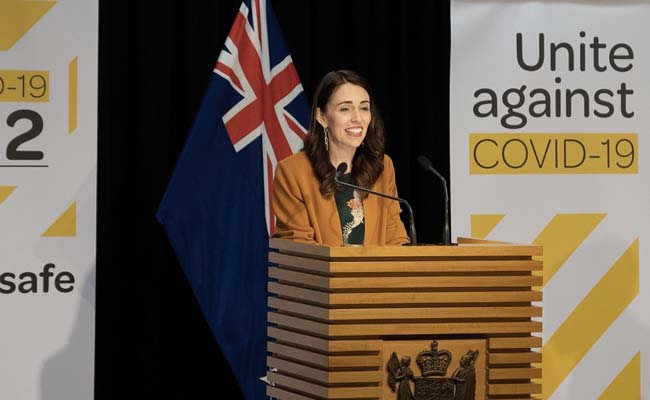
On Tuesday, New Zealand announced that Auckland, its largest city, would be shutting down since 4 new cases has been found in the city.  It is the first case of domestic transmission for the nation after remaining covid free for 102 days.

New Zealand’s fight against Covid was recognised across the world. Prime Minister Jacinda Ardern was congratulated for her effective method and governance. A vigorous and decisive response to the pandemic had effectively curbed down the rates of infection. The Pacific island nation of 5 million citizens was considered to be the safest place as it remained Covid free for 100 days at a stretch. It had made a record of zero new cases of community transmission of Covid-19. From a first case on Feb 26 to the last one recorded on May 1st, the whole process of elimination took about 65 days. The nation was placed under lockdown for weeks when the virus first broke out and it had achieved a milestone of 100 days. The last case was recorded on May 1st. The government had warned from before as countries like Australia and Vietnam which were once free from the virus are now fighting a second battle.

The Director General of Health had said that the 4 new cases are from a single family in South Auckland. It is the first local case in 102 days. The patients had no international travel history and contact tracing has been started.

With the announcement of shutdown, media reports suggested that people have started panic buying. The Prime Minister has made a surprise news conference and announced that Auckland will have Level 3 restriction from Wednesday as a “precautionary approach”. According to it, people should be staying at home, away from work, school or any social gathering. Any gathering of more than 10 people will not be allowed. This restriction would be applicable for 3 days, until Friday. This was done to assess the situation and gain further information about contact tracing. Immediate steps have been taken to find the source of the infection and to prevent further spread. There is an added concern because the source of the virus is not known this time. Travelling to Auckland, on North Island, would be restricted for people other than the ones who live there. The rest of New Zealand would go into Level 2 restriction from Wednesday for 3 days. Social gatherings would be restricted and mass gatherings over 100 people would not be allowed. Since sources are unknown for the new cases, it is expected that there could be a rise in numbers in the coming few days.

Auckland Mayor Phil Goff has said, “I am urging Aucklanders to come together like we did last time to stamp out community transmission. Please remain calm, please do not panic buy and please follow the lockdown rules.” People have been instructed to use masks and to avoid all kinds of social gathering. Jacinda Ardern has told reporters, “No other country in the world was free of community transmission as long as New Zealand. Together we have beaten the virus before. We can do so again.”

New Zealand elections are scheduled to happen on September 19. The break of new cases was unexpected. Till now, the government has fought against the situation and done quite well as a result  Ardern’s Labour Party has got a lot of support before the elections.

India Must Take Steps to Protect Chemical Catastrophe in the Country.

In recent times,the Lebanon blast which occured due to Ammonium Nitrate is not a small thing for the countries to avoid it.It is a matter of concern not only for India but for the world who have such storages of different chemicals at different places in their country.Every country who have such storages of chemicals must take first hand precaution by keeping in mind the blast that happened in Beirut,Lebanon.

Chemicals are very complex in natures and they appear a type of bomb threat to the society.It is known to any of the common people where they are going or standing below that there is storage of it.In India chemicals are handled both formally and informally it includes both highly toxic and non-toxic.So for country like India it is necessary for them to have precautions in these area where such kind of dealings are taking place.It is the matter of lives of the people.

In this case to cure any of such blasts in future,the Ministry of Environment first need to identify such chemicals that could harm a major population of the country and then where are they stored.So that,in this case they can check the temperatures of that area and how the place is maintained.They should seek helps from different experts in that field and try to find out different ways to solve the issues.

A handling protocol could also be prepared in this case where in that every detail should be present such as from when the chemical is stored,for how long it has been stored,and also how to store that chemical.We all know it is a chemical and they are very complex so prior alarm of such kind issues should be well placed and protected so that it does not harm the economy in any terms.

As the chemical is being traded in the market,the trader should know certain rules and regulations for trading at different levels for that a fixed protocol should be issued from grass root level to the administrative level.So,in this case whoever is trading toxic chemicals would have some kind of fear in their mind before doing false supply of it.For this the registration system should be flexible as well as strong so that without registration no one can make a deal of such harmful chemicals which could lead to chemical catastrophe.

This were the basics,we need to focus to strengthen it and make strong decision on it.

ACADEMIC RESEARCH : IS IT ENOUGH ?

THE CHANGES THAT ARE BEING MADE IN OUR EDUCATION SECTOR , TO PLACE IT WELL FOR THE STUDENTS SO THAT THE LEARNING CAN BE AT ITS BEST , HAS SPARKED EFFECTIVENESS DUE TO THE EFFICIENT ACADEMIC RESEARCH ACTED BY THE GOVERNMENT . A STATEMENT WHICH IS HOLD TRUE THAT ACADEMIC RESEARCH IS NOT SUFFICIENT , THE PROCESS IS STILL INCOMPLETE. THE GOVERNMENT FOLLOW THE POLICY OF SCIENCE , TECHNOLOGY AND INNOVATION , IT DIRECTS GOVERNMENT AND MANDATED IT WITH THE FUNDING IN HIGHER EDUCATIONAL INSTITUTIONS AND NATIONAL LABORATORIES . IT HELPED GOVERNMENT WITH THE APPROACHES TO MAKE THEM CONQUER THEIR OBJECTIVES . ONE SUCH APPROACH IS TECHNOLOGY READINESS LEVELS , PROPOSED BY NASA . IT IS A KIND OF MEASUREMENT SYSTEM USED TO ASSESS THE MATURITY LEVEL OF A PARTICULAR TECHNOLOGY.

TRL -1 COMMUNICATE THE OBSERVATION OF PRINCIPLES FOR PUBLICATION .

TRL 2 COMMUNICATES THE FORMULATION OF THE TECHNOLOGY AT THE LEVEL OF CONCEPTS .

THEN THE FRAMEWORK FRAMED ADVANCES TO PROOF OF THE CONCEPT , VALIDATION IN A LABORATORY ENVIROMENT AND THEN TO PROTOTYPE DEMONSTRATION AND ENDING WITH ACTUAL DEPLOYMENT .THE TERMINOLOGIES FOR THE APPLICATIONS ARE SPECIFIC LIKE DIFFRENT TERMS ATTACHED TO THE TECHNOLOGIES OF AEROSPACE AND HEALTH SECTOR , THIS IS WHERE THE TERM TRANSLATOR RESEARCH IS USED. AN ALTERNATIVE FOR THEESE TERMINOLOGIES ARE ACADEMIC RESEARCH AND POST ACADEMIC RESEARCH .

THERE ARE LARGE LABORATORIES WHICH ARE SPECIALLY MADE FOR THE RESEARCH WHICH IS FURTHER CONTRIBUTING TO GENERATE NECESSARY KNOWLEDGE FOR NATIONAL DEVOLOPMENT.

IT IS OBSERVED THAT THE INVESTMENT MADE BY INDIA IN THE RESEARCHES ARE NOT SO HUGE COMPARING THE SAME WITH THE ADVANCED COUNTRIES.HERE ARE THE TWO OBSERVATIONS THAT MAKES THIS STATEMENT ‘ A TRUE SET OF WORDS’ , AS WE ALL ARE AWARE ABOUT THE IMPLEMENTATION EFFICIENCY OF OUR COUNTRY WHICH IS AVERAGE OR VERY POOR IN FEW OF THE SECTORS. THE COUPLE OF OBSERVATIONS MADE ARE AS FOLLOWS :

  1. THE COUNTRIES BELONGING TO THE ORGANISATION FOR ECONOMIC COOPERATION AND DEVOLOPMENNT REPORT RESEARCH STATISTICS ACCORDING TO THE FRASCATI MANUAL WHICH WAS FIRST LAUNCHED IN 1963, AND HAS BEEN REVISED FIVE TIMES SINCE THEN .BUT , DATA CANNOT BE COMPARED WITHOUT HAVING THE CORRESPONDENCE BETWEEN INDIA’s DATA AND OTHER’s COUNTRY DATA .
  2. SECONDLY , IT HAS TO BE DECIDED BY INDIA WHERE TO INCREASE THE INVESTMENT EITHER IN ACADEMIC RESEARCH OR IN POST-ACADEMIC RESEARCH BUT THE FACT IS INVESTMENT IN POST ACADEMIC RESEARCH CAN ONLY BE TURNED TO THE NATIONAL DEVOLOPMENT , ONLY IN THE PURSUIT OF POST- ACADEMIC RESEARCH.

IN INDIA , THERE IS A NEED OF ADDING THE VALUE TO RAEW MATERIALS IN INDIA , WHAT SHOULD BE DONE ? , THE ANSWERE LIES IN INCREASING THE INTENSITY OF TECHNOLOGY WHICH WAS IDENTIFIED AS ONE OF THE GOALS OF THE STI POLICY.

THE STI POLICY SHOULD LAY EMPHASIS ON PAR TO ENSURE THAT INVESTMENT IN RESEARCH RESULTS IN ECONOMIC GROWTH. THE REWARD SYSTEM IN HIGHER EDUCATION INSTITUTIONS AND NATIONAL LABORATORIES SHOULD BE REORIENTED TO PROMOTE POST ACADEMIC-RESEARCH. ACADEMICS IN HIGHER EDUCATION SHOULD NOT ONLY PURSUE ACADEMIC RESEARCH BUT ALSO FEW STAGES OF POST ACADEMIC – RESEARCH.

POST – ACADEMIC RESEARCH IS FOCUSING MAINLY ON THE RESEARCH GOALS AND QUESTIONS THAT EMERGE FROM BUSINESS REQUIREMENTS WHEREAS ACADEMIC RESEARCH IS DEFINED AS ‘ SYSTEMATIC INVESTIGATION IN THE PROBLEM OR SITUATION WHERE THE INTENTION IS TO IDENTIFY FACTS AND OPINIONS THAT WILL ASSIST IN SOLVING THE PROBLEM OR DEALING WITH THE SITUATION. THIS CLEARY SHOWS HOW MUCH ‘PAR’ IS EFFECTIVE IN COMPARISON TO ‘AR’.

Election Commission of India

The Election Commission of India is an autonomous constitutional authority responsible for administering election processes in India at national, state and district level. The body administers elections to the Lok Sabha, Rajya Sabha, State Legislative Assemblies, State Legislative Councils, and the offices of the President and Vice President of the country. The Election Commission operates under the authority of Constitution per Article 324, and subsequently enacted Representation of the People Act. The commission has the powers under the Constitution, to act in an appropriate manner when the enacted laws make insufficient provisions to deal with a given situation in the conduct of an election. Being a constitutional authority, Election Commission is amongst the few institutions which function with both autonomy and freedom, along with the country’s higher judiciary, the Union Public Service Commission and the Comptroller and Auditor General of India.

Functions

One of the most important features of the democratic policy in India is elections at regular intervals. Holding periodic, free and fair elections are essentials of a democratic system and a part of the basic structure of the Constitution. The Election Commission is regarded as the guardian of elections in the country. In every election, it issues a Model Code of Conduct for political parties and candidates to conduct elections in a free and fair manner. The commission issued the Code of Conduct for the first time in 1971 for the 5th Lok Sabha elections and has revised it from time to time. It lays down guidelines for the conduct of political parties and candidates during an election period. However, there have been instances of violation of the code by various political parties with complaints being received for misuse of official machinery by the candidates. The code does not have any specific statutory basis but only a persuasive effect. It contains the rules of electoral morality. However, this lack of statutory backing does not prevent the commission from enforcing it.

A law for the registration process for political parties was enacted in 1989 and a number of parties got registered with the commission. The registration helps avoid confusion and ensures that the political parties are brought under the purview of the commission.

The election commission has the right to allow symbols to the political parties. It gives recognition to the national parties, state parties and regional parties. It sets limits on poll expenses. The commission prepare electoral rolls and update the voter’s list from time to time. Notifications of dates and schedules of election for filing nominations are issued by the commission. It is noteworthy that Election commission cannot allot same symbol to two regional political parties even if they are not in the same state.

The commission is empowered with prohibiting dissemination or publication of voting trends that seek to influence voters by opinion polls or exit polls.

To curb the growing influence of money during elections, the Election Commission has made many suggestions and changes in this regard. The commission has appointed IRS officers of the Income Tax Department as Election Observers (Expenditure) of all elections and has fixed the legal limits on the amount of money which a candidate can spend during election campaigns. These limits have been revised over time. The Election Commission, by appointing expenditure observers from the Indian Revenue Service, keeps an eye on the individual account of election expenditure. The commission takes details of the candidate’s assets on affidavit at the time of submitting nomination paper, who are also required to give details of their expenditure within 30 days of the declaration of results. The campaign period has also been reduced by the commission from 21 to 14 days for Lok Sabha and Assembly elections to cut down election expenditure.

In an attempt to descriminalise politics, the Election Commission has approached the Supreme Court to put a lifetime ban on convicted politicians from contesting elections.

The general election in India, the world’s largest democracy, will take place in nine phases between April 7 and May 12. The general election is a celebration of democracy, no doubt, but it is also a huge challenge for the Election Commission, which is responsible for the smooth operation of the general election. Conducting general election in a country with over 800 million eligible voters is a nightmare and proper planning has to be carried out to ensure that there are no security breaches and that people vote in a safe and secure environment.

Security is a huge challenge for the Election Commission, especially in areas that have a significant presence of Maoist rebels. In the previous elections, Maoist rebels have opposed the elections and tried to sabotage them as well, and it will not come as a surprise if they try to do it this time around. Therefore, the Election Commission is making a list of groups that may oppose the elections and it is coming up with elaborate plans to handle them while maintaining peace in the region.   

The Election Commission, apart from overseeing the general election, is tasked with keeping an eye on speeches made in the country that could disturb the peace and weaken the social fabric of the Indian society. In addition, it is required to monitor the expenditure of the various parties in India and maintain religious harmony in every state. This year, Non-Resident Indians (NRIs) will also be able to cast their votes in view of the amendment of The Representation of the People Bill in 2010. Close to 12,000 NRIs have registered as voters and they will be exercising their voting rights for the very first time. With the advancement of technology, Indians living miles away from their homeland are able to stay up to date with the current affairs and developments in the Indian political scene.   

With news spreading like wild fire on social networking sites and other new media platforms, people have begun to take an interest in affairs of the nation. As such, they are involved in political and economic issues like never before. This is not just applicable to NRIs but also to people living in India. This is the first time in India’s history that people are showing enthusiasm and interest in the polls. As such, with greater participation from Indians at home and abroad, the Election Commission is expected to be more vigilant of the conduct of the people on the voting day and ensure that people abide by the rules as stated in the Constitution.   

New parties have emerged on the political front in India and they are all fighting for diverse issues. The Congress, which has been in power for the last 10 years, is fighting to defend its political record and to protect the secular fabric of the nation. The Bharatiya Janata Party (BJP) is fighting for a change in the centre and is trying to convince the people of India that it can do a better job than the Congress. Regional parties are on the rise and a new party that has joined the bandwagon is the Aam Aadmi Party, which claims to represent the common man and is keen to address the problems of the common man.  

With so many parties fighting for attention and votes, it is inevitable that there will be clashes between the parties and the people. So, the Election Commission has to ensure that the parties adhere to the Constitution and the rules it has put forth with regard to rallies. Mr . Veeravalli Sundaram Sampath CEC (Chief Election Commissioner of India) has a huge task at hand and with more parties joining the political scene and more voters in the picture, its job essentially gets harder. Maintaining peace in the region is crucial and it is difficult to predict when chaos will erupt. So, the Election Commission has to take proactive measures to ensure that the general election conforms to the Indian Constitution and proceeds in a smooth manner.   

Rising prices of essential commodities in India

In India, inflation or price rise is not just an economic concept but they are also a political tool, often used by the opposition parties to launch attack on the ruling government. But in case of price rise of essential commodities, price rise is more political than economic factor. Very often, there is uproar in Parliament as political parties jostle to grab as much mileage as possible from the government’s apparent failure to curb inflation, as they try to sidle up to the aam aadmi who has been worst hit by skyrocketing prices. It is because the people of lower strata are most severely affected by the rising prices, and if the price rise is in essential commodities, damage is more severe.    

Commodities classified as essential under the Essential Commodities Act 1955 includes cattle fodder, oil-cakes and other concentrates, coal, including coke and other derivatives, component parts and accessories of automobiles, cotton and woolen textiles, few drugs, foodstuffs, including edible oil-seeds and oils, iron and steel, including manufactured products of iron and steel; paper, including newsprint, paperboard -and straw board; petroleum and petroleum products; raw cotton, food crops etc.   

In the last five years, the prices of eight essential commodities have gone up by nearly 72 percent and on the contrary the per capita income have gone up by 38 percent of average Indian in metros, according to the latest study undertaken by apex chamber ASSOCHAM.  

While prices of condiments & spices, eggs, fish and meat, milk, pulses witnessed a sharp increase, ranging between 158.07 percent, 78.88 percent, 74.12 percent and 73.69 percent respectively, other essentials like coffee, tea, wheat and fruits and vegetables saw upward moment in the range of 70.75 percent, 66.89 percent, 63.25 percent and 59.31 percent respectively during the corresponding period.   ​​​​​​​  

Demand as well as supply, both factors are responsible for rise in prices of essential commodities. Apart from increasing population which itself is a major cause of rising demand, changing food habits are also giving push to demand pull inflation. Growing demand for pizzas is one big example where large quantities of cheese and butter are used. The price of milk and milk-based products in India is set to surge on the back of a variety of natural and human factors, including a shortage during monsoon months. Prices will be further impacted by the upcoming festival season which sees a spike in consumption of milk-based products, especially sweets.  

On the supply side, unfavorable weather conditions also resulted in the short supply of commodities and consequently pushed their prices up. Lack of warehousing facilities, cold storages also results in the post harvest losses which are estimated to the tune of one-third of the total produce. An abnormally high percentage of fruits and vegetables goes wasted because of lack of cold-storage facilities. Thus post harvest losses also contribute to the short supply of food crops.    

The sharp increase in prices of wheat and rice will have an inflationary impact on essential commodities as open market prices of both commodities were ruling slightly higher than the above the poverty line prices. Many essential commodities like petroleum products, pulses, fertilizers are either imported or are produced with imported intermediate goods. Price of such commodities depends on the international prices and as over all global prices of these commodities is increasing, pressure on domestic prices is bound to happen. Even in the case of export based goods produced in the country, if international prices of such commodities are soaring, there is an upward pressure on domestic prices as well because the producers will tend to sell these products in foreign markets where they are likely to fetch better prices. It may also create an scarcity in domestic market.  

Moreover, market is also dominated by manipulators, fixers, fly by operators, corporate gamblers. Many allege that prime reason behind the rising essential commodities is that we created a commodity exchange like Multi Commodity Exchange (MCX) and other like commodity exchanges where market can be manipulate within hours according to one’s own wish. Moreover, it has nothing to do with our production, distribution, monsoon and other factors; still it effects the commodity prices. The argument is true to some extent but, such exchanges have their own benefits too.  

The inflation can be controlled to the large extent if the government gives full freedom for farmers to sell their agricultural produce anywhere in India without any restriction and ensure free movement without taxing the same. All the agricultural produce is controlled by market forces which include arhatiyas, hoarders, black marketers and other rich and traditional traders. The prices of goods are decided by these individuals. They create the artificial shortage and price rise. The farmers cannot sell their agriculture produce directly due to different reasons. The real farmers are getting 1/3rd of the price. Rest of the profit is swallowed by the middleman and traders only.  

Thus, the price rise is caused by several factors like hording, population explosion, low productivity, natural calamities, wars, backwardness of communication, evil motives of dishonest businessmen, smuggling, black marketing etc. Many suggest deregulation of prices of essential commodities as market forces are supposed to efficiently allocate the resources. However, it is also necessary to provide affordable prices to the vulnerable sections of the society. But indeed, comprehensive reforms, development of agriculture infrastructure, elimination of hoarders and black marketers etc is necessary to eliminate the artificial scarcity plaguing the economy.


A French soap opera is about to unfold

The world’s richest woman just died. If you didn’t know this, please stop focusing on the tweets and turn your attention to more weighty matters of the world.
Liliane Bettencourt passed away four days ago at the age of 94. She was the heiress to the founder of L’Oréal, the world’s largest cosmetic company; the only child of Eugène Schueller who founded L’Oréal in 1907. She herself worked in the company from the age of 15 and rose to become its deputy Chairperson.
The future of L’Oréal is now in play. And therein lies a story that could give a beating to any soap opera on television.
In 1974, fearing that France would nationalise the company, Bettencourt did a deal with Nestle wherein she offloaded about half her holding in exchange for shares in Nestle. Since then Nestle and Bettencourt have had one of the longest tangos in business history. Nestle, a food company, with no presence at all in cosmetics, had a 30% stake in the world’s largest cosmetics company (now down to 23%). But in an agreement with Bettencourt, Nestle remained a sleeping partner and promised not to acquire any more shares or to bid for Bettencourt’s own shares as long as she was alive. Presumably Nestle had thought that she would not live so long. But they kept their word and until now have not interfered at all in the business just pocketing the dividends and biding their time. So much so that very few outside the business world probably even know that Nestle is a major shareholder in L’Oréal.
In the meantime Bettencourt’s life over the last decade has been another soap opera all by itself. Sometime in 2007, at the  ripe age of 84, she took a fancy to her photographer and started to bestow gifts to him worth over €1 billion. Her daughter filed a complaint with the police that her photographer was taking advantage of her weakened psychological stake to amass a personal fortune. She and her daughter had an extremely public spat with each accusing the other of having gone mad. The courts finally made Bettencourt’s grandson as her overseer and the fortune was vested with her daughter and her two grandsons. But everything was in a state of limbo as long as she was alive.
Cue the events in Nestle. Nestle , for long, has waited patiently to consummate what was really a delayed acquisition. Both the last two Chairmen of Nestle sit on the L’Oréal Board. They were probably waiting for the death of Bettencourt to acquire L’Oréal . But alas they now have an activist shareholder in Dan Loeb who has a fair stake in Nestle and is pushing it to do the opposite – sell the stake in L’Oréal and return the money to shareholders. So there is no saying what Nestle will ultimately do – acquire L’Oréal or divest !
There are other big fish circling. Given how cheap debt is , there are enough and more funds of various stripes, including probably the notorious 3G Capital and their close friend Warren Buffet, who are getting all excited. Also interested would be two giants in the cosmetics field – Unilever and Procter & Gamble, who have long eyed Nestle’s stake with envy and made noises about what a Foods company is doing with a stake in a Cosmetics company.
Complicating this will be nationalism, for after all L’Oréal is (very) French. Would Macron be willing to let a French institution fall into the hands of the ugly Americans ? If he interfered, the tweeter in chief would surely have something to say !!
And what will Françoise Bettencourt Meyers, Liliane’s daughter and the two grandchildren to whom the 30% stake in L’Oréal passes, do ?  Would they act in concert. Or would they go their own ways ? Would they buy ? Or sell ?
Every investment banker is drooling and shivering with anticipation. It is fair to assume that no first class seats are available on all flights to and from Paris, London, New York and Lausanne !
Watch this space. The knives will be out on 18th March when the six months period after Bettencourt’s death ends and  all agreements expire.    Bettencourt’s life was colourful to say the least – marrying a Nazi sympathiser, losing money with Bernie Madoff,  a strange affair with her photographer, being declared mentally incompetent, accused of giving cash stuffed envelopes to Nicolas Sarkozy,  having numerous Swiss bank accounts …… But even by those standards, what will follow in the fight for L’Oréal will be, to put it mildly, interesting.

    Flexible design course

    The session today got us a bit further with planning. I like the idea of a personal learning plan, and this will be a dynamic work in action and help people to focus on the areas they are interested in. The trick will be to ensure people are well supported as they are taken out of their comfort zones…even modelling new ways of teaching and learning can frighten people.

    we have plenty of actions and have made a start on the Blackboard shell. I am not that keen on putting dates on the buttons and using the what, how, why, when labels might throw a lot of people.
    An idea has come to me as I write this. I believe we need to pin them down to the type of plan they envisage right at the start of the course…it may only be the name of a course they teach in but it will ground them in something real. and I think we need to extend the initial discussion about flexible learning to include the plan…what they hope to end up with. smetimes for the holistic learners they need to see the big picture first – where they are heading.

    the personal learning plans will help them with the what, how and why they will get there. I would like to use a self-questioning matrix to help them plan, monitor and evaluate their activities – we can start them off with some sample questions which can be used in the f2f consultation about the plan, and then get them to start doing this sort of reflective process themselves as they go. some may prefer to use concept mapping to plan how they go about their activities

    Petroleum and Natural Gas Ministry observes World Biofuel Day

    Petroleum and Natural Gas Ministry today organised a webinar on the occasion of the World Biofuel day with the theme Biofuels towards Atmanirbhar Bharat.

    World Biofuel Day is observed every year on 10th August to create awareness about the importance of non-fossil fuels as an alternative to conventional fossil fuels.

    Speaking on the occasion, Secretary, Ministry of Petroleum and Natural Gas, Tarun Kapoor said that there is large amount of agricultural residues available in the country and therefore the scope of producing Biofuels is immense.

    He said that there are three major areas of Biofuels- Ethanol, Bio-diesel and Biogas.

    He added, if these three sources are exploited, dependence on import of crude and also gas can be reduced to a very large extent.

    EPFO ensures hassle free service delivery through UMANG app during COVID-19 pandemic

    Employees’ Provident Fund Organisation, EPFO has ensured hassle free service delivery through UMANG app during COVID-19 pandemic.
     
    Labour and Employment Ministry said, presently a PF member can access 16 different services of EPFO on their mobile phone using the Unified Mobile Application for New-age Governance, UMANG App.
     
    The Ministry said, on UMANG app a member can raise claim, track claim and know the status of claim raised.
     
    During the COVID-19 pandemic period from April to July, a total of over 11 lakh claims were filed online through UMANG App.
     
    This was a whooping 180 per cent increase compared to pre-Covid 19 period from December last year to March 2020, where only around four lakh claims were submitted through the app.
     
    To ensure safe and secure delivery of its services at the door steps on its 66 lakh pensioners, EPFO brought the facility of View Pensioner Passbook as well as updation of Jeevan Pramaan Patra on UMANG app.

    NEP 2020 is blend of tools enabling students to compete with global world: Union Education Minister

    Union Education Minister Ramesh Pokhriyal Nishank has said that National Education Policy 2020 is a blend of tools enabling the students to compete with the global world, as well as to grasp the Bharat centric values, culture and languages.

    Participating in a webinar on Atma Nirbhar Madhya Pradesh – Health and Education’ in New Delhi today, Mr Pokhriyal said, the policy aims to revamp all aspects of India’s education system that were in place over three decades and bring it closer to the best global standards of education.

    The National Education Policy has maintained a balance between the traditions and the interdisciplinary approach. He said, the policy has a clear vision and defined objectives. Mr Pokhriyal said, the reforms proposed can only be implemented collaboratively by the Centre and the states.

    The Minister congratulated the Madhya Pradesh government for swiftly responding to the current COVID crisis by introducing a series of interventions across all sectors.

    During the current lockdown, the School Education Department of Madhya Pradesh has proactively taken upon the task of ensuring that children do not lose out on any opportunity to learn and to continue their academic progress by providing access to tech-enabled learning sources.