NTPC accelerates Learning & Development Opportunities for 19000 Employees

NTPC, India’s largest power producer and the Central PSU under Ministry of Power, has offered learning opportunities to its 19,000-plus employees and their family members. To meet the requirements of the lockdown imposed due to COVID 19 pandemic, NTPC Learning and Development (L&D) strategy has been customised for enriching employees through intensive digitisation and online training, enabling them to avail these services from anywhere.

Moreover, company has collaborated with the World Bank to offer its staff an opportunity to be part of a rigorous online technical course, attending virtual classes, giving assessments and, eventually, obtaining certifications.

Power Management Institute – NTPC’s apex L&D centre – has conducted 250-plus training sessions in diverse disciplines ranging from technical, functional, health and safety. Besides, NTPC’s Regional Learning and Development Centres located in power plant projects have created almost 100-plus online learning opportunities.

The Maharatnais determined to keep nurturing its staff via continuous learning sessions while simultaneously revamping and customising methodologies for specialised scenarios. The company realises the need for upskilling even during crises. Therefore, another unique collaboration – the ‘45-Day Learning Challenge’ – offers its staff thorough learning for 45 days in varied disciplines such as Technical, Finance and HR, earning them certifications once completed from home.

There are other collaborations too with external agencies providing state-of-the-art sessions. A holistic wellness programme is being continuously run in association with the ‘Art of Living’. Employees and family members of all ages can participate, helping them stay strong and focused during these turbulent times. Similarly, a special six-month initiative, ‘Snehal 2.0’, based on counselling services via EAP (Employee Assistance Programmes) has been extended to employees’ family members. Available round-the-clock, the EAP service is confidential and offered to select users only.

Likewise, classes are being held on power plant essentials such as Turbine, Boiler, Water Chemistry, Renewable Energy and other significant O&M (Operations & Maintenance) areas through in-house as well as guest faculties. The new learning methodologies include connecting via online forums, webinars, an internally-developed mobile application ‘Samvaad’ as well as leveraging the Internet and its internal learning portal.

Odisha under “Jal Jeevan Mission (Har Ghar Jal)

Through ‘Jal Jeevan Mission’, Government of India is making all efforts to provide every rural household in the country a Functional Household Tap Connection for water in adequate quantity of prescribed quality on regular and long-term basis. Following the true spirit of cooperative federalism, State Governments are steering this flagship programme to realise the objectives of the Mission so as to bring cheers in the lives of rural people by providing potable water at their doorstep and ensure ‘ease of living’. It is envisaged that through this life changing Mission, each household will get potable water supply of 55 lpcd of prescribed quality on regular and long-term basis.

The estimated outlay of the mission is Rs 3.60 Lakh Crore with Central and State share of Rs. 2.08 Lakh Crore and Rs.1.52 Lakh Crore respectively.

Odisha state presented their Annual Action Plan before the National Committee headed by Secretary, Drinking Water & Sanitation, Ministry of Jal Shakti for consideration and approval for 2020-21. Govt of India approved Rs 812 Crores for implementation of the Mission in the State for the financial year. This allocation is a significant jump from last year’s allocation of Rs 297 Crore. Out of 81 lakh rural households in the State, Govt of Odisha plans to provide 16.21 lakh household connections in 2020-21. The State is planning 100% household tap connections by the year 2024. Priority is being given for 100% coverage of villages under water scare areas, quality-affected areas, Sansad Adarsh Gram Yojna villages, villages in aspirational districts and SC/ ST dominated habitations.

Laying emphasis on capitalising on ‘low-hanging fruits’ i.e. in the villages/ habitations where piped water supply schemes already exist, State is making all out efforts to immediately provide household tap connections to remaining households belonging to weaker and marginalised sections on priority. A roadmap is prepared for the effective implementation of Village Action Plan (VAP) with the active participation of the rural community. Strengthening of existing drinking water sources for long-term sustainability of drinking water supply systems through convergence of various programmes like MGNREGS, SBM (G), 15th FC Grants to PRIs, District Mineral Development Fund, CAMPA, Local Area Development Fund, etc. at village level is planned for judicious use of all available resources. The State has been allocated Rs. 2,258 Crore under 15th Finance Commission Grants to PRIs during 2020-21; 50% of this amount has to be mandatorily spent on water and sanitation.

To implement the mission, institutional arrangements at various levels have been made and State’s PHE Department is to play a critical role. To instil sense of ownership among the village community, Mission strives to involve the community in planning, managing, implementing, operation and maintaining the water supply schemes meant for them for long-term sustainability. State Government will start engaging the Self Help Groups and voluntary organisations for community mobilization.

Jal Jeevan Mission encourages participation of local community in surveillance of water quality. For this, action plan carried out to incorporate the timely procurement of kits, supply of kits to the community, identification of at least five women in every village, training women for use of Field Test Kits and reporting and collating the reports with laboratory-based findings of the water sources. State also proposed taking NABL accreditation for 18 of its water testing labs. At present, it has one state-level lab and 32 district level labs. 

Odisha state reels under two extreme conditions of water scarcity and also excess of it. There is one part which is water-stressed for most of the year, while the other part is marooned in monsoon. With the mercury soaring above 40 degrees Celsius, and during the prevailing Covid–19 pandemic, it is important that people don’t crowd public stand posts/ drinking water sources to fetch drinking water. Therefore, State was advised for taking up water supply works in villages to provide household tap connections, which will help in practicing social distancing, and will additionally help local people in getting employment and boost rural economy.

In the present context, when lot of migrants are returning to the State, it has become very important to provide livelihood to them. These personnel could be utilized in water supply related works especially plumbing, fitting, water conservation works, etc. in every village to ensure sufficient ground water availability leading to water security, water availability for agriculture and most importantly will help in provision of drinking water to every rural household as per the objective of Jal Jeevan Mission.

Kisan Credit Cards (KCC) campaign launched for 1.5 crore dairy farmers

The Government will provide Kisan Credit Card (KCC) to 1.5 crore dairy farmers belonging to Milk Unions and Milk producing Companies within the next two months (1st June-31st July 2020) under a special drive. The Department of Animal Husbandry and Dairyingin association with Department of Financial Services has already circulated relevant circulars and KCC application format to all State Milk Federation and Milk Unions for implementing the same on a mission mode.

Under the dairy cooperative movement, approximately 1.7 crore farmers are associated with 230 Milk Unions in the country.

In the first phase of this campaign, the target is to cover all farmers who are members of dairy cooperative societies and associated with different Milk Unions and who do not have KCC. Farmers who already have KCC based on their land ownership, can get their KCC credit limit enhanced, though interest subvention shall be available only to the extent of Rs 3 lakhs. Although the general limit for KCC credit without collateral remains Rs. 1.6 lakh, but the case of farmers whose milk is directlyprocured by Milk Unions falls under tie up arrangements between the producers and processing units without any intermediaries, and hence the credit limits without Collateral can be upto Rs.3 lakh.This will ensure more credit availabilityfordairy farmers associated with Milk Unions as well as assuring repayment of loans to banks.

The special drive to provide KCC to 1.5 crore dairy farmers is part of the Prime Minister’s Atma Nirbhar Bharat package for Farmers. Finance Minister on 15 May 2020 has announced to cover 2.5 crore new farmers under the KCC scheme. This will provide an additional liquidity of Rs.5 lakh crore in the hands of farmers, who are suffering from the recent downturn of economy.

As, dairy is among the fastest growing sectors of the economy with a CAGR of above 6% in the last 5 years, providing short term credit to dairy farmers for meeting their requirements for working capital, marketing etc. will boost their productivity tremendously.

Issue of GST late fee for the past period (August 2017 to January 2020)

In the recent past, tweets have been noticed by the Government on the issue of waiver of late fee applicable on non-filing of GSTR 3B returns. The demands are largely for the waiver of late fee for the returns which were required to be filed from the beginning of Goods & Services Tax (GST) i.e. August, 2017.

It may be noted that for helping the small businesses having turnover less than Rs 5 crore in the current situation arising out of COVID-19, Finance Minister Smt. Nirmala Sitharaman had already announced extension of GST returns of February, March, April and May 2020 till June 2020. No late fee will be charged for this period.

The current requests for waiver of late fee pertain to the old period (August 2017 to January 2020). It may be appreciated that the late fee is imposed to ensure that the taxpayers file return in time and pay taxes on the amount collected from buyers and due to the Government. This is a step to ensure that a certain discipline is maintained regarding compliance. Honest and compliant taxpayers would be discriminated negatively in the absence of such a provision.

In GST, all decisions are taken by the Centre and the State with the approval of the GST Council. It would not be possible or desirable for the Central Government to unilaterally take a view on this issue and therefore, the trade is informed that the issue of late fee would be taken up for discussion in the next GST Council meeting.

Racism a common Practice

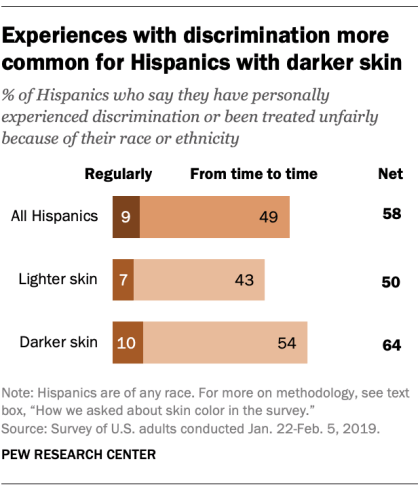
Racism is a term that is being used only when there is a need but, everyone in every walk of life does use this term to discriminate every person they meet and this discrimination does not have any religion or region but by their skin color as Martin Luther King Jr. rightly said: ” The ultimate measure of a man is not where he stands in moments of comfort and convenience, but where he stands at times of challenge and controversy”. When the civil rights moment was won in 1968 it bought a sense of relief to a black person thinking that Racism is the end but history has its play but in 2014 a black 18-year-old student, Micheal Brown was shoot down by a White Police officer and currently this is the time where the man has to measure himself as the United States is Gripping itself to its laws and the protests are erupting across the districts of the United States and all across the globe and the reason behind this simply a term that has a deep meaning ” Racism” and this term led to the death of a man named of George Floyd who was killed by a White Policeman by strangling George’s neck with his knees for about 9 minutes. This act of the white policeman has condemned by many citizens across the globe and demonstrations and protests and clashes with the police in the United States very saddening. Due to this crisis, there have been curfews in several districts in the United States and with the COVID-19 cases escalating past 6 million all over the globe and the United States being in the epicenter of this pandemic and many experts feel that due large gathering there may a large hike in the COVID-19. This is a disaster for mankind as this has violent eruptions during this pandemic crisis as there is spread of violence, clashes with police, looting and burning the stores and currently, the actions of the Civil rights movement is trending all over the internet and all the facts and related to racism is true as it is proven by everyone and by Statistics, in 2019 around 58% of people have been or felt discriminated by fellow mates or by society, but the real question here is “Whether the real heroes of the Civil rights movement would have wanted this clashes or the activities that are taking place”?

ACCORDING TO PEW RESEARCH CENTRE

A LOOK BACK TO PAST

Oppression of the black people and colored have been in the history of human civilization a long time ago and as the civilization was becoming modernized the idea of this oppression was expected to be dropped but it gained momentum and made the oppressed people fight for equal rights and this fights have been in many countries like South Africa, United States, India, Britain and in other many countries as well and in the United States it gained momentum when Rosa parks refused to give her seat to the white that resulted in starting the Civil rights movement by Martin Luther King. Jr and this became a mass movement until the Civil rights bill was passed and this idea inspired to banish the Apartheid idea in South Africa by Nelson Mandela. Martin Luther King always stood by the side of Non-Violence and this was his Philosophy until death and his inspiration behind this is Mahatma Gandhi who used the same Non-Violence for the freedom.

Martin Luther King considered the triple evil of the society like poverty, Militarism, and racism and always stood against it and proved to be true. Martin Luther King has leaven behind a legacy to win a battle using Non-Violence as a tool but is his idea is being heard and those who use violence in this situation needs to rethink about their actions as it cause good in any way, of course not it just causes spreading of hatred among all the people and this has to be stopped and if anyone wants to prove that the reason for this protests and demonstrations is equal rights then bring back the Civil rights Movement as 2.0 and recreate the Civil Rights Movement again to win this battle with Non-Violence.

Man with the Magic bat, Hand, and Skill

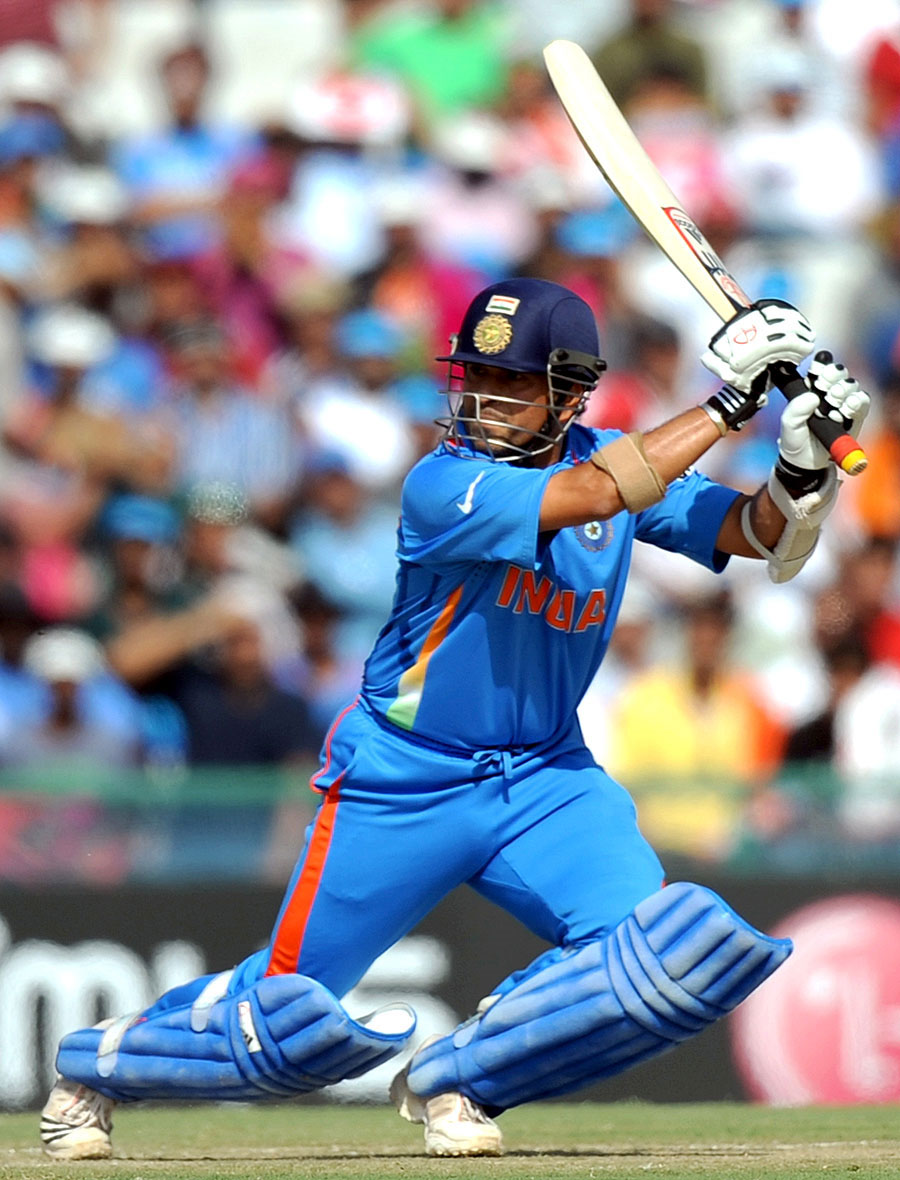
Sachin new bat 2Sachin Ramesh Tendulkar

cricket is one of the most popular games in India, even though the national game is hockey, in each country and street give birth to the new batsman and bowler, many of them wont to build their career in cricket but some of them get success in it. There are some stories of a famous player which magical abilities, which you have to know about it.
the first story is about the world-famous, the world’s most prolific batsman of all time batsman Sachin Ramesh Tendulkar, he was born at 24 April 1973 in Nirmal Nursing Home Dadar, Bombay in a Maharashtrian family. Moreover, he spent his formative years in the Sahitya Sahawas Cooperative Housing Society in Bandra (East). At the age of eleven, Ajit introduced the young Sachin to cricket in 1984. Ajit introduced him to Ramakant Achrekar, a famous cricket coach and a club cricketer of repute, at Shivaji Park, Dadar. at the first stage he did not play well, he did a lot of hard work on batting stock, and with the help of luck, he got chance to play in India team Tendulkar made his Test debut on 15 November 1989 against Pakistan in Karachi at the age of sixteen and went on to represent Mumbai and India for close to twenty-four years. Yet, with the help of magic bat he made may record in cricket, which is never broken till date, furthermore, in 2002 in his half career, he gets the title of the second greatest Test batsman of all time, after the Don Bradman and the second greatest ODI batsman of all time, behind Viv Richards. he has the highest score in international cricket.
Here are some records of Sachin Tendulkar:
1) is earliest cricket debut at the age of 16.
2) Most One-Day Internationals: 463,
3) Most Man of the Match awards: 62,
4) Most Man of the Series awards: 15,
5) Longest ODI career: 22 years 91 days,
6) Only one to do rare ODI triple: 15000 runs (18426), 100 wickets (154) and 100 catches (140),
7) Most ODI runs: 18426 (ave.44.83) in 463 matches,
8) Most ODI centuries: 49 ,
9) Most hundreds against any team: 9 vs Australia,
10) The only batsman to register 8 or more hundreds against two nations: 9 vs Australia and 8 vs Sri Lanka,
11 ) Most 50-plus innings: 195 (49 centuries and 96 fifties),
12) Most runs in a calendar year: 1894 (ave.65.31) in 34 matches in 1998,
13) Most hundreds in a calendar year: 9 in 34 matches in 1998,
14) Most times to score 1000 runs in a calendar year: 7 times,
15) Most fours: 2016,
16) Most runs against Australia: 3077 at an average of 44.59 in 71 matches,
17) Most runs against Sri Lanka: 3113 (ave.43.84) in 84 matches,
18) Most runs against South Africa: 2001 runs at an average of 35.73 in 57 matches, 19) Most runs against Pakistan: 2526 (ave.40.09) in 69 matches,
20) the First batsman to score an ODI double hundred: 200 not out against South Africa on Feb.24,2010,
21) Most runs in World Cups: 2278 runs at an average of 56.95 in 45 matches.
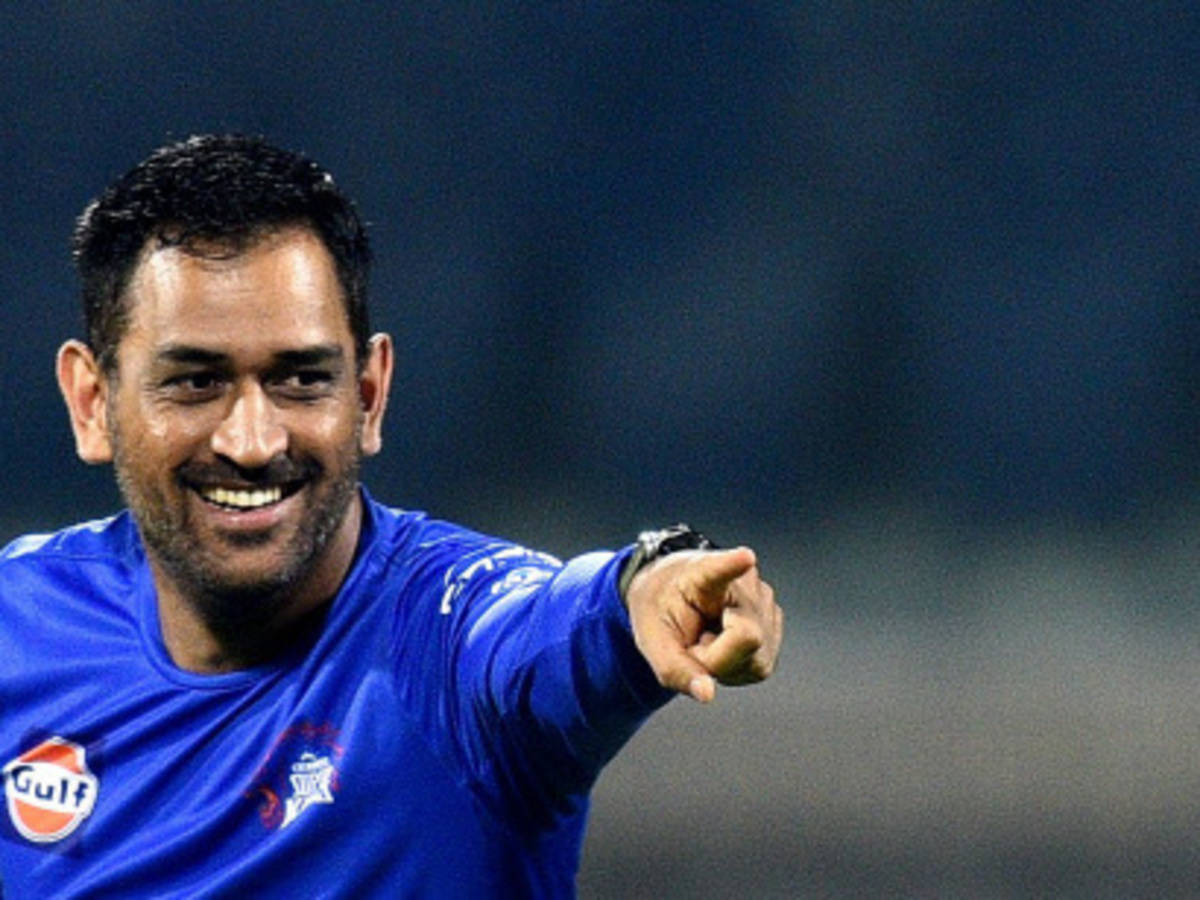
thumbCaption cool MS.Dhoni
Who not know Caption cool here some background history of Mahendra Singh Dhoni, he was born on 7 July 1981 in Ranchi, Bihar and he identifies as a Hindu Rajput. His father Pan Singh worked in junior management positions and his mother is a housewife. Dhoni is a fan of Adam Gilchrist, and his childhood idols were cricket teammate Sachin Tendulkar. He has good hand in badminton and football, he played goalkeeper role in a football match. Though he had not played cricket, He impressed with his wicket-keeping skills and became the regular wicketkeeper at the Commando cricket club (1995–1998). based on his wicketkeeping skill he was selected for Vinoo Mankad Trophy Under-16 Championship and he performed well and the journey of his career is started of this match.At the young age, he was a Travelling Ticket Examiner (TTE) at Kharagpur railway station from 2001 to 2003, under South Eastern Railway in Midnapore, a district in West Bengal. He made lot of friends in railway quarters when he was TTE. However, on early stage of the career, he struggled a lot to impress the selector of the Indian cricket team, many times he tries to give up, he couldn’t. he played form Junior cricket in Bihar, Bihar cricket team, and Jharkhand cricket team. After sent a report to the National Cricket Academy from Jamshedpur in 2003. he was selected in India A team in 2003, the first match was against the Zimbabwe XI he did a great wicketkeeping with 7 catches and 4 stumping, and then after he played against Pakistan A, he helped the team to chase the score of 223 with his half-century. On the bases of those matches performance, he received the attention of caption and coach of Indian cricket team Sourav Ganguly and Ravi Sastri.
On 2004,the ODI squad for the Bangladesh tour in 2004/05,but the ODI career did not give boot to him in the first match he got runout whit the duck. However,by the luck he got second chance in Sri Lanka tour in the first two matches he did not get the chance to perform in batting, he get chance to bat on early order to bust the run rate, he endade the whole match with 183* runs in 145 balls. after this match, he done well in whole career, however in 2007 under the ms. dhoni’s captainship  India won the ICC World T20, 2010&2016 Asia cup and 2013 ICC champions trophy. Additionally, when the India Premier League(IPL) started in 2008, Ms.dhoni was contracted by the Chennai Super Kings for US$1.5 million. in this year he was the costliest player and caption in whole IPL. Under the captainship C.S.K. won the tile of I.P.L. in 2010, 2011, and 2018. But, because of ban on C.S.K. for two year 2016&2017. the Career of Ms.Dhoni never stops,in 2016  Rising Pune Supergiant bought caprion cool at 1.9 million, however his team did not perform well in that year, in next year his time reached filal and lost form Mumbai Indian,moreover he done grate came back in 2019 and chase all match and enter final again Mumbai beat Chennai. The grate thing is that he always guide all baller from back side of stumps and take wicket with the fastest stumping with the fastest hand.He also have magical abilities in 3rd umpire review, he never get fail in it, and he also made record to never fail in 3rd umpire review.
Here are some record of MS.Dhoni(caption cool):
1) Only Captain to win all three ICC Trophies
2) Most Successful Indian Captain in all three formats
3) First Captain to take India at No. 1 in Tests
4) Most Successful IPL Captain
5) Most T20 International wins as captain
6) First Player to pass 10,000 ODI runs with 50+ average
7) Most Successful Indian wicket-keeper
8) Most Stumpings in International Cricket
9) Most centuries at No. 7 batting position in ODIs
10) Most Not-Outs
11) Most Times Bowled while playing as a WK
12) Most Expensive Bat( £ 100,000)
13) Most ODI Games finished with a Six
14) Only Captain to whitewash Australia in Australia in 140 Years
15) Highest Individual Score by a wicket-keeper batsman in ODIs


DRDO develops Ultra Swachh for disinfection of PPEs and other materials

Defence Research and Development Organisation (DRDO) has developed a disinfection unit named Ultra Swachh to disinfect a wide range of materials, including Personal Protective Equipment (PPEs), electronics items, fabrics, etc.

Institute of Nuclear Medicine & Allied Sciences (INMAS), the Delhi based laboratory of DRDO has developed this product with industry partner M/s Gel Craft Healthcare Private Ltd, Ghaziabad.

The system uses an advanced oxidative process comprising of multiple barrier disruption approach using Ozonated Space Technology for disinfection. 

The system is double layered with specialised Ozone sealant technology assuring trapping of ozone for the necessary disinfection cycle. It also has catalytic converter to ensure environment friendly exhaust i.e. only oxygen and water. 

The system is in compliance with International Standards of Industrial, Occupational, Personal and Environmental Safety. The Ultra Swachh comes in two variants namely Ozonated Space and Trinetra Technology. Trinetra technology is the combination of Ozonated space and radical dispenser. Treatment is optimised with automation for quick disinfection cycle. 

The system operates on 15 Ampere, 220 Volts, 50 Hertz power supply. The system has been provided with various safety features such as emergency shutdown, door interlocks, dual door, delay cycle, and leak monitors, etc to ensure safe operations for longer duration. Dimensions of the Industrial Cabinet are 7’x4’x3.25’ to disinfect large quantity at a time. Cabinets of different sizes will be available for the industry. 

20 States under ONOC to commence national/ inter-State portability transactions to benefit migrants

The Union Minister of Consumer Affairs, Food & Public Distribution Shri Ram Vilas Paswan today announced the inclusion of three more states namely – Odisha, Sikkim and Mizoram in the scheme on ‘Integrated Management of Public Distribution System’ (IM-PDS).Under this system nation-wide portability of the benefits under NFSA through “One Nation One Ration Card” plan is implemented to enable the NFSA ration card holders to lift their entitled quota of subsidised foodgrains from any ePoS enabled FPS of their choice anywhere in the country, by using the existing/same ration card after Aadhaar authentication on ePoS device.

The facility so far is enabled in 17 States/UTs, namely – Andhra Pradesh, Bihar, Dadra & Nagar Haveli and Daman & Diu, Goa, Gujarat, Haryana, Himachal Pradesh, Jharkhand, Kerala, Karnataka, Madhya Pradesh, Maharashtra, Rajasthan, Punjab, Telangana, Tripura and Uttar Pradesh. Further, constant efforts are being made by this Department of Food & Public Distribution to expand the reach of national portability to the beneficiaries of other States/UTs also in association with respective State/UT Governments. In this endeavour, necessary preparatory activities to integrate these three new States with the national cluster viz. upgradation of ePoS software, integration with central IM-PDS and Annavitran portals, availability of ration cards/beneficiaries data in Central Repository, requisite testing of national portability transactions has also been completed with the support of central NIC team. After completing all these arrangements, the national/ inter-State portability transactions under ‘One Nation One Ration Card’ plan has been enabled in these States w.e.f distribution month of June 2020. By August 2020 three more States namely – Uttarakhand, Nagaland and Manipur will also be added to the national cluster. Department is doing all necessary arrangements to include remaining all 13 States namely – West Bengal, Arunachal Pradesh, Assam, Meghalaya, Delhi, J&K, Ladakh, Chandigarh, Puducherry, Tamil Nadu, Chhattisgarh, Andaman&Nicobar and Lakshadweep island to the national cluster. It is confirmed that by 31st March 2021 all States will be added to One Nation One Ration Card scheme and the scheme will be operational all over India.

Shri Paswan highlighted that central technical team has imparted the requisite orientation trainings to the technical team and concerned officers of these States/UTs through Video Conferencing and necessary guidelines/ instructions for the implementation of national/inter-State portability were also provided to them. It is reiterated that those NFSA ration cards which have recorded atleast one Aadhaar authenticated transaction during the last 6-months shall be eligible for the national portability transactions under this plan. This feature has been enabled through the central repository of ration cards/beneficiaries maintained by NIC. Further, it is mentioned that requisite web-services for reporting of portability transaction details to central dashboard are also enabled for these States with immediate effect and the central NIC team shall be continuously assisting the State Governments in seamless rollout of ‘One Nation One Ration Card’ plan.

Shri Paswan requested all these States to commence the national/ inter-State portability transactions in June 2020. This would also enable the beneficiaries of these States anywhere in the national cluster of States/UTs to access their quota of foodgrains through national portability with immediate effect. In this regard, efforts/activities to generate necessary awareness among the NFSA beneficiaries and FPS dealers may also be undertaken on priority.

Ministry of Environment, Forest and Climate Change on Issues Related to Air Quality in Urban Areas

The 15th Finance Commission headed by Sh. N. K. Singh and including its Members and senior officials held a detailed meeting with the Ministry of Environment, Forest and Climate Change headed by the Union Minister for  Environment, Forest and Climate Change, Shri Prakash Javadekar, senior officers on issues relating to Air Quality(AQ) specially that in Urban Areas. It may be recalled that the XVFC Report 2020-2021 was the first time that any Commission has given attention to air quality (AQ) as a major focus and this FC had not only recommended grants for 2020-21 and also provided road map for its award period. The meeting started with the Minister applauding the Commission for this path breaking step.

The Commission is currently deliberating the recommendations to be made for the next five years from 2021-22 to 2025-26 and needs to formulate suitable provisions for continuing the grants for these cities/UAs for improving ambient air quality in a sustainable manner. In this regard it needed to understand the procedure and operational guidelines finalised in administering these grants and monitoring the outcomes for 2020-21, the meeting with the MoEF&CC was called for.

            The objective of the meeting focused was to was to discuss on the status of the implementation of the FC’s recommendations for 2020-21 for administering the grants to improve AQ in million-plus cities and also to seek inputs from the Ministry on what should be considered for the next five years from 2021 to 2026 and this was elaborated by the Chairman, Shri N. K. Singh to the Minister and the officials.

            The Commission was given the following information: 

  • Regarding reliable data on AQ measurement, it was explained that there is a network of around 984 stations covering a wide range of cities and towns, around 779 manual stations and 205 continuous monitoring stations in around 500 cities which were set up under the National  Control  of   Air   Pollution   (NACP)  to meet its  objectives. Though a network of AQI monitoring stations are in place, there is a need for strengthening and expanding these along with the geographical area to cover the air-shed areas in order to make it more robust and accurate. 
  • The Ministry has begun this work earlier as part of roll-out of NACP and various think-tanks like IITs, IIMs and NITs have been made local partners for different cities/towns. Ministry will also seek their expert guidance on what the Commission need to consider for the five years from 2021.
  • As the problem of AQ is mostly not a localized phenomenon and is influenced by many factors beyond the control of a particular region, the Central Pollution Control Board (CPCB) is now focusing on air-shed management approach.
  • Construction & Demolition Waste Management was a priority of the Government and that the Government would seek the support of the Commission for the same.

The Minister (MoEF&CC) Shri Prakash Javadekar, appreciated the inclusion of Air Quality(AQ) of Delhi in the XVFC’s Report of 2020-2021 and added that there would be a basic structural change in sources of AQ in the next few years and particularly in larger cities of the country due to the new regime to emission norms which would lead to a estimated reduction of 30 to 40 per cent in vehicular emission. 

He opined that strict implementation of pollution and emission laws with harsh punishment and penalties to the defaulters is the pre-requisite for ambient AQ. 

He informed that with the launching National AQ Index in 2015, we now have reliable data of AQ with respect to 42 million plus cities from 2017 onwards. 

The Minister also informed the Commission that his Ministry was coming up with the rules for implementation of Construction and Demolition Waste Control so as to control dust, a major source of pollution in cities.

The Minister emphasized that the grants by FC-XV should continue for the next five years to strengthen the network and coordination between SPCBs of various cities for enforcement of AQ improvement measures. Third party assessment could be done through institutes like IITs and IIMs. He also stated that the Ministry is planning to hold a conference with the SPCBs to ensure effective implementation of this programme, to which the Chairman XVFC has been invited as a participant.

He also briefed about various reforms are being taken up by the Ministry at a break-neck speed and stated that the time delays in approval of application/liences were drastically brought down from earlier 640 days  to 108 days now. Further, this period will be brought down to 50 days within next six months. As regards ease of doing business, the Ministry is coming up with an amendment to the notification of environment impact assessment. He also mentioned the various reforms Page 6 of 7 implemented in the coal washeries that brought down the pollution by several fold and many other steps have been initiated by the Ministry as part of ease of doing business at national and international level.

The Commission unilaterally appreciated the Ministry’s effort in building up capacity to monitor Air Quality.  The Commission also stressed on the need for controlling agricultural pollution.

It will be recalled that the 15th Finance Commission in its report for the Financial Year 2020-2021 had  recommended grants of Rs. 4,400 crore for the year 2020-21 to improve the ambient air quality in fifty million plus cities/Urban Agglomerations (UAs). For this, Ministry of Environment, Forest and Climate Challenge has been entrusted with the responsibility to facilitate the desired outcomes through these urban local bodies.

The Chairman while stressing on the need for consistent and reliable data on AQ, stated that Commission was concerned about the pollution of NCR and would address the same within the mandate of the Finance Commission.  He assured that MoEF&CC that the XVFC would continue it consultations with the Ministry on this critical issue of AQ in million plus cities to firm up its recommendations.

Introverts make Great Writers

“We write to taste life twice, in the 
Moment and in retrospect.”
-Anaïs Nin

As an introvert, social interactions can be draining for me. If people don’t ask me questions about myself or what I do, chances are I won’t open up and tell them. If you’ve been reading my stories, it may come as a surprise to you since I’m pretty much on open book when it comes to writing.I don’t open up when people don’t ask me questionsI ask questions, but I feel awkward following up on subjects I don’t know.If you’re an introvert, you may have noticed the same.That made me reflect back on my writing. I couldn’t understand why I wasn’t able to talk about myself when I so easily do it in writing.For the longest time, because of my introversion, I thought I had nothing “original” to say. I thought I was just a timid girl and that what I had to say was not necessarily important. Obviously, I’m being a little over-dramatic here.And of course, I was wrong.Introverts have so much to say. Potentially more so than extroverts.

3 Ways Writing Has Been Therapeutic for Me and Could Be for You Too:-

1. It allows you to express yourself the way you really feel.

“Your visions will become clear only when you can look into your own heart. Who looks outside, dreams; who looks inside, awakes”―C.G. Jung

As introverts, we tend to keep our good and bad emotions inside. We have close friends we can talk to, but sometimes we don’t want to bother them.Writing is a phenomenal way to express oneself.

2. It helps you connect with other like-minded people

“A small group of like-minded people can change the course of history.” — Mahatma Gandhi

Extroverts have it a little easier when it comes to meeting new people and making friends, if not simply by the fact that they like to surround themselves with people more frequently.Ever since I started writing, more people have opened up to me because they can relate to my stories. I’ve made deeper connections and met amazing people.But more importantly, it showed me that there are many others like me, and that introversion is not a bad thing. In fact, I’m happy to be introverted.

3. It makes you go out of your comfort zone and expands your horizons 

“Life begins at the end of your comfort zone.” — Neale Donald Walsh

I love the quote above. I found that to be so true. Expressing my feelings is certainly not in my comfort zone, but writing as made it easier. When you’re able to get out of your comfort zone, suddenly you’re more in peace with the idea that you’re more than you thought you were. Your self-esteem goes up and you’re more willing to try new things.

Conclusion

Writing allows you to express yourself freely, helps you connect with like-minded people, make you go outside your comfort zone and expands your horizons.I found that to be extremely beneficial in my life. In fact, it was so beneficial that after my first month writing.I can’t stop writing now. Every morning I must write. It’s my way of always being myself and staying out of my comfort zone.

Are you an introvert?

Have you tried writing?

Where do you write?

What do you write about?

What benefits have you gotten from writing?

If you don’t write, why not?

What’s holding you back?

          “Fill your paper With the breathings of your heart.”- William Wordsworth

Writing is not for everyone. But if you’re an in introvert, I dare you to try it. Start with a journal. It may sound ridiculous at first, but you’ll realize soon enough that it isn’t. Write about your life. Write about who you are. What you want to be. Dare publish, if only for yourself.You can do this!

Thanks for reading, sharing, and following! 🙂


Date of Poll and Counting of Votes for Deferred Rajya Sabha Poll

On 25.02.2020, Election Commission of India announced elections to the Council of States to fill 55 seats of Members from 17 States, retiring in the month of April,2020, which were notified vide Notification No. 318/CS-Multi/2020(1) dated 06.03.2020. After the last date of withdrawal on 18.03.2020, respective Returning Officers declared 37 seats from 10 States filled in uncontested. Further, as per the reports received from the concerned Returning Officers, the biennial elections for 18 seats from the States of Andhra Pradesh, Gujarat, Jharkhand, Madhya Pradesh, Manipur, Meghalaya and Rajasthan were to be conducted on 26.03.2020 (Thursday) and the date before which election was to be completed as earlier announced by the Commission was 30.03.2020 (Monday) as per the notification dated 06.03.2020.

          Section 153 of the Representation of the People Act, 1951 specifies that the Election Commission for reasons which it considers sufficient, may extend the time for the completion of any election by making necessary amendments in the notification issued by it under section 30 or sub-section (1) of section 39 of the said Act. Accordingly, considering the prevailing unforeseen situation of public health emergency due to COVID-19 and related advisories in the country, the Election Commission, vide its press note, dated 24.03.2020, deferred the poll and extended the period of said election under the provisions of section 153 of the said Act and decided that the announcement of fresh date of poll and counting for the said biennial elections will be made by the ECI after reviewing the prevailing situation. The Press Note also specified that the list of contesting candidates already published for the said election by the respective Returning Officers, is to remain valid for the purpose of remaining activities as was prescribed under the said notification (dated 06.03.2020).

          Now, Commission has reviewed the matter in detail. Considering all factors, including the guidelines dated 30.05.2020 issued by Union Home Secretary and Chairman, national Executive Committee (NEC) under the National Disaster Management Act, 2005, and taking into account the inputs obtained from the Chief Electoral Officers concerned, the Commission has decided that the date of poll and counting of votes in respect of the biennial elections for 18 seats from the States of Andhra Pradesh (4 seats), Gujarat (4 seats), Jharkhand (2 seats), Madhya Pradesh (3 seats), Manipur (1 seat), Meghalaya (1 seat) and Rajasthan (3 seats) shall be as per the following schedule: 

EventsDate
Date of Poll19th June, 2020 (Friday)
Hours of Poll09:00 am to 04:00 pm
Counting of Votes19th June, 2020 (Friday) at 05:00 pm
Date before which election shall be completed22th June, 2020 (Monday)

          Commission has also decided that the Chief Secretaries shall depute a senior officer from the State to ensure that the extant instructions regarding COVID-19 containment measures are complied with while making arrangements for conducting the elections.

          Further Commission has appointed Chief Electoral Officer concerned as Observer for the election in the respective State.

Energising the MSME Sector through entire gamut of ‘Atmanirbhar Bharat Package’

In line with Government of India’s top focus on energising MSMEs in the country, a special meeting of Cabinet Committee on Economic Affairs (CCEA) was convened under the Chairmanship of Prime Minister Shri Narendra Modi, here today, which approved the upward revision of MSME definition and modalities/ road map for laying down effective implementation mechanism for the remaining two announcements under the Atmanirbhar Bharat Package. These include:

  • In the package announcement, the definition of micro manufacturing and services unit was increased to Rs. 1 crore of investment and Rs. 5 crore of turnover. The limit of small unit was increased to Rs. 10 crore of investment and Rs 50 crore of turnover. Similarly, the limit of a medium unit was increased to Rs 20 crore of investment and Rs. 100 crore of turnover. It may be noted that this revision was done after 14 years since the MSME Development Act came into existence in 2006. After the package announcement on 13th May, 2020, there were several representations that the announced revision is still not in tune with market and pricing conditions and it should be further revised upwards. Keeping in mind these representations, it was decided to further increase the limit for medium manufacturing and service units. Now it will be Rs. 50 crore of investment and Rs. 250 crore of turnover. It has also been decided that the turnover with respect to exports will not be counted in the limits of turnover for any category of MSME units whether micro, small or medium. This is yet another step towards ease of doing business. This will help in attracting investments and creating more jobs in the MSME sector. The following table provides the details of revised limits:
 CategoryOldCapitalOldTurnoverNewCapitalNewTurnover
Micro25 Lakh10 Lakh1 Crore5 Crore
Small5 Crore2 Crore10 Crore50 Crore
Medium10 crore5 Crore50 Crore250 Crore
  • Approval for provisioning of Rs 20,000 crore as subordinate debt to provide equity support to the stressed MSMEs. This will benefit 2 lakh stressed MSMEs.
  • Approval for equity infusion of Rs. 50,000 crore for MSMEs through Fund of Funds (FoF). This will establish a framework to help MSMEs in capacity augmentation. This will also provide an opportunity to get listed in stock exchanges.

With today’s approval, implementation Modalities and Road Map for entire components of the Atmnirbhar Bharat Abhiyan package are in place. This will help in attracting investments and creating more jobs in the MSME sector.

In the aftermath of COVID-19 pandemic, Prime Minister Shri Modi was quick to recognise the role of MSMEs in building the Nation. As such, MSMEs formed a very prominent part of the announcements made under the Atmanirbhar Bharat Abhiyaan. Under this package, the MSME sector has not only been given substantial allocation but has also been accorded priority in implementation of the measures to revive the economy. To provide immediate relief to MSME sector, various announcements have been made under the Package. The most important ones also included:

  • Rupees Three lakh crore collateral-free automatic loans for MSMEs to meet operational liabilities, buy raw material and restart businesses.
  • Revision of MSME definition to render maximum benefits to the sector;
  • Disallowing global tenders in procurements uptoRs. 200 crores- to create more opportunities for domestic players,
  • And clearing of MSME dues by the Government and Public Sector Units within 45 days.

Government of India has been taking all necessary steps to ensure that the benefit of these landmark decisions reaches to the MSMEs at the earliest. In this regard, following necessary policy decisions have been already taken and the implementation strategy has been put in place.

  • The scheme for Rs. Three lakh crore col lateral-free automatic loans was earlier approved by CCEA and has been formally launched.
  • Modalities have been worked out for Upward revision of MSME Definition making it more inclusive broad-based providing greater avenues to MSMEs to harness their potentials.
  • Similarly, amendments in General Financial Rules mandating no global tenders for procurement upto 200 crore have been carried out. The new rules have already been issued and effected. This will open up new business avenues for Indian MSMEs.
  • To ensure that MSME payments are released within the timeframe of 45 days, directions have been issued at the level of Cabinet Secretary, Expenditure Secretary and Secretary, MSME.
  • To further ease the burden on MSMEs, RBI has extended moratorium on repayment of loans for another three months.

To manage all this, a robust ICT based system called CHAMPIONS has also been launched by the Ministry of MSME. The portal is not only helping and handholding MSMEs in the present situation, but is also providing guidance to grab the new business opportunities and in the long run, become national and international Champions.

MSME Ministry is committed to support the MSMEs, and the people who depend on them. All efforts are being made to encourage MSMEs to take benefit of the initiatives under the Atmanirbhar Bharat package and our other schemes.

Background:

Micro, small and Medium Enterprises (MSMEs) popularly called as MSMEs are the backbone of Indian economy. Silently operating in different areas across the country, more than 6 crore MSMEs have a crucial role to play in building a stronger and self-reliant India. These small economic engines have a huge impact on the country’s GDP-making a contribution of 29 percent. They contribute to almost half of exports from the country. Additionally, more than 11 crore people are employed in the MSME sector.

******

Extension of repayment date for short term loans for agriculture and allied activities by banks

The Union Cabinet chaired by the Prime Minister, Shri Narendra Modi has given its approval to extend repayment date upto 31.08.2020 for Standard Short-Term loans upto Rs.3 lakh advanced for agriculture and allied activities by banks, which have become due or shall become due between 1st March, 2020 and 31st August, 2020 with continued benefit of 2% Interest Subvention (IS) to Banks and 3% Prompt Repayment Incentive (PRI) to farmers.

Benefit:

Extension of repayment date upto 31.08.2020 for Standard Short-Term loans upto Rs.3 lakh for agriculture and allied activities by banks falling due between 1st March, 2020 and 31st August, 2020 with continued benefit of 2% IS to Banks and 3% PRI to farmers, shall help the farmers to repay/renew such loans upto the extended repayment date of 31.08.2020 at 4% p.a., interest without attracting any penalty and thus help them in avoiding travelling to banks for such renewal during this COVID pandemic period.

Background

Govt. is providing concessional Standard Short-Term Agri-loans to farmers through banks with 2% p.a, interest subvention to banks and 3% additional benefit on timely repayment to farmers thus providing loans upto Rs,3 lakh at 4% p.a. interest on timely repayment.

In the wake of lockdown due to ongoing Covid 19 pandemic, there have been restrictions imposed on movement of people. Many farmers are not able to travel to bank branches for payment of their short term crop loan dues. Moreover, due to restrictions on movement of people, difficulty in timely sale, receipt of payment of their produce and the necessity of adhering to social distancing norms, farmers are finding it difficult to arrange the amount to be deposited for renewal and are unable to visit the banks to deposit and draw fresh loans.

Foundation Day of Rajiv Gandhi University of Health Sciences

It gives me great joy to inaugurate the Twenty Fifth Foundation Day of this distinguished University.  I congratulate the entire medical and scientific community associated with this University

In these years,you are doing wonderful work in teaching as well as training on systems of medicine. 

25 years means this University is in the prime of its youth.  This is the age to think even bigger and do even better.  I am confident that the University will continue to scale new heights of excellence in the times to come.  I would also like to appreciate the efforts of the Karnataka Government in handling the Covid-19 situation.   Friends, in normal times, the celebrations would have surely been bigger.  Had it not been for the global pandemic, I would have loved to be with you all in Bengaluru to mark this special day. 

But, today the world is facing one of the biggest crisis since the two world wars.Like the world changed pre and post-World Wars, the same way the pre and post Covid world will be different. 

Friends, during such a time, the world is looking up to our doctors, nurses, medical staff and scientific community with hope and gratitude.  The world seeks both care and cure from you. 

Friends,at the root of India’s brave fight against Covid-19 is the hard-work of the medical community and our Corona warriors. In fact, doctors and medical workers are like soldiers, but without the soldiers’ uniform.  The virus may be an invisible enemy,but our Corona warriors, medical workers are invincible.  In the battle of Invisible versus Invincible,our medical workers are sure to win.  Friends, earlier, the debates on globalisation have focused on economic issues.  Now, the world must unite and focus on humanity centric aspects of development.

Advancements nations make in the health sector will matter more than ever before.Friends, during the last six years, we in India many initiativesin health-care and medical education. 

We are broadly working on four pillars:

The first is – Preventive Healthcare.  This includes the importance to Yoga, Ayurveda and general fitness.   More than forty thousand wellness centreshave been openedwhere a key focus is on controlling life-style related diseases.  The success of the Swacchh Bharat Mission is another key part of preventive healthcare. 

The second is- Affordable Healthcare.  Ayushman Bharat- the world’s largest healthcare scheme belongs to India.  In less than two years, One crore people have benefitted from this scheme.  Women and those staying in villages are among the major beneficiaries of this scheme.

 The third pillar is- Improvements on the supply side.  A nation like ours has to have proper medical infrastructure and medical education infrastructure.  Work is under-way to ensure a medical college or post-graduate medical institute in every district of the country. 

The country has seen rapid progress in setting up 22 more AIIMS.  Over the last five years, we have been able to add over Thirty thousand seats in MBBSand fifteen thousand seats in post-graduation.   This has been the largest increase in the five year term of any government since independence.  The Medical Council of India has been replaced by a new National Medical Commission through an Act of the Parliament.  This will go in a long way in improving the quality of medical education, bringing it at par  with the international standards. 

The fourth pillar is – Mission mode implementationA well-thought of idea on paper makes it only a good idea.  And, a good idea well implemented makes it a great one.  Hence, implementation is very crucial. 

Here, I would like to highlight the success of India’s National Nutrition Mission that is helping youngsters and their Mothers.  India is working twenty four by seven to eliminate TB by 2025.  This is five years ahead of the global target of 2030.  Mission Indradhanush has increased our rate of annual rise in vaccination coverage by four times.  Friends, The Central government recently approved the introduction of a new law for expanding education of more than 50 different allied and healthcare professionals.   This law, once passed, will address the shortage of  para-medical personnel in the country.   It will also help India in supplying skilled resources to other countries. 

Friends, There are three things on which I would urge maximum discussion and participation. 

One is – advances in tele-medicine.  Can we think of new models that make tele-medicine popular on a larger scale.

The other is related to ‘Make in India’ in the health sector.  The initial gains make me optimistic.  Our domestic manufacturers have started production of PPEs and have supplied about 1 crore PPEs to Covid warriors.   Similarly,   we have supplied 1.2 crore ‘Make in India’ N-95 masks to all States.

Third is- IT related tools for healthier societies.  I am sure you have the ArogyaSetu App on your Mobiles.12 crore health conscious people have downloaded it. This has been very helpful in the fight against Coronavirus. 

Friends, I am aware of an area that is of great concern to you all.  Due to a mob mentality, those working on the front-lines,those on duty be it doctors, nurses, Safai workers, others are subject to violence. I want to state it clearly – violence, abuse and rude behaviour is not acceptable.   Steps have been taken to protect you against any form of violence.   We have also provided an insurance cover of Rupees fifty lakhfor those on the front-line.

Friends,I am happy to see the fruitful journey of this University over last 25 years which has produced thousands of medical and para-medical personnel who are serving the poor and the needy in this challenging time.   I am sure that the University will continue to produce health personnel   of excellent quality and caliber that will make the State and the Country proud.  Thank you.  Thank you very much.  

25th Foundation Day of the Rajiv Gandhi University of Health Sciences

Prime Minister today addressed the 25th Foundation Day of the Rajiv Gandhi University of Health Sciences at Bengaluru via video conferencing.

Prime Minister appreciated the efforts of the Karnataka Government in handling the COVID-19 situation.

Shri Modi said the World is facing one of the biggest crisis since the two World Wars. Like the world changed pre and post-World Wars, the same way the pre and post Covid world will be different, he said.

Shri Modi said at the root of India’s brave fight against Covid-19 is the hard-work of the medical community and our Corona warriors. He likened the doctors and medical workers as soldiers but without the soldiers’ uniform.

Prime Minister said the virus may be invisible enemy but our corona warriors are invincible and in the battle against the invisible vs invincible our med workers are sure to win.

Prime Minister expressed concern at violent incidents, owing to mob mentality, against the front-line workers and said several steps have been taken by the Government to curb them. He said that the Government also provided an insurance cover of Rs. 50 Lakhs to those on the front-line.

Prime Minister called for a focus on human centric aspects of development instead of debates on economic issues in the era of globalisation.

He said, advancements nations make in the health sector will matter more than ever before and that the Government had taken many initiativesin health-care and medical education, in the last 6 years.

Prime Minister called for a four pillared strategy to improve the health care, its infrastructure and its access to one and all.

He said the first pillar would be Preventive Health Carewhere in the emphasis would be importance of Yoga, Ayurveda and General Fitness. He said more than 40,000 Wellness Centres were opened with a key focus on controlling life style related diseases. The success of Swachch Bharat mission is another key area of preventive health care.

The second pillar is – Affordable Healthcare. Prime Minister highlighted the success of Ayushman Bharat- the world’s largest healthcare scheme and how in less than two years, One crore people have benefitted from it, especially women and those living in rural areas. 

The third pillar is- Improvements on the supply side.  Prime Minister said that a nation like Indai has to have proper medical infrastructure and medical education infrastructure. 

He said, Work is under-way to ensure a medical college or post-graduate medical institute in every district of the country.  Prime Minister underlined the fact that the country has seen rapid progress in setting up 22 more AIIMS. 

He said over the last five years, we have been able to add over 30,000 seats in MBBSand 15,000 seats in post-graduation.   This has been the largest increase in the five year term of any government since independence. 

Prime Minister also spoke of the setting up of National Medical Commission to replace The Medical Council of India through an Act of the Parliament. 

The fourth pillar, he said would be  Mission mode implementation of all the schemes and that it is very crucial for the success of a good idea.

He cited how the implementation of National Nutrition Mission is helping youngsters and mothers and also how India is determined to eliminate Tuberculosis by 2025, which is 5 years ahead of the global target of 2030.

He also spoke of Mission Indradhanush where the annual rise in vaccination coverage has increased by four times.

Prime Minister said that the Central Government has recently approved the introduction of a new law for expanding education of more than 50 different allied and healthcare professionals, which will address the shortage of shortage of para-medical personnel in the country.  

He urged the gathering to discuss and ideate on three issues namely how to make advances in Tele-Medicine; how to make gains in health sector through ‘Make In India” and how to bring about more of IT related services into health care.

He was appreciative of how the initial gains in the area of Make in India where the domestic manufacturers started production of PPEs and N-95 Masks and already supplied over 1 Crore of PPEs and 1.5 Crore of Masks.

Prime Minister also appreciated how the ArogyaSetu App is helping in the fight against Corona virus.