The Indian-Americans have welcomed the decision of the Indian government to ease the corona virus-linked global travel restrictions imposed on those having Overseas Citizens of India- OCI cards, describing it as a big relief for them.
OCI card is issued to people of Indian origin globally which gives them almost all the privileges of an Indian national except for the right to vote, government service and buying agricultural land. The OCI card gives them a visa free travel to India. Yesterday, the central government allowed certain categories of OCI card holders, who are stranded abroad, to come to the country.
Earlier, according to the regulations issued by the Indian government in April, visas of foreign nationals and OCI cards were suspended as part of the new international travel restrictions following the COVID-19 pandemic.
Sri Lankan President Gotabaya Rajapaksa has sought the intervention of PM Modi to revive some of the key projects as Sri Lanka strives to restore the economy in the wake of COVID crisis.
In a telephonic conversation with PM Modi today, the Sri Lankan President called upon Indian side to expedite construction of the East Terminal of the Colombo Port as early as possible as it will be a significant boost to its economic landscape.
In a tweet, Prime Minister Modi said, Sri Lanka is fighting COVID-19 effectively under the leadership of Mr Rajapaksa and India will continue to support its close maritime neighbour in dealing with the pandemic and its economic impact.
The Prime Minister said, the two nations agreed to accelerate Indian-assisted development projects in Sri Lanka and also strengthen investment links. The Prime Minister conveyed his best wishes for the health and wellbeing of the Sri Lankan people.
President Rajapaksa briefed Prime Minister Modi on the steps being taken by the Sri Lankan government to restart economic activity. They also discussed the possibilities of promoting investments and value-addition in Sri Lanka by the Indian private sector.
Mr. Rajapaksa said he is trying to promote value added industrial and agricultural activities and will be happy to encourage Indian investors to start such investments, including Indian companies already in Sri Lanka to increase domestic value addition.
The Sri Lankan President also requested government of India to provide USD 1.1 billion special SWAP facility to top up USD 400 million under SAARC facility as it would enormously help Sri Lanka in dealing with the foreign exchange issues.
PM Modi assured that he is personally committed to help Sri Lanka and is ready to help under terms that are favorable to Sri Lanka. The two leaders agreed to continue with the ongoing bilateral projects that brings direct benefits to people and prioritize food and health securities.
In the face of the COVID-19 crisis, they agreed to further strengthen all aspects of the bilateral relations and President Rajapaksa thanked India for support, including 10 tonnes of medical supplies.
Eid is being celebrated by the Muslims across the Middle East today amidst lockdown. Special Eid prayers were performed at home by people. Religious leaders and rulers have urged people to perform the Eid prayers at home in the face of the pandemic affecting the globe.
AIR correspondent reports that Eid is being celebrated across the Middle East today under lock down conditions. Normally performed at mosques and Mussalas, but this year due to the current exceptional circumstances created by the spread of COVID-19, Eid Al Fitr prayers are being performed at home, without Khutba, or sermon in most of the countries in the Middle East.
This is the first time that Eid is being performed without the traditional namaz in the mosques and special greetings and festivities associated with it. Traditional Eid shopping, night bazaars were all missing this time. Eid Al Fitr prayers are being performed at home to ensure safety, as mosques will remain closed due to the precautionary measures to contain the spread of COVID-19. During the entire month of Holy Ramadan, mosques across UAE and Saudi remained closed. The faithful were asked to offer prayers at home Muezzins however, chanted the Eid Takbeers through loudspeakers from dawn till the Eid prayer time.
Many scholarship applications require students to write a personal essay. Here are a few tips to ensure your essay response doesn’t fall flat.
Many scholarship applications require students to write a personal essay. You might be asked to discuss your personal experiences, goals, knowledge of a particular subject, or a combination of these topics. While these questions might seem simple at first glance, it’s not always easy to know where to start.
Here are a few tips to ensure your essay response doesn’t fall flat:
1. Follow the essay guidelines
Before you begin writing, read the prompt carefully and make note of any specific requirements for the content or format of the essay. For example, there might be a word count limit, or the prompt may ask you to answer several different questions instead of just one. You might find it helpful to underline or highlight key parts of the prompt so that you don’t forget to address them in your response.
It’s also a good idea to reread the prompt after you have written your essay and are beginning the revision process. Make sure you aren’t missing any key elements from your response and that you have used the correct format (if there was one specified). It may sound simple, but following instructions is an easy way to ensure that your application makes it to the next round of consideration.
2. Use an outline
If you want to write a standout essay, it’s important to organize your ideas before you draft your response. An outline can make it easier for you to develop your main idea (often referred to as your thesis) as well as the supporting points that will be the focus of each of your paragraphs.
Planning is especially critical if the prompt has multiple components or requires you to respond to more than one question. Using an outline will ensure that your essay follows a logical progression and that each of your supporting points connects back to your main idea.
3. Emphasize your main point throughout
Your thesis statement – or your main idea – should be introduced in your first paragraph, but that shouldn’t be the last time it’s brought up. Each paragraph should support your thesis and provide evidence as to why it’s true. This ensures that your main point shines through your essay instead of only being mentioned in the opening and closing paragraphs. The result is a strong, focused essay that leaves a lasting impression on the reader.
4. Don’t forget to proofread
If you submit your essay with spelling or grammar errors, it will likely be ruled out pretty quickly. Running your essay through spellcheck is always a good idea. Additionally, reading your essay out loud can help you pick up on grammar errors you may not have noticed, as well as ensure that your essay flows well. If you’ve planned ahead and finished your essay before the deadline, ask a friend, mentor or a professor to proofread it for you. It’s always helpful to have another set of eyes review your work before you submit it.
5. Make your conclusion count
Your conclusion paragraph is one of the most important parts of your essay. This is where you have an opportunity to make a lasting impression on your readers and show them why you are uniquely qualified for a particular scholarship. Do not just rehash your opening paragraph in your closing. Instead, summarize your main points in a way that reinforces your thesis statement and shows why it matters.
If possible, see if you can connect the experiences or ideas you highlighted in your essay to the mission and values of the organization for you are addressing. This will show the reader that you not only have strong writing skills, but that you have put time and thought into your response.
Today three of us ran a workshop about facilitating flexible learning: how to give great feedback and still have a LIFE.
Overall, I think it went well. Lots of discussion and questions and people were keen to make contact at the end of the class….always a good sign.
It appears that the title and the content offered were timely. There was a big contingent from one school who have a push on to put courses online. This was excellent. They did have concerns, however, about how to get their content online. They were advised to work with the programme developers, and offered assistance to have people work alongside them, but not do it for them. The mentality is still there to get stuff on Blackboard, rather than thinking how they would like to present content and activities, and what technologies could assist.
There was some discussion about models where content is handed over to a team to create resources. Leigh made a good point about models he had seen which didn’t work and had cost lots of money. He believes it is best to start with finding resources which already exist and can be re-used…if possible. This makes a lot lof sense.
Some institutions which are heavily in to distance education – open polytechnic, UK, Athabasca university have production units but this makes sense. Open university in NZ used to do this as well, but has found it is more cost effective to enable staff to take charge of their courses and they have moved to Moodle. It would be interesting to talk to someone and find out how it is actually going.
The total number who enrolled was 13 but 3 people didn’t turn up. The group were very interested and gave positive evaluations.
I started the workshop off with an overview of facilitating online learning…well I sort of took charge of it really…we did brainstorm how we would approach it earlier in the week, but the actual content we presented was up to us individually. At the 11th hour, I felt the need to slap together some slides…too many bullet points..but for next time I will develop some concept maps.Hey I can try out CMAP.
I will try and get them done before this group finishes their online discussion. This will continue on until the end of the second week in May. Easter in the middle sort of interrupts the flow. The timing for the next workshop will be better. And hey next time we will try out Elluminate for the initial session.
People liked the different cases we presented. Merrolee had lots of practical advice and talked about how she managed the online discussion. It is good for people to hear the nitty gritty stuff from someone so experienced…well I am too. I talked about how assessment was linked in strongly to the discussions. We gave tips for managing prolific postings and motivating people to go online. I really have to do something about the amount of content in the evaluating eLearning for best practice course though…I will definitely be going with the learner-generated model for next year. hopefully i will still be teaching it then.
Leigh gave a very insightful overview of alternatives such as egroups, and how they are very useful platforms for handing over ownership of material to students….giving them something they can take away with them when they leave their 3 yr programmes…when they are locked out of the institutional platforms. Some of the OTs were very intrigued with the idea of having a community of practitioners able to remain in contact about professional issues.
It will take time but the ideas are filtering through. All we need are enthusiastic staff who act as “hotpoints” in their schools and talk about what they are doing to others. I do love running workshops with staff, and seeing the lightbulbs come on.
The next offerings will need to be a practical show and tell with staff demonstrating what they are doing. Oh when to schedule all these? We have two visiting speakers coming in May and June, Peter Mellow (AUT) on the Study Txt mobile learning project – article. Also John Milne (Massey) who is coming to work with us on the TEC eLearning guidelines an ECDF project. Exciting stuff.
A recent NYU study found that the number of men in the nursing workforce is steadily increasing, growing nearly 5% between 2005 and 2015.
Employment in the healthcare sector is booming, and more men are entering into healthcare professions than ever before. In fact, a recent NYU study found that the number of men in the nursing workforce is steadily increasing, growing nearly 5% between 2005 and 2015.
While it might have been unusual several years ago for men to work in certain healthcare jobs, there’s now a push for more gender diversity in healthcare staff. This is especially true in nursing, as hospitals struggle to find enough qualified nursing staff to meet the growing demand for their healthcare services.
The Bureau of Labor Statistics predicts that employment for registered nurses (RNs) will increase by as much 15 percent by 2026, adding more than 400,000 new jobs.
We sat down with two of our recent BSN graduates, Jonathan Cabrera and Brandon Shaver, to talk about why they chose a career in nursing.
Q: Why did you choose a career in nursing?
Cabrera: I’ve always known that I wanted to help people. As I got older, I wanted to do something in medicine. I considered surgery, massage therapy and chiropractic medicine, but none of those careers felt like the right path for me. I knew that nursing would allow me to make a difference in the medical field and increase my opportunities for employment.
Shaver: After being in the military for four years, I wanted a complete change of pace. I found myself watching shows like Scrubs, House, Grey’s Anatomy, and ER, thinking to myself, “I could totally do that.” I was working as a dental assistant at the time, and one day a coworker mentioned that I should look into becoming a registered nurse. I did some research and immediately knew that was the route I should take.
Q: Despite the increasing demand for nurses, it’s still a profession that is largely dominated by women. Do you feel that this is changing? Why should more men consider nursing as a career option?
Cabrera: It’s not so much about whether you’re a girl or a guy. It’s about what you want to do and how you want to help others. I think a diverse classroom of students brought a good balance to my studies and my clinical experiences. We each brought a unique set of experiences to the table. As a nurse, I find that having a mix of different perspectives helps us find well-rounded solutions and allows us to do our jobs better.
Shaver: It’s not unusual to meet a man in the nursing field. Doctors used to be only men and nurses used to be only women, but we know that those stigmas don’t matter anymore. Nursing is a great line of work to get into, no matter your gender. There are so many options for growth, and if you’re like me and you get bored easily, there are always different specialties to explore and a variety of ways to advance your career.
Q: What did you enjoy the most about your nursing classes/clinical?
Cabrera: I completed a clinical rotation at a local community clinic, and I loved seeing first-hand how much we were able to help people. I enjoyed being a part of the staff and providing medical assistance for people that would otherwise be underserved due to their financial circumstances.
Shaver: My first clinical rotation at a nursing home made me reevaluate if I really wanted to be a nurse. It can be challenging at first, but as the semesters move along and you start making connections with your classmates, you realize that you’re all struggling together. You learn to make the best of the challenging moments and rely on each other. When I think back about all of my classes and clinical experiences, I remember all the people I shared those stressful times with and all the memories we had together.
Q: What do you enjoy the most about the nursing profession?
Cabrera: I’m glad to see that the field is changing. I think I finally found where I’m supposed to be, and I’m grateful not only for my experience at Herzing but for the opportunity to make a real difference in others’ lives.
Shaver: I like knowing that all my hard work has finally allowed me to have a great job, in the specialty I wanted to work in, in a location I wanted to live, working the hours I’d like to work, making the money I think I deserve. Not everyone can say that, but the nursing profession has so many options and opportunities for everyone.
Q: What words of wisdom do you have for those considering a career in nursing?
Cabrera: It doesn’t feel like it’s a woman’s job or a woman’s world. We’re all working together to help care for people in need.
Shaver: Make the leap sooner rather than later. Rely on your friends and family to help you get through the tough moments. Your classmates will get you through the hard times in school. Work with them, not against them, and you will be successful.
Thinking about a career change to nursing? Like Cabrera and Shaver, more men are realizing that nursing isn’t only a viable career option, it’s a job they’d like to do. Whether you’re just beginning your nursing career or looking to advance, Herzing University offers a variety of degree pathways to help you achieve your goals.
Learn more about our nursing programs and get started on your own journey today!
As a college student, it’s inevitable that some weeks will be busier than others. Follow these tips to reduce stress and make your busy weeks more manageable.
As a college student, it’s inevitable that some weeks will be busier than others. Taking classes while working and/or caring for a family can make for a hectic schedule, and it can quickly become overwhelming if you don’t have a plan in place.
Fortunately, with the right approach and proper time management, you can learn to conquer a busy week with ease. Follow these tips to reduce stress and make your busy weeks more manageable.
1. Determine your priorities
Learning how to prioritize your academic demands with your personal life will make it easier for you to manage busier periods. Your personal priorities typically fall into three main categories:
Essential priorities, such as your own health and well-being and the health of your family. These are your number one priorities, and not much else should take precedence over them.
Important priorities, which are tied to your essential responsibilities, like school and work. These are tasks that cannot be avoided or pushed to the side just because there is some other leisurely activity you would rather do instead.
Optional priorities, which are activities you wish to participate in for personal fulfillment only. Reading a book, surfing the web or watching TV are examples of optional priorities. These should be completed only after all other family, school or work commitments are already taken care of for the day.
2. Reorganize your to-do list
Create a list of everything that you need to accomplish in the week ahead, and then go back and prioritize those items based on importance. This will help you visually plan out your time. There might be some less-important items that you just can’t get to, and that’s okay. You want to make sure you have enough time for your essential and important priorities, such as work, school and your family.
3. Plan ahead
If you have several large assignments to work on in one week, it might help you to break them down into smaller parts. Rather than spending several hours studying the night before an exam, spend 30 minutes to an hour each day of the week leading up to the exam. This approach allows for more flexibility in your schedule and also makes large tasks seem more manageable. Be sure to plan out when you are going to work on each assignment so that you are able to hold yourself accountable for your deadlines.
4. Create a study space for yourself
Having a designated study space for yourself, whether it’s a kitchen table or the local library, is important to stay focused. A messy environment is not conducive to productivity, so do yourself a favor and organize your space before the week even begins. Check out our tips for creating the perfect study environment.
5. Limit screen time and social media use
Your phone can be a huge distraction. Help yourself be more efficient by turning off your phone while you are doing schoolwork. If it helps, set aside some time during the day to do a little phone surfing as a way to relax and break up your workload.
6. Remember that it is okay to say “NO”
A large part of prioritizing is learning to say “no” to certain activities. Say that there is a big sporting event going on one night, but you had previously blocked out that time to work on a paper that is due at the end of the week. As much as you want to participate, remind yourself that you don’t have to be present at every event and that your own success should always come first. In most cases, there will be another opportunity to participate in the future.
7. Don’t neglect time for self-care
Self-care is crucial to your health and productivity. Maintaining a healthy diet and a consistent sleep schedule as well as getting regular exercise are elements of self-care that should never be sacrificed due to a busy week. If they are, that behavior can quickly become self-destructive, potentially affecting both your mental and physical health.
One way to avoid burnout is to give yourself a few minutes of downtime each day to do an activity you enjoy. Going for a run, reading an article, or listening to music are all ways that you can reset and refresh your mind. You’ll probably feel much better and will be more focused and productive as a result.
With just a few positive lifestyle changes, you can be productive on even your busiest days. Fitting it all in can be difficult at times, but it is not impossible if you find the right routine and commit yourself to plan ahead.
Recently, I have been asked quite few times about IWBs and which ones are best etc. My usual answer is ‘none’ and then I have to explain, so I thought, instead of explaining I would write this post so that I could point people towards each time they ask.
So this is my classroom set up of preference and these are the key components.
1. Data projector – I’m not really bothered which one as long as it produces a good screen resolution (There’s a reasonable article here on how to choose one: How to Buy a Projector)
2. A Laptop – My preference here is for a MacBook, but I can understand why some people find that extravagant and don’t feel they are worth the extra financial outlay. Personally, I think they are worth the extra money, because they work faster and so save time (the most valuable commodity we have) and because they are pretty durable(The Apple products I’ve owned have lasted at least twice as long as their PC counterparts I’ve had and are still going strong.)
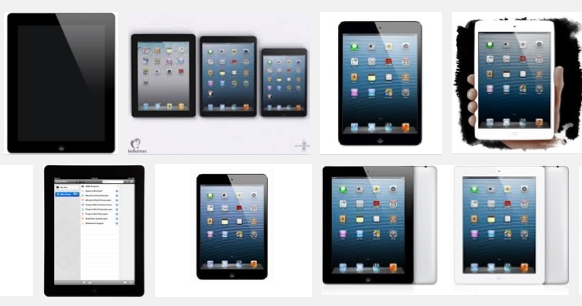
3. iPad – Again my preference here is for the iPad mini, because it is so light to hold in one hand and pass around, but still big enough and powerful enough to fulfil my storage needs and to operate without squinting (also quite a bit cheaper)
4. Reflector app – This is a key app that you download onto your laptop. It then enables you to project your iPad screen onto your computer (and so through the data projector) as it wirelessly receives signals from the iPad’s Airplay function.
For those who aren’t familiar with Airplay, it’s an Apple function that allows you to use the wireless to project sound and vision from an iPhone, iPad, iTouch etc of to Apple TV. You can find more information here: Airplay Why I like the Airplay enabled set up
For me this allows the best of both worlds. I can use the laptop for any software that’s native to computer world and very quickly and wirelessly switch to the mobile environment of the iPad.
This set up is portable so you can use it in any room with a data projector and computer, as long as the Reflector app is installed.
This also has the advantage of allowing your students access to the data projector if they also have iPads, in fact the Airplay function combined with Reflector can allow your students to project onto the screen from a number of iPads simultaneously, which is great to get students showing and comparing work for the whole class to see.
Controlling the projection screen from the iPad means that you can move around the class and control it from wherever you are.
To hand control over to students you just pass them the iPad
You can store all your materials on your iPad and use it to do all your preparation / marking etc at home.
You don’t have to fiddle with replace or try to find those awful IWB pens.
The iPad gives you access to the vast range and variety of apps that you just can’t run on a computer or IWB environment.
An iPad and a $12.99 app are hugely cheaper than the cost of an IWB and far more flexible.
You can also use the Reflector app to record screen activity so you can easily turn parts of your lessons into flipped learning or useful revision.
The iPad and laptop set up provides an authentic digital learning environment so digital literacies can be developed, whereas IWB software is an artificial digital environment which students will only encounter within schools.
There are of course some downsides to this arrangement.
Hand writing on the iPad screen isn’t so comfortable even with a stylus and a good whiteboard app (though if you want to try it I would recommend Bamboo Paper).
The Reflector app isn’t free, but it is very cheap ($12.99) so much cheaper than an IWB.
This set up only works with Apple mobile products as the controller (Though you can use any laptop to install the app on), so if your students bring along Android or other devices they won’t be able to access your projector (but they wouldn’t on an IWB either).
The Reflector app runs through the wireless to connect the laptop to the iPad, so you may need to have some specific ports open if your IT manager has them closed.
If you don’t have the choice and you already have an IWB, then that’s fine, you could still install the Reflector app and start using an iPad too, but given the choice it’s pretty clear. So, now hopefully I’ll be getting asked this question a lot less often.
Do post comments and let me know what you think. I’d also appreciate hearing about any alternative apps you may have used to connect your iPad and especially your Android tablet to the projector
The outbreak of the current pandemic has affected the lives of people, their health, and wellbeing. The sudden disruption of daily routine, undesired laws of social distancing, and receiving a flood of information puts all of us at risk of mental stress and dilemma. Persistent fear, anxious mood, irritability, feelings of guilt, pessimism and worthlessness, insomnia, loss of appetite or weight gain, poor concentration and, worsening of chronic health problems may be an indication that stress is affecting our health and immunity. During the lockdown period, our existing underlying diseases may also trigger in the absence of adequate physical activities and fear of the pandemic. So, there is a need to strengthen our physical strength and immunity system even if we do not have any lifestyle disease.
In the absence of any prescribed treatment, vaccine and therapeutic recommendations being available against COVID-19, governments of most countries and several authorised international health agencies like the World Health Organisation, the British Dietetic Association, and the UD Food and Administration are emphasizing on maximum use of raw vegetables and fruits, nuts, and seeds; pulses and wholegrain foods; unsaturated oils; limit the intake of soda, salt, sugar, and trans fats; and stop eating junk and sugary food. Apart from food, guidelines also recommend physical exercises, meditation and adequate sleep, and good exposure to sunlight.
These recommendations and guidelines have already been a part of the ancient healing system of India, i.e. Ayurveda, which suggests that life is standing on four pillars, namely, Aahar (diet), Vihar (lifestyle), Achar (conduct of individual with the external world) and Vichar (mental health). According to this, food is like a medicine that can recuperate an individual by establishing the connection between elements of life, food, and body. Individuals’ temperament, physical and emotional states can be determined and regulated by their food choices, quantities, and lifestyle. It is well known that there is a close relationship among genes, environment, food, and emotional factors that lead to a bidirectional vicious cycle of mood, food, and lifestyle diseases. Ayurveda recommends the intervention of healthy lifestyles, meditation, pranayama, adequate sleep, and Satvik food to live a healthy, peaceful life and fight against various diseases including COVID-19.
Ayurveda considers that proper food selection and dietary schedule help to maintain holistic health with a calm mind. BhagwadGitaand Yoga Shastras divided food into three types based on their qualities (termed as gunas). They are Sathva (satoguna), Rajasa (rajoguna), and Thamasa (tamoguna). Sathva means goodness, whereas Rajasa means aggressive/active, and ordered from “best” to “worst”. Thamasa means inactive. A Satvik diet is meant to include foods and eating habits that are natural, vital and energy-containing and provides calmness, purity and promote longevity, intelligence, strength, health and delight. Examples of Satvikfood items are fruits, vegetables, sprouted grains, cereals, nuts and seeds, low fat milk and milk products, pure fruit juices, and cooked food that is consumed within 3-4 hours of cooking, etc.
A Rajasic diet, the mode of passion, is one that is overly spicy, hot, or fried with pungent, sour, and salty taste. Rajasic food possesses attributes of negativity, passion, and restlessness. Examples of Rajasic food are caffeinated drinks (like coffee, fizzy soft drinks, tea), sugary foods (chocolate, cake, biscuits, chips, etc), or spicy food. As these foods are rich in glucose, they may provide immediate energy but eventually destroys the mind-body equilibrium, feeding the body at the expense of the mind.
A Tamsik diet, the mode of ignorance, is one that consists of overcooked, stale, fast, reheated, microwaved, or frozen food; dead food such as meat, fish, poultry, eggs; alcohol, cigarettes, and drugs of addiction. Tamsik foods are hard to digest and gift inertia, dullness, and induce sleep. All these are an important cause of obesity, diabetes, heart, and liver disease.
Rajasic and Tamsik foods, available as processed and junk foods, are full of of carbohydrates, sugar, and trans-fat in high proportions. The combination of high-fructose corn syrup (HFCS) and table sugar has become a primary choice of food industries as a sweetener due to its better shelf-life, more palatability and competitive price. This resulted in an additional 30% increase in overall sweetener intake and inability to regulate the hormones insulin and leptin and to inhibit the production of ghrelin, all factors that are known to affect the satiety centre in our brain, regulate blood glucose levels and appetite. Fast foods and fried foods like French fries, doughnuts, cakes, pie crusts, biscuits, frozen pizza, cookies, crackers, and stick margarines are made up by using hydrogenated or artificial trans-fats (or trans-fatty acids) which meets their food processing needs, easy to use, inexpensive and can be used many times in the commercial fryers. High sugar, high-fat and animal protein diets lead to disruption in the regulation of blood glucose levels, fat build-up in the liver, high uric acid concentrations,reduced kidney function and increase in arteriolar thickening, and fat deposition.
On the other hand, food rich in Prana (‘life-force’) is a combination of carbohydrates, fats, rich in dietary fibre, vitamins, minerals, and antioxidants with a limited amount of sugar, salt and oil, and no animal fat. It can be digested easily and utilize the six tastes in Ayurveda (sweet, sour, salty, pungent, bitter, astringent). Satvik food with recommended physical exercise, adequate rest, and a positive mindset is a source of energy and can reduce the risk of high body mass index, coronary artery disease, obesity, hypertension, type 2 diabetes, and osteoporosis. Satvik food is pure, natural, strong, wise, and full of energy to provide calmness and peace to the mind, thereby resulting in longevity of life in an individual.
On the other hand, Rajasic and Tamsik food like onion, garlic, asafoetida, caffeinated tea, and coffee; fried, spicy, high in sugar, and junk foods induce restlessness, lethargy, and sleep. Food like garlic and onion may be good as medicine but not for daily consumption. The daily consumption of food, which stimulates the nervous system, may lower the possibilities of experiencing life.
Food choices during the current pandemic
Recommended Food
Avoid (but could be taken rarely to satisfy taste buds)
Not Recommended
Fibrous food in the form of raw or freshly cooked colourful vegetables and fruits (good sources of vitamins A, C and E, as well as antioxidants, folate, and fibre (opt steaming, grilling or sautéing cooking methods)
Less spicy and oily food Garlic, onion, unseasonal veggies in a limited amount
Fried, over spicy and overcooked, or stale food
Pulses and wholegrain foods (oats, brown pasta, millet, and rice, quinoa and whole-wheat fresh chapatis and wraps)
Brown bread
Refined, processed grain foods (white pasta and rice, and white bread), deep-frozen foods
Low-fat or reduced-fat versions of milk and dairy products like curd, yoghurt (rich in probiotics that strengthen the digestive tract).
White meats like poultry and fish that are generally lower in fats than red meat; processed meat (though it is not a part of Satvik food)
Red meat
Unsalted nuts and seeds (like pumpkin, sunflower, and flax). They are great sources of vitamin E, niacin, riboflavin, protein, healthy fat, antioxidants, and fibre.
Homemade low fat/sugar snacks like idli, dosa, dhokla, upma, daliya, brown bread with pea-nut butter
Snacks that are high in salt and sugar (cookies, samosa, cakes, and chocolate); pickles, jams
Egg yolks, and fortified breakfast cereals
Canned food, used after washing it to remove extra salt or sugar
Unsaturated fats (e.g., found in fish, avocado, nuts, olive oil, soy, canola, sunflower and corn oils). The fat intake is recommended less than 30% of total energy intake, of which no more than 10% should come from saturated fat.
Saturated fats (e.g., found in fatty meat, butter, coconut oil, cream, cheese, and lard)
Trans-fats (processed food, fast and fried food, snacks, frozen pizza, pies, cookies, margarines, and spreads)
Fresh fruit juices, low fat lassi, chaaz, lemon water, coconut water/ hot water, herbal tea (packs a big punch of polyphenols, flavonoids, and antioxidants that destroy free radicals)
Soft drinks or sodas and other drinks that are high in sugar (e.g., packed fruit juices; fruit juice concentrates and syrups; flavoured milks and water; energy and sports drinks; and yogurt drinks, caffeinated tea, coffee, ready-to-drink tea, and coffee
Alcohol, tobacco, drugs
Honey and jaggery
Brown sugar
White sugar
Indian herbs:Coriander (Dhaniya), turmeric (contain Curcumin), fenugreek (methi), tulsi (Basil), cumin (jeera), fennel (sonph), cloves, black pepper (Kalimirch, contain Piperine), cinnamon (dalchini), ginger and curry leaves. These spices have antioxidant, antibacterial and anti-inflammatory properties, act as immune booster and may help to flush out any sinuses from the body.Rock salt (limit salt intake to 5 grams (equivalent to a teaspoon) a day.
Iodised salt
Non-iodised salt
The current guidelines of the Ministry of AYUSH, Government of India, recommend self-care guidelines for preventive health measures and boosting immunity. These guidelines recommend herbal tea and decoction (Kadha) made from Tulsi, Dalchini, Kalimirch, Shunthi (Dry Ginger) and Munakka (Raisin) with jaggery and/or fresh lemon juice to enhance the taste as immunity promoting measures against COVID-19. Guidelines also recommend avoiding cold, frozen, and heavy foods, which is a clear indication to avoid Rajasic and Tamsik food. Recommendations such as to take appropriate rest, timely sleep, exposure to sunlight, and practice of Yogasana and Pranayama also help to balance our body, mind, and lifestyle.
It is recommended that in this time of uncertainties and non-availability of treatment, it is important to remain healthy and peaceful. Good food with other recommendations, as explained in the above table, would help in building up our immunity as well as burst the stress while combating against COVID-19.
(Written by: Jyoti Sharma,Senior Scientist, DST and S.K. Varshney, Head, International Bilateral Cooperation Division, Department of Science and Technology.
The views expressed in the article are those of the authors and not of the organisation they belong to.)
After a gap of about 5 months due to the Corona pandemic, “Hunar Haat”, which has become “Empowerment Exchange” of artisans and craftsmen from across the country, will restart from September 2020 with the theme of “Local to Global” and comparatively larger participation of artisans.
Union Minister for Minority Affairs Shri Mukhtar Abbas Naqvi today said here that “Hunar Haat”, which has provided employment and employment opportunities to more than 5 lakh Indian artisans, craftsmen, culinary experts and other people associated with them in the last 5 years, have become popular among the people. “Hunar Haat”, which provides market and opportunity to master artisans and craftsmen from remote areas of the country, has become a credible brand of rare exquisite indigenous handmade products.
It is to be noted that Prime Minister Shri Narendra Modi, during his instantaneous visit to “Hunar Haat”, organised at India Gate, New Delhi in February 2020, had encouraged and lauded indigenous handmade products of artisans and craftsmen. Appreciating the artisans and craftsmen and their products in “Man Ki Baat” programme, Prime Minister Shri Modi has said, “A few days ago, at a small place at the Hunar Haat in Delhi, I witnessed hues of our country’s diverse expanse, cultures, traditions, cuisines & the warmth of emotions. As a matter of fact the repertoire comprising traditional attires, handicrafts, carpets, utensils, Bamboo & brass products, Phulkari of Punjab, exotic leatherwork of Andhra Pradesh, beautiful paintings from Tamilnadu, brass products of Uttar Pradesh, Bhadohi carpets, copper work of Kutch, a number of musical instruments & innumerable stories; the vivid mosaic of pan- Indian art & culture was truly unique. The stories of the artisans’ perseverance, zeal & love for their skill are equally inspiring as well.”
Prime Minister Shri Modi had said, “Hunar Haat, of course, is a platform showcasing art & craft; it is also lending wings to people’s dreams. It is a venue where it is impossible to overlook the country’s diversity. Besides handicrafts, it displays the diversity of India’s varied cuisine too. in a single row, one could savour the sight of Idli- Dosa, Chhole- Bhature, Daal- Baati, Khaman- Khandvi & what not! I thoroughly enjoyed having the delicious Litti- Chokha of Bihar. All over India, fairs & exhibitions such as this are organized from time to time. Whenever the opportunity arises, one should attend such events to know India, to experience India. Thus, not only would you be able to be a part of the country’s art-culture canvas; you will also contribute in the progress & prosperity of hardworking crafts persons, especially women.”
Shri Naqvi informed that utilising the time during nationwide lockdown; artisans and craftsmen have prepared their rare indigenous exquisite products at large scale and will bring them for display and sale in next “Hunar Haat”.
Shri Naqvi said that social distancing, hygiene, sanitisation and use of masks will be ensured at “Hunar Haat”. There will be a special “Jaan Bhi, Jahaan Bhi” pavilion to create health awareness among the people with the theme of “Say no to panic, yes to precautions”.
The Minority Affairs Ministry has organised more than 2 dozen “Hunar Haat” so far across the country where lakhs of artisans, craftsmen have been been provided employment and employment opportunities through these “Hunar Haat”.
In the coming days, “Hunar Haat” will be organized in Chandigarh, Delhi, Prayagraj, Bhopal, Jaipur, Hyderabad, Mumbai, Gurugram, Bengaluru, Chennai, Kolkata, Dehradun, Patna, Nagpur, Raipur, Puducherry, Amritsar, Jammu, Shimla, Goa, Kochi, Guwahati, Bhubaneswar, Ajmer, Ahmedabad, Indore, Ranchi, Lucknow and other places.
Shri Naqvi said that this time, people will also be able to buy “Hunar Haat” products digital and online also. Union Minority Affairs Ministry has started process to register these artisans and their indigenous products on “GeM” (Government e Marketplace). Several export promotion councils have shown interest to provide international markets at large scale for handmade indigenous products of these artisans and craftsmen.
Shri Naqvi said that lakhs of master artisans and craftsmen from across the country are happy and excited that “Hunar Haat” is going to be organised again.
Today three of us ran a workshop about facilitating flexible learning: how to give great feedback and still have a LIFE.
Overall, I think it went well. Lots of discussion and questions and people were keen to make contact at the end of the class….always a good sign.
It appears that the title and the content offered were timely. There was a big contingent from one school who have a push on to put courses online. This was excellent. They did have concerns, however, about how to get their content online. They were advised to work with the programme developers, and offered assistance to have people work alongside them, but not do it for them. The mentality is still there to get stuff on Blackboard, rather than thinking how they would like to present content and activities, and what technologies could assist.
There was some discussion about models where content is handed over to a team to create resources. Leigh made a good point about models he had seen which didn\’t work and had cost lots of money. He believes it is best to start with finding resources which already exist and can be re-used…if possible. This makes a lot lof sense.
Some institutions which are heavily in to distance education – open polytechnic, UK, Athabasca university have production units but this makes sense. Open university in NZ used to do this as well, but has found it is more cost effective to enable staff to take charge of their courses and they have moved to Moodle. It would be interesting to talk to someone and find out how it is actually going.
The total number who enrolled was 13 but 3 people didn\’t turn up. The group were very interested and gave positive evaluations.
I started the workshop off with an overview of facilitating online learning…well I sort of took charge of it really…we did brainstorm how we would approach it earlier in the week, but the actual content we presented was up to us individually. At the 11th hour, I felt the need to slap together some slides…too many bullet points..but for next time I will develop some concept maps.Hey I can try out CMAP.
I will try and get them done before this group finishes their online discussion. This will continue on until the end of the second week in May. Easter in the middle sort of interrupts the flow. The timing for the next workshop will be better. And hey next time we will try out Elluminate for the initial session.
People liked the different cases we presented. Merrolee had lots of practical advice and talked about how she managed the online discussion. It is good for people to hear the nitty gritty stuff from someone so experienced…well I am too. I talked about how assessment was linked in strongly to the discussions. We gave tips for managing prolific postings and motivating people to go online. I really have to do something about the amount of content in the evaluating eLearning for best practice course though…I will definitely be going with the learner-generated model for next year. hopefully i will still be teaching it then.
Leigh gave a very insightful overview of alternatives such as egroups, and how they are very useful platforms for handing over ownership of material to students….giving them something they can take away with them when they leave their 3 yr programmes…when they are locked out of the institutional platforms. Some of the OTs were very intrigued with the idea of having a community of practitioners able to remain in contact about professional issues.
It will take time but the ideas are filtering through. All we need are enthusiastic staff who act as \”hotpoints\” in their schools and talk about what they are doing to others. I do love running workshops with staff, and seeing the lightbulbs come on.
The next offerings will need to be a practical show and tell with staff demonstrating what they are doing. Oh when to schedule all these? We have two visiting speakers coming in May and June, Peter Mellow (AUT) on the Study Txt mobile learning project – article. Also John Milne (Massey) who is coming to work with us on the TEC eLearning guidelines an ECDF project. Exciting stuff.
The Indian Council of Medical Research (ICMR) is likely to replace hydroxychloroquine (HCQ) with anti-HIV drugs to improve immunity and possibly reduce viral replication, in the revised protocol. However, the chemicals in Kangra tea could also be effective in boosting immunity as they can block coronavirus activity better than anti-HIV drugs, said Dr Sanjay Kumar, Director, Institute of Himalayan Bioresource Technology (IHBT), based in Palampur, Himachal Pradesh. Dr Kumar has revealed this fact during a webinar organized at IHBT on the occasion of the International Tea Day.
Fellowships Scheme
In his lecture, Dr Kumar discussed the benefits of Kangra tea for society and industry, medicinal properties of tea for human health and the technologies developed and transferred by IHBT for combating COVID-19 disease. “Using computer-based models, the scientists screened 65 bioactive chemicals or polyphenols that could bind to a specific viral protein more efficiently than commercially available anti-HIV drugs approved for treating COVID-19 patients. These chemicals might block the activity of the viral protein that helps the virus to thrive inside human cells”, said Dr Kumar.
IHBT, a constituent of Council of Scientific and Industrial Research (CSIR), has also produced and supplied the alcohol-based hand sanitizer containing tea extract and natural aromatic oils through its technology partners. The Institute has developed herbal soap with tea extract, natural saponins and without SLES (sodium laureth sulphate), SDS (sodium dodecyl sulphate) and mineral oil. This soap provides anti-fungal, anti-bacterial, cleansing and moisturizing benefits. The soap is being produced and marketed by two companies based in Himachal Pradesh.
“Tea catechins production process which has been transferred to M/s Baijnath Pharmaceuticals, and Ready to Serve Teas and Tea wines which could be game changer for Kangra tea”, added Dr Kumar. Catechins are natural antioxidants that help prevent cell damage and provide other benefits.
On this occasion, Tea vinegar technology has been transferred to a company based in Dharmshala. Tea vinegar has anti-obesity properties. Also Herbal Green and Black Teas blended with AYUSH-recommended herbs were launched. These products could be very useful for boosting immunity against COVID-19, say IHBT scientists.
A team of researchers at Centre for Nano and Soft Matter Sciences (CeNS), Bangalore, an autonomous institute of the Department of Science and Technology, have developed a cup-shaped design (patent filed) of the mask that helps to create enough space in front of the mouth while speaking. It has been transferred to a Bangalore based company for mass production.
This snug fit mask causes no speech distortion, no fogging on glasses, and indeed, packs well all around, leaving practically no room for leakage while breathing. Another important advantage is its high breathability allowing one to wear it without any discomfort. Further, the researchers have chosen the fabric layers such that there is a possibility of deactivating pathogens sheerly by the electric charges that may prevail under mild friction due to the triboelectric nature of the fabric. These advanced-level tests are being carried out.
“While an ergonomic design for COVID-19 protection mask is essential for its ease of use for long hours, it is often not paid much attention beyond a few standard designs. A good design should minimize the feeling of intrusion and leakage around the edges, but maximize the ease of breathing and talking while holding its place,” said Prof Ashutosh Sharma, Secretary, DST.
With the increase of active COVID cases in India and other countries, usage of face masks has been advised for the general public. While the healthcare professionals can use the special and high technical quality medical masks, for the general public, a mask with moderate filtering efficiency should suffice. It should be comfortable to wear to encourage public to wear it for long hours.
CeNS has transferred this technology to Camellia Clothing Ltd., a Bangalore based garment company, established a couple of decades ago. The company wishes to produce and sell around one lakh mask per day through different distribution channels throughout India.
Recently, I have been asked quite few times about IWBs and which ones are best etc. My usual answer is \’none\’ and then I have to explain, so I thought, instead of explaining I would write this post so that I could point people towards each time they ask.
So this is my classroom set up of preference and these are the key components.
1. Data projector – I\’m not really bothered which one as long as it produces a good screen resolution (There\’s a reasonable article here on how to choose one: How to Buy a Projector)
2. A Laptop – My preference here is for a MacBook, but I can understand why some people find that extravagant and don\’t feel they are worth the extra financial outlay. Personally, I think they are worth the extra money, because they work faster and so save time (the most valuable commodity we have) and because they are pretty durable(The Apple products I\’ve owned have lasted at least twice as long as their PC counterparts I\’ve had and are still going strong.)
3. iPad – Again my preference here is for the iPad mini, because it is so light to hold in one hand and pass around, but still big enough and powerful enough to fulfil my storage needs and to operate without squinting (also quite a bit cheaper)
4. Reflector app – This is a key app that you download onto your laptop. It then enables you to project your iPad screen onto your computer (and so through the data projector) as it wirelessly receives signals from the iPad\’s Airplay function.
For those who aren\’t familiar with Airplay, it\’s an Apple function that allows you to use the wireless to project sound and vision from an iPhone, iPad, iTouch etc of to Apple TV. You can find more information here: Airplay Why I like the Airplay enabled set up
For me this allows the best of both worlds. I can use the laptop for any software that\’s native to computer world and very quickly and wirelessly switch to the mobile environment of the iPad.
This set up is portable so you can use it in any room with a data projector and computer, as long as the Reflector app is installed.
This also has the advantage of allowing your students access to the data projector if they also have iPads, in fact the Airplay function combined with Reflector can allow your students to project onto the screen from a number of iPads simultaneously, which is great to get students showing and comparing work for the whole class to see.
Controlling the projection screen from the iPad means that you can move around the class and control it from wherever you are.
To hand control over to students you just pass them the iPad
You can store all your materials on your iPad and use it to do all your preparation / marking etc at home.
You don\’t have to fiddle with replace or try to find those awful IWB pens.
The iPad gives you access to the vast range and variety of apps that you just can\’t run on a computer or IWB environment.
An iPad and a $12.99 app are hugely cheaper than the cost of an IWB and far more flexible.
You can also use the Reflector app to record screen activity so you can easily turn parts of your lessons into flipped learning or useful revision.
The iPad and laptop set up provides an authentic digital learning environment so digital literacies can be developed, whereas IWB software is an artificial digital environment which students will only encounter within schools.
There are of course some downsides to this arrangement.
Hand writing on the iPad screen isn\’t so comfortable even with a stylus and a good whiteboard app (though if you want to try it I would recommend Bamboo Paper).
The Reflector app isn\’t free, but it is very cheap ($12.99) so much cheaper than an IWB.
This set up only works with Apple mobile products as the controller (Though you can use any laptop to install the app on), so if your students bring along Android or other devices they won\’t be able to access your projector (but they wouldn\’t on an IWB either).
The Reflector app runs through the wireless to connect the laptop to the iPad, so you may need to have some specific ports open if your IT manager has them closed.
If you don\’t have the choice and you already have an IWB, then that\’s fine, you could still install the Reflector app and start using an iPad too, but given the choice it\’s pretty clear. So, now hopefully I\’ll be getting asked this question a lot less often.
Do post comments and let me know what you think. I\’d also appreciate hearing about any alternative apps you may have used to connect your iPad and especially your Android tablet to the projector
Recently, I have been asked quite few times about IWBs and which ones are best etc. My usual answer is \’none\’ and then I have to explain, so I thought, instead of explaining I would write this post so that I could point people towards each time they ask.
So this is my classroom set up of preference and these are the key components.
1. Data projector – I\’m not really bothered which one as long as it produces a good screen resolution (There\’s a reasonable article here on how to choose one: How to Buy a Projector)
2. A Laptop – My preference here is for a MacBook, but I can understand why some people find that extravagant and don\’t feel they are worth the extra financial outlay. Personally, I think they are worth the extra money, because they work faster and so save time (the most valuable commodity we have) and because they are pretty durable(The Apple products I\’ve owned have lasted at least twice as long as their PC counterparts I\’ve had and are still going strong.)
3. iPad – Again my preference here is for the iPad mini, because it is so light to hold in one hand and pass around, but still big enough and powerful enough to fulfil my storage needs and to operate without squinting (also quite a bit cheaper)
4. Reflector app – This is a key app that you download onto your laptop. It then enables you to project your iPad screen onto your computer (and so through the data projector) as it wirelessly receives signals from the iPad\’s Airplay function.
For those who aren\’t familiar with Airplay, it\’s an Apple function that allows you to use the wireless to project sound and vision from an iPhone, iPad, iTouch etc of to Apple TV. You can find more information here: Airplay Why I like the Airplay enabled set up
For me this allows the best of both worlds. I can use the laptop for any software that\’s native to computer world and very quickly and wirelessly switch to the mobile environment of the iPad.
This set up is portable so you can use it in any room with a data projector and computer, as long as the Reflector app is installed.
This also has the advantage of allowing your students access to the data projector if they also have iPads, in fact the Airplay function combined with Reflector can allow your students to project onto the screen from a number of iPads simultaneously, which is great to get students showing and comparing work for the whole class to see.
Controlling the projection screen from the iPad means that you can move around the class and control it from wherever you are.
To hand control over to students you just pass them the iPad
You can store all your materials on your iPad and use it to do all your preparation / marking etc at home.
You don\’t have to fiddle with replace or try to find those awful IWB pens.
The iPad gives you access to the vast range and variety of apps that you just can\’t run on a computer or IWB environment.
An iPad and a $12.99 app are hugely cheaper than the cost of an IWB and far more flexible.
You can also use the Reflector app to record screen activity so you can easily turn parts of your lessons into flipped learning or useful revision.
The iPad and laptop set up provides an authentic digital learning environment so digital literacies can be developed, whereas IWB software is an artificial digital environment which students will only encounter within schools.
There are of course some downsides to this arrangement.
Hand writing on the iPad screen isn\’t so comfortable even with a stylus and a good whiteboard app (though if you want to try it I would recommend Bamboo Paper).
The Reflector app isn\’t free, but it is very cheap ($12.99) so much cheaper than an IWB.
This set up only works with Apple mobile products as the controller (Though you can use any laptop to install the app on), so if your students bring along Android or other devices they won\’t be able to access your projector (but they wouldn\’t on an IWB either).
The Reflector app runs through the wireless to connect the laptop to the iPad, so you may need to have some specific ports open if your IT manager has them closed.
If you don\’t have the choice and you already have an IWB, then that\’s fine, you could still install the Reflector app and start using an iPad too, but given the choice it\’s pretty clear. So, now hopefully I\’ll be getting asked this question a lot less often.
Do post comments and let me know what you think. I\’d also appreciate hearing about any alternative apps you may have used to connect your iPad and especially your Android tablet to the projector














You must be logged in to post a comment.