Dharmendra Pradhan Gives “3-I Mantra for Economic Growth”; Says Imagination, Intellect And Innovation Will Drive India Towards $5 Trillion Economy

Minister of Petroleum and Gas & Steel Shri Dharmendra Pradhan today participated in the 92nd Annual Session of FICCI in New Delhi.Giving 3-I mantra of India’s growth, Shri Pradhan said that Intellect, Imagination and Innovation will drive India towards a $5 trillion economy. Wealth creators of the country will have to play an important role in this transition, he added.

Speaking about the  Government’s efforts to improve business climate in the country, Shri Pradhan said, “We believe in the principle of Minimum Government, Maximum Governance. Improving Ease of Doing Business is one of our key priorities. Reforms measures undertaken by the Government has shown tremendous results.”

About transformation in rural India, the Minister said, “Rural India is undergoing transformation. PM KISAN Yojana is working towards increasing purchasing capacity in rural India. Our Government is working to ensure housing for all, piped water supply to every household and electricity to every household.”

Speaking about India’s energy landscape, he said, “We are on our way to become world’s largest energy consumer. We will use a combination of conventional fuel and other more sustainable options to create a balanced energy mix. We will also explore other new and sustainable sources of energy like Hydrogen. Technology, innovation will play an important role in this. “

ShriPradhanalso said that India is moving towards a gas based economy and investments of about $100 bn is underway in India’s energy infrastructure including renewables. About bio energy, he said, “India has 600 million MT of biomass. On one hand we are ensuring the highest standards of sustainability through BS-VI, on the other hand, we have made a roadmap to convert this bio to energy.5000 plants are going to be set up for this. Oil and Gas PSUs are giving uptake guarantee and price stability. This will also be an answer to the problem of environment pollution.”

Regarding the steel sector, Shri Pradhan said, “India is the 2nd largest steel producer in the world. Ensuring raw material security, affordability and import diversification are some of our key priorities. We are targeting to become net exporter of steel. Recently, we launched Steel Import Monitoring System which will contribute towards this goal.”

YB/SK


“Private sector is coming in a big way to tap the potential of J&K”, says Dr. Jitendra Singh

The Minister of State for Development of North Eastern Region (I/C), Prime Minister’s Office, Personnel, Public Grievances & Pensions, Atomic Energy and Space, Dr. Jitendra Singh has said the private sector is making a beeline for investment in the Union Territory of Jammu and Kashmir. “Within two months of the changed administrative landscape in the newly carved out Union Territory, the private sector is coming in a big way to tap the potential of the youth and economy”, he said during a presentation made by Shri Shyamal Mukherjee, Chairman, PricewaterhouseCoopers (PWC), a leading multinational consultancy firm, here today.


PWC is soon to undertake a campus recruitment campaign at Jammu University, Katra. It will undertake similar campus placement exercises in University of Kashmir and NIT, Srinagar; IIM, IIT and Govt. College of Engineering & Technology in Jammu and Institute of Technology, Zakura besides the UT of Ladakh. Shri Mukherjee said the PWC will not only tap the local talent in J&K UT, but also provide mentorship for students and career counselling besides enhancing employability skills. “Initially, the campaign will run for graduate & post-graduate students, but slowly such programmes will be launched at 10+2 level”, said Shri Mukherjee. Imparting soft skills and behavioural workshops are also in the pipeline”, he added.

Lauding PWC for taking the lead, Dr. Jitendra Singh said this campaign will not result in any additional burden to the exchequer as there is no financial liability for the UT Administration. “The psychological hurdle of Article 370 was so huge the private industry was reluctant to invest in the erstwhile state of J&K”, the Minister said. “Now that this barrier has been breached under the able leadership of the Prime Minister Shri Narendra Modi, the opportunities for development and prosperity are opening up”, he added.

Dr. Jitendra Singh directed the officials to firm up the proposal and roll out the campaign in consultation with Secretary, Higher Education.

Last month a Regional Conference on ‘Replication of Good Governance Practices in UTs of J&K and Ladakh”, was organized in Jammu, as a precursor to the upcoming initiatives which will be undertaken in these two UTs of J&K and Ladakh under the leadership of the Prime Minister Shri Narendra Modi.


Year Ender 2019 Ministry of Heavy Industry

The automobile industry is one of the key drivers of the Indian economy. Since the liberalization of the sector in 1991 by way of allowing 100 percent FDI through automatic route, Indian automobile sector has come a long way. Today, there is a presence of almost every global auto manufacturer in the country. All categories of vehicles like two-wheeler, three-wheeler, passenger cars, light commercial vehicles, Trucks, Buses, Tractors and heavy Commercial vehicles are produced in the country. India is the largest manufacturer of 2W and 3W and 4th largest manufacturers of passenger cars in the world. Total turnover of the Indian Automobile Industry during 2018-19 was about 118 Billion USD (Rs 8.2 Lakh Crore), which constitutes 7.1% of the country’s total GDP, 27% of Industrial GDP and 49% of Manufacturing GDP. This industry is one of the largest employers and provides about 37 million direct and indirect jobs. The current annual sale of vehicles of all categories is about 26 million (2018-19) which is slated to increase by more than 3 times to about 84.5 million by 2030.

Import of crude oil to the tune of billions of liter per year and associated emission of millions tons of CO2 and other pollutants are some of the main challenge being faced by the country which is directly related to Automobile sector. Presently, India is facing an acute air pollution crisis and 14 of the top 20 most polluted cities in the world are in India.

To address these challenges, different stakeholder departments of the Government are devising strategies like tightening of CAFÉ Norms, introduction of BS VI compliant vehicles by leapfrogging from BS IV to BS VI directly, Fuel efficiency norms for heavy duty commercial vehicles, Start rating for the vehicles and so on. Promotion of Electric Mobility, which has Zero Tail pipe emission is an efforts of the government in this direction to reduce oil dependency and also to reduce vehicular pollution from the cities.

Embracingelectric mobility on large scale is imperative to tackle the various crisis arising due to pollution and giving the citizens of India a better quality of life.

Electric & Hybrid Mobility:

Government of India approved the National Mission on Electric Mobility (NMEM) in 2011 and subsequently National Electric Mobility Mission Plan 2020 (NEMMP 2020) was unveiled in 2013 by the Prime Minister.

The NEMMP 2020 is a National Mission document providing the vision and the roadmap for the faster adoption of electric vehicles and their manufacturing in the country. This plan has been designed to enhance national fuel security, to provide affordable and environmentally friendly transportation and to enable the Indian automotive industry to achieve global manufacturing leadership. It is one of the most important and ambitious initiatives undertaken by the Government of India that has the potential to bring about a transformational paradigm shift in the automotive and transportation industry in the country. This plan was a culmination of a comprehensive collaborative planning for promotion of hybrid and electric mobility in India through a combination of policies aimed at gradually ensuring a vehicle population of about 6-7 million electric/hybrid vehicles in India by the year 2020 along with a certain level of indigenisation of technology ensuring India’s global leadership in some vehicle segments.

As part of the NEMMP 2020, the Government approved the scheme titled ‘Faster Adoption and Manufacturing of Electric (&Hybrid) Vehicles in India’ (FAME India) in March, 2015 for an initial period of 2 years from 01stApril, 2015 with an aim to reduce dependency on fossil fuel and to address issues of vehicular emissions. The Scheme has been extendedfrom time to time till 31st March, 2019 with total outlay to Rs. 895 crore. The 1st Phase of FAME India Scheme was implemented through four focus areas namely (i) Demand Creation, (ii) Technology Platform, (iii) Pilot Project and (iv) Charging Infrastructure.

Demand creation is aimed at incentivizing the buyers of xEVsthrough providing demand incentives, leading to an upfront reduced purchase price at the time of purchase of vehicle at dealer level. The component of pilot projects envisaged trial of new technologies, business models etc. with special focus on public transportation. The technology platform under the scheme has been under execution in tandem with theDepartment of Science and Technology (DST) where PPP projects for development of EV (Electric Vehicle) technologies have been approved. Charging Infrastructure component envisages installation of charging station in different cities depending upon the uptake of electric vehicles in the country.

Achievements under Phase-1 of FAME India scheme:

Although the FAME Scheme was described as pilot scheme at the time of sanction before consideration of main scheme as envisage in NEMMP 2020, this scheme was very successful in creating the major policy discourse on Electric Mobility among all stakeholders including different departments of Government of India and State Governments.

Some of the quantitative and qualitative success of this scheme is as given below.

In this Phase of the Scheme about 2.8 lakh hybrid and electric vehicles are supported by way of demand incentive amounting to about Rs 359 crore resulting in saving of about 50 million liters of fuel and reduction of about 124 million Kg of CO2.

Projects worth about Rs. 158 Crores are sanctioned for the technology development projects like establishment of testing Infrastructure, setting up of ‘Centre of Excellence’ for Advanced Research in electrified transportation, Battery Engineering etc. to various organisations / institutions like Automotive Research Association of India (ARAI), IIT Madras, IIT Kanpur, Non Ferrous Material Technology Development Centre (NFTDC) and Aligarh Muslim University (AMU).

Under this scheme, DHI has sanctioned 425 electric and hybrid buses to various cities in the country with total cost of about 300 Crores. Out of 425 e-buses, 400 are received and deployed in various cities such as Indore, Lucknow, Guwahati, J&K, Kolkata, Hyderabad, Shimla andMumbai. Remaining 25 no of e-buses at Mumbai are expected to be deployed by end of this month.

Under charging infrastructure, Government of India has sanctioned about 500 charging stations / infrastructure in cities like Bangalore, Chandigarh, Jaipur and NCR of Delhi. Department of Heavy Industry also entrusted the task of making three expressways fully E-vehicle friendly by way of establishment of charging infrastructure at regular intervals to its public sector undertakings like BHEL and REIL. These highways are Delhi-Chandigarh, Delhi-Jaipur and Mumbai-Pune Expressways. Out of these recently Delhi – Chandigarh highway is declared as first expressway of the country which is E-vehicle friendly expressway.

FAME India Scheme Phase II:

Based on the outcome and experience of the FAME India Scheme, the second Phase of FAME Scheme was finalised and notified on 8thMarch 2019 with the approval of Union Cabinet. Second phase of thescheme commenced from 1st April 2019 with an outlay of Rs. 10,000 Crorefor a period of 3 years. This scheme has 3 components. namely –

a) Demand Incentives:

b) Charging Infrastructures:

c) Administrative Expenditure including Publicity, IEC Activities:

Salient features of FAME India Scheme Phase II:

This phase aims to generate demand by way of supporting 7090 e-Buses, 5 lakh e-3 Wheelers, 55000 e-4 Wheeler Passenger Cars (including Strong Hybrid) and 10 lakh e-2 Wheelers.

With greater emphasis on providing affordable &environment friendly public transportation options for the masses, the scheme will be applicable mainly to vehicles used for public transport or those registered for commercial purposes for all segment of vehicles.

For e-2W segment, this scheme is also applicable to privately owned registered e-2W also.

Depending upon offtake of different category of e-Vehicles, the provision has been made in the scheme for inter as well as intra segment wise fungibility.

Scheme is applicable to only those xEVs, which is fitted with advanced chemistry battery.

Scheme is applicable to only those vehicles, which is defined as Motor Vehicle as per CMVR and eligible to registered with Road Transport Authority.

In this phase, the demand incentive is linked to battery capacity i.e. Rs. 10,000/KWh for all eligible Vehicles except e-Buses (for which the incentive is Rs. 20,000/KWh), subject to capping at certain percentage of cost of eligible Vehicles [i.e. 40% for e-Bus and at 20% for all other categories of eligible Vehicle].

Demand incentive is extended to only those vehicles having ex-factory prices less than the threshold value.

Further, keeping in view market and technology trends in batteries, a provision has been made for revision of demand incentives from time to time under the scheme.

The incentive is applicable to vehicles manufactured in India as per phase manufacturing program issued by the department. Only OEMs which have achieved 40% localization level in case of 4W and Buses and 50% localization in case of 2W and 3W are only eligible to get incentives.

Performance under FAME India scheme Phase II:

OEMs and Vehicle Models: So far, 13 OEMs have registered their 39 EV Models [2W= 14; 3W=11 & 4W=14] for availing benefit of demand incentives under Phase-II of FAME Scheme. So far about 5500 EVs have been sold to the eligible user of the electric vehicle.

Sanction of Electric Buses: In order to promote electric mobility in public transport, Department has invited the proposal from cities and state transport corporations through an Expression of Interest for deployment of Electric Buses under Operation cost model basis. After examining the proposal department has sanctioned of 5595 no of e-buses to 64 cities for intra-city and intercity operations across 26 states/UT under the Scheme. These buses will runabout 4 billion Kilometer distance during their contract periodand are expected to save cumulatively about 1.2 billion litersof fuel over the contract period, which will result into avoidance of 2.6 million tonnes of CO2 emission.

Sanction of Charging Infrastructure: To address the issue of range anxiety, department has issued an Expression of Interest (EoI) inviting Proposals from Urban Local Bodies (ULBs)/municipal corporations, PSUs (State/Central) and public/private entities desirous for deployment of EV charging infrastructure in different states/cities for availing incentives under Fame India Scheme Phase II. About 100 proposals are received in response to the EoI for deployment of about 7000 charging stations in above cities. All proposals are under examination and sanction of charging station across the cities will be issued shortly.

Other initiatives to promote Electric Mobility:

In addition to FAME India scheme Phase II, different wings of Government is working to promote electric mobility in the country. Some of the major action in this regards are as given below.

GST on EVs is reduced to 5% from the current rate of 12%.

Government has extended an additional income tax deduction of Rs 1.5 Lakh on interest paid on loans to the buyers of Electric Vehicle to buy EVs is provided.

Ministry of Power has allowed sale of electricity as ‘service’ for charging of electric vehicles. This would serve as an incentive to attract investments into charging infrastructure.

Ministry of Road Transport Highways (MoRTH) issued notification regarding exemption of permit in case of battery operated commercial vehicles.

MoRTH has issued a notification for Green Number plate for the use of Electric Vehicles.

Ministry of Finance has revised the custom duty on the EV components to promote local manufacturing of these components.

Challenges faced in wider adoption of EVs

(i) Lack of awareness among people

(ii) Range anxiety

(iii) High capital cost of EVs as compared to ICE vehicle

(iv) Sub-Par performance of EVs as compared to ICE vehicle

(v) Recycling of battery

Way Forward:

Government is working on following initiatives to promote electric mobility.

Sanction of about 1000 charging stations in various cities in response to Expression of Interest issued by Department of Heavy Industry

Issue of fresh Expression of Interest for inviting proposals fromeligible public entities for installation of charging infrastructure on major identified highways.

Monitoring timely deployment of 5595 electric buses sanctioned under the schemes to 64 cities and eight State Transport corporations.

Publicity activities to promote public to adopt electric mobility.

Issue of fresh EOI for sanction of additional buses to the states/cities for intra city and intercity operations.

Department of Public Enterprises

Government of India is granted Maharatna status to Power Grid Corporation of India limited and Hindustan Petroleum Corporation limited which will enable the Boards of these CPSEs to exercise greater Financial and operational powers and facilitate expansion of operation in the global market.

Bharat Heavy Electricals Limited(BHEL), a Maharatnacompany

BHEL took the following initiatives of Commissioning India’s first Lithium-ion based Space Grade Cell manufacturing facility at BHEL Bengaluru, utilizing technology developed by ISRO. It also commissioned manufacturing facilities for gates & dampers to meet emission norms for coal-based power plants.

BHEL supplied special Tanks, Rigs, Batteries and Solar Panels for ISRO’S Chandrayaan modules a significant contribution by the company in the space programme of the country.

For the first time BHEL received order for 25 nos of 5000 HP electric locos (WAG-7 type) with regenerative braking system from Indian Railways.

DPE is monitoring the capital expenditure (CAPEX) by CPSEs & other Government organizations where target is more than Rs. 500 crore. This has resulted in better spending for infrastructure projects by the CPSEs and other Government organizations. The CAPEX achievement of these organizations has increased to Rs. 2,05,368 crore in first six months of 2019-20 as compared to Rs. 1,94,331 crore in first half of previous year (increase of 5.69%). CAPEX review meetings have been conducted on 03.09.2019 and 05.09.2019 in respect of 16 CPSEs.




Repayment of 8.19% GS 2020

The repayment of following securities is due as per details given below:

Table: Details of GoI Securities maturing in the month of January, 2020
Sl. No. Name of Security Scheduled Date of Repayment Effective date of Repayment No Interest Accrual from scheduled date of Repayment
(1) (2) (3) (4) (5)
1. Repayment of 8.19% GS 2020 January 16,2020

(Thursday)

January 16,2020

(Thursday)

January 16,2020

(Thursday)


The outstanding balance under both the securities will be repayable on the effective date of repayment as indicated in column 4 of above table.In the event of a holiday being declared on effective day of repayment by any State Government under the Negotiable Instruments Act, 1881, the Loan/s will be repaid by the paying offices in that State on the previous working day.

As per sub-regulations 24 (2) and 24(3) of Government Securities Regulations, 2007 payment of maturity proceeds to the registered holder of Government Security held in the form of Subsidiary General Ledger or Constituent Subsidiary General Ledger account or Stock Certificate shall be made by a pay order incorporating the relevant particulars of his bank account or by credit to the account of the holder in any bank having facility of receipt of funds through electronic means. For the purpose of making payment in respect of the securities, the original subscriber or the subsequent holders of such Government Securities, shall submit the relevant particulars of their bank account well in advance. However, in the absence of relevant particulars of bank account / mandate for receipt of funds through electronic means, to facilitate repayment of the Loan on the due date, holders may tender the securities, duly discharged, at the Public Debt Offices, Treasuries / Sub-Treasuries and branches of State Bank of India (at which they are enfaced / registered for payment of interest) 20 days in advance of the due date for repayment.


Full details of the procedure for receiving the discharge value may be obtained from any of the aforesaid paying offices.


****

Outcome of COP25 balanced, with the exception of Climate Finance issues: Shri Prakash Javadekar

The 25th Session of the Conference of the Parties (COP 25) to the United Nations Framework Convention on Climate Change (UNFCCC) was held under the Presidency of Chile in Madrid, Spain on 02nd – 15th December 2018. The conference, which was expected to conclude on 13th December, was extended till 15th December 2019 to arrive at a consensus on a range of issues, particularly Article 6 of Paris Agreement, Warsaw International Mechanism for Loss and Damage associated with Climate Change Impacts and climate finance.

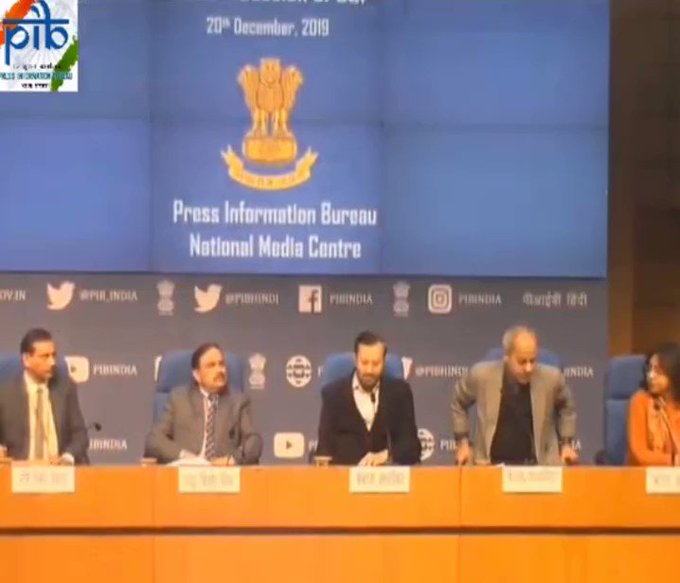
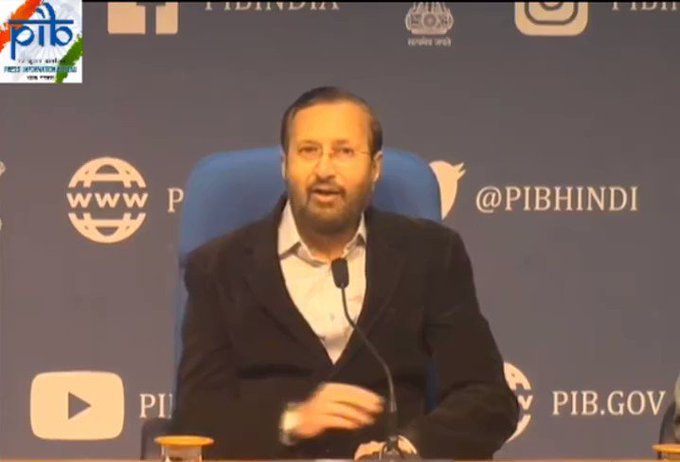
Addressing a Press Conference in New Delhi today, Union Environment Minister, Shri Prakash Javadekar said that with the exception of climate finance issues, overall, India considers the outcome of COP 25 a balanced outcome which addresses concerns of all Parties, especially the developing countries and provides the necessary building blocks for successful implementation of the UNFCCC and its Paris Agreement.

PC Pic.jpg

“India engaged constructively in the negotiations while protecting India’s key interests including consideration of principles of  equity and Common but Differentiated Responsibilities and Respective Capabilities (CBDR-RC); need for enhanced means of implementation, including climate finance, technology transfer at affordable costs and capacity building support, from developed to developing countries in accordance with their obligations under the UNFCCC and Paris Agreement.”, said Shri Javadekar

PIB India

@PIB_India

India’s efforts to mitigate climate change, and to conserve environment was appreciated at the recently held 25th session of the Conference of Parties to the United Nations Framework Convention on Climate change: Union Minister @PrakashJavdekar @moefcc @India4Climate

Embedded video

47 people are talking about this

“Prime Minister ,Shri Narendra Modi has increased the target for renewables from 175 Giga Watts to 450 Giga Watts at the recent UN Climate Action Summit. India is simultaneously progressing on solar, biomass and wind energy”, said the Union Minister.

PIB India

@PIB_India

Prime Minister @narendramodi has increased the target for renewables from 175 Giga Watts to 450 Giga Watts at the recent UN Climate Action Summit. India is simultaneously progressing on solar, biomass and wind energy: Union Min. @PrakashJavdekar @moefcc @India4Climate

Embedded video

161 people are talking about this

The COP 25 decision, titled Chile Madrid Time for Action, emphasizes the continued challenges that developing countries face in accessing financial, technology and capacity-building support, and recognizes the urgent need to enhance the provision of support to developing country Parties for strengthening their national adaptation and mitigation efforts. The decision also recalls the commitment made by developed country Parties to a goal of mobilizing jointly USD 100 billion per year by 2020 to address the needs of developing country Parties. On the issue of global ambition for combating climate change, the decision adopted provides for a balanced and integrated view of ambition that includes not only efforts for climate change mitigation, but also for adaptation and means of implementation support from developed country parties to developing country parties.

Some of the Key issues discussed at COP25 are enlisted below:-

Pre-2020 implementation and ambition gaps: On the matter of Pre-2020 gaps in commitments and actions of developed countries under Kyoto Protocol, India, along with other developing countries, was successful in ensuring further work on it. The COP 25 decision provides for assessing the pre-2020 gaps through round tables at COP 26 in Glasgow, with written submissions from Parties. UNFCCC secretariat will prepare a summary report of the pre 2020 gaps in mitigation action and means of implementation support by developed country parties that had commitments under the Kyoto Protocol.

Summary of these roundtables will serve as an input for the second periodic review of the long-term global goal under the Convention, which will start in 2020 and conclude in 2022. The decision on Periodic Review ensures that it will assess the overall aggregated effect of the steps taken by Parties in order to achieve the long-term global goal in the light of the ultimate objective of the Convention, in accordance with the relevant principles and provisions of the Convention and on the basis of the best available science.

Article 6 under the Paris Agreement: the guidance for Article 6 for market and non-market mechanisms could not be agreed due to divergences among Parties. However, India was successful in protecting its key positions in the last draft decision text presented including on transition of Clean Development Mechanism under Kyoto Protocol to the post-2020 period and provision of share of proceeds from market mechanisms as well as cooperative approaches, for adaptation fund to address the climate change adaptation  needs of developing countries. India insisted that fundamental principles of market reliability and parity between Article 6.2 and Article 6.4 must be preserved. India’s concerns are reflected in the draft texts that will be negotiated in further meetings of the COP. India argued for incentivizing private sector through Article 6.4 with adequate returns without requirement of adjusting Nationally Determined Contributions (NDC) that are country driven.

Enhanced Transparency Framework (Monitoring, Reporting and Verification): in the discussions on technical elements under transparency, India argued for a robust transparency framework for both action and support provided by developed to developing countries. Further the common formats should operationalize flexibility for developing countries to reflect the principle of differentiation. Discussion on this matter will continue in the next COP26.

Warsaw International Mechanism (WIM) for Loss and Damage: under the review of WIM for loss and damage associated with Climate Change Impacts, the decision recognizes urgency of scaling-up of action and support, as appropriate, including finance, technology and capacity-building, for developing countries for averting, minimizing and addressing loss and damage, including from Green Climate Fund (GCF). The decision also established the Santiago network for catalyzing technical assistance for implementation of relevant approaches at in developing countries.

Adaptation: On adaptation related matters, India has been stressing on parity between mitigation and adaptation. The COP 25 decision recalls that the provision of scaled-up financial resources should aim to achieve a balance between adaptation and mitigation, taking into account country-driven strategies, and the priorities and needs of developing country Parties, considering the need for public and grant-based resources for adaptation.

Technology development and transfer: On technology related matters, the adopted decision requests the Technology Executive Committee (TEC) and the Climate Technology Centre and Network (CTCN) to continue to implement their mandates with strengthened efforts on all themes of the technology framework. GCF has also been requested to collaborate with CTCN and TEC for strengthening cooperative action on technology development and transfer at different stages of the technology cycle.

India also made a presentation on its second Biennial Update Report (BUR) submitted to UNFCCC in December 2018 under the Facilitative Sharing of Views (FSV) process. The key highlight of India’s second BUR is the achievement of 21% reduction in emission intensity of its Gross Domestic Product over the period of 2005-2014.

India hosted an ‘India Pavilion’ at COP-25 which was a major attraction amongst the visitors that included delegates from different parts of the world, UN agencies etc. The theme of the pavilion was ‘150 years of celebrating the Mahatma’ and it was designed to depict Mahatma Gandhi’s life and messages around sustainable living.


https://i0.wp.com/indiaatcop25.org/wp-content/uploads/2019/12/ACA_1347-min-scaled.jpg  


GK

Curtain Raiser : Army Technology Seminar

ARTECH Seminar was launched in 2016 as part of overall vision of ‘Make in India’ of Hon’ble Prime Minister and is conducted every year as part of events leading to Army Day celebrations. The seminar is the flagship event of Indian Army which sets the agenda for focus areas of harvesting indigenous capabilities in the Defence sector.

ARTECH platform provides an opportunity to practitioners of military operations, policy makers in Ministry of Defence, industry and academia to put forth their contemporary Defence related capabilities. It is also a forum for innovators in uniform to showcase their products and offer these to industry to refine & productionise.

The fifth edition of ARTECH is being organised by Indian Army on ‘Technologies for Non Contact Warfare’ which will be organised on 23 December 2019 at Manekshaw Centre, Delhi Cantonment.

Speakers from varied fields of industry, academia, think tanks, subject matter experts, users and policy makers have been invited to address the seminar. ARTECH will be of immense value with participation by industry leaders, individual innovators, startups and academicians.

There is a select equipment display planned during the seminar by industry, academia, innovators in uniform and startups, DRDO and DPSUs.

Note : programme of work is enclosed for reference


Three combinations get automatic approval under CCI Green Channel

The Competition Commission of India (CCI) received the following three Green Channel combinations filed under sub-section (2) of Section 6 of the Competition Act, 2002 (Act) read with regulation 5A of the Competition Commission of India (Procedure in regard to the transactions of business relating to combinations) Regulations, 2011 (Combination Regulations):

  1. Acquisition of IDBI Asset Management Ltd. (IAML) and IDBI MF Trustee Company Ltd. (IMTL) by Muthoot Finance Limited (MFL) [filed on 16th December, 2019]

The notification relates to the acquisition of 100% equity shares of both IAML and IMTL by MFL. MFL, a non-deposit taking NBFC registered with the RBI and provides secured and unsecured loan (financing) against collateral of gold jewellery to companies and individuals. IAML’s principal activity is to act as an asset management company to the IDBI Mutual Fund. IMTL acts as the trustee company of IDBI MF in India. IDBI Bank holds 100% shareholding in IMTL.

Summary of the Proposed Combination is available at: https://www.cci.gov.in/sites/default/files/notice_order_summary_doc/C-2019-12-710.pdf 

  1. Acquisition of Adani Electricity Mumbai Limited (AEML) and Adani Electricity Mumbai Services Limited (AEMSL) by Qatar Holding LLC (QH) [filed on 19th December, 2019]

The notification relates to the acquisition by QH of 25.1% equity shares of AEML and AEMSL from Adani Transmission Limited.  QH, registered as a FPI with SEBI, is an investment holding company of Qatar Investment Authority (QIA).  AEML is the licensee for an integrated power distribution, transmission and generation business. AEMSL is a newly incorporated entity and is currently not engaged in any business activity. AEMSL intends to provide certain captive services to AEML and ATL.

Summary of the Proposed Combination is available at

https://www.cci.gov.in/sites/default/files/notice_order_summary_doc/C-2019-12-712.pdf


  1. Acquisition of GVK Airport Holdings Limited (GVKAHL ) by Green Rock B 2014 Limited (Green Rock), National Investment and Infrastructure Fund (NIIF) and Indo-Infra Inc. (Indo-Infra) [filed on 19th December, 2019]

The notification relates to acquisition of shares of, and control over, GVKAHL (and / or of its affiliates) and through GVKAHL (and / or through its affiliates), control over GVKAHL’s subsidiaries, Mumbai International Airport Limited (MIAL) and Navi Mumbai International Airport Private Limited (NMIA) by Green Rock, NIIF, and Indo-Infra. Green Rock, a trustee of Green Stone Trust has made certain investments in India and does not carry out any business activities directly in India. NIIF is an alternative investment fund with a focus to provide long-term capital to the country’s infrastructure sector. Indo-Infra is a holding company and part of the PSP group. PSP is a Canadian Crown corporation established by the Canadian Parliament under the Public Sector Pension Investment Board Act. GVKAHL is an affiliate of the GVK group. GVKAHL is a holding company for MIAL and its subsidiaries and joint ventures, and is also intended to engage in the business of developing infrastructure facilities and investing in companies directly or indirectly developing, operating and managing airports.

Summary of the Proposed Combination is available at

https://www.cci.gov.in/sites/default/files/notice_order_summary_doc/C-2019-12-713.pdf

The Proposed Combinations filed under sub-section (2) of Section 6 of the Act read with regulations 5A of the Combination Regulations (i.e. notice for approval of Combinations under Green Channel) shall be deemed to have been approved upon filing and acknowledgement thereof.

CCI Green Channel

The CCI introduced an automatic system of approval for combinations under ‘Green Channel’. Under this process, the combination is deemed to have been approved upon filing the notice in the prescribed format. This system would significantly reduce time and cost of transactions and thereby contributing towards ease of doing business in India.


Delhi Postal Circle makes special arrangements for acceptance of X-Mas/New Year Greetings Mail

Delhi Postal Circle has made special arrangements for acceptance of X-Mas/New Year Greetings Mail at 34 Post Offices and 2 RMS Offices at Railway Stations as given below from 18.12.2019 to 07.01.2020. Separate reception counters are being set up at these Post Offices. Members of public are Welcome to post their X-Mas/New Year Greetings Mail at these collection centers. These centers are made available in addition to the existing centres already functioning.

S.No. Name of Post Office S.No. Name of Post Office
1. Ashok Vihar HPO 19. New Delhi GPO
2. Civil Lines PO 20. New Sabzi Mandi PO
3. Chanakyapuri PO 21. Naraina Ind. Estate HPO
4. Delhi GPO 22. Patel Nagar PO
5. Delhi Cantt. PO 23. Paschim Vihar PO
6. Hauz Khas PO 24. Ramesh Nagar HPO
7. Indraprasta HO 25. Rohini PO
8. Janakpuri PO 26. R.K. Puram Sector 5 PO
9. Krishna Nagar HPO 27. R.P. Bhawan PO
10. Karol Bagh PO 28. Sansad Marg HPO
11. Keshav Puram/Onkar Nagar PO 29. Sarojini Nagar HPO
12. Kalkaji HPO 30. SRT Nagar PO
13. Lodi Road HPO 31. Seelampuri PO
14. Lajpat Nagar PO 32. Sriniwaspuri PO
15. Malviya Nagar PO 33. Saraswati Vihar PO
16. Malka Ganj PO 34. R.K. Puram (Main) PO
17. Mehrauli PO 35. Delhi R.S. TMO (Delhi Rly Station)
18. Mayapuri PO 36. New Delhi R.S. TMO (New Delhi Rly Station)

***

Innovation & Infrastucture will help India to become USD 5 trillion economy: Piyush Goyal

The Indian Railway splans to invest USD 700 billion through partnerships, joint ventures and collaborations to strengthen the infrastructure and reach the farthest corners of the country in the next 12 years said the Commerce and Industry& Railways Minister Piyush Goyal in New Delhi today. He was addressing ASSOCHAM which is celebrating 100 years.He was addressing ASSOCHAM about Strengthening India’s Global Positioning in New Delhi today.

In his address the Commerce and Industry Minister urged Indian Industry to be in constant dialogue with the Government so that all the problems and hurdles that industry and business face today may be dealt with so that the Government’s commitment for a better India, for the 1.3 billion aspirational citizens who are looking for a better quality of life, can be met at the earliest.

Government of India will be a facilitator and an enabler for industry and entrepreneurship to ensure that harassment at the hands of government functionaries both at the centre and the states comes to an end said the Minister. For this he urged ASSOCHAM with its 4 lakh plus members to give feedback that will help Government both at the Centre and the States to look at regulatory, non-regulatory, judicial and any other impediments that are roadblocks for industry and entrepreneurship.

Commerce and Industry Minister urged industry to adopt and encourage innovation by funding research and development and work closely with academia so that India may become a true innovation nation where startups can flourish and become positive disruptors in industry by creating more jobs for the youth of the country. He gave the example of the United States of America and China that have more than 4,200 and more than 1,200 researchers respectively and India has only 216 number of researchers per million people.

Commerce and Industry Minister congratulated ASSOCHAM in its centenary year and appreciated the commendable work it has done for a century for Indian industry and business.


Chairman 15th Finance Commission holds meeting with the CM Andhra Pradesh

The Chairman Fifteenth Finance Commission Shri N K Singhmet  theChief Minister of Andhra Pradesh, Shri Y S Jagan Mohan Reddy in Vijaywada on 19th December, 2019 and discussed various issues specific to state finances for the award period of the Commission from 2021 to 2026.  Shri Reddy highlighted the State’s fiscal challenges arising out of the bifurcation of the erstwhile Andhra Pradesh and stressed on the requirement of financial management by the new State Government.

While stating that the new State Andhra Pradesh was the most backward among all the southern States, the Chief Minster urged the support of theCommission to rebuild the governance systems from scratch. He also stressed on the need to support the newly initiated unique welfare schemes, Navaratnalu, in order to achieve the Sustainable Development Goals, Polavaram Project, and other flagship projects to cover all backward districts in Rayalaseema and North Coastalparts of the State. The CM also briefed the Chairman  about the newly created Village Secretariats of the State.

Shri Reddy listedout the  commitments made in the State Reorganisation Act  along with the demand for Special Category status to the State and requested the Commission to recommend immediate stepsby the Centre to release all pending dues to the State to ensure that the progress of the new State is not hampered.

The State Government officials made a detailed presentation on the fiscal situation of the State and sought about Rs. 5 lakh crore as Revenue deficit grant, increased limits for borrowings and waiving off the past liabilities of the State on account of NSSF loans.

The Chairman, Shri N K Singh assured that all issues raised by the State government would be carefully examined and duly considered and the Commission will continue its dialogue with the State. However, he advised the State to make serious efforts to invest the scarce resources in the areas which would ensure future stream of income. He was accompanied by Arvind Mehta, Secretary and other officials of the Finance Commission.


Absentee Voter Status Facility provided for the first time in the country to PwD and 80+ aged voters of seven ACs in Jharkhand

The Fifth and final Phase of election took place in 16 Assembly Constituencies (ACs) spread across six districts (Sahebganj, Pakur, Dumka, Jamtara, Deoghar and Giridih) in Jharkhand today.

The poll today went off peacefully, without any incident, with very enthusiastic participation of voters including PWDs, senior citizens, youth etc.

  • 3,690 out of 5,389 polling stations (more than 68.47%) were categorized as critical; adequate security arrangements were made.
  • 1 chopper was deployed to drop 62 polling personnel.
  • This phase covered 40,05,287 voters, including 3,076 service voters and 50,053 PwD voters. Total 237 Candidates including 29 female Candidates are in fray.
  • In this phase 7,505Volunteers facilitated bringing PwD voters from their houses to the polling stations. 2,766vehicles were deployed to facilitate their transport. 2,065wheelchairs were provided at the Polling Stations.

In all phases, a total of 31,833 Volunteers facilitated to bring PwD voters from their houses to the polling stations; 11,338 vehicles were deployed to facilitate their transport and 14,036 wheelchairs were provided at the Polling Stations.

  • The Absentee Voter status was provided to PwD and 80+ aged Voters of four Assembly Constituencies of Phase-V (namely Rajmahal, Pakur, Godda and Jamtara) and they were given the facility to vote through Postal Ballot at their doorstep.

In this phase, 802 PwD and 80+ aged voters exercised their franchise using this provision of Postal Ballot.

This facility of Absentee Voter status was provided for the first time in the country to PwD and 80+ aged voters of total 7 Assembly Constituencies in Jharkhand (viz, 01-Rajmahal AC, 05-Pakur AC, 09-Jamtara AC, 15-Deoghar AC, 17-Godda AC, 36-Bokaro AC and 40-Dhanbad AC). A total of 2,018 PwD and 80+ aged voters exercised their franchise using this provision of Postal Ballot across the State.

  • Total value of seizures across the State till today is Rs 18.76Crore.
  • In 10 Assembly Constituencies of Phase-II, III & IV, the Booth App was used successfully.
  1. Approx. voter turnout figures (at 5.00 PM) : 

At the time of release of the Press Note, the voting in some of the Polling Stations was still going on. The final Voting Turnout will be known after the verification and scrutiny of Presiding Officers’ Diaries and other documents.

            As of reports received till 5.00 pm, the approximate voter turnout figure for all the 16 ACs of 5thphase today is 70.83%. The final voter turnout in LAE 2014 for these 16 ACs was 73.31%.

            The approximate voter Turnout for all 81 ACs across all phases of Jharkhand is 65.17%. The final voter turnout for LAE2014 was 66.53%.

  1. EVMs& VVPATs :

No complaint regarding EVM/VVPAT have been reported during the poll today. Across the 16 ACs today, as per figures received till now only 0.53% BUs,0.78% CUs and 2.23% VVPATs were replaced.

SBS/MR/ac


VP Naidu asks people to place national interest at the center of their actions and not to indulge in violence

The Vice President of India Shri M Venkaiah Naidu today urged people to place national interest at the center of their actions and not to indulge in violence.

Addressing the gathering after releasing the book “ Turbulence and Triumph – The Modi Years” written by Rahul Agarwal and Bharti S Pradhan at Uparashtrapati Bhavan in New Delhi today, he said that while dissent was the basic quality of democracy, people must follow peaceful, democratic methods and function according to the spirit of the Constitution.

Observing that unity, safety, integrity and sovereignty of the nation were of paramount importance, the Vice President said that people must move forward in a constructive and positive manner. He said people should not do anything that would be detrimental to the image of the country.

He also wanted public representatives to live up to the expectation of people and effectively utilize forums such as Parliament and state legislatures to highlight people’s issues.

Shri Naidu said that he was impressed by Shri Modi’s Mantra of “Reform, Perform and Transform” and added, “Transformation of the nation is the need of the hour and that is what is happening now.”

Vice President applauded the reforms undertaken by the Prime Minister and referred to the profile on Shri Narendra Modi penned by the former President of the United States of America, Mr. Barack Obama, in which he described him as the ‘reformer-in-chief’.

Shri Naidu said that Prime Minister was translating the vision of Mahatma Gandhi into a reality through several schemes such as Swachh Bharat, Make in India, Skill India, Beti Bachao, Beti Padhao and the initiatives on environmental protection that combat the deleterious effects of climate change.

Appreciating the initiatives launched by the Prime Minister to improve agricultural productivity and double farmers’ income by 2022, the Vice President lauded the administration headed by the Prime Minister for achieving a significant number of milestones that his administration has achieved in a short span.

“Modi Ji gave a new impetus to the economy through a number of initiatives such as the Goods and Services Tax (GST). Sabka Saath Sabka Vikas Sabka Vishwas is an eloquent expression of his world view,” he added.

Stating that India’s outreach to the world has been enhanced under Shri Modi’s leadership, the Vice President said “I am happy to note that the world is recognizing and respecting India much more than earlier,” he added.

Congratulating the authors for bringing out the book, he expressed the hope that it would inspire the people to imbibe some of the qualities of head and heart as exemplified by Shri Narendra Modi Ji.

Shri Ajay Mago, Publisher of Om Books International, members of the publishing house, Authors and several other eminent dignitaries were present at the book release event.

The following is the full text of the speech:

On the special occasion of the launch of the book Turbulence & Triumph: The Modi Years, it is a pleasure for me to recall the extraordinary journey of Shri Narendra Damodardas Modi, the 14th and current Prime Minister of India who is now serving a second term in office.

At the outset, let me extend hearty congratulations to the authors of this book, Shri Rahul Agarwal and Bharthi S Pradhan for chronicling the life of Shri Narendra Bhai Modi.

A politician, a statesman, an orator, a leader, an ascetic committed to the idea of New India, he is truly a multifaceted personality.

My dear sisters and brothers,

Mahatma Gandhi once observed, “The history of the world is full of men who rose to leadership, by sheer force of self-confidence, bravery and tenacity”.

Modi Ji’s life is an embodiment of these virtues.

It is by this sheer force of self-confidence, bravery, and tenacity that Shri Narendra Damodardas Modi made the extraordinary transition from an ordinary man with a humble background to become a popular Prime Minister of the world’s largest and most vibrant democracy.

Modi ji led the BJP in the 2014 General Elections which gave the party a majority in the Lok Sabha, a first for any single party since 1984.

When he became Prime Minister of India with such an overwhelming mandate, we began to see so much more of the ‘People’s Prime Minister’—he undertook extensive travels, meeting people within India, meeting world leaders across the globe, never resting for a moment.

I have personally known Modi ji for several decades.

I have seen Modi ji as a worker with wonderful organizational skills, never shying away from rising to the task, paying attention to every detail.

He proclaims himself as ‘pradhan sevak’ of the people and is striving hard to live up to that ideal.

He is always known for his discipline, dedication, devotion and development–4Ds.

  1. ability to communicate and connect so effectively with people is truly remarkable.

It is through reading and travelling that he could broaden his worldview and become such a repository of cultural, historical and political knowledge.

To reach where he is today, Shri Narendra Modi has gone through many trials and tribulations, both as Chief Minister of Gujarat and Prime Minister of India. I applaud the authors for capturing all these tribulations with clarity and honesty.

My dear Sisters and brothers,

He is also a reformist and I recall that the former US President, Mr. Barack Obama had in a profile penned by him on Modi Ji in Time Magazine, described him as the ‘reformer-in chief’.

I am impressed by his Mantra of Reform, Perform and Transform. Transformation of the nation is the need of the hour and that is what is happening now.

India’s outreach to the world has been enhanced under his leadership. I am happy to note that the world is recognizing and respecting India much more than earlier.

Modi Ji also passionately promoted Yoga and is spearheading the need for health and wellbeing of people, especially the youth, through the Fitness India campaign.

He is translating the vision of Mahatma Gandhi into a reality through several schemes such as Swachh Bharat, Make in India, Skill India, Beti Bahchao, Beti Padhao and the initiatives on environmental protection that combat the deleterious effects of climate change.

He has played a pioneering role in promoting clean energy and the leadership provided by India in the formation of International Solar Alliance is a testimony to his commitment to the protection of environment.

I also appreciate the initiatives launched by the Prime Minister to improve the agricultural productivity and double farmers’ income by 2022.

One need only look at the significant number of milestones that his administration has achieved in a short while to understand his commitment to transform people’s lives.

Proclaiming that “a clean India would be the best tribute India could pay to Mahatma Gandhi on his 150 birth anniversary in 2019,” Modi ji launched the Swachh Bharat Mission. India was declared Open Defecation Free in October 2019, an incredible achievement.

Modi ji gave a new impetus to the economy through a number of initiatives such as the Goods and Services Tax (GST). ‘Sabka Saath Sabka Vikas Sabka Vishwas’ is an eloquent expression of his world view.

He ushered in game-changing reforms such as the Jan Dhan Yojna to promote inclusive growth and introduced many social security schemes such as Ayushman Bharat.

Recognizing the potential demographic dividend that India has at its disposal, India is now revamping its education system to improve quality, access and affordability. Modi ji once said, “I dream of a young India that is not constrained by any limitations whatsoever. I want the youth of this country to lead a life filled with hope and opportunity.”

Determined to protect and empower women, the motto ‘Beti Bachao Beti Padao’ given by the Prime Minister now echoes all through the country.

The progressive mindset of the Prime Minister can be gleaned through a number of forward-looking legislations passed by the Parliament in recent times, including the abolition of Triple Talaq.

His staunch belief in breaking the shackles of the past and moving forward to a brighter tomorrow is reflected in each one of these bold decisions.

We now dream of building a 5 Trillion Dollar economy. We wish to partner with the international community to achieve Sustainable Development Goals and at the same time usher in inclusive development in our country.

The times call for a strong, determined and agile leader to be at the helm of affairs. We are fortunate to have an able leader and a stable government.

Let me once again congratulate the authors of the book. I hope the book will inspire the people to imbibe some of the qualities of head &heart exemplified by Shri Naredra Bhai Modi, so that we can collectively shape a New India.

Thank you!

Jai Hind!


Integral Coach Factory produces 3000 Coaches in record 215 days

Displaying dedication and efficiency, Integral Coach Factory (ICF) of Indian Railways has produced its 3000th coach of the year in less than 9 months. This would help in meeting the growing demand for coaches. The number of working days to achieve the above figure has been reduced from 289 days in the last year to 215 days in the current year, a reduction of 25.6%. Till the year 2014, the same amount of time was being taken for the production of only 1000 coaches.


Regional Conference on ‘Improving Public Services Delivery – Role of Governments’ inaugurated in Nagpur

The Secretary to the President, Shri Sanjay Kothari said that aim of Public Services delivery is to ensure ease of living to citizens. He was addressing at the inauguration function of two-day Regional Conference on ‘Improving Public Service Delivery – Role of Governments’, in Nagpur, Maharashtra today. The 2-day conference is being organised by the Department of Administrative Reforms and Public Grievances (DARPG) in collaboration with the Government of Maharashtra and the Maharashtra State Commission for Right to Public Services.

The Union Minister for Road Transport & Highways and Minister for Micro, Small & Medium Enterprises, Shri Nitin Jairam Gadkari and Minister of State (Independent charge) of the Ministry of DONER, Minister of State for PMO, Personnel, Public Grievances & Pensions, Atomic Energy and Space Dr Jitendra Singh, will address the Valedictory Session of the Regional Conference on “Improving Public Services Delivery – Role of Governments” tomorrow (22.12.19).

In his address, Shri Kothari said that the real power lies with the citizens of the country and it is the prime duty of the government to work towards making their lives easy.This realisation has empowered the citizens. He  said that the systems and processes should be made transparent. He said that any proposed change in the existing rules should be put in public domain first for suggestions and feedback from citizens. These inputs can be considered for decision making while incorporating changes. He added that Public Service Delivery is very important as citizens are now focussed on getting their work done. He encouraged the young officers to serve the citizens of India. He said that we should be more concerned about the citizens, and not the system. The system should be made simple and not complicated. While emphasising on ‘ease of living’ to citizens, he said Government need not control the delivery of services, but facilitate efficient, transparent and time-bound delivery.


Shri Kothari spoke about various initiatives of the Government for the ease of citizens. He said that interviews for recruitment to junior level posts in Government have been discontinued, which has boosted the confidence in Government. He also said that Government has done away with the mandatory police verification prior to joiningon appointment in Government service. The appointment letters can be issued after self-attestation by the candidates and the police verification can be completed within six months. He also emphasised that forms should be made simple and not complicated for ease of citizens. He also spoke about Grievance redressal mechanism. He further said that the officers should interact with people to have field experience and there is no substitute to it. Shri Kothari stressed upon ‘Out of Box’ thinking to find solutions to the problems of the citizens.


The Chief Commissioner, Right to Services, Maharashtra, Shri S. S. Kshatriya said that Information technology should be used optimally to benefit the citizens. He spoke about three aspects of Public Service Delivery i.e. Lokabhimukh (citizen-centric), Pardarshita (transparency) and Kalmaryada (time-bound). He said that a bilingual (Marathi and English) Mobile App and web portal (Aaple Sarkar) have been designed under RTS. He added that 486 services are under the ambit of Maharashtra Right to Public Services Act. Shri Kshariya said that 30,800 centres have been set up in Maharashtra to offer assistance to the people who apply online. He stressed upon the monitoring and evaluation of the performance. He said that ‘Yashogatha’ i.e. best practices should be aptly publicised to encourage the concerned officers.

Earlier while delivering her welcome address, the Deputy Secretary, DARPG, Smt. Renu Aroraunderlined the significance of the theme of the conference. She said the best practices in public service delivery will be deliberated upon during the two-day event.

The Commissioner RTS, Konkan, SmtMedhaGadgil,Secretary, GAD (O&M), Govt of Maharashtra, Smt. Anshu Sinha, Divisional Commissioner, Nagpur, Dr Sanjeev Kumar, Commissioner, RTS, Punjab, Shri Mandeep Singh Sandhu, Chief Commissioner, Shri Hardeep Kumarsand delegates from various states attended the inaugural session.

The Regional Conference is being attended by the officials representing 22 States and Union Territories and also officials from the State Administration. Discussions are being held in 6 Technical Sessions. The Technical Sessions in the Regional Conference are:

  1. How the Enactment of the Right to Services Law has helped in Improving Delivery of Public Services
  2. Electronic Delivery of Public Services
  3. Creating Awareness in Society regarding Right to Public Services
  4. Centralized Public Grievances – Redress and Monitoring System (CPGRAMS)
  5. Innovative Practices regarding delivery of Public Services
  6. Ek Bharat-Shresht Bharat with focus on Improving Public Services Delivery in the Districts of Maharashtra and Odisha.


Vice President of India to give away prestigious 66th National Film Awards on 23rd December

The 66th National Film Awards for 2018 is all set to take place at a gala event in New Delhi on 23rd December, 2019. The Vice President of India, Shri M Venkaiah Naidu will give away the Awards in gracious presence of Union Minister for Information & Broadcasting, Shri Prakash Javadekar, and other senior dignitaries. The function will witness film luminaries being awarded for their outstanding contribution to the growth and development of Indian Cinema.

The great doyen of Indian cinema, Shri Amitabh Bachchan is being awarded with the prestigious 50th Dadasaheb Phalke Award, Indian cinema’s biggest honour in his 50th year in the Indian film industry. Earlier, in a Press Conference in August this year, presided over by Shri Rahul Rawail, Chairperson, Feature Film Category;  Shri AS Kanal, Chairperson, Non-Feature Film Category and Shri Utpal Borpujari, Chairperson, Best Writing on Cinema, it was announced that Gujarati film Hellaro won Best Feature Film Award. Badhaai Ho bagged award for Best Popular Film Providing Wholesome Entertainment, Hindi movie Padman declared Best Film on Social Issues, Aditya Dhar won Best Director Award for Uri: The Surgical Strike, Ayushman Khurana and Vicky Kaushal jointly won Best Actor Award for their performances in Andhadhun and Uri: The Surgical Strike, Keerthy Suresh bagged Best Actress trophy for her performance in Telugu movie Mahanati, Marathi movie Paani won the award for Best Film on Environment Conservation/ Preservation, Kannada film Ondalla Eradalla gets Nargis Dutt Award for Best Feature Film on National Integration and Uttarakhand declared Most Film Friendly State.

It is noteworthy to mention that the selections for National Film Awards are made by an independent and impartial jury consisting of eminent film makers and film personalities.

For more details of Jury and award winners for 66th National Film Awards, click here

https://pib.gov.in/PressReleasePage.aspx?PRID=1581667#.Xf3BpRlttBU.whatsapp