Author: Eduindex News
Your Father knows
“And when you pray, do not heap up empty phrases as the Gentiles do, for they think that they will be heard for their many words. Do not be like them, for your Father knows what you need before you ask him” (Matthew 6:7-8).
People speak about “the power of prayer.” But prayer by itself does not have any power. The One to whom we pray has unlimited power. No magic words can be sprinkled into our prayers to force him to do what we want. God wants us to pray, but he does not want us to trust in the power of our payers. He prefers that we put all our trust in him.
The Gentile approach to prayer treats the words of prayers as if they have magical powers. Repetition is important for such prayers and incantations to work. In the Gentile world, special times are set aside for prayer and meditation, because those activities are seen as a source of power for the faithful Gentile.
Jesus denies to us these forms of babbling. He gives us no special words to use and no special times to pray. He places no value in the repetition of prayers. Rather, Jesus wants us to treat prayer as conversation with God. Talk to God in a way you would speak to anyone you respect. Have your mind on him as you pray, not on the mechanics of your prayer. Treat God as a Father who can be trusted to love you, to understand you, and to want what is best for you.
Failing to pray is a sin. The person who refuses to pray reveals that God does not matter to him or her. Misusing prayer is also a sin. Prayer itself can become an idol, something worshiped in the place of the true God.
Jesus makes genuine prayer possible for us. Our sins had come between us and God—including our sins of neglecting God and our sins of replacing God. Jesus cancels our sins by his sacrifice. His forgiveness opens channels of communication between us and God. Because the only Son of God sacrificed himself for our adoption, we now are children of God and are invited to call him “Father.”
Genuine natural prayer requires some effort on our part. Such prayer includes struggle, and often our prayers fall short of the ideal. The more we think about prayer, the more likely we are to change prayer into something God never intended it to be. Instead of thinking about prayer when we pray, we think about Jesus. We lift our prayers to the Father “in Jesus’ name,” but not because that name is a magic formula which guarantees that we will be heard and answered. We pray “in Jesus’ name” because the life of Jesus, his death on the cross, and his resurrection have made prayer possible for us. We pray because of Jesus. We pray with our minds and hearts set upon him. J.
Do\’s And Don\’ts for the Head Teacher
And what are the three things she SHOULD do?
Your comments are awaited! Please enter in the comments section below. Later, I\’ll bring out a summary of comments received.
(As you can guess, an in-serve training programme for head teachers is under development, and your contribution will be both acknowledged and appreciated!)
Do\’s And Don\’ts for the Head Teacher
And what are the three things she SHOULD do?
Your comments are awaited! Please enter in the comments section below. Later, I\’ll bring out a summary of comments received.
(As you can guess, an in-serve training programme for head teachers is under development, and your contribution will be both acknowledged and appreciated!)
Do\’s And Don\’ts for the Head Teacher
And what are the three things she SHOULD do?
Your comments are awaited! Please enter in the comments section below. Later, I\’ll bring out a summary of comments received.
(As you can guess, an in-serve training programme for head teachers is under development, and your contribution will be both acknowledged and appreciated!)
The Case for Children’s News Programmes
While advertising and entertainment programmes have begun to cater to children’s needs, for some reason news channels have ignored children altogether! Imagine a regular children’s news programme, at a fixed time, presented in a lively way, as something for children to look forward to daily. It could be on radio and better still, on TV.
What such programmes could contain
While national and international events would figure in it, children’s news would focus on the world as seen by children. Background information would make the news more accessible, along with activities that can be done at home or school. There might even be discussions and debates on issues that children have views and opinions on, along with scope to engage with the channel through phone calls / sms / email.
Newspapers too
And perhaps newspapers would follow with some space for children’s news, based on what came on TV the previous night. This would not only enable greater understanding of the news itself, it would greatly boost higher order literacy (apart from newspaper circulation). This would also provide teachers with more current material for use in different classes across a range of subjects!
Many benefits
The immediate benefits for the channels themselves would be in terms of developing loyal viewers for the future (and perhaps an expanded revenue source through increased advertising range).
However, the longer term implications for children themselves, for society and the country would be enormous.
- Children who have had the opportunity to engage with a world beyond their immediate environment would develop cognitively and socially (well exceeding the abysmal levels attained at present!)
- Focusing the programming at special groups (e.g. girls, or children with disabilities or the rural poor or those who need help to learn the state language – such as tribal children – or English) would dramatically increase learning opportunities for the marginalized and the disadvantaged.
- Wide spread use of such programmes would also help harness the demographic dividend India has at the present.
If handled sensitively, this could help create a nation where plurality is cherished and the narrow confines of identity are not allowed to become a source of conflict.
What We Learn Cannot Be Burnt – ‘An Afghan Neo-Literate Woman
Are teachers villains or victims?
People who think thus are, of course, only being ‘nice’. Because there are any number of others who have less ‘nice’ ways of putting it. ‘Bloody teachers, curse them, they don’t work at all. They’re never there in school, and when they’re there they don’t teach. And if they teach, they don’t teach properly, beat children, and don’t even know themselves what they’re supposed to teach. All they’re interested in is their salaries, and making money from the grants that flow to the school.’
In fact, this is unfortunately a very widely held view, especially among officials, supervisors, trainers and others who are in any way responsible for and towards teachers. Condemn them, point out all their flaws (exaggerate where it helps) and hold them accountable for all the ills of the education system. Teacher condemnation remains the starting point of many discussions related to improving education.
Anyone who spends time in school trying to implement what teachers are asked do on a daily basis soon finds that motivation has a way of evaporating rather rapidly. You’re supposed to teach children of one class, but you find yourself teaching more than one class, of children at different ages, with huge variations among them. Often, you don’t know their language, and whatever you do, so many of them seem not to be getting it at all (partly also because they cannot attend regularly). Far from support, you get indifference (often derision) from those who are supposed to support you (head teachers, community representatives, supervisors, officials). Soon, if you happen to be from another area than your posting, you start trying to get yourself transferred.
Those ‘above’ them are not immune to exploiting teachers either – using their services to support their own administrative tasks, or even asking them to pay bribes for getting their travel allowance or even school grants (I came across a state where teachers used to be paid only Rs.400 as the TLM grant, with someone siphoning off Rs.100!).
But this doesn’t mean teachers should absent themselves from school or beat children up, you would say. It’s true, they shouldn’t. It’s just that it’s so hard (and rare) to experience success as a teacher that it’s not so surprising. Perhaps our system is victimizing teachers such that they’re becoming villains? Or do you think they’re only victims? Or are they really villains?
The Qualities of a Change-Maker
- is sharp, can quickly see what needs to be changed, and has effective ways of helping others see this too, but without getting into a conflict!
- can spot opportunities for introducing change
- does not have a sense of hierarchy; does not discriminate
- has a sense of humour, which gives her/him the ability to live with the difficulties and slow pace of change
- at the same time, s/he can take quick decisions and act fast if needed
- is aware that he may himself by a victim of the old ways of thinking and living; so is constantly examining himself and trying to improve himself
- can help a person see what is wrong without feeling bad or without that person feeling he is being disliked.
- has a sense of strategy – that is, of actions that will slowly, perhaps indirectly, bring about the change desired, in stages
- is honest and has the greatest accountability to herself, on behalf of those she works for
- is aware that there will be some conflicts, and has a plan and ability to deal with this; if necessary, generates conflict, though in a calibrated manner
- is aware that his role is that of enabling others to deliver rather than deliver on their behalf
- knows how long change takes, and does not give up
- Can work as a team member, and also get others to work as a team – for which, helps by:
-
Sharing goals
-
Sharing information
-
Recognizing, utilizing and balancing the strengths and weaknesses of the group
-
Ensuring recognition as a team
Pseudo Solutions for Real Educational Problems
- How to improve learning among children? Or
- What action to take so that classroom processes become more interactive than they are at present? Or
- How to enable children to enjoy learning mathematics (rather than being afraid of it)? Or
- How to ensure and increase teacher attendance?
- We must ensure that the system functions well.
- We must increase monitoring and do it properly.
- Teachers must be made aware of their responsibilities.
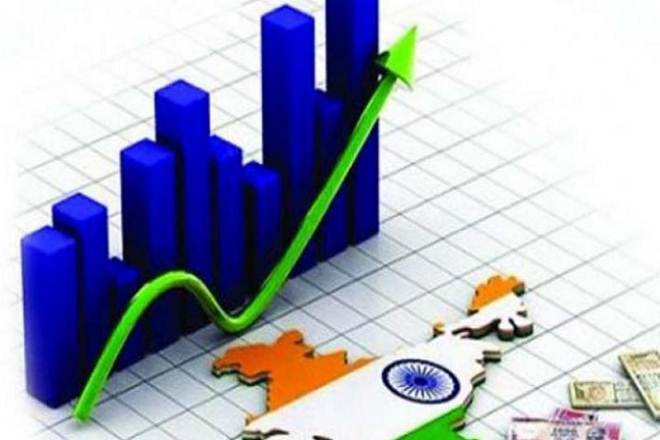
Taxation, Labour and Other Laws being simplified to boost the growth of the Corporate Sector
Prime Minister Shri Narendra Modi said that the goal of achieving the 5 Trillion Dollar Economy is achievable.

He was participating at the inaugural session of the Hundred Years of ASSOCHAM in New Delhi today.
Addressing a gathering of leaders from the Corporate World, Diplomats and others, the Prime Minister said that the idea of making India a 5 Trillion Dollar worth economy is not a sudden one.
He said that in the past five years the country had made itself so strong that it not only could set for itself such a target but also make efforts in that direction.
“Five years before, the economy was heading for disaster. Our Government not only stopped this but also brought in a discipline in the economy”
“We brought in fundamental changes in India’s Economy so that it can run with set rules in a disciplined manner. We have met with the decades old demands of the Industrial Sector and we have built a strong foundation for a 5 Trillion Dollar Economy”
He said, “We are building the Indian Economy on two strong pillars of formalisation and modernisation. We are trying to bring in more and more sectors into the horizon of formal economy. Along with this we are linking our economy with latest technology so that we can speed up the process of modernisation”
“Now instead of several weeks it merely takes a few hours to register a new company. Automation is helping quick Trading across borders. Better linking of Infrastructure is reducing the turn-around time at Ports and Airports. And these are all examples of a modern economy. “
“Today we have a Government that listens to the Industry, understands its needs and which is sensitive to its suggestions.
Prime Minister said that the country could make a significant jump in the rankings of Ease of Doing Business due to a sustained effort.
“Ease of Doing Business may sound just like four words, but in order to improve its rankings there is a lot of effort that goes into it including changing the policies and rules at the ground level”
Prime Minister also emphasised the efforts being made towards a faceless Tax Administration in the country in order to reduce the human interface between the tax payer and the authorities.
“In order to bring about transparency, efficiency and accountability in the Tax System, we are moving towards a faceless Tax Administration”, he said.
Prime Minister said that the Government has decriminalised several laws in the Corporate Sector in order to reduce the burden and allow the industry to function in a fearless ecosystem.
“You know that there were several provisions of the Company Act as per which even small deviations were also dealt as a Criminal Offence. Our Government has now decriminalised many such provisions. And we are trying decriminalise many other provisions.”
Prime Minister said that the Corporate Tax at this time in the country is the lowest ever and this would propel a boost in the economic growth.
“The Corporate Tax is the lowest at the moment, meaning if there is any Government that is taking the lowest Corporate Tax from the Industry, then it is ours”
Prime Minister also spoke about the efforts being made towards bringing about Labour Reforms.
He also spoke about the sweeping reforms in the Banking Sector to make it more transparent and profitable.
“Owing to the steps taken by the Government today 13 Banks are on the path of profit which 6 banks are out of PCA. We have also hastened the process of unification of the Banks. Today banks are expanding their countrywide networks and are in the direction of achieving Global recognition”
He said with this overall all round positivity the economy is propelling towards a 5 Trillion Dollar target. Prime Minister said that the Government would invest 100 Lakh Crore Rupees in the infrastructural sector and another 25 Lakh Crore Rupees in the Rural Sector in order to provide support to achieve the target.
Letting go
What does \’taking pride in being an Indian\’ mean?
- celebrate the uniqueness and successes of those who are \’different\’ from us – whether belonging to different religion, ethnicity, language, region, profession…
- not spit out in the open anywhere (surprised? well, this is a leading cause of diseases like TB still being active and killing people)
- stop complaining about what is wrong (hoping someone else will do something about it) and start taking small steps to make things better, and also urging others to do the same (there\’s power in numbers!)
- not restrict their sense of identity to a state or a region or a sub-set of India…
- taking the responsibility of being at one\’s best (whether in health, or talent or work or socializing) so that one can ADD to what is already good in India
- taking responsibility of keeping one\’s immediate surroundings at the best we can (in terms of things being well-organized and clean/hygienic as well as in an \’ecological\’ sense)
- not simply keep harping on the \’golden days\’ of India\’s past but be aware of what we are at present… and hence
- not be afraid to face what is really wrong, accept it and work to changing it (e.g. recognize the \’ugly Indian\’ who jumps lines, is rude and selfish, flouts rules and grins when he gets away with it. Or, of course, the bigger issues of poverty, security, discrimination…)
So what does it mean for you, to be a \’proud Indian\’?
And once we\’ve sorted it out, how should it reflect in our curriculum, materials, textbooks and classroom processes?
What does \’taking pride in being an Indian\’ mean?
- celebrate the uniqueness and successes of those who are \’different\’ from us – whether belonging to different religion, ethnicity, language, region, profession…
- not spit out in the open anywhere (surprised? well, this is a leading cause of diseases like TB still being active and killing people)
- stop complaining about what is wrong (hoping someone else will do something about it) and start taking small steps to make things better, and also urging others to do the same (there\’s power in numbers!)
- not restrict their sense of identity to a state or a region or a sub-set of India…
- taking the responsibility of being at one\’s best (whether in health, or talent or work or socializing) so that one can ADD to what is already good in India
- taking responsibility of keeping one\’s immediate surroundings at the best we can (in terms of things being well-organized and clean/hygienic as well as in an \’ecological\’ sense)
- not simply keep harping on the \’golden days\’ of India\’s past but be aware of what we are at present… and hence
- not be afraid to face what is really wrong, accept it and work to changing it (e.g. recognize the \’ugly Indian\’ who jumps lines, is rude and selfish, flouts rules and grins when he gets away with it. Or, of course, the bigger issues of poverty, security, discrimination…)
So what does it mean for you, to be a \’proud Indian\’?
And once we\’ve sorted it out, how should it reflect in our curriculum, materials, textbooks and classroom processes?
What does \’taking pride in being an Indian\’ mean?
- celebrate the uniqueness and successes of those who are \’different\’ from us – whether belonging to different religion, ethnicity, language, region, profession…
- not spit out in the open anywhere (surprised? well, this is a leading cause of diseases like TB still being active and killing people)
- stop complaining about what is wrong (hoping someone else will do something about it) and start taking small steps to make things better, and also urging others to do the same (there\’s power in numbers!)
- not restrict their sense of identity to a state or a region or a sub-set of India…
- taking the responsibility of being at one\’s best (whether in health, or talent or work or socializing) so that one can ADD to what is already good in India
- taking responsibility of keeping one\’s immediate surroundings at the best we can (in terms of things being well-organized and clean/hygienic as well as in an \’ecological\’ sense)
- not simply keep harping on the \’golden days\’ of India\’s past but be aware of what we are at present… and hence
- not be afraid to face what is really wrong, accept it and work to changing it (e.g. recognize the \’ugly Indian\’ who jumps lines, is rude and selfish, flouts rules and grins when he gets away with it. Or, of course, the bigger issues of poverty, security, discrimination…)
So what does it mean for you, to be a \’proud Indian\’?
And once we\’ve sorted it out, how should it reflect in our curriculum, materials, textbooks and classroom processes?

You must be logged in to post a comment.