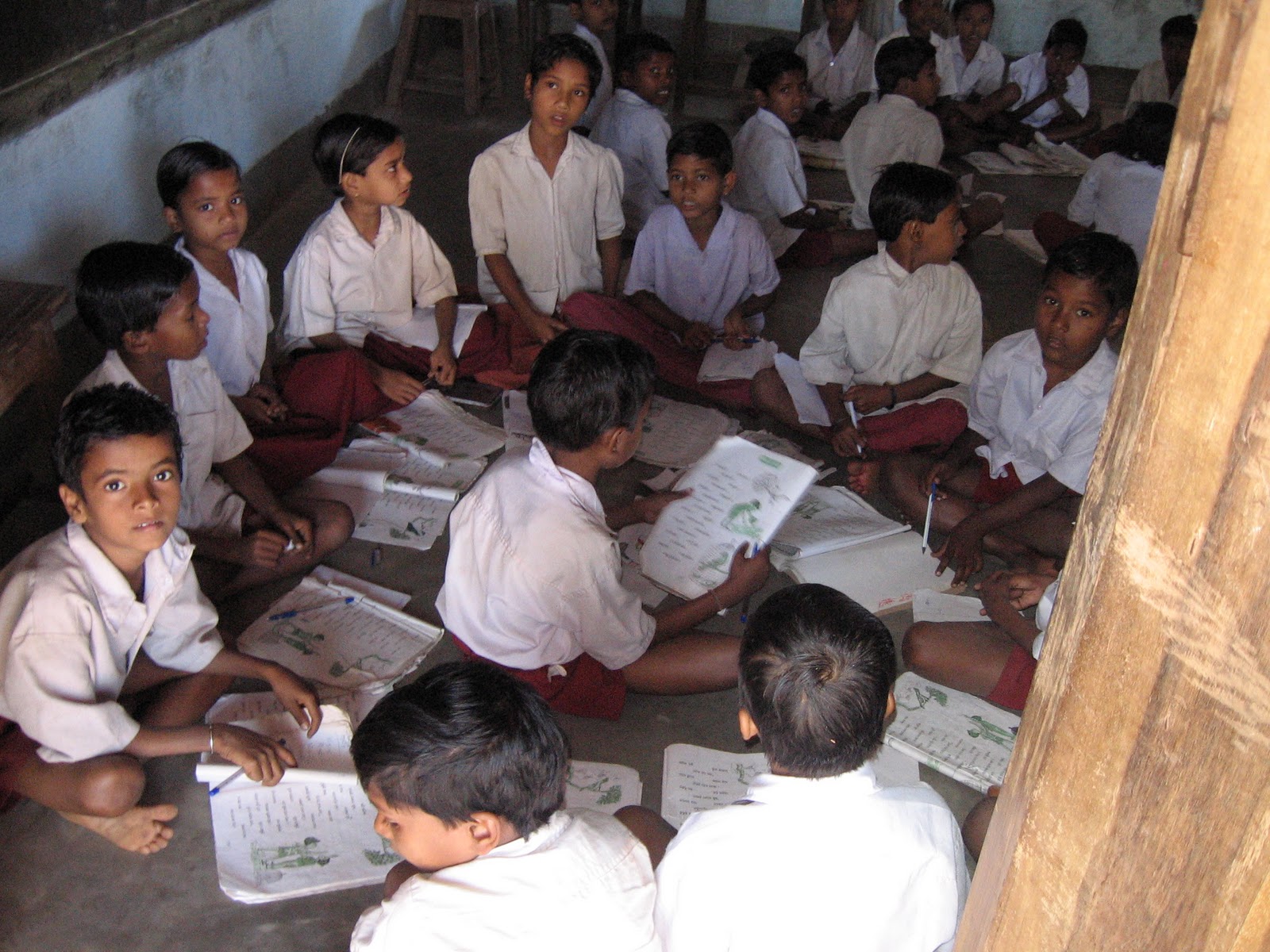
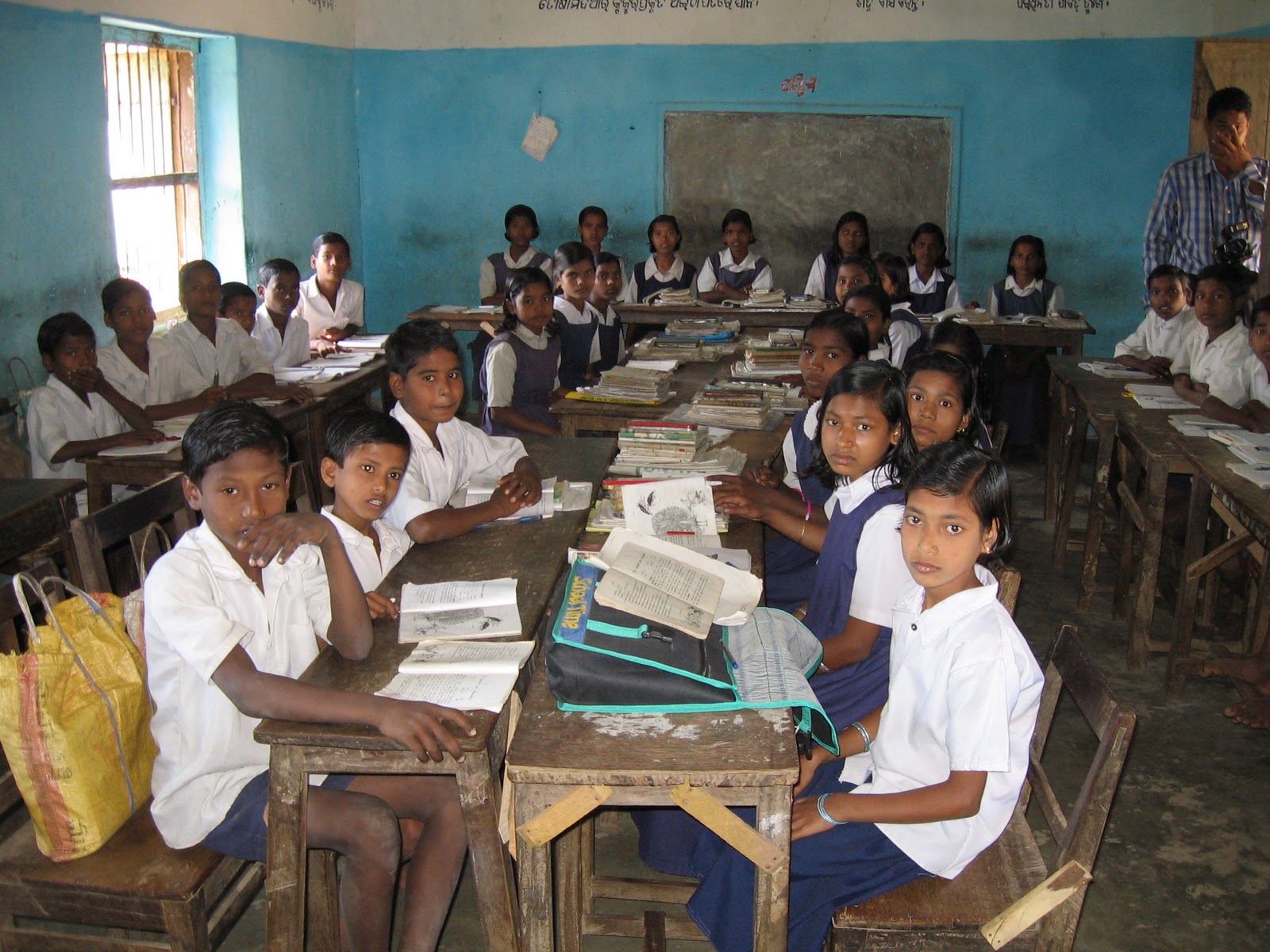
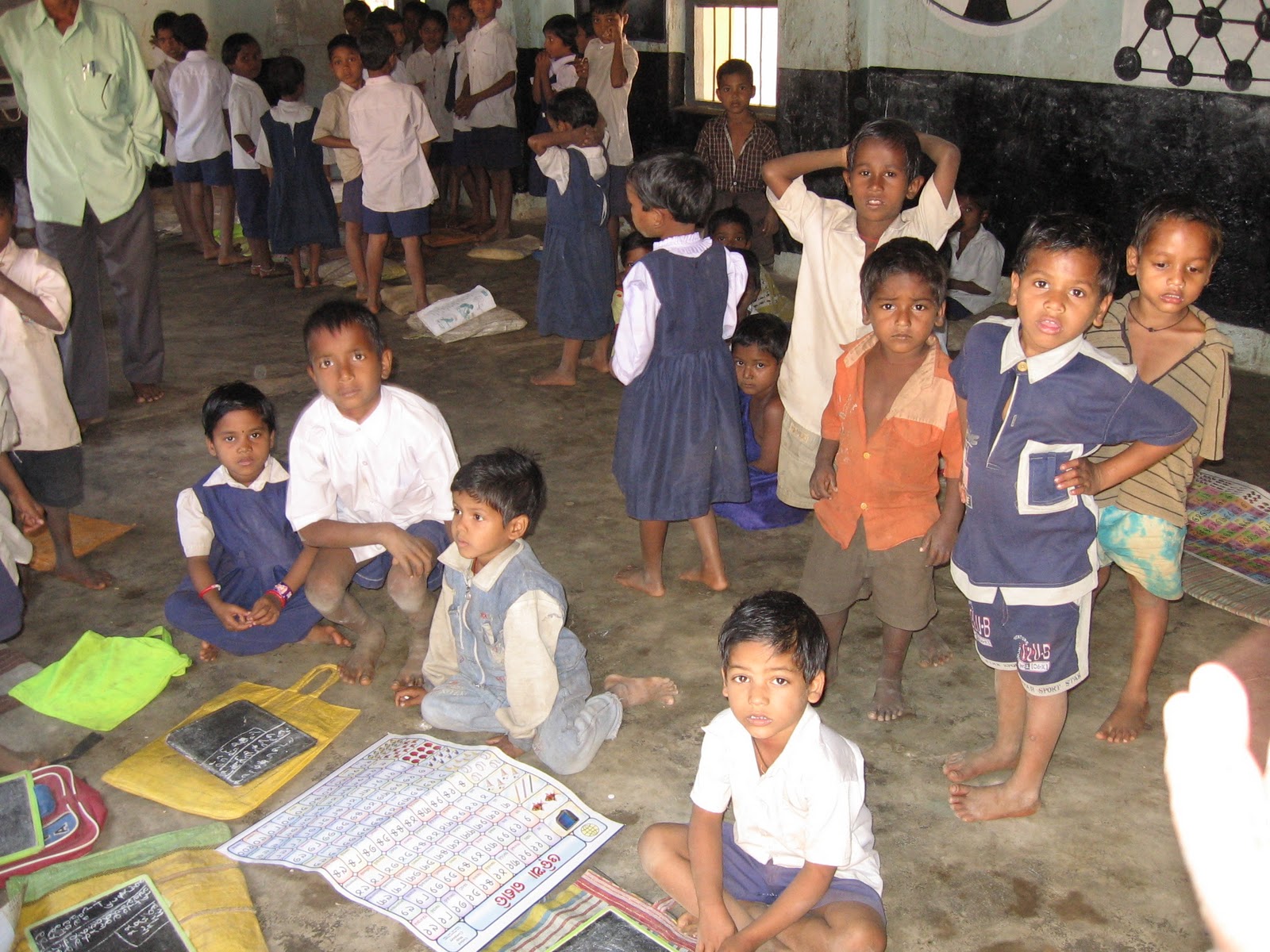
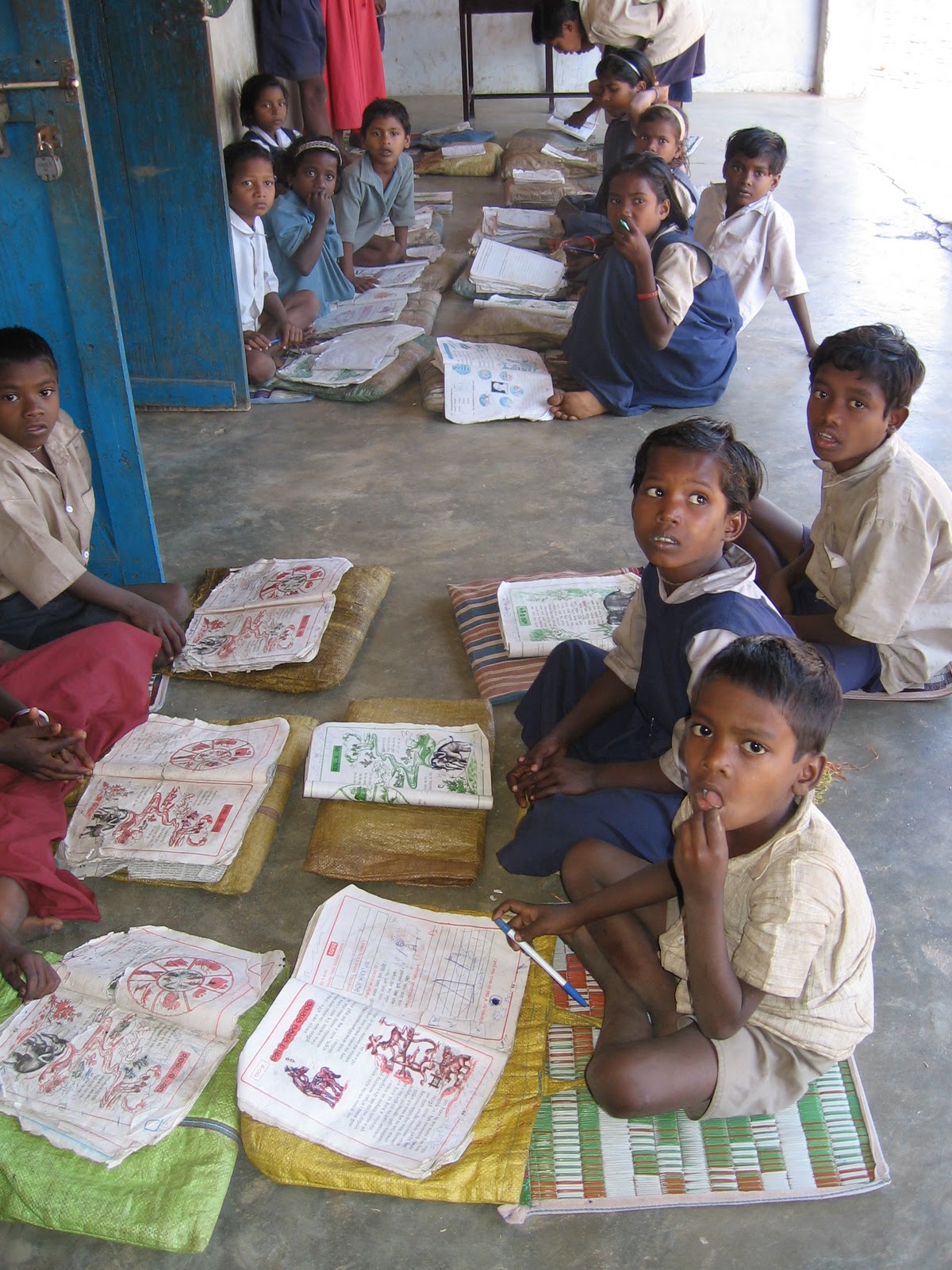
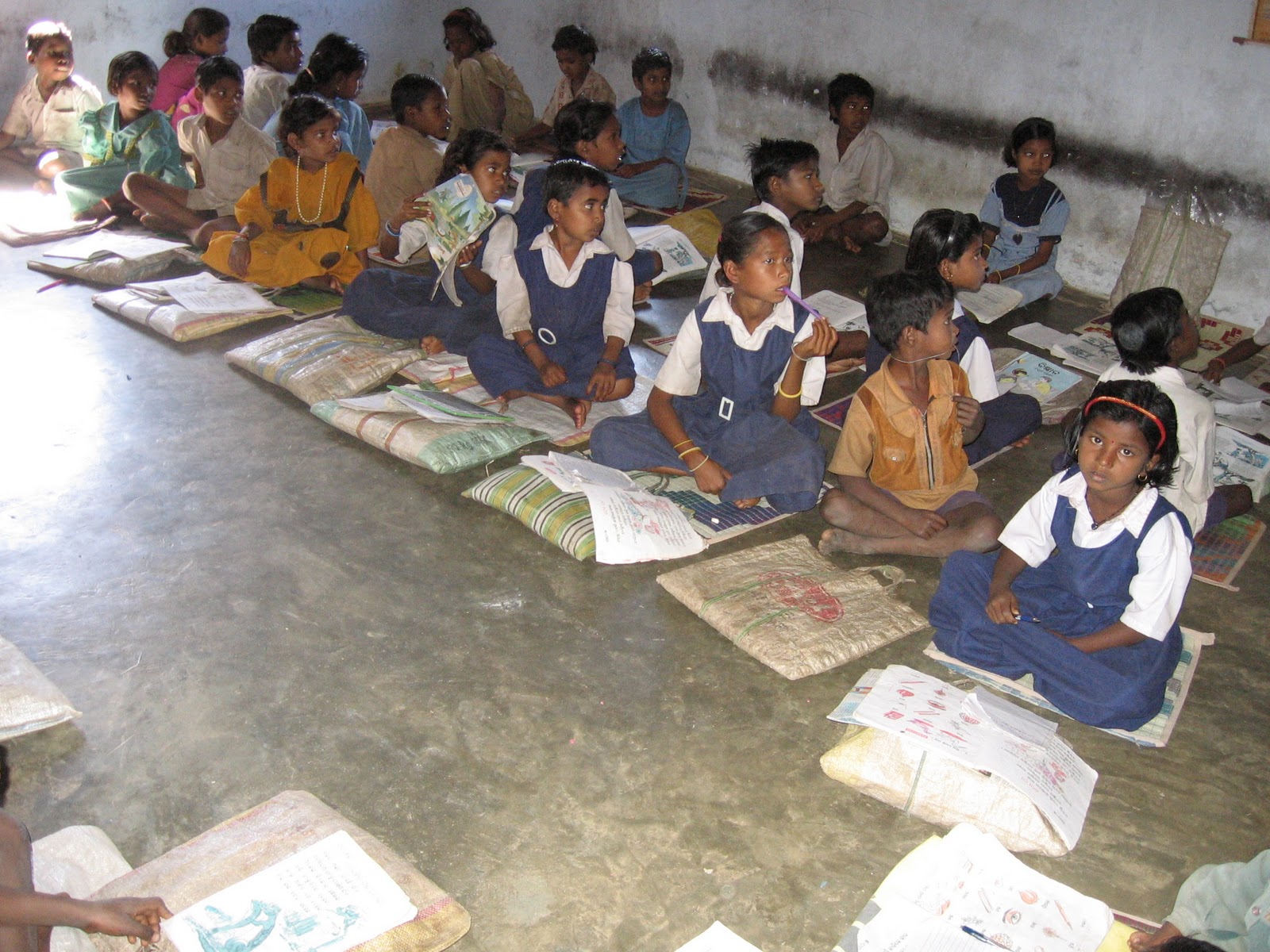
From \’Teacher Condemnation\’ to \’System Condemnation\’?

Years ago, it was felt that the root of all problems in education is the teacher. In fact, the MLLs (Minimum Levels of Learning, which served as the de fact national curriculum framework) in the late 80s and early 90s were designed to ensure \’teacher accountability\’ in terms of the minimum that would be achieved. A popular programme, Rishi Valley\’s multi-grade teaching  (adopted/adapted as \’activity based learning\’ in many states) actually originated from the desire to get children to be able to learn without needing the teacher (which is why there is so much of self learning in it).

People still continue to condemn the teacher and hold him responsible for all the ills in education. However, with the proliferation of so many \’reports\’ on education all around, there is now a great sense of intolerance towards the education system itself. The belief seems to be that not only government teachers and schools but the government education system itself is condemnable. Among NGOs, academics, commentators, researchers and intellectuals the general notion seems to be gathering steam that everything and everyone in the government system is the problem!

But what is a system if not the people in it, the way they work and the frame within which they work? From that point of view, I have to say that some of the finest people I\’ve come across are \’system\’ people. Every year I get the chance to work with thousands of teachers who I see putting in 12-14 hour days when others from outside the system (e.g. NGOs) fade away after only 8 hrs of input. This is not to say everything is OK with the system or the policies or the people – it\’s just point out that a black and white view doesn\’t help. And that just as it is not possible to change a teacher while condemning him, it is not likely to be possible to improve a system while

From \’Teacher Condemnation\’ to \’System Condemnation\’?

Years ago, it was felt that the root of all problems in education is the teacher. In fact, the MLLs (Minimum Levels of Learning, which served as the de fact national curriculum framework) in the late 80s and early 90s were designed to ensure \’teacher accountability\’ in terms of the minimum that would be achieved. A popular programme, Rishi Valley\’s multi-grade teaching  (adopted/adapted as \’activity based learning\’ in many states) actually originated from the desire to get children to be able to learn without needing the teacher (which is why there is so much of self learning in it).

People still continue to condemn the teacher and hold him responsible for all the ills in education. However, with the proliferation of so many \’reports\’ on education all around, there is now a great sense of intolerance towards the education system itself. The belief seems to be that not only government teachers and schools but the government education system itself is condemnable. Among NGOs, academics, commentators, researchers and intellectuals the general notion seems to be gathering steam that everything and everyone in the government system is the problem!

But what is a system if not the people in it, the way they work and the frame within which they work? From that point of view, I have to say that some of the finest people I\’ve come across are \’system\’ people. Every year I get the chance to work with thousands of teachers who I see putting in 12-14 hour days when others from outside the system (e.g. NGOs) fade away after only 8 hrs of input. This is not to say everything is OK with the system or the policies or the people – it\’s just point out that a black and white view doesn\’t help. And that just as it is not possible to change a teacher while condemning him, it is not likely to be possible to improve a system while

Unexpected and Unintended – Consequences of Curriculum and Material Development Processes

What started in Nagaland…
It was in the fourth workshop in Nagaland, in 2000, that participants stopped me and said they had something to share. All the education stuff they were learning was certainly very useful but what they valued far more was this: People from all the 16 tribes of the state were present in one room and, for the first time, they said, were not fighting! The process had somehow led all of them to feel like a family and they cherished this even more than the curriculum that was emerging from it.
How did this happen, I wondered. It was not being attempted (and in fact there was not even the awareness that something like this was required in the first place). So what went right? A little probing led to the realization that not being aware of who was from which tribe or occupied what social / professional position, the facilitation process could not distinguish between participants – no one was treated as being more ‘important’ or ‘different’.
A second feature was that much of the process revolved around generating a common set of experiences such as activities, school observations, classroom trialling, and intensive group discussions around key questions that had a larger canvas while also affecting state-specific decisions and implementation. The opportunity to evolve a common vision, agree upon the aims and objectives around which the curriculum would be built and developing consensus around the practical means to be adopted – all this led to ‘feeling like a family.’
Could this effect – that had happened ‘by mistake’ – actually be deliberately implemented? That is, could disparate groups who believed they had conflicting interests be brought together to ‘feel like a family’ through a consciously implemented version of this process?
It was not long before an opportunity to test this presented itself – in Afghanistan.
…Continued in Afghanistan
‘My brother from India,’ said a fearsome-looking senior member of the National Resource Group in Kabul, part of the Teacher Empowerment Programme, in 2003-04. It was the first effort to implement a country-wide in-service teacher training programme after the war. ‘My brother from India, do you know that we have in our group some people who are bandits! And we have to develop training with them!’
Before I could respond, another equally fierce gentleman thumped his desk, stood up and bellowed, ‘Our professor from India, when we were fighting the Russians in the mountains, some people were sitting in luxury in the USA!’ No one else seemed discomfited by this except me. How do you work with a group where members seemed intent on settling long-standing personal scores through you?
Once again it was really useful not to know who was exactly what. During the security briefing, I had been given a small chart depicting the various factions that had been at war with each other and now comprised the post-war nation. I had carefully put the chart away without looking at it. And had then thought about the kind of questions would work with this gathering of conflicting factions.
Therefore, as in many other places, the first question the participants got to work on was: ‘What games did you play as a child? And can you name at least 40 of them?’ In just a few moments the mood in the group had changed dramatically. People were gesturing, doing actions of the games they were describing, prodding each other to remember the names of the games they could recall, smiling more and more as their childhood seeped up and transported them into another time when they didn’t have this animosity. From then on, over the next several months, the process continued, with the fearsome gentlemen becoming less and less ferocious till they were actually good friends, and contributed greatly to the outcomes. Along with them, whatever factions that might have been there within the group also shed such reservations as they might have had about the ‘others’. By the end, in fact, it really was difficult to make out the groups that might have been there earlier….
And in a very different setting
Could there be a more difficult situation than Afghanistan? Actually, there could. During the thick of the LTTE-Sri Lankan Army war, I found myself in a workshop for writers, about half of whom were Tamil with the other half being Sinhala. Tamil writers arrived late to the venue, a few hours away from Colombo, as they had been held up again and again along the way by police and other security authorities – on the ground that they were Tamils moving around. One of the writers had just learnt that his brother had been arrested by the Sri Lankan police, on suspicion. Tamil and Sinhala writers were clearly unwilling to mix; in fact, there were many who did not know the other group’s language or English. It was the sensitivity displayed by the organizers and all others present that enabled the workshop to be held at all. However, a sense of awkwardness and whispered conversations pervaded the atmosphere and made it difficult to start.
Working through interpreters, one for each language, the challenge was to have a group that achieved some degree of comfort with each other and would relax sufficiently to enable a creative process to flow. Listening to lectures from the facilitator, however wonderful, was unlikely to achieve this. In this case the strategy of not knowing who was who was obviously not going to work…
What did work, however, was the use of ‘idea triggers’, which are ways to get people to think of things they otherwise would not. For example, take two completely unrelated words (such as ‘rocket’ and ‘goat’) and see if you can make a long and interesting sentence (at least 10 words long) that contains both the words. (Try this out a few times with the same two words and see what happens). Or, take an ordinary object – such as a spoon – and think of a place where it will usually never be found (e.g. on a branch high up on a tree) – and think of how it got there, what happened afterwards – and you will soon begin to get a story in your head.
As these ‘triggers’ began to be used, the ‘writer’ in the participants began to come to the fore. They bounced ideas off each other, laughing at the ridiculous and funny juxtapositions that were cropping up, teasing them into ideas for stories, applauding each others\’ creativity and slowly forgetting that that they were two peoples affected by being on the opposite sides of an ongoing war…

The REAL Reasons Why Change Is So Difficult In Education

If you\’re not in the government but are working to bring about change in education in India, you\’re likely to be using one or a mix of the following strategies:
1. Protest against whatever is going wrong
2. Provide data and evidence that things are not working (and occasionally, for what is working)
3. Intervene in policy and decision-making to the extent possible
4. Develop working models and ask the government or others to take them up
5. Actually take over or supplement the delivery function on behalf of the government
(As of now I can\’t locate any other strategy in use – but if you are using another one, do let me know so it can be part of this list.)
Here\’s a quick look at what each of these strategies involve and the kind of impact they seem to be having. (This is only a broad overview and not a nuanced analysis.)
Strategy 1: Protest against whatever is going wrong
From small village committees carrying their demands to block/districts officials, to state-wide forums of NGOs as well as the national RTE forum/s (there seem to be a few of these), various pressure groups have exerted themselves to protest against much that is not being done by the government.


The general notion seems to be that if you criticize the system or are able to make a serious protest – the system will somehow listen and start improving. As of now, there is no evidence that it really does. (It\’s very good in showing that it does, though! Look at all the advertisements issued by state governments where they list their achievements, including in education.) 
Results: Unsure impact. Getting a decent hearing is not easy, and even where there is a hearing, there is no guarantee that there will be an impact.
Strategy 2: Provide data and evidence that things are not working (and occasionally, for what is working)
The assumption is that if the system and decision-makers realize how wrong things are, or evidence is provided on what works and what doesn\’t, there will be appropriate changes and things will improve. Or that investment will be made on what is known to work. Partly based on this, a large number of think tanks have emerged (mainly comprising of western educated professionals) and produce a number of evidence-based documents every year. INGOs, donors and now VCs/similar funding agencies also take this view and back such efforts. The expansion of CSR and corporate supported initiatives all bring in this emphasis on \’in data we trust\’.
Unfortunately, there is not enough data to show that our education system ever pays serious attention to data on student learning, or classroom processes – and makes a difference accordingly. (That it should is another matter – the fact is that it doesn\’t.) Though a huge amount of data is collected, and the system itself does a great deal of the collecting, its impact on actual functioning is extremely limited. (For instance, which curricula or textbooks in any state have been influenced by such evidence-based approaches? Or by the NCERT\’s own data from country-wide surveys of learning levels, or even by ASER?) Where the data is used to some extent – as in the case of DISE – its actual reliability is in question. Attendance data, for example, is routinely manipulated to ensure that others can also get to \’eat\’.  
The system has a way of being blind to facts right before its nose. For instance, with a PTR norm of 30:1, in the foreseeable future (i.e. next 30 years), the \’typical\’ school in India will be the small school multi-grade (with 90-100 children in 5 classes, with 2-3 teachers) – implying that a majority of teachers will be teaching in multi-grade situations. Yet all curricula and training presently assume a mono-grade situation and believe that multi-grade will only be an exception. 
Result: Data flows off the system, usually like water off a duck\’s back. \”That\’s not how decisions are made\” – is a commonly heard statement in government offices, which indicates that there are other reasons why things are done the way they are done!


For those NGOs, donors, VCs and others hoping that \’evidence-based\’ and \’data-driven\’ strategies can actually persuade the system to bring about changes, especially those that make a real difference to the lives of the marginalized and the disempowered, there is a serious need to re-examine this strategy.
Strategy 3: Intervene in policy and decision-making to the extent possible
If you\’ve worked hard to reach a position where you can impact policy or decision-making, this is the strategy you would use. The late Vinod Raina is a good example of this, being part of CABE and involved in drafting of the RTE. Not everyone can achieve the status of being an \’eminent\’ invitee to important bodies and hence this is an option only a very few can access. (And even if invited, having an actual say is very difficult – in typical \’high-power\’ meetings, participants speak turn by turn, and the Chairman then winds up the meeting!) Most people/organizations trying this route reach only the point where they are part of certain committees or perhaps even the various groups related to the Planning Commission, such as the Steering Committee, etc.
Results: As the fate of some of the crucial RTE provisions shows, the more things change, the more they remain the same! I know this is not exactly true – sometimes, some of the things improve. And sometimes they worsen, as the total mis-communication on CCE indicates. Policies, decisions, projects and programmes all run the risk of being hijacked by mediocre implementation, corruption and deliberate diversion to benefit certain groups. Overall, this strategy definitely gives less than optimal results in today\’s context (everybody cannot be a Vinod Raina!). The primary reason is that it is governance itself which is the key issue, which often fails to get addressed here.
Strategy 4: Develop working models and ask the government or others to take them up
Eklavya, Digantar, Bodh, Srujanika and hundreds of other organizations and projects have implemented pilot projects, started schools, even initiated small interventions within the government system — with a view to generate models that will hopefully be \’replicated\’ or scaled up within the government set up. In fact, government programmes such as DPEP and SSA also incorporate an \’innovation\’ budget head that enables the setting up of such models that might eventually be expanded to the larger system.
Results: The history of upscaling shows that powerful models often lead to 
•   conflict (as was the case with the Hoshangabad Science Teacher Programme in MP, or the DPEP pedagogy upscaling in Kerala), or to 
•   a major reduction in quality of the original (as in ABL in TN, where only 22% children reached age-appropriate learning levels, as shown in a state-wide study facilitated by me when the programme was at its peak; or in the case of KGBV models that initially started well when run by NGOs)
The rest of the efforts don\’t really reach scalability, or if they do, they somehow fizzle out without leaving much impact. (Take Digantar\’s schools in Jaipur, Srujanika\’s effort in Odisha or the \’Active Schools\’ of Latur, Maharashtra, or the \’Kunjapuri\’ model in HP or indeed the various \’Model Schools\’ set up by the government itself in many states. This is really an endless list.)
Strategy 5: Actually take over the delivery function on behalf of the government
Several organizations are actually working on the ground with the government to improve the service delivery. They could be corporate houses who are taking over the management of schools (as is the case with the Bharti foundation running hundreds of schools for the Government of Haryana) to Azim Premji Foundation, which is creating its own channels (district schools up to the Education University). [As of now, I\’m keeping vendors – such as those IT companies implementing Computer Aided Learning on a Build-Own-Transfer model – out of this discussion, as they see themselves more as \’solution-providers\’ rather than change facilitators.]
Results: The jury is still out on the kind of strategy being implemented by the two organizations mentioned above. However, large-scale efforts of the kind where a group/programme actually took over the government\’s functions — such as Lok Jumbish (funded by SIDA initially) or Shiksha Karmi, or APPEP in AP (funded by the then ODA of UK), or Janshala (run by five UN agencies) in some 20+ districts in the country, or the Child-Friendly Schools project of Unicef in many parts of the country — all generated a great deal of energy in their time and people talk of them with much fondness even now, but those areas still struggle with quality of learning in government schools. 
Even in the NGO sector, many programmes / projects that appeared to have achieved a great deal, now do not show the expected dramatic improvement still surviving on the ground. Take the case of all the areas where Pratham ran its Read India project. If Pratham has stopped working in an area over three years ago, the levels of reading in that area are now likely to be of concern (even if they had improved earlier), and are a part of the \’declining levels of learning\’ being documented in ASER.
In the early days of DPEP, when it was seen as \’different\’ from government, states such as Haryana, Assam, Karnataka, UP made radically different textbooks and training (taking over the functions of the SCERTs and DIETs), actually implementing high-energy, high-quality training over 2-3 years across the state. Yet today many of these states are at the forefront of the quality crisis.
Bottom-line: you can bring about change as long as you are there, but things go back to what they used to be once you\’re not there!
So what is it that makes change in education so difficult? 
Perhaps we need to face up to what really lies behind things being bad in the first place. We tend to assume that there\’s an inability to make things better. But what if it has more to do with the ability to keep things as they are? This might a little more deliberate than the systemic \’inertia\’ we\’re used to talking about (though not necessarily as a conscious conspiracy). To begin \’appreciating\’ this, take a look who loses what if education, especially in the government system, actually improves.  
•   TEACHERS will find their income from private coaching reduced/lost altogether (this is starkly clear in secondary education, which is one reason why improving classroom processes in secondary schools is very difficult). 
•   PRINCIPALS and OFFICIALS will not have control over teachers/SMCs who teach well and have community support. (Wherever quality improvement efforts have succeeded, conflicts of this kind have increased. Eventually, the more powerful section \’wins\’. Several state governments – or rather the education ministers – have had VECs or SMCs reconstituted since they didn\’t find them \’convenient\’; another example: look at how the provision for SMCs to select books for their school libraries is being subverted through various means.)
•   OFFICIALS will also find academically strong teachers/HMs/SMCs and even students do not easily \’comply\’ – corruption will be difficult to practice. (When more teachers start teaching well, school inspectors always end up making less money. When anyone \’lower\’ in the hierarchy is empowered, those \’above\’ have a problem. And as everyone knows, whenever students ask questions, they\’re told: \’shut up and don\’t act over-smart!\’)
•   POLICY-MAKERS will have to create a whole lot of new jobs for the large numbers of the newly educated. (This is clearly not an easy thing to do – and one way to deal with this is to keep people in education for longer, as appears to be the case behind the recent shift to a FOUR YEAR graduation programme in Delhi University, despite various other claims being made for it.)
•   The POLITY will have to face voters who can think and ask questions of them. (In 2000, one political leader actually stopped a state curriculum from being implemented on the grounds that \’if this is what children learn, who will ever vote for us?\’)
•   Since the majority of people are in some way of the other \’under\’ someone, the questioning of authority will mean that all kinds of HIERARCHIES will be under threat if education really improves – age, seniority, caste, class, gender, ethnicity, religion! (When young girls refuse to get married, or children ask for reasons behind what they\’re being told to do, or groups raise voice against discrimination – you can be sure that someone powerful has a problem, and usually manages to find a \’solution\’. From rising wages for domestic labour to resenting the \’lower\’ classes accessing \’higher\’ levels of goods – such as mobile phones – the middle class too is not comfortable with the spread of education.)
All of which is sufficient to ensure the quality of education will not improve, isn\’t it? Sure, buildings will be built, as will handpumps and toilets, books will be printed and teachers appointed – since these are opportunities for \’side\’ income and asserting control over resources and people, or appearing to hand out largesse and thus earning \’gratitude\’. However, the actual change in the nature of teaching learning processes, a shift in the kind of relationships practiced, and the levels of learning outcomes attained, especially for the marginalized – does not take place at the same pace at which the provisioning grows. In fact, it is much, much slower, if not actually negative at times.
The \”system\’s\” strategies
And how is this ensured? Why does increased provisioning not lead to desired change? As anyone familiar with implementation at the field level will know, a number of powerful strategies are used to to ensure that the \’others\’ don\’t get what \’we\’ have today.  
•   neglect (take the case of DIETs, which continue to be ignored even after the new Teacher Education Scheme; or the case of hard to reach groups such as street children, working children, migrant groups, or those with disability; or how the north-east itself is missing from our history books; or how the knowledge of women is not reflected in the curriculum)
•   selective poor performance (the same government machinery that can do a fairly good job in conducting elections somehow fails at ordinary execution in education; an analysis of which files take the longest to move as against their expected time, will provide a good insight into this)
•   siphoning off inputs meant for the needy (from mid-day meals that kill children, buildings that need to be abandoned within ten years due to poor construction, textbooks on poor paper – name an input and you\’ll find that what reaches children is well below what should; this includes the teacher\’s time, which is the minimum the state should be able to guarantee, but is not able to due to the absenteeism that is allowed)
•   wasting time in doing things that appear to be important but are not (such as organizing \’functions\’ or \’attending\’ to a visiting officer or collecting data on a whole range of issues, which in turn is not used much either), 
•   rewarding the mediocre (as is common, officers \’attach\’ certain teachers for their administrative chores, thus relieving them from teaching; and of course everyone knows that the way \’up\’ the system hierarchy is not mainly through good work…)
•   demonizing and harassing the committed (anyone who works sincerely is usually called \’mad\’ by others; those who stand up for children and community are often hounded, as can be seen by the number of allegations that they face)
•   creating designs that ensure perpetuation of marginalization (e.g. expecting children to attend school every single day no matter how poor, deprived or ill they are; or using only \’state\’ language instead of mother-tongue) – and many other such \’devices\’. 
Supplementing all this is, of course, the common strategy of deliberate discrimination in the actual teaching learning process, something far too well-known for it to be elaborated upon…

In many ways, such strategies are used in the larger community and society as well, to ensure that that those who have been put in their place, remain in that place. As I was recently reminded by a Facebook comment, ‘If everyone gets educated who will till the fields and who will pick up your trash?’ As anyone above the age of 20 will recall, when mobile phones became cheap, many of the then chatterati were dismayed that ‘even plumbers, vegetable sellers and maids now have mobile phones’. And as can be seen in the middle class response to the admission of children from economically weaker sections in private schools under the RTE (‘they will spoil our children’s education’) – the word ‘system’ should perhaps include the larger society and its network of exploitative relationships in which everyone is complicit.
Thinking ahead
You already know all this very well, of course, and in repeating it here the intention is not to imply that nothing can be done or to mount a raving critique of how bad things are. Instead, in the interest of children, especially those from marginalized backgrounds, this is an appeal to recognize that the \’system\’ has far more powerful strategies than those seeking to do \’good\’ are able to put into practice – and the results are visible everywhere.
Should we stop using the five strategies mentioned earlier? No, but it would be better to take a longer, deeper view than we tend to take at present. Perhaps we need to stop underestimating the difficulty of the task and take into account that it is not the system\’s incompetence at making things better but its competence in keeping things the way they are that needs to be addressed.
What this calls for is a better understanding of the situation, of our own unwitting involvement in perpetuating it – and far, far smarter strategies.  

Five Questions to Ask Your Election Candidate (English Version)

This election may affect your children.  Especially if your would-be representative in legislative assembly keeps the following in mind.
·       Education – good / quality education – is everyone’s right. Especially after the RTE, education in every government school should be such that everyone finds it good. But even very poor parents are removing their children from government schools and making sacrifices to send their children to private schools.
Ask your would-be representative – Question 1: What will you do to ensure appropriate and quality education in government schools?
·       Teachers’ salaries have gone up. They now get training from time to time to enable good education for children. There is provision for mid-day-meals, school uniforms, play equipment, learning material – all free. But there is demotivation among teachers. They feel neglected. They feel as if they are not being respected.
Ask your would-be representative – Question 2: What will you do so that teachers take interest in their work and are committed to the good education of their children?
·       According to RTE the responsibility of running/managing the schools will now be with community and panchayats. But the community and the panchayats feel: how can we give any advice to the school? They do not find themselves capable of advising / supporting schools. And they feel this is not even their work.
Ask your would-be representative – Question 3: What will you do to enable the active involvement of community and panchayats in improving education in our schools?
·       Community and parents both expect that education will ensure children’s development as well as employment. But now people say: All this education is going to lead only to unemployment, so it is better that the child be engaged in some wage-earning work right away.
Ask your would-be representative – Question 4: What will you do so that every member of the community is aware and committed towards the education of their children?
·       If we look at the money spent on education, most of it is used for salries, infrastructure and maintenance. Crores of rupees are spent every year on this. Even then our schools and education offices look dirty and disorganized compared to private institutions. And the people responsible for improving education for children cannot even be heard talking about it.
Ask your would-be representative – Question 5: What will you do so that government schools and education offices look attractive? So that people in the system not only think of children’s improvement but also do what is needed?
Your views will have an impact, won’t they? But only if you raise these questions! Give your vote only if you get an answer! So go ahead, ask questions, get others to ask, and let us know!!

Have You Been Un-Hindu Today?

Once in a while I recall that I am born a Hindu. This is usually around times when a whole lot of people are suddenly finding the need to defend Hinduism.
1. This is a little ironic. Why do you need to protect that which cannot be destroyed? Can the words or images of another person kill or harm your religion? To those who believe in God/s: even if all the people who believe in God should cease to exist will God/s cease to exist? Similarly, does Hinduism need the acceptance and support of all those being fought against in order to exist and flourish? It seems very reductionist and belittles Hinduism for anyone to say that the religion needs protection.
2. This business of religious sentiments being hurt is even more ridiculous. Why are Hindu religious sentiments hurt only by words and images but not by un-Hindu actions such as rape, murder and the racism being practiced against people from the NE in Delhi, or the displacement of Muslims in Muzaffarnagar or a thousand such atrocious acts? We are a religion that believes in the whole universe being a family, isn’t it? Why are we not religiously wounded by such major offences that hurt millions of the universal family but hugely traumatized by minor pinpricks such as a book that will be read by a few thousand people?
3. Being the transcendent religion that believes animals and trees and various forms, animate and inanimate, have the element of the Divine running through them and are therefore nothing but mere manifestations of the Unified One, how can we even distinguish between ‘ourselves’ and ‘others’? Surely the distinction is impossible and the very idea of ‘not tolerating’ someone or some view would be inadmissible – for even the so-called offender is nothing but another manifestation of the same ONE divine. So the idea of ‘getting upset’ so militantly at someone’s view is, in my view, very un-Hindu.
4. In an ecological worldview that goes well beyond the physical world, the notion is that every component have a just and fair place, the justness and fairness of which is determined by the degree to which it links with others and desists from eating into others’ space and resources. Which is the idea behind being ‘content’ – to occupy that which fulfills your need without competing with another’s, thus maintaining the ecosystem.  Wanting more than this justifiable space and resource takes you into the realm of that which does not (because it should not) exist – maya. And we are taught not to want more than our remit for this reason. This is a key principle by which the universe maintains its balance, and disturbances take place when this balance is upset. Every time we seek to dominate or attribute to ourselves the right to determine others’ activities in their spheres (such as what they may think or write), we are guilty of going beyond that which is justly ours – and again, being very un-Hindu!
5. And finally, like all great religions, Hinduism too believes that real victory is one that is over oneself. No matter how much you ‘defeat’ your enemies, if you are unable to overcome yourself, that is, your own limitations and the un-divine aspects of yourself, you cannot be considered a victor. So if anyone is claiming victory at having ‘vanquished’ something offensive, do desist, for you have not won.

These teachers really need to learn how to teach – HELP!

These images capture the teachers\’ attempts to generate the appearance active learning without actually teaching in this way (on a daily, regular basis). At least this is my reading of the pictures. What do you think? Are these teachers really running active classrooms where children will learn well? And what would you do if you were on hand to help the teacher?
Image 1
Such large groups – is there any scope of getting any work done? 
And even the books cannot be opened fully. 
Surely this is \’whole-class\’ disguised as \’group-work\’?
Image 2
What can these children do other than listening to the teacher? 
How can it be re-organized?
 And what kind of activities would be appropriate for this age group?

Image 3
This teacher has three different age groups and no real clue about 
what to do. What should he do? 
Suggestions desperately needed.

Image 4
These children have clearly never had any real engagement in learning. 
They are used to sitting like this for long durations, meekly doing nothing. 
What would you do if you were a
 CRC-BRC member visiting this school?

Image 5
This is the same school as in Image 4, only with a different and older group. 
Unfortunately this is a very, very common sight. 
If you had a hundred such schools in your block, 
what would you do?

ROLE AND NEED OF DIFFERENT TYPES OF PLANNING IN EDUCATION

Our educational practice is still based on limited ‘lesson
plans’ aimed at achieving measurable ‘behaviours’;
according to this view, the child is akin to a creature
that can be trained, or a computer that can be
programmed. Hence, there is too much focus on
‘outcomes’, and presenting knowledge divided into bits
of information to be memorised directly from the text
or through activities after ‘motivating’ children, and
finally on evaluating to see if children remember what
they have learnt. Instead, we need to view the child as
‘constructing knowledge’ all the time. This is true not
only of ‘cognitive subjects’ such as mathematics and
science, language and social science, but equally of
values, skills and attitudes.
This perspective on the learner may sound ‘obvious’,
but, in fact, many teachers, evaluators, and textbook writers
still lack the conviction that this can become a reality.
• The term ‘activity’ is now a part of the registerof
most elementary schoolteachers, but in many
cases this has just been grafted onto the
‘Herbartian’ lesson plan, still driven by ‘outcomes’
at the end of each lesson. There is now more
talk of competencies, but these competencies are
still pegged onto lessons much in the manner of
‘outcomes’. Instead, teachers need to develop the
ability to plan ‘units’ of four or five sessions for
each topic. The development of understanding
and of competencies is also possible only through
repeated opportunities to use the competencies
in different situation, and in a variety of ways.
While the development of knowledge,
understanding and skills can be assessed both at
the end of a unit, and revisited at a later date, the
assessment cycle for competencies needs to be
longer.
• Activities could enable teachers to give
individualised attention to children, and to make
alterations in a task depending on their
requirements and variations in the level of
interest. In fact, teachers could also consider
involving children and older learners in planning
the class work, such variety would bring
tremendous richness to the classroom processes.
It would also allow teachers to respond to the
special needs of some children without making
it seem as if it is an obvious exception. There is
still not enough engagement on the part of the
teacher with the learning ofeach child; children
are treated en masse, and only those who are
regarded as ‘stars’ or ‘problematic’ are noticed.
All children would benefit from such attention.
• A lesson plan or unit plan for an inclusive class
should indicate how the teacher alters the ongoing
activity to meet the different needs of children.
Failure to learn is currently being mechanically
addressed through ‘remediation’, which usually
means simply repeating lessons. Many teachers
are also looking for ‘cures’ to set right the
problems that some children may experience.
They still f ind it difficult to individualise learning
for children by building upon the strengths that
children may have.
• Teachers need to understand how to plan lessons
so that children are challenged to think and to try
out what they are learning, and not simply repeat
what is told to them. A new problem is that in
the name of ‘activities’ and ‘play way’ methods, a
lot of learning is being diluted by giving children
things to do that are far below their capability.
One concern is that a focus on activities would
become too time consuming and make greater
demands on teachers, time. Certainly, doing
activities requires that time be spent in planning
and preparing for activities. Initially, teachers
need to make an effort to establish the classroom
culture for activities and to establish the rules that
will govern the space and use of materials.
• Planning with the support of appropriate material
resources for individualised, small group and
whole group work is the key to effective
management of instruction in a multigrade,
multia bility or vertically grouped classroom.
Instead of finding ways of juggling lesson plans
based on mono-grade textbooks, teachers would
need to devise, in advance, thematic topic plans
in order to engage learners with exer cises created
for their level.
• The practices of teachers in classrooms, the mate
rials they use, and the evaluation techniques
employed must be inter nally consistent with each
other.

The most valuable activity of the human race

In a free world, the price of anything is a reflection of its true worth to people. Something is valued high if it is important to a lot of people. It is valued low if its not so important – OK you can quibble about supply and demand, but in the end, value is a reflection of the worth in which people hold it.
What can you then make of the \”fight of the century\” that is taking place on May 2nd. Floyd Mayweather versus Manny Pacquiao. A fight between two of the finest boxers of their generation. The usual outlandish hype and outrageous build up , that is predictable for every major boxing match, is on display in ample measure. Where else will it be held, but in the most over the top place on earth – Las Vegas.  I don\’t know about the \”fight of the century\”, but it certainly is the richest fight in history.
Each boxer is expected to make upwards of $ 100 million for the fight. Yes, one hundred million dollars. Perhaps nearer $ 150 m. To give you a perspective, the next highest paid sportsman in the world – Cristiano Ronaldo – makes $ 80m in a year. The highest paid CEO of any company in the world , Charif Souki of Cheniere Energy Inc made $ 142 million in a year. And these two boxers are going to make probably $100-$150 m for one fight.
Of all the revenue streams, the biggest will be pay per view subscription for watching the bout on TV. The price  just for watching the one fight is likely to be $ 90. Ninety dollars for sitting on your couch to watch a max of 12 rounds. 3 million Americans are expected to sign up.
There is nothing in the sporting world, in any sport, that can remotely match the earnings of this fight. Come to think of it, there is nothing in any field of human endeavour that came come close to this level of money. Let us assume that the bout will last an hour (it could even last 3 seconds but we\’ll be charitable). That\’s a gross revenue of $ 500 m in one hour. Walmart the largest company in the world, in comparison makes a measly $50 m in an hour. Yes, I know this is not a sensible comparison, but you get my point.  Mankind places the Mayweather-Pacquiao fight as the most valuable of all human endeavour to be done in an hour. Ever.
I am not a great boxing fan, but I do know a bit about it. Both Mayweather and Pacquiao are past their prime. Mayweather is 38, Pacquiao is 36. They were great boxers, but the past tense is probably right. Both are larger than life certainly. Pacquiao, in his native Philippines, is probably second only to God.  But from a purely sporting perspective, its not even the finest boxing bout ever, leave alone the greatest sporting spectacle of all time.
I know that many readers , including this good friend, will argue that boxing is not a sport at all and should simply be banned. Certainly public interest in boxing is declining, but other forms of entertainment which involves one guy trying to beat the hell out of another , like martial arts, kick boxing and , with apologies to God,  WWF are all booming. I won\’t pass judgements on tastes of people, but it does strike me as a little odd that human society places the greatest value of all in two ageing fighters trying to knock each other down.

I have long had a dilemma on this matter of the value society places on different occupations. Ask anybody what are the professions which they consider most valuable to society and you are likely to get answers like teachers, nurses, etc. Ask them the professions that they detest and you would probably get bankers as the answer. And yet, look at the where we place monetary value.

Doesn\’t it say something about us all.

Letting go

When your child is born, it is probably the greatest moment of your life. It\’s your child. It is the creation of you and your partner. It\’s a new life created out of the blue. And only because of you.
You then slog your butt off to raise the child. You shower it with love and affection. In the first years of the child\’s life, you don\’t have a single night\’s sound sleep. You worry about your child every minute. You take joy in every smile and gurgle. You get terrified if the child were to as much sneeze.
As the child grows up, you continue to sweat over it. You work hard to earn money to provide for the child. You are willing to sacrifice anything to ensure a top quality education. You try and impart your values. You even discipline the child when she does something wrong. You have every possible aspiration for the child – she will be famous, she will be wealthy, she will excel; above all she will be happy. You even transfer your own aspirations, which you were not able to achieve, on to her.
All too soon, the child grows up. She is now a teenager. She has her own wishes. She does not want to ask your permission for everything. She perhaps listens to music that you cannot even understand how it could be called such. She wants to stay out late. You want to impose your will on her, because in your eyes, she\’s still the baby and you want to protect her. She rebels. You argue. 
And then, in the blink of an eye, she is an adult. She leaves home; first to study somewhere else and then to work and be independent. You have a lump in the throat. 
What do you do as a parent ? You have to let go.
What if she wants to marry somebody from a different world and the polar opposite of what you determine to be a \”good man\”. You have to let her go and warmly and enthusiastically embrace both of them.
What if she takes up a profession (maybe singing in a night club). It\’s against all your values. But you have to let her go. Wish her every success.
What if she takes up something unpleasant. Like, say, smoking. You can certainly give her a hug and say quietly that this isn\’t good for her health. But is she going to listen ? No way. You have to let her be.  Yes, you can worry inside your heart. But that\’s all you should do.
You came from a very middle class family where you lived frugally and never bought anything for yourself. She decides to blow her first salary on 25 designer dresses. She flaunts bling. Yes, the neckline is too low. Do you chide her ? Of course not. You let her be.
The worst thing you can ever ever do, is to bitch about her to all and sundry and say what a disappointment she has turned out to be.  You will gain absolutely nothing from it. You will only demean yourself in the eyes of everybody else. And she is not going to be one inch different.
For you see, its her life. The values you tried to drill into her are all very much there. She just sees life very differently from you. That doesn\’t mean she doesn\’t love you. It doesn\’t mean that she is \”bad\”. She is just she. The angel she always was, is, and will be. Let her be.
I know its not easy. But its a mark of your greatness, if you can let her go. It does not negate the immense effort and everything you have done for her.
Mr Murthy; I am talking to you.
For those readers who are not following Indian business news every day, this post was prompted by this news.

When you pray

“And when you pray, you must not be like the hypocrites. For they love to stand and pray in the synagogues and at the street corners, that they may be seen by others. Truly, I say to you, they have received their reward. But when you pray, go into your room and shut the door and pray to your Father who is in secret. And your Father who sees in secret will reward you” (Matthew 6:5-6).

The help we give to others is a matter between ourselves and God. How much more, then, are the words we speak to God a matter between ourselves and God. When we talk to him, our reason is not to try to impress anyone else. Imagine a man who spoke to his wife in public to send a message to others rather than to communicate with her! If he was only showing off, if he did not really think of her while he spoke to her, what sad things that would tell us about their marriage!

For that reason, I am a little uncomfortable when people ask me to pray at an event. Jesus does not forbid us ever to pray in front of other people—he prayed aloud in the presence of others on several occasions—but he reminds us that every prayer is communication with God, not having the purpose of impressing other people. Prayers said in church services are said to God. Prayers said before a Bible class or a church meeting are said to God. Prayers said at any public occasion, such as a high school graduation or a session of Congress, are said to God. The person asked to pray at these occasions should remember that he or she is talking to God, even though that conversation is happening aloud in the presence of other people. A prayer must not be turned into a sermon, an effort to persuade people about something while they are forced to listen in silence. When a prayer is spoken as an attempt to preach or to persuade, God does not regard those words as prayer at all.

We have a wonderful privilege. We are invited to speak with our Maker, with the One in control of the universe, with the One who loves us so much that he came into this world to live for us and to die for us. How dare we take this opportunity to speak with God and use it instead for worldly purposes? Such manipulation is sinful. Like all sins, this sin is forgiven through the suffering and death of Jesus on the cross. His forgiveness is one more reason for us to talk with him in prayer. Whether we say our prayers hidden in our rooms or aloud in front of other people, we remember that we are speaking to a God who loves us and who cares—more than anyone else in our lives—about what we have to say. J.

This blog turns to politics

On October 18th, or immediately thereafter, a small line of people will walk in  into the Great Hall of the People in Tiananmen Square. That will be the new Standing Committee headed by Xi Jinping. And at that time the world shall know what has happened to the “elections” in China. The stunning fact is that very few people in the world seem to even know about one of the most momentous events in world politics. Very little has been written about it in the world press and almost nothing has made it to TV. Not even the significant Beidaihe retreat that happened in August.
All this at a time when many people in the world seem addicted to the nonsense that a certain person spews sitting on his toilet seat.  The lack of interest in what is happening in China is, to this blogger, unbelievable. Perhaps unfamiliarity is the reason. And hence this blogger is breaking his vow to keep this blog completely apolitical and is launching into a series of posts on what is happening in China.
I begin with a small primer on the current Chinese political system. The Communist Party of China (CPC) is the apex body in China. The government is subservient to the Party. Even the People’s Liberation Army is not the army of China; its the army of the Party. Therefore what happens in the Party is of prime (only) importance in the politics of China.
The apex decision making body in the CPC is the Politburo, currently consisting of 25 members. Consider it as the Cabinet. From amongst these, an elite group forms the Standing Committee of the Politburo. Currently it has 7 members. This is the all powerful body.
When Mao Zedong established the Party, and for as long as he ruled China, all these institutions were irrelevant. Mao was the sole power centre. But when he died and the dangers of concentrating so much power in one man became apparent, the party elders led by Deng Xiaoping, established some rules and norms  for the politics of the future. Thus far they have been adhered to. They are
The principle of retirement . The unofficial term is “qishang baxia” or “Seven up; Eight down”. The unwritten rule is that if you reach 68 at the CPC Congress meeting  which is held once every five years (think of it as election year), you step down and retire. 5 of the 7 members of the Standing Committee  and 11 of the 25 members of the Politburo have crossed 68.
  • The General Secretary and the Premier usually serve for two terms – 10 years – and then stand down. The current incumbents are finishing their first term and can therefore continue for one more term.
  • An all powerful single power centre , a la Mao, was never allowed to happen post his death. Even Deng was not all powerful – he had an equivalent power centre in Chen Yun. Factions  abound ; the Shanghai faction, the Youth League, etc. These factions and their powerful overlords jockey for power behind closed doors. Retired leaders don’t keep quiet – they exercise power by placing their underlings on these bodies.
  • The norm in China is for leadership changes to happen with great turmoil, purges and the like. Only two peaceful transitions have ever happened – the handover from Jiang Zemin to Hu Jintao and from Hu Jintao to Xi Jinping. Even the transition from Hu Jintao saw the dramatic fall and subsequent imprisonment of Bo Xilai.
  • There are three powerful positions in China – The President of China (a mere titular position), the Secretary of the Communist Party (the real powerful position) and the chairmanship of the Central Military Commission that governs the armed forces. Currently all these three positions are held by  Xi Jinping. That was the case with Jiang Zemin and Hu Jintao as well, but in the Deng era, he was simply the Chairman of the CMC and the other positions were held by his chosen people. A fourth, and less powerful position is that of the Premier – currently held by Li Keqiang and is the No 2 position in China.
  • Every year in the summer, the power brokers in China retire to a coastal town called Beidaihe , where all the skullduggery, bargaining and negotiations happen. Each faction tries to get its people on to the Politburo and the Standing Committee. Usually most of the big decisions are made here on the beach behind thick closed doors. This is the real “election” in China. The Beidaihe meeting happened last month and this blogger is mystified that not only have there been very little leaks, there has been scant reporting in the press as well. Next to the US elections, this is the most important political activity in the world. And we don’t hear even a squeak.
  • In the last two peaceful transitions, at the end of the first of the two terms of the incumbent leaders, the top of the subsequent generation is usually nominated to the Standing Committee. This gives the clue as to who would subsequently take over as leaders. If the past 20 years is a guide, then this should happen in the current change and the successor to Xi Jinping who would take over 5 years from now, would at least be indicated. But as we would see in subsequent posts, there is a good chance that this won’t happen.
In the next post, we will assess the current political landscape and who are the power brokers in China.

Why Corruption Is An Easy Issue To Raise

It\’s interesting to observe why the issue of \’corruption\’ seems to attract attention. Right now, across the country (and the world), a huge majority of people are oppressed by the accepted notion that it is OK for some to be considered \’above\’ others. That is why it is OK for some of \’us\’ 
  • to go to high fee private schools (we have \’earned\’ it), 
  • to sit in AC coaches in the train (we paid for it after all, never mind that the others\’ capacity to pay for the same is hampered by systemic and systematic obstacles), 
  • to feel that we belong to \’big\’ or \’important\’ families… 

Such societal hierarchies have a far greater impact and preserve disadvantage.
Isn\’t it corruption too to believe that one belongs to a \’better\’ or \’purer\’ religion / caste / class / background / family than others. Yet Anna and co don\’t raise issues of social fracture (conveniently forgetting that Gandhi spent far more of his life on these issues, and regarded true independence as one from social oppression too). It\’s worth thinking on why the issue of corruption really suits the middle class – it\’s so neutral and harmless, and avoids the really frightening ones. It\’s also something where you can blame \’others\’ without feeling that you are part of the problem…
As an educator, therefore, if I had to teach children any value, it would not be an ordinary thing like \’do not be corrupt\’ but the more difficult concept of \’though you are unique and deserve the best, do not think you are more important than others or have a birthright to more than they do\’.

MCA initiatives to reduce cost of compliance by various small private limited companies

The Ministry of Corporate Affairs (MCA) has been taking various initiatives on continuous basis to provide less stringent regulations, including measures with respect to filing requirements for small companies, One Person Companies (OPCs) and start-ups. This was stated by Shri Anurag Thakur, Union Minister of State for Finance & Corporate Affairs, in a written reply to a question in Lok Sabha today.

The changes in this regard are made in the Companies Act, 2013 as well as various Rules and Forms thereunder from time to time.  The Companies (Auditor’s Report) Order, 2016 (CARO, 2016) has not been extended to private schools and hospitals built on concession land.

The Minister further stated that the opinion of the Government regarding inclusion of Institute of Chartered Accountants of India (ICAI) members on the NFRA (National Financial Reporting Authority) Board is that it would not create conflict of interest situation.

As per the National Financial Reporting Authority (Manner of Appointment and other Terms and Conditions of Service of Chairperson and Members) Rules, 2018, NFRA board has 13 members out of which 3 members represent ICAI as per clause (v), (vi) and (vii) of Rule 4(6). The main functions under section 132(2) and (4) will be performed by the executive body of NFRA and as such, no conflict of interest will be there.

The Securities and Exchange Board of India (SEBI) under the Department of Economic Affairs (Ministry of Finance) has stated on 20.11.2019 that the following recent measures have been taken by SEBI to improve governance standard in rating agencies:-


  • Credit Rating Agencies (CRA) to segregate the activity other than the rating of financial instruments under the respective guidelines of a financial sector regulator or any authority as may be specified by SEBI.
  • MD/CEO of a CRA shall not be a member of rating committees of the CRA.
  • Rating committees of a CRA shall report to a Chief Ratings Officer (CRO).
  • One third of the board of a CRA shall comprise of independent directors, if the board is chaired by a non-executive director.  In case the board of the CRA is chaired by an executive director, half of the board shall comprise of independent directors.
  • The board of a CRA shall constitute the following committees:
      • Ratings Sub-Committee
      • Nomination and Remuneration Committee
  • The Chief Ratings Officer (CRO) shall directly report to the Ratings Sub-Committee of the board of the CRA.
  • The Nomination   and   Remuneration   Committee   shall be chaired   by   an independent director.
  • CRAs  shall meet the audit  committee of  the  rated  entity, at  least  once  in  a  year,  to discuss issues including related party transactions, internal financial control and other material disclosures made by the management, which have a bearing on rating of the listed Non-Convertible Debentures (NCDs).
  • Minimum net worth requirement of CRA increased from existing Rs. 5 Crore to Rs. 25 Crore.
  • The promoter of a CRA to maintain a minimum shareholding of 26% in the CRA for a minimum period of 3 years from the date of grant of registration by the Board.
  • A CRA shall not, directly or indirectly, have 10% or more shareholding and/ or voting rights in another CRA and a CRA shall not have representation on the Board of any other CRA.


The Minister further stated that in addition, SEBI has stated that the following steps have been taken by SEBI to improve corporate governance of listed entities:-


  • Corporate governance norms were introduced through introduction of Clause 49 in the Listing Agreement on February 21, 2000 based on the recommendations of the Kumaramangalam Birla Committee.    Subsequently, the clause 49 was revised and strengthened in 2004 based on the recommendations of the Narayana Murthy Committee. In 2015, the listing norms in the entire listing agreement including clause 49 was subsequently streamlined by SEBI in the form of SEBI (Listing Obligations and Disclosure Requirements) Regulations, 2015.
  • SEBI formed a committee on corporate governance in June 2017 under the Chairmanship of Mr. Uday Kotak with a view to enhancing the standards of corporate governance of listed entities in India. The committee submitted its report to SEBI in October 2017.
  • Based on the public comments and discussions with various stakeholders, various actions on the recommendations of Kotak Committee were approved by SEBI Board and accordingly amendments to the SEBI (Listing Obligations and Disclosure Requirements) Regulations, 2015 were notified on May 09, 2018.
  • Major reforms arising out of the recommendations of Kotak Committee have been implemented in a phased manner. Some of these reforms are as follows:-


  • At least one woman independent director in the top 500 listed entities by market capitalization by April 1, 2019 and in the top 1000 listed entities, by April 1, 2020,
  • Separation of CEO/MD and Chairperson (to be initially made applicable to the top 500 listed entities by market capitalization w. e. f. April 1, 2020).
  • Enhanced disclosure of related party transactions (RPTs) and related parties to be permitted to vote against RPTs.
  • Reduction in the maximum number of listed entity directorships from 10 to 8 by April 01, 2019 and to 7 by April 1, 2020.
  • Enhanced role of the Audit Committee, Nomination and Remuneration Committee (NRC) and Risk Management Committee.
  • Disclosures of auditor credentials, audit fee, reasons for resignation of auditors, etc.,
  • Disclosure of expertise/ skills of directors.
  • Mandatory disclosure of consolidated quarterly results with effect from FY 2019-20.
  • Secretarial Audit to be mandatory for listed entities and their material unlisted subsidiaries.
  • Minimum six directors in the top 1,000 listed entities by market capitalization by April 1, 2019 and in the top 2000 listed entities, by April 1, 2020.
  • Quorum for Board meetings (1/3rd of the size of the Board or 3 members, whichever is higher) in the top 1000 listed entities by market capitalization by April 1, 2019 and in the top 2000 listed entities, by April 1, 2020.
  • Top 100 entities to hold AGMs within 5 months from the end of FY 2018-19 i.e. by August 31, 2019.
  • Webcast of AGMs will be compulsory for top 100 entities by market capitalisation.


****