Cyber Attacks on Indian Nuclear Power Plants

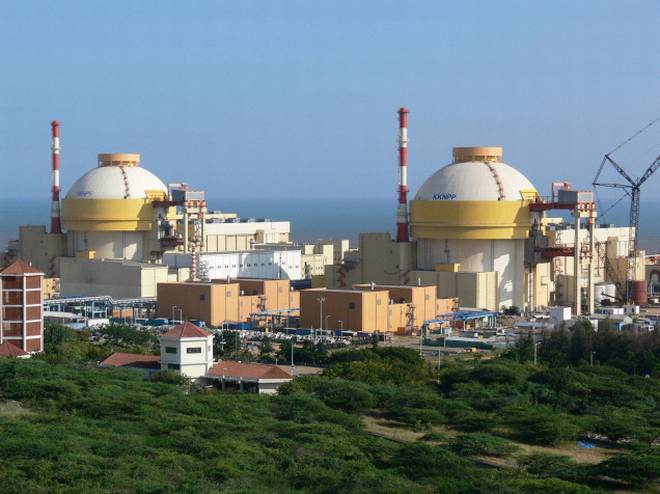
Recently, there was an identification of a malware infection on Kudankulam Nuclear Power Plant (KKNPP) administrative network which is used for day to day administrative activities.  The affected system contains data related to administrative function. Plant control and instrumentation system is not connected to any external network such as Intranet, Internet and administrative system. The plant systems, which are isolated and not accessible from this administrative network, were not affected.

Various measures for further strengthening of Information Security in administrative networks have been taken up viz. hardening of internet and administrative intranet connectivity, restriction on removable media, blocking of websites & IPs which have been identified with malicious activity etc.

The Computer & Information Security Advisory Group (CISAG) of Department of Atomic Energy (DAE) has recommended certain measures for immediate and short term implementation. These are being complied with.

The expenditure towards cyber security is a part of the regular revenue expenditure.

This information was provided by the Union Minister of State (Independent Charge) Development of North-Eastern Region (DoNER), MoS PMO, Personnel, Public Grievances & Pensions, Atomic Energy and Space, Dr Jitendra Singh in written reply to a question in Rajya Sabha today.


****

Prime Minister mentions in his ‘Mann Ki Baat’ broadcast Nation to read Preamble

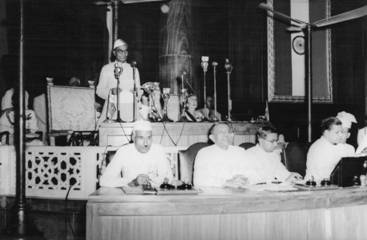
The yearlong nationwide activities on Constitution Day are being launched to mark the 70th anniversary of the adoption of the Indian Constitution by the Constituent Assembly, beginning November 26, 2019. The day 26th November is celebrated every year as Constitution Day (also known as ‘Samvidhan Divas’). These activities aim to reiterate and reorient the citizens towards the values and principles expressed in the Indian Constitution and encouraging all Indians to play their rightful role in strengthening the Indian Democracy.


Various sections of the society will do a mass reading of the Preamble to the Constitution at 11:00 am on the Constitution Day. Like every year, each Ministry/ Department/ Organisation will take up a mass reading of Preamble of the Constitution to mark the occasion. Talks, discussions and seminars will also take place all over the country on the Constitution Day.


The aim is to publicize the glorious and rich composite culture and diversity of our nation. Further, it aims to create awareness of Fundamental Duties as enshrined in the Indian Constitution. As citizens of our great nation, we believe firmly in Gandhian thought that ‘The true source of rights is duty. If we all discharge our duties, rights will not be far to seek’ and as said by Sardar Patel, ‘Every Indian should forget that he is a Rajput, a Sikh, or a Jaat. He must remember that he is an Indian and he has every right in his country but with certain duties’.


The activities on Constitution Day will see participation and cooperation from all Ministries/ Departments at the Centre/State, Autonomous Bodies/Public Sector Undertakings, Armed Forces and Central Public Organisations etc. Further to make it a peoples’ movement, the Prime Minister, Shri Narendra Modi has interacted with the entire nation through ‘Mann ki Baat’ on November 24, 2019. The President of India, the Vice President of India, the Prime Minister, the Speaker of Lok Sabha, the Minister for Law & Justice and all Members of Parliament will participate in a special function being organized in the Central Hall of the Parliament on the Constitution Day. A Digital Photo Exhibition will be inaugurated and a Portal on Youth Parliament Scheme will also be launched on this occasion. As mark of solidarity and an appeal to citizens of India to exhort their contribution during the campaign, an electronically signed Pledge by the Prime Minister be rendered to the public at large.


Government is providing higher education to tribal students through Central Tribal Universities

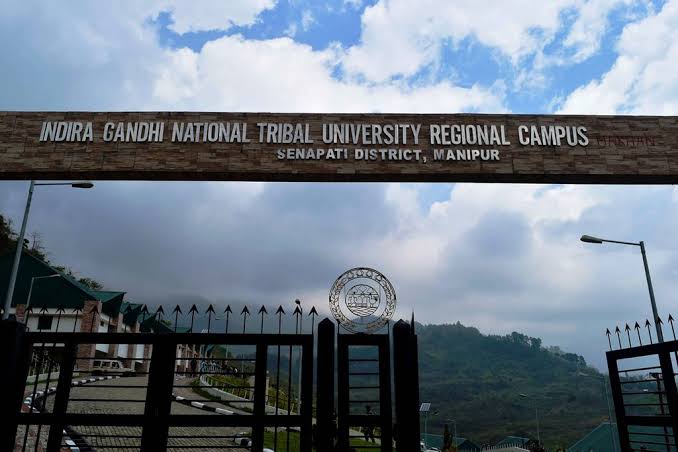
The Central Government has already established two Central Tribal Universities namely the Indira Gandhi National Tribal University, Amarkantak and Central Tribal University of Andhra Pradesh, Vizianagram with a view to provide avenues of higher education and research facilities primarily for the tribal population of the country. Besides, the Andhra Pradesh reorganization Act, 2014 inter-alia mandates for establishment of a new Central Tribal University in Telangana. Further, there are several Central Universities in different States which also fulfil the aspirations of higher education of tribal youth of the region.

Further, the UGC is implementing a scheme for the benefit of Scheduled Tribe (ST) students i.e. National Fellowship for Higher Education of Scheduled Tribe Students. In addition to this, UGC is implementing the following schemes for the benefit of weaker sections of the society including ST students:

  1. Residential Coaching Academies of Minorities /SC/ST and Women
  2. Establishment of Centres in Universities for study of Social exclusion and inclusive Policy
  3. Establishment of Equal Opportunities Cells (EOCs)
  4. Establishment of Scheduled Caste and Scheduled Tribe Cells in Universities
  5. Coaching Schemes for Scheduled Castes/ Scheduled Tribes/OBC (non-creamy layer)/ Minorities: (i) Remedial Coaching at UG & PG level (ii)  Coaching for entry into services (iii) Coaching for NET.


This information was given by the Union Minister for Human Resource Development, Dr. Ramesh Pokhriyal ‘Nishank’ in a written reply in the Rajya Sabha today.


*****

‘Urgent need to end gender discrimination’ – Vice President

The Vice President of India, Shri M. Venkaiah Naidu today called for ending the gender discrimination and ensuring safety security, and dignity of the women.

Speaking at the Silver Jubilee Celebrations of Indian Women Press Corps,  he said that it was the collective responsibility of the governments, media and civil society to ensure that women were made equal partners in the developmental process of the nation.

Referring to various reports on the Gender and pay gaps in the media sector, the Vice President called for collective efforts of news organizations, associations such as Press Council of India, IWPC and the National Broadcasters Association to work together and find out a way to address disparities based on gender within the journalistic profession.

Stating that the menace of fake or doctored stories that find a way to masses via news, internet, and messaging services have often led to chaos, confusion, and panic, Shri Naidu stressed that media has the onerous responsibility to not only provide accurate information but also educate the people on their rights and responsibilities as well.

The Vice President urged the media not color news with views and stressed the need to maintain objectivity, fairness, and accuracy in decimating information to the reader and viewer without assuming the role of the gatekeepers.

He called for collective efforts of the Press Council of India, NBA to establish a mechanism to curb the menace of fake news, propaganda and paid news.

Describing journalists as catalysts for change and media as an instrument to bring in a positive change in society, the Vice President asserted that Media professionals must strengthen democracy through their observations, suggestions, and writings.

The Vice President asked the regional and vernacular Media organizations to promote Indian languages, culture, and traditions of different states and regions through special programs along with the news. He stressed that media must lay special emphasis on matters relating to farmers, women, youth, entrepreneurs and rural India.

On the occasion, Shri Naidu also released Indian Women’s Press Corps Souvenir.

Smt. Jyoti Malhotra, President Indian Women’s Press Corps, Ms. Vinita Pandey, General Secretary Indian Women’s Press Corps and eminent journalists from several organizations were present at the event.

Following is the full text of the speech –

“Namaskar,

Let me first begin by congratulating the Indian Women’s Press

Corps (IWPC), a reputed association of women journalists on completing 25 successful years. It was set up in 1994 to support women journalists in their professional work, in enhancing their knowledge and skills and to provide a forum for networking.

I am glad that the organization has been playing a key role in creating a conducive working environment for women journalists and also working towards safeguarding their rights. This non-profit, nonpartisan, progressive, professional organization has been focusing on creating a positive change for women journalists.

With reporters, editors, producers, anchors, and cameraperson from across the print, TV and new media as its members, the organization has become an important institution and has been organizing press meets and interactions with eminent personalities from various fields.

It is commendable that women have come forward in such large numbers to join this noble profession to play their rightful role as the fourth pillar of the state.

I was informed that IWPC has been providing essential infrastructure support to women journalists by supporting them in performing their duties both on the field and at the desk.

The press and the media played a pioneering and stellar role in inspiring the masses to fight against the British during the freedom struggle and in strengthening the democratic foundations in the country since Independence.

Journalism provides citizens with the information they need to make the best possible decisions about their lives, their communities, their societies, and their governments.

The purpose of journalism is to give people the information they need to make better decisions. In other words, journalism is supposed to empower.

The media has the onerous responsibility to not only provide accurate information but also educate the people on their rights and responsibilities as well.

As we all are aware, the media landscape has transformed dramatically over the years and so have the values and ethics of journalism.

Professions such as Politics, Medicine, and journalism were considered as a mission and those who were in the job used to commit to ethics. Unfortunately, there is a decline in such commitment due to various factors including business and politics. Unfortunately, stories or reports are being mixed with views according to the management’s line of thinking.

Adding to this is the menace of fake or doctored stories that find a way to masses via news, internet, and messaging services. Such instances have often led to chaos, confusion, and panic.

I have been urging the media not color news with views and have been stressing the need to maintain objectivity, fairness, and accuracy.

The cardinal principle of journalism is to present fair, objective, accurate and balanced information to the reader and viewer without journalists assuming the role of the gatekeepers.

I am glad that many journalists follow these principles ensuring that Indian media is by and large credible.

Journalists are catalysts for change and media acts as an instrument to bring in a positive change in society. Media professionals are the watchdogs of society and strengthen democracy through their observations, suggestions, and writings.

It is unfortunate that we still come across instances of harassment of women, gender discrimination and domestic violence.  The glass ceiling limited women’s opportunities for growth is, unfortunately, still a reality in contemporary society.

According to the Global Media Monitoring Project (GMMP), as per the latest data of 2015, globally, women as news reporters were most present on radio at 41% and least in print news at 35%. (TV and Internet constituted the remaining 24%).

The report said that the global share of women reporters dropped on radio and television by four percentage points in both mediums between 2010 and 2015.

The report pointed out that between 1995 and 2015, the percentage of women media professionals rose from 17% in (Newspaper, Television, Radio) to 24%, which is a 7% rise. Men still dominate the industry with 76%.

Findings of another study, “Inside the News: Challenges and Aspirations of Women Journalists in Asia and the Pacific”, launched by UNESCO, and the UN Women and the International Federation of Journalists (IFJ) suggested that the presence of women in media has more than doubled in two decades but they constitute only 28.6 percent of the media workforce in Asia and the Pacific and men outnumber women in 4:1 ratio in India.

It pointed out that “on average across Asia and the Pacific, women make up 28.6 percent of the media workforce. The proportions are lower in decision-making roles in media organizations where women make up 17.9 percent of executive roles, 19.5 percent of senior editorial and 22.6 percent of mid-level editorial positions.”

Another recent report released by UN Women, female journalists in India “continue to be denied their fair share” at major media organizations in India. The report, “Gender Inequality in Indian Media”, pointed out that women were better represented online than in newspapers and TV.

Keeping these things in mind, collective efforts must be made by the managers of News organizations, Associations such as yours and the Press Council of India and the NBA must work together and find out a way to address disparities based on gender within the profession.

A systematic, structured approach must be put in place by the media and the government to address all the crucial matters relating to women’s safety, security, and dignity. There is an urgent need to end gender discrimination and neglect of women.

I am happy to know that the organization has been organizing regular workshops, and training sessions for its members to achieve its important goal of advancing the impact of women in the media by being a resource to members and the industry.

As you all are aware, women’s participation is extremely crucial to ensure the overall development of the nation. It is the responsibility of the governments, institutions, media and civil society to see that women are made equal partners in the developmental process of the nation.

The media must highlight the success stories of women achievers to inspire others.

As we celebrate the 25 years journey of IWPC, we must strive to set higher benchmarks and achieve excellence in the field of media.

I would like all of you to inform and educate people with well documented, research-based reports based on facts. Fearless adherence to truth should be your creed.

The rise of social media has increased competition among entities, organizations. It is important our newsrooms and professionals are trained and sensitized on flashing news and updates by exercising greater caution.

Collective efforts need to arrest sensationalism, end biased coverage and paid news. Entire Media, as a responsible institution, must contribute to strengthening democratic foundations of the country.

Here, the Press Council and Media Organizations including yours should take lead in training professionals to be more responsible in disseminating information.

You must empower the audience or readers to make informed choices.

I urge the media, especially regional and vernacular Media organizations to promote Indian languages, culture, and traditions of different states and regions through special programs along with the news.

In the end, I urge the media to focus on rural India. We must lay special emphasis on matters relating to farmers, women, youth, entrepreneurs.

I am happy to learn that IWPC has been providing important professional resources to women journalists like library, computers and enabling its members to meet newsmakers from all walks of life on a regular basis.

I am sure such support helps all the journalists, especially the young journalists to learn from their seniors during their interactions and upgrade their professional skills.

I once again convey my wishes to the Indian Women’s Press Corps (IWPC) and all its members on their contribution to the profession and the nation.

Jai Hind!”

*****

Have You Been Un-Hindu Today?

Once in a while I recall that I am born a Hindu. This is usually around times when a whole lot of people are suddenly finding the need to defend Hinduism.
1. This is a little ironic. Why do you need to protect that which cannot be destroyed? Can the words or images of another person kill or harm your religion? To those who believe in God/s: even if all the people who believe in God should cease to exist will God/s cease to exist? Similarly, does Hinduism need the acceptance and support of all those being fought against in order to exist and flourish? It seems very reductionist and belittles Hinduism for anyone to say that the religion needs protection.
2. This business of religious sentiments being hurt is even more ridiculous. Why are Hindu religious sentiments hurt only by words and images but not by un-Hindu actions such as rape, murder and the racism being practiced against people from the NE in Delhi, or the displacement of Muslims in Muzaffarnagar or a thousand such atrocious acts? We are a religion that believes in the whole universe being a family, isn’t it? Why are we not religiously wounded by such major offences that hurt millions of the universal family but hugely traumatized by minor pinpricks such as a book that will be read by a few thousand people?
3. Being the transcendent religion that believes animals and trees and various forms, animate and inanimate, have the element of the Divine running through them and are therefore nothing but mere manifestations of the Unified One, how can we even distinguish between ‘ourselves’ and ‘others’? Surely the distinction is impossible and the very idea of ‘not tolerating’ someone or some view would be inadmissible – for even the so-called offender is nothing but another manifestation of the same ONE divine. So the idea of ‘getting upset’ so militantly at someone’s view is, in my view, very un-Hindu.
4. In an ecological worldview that goes well beyond the physical world, the notion is that every component have a just and fair place, the justness and fairness of which is determined by the degree to which it links with others and desists from eating into others’ space and resources. Which is the idea behind being ‘content’ – to occupy that which fulfills your need without competing with another’s, thus maintaining the ecosystem.  Wanting more than this justifiable space and resource takes you into the realm of that which does not (because it should not) exist – maya. And we are taught not to want more than our remit for this reason. This is a key principle by which the universe maintains its balance, and disturbances take place when this balance is upset. Every time we seek to dominate or attribute to ourselves the right to determine others’ activities in their spheres (such as what they may think or write), we are guilty of going beyond that which is justly ours – and again, being very un-Hindu!
5. And finally, like all great religions, Hinduism too believes that real victory is one that is over oneself. No matter how much you ‘defeat’ your enemies, if you are unable to overcome yourself, that is, your own limitations and the un-divine aspects of yourself, you cannot be considered a victor. So if anyone is claiming victory at having ‘vanquished’ something offensive, do desist, for you have not won.

Address by the Hon’ble President of India Shri Ram Nath Kovind at the FICCI Higher Education Summit

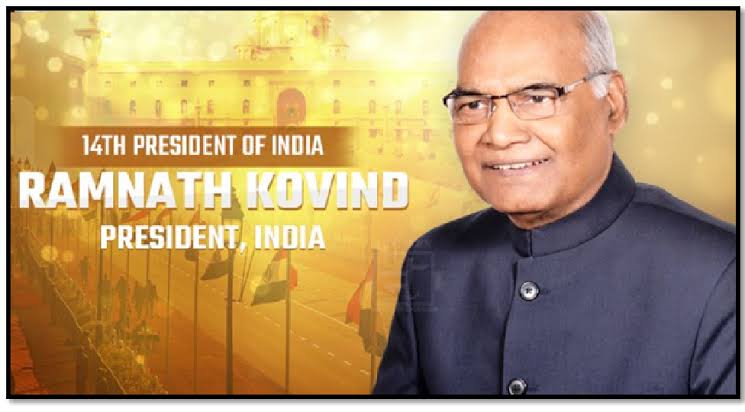
  1. I am happy to address the 15th Higher Education Summit 2019 organised by the Federation of Indian Chambers of Commerce and Industry in collaboration with the Ministry of Human Resource Development and the Ministry of Commerce and Industry. This global conference has come to occupy a vital place in the thought leadership forum on higher education. We have a large and diverse gathering of stakeholders from India and abroad participating in the event. I am sure you will find this edition as enriching as the previous ones.


  1.  Higher education as a public-policy issue enjoys primacy the world over. It is seen as a fundamental enabler of social, economic, scientific and intellectual progress and advancement. In the case of India, we have a distinguished history of higher education to inspire us as we work to strengthen and illuminate our universities as fonts of knowledge and learning. India has been home to the oldest university in the world. At its peak in the 7thcentury CE, the Nalanda University had 10,000 students from all over Asia enrolled in its campus. The methods of teaching prevalent in these ancient temples of learning and the emphasis on critical analyses could be of relevance as we look at modern trends in pedagogy.


  1. Investing in people through higher education and education in general has an omnibus impact on nation-building. The investment is made once but the dividends are realised in perpetuity. Recently, I had gone to Mysore to join the centenary celebrations of the enlightened “Monarch – Democrat” Jayachamaraja Wadiyar, the late Maharaja of Mysore. He was a pioneer in higher education who generously invested in his people. The lead that the Maharaja took in empowering people several decades ago, today provides the strong foundation of technological transformation that we see in Bengaluru, Mysuru and the adjoining areas. A country such as ours that wishes to transform itself within a short span of time, must transform its higher education journey first.


Ladies and gentlemen,

  1. Higher education is a subject close to my heart, both for personal and professional reasons. I have myself experienced its power and potential to bring about intra-generational change and mobility. As President of India, I am Visitor to 152 Universities and Institutes of Higher Learning. I have had the opportunity to interact with Vice-Chancellors and Directors of almost all of them.  India with over 990 Universities is home to one of the largest higher education ecosystems in the world. We are constantly at work to improve their standards and convert them into global knowledge hubs. We have just begun nationwide consultations on the New Education Policy. It would lay out the path for transforming Indian education landscape suited to 21st century needs.


  1. The world of tomorrow will be driven by knowledge, machine-intelligence and digital pathways. To prepare ourselves for this transformation and to leverage its limitless opportunities, we have to recast our higher education with new courses and deeper research-orientation. Ideation, innovation and incubation should be given primacy in our curriculum. India has the third largest scientific human resource pool in the world.  If we establish robust academia-industry linkages, we have the potential to become the R&D capital of the world.  And along with science, liberal arts and humanities must get equal attention – for fruits of technology have to be ultimately made relevant to people, communities and cultures. The connectedness of disciplines is not a mere reality today, but the inner core of knowledge itself.  I am happy that our Universities have already made progress with                            inter-disciplinary approach, combining courses in mathematics with music, and artificial intelligence with animal husbandry. Much more work is required on this account.


Ladies and gentlemen,

  1. Another important aspect that we need to attend is how to bring pedagogical changes in our education system.  Spirit of inquiry, critical thinking and an overall culture of looking at what, how and why of issues and perspectives needs to be nurtured. Creativity, imagination and thought in the minds of our students have to be unlocked and its exuberance allowed to flow and flower. To bring about this educational renaissance, we would require attitudinal adjustments and openness about new concepts on several fronts: at the level of academic leadership; at the level of student-teacher engagement; and at the level of technology integration.  These would only be possible if there is a vision to move forward and a committed urge to make things happen. In this context, I would like to commend the programmes initiated by the Ministry of Human Resource Development – LEAP that is “Leadership for Academicians Program” and   ARPIT that is “Annual Refresher Programme in Teaching”. While LEAP aims to build leadership and vision among higher education administrators, ARPIT is geared to improve pedagogical skills of our teachers.


  1.  Earlier I had talked about our ancient universities. They had a learning culture where ideas and concepts were constantly tested and subjected to verification and critical analyses. The system that produced a Panini, an Aryabhat, a Charak, or a Kautilya must have been robust. We must use modern tools to reopen wisdom stored in our countless knowledge traditions, even as we optimize the opportunities of a machine-intelligence age. An open learning culture will foster the spirit to innovate and give new wings to Atal Innovation Centres established in our Universities.


Ladies and gentlemen,

  1. Our economic needs are immense. Over the next several decades, India will witness tremendous growth leading to higher standards of living for its people. All this demands that we bring new energy and dynamism in our higher education profile. Programmes for vocational education, apprenticeship and internship are needed for combining theoretical and practical knowledge streams. We have to also draw and learn from global institutions and experiences.


  1. At the same time, India’s diverse higher education ecosystem offers immense opportunities for the world at large. The forces of globalisation pose their own imperatives for making learning a cross-cultural experience and an integrated construct. To promote India as a global knowledge destination, the Government of India has begun a “Study in India” programme to attract international students. Our Universities have also been developing international networks for faculty, student, pedagogy and knowledge exchange. Making our higher education ecosystem world class will also give a wider choice to Indian students who go abroad seeking quality education.


Ladies and Gentlemen,

  1. The world of higher education is an expansive one. For it to grow and empower us, we need support from all stakeholders – policymakers, educationists, researchers, entrepreneurs and others. Given the socio-economic reality of our country, public institutions will play a lead role. But along with it, the private sector must continue to contribute to national efforts.  We will also have to look at innovative models of funding to boost research and scholarship. Just last month,            I had the pleasure to launch the IIT Delhi Endowment Fund. This is the first of its kind Fund in India and is based on the contribution of the alumni. The Fund within a very short span has raised Rupees 250 crore and has a target to raise 1 billion US dollars for supporting academic excellence and research at IIT Delhi. I impress upon FICCI Higher Education Committee to galvanize greater people’s participation in strengthening our higher education system.


Ladies and gentlemen,

  1. As we talk of higher education as a public good, a critical bearing in the Indian context is how to deal with regional imbalance in the quality of education. We are trying to narrow the gap but a lot more initiatives are required.  Another related aspect is the rural-urban divide that we see in the field of higher education. Our Founding Fathers, Mahatma Gandhi and Rabindranath Tagore had paid detailed attention to it, be it the Medical College in Wardha or the Visva Bharati in Santiniketan. I had the opportunity to visit both these illustrious campuses this year. For our inclusive growth and progress, we have to take inspiration from them and build on their ideas. In this effort, technology platforms such as digital classrooms, e-learning and National Digital Library can be a key enabler.


Ladies and gentlemen,

  1. I have put forth some of my ideas on higher education before you.  It is now for you, the stakeholders, to flesh out the way forward. And as you deliberate and discuss, I would remind you of an old saying in Sanskrit, and I quote : “ सा विद्या या विमुक्तये” that is “true learning is that which liberates”.  Let us together create that university, that classroom, that curriculum, that culture which allows our students to realize their fullest potential as a human being, in service of our people, our nation and the world.


  1. I wish the Summit all success.


Thank you,

Jai Hind!

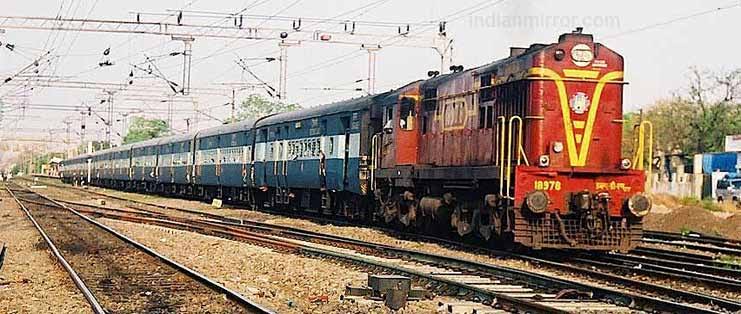
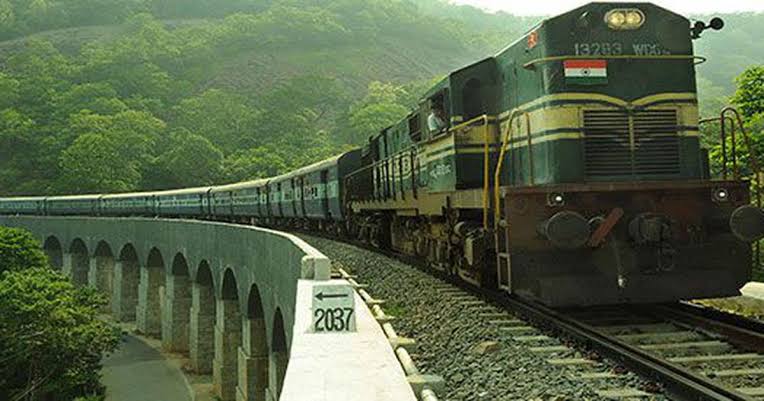
Non-fare Revenue and FDI in Indian Railways

Several steps have been taken to increase non-fare revenue of Indian Railways by monetization of land and other assets. These include:

i. Policy for leveraging Mobile Assets, Out of Home Advertising, Rail Display Network, Unsolicited proposals and Content on Demand.

ii. Commercial utilization of vacant land through Rail Land Development Authority (RLDA).

Government of India has permitted 100% Foreign Direct Investment (FDI) on automatic route in the following activities/areas of Railway Infrastructure:

i. Suburban corridor projects through Public Private Partnership.

ii. High speed train projects.

iii. Dedicated freight lines.

iv. Rolling stock including train sets, and locomotives or coaches manufacturing and maintenance facilities.

v. Railway Electrification.

vi. Signalling systems.

vii. Freight terminals.

viii. Passenger terminals.

ix. Infrastructure in industrial park pertaining to railway lines or sidings including electrified railway lines and connectivities to main railway line.

x. Mass Rapid Transport Systems.

Foreign Direct Investment in these areas is subject to sectoral guidelines, which include necessary safety certification from central government or its authorized entity. The FDI policy is also open for U.S. businesses.

In order to give a facelift to the Indian Railways and cater to diverse needs of passengers, some of the steps taken include:

i. Significant step-up in investment for capacity enhancement, Safety and Modernization of Railways.

ii. Improvement and upgradation of various passenger amenities like foot over bridges, lifts, escalators, toilets, battery operated vehicles, wheel chairs, waiting rooms.

iii. Leveraging information technology for online ticketing and enquiry services.

iv. Introduction of various premium train services like Humsafar, Tejas, Antyodaya, Utkrisht Double Decker Air-conditioned Yatri (UDAY), Mahamana and coaches like Deen Dayalu and Anubhuti.

This information was given by the Minister of Railways and Commerce & Industry, Shri Piyush Goyal in a written reply to a question in Lok Sabha today.

****

Redevelopment of Railway Stations

Ministry of Railways through various agencies is undertaking techno-economic feasibility studies of Railway stations. Based on the outcome of these feasibility studies, stations are planned to be taken up for redevelopment in phases. The cost of station redevelopment project is to be met by leveraging commercial development of land and air space in and around the stations. Presently, work of redevelopment is in progress at Gandhinagar(Gujarat) and Habibganj(Bhopal) stations.

Redevelopment of Railway Stations

The facilities proposed in a redeveloped station include congestion free non-conflicting entry/exit to the station premises, segregation of arrival/departure of passengers, adequate concourse without overcrowding, integration of both sides of the city wherever feasible, integration with other modes of transport systems e.g. Bus, Metro, etc., user friendly international signage, well illuminated circulating area and sufficient provision for drop off, pick up & parking etc.

Various developers have shown interest in redevelopment of stations on Indian Railways. All major railway stations on Indian Railways are planned to be taken up for redevelopment, especially the stations located in major cities, pilgrimage centres and important tourist destination, including Sawai Madhopur station.

This information was given by the Minister of Railways and Commerce & Industry, Shri Piyush Goyal in a written reply to a question in Lok Sabha today.

****

Lok Sabha passes the Special Protection Group (Amendment) Bill, 2019

The Lok Sabha passed the Special Protection Group (Amendment) Bill, 2019, after negating all the proposed amendments today.

Initiating the debate on the Special Protection Group (Amendment) Bill, 2019 today in the Lok Sabha, Union Home Minister Shri Amit Shah said that SPG shall provide proximate security to the Prime Minister and his immediate family members residing with him at his official residence. The Bill says that family members of a former Prime Minister who reside with him at his allotted accommodation will get security cover of the SPG only for five years, from the date he/she ceases to hold the office of Prime Minister.

Special Protection Group (Amendment) Bill, 2019

Replying to the debate, the Home Minister noted that there is a perception in the country that the amendment in SPG Act is only for the purpose to remove the SPG security cover for the Gandhi family. Contrary to this, the change of the security cover has been done only on the basis of yearly security threat perception review by the government. Such a security review has been a part of the original act, he added.

Shri Shah emphasized that the security cover of the Gandhi family has not been reduced or taken away, rather it has just been changed from SPG cover to Z Plus security cover by the CRPF, along with ASL and ambulance, across the country. The level of the security cover has been maintained and not even one security personnel has been reduced. He also said that the SPG security cover is being formed by the same security personnel who comprise of the Z plus security cover.

Shri Shah informed that based on the recommendations of the Birbal Nath committee report, SPG came into existence in 1985. From 1985 to 1988, SPG was governed by an Executive Order and only in 1988 the SPG Act came into existence to provide security to the Prime Minister and his/her family.

Shri Shah said that the SPG Act was enacted in 1988 to provide for the constitution and regulation of the SPG as an armed force to provide proximate security to the Prime Minister and his/her immediate family members. Amendments to the Act were effected in 1991, 1994, 1999 and 2003 and today a further amendment is being brought to revert back to the original spirit of the Act.

Shri Shah stated that the previous amendments to the 1988 Act have been carried out each time to provide security cover only to one family. According to the original Act, SPG is a specialised force to provide comprehensive security cover to the Prime Minister of the country and not a particular family. SPG doesn’t only provide physical security, but it takes care about protection of Prime Minister’s office, his/her communication systems, foreign tours and issues pertaining to his/her health and well being.

Dismissing the charge of vindictiveness for removal of SPG cover of Gandhi family, Shri Shah stated that such security cover reviews have happened in the past with respect to ex prime ministers, including Shri P.V. Narasimha Rao, Shri I.K. Gujaral, Shri Chandra Shekhar, Shri H.D. Deve Gowda and Dr. Manmohan Singh, but there was no such opposition ever when SPG cover was withdrawn. The Home Minister said that the Government is committed to secure each citizen of the country.

Shri Shah further stated that the Modi government never takes decision of providing security cover on the basis of vendetta politics but on scientific threat analysis for a particular individual. He also said that security cover has been provided to members of all political parties based on individual case based threat analysis. Security cover must not be treated as a status symbol by individuals. The security cover meant specifically for the Prime Minister, must not be enjoyed by any other individual. Moreover, the three protectees of the Gandhi family who have been specially mentioned here, have been on many trips without informing SPG, the Home Minister pointed out.

Talking about the rationale behind bringing the amendment, Shri Shah informed the House that in the Act, there is no cut off period for providing the SPG protection to former Prime Ministers or members of their immediate families. Thus, the number of individuals to be provided SPG cover can potentially become quite large. In such a scenario, there can be severe constraint on the resources, training and related infrastructure of SPG. This can also impact the effectiveness of SPG in providing adequate cover to the principle protectee, the Prime Minister in office.

Shri Shah said that the main aim of bringing this amendment is to make SPG more efficient. This would ensure that no omission happens in carrying out its core mandate, as the security of the Prime Minister, as Head of the Government, is of paramount importance for Government, governance and national security. The Bill says that when the proximate security is withdrawn from a former Prime Minister, such proximate security shall also stand withdrawn from members of his or her immediate family.


*****

The Three Simplest, Least Expensive Ways To Improve Learning In Children

What\’s the simplest, least expensive way to improve learning in children? Here are three such. They cost you no money, and are entirely in your control. They do involve technique, but not technology. However, they don’t involve working extra hard (just changing what you do, slightly). 

1. Smile more!
This has to be the least expensive and most effective. Smile. Look at children and smile a happy smile. You’re lucky to be with them. And smile the one that glows in your eyes – all children have an inbuilt ability to know when you’re only pretending.
And what should you do after smiling? Well, nothing special, just keep on doing whatever you were doing – teaching or taking children out or organizing the morning assembly or the mid-day meal or asking them to come back into the class. Smile.
And let me know after three months about the improved learning in your classroom. As they say, you need neither money nor orders to do this.
2. Talk with children. And listen more
We have so much to tell children – instructions, information, questions, answers. But all this is not equal to talking with children. Real conversation requires taking an interest in the lives of your students, interacting with them about things that matter to them, and above all – listening to them. If you are the kind of teacher that children can relate with and say what is in their minds, you’re well on your way to improving learning in the classroom.
3. Ask yourself what you would like if you were the child in front of you
We were all born as babies and spent a fair amount of time as children. Unfortunately, we grew up and became adults. We forgot that delight which gripped us when something new or challenging or interesting was put before us. We lost track of that person in us who would not give up something engaging, no matter what. And of course we fail to recall how much we enjoyed learning something, especially when we did it on our own, whether it was cycling or reading a book to figure something out or in the sports field.
Now that you’re a teacher, it will really help if for a moment you put yourself in your students’ place. What would you really enjoy being engaged in most? What way of presenting or unfolding the learning objective under consideration be most involving? How could you get children themselves to do and think more?
This is neither as difficult or crazy as it sounds. In fact, it’s much simpler than taking the usual role of doing all the work yourself – explaining, showing a picture, using the blackboard, thinking of examples to give – while children are simply sitting around watching you! In fact, this is also what you are supposed to do – i.e. use activity, exploration, projects and other similar means.
How difficult is that? Not so difficult that it can’t be done. There are many, many sources for you to draw upon, as there are many in-service training and materials available for you. And just in case there aren’t, do let me know.
In the meantime, I hope you’ll make vigorous use of these three simplest, least expensive methods – and really boost learning among your children.

Home Minister launches winter-grade diesel suitable for extreme winters of up to -30O Celcius for Ladakh Region

Union Home Minister ShriAmit Shah presided over a function to launch a special winter-grade diesel, developed by Indian Oil Corporation (Indian Oil), for the high-altitude regions of Ladakh through a video-link here today. Shri Dharmendra Pradhan, Minister of Petroleum & Natural Gas and Steel, and Shri Jamyang Tsering Namgyal, MP of Ladakh were also present on the occasion.
Motorists in high-altitude sectors like Ladakh, Kargil, Kaza and Keylong face the problem of freezing of diesel in their vehicles when winter temperatures drop to as low as -30o Celsius. Indian Oil has come up with an innovative solution to this problem by introducing a special winter-grade diesel with a low pour-point of -33o Celsius, which does not lose its fluidity function even in extreme winter conditions.
Speaking on the occasion, Shri Amit Shah congratulated the people of Ladakh for getting their long-pending demand fulfilled, by getting Union Territory status for Ladakh. The new status will accelerate the pace of holistic development of the region and bring prosperity to the people at par with the rest of India.
The Home Minister said that the Government of India has initiated a number of development projects for the UT of Ladakh,in the areas of power, solar energy, education and tourism with an estimated investment of Rs. 50,000 crore. He further said that, keeping in view the special development requirement of the region, the Government of India has made a provision that the budget allocation for the UT of Ladakh will remain non-lapsable, so as to enable the local administration to make full use of these funds as per their development needs. The Home Minister assured the people of UT of Ladakh that they will witness a fast pace of growth and development of the region under the decisive leadership of Hon’ble Prime Minister, Shri Narendra Modi.
Expressing his happiness at Indian Oil’s customer-driven approach,Shri Dharmendra Pradhan said that  today is an important day for the people of Ladakh region as they will now get  uninterrupted supply of special winter-grade diesel, which will help reduce the hardships faced by the local people for transportation and mobility during the harsh winter months. This will further facilitate the local economy as well as tourism of the region. Shri Pradhan expressed his gratitude to the Home Minister for launching the special winter-grade diesel and facilitating ease of living for the Ladakh region.
Shri Pradhan reassured that the UT of Ladakh will have all-round development under the visionary leadership of Hon’ble Prime Minister Shri Narendra Modi and people-centric welfare initiatives of Home Minister Shri Amit Shah.
The Home Minister and Petroleum Minister complimented the Indian Oil Team for devising solutions to help cater to the energy needs of the consumers in various parts of the country.
-=-=-=

Speaker, Lok Sabha Visits “Aadi Mahotsav” at Dilli Haat

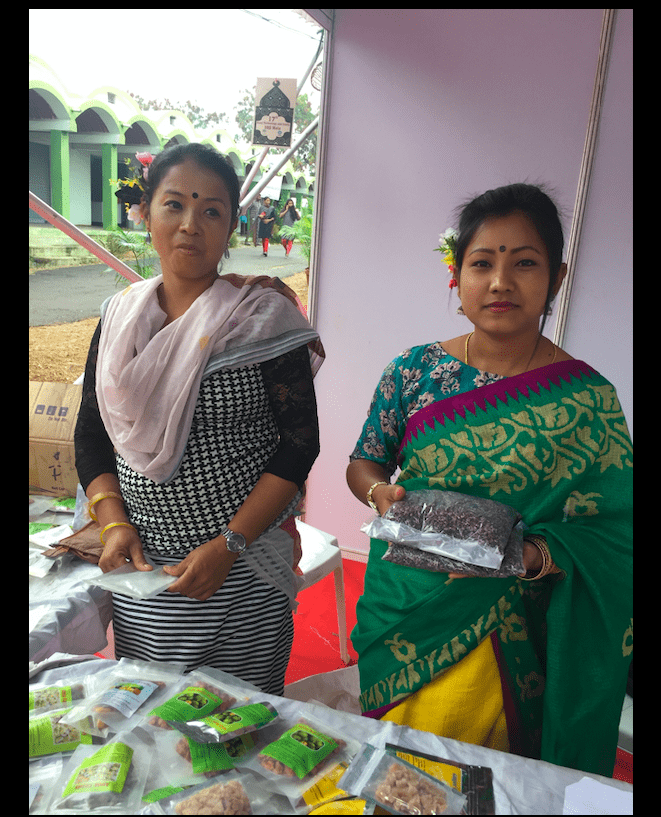
The Speaker, Lok Sabha Shri Om Birla visited the National Tribal Festival “Aadi Mahotsav”at Dilli Haat, INA, today. The 15 days’ festival (16th to 30th November, 2019) is the celebration of the spirit of Tribal Craft, Culture, Cuisine and Commerce. Union Tribal Affairs Minister Shri Arjun Munda, Chairman, TRIFED, Shri R.C. Meenaand MD, TRIFED, Shri Pravir Krishna were present on the occasion.
The Speaker visited the Stalls put up by tribal artisans and interacted with them. He witnessed the Tribal Cultural performances on the occasion.
Addressing the tribal artists and artisans, Shri Birla praised Ministry of Tribal Affairs and TRIFED for their unique exemplary efforts for transforming the lives of tribal people of our country. He paid homage to tribal freedom fighters. He opined that the tribal people are true protectors of our nature and environment. Aadi Mahotsav is a very novel initiative for overall development and welfare of tribal people of our country. He congratulated all participating tribal artists and artisans for their creative endeavors and it is very important that their natural skills must be channeled to promote their sources of income for their better life.
In his address, Shri Arjun Munda said that thetribal people have always fought for our country since ancient period till freedom struggle. They are firm believer in Panchtatva and have always protected our nature and environment. He opined that tribal people are protector of our ancient culture also and always away from social evils. The Adivasi way of life is guided by primal truth, eternal values and a natural simplicity. The tribes of India have a wide range of handicrafts. The Aadi Mahotsav is an effort to take tribal commerce to the next level of digital and electronic transactions. The concept of organizing Aadi Mahotsav in major cities of the country has proved to be a boon for tribal artisans.
Chairman TRIFED, Shri R. C. Meena, in his speech said that TRIFED is doing significant workfor the overall development and welfare of tribal people and events like Aadi Mahotsav are veryimportant in this regard. The tribes of India have a wide range of handicrafts and the governmentseeks to promote interaction between tribal artisans and the people.
The theme of the Mahotsav is: “A Celebration of the Spirit of Tribal Culture, Craft, Cuisine and Commerce”. The festival features exhibition-cum-sale of tribal handicrafts, art, paintings, fabric, jewellery and much more through 220stalls. Over 1000 tribal artisans and artists from different States creating a Mini-India are participating in thefestival.
Post inauguration of event on 16th November 2019, the balance 14 days of the festival have been dedicated to Parliamentarian’s Day, All India Service Day, Diplomats Day, Tourism Day, Defence Day, Sports Day, Textile Day, IAS Officers Wive’s Association, Media Day, Cooperative Day, North East Day, TRIFED Partner/Tribal Entrepreneur Day with Closing Ceremony on last day i.e. 30th November 2019. 
The tribal textiles manufactured by Master tribal Craftsmen from Jammu & Kashmir in the North to Tamil Nadu in the South and from Gujarat in the West to Nagaland/Sikkim in the East are the main attractions. For the first time, this AADI MAHOTSAV is showcasing a wide range of products from the tribal artisan from Leh (Ladaakh). Apart from this special attraction a wide range of products from North Easter States are on display and sale. TheTribalhandicrafts are soldthrough more than 220Stalls under the Tribes Banner by tribalArtisans.
In line with the national aspiration to go cashless, the tribal artisans are accepting payment through major credit/debit cards for which Point of Sale (POS) machines have been provided in each stall. A special training has been conducted by State Bank of India for smooth operations of this. The Mahotsav is displaying  the rich digital commerce and e-commerce being promoted by Tribes India.
TRIBES India proudly informs the signing of MOUs with Amazon, Amazon.com, Snapdeal, Flipkart, PayTM and GEM, a Government of India Portal for e-commerce of the tribal products. Besides TRIBES India has also has its own e-com portalwww.tribesindia.com.The Aadi Mahotsav is an effort to take tribal commerce to the next level of digital and electronic transactions. The Mahotsav apart from exotic handicrafts is also showcasing the electronic and digital skills of the tribals as a special attraction.
*****

Prime Minister attends All Parties Leaders Meeting ahead of Winter Session of Parliament beginning tomorrow

Prime Minister Shri Narendra Modi attended the All Parties Leaders meeting here today. Leaders from all major political parties were present on this occasion and they put forth their views on the upcoming session of Parliament.
In his remarks, Prime Minister observed that this session of the Parliament will be a special occasion for it will mark the 250th session of the Rajya Sabha and expressed his happiness that special events and activities were being planned to mark this occasion. Prime Minister emphasized that the 250th session of the Upper House provided a unique opportunity for highlighting the unique strengths of the Indian Parliament as well as the Indian Constitution, in providing an overarching framework of governance institutions for a diverse country like India. The backdrop of the session being held as India celebrates the 150th birth anniversary of the Father of the Nation Mahatma Gandhi also made it a unique and special occasion.
Prime Minister, while responding to specific issues raised by the representatives of various political parties said that the Government would work together with all parties in a constructive manner to address pending legislations and frame policy solutions for specific issues related to environment and pollution, the economy, the agricultural sector and farmers, and the rights of women, youth and the less privileged sections of society.
Prime Minister also complemented the Presiding officers of the two Houses for smooth running of the last session of Parliament and observed that this had helped to create a positive impact amongst the people about the functioning of the legislative arm of Government. In this regard, Prime Minister made a particular mention of the energetic participation by first term members of Parliament on discussions related to diverse issues and expressed the hope that constructive engagement between the Treasury and opposition benches will make the present session a successful and productive one
Briefing the media persons after the meeting,Union Minister for Parliamentary Affairs, Coal and Mines, Shri Pralhad Joshisaid that the Government is always ready to discuss on the floor of the both the Houses of Parliament, any issue as permitted under Rules of Procedure and sought the co-operation of all the party for the smooth functioning of the House.
Giving details about the ensuing Winter Session, Shri Joshi informed that The Winter Session, 2019 of Parliament is scheduled to be held from Monday, the 18thNovember, 2019, and subject to exigencies of Government Business, the Session may conclude on Friday, the 13th December, 2019.
He informed that 27 Bills will be taken up for introduction, consideration and passing. Shri Joshi also informed that two Bills replacing Ordinances namely (i) the Prohibition of Electronic Cigarettes (Production, Manufacture, Import, Export, Transport, Sale, Distribution, Storage and Advertisement) Ordinance, 2019 and (ii) the Taxation of Law (Amendment) Ordinance, 2019 are required to be passed during the ensuing Winter Session.
The Session will provide a total of 20 sittings spread over a period of 26 days including four Private Members’ days.
The Minister added thatin the meeting with Secretaries/ Senior Officers of various Ministries/ Departments held on 5thNovember, 2019, certain items were identified for being taken up during the ensuing Winter Session and based on the feedback tentatively 47* items have been identified for being  taken up during the Winter Session, 2019. (*46 Legislative and 01 Financial items)
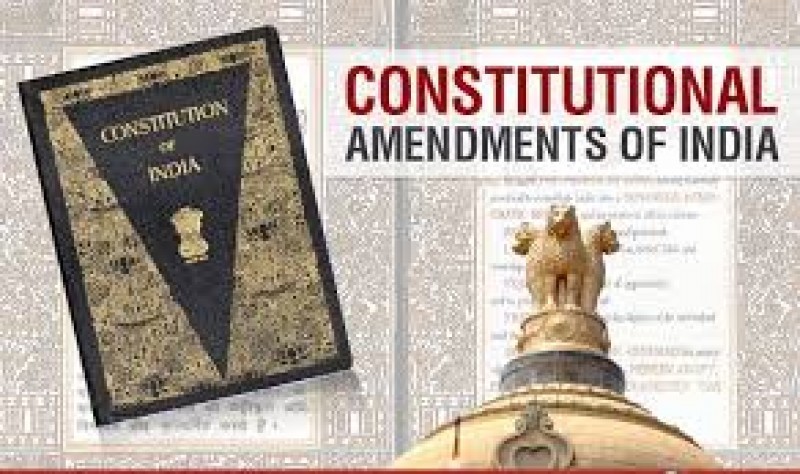
Some important pending legislations in the Houses required to be considered and passed during the Session are (i) The National Institute of Design (Amendment) Bill, 2019; (ii) The Chit Funds (Amendment) Bill, 2019; (iii) The Surrogacy (Regulation) Bill, 2019; (iv) The InterState River Water Disputes (Amendment), Bill, 2019; (v) The Dam Safety Bill, 2019; (vi) The Transgender Persons (Protection of Rights) Bill, 2019; (vii) The Jallianwala Bagh National Memorial (Amendment) Bill, 2019; (viii) The Constitution (Scheduled Tribes) Order (Amendment) Bill, 2019; and (ix) The Constitution (Scheduled Tribes) Order (Second Amendment) Bill, 2019.
Some important new Bills likely to be introduced, considered and passed during this session apart from the 2 Bills replacing Ordinances are (i) The Pesticides Management Bill, 2019; (ii) The Insolvency & Bankruptcy (Second) Amendment Bill, 2019; (iii) The International Financial Services Centres Authority Bill, 2019; (iv) The Medical Termination of Pregnancy (Amendment) Bill, 2019; (v) The Citizenship (Amendment) Bill, 2019; (vi) The Personal Data Protection Bill, 2019; and (vii) The Arms Act (Amendment) Bill, 2019
Besides Legislative items, 1 financial item relating to First Batch of Supplementary Demands for Grants for 2019-20 is required to be discussed and passed during the Session.
Shri Joshi also informed that a function would be held in the Central Hall, Parliament House to commemorate the 70 years of adoption of the Constitution on 26th November 2019. Hon’ble President, Hon’ble Vice President, Hon’ble Prime Minister and Hon’ble Speaker, Lok Sabha will address members of both Houses of Parliament assembled together.
The all-party meeting was attended by the Union Minister for Home Affairs Shri  Amit Shah, the Minister for Social Justice and Empowerment Shri Thawar Chand Gehlot, the Minister of State for Parliamentary Affairs and Heavy Industries and Public Enterprises Shri Arjun Ram Meghwal andthe Minister of State for Parliamentary Affairs and External Affairs Shri V. Muraleedharan, along with other leaders.
The leaders of the Political parties raiseda number of issues during the meeting. A consensus across emerged across party lines to ensuring smooth functioning of the Parliament without disruptions and deadlocks which may be resolved through constructive discussions in both the Houses.
Items of Government Business Identified for being taken up in both the Houses of Parliament during ensuing Winter Session, 2019

1st Winter-Grade Diesel outlet for Ladakh inaugurated by Union Home Minister through video-conferencing

Union Home Minister Shri Amit Shah today launched the the first Winter-Grade Diesel outlet for Ladakh region, which will help to address the problem faced by people due to loss of fluidity in Diesel fuel during extreme winter conditions. He said, the winter grade diesel produced by Panipat Refinery for the first time has a pour point of – 33degreeCelsius and does not lose its fluidity function even in the extreme winter weather of the region unlike the normal grade of Diesel which becomes exceedingly difficult to utilize.
Speaking on the occasion, Shri Shah said that the government led by Shri Narendra Modi was committed since 2014 to bring the region of Ladakhat par with the rest of the country, which wasneglected for the last 70 years. He said that the abrogation of Article 370 was a step in that direction. He also said that by bringing change in the status of Ladakh and the enhanced budget, all round development of the region has been ensured. He added that the newly introduced provisions of local taxation will also augment their financial resources.
Referring to a series of developmental measures taken by the Narendra Modi Government in the last 5 years including the Srinagar-Leh Transmission Line for electricity, 14 Solar projects for Leh and Kargil, Ladakh University, 2 new degree colleges, 5 new Tourist Circuits and Tracks for tourists and mountaineers, subsidised helicopter sewaand up gradation of District Hospital, Shri Shah said that people of Ladakh, Leh and Kargilnow enjoy same rights and will be an equal partner in the development of the country.
Shri Shah said that besides 9 MW Hydro power project, India’s largestSolar project of 7500 MW with an outlay of Rs, 50,000 Crore will be completed in 4 years. This will not only bring development in the Ladakh region but will also create employment opportunities.
The Home Minister said that this Winter-Grade Diesel will not only smoothen the travel and transportation during peak tourist season in extreme cold, but will also help in giving a boost to tourism and supply needs of the people of the region and helping in the overall economic development.
Tour and Taxi operators and the common man linked through the video-conferencing from Leh thanked the Union Home Minister for taking this historic measure and said this new version of Diesel will bring a New Dawn in the region.
Union Minister for Petroleum and Natural Gas, Shri Dharmendra Pradhan, Member of Parliament from Ladakh,JamyangTseringNamgyal and other senior officials of the Home Ministry and Petroleum Ministry were present on the occasion.
<><><><>