Board of Higher Secondary Education, Delhi

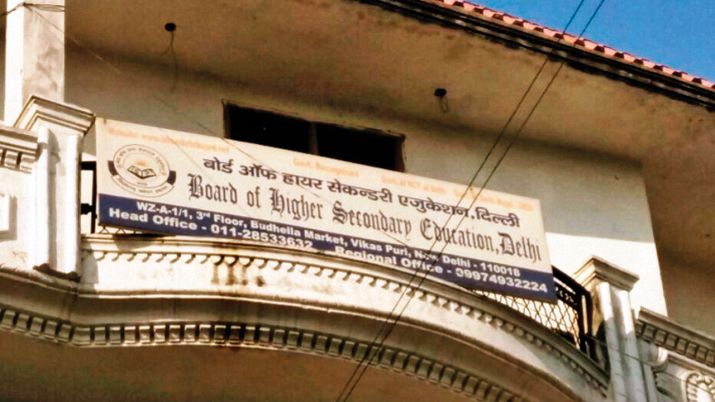
The
Ministry of Human Resource and Development wishes to inform the general
public that it has come to the notice of Ministry of HRD that one
entity operating in the name of “Board of Higher Secondary Education,
Delhi” is claiming to be a recognised Board of Education by this
Ministry vide letter No. 1812/2009/SKT-1 dated 29/06/2009 and D.O.
letter No. 3-5/2013/Sch.3 dated the 26th April, 2013. On scrutiny of the
relevant records of this Ministry, it has been found that no such
letters have ever been issued by this Ministry in favour of so called
Board of Higher Secondary Education, Delhi. Both these letters are,
therefore, completely forged and fabricated. Further, it is abundantly
clarified that No letters, whatsoever, have ever been issued by this
Ministry recognising the said entity i.e. Board of Higher Secondary
Education, Delhi.
The
said entity i.e. Board of Higher Secondary Education, Delhi stands
dissolved w.e.f. 01.07.1962 vide Directorate of Education Delhi
Administration Resolution’s No. F.32(10)/62-Edn. dated 30.06.1962.
Therefore, if any other document(s) is/are produced by the Board of
Higher Secondary Education, Delhi in relation to its recognition, then
the same may be deemed to be fake and the veracity of the documents may
first be got confirmed from the concerned organisation/Ministry.
The
General Public, all students, their parents and all other stakeholders
are, therefore, advised to take note of the above facts and act
accordingly.

103 Government Colonies to implement intensive campaign on Sensitization on Source Segregation of Household waste

74
colonies in Delhi and 29 colonies in various parts of the country have
been selected for intensive campaign of the Ministry of Housing and
Urban Affairs from July, 2019 to October, 2019. The following will be
implemented in a campaign mode as part of 100 days plan –

Sensitization on Source Segregation of Household waste and Orientation and capacity building on Home Composting:
This will be done with the help of Urban Local Bodies (ULBs) and
residents of colonies who will be motivated to segregate the house hold
waste and adopt home composting of organic waste. The ULBs will ensure
segregated collection, transportation and disposal of waste from
colonies.
Construction of Rooftop Rain Water harvesting structures:
This would be done by the Central Public Works Department in the
selected colony buildings to ensure conservation and judicious use of
water.
Cleaning and greening in 103 colonies:
Plantation drives will be organized throughout the period in
association with the residents, Resident Welfare Associations (RWAs),
Non-Government Organisations (NGOs) and other stakeholders to ensure
maximum participation. A special plantation campaign is being  organised
under the banner of ‘HARIYALI MAHOTSAV’ on 28th July 2019 in
10 government colonies in Delhi : (Lodhi Road Complex Sankara/Central
Park at 8.30 AM;  Vithal Bhai Patel House, Rafi Marg V.P. House Park at
10.30 AM; Pandara Road Central Park, Pandara Road at 9.00 AM;  Baba
Kharak Singh Marg Swatantra Senani Park, Behind temple, Havlock Square,
Phase-I at 10.00 AM; Chanakyapuri San Martin Park, S Radhakrishan Marg,
at 8.00 AM;  Lodhi Colony Veer Sawarkar/ Central Park at 9.00 AM; Kali
Bari Marg J- Block Park at 10.00 AM; Sector-8, R.K. Puram Park opposite
Flat No.353 to 377 at 10.00 AM;  Sadiq Nagar, Aurobindo Park at 10.30
AM;  Shahjahan Road Central Park, Shahjahan Road at 10.00 AM) and 29
colonies all over the country.  Minimum 50% of the plantation will be of
fruit bearing trees of local species. Details can be viewed on the
website www.epgc.gov.in including list of colonies in Delhi.

Benefits of Zero Budget Natural Farming

Intercropping is a scientifically proven practice and has
got several advantages and extends economic benefits for the farmers
particularly under adverse weather conditions. 
It is largely practiced in dry-land areas as an insurance against
failure of main crop.
Under All India Coordinated Research Project (AICRP) on
Integrated Farming Systems, intercropping systems have been studied for many
States and found profitable for farmers. Intercrops act as live mulch thereby
reducing the weeds, water requirement and also providing additional returns to
the farmers. Intercropping with leguminous crops is one of the components of
Zero Budget Natural Farming (ZBNF) and it improves the crop productivity and
soil fertility by way of fixing the atmospheric nitrogen. Further, the cow
dung, urine based formulations and botanical extracts used in ZBNF help farmers
in reducing the input cost.
The farmers practicing ZBNF either of small land holding or
large land holding prepare the low cost cow urine and dung based formulation on
farm by procuring the required inputs locally from the village or neighbouring
villages.

There is no specific time series data on
disguised unemployment in the country as the phenomenon is not easily amenable
to measurement. However, comparable time series data on employment and
unemployment is available in the form of quinquennial Survey on ‘Employment and
Unemployment Situation in India’ conducted by the National Sample Survey Office
(NSSO). The latest available data as per the quinquennial Survey estimates
indicated that workforce engaged in agriculture and allied sector has come down
from 24.74 crore in 2009-10 to 23.18 crore in 2011-12, i.e., about 6 percent.
The shift in workforce from primary (agriculture) sector to secondary and
tertiary sectors is a normal phenomenon of the development process experienced
by countries across the world and the same is true for India as well. The shift
owes to changes in the nature and scope of work arrangements in the various
sectors of the economy and the absorptive capacity of the non-agricultural
sectors to accommodate fresh entrants as well as workers hitherto engaged in
agriculture. Government has launched various schemes aiming to increase
production and productivity which make agriculture sector more viable and
thereby enhance labour productivity. Besides, Government has taken various
steps for generating employment in the country like encouraging private sector
of economy, fast-tracking various projects involving substantial investment and
increasing public expenditure on schemes like Prime Minister’s Employment
Generation Programme, Mahatma Gandhi National Rural Employment Guarantee
Scheme, Pt. Deen Dayal Upadhyaya Grameen Kaushalya Yojana and Deendyal Antodaya
Yojana-National Urban Livelihoods Mission.

National Ganga River Basin Authority

The Central Government, by a
notification dated 20.2.2009, as set up ‘National Ganga River Basin Authority’
(NGRBA)as an empowered planning, financing, monitoring and coordinating
authority for the Ganga river, in exercise of the powers conferred under the
Environment (Protection) Act,1986. The Prime Minister is ex-officio Chairperson
of the Authority, and it has as its members, the Union Ministers Concerned and the
Chief Ministers of states through which Ganga flows, viz., Uttarakhand, Uttar
Pradesh, Bihar, Jharkhand and West Bengal, among others. The objective of the
Authority is to ensure effective abatement of pollution and conservation of the
river Ganga by adopting a holistic approach with the river basin as the unit of
planning. The functions of the Authority include all measures necessary for
planning and execution of programmes for abatement of pollution in the Ganga in
keeping with sustainable development needs.

 
KEY FEATURES OF THE NEW APPROACH OF NGRBA

·        
 River
Basin will be the unit of planning and management. This is an internationally
accepted strategy for integrated management of rivers. Accordingly, a new
institutional mechanism in the form of National Ganga River Basin Authority
(NGRBA) will spearhead river conservation efforts at the national level.
Implementation will be by the State Agencies and Urban Local Bodies.
·        
 The
minimum ecological flows for the entire Ganga will be determined through modeling
exercises. NGRBA will take appropriate measures in cooperation with the States
to regulate water abstraction for marinating minimum ecological flows in the river.
·        
 Attention
would also be paid to the restoration of living parts of the river ecosystem
for its holistic treatment to enable conservation of species like dolphin,
turtles, fishes and other native and endangered species in their river.

KEY FUNCTIONS OF THE NGRBA

·        
 The NGRBA
would be responsible for addressing the problem of pollution in Ganga in a
holistic and comprehensive manner. This will include water quality minimum
ecological flows, sustainable access and other issues relevant to river ecology
and management.
·        
 The NGRBA
will not only be regulatory body but will also have developmental role in terms
of planning & monitoring of the river conservation activities and ensuring
that necessary resources are available.  The NGRBA would work for maintaining the water
quality of the river Ganga upto the acceptable standards. The pollution
abetment activities will be taken up through the existing implementation mechanisms
in the States and also through Special Purpose Vehicles (SPVs) at the pollution
hotspots.  The NGRBA will ensure minimum
ecological flow in the Ganga by regulating water abstraction and by promoting
water storage projects.
·        
 The NGRBA
will plan and monitoring programmes for clanging of Ganga and its tributaries.
To begin with, it will concentrate on Ganga main stem.
·        
 The NGRBA
would draw upon professional expertise within and outside the Government for
advise on techno-economic issues.
·        
 The
technical and administrative support to NGRBA shall be provided by the Ministry
of Environment & Forests.

· ‘PREPARATORY STEPS’ AFTER SETTING UP
NATIONAL GANGA RIVER BASIN AUTHORITY

·        
 River
Basin Management Plan: a notice inviting Expression of Interest to start the
process of selecting an appropriate agency to prepare the Ganga River Basin
Management Plan has been issued. This has been prepared taking into account
inputs received from the Central pollution control Board and the Central Water
Commission on the scope of work to be included in the Plan. 30 proposals have been
received from leading consultants. The Consultant will be finalized shortly
after two stage selection process.
·        
 Status
Paper: the Alternate Hydro Energy Centre, IIT, Roorkee has been asked to
prepare a Status Paper on Ganga which includes the experience of the Ganga
Action Plan and the present water quality. It is being finalized. The Status
paper will be presented in the first meeting of meeting of the NGRBA.
·        
 Priority
Action plan for pollution hotspots: one of the priority functions of the Authority
is to implementation river conservation works at pollution hotspots. These
activities should commence even as the comprehensive basin management plan is
under preparation. MoEF has requested the concerned State Governments to
prepare action plans for comprehensively tackling the problem of pollution in
the Ganga at the hotspots locations, such as Hardiwar, Varansani, Ahmadabad,
Kanpur, Patna and Howrah. These plans are awaited.
·        
 SPVs as
mode of implementation: the process of consolations with State Government and
Urban Local Bodies has been started to discuss he feasibility of having SPVs in
the river clearing sector and to evolve the necessary modalities viz.
Contractual arrangements, concessions agreements, etc. A meeting was organized
on 16th June 2009 with the representatives of the State Governments and the
Heads of the Urban Local Bodies as a brainstorming session to begin the process
of identifying appropriate locations and the types of river conservation
infrastructure where SPVs would be feasible.
·        
 GIS
Mapping: The National Information Centre (NIC has been entrusted with the work
of GIS based mapping of the entire Ganga Basin. This work has already
commenced. This will help the users to view and update maps and tabular data
relating to pollution abetment works, water quality etc. and analyze the data
for monitoring and effective decision making.
·        
 Memoranda
of Agreement with States: the National Institute of Urban Affairs has prepared
a modal Memorandum of Agreement which would link flow of funds to achievement
of milestones such as measurable improvements in water quality indicators, implementation
of pre determined reform measures and provision s for O&M.
·        
 Compendium of Technologies: A Compendium of
the treatment technologies available in India and aboard is being prepared by
IIT, Kanpur. This can serve as a store house for the NGRBA and would help the
State Governments and the local authorities in choosing the appropriate
technologies depending upon the totality of local  circumstances. The compendium would be
presented in the first meeting of NGRBA.
·        
 The
States have to be at the forefront of implementation of the river conservation
programme. The Authority, therefore, provides for the State Governments to
constitute State River Conservation Authorities under the chairmanship of their
Chief Ministers. However, certain States may want the States Authorities to be
constituted under the Environment (Protection) Act in which case the
notification will have to be issued by the Central Government. A model
notification in this regard has been circulated to the State Governments for
their consideration.
· 

Lok Sabha passes Central Universities (Amendment) Bill, 2019

New Delhi: The Lok Sabha passed the Central Universities
(Amendment) Bill, 2019 with a voice vote to establish a central
university and a tribal university in Andhra Pradesh.
The bill,
which also seeks an amendment to the Central Universities Act, 2009, was
introduced by Minister for Human Resource Development Ramesh Pokhriyal
on Monday.


Participating
in the debate on the Bill, Congress MP K. Suresh claimed that
percentage of expenditure on education had been reduced under the NDA
government while YSR Congress Party’s L.S. Krishna Devarayalu urged that
more funds be allocated towards building of Central universities and
research programmes in these universities.
Biju Janata Dal’s Bhartruhari Mahatab enquired about the problem of shortage of faculty in new higher educational institutions.
A Bill seeking to establish two new universities — the Central
University and the Central Tribal University in Andhra Pradesh — was on
Friday passed by voice vote in the Lok Sabha.

The Central Universities (Amendment) Bill, 2019 was moved as the
establishment of a Central University and a Central Tribal University in
Andhra Pradesh was obligatory under the Andhra Pradesh Reorganisation
Act, 2014.
“The universities will be set up with a cost of Rs 1,700 crore in
four years in Andhra Pradesh. In the first phase, Rs 450 crore will be
provided for the Central University and Rs 420 crore for the Central
Tribal University,” Human Resource Development Minister Ramesh Pokhriyal
Nishank said replying to the debate on the Bill.
He said the government has accorded high priority to strengthen the
education system in the country, for which the government has increased
the budget of education from Rs 67,000 crore in 2013-14 to Rs 95,000
crore this year.
The Minister said the establishment of the two universities in Andhra
Pradesh will increase access and quality of higher education and also
facilitate and promote avenues of higher education and research
facilities for the people of the State.
Tribal University will promote advance knowledge by providing
instructional and research facilities in tribal art, culture and customs
and advancement in technology to the tribal population of India, he
said.
“Apart from being focused on tribal education, the Central Tribal
University shall carry out all educational and other activities like any
other Central University,” he added.
TDP’s K Ram Mohan Naidu said that the existing institutions in Andhra
Pradesh have not been run well and lack the necessities, which make
them function properly.
YSRCP’s Lavu Devarayalu urged the government to allocate more funds
towards the building of the Central universities and sought the
introduction of more courses and research programmes in these
universities.
“More funds need to be allocated to the Eklavya schools in tribal
areas so that the students who eventually go to the tribal university
have a strong foundation,” he said.
Participating in the debate, BJP’s Rajiv Pratap Rudy said that the
sprouting of coaching institutions have hampered higher education.
He also urged the government to grant the central university status to Jai Prakash Narayan university and Patna University.

UGC launch PARAMARSH to promote quality education

PARAMARSH
University Grants Commission (UGC) launched a new
scheme as an attempt to promote good learning amongst students of higher
education. Paramarsh, a University Grants Commission scheme for mentoring
NAAC accreditation aspirant institutions to promote quality assurance in higher education is launched by Union HRD Minister Ramesh Pokhriyal ‘Nishank.

Under the Paramarsh scheme, imminent institutions
will be mentoring colleges to achieve them high quality standards. It
would also be providing financial support to supervisory institutions with an option
to appoint an expert.  The scheme main
aim is to subjugate a national challenge of improving the quality of Higher
Education in India. Services like sharing of knowledge, information and
opportunities for research collaboration and faculty development are the major concern areas of Paramarsh scheme for Mentee Institutions.

Hub
& Spoke” model
The scheme will run under a Hub & Spoke” model called
where mentoring institute would act as a Hub will have the responsibility of
guiding the Mentee institution and the mentee institution through the secondary
branches the “Spoke” through the facilities delivered to the mentee for self-development.
It will have a centralized control over functioning, efficiency, resource
utilization to accomplish complete progress of the mentee institution. Each mentor
institute will guide five NAAC (National Assessment Accreditation Council) aspirant
colleges. The mentor institution will only be the top Indian colleges and
universities that have achieved a NAAC Score of 3.26 or an “A”
accreditation. They will share their resources and expertise with  learning institutes, which have failed to meet quality standards of NAAC score. They will also be providing proper guidance to these colleges to improve their grade or
rank. Initially 71 universities and 391 colleges have NAAC accreditation that
will mentor undermine colleges, as per guidelines issued by government in PIB (Press
information Bureau).

Importance
of NAAC Accreditation
NAAC (National Assessment Accreditation Council) was
established in 27 January 2018. It has a mission to evaluate the higher
education institute and organization to assure the quality in
terms of education, infrastructure, research, teaching & learning etc. Accreditation
of NAAC is mandatory for all the institute and organization that aims to
provide higher education to students, particularly state universities. Organizations
with top NAAC grades such as ‘A++’, ‘A+’ and ‘A’ are most sought-after
institutes for higher studies. It help student to choose the best college they
want to get admission to shape their career. Also, UGC don’t grant RUSA and financial assistance if the college or institute fails to have accredited from NAAC.
Benefits
of NAAC Accreditation for Institutions
·        
NAAC
accreditation helps learning Institution to have a SWOT analysis and provides an opportunity to improve through an informed review process.
·        
It also provides financial assistance to the institute for better development of infrastructure
building.
·        
NAAC
assessment aids educational organizations to initiate pioneering
methods of teaching.

·       Being
one of the major accreditation agencies of the country, NAAC recommendation is
mandatory  for all the higher learning institutes.

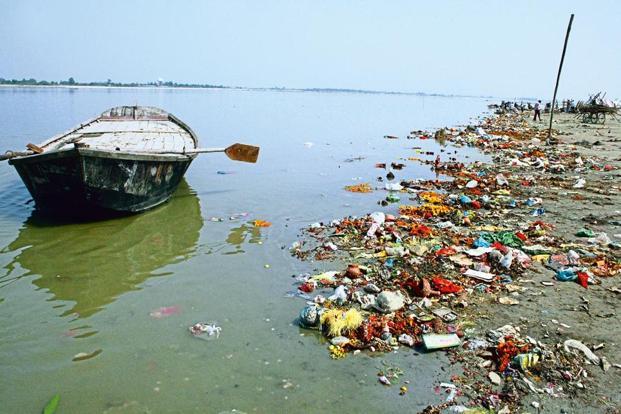
Pollution of River in India due to Untreated Waste Water Disposal

The major polluting
industries on the Ganga are the leather industries, especially near Kanpur,
which use large amounts of Chromium and other chemicals, and much of it finds
its way into the meager flow of the Ganga. Also, inadequate cremation
procedures contributes to a large number of partially burnt or unburnt corpses
floating down the Ganga, not to mention livestock corpses. 

The Ganga Basin, the
largest river basin of the country, houses about 40 percent of population of
India. During the course of its journey, municipal sewages from 29 Class-I
cities (cities with population over 1,00,000), 23 Class II cities (cities with
population between 50,000 and 1,00,000) and about 48 towns, effluents from industries
and polluting wastes from several other non-point sources are discharged into
the river Ganga resulting in its pollution. The NRCD records put the estimates
of total sewage generation in towns along river Ganga and its tributaries as
5044 MLD (Million Litres per Day). 

According to the Central Pollution Control
Board Report of 2001, the total wastewater generation on the Ganga basin is
about 6440 MLD.  Urban filth and industrial pollution are scientific
causes, but environmentalists believe that apart from industrial pollution and
sewage, the increase in number of slaughterhouse, dhobi ghats, crematoria and
slums are the major sources of pollution in these rivers. Every year, religious idols
are immersed in rivers which lose a little more of their life as they are
choked yet again.  
 

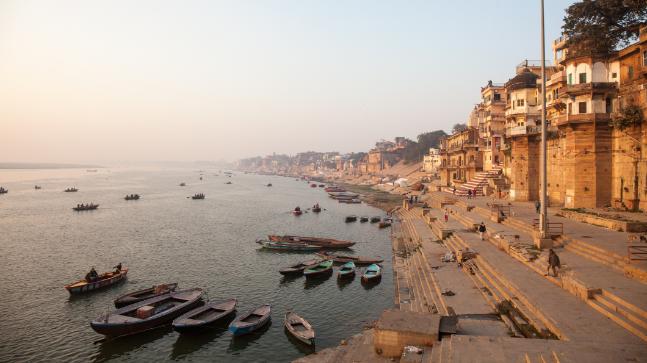
River Ganges in India

The Ganges is one of the major rivers of the Indian subcontinent, flowing east through the Gangetic Plain of northern India into Bangladesh. The 2,510 km river rises in the western Himalayas in the Uttarakhand state of India, and drains into the Sunderbans delta in the Bay of Bengal. The Ganges Basin drains 1,000,000-square-kilometre and supports one of the world’s highest density of humans. The river has been declared as India’s National River. After flowing 200 km through its narrow Himalayan valley, the Ganges debouches on the Gangetic Plain at the pilgrimage town of Haridwar. 
Further, the river follows an 800 km curving course passing through the city of Kanpur before being joined from the southwest by the Yamuna at Allahabad. Joined by numerous rivers such as the Kosi, Son, Gandaki and Ghaghra, the Ganges forms a formidable current in the stretch between Allahabad and Malda in West Bengal. On its way it passes the towns of Kanpur, Soron, Kannauj, Allahabad, Varanasi, Patna, Ghazipur, Bhagalpur, Mirzapur, Ballia, Buxar, Saidpur, and Chunar. The Ganges Basin with its fertile soil is instrumental to the agricultural economies of India and Bangladesh. The Ganges and its tributaries provide a perennial source of irrigation to a large area. 
Chief crops cultivated in the area include rice, sugarcane, lentils, oil seeds, potatoes, and wheat. Along the banks of the river, the presence of swamps and lakes provide a rich growing area for crops such as legumes, chillies, mustard, sesame, sugarcane, and jute. There are also many fishing opportunities to many along the river, though it remains highly polluted. Tourism is another related activity. Three towns holy to Hinduism – Haridwar, Allahabad, and Varanasi – attract thousands of pilgrims to its waters. 
Thousands of Hindu pilgrims arrive at these three towns to take a dip in the Ganges, which is believed to cleanse oneself of sins and help attain salvation. The rapids of the Ganges also are popular for river rafting, attracting hundreds of adventure seekers in the summer months.  

Importance of Rivers

Rivers have been used for navigation for
thousands of years. The earliest evidence of navigation is found in the Indus
Valley Civilization, which existed in northwestern Pakistan around 3300 BC.
Riverine navigation provides a cheap means of transport, and is still used
extensively on most major rivers of the world. Rivers have been a source of
food since pre-history.
They can provide a rich source of fish and other edible
aquatic life, and are a major source of fresh water, which can be used for
drinking and irrigation. It is therefore no surprise to find most of the major
cities of the world situated on the banks of rivers. Rivers help to determine
the urban form of cities and neighborhoods and their corridors often present
opportunities for urban renewal through the development of foreshore ways such
as River walks. Rivers have been important in determining political boundaries
and defending countries. The coarse sediments, gravel and sand, generated and
moved by rivers are extensively used in construction. In recent decades, there
has been a significant increase in the development of large scale power
generation projects. Rivers also provide an easy means of disposing of
waste-water and, in much of the less developed world, other wastes.  

UGC Names 23 ‘Fake Universities’, 8 from UP and 7 From Delhi In The List

New Delhi: The University Grants Commission (UGC) has released a list of 23 “self-styled, unrecognised” universities, eight of which are in Uttar Pradesh. The higher education regulator has warned students against taking admission in these institutions.
West Bengal and Odisha have two fake universities each — Indian Institute of Alternative Medicine, Institute of Alternative Medicine and Research, Nababharat Shiksha Parishad (Rourkela) and North Orissa University of Agriculture & Technology (Baripada).
“Students and public at large are hereby informed that at present 23 self-styled, unrecognised institutions are functioning in various parts of the country in contravention of the UGC Act,” UGC Secretary Rajnish Jain said.
Eight of these universities are in Uttar Pradesh, followed by Delhi (seven). Kerala, Karnataka, Maharashtra and Puducherry have a fake university each.
Unrecognised universities in UP are Varanaseya Sanskrit Vishwavidyalaya (Varanasi), Mahila Gram Vidyapith/Vishwavidyalaya (Prayagraj), Gandhi Hindi Vidyapeeth (Varanasi), National University of Electro Complex Homeopathy (Kanpur), Netaji Subhash Chandra Bose Open University (Aligarh), Uttar Pradesh Vishwavidyalaya (Mathura), Maharana Partap Shiksha Niketan Vishwavidyalaya (Pratapgarh), and Indraprastha Shiksha Parishad (Noida).
In Delhi, Commercial University Ltd, United Nations University, Vocational University, ADR Centric Juridical University, Indian Institution of Science and Engineering, Adhyatmik Vishwavidyalaya (Spiritual University) and Viswakarma Open University for Self-Employment have been declared as fake.
Badaganvi Sarkar World Open University Education Society (Karnataka), St John’s University (Kerala), Raja Arabic University (Maharashtra) and Sree Bodhi Academy of Higher Education (Puducherry) have also been included in the list.

CNG and PNG Service Begins in Patna

Among many of the projects Prime Minister Narendra Modi inaugurated in Bihar on Sunday, it was also the opening of two pump stations in the state capital dispensing Compressed Natural Gas (CNG), a first in the city, and also the supply of Piped Natural Gas (PNG) to thousands of households in the state capital.
A project of GAIL, formerly known as Gas Authority of India Limited, over 1500 homes on Jagdeo Path will begin receiving gas through a network of pipes on Monday. An additional 5000 households will start receiving gas by the end of March when the work on installing PNG connection is completed, GAIL chairperson B C Tripathi said.
The first customer to have the PNG service available at home was Bihar Institute of Technology (BIT) director B K Singh whose residence is on Jagdeo Path.
The first CNG fuel station went in service at Auto Care pump near Rukanpura on Bailey Road where Tripathi and legislator from Danapur Asha Devi inaugurated the service in the presence of a number of senior GAIL officials, pump owner Ajit Singh and his staff members.
The second service was opened at City Fuel Pump in Patna City.
The event, however, was not without a hitch as the station sold only four grams of gas before it developed a technical snag in the system. Women auto owners who had come there to fill their tanks had to return empty-handed. GAIL officials said the problem will be rectified by Monday when the pump will start dispensing CNG to vehicles equipped with necessary requirements.
GAIL Deputy General Manager K C Dwivedi said that while consumers will be able to buy CNG at the rate of Rs. 29 per kilogram, starting March 31 it will cost them Rs. 63.47 per kilogram, higher than the rates in Delhi, Lucknow, and Jharkhand.
GAIL would be given 1.5 acres from the land belonging to the Bihar State Road Transport Corporation’s workshop located at Phulwarisharif, he said.
The move would help curb the air pollution of the state capital as CNG enabled vehicles would start plying on city roads, Kumar said.
The capital city, whose air quality has worsened in recent past, topped the Central Pollution Control Board’s air quality index on three consecutive day from January 1, 2019.

MOONING THE MOON


The night of 14th-15th July was a much awaited night for Indians. Their Cricket
team had started the world cup campaign almost a month earlier and being the
favorite, was supposed to play finals on 14th July. Later that night in wee
hours of 15th July, ISRO had scheduled for the launch of Chandrayan-2; the
second moon-bound Indian spacecraft. But the night proved to be a
heart-breaking one for Indian. The Indian team lost in semi-finals and did not
make to final (which was a nail biting contest) and Chandrayan 2 launch was
halted due to some malfunction with less than an hour of countdown left.
The Cricket team will
have wait for 4 years to get another chance at contest, but the wait for
Chandrayan 2 launch turned out to be a short one. To understand why ISRO
deserves credit to manage the launch within a week, we need to understand the
concept of “launch window”. Every month there is almost a week window
in which a lunar launch can be scheduled. Other than this monthly window, there
is also a much smaller daily window which is hardly of a few minutes. In July,
the monthly window was from 10th to 16th July, but due to the technical snag,
we missed this. So completing the launch in July on a day when only a few
minutes of daily window is available, requires great accuracy. So when ISRO
completed the launch on 22nd July at 2:43pm, ISRO and the fellow Indians had
every reason to be over the moon before the Chandrayan even reached.
Why it is difficult to go to the moon?
There are many aspects of the flight which make this very
challenging. But let me tell you just one of those- the speed at which
everything moves! 
Our Solar System includes the Earth, Moon, planets, stars and
others, is spinning around the center of our galaxy, the Milky Way, at a slow
speed of 7.89 lakh km/ hour. Earth is revolving round the Sun at the speed
of 1, 07,000 km/hours while also circling eastward on its axis at a speed that
is 460 m/ second at the Equator. The Moon speed is slow and is around 3,683
km/hours around the Earth — it also has a slow spin about it axis than the
Earth. 

India’s space achievements and future plan
  • ISRO was formed on 15th august 1969
  • ARYABHTTA (India’s first satellite) was launched
    on April 10, 1975.
  • BHASKARA-I (the first remote sensing satellite) was
    launched on June 7, 1979
  • SATELLITE LAUNCH VEHICLE -3(India’s first experimental
    satellite launch vehicle) takes off, July18, 1980.
  • INSAT-1A launched on April10, 1982.
  • FIRST INDIAN on Space (Rakesh Sharma) April 2,
    1984
  • Launch of CHANDRAYAAN-1 October 22, 2008.
  • Launch of MANGALYAAN November 5, 2013.
  • Launch of GaganYaan- Manned Mission to space 2022
  • Space Station- Later in next decade
After launching
Geosynchronous Satellite Launch Vehicle Mark III (GSLV Mk-III) also termed, Bahubali,
from the Satish Dhawan Space Centre in Sriharikota ISRO envisioned to build a
permanent station in space in few years. With the landing of rover softly on
moon surface India would highlight its technological advances.
How CHANDRAYAN 2 is different from CHANDRAYAN 1

CHANDRAYAN 1
  • Chandrayaan-1 was India’s first mission to moon
  • It had a crash landing on the surface of the moon and
    the cube shaped instrument with the Indian tricolor on all sides was
    destroyed after hitting moon surface. 
  • It was launched by Polar Satellite launch Vehicle,
    PSLV-C11 on October 22, 2008, from Sriharikota.
  • The Chandrayaan-1 discovered traces of water on the
    moon.
  • It also detected Magnesium, Aluminum and Silicon on the
    lunar surface.
  • Global imaging of the moon is another achievement of
    this mission.
  • It made more than 3,400 orbits around the moon.
  • It was operational for 312 days till August 29, 2009.
 Discovery of Water
Traces was remarkable as earlier moon missions could not confirm this. Presence
of water can tell us more about evolution of life on earth. Further, water can
be used to extract Hydrogen which can be used as fuel for future long-distance
space missions.
But due to calibration
issues ISRO could not exactly confirm this beyond doubt. They had to take help
of instruments put by NASA to confirm the same.

CHANDRAYAN 2
  • IT is a follow-on mission to the Chandrayaan-1,
    comprising an orbiter, Lander (Vikram) and Rover (Pragyaan).
  • It is first attempt of landing on extraterrestrial
    surface by any country.
  • This is second lunar mission that will attempt to have
    a soft landing on moon.
  • It has been launched by GSLV MK-III M1 launch vehicle.
  • It aims to deploy a rover to study the lunar surface
    which has a mission life of one lunar day which is equal to fourteen earth
    days.
  • It will help to understand the history of the solar
    system as well as of earth.
The Launchpad carries an orbiter, a lunar
lander, a robotic rover and also India’s space dreams.There are two aspects
about the flight of this Chandrayan which makes it unique. First, it will
attempt to make a soft landing o the moon, which is considered very tricky.
Chandrayan-1 had only managed a crash-landing. The country will become the
fourth after USA, Russia and China to have a soft landing a spacecraft on moon.
Second, the spacecraft will attempt to land on the moon’s mysterious and
darkest (South Pole) part. If mission is successful, India will be the second
country to achieve this feat, first being the Chinese Chang’e-4 which managed
to do so earlier this January. All other previous landing, including the
manned missions, has been done in areas close to the Moon’s equator as this
area receives more sunlight, which is required by solar-powered instruments.
The landing date is
scheduled in first week of September. Then the moon-rover will make a soft
landing and function for 1 moon day (14 earth days) during the period it has
access to sunlight. In this period it will attempt to cover a distance of
around 500 meters. This would be a very important achievement given Chang’e 4
managed to cover only around a 100 meter on moon. 
Let’s hope that the
project achieves its due success. That it provides key insights into moon,
formation of earth, source of life etc. It can open a totally new frontier in
space for India and the world. As Neil Armstrong had said 50 years back-
A small step for a man, but a giant leap for the
mankind
.

State Level Environmental Impact Assessment Authority

Government of India recently constituted a State Level Environmental
Impact Assessment Authority  Every States and formulated State
Level Expert Appraisal Committee to assist the Authority. Environmental
Impact Assessment is defined as an activity designed to identify the
impact on the bio geophysical environment, on man and well-being of
legislative proposals, projects, policies, operational procedures and to
interpret and communicate information. EIA is a systematic process of
identifying future consequences of a current or proposed action. 
Many
states have these authorities and it is probably for the first time such
a welcome initiative has been taken. The objective of the
authority is to promote environmentally sound and sustainable
development. In many states there has hardly been any prior assessment of
various developmental projects especially in regard to environment. Most
of the projects are virtually started on ad hoc basis without
determining the long term impact of these projects on the environment.
This authority is globally accepted as a tool to ensure sustained
development with minimum environmental degradation. In Kashmir always
the reverse has happened. Many a project have been ostensibly started
for giving boost to economic development but these have often resulted
in the worst form of environmental degradation. Examples are setting up
of cement factories, some electric power projects such as high voltage
transmission lines through dense forests involving cutting of trees and
so on.
It
would be very useful if all future projects are first examined and
cleared by the Authority before these are taken up. It would also be a
great environmental drive if some of the existing projects are also
assessed in regard to the impact caused by these to the environment. No
doubt the creation and commissioning of this Authority will give a big
boost to the environment protection drive but in order to be effective,
the Authority should have some over-riding statutory powers. It is hoped
that this aspect has been taken care off? There are already a number of
laws and regulations for protection of environment but these have
remained on the statute book only because of the absence of any
effective enforcing agency. One would have to wait to see how far the
Authority is effective in protecting environment. Nevertheless, the step
taken is appreciable and timely.

Plaintiff Cannot Be Forced To Add Parties Against Whom He Does Not Want To Fight: Supreme Court

It is worth noting and worth mentioning that in a latest, landmark and laudable judgment titled Gurmit Singh Bhatia Vs Kiran Kant Robinson and others in Civil Appeal Nos. 5522-5523 of 2019 delivered on July 17, 2019, the Supreme Court while exercising its civil appellate jurisdiction has reiterated that, in a suit, the plaintiff is the dominus litis and cannot be forced to add parties against whom he does not want to fight unless there is a compulsion of the rule of law. All the courts must always bear this in mind while delivering judgments in such matters. There can be no denying or disputing it! 

To start with, the ball is set rolling in para 1 of this noteworthy judgment authored by Justice MR Shah for himself and Justice DY Chandrachud of Supreme Court wherein it is pointed out that, “Feeling aggrieved and dissatisfied with the impugned judgment and order dated 3.7.2013 passed in Writ Petition No. 856/2012 and order dated 5.8.2013 passed in Review Petition No. 169/2013 in Writ Petition No. 856/2012 by the High Court of Chhattisgarh at Bilaspur, by which the High Court has allowed the said writ petition preferred by the original plaintiffs and has quashed and set aside the order passed by the learned trial Court allowing the application preferred by the appellant herein for impleading him as a necessary party to the suit filed by respondent nos. 2 and 3 herein – the original plaintiffs, the original applicant – appellant has preferred the present appeals.”

To recapitulate, it is then stated in para 2 that, “The facts of the case leading to these appeals in nutshell are as follows:

Respondent nos. 2 & 3 herein – the original plaintiffs filed a suit against respondent no. 1 herein – original defendant no. 1 for specific performance of the agreement to sell/contract dated 3.5.2005 executed by respondent no. 1 – original defendant no. 1 in the Court of learned 4th Additional District Judge, Bilaspur. That during the pendency of the aforesaid suit and despite the injunction against respondent no. 1 herein – original defendant no. 1 – original owner not to alienate or transfer the suit property, respondent no. 1 herein – original defendant no. 1 executed a sale deed in favour of the appellant herein vide sale deed dated 10.07.2008. The appellant herein – purchaser who purchased the suit property during the pendency of the suit filed an application in the pending suit under Order 1 Rule 10 of the CPC for impleadment as a defendant in the suit. It was the case on behalf of the appellant herein that he has purchased the suit property and is a necessary and proper party to the suit as he has a direct interest in the suit property. That by an order dated 5.11.2012, the learned trial Court allowed the said application and directed the original plaintiffs to join the appellant as a defendant in the suit.”

Put plainly, it is then pointed out in para 2.1 that, “Feeling aggrieved and dissatisfied with the order passed by the learned trial Court dated 5.11.2012 allowing the application and permitting the appellant herein to be joined as a party defendant in the suit filed by the original plaintiffs – respondent nos. 2 & 3 herein, respondent nos. 2 & 3 herein filed writ petition No. 856/2012 before the High Court of Chhattisgarh. By the impugned judgment and order dated 3.7.2013, the High Court has allowed the said writ petition and has quashed and set aside the order passed by the learned trial Court allowing the impleadment application preferred by the appellant herein by holding that as regards the relief claimed against the original defendants and as no relief has been claimed against the appellant herein, the appellant cannot be said to be a necessary or formal party. That thereafter the appellant preferred a review application which came to be dismissed. Hence, the present appeals by way of special leave petitions.”

Be it noted, para 3.1 then discloses that, “Learned Senior Advocate appearing on behalf of the appellant has vehemently submitted that once the learned trial Court allowed the impleadment application submitted by the appellant herein under Order 1 Rule 10 of the CPC holding that the appellant is a necessary and proper party, the High Court, in exercise of powers under Article 227 of the Constitution of India, ought not to have interfered with the same.”

Moving on, para 3.2 then further discloses that, “It is vehemently submitted by the learned Senior Advocate appearing on behalf of the appellant that as such the appellant has purchased the suit property from the same vendor and, in fact, the appellant was in prior agreement to sell holder and to protect the interest of the appellant, the appellant is a necessary and proper party. It is submitted that therefore the learned trial Court rightly allowed the impleadment application submitted by the appellant.”

Going forward, it is then further added in para 3.3 that, “Making the above submissions and relying upon the decision of this Court in the case of Robin Ramjibhai Patel v. Anandibai Rama @ Rajaram Pawar, reported in (2018) 15 SCC 614 and the decision of the Bombay High Court in the case of Shri Swastik Developers vs. Saket Kumar Jain, reported in 2014 (2) Mh. L.J. 968, it is prayed to allow the present appeals and quash and set aside the impugned judgments and orders passed by the High Court and restore the order passed by the learned trial Court.”

On the contrary, we then see that para 4 discloses that, “The present appeals are vehemently opposed by Shri M. Shoeb Alam, learned Advocate appearing on behalf of the original plaintiffs. It is vehemently submitted that in fact the appellant purchased the suit property during the pendency of the suit and that too in violation of the injunction granted by the learned trial Court. It is submitted that as such the prior agreement to sell upon which reliance has been placed by the appellant is a concocted and forged one. It is submitted that in any case the appellant cannot be impleaded as a defendant in a suit filed by the original plaintiffs for specific performance of the agreement to sell/contract to which the appellant is not a party. It is submitted that the original plaintiffs are the dominus litis and without their consent nobody can be permitted to be impleaded as defendant.”

While citing the relevant case law thus adding more ammunition to its submissions, it is then pointed out in para 4.1 that, “It is vehemently submitted that as such the issue involved in the present case is squarely covered against the appellant in view of the decision of this Court in the case of Kasturi v. Iyyamperumal, reported in (2005) 6 SCC 733”.

Furthermore, it is then illustrated in para 4.2 that, “Insofar as the reliance placed upon the decision of this Court in the case of Robin Ramjibhai Patel (supra) as well as the decision of the Bombay High Court in the case of Shri Swastik Developers (supra) by the learned Senior Advocate appearing on behalf of the appellant, it is vehemently submitted by Shri M. Shoeb Alam, learned Advocate appearing on behalf of the original plaintiffs that the said decisions shall not be applicable to the facts of the case on hand. It is submitted that in the aforesaid two cases, it was an application by the original plaintiff to implead the subsequent purchaser who purchased the property during the pendency of the suits. It is submitted that as held by this Court in the case of Kasturi (supra), it is for the plaintiff/plaintiffs to implead a particular person/persons as defendant/defendants and if he/they does not/do not join then it will be at the risk of the plaintiff/plaintiffs. It is further submitted that the plaintiff cannot be forced to implead any other person, more particularly who is not a party to the contract, against the wish of the plaintiff. It is submitted that therefore the aforesaid two decisions, upon which reliance has been placed by the learned Senior Advocate appearing on behalf of the appellant, shall not be applicable to the facts of the case on hand. It is submitted that as such the decision of this Court in the case of Kasturi (supra) clinches the issue and shall be squarely applicable to the facts of the case on hand.”

To put things in perspective, it is then ruled in para 5.1 after hearing the learned counsel for the respective parties at length that, “At the outset, it is required to be noted that the original plaintiffs filed the suit against the original owner – vendor – original defendant no. 1 for specific performance of the agreement to sell with respect to suit property dated 3.5.2005. It is an admitted position that so far as agreement to sell dated 3.5.2005 of which the specific performance is sought, the appellant is not a party to the said agreement to sell. It appears that during the pendency of the aforesaid suit and though there was an injunction against the original owner – vendor restraining him from transferring and alienating the suit property, the vendor executed the sale deed in favour of the appellant by sale deed dated 10.7.2008. After a period of approximately four years, the appellant filed an application before the learned trial Court under Order 1 Rule 10 of the CPC for his impleadment as a defendant. The appellant claimed the right on the basis of the said sale deed as well as the agreement to sell dated 31.3.2003 alleged to have been executed by the original vendor. The said application was opposed by the original plaintiffs. The learned trial Court despite the opposition by the original plaintiffs allowed the said application which has been set aside by the High Court by the impugned judgment and order. Thus, it was an application under Order 1 Rule 10 of the CPC by a third party to the agreement to sell between the original plaintiffs and original defendant no. 1 (vendor) and the said application for impleadment is/was opposed by the original plaintiffs. Therefore, the short question which is posed for consideration before this Court is, whether the plaintiffs can be compelled to implead a person in the suit for specific performance, against his wish and more particularly with respect to a person against whom no relief has been claimed by him?”

As it turned out, it is then envisaged in para 5.2 that, “An identical question came to be considered before this Court in the case of Kasturi (supra) and applying the principle that the plaintiff is the dominus litis, in the similar facts and circumstances of the case, this Court observed and held that the question of jurisdiction of the court to invoke Order 1 Rule 10 CPC to add a party who is not made a party in the suit by the plaintiff shall not arise unless a party proposed to be added has direct and legal interest in the controversy involved in the suit. It is further observed and held by this Court that two tests are to be satisfied for determining the question who is a necessary party. The tests are – (1) there must be a right to some relief against such party in respect of the controversies involved in the proceedings; (2) no effective decree can be passed in the absence of such party. It is further observed and held that in a suit for specific performance the first test can be formulated is, to determine whether a party is a necessary party there must be a right to the same relief against the party claiming to be a necessary party, relating to the same subject matter involved in the proceedings for specific performance of contract to sell. It is further observed and held by this Court that in a suit for specific performance of the contract, a proper party is a party whose presence is necessary to adjudicate the controversy involved in the suit. It is further observed and held that the parties claiming an independent title and possession adverse to the title of the vendor and not on the basis of the contract, are not proper parties and if such party is impleaded in the suit, the scope of the suit for specific performance shall be enlarged to a suit for title and possession, which is impermissible. It is further observed and held that a third party or a stranger cannot be added in a suit for specific performance, merely in order to find out who is in possession of the contracted property or to avoid multiplicity of the suits. It is further observed and held by this Court that a third party or a stranger to a contract cannot be added so as to convert a suit of one character into a suit of different character.”

More significantly, it is then further added in this same para 5.2 that, “That thereafter, after observing and holding as above, this Court further observed that in view of the principle that the plaintiff who has filed a suit for specific performance of the contract to sell is the dominus litis, he cannot be forced to add parties against whom, he does not want to fight unless it is a compulsion of the rule of law. In the aforesaid decision in the case of Kasturi (supra), it was contended on behalf of the third parties that they are in possession of the suit property on the basis of their independent title to the same and as the plaintiff had also claimed the relief of possession in the plaint and the issue with regard to possession is common to the parties including the third parties, and therefore, the same can be settled in the suit itself. It was further submitted on behalf of the third parties that to avoid the multiplicity of the suits, it would be appropriate to join them as party defendants. This Court did not accept the aforesaid submission by observing that merely in order to find out who is in possession of the contracted property, a third party or a stranger to the contract cannot be added in a suit for specific performance of the contract to sell because they are not necessary parties as there was no semblance of right to some relief against the parties to the contract. It is further observed and held that in a suit for specific performance of the contract to sell the lis between the vendor and the persons in whose favour agreement to sell is executed shall only be gone into and it is also not open to the Court to decide whether any other parties have acquired any title and possession of the contracted property. It is further observed and held by this Court in the aforesaid decision that if the plaintiff who has filed a suit for specific performance of the contract to sell, even after receiving the notice of claim of title and possession by other persons (not parties to the suit and even not parties to the agreement to sell for which a decree for specific performance is sought) does not want to join them in the pending suit, it is always done at the risk of the plaintiff because he cannot be forced to join the third parties as party-defendants in such suit. The aforesaid observations are made by this Court considering the principle that plaintiff is the dominus litis and cannot be forced to add parties against whom he does not want to fight unless there is a compulsion of the rule of law. Therefore, considering the decision of this Court in the case of Kasturi (supra), the appellant cannot be impleaded as a defendant in the suit filed by the original plaintiffs for specific performance of the contract between the original plaintiffs and original defendant no. 1 and in a suit for specific performance of the contract to which the appellant is not a party and that too against the wish of the plaintiffs. The plaintiffs cannot be forced to add party against whom he does not want to fight. If he does so, in that case, it will be at the risk of the plaintiffs.”

It cannot be lost on us that it is then envisaged in para 6 that, “Now so far as the reliance placed upon the decision of this Court in the case of Robin Ramjibhai Patel (supra) and the decision of the Bombay High Court in the case of Shri Swastik Developers (supra), relied upon by the learned Senior Advocate for the appellant is concerned, the aforesaid decisions shall not be applicable to the facts of the case on hand as in both the aforesaid cases, it was the plaintiff who submitted an application to implead the third parties/subsequent purchasers who claimed title under the vendor of the plaintiff. Position will be different when the plaintiff submits an application to implead the subsequent purchaser as a party and when the plaintiff opposes such an applicant for impleadment. This is the distinguishing feature in the aforesaid two decisions and in the decision of this Court in the case of Kasturi (supra).”

All told, it is then finally held in the last para 7 that, “In view of the above and for the reasons stated above, we are in complete agreement with the view taken by the High Court. No interference of this Court is called for. The appellant cannot be impleaded as a defendant in the suit for specific performance of the contract between the original plaintiffs and original defendant no. 1 against the wish of the plaintiffs. Accordingly, the present appeals stand dismissed. However, in the facts and circumstances of the case, there shall be no order as to costs.”

In the ultimate analysis, the Apex Court has made it absolutely clear in this notable case that plaintiff cannot be forced to add parties against whom he does not want to fight unless there is a compulsion of the rule of law. It has been elaborated upon also in great detail which we have already discussed above. No doubt, all the courts must always comply with it in all such cases!

Sanjeev Sirohi, Advocate,

s/o Col BPS Sirohi,

A 82, Defence Enclave,

Sardhana Road, Kankerkhera,

Meerut – 250001, Uttar Pradesh.

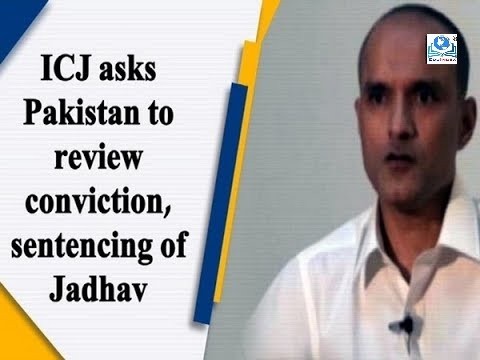
Legal Article Review And Reconsider Conviction And Sentencing Of Jadhav: ICJ To Pakistan


“Truth and justice have prevailed. Congratulations to ICJ for a verdict based on extensive study of facts. I am sure Kulbhushan Jadhav will get justice.”

– PM Narendra Modi

It goes without saying that in a major legal and diplomatic victory for India and also simultaneously in a major legal and diplomatic setback along with global embarrassment for Pakistan, the International Court of Justice (ICJ) has held upfront that Pakistan violated the Vienna Convention in the Kulbhushan Jadhav case and it should review and reconsider his conviction and sentencing while allowing India consular access to the Indian national. Importantly, the ICJ ruling said unequivocally that the stay on the death sentence pronounced on Jadhav must remain. It minced no words in saying clearly, categorically and convincingly that, “The court considers that a continued stay of execution constitutes an indispensable condition for the effective review and consideration of the conviction and sentence of Jadhav”.

To be sure, while indicating its unhappiness with the judicial process regarding Kulbhushan Jadhav, the ICJ said that, “Court considers it imperative to re-emphasise that the review and reconsideration of the conviction and sentence of Jadhav must be effective.” This clearly comes as a rap on the knuckles of Pakistan’s opaque way of trial of Jadhav by military courts which is the biggest proof that it was just a sham trial and everything was pre-decided! It is a no-brainer that this sharp observation of ICJ clearly tantamount to an open indictment of Jadhav being tried before secret military “black” courts where the evidence against him and his legal defence remains unknown! How can this by any standard be termed as “fair trial”?

What’s more, while rejecting all the major contentions put forward by Pakistan, the ICJ said the Vienna Convention was applicable in the Jadhav case regardless of allegations that he was engaged in espionage. It also conveyed unambiguously that, “Pakistan must inform Jadhav without further delay of his right under Article 36 and allow and arrange for his legal representation”. Pakistan should be ashamed that ICJ has to remind it that what all legal rights should be provided to Jadhav!

Bluntly put: If Pakistan has nothing to hide as it repeatedly asserts and tries to present a brave face then why was it so determined to deny even consular access and legal representation to Kulbhushan Jadhav? This itself is the biggest testimony of the irrefutable fact that Pakistan has a lot to hide and has very little to show and has no genuine proof to vindicate its false claim that Kulbhushan Jadhav is a spy and a terrorist! Why ICJ conveyed its unhappiness with the way Jadhav was tried in Pakistan? Still should Pakistan not wake up its ideas and act in the right manner?

Before proceeding ahead, it would be pertinent and imperative to mention now the entire sequence of events in which the Jadhav case unfolded. This will help us understand better the entire case and how it reached its logical conclusion. It is as follows: –

2016

March 3: Kulbhushan Jadhav, then 46 years, is arrested by Pakistan allegedly from Mashkel in Balochistan Province. Pakistan terms him “an Indian spy” for India’s external intelligence agency, RAW.

March 25: India notified about Jadhav’s arrest in a press release by Pakistani authorities. India rejects Pakistan’s claims and says there’s no proof that he was arrested in Balochistan.

March 26: The then Ministry of External Affairs spokesperson Vikas Swarup releases a statement stating that while Jadhav was a former naval officer, he had no links with RAW or the government.

March 29: India seeks consular access to Jadhav which Pakistan does not provide.

March 30: Union Minister Kiren Rijju rubbishes Pakistan’s claims and calls Jadhav’s “confession” about his alleged involvement in terror activities in Balochistan a lie. Indian authorities claim Jadhav was abducted from Iran where he was conducting business after retiring from Navy.

December 7: Pakistan Foreign Minister Sartaj Aziz confirms that conclusive evidence against Kulbhushan Jadhav has not been found. Pakistan Foreign Ministry then makes a U-turn on its earlier released statement.

2017

Jan 6: Pakistan announced that it has submitted a dossier to the new United Nations Secretary General Antonio Guterres over Indian interference in Islamabad, which was aimed at “destabilising” the nation.

April 1: India starts sending diplomatic communications to Pakistan for providing consular access to Jadhav. Authorities claim that access denied despite repeated requests.

April 10: Pakistan army says Jadhav has been sentenced to death by a military court for espionage and waging war against the country.

April 12: According to a media report, Jadhav is charged with terrorism and sabotage by a court.

May 8: India moves ICJ against Pakistan’s decision and for “egregious violation of the Vienna Convention on Consular Relations”. It seeks ‘provisional measures’ from ICJ and asks it to issue instructions to Pakistan to not take any action on the death sentence till India’s request for ‘provisional measures’ was considered by the court.

May 9: What came as a shot in the arm for India was ICJ staying Jadhav’s execution on India’s request. ICJ sends urgent communication to the Pakistan PM asking the country not to take measures that would result, in an ICJ ruling not having the appropriate effect thus prohibiting Pakistan from executing Jadhav.

May 15: ICJ begins hearing. ICJ hears India’s request for ‘provisional measures’.

May 18: In a further major gain for India, ICJ unanimously issues binding order on ‘provisional measures’, says all measures to be taken to prevent execution of Jadhav pending the final judgment.

June 16: World Court asks India to make its submission by September 13.

Sep 13: India files its memorial (first round of written pleadings), Pakistan follows with counter memorial on December 13, 2017.

Dec 19: India seeks 3 months to file reply (2nd pleadings). Pakistan opposes India’s request.

Dec 25: Pakistan facilitates meeting of Jadhav with his mother and wife in Islamabad but here too they are subjected to undergo humiliation like asking them to remove mangalsutra, bindi, shoes etc.

2018

Jan 17: ICJ accepts India’s request and gives 3 months each to India and Pakistan to file a second round of written pleadings.

April 17: India files second round of written pleadings.

July: Pakistan also follows with its own filing of second round of written pleadings.

Oct 3: ICJ fixes dates for final hearing in the matter.

2019

Feb 18: ICJ begins four-day final public hearing in this case.

Feb 21: ICJ concludes the hearing and reserves the order.

July 17: ICJ orders that Jadhav must be given consular access. ICJ also orders that it has jurisdiction to decide India’s plea for Kulbhushan Jadhav. It also holds that stay of Jadhav’s execution ordered by Pakistan’s military court will continue and Pakistan has to review and reconsider conviction and sentencing of Jadhav.

Be it noted, all the 16 Judges of ICJ on the panel unanimously ruled that the ICJ’s jurisdiction held over the case. It said that the court “unanimously, finds that it has jurisdiction, on the basis of Article 1 of the Optional Protocol concerning the Compulsory Settlement of Disputes to the Vienna Convention on Consular Relations of 24 April 1963, to entertain the Application filed by the Republic of India on 8 May 2017”. The judgment which was read out by Judge Abdulqawi Ahmed Yusuf who is the President of the ICJ at the Peace Palace on July 17, 2019 was decided with 15 judges in favour while only Pakistan’s ad-hoc Judge – Justice Tassaduq Hussain Jilani was the lone dissenter! Pakistan must be gracious enough to accept this biggest slap on its face and comply with the order passed by the ICJ to save its own reputation in front of the world!

What’s more, the ICJ specifically ruled that it “finds that the Islamic Republic of Pakistan is under an obligation to inform Mr. Kulbhushan Sudhir Jadhav without further delay of his rights and to provide Indian consular officers access to him in accordance with Article 36 of the Vienna Convention on Consular Relations”. Pakistan till now was totally opposed to giving any consular access to Kulbhushan Jadhav but now it has no option but to comply! The ICJ said that the court finds that the “appropriate reparation in this case consists in the obligation of the Islamic Republic of Pakistan to provide by the means of its own choosing, effective review and reconsideration of the conviction and sentence of Jadhav so as to ensure that full weight is given to the effect of the violation of the rights set forth in Article 36 of the Convention.”

Not stopping here, it added that a “continued stay of execution constitutes an indispensable condition for the effective review and reconsideration of the conviction and sentence of Jadhav. The Court also found that, “by not informing Jadhav without delay of his rights under Article 36, paragraph 1(b) of the Vienna Convention on Consular Relations”, Pakistan “breached the obligations” incumbent upon it under that provision. It also said that by “not notifying the appropriate consular post of the Republic of India in the Islamic Republic of Pakistan without delay of the detention of Mr Kulbhushan Sudhir Jadhav and thereby depriving the Republic of India of the right to render the assistance provided for by the Vienna Convention to the individual concerned, the Islamic Republic of Pakistan breached the obligations incumbent upon it under Article 36, paragraph 1 (b), of the Vienna Convention on Consular Relations.”

What a pity that it is now after such a long legal battle that ensued and raged on in ICJ for more than 3 years and after ICJ asked Pakistan to comply that it has finally buckled after being forced to eat the humble pie and say in a mellowed manner that it has decided to grant consular access to Kulbhushan Jadhav hours after Indian Foreign Minister S Jaishankar sought it following the ICJ verdict! Pakistan’s Foreign Ministry announced in a statement that, “Pursuant to the decision of the ICJ, Commander Kulbhushan Jadhav has been informed of his rights under Article 36, Paragraph 1(b) of the Vienna Convention on Consular Relations. As a responsible state, Pakistan will grant consular access to Commander Kulbhushan Jadhav according to Pakistani laws, for which modalities are being worked out.” One fails to understand that why it took so long for Pakistan to become a responsible state? Why was it an irresponsible state for so long? Why it took ICJ’s intervention for Pakistan to realise its responsibility of providing consular access to Pakistan? Were Pakistan’s lawyers who claim to be very intelligent not aware even of this also that it had to face so much of international humiliation and now finally it has decided to relent on this? I pity them!

Needless to say, Pakistan’s move has to be viewed as a ritualistic peace missive to India following its increasing isolation in the international community. We all know that the Financial Action Task Force has already placed Pakistan on its grey list and can be blacklisted also by October if it fails to mend its ways even now and find itself in the company of rogue countries like North Korea and Yemen among others! Can Pakistan afford this? Certainly not!

While making a statement in both Houses of Parliament on the judgment by the ICJ, Foreign Minister S Jaishankar said that, “Pakistan was found to have deprived India of the right to communicate with Jadhav, have access to him, visit him in detention and arrange his legal representation”. Has Pakistan been able to justify this in ICJ? Certainly not!

This alone explains that why following this landmark ICJ judgment, the Pakistan Foreign office in a terse statement has said that, “Having heard the judgment, Pakistan will now proceed as per law.” What does this reflect of Pakistan? That it was not even aware of what the law is!

As things stand, we thus see that Pakistan is compelled to act now after this landmark ICJ ruling. It has now no other option but to act as per the directions of ICJ of providing Jadhav consular access, legal aid and trying him properly as per law. It is most astounding to see that Jadhav who is a retired Indian Navy officer was sentenced to death by the Pakistani military court on charges of “espionage and terrorism” after a closed kangaroo trial in April 2017. Jadhav was not just denied consular access but also denied all type of legal aid! If this is not an open mockery of justice then please tell me that what else is?

Let me say this on record: The sole credit for this landmark ICJ verdict goes to eminent lead lawyer in this case and former Solicitor General of India Harish Salve who charged just one rupee for this case and left no stone unturned and pulled out all the stops to ensure that Kulbhushan Jadhav gets justice from ICJ. It is this same Harish Salve who had earlier ensured that Lt Col Shrikant Prasad Purohit who was most wrongly kept in jail for about 9 years without even charge sheet being filed against him could walk in the open air once again by securing bail for him and pointing out how injustice had been meted out to him. His popularity has increased manifold since then not just among people but even among the legal fraternity including me!

To say the least, in Jadhav’s case, Harish Salve while expressing happiness at the landmark ICJ verdict said that, “The ICJ verdict calling for the consular access to Kulbhushan Jadhav and making it incumbent upon Pakistan to ensure an effective review of its legal processes is a victory of the rule of law that has ‘gladdened our hearts’. There is relief, satisfaction and a lot of hope. The judgment has restored our faith in the rule of law, in the ICJ and in the systems which we as mankind put together to protect the citizens of the world.”

Going forward, Salve further disclosed that, “We had challenged the conduct of Pakistan in its brazen refusal to adhere to the Vienna Convention and allow consular access to Mr. Jadhav. The court found Pakistan guilty of internationally wrongful acts and that it must cease those acts. It is important to be positive after such a positive ruling.” He also said that he hoped Pakistan would fully comply with the judgment and that its conduct will be under watch in case it chooses to “brazenly violate” the ruling in any way.

Interestingly enough, Harish Salve also added that any violation of the order would mean taking things back to the ICJ to seek further instructions. Can Pakistan afford this now? He also warned that sanctions in the United Nations Security Council and other remedies could also come into play if Pakistan fails to comply with the ICJ order. He also further added that, “The ICJ had been categorical in its verdict that Pakistan must do everything to make the Vienna Convention a living reality. The government of Pakistan must ensure all necessary “review and reconsideration” measures, including ‘legislative’ means.”

To put things in perspective, this landmark verdict clearly denotes that Jadhav will continue to be protected from the death sentence on spy and terror charges as Pakistan could not prove anything against him and now that the ruling has gone against them, Islamabad will certainly find it too difficult to risk international criticism and opprobrium by ignoring the ruling. No wonder that Pakistan as anticipated sought to downplay the big setback arguing that ICJ did not order Jadhav’s release but even they too cannot deny that the court clearly said that Pakistan is “under obligation” to review the conviction and carry out retrial in a more transparent manner which they know would ostensibly lead to Jadhav’s acquittal as they have no reliable evidence to convict him!

As it turned out, the ICJ rejected Pakistan’s contention that it had no jurisdiction and that India’s complaint is not admissible. Even the Chinese Judge Xue ruled against Pakistan! ICJ held that, “Pakistan’s objection based on ‘clean hands’ doctrine must be rejected. Pakistan has not explained how any of the wrongful acts allegedly commited by India may have prevented Pakistan from fulfilling its obligation. The court finds that it has jurisdiction to entertain India’s claim. India was under no obligation to consider other dispute settlement mechanisms prior to instituting proceedings. Thus, Pakistan’s objection based on alleged non-compliance cannot be upheld.” The ICJ also held that the 2008 India-Pakistan bilateral agreement in no way trumped Islamabad’s obligations under the Vienna Convention. The ICJ was abundantly clear to hold that Pakistan had violated Article 36 of Vienna Convention on Consular Relations in denying consular access to Jadhav!

Happily enough, while addressing a press conference in London, Harish Salve remarked confidently that, “I have a degree of personal satisfaction that a lot of adjectives were used by Pakistan in its submissions that I described as unfortunate because of my upbringing as Indian. The Court has said Pakistan is guilty of internationally wrongful acts and it must cease those acts. This is a trenchant indictment”. He also said that, “The court said Pakistan has to do everything to make the Vienna Convention a living reality” while pointing out that the international legal body also asked for a fair trial of Mr Jadhav. There can be no denying it!

Suffice it to say, Salve rightly said that the judgment gives India a “good moment” to help Mr Jadhav get justice. He also very wisely pointed out that a re-trial of Mr Jadhav in a military court in Pakistan would not meet the standards set by the ICJ. He also rightly described the verdict as a victory for the rule of law.

It is heartening to note that even the Opposition parties have welcomed the verdict. Former Union Finance Minister and also a senior Supreme Court lawyer P Chidambaram said that, “ICJ delivers ‘justice’ in the true sense of that word, upholding human rights, due procedure and the rule of law.” Former Union External Affairs Minister Sushma Swaraj too said that, “I wholeheartedly welcome the verdict of International Court of Justice in the case of Kulbhushan Jadhav. It is a great victory for India.” Very rightly said!

It also cannot be lost on us that Gautam Bambawale who as India’s envoy to Pakistan when Jadhav was arrested had bombarded the Pakistani government with repeated official requests for consular access, thereby creating the right conditions for India’s case at the ICJ has said most unequivocally that, “ICJ has clearly ruled that Pakistan must review the case. This implies that the earlier military court proceeding did not give Jadhav due process. So a retrial must take place which must be fairer than earlier, with full consular access and a defence attorney for Jadhav.” The ICJ has worked with precedents in the cases of Germany vs the United States (LaGrand) and Mexico vs the United States (Avena), and in both these cases it had ruled that the US was in violation of the Vienna Convention and ordered a “review and reconsideration” of its process!

It is worth mentioning here that ICJ emphasized in no uncertain terms that the review of Jadhav’s case by Pakistan must be effective as the outcome of his mercy petition to the Pakistan Army Chief was not known, and no evidence was submitted to the court on the presidential clemency procedure. ICJ noted that Pakistan had stated during arguments that its high courts were competent to carry out a review.

Going forward, ICJ also observed that Article 199 of Pakistan’s Constitution had been interpreted by the Supreme Court as limiting the availability of such a review for a person like Jadhav, who is subject to the Pakistan Army Act. The ICJ in its historic verdict also said that, “Thus, it is not clear whether judicial review of a decision of a military court is available on the ground that there has been a violation of the rights set forth in Article 36, paragraph 1 of the Vienna Convention.” The verdict, however, added that, “Pakistan contends that its domestic legal system provides for an established and defined process whereby the civil courts can undertake a substantive review of the decisions of military tribunals, in order to ensure procedural fairness has been afforded to the accused, and that its courts are well suited to carrying out a review and reconsideration that gives full weight to the effect of any violation of Article 36 of the Vienna Convention.”

Before parting, it must be said that in a 15-1 order, the ICJ held that Jadhav’s execution will remain on hold until Islamabad “effectively reviews and reconsiders’ his execution. ICJ also made it amply clear that, “A continued stay of execution constitutes an indispensable condition for the effective review and reconsideration of the conviction and sentence of Mr Kulbhushan Sudhir Jadhav”. The World Court also ruled decisively in favour of India’s plea to allow it full consular access to Jadhav which Pakistan has consistently denied so far.

It is most heartening to note that the Pakistani Judge Tassaduq Hussain Gilani from Pakistan was completely isolated and was the only one to go against the majority judgment. Even the Judge from China – Vice President Xue also voted in favour of the judgment. India could just not secure the annulment of Jadhav’s conviction by the military court in Pakistan and his immediate release. But here too now Pakistan is under an obligation to ensure that the trial held is proper, legal and fair! The ICJ found that Pakistan deprived India of the right to communicate with and have access to Jadhav, to visit him in detention and to arrange for his legal representation and thereby breached obligations incumbent upon it under the Vienna Convention! Pakistan is left now with no option but to comply gracefully with this historic ICJ judgment as it has itself conceded also! What more could India have asked for than this?

Sanjeev Sirohi, Advocate,

s/o Col BPS Sirohi,

A 82, Defence Enclave,

Sardhana Road, Kankerkhera,

Meerut – 250001, Uttar Pradesh.