Sex After Obtaining Consent By False Promise To Marry Is Rape: SC

Sex After Obtaining Consent By False Promise To Marry Is Rape: SC

It is significant to note that the Supreme Court most recently on April 9, 2019 has very strongly and sternly reiterated in a latest, landmark and laudable judgment titled Anurag Soni v. State of Chhattisgarh in Criminal Appeal No. 629 of 2019 (Arising out of SLP(Criminal) No. 618/2019) has reiterated in no uncertain terms that the consent for sexual intercourse obtained by a person by giving false promise of marriage would not excuse him from rape charges. All those men who dare to indulge in sex after giving false promise of marriage must now always bear it in mind that they will not be excused from rape charges as has been held in this most recent case. This commendable and notable ruling is bound to send a large and clear warning to all men that they cannot take women for granted and have sex with them by falsely promising to marry and then later reneging and escaping from all liabilities!

First and foremost, the ball is set rolling in this latest judgment authored by Justice MR Shah for himself and Justice L Nageswara Rao by pointing out in para 1 that, “The application for impleadment of the prosecutrix is allowed, in terms of the prayer made.” It is then mentioned in para 1.1 that, “Leave granted”.

For the uninitiated, para 2 then states that, “Feeling aggrieved and dissatisfied with the impugned judgment and order dated 10.10.2018 passed by the High Court of Chhattisgarh at Bilaspur in Criminal Appeal No. 1270/2014; by which the High Court has dismissed the said appeal preferred by the appellant herein – the original accused and has confirmed the judgment and order of conviction passed by the learned trial Court convicting the original accused and has confirmed the judgment and order of conviction passed by the learned trial Court convicting the original accused for the offence under Section 376(1) of the IPC and sentencing him to undergo rigorous imprisonment for 10 years and to pay a fine of Rs. 50,000/-, in default of payment of fine, to further undergo additional rigorous imprisonment for six months, the original accused has preferred the present appeal.”

To recapitulate, it is then unfolded in para 3 that, “The prosecution case in brief was that the prosecutrix was the resident of Koni, Bilaspur, District Bilaspur. Prosecutrix was familiar with the accused since 2009 and there was love affair between them. The appellant had even proposed her for marriage and this fact was within the knowledge of their respective family members. At the time of incident, accused was posted as Junior Doctor in the government hospital of Maalkharoda and at that time the prosecutrix was doing her studies of Pharmacy in Bhilai. On 28.4.2013 the accused expressed his desire to the prosecutrix that he wanted to meet her and accordingly on 29.4.2013 at 7.25 a.m. the prosecutrix boarded Durg Danapur Express train and reached Sakti railway station from where the accused took her on a motorcycle to his house situated at Maalkharoda and there she stayed from 2 pm of 29.4.2013 to 3 pm of 30.4.2013 and during this period despite refusal of the prosecutirx the accused established physical relation with her on the pretext of marrying her. On 30.4.2013 the accused asked the prosecutrix to leave by saying that on 1st or 2nd May he will talk to his parents about their marriage and he will soon marry with her. On 30.4.2013 at about 6 in the evening accused Anurag Soni and the prosecutirx reached Bilaspur by train and from where their friend namely Umashankar took them on a motorcycle to the house of Mallika Humne, friend of prosecutrix, where the accused dropped her and went back. Next morning accused dropped the prosecutrix at Railway Station, Bilaspur from where she boarded train for Bhilai (Durg). Accused asked the prosecutrix not to tell about the incident to anyone and as a result of which the prosecutrix did not disclose the incident to anyone, but from 2.5.2013 to 5.5.2013 the prosecutrix had repeatedly asked from the accused about the marriage and when she did not receive any reply from the accused, on 6.5.2013, she informed her family members about the incident and then the family members of the prosecutrix had gone to the house of accused at village Kharod and informed his family members about the incident whereupon the family members of accused had said that now marriage of accused and prosecutrix was the only option available. In the meantime, members of both the families used to visit house of each other, however, after keeping the prosecutrix and her family members in dark for about two months, the accused had refused to marry the prosecutrix and performed marriage with another girl and then on 21.6.2013 the prosecutrix submitted written report (Ex. P-3) in the police station Maalkharoda in respect of rape committed by the accused upon her on the pretext of marriage based on which FIR (Ex. P-4) for the offence under Section 376 of IPC was registered against the accused.”

As anticipated, we then see that para 3.1 brings out the following: “That during the course of investigation, the investigating officer recorded the statement of concerned witnesses including the prosecutrix. The investigating officer collected the medical evidence and other evidence. After completion of the entire investigation, a charge sheet was filed against the accused for the offence punishable under Section 376 of the IPC.”

Furthermore, it is then pointed out in para 3.2 that, “That the learned magistrate committed the case to the learned Sessions Court which was numbered as Sessions Trial No. 201/2013. That the learned Sessions Court framed the charge against the accused for the offence under Section 376 of the IPC. The accused denied the charge so framed and claimed trial, and therefore he came to be tried by the learned Sessions Court for the aforesaid offence.”

To be sure, it is then stated in para 3.3 that, “The prosecution in support of its case examined as many as 13 witnesses including the prosecutrix (PW3) as under:

1. Pritam Soni PW1

2. Manikchand PW2

3. Prosecutrix PW3

4. Patwari Ghanshyam PW4

5. Dr. C.K. Singh PW5

6. Dr. K.L. Oraon PW6

7. Amritlal PW7

8. Pankaj Soni PW8

9. Dr. P.C. Jain PW9

10. Constable Jawaharlal PW10

11. Sub-Inspector S.P. Singh PW11

12. Inspector Sheetal Sidar PW12

13. Srimati Priyanka Soni PW13

Simply put, it is then observed in para 3.4 that, “After the closing pursis were submitted by the prosecution, three witnesses were examined on behalf of the accused in defence. The statement of appellant-accused was recorded under Section 313 of the Cr.P.C. wherein he denied the circumstances appearing against him and pleaded innocence and false implication. As per the accused his marriage was already fixed with one Priyanka Soni and this was in the knowledge of the prosecutrix, even then the prosecutrix and her family members continued to pressurise him to marry the prosecutrix, and then he married with Priyanka Soni on 10.6.2013 in Arya Samaj. Therefore, it was the case on behalf of the accused that a false FIR was lodged against him.”

Needless to say, it is then narrated in para 4 that, “That on appreciation of evidence, the learned Sessions Court observed and held that the prosecutrix gave consent for sexual intercourse on a misrepresentation of fact and the promise by the accused that he would marry the prosecutrix and therefore the said consent cannot be said to be a consent and therefore the accused committed the offence under Section 376 of the IPC. Thereupon, the learned Sessions Court convicted the accused for the offence under Section 376 of the IPC and sentenced him to undergo 10 years rigorous imprisonment.”

Going forward, it is then illustrated in para 5 that, “Feeling aggrieved and dissatisfied with the judgment and order of conviction and sentence passed by the learned Sessions Court, the accused preferred appeal before the High Court. By the impugned judgment and order, the High Court has dismissed the appeal and has confirmed the judgment and order passed by the learned Sessions Court convicting the accused for the offence under Section 376 of the IPC.”

Be it noted, it is then noted in para 6 that, “Feeling aggrieved and dissatisfied with the impugned judgment and order passed by the High Court dismissing the appeal and confirming the conviction and sentence of the accused for the offence under Section 376 of the IPC, the original accused has preferred the present appeal.”

After hearing the learned counsels appearing on behalf of the respective parties at length, it is then observed in para 9 that, “In the present case, the accused has been convicted for the offence under Section 376 of the IPC. It is the case on behalf of the appellant-accused that as it is a case of consensual sex, the Courts below have committed an error in convicting the accused for the offence under Section 376 of the IPC. Both the Courts below have accepted the case of the prosecution that the consent of the prosecutrix was given on the basis of misconception of fact and, therefore, considering Section 90 of the IPC, such a consent cannot be said to be a consent and, therefore, the accused has committed the rape as defined under Section 375 of the IPC and thereby has committed an offence under Section 376 of the IPC. Therefore, the question which has been posed before this Court is, whether in the facts and circumstances of the case and considering the evidence on record, the Courts below have committed any error in holding the accused guilty for the offence under Section 376 of the IPC?”

What’s more, it is then elucidated in detail in para 13 that, “Applying the law laid down by this Court in the aforesaid decisions, the following facts emerging from the evidence on record are required to be considered:

(i) That the family of the prosecutrix and the accused were known to each other and, therefore, even the prosecutrix and the accused were known to each other.

(ii) That though the accused was to marry another girl – Priyanka Soni, the accused continued to talk of marriage with the prosecutrix and continued to give the promise that he will marry the prosecutrix.

(iii) That on 28.04.2013 the appellant expressed his wish telephonically to meet with the prosecutrix and responding to that the prosecutrix went to the place of the accused on 29.04.2013 by train, where the accused received her at the railway station Sakti and took her to his place of residence in Malkharauda.

(iv) That during her stay at the house of the accused from 2.00 pm on 29.04.2013, they had physical relation thrice;

(v) That as per the case of the prosecutrix, the prosecutrix initially refused to have physical relation, but then the appellant allured her with a promise to marry and had physical relation with her;

(vi) That, thereafter the prosecutrix called the accused number of times asking him about the marriage, howeer, the accused did not reply positively;

(vii) That thereafter the prosecutrix informed about the incident to her family members on 06.05.2013;

(viii) That the family members of the prosecutrix negotiated with the family members of the accused;

(ix) That on 23.05.2013, the appellant expressed his willingness to marry the prosecutrix and a social function was scheduled on 30.05.2013, which did not take place;

(x) That, again the family members of both the parties had talks, in which the marriage was negotiated and a social function was scheduled on 10.06.2013, which was again not held and further, the social event was fixed for 20.06.2013;

(xi) That on 20.06.2013, the appellant telephonically informed the prosecutrix that he has already married;

(xii) That, Priyanka Soni PW-13, who is the wife of the accused stated that one year prior to the marriage that took place on 10.06.2013, the negotiators were going on; and

(xiii) That the accused married Priyanka Soni on 10.06.2013 in Arya Samaj, even prior to the social function for the marriage of the accused the prosecutrix was scheduled on 10.06.2013 and even thereafter the social event was fixed for 20.06.2013.”

Having said this, the Apex Court then hastened to elegantly add further in para 14 that, “Considering the aforesaid facts and circumstances of the case and the evidence on record, the prosecution has been successful in proving the case that from the very beginning the accused never intended to marry the prosecutrix; he gave false promises/promise to the prosecutrix to marry her and on such false promise he had a physical relation with the prosecutrix; the prosecutrix initially resisted, however, gave the consent relying upon the false promise of the accused that he will marry her and, therefore, her consent can be said to be a consent on misconception of fact as per Section 90 of the IPC and such a consent shall not excuse the accused from the charge of rape and offence under Section 375 of the IPC. Though, in Section 313 statement, the accused came up with a case that the prosecutrix and his family members were in knowledge that his marriage was already fixed with Priyanka Soni, even then, the prosecutrix and her family members continued to pressurise the accused to marry the prosecutrix, it is required to be noted that first of all the same is not proved by the accused. Even otherwise, considering the circumstances and evidence on record, referred to hereinabove, such a story is not believable. The prosecutrix, in the present case, was an educated girl studying in B-Pharmacy. Therefore, it is not believable that despite having knowledge that appellant’s marriage is fixed with another lady – Priyanka Soni, she and her family members would continue to pressurise the accused to marry and the prosecutrix will give the consent for physical relation. In the deposition, the prosecutrix specifically stated that initially she did not give her consent for physical relationship, however, on the appellant’s promise that he would marry her and relying upon such promise, she consented for physical relationship with the appellant-accused. Even considering Section 114-A of the Indian Evidence Act, which has been inserted subsequently, there is a presumption and the court shall presume that she gave the consent for the physical relationship with the accused relying upon the promise by the accused that he will marry her. As observed hereinabove, from the very inception, the promise given by the accused to marry the prosecutrix was a false promise and from the very beginning there was no intention of the accused to marry the prosecutrix as his marriage with Priyanka Soni was already fixed long back and, despite the same, he continued to give promise/false promise and alluded the prosecutrix to give her consent for the physical relationship. Therefore, considering the aforesaid facts and circumstances of the case and considering the law laid down by this Court in the aforesaid decisions, we are of the opinion that both the Courts below have rightly held that the consent given by the prosecutrix was on misconception of fact and, therefore, the same cannot be said to be a consent so as to excuse the accused for the charge of rape as defined under Section 375 of the IPC. Both the Courts below have rightly convicted the accused for the offence under Section 376 of the IPC.”

To put it succinctly, it is then held in para 15 that, “Now, so far as the submission on behalf of the accused-appellant that the accused had marriage with Priyanka Soni on 10.06.2013 and even the prosecutrix has also married and, therefore, the accused may not be convicted is concerned, the same cannot be accepted. The prosecution has been successful by leading cogent evidence that from the very inception the accused had no intention to marry the victim and that he had mala fide motives and had made false promise only to satisfy the lust. But for the false promise by the accused to marry the prosecutrix, the prosecutrix would not have given the consent to have the physical relationship. It was a clear case of cheating and deception.”

It is then held in this same para 15 while condemning the most reprehensible and rapidly multiplying rape crime and without mincing any words that, “As observed hereinabove, the consent given by the prosecutrix was on misconception of fact. Such incidents are on increase now-a-days. Such offences are against the society. Rape is the most morally and physically reprehensible crime in a society, an assault on the body, mind and privacy of the victim. As observed by this Court in a catena of decisions, while a murderer destroys the physical frame of the victim, a rapist degrades and defiles the soul of a helpless female. Rape reduces a woman to an animal, as it shakes the very core of her life. By no means can a rape victim be called an accomplice. Rape leaves a permanent scar on the life of the victim. Rape is a crime against the entire society and violates the human rights of the victim. Being the most hated crime, the rape tantamount to a serious blow to the supreme honour of a woman, and offends both her esteem and dignity. Therefore, merely because the accused had married with another lady and/or even the prosecutrix has subsequently married, is no ground not to convict the appellant-accused for the offence punishable under Section 376 of the IPC. The appellant-accused must face the consequences of the crime committed by him.”

Lastly, it is then held in para 16 that, “In view of the above and for the reasons stated above, we are of the opinion that both the Courts below have rightly convicted the appellant-accused under Section 376 of the IPC. We also maintain the conviction of the appellant-accused under Section 376 of the IPC. However, in the facts and circumstances of the case and the request made by the learned counsel appearing on behalf of the appellant-accused, the sentence of 10 years’ RI awarded by the courts below is hereby reduced to seven years RI, the minimum which was prescribed at the relevant time of commission of offence under Section 376 of the IPC. Consequently, the present appeal is partly allowed to the aforesaid modification in the sentence only.”

What should I say of these two Judges – Justice L Nageswara Rao and Justice MR Shah? What should I say about this extremely landmark and laudable judgment delivered by them? I am too small a fry to comment on them. But one thing is for sure: They have left no doubt in sending a loud and clear message to all men that if you dare to indulge in sex with any women by showing a carrot in the form of a false promise to marry, you too then shall be held liable in the same manner just like any other rapist who forcibly rapes woman as you have obtained her consent falsely for which you certainly must face the consequences! They certainly do deserve all the laurels and lavish praise for not hesitating in calling a spade a spade! This will certainly now deter all men from ever indulging in sex with a women after giving false promise of marrying her! Each and every Judge not just in India but all over the world must always adhere and abide by what has been laid down by these two learned Judges in this latest, landmark and laudable judgment so that no men ever thinks that he can get away most easily even after openly cheating a women by first promising to marry her and then having sex with her and still worse then dumping her shamelessly like a commodity from his own life without incurring any kind of liability whatsoever!

Sanjeev Sirohi, Advocate,

s/o Col BPS Sirohi,

A 82, Defence Enclave,

Sardhana Road, Kankerkhera,

Meerut – 250001, Uttar Pradesh.

क्यों न मृत्यु का भी उत्सव किया जाए

एक मात्र शाश्वत सत्य यही,
शिव के त्रिनेत्र का रहस्य यही,
चंडी का नैसर्गिक रौद्र नृत्य यही,
कृष्णा सा श्यामला, राधा सा शस्य यही।
तो क्यों न मीरा सा इसका भी विषपान किया जाए।

ये अनादि है, ये अनंत है,
ये गजानन का त्रिशूली दंत है,
यही है गोचर, यही अगोचर,
यही तीनों लोकों का महंत है।
तो क्यों न देवों की तरह इसका भी रसपान किया जाए।

यही अनल है, यही अटल है,
यही शांत है, यही विकल है,
यही है भूत, यही भविष्यत,
ब्रह्मांडों का अस्तित्व सकल है।
तो क्यों न भीष्म सा इसको भी जीवन दान दिया जाए।

यही है हर्ता, यही है कर्ता,
यही है दाता, यही है ज्ञाता,
समय के व्यूह पर अनवरत सवार ,
यही है माता, यही विधाता।
तो क्यों न जननी की तरह इसका भी सम्मान किया जाए।


उपरोक्त सभी रचनाएँ मेरी स्वरचित और मौलिक हैं।
नाम:सलिल सरोज
पता: बी 302, तीसरी मंजिल
सिग्नेचर व्यू अपार्टमेंट्स
मुखर्जी नगर
नई दिल्ली-110009

मुझे मेरी मौत का फरिश्ता चाहिए

हर रोज़ ही कोई नई खता चाहिए

इस दिल  को दर्द का पता चाहिए

कब तक होगा झूठा खैर मकदम
मुझे अब बेरुख़ी का अता* चाहिए

अच्छे लगते ही नहीं सूनी मंज़िलें
काँटों  से  ही भरा  रास्ता चाहिए

मेरा इश्क़ सबसे निभ नहीं पाएगा
सो हमनबा भी कोई सस्ता चाहिए

जिंदगी बोझिल है अब इस कदर
मुझे मेरी मौत का फरिश्ता चाहिए
*अता-दान
सलिल सरोज

May’s Brexit Deal Voted Down For The Third Time

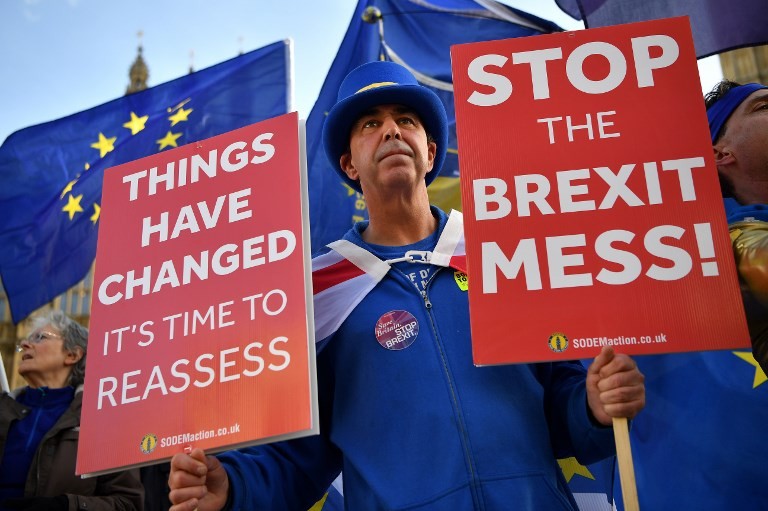
It has to be acknowledged candidly that in a huge jolt to the British Prime Minister Theresa May, the British lawmakers have outrightly rejected for a third time on March 29 her Brexit deal to avoid a chaotic no-deal divorce from the European Union (EU) thus sounding its probable death knell and leaving Britain’s withdrawal from the EU in turmoil on the very day it was supposed to leave the bloc. Thus we see that attempts by both Parliament and British Prime Minister Theresa May to clear the Brexit deadlock have floundered and failed miserably! There can be no denying or disputing it!
                                    Needless to say, MPs failed to back any of eight alternative options in a vote held on night of March 27, while Ms Theresa May’s pledge to make way for a successor in time for the next phase of Brexit negotiation did not cut ice and failed to persuade enough MPs to back her deal. It goes without saying that the decision to reject a stripped-down version of May’s divorce deal has left it totally unclear how, when or even whether Britain will leave the EU in the coming days ahead! No doubt, this certainly plunges the three-year Brexit simmering crisis to a more deeper level of uncertainty.
                               As it turned out, after a special sitting of Parliament, lawmakers voted 344-286 against May’s 585-page EU Withdrawal Agreement, agreed after two years of tortuous negotiations with the bloc. This is certainly without an iota of doubt a major setback for British PM Theresa May! May had told Parliament in no uncertain terms that the vote was the last opportunity to ensure that Brexit would take place and cautioned that if the deal failed, then any further delay to Brexit would probably be a long one beyond April 12.
                                   To put things in perspective, hours after May promised her Conservative members of Parliament on March 27 that she’d step down if they back her Brexit deal, she still looked short of having the numbers needed to win. It’s already been overwhelmingly defeated twice but still May was determined to try again. It must be pointed out here that May told the House of Commons that, “There are those who will say: ‘The House has rejected every option so far, you’ll probably lose so why bother?’ I bother because this is the last opportunity to guarantee Brexit. If we do not vote for this motion today, people will ask: Why did you not vote for Brexit?”
                                     What’s more, May told Parliament after the defeat that, “I fear we are reaching the limits of this process in this House. This House has rejected ‘no deal’. It has rejected ‘no Brexit’. On Wednesday, it rejected all the variations of the deal on the table. This government will continue to press the case for the orderly Brexit that the result of the referendum demands.” The British pound, which has been buoyed in recent weeks by hopes that the likelihood of an abrupt ‘no-deal’ Brexit is receding, fell half a percent after May lost, to as low as $1.2977. This is certainly not surprising and was much anticipated!
                                       Truth be told, within minutes of the vote, European Council President and Summit Chair Donald Tusk tweeted that EU leaders will meet on April 10 to discuss Britain’s departure from the bloc. The EU executive, the European Commission said that a “no-deal” exit on April 12 was now “a likely scenario”. It was a third straight failure for May, who had offered to resign on March 27 if the deal passed, in a bid to win over eurosceptic rebels in her Conservative Party who support a more decisive break with the EU than the divorce her deal offers.
                               Simply put, it leaves May’s Brexit strategy in tatters. Her strongly pro-Brexit Trade Minister Liam Fox had said on March 29 that it represented the last chance to “vote for Brexit as we understood it”. It must be mentioned here that the deal had twice been rejected by huge margins and although May was able to win over many Conservative rebels, a hard core of eurosceptics and the Northern Irish Democratic Unionist Party, which props up her minority government refused to back it.
                                 It may be recalled that in a referendum on June 23, 2016, those favouring Brexit (Leave) won by 52% to 48% (Remain). The “transition period” was scheduled to start from March 29, 2019 and to end on December 31, 2020 which could be extended by up to two years if both the UK and the EU agree. This was to allow both time to agree to their future relationship. But all this was subjected to Parliament accepting PM Theresa May’s deal which has already been rejected twice and now rejected again for third time putting the proposed plan in a soup! During this transition period, the UK was expected to follow all EU rules, but would have no say in the framing of new ones.
                                     It must be brought out here that in November 2018, the UK and the EU agreed to the terms of the exit, known as the withdrawal agreement. However, the agreement has failed to clear in British Parliament with MPs voting twice against it in 2019. On January 15, they voted 432-202 to reject the deal. Withdrawal agreement is a legally binding document that has to be passed by both the British and the European Parliaments. It covers the following:
a)  Irish backstop: Right now, there is free movement of goods and people between the Republic of Ireland which will remain part of the EU and Northern Ireland which is part of the UK. The Irish backstop is a measure in the withdrawal agreement which will primarily make sure that this continues after Brexit and comes into effect only if the deal deciding the future relationship between the UK and EU is not agreed by the end of the transition period. Until then, the backstop keeps the UK effectively inside the EU Customs Union (a trade agreement that fortbids trade negotiations with EU member states separately from the EU). It also means that Northern Ireland conforms to some rules of the single market (goods, services, people and money move between EU member states and some other states).
b) Citizens rights: The draft deal preserves the rights of the more than three million EU citizens living in Britain and the one million British citizens living in the EU.
c)   Brexit bill: It calls for a fair settlement for UK taxpayers that the British government estimates to be up to 39 billion pounds.
                                 It must also be brought out here that the British PM Theresa May then renegotiated certain terms with the EU but on March 12, MPs voted against the withdrawal agreement again, this time by 391 votes to 242. The following day, the MPs then rejected the idea of leaving the EU without a deal – an option called the “No Deal”. Under this, it would be legal for the UK to unilaterally leave the European Union, cancel Brexit and cuts all ties immediately with no need for agreement at all in place with the other 27 EU countries.
                                    Furthermore, the UK would simply follow the World Trade Organization rules to trade with the EU and other countries while trying to negotiate free-trade deals. Under WTO rules, each country sets tariffs on goods entering. If the UK chooses to put no tariff on goods from the EU, it must also have no tariffs on goods from every WTO member. If no other course of action can be agreed, the default option then would be that UK crashes out of the EU on April 12. Then we saw how on March 14, they voted 413-202 in favour of Prime Minister May asking the EU for a delay to carry out Brexit.
                            It is a no brainer that now Parliament will again try to take control of UK’s departure from the EU with some lawmakers hoping to force PM Theresa May to drop her Brexit strategy and pursue close economic ties with the bloc. Underlining how uncertainty is hurting business, the UK head of German industrial giant Siemens, Juergen Maier said that, “Britain was wrecking its reputation for stability and he urged lawmakers to back a customs union with the EU.”
                                 More importantly, the head of the European Commission Jean-Claude Juncker said in an interview on Italian state TV RAI on March 31, 2019 that, “The European Union has had a lot of patience with Britain over Brexit but patience runs out.” Juncker whose words were translated into Italian said he would like Great Britain to be able to reach an agreement in the coming hours and days that could be followed. He said that, “So far we know what the British Parliament says no to but we don’t know what it might say yes to.”
                                 Be it noted, Parliament will vote on different Brexit options on April 8, possibly showing a majority backing for a customs union and then May could try one last roll of the dice by bringing her deal back to a vote in Parliament as soon as Wednesday. May’s government and her party, which has grappled with schism over Europe for 30 years, was in open conflict between those pushing for a customs union with the EU and eurosceptics who are demanding a cleaner break with the bloc. May’s enforcer in Parliament – known as the chief whip – said that the government should have been clearer that May’s loss of her majority in Parliament in a snap 2017 election would inevitably lead it to accept a softer Brexit. Julian Smith said that, “The government as a whole probably should have just been clearer on the consequences of that. The parliamentary arithmetic would mean that this would be inevitably a kind of softer type of Brexit.” Smith also lamented that ministers had tried to undermine the Prime Minister.    
                                     It would be imperative to mention here that Article 50 is part of the Lisbon Treaty among EU member states. It covers how a member country can leave. This Article was triggered at the end of March 2017, hence Brexit Day in March 2019. It must also be mentioned here that to stop the Article 50 process, the UK may act on its own and to extend it all the EU countries must agree.
                                     Logically speaking, if the deadlock between Parliament and government continues, then in such a situation the MPs or the executive could trigger a general election. This would well mean the end of British PM Theresa May’s reign as PM! Let’s wait and watch how things play out in UK in the days ahead! But one thing is clear: The sailing would be very rough for British PM Theresa May which even her best admirers would readily agree! Her Brexit deal being rejected for the third time is already a big setback for her!
Sanjeev Sirohi, Advocate,
s/o Col BPS Sirohi,
A 82, Defence Enclave,
Sardhana Road, Kankerkhera,
Meerut – 250001, Uttar Pradesh.  

अफवाह

जीना मुश्किल,मरना आसान हो गया
हर दूसरा घर कोई श्मशान हो गया

माँ कहीं,बाप कहीं,बेटा कहीं,बेटी कहीं
एक ही घर में सब अन्जान हो गया

शहरों में नौकरियाँ खूब बिका करती हैं
इस अफवाह में गाँव मेरा वीरान हो गया

मन्दिर की घंटियाँ वो मस्जिद की अजानें
दोगले सियासतदानों की दुकान हो गया

प्यार,हमदर्दी,जज़्बात,अहसास,इंसानियत
\”प्राइस टैग\” लगा बाजारू सामान हो गया

बँटवारे की खींचातानी में ये हादसा हुआ
जो मुकम्मल घर था,खाली मकान हो गया
उपरोक्त सभी रचनाएँ मेरी स्वरचित और मौलिक हैं।
नाम:सलिल सरोज
पता: बी 302, तीसरी मंजिल
सिग्नेचर व्यू अपार्टमेंट्स
मुखर्जी नगर
नई दिल्ली-110009
उम्र:31 वर्ष
शिक्षा: सैनिक स्कूल तिलैया,कोडरमा,झारखण्ड से 10वी और 12वी उतीर्ण। 12वी में स्कूल का बायोलॉजी का सर्वाधिक अंक 95/100
जी डी कॉलेज,बेगूसराय,बिहार से इग्नू से अंग्रेजी में स्नातक एवं केंद्र  टॉपर, जवाहर लाल नेहरू विश्वविद्यालय ,नई दिल्ली से रूसी भाषा में स्नातक और तुर्की भाषा में एक साल का कोर्स और तुर्की जाने का छात्रवृति अर्जित। जीजस एन्ड मेरी कॉलेज,चाणक्यपुरी,नई दिल्ली इग्नोउ से समाजशास्त्र में परास्नातक एवं नेट की परीक्षा पास।
व्यवसाय:कार्यालय महानिदेशक लेखापरीक्षा,वैज्ञानिक विभाग,नई दिल्ली में सीनियर ऑडिटर के पद पर 2014 से कार्यरत।
सामाजिक एवं साहित्यिक सहयोग: बेगूसराय में आर्थिक रूप से कमजोर बच्चों को अंग्रेज़ी की  मुफ्त कोचिंग। मोहल्ले के बच्चों के कहानी,कविता और पेंटिंग को बढ़ावा देने हेतु स्थानीय पत्रिका\”कोशिश\” का प्रकाशन और सम्पादन किया। जवाहरलाल नेहरू विश्वविद्यालय में विदेशी भाषा में स्नातक की परीक्षा के लिए \”Splendid World Informatica\”  किताब का सह लेखन एवं बच्चों को कोचिंग। बेगूसराय ,बिहार एवं अन्य राज्यों के हिंदी माध्यम के बच्चों के लिए \”Remember Complete Dictionary\” किताब का अनुवाद। बेगूसराय,बिहार में स्थित अनाथालय में बच्चों को छोटा अनुदान। 
बचपन में राजहंस,क्रिकेट वर्ल्ड की प्रतियोगिताओं में इनाम प्राप्त।
शोसल मीडिया पर सामाजिक मुद्दों पर बेबाकी से अपने विचारों को प्रस्तुत करना।
उपलब्द्धियाँ: अमर उजाला काव्य,  हिंदुस्तान समाचार पत्र,पटना,सांध्य दर्पण इंदौर,अन्तरशब्दशक्ति इंदौर,परिचय टाइम्स,विजय दर्पण टाइम्स,सरिता,पर्यटन प्रणाम सहित 80 से अधिक पत्रिकाओं,अखबार,ऑन लाइन साइट्स पर कविता,कहानी,लेख,व्यंग प्रकाशित। मातृभाषा के द्वारा प्रकाशित काव्य संग्रह \”नवांकुर\”में मेरी कविताओं को स्थान प्राप्त। रवीना प्राकाशन ,नई दिल्ली द्वारा प्रकाशित निभा पत्रिका और मेरी रचना काव्य संग्रह में मेरी कविताएँ शामिल। विश्व पुस्तक मेला के दौरान मेरे काव्य संग्रह\”यूँ ही सोचता हुआ\” का विमोचन।
अपने कार्यालय में हिंदी दिवस पर आयोजित निबंध लेखन प्रतियोगिता में 3 साल से प्रथम स्थान प्राप्त। आरषी फाउंडेशन,भोपाल के द्वारा विकलांगों पर आयोजिय काव्य प्रतियोगिता में अखिल भारतीय 20वा स्थान जिसका निर्णय गुलज़ार साहब ने किया था। मातृभाषा द्वारा काव्य प्रतियोगिता में तीसरा स्थान जिसके तहत आशीष दलाल का उपन्यास पुरस्कार के रूप में प्राप्त हुआ। दिल्ली में आयोजित कॉमनवेल्थ खेल के दौरान पर्यटन मंत्रालय के द्वारा आयोजित \”Earn while you learn\” कार्यक्रम का सफल प्रतिभागी। 
आगामी 4 किताबों पर काम चालू। यु ट्यूब पर शार्ट फिल्मों में सांग्स और डायलॉग भी लिखी हैं।  पश्चिम मध्य रेलवे महालेखा कार्यालय की पत्रिका
 साँची में मेरी कविताओं को स्थान प्राप्त। कार्यालय महानिदेशक लेखापरीक्षा,वैज्ञानिक विभाग,कोलकाता शाखा से प्रकाशित पत्रिका  में मेरी रचनाओं को स्थान प्राप्त। भारतीय लेखापरीक्षा एवं लेखा विभाग अकादमी ,शिमला द्वारा मेरी फोटोग्राफी के लिए सम्मान पत्र। प्रतियोगिता दर्पण पत्रिका अंग्रेज़ी अंक में डिबेट और निबन्ध प्रतियोगिता में प्रथम स्थान प्राप्त। मेरे द्वारा किए गए ड्राइंग की सराहना और पत्रिकाओं में स्थान प्राप्त।

शिक्षा: सैनिक स्कूल तिलैया,कोडरमा,झारखण्ड से 10वी और 12वी उतीर्ण। 12वी में स्कूल का बायोलॉजी का सर्वाधिक अंक 95/100
जी डी कॉलेज,बेगूसराय,बिहार से इग्नू से अंग्रेजी में स्नातक एवं केंद्र  टॉपर, जवाहर लाल नेहरू विश्वविद्यालय ,नई दिल्ली से रूसी भाषा में स्नातक और तुर्की भाषा में एक साल का कोर्स और तुर्की जाने का छात्रवृति अर्जित। जीजस एन्ड मेरी कॉलेज,चाणक्यपुरी,नई दिल्ली इग्नोउ से समाजशास्त्र में परास्नातक एवं नेट की परीक्षा पास।
व्यवसाय:कार्यालय महानिदेशक लेखापरीक्षा,वैज्ञानिक विभाग,नई दिल्ली में सीनियर ऑडिटर के पद पर 2014 से कार्यरत।
सामाजिक एवं साहित्यिक सहयोग: बेगूसराय में आर्थिक रूप से कमजोर बच्चों को अंग्रेज़ी की  मुफ्त कोचिंग। मोहल्ले के बच्चों के कहानी,कविता और पेंटिंग को बढ़ावा देने हेतु स्थानीय पत्रिका\”कोशिश\” का प्रकाशन और सम्पादन किया। जवाहरलाल नेहरू विश्वविद्यालय में विदेशी भाषा में स्नातक की परीक्षा के लिए \”Splendid World Informatica\”  किताब का सह लेखन एवं बच्चों को कोचिंग। बेगूसराय ,बिहार एवं अन्य राज्यों के हिंदी माध्यम के बच्चों के लिए \”Remember Complete Dictionary\” किताब का अनुवाद। बेगूसराय,बिहार में स्थित अनाथालय में बच्चों को छोटा अनुदान। 
बचपन में राजहंस,क्रिकेट वर्ल्ड की प्रतियोगिताओं में इनाम प्राप्त।
शोसल मीडिया पर सामाजिक मुद्दों पर बेबाकी से अपने विचारों को प्रस्तुत करना।
उपलब्द्धियाँ: अमर उजाला काव्य,  हिंदुस्तान समाचार पत्र,पटना,सांध्य दर्पण इंदौर,अन्तरशब्दशक्ति इंदौर,परिचय टाइम्स,विजय दर्पण टाइम्स,सरिता,पर्यटन प्रणाम सहित 80 से अधिक पत्रिकाओं,अखबार,ऑन लाइन साइट्स पर कविता,कहानी,लेख,व्यंग प्रकाशित। मातृभाषा के द्वारा प्रकाशित काव्य संग्रह \”नवांकुर\”में मेरी कविताओं को स्थान प्राप्त। रवीना प्राकाशन ,नई दिल्ली द्वारा प्रकाशित निभा पत्रिका और मेरी रचना काव्य संग्रह में मेरी कविताएँ शामिल। विश्व पुस्तक मेला के दौरान मेरे काव्य संग्रह\”यूँ ही सोचता हुआ\” का विमोचन।
अपने कार्यालय में हिंदी दिवस पर आयोजित निबंध लेखन प्रतियोगिता में 3 साल से प्रथम स्थान प्राप्त। आरषी फाउंडेशन,भोपाल के द्वारा विकलांगों पर आयोजिय काव्य प्रतियोगिता में अखिल भारतीय 20वा स्थान जिसका निर्णय गुलज़ार साहब ने किया था। मातृभाषा द्वारा काव्य प्रतियोगिता में तीसरा स्थान जिसके तहत आशीष दलाल का उपन्यास पुरस्कार के रूप में प्राप्त हुआ। दिल्ली में आयोजित कॉमनवेल्थ खेल के दौरान पर्यटन मंत्रालय के द्वारा आयोजित \”Earn while you learn\” कार्यक्रम का सफल प्रतिभागी। 
आगामी 4 किताबों पर काम चालू। यु ट्यूब पर शार्ट फिल्मों में सांग्स और डायलॉग भी लिखी हैं।  पश्चिम मध्य रेलवे महालेखा कार्यालय की पत्रिका
 साँची में मेरी कविताओं को स्थान प्राप्त। कार्यालय महानिदेशक लेखापरीक्षा,वैज्ञानिक विभाग,कोलकाता शाखा से प्रकाशित पत्रिका  में मेरी रचनाओं को स्थान प्राप्त। भारतीय लेखापरीक्षा एवं लेखा विभाग अकादमी ,शिमला द्वारा मेरी फोटोग्राफी के लिए सम्मान पत्र। प्रतियोगिता दर्पण पत्रिका अंग्रेज़ी अंक में डिबेट और निबन्ध प्रतियोगिता में प्रथम स्थान प्राप्त। मेरे द्वारा किए गए ड्राइंग की सराहना और पत्रिकाओं में स्थान प्राप्त।

SC Designates 37 Lawyers As Senior Advocates

In a major and significant development, the Supreme Court which is the highest court in India has for the second time designated 37 lawyers as “Senior Advocates”. It goes without saying that it is a big honour for all these 37 lawyers to be designated as “Senior Advocates”. But then they deserve also as they have given their “prime years” in this noble profession of lawyer and that too right in the Apex Court itself and have certainly worked hard relentlessly to achieve it.

                                So, it goes without saying that they certainly deserve all the “applause and accolades” which they are now getting! We all as citizens of India also ought to know as to who all are these 37 lawyers who have been designated as “Senior Advocates”. They are as follows: –
1.  Madhavi Goradia Divan
2.  R. Balasubramanian
3.  Anitha Shenoy
4.  Aruneshwar Gupta
5.  Jugal Kishore Tikamchand Gilda
6.  Sanjay Parikh
7.  Preetesh Kapur
8.  Ashok Kumar Sharma
9.  Deepak Madhusudan Nargolkar
10.                   Ajit Shankarrao Bhamse
11.                   Nikhil Nayyar
12.                   S. Wasim A. Qadri
13.                   M.G. Ramachandran
14.                   Manish Singhvi
15.                   Gopal Sankaranarayanan
16.                   Mohan Venkatesh Katarki
17.                   Nakul Dewan
18.                   Devadatt Kamat
19.                   Anip Sachthey
20.                   Anupam Lal Das
21.                   G. Venkatesh Rao
22.                   Jayanth Muth Raj
23.                   Arijit Prasad
24.                   Jay Savla
25.                   Aparajita Singh
26.                   Menaka Guruswamy
27.                   Siddhartha Dave
28.                   Siddharth Bhatnagar
29.                   C.N. Sreekumar
30.                   Aishwarya Bhati
31.                   Santosh Paul
32.                   Gaurav Bhatia
33.                   Bharat Sangal
34.                   Vinay Prabhakar Navare
35.                   Manoj Swarup
36.                   Ritin Rai
37.                   Priya Hingorani.  
                           
                            Needless to say, this is the second instance of Supreme Court conferring senior designation as per the “Supreme Court Guidelines to Regulate Conferment of Designation of Senior Advocates, 2018”, notified in August 2018. It must be pointed out here that out of these 37 advocates designated as “Senior Advocates”, six are women lawyers who have made a mark for themselves by excelling. They are Aishwarya Bhati, Anitha Shenoy, Madhavi Goradia Divan, Menaka Guruswamy, Priya Hingorani and Aparajita Singh. It would be apt to know in brief about these six women lawyers now designated as “Senior Lawyers”.
                                     To be sure, Madhavi Divan is at present an Additional Solicitor General (ASG) in the Supreme Court. She was appointed ASG on December 17, 2018 and will hold office till June 30, 2020. She obtained her law degree from Pembroke College, Uniersity of Cambridge, UK and began her practice in the Bombay High Court. She has since represented two state governments – that of Gujarat and Madhya Pradesh while also being recognized as an accomplished author. Anitha Shenoy is a 1995 graduate of National Law School of India University, Bangalore and has been the standing counsel for State of Karnataka in the Supreme Court for long.
                               Furthermore, Menaka Guruswamy is a 1997 graduate of National Law School of India University, Bangalore. She read law as a Rhodes Scholar at Oxford University where she was awarded a Doctor of Philosophy in Law (D. Phil.) and as a Gammon fellow for a Masters in Law at Harvard Law School. She has worked as a human rights consultant to the United Nations and has taught at the New York University School of Law. In the Navtej Johar case which decriminalized homosexuality, she represented IIT students and graduates who belong to the LGBTQIA community. She has also assisted the Supreme Court as amicus curiae in the Manipur Extra-Judicial killings case. She has the rare honour of having her portrait unveiled at Rhodes House in Oxford University. Her name was also included in the Forbes list of 2019 trailblazers which is a great achievement.  
                                   Moving on, Aishwarya Bhati is an Advocate-on-Record. In 2017 she was appointed as Additional Advocate General of Uttar Pradesh in Supreme Court. She did not hide her true feelings and termed the “Senior Advocate” designation as a “dream come true” and also acknowledged that she was conscious of the “great responsibility” that comes with the designation.
                                Going ahead, Priya Hingorani has been in active law practice since 1990 when she was enrolled as an Advocate with the Bar Council of Delhi. Her primary practice has been in the Supreme Court of India and has also appeared in many High Courts. Aparajitha Singh was a junior to “Senior Advocates” Harish Salve and UU Lalit before starting independent practice. She had assisted the Apex Court as amicus curiae to suggest measures for curbing air pollution, which led to the ban of sale of BS III vehicles since April 2017. She was also a part of a Committee which had suggested a common working plan on rehabilitation of destitute widows.   

                             To put things in perspective, it was in September 2018 that the Supreme Court had designated 25 former High Court Judges, who started practice in Supreme Court as senior advocates. It cannot be lost on us that the guidelines are notified pursuant to the Supreme Court judgment in Indira Jaising’s case titled “Ms Indira Jaising v. Supreme Court of India Through Secretary General and others in Writ Petition (C) No. 454 of 2015 which had very clearly prescribed the parameters for designation of advocates as “senior advocates” after senior advocate Ms Indira Jaising who filed the petition pointed out that the present system of designating advocates as “senior advocates” is flawed! This was certainly a major landmark development which shall always be embedded in the golden pages of history and the contribution of Ms. Indira Jaising is certainly historic and remarkable!
                             What’s more, the guidelines empower a permanent committee called “Committee for Designation of Senior Advocates” to deal with all the matters pertaining to such conferment. This Committee shall comprise of the Chief Justice of India as its Chairperson, along with two seniormost Supreme Court Judges, Attorney General for India and a member of the Bar as nominated by the Chairperson and other members. The Committee is expected to meet at least twice in a calendar year. It will also have a Permanent Secretariat, the composition of which shall be decided by the CJI in consultation with the other members of the Committee.  
                                    Be it noted, it would be very significant to now discuss in detail the four point criteria that will play a key role in the assessment of advocates as “Senior Advocates”. Every advocate who aspires to become a “Senior Advocate” must know about this. Even otherwise it would be useful even for those not in this field to know about it so that they understand what it means to be a “Senior Advocate”. The four point criteria for assessment of advocates for senior designation is as follows: –
1.  Number of years of practice of the applicant from the date of enrolment (10 points for 10-20 years of practice, 20 points for practice beyond 20 years) – 20 points
2.  Judgments (reported and unreported), which indicate the legal formulations advanced by the Advocate in the course of proceedings of the case; pro-bono work done by the Advocate; and domain expertise of the Advocate in various branches of law – 40 points
3.  Publications by the Advocate – 15 points
4.  Test of personality and suitability on the basis of interview/interaction – 25 points
                  Application and eligibility
                          It would be useful and instructive to mention here that a recommendation in writing can be submitted by the Chief Justice of India or any other Judge of the Supreme Court of India if they are of the opinion that an advocate deserves to be conferred with the designation. An Advocate on Record (AoR) who is seeking to be conferred with the unique distinction as “Senior Advocate” may also submit an application in the prescribed format to the Secretariat. The Secretariat will invite applications from retired Chief Justices or Judges of the High Court and advocates seeking conferment of the distinction every year in the months of January and July. The notice shall be published on the official Supreme Court website, and the information would also be provided to the Supreme Court Bar Association and also to the Supreme Court Advocates-on-Record Association.    
                              As far as eligibility is concerned, it has to be borne in mind that an Advocate shall be eligible for designation as “Senior Advocate” only if he has 10 years combined standing as an advocate or a District Judge, or as a Judicial Member of any Tribunal whose qualification for eligibility isn’t less than that prescribed for a District Judge. It must also be remembered that retired Chief Justices or Judges of the High Courts are also eligible for the distinction of being designated a “Senior Advocate”.
                   Procedure for designation
                              It must be reiterated that all the applications and written proposals are to be submitted to the Secretariat which will then compile data on the applicant’s reputation, conduct and integrity, including his participation in pro bono work and the number of judgments in which the advocate appeared during the past five years. The application or the proposal would then be published on the Supreme Court website. The whole point of this exercise would be to invite the suggestions and views of other stakeholders. After the data-base on the Advocate is complied, the Advocate’s case would be put before the Committee for further scrutiny, which will assess the candidates on the basis of four-point criteria which has already been discussed above in great detail.
                                      Simply put, post such overall assessment, the Advocates candidature would then be submitted to the Full Court, which would then vote on the same. It must be noted here that the guidelines however leave no room for doubt by clarifying in no uncertain terms that the cases of retired Chief Justices and Judges of the High Courts will straightaway be sent to the Full Court for its consideration. The Rules also further specify that voting by secret ballot will not normally be resorted to in the Full Court except when “unavoidable”.
                          While continuing in the same vein, it is then added that the guidelines however do clarify that cases which are rejected by the Full Court can be considered afresh after two years and cases which are deferred can be considered after one year from such deferment. The Rules clarify that if a Senior Advocate is found guilty of conduct, which according to the Full Court disentitles the Senior Advocate to continue to be worthy of the designation, the Full Court may review its decision to designate the person concerned and recall the same. The Full Court should, however, give an opportunity of hearing to the concerned Senior Advocate before any action is taken against them.  
                                  Let me say this point blank: Each and every person who is in legal field must know how advocates are designated as “Senior Advocates” in Supreme Court. Not stopping here, it has to be said that even those who are not in legal profession must also know what it takes to become “Senior Advocates”. A humble effort has been made in this direction by me to make my esteemed readers more aware on this front. Hope that they have found it useful!
Sanjeev Sirohi, Advocate,
s/o Col BPS Sirohi,
A 82, Defence Enclave,
Sardhana Road, Kankerkhera,
Meerut – 250001, Uttar Pradesh.

Kartarpur Meet Delayed Over Khalistan Activists


It is nothing but stupidity of the highest order that politicians of India are not ready to learn any lessons from repeated betrayals by Pakistan and always indulges in day dreaming. This alone explains why inspite of so much of tension between India and Pakistan, India foolishly once again decided to trust Pakistan and go ahead with holding the second meeting with Pakistan to discuss modalities for the Kartarpur corridor! What did India get in return? Once again India was compelled to call off the meet with Islamabad on April 2 over legitimate concerns about the inclusion of pro-Khalistani activists in a Pakistani committee to facilitate Sikh pilgrims!

Why do our politicians behave so shamelessly and senselessly? Why do politicians expect that Pakistan will not play the Khalistan card to foment unrest in Punjab? Should Kartarpur corridor be opened at all under such circumstances? What has happened to our politicians?

Why can’t politicians of India nuke all relations with Pakistan and label it as “Aatankistan” as demanded by Maulana Mehmood Madani and BJP MP Rajeev Chandrashekhar long time back when he was an independent MP? Why politicians of India want to give Pakistan an opportunity to create unrest in Punjab? Why can’t we just lay off totally from Pakistan?

How can religion be above nation? How can religious interests be above national interests? Why our politicians repeatedly want to give Pakistan one more chance? Do they understand the consequences of what they do?

No wonder that on Pakistan’s 10-member panel we saw a man who demanded Sikh referendum last year. Sources said that the induction of Gopal Singh Chawla on the 10-member committee of the Pakistan Sikh Gurudwara Parbandhak Committee (PSGPC) which will “help facilitate” the visit of Indians pilgrims to the Kartarpur Sahib gurudwara. It is this same Gopal Singh Chawla who had played a key role in raising pro-Khalistan slogans and putting up posters on a Sikh referendum in November 2018 during the visit of pilgrims!

What was most shocking was that Centre decided to adopt a “relax” approach and “care a damn” approach and did not lodge any protest? Should we be proud of it? What did we get in return? Now that same Gopal Singh Chawla is on the 10-member committee of Pakistan panel! Had Centre strongly protested at the first place perhaps they had dared not bring him in the panel! But for inexplicable and undisclosed relations, Centre for the sake of Sikh pilgrims decided to bite the bullet!

Centre must stop biting the bullet! Centre must not fritter away the extreme goodwill that it has generated after the Balakot air strike among the people! What did Centre get by declaring Ramzan ka ceasefire with Pakistan and terrorists? It gave them a golden opportunity to pounce on our soldiers, kill them and behead them! Can any Indian be ever proud of this so called “Ramzan ka ceasefire”? When there is no Holi ka ceasefire or Diwali ka ceasefire or Christmas ka ceasefire then why Ramzan ka ceasefire? Does Pakistan or its army or terrorists ever care for it? They use it as a golden opportunity to kill more soldiers of ours on the border areas! Shame on our leaders who give them such a golden opportunity! One hopes that no politician will ever again place Pakistan and terrorists above nation! Terrorists have no nation yet repeatedly our leaders stupidly, shamelessly and senselessly declare “Ramzan ka ceasefire”! Terrorists have no religion then why link Ramzan with terrorists? It is for our leaders to ponder upon!

What’s more, Pakistan’s Information Minister Fawad Chaudhry not just announced Chawla’s inclusion but also went ahead to announce at last three other pro-Khalistan elements – Tara Singh, Bishon Singh and Kuljeet Singh. What could Centre do under such circumstances? India should have cancelled Kartarpur but our reaction once again was mild and we decided to just postpone talks!

Needless to say, Kartarpur corridor represents the best opportunity for Pakistan to revive militancy in Punjab. Who is allowing them to do this? Centre if it decides to go ahead with Kartarpur corridor as we all are seeing for ourselves. Who will be most happy with Kartarpur corridor? Pakistan, terrorists and the likes of Navjot Singh Sidhu whom BJP keeps criticizing so frequently yet is determined to fulfil his “dangerous and divisive” agenda of fully opening Kartarpur corridor in the name of Sikh pilgrims getting an opportunity to visit the birthsite of Guru Nanak!

To be sure, sources said that, “These developments have raised fresh concerns in India about the safety and security of pilgrims from India and misuse of the corridor for anti-India activities. India has made amply clear in the meeting and draft agreement that Kartarpur Sahib Corridor shall not be misused for any anti-India propaganda and activities. India has been strongly emphasizing on the need for foolproof security of pilgrims on Pakistani soil and demanding commitment from Pakistan to insulate them from any anti-India propaganda or activity during their visit to Gurudwara Kartarpur Sahib.”

What does Centre think it is doing? What does Centre think that Pakistan will honour its commitments of not fuelling anti-India propaganda from its soil? Why Centre places Sikh religion above India? Why is Centre not ready to learn anything from our past experiences with Pakistan?

How long will our leaders hope that Pakistan will address India’s concerns at the earliest? How long will our leaders overlook photos of dreaded slain terrorist Bhindrawale pasted all over the route to the Gurudwara Kartarpur Sahib not sparing even the Gurudwara also as we saw with our own eyes on various news channels? How long will our leaders overlook photo of Pakistan Army Chief Qamar Javed Bajwa with dreaded Khalistani terror leaders shaking hands and congratulating each other obviously for being able to fool our leaders who are not ready to see the stark reality which even an insane person can see through? It is for our leaders to decide!

At a time when our nation is on the verge of war with Pakistan, should we even think of opening the Kartarpur corridor let alone open it? Don’t we read nowadays frequently that our alert planes forced Pakistani planes to flee back when they tried to sneak into India? Should then religion be placed above nation? Sikh or Hindus or Muslims or Christians cannot be above our nation that is India!

Don’t our leaders know that Pakistan always indulges in double-speak? Don’t our leaders know that Islamabad is surreptitiously usurping land belonging to Kartarpur Singh Gurudwara in the name of developing the corridor? Don’t we know that India and Pakistan signed a pact in 1974 to facilitate visit of their pilgrims to the shrines located in each other’s territories but Kartarpur Sahib was not included despite repeated Indian requests?

Which reasonable person will ever trust Pakistan when it has been repeatedly betraying India and mercilessly killing our soldiers and not sparing even our women and children? How can BJP which proudly calls itself “party of chowkidar” and PM Narendra Modi who always proudly calls himself “chowkidar” do the stupidity most senselessly and most shamelessly of trusting Pakistan again and allowing Khalistani terrorists to misuse this route for their own dangerous and divisive agenda of “Khalistan 2020” as they keep propagating in UK, Canada, USA etc? At whose instance? Only and only BJP and PM Narendra Modi can best answer this!

All talks on Kartarpur corridor must be called off and similarly there should be no talks on opening of Sharda corridor for Hindu pilgrims or any other corridor because nation and national interest come first, always and every time and the religion and religious interest comes next, always and everytime! It is our politicians who ought to remember this always!

Sanjeev Sirohi, Advocate,

s/o Col BPS Sirohi,

A 82, Defence Enclave,

Sardhana Road, Kankerkhera,

Meerut – 250001, Uttar Pradesh.
Nations Must Make Gun Laws More Stricter

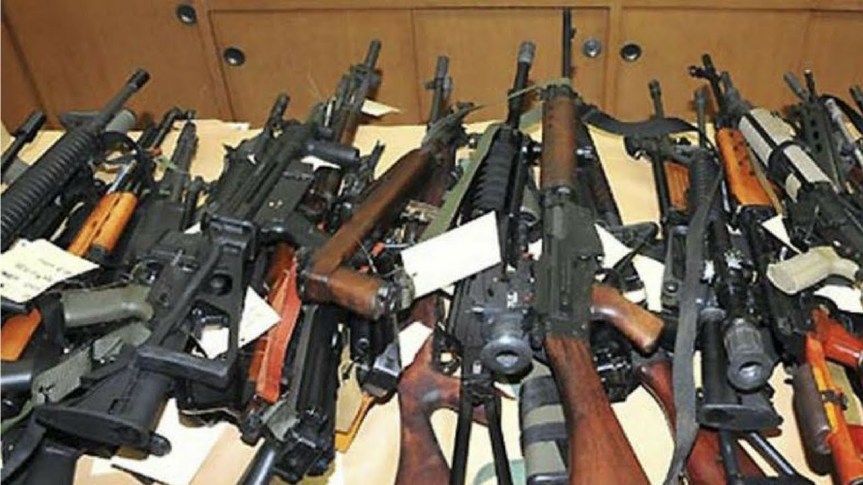
It must be said with utmost regret that due to guns being easily available in various countries we see that the most ghastly, dastardly and cowardly attack on innocent people as we saw just recently in the New Zealand city of Christchurch on a mosque in which at least 50 people were killed and 50 injured in a mass shooting on March 15, 2019. All these precious lives would not have been lost if there were more stricter gun laws in place. Gun should not be given to any person whoever applies for it without proper verification!
                                   To put things in perspective, a 28-year-old man named Brenton Tarrant has been taken into custody and charged with murder. The shooter targeted two mosques in Christchurch: the Al Noor mosque where 42 people were killed mercilessly and another at the Linwood mosque where seven people died. The alleged shooter also live-streamed his dastardly and ghastly attack on social media, most gruesomely displaying how he entered the mosque and shot worshippers as they struggled to flee. It is reported that seven Indians have also lost their lives in this cowardly and most reprehensible attack!
                                         Needless to say, in a brief press conference, New Zealand Prime Minister Jacinda Ardern called the mass murder a “terrorist attack” and said that the perpetrators held “extremist views” that have no place in New Zealand. She very rightly lamented that, “This is one of New Zealand’s darkest days.” India reiterated its unstinted support to New Zealand in its hour of crisis along with other nations.
                                     It is gratifying to learn that in the wake of the terrorist attacks at two mosques in Christchurch in New Zealand, its Prime Minister Jacinda Ardern has said that she would soon announce new gun laws. While New Zealand’s gun laws are not as restrictive as in, say, Australia, those of countries such as the US are far more relaxed. The New York Times listed what it takes to own a gun in several countries. Let us discuss some of them here apart from those listed in The New York Times. They are as follows: –
                           New Zealand
1.  Background check (criminal, medical, mental health, domestic violence records).
2.  Character references.
3.  Interview in person between authorities and applicant’s partner or next of kin.
4.  Inspection for firearm storage facilities at home.
5.  A gun safety course.
It must be pointed out here that Reuters quoted Radio New Zealand as reporting that more than 99% of applicants for a firearms licence in 2017 were successful. The country, whose population is 5 million, has an estimated 1.5 million firearms. Only owners are licensed, not weapons, so there is no monitoring of how many weapons a person may possess. This loophole must be plugged right now in the wake of the dastardly attack on a mosque which has left 50 dead! Buying hand guns and certain semi-automatic rifles requires a special permit. It is recommended that no person from now onwards should be allowed more than one gun and here too there must be proper and strict police verification. It is also recommended that vehicles should be checked at various points to ensure that no person is carrying gun especially at religious shrines and other important places.
                     Australia
1.  Must join and regularly attend a hunting or shooting club, or be a collector.
2.  Course on firearm safety and operation, written test and practical assessment.
3.  Storage that meets safety regulations.
4.  A review of criminal history, domestic violence, restraining orders and arrest history, with possible interviews of family and community members.
5.  Specific permits for specific types of weapons; wait is of at least 28 days.
                                       No doubt, these laws are some of the toughest in the world. Countries like New Zealand must emulate them to ensure that no person is ever able to carry out such ghastly attack so easily! Here it must be revealed that Australia had introduced them after a lone gunman killed 35 people in Port Arthur in 1996 using a semi-automatic AR-15 (the same weapon that was used in Christchurch), Reuters reported. Australia had banned semi-automatics, launched a gun amnesty in which tens of thousands of weapons were handed in and made it much tougher to own them. Gun owners must provide a valid reason for owning a weapon and gun clubs must inform the authorities of inactive members.
                      United States
1.  Background check for criminal convictions, domestic violence and immigration status.
2.  Many US states have additional buying restrictions, including waiting periods and expanded background checks.
3.  Where these waiting periods do not apply, an application may be cleared in days. Roughly a third of American gun owners buy guns without a background check, which federal law does not require when buying directly from a private seller. This loophole must be checked forthwith. There must be a proper background check. It is because of such loopholes that we keep listening in news that gun attacks keep happening regularly in USA.
4.  Fugitives, those convicted of a felony with a sentence exceeding 1 year, past or present and those who were involuntarily admitted to a mental facility are prohibited from purchasing a firearm unless rights restored.
5.  Forty-four states have a provision in their state constitutions similar to the Second Amendment to the United States Constitution, which protects the right to keep and bear arms. The exceptions are California, Iowa, Maryland, Minnesota, New Jersey and New York. In New York, however, it must be stated that the statutory civil rights laws contain a provision virtually identical to the Second Amendment.
6.  Additionally, the US Supreme Court held in McDonald v. City of Chicago (2010) that the protections of the Second Amendment to keep and bear arms for self-defense in one’s home apply against state governments and their political subdivisions.   
7.  More recently, the Ninth Circuit Court ruled in its 2016 decision titled Peruta v. San Diego County that the Second Amendment does not guarantee the right of gun owners to carry concealed firearms in public.    
                               Japan
1.  A firearms class and a written exam, held up to three times a year.
2.  A doctor’s certificate of mental fitness and absence of a history of drug abuse. It is a commendable provision.
3.  Firing training (permission for undertaking this course may take up to a month). One-day training class, with a firing test has to be cleared.
4.  Interview with police, whom applicant must convince why he or she needs a gun. This again is very commendable and every country must emulate it.
5.  Review of criminal history, gun possession record, employment, even personal debt and relationships with friends, family and neighbours.
6.  Application for gunpowder permit.
7.  Certificate from a dealer describing gun.
8.  Hunting licence (if hunting is purpose).
9.  Gun safe and ammunition locker that meet regulations, to be inspected by police.
10.             An additional background review.
                        Russia
1.  Hunting licence, or reasons why gun needed for self-defence which is commendable.
2.  A test of relevant laws, handling, first aid skills.
3.  A doctor’s note certifying absence of mental illness or drug history which is again very commendable.
4.  All the above before application. After applying, a background check which again is commendable.
                     China
1.  Reasons to possess a firearm.
2.  Storage at gun range, remote hunting ground or pastoral area.
3.  Demonstration of knowledge of safe gun use and storage.
4.  A background check of mental illness, criminal record and domestic violence.
5.  In China, most civilians are prohibited from keeping guns inside their homes. This is the most commendable provision and it must be emulated in countries like New Zealand and USA where incidents of violence and misuse of guns is increasing!         
                   United Kingdom (UK)
1.  In the UK, access by the general public to firearms is tightly controlled by law which is much more restrictive than the minimum rules required by the European Firearms Directive, but it is less restrictive in Northern Ireland. All countries must emulate UK.
2.  No wonder that UK has one of the lowest ratews of gun homicides in the world.
3.  Members of the public may own sporting rifles and shotguns, subject to licensing, but handguns were effectively banned after the Dunblane school massacre in 1996 with the exception of Northern Ireland.
                       Ukraine
1.  Ukraine is the only country in Europe where firearms are not regulated by statute.
2.  Citizens are permitted to own non-fully automatic rifles and shotguns as long as they are stored properly when not in use.
3.  Handguns are illegal except for target shooting and those who hold concealed carry permits.
4.  A citizen may be issued a firearms license if that person:
(i)                         is 25 years of age for rifle ownership, 21 years of age for smoothbore weapon ownership, 18 years of age for cold or pneumatic weapon ownership;
(ii)                      has no criminal record;
(iii)                   has no history of domestic violence;
(iv)                   has no mental illness or history of mental illness;
(v)                      has a good reason (target shooting, hunting, collection).
5.  Gun owners are required by Order to renew their licenses and registration of their guns every three years. Failure to comply will result in revocation as well as confiscation of guns.
6.  Concealed carry licenses are available but are not normally issued unless a threat to life is present and can be proven.
            Israel
1.  In 2018, Israel significantly loosened firearms restrictions, allowing all citizens who had undergone combat training and qualified in Advanced Infantry Training (Rifleman 07) to apply for a private handgun licence.
2.  Prior to 2018, only a small group of people were eligible for firearm licenses: certain military personnel, police officers or prison guards; residents of settlements (in the West Bank and the Golan Heights) or those who often work in such towns and licensed hunters and animal control officers.
3.  Age requirements vary. It is 21 for those who completed military service or civil service equivalent, 27 otherwise and 45 for non-citizens.
4.  Firearm license applicants must have been a resident of Israel for at least three consecutive years.
5.  Background check (criminal, health and mental history) should be passed.
6.  Applicant should establish a genuine reason for possessing a firearm (such as self-defense, hunting or sport).
7.  A weapons-training course should be passed.
8.  Those holding firearm licenses must renew them and pass a shooting course every three years.
           Kuwait
1.        Kuwait has strict firearms laws.
2.        Hunting shotguns are the most commonly licensed weapons.
3.        Handguns are only allowed for VIPs.
4.        Automatic rifles and machine guns are not legally permitted for civilian possession.
                      Lebanon
1.  Ownership of any firearm other than handguns, hunting arms and antiques is illegal and only the latter two are permitted to leave the owner’s home.
2.  Disregard for this law is prevalent.
3.  Lebanon does not officially grant the right to bear arms, but it is a firmly held cultural belief in the country.
4.  Firearms licenses are granted to certain individuals but the test is not open to the public and requires a particular need to be demonstrated.
5.  Gun control has been largely unsuccessful due to a historic gun culture and a lack of effective central government control or authority over many parts of the country.
                      Malaysia
1.        Malaysia has strict gun laws.
2.        The Arms Act (1960) requires the citizens of Malaysia to have a license for manufacture, import, export, repair or ownership of firearms.
3.        A firearm license can only be granted by the Chief Police Officer of a state.
4.        Discharging in crimes such as extortion, robbery, resisting arrest and house-breaking is punished by the death penalty.
5.        Exhibiting a firearm for any of the scheduled offences (without discharging) carries a penalty of life imprisonment and caning of not less than six strokes.
6.        Possession of unlawful firearms carries a sentence of up to fourteen years in prison and caning.
7.        While the general public cannot obtain a gun through legal means but a black market for guns does exist.
                      North Korea
1.  Firearms cannot be easily acquired.
2.  In 2009, North Korea enacted a new law strictly regulating firearms.
                     Pakistan
1.        It is very easy to acquire gun.
2.        It has permissive firearms laws compared to the rest of South Asia.
3.        It has the sixth highest number of privately owned guns in the world.
4.        The law in Pakistan does not stipulate that a gun license should be denied or revoked.
5.        Gun culture is strong in Pakistan.
6.        A license permits ownership of any number of weapons including handguns of any size and fully automatic weapons.
                               Philippines
1.           It has generally strict gun laws, though liberal in comparison to other Asia-Pacific countries.
2.           Gun control became notorious in 1972 during presidency of Ferdinand Marcos who implemented a near-prohibition of all civilian guns.
3.           Applicants must be of a minimum age of 21 years and have no history of criminal activity or domestic violence.
4.           License-holders may carry handguns in public with the acquisition of a Permit to Carry (PTC), which are granted on a may-issue basis.
5.           Applicants must demonstrate a need for a PTC like an imminent threat of danger.
6.           PTCs are typically granted to lawyers, accountants, media practitioners, cashiers, bank tellers, priests, ministers, rabbis, imams, physicians, nurses or engineers.
7.           Inspite of strict laws, gun culture is strong.
                    Kenya
1.  Gun law in Kenya is specified in the Firearms Act (Cap. 114) laws of Kenya.
2.  The Chief Licensing Officer (CLO) has discretion to award, deny or revoke firearms licenses.
3.  Applicants must be 21 years of age or older, pass a stringent background check for criminal activity, mental health and domestic violence and state bona fide reasons for their need to privately own and carry a firearm.
4.  Checks are regularly repeated with failure to pass resulting in immediate revocation of the license.
5.  Once licensed to own a gun, no additional permit is required to carry a concealed firearm.
     South Africa
1.  To apply for a firearm license in South Africa, the applicants must pass a competency test covering the specific type of firearm you are applying a license for and a test on the South African firearm laws.
2.  Once these tests are passed then the applicant need to apply for a competency certificate where the South African Police Service will perform a background check and an inspection of the premises where the firearm will be stored.
3.  After both the tests are passed and the certificates are awarded the applicant can then apply for a firearm license in the categories ranging from self-defence to professional training.
4.  Different license categories have different restrictions as for instance the amount of ammunition that the owner may hold.
                   Argentina
1.  Firearms in Argentina are restricted and regulated by ANMaC (Agencia Nacional de Materiales Controlados) since late October 2015 when said agency replaced RENAR (Registro Nacional de Armas de la Republica Argentina), both being a branch of the Ministry of Justice and Human Rights.
2.  To own a firearm in Argentina, one must be a legitimate user.
3.  Applicant must be 21 years of age or older, provide a medical certificate that certifies they are physically and mentally fit, complete a safety course, provide a legitimate means of income and undergo and pass a background check.
4.  A successful applicant is fingerprinted and issued a license which has to be renewed every five years.
5.  One may not legally fire a firearm in Argentina if they are not a legitimate user, even if that gun belongs to someone else.
6.  Once a legitimate user wants to purchase a firearm, they must provide a secure location to store the firearm(s), and give an acceptable reason for wanting a firearm – such as collecting, target shooting, hunting, business or self-defense in the home.
7.  Firearms must be purchased through a licensed dealer and registered with ANMaC.
8.  If a firearm is inherited, a re-registering form must be filed.
9.  There is no limit on the number of firearms owned so long as they are properly stored.
10.                Handguns above .32 calibre are conditional-use; fully automatic handguns are prohibited to civilians.
          
                
                    Brazil
1.  All firearms in Brazil are required to be registered.
2.  The minimum age for ownership is 25.
3.  Certificates of aptitude and mental health are required prior to the acquisition of a firearm and every three years thereafter.
4.  It is generally illegal to carry a firearm outside a residence.
5.  Executive Order No. 5.123 of 1 July 2004 allows the Federal Police to confiscate firearms which are not possessed for a valid reason.
6.  Self-defense is not considered a valid argument.
           
              Mexico
1.                       Under the Mexican Constitution, citizens and legal residents have the right to own arms, but may only carry them in accordance with police regulation.
2.                       Applicants must have a clear criminal record and proven income and residence thereby clearly implying that they cannot be homeless.
3.                       New firearms are purchased through the Ministry of Defense.
4.                       Prohibited weapons include large-calibre handguns, shotguns with barrels shorter than 25 inches (640 mm) or bore greater than 12 gauge and rifles which are fully automatic or of large caliber.
5.                       One handgun is permitted for home defense.
6.                       Collectors may be authorized to possess additional and prohibited weapons.
7.                       A carry license may be issued to those employed by private security firms or those who may be targets of crime.
             Indonesia
1.  Indonesia has generally strict gun laws.
2.  Licenses are normally only issued to civilians employed in a profession that involves firearms such as military and law enforcement, with an exception for politicians and businessmen.
3.  Applicants must be of a minimum age of 21 years to obtain a firearms license and go through a very thorough background check and mental evaluation.
4.  They must also state a bona fide reason for wanting to own a firearm, which would include hunting, target shooting, collecting security and self-defense.
5.  All firearms must be registered.
6.  Gun permits are valid for five years and may be renewed.
7.  Civilians cannot possess military weapons, but may possess long rifles.
8.  Handguns can be used only for sport shooting and hunting.   
         
             Thailand
1.  A firearm license in Thailand is granted only for self-defense, property protection, hunting or sporting use.
2.  Applicants for a firearms license must be at least 20 years of age, have a record of good behavior, have an occupation and receive income and have a permanent address in Thailand with a name “listed in the house registration specifically in the area where the applicants are applying for a license for at least six months.
3.  A license may not be issued to anyone who is a repeat offender or mentally unstable.
4.  Since October 2017 citizenship is required to purchase and use firearms.
5.  Fully automatic firearms and explosive devices are prohibited.
                       India
1.  Guns in India are strictly regulated by law.
2.  The Arms Act, 1959 and the Arm Rules 1962 prohibit the sale, manufacture, possession, acquisition, import, export and transport of firearms and ammunition unless under a license which is difficult to obtain.
3.  Licenses are valid for three years and may be renewed.
4.  The Arms Act classifies firearms into two categories: Prohibited Bore (PB) and Non-Prohibited Bore (NPB) where all semi-automatic and fully automatic firearms fall under the Prohibited Bore category.
5.  The Indian Government has a monopoly over the production and sale of firearms with the exception of some breech-loading smooth-bore shotguns of which a limited number may be produced and imported.
6.  The criteria considered during issue of NPB firearm permits are whether the applicant faces a threat to their life. PB firearms criteria are more stringent and are often for persons in government positions who face immediate danger or threats and for those whose occupation involves open threats and dangers and family members of such people.
                                        All said and done, all nations must make more stricter laws for not just buying a gun but also for keeping them. Also, those who have guns must be made to undergo compulsory thorough scrutiny and police verification. They must be made to go through medical tests and also under no circumstances should any person have more gun than one. Those who are repeated offenders should not be allowed to keep guns. Ammunition also must not be unlimited. Police must check this on regular basis. Those who are found violating the rules must be made to pay a heavy penalty and also sentenced to jail for at least five years! All this will certainly go a long way in ensuring that the dastardly killing of innocents by those who have weapons are checked to a large extent! There must be mandatory, proper and strict checking of all vehicles and all persons at all religious places at various points so that innocent devotees are never again killed in the dastardly, ghastly and cowardly manner in which we recently saw in two mosques in Christchurch in New Zealand which shook the whole world! Above all, gun laws must be made more stricter and those who have guns must be thoroughly made to undergo suitable test and proper police verification and held duly accountable! Those who are either mentally unstable or have a past criminal record must not be allowed to keep gun!                
Sanjeev Sirohi, Advocate,
s/o Col BPS Sirohi,
A 82, Defence Enclave,
Sardhana Road, Kankerkhera,
Meerut – 250001, Uttar Pradesh.  

Finally India Now Has Lokpal In Place As Anti-Graft Body

It has been a long and gruelling wait for Lokpal to finally come in place as an anti-graft body. On March 19, Justice Pinaki Chandra Ghosh who is a former Supreme Court Judge and former Chief Justice of Andhra Pradesh High Court who retired in May 2017 and a current member of the National Human Rights Commission (NHRC) was appointed as India’s first Lokpal after President Ram Nath Kovind administered the oath of office to Justice Pinaki as the country’s first Lokpal. Earlier we saw how President Kovind had nominated former Attorney General of India Mukul Rohatgi as “eminent jurist” as member of the panel to select Lokpal against the vacancy arising following the death of senior advocate PP Rao. The Lokpal Selection Committee was headed by the Prime Minister and had as its members – Lok Sabha Speaker, Leader of the Opposition in the Lower House, Chief Justice of India and an eminent jurist nominated by President. A Judge of the top court nominated by the Chief Justice of India or any other member can also be selected to be a part of Lokpal Selection Committee.

                       To put things in perspective, all eight newly-appointed members of anti-corruption ombudsman Lokpal on March 27 took the oath of office. They were administered the oath by Lokpal chairperson Justice Pinaki Chandra Ghose. Former Chief Justices of different High Courts – Justices Dilip Babasaheb Bhosale of Allahabad High Court, Pradip Kumar Mohanty of Jharkhand High Court, Abhilasha Kumari of Manipur High Court and Ajay Kumar Tripathi of Chhattisgarh High Court took oath as judicial members in the Lokpal. Also, first former woman chief of Sashastra Seema Bal (SSB) Archana Ramasundaram, ex-Maharashtra Chief Secretary Dinesh Kumar Jain, former IRS officer Mahender Singh and Gujarat cadre ex-IAS officer Indrajeet Prasad Gautam were sworn in as the Lokpal’s non-judicial members.      
                                    In retrospect, we all saw earlier how way back in 2011 the social reformer Anna Hazare had crusaded for getting this law enacted and many eminent individuals from different walks of life joined him though most of them had a political agenda to fulfil unlike Anna who had no political aspirations to realize! But the overall objective was good that there must be an effective anti-graft body in place in India. There can be no denying it!
                             Simply put, it was in January 2011 that the government formed a Group of Ministers to suggest measures to tackle corruption. Also, the Group of Ministers were entrusted with the onerous task of examination of the proposal of a Lokpal Bill due to relentless agitation by Anna Hazare. In July 2011, the Union Cabinet approved the Lokpal Bill and both Houses of the country passed it in December 2013.
                                     Needless to say, the Lokpal and Lokayuktas Act, 2013 came into being on January 1, 2014. Both UPA and NDA came on one platform to supports its passage as any opposition to it would send a wrong signal among the people which no party can afford but dilly-dallying on one ground or the other saw it being kept in abeyance for a long period of more than five years and it was only after the incumbent CJI Tarun Gogoi intervened and repeatedly sent signals to Centre that this institution of Lokpal could finally see the light of the day! Parliament has certainly not covered itself with glory by ensuring the excruciatingly slow progress of Lokpal institution since the last more than five years!
                                   It may be recalled that it was way back in 1966 that the historic recommendation for a Lokpal at the Centre was first made by the Administrative Reforms Committee of 1966. It had recommended two independent authorities – one at the Centre and one at the State level to probe complaints against State functionaries including MPs. The idea of a Lokpal as Ombudsman first came up in Parliament in 1963 during a discussion on budget allocation for the Law Ministry and it was LM Singhvi who first coined it in 1962. It is now after 56 years that we finally now have a Lokpal in place! This is terrible!
                                      According to Professional Referral Source (PRS) legislative research, the Lokpal Bill has been introduced eight times in the Lok Sabha in 1968, 1971, 1977, 1985, 1989, 1996, 1998 and 2001. It would be vital to mention here that each time the Lok Sabha was dissolved before the Bill’s passage could be ensured except in 1985 when it was withdrawn. Also, it must be borne in mind that several commissions including the First Administrative Reforms Commission of 1966 as mentioned above, the National Commission to Review the Working of the Constitution of 2002 and the Second Administrative Reforms Commission of 2007 recommended the constitution of Lokpal. According to PRS Legislative Research which is an Indian non-profit organization, Sweden which was first country to have a Lokpal along with Finland, Denmark, the Netherlands, Austria, Portugal, Spain, New Zealand, Burkina Faso and the United Kingdom are some of the countries which have the office of an ombudsman that is Lokpal.                                         
                                         To be sure, it must be mentioned here that the Lokpal has jurisdiction to inquire into allegations of corruption against anyone who is or has been Prime Minister, or a Minister in the Union Government, or a Member of Parliament, as well as officials of the Union Government under Groups A, B, C and D. Also, it must be mentioned that chairpersons, members, officers and directors of any board, corporation, society, trust or autonomous body either established by an Act of Parliament or wholly or partly funded by the Centre are also covered. Not stopping here, it also covers any society or trust or body that receives foreign contribution above Rs 10 lakh.
                              What’s more, the Lokpal Act, which stipulates appointment of a Lokpal at the Centre and Lokayuktas in the States to look into cases of corruption against certain categories of public servants was passed in 2013. It is worth noting that according to the rules, not less than 50 percent of the members of the Lokpal panel shall be from amongst the persons belonging to the Scheduled Castes, Scheduled Tribes, Other Backward Classes, minorities and women. Also, upon selection, the chairperson and members shall hold office for a term of five years or till they attain 70 years of age.  
                                        It would be imperative to mention here that the Lokpal cannot inquire into any corruption charge against the Prime Minister if the allegations are pertaining to international relations, external and internal security, public order, atomic energy and space, unless a full Bench of the Lokpal, comprising of its chairperson and all members, considers the initiation of a probe and then at least two-thirds of the members approve it also. It is good that such a hearing should be held in camera but it is quite baffling to note that if the complaint is dismissed, the records shall not be published or made available to anyone. How can this be justified? Why can’t there be more transparency? Why this hush hush? Is there something to hide?
                                        Interestingly enough, a preliminary inquiry should be completed within 30 days of receiving a complaint. The period can be extended to a further three months. It must be mentioned that a full inquiry has to be completed within six months which is extendable by another six months. It must be also mentioned that trial should be completed within a year of filing the case and the time period can be extended to a maximum of two years. It is commendable that a Lokpal does not need prior sanction from the government to investigate a complaint.
                                More crucially, a complaint under the Lokpal Act should be made in the prescribed form and must be pertaining to an offence under the Prevention of Corruption Act against a public servant. Also, there is no restriction on who can make such a complaint. When a complaint is received, the Lokpal may after examining it order a preliminary inquiry by its Inquiry Wing, or refer it for investigation by any agency, including the CBI, if there is a prima facie case found.
                                     Be it noted, before the Lokpal orders an investigation by the agency, the Lokpal is mandated to call for an explanation from the public servant to determine whether a prima facie case exists that can be pursued. The Act makes it clear that this provision will not interfere with any search and seizure that may be undertaken by the investigating agency. The Lokpal may refer the complaints pertaining to the Central Government servants to the Central Vigilance Commission (CVC). The CVC will then send a report of the Lokpal regarding officials falling under Groups A and B and proceed as per the CVC Act against those in Groups C and D.
                       Now let us turn to the procedure for preliminary inquiry. The Inquiry Wing or any other agency will have to ensure completing its preliminary inquiry and submitting a report to the Lokpal within 60 days. Before submitting its report, it has to seek comments from both the public servant and the competent authority. Also, there will be a competent authority for each category of public servant. As for instance, for the Prime Minister, it is the Lok Sabha and for other Ministers, it will be the Prime Minister and for department officials, it will be the Minister concerned.
                                     Going forward, a Lokpal Bench comprising of not less than three members shall consider the preliminary inquiry report, and after giving an opportunity to the public servant shall decide whether it should proceed with the investigation. It can order either a full investigation, or initiate departmental proceedings or close the proceedings. It is also empowered to proceed against the complainant if the allegation is false. The preliminary inquiry should normally be completed within 90 days of the receipt of the complaint.
                                   It must be disclosed here that the agency ordered to conduct the probe has to file its investigation report in the court of appropriate jurisdiction and a copy before the Lokpal. A Bench of at least three members will consider the report and after considering it may then grant sanction to the Prosecution Wing to proceed against the public servant based on the agency’s chargesheet. It may also ask the competent authority to take departmental action or direct the closure of the report.
                                   Earlier, the authority vested with the power to appoint or dismiss a public servant was the one to grant sanction under Section 197 of the CrPC and Section 19 of the Prevention of Corruption Act. But now this power will be wielded by the Lokpal which is a judicial body and will have to seek the comments of the ‘Competent authority’ as envisaged in Section 24 as well as the public servant’s comments before granting such sanction.
                                       All said and done, finally now India has in place a Lokpal as the anti-graft body to check and combat corruption which is certainly a great milestone and was due since a long time! But it would be premature to rush to any conclusions soon. We have to see now effectively it functions and what all roadblocks its faces in its functioning! One truly hopes that the Lokpal will be able to meet the high expectations of the people and function effectively for which it has been constituted! Some shortcomings must be revisited like Lokpal must have power to deal with not just public servants who come within the purview of the Union as we see right now but also broadened to include in its ambit the public servants in the states also! It must be ensured by Lokpal that all Lokayuktas are appointed in all States and there is no vacancy in any State on any ground whatsoever!     
Sanjeev Sirohi, Advocate,
s/o Col BPS Sirohi,
A 82, Defence Enclave,
Sardhana Road, Kankerkhera,
Meerut – 250001, Uttar Pradesh.
Adding Additional Accused: To Invoke Section 319 CrPC Stronger Evidence Than Mere Probability Of Complicity Of A Person Required: SC

It would be imperative to mention right at the outset that in a significant pronouncement, the Supreme Court just recently on March 15, 2019 in Sugreev Kumar v. State of Punjab & Ors in Criminal Appeal No. 509 of 2019 (Arising out of SLP (Cri.) No. 9687 of 2018  has unequivocally reiterated that to add a person as additional accused under Section 319 of the Code of Criminal Procedure, stronger evidence is required than mere probability of complicity of that person. This notable and commendable judgment authored by Justice Dinesh Maheshwari for himself and Justice Abhay Manohar Sapre while setting aside an order of the Punjab and Haryana High Court unambiguously observed that while invoking Section 319 CrPC should not proceed as if an infallible case is required to be shown by the prosecution in order to proceed against the proposed accused persons. Very rightly so!
                                         While leave is granted in para 1, we then see that para 2 brings out that, “In this appeal, the complainant-appellant has called in question the judgment and order dated 02.07.2018 in Criminal Revision Application No. 2626 of 2014 whereby, the High Court of Punjab and Haryana at Chandigarh, has upheld the order dated 24.07.2014 as passed by the Additional Sessions Judge, Fazilka in S.C. No. 9 of 14.01.2014 on an application filed under Section 319 of the Code of Criminal Procedure (‘crPC’) seeking summoning of additional accused persons to stand the trial.”
                                    As things stand, para 2.1 then brings out that, “The sessions case aforesaid is pending trial for the offences under Sections 302, 307, 341, 34 of the Indian Penal Code (‘IPC’) and Sections 25, 54 and 59 of the Arms Act. By the said order dated 24.07.2014 on the application under Section 319 CrPC, the Trial Court, while partly granting the prayer of the prosecution to summon one of the accused Sonu son of Jaipal to face the trial, has dismissed the prayer for summoning the other 7 persons namely, Krishan Dev, Vikash son of Krishan Dev, Rajan, Mukesh @ Jungli, Devinder @ Veeru, Surinder Mahal and Prithvi Raj.”
                                      In hindsight, it is then observed in para 3 that, “The background aspects, so far relevant for the present purpose, could be noticed, in brief, as follows:
3.1 The prosecution case is that on 29.08.2013, the appellant accompanied by his father, brother and other associates, proceeded to reclaim possession of their land from the erstwhile tenants in compliance with the directions issued by the Court of Assistant Collector Grade-1, than on reaching the site at about 3:30 p.m., they found that the concerned revenue officers were not present and while they were making their way back to the village in search of the revenue officers, 3-4 cars intercepted them and about 10-12 persons emerged from the said vehicles, some of them being the alleged tenants, who were armed with pistols, rifles, swords, dangs, sotas and 12 bore gun; and that after a heated exchange of words, the appellant, his family members and their associates were attacked by the accused which resulted in the demise of the appellant’s father and brother while the others sustained varying injuries with the appellant receiving three bullet injuries.
3.2 For the incident in question, FIR came to be filed against 11 persons for the offences under Sections 302, 307, 341, 148 and 149 IPC as also Sections 27, 54 and 59 of the Arms Act. However, after investigation, only 3 persons, namely, Vikram Gilla, Gurmit Singh and Sunil Kumar, were charge-sheeted.
3.3 In trial, the appellant was examined by the prosecution as PW-1, who asserted in relation to the incident in question, inter alia, as under:-
       “…… After alighting from the car Vikas raised Alarm that they be taught lesson for taking possession of their land. Then Vikram fired from his rifle on my father which hit him. Then my brother Sandeep alighted from the Jeep and Vikram with his rifle fired two shots at him which hit on the left side of his chest and waist. Krishan again raised Lalkara and instigated Sonu why are you standing and asked him to kill all sons of Hanuman. Then Sonu fired three shots from, his revolver out of which two fires on my chest near the heart and one near the left shoulder. Vikram again fired shot from his gun on my father which hit him on his waist. Then allthe accused started indiscriminating firing with their revolver, 12 bore gun and pistols and the fires hit with the vehicles. Mahi Ram, Budh Ram, my father and Sham Lal our servant. Thereafter we raised Raula of MAR DITTA MAR DITTA. Then accused tried to run away on their vehicles but Innova did not start and they left the Innova then along with 12 bore rifle and ran away from the spot in another vehicles….(sic)”
3.4 In his cross-examination, the appellant deposed that Krishan Dev, Vikas, Sonu, Rajan, Mukesh @ Jungli, Devinder @ Veeru, Surinder Mahal and Pirthi Raj were declared innocent after investigation by the police, but volunteered to state that they were wrongly declared innocent.
3.5 Pending further cross-examination of the appellant, an application under Section 319 CrPC was filed by the prosecution to summon the aforesaid 8 persons to face trial on the basis of the testimony of the appellant (PW-1), wherein, he had asserted that all of them were present at the crime scene; and had assaulted and injured the applicant, his family members and associates on exhortation by Krishan Dev which resulted in the demise of his father and brother. Hence, it was submitted that there was sufficient material on record to summon all the aforesaid persons to face the trial in this case.”
                                       To be sure, it is then pointed out in para 4 that, “In its impugned order dated 24.07.2014, the Trial Court referred to certain inconsistencies in the testimony of the appellant as compared to his statement under Section 161 CrPC and the FIR; and found no case for summoning 7 of the aforesaid persons but considered it just and proper to summon Sonu son of Jaipal, who had allegedly fired three shots from his firearm, which hit the appellant.”
                              As it turned out, it is then disclosed in para 5 that, “Against the order aforesaid, the appellant filed a criminal revision petition, being CRR No. 2626 of 2014, before the High Court of Punjab and Haryana at Chandigarh which was dismissed by the impugned order dated 02.07.2018. It is mentioned in paragraph 4 of the order impugned that the learned counsel for the petitioner had confined the relief only qua the respondent Nos. 2 and 3, Krishan Dev and Vikas son of Krishan Dev. The High Court upheld the order of the Trial Court while observing as under:
           “11. In this case, statements of complainant and witnesses is same, which were recorded by the police during investigation. Learned trial Court has observed in its order that Vikas was attributed lalkara to the effect that complainant party be taught lesson for taking possession of the disputed land while Sugreev (PW) had admitted in his cross-examination that possession of the disputed land had not yet been taken by them. This shows that respondents, Krishna Dev and Vikas were arrayed as accused because of enmity between the parties and the police during investigation had collected the evidence which prove that both these respondents were far away from the place of occurrence.
         12. Hon’ble Apex Court in the case Brijendra Singh (supra) has observed that for summoning the additional accused under Section 319 Cr.P.C. degree of satisfaction is much stricter. Power under Section 319 Cr.P.C. is discretionary and extraordinary power which is to be exercised sparingly and only in those cases where circumstances of the case so warrants and strong and cogent evidence occurs against a person from the evidence led before the Court and not in a casual and cavalier manner. …….”
                                   As anticipated, para 6 then envisages that, “Assailing the order aforesaid, the learned counsel for the appellant has strenuously argued that the High Court as also the Trial Court have failed to consider the fact that respondent No. 2 Krishan Dev and respondent No. 3 Vikas are the main perpetrators of the crime; and had planned everything in advance for executing the crime and to escape from the law. Learned counsel would submit that the exhortation (lalkara) was a previously planned one as the possession of the land was to be handed over to the appellant and his family members; that the Innova car, which is registered in the name of respondent No. 2, was recovered from the scene of the crime; and that the report submitted by the police is based on the statement of witnesses at the instance of the respondents Nos. 2 and 3, where some of them are related to respondent No. 2 and while the others are his acquaintances. Learned counsel would submit that with the evidence available on record, a clear case for proceeding against the aforesaid persons alongwith the charge-sheeted accused is made out. Learned counsel for the appellant has referred to and relied upon the decisions in Hardeep Singh v. State of Punjab : (2014) 3 SCC 92 and Brijendra Singh & Ors. V. State of Rajasthan : (2017) 7 SCC 706.”
                                      On the contrary, it is then brought out in para 7 that, “Per contra, learned counsel for the respondents have duly supported the orders impugned and have submitted that no case for interference is made out as the Court under Section 319 of CrPC are to be exercised sparingly and, in this case, the Trial Court and the High Court, after having thoroughly examined the record, found no substance in the application so moved. More specifically, learned counsel for respondent No. 6 has pointed out that before the High Court, the appellant had given up the challenge qua this respondent. Learned counsel would submit that the impugned order has been passed after due consideration of the material on record; that his name was neither reflected in the FIR nor in the statement under Section 161 CrPC; that after police investigation, nothing incriminating was found against him and even the Trial Court has found no cogent evidence against him.”
                                       Furthermore, para 8 then stipulates that, “During the course of submissions, it has been pointed out that since after passing of the orders impugned, further evidence of the prosecution was recorded in the trial and thereafter another application under Section 319 CrPC was moved for summoning of the aforesaid 7 persons but the same was also rejected by the Trial Court on 28.09.2018. It has also been submitted that practically, the entire prosecution evidence in the matter is over.”
                                       To put it succinctly, the Bench then held in para 9 that, “Having given anxious consideration to the rival submissions and having examined the record with reference to the law applicable, we are clearly of the view that the disposal of applications moved in this matter under Section 319 CrPC cannot be approved; and in the given set of facts and circumstances, it appears just and proper that the Trial Court should re-examine the entire matter with reference to the principles applicable to the case, in order to take a decision afresh as to whether the persons above-named or any of them deserve to be tried together with the other accused persons.”
                                 While encapsulating the purpose behind Section 319 of CrPC, the Bench then underscores in para 10 that, “It remains trite that the provisions contained in Section 319 CrPC are to achieve the objective that the real culprit should not get away unpunished. By virtue of these provisions, the Court is empowered to proceed against any person not shown as an accused, if it appears from evidence that such person has committed any offence for which, he could be tried together with the other accused persons. In Hardeep Singh (supra), the Constitution Bench of this Court has explained the purpose behind this provision, inter alia, in the following:
        “12. Section 319 Code of Criminal Procedure springs out of the doctrine judex damnatur cum nocens absolvitur (judge is condemned when guilty is acquitted) and this doctrine must be used as a beacon of light while explaining the ambit and the spirit underlying the enactment of Section 319 Code of Criminal Procedure.
          13. It is the duty of the court to do justice by punishing the real culprit. Where the investigation agency for any reason does not array one of the real culprits as an accused, the court is not powerless in calling the said accused to face trial. The question remains under what circumstances and at what stage should the court exercise its power as contemplated in Section 319 CrPC?  
***                     ***                      ***
              19. The court is the sole repository of justice and a duty is cast upon it to uphold the rule of law and, therefore, it will be inappropriate to deny the existence of such powers with the courts in our criminal justice system where it is not uncommon that the real accused, at times, get away by manipulating the investigating and/or the prosecuting agency. The desire to avoid trial is so strong that an accused makes efforts at times to get himself absolved even at the stage of investigation or inquiry even though he may be connected with the commission of the offence.” 
                                     What’s more, it is then significantly laid down in para 11 that, “As regards the degree of satisfaction required for invoking the powers under Section 319 CrPC, the Constitution Bench has laid down the principles as follows:
        “95. At the time of taking cognizance, the court has to see whether a prima facie case is made out to proceed against the accused. Under Section 319 CrPC, though the test of prima facie case is the same, the degree of satisfaction that is required is much stricter. A two-Judge Bench of this Court in Vikas v. State of Rajasthan, held that on the objective satisfaction of the court a person may be “arrested” or “summoned”, as the circumstances of the case may require, if it appears from the evidence that any such person not being the accused has committed an offence for which such person could be tried together with the already arraigned accused persons.
***                 ***                ***
         105. Power under Section 319 CrPC is a discretionary and an extraordinary power. It is to be exercised sparingly and only in those cases where the circumstances of the case so warrant. It is not to be exercised because the Magistrate or the Sesssions Judge is of the opinion that some other person may also be guilty of committing that offence. Only where strong and cogent evidence occurs against a person from the evidence led before the court that such power should be exercised and not in a casual and cavalier manner.
         106. Thus, we hold that though only a prima facie case is to be established from the evidence led before the court, not necessarily tested on the anvil of cross-examination, it requires much stronger evidence than mere probability of his complicity. The test that has to be applied is one which is more than prima facie case as exercised at the time of framing of charge, but short of satisfaction to an extent that the evidence, if goes unrebutted, would lead to conviction in the absence of such satisfaction, the court should refrain from exercising power under Section 319 CrPC. InSection 319 CrPC the purpose of providing if “it appears from the evidence that any person not being the accused has committed any offence” is clear from the words “for which such person could be tried together with the accused.” The words used are not “for which such person could be convicted”. There is, therefore, no scope for the court acting under Section 319 CrPC to form any opinion as to the guilt of the accused”.”
                                     Simply put, is then noted in para 12 that, “Thus, the provisions contained in Section 319 CrPC sanction the summoning of any person on the basis of any relevant evidence as available on record. However, it being a discretionary power and an extraordinary one, is to be exercised sparingly and only when cogent evidence is available. The prima facie opinion which is to be formed for exercise of this power requires stronger evidence than mere probability of complicity of a person. The test to be applied is the one which is more than a prima facie case as examined at the time of framing charge but not of satisfaction to the extent that the evidence, if goes uncontroverted, would lead to the conviction of the accused.”
                                        It is a no-brainer that the Bench then held in para 13 that, “While applying the above-mentioned principles to the facts of the present case, we are of the view that the consideration of the application under Section 319 CrPC in the orders impugned had been as if the existence of a case beyond reasonable doubt was being examined against the proposed accused persons. In other words, the Trial Court and the High Court have proceeded as if an infallible case was required to be shown by the prosecution in order to proceed against the proposed accused persons. That had clearly been an erroneous approach towards the prayer for proceeding against a person with reference to the evidence available on record.”
                                      Be it noted, para 14 then states that, “The appellant (PW-1) has made the statement assigning specific roles to the proposed accused persons. At this stage of consideration of the application under Section 319 CrPC, of course, the Trial Court was to look at something more than a prima facie case but could not have gone to the extent of enquiring as to whether the matter would ultimately result in conviction of the proposed accused persons.” Para 15 then further states that, “The other application moved by the prosecution after leading of further evidence in the matter has been rejected by the Trial Court essentially with reference to the impugned orders dated 24.07.2014 and 02.07.2018, which are the subject matter of challenge in this appeal.”
                                     Suffice it to say, para 16 then sums up by saying that, “In the totality of the circumstances of this case, rather than dilating further on the evidence, suffice it would be to observe for the present purpose that the prayer of the prosecution for proceeding against other accused persons, having not been examined in the proper prospective and with due regard to the applicable principles, deserves to be restored for reconsideration of the Trial Court.”
                              Finally and perhaps most importantly, it is then held in the last para 17 that, “Accordingly, this appeal is allowed in part, to the extent and in the manner that the impugned orders are set aside and the applications made by the prosecution under Section 319 CrPC are restored for reconsideration of the Trial Court. In the interest of justice, it is made clear that we have not pronounced on the merits of the case either way and it would be expected of the Trial Court to reconsider the prayer of prosecution for proceeding against the proposed accused persons totally uninfluenced by any observation herein regarding facts of the case but with due regard to the evidence on record and to the law applicable.”
                          All said and done, it is a must read judgment which makes the position on Section 319 CrPC very clear. It specifies clearly and convincingly that a person can be added as an additional accused only when there is strong and cogent evidence and mere probability of complicity of that person is not enough to add him as accused. Thus now there is no unambiguity and no uncertainty left on this as to the test that has to be applied while considering an application to add a person as an additional accused for which the Apex Court Bench comprising of Justice Dinesh Maheshwari and Justice Abhay Manohar Sapre have to be appreciated and applauded for delivering such a landmark and laudable judgment so elegantly!   
Sanjeev Sirohi, Advocate,
s/o Col BPS Sirohi,
A 82, Defence Enclave,
Sardhana Road, Kankerkhera,
Meerut – 250001, Uttar Pradesh.
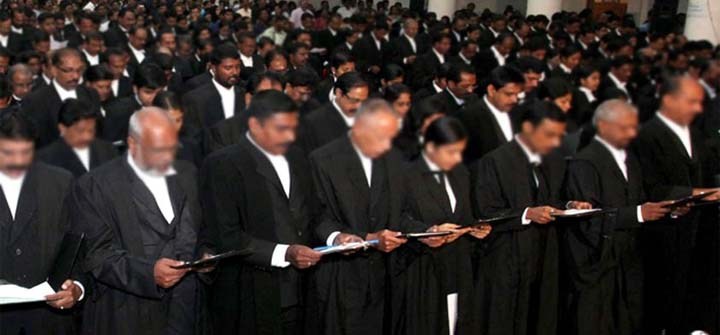
इस दिल में आते जाते रहिए

इश्क़ का भ्रम यूँ बनाते रहिए
इस दिल में आते जाते रहिए

आप ही मेरी नज़्मों की जाँ थी
ये चर्चा भी सरे आम सुनते रहिए

सिलिए ज़ुबान तकल्लुफ से
लेकिन निगाहें मिलाते रहिए

आप मेरी हैं भी और नहीं भी
ये जादूगरी खूब दिखाते रहिए

आप बुझ जाइए शाम की तरह
मुझे दिन की मानिंद जलाते रहिए

है कोई बीमार आपका,फिक्र नहीं
आप बेरुखी से खिखिलाते रहिए
सलिल सरोज
उपरोक्त सभी रचनाएँ मेरी स्वरचित और मौलिक हैं।
नाम:सलिल सरोज
पता: बी 302, तीसरी मंजिल
सिग्नेचर व्यू अपार्टमेंट्स
मुखर्जी नगर
नई दिल्ली-110009
उम्र:31 वर्ष
शिक्षा: सैनिक स्कूल तिलैया,कोडरमा,झारखण्ड से 10वी और 12वी उतीर्ण। 12वी में स्कूल का बायोलॉजी का सर्वाधिक अंक 95/100
जी डी कॉलेज,बेगूसराय,बिहार से इग्नू से अंग्रेजी में स्नातक एवं केंद्र  टॉपर, जवाहर लाल नेहरू विश्वविद्यालय ,नई दिल्ली से रूसी भाषा में स्नातक और तुर्की भाषा में एक साल का कोर्स और तुर्की जाने का छात्रवृति अर्जित। जीजस एन्ड मेरी कॉलेज,चाणक्यपुरी,नई दिल्ली इग्नोउ से समाजशास्त्र में परास्नातक एवं नेट की परीक्षा पास।
व्यवसाय:कार्यालय महानिदेशक लेखापरीक्षा,वैज्ञानिक विभाग,नई दिल्ली में सीनियर ऑडिटर के पद पर 2014 से कार्यरत।
सामाजिक एवं साहित्यिक सहयोग: बेगूसराय में आर्थिक रूप से कमजोर बच्चों को अंग्रेज़ी की  मुफ्त कोचिंग। मोहल्ले के बच्चों के कहानी,कविता और पेंटिंग को बढ़ावा देने हेतु स्थानीय पत्रिका\”कोशिश\” का प्रकाशन और सम्पादन किया। जवाहरलाल नेहरू विश्वविद्यालय में विदेशी भाषा में स्नातक की परीक्षा के लिए \”Splendid World Informatica\”  किताब का सह लेखन एवं बच्चों को कोचिंग। बेगूसराय ,बिहार एवं अन्य राज्यों के हिंदी माध्यम के बच्चों के लिए \”Remember Complete Dictionary\” किताब का अनुवाद। बेगूसराय,बिहार में स्थित अनाथालय में बच्चों को छोटा अनुदान। 
बचपन में राजहंस,क्रिकेट वर्ल्ड की प्रतियोगिताओं में इनाम प्राप्त।
शोसल मीडिया पर सामाजिक मुद्दों पर बेबाकी से अपने विचारों को प्रस्तुत करना।
उपलब्द्धियाँ: अमर उजाला काव्य,  हिंदुस्तान समाचार पत्र,पटना,सांध्य दर्पण इंदौर,अन्तरशब्दशक्ति इंदौर,परिचय टाइम्स,विजय दर्पण टाइम्स,सरिता,पर्यटन प्रणाम सहित 80 से अधिक पत्रिकाओं,अखबार,ऑन लाइन साइट्स पर कविता,कहानी,लेख,व्यंग प्रकाशित। मातृभाषा के द्वारा प्रकाशित काव्य संग्रह \”नवांकुर\”में मेरी कविताओं को स्थान प्राप्त। रवीना प्राकाशन ,नई दिल्ली द्वारा प्रकाशित निभा पत्रिका और मेरी रचना काव्य संग्रह में मेरी कविताएँ शामिल। विश्व पुस्तक मेला के दौरान मेरे काव्य संग्रह\”यूँ ही सोचता हुआ\” का विमोचन।
अपने कार्यालय में हिंदी दिवस पर आयोजित निबंध लेखन प्रतियोगिता में 3 साल से प्रथम स्थान प्राप्त। आरषी फाउंडेशन,भोपाल के द्वारा विकलांगों पर आयोजिय काव्य प्रतियोगिता में अखिल भारतीय 20वा स्थान जिसका निर्णय गुलज़ार साहब ने किया था। मातृभाषा द्वारा काव्य प्रतियोगिता में तीसरा स्थान जिसके तहत आशीष दलाल का उपन्यास पुरस्कार के रूप में प्राप्त हुआ। दिल्ली में आयोजित कॉमनवेल्थ खेल के दौरान पर्यटन मंत्रालय के द्वारा आयोजित \”Earn while you learn\” कार्यक्रम का सफल प्रतिभागी। 
आगामी 4 किताबों पर काम चालू। यु ट्यूब पर शार्ट फिल्मों में सांग्स और डायलॉग भी लिखी हैं।  पश्चिम मध्य रेलवे महालेखा कार्यालय की पत्रिका
 साँची में मेरी कविताओं को स्थान प्राप्त। कार्यालय महानिदेशक लेखापरीक्षा,वैज्ञानिक विभाग,कोलकाता शाखा से प्रकाशित पत्रिका  में मेरी रचनाओं को स्थान प्राप्त। भारतीय लेखापरीक्षा एवं लेखा विभाग अकादमी ,शिमला द्वारा मेरी फोटोग्राफी के लिए सम्मान पत्र। प्रतियोगिता दर्पण पत्रिका अंग्रेज़ी अंक में डिबेट और निबन्ध प्रतियोगिता में प्रथम स्थान प्राप्त। मेरे द्वारा किए गए ड्राइंग की सराहना और पत्रिकाओं में स्थान प्राप्त।

शिक्षा: सैनिक स्कूल तिलैया,कोडरमा,झारखण्ड से 10वी और 12वी उतीर्ण। 12वी में स्कूल का बायोलॉजी का सर्वाधिक अंक 95/100
जी डी कॉलेज,बेगूसराय,बिहार से इग्नू से अंग्रेजी में स्नातक एवं केंद्र  टॉपर, जवाहर लाल नेहरू विश्वविद्यालय ,नई दिल्ली से रूसी भाषा में स्नातक और तुर्की भाषा में एक साल का कोर्स और तुर्की जाने का छात्रवृति अर्जित। जीजस एन्ड मेरी कॉलेज,चाणक्यपुरी,नई दिल्ली इग्नोउ से समाजशास्त्र में परास्नातक एवं नेट की परीक्षा पास।
व्यवसाय:कार्यालय महानिदेशक लेखापरीक्षा,वैज्ञानिक विभाग,नई दिल्ली में सीनियर ऑडिटर के पद पर 2014 से कार्यरत।
सामाजिक एवं साहित्यिक सहयोग: बेगूसराय में आर्थिक रूप से कमजोर बच्चों को अंग्रेज़ी की  मुफ्त कोचिंग। मोहल्ले के बच्चों के कहानी,कविता और पेंटिंग को बढ़ावा देने हेतु स्थानीय पत्रिका\”कोशिश\” का प्रकाशन और सम्पादन किया। जवाहरलाल नेहरू विश्वविद्यालय में विदेशी भाषा में स्नातक की परीक्षा के लिए \”Splendid World Informatica\”  किताब का सह लेखन एवं बच्चों को कोचिंग। बेगूसराय ,बिहार एवं अन्य राज्यों के हिंदी माध्यम के बच्चों के लिए \”Remember Complete Dictionary\” किताब का अनुवाद। बेगूसराय,बिहार में स्थित अनाथालय में बच्चों को छोटा अनुदान। 
बचपन में राजहंस,क्रिकेट वर्ल्ड की प्रतियोगिताओं में इनाम प्राप्त।
शोसल मीडिया पर सामाजिक मुद्दों पर बेबाकी से अपने विचारों को प्रस्तुत करना।
उपलब्द्धियाँ: अमर उजाला काव्य,  हिंदुस्तान समाचार पत्र,पटना,सांध्य दर्पण इंदौर,अन्तरशब्दशक्ति इंदौर,परिचय टाइम्स,विजय दर्पण टाइम्स,सरिता,पर्यटन प्रणाम सहित 80 से अधिक पत्रिकाओं,अखबार,ऑन लाइन साइट्स पर कविता,कहानी,लेख,व्यंग प्रकाशित। मातृभाषा के द्वारा प्रकाशित काव्य संग्रह \”नवांकुर\”में मेरी कविताओं को स्थान प्राप्त। रवीना प्राकाशन ,नई दिल्ली द्वारा प्रकाशित निभा पत्रिका और मेरी रचना काव्य संग्रह में मेरी कविताएँ शामिल। विश्व पुस्तक मेला के दौरान मेरे काव्य संग्रह\”यूँ ही सोचता हुआ\” का विमोचन।
अपने कार्यालय में हिंदी दिवस पर आयोजित निबंध लेखन प्रतियोगिता में 3 साल से प्रथम स्थान प्राप्त। आरषी फाउंडेशन,भोपाल के द्वारा विकलांगों पर आयोजिय काव्य प्रतियोगिता में अखिल भारतीय 20वा स्थान जिसका निर्णय गुलज़ार साहब ने किया था। मातृभाषा द्वारा काव्य प्रतियोगिता में तीसरा स्थान जिसके तहत आशीष दलाल का उपन्यास पुरस्कार के रूप में प्राप्त हुआ। दिल्ली में आयोजित कॉमनवेल्थ खेल के दौरान पर्यटन मंत्रालय के द्वारा आयोजित \”Earn while you learn\” कार्यक्रम का सफल प्रतिभागी। 
आगामी 4 किताबों पर काम चालू। यु ट्यूब पर शार्ट फिल्मों में सांग्स और डायलॉग भी लिखी हैं।  पश्चिम मध्य रेलवे महालेखा कार्यालय की पत्रिका
 साँची में मेरी कविताओं को स्थान प्राप्त। कार्यालय महानिदेशक लेखापरीक्षा,वैज्ञानिक विभाग,कोलकाता शाखा से प्रकाशित पत्रिका  में मेरी रचनाओं को स्थान प्राप्त। भारतीय लेखापरीक्षा एवं लेखा विभाग अकादमी ,शिमला द्वारा मेरी फोटोग्राफी के लिए सम्मान पत्र। प्रतियोगिता दर्पण पत्रिका अंग्रेज़ी अंक में डिबेट और निबन्ध प्रतियोगिता में प्रथम स्थान प्राप्त। मेरे द्वारा किए गए ड्राइंग की सराहना और पत्रिकाओं में स्थान प्राप्त।

P&H HC Directs Protection Of Honest Officers While Setting Aside CM’s Remarks On Khemka

In a major development, the Punjab and Haryana High  Court in a latest, landmark and laudable judgment titled Dr. Ashok Khemka Versus State of Haryana and others  in CWP-317-2019 (O&M) delivered on March 18, 2019 has very clearly and convincingly not just upheld the integrity  of eminent IAS officer of 1991 batch –  Dr Ashok Khemka known all over India who because of his upright and impeccable credentials has emerged as an eyesore for politicians of all hues but also very rightly expunged Haryana Chief Minister ML Khattar adverse remarks in his Personal Appraisal Report (PAR). Every honest and upright person will be most happy to learn about this! There can be no denying or disputing it!
                                                        Not just stopping here, the two  Judge Bench of Punjab and Haryana High Court comprising of Justice Rajiv Sharma and Justice Kuldip Singh also observed without mincing any words that, “Since number of such officers whose integrity is beyond doubt and who have professional integrity of higher standard is depleting very fast, therefore, they need protection from being damaged by recording adverse remarks against the record.” Absolutely right! This landmark judgment authored by Justice Kuldip Singh for himself and Justice Rajiv Sharma made the above mentioned observation while deciding Dr Khemka’s appeal which he had filed against an order of the Central Administrative Tribunal (CAT) which had rejected “in toto” his application for expunging remarks made by Manohar Lal Khattar as the accepting authority and restoration of a grade of 9.92 as awarded by Cabinet Minister Anil Vij in his PAR for the period from April 8, 2016 to March 31, 2017, when he served as the Principal Secretary to Government of Haryana, Science and Techno logy Department.   
                                There can be no gainsaying the irrefutable fact that Dr Ashok Khemka who is a 1991 batch IAS officer shot into limelight in 2012 for cancelling the mutation of a land deal between Congress President Rahul Gandhi’s brother-in-law Robert Vadra and DLF. In a career spanning 21 years, the 52-year-old Dr Ashok Khemka has been transferred 52 times! Can on earth there be anything more unfortunate than this that an IAS officer whom none other than Punjab and Haryana High Court has hailed as an “honest and upright officer” was subjected to repeated transfers and harassed  and humiliated in a way which under no circumstances can ever be justified by any upright person?
                                  First and foremost, this extremely commendable and noteworthy judgment sets the ball rolling by observing that, “Petitioner-Dr Ashok Khemka, who is an Indian Administrative Services (IAS) Officer and holding the rank of Principal Secretary to Government of Haryana, has invoked the writ jurisdiction of this Court under Article 226 of the Constitution of India for quashing of the impugned order dated 31.12.2018 (Annexure P-1) passed by Central Administrative Tribunal, Chandigarh Bench, Chandigarh (for short ‘the Tribunal’). Petitioner has also prayed for expunging the adverse remarks and over all grading given by Accepting Authority under Section V-Acceptance of the PAR for the period from 8.4.2016 to 31.3.2017 (Annexure P-2) while restoring the overall grade of 9.92 as given by the Reviewing Authority.”
                                    To recapitulate, it is then pointed out that, “Brief facts of the case are that applicant-petitioner is 1991 batch Indian Administrative Services Officer (IAS), presently posted as Principal Secretary, Department of Sports, Government of Haryana. Under All India Services (Performance Appraisal Report), Rule 2007 (for short the AIS (PAR) Rules, 2007, the Performance Appraisal Report (for short ‘the PAR’) is written for every member of All India Services for each financial year as per Schedule 2.”
                                  For the sake of brevity, it is enough to mention that in this laudable judgment, we then see that there are general guidelines in the said schedule for filling the PAR for which time frame is given in Schedule 2, Form II, Guideline 9.
                               To be sure, it is then pointed out that, “Applicant-petitioner claims that in his case for the PAR for the period from 8.4.2016 to 31.3.2017, Accepting Authority wrote the remarks on 31.12.2017 and took 184 days in doing the same. Further on the comments of applicant-petitioner under Rule 9(2) of the AIS (PAR) Rules, 2007, no decision has been taken so far. Petitioner has also made a representation dated 1.6.2018 to the Chairperson of Referral Board stating that due to failure of the Accepting Authority to decide the representation within the prescribed time frame, the views of the Reviewing Authority has acquired the finally ipso juris and must be acted upon by expunging the appraisal of the Accepting Authority. However, no response has been received.”
                        As it turned out, this significant judgment then mentions that, “Applicant-petitioner moved the Tribunal by filing the Original Application No. 060/01058/2018, titled as ‘Dr Ashok Khemka vs. State of Haryana and another’ on 4.9.2018 claiming the following relief:-
(i)                         expunge the remarks and the overall grade recorded by the Accepting Authority in “Section V-Acceptance” of the Performance Appraisal Report for the period, 8th April 2016 to 31st March 2017 and restore the overall grade of 9.92 as per appraisal done by the Reviewing Authority;
(ii)                      grant any other relief, which may be deemed to be just and proper; and
(iii)                   allow he present O.A. With costs.”   
                                  
                                         What’s more, it is then pointed out that, “The plea of the applicant-petitioner did not find favour from the Tribunal which vide its order dated 3.12.2018 held that the Accepting Authority recorded the appraisal report on 31.12.2017 well within the time prescribed under relevant Rule 5 (1) of the AIS (PAR) Rules, 2007 and para 9.4 of the General Guidelines. Hence, the application was dismissed.”
                                   To put things in perspective, it is then pointed out in this notable judgment that, “We have heard learned counsel for the parties and have carefully gone through the case file. In this case, it is not disputed that for recording the PAR of the IAS Officer, certain time frame has been given as reproduced above. Before the Tribunal, the applicant-petitioner had claimed that the remarks by the Accepting Authority were time barred and that since his representation under Rule 9(7B) of the AIS (PAR) Rules, 2007 has not been decided, the views of the Reviewing Authority have become final. Undoubtedly, the statutory representation of the petitioner has not been decided by the Accepting Authority within the time frame. Under Rule 5 of the AIS (PAR) Rules, 2007, the Central Government can make such addition in the form or the cut off date as may be considered necessary or desirable. Therefore, the time frame as fixed for recording the PAR could be varied. The Tribunal has relied upon Rule 5(1) of the AIS (PAR) Rules, 2007 and para 9.4(1) of the General guidelines which provide that if the PAR relating to the financial year is not recorded by 31st December of the year in which financial year ended, no remarks shall be recorded thereafter, and the officer may be assessed on the basis of overall record and self-assessment of the year concerned, if he has submitted his self-assessment on time. The time frame is the technical aspect of the matter. However, before this Court, it has been argued that even on merits, the views of Accepting Authority are to be rejected.”  
                                  Needless to say, it is then pointed out that, “We have carefully examined the PAR of the applicant-petitioner. It comes out that the applicant-petitioner at the relevant time was working as Principal Secretary to Government of Haryana, Science and Technology Department.”
                                  It must be clarified here as has been pointed out also in this judgment itself that Reporting Authority is Chief Secretary of Haryana and period worked is from 08/04/16 to 31/3/2017. Reviewing Authority is Science and Technology Minister Haryana and period worked is from 23/07/2016 to 31/3/2017. Anil Vij who is Health Minister is Reviewing Authority. Accepting Authority is Chief Minister of Haryana and period worked is from 08/04/16 to 31/3/2017. The Reporting Authority grades Dr Khemka mostly as 8.1, 8.2, 8.3, 8.4 and overall grades him as 8.22 and 8.27 but Reviewing Authority who is Anil Vij grades him much better and grades him mostly as 9.8, 9.9, 10 and overall grades him as 9.92 and 9.87 which is certainly very good.  
                                   Going forward, it is then pointed out in this historic ruling that, “Regarding integrity of the applicant-petitioner, it is recorded that “his integrity is beyond doubt”. The Reporting Officer wrote the following comments on the overall qualities of the officer i.e. the present petitioner which are reproduced below:-
           “Sh. Khemka is an intelligent and experienced officer. The officer possesses a very good understanding of various Acts and Rules. He can examine an issue thread bare bringing out all the pros and cons. He possesses good command over the written and spoken word. Against the revised plan budget estimate of Rs. 26.62 crores of the Science and Technology department, Rs. 25.35 crores was spent. Five years backlog for Haryana Vigyan Ratna and Yuva Vigyan Ratna Awards was cleared by him. The officer fully understands the power of social media. He frequently tweets on diverse subjects, including matters not directly related to his department. He has a sympathetic attitude towards the Scheduled Castes and weaker sections of society”.”
                                 Moving on, it is then observed that, “The Reporting Authority (Minister concerned) wrote the following remarks about the qualities and strength of the officer i.e., the present petitioner which are reproduced below:-
                “Mr. Ashok Khemka is well-known in the country for effective professional integrity under very difficult circumstances. Despite being in a relatively unimportant post, Mr. Ashok Khemka has shown excellent achievements under severe constraints. He is very innovative and was the first to use WHATSAPP in court proceedings to effect service upon the respondent. By his personal example, Mr. Ashok Khemka inspires many young officers. He has immense potential which can be utilized better by the Government”.”
                                          Furthermore, it is then pointed out that, “The Reporting Authority gave the overall grade on the scale of 1-10 as 9.92. However, the Accepting Authority i.e., the Chief Minister differed with the opinion of the Reviewing Authority and recorded the following remarks: –
                  “The Reviewing Authority has differed with the Reporting Authority but has not given any reason for the same. At best, his comment that the officer “has shown excellent achievements under severe constraints” contained in para 3 of Section IV can be so construed. But this is not substantiated since neither the Reviewing Authority nor the officer himself has specified any constraint what to talk of “severe constraints”. I, therefore, think that report of the Reviewing Authority is slightly exaggerated”.”
                                      More importantly, the Punjab and Haryana High Court Bench comprising of Justice Kuldip Singh and Justice Rajiv Sharma then very rightly held for which they must be appreciated and applauded that, “We are of the considered view that the remarks recorded by the Accepting Authority are liable to be expunged. The Accepting Authority has recorded that Reviewing Authority has differed with the Reporting Authority but not given any reason for the same. However the same is found to be absolutely incorrect as the Reviewing Authority has given brief reasoning recording that the petitioner is well known in the country for effective professional integrity under very difficult circumstances. Even Accepting Authority has not made any adverse remarks regarding the integrity of officer. Reference has been made to ‘excellent achievements under severe constraints’. It has also been mentioned that he is very innovative and has immense potential which can be utilized better by government. The Accepting Authority has recorded that the Reviewing Authority or the officer himself has not specified any constraint what to talk of ‘severe constraints’.”
                             It cannot be lost on us that the Bench then further goes on to held that, “We are of the view that some of the matters are better understood than said in expressed words. The severe constraints in which an honest and upright officer works under the political leadership are well known. There are so many pulls and pressures and the officer has to work according to the rules despite all these pulls and pressures. The Reviewing Authority has recorded that the petitioner is well known in the country for effective professional integrity under very difficult circumstances.” This alone explains why he was frequently transferred from one place to another because the brutal truth is that an honest person is rarely favoured wherever he/she goes!
                                          It also has to be borne in mind that the Court then commendably and very rightly goes on to state that, “We are of the view that a person of such professional integrity needs to be protected as the professional integrity in our political, social and administrative system is depleting very fast. Even the Reporting Authority i.e., the Chief Secretary, Haryana has recorded that petitioner is an intelligent and experienced officer. His integrity is beyond doubt. Therefore, an officer with such integrity many time has to face adverse circumstances which have been mentioned by the Reviewing Authority as ‘constraints’. Since number of such officers whose integrity is beyond doubt and who have professional integrity of higher standard is depleting very fast, therefore, they need protectonfrom being damaged by recording adverse remarks against the record.”
                          Most importantly, the Bench then also held most rightly that, “Consequently, we are of the considered view that leaving aside the time frame, the opinion of the Accepting Officer is liable to be expunged and so is the grading which is given 9.00 by the Accepting Authority. At the same time, we are of the view that the time frame fixed under the Rule for recording PAR is not a water tight compartment and there can be some flexibility in the same. Further it comes out that the Accepting Authority has not decided the representation of the petitioner so far. For the reasons recorded above, the impugned order dated 3.12.2018 (Annexure P-1) passed by Central Administrative Tribunal, Chandigarh Bench, Chandigarh is set aside. The remarks of the Accepting Officer and the grading of 9.00 given by the Accepting Authority are hereby set aside and the opinion given by the Reviewing Authority is restored. The grading of 9.92 given by the Reviewing Authority is also restored and will prevail upon the grading given by the Reporting Authority. Accordingly, the petition is allowed.”
                                   On a concluding note, let me be honest enough to concede that the names of Justice Kuldip Singh and Justice Rajiv Sharma shall always be written in my heart at least for this best judgment I have ever read and most notably for openly rooting in favour of a dead honest IAS officer who has always been in news for taking on corruption not fearing even the first family of India that is the Gandhi family which will hundred percent boost the morale of many more honest officers like him who due to frequent postings and adverse reports tend to succumb! But Dr Ashok Khemka is not one of them inspite of facing repeated transfers, harassment and humiliation and has emerged as the best example of an honest and upright IAS officer whom every Indian can and in fact must inevitably look upon as a worthy inspiration to follow! Anil Vij is the one politician who has hundred percent backed Dr Khemka as is evident in his observations and gradings which has already been discussed above and therefore every Indian must be proud of him also!  
Sanjeev Sirohi, Advocate,
s/o Col BPS Sirohi,
A 82, Defence Enclave,
Sardhana Road, Kankerkhera,
Meerut – 250001, Uttar Pradesh.    

Karol Bagh Hotel Blaze Kills 17 As Rules Flouted Openly

No words can be adequate to condemn most strongly the complete and callous flouting of rules by hotels with impunity which is squarely and solely responsible for such hotel blaze as we saw just recently in Hotel Arpit Palace in Karol Bagh which ultimately resulted in the killing of 17 people for no fault of theirs! Their only fault was that they trusted the big name of the hotel in New Delhi’s Karol Bagh and paid for it with their invaluable lives! Time and again we see such innumerable incidents happening yet everything is soon forgotten only for another incident to revive those unpalatable memories again with a more bad taste perhaps in many such cases!

                                       Needless to say, the permanent and painful loss suffered by the near and dear ones of those killed is beyond words to describe and is irreparable! No money announced as compensation can ever be enough to compensate the lives of those who have died! But both Centre and State Government feel proud to announce quick compensation but do nothing to frame strictest rules to ensure that no one dare again violate safety norms in hotels and lodging homes!
                                        To be sure, a fire is suspected to have been triggered by an electrical short circuit that engulfed a hotel named Arpit Palace that killed at least 17 people including an IRS officer and the chef who tried to escape from the blaze by jumping off the five-storey building. A woman from Myanmar were among the many who were injured while jumping to escape the fire. A hydraulic skylift was later used to rescue the trapped guests and staff.
                              No doubt, the casualty figure went up as people were asleep when the fire broke out! What further compounded the tragedy was that as people got up after hearing noise and went down they found the door to be locked and they could not find any safe passage to go out! There were 53 people in the 45-room hotel which had a canopy on the terrace housing what appeared to be a restaurant.
                               As it turned out, a massive fire swept through a four-floor hotel in Central Delhi’s Karol Bagh in Hotel Arpit Palace in early wee hours of morning. The blaze, in which 35 people were injured and 17 killed started in the second floor of the Arpit Palace Hotel around 3.30 am and most of the guests in hotel were asleep and were caught completely off the guard! Most of those who died lost their lives because of suffocation. Suresh Kumar who was an Indian Revenue Officer and hailed from Panchkula town in Haryana was among the 17 people who died in the fire that engulfed a five-storey hotel in Delhi’s Karol Bagh area before dawn. Suresh Kumar was posted as Assistant Commissioner in the GST (Goods and Services Tax) wing of the Revenue Department in Delhi. Suresh jumped to escape fire but succumbed to injuries sustained from the fall!    
                                         According to Delhi police, and fire services, the hotel flouted a number of rules. We shall briefly discuss some of the major lapses. They are as follows: –
1.  The rooftop restaurant was illegally constructed and this was the major cause of the fire that broke out.
2.  The entry to the rooftop was closed to obtain NOC (No Objection Certificate) from the fire department in December 2017, but it was illegally reopened later.
3.  A restaurant and a kitchen were illegally operating on the rooftop and without a straw of doubt this was what contributed most to the fire engulfing so rapidly all over the hotel.
4.  A temporary structure was constructed on the rooftop using fibre sheets.
5.  The lone emergency exit at the back of the guest house were found blocked.
6.  There were extra floors constructed.
7.  The height is above 15 metres.
8.  No panic alarm at any place in the hotel.
9.  No proper signage towards the hotel emergency exit was on display.
10.                   Plastic and other inflammable material used on the walls and partition of walls and in the rooftop restaurant contributed in a big manner in spreading of fire.
11.                   No safety arrangements for the hotel’s guests.
12.                   Storage and cooking activities also found operating in basement.
13.                   High use of smoke-causing material such as asbestos inside the building.
14.                   Use of compressed sawdust in woodwork, which easily catches fire and helps spreads it.
15.                   Hose pips were not connected to sources of water and fire extinguishers were non-functional.
16.                   Modification in the original design of the guesthouse led to blockade of ventilation outlets.
17.                   Fire exits were used for staff passage and used to be locked after midnight.
18.                   The hotel owner began violations on the terrace or the fifth floor after it obtained a fire clearance in December 2014 as fire NOC is valid for three years.
19.                   The stairs were not wide enough to allow more than two people from running together and that led to stampede and people fell on each other.
20.                   There were no lights inside the building which made it more difficult for people to find a way out.
                              Even the Supreme Court appointed monitoring committee had observed that unauthorized construction had increased in Karol Bagh since the last sealing drive in 2007. It found that basements and terrace have extended structures. Storage and cooking activities were also found in basements.
                                  It is a crying national shame that even 22 years after the Uphaar cinema hall fire tragedy of 1997 that killed 59 people still the Hotel Arpit Palace staff had no training on how to use the fire fighting equipment. Police informed the court that the owners had illegally constructed a “bar-cum-restaurant” on the rooftop and further covered it with fibre sheets that began melting in the heat. This should never have been done at the first place!
                                 Simply put, the crime branch submitted that, “Many people were forced to jump despite reaching the terrace and two died because of this”. The police also told the court that due to illegally constructed restro-bar, many were forced to jump from the terrace and two died because of the jump. It also informed the court that Rakesh Goel and his brother Shardendu Goel, in whose name the license was issued were well aware of the irregularities committed in the functioning of the hotel. Deputy Commissioner of Police (Central) Mandeep Singh Randhawa said  a case under Section 304 (Punishment fopr culpable homicide not amounting to murder) and 308 (Attempt to commit culpable homicide) of the Indian Penal Code has been registered. He also said that, “Manager Rajendra and General Manager Vikas have been arrested. Owner Shubhendu Goyal is absconding.”  
                            Going forward, the police also told the court that the manager and the general manager disclosed the day-to-day affairs to the Goel brothers and both of them are well aware of the irregularities committed in the functioning of the hotel. The fire safety certificates of 14 more hotels in Central Delhi’s Karol Bagh area were suspended after teams from the Delhi Fire Services conducted a drive to check the safety norms in hotels. A total of 98 hotels were inspected.
                               It must be brought out here that the property in question where fire occurred which is famously called Hotel Arpit Palace was actually not a hotel and had a licence issued by police that allowed only boarding and lodging facilities. Then how was hotel operating with impunity? Why didn’t police take action promptly? The lives of many could have been saved had the police acted promptly!
                                Not stopping here, North MCD Mayor Adesh Gupta said the Hotel Arpit Palace which came up in 1993 was an “unauthorized construction” and was “booked” in 1993-1994 but the hotel continued operations and practically became untouchable once the Delhi Laws (Special Provision) Act came into effect in 2006. What is incomprehensible is that even if for the sake of argument we accept that the Act came in the way of sealing the hotel yet why did the civic body did not penalize the hotel for height violations and for illegally running commercial operations on the terrace? People will keep dying as long as such illegal activities for the sake of making quick money is not stopped forthwith permanently!
                                    What is most disconcerting is that almost all such guest houses in Karol Bagh and the rest of the city also add a kitchen quietly which is otherwise prohibited in such establishments by obtaining a licence for a restaurant they run from the same building. Fire officials revealed that the owners of Hotel Arpit made multiple kitchens, including an illegal one also on the rooftop. They also revealed that this rooftop kitchen, along with other modifications did not show up in the last fire safety inspection conducted in 2017.
                                    It is most distressing and disquieting to learn that both police and municipal officials blatantly and brazenly handed out renewal certificates without carrying out proper inspection as required and without noticing the open and flagrant violation of all rules and norms and flagging violations of the same in their report. The fire inspection certification holds good for a period of three years and the municipal corporation issued the health licence that is renewed every year. The guilty police and municipal officials must be punished most strictly and dismissed from service and sent behind bars so that no one again dares to break rules without any fear of law!
                                    Why do governments wake up only after the tragedy in which many innocents lose their life? Why is everything soon forgotten thereafter? Why in India there is no value of human life? Why politicians become happy after announcing compensation of few lakhs of rupees? Why is corruption not punishable with either life or death and same for those who violate rules which endangers the lives and safety of others?
                                   Truth be told, just enacting rules are not enough! They must be implemented also strictly. Those who break rules must be punished most strictly! We all know too well how the Bawana factory fire in 2018 killed as many people as the Hotel Arpit fire now. The Bawana factory was registered as a plastic manufacturing unit but was used to package firecrackers illegally!
                            It is well known that for factories there is the building code that envisages elaborate safety norms. But here again any unit which works out of a covered area of less than 250 square metres on all floors is completely exempted from seeking a fire safety certificate! Why? Don’t we know all too well that many of the factories that are in news headlines for catching fire in Delhi fall in the exempted category? Why still are they exempted? Why are they not brought out from the exempted category?
                     Why are surprise inspections not carried out time and again? Why when once the fire safety licence is granted do we see that there is just no inspection until and unless it comes up for renewal three years later? Why is fire department working with just 40% of the sanctioned staff strength and not 100%?
                            Why where multiple agencies are entrusted with the onerous task of issuing a number of licences do we see that there is rarely ever a joint on-site inspection at regular intervals as was commendably suggested by none other than the Law Commission of India in a 2012 consultation paper on manmade disasters? Why Centre and State Government display a nonchalant approach on such a serious issue? Why can’t they become more serious?
                              To put it succinctly, why is it ignored that in this 2012 consultation paper it had sought the scrutiny of buildings right at the construction stage and not just after they were completed and yet why no action taken by any government on it? More to the point, this 2012 consultation paper asked for “mandatory re-inspections at specified intervals” which must be laid down either in the rules or by way of administrative instructions. On surprise inspections, Neelam Krishnamoorthy from the Association of the Victims of Uphaar Tragedy said that, “The authorities could begin by conducting surprise inspections. It is the only way to ensure that whatever fire safety apparatus that is found installed at the time of certification is in a working condition.” Still why are such landmark and laudable suggestions not implemented forthwith? Why annual reviews are not mandated by law? The government has a lot of explaining to do on this! It must be done at least now forthwith as it brooks no delay anymore!     
Sanjeev Sirohi, Advocate,
s/o Col BPS Sirohi,
A 82, Defence Enclave,
Sardhana Road, Kankerkhera,
Meerut – 250001, Uttar Pradesh.

Uncivilized And Heartless Crime: SC Enhances Compensation To Acid Attack Victim


To start with, the Supreme Court which is the highest court of our nation has most recently on March 15, 2019 in an extremely laudable and landmark judgment titled State of Himachal Pradesh & Anr v Vijay Kumar alias Pappu & Anr in Criminal Appeal No(s). 753 of 2010 has minced just no words in stating clearly and convincingly about acid attack crime that a crime of this nature does not deserve any kind of clemency. It is the most uncivilized and most heartless crime and this even the top court has acknowledged for which there cannot be any justification of any kind. The Apex Court also directed the two convicts to pay Rs 1,50,000 each as compensation to acid attack victim.

First and foremost, the ball is set rolling in para 1 by penning down in this commendable and noteworthy judgment authored by Justice Ajay Rastogi for himself and Justice AM Khanwilkar that, “The challenge in this appeal is against the judgment of the Division Bench of the High Court of Himachal Pradesh at Shimla dated 24th March, 2008 filed at the instance of the State of Himachal Pradesh whereby the High Court was pleased to partially allow the appeal filed by the respondents and altered the nature of offence from one under Section 307/34 IPC to one under Section 326 IPC and reduced the sentence of 10 years rigorous imprisonment and fine of Rs. 5,000/- each to 5 years rigorous imprisonment and increased the fine to Rs. 25,000/- each and in default, to undergo further imprisonment of six months.”

For the uninitiated, the background is then chalked out in para 2 wherein it is pointed out that, “In the instant case, the victim has suffered 16% burn injury which was caused due to acid attack on the darkest day of her life, i.e. on 12th July, 2004. To unfold the prosecution version in nutshell that, on 12th July, 2004 at about 9.00 a.m. PW-13 Shami Verma resident of Mashobra, who was present at BCS at Khalini-Dhalli By-Pass saw PW-5 Kumari Ishita (victim) crying with burn injuries, who had jumped into the water tank nearby. PW-13 Shami Verma took out PW-5 Kumari Ishita-victim from the tank and informed to the Police Post, New Shimla, that a girl with burn injuries was present near her residence and this information (Exhibit PR) was recorded by the Incharge of the Police Post, New Shimla, who deputed a police officer on wireless set to go to the site. PW-36 Shakuntla Sharma went to the site and shifted the victim to the hospital and recorded her statement on which a case was registered. During investigation, PW-5 Kumari Ishita (victim) stated that when she was going to college, two boys came on a scooter and threw some acid over her from a jug and run away from the spot. After investigation, challan was filed against both the accused respondents who were tried by the learned trial Court leading to their conviction which convicted them for offence under Section 307/34 IPC and sentenced them to undergo rigorous imprisonment of 10 years with a fine of Rs. 5,000/- each by judgment dated 30th November, 2005 which came to be challenged by them in appeal before the High Court of Himachal Pradesh.”

As it turned out, para 3 then states that, “Taking note of the chemical burns caused by sulphuric acid of around 16% which is evident from the report of Dr. Piyush Kapila (PW-2), Department of Forensic Medicine, the High Court arrived at the conclusion that the offence under Section 307/34 IPC was not made out and converted the offence from Section 307/34 IPC to Section 326 IPC and sentenced them for a period of 5 years rigorous imprisonment with a fine of Rs. 25,000/- each vide impugned judgment dated 24th March, 2008.”

Needless to say, para 4 then brings out that, “The accused respondents have accepted the coniction and have undergone their sentence in terms of the judgment impugned dated 24th March, 2008 and have deposited the fine amount of Rs. 25,000/- each as informed to this Court and were released on 9th December, 2008 after undergoing sentence in terms of the impugned judgment.”

To be sure, it is then also brought out in para 5 that, “The main thrust of the submission of the learned counsel for the appellants is that it was a case of acid attack on innocent young victim of 19 years and learned trial Court has rightly convicted the accused respondents under Section 307/34 IPC and sentenced them to 10 years rigorous imprisonment and there was no reasonable and cogent justification for the High Court to interfere with the impugned judgment of the learned trial Court dated 30th November, 2005 and once they had been held guilty, their alteration of punishment is uncalled for and prayed for restoring the conviction and sentence held by the learned trial Court dated 30th November, 2005. Learned counsel further submitted that if this Court is not inclined to restore the conviction and sentence passed by the learned trial Court dated 30th November, 2005, at least the victim is entitled for compensation admissible under the law.”

On the contrary, it is then pointed out in para 6 that, “Learned counsel for the respondents has supported the judgment of the High Court dated 24th March, 2008 and submitted that the respondents were young at the given point of time on the date of incident dated 12th July, 2004 and looking into the chemical burns of 16% which the victim had suffered, by no stretch of imagination, it could be considered to be a case of Section 307 IPC of committing an attempt to murder. Further, in the given facts and circumstances, it was not even a case of Section 326 IPC but they have accepted the wrong which had been committed by them and after undergoing sentence in terms of the impugned judgment, both were released on 9th December, 2008 and there is no justification to restore the conviction and sentence awarded by the learned trial Court dated 30th November, 2005. In support of his submission, reliance is placed on the judgment of this Court in Sachin Jana and Another Vs. State of West Bengal 2008(3) SCC 390 and submitted that it was a case where the victims suffered more than 50% burn injury caused due to acid and the conviction was under Section 307 IPC and yet this Court had reduced the sentence to 5 years rigorous imprisonment with fine of Rs. 25,000/-.”

Simply put, para 7 then states that, “In this background, the question for consideration is whether the imposition of sentence by the High Court is proportionate to the crime in question and whether the victim is entitled to what has been awarded under the impugned judgment.”

On the one hand, para 8 points out that, “Learned counsel for the appellants submits that by no stretch of imagination, the period undergone, can be regarded as appropriate for the offence under Section 326 IPC and definitely not when there is acid attack. She submitted that there may not be any misplaced sympathy and exhibition of unwarranted mercy to pave the path of injustice to the victim.”

On the other hand, para 9 then discloses that, “Learned counsel for the respondents submitted that the incident has happened long back on 12th July, 2004 and by this time, the victim as well as the respondents have been living their individual lives and respondents have undergone the sentence passed and were released on 9th December, 2008. They are leading a reformed life and after a long lapse of time, to send them to custody would tantamount to a gross injustice to them.”

What’s more, para 10 then envisages that, “The two-Judge Bench of this Court in Sachin Jana and another’s case (supra) where the accused persons faced trial for offence under Sections 148, 323, 324 and 307 read with Section 149 IPC on account of 50% burn injury which was caused due to acid attack were convicted by the High Court for offence under Section 307/34 IPC but their custodial sentence was reduced to 5 years and a fine of Rs. 25,000/-. The relevant extract is as under:-

“9. It is to be noted that three persons suffered injuries on account of acid poured on them. The doctor had indicated that each of the injured persons suffered more than 50% burn injury which was caused due to acid and the same was sufficient to cause death if not attended by medical aid at appropriate time.

12. When the evidence on record is analysed, it is clear that Section 307 read with Section 34 IPC has clear application. The acid burns caused disfigurement.

13. Considering the nature of dispute the custodial sentence is reduced to 5 years. However, each of the appellants is directed to pay a fine of Rs. 25,000. If the amount is deposited by the appellants within six weeks from today, out of each deposit, Rs. 10,000 shall be paid to each of the victims PWs 1, 2 and 3: in case the amount of fine imposed is not deposited, the default custodial sentence of one year each”.”

Going ahead, the Bench then stipulates in para 11 that, “The matter in reference to the victim suffered due to acid attack was further considered by a two-Judge Bench of this Court in Ravada Sasikala Vs. State of Andhra Pradesh and Another 2017 (4) SCC 546 where learned trial Court convicted the accused person under Section 326 and 448 IPC and sentenced him to suffer rigorous imprisonment for one year and directed to pay a fine of Rs. 5,000/-. The High Court while confirming the conviction under Section 326 IPC released the accused to the period which he had already undergone of 30 days which came to be interfered by this Court and the punishment and sentence of one year under Section 326 IPC was restored. But while doing so, this Court also ousted the compensation which the victim may be entitled for under Section 357 and Section 357-A of the Code of Criminal Procedure, 1973 (hereinafter referred to as “CrPC”).”

It is most heartening to note that it is then very rightly noted in para 12 without mincing any words that, “Indeed, it cannot be ruled out that in the present case the victim had suffered an uncivilised and heartless crime committed by the respondents and there is no room for leniency which can be conceived. A crime of this nature does not deserve any kind of clemency. This Court cannot be oblivious of the situation that the victim must have suffered an emotional distress which cannot be compensated either by sentencing the accused or by grant of any compensation.”

Delving deeper, it is then held after considering all the points in para 13 that, “After going through the material on record, we are of the considered view that the accused respondents have rightly been held guilty and their conviction under Section 326 IPC and sentence for 5 years at least needs no interference but at the same time, we are disposed to address on victim compensation which may at least bring some solace to the victim for the sufferings which she had suffered.”

While referring to past leading and relevant case laws, it is then held in para 14 that, “In Ankush Shivaji Gaikwad Vs. State of Maharashtra 2013 (6) SCC 770, a two-Judge Bench of this Court referred to the amended provision, 154th Law Commission Report that has devoted entire chapter of victimology, wherein the emphasis was on the victim.

Continuing in the same vein, para 15 then states that, “In Laxmi Vs. Union of India and Others 2014 (4) SCC 427, this Court observed that Section 357-A came to be inserted in the Code of Criminal Procedure, 1973 by Act 5 of 2009 w.e.f. 31st December, 2009 which, inter alia, provides for preparation of a scheme for providing funds for the purpose of compensation to the victim or his dependents who have suffered loss or injury as a result of the crime and who require rehabilitation. This Court further directed that acid attack victims shall be paid compensation of at least Rs 3 lakhs by the State Government/Union Territory concerned as the aftercare and rehabilitation cost.

Not stopping here, it is then held in para 16 that, “In State of M.P. Vs. Mehtaab 2015(5) SCC 197, this Court directed the compensation of Rs. 2 lakhs noticing the fact that occurrence took place in 1997 and it observed that the said compensation was not adequate and accordingly, in addition to the said compensation to be paid by the accused, held that the State was also required to pay compensation under Section 357-A CrPC and reliance was placed on the decision in Suresh Vs. State of Haryana 2015(3) SCC 227.”

Moving on, it is then unfolded in para 17 that, “Victim Compensation Scheme has been considered by this Court in State of H.P. Vs. Rampal 2015 (11) SCC 584 and this Court opined that compensation of Rs. 40,000/- was inadequate taking note of the fact that the life of young child aged 20 years was lost and taking note of the precedents observed that in the interest of justice, the accused is required to pay a sum of Rs. 1 lakh and the State to pay a sum of Rs. 3 lakhs as compensation.”

Most importantly, it is then held in para 18 that, “Taking note of the precedents of which reference has been made, we consider it appropriate to observe that both the accused shall pay the additional compensation of Rs1,50,000/- (Rupees One Lakh and Fifty Thousand) each and the State of Himachal Pradesh shall pay the compensation as admissible under the Victim Compensation Scheme as in vogue to the acid victim (Ishita Sandhu, D/o Late Shri Rikhi Ram Sandhu) (Appellant No. 2). If the accused does not pay the additional compensation amount of Rs.1,50,000/- (Rupees One Lakh and Fifty Thousand) each within six months, the defaulting accused shall suffer rigorous imprisonment of six months. The State shall deposit the compensation before the trial Court within three months from today and the learned trial Court, after proper identification of the victim, disburse at the earliest.”

To put things in perspective, para 19 then enunciates that, “The impugned judgment of the High Court stands modified and the appeal is accordingly disposed of. Lastly, it is held in para 20 that, “Pending application(s), if any, stands disposed of.”

No doubt, it is an exceptional, elegantly written and excellent judgment which will send the right, loud and clear message to one and all that acid throwing will not be taken lightly under any circumstances and the accused should be prepared not just to suffer jail sentence but also pay huge penalty as fine! No justification by accused of any kind would be able to stand scrutiny before the court! The State Government must ensure that it deposits the compensation before the Trial Court within three months and the learned trial Court after proper identification of the victim disburse it at the earliest! It merits no reiteration that all the courts from top to bottom must always ensure that acid throwing is not taken lightly ever and accused as we see in this landmark case are made to pay heavily so that it acts as a suitable deterrent to others from indulging in such wanton and despicable acts!

Sanjeev Sirohi, Advocate,

s/o Col BPS Sirohi,

A 82, Defence Enclave,

Sardhana Road, Kankerkhera,

Meerut – 250001, Uttar Pradesh.