Differences between agency and distribution agreement

When a supplier/manufacturer wishes to distribute products, he examines whether he needs to select an agent or a distributor to do so, as this is an essential choice, and forms an agreement accordingly. There are several factors that must be considered while making such a decision. As a result, it is necessary to understand the distinctions between an agency agreement and a distribution agreement.

Now we need to know who is an agent. An agent is defined in section 182 of the Indian Contract Act, 1872. He is a middle man or a mediating person who is involved in making a contract between the primary supplier and the primary client. There are two types of agents where goods are sold i.e. the sales agent who does the sales work and a marketing agent who does the marketing of goods. The sales agent has the authority to enter the agreement on behalf of the supplier and the prescribed agreement is binding to the supplier as well. Unlike the sales agent, the marketing agent doesn’t have the authority to bind the supplier but he can market and endorse the supplier’s goods and articles to potential clients. Now when there is a demand or wish in the market by the client to make a purchase of goods the supplier completes the contract. 

The next step is to determine who is a distributor. In this case, the distributor gets the products from the supplier/manufacturer and then resells them in the market in a specific location where there is demand, on his own description, with complete control over the pricing and profit. Let us continue reading to learn more about the distinctions between an agency agreement and a distribution agreement.

Agency agreement

The agency agreement is a legal document in which the supplier/manufacturer and the agent enter into a contract with certain particular acceptable terms and conditions, and the agent, on behalf of the supplier, mediates between the primary supplier and the client for the sale of products to the market. It establishes a fiduciary connection between the agent and the manufacturer, as well as an indirect link between the manufacturer and the customer.

In this contract, the self-regulating body assumes all the risks in the work and makes all the choices on behalf of the first-party as stipulated in the contract. This contract is defined and controlled by the Agency Agreement Legislation, and it also has the rights of agents specified in the Contract law under sections 217, 219, 225, 222, and 223 and in the Sales of Goods Act, 1930. Agency arrangements might be exclusive, non-exclusive, or sole.

Advantages:

  • To begin, the supplier can reclaim control of the conditions of sale of the goods, namely the price and marketing tactics.
  • Can also establish direct contact with needy consumers on their own, eliminating the necessity for a middleman in sales and reducing competition.
  • In comparison to the margins earned by distributors, the agent generally receives a lesser commission.

Disadvantages:

  • The Commercial Agents (Council Directive) Regulations 1993(the “Commercial Agents Regulations”) shall apply and impart certain legal necessities benefiting the agents wherein the parties cannot exclude the agents. 
  • During the contract, the agent will be entitled to commission and under certain situations, after its termination too as per the Commercial Agents Regulations. 
  • The supplier regains all of the monetary possibilities of those goods which are not sold. 
  • Tax-related issues can arise wherein sometimes a supplier can be held as a dealing person in a place where an agent is based so tax liabilities can lead to him. 
  • An agent would be working for several manufacturers/suppliers so he carries several goods from them. So if some goods of any supplier are not selling well, the agent focuses more on the saleable goods of other suppliers. 

Distribution agreement

This agreement is a legal contract in which the supplier/manufacturer authorises distributors to distribute products for resale in a certain location. A combined partnership of two firms is necessary in such a deal to distribute the goods. It is accomplished through the authorization or commercial practises of the provider. The distributor is the sole authorised party to engage in such operations and is permitted to profit by putting the cost on the goods. As there is no legal regulation, no unified jurisprudence on analogicality of both civil and commercial law applies to the distribution agreement.

There are several types of distribution agreements, such as exclusive rights, sole rights, non-exclusive, selective distributorship agreements, and so on. Exclusive rights agreements forbid the supplier from seeking sales in his region and appointing any other distributors in the same area. Sole rights permit the supplier to seek sales but do not permit the appointment of any other distributor in the same region. Non-exclusive rights are those in which the provider may designate as many distributors as he wishes and pursue direct sales in the same geographic region. Selective distributorship agreements are ones in which the provider appoints distributors based on his own needs.

Advantages:

  • The majority of the supplier’s risk is transferred to the connected items in this case.
  • The distributor is encouraged to sell the majority of the items acquired from the supplier, taking the risk of not generating sales, and the distributor will be held accountable for any difficulties that arise.
  • The supplier will simply be required to validate and check accounts with the distributor.
  • According to the current law, the provider is not obligated to pay any compensation or indemnity upon termination of the agreement.

Disadvantages:

  • Under this case, unlike in an agent arrangement, the supplier has no influence over the distributor’s operations.
  • All risk associated with the location where the distributor is appointed is transferred to the distributor with the credit risk rather than to each client/customer.
  • In this arrangement, the distributor is constantly at danger of violating competition legislation, which jeopardises the agency’s connections.

Differences between agency and distribution agreement

To distinguish the agency agreement from the distribution agreement, both are completely distinct. To begin, an agent is hired to assist the supplier/manufacturer in negotiating and concluding contracts on his behalf, but the distributor is appointed exclusively to resale the supplier’s goods on its own terms. Second, an agent is a paid person who is given a percentage commission by the supplier and distributor to buy and own the products from the supplier, sell them in the market, bear the risk on his own, and add a profit margin to cover its expenses and profit from it.

Third, the agent does not own the products, but the distributor does and also bears the risk of commodities that do not sell in the market for any reason. Fourth, an agent interacts with the client on behalf of the supplier/manufacturer, whereas the distributor interacts with the consumer directly, and the supplier has no idea to whom his goods/products were sold.

When it is necessary to extend the firm into a new market or location, distributorships are utilised as a low-risk method. He accepts legal responsibility for his own conduct or omissions in connection with the sale of products. The distributor assumes a higher amount of risk than the agent in the course of his operation. Because the consumer knows the distributor, if there is a problem with the product/goods, he can sue the distributor rather than the provider.

On the other hand, the agent is a self-employed mediator who negotiates with the customer for the sale of the goods and concludes the deal on behalf of the supplier/manufacturer. He has no ownership of the goods so no risk for any legal issues it remains with the supplier itself. 

Conclusion

We learned about the numerous distinctions between the agency and distribution agreements in the preceding session. Both operate for very distinct purposes and employ entirely different methodologies. Prior to commencing the partnership, it is critical to consider and investigate formalising these commitments in writing. Failure to do so may result in uncertainty, and the connection may result in litigation rather than commercial progress. So, before entering into any commercial contracts, it is essential to evaluate the significance and differences of such agreements.

The Indian courts have made a clear distinction between non-competent covenants after the terms of the agreement and beyond the duration of the agreement. To assess enforceability, the courts consider whether the covenant is or is not a trade limitation. To improve customer service and efficiently manage product sales and price, relevant limitations must be imposed in accordance with contract law and competition law.


Minor as a Partner: Comprehensive Study

INTRODUCTION

Partnership is described as “a relationship between parties who have decided to share the proceeds of a company carried on by both or all of them working for all in Section 4 of the Indian Partnership Act, 1932.” A partnership is a relationship between two or more than two people who choose to do business together in order to make money and share profit or loss proportionately. The meaning of relationship is reciprocal trust, absolute good faith, and mind identification among the partners.”

According to the “Indian Majority Act of 1875”, a minor is anyone who has not yet reached legalage of majority. “The Indian Majority Act of 1875, Section 3 tells that a individual who is domiciled in India will reach majority at the age of eighteen.”

“Section 30 of Indian Partnership Act” regulates admission of minor within the partnership. This clause covers rights & responsibilities of minor who joins relationship. A extensive analysis of provision, specially “section 30(1) makes it very clear that a minor cannot be admitted in the partnership as a full-fledged partner, but with the authorization of the other partners, a minor can be admitted in the partnership to the benefits of the partnership.”

MINORS – ADMITTED ONLY TO BENEFITS

The basic principle is set out in “Section 11 of the Indian Contract Act, 1872, which discusses who is qualified to contract and states that a minor does not have the right to contract.”

A special committee has drafted the “Indian Partnership Act. Since partnership provisions were administered by “Indian Contract Act” prior to  passage of “Indian Partnership Act”, The special committee found that there was no reason to depart from “Section 11 of the Indian Contract Act’s definition of a minor’s failure to enter into a relationship contract.”

Following this, it was decided by special committee that minors could not become partners in a relationship, but they could be entitled to the partnership’s benefits with the permission of both of the standing partners.

In judicial decisions such as the S. C. Mandal case, the same theory is proclaimed. It was noted that a firm is described as a collective of people who have formed a partnership contract with one another. under “Section 4 of the Indian Partnership Act, and when read in conjunction with Section 11 of the Indian Contract Act, it can be inferred that a minor cannot be a party to a partnership contract.
A minor should only be in a relationship for the good of the partnership, according to the ruling. It also claimed that before a minor may be entitled to its privileges, there must be a relationship between two major partners.”

The Allahabad High Court also ruled a partnership deed void in which a partnership firm’s rights and liability were split between the minor and main partners. The court ruled that in the current case, not only the partnership’s gains but also its obligations are being imposed on the minor, which is in violation of the Indian Partnership Act.

While there were different judgments along the same line, there was also a lot of doubt about whether a minor should become a full-fledged partner in a partnership company and there were some contradictory judgments as well.

In the historic decision Commissioner of Income Tax vs D. Khaitan and Co., the Supreme Court took the legal position that if a minor is made a full-fledged partner in a company, the relationship cannot be registered with the Income Tax Department.

If the relationship is to be registered with the IRS, a new contract must be written in which the minor is only allowed to participate in the firm’s benefits, and the old contract may be nullified until the new contract is in effect. It was further specified that the revised contract would expressly specify that the minor was accepted to the relationship only for the sake of receiving compensation and that the minor is not responsible for any damages.

Except in the case of Banka Mal Lajja Ram & Co. vs. Commissioner of Income Tax, Delhi , it was determined that even though any of the other members of the relationship agree to make the minor a full-fledged partner, the decision can be implemented.

Commissioner of Income Tax vs. Kedarmall Keshardeo , a Guwahati High Court decision, holds that a contract deed is applicable when a guardian enters into a relationship on behalf of a minor, but that no responsibility should be levied on the minor, and that the minor’s income from the company should not be considered for income tax purposes.

The courts even come to the conclusion that when a guardian contracts with a minor, the damages must be measured based on the guardian’s damages, not the minor’s. The courts have also provided that if a minor contracts with a guardian, the benefits bestowed on the guardian must be approved by the guardian, but the minor may reject the arrangement if it is not entered for his benefit.

RIGHTS AND LIABILITY OF A MINOR

According to “Section 30(2) of the Indian Partnership Act, a minor is entitled to a share of the income and property of the company, as determined at the time the minor was admitted to the partnership’s benefits. A minor has the freedom to audit the partnership’s accounts under this clause, but he or she does not have the right to inspect the partnership’s other records. This restraint on the minor’s privilege, however, is fair and egalitarian, since the minor is not responsible to the same degree as the full-fledged spouses, i.e., individually. The minor will even appeal for the benefits of the relationship to which he has been admitted.”

If a minor chooses not to become a partner, he has the following rights:

  1. Up to the day of public notification, his rights and liabilities would be those of a minor;
  2. His share is exempt from liability for all actions taken by the company since the date of the notice;
  3. He has the right to sue the other partners for his share of the income and land.


Also under “Section 30(3) of the Indian Partnership Act, a minor may only be held responsible for his share of the partnership’s losses and cannot be held individually liable for the firm’s losses.” In a Calcutta High Court decision, it was reported that creditors can only recover money from a minor to the degree of his share in the company, but they cannot sue the minor personally; this advantage is not available to the main member of the firm.

POSITION/STANCE OF MINOR ATTAINING MAJORITY

“After reaching majority, a minor has two options: sever the relation with the firm or become a full-fledged partner in the firm, according to section 30(5) of the Indian Partnership Act.” Within six months of reaching majority, the minor must make a decision.

If the minor decides to become a full partner, he must give a public notice as required by “Section 72 of the Indian Partnership Act.” “The minor retains his rights as a minor before he takes a definitive determination on whether or not to enter the relationship as a full-fledged partner or to cut ties with it.”

“The presumption of arguing that the minor had no idea that he was entitled to the privileges of relationship lies with the party asserting it under Section 30(6).”

“Section 30(7)(a) of The Indian Partnership Act also specifies that if a minor partner is admitted as a full-fledged partner, he is responsible not only for the firm’s potential liabilities, but also for the firm’s past liabilities dating back to the date of his entry.

“That when a minor agrees to become a full-fledged member of the relationship, there is no split in the partnership and it continues as is, it is just that the liabilities of becoming a full-fledged partner are now upon him, Section 30(7)(b) notes that his position after he attains majority will be the same as it was when he was a minor.”

“Section 30(8) of The Indian Partnership Act specifies that if a minor refuses to remain as a full-fledged member of the partnership, he will be responsible for all of the partnership’s obligations before he gives the public notice required by Section 72 of The Indian Partnership Act.” After serving the partnership’s ties, the minor may file a lawsuit to regain the benefits to which he was entitled.

Conclusion

We may conclude from the preceding debate that a partnership company cannot be established with a minor as the only other participant. A contract establishes the partnership agreement. A minor is not competent to enter into a deal, according to “Section 11 of the Indian Contract Act.” Even in the Dwarkadas Khetan case, the country’s Supreme Court rules that a minor cannot be a full partner in the company. In the Shah Mohandas Case, the Supreme Court ruled that a minor could be admitted to the company solely for its benefits. The Indian Contract Act, Section 30. Although a minor is not a full-fledged partner in any event, he or she will only benefit from such a relationship with the consent of both partners and is not individually responsible for the firm’s losses. A guardian may enter into a relationship on behalf of a minor as long as it is not detrimental to the minor’s interests. Furthermore, a minor’s income from a relationship cannot be classified as “earning income” and therefore cannot be counted for income tax purposes. After reaching majority, the minor has the option of remaining in the partnership and becoming liable for losses, or ending the relationship entirely.

Education System In India…

Education is critical in the growth of a person and the formation of an informed citizen. Education empowers individuals, aids in the suppression of societal ills, and contributes to the overall development of society and nation. Education aids in the unravelling of nature’s mysteries. It helps us to comprehend and enhance the functioning of our civilization. It lays the groundwork for a better existence. Education develops the skills needed to combat social injustice. Every person has the right to an education.

Along with China, India has one of the world’s largest and most complicated educational systems. The National Policy of Education defines the basis for India’s commitment to delivering basic education to its inhabitants. In India, elementary schooling is now required. Only 14 percent of India’s population was literate at the time of independence. After so many decades since independence, the number of literates has more than fivefold grown.

History of Education System:

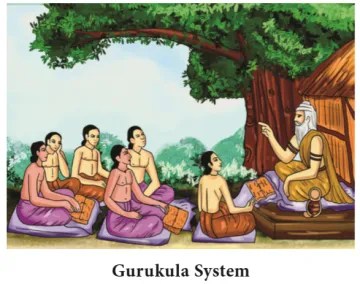
The history of Indian education may be traced back to the Ramayana and Mahabharata. The Gurukula system is another name for the traditional Indian schooling system. There were gurus back then, who are now known as instructors, and shishyas, who are now known as pupils. Gurus and shishyas lived together in Gurukula under one roof till they finished their study. As part of their education, the shishyas were required to assist the guru with all everyday duties. Gurus taught all topics to youngsters from upper social classes, ranging from Sanskrit to Holy Scriptures and mathematics to philosophy. During that period, the Gurukulas concentrated on the practical parts of life. The children were taught in an open classroom in a natural setting. This early school system in India lasted for many years until the modern education system arrived in the nineteenth century.

Lord Thomas Babington Macaulay introduced the modern education system to our country in the early nineteenth century, during the British period. The primary basis of this updated education system was tests and a well-defined curriculum that prioritised topics like science and mathematics while pushing subjects like philosophy and metaphysics to the sidelines. The open classrooms of the Gurukulas were replaced by brick and mortar classrooms. A more formal relationship between the instructor and the learner replaced the core of the guru shishya tie. Examinations were held at regular intervals to assess each student’s progress. The emphasis of the educational system moved from studying to remembering topics in order to achieve high scores in tests.

Problems of Indian Education System:

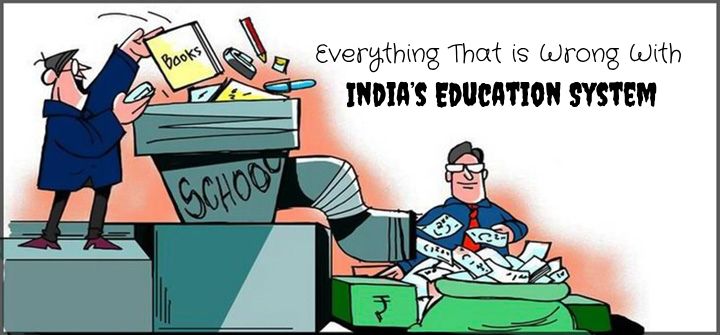
Over time, it has been discovered that there are several flaws in India’s educational system. Instead of comprehending the principles, pupils began cramming and memorizing them. Knowledge takes a second seat as high ranks take precedence. Modern parents have modified their mentality appropriately, and their objective is to guarantee that their children get high grades rather than learning from the ground up.

Private schools and universities are quickly expanding in the country, but the outcomes they generate are far from adequate. It has also been noticed that the quality of teachers has worsened with time. Our examination system is to blame for the large skill disparity. Every year, thousands of engineers and professionals are produced in India, yet only a portion of this number is employed. This is due to the Indian test system’s emphasis on high percentages rather than ongoing comprehensive review.

Research and development, which should be the foundation of our system, are given the least attention. Private schools and colleges are more concerned with the number of students admitted than with the quality of their education. This is the primary reason for the faculty’s and instructors’ lack of skills and expertise. The fact that a single professor is assigned to teach numerous courses demonstrates this.

How Can We Improve the Indian Education System?

First and foremost, we must reform the grading system. Rote learning should be avoided at all costs. Teachers and professors should pay greater attention to students’ analytical skills and evaluate them properly. Instead than just getting excellent grades, there should be a greater emphasis on complete evaluation. Workshops for teachers should be held on a regular basis to keep them up to speed on the newest advancements in the education field. Simultaneously, the curriculum should be restructured in accordance with India’s current educational demands.

The payroll structure of the teachers and the faculties especially in the government institutions should be improved. This step will help in motivating the teachers to develop their skills and they will take a keen interest in grooming or shaping up a student’s life and career. The government and other entities who are associated with the education sector, need to understand the importance of quality of education. Education should be a holistic process that must focus on the overall development of the physical, emotional, social and cognitive skills of a child. It needs to be a slow and cyclic process and must take place gradually to help the child develop into an autonomous, independent and knowledgeable individual.

Conclusion:

An educated person is one who can contribute to the advancement of the economic and social growth of the society as well as the country. The actual purpose of education must go beyond simply providing degrees and certificates to pupils. Education is not a means of earning a living; rather, it is a means of liberating one’s mind and spirit.

Green Marketing

What is Green Marketing?

The technique of advertising products or services based on their environmental benefits is known as green marketing. These items or services may be ecologically friendly in and of themselves, or they may have been created in an environmentally beneficial manner.

Green marketing entails businesses presenting their products or services in a way that emphasises their environmental friendliness. Green-marketing, often known as environmental marketing, is another term for eco-marketing.

When a firm promotes its eco-friendliness, it may include the following products:

  • Produced in a sustainable manner.
  • There are no hazardous or ozone-depleting chemicals in this product.
  • Produced from recycled materials or recyclable.
  • Made from renewable resources.
  • Excessive packing should be avoided.
  • Designed to be repairable rather than discarded.

Companies that are devoted to sustainable development and corporate social responsibility are more likely to engage in green marketing. More businesses are attempting to embrace sustainable business strategies. Businesses realise that they can make their goods more appealing to consumers while simultaneously saving money on packaging, shipping, energy and water consumption, and other costs.

Furthermore, businesses are learning that displaying a high degree of social responsibility may enhance brand loyalty among socially conscious consumers. The primary impediment to sustainable business strategies like green buying is the short-term expense. Going green may generally cost more up front, but will reap significant benefits in the long term.

Why is green marketing important?

There are several hazards to our world, including air and water pollution, food waste, plastic pollution, and deforestation. Chemicals produced by industries may be found all over the place. To help the environment, many businesses consider manufacturing their goods in an ecologically friendly manner. Furthermore, when consumer knowledge of the environment grows, individuals choose to buy eco-friendly items, even if they are more expensive.

Many businesses have begun manufacturing of such items in order to answer client desires and honour our obligations as residents of our planet. Green marketing has a good impact on people’s health and the cleanliness of the environment. This form of marketing encompasses all aspects of a company’s operations, from packaging to public relations.

Benefits of Green Marketing:

Companies may use green marketing to help alter our globe for the better and assist individuals who are conscious of the problem and trying to help the environment. Companies seek to decrease the harmful impact of waste goods on our environment by developing sustainable products. Going green allows you to gain the confidence and loyalty of your consumers. It aids you in the following ways:

  • stand out in the increasingly competitive environment;
  • reduce the negative impact of the production on the environment;
  • save energy, reduce the use of natural resources and carbon footprint;
  • produce recyclable products;
  • improve the credibility of a certain brand;
  • enter a new audience segment;
  • ensure long-term growth;
  • implement innovations;
  • obtain higher revenue.

It’s not enough just to know about the benefits of green marketing since you should also be aware of the strategies. Luckily, nowadays there are many ways to go green. Let’s review them right away.

Green Marketing Strategies:-

You can find a lot of strategies related to green marketing that can help you create a sustainable brand to help our planet. So let’s review some of them.

  1. Sustainable design. It’s not just about a recycling logo on your product packaging, it’s about a full life cycle of the product in mind. You should pay attention to the details: the sources of your materials, the workers involved in the process. Especially, your company should control the amount of waste generated and the way your products are packaged and delivered. You have to consider a lot of things that have an impact on our environment when designing for sustainability.
  2. Responsibility. If you’re giving a thought to going green, your brand should be ready for a profound change. Green marketing is about becoming conscious of pollution. To prove the sincerity of your intentions, rethink your company in terms of ecological and social responsibility and show customers that you care about our planet.
  3. Green pricing. Environmentally friendly products are considered to have a high value due to the increased cost of sustainable design. However, despite the high price, customers are still willing to pay. So if you charge high prices for your eco products, ensure to communicate the specifics to prove that your goods are worth the price you’re asking for. Keep in mind that the greater your mission, the greater your opportunity to gain exposure for your brand’s goods.
  4. Sustainable packaging. The excessive use of plastic is the number one reason for the pollution of our planet. According to Greenpeace, 8.3 billion tonnes of plastic has been produced since the 1950s and only around 9% of this plastic has been recycled. Nowadays consumers are more responsible and try to avoid plastic packaging. That’s why it’s advisable to create recycled or no-plastic packaging for your brand.

Green Marketing Ideas:

  1. Use recycled materials:- Make every effort to use recycled materials and limit the use of virgin items. Recycling decreases raw material refining and processing, which produces significant air and water pollution. It also aids in energy conservation and the reduction of greenhouse gas emissions.
  2. Consider using bulk email service:- Newsletters provide an excellent opportunity to contact your target audience without the need to produce promotional materials. You may use it to preserve trees. Furthermore, email marketing is more successful at getting consumer feedback on your initiatives. You may send as many email campaigns as you need to your client base with SendPulse. You may tell your audience about your decision to manufacture environmentally friendly items. Create your own emails with our drag-and-drop editor.
  3. Upgrade your equipment and vehicles:- If you have adequate funds, it would be ideal to use part of them to purchase new equipment and cars. It is recommended that you switch to electrical models in order to decrease the amount of carbon your firm emits. Our environment is impacted by the vehicles you typically utilize to transport your items. As a result, many manufacturers choose to employ fuel-efficient automobiles. Don’t forget to add your company’s emblem on such a vehicle.
  4. Highlight that your company is eco-friendly:- Inform customers about your brand’s eco-friendly practises, such as utilising energy-efficient office equipment, partnering with vendors who value sustainability, or creating an in-house recycling programme for paper and electronics. Because some clients choose to buy green items, you must tell them about your business methods. It will provide them with a broader range of items from which to choose the finest. A shopper, for example, may discover all the essential information about the brand’s sustainability on the website of Dr. Scholl’s Shoes.
  5. Invest in social media marketing:- Since social media marketing is more environmentally friendly and nowadays isn’t less popular than offline marketing, it would be a great step to invest in it to reach your customers with your innovative ideas and eco-friendly products. For example, The Body Shop’s campaigns against animal testing through its Instagram account.
  6. Support environmental initiatives:- Some companies make donations to help the environment. Some of them even establish their own foundations and organizations. Donating cash helps your firm to support environmental projects, improve our world, and acquire reputation and confidence. People Tree, a company created in 1991 and recognized for its ecologically friendly clothing, supports a variety of activities. The People Tree Foundation is an independent nonprofit that promotes environmental justice. People Tree works with this charity to conserve our world and raise awareness about the challenges that threaten it.

Green Marketing Examples:

TOMS:

The well-known brand for its comfy shoes utilises business to better people’s lives while minimising environmental impact. If you go to the company’s website, you’ll see that over the past five years, TOMS has been attempting to grow sustainable practises in important areas of the business: the brand utilises eco-friendly materials, lowers waste and energy usage, and uses sustainable cotton. Furthermore, the company offers recycled-material packaging to consumers.

Green Toys:

The company assumes that to raise a happy and healthy child, you should provide a healthy environment. This makes everybody think about our earth and take care of it. Green Toys are safe both for kids and the environment as they are made from 100% recyclable materials.

The Body Shop:

The well-known cosmetics company fights animal cruelty by opposing animal experimentation. The company only sells vegetarian goods. This firm is regarded as the first multinational cosmetics company to speak out against animal cruelty.

Boden:

Universal companies, like as Boden, must pay close attention to the sourcing and supply chain since they have a big impact on our environment. That is why the aforementioned firm is committed to sustainability. Boden manufactures their clothing from organic and ecological cotton.

Love Beauty and Planet:

Unilever, a worldwide consumer products business, has several brands, one of which is Love Beauty and Planet. The brand was developed in order to make consumers and the environment more lovely. The business believes that beauty and its environmental effect are inextricably linked. As a result, they created recycled plastic bottles for shampoos, hand creams, and other items.

Avocado Mattress:

Avocado is a brand of environmentally friendly mattresses. The firm is dedicated to employing organic materials in the manufacture of its pillows, mattresses, and bedding. It maintains such policies to protect consumers’ health and to preserve our world from harmful consequences.

Green marketing includes progressive ideas that are so necessary for our planet now, when it suffers from water and air pollution, cruelty to animals during animal testing, and other environmental problems. By going green, your brand enables people to live better, conscious, and responsible lives.

Difference between click wrap, shrink wrap and browse wrap contracts

Introduction:

Have you ever wondered how you could have signed a deal with a corporation as large as Amazon while sitting in your recliner? Have you ever agreed to the terms and conditions of an app before using it? Have you clicked “I accept” without understanding what the contract entails? During this time, the pandemic has spurred innovation and the development of new business models. Everything is now available with a single click, whether you want to purchase meals from Zomato, electronics from Amazon, or groceries from Grofers. Have you ever been curious about how they sign contracts with you? Contract signing is also a click away these days.

What are e-contracts?

Contracts that went overseas and returned with new electronics and a fancy name are referred to as e-contracts. Electronic contracts are contracts that exist in a digital format and are in high demand these days. E-contracts are quite similar to normal contracts; the only difference is that they take place through an online digital means of communication. E-contracts have eliminated the need for middlemen, and merchants may now reach out to buyers directly. The computer programmes that link the vendor with an electronic agent, i.e. the app, and the buyer with an electronic agent are now the middlemen. Essentially, it provides a venue for the buyer and vendor to meet.

Are e-contracts binding and valid?

In India, the Indian Contract Act, 1872, Section 10 states that “All agreements are contracts if they are made by the free consent of parties competent to contract, for a lawful consideration and with a lawful object, and are not hereby expressly declared to be void.” 

Also, Section 10(A) of The Information Technology Act 2000 states that “Where in a contract formation, the communication of proposals, the acceptance of proposals, the revocation of proposals and acceptances, as the case may be, are expressed in electronic form or by means of an electronic record, that such contract shall not be deemed to be unenforceable solely on the ground that such electronic form or means was used for that purpose.”

Electronic signatures are also considered as proof of signing under the Indian Evidence Act of 1882, and Digital Signature Certificates are created when a document is electronically signed, and this certificate is also legally valid and binding under the IT Act of 2000.

Contracts in India are governed by The Indian Contract Act, 1872, and electronic contracts must be legitimate within the law’s interpretation. The following are the fundamentals of electronic contracts:

  1. Offer,
  2. Acceptance,
  3. Lawful consideration,
  4. Lawful object,
  5. Competent parties to contract,
  6. Free consent,
  7. Certainty of terms.

E-contracts are favoured over time-consuming paper documents since they are less expensive and more efficient. Electronic contracts, on the other hand, are more efficient to utilize and have a lot faster response time than long paper works. In reality, e-signatures save a significant amount of time and work. As a result, even if they are digitally signed and executed, e-contracts are legally binding and enforceable. However, this is not the case with click-wrap contracts.

Types of e-contracts:

To mention a few, there are shrink-wrap contracts, click-wrap contracts, browse-wrap contracts, source-code escrow contracts, software development and licence agreements, and many more. The following are three distinct types of contracts:

1. Shrink wrap contracts:-

The name of this contract was inspired by the shrink wrap packaging of CD-ROMs, which were used to deliver software. The licence agreements for various software are known as shrink-wrap contracts. These contacts are the licencing agreements, boilerplate, or terms & conditions that come with the product. When a consumer utilises the goods, he has agreed to the terms of the contract. Shrink wrap is the plastic wrapping that is done on the product’s cover. IT businesses are the most likely to utilise shrink wrap. The most intriguing aspect of this contract is that acceptance may be revoked by returning the merchandise. Furthermore, these days, licencing agreements are not supplied with the product, but rather shown before installing the software.

2. Click wrap contracts:-

Have you ever seen the lengthy paragraphs with comprehensive terms and conditions for utilising an app or programme that no one reads? Those are the Click wrap contracts, to be sure. The party is only a click away from signing this contract, as the name implies. To accept the contract, they only need to click a button or check a box. Essentially, the user is compelled to sign the contract or else he would be unable to progress, and therefore they are not negotiable at all. There are certain legal problems that will be addressed later.

3. Browse wrap contract:-

Have you ever seen a sentence that says something like, “By continuing to use these services, you agree to the terms and conditions” or “By signing up, I agree to the terms of usage”?

Browse wrap contracts may be found at the bottom of the page, and acceptance is presumed if the client uses the application. These contracts are often seen on websites, as well as in various mobile apps and software programmes. They can also be accessed via a hyperlink.

Critical analysis:-

Click wrap contracts and shrink wrap contracts are unilateral and presented as fixed contracts, but browse wrap contracts are significantly different in that they do not compel the customer to accept the contract, but rather presume approval when browsing the website.

Contracts such as click wrap and browse wrap are commonly employed by websites that wish to force their customers to adhere to their terms and conditions. The only difference between the two is how they are mandated. While browse wrap does not need consent, click wrap requires customers to click the “I agree” button.

Contracts with customers can be entered into through browse wrap, click wrap, and shrink wrap. Because it was basic and included all of the necessary information, browse wrap is the earliest and typical form of agreement. Shrink wrap was only discovered in the software business, although in a different form.

The agreement is contained inside the packaging of the shrink wrap contract, and the consumer’s approval of the same is indicated by the opening of the package. The terms and conditions and privacy policy for browse wrap contracts are posted on the website and indicated with a link. By default, the customer has consented to this contract. And, in most cases, the phrase reads something like, “Your use of our site implies your acceptance of our Terms of Use and your commitment to be bound by them.” So, if you disagree with the terms and conditions, simply do not use the website.

A click wrap contract, on the other hand, has more criteria than a shrink wrap or browse wrap contract. The two main components that make a significant difference are that, first and foremost, click wrap contracts include a link, but they also include a notice that summarises all of the legal terms and conditions. Second, they request actionable consent via a pop-up window, such as a “I agree” button or a check box. If a website or app employs this contract, it implies that they demand the consumer’s affirmative consent before proceeding. The consumer can also reject the terms and conditions by clicking on a “Cancel” button.

Conclusion:

The Indian Contract Act, 1872 controls all contracts in India, whereas the Information Technology Act, 2000 governs all electronic transactions. The majority of electronic contracts are provided to customers in the form of click wrap and browse wrap. The term wrap is originated from shrink wrap contracts, in which the terms and conditions were shrunk and wrapped in the product packaging. However, click wrap and browse wrap are only employed in digital form. Shrink wrap may be utilized for both digital and physical applications.

Previously, the owner of a website could choose between click wrap and browse wrap, and both were regarded equally legally, such as privacy policies and terms and conditions, but things have changed.

Finally, I’d like to emphasise that while a browser wrap contract can be used for terms and conditions, legal documents such as privacy policies must be accompanied by a click wrap contract to ensure affirmative permission.

Time Management

“Time and tide wait for no one,” as the saying goes. To be successful in all parts of life, a person must grasp the value of time. People who waste time are those who have not developed their own personality.

What is Time Management ?

  • Time management is the process of properly managing time so that the appropriate amount of time is allotted to the appropriate task.
  • Individuals who use effective time management can assign particular time slots to tasks based on their value.
  • Time management is the process of making the best use of one’s time, which is constantly finite.

Consider which activity is more essential and how much time should be devoted to it. Determine which tasks should be completed first and which may wait a bit longer. Time Management plays a very important role not only in organizations but also in our personal lives.

Time management includes the following:

  • Planning that works:- Make a detailed plan for your day. Make a To-Do List or a “TASK PLAN.” Make a list of the key tasks that must be completed in a single day, together with the amount of time that should be allotted to each task. High priority tasks should be prioritised first, followed by those that do not require much of your attention at the present. Complete all outstanding chores one by one. Do not start new work until you have completed your prior assignment. Tick the ones you’ve already finished. Make certain that you complete the assignments within the time period specified.
  • Establishing goals and objectives:- Working in an organisation without goals and aims is like to the captain of a ship being disoriented at sea. Yes, you’d be lost. Set goals for yourself and make sure they are reasonable and attainable.
  • Establishing deadlines:- Set deadlines for yourself and work hard to do projects ahead of time. Don’t wait for your bosses to ask you every time. Learn to accept responsibility for your job. You are the only one who has the authority to establish deadlines. Consider how much time and how many days you need to commit to a specific activity. Use a calendar to keep track of crucial dates and deadlines.
  • Responsibilities are delegated:- Learn to say “NO” at work. Don’t try to accomplish everything on your own. There are others as well. Accepting something that he knows is tough for him is not a good idea. Employees’ roles and duties must be allocated based on their interests and specialisations in order for them to complete assignments on time. A person who is unfamiliar with something requires more time than someone who is well-versed in the subject.
  • Organizing tasks according to their importance:- Sort the jobs according to their significance and urgency. Understand the distinction between significant and urgent tasks. Determine which chores should be completed within a day, which should be completed within a month, and so on. The most critical tasks should be completed first.
  • Investing the appropriate amount of time in the appropriate activity:- Make it a habit to do the right thing at the right time. Work completed at the wrong time is of little value. Don’t squander a whole day on something that can be completed in an hour or two. Also, set aside some time for personal calls or monitoring Facebook or Twitter updates. After all, a human is not a machine.

For Effective Time Management one needs to be:

  • Organized:- Keep piles of files and mounds of paper away from your desk. Throw away whatever you don’t need. Make folders for crucial papers. Keep the files in their designated drawers, with labels on the top of each file. It saves time that would otherwise be spent on ineffective searches.
  • Don’t misuse time:- Do not kill time by loitering or gossiping around. Concentrate on your work and finish assignments on time. Remember your organization is not paying you for playing games on computer or peeping into other’s cubicles. First complete your work and then do whatever you feel like doing. Don’t wait till the last moment.
  • Be Focussed:- One needs to be focused for effective time management.

Benefits of Time Management:

  • Time management teaches a person to be punctual and disciplined. As a result of efficient time management, one learns to work only when necessary. Individuals should construct a “TASK PLAN” or a “TO DO” List at the start of the day to jot down tasks that need to be done in a certain day based on their significance and urgency against the precise time slots allotted to each activity. A Task Plan provides employees with a feeling of direction at work. An individual understands how his day will unfold and works appropriately, resulting in greater productivity.
  • As a result of efficient time management, one gets more organised. Keeping things in their appropriate placements saves time spent searching for documents, essential files, folders, stationery items, and so on. Individuals maintain their workstations, study zones, cubicles, and meeting places clean and tidy to improve time management. People learn to manage their time well as a result of Time Management.
  • Effective time management increases a person’s morale and confidence. Individuals become well-known in their organisations and among their peers as a consequence of their ability to complete assignments within the time constraints imposed by Time Management. People who appreciate the value of time are the ones who stand out in a crowd. Individuals who complete their task on time are looked up to by others and are constantly the centre of attention.
  • Individuals that stick to a time schedule achieve their goals and objectives in the least amount of time. Effective time management enables staff to fulfil objectives well ahead of deadlines and complete tasks just when they are needed.
  • Effective time management enables an individual to reach the peak of success fast and to remain there for an extended period of time. An employee who works just for the purpose of working makes no impact and is never taken seriously at work. Effective time management is critical to enhancing an individual’s productivity. When people manage their time properly, their output improves significantly.
  • Better time management contributes to better planning and, ultimately, better forecasting. Individuals learn to prepare ahead of time and know where they stand in five years.
  • According to research, those who complete activities on time are less likely to experience stress and worry. Remember that spending time and cribbing afterwards is pointless. Finish any outstanding job on time, and you’ll have enough of time for your friends, relatives, and family members.
  • Time management allows a person to prioritise jobs and activities at work. It is stupid to continue to be overwhelmed. You should not accept everything that comes your way.
  • Time management enables an individual to take a methodical approach.

Difference between Robbery and Dacoity

Although they may appear similar in common usage, they are two distinct crimes under criminal law. What exactly is the legal meaning of robbery and dacoity? What are the requirements for a criminal act to be classified as a robbery or a dacoity? What is the distinction between robbery and dacoity? What are the punishments for these crimes under the Indian Penal Code? When you read the title, these thoughts may arise. This blog will attempt to answer these questions as thoroughly as possible.

Robbery

Robbery is a particular and intensified kind of theft or extortion that implies felonious stealing from the person of another or in his presence against his will, by violence or putting him in terror, and it becomes Dacoity when five or more people co-jointly do it.

When theft becomes robbery— Theft is “robbery” if, in order to commit the theft, or in committing the theft, or in carrying away or attempting to carry away property obtained by the theft, the offender voluntarily causes or attempts to cause death, hurt, or wrongful restraint to any person, or fear of instant death, hurt, or wrongful restraint.

When extortion becomes robbery.— Extortion is “robbery” if the offender is in the presence of the person put in fear at the time of committing the extortion, and commits the extortion by putting that person in fear of instant death, instant hurt, or instant wrongful restraint to that person or to some other person, and induces the person so put in fear then and there to deliver up the thing extorted.

Illustrations:-

(a) A restrains Z and steals Z’s money and diamonds from Z’s clothing without Z’s consent. In this case, A has committed theft and, in order to perpetrate that theft, has voluntarily restrained Z. As a result, A has committed robbery.

(b) A encounters Z on the high roads, brandishes a gun, and demands Z’s pocketbook. As a result, Z gives over his purse. Here, A has extorted the purse from Z by placing him in fear of immediate harm and conducting the extortion in his presence. As a result, A has committed robbery.

(c) On the highway, A encounters Z and Z’s child. A seizes the child and threatens to throw it down a cliff unless Z returns his purse. As a result, Z hands up his purse. Here, A has extorted the money from Z by making Z fearful of inflicting immediate harm to the kid who is present. As a result, A has committed robbery on Z.

Dacoity

When five or more people co-jointly commit or attempt to commit a robbery, or when the total number of people co-jointly committed or attempting to commit a robbery, as well as those present and aiding such commission or attempt, totals five or more, each person committing, attempting, or aiding is said to commit Dacoity.

In the case of Poolan Devi vs. State of Madhya Pradesh, Smt. Phoolan Devi has been in jail since February 12, 1983, when she claims to have willingly surrendered in the State of Madhya Pradesh despite having a criminal record. On this premise, it is argued that the petitioner’s custody for eleven years is sufficient to fulfil the criteria, and that all prosecutions pending against her in Uttar Pradesh courts should be dismissed. According to the petitioner, she is facing around 55 criminal trials in Uttar Pradesh courts for allegedly committing horrific crimes such as dacoity and murder.

Points of Difference between Robbery and Dacoity 

Robbery and Dacoity can be differentiated on the basis of various grounds:

Definition:

Robbery has been defined in Section 390 of IPC and Dacoity has been defined in Section 391 of IPC.

Essential Ingredients:

Essential ingredients of the offence of Robbery are as follows:

  • Theft as described in Section 378.
  • The offender caused or tried to cause the following to certain people: fear of death, bodily harm, or wrongful restraint.
  • Fear of sudden death, instant harm, or instant unlawful restraint.
  • The offender did not do such an act.
  • In order to commit theft.
  • While committing the theft.
  • In taking or attempting to take away the goods.

Essential ingredients of the offence of Dacoity are as follow:-

  • The accused commits or attempts robbery;
  • The number of people committing or attempting to commit robbery, as well as those present and assisting, must not be less than five.
  • All of these people should work together.

Note: The term “conjointly” refers to a coordinated or concerted action by five or more people in the act of committing the offence. In other words, five or more people must be involved in the commission of the crime and must commit or attempt to commit robbery.

Number Of Persons:

In Robbery the number of persons are less than five. It may be committed by a single person.

In Dacoity, the number of persons are five or more.

Seriousness:

Robbery is less serious in nature.

Dacoity is more serious offence than robbery because of the terror caused by the presence number of offenders.

Position of Abettors:

In Robbery, the abettors are liable independently.

In Dacoity abettors who are present and aiding when the crime is committed are counted in the number.

Jurisdiction of Court

In case of robbery, the offence is cognizable, non-bailable, non-compoundable and triable by Magistrate of the first class.

In case of dacoity the offence is cognizable, non-bailable, non-compoundable and triable by Court of Session.

Punishment:

Whoever commits robbery shall be punished with rigorous imprisonment for a term which shall not be less than three years, nor more than ten years and shall also be liable to fine.

Whoever commits dacoity shall be punished with imprisonment for life, or with rigorous impris­onment for a term which may extend to ten years, and shall also be liable to fine.

In the case of Ashfaq vs State, the Supreme Court ruled that weapon with which the offender is armed is a deadly weapon within the meaning of this section, if it is within the vision of the victim and is capable of creating terror in the mind of victim. It is also sufficient to satisfy the word ‘uses’ for the purpose of section 397 IPC.

Position In Highway:

If robbery is committed on the highway, the imprisonment may be extended to fourteen years.

The fact that the Dacoity is committed on the highway does not change the position or punishment. 

Conclusion

To summarise, the concept of robbery requires an accused to have the purpose to deprive another person of property from the start, and to that goal, either harm is caused or a person is placed. Under improper constraint, or it must be proven that the victim was put in immediate danger of death, bodily harm, or wrongful detention when the same conduct is committed by five or more severe offenders.

Consumer Rights and Responsibilities

Consumer Rights:

  1. Right to safety:- Means the right to be protected from the marketing of goods and services that endanger life and property. The items and services acquired should not only suit their current requirements, but also their long-term interests. Consumers should insist on the quality of the items as well as the guarantee of the products and services before making a purchase. They should rather choose quality-marked items such as ISI, AGMARK, and so on.
  2. Right to choose:- Means the right to be guaranteed, whenever feasible, of access to a diverse range of products and services at a reasonable price. In the case of monopolies, it entails the right to expect good quality and service at a reasonable price. It also covers the right to fundamental goods and services. This is because the minority’s unfettered ability to choose might imply a rejection of the majority’s fair share. This right is better exercised in a competitive market when a wide range of items are accessible at reasonable costs.
  3. Right to be informed:- Means the customer has the right to be informed about the quality, amount, potency, purity, standard, and price of goods in order to defend themselves from unfair commercial practises. Before making a choice or decision, consumers should insist on receiving all available information about the product or service. This will allow him to behave intelligently and responsibly, as well as avoid falling victim to high-pressure marketing methods.
  4. Right to consumer education:- The right to gain the information and skills necessary to be an educated consumer throughout one’s life. Consumer ignorance, particularly among rural customers, is largely to blame for their exploitation. They should be aware of their rights and should exercise them. Only then can successful consumer protection be achieved.
  5. Right to be heard:- This means that the interests of consumers will be taken into account in relevant forums. It also involves the right to be represented in different forums established to examine the welfare of consumers. Consumers should create non-political and non-commercial consumer groups that may be represented in various consumer committees formed by the government and other entities.
  6. Right to Seek redressal:- Means the right to seek remedy for unjust trade practises or unethical consumer exploitation. It also includes the consumer’s right to a fair resolution of legitimate issues. Consumers must file a complaint if they have legitimate issues. Many times, their complaint may be of minor importance, but its influence on society as a whole may be significant. They can also seek resolution of their concerns via consumer organisations.
  7. Consumer Protection Act:- An Act to provide for the protection of consumers’ interests and, for that purpose, to create agencies for the prompt and effective administration and resolution of consumer disputes, as well as for matters associated therewith.” (From the Consumer Protection Act of 2019.) “An Act to provide for greater consumer protection and to make provision for the formation of consumer councils and other agencies for the resolution of consumer disputes and for issues connected therewith.”(From the Consumer Protection Act of 1986.) The Consumer Protection Act of 1986 aims to promote and defend customers’ interests against inadequacies and faults in goods or services. It also aims to protect consumers’ rights against unfair or restrictive trade practises. This act was passed in the Lok Sabha on December 9, 1986, and the Rajya Sabha on December 10, 1986, and it was signed by the President of India on December 24, 1986, and it was published in the Gazette of India on December 26, 1986.

Consumer Responsibilities:

  1. Ask Yourself!:-
  • Have you had any issues as a consumer?
  • Have you ever complained about an issue like this?
  • Do you aware that you may seek the help of a consumer organization to safeguard your interests?

2. Be Critically Aware:- The responsibility to be more alert and to question more – about prices, about quantity and quality of goods bought and services used.

3. Be Involved:- The obligation to be forceful – to guarantee that you, as a customer, get a fair bargain. Remember that if you remain passive, you will most likely be exploited.

4. Be Organized:- The duty to join hands and raise one’s voice as a customer; to fight as a group and to build the power and influence necessary to promote and safeguard consumer interests.

5. Practice Sustainable Consumption:- The responsibility to be aware of the impact of your consumption on other citizens, especially the disadvantaged or powerless groups; and to consume based on needs – not wants.

6. Be Responsible to the Environment:- The obligation to be aware of and comprehend the environmental repercussions of our consumption. We must acknowledge our personal and social duty to conserve natural resources and maintain the environment for future generations.

Caste System in India

Indian society is split into several sects and classes. This is due to the existing caste structure in the nation. The origins of the caste system may be traced back to the ancient Vedas, which divided individuals based on varna, or vocation. It has brought about a slew of calamities in society. The government is continuously working to address the system’s flaws and achieve real equality among the people. The caste system is the bane for the Indian society. It divides the Indian society into sectarian groups and classes. Even today, it plays a predominant role in our society despite the growth of culture and civilization.

The official words used in government papers to designate erstwhile untouchables and tribes are ‘Scheduled Castes and Scheduled Tribes’ (SC/ST). However, after noticing that the term ‘Dalit’ was being used interchangeably with the official term ‘Scheduled Castes,’ the National Commission for Scheduled Castes asked state governments to stop using the term ‘Dalit’ in official documents, calling it ‘unconstitutional,’ and to replace it with the term ‘Scheduled Caste’ instead.

The caste system’s origins may be traced back to prehistoric times. While one school of thought distinguishes castes as higher and lower castes based on their origin, another school of thought links the origins of castes to varnas, which classify the caste system based on their roles. Since then, it has been discovered that those with an advantage and a say in the community have taken unfair advantage, resulting in discrimination and exploitation of the group’s weaker members.
People from Scheduled Castes and Scheduled Tribes, sometimes known as “untouchables,” account for one-sixth of India’s population, approximately 160 million people; they face prejudice and segregation.

Evil faces of this system:-

Untouchability:- Many communities are divided by caste, and they are not permitted to cross the line separating them from the upper castes. They may also not drink from the same wells or visit the same tea shops as higher castes.

Discrimination:- In lower caste neighbourhoods, they frequently lack access to power, sanitation, and water pumps. Higher castes are denied access to better education, housing, and medical services.

Division of labour:- They are restricted to certain occupations like sanitation work, plantation work, leather works, cleaning streets, etc.

Slavery:- They are subjected to exploitation in the name of debt, tradition, etc., to work as labourers or perform menial tasks for generations together.

Government Initiatives

The Indian government has passed legislation to abolish untouchability and has implemented several reforms to enhance the quality of life for the poorer parts of society. Among them are the following:

  • Fundamental human rights are guaranteed by the constitution.
  • In 1950, the term “untouchability” was abolished.
  • Act to Prevent Atrocities Against Scheduled Castes and Tribes, 1989.
  • Reservations in locations such as educational institutions, career possibilities, and so forth.
  • Creating social welfare ministries and national committees to look after the interests of scheduled castes and tribes.

The government’s initiatives have provided some assistance to the weakest sectors of society. The metropolitan regions have had a significant influence and have showed some progress. People in rural areas and villages, on the other hand, continue to experience severe prejudice. We still have a long way to go in terms of eradicating and abolishing prejudice based on caste and creed. It now rests on our efforts, and a shift in our attitude will almost certainly result in a permanent shift, bringing equality to all.

Right to Equality

The fundamental fights are guaranteed to protect the basic human rights of all citizens of India and are put into effect by the courts, subject to some limitations. One of such fundamental rights is the Right to Equality. Right to Equality refers to the equality in the eyes of law, discarding any unfairness on grounds of caste, race, religion, place of birth sex. It also includes equality of prospects in matters of employment, abolition of untouchability and abolition of titles. Articles 14, 15, 16, 17 and 18 of the Constitution of India highlight the Right to Equality in detail. This fundamental right is the major foundation of all other rights and privileges granted to Indian citizens. It is one of the chief guarantees of the Constitution of India. Thus, it is imperative that every citizen of India has easy access to the courts to exercise his/her Right to Equality.

Various articles under the Right to Equality are explained as follows:

Equality Before Law :- Article 14 of the Constitution clearly defines equality before the law, ensuring that all citizens are equally protected by the country’s laws. It means that the state would not discriminate against any Indian person based on their gender, caste, creed, religion, or even location of birth. The state cannot deny equality before the law and equal legal defence to any individual on Indian territory. In other words, no one or group of individuals may expect preferential treatment. This privilege pertains not only to Indian nationals, but to all individuals living on Indian territory. The right to social equality and equal access to public areas is explicitly stated in Article 15 of the Indian Constitution, which states that no one should be treated favourably on the basis of colour, caste, creed, language, or other characteristics. Everyone must have equitable access to public sites such as public wells, bathing ghats, museums, and temples. The State, on the other hand, has the authority to make special provisions for women and children, as well as for the development of any socially or educationally disadvantaged class, scheduled castes, or scheduled tribes. This article solely pertains to Indian nationals.

Equality in Matters of Public Employment:- Article 16 of the Indian Constitution states unequivocally that the state must treat all citizens equally in job concerns. In any occupation or position under the State, no citizen must be discriminated against on the grounds of race, caste, religion, creed, descent, or place of birth. Every Indian citizen is eligible to apply for government employment. There are, however, certain restrictions to this right. The Parliament may adopt legislation stating that certain positions can only be filled by individuals who live in a specified area. This qualification is mostly for positions that demand knowledge of the location and language.

Abolition of Untouchability:- Article 17 of the Constitution of India abolishes the practice of untouchability in India. Practice of untouchability is declared as a crime and anyone doing so is punishable by law. The Untouchability Offences Act of 1955 (and now Protection of Civil Rights Act in 1976) states punishments for not allowing a person to enter a place of worship or from taking water from a well or tank.

Abolition of Titles:- Article 18 of the Indian Constitution forbids the state from bestowing any titles. Citizens of India are not permitted to accept titles from other countries. The British administration also eliminated titles such as Rai Bahadurs and Khan Bahadurs. Nonetheless, academic and military awards can be bestowed to Indian nationals. The awards of ‘Bharat Ratna’ and ‘Padma Vibhushan’ cannot be used as a title by the recipient and are not forbidden under the Indian Constitution. Since December 15, 1995, the Supreme Court has upheld the legality of such rewards.

To conclude, the ‘Right to Equality’ should not only remain on papers. This right should be properly exercised; otherwise it will lose its essence if all the citizens of India, especially the weaker and backward classes do not have equal rights and equality before law.

Child Marriage: A Silent Health and Human Rights Issue

Marriages involving a kid under the age of 18 have place all over the world, but are most common in South Asia, Africa, and Latin America. Child marriage is a violation of human rights since it has a direct influence on girls’ education, health, psychologic well-being, and the health of their kids. It raises the chances of developing depression, sexually transmitted infections, cervical cancer, malaria, obstetric fistulas, and maternal mortality. Their children are at a higher risk of premature delivery and, as a result, neonatal or infant mortality. Poverty drives the custom, which is kept alive to secure the financial prospects of females and to strengthen social relationships. Mandating that girls stay in school is one of the most effective ways of preventing child marriage and its health effects. Child marriage, defined as marriage of a child under 18 years of age, is a silent and yet widespread practice.

Factors Driving Child Marriage

Child marriages are motivated by three factors: poverty, the desire to strengthen social relationships, and the idea that it provides protection. Child marriage is more common in impoverished communities. Parents confront two economic incentives: ensuring their daughter’s financial stability and reducing the financial burden girls impose on the family.

Child marriage is, first and foremost, a result of economic desperation. Feeding, clothing, and educating girls is expensive, and they eventually leave the home. The bride’s family receives a dowry as a result of her marriage. The larger the dowry, and the sooner the economic responsibility of rearing the daughter is relieved, the younger the girl.

By marrying their daughter to a “good” household, parents strengthen social links between tribes or clans and raise their social standing. Parents also think that marrying their daughters while they are young protects them against rape, premarital sexual activity, unwanted pregnancies, and sexually transmitted illnesses, including HIV and AIDS.

Causes Of Child Marriage:-

Previously, there was a custom of child marriage, in which children were wedded at a young age. Poverty and girls’ lack of education are the primary causes of child marriage.

When a parent receives a threat from another parent regarding the marriage of their children, they may prepare for child marriage. The illiteracy of the kid’s parents is a major reason of child marriage.

Health Consequences of Child Marriage

Isolation and Depression:-

Girls are transported to their husband’s home after marriage, where they undertake the roles of wife, domestic worker, and, eventually, mother. These new residences may be located in a separate village or town. Because of the large dowry, men are often considerably older than the girls (and so have nothing in common with them), and their new brides are expected to procreate. Polygamy may be permitted in some of these areas as well. As a result, the females experience rejection, isolation, and depression. Some females recognise that survival necessitates adapting to their new surroundings and demonstrating their fecundity. They miss out on their youth and the ability to play, make friends, and be educated.

Risk of Sexually Transmitted Infection and Cervical Cancer:-

Parents think that marrying their daughters at a young age shields them against HIV/AIDS. According to research, marriage before the age of 20 is a risk factor for HIV infection in females. 7 In Kenya, married females are 50% more likely than unmarried girls to contract HIV. The danger is considerably worse in Zambia (59 percent ). In Uganda, the HIV prevalence rate among married and unmarried females aged 15 to 19 years is 89 percent and 66 percent, respectively. These females were infected by their spouses. Because the females were attempting to demonstrate their fertility, they engaged in frequent, unprotected intercourse with their husbands. Their elder spouses had already had sexual relationships or were polygamous. Furthermore, the girls’ virginity and physical immaturity raise the danger of HIV transmission by hymenal, vaginal, or cervical lacerations. 5 Other sexually transmitted diseases, such as herpes simplex virus type 2, gonorrhoea, and chlamydia, are also more common and increase the girls’ susceptibility to HIV. According to research, child marriage increases the risk of human papillomavirus transmission and cervical cancer.

Risks During Pregnancy:-

Pregnant women in malaria-endemic areas were found to be at a greater risk of infection. Half of the 10.5 million girls and women who become infected with malaria die. During their first pregnancy, they are most vulnerable. Not only does pregnancy increase the chance of contracting malaria, but pregnant girls under the age of 19 have considerably greater malaria density than pregnant women over the age of 19. HIV and malaria coinfection rates are highest in Central African Republic, Malawi, Mozambique, Zambia, and Zimbabwe, where more than 90% of the population is malaria-exposed and more than 10% is HIV positive. The presence of both illnesses complicates their management and treatment. HIV-infected individuals are more likely to contract Plasmodium falciparum, a more severe form of the malaria parasite. They are less likely to respond to antimalarial treatment as well. Malaria increases the viral load of HIV and the rate of mother-to-child HIV transmission. Data show that the combination of these illnesses is lethal to a young pregnant woman.

Risks for Infants:-

Moms under the age of 18 have a 35% to 55% greater chance of having a preterm or low-birthweight baby than mothers over the age of 19. When the mother is under the age of 18, the infant death rate rises by 60%. Data show that even after surviving the first year, children under the age of five had a 28% higher death rate in the young moms group. This morbidity and mortality is due to the young mothers’ poor nutrition, physical and emotional immaturity, lack of access to social and reproductive services, and higher risk for infectious diseases.

Land Pollution: Causes, Effects, and Prevention

Many of us associate pollution with smoggy cities and litter-infested seas. There isn’t a single surface or place on Earth that hasn’t been touched by it in some manner in the twenty-first century. While trash and gasoline-powered automobiles are major sources of pollution, there are many additional factors to consider. To begin, it is beneficial to grasp the fundamentals of pollution. Pollution happens when hazardous compounds are introduced into the ecosystem, causing harm to the quality of land, water, and air. This essay will mostly address land contamination.

What is Land Pollution?

Land pollution is the degradation of the earth’s land surfaces, both above and below ground level. The buildup of solid and liquid waste items that pollute groundwater and soil is the reason. These waste products are commonly known as municipal solid waste (MSW), which comprises both hazardous and non-hazardous trash.

When trash is dumped on land, the permeability of the soil formations beneath the waste can either raise or decrease the danger of land contamination. The greater the permeability of the soil, the greater the likelihood of land contamination. That is why the Texas Disposal Systems Landfill, located just outside of Austin, Texas, was constructed in an optimal location. The danger of soil contamination has been considerably reduced by using the natural shale and clay in the ground.

Solid garbage was not collected with the environment in mind until the mid-twentieth century. Previously, garbage was generally dumped on the ground in “open dumps,” which led in rodents, mosquitoes, and other disease infestations, as well as terrible odours and windblown debris. Nonetheless, while there are now much better garbage disposal techniques, there are numerous additional variables contributing to and exacerbating the problem.

The Main Causes of Land Pollution

Litter:-

Littering, or inappropriate trash disposal, is sadly all too frequent. Every cigarette butt thrown on the ground or food wrapper thrown out a car window is a little contribution to a massive problem. 76 percent of litter discovered on highways comes from pedestrians and automobiles, according to Keep America Beautiful. However, not all litter is deliberate. Unsecured objects that fall off the back of cars or out of garbage containers also contribute significantly to the volume of litter. Litter, whether deliberate or unintentional, pollutes the environment by releasing chemicals and microparticles as it degrades.

Urbanization and Construction:-

While urbanisation does not in and of itself cause littering, the presence of a high number of people living, generating garbage, and littering in a densely populated region ultimately leads to land contamination. Construction operations are being carried out to accommodate this growing population, resulting in enormous amounts of waste materials such as metal, plastic, wood, and bricks. When these items are not disposed of correctly, they contribute to land contamination in that region.

It is critical to collaborate with partners who provide complete builder solutions to develop cost-effective construction recycling and trash disposal strategies in order to assist decrease the environmental impact of building sites.

Mining:-

Mining is the extraction of minerals and other geological elements from the earth for a variety of reasons, including but not limited to the production of fuel for vehicles, the generation of electricity, and the sale of commodities such as gold and silver. However, this extraction and the methods utilized deplete the earth’s natural resources while also causing harm and pollution. That is why discovering energy options (such as solar and wind power) that are not mined from the earth’s surface is critical in helping to decrease land pollution in the future.

Agriculture:-

Agriculture is essential to both daily living and the economy as a whole. It can, however, have far-reaching consequences for the environment. Agricultural pollution occurs when contaminants releases into the environment as a byproduct of raising animals and cultivating food crops, and the contamination is extensive.

Effects of Land Pollution

  1. Water that should not be consumed.
  2. Polluted soil, resulting in a loss of agriculturally productive land.
  3. Climate change is causing a slew of severe consequences, such as flash floods and erratic rains.
  4. Wildlife species peril and extinction.
  5. Habitat shifting, in which certain species are compelled to depart their natural habitats in order to survive.
  6. An rise in wildfires as a result of polluted regions being extremely dry.
  7. Increased air pollution as a result of trash burning.

How to Prevent Land Pollution

  1. Using Fewer Pesticides and Chemicals in Agriculture:-

Given that pesticides and chemicals used in farming and agriculture contribute significantly to land pollution, identifying alternatives will aid in reducing the environmental effect. Farmers, for example, might employ natural components by shifting away from bio-fertilizers and toward manure.

Individually, supporting environmentally aware, local farmers at your local farmer’s market or grocery shop can assist farmers with more sustainable agricultural techniques grow their businesses. Another alternative is to contribute to or volunteer in your neighborhood’s urban garden.

2. Reforestation:-

Reforestation is the process of replacing trees in an area. This may be required in places where there have been wildfires, or where trees have been cut down and milled. This procedure serves to bond the soil, which protects it from land contamination and helps to avoid soil erosion and floods.

3. Reduce, Reuse and Recycle:-

There are several things we can do as individuals to decrease our contribution to land contamination. One of the simplest ways to accomplish this is to reuse or recycle goods so that you are not producing trash from a substance or item that still has a purpose. Recycling has never been easier, thanks to more recycling containers in many places and greater knowledge about what may be recycled.

If you want to make a difference in your town, check out our blog post on how to be an environmental steward in your community.

What is a Wagering Contract?

When we talk about contracts, we come across many different sorts of types of contracts, such as quasi-contracts, implied contracts, expressed contracts, and many more. Wagering Contracts are one form of contract. A wagering contract is one in which two essential parties enter into a contract and in which the first party promises to pay a certain quantity of money to the second party if a certain event occurs in the future and the second party agrees to compensate the first party if that event does not occur. The presence of two parties who are of sound mind to benefit or lose is the essential foundation of a wagering arrangement. In layman’s terms, a Wager is a bet or a gamble. The phrase wager refers to betting in its most fundamental sense. Section 30 of the Indian Contract Act expressly states that wagering agreements are invalid. The section was structured as follows:

Carlill vs. Carbolic Smoke Ball Co. (1993): This is the first case law that has described a wagering contract in the most explicit and comprehensive manner. It is written as follows:

“One by which two persons professing to hold opposing views on the issue of a future uncertain event mutually agree that, depending on the determination of that event, one shall win from the other, and that other shall pay or hand over to him, a sum of money or other stake; neither of the parties having any other interest in that contract than the sum or stake he will win or lose.” It is not a wagering contract if any party can win but cannot lose or can lose but cannot win.”

As a result, all wagering agreements are contingent agreements, but not all contingent agreements are wagering agreements. Thus, in layman’s terms, a wagering contract is a futures contract that is dependent on the occurrence of a certain event in the future. Depending on the conditions in the future, a wagering contract may or may not be implemented.

HISTORY OF LAW RELATED TO THE CONCEPT OF WAGER:

Since the beginning of time, when there were instances in British India, the law governing wagers was common law in England, but in 1848, the Wagers Avoiding Act came into effect. Previously, it was thought that any wagering activity may be upheld if it did not violate the emotional emotions of a third party and was not contrary to public policy. When we consider the notion of gambling and betting, we know that this type of activity existed in our nation from ancient times, but it was not accepted in England and was shunned. These sorts of acts are prohibited and are not protected by the purview of our Indian constitution under Article 19 or Article 301 since they are not expressly listed in the Indian Contract Act or Hindu law in general.

TYPES OF WAGER:

  1. Moneyline Betting:

This is one of the most straightforward kinds of betting. Money line betting is relatively easy because it is only done on sports contests and games and is only centred on the outcome/result of the match. This form of betting is illegal, and it is most prevalent in cricket, particularly in the Indian Premier League.

2. Spread Betting:

This sort of wager/betting occurs when the person making the bet on the most favoured team competing in the match to win by a specific margin or on the team considered as the underdog to win or even if it loses by a very tight margin.

3. Over Betting:

This form of betting is done in a game where the better places his wager on the total number of points earned or total number of goals scored by both sides through a combination of a specific number and which is completely a speculative event over which no one has control.

4. Under Betting:

This type of betting takes place when the better places his bet on the condition that the combination of the total number of goals and pints that are scored by both the teams will be less or under a certain limit. This type of wager is also related to the final outcome of the game.

5. Prop Betting:

This type of betting is very unique and creative in nature because it is unrelated to the game’s final outcome. In this case, the better bets on something like the first half of the game or whether there will be a super over in a cricket match, for example. As a result, this is also known as prop betting.

ESSENTIALS OF A WAGERING CONTRACT:

  1. Equal opportunity:

One of the most important aspects of a wagering contract is that both parties have an equal probability of winning or losing based on the result of the future event.

2. Uncontrollable:

These are hypothetical occurrences that may or may not occur, and they should be beyond the power of either side, since if any party has influence over it, it is not a wager.

3. No Outside Interest:

Both parties should have a single interest in the event’s profit or loss, and there should be no outside or personal interest associated with the uncertain occurrence, since this will also not amount to wager.

4. Dependency:

The wager agreement is entirely reliant on the outcome of the projected event, whether it be compared to the past, present, or future.

5. Promise:

The wager contract should include an important provision stating that the parties commit to pay the money or money’s value to the other party if the event occurs, and this should be agreed upon by both parties.

Types Of Marriages In India

Marriage ceremonies in India are especially spectacular because of the colour, festivity, traditions, and cuisine. People from all over the world travel to see Indian weddings. The vast variety of Indian wedding rites is what makes them so unique. The rituals followed in the northern portion of India differ from those followed in the southern part of India; the east and west have various types of weddings. In India, there are several sorts of weddings, and it is this diversity that we will focus on in this essay.

History Of Marriages In India

If we are going to talk about the many forms of weddings in India, we must first look at the history of marriages in India. India is a country that has traditionally emphasized arranged weddings, a tradition that is now practised in every Indian group, regardless of religion, caste, or status. Previously, two families agreed on the match, and couples were generally married in their youth so that they could adjust better. Mohandas Karamchand Gandhi married Kasturba Gandhi when he was 13 years old, and they were married for 62 years.

The practise of child marriage did not exist in ancient India, but it began later when there were invasions and patriarchy began to rear its ugly head. In reality, in India, rulers organised Swayamvars for their daughters so that they may marry from among the best, ostensibly giving a woman the option. Although author Chitra Banerjee Divakaruni makes it clear in her book The Palace of Illusions that Draupadi was in love with Karna and would have garlanded him if she had the choice, she was forced to tell him that he was not a Kshatriya and could not participate in the Swayamvar because she had to serve her destiny, which was with the Pandavas.

How Many Types Of Marriages Are There In India?

It is difficult to specify the whole range of marriage ceremonies in India. Because there is so much variety within the scope of Hindu marriage. Needless to mention, several sorts of marriage rituals exist in India. Despite the fact that they are all Hindu weddings, a Bengali wedding is not the same as a South Indian or a Maharashtrian wedding. Although the faith is the same and the mantras spoken are identical, the ceremonies, time of wedding, and dress are all extremely different. If we are talking about sorts of weddings in India, we can state that there are nine forms of marriages in our nation.

  1. Hindu Marriage

The Hindu marriage ceremony adheres to Vedic customs, including the three primary rituals of Kanyadaan, Panigrahana, and Saptapadi. The first involves the father giving the bride away, the second has the bride and groom linking hands in front of the fire, and the third involves completing seven circuits around the fire. However, not all rites are observed at every Hindu wedding. Different groups in Kerala and Tamil Nadu, for example, do not have a technique of lighting a fire, and their weddings often begin early in the morning and end by midday. Some rites, such as turmeric ceremony, take place in the morning in Bengal, while the major wedding ceremony takes place in the evening, according to the auspicious hour stated in the Almanac.

North India has the most elaborate wedding rites, which begin with the sagai (engagement) and can last for days when garlands are exchanged, a havan is performed, and the woman is forced to wear the Mangal Sutra. The application of vermillion is more important in East India, and the Lakshmi Narayan Puja is very important in Maharashtra.

All Hindu marriages are registered under the Hindu Marriage Act, 1955 or the Special Marriage Act, 1954.

2. Christian Marriage

Christian weddings are performed in a church by a minister or a priest under the Indian Christian Marriage Act of 1872. The beauty of Christian marriage in India is that a bride frequently chooses to wear the clothing of her culture rather than a gown. So, in Christian marriages in India, the bride wears traditional dress such as sarees, mekhlas, and traditional sarongs, while the groom often wears traditional attire with his best men. Among the types of marriages in India it is a Christian marriage that is a happy amalgam of Indian and Western cultures. The tradition of the feast, the toast and the bouquet are all followed sprinkled with indigenous traditions.

3. Sikh Marriage

Sikh weddings were formerly recorded under the Hindu Marriage Act, but are now registered under the Punjab Sikh Anand Karaj Marriage Act 2018. The Sikh wedding ceremony is basic. It is held in the Gurudwara. Before that, a ceremony called milni is held in which the bride’s and groom’s family meet. The bride and groom then take pheras around Guru Granth Sahib after reciting four short stanzas from their religious texts (Holy Scripture). The bride and groom dress up in extravagant traditional costume, and delicious food is served throughout the ceremonies.

4. Muslim Marriage

A Muslim marriage is governed by the Muslim Personal Law (Shariat) Application Act of 1937. In India, Muslim marriages adhere to Islamic customs. The bride and groom may choose to wear traditional Indian clothes, however the religious ceremony is typically carefully adhered to Islamic standards. The Maulavi performs the wedding ceremony known as the Nikah. Kanydan is also present during a Muslim wedding, followed by the reading of the Koran, the groom’s proposal, and the bride’s acceptance. Biriyani is a traditional wedding dish among Indian Muslims.

5. Parsi Marriage

The Parsi Marriage and Divorce Act of 1936 governs the legalisation and registration of Parsi marriages. Some of the traditions included in a Parsi marriage include the exchanging of silver coins between the bride’s and groom’s family. Following this ritual, the woman assumes the husband’s name. Three days before the wedding, the festivities continue, and on the fourth day, a wedding procession arrives to the bride’s residence, where the marriage is solemnised.

Following the wedding, the couple must eat from the same plate to symbolize their unity.

6. Buddhist Marriage

A Buddhist marriage is most likely the simplest kind of marriage in India. The Special Marriage Act of 1954 governs Buddhist marriages. There are no rigidly prescribed rites or elaborate ceremonies to be observed. True to its religious precepts, a Buddhist marriage stresses spirituality and the fulfilment of vows. A monk or Rinpoche generally performs the engagement solo. On the wedding day, the bride and groom, along with their respective families, attend the temple before the wedding ceremony, which is held in a different location.

A Buddhist wedding is a modest gathering to which only a few close friends and family are invited.

7. Jain Marriage

Buddhists and Jain can register their marriages under the Hindu Marriage Act of 1955 or the Special Marriage Act of 1954. These are two sorts of marriage acts that individuals of many religions might employ. Jain marriages have numerous rites that are comparable to Hindu nuptials, such as pheras and kanyavaran, but they also include a variety of Pujas and aarti.

The most significant tradition is that after the wedding, the bride and groom travel to a Jain Temple with their family members and feed the destitute there.

8. Court Marriage

Inter-caste and inter-faith marriages are a common occurrence in India. Many people who wish to skip religious rites choose judicial marriage under the Special Marriage Act of 1954. A 30-day notice is provided to the registrar, along with the bride and groom’s residence and birth information. Then, on the appointed day, they must appear at the registrar’s office with three witnesses to sign the legal paperwork and read the vows.

9. Mixed marriages

Many brides and grooms follow the rites of both faiths to solemnise their weddings in the case of inter-faith marriages. These marriages are governed by the Special Marriage Act of 1954, although it is customary to have a church wedding in the morning followed by a havan in the evening.

In a country with as diverse customs as India, mind-boggling rituals and traditional rites are unavoidable. However, there are primarily nine sorts of weddings that are widely solemnised in modern India, about which we just reported extensively.

Elder Abuse

Life is a really wonderful gift from God, and one of the most essential aspects of it is aging. An individual’s life is divided into stages such as infancy, childhood, puberty, maturity, middle age, and old age. We are all busy in the early phases of our life, discovering the lovely hues of youth, learning new things, and are more inclined toward self-development. Then we approach adulthood and begin to organize our life, whether it’s our employment, marriage, children, family requirements, and so on; the list is infinite. Then there’s old age, which is the most relaxed and serene time of our life. It is that point in our lives when we can sit back and reflect on our lives, our successes, our ups and downs, and feel satisfied.

As we become older, we start to notice certain changes and may develop some impairments that are quite typical for our age. People of this age need to be helped in any way imaginable, whether emotionally, financially, physically, or cognitively. However, the unfortunate fact is that some people in today’s world fail to grasp such basic human foundations. The number of incidents involving children’s misunderstanding of elderly people and their needs is growing, and in many cases, this leads to elder abuse.

Indian Scenario

India is a land of ethics and feelings, where we respect each other’s emotions and believe in peaceful coexistence. In India, where we cherish and accept a value-based, joint family system, old age has never been an issue. Indian culture has always been courteous and supportive of elders. With that in mind, elder abuse was never regarded as an Indian issue, but rather as a Western one.

However, the coping abilities of both younger and older family members are now being tested more frequently than ever before. There are occasions when younger family members exhibit undesirable conduct, which the elder family members see as odd and causes them to feel ignored and discouraged.

People used to regard their parents with the greatest reverence and worship them as gods, but the harsh realities of today’s society are quite different. Children perceive parents as a burden that no one wants to bear. This is why many parents are found in deplorable situations walking around or placed in old age facilities. Today’s scenario is extremely paradoxical and awful, with animals receiving more love and [1]affection than people and humans being treated worse. It’s revolting how brutally parents are abandoned by their children.

They are the ones that work diligently their entire lives to see their children succeed and selflessly offer all within their means to make them a civilized human being. Our parents experience various challenges and impairments as they age, which is quite natural, and all they want is to be loved and supported in the same manner they did for their children, but when the opposite situations arise, these children appear to avoid their duties.

The current generation’s self-centered mentality and steady movement toward Western culture has undermined the hold of traditional values and ethics. One of the other reasons for such conduct is people’s rising greed and desire to be wealthy and powerful. As a result, they participate in elder abuse and emotionally and psychologically manipulate their parents in order to compel them to give up their property and other possessions in favour of their children.

Elder Abuse: Meaning And Types

Elder abuse (also known as elder mistreatment, senior abuse, abuse in later life, abuse of older adults, abuse of older women, and abuse of older men) is defined by the World Health Organization (WHO) as a single or repeated act, or lack of appropriate action, occurring within any relationship where there is an expectation of trust, that causes harm or distress to an older person.

It is not necessarily essential for abuse to be committed by children; it may be committed by anybody, such as a spouse, family member, or any other person on whom an old person is reliant; nonetheless, abuse by children is the most serious issue that must be addressed (including their spouse). The phrase abuse looks to be quite easy, but it is actually a highly complicated term with a wide range of meanings. There are several forms of abuse, including physical abuse, mental abuse, sexual abuse, financial abuse, and neglect. An old person may be subjected to the following types of abuse:

  1. Physical abuse: Elder physical abuse is defined as the purposeful use of force against an older person that results in bodily injury ranging from physical pain to death.
  2. Emotional abuse: Psychological and emotional abuse are purposeful behaviours that cause an older mental agony, fear, or suffering. Insults, seclusion, humiliation, intimidation, and name calling are all examples.
  3. Elder sexual abuse: is defined as any type of coerced or unwanted sexual encounter with an older adult. Some of the indicators of sexual abuse include anus or genital bleeding, newly transferred sexually transmitted infections, anus or genital discomfort, pelvic injuries, and so on.
  4. Elder financial abuse: is the unlawful, unapproved, or inappropriate use of an older person’s resources by someone in a trusting relationship with that individual. This type of abuse can occur with persons who are unable to grasp their financial accounts or conditions due to advanced age.
  5. Neglect: Senior neglect occurs when the person in charge of the older’s care fails to safeguard the elder from harm or fails to satisfy the elder’s needs in a way that results in or risks significant injury.

Neglect is not an honest accident:

It is the result of carelessness or a lack of regard for the wellbeing of an elder. It may include depriving elders from basic needs like- shelter, clothing, health upkeep or nutrition needs.

Indian Provisions Regarding Elder Abuse:

The point is, what are we doing to address this issue, and do we have any provisions in place in our country? The following acts and legislation have been introduced in this regard:
The Parental Maintenance Act of 2007 – This law has been modified twice, once in 2013 and again in 2018. The original Act stated that sons had a legal responsibility to care for their parents. Following a 2013 modification, parents might file a complaint against their sons, and the boys could be held legally liable for not supporting their parents. Daughters and sons-in-law were also deemed liable for supporting their parents under the 2018 modification.

The Parents and Senior Citizens Act (2007) makes it a legal requirement for children and legal guardians to pay maintenance to elderly people. It enables state governments to establish and operate old age homes in each district. Senior persons who are unable to sustain themselves might ask for a monthly stipend from their children. Children or heirs may be penalized if they do not provide support to elderly people. The punishment may be a Rs.5000 fine, three months in jail, or both.

Whereas it is critical to address the new law that was proposed in 2019 to alter the contents of the previously stated bill. The Parents and Senior Citizens Amendment) Bill 2019 aims to provide for the maintenance and welfare of parents and senior citizens by ensuring their basic needs, safety and security, the establishment, management, and regulation of institutions and services, and the rights guaranteed by the Constitution. It also mentions eliminating the Rs10000 cap and appointing nodal police officers for senior people at each police station and district-level special police unit, as well as a helpline for senior persons.

While many faiths have varied measures to safeguard the rights of older persons, some are extremely specific, such as the legislative provision for parental support under Hindu personal law included in Section 20 of the Hindu Adoption and Maintenance Act, 1956. Similarly, Muslim laws, Christian laws, and even Parsees laws have similar clauses. The Indian Constitution has provisions to protect the rights of individuals beyond the age of 60. Because these articles are part of Chapter IV of the constitution, which discusses the Directive Principles, they cannot be enforced by a court of law, as mentioned in Article 37; nonetheless, they serve as the foundation for any legislation.

Article 41 of the Constitution guarantees elderly persons the right to work, education, and public support. It also requires the state to protect these rights in instances of disability, old age, or illness. Meanwhile, Article 46 states that the elderly’s educational and economic rights must be maintained by the state.

Conclusion:

Some societal changes are unavoidable, such as raising older people’s understanding of their rights and the types of assistance available under various laws. Furthermore, politicians must broaden their view on the term “NEEDS,” since they frequently fail to understand the social “needs” of belongingness, preserving power, and a position of significance in the family, a set of needs that frequently go unsaid.

Stress: a social issue

We thrive on performance, competitiveness, and perfection in today’s culture, which leads to an insidious increase in stress. Stress produces harm that is frequently underestimated, and it is a social phenomena that should be thoroughly investigated and assessed.

What is Stress?

Stress is our bodies’ reaction to pressure. Stress may be caused by a variety of conditions or occurrences in one’s life. It is frequently triggered when we encounter something novel, unexpected, or threatening to our sense of self, or when we believe we have little control over a situation. We all react differently to stress. Our capacity to cope can be influenced by genetics, early life experiences, personality, and social and economic conditions. When we are stressed, our bodies create stress hormones, which cause us to fight or flee and activate our immune system. This enables us to react swiftly in risky circumstances.

This stress reaction can be beneficial at times: it can help us overcome anxiety or pain in order to run a marathon or make a speech, for example. When a stressful incident is done, our stress hormones typically return to normal soon, and there are no long-term consequences.

However, excessive stress might have a detrimental impact. It can keep us in a constant state of fight or flight, leaving us exhausted or unable to cope. This can have a long-term impact on our physical and emotional health.

Stress: The Bane Of Modern Existence

Our forefathers used to claim that “work is health,” but we now know that this is no longer the case. People are subjected to unprecedented levels of stress in today’s society and job. The symptoms of stress are everywhere, and the repercussions are diverse. The stress we feel on a daily basis is mostly produced by a number of phenomena that are inherent in today’s culture, including, but not limited to:

  1. Increased workload to boost productivity improvements
  2. Continuous pursuit of perfection;
  3. Obsession with winning;
  4. Balancing job, personal life, and family life;
  5. Significant shifts in attitudes and societal standards.

Stress affects all social groupings and age groups; no one can fully escape it. However, depending on their personal, psychological, professional, and health background, some people are more severely affected by its repercussions.

What is the source of our anxiety? Stress is the body’s natural reaction to everyday occurrences. There are several sources of stress and numerous strategies to deal with it. Fundamentally, stress is a human defensive mechanism, but it is critical not to allow it to take control.

Stress may originate from a variety of factors, including physical, psychological, emotional, social, and so on. A stressful occasion might be either joyous or sad (wedding, birth, travel, etc). (getting fired, going through a divorce, the loss of a loved one, etc.). The stimulus might be modest or large, and it can be brief or persistent. Because we do not all react the same way to stressors, it is critical to understand your stress triggers in order to effectively deal with them.

Signs of Stress:-

When confronted with a stressful circumstance, the human body responds by producing a variety of chemicals, including adrenaline. Stress can induce symptoms such as palpitations, a lump in the throat, worry, discomfort, and so on in its early stages. These symptoms are generally transient. Uncontrolled stress, on the other hand, may be damaging to one’s well-being and health over time; symptoms can then be physical, emotional, psychological, or behavioural in character. Here are a couple such examples:

  • sleep disorders
  • muscular tension
  • digestive disorders
  • irritability
  • agitation
  • depression
  • anxiety
  • burnout
  • increased isolation
  • relationship problems
  • work absenteeism
  • lower performance
  • loss of self-esteem

Aside from such obvious short-term consequences, stress leads to the development of a number of chronic illnesses, including heart disease, vascular disease, and cancer.

Obviously, stress has a bad impact. However, when correctly handled, it may have a positive impact. Indeed, it can assist to improve attention, contribute to creativity, enhance productivity, and aid in the development of new abilities. However, in order to do so, you must first learn to regulate and manage it.

How you might behave:-

  1. Withdraw from others or lash out at them
    be unable to make a decision or be flexible
    be moved to tears
  2. have difficulty falling or staying asleep
  3. encounter sexual issues
  4. More than usual, you smoke, consume alcohol, or use drugs.

How can you help yourself?

  1. Recognize when stress is a problem.
  2. Review your lifestyle.
  3. Build supportive relationships.
  4. Eat healthily.
  5. Be aware of your smoking and drinking.
  6. Exercise.
  7. Take time out.
  8. Be mindful.
  9. Get some restful sleep.
  10. Don’t be too hard on yourself.