BIODIVERSITY IN INDIA

India is one of the world’s most biologically and culturally diverse countries. It is also one of the poorest in terms of per capita income. The existence of mass poverty and enormous scale lies upon two important facts; first that the country exports natural products that command highly prices in overseas market, such as Basmati rice and Darjeeling tea, as well as products like medicinal and aromatic plants that are major inputs in rapidly expanding industries, and second that India has achieved significant capabilities in Industrial chemistry and life sciences. India is one of the world’s mega diversity countries. It is ranked ninth in the world in terms of higher plant species richness. At the ecosystem level, India is also well endowed, ten distinct bio-geographic zones. India is considered to be the center of origin for the following crop species, pigeon, eggplant cucumber, possibly cotton and sesame. But for millennia, numerous other crop species have been introduced to India and adapted to localized conditions. As a consequence of both the diversity of these conditions and of the various ethnic populations living in India, the country has become and important center of diversity of a great many domesticated species, including various cereals, millets, legumes, vegetables, temperate tropical fruits, fiber crops, medicinal and aromatic plants.

MORE SPECIFICALLY, THE THREATS ARE INTER ALIA DUE TO THE FOLLOWING:

  1. Large scale development products such as mining and dam and road construction
  2. Conversion of biodiversity rich ecosystems, such as tropical forests to farm lands and industrials and residential sites
  3. Poaching of wild life and over harvesting of forest products

While there has been no comprehensive assessment of biodiversity laws, 3 of 4 mammal species have been lost since 1950, and so also 15-20 plant species have become extinct. In one district of the state of Andhra Pradesh Odessa and West Bengal, 95% rice varieties previously cultivated are no longer found. Although the causes are various, the situation is primely due to the replace of low input poly cultural agricultural system with higher input monocultures.

ENDANGERED PLANTS AND ANIMALS: Due to rapid habitat loss, and over exploitation in particular large number of epiphytes, herbs, climbers, disappear from their native regions over the years. Many orchids, tree, ferns, medicinal herbs of hills, cicadas were considered as major endangered plant species. Identically large number of mammals, birds, reptiles, corals, and fishes were demarked as threatened in our country. A good number of conversation sites were declared for protection of such endangered plants and animals. It includes country wide 28 tiger project sites, several crocodile conservation programs, elephant conservation sites and various bird conservation sites. International union for conservation of nature categorized different pretend species of the world for the better recognition and subsequent action plan for their conservation. On the basis of survey carried out by botanical survey of India and also by zoological survey of India, the red data book with respect to endangered plants and animals were already published.
EDUCATIONAL TECHNOLOGY: AN OVERVIEW

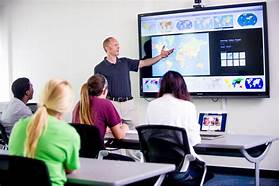
Educational technology is a field of study that investigates the process of analyzing, designing, developing, implementing, and evaluating the instructional environment and learning materials in order to improve teaching and learning. it is important to keep in mind that the purpose of educational technology is to improve education. we must define the goals and needs of education first and then we use all our knowledge, including technology, to design the most effective learning environment for students. instructional technology can also be seen as a process of solving educational problems and concerns, which might include motivation, discipline, drop-out-rate, school violence basic skills, critical thinking, and the whole list of educational concerns. first the problem is identified an analysis of the factors of the problem is made, and possible solutions to the problem are presented. then, the student population and the curriculum are analyzed. the next step is to select the most appropriate instructional strategies for the particular situation. next instructional materials and resources are selected that are suitable for the curriculum and the mode of instruction chosen. finally the program is implemented, evaluated, and revised as needed in order to meet the stated goals for school improvement.

The learning materials today have greatly expanded because of the various technological advances. Instructional materials include more conventional materials, such as the black board, overhead projectors, televisions, VCRs, overhead projectors, slide projectors, and opaque projectors, as well as newer materials, such as the computer, various software applications, LCD projectors, camcorders, digital cameras, scanners, the internet, the satellite, interactive T.V, audio and video conferencing, artificial intelligence, and so on. The issue of what this materials are and how to use them is a first step. But we must quickly begin to discuss how these materials should be used and how they affect the curriculum and instruction in our schools. Technology can be used to perpetuate teacher-led, knowledge-based learning approach or it can be used to help us implement a student-centered, constructivist, and progressive approach. We need to help teachers to understand the bigger picture of technology can revolutionize education. Remember in all of these areas of educational technology that the goal of improving a specific aspect of teaching and learning comes first. Technology is selected to help us meet these goals.

SOFTWARE TYPES: Drill and practice, tutorials of computer based instruction, and simulations. Teachers need to know what these are as well as why, when, and how to incorporate them into their teaching

EQUIPMENT USE: Digital camera, scanner, camcorder, CD writer, computer, modern, printer, VCR, LCD projector, laser-disk player. Teachers need to know how to use them and how they can be used in a classroom.

AUDIO AND VIDEO CONFERENCING: Understand what these are and how to incorporate them into educational process. Understand various teaching materials that best utilize these tools. Understand how these can affect how we learn.

CLASSROOM CONFIGURATIONS: How to best equip and utilize technology in the classroom. How to use the technology in the classroom. Classrooms need multimedia technology in each classroom. Teachers need to be able to quickly use this equipment and access software when needed.

WEB PAGES: How to create web pages, how to use them in their teaching, and why they should use them. Web pages can have many functions for displaying information and creating student interaction. Web pages can also be used for helping students be more independent learners.

SOFTWARE REVIEW AND EVALUATION: How to select appropriate software for specific grade levels and content areas, how to evaluate effectiveness of this software, and what types of software’s are available. Teachers need to be thoroughly familiar with many of the software options available and understand when and how to use them in the classroom.

NEW SOFTWARE AND HARDWARE: Teachers need to keep up with what types of instructional materials and tools that are being developed and how these new materials might be useful to them as teachers. They need to learn how to use these new materials and how to incorporate them into their teaching.

EFFECTS OF PROCESSING AND STORAGE OF FOOD

Some vitamins are more stable than others. Water soluble vitamins are more unstable than fat soluble vitamins during food processing and storage.

The most unstable vitamins include:

The most stable vitamins include:

PROCESS AFFECTING FOOD NUTRIENT CONTENT:

A variety of things can happen during the growing, harvesting, storage and preparing of food that can affect its nutritional content. Process that expose foods to high levels of heat, light or oxygen cause the greatest nutrient loss.

FERTILIZERS: Most plant crops are produced with the aid of fertilized soils. High use of nitrogen fertilizers tends to reduce Vitamin C content in many fruit and vegetable crops. It does not seem to make any difference to the plant’s nutrient value whether the fertilizer is organic or not

BLANCHING: Before the food is canned or frozen, it is usually heated very quickly with steam or water. The water soluble vitamins, including vitamin C and B complex, are sensitive and easily destroyed by blanching.

CANNING: Food is heated inside the can to kill any dangerous micro-organisms and extend the food’s shelf life. Some type of micro-organisms require severe heat treatment and this may affect the taste and texture of the food. Making it less appealing. Preservatives are generally not needed or used in canned foods. Water soluble vitamins are particularly sensitive to high temperature. Many people believe that canned foods are not as nutritious as their fresh counterparts, but this is not always the case, as fresh food often deteriorates more rapidly than canned foods.

FREEZING: The nutrient value of a food is retained when it is frozen. Any nutrient losses are due to the processing prior to freezing and the cooking once the frozen food is thawed.

DEHYDRATING: Drying out foods such as fruits can reduce the amount of Vitamin C they’re eating, but it can also concentrate other nutrients, particularly fiber in plant foods. Dehydrating food also makes food products more energy dense, which may contribute to weight gain. If a dehydrated food is reconstituted and cooked with water, further nutrients are leached out of the food and lost in the cooking water.

MILLING: Cereals such as wheat can be ground to remove the fibrous husks. The husks contain most of the plant’s dietary fiber, B-Group vitamins, phytochemicals and some minerals. That is why products such as white bread are less nutritious than whole meal varieties, even if they have been artificially fortified with some of the nutrients that were lost after milling.

MAKE IN INDIA

make in india is the BJP – led NDA government’s flagship campaign intended to boost the domestic manufacturing industry and attract foreign investors to invest into the indian economy. the Indian prime minister, Mr.Narendra Modi first mentioned the key phrase in his maiden independence day address from the ramparts of the Redfort and over a month later launched the campaign in September 2014 with an intention of reviving manufacturing businesses and emphasizing key sectors in India amidst growing concerns that most entrepreneurs are moving out of the country due to its low rank in ease of doing business ratings. Manufacturing currently contributes just over 15% to the national GDP. The aim of this campaign is to grow this to a 25% contribution as seen with other developing nations of Asia. In the process the government expects to generate jobs, attract much foreign direct investment, and transform India into a manufacturing hub preferred around the globe. The logo for the make in India campaign is an elegant lion, inspired by the Ashoka Chakra and designed to represent India’s success in all spears. The campaign was dedicated by the prime minister to the eminent patriot, philosopher and political personality, Pandit Deen Dayal Upadhyaya who had been born on the same date in 1916. The prime minister called for all those associated with the campaign, especially the entrepreneurs and the corporates, to step and discharge their duties as Indian nationals by first developing India and for investors to endow the country with foreign direct investments. The prime minister also promised that his administration would aid the investors by making India a pleasant experience and that his government considered overall development of the nation. An article of faith rather than a political agenda. He also laid robust foundation for his vision of technology – savvy digital India as complementary to make in India. He stressed on the employment generation and poverty alleviation that would inevitably accompany the success of campaign.

BENEFITS AND DISADVANTAGES OF MAKE IN INDIA:

India is a country rich in natural resources. Labor is a plenty and skilled labor is easily available given the high rates of unemployment among the educated class of the country. With Asia developing as the outsourcing hub of the world, India is soon becoming the preferred manufacturing destination of most investors across the globe. Mae in India is the Indian’s government’s effort to harness this demand and boost the Indian economy. India ranks low on the ease of doing business index. Labor laws in the country are still not conductive to the make in India campaign. This is one of the universally noted disadvantages of manufacturing and investing in India

WEB DESIGN AND ELEMENTS OF WEB DESIGN

The concept of web design and development has been around for about as long as websites have existed. It used to have a much simpler definition because website creation used to be a much simpler process. When you compare the first website, which came out in 1991, to modern websites, you can really see how much websites have evolved. Today creating and maintaining a website is more complex, and involves an entire ecosystem of roles and skill sets. For designers, it can be difficult to know exactly where you fit into this ecosystem. This article outlines the major aspects of the website creation process, offering a clear picture of your role, the role of others, and the skill sets involved.

ELEMENTS ODF WEB DESIGN:

LAYOUT: The layout is the arrangement of the websites header, navigation menu, footer, content and graphics. The layout depends on the website’s purpose and how a web designer wants the user to interact with the website. For example a photography website would prioritize big beautiful images, while an editorial site would prioritize text and letter spacing.

VISUAL HIERARCHY: A user should be able to access the information they need by glancing at a website. This is where visual hierarchy comes in. Visual hierarchy is the process of determining which aesthetic aspects of the website should stand out using size, color, spacing and more.

COLOR: Color gives a website personality, makes it stand out, and shows the user how to take action. The color palate might be determines by a brand’s existing identity. A consistent color palate helps give order to a website.

ACCESIBILITY: Who can or cannot use a website is dependent on the website accessibility. Making accessibility a priority ensures that all users are able to access and use a website and its functions equally.

GRAPHICS: Graphics are the logos, icons, and images that live on the website. They should compliment the color palate and layout and content.

SPEED: A user’s first impression relies on how long it takes for a website to load. If it takes too long chances are the user won’t stick around.

NAVIGATION: Navigation helps a user get from point A to point B using navigation tools like sight, architecture, menus, and search bars. Simple effective navigation helps users find the information they are looking for quick and easily.

IMPACT OF MOTIVATIONS, PERCEPTIONS, AND SATISFACTION ON TOURIST’S LOCALITY

Over the last fifty years tourism has grown to be one of the major industries in the world. playing an important role in the economies of many countries. it has also become a social phenomenon as a result of people’s increased leisure time, raising disposable income and the development of more has led to the point where marketing has become a complex and crucial tool in the competitive global marketplace of tourist destinations. when tourism is well planned it can generate benefits at the destination by increasing tourist receipts, government revenue and employment. for more sucessful tourism development, it is crucial to attract tourist s and to recommend the destination for others to revisit. recent tourism marketing researches focus mainly on competitiveness, attractiveness, tourist locality to a destination tourist satisfaction and perceived service quality, and destination image. the customer is the heart of effective service marketing. therefore, there is a need for consumer behaviour research within tourism. challenged to find ways to retain current visitors and attract new ones, marketers must understand tourist behaviour and decision making. according to Ryan and Williams and Buswell, tourist behaviour can be divided into four stages, including previsit, onsite, postvisit, and future decision making. in this study tourist behaviour can be regarded as an aggregrate construct comprising previsit determinants for destination choice on site experience, post visit evaluation and future behavioural intentions. combined these factors help to understand comprehensive destination visitor behaviour. identifying motivations of visitors and increasing the service quality of destinations are viable ways for destinations to remain competitive. in turn these could lead to better understanding of the needs of different destination consumer segments, more careful shaping and launching of new services, pruning of weak services, more effective methods of delivering services, more flexible pricing approaches, and higher levels of client satisfaction. in the past two decades the vacation decision making has become an important issue in tourism research but the emperical applications of the various proposed theories are still scarce.

scholars from variety of social science disciplines focus on how individuals go about making decisions. the utility of this work is evident in the field of marketing in which a substantial body of decision making literature builds from since the 1950’s. a systematic and in depth understanding of buying process in the main goal of pioneering models of consumer behaviour. in order to secure or expand egypt tourism market share, tourism marketers in egypt should pay close attention to travelers behaviour and their perceptions of Egypt as a tourism destination. Therefore in order to understand comprehensively customer behaviour in tourism, various models have been developed to describe and generalize consumer behaviour patterns. The models attempt to show the important role of different elements affecting the decision making process. How people consume travel and tourism products has become a focus of much tourism research. Understanding travel behaviour is imperative in today’s highly competitive business environment. Recently in the field of marketing and consumer research there has been a growing interest in studying market place phenomena from new cultural and postmodern perspective. Alternative approaches to theorizing and empirical research have been proposed and discussed in an attempt to improve both the social and practical patients of academic research. The gradual institutionalization of the interpretive and thus also the culture making and consumer research project that has come to be known as a consumer behaviour. To understand why consumers buy certain products instead of others, marketers study consumer behaviour the way in which external and internal forces shape people exchange activities. The study of consumer behaviour comprises external forces such as family and culture. Internal forces such as attitude and behaviour in the form of participation in exchange activities. If marketers understand why consumer behave in the way that they do, why they make the decisions in the way that they do and why they buy the products and the brands and the brands that they do, then marketers will need to look deeply into the whole manner of decision making. This will include such things as attitude, perception, motivation, and so on. This research aims to examine theoretical and empirical evidence on the casual relationships among tourist motivations, tourist perceptions, tourist satisfaction and destination loyalty.

LOW BUDGET MARKETING IDEAS FOR ANY BUSINESS

Small business often have a tight marketing budget to work with, which can make promoting business a challenge. the good news is there are plenty of ways for you to market yourself to your customers without spending any money. now as a business owner you probably dont have the time to research and identify these free marketing ideas, so we’ve taken care of that for you. so lets get started on these marketing strategies that wont put a dent in your wallet. these strategies 100% free and dont require a ton of resources or time.

CREATE A FREE GOOGLE MY BUSINESS ACCOUNT: for a local business especially, a google business profile has become one of the most effective free marketing strategies available. this free listing allows your business to show upon google maps. the local section of google search, and the right side knowledge panel for branded searches. but in order for your business profile to show up higher on google maps or local results, you need to optimize your business profile, and in order to optimize it, you need to have verified ownership of it- which is done through your google my business account.

POST ON SOCIAL MEDIA: increasing social media engagement and building a community online is free way to grow your small business while expressing your brands personality and building trust with your audience. create business accounts and participate in the big social media sites, facebook, instagram, linkein, twitter, youtube, and more. this is something you can do whenever you have a few minutes to spare. whatever your motivation, make sure you are regularly active and proactive on the social media accounts you create. think: consistency, community, colloboration, and commitment.

TAG PEOPLE ON SOCIAL MEDIA: tagging your loyal customers, brand evangelists, or even neighbouring companies and vendors on social media can broaden the organic reach of your business to a new potential even attain more clients. you should also encourage your followers to tag your social media handle or business location in their posts.

USE HASHTAGS: another free marketing tactic that can broaden your reach is to incorporate hastags into your social media posts- on instagram, twitter, and tiktok for sure but also for facebook and linkedin. broad or trending hashtags can help you reinforce your brand identity, but they should not be the only hashtags you use. more specific hashtags are good for when you’re providing resources or advice. location based hashtags are a must if you’re a local business. and dont forget custom hashtags. apply a mix of hashtags types in your posts so they can reach the people for whom they are meant.

DONT SLEEP ON LINKEDIN: linkedin is a major social media site that is often under utilized. dont just add network connections and sign out; enter into dialogue with the connections you make; share your blog posts and offers, join and contribute to forums, and share other’s quality content. by enabling other professionals to grow and educating your potential customers, you can build your brand and earn trust and respect in your industry. also encourage all your employees to get active on the platform tool.

DEVELOPE AN EMAIL MARKETING PLAN: email marketing is a great way to get new visitors engaged with your business, as well an maintain relationships with your existing customers. and through email marketing is’nt new it’s still one of if not the most reliable ways to achieve a strong return on your marketing investment.

SOCIAL ENTREPRENEURSHIP

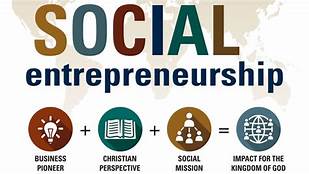
Social entrepreneurship is an approach by individuals, groups, startup companies or entrepreneurs in which they develop fund and implement solutions to social, cultural, or environmental issues. this concept may be applied to a wide range of organizations. which vary in size, aims and beliefs. for profit entrepreneurs typically measure performance using business metrics like profit, revenues and increases in stockprices. social entrepreneurs however are either non profits, or they blend for profit goals with generating positive return to society. therefore they use different metrics. social entrepreneurship typically attempts to further broad social, cultural and environmental goals often associated with the voluntary sector. in areas such as property alleviation, health care and community development. at times profit making social entrepreneurs may be established to support the social or cultural goals of the organization but not as an end in themselves. for example an organization that aims to provide housing and employment to the homeless may operate a restaurant both to raise money and to provide employment for the homeless. in 2010 social entrepreneurship was facilitated by the use of the internet particularly social networking and social media websites. these websites enable social entrepreneurs to reach numerous people who are not geographically close yet who share the same goals and encourage them to colloborate online, learn about the issues, disseminate information about the groups events and activities and raise funds through crowdfunding.

Social entrepreneurship is distinct from the concept of entrepreneurship, yet still shares several similarities with its business cousin. jean baptiste say a french economist. defined an entrepreneur as a person who undertakes an idea and shifts perspectives in a way that it alters the effect that an idea has an society. an entrepreneur is further defined by say as someone who shifts economic resources out of an area of lower and into an area of higher productivity and greater yield. the difference between entrepreneurship however steams from the purpose of a creation. social entrepreneurs seek to transform societies at large, rather than transforming their profit margin, as classic entrepreneurs use a variety of resources to bring societies into a better state of well being. the concept of social entrepreneurship is not a novel idea but in 2000’s it has become more popular amoung society and academic research. notably after the publication of ” The rise of the social entrepreneur ” by charles leadbeater. many activities related to community development and higher social purpose fall within the modern definition nowadays, social entrepreneurship remains a difficult concept to define, since it may be manifested in multiple forms. a broad defination of the concept allows interdisciplinary research efforts to understand and challange the notions behind social entrepreneurship.

IMPORTANCE OF HUMAN RESOURCES

So first let us know what is human resources? basically it can be defined as the effective management of people in an organisation. HR management helps to bridge the gap between employee’s performance and the organisation’s strategic objectives. moreover, an efficient HR management team can give firm’s an edge over their competition. HR plays a significant role in developing positive business culture and improving employee engagement and productivity. the HR function also takes the lead on the employee wellness and personal development. it can be easy to overlook HR in an SME. many entreprenuers get their businesses off to a flying start. but grapple with people management as the business starts to flourish. managing staff takes time and it requires specific skills. HR in an area of expertise many business owners lack. regardless of skills the valu of HR in business isn’t always immediately apparent. with just a few employees, business leaders feel like they have their finger on the pulse when it comes to the people they hire and manage. but a business grows, leaders often find their just isn’t time to deal with day to day people management and recruitment and the focus on people can easily get lost. this is costly mistake and can affect employee satisfaction, culture, and long term success. underdeliver on effective HR and you’ll see a knock on effect on your bottom line. people culture and business sucess go hand in hand. reputation as an employer is influential in attracting talent. it also impacts on customers. take uber as an example; plagued by a string of HR catastrophes from sexual harassment cases to ignoring employees complaints; the resulting bad publicity has undoubtedly deterned many from working there or from using their ride sharing services. bad HR has destroyed uber’s employer brand.

The corona virus pandemic has forced us to re evaluate the way we do business. as part of this, the HR function is taking center stage. companies are being increasingly measured by the decisions they’ve taken and the way they treated their staff. what’s more the impact of ongoing economic uncertainity, remote working and all too real impact on employees mental health are forcing business across the UK to place human resources at the heart of their operation. from supporting managers with remote management skills through to sensitively communicating the consequences of a downturn in business. HR is crucial to the effective management of a business during the pandemic or other significant event.

Illustration of human resources functions explained in four steps.

POLICY GUIDELINES FOR TELEVISION RATING AGENCIES IN INDIA

Television rating points have been a much debated issues in india since the present system of TRP’s is riddled with several maladies such as small sample size which is not representative. lack of transparency, lack of reliability and credibility of data e.t.c. shortcornings in the present rating system have been highlighted by key stakeholders that includes individuals, consumer groups , government, broadcasters, advertisers, and advertising shortcomings. in 2008 the ministry of information and broadcasting had sought recommendations of TRAI on various issues relating to TRPs and policy guidelines to be adopted for rating agencies. TRAI, in its recommendations in august 2008 had amongst other things recommended the self regulation through the establishment of an industry led body, that is the broadcast audience research council. the ministry is constituted a commitee under the chairmanship of dr. amith mitra, the then secretary general FICCI in 2010 to review existing TRP System in india. the commitee also recommended that self regulation through the establishment of an industry was the best way forward. since the BARC could not operationalise the TRP generating mechanism the ministry of information and broadcasting sought recommendations of TRAI in september 2003 on comprehensive guidelines mechanism for television rating agencies in india to ensure fair competition better standards and quality of services by television rating agencies. TRAI recommendations on guidelines television rating agencies were received in september 2013, while supporting selfregulation of television ratings through an industry led body like BARC, TRAI recommended that television rating agencies shall be regulated ratings shall be regulated through framework in the form of guidelines to be notified by MIB. it also recommended that all rating agencies including the existing rating agency, shall require registration with MIB in accordance with the terms and conditions prescribed under the guidelines.

SALIENT FEATURES OF THESE GUIDELINES ARE AS FOLLOWS:

all rating agencies including the existing rating agencies shall obtain registration from ministry of information and broadcasting.

the rating agency shall submit the detailed methodology to the government and also publish it on its website.

30 days time would be given to the existing rating agency to comply with the guidelines.

ratings ought to be technology neutral and shall capture data across multiple viewing platforms viz cable TV, direct to home , terrestrial TV e.t.c

PERSONALITY DEVELOPMENT

Personality development is the development of the organized pattern of behaviors and attitudes that makes a person distinctive. personality development occurs by the ongoing interaction of temparement, character and environment. personality is what makes a person a unique person, and it is recognizable soon after birth. a child’s personality has several components, temperent, environment and character. temperament is the set of genetically determined triats that determine the child’s approach to the world and how the child learns about the world. there are genes that specify personality traits, out some genes do control the development of the nervous system which in turn controls behaviour. a second component of personality comes from adaptive patterns related to a child’s specific environment. most psychologists agree that these two factors temperament and environment influence the development of a person’s personality the most. temparament with its dependence on genetic factors is sometimes referred to as nature while the environmental factors are called nurture.

while there is still controversy as to which factor ranks higher in affecting personality development, all experts agree that highly quality parenting plays a critical role in the development of a child’s personality. when parents understand how their child responds to certain situations they can anticipate issues that might be problematic for their child. they can prepare the child for the situation or in some cases they may avoid a potentially difficult situation altogether. parents who knows how to adapt their parenting approach to the particular emperament of their child can best provide guidance and ensure the successful development if their child’s personality. finally the third component of personality is character the set of emotional, cognitive and behavioral patterns learned from experienced that determines how a person thinks, feels and behaves. a persons character continues to evolve throughout life although much depends on inborn traits and early experiences. character is also dependent on a persons moral development.

INFANCY: during the first 2 years of life an infant goes through the 1st stage. learning basic trust or mistrust. well nurtured and loved the infant develops trust and security and a basic optimism. badly handled the infant becomes insecure and earns basic mistrust.
TODDLERHOOD: the second stage occurs during early childhood between about 18 months to 2 years and 3 to 4 years of age. it deals with learning autonomy or shame. well partnered the child emerges from this stage with self confidence elated with his or her newly found control. the early part of this stage can also include stormy tantrums, stubbornness, and negativism, and depending on the child’s temperament.
PRESCHOOL: the 3 rd stage occurs during the play age or the after preschool years from about three to entry into formal school. the developing child goes through learning initiative or guilt. the child learns to use imagination to broaden skills through active play and fantasy; to cooperate with others; and lead as well as to follow.
SCHOOL AGE: the 4 th stage learning industry or inferiority, occurs during school age up to and possibly including junior high school. the child learns to master more formal skills:
.relating with peers according to rules
.progressing from free play to play that is structured by rules and requires teamwork
ADOLOSCENSE: the 5 th stage learning identity or identify diffusion, occurs during adolescence from age 13 or 14. maturity start developing during this time. the young person acquires self certainity as opposed to self doubt and experiments with different constructive roles rather than adopting a negative identity, such as deliquency. the well adjusted adolescent actually looks forward to acheivement and in later adolescense clear sexual identity is established.
Young businessman holding a marker and drawing circular structure diagram of personal growth on transparent screen. Isolated on white background.

OPEN ACESS PUBLICATION

Open acess is a set of principles and a range of practices through which research outputs are distributed online, free of cost or other access barriers. with open access strictly defined, or libre open access, barriers to copying or reuse are also reduced or removed by applying an open license for copyright. the main focus of the open access movement is peer reviewed research literature. historically this has centered mainly on print based academic journals. whereas conventional journals cover publishing costs through access tolls such as subscriptions, site licenses or pay per view charges, open access journals are characterised by funding models which do not require the reader to pay to pay to read the journals contents or they relay on public funding. open access can be applied to all the forms of published research output, including peer reviewed and non peer reviewed academic journal articles, conference papers, theses, book chapters, monographs, research reports and images.

FEATURES

The emergence of open science or open research has brought to light a number of controversial and hotly debated topics. scholarly publishing invokes various positions and passions. for example, authors may spend hours struggling with diverse article submission systems, often converting document formatting between a multitude of journal and conference styles, and sometimes spend months waiting for peer review results. the drawn out and often contentious societal and technological transition to open access and open science particularly across north america and europe has led to increasingly entrenched positions and much debate. the area scholarly practices increasingly see a role for policy makers and research funders. giving focus to issues such as carrer incentives, research evaluation and business models for publicly funded research. subscription based publishing typically requires transfer of copyright from authors to the publisher so that later can monetise the process via dessimination and reproduction of the work with oa publishing typically authors retain copyright to their work, and license its reproduction to the publisher

FUNDING:

Since open access publication does not charge readers there are many financial models used to cover costs by other means. open access can be provided by commercial pubishers who may publish open access as well as subscription based journals, or dedicated open access publishers such as public library of science and biomed central. another source of funding for open access can be institutional subscribers. advantages and disadvantages of open access have generated considerable discussion amoungst researchers, academics, librarians, university administrators, funding agencies and government officials. reactions of existing publishers to open access journal publishing have ranged from moving with enthusiasm to a new open access business model, to experiments with providing as much free or open access as possible to active lobbying against open access proposals.

HOW TO BECOME A FULL STACK DEVELOPER?

So you’re considering learning web development skills, and you’ve heard that becoming a full stack developer is the way to go. that’s very savy developer have both the front end and back end developer skills most tech teams need. that means you’ll be able to apply for both software engineering jobs and web development jobs alike- or land a gig doing both. if you are ready this guide will help you plan a full stack web developer career roadmap, point you toward thwe web development skills you need, and land the job in as few as 90 days. here’s how to do it.

TABLE OF CONTENTS

  1. get to know what full stack means
  2. decide if full stack is right for you
  3. find your front end and back end skill gaps
  4. learn the programming languages and web skills you need
  5. build your web developer portfolio
  6. find full stack developer jobs
  7. ace your web developer interview

METHODS TO BECOME A FULL STACK DEVELOPER

1.GET TO KNOW WHAT FULL STACK MEANS: Before you jump into learning the skills let’s get clear on what a full stacker developer actually is. full stack developer are developers who work with both the front and back end of a website or application. there are familiar with HTML, CSS, Java script, and one or more back end languages. hence the term full stack they’ve got all the web development skills to build sites and apps from start to finish.

2.DECIDE WHETHER FULL STACK WEB DEVELOPMENT IS RIGHT FOR YOU: You may have heard whisperings that full stack developers aren’t necessarily beloved. there’s a pretty large divide between people who think of full stack developers as the famed unicorns of the tech world and those who feel like they’re spreading themselves too thin. here’s a quick breakdown of the pros and cons of full stack.

3.FIND YOUR FRONT END AND BACK END WEB DEVELOPEMNT SKILLS GAPS: If you dont have any web development skills, start by learning the ones that will land you a front end developer job.

4.TECH YOURSELF THE NECESSARY PROGRAMMING LANGUAGES AND WEB DEVELOPMENT SKILLS: Now that you know which skills you need to learn it’s time to set about learning them ideally within the next 90 days. that may sound very little time, but here’s the beauty of becoming a full stack developer. you can start applying for jobs before you’ve finished learning all the skills. in fact you can even find your first client as soon as you enroll in a web development course by using them as your class project.

5.BUILD UP A WEB DEVELOPMENT PORTFOLIO: Every web developer and engineer front end, back end, full stack, haystack needs an online portfolio that showcases their work. ideally that portfolio is also one of your designs. regardless make sure to update it before you start applying with your strongest projects.

MENTAL HEALTH AND LEARNING

Mental health refers to the emotional well being of a person. it is often viewed as an adult issue, but in fact, almost half of adolescents in the united states are affected by mental disorders and about 20% of these are categorized as ”severe”. mental health issuses can pose a huge problem of students in terms of academic and social success in social. education systems around the world treat this topic differently, both directly through official policies and indirectly through cultural views on mental health and well being. these curriculums are in place to effectively identify mental health disorders and treat it using therapy, medication, or other tools of alleviation.

CONSEQUENCES OF MENTAL HEALTH ISSUES:

Mental health problems can affect many areas of student’s lives, reducing their quality of life, academic acheivement, physical health and satisfaction with the collage experience and negatively impacting relationships with friends and family members. these isssues can also have long term consequence for students, affecting their future employment, earning potential, and overall health. mental health problems can affect a student’s energy level, concentration, dependability, mental ability, and optimism, hindering performance. research suggests that depression is associated with lower grade point averages, and that co-occuring depression and anxiety can increase this association. depression has also been linked to dropping out of school. many collage students report that mental health difficulties interfere with their studies. on the american collage health association 2015 survey collage students identified the following mental health issues as negatively impacting their academic performance within the last 12 months. depression and anxiety can have harmful effects on relationships and work productively. suicide and suicidal thoughts can affect the larger campus community. poor students retention can mean losses in tution, fees, and alumni donations.

CAUSES AND SYMPTOMS OF MENTAL HEALTH

There is no single cause for mental health disorders; instead they can be caused by a mixture of biological psychological and environmental factors. people who have a family history of mental health disorders may be more prone to developing one at some point. changes in brain chemistry from substance abuse or changes in diet can also cause mental disorders. pshychological factors and environmental factors such as upbringing and social exposure can form the foundations for harmful thought patterns associated with mental disorders. only a certified mental health professional can provide an accurate diagnosis of the causes of a given disorder.

EMOTIONAL SYMPTOMS OF MENTAL HEALTH PROBLEMS

Mental health problems can cause a wide variety of emotional symtoms, some of which include:

PHYSICAL SYMPTOMS OF MENTAL HEALTH PROBLEMS:

Mental health problems typically do not cause physical symptoms in and of themselves. depression, however, can indirectly cause weight loss, fatigue and loss libido, amoung others. eating disorders a seperate class of mental health disorders, can cause malnutrition, weight loss, amenorrhea in women, or electrolyte imbalances caused by self induced vomiting. this makes eating disorders amoung the most deadly of mental health disorders.

UNION BUDGET

The union budget of india also referred to as the annual financial statement in article 112 of the constitution of india. is the annual budget of the republic of india. the government presents it on the first day of february so that it could be materialised before the beginning of new financial year in april. until 2016 it was presented on the last working day of the febraury by the finance minister in parliament. the budget which is presented by means of the finance bill and the appropriation bill has to be passed by loksabha before it can come into effect on 1 st april. union budget keeps the account of the government’s finances for the fiscal year that runs from 1st april to 31st march. union budget is classified into revenue budget and capital budget. revenue budget includes the governament’s revenue receipts and expenditure. there are two kinds of revenue receipts tax and non tax revenue. revenue expenditure incurred on day to day functioning of the government and on various services offered to citizens. if revenue expenditure exceeds revenue receipts, the government incures a revenue deficit.

TYPES OF UNION BUDGETS

The union budget is classified into 2 parts. revenue budget and capital budget. here is a look of those 2 budgets.

REVENUE BUDGET: Revenue budget comprises of the government’s revenue receipts and revenue expenditure. revenue receipts can be further classified into tax revenue and non tax revenue. revenue expenditure refers to the regular expenses incurred from the daily functioning of the government as well as for the range of services offered to public. in the event that the revenue expenditure is greater than the revenue receipts the government is said to incur a revenue deficit.

CAPITAL BUDGET: Capital budget whose components are of a long term nature consists of capital expenditure and capital receipts. some of the primary sources of government receipts include loans from citizens, reserve bank of india loans from citizens, and the foreign governments. capital expenditure, on the other hand, comprises of costs incurred on development and maintenance of equipment, machinery, health facilities, building, education, e.t.c. when the government’s expenditure is greater than the total revenue collected, a state of fiscal deficit occurs.

IMPORTANCE OF UNION BUDGET

The general objective of the union budget is to bring about a rapid and balanced economic growth of our country coupled with social justice and equality.

CHANGE TAX STRUCTURE: The union budget also dictates the possible changes in the direct and indirect taxes of the country. it brings about changes to income tax rates and tax brackets.

REDUCE WEALTH AND INCOME DISPARTIES: The budget Aids in influencing the distribution of income through subsidies and taxes. it helps to ensure that a high rate of tax is levied on the rich class, thereby reducing their disposable income. on the other hand a lower rate of tax is charged on the lower income group to ensure they have sufficient income in hand.

KEEP A CHECK ON PRICES: The union budget aids in controlling the economic fluctuations as well. it ensures proper handling of inflation and deflation, thus bringing about economic stability. during inflation, surplus budget policies are implemented which deficit budget policies are devised during deflation. this aids in maintaining a price stability in the economy.