Types of Supervised learning

  1. Classification

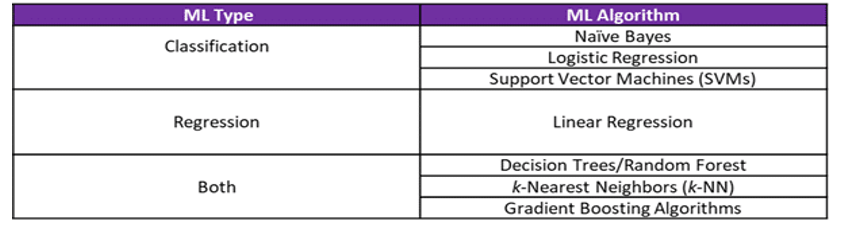
Supervised learning can be further divided into two types of problems:

Classification algorithms are used when the output variable is categorical, which means there are two classes such as Yes-No, Male-Female, True-false, etc.

Multiple classes may also be present.

The output variable or the dependent variable should be categorical in nature.

Example:  Diagnosis
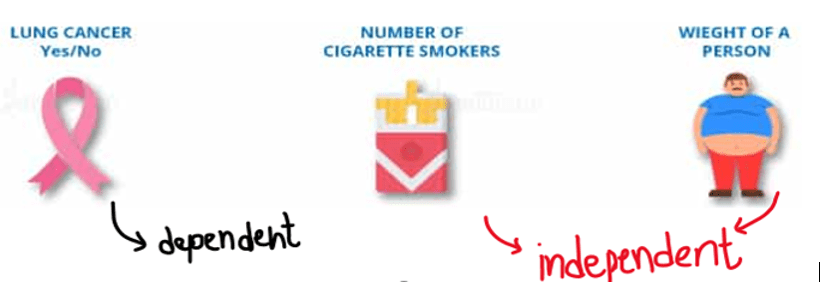
“Prone to lung cancer” (output variable) is the dependent variable and “Weight” and “Number of cigarettes smoked” are the independent variables.

  1. Regression

Regression algorithms are used if there is a relationship between the input variable and the output variable. It is used for the prediction of continuous variables, such as Weather forecasting, Market Trends, etc.

  • Analyse the existing data and
  • Predict the future data parts.

Let’s say you have two variables, “Number of hours studied” & “Number of marks scored”. Here we want to understand how the number of marks scored by a student change with the number of hours studied by the student, i.e.
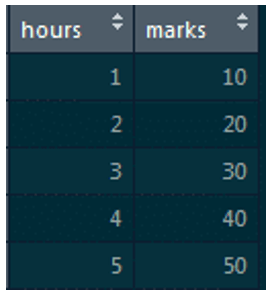
“Marks scored” is the dependent variable, and “Hours studied” is the independent variable.

You need to note that “marks scored” is the dependent variable and it is a continuous numerical.

Question: “How many hours should a student learn to get 60 points?” 

Ans: The regression model would understand that there is an increment of 10 marks for    every extra hour studied and to score 60 marks the student must study for 6 hours.

Example: Weather app in our mobile
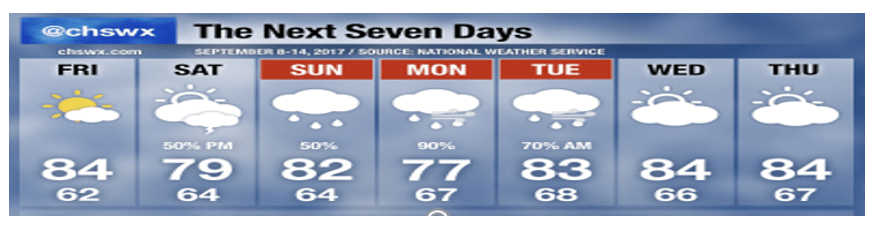
                This app predicts the weather of the entire next week. How does it do?

By analysing the previous data (say past 10 years weather report data) and predicts the pattern for the next week.

Here, since we deal with large amount of data, it may be difficult for humans to work on it. Hence, the machines are fed with large amount of data and made to predict the future data parts.
How supervised learning works?

In supervised learning, models are trained using labelled dataset, where the model learns about each type of data.

Once the training process is completed, the model is tested based on test data (a subset of the training set), and then it predicts the output.

Example:

Task

Suppose we have a dataset of different types of shapes which includes square, rectangle, triangle, and Polygon. Now the first step is that we need to train the model for each shape.

Training Experience

If the given shape has four sides, and all the sides are equal, then it will be labelled as a Square.

If the given shape has three equal sides, then it will be labelled as a triangle.

If the given shape has six equal sides, then it will be labelled as hexagon.

Now, after training, we test our model using the test set, and the task of the model is to identify the shape.

Performance

The machine is already trained on all types of shapes, and when it finds a new shape, how well it classifies the shape based on number of sides and predicts the output.

Steps involved

  • First, determine the type of training dataset
  • Collect/Gather the labelled training data.
  • Split the training dataset into training dataset, test dataset, and validation dataset.
  • Determine the input features of the training dataset, which should have enough knowledge so that the model can accurately predict the output.
  • Determine the suitable algorithm for the model, such as support vector machine, decision tree, etc.
  • Execute the algorithm on the training dataset. Sometimes we need validation sets as the control parameters, which are the subset of training datasets.
  • Evaluate the accuracy of the model by providing the providing the test set. If the model predicts the correct output, which means our model is accurate.

References

https://www.javatpoint.com/supervised-machine-learning

Supervised learning

The machines are trained using well “labelled” training data, and on basis of that data, machines predict the output.

The labelled data means some input data is already tagged with the correct output.

Supervisor is this training data (labelled data) which helps to predict the output correctly when a new input data point is given as input.

The aim of a supervised learning algorithm is to find a mapping function to map the input variable(x) with the output variable(y).

Step 1: The very first step of Supervised Machine Learning is to load labelled data into the system. This step is a bit time-consuming because the preparation of labelled data is often done by a human trainer.

Step 2: The next step is to train and build connections between inputs and outputs(function). This step is also known as the training model.

Step 3: Then comes the step known as the testing model. As the name suggests, you test the model by introducing it to a set of new data.

Here, the input is an independent variable, and the output is a dependent variable. The goal is to generate a mapping function that is accurate enough so that the algorithm can predict the output when we feed new input.

Example of labelled data:

We have a labelled dataset that consists of images of apples and oranges, with different attributes such shape, colour etc.

Consider the image of an apple shown above with the labels- shape, colour, and apple.

We train the model with this image. Then, we repeat the same training process with other images of both apples and oranges with their attributes.

What we are doing is-

Here, the input data is the independent variable and “Apple” or “Orange” is dependent variable as it is dependent on the input picture given.

Our goal is to generate a mapping function between the dependent and independent variable so we can determine the output when we feed a new data point.          


Once the model is trained and the algorithm is built, the accuracy can be tested with the help of a test dataset.

When we feed the model with a new apple image, it scans the image and matches the attributes of the image with other trained images. Then depending upon the accuracy of the model, it returns the output ‘apple’.

When new data point is given as input, say,

The machine should be able to guess the output as  “Apple”.

This labelled data or the training data (acts as supervisor), helps to predict the output as “Apple”.

Machine learning

Machine learning (ML) is a type of artificial intelligence (AI) that allows software applications to become more accurate at predicting outcomes without being explicitly programmed to do so.

Machine learning algorithms are readily available. For example, Python has many libraries which support these machine learning algorithms.

Using this we can:

  1. Import a data set
  2. Fit a model to the data set
  3. Find the accuracy (how well it predicts a new data point)

Then why to learn the basics when instead we can use the pre-built algorithms that are readily available?

Still, we should learn the basics (the mathematics behind these concepts) of machine learning to be able to take an informed decision about the performance of the model.

Photo by Alex Knight on Pexels.com

We can fit the model to a data set and get some performance, but how to justify whether the performance given by the machine learning algorithm is proper or not?

The design of experiment                                                                                                                                              

Design of experiment

To be able to take the decisions with confidence we should know the fundamental concepts.

Lost in the device

Instead of locking yourself in a piece of glass,

Look around dear friend,

There is lot of space.

You forget to count the starts every night,

You forget to enjoy the smell of rain,

And the warmth of the sunshine.

Missing out true friendships,

Ignoring your curious mind,

You are struck in a piece of silicon.

Go outside and enjoy mother nature,

She will teach you lessons,

And bring back the humanity in you,

It’s worth a try.

This is a poem which encourages the readers to go outside and explore the beauties of mother nature instead of wasting their time on social media/phones. Though there are a lot of advantages of using mobile phone, the risks are bizarre.

  • Addiction
  • Social comparison
  • Reduced attention
  • Personal data-stealing and abusing of information
  • Cyber-bullying
  • Isolation

We should make proper use of these devices but not get lost in them.

HER

She walked down the alleyway

Her hair was all Grey

Her warm brown eyes twinkling like a star

Her eyesight was blur

But she saw what most couldn’t

She heard how the growling stomach of the homeless man stopped when he eat a square meal

She heard the bird’s thirst quench as it drank fresh water from the pot

But who was there to give her a warm meal when she was starving?

Who was there to satisfy her thirst when her throat was all dry

“When I grow up and get a job, I’ll treat you like a queen” he said

I’ll be waiting for you son she whispered weakly to herself

As she closed her eyes which used to shine

The man sat there waiting for food as the bird flew away searching for water

Photo by Bhavyata Nimavat on Pexels.com

“Do what you love”

Do what you love,

This is your life,

Follow your dreams,

So play your role.

As long as you follow,

The path of righteousness,

And do what you love,

Who are they to judge?

You now write the unknown,

Chapters of your inspiring story,

Let your hard work beat their talent,

Keep growing but stay humble.

Photo by Natasha Fernandez on Pexels.com

This is a short and simple poem which encourages the reader to do what they love as long as it doesn’t hurt anyone in anyway. We are happier when we do what we love so never let anyone force you into doing something you dislike.

Affirmations for Being a Topper

An affirmation is a statement or proposition that is declared to be true. When said in the present tense, affirmations have a way of embedding these positive statements into our subconscious minds, making us feel truly empowered. By stating our goals and our desired feelings out loud, we are essentially speaking our ideal futures into existence.

Photo by Tima Miroshnichenko on Pexels.com

I am craving knowledge. I learn new stuff with enthusiasm.

I am a very consistent performer.

I learn everything I want to with ease.

I am very good at time management.

My emotional intelligence is at excellent level.

I always plan ahead. I plan all that happens in my life before hand.

Also I’m great at executing my plans.

I am very clear about what I want.

I choose everything rightly.

I love knowledge.

My friend circle is very motivating and we work towards constructive goals.

I set my goals and achieve them with confidence.

I know very well to manage my duties passion, hobbies, goals and entertainment.

I am very focused, I completely pay attention to the lectures. I respect the speaker’s feelings.

I am constantly being supported by all the good and positive powers and forces. I know they are here to help.

I value grades. They are too important for us. I get extraordinary grades.

I take criticism in a positive manner.

Euthanasia

Euthanasia is the painless killing of a patient suffering from an incurable and painful disease or in an irreversible coma. It is also known as mercy killing.

Active Euthanasia vs. passive Euthanasia

When most people think of euthanasia, they think of a doctor directly ending someone’s life. This is known as active euthanasia. Purposely giving someone a lethal dose of a sedative is considered active euthanasia.

Passive euthanasia is sometimes described as withholding or limiting life-sustaining treatments so that a person passes more quickly. A doctor may also prescribe increasingly high doses of pain-killing medication. Overtime, the doses may become toxic.

Photo by RODNAE Productions on Pexels.com

Controversy around euthanasia

1. Morality and religion

2. Physician judgement

3. Ethics

4. Personal choice

Passive euthanasia is legal in India. On 7th March 2011, the Supreme Court of India legalised passive euthanasia by means of withdrawal of life support to patients in a permanent vegetative state. The Supreme Court specified irreversible conditions to permit passive euthanasia law in 2011.

Photo by RODNAE Productions on Pexels.com

For example, Aruna Shan bhang case was terminally ill for a very long time and finally got relieved of the pain due to the above legal provision.

“Death with dignity” is a movement that encourages legislatures to allow people to decide how they want to die. Some people simply don’t want to go through a long dying process, often out of concern of the burden it puts on their loved ones. At the end it is upto us to decide what we want to do in such cases.

References

https://www.healthline.com/health/what-is-euthanasia#euthanasia-facts

Right to Work

Work is not man’s punishment.

It is his reward, strength, and pleasure.

Article- 4 of our constitution prohibits slavery and forced labour. Bonded labour system act was passed by the government in the year 1976 which prohibits forced labour.

Photo by Anna Shvets on Pexels.com

However, even to this day, there is forced labour due to caste-based discrimination, inadequate education, and an insufficient employment opportunity.

Unemployment is one of the major causes of forced labour in India. Unemployment is mainly faced by people who are economically and socially backward.

Though the government has taken many steps like Integration Rural Development Program, Training for Self-Employment, the Swarna Jayanthi Yojana etc., most of the illiterates are not aware of these acts.

Even when employed the workers who are working in unorganised sectors are exploited. They do not have fixed working hours and are poorly paid.

Right to work is constitutional right and we as citizens of India must ensure that this right is properly executed and implemented by all the organizations.

Awareness on Educational Rights

‘Education is a human right which should be accessible to everyone without any discrimination.’

Right to Education (RTE) Act, 2009

The Right to Education Act 2009, also known as the RTE Act 2009, was enacted by the Parliament of India on 4 August 2009. 

Free and compulsory education for children aged between 6-14 years in India under Article 21 (A) of the Constitution of India.

This act came into effect on 1 April 2010 and made India one of the 135 countries to have made education a fundamental right for every child. 

1. Compulsory and free education for all

2. The benchmark mandate

3. Special provisions for special cases

4. Quantity and quality of teachers

5. Zero tolerance against discrimination and harassment

6. Ensuring all-round development of children

7. Improving learning outcomes to minimize detention.

8. Monitoring compliance of RTE norms

9. Right to Education Act is justiciable

10. Creating inclusive spaces for all

Still there is no proper awareness about this among people.

Qualified faculty, including both male and female teachers, close accessibility of schools, proper infrastructure, hygienic toilets, and free meal system must be implemented in all the schools.

Awareness creates interest and interest creates demand. So, let’s show some interest and hope that this demand creates a real, free, and quality education for everyone someday soon.

Women in India

Women in ancient India were highly respected. With the course of time, the status of women got lowered. The practice of female foeticide also started on a large scale. This eventually led to a slump in female sex ratio.

Problems faced

Dowry has become widespread, and birth of girl child became inauspicious. In several parts of India, women are seen as an economic liability even though they contribute in many ways to our economy and society. Early marriages, forced marriages, molestation, domestic and work area harassment, trafficking, and eve teasing are the issues faced by today’s women. Polygamy is also a problem faced by woman of some communities.

Women are also victims of malnutrition. If a pregnant lady suffers from malnutrition, the child’s health will be affected.

As responsible citizens we must strive towards gender equality and women empowerment. Government must also act against women’s rights violators.

Child Labour and Kailash Satyarthi

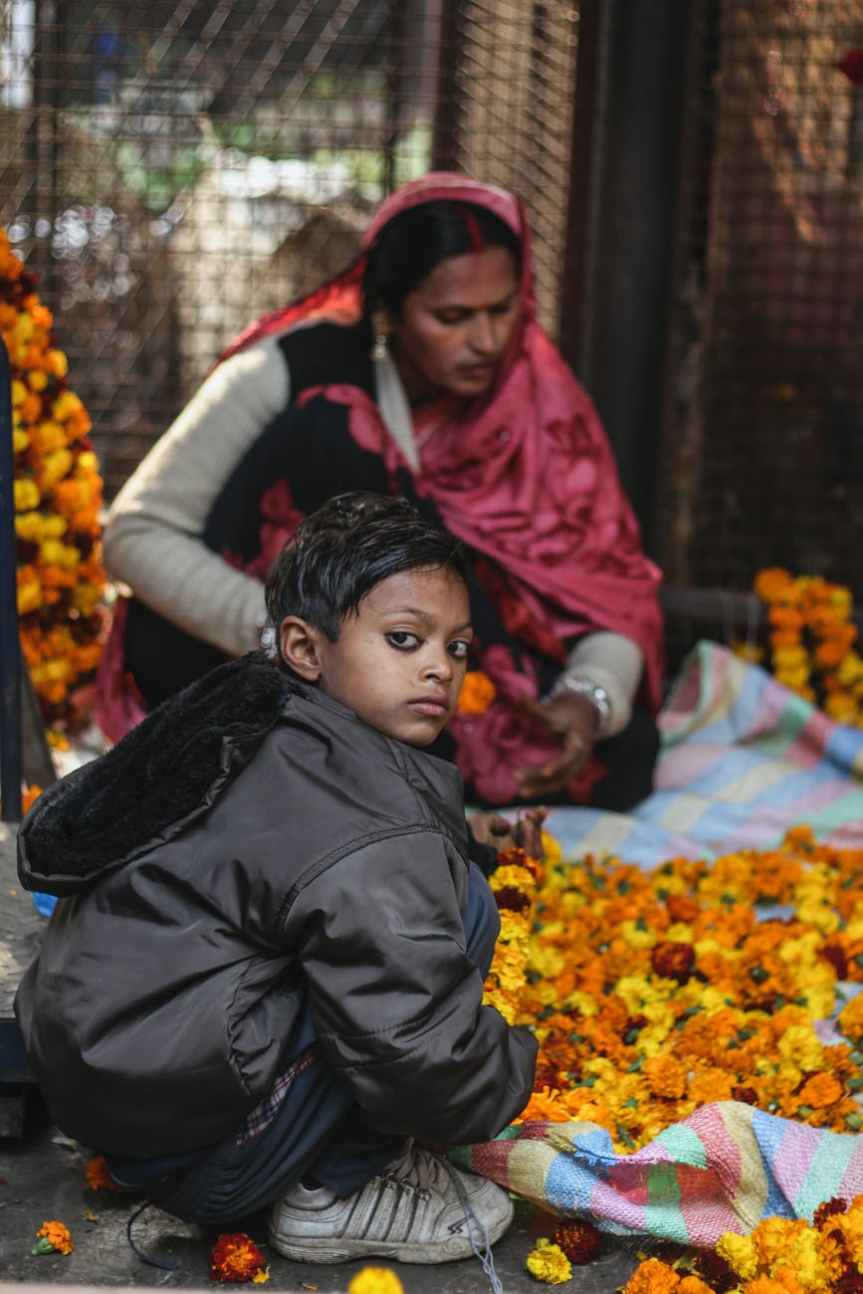
The desperate conditions affecting the rural as well as the urban poor are forcing children to toil often in subhuman conditions. They are deprived of their basic rights as children including education and their joyful childhood. Most of them have never been to school. Some of them have dropped at a very young age.

Estimates of the number of child labour vary largely. According to 2001 census, 12.6 million children are working in India. But in a Supreme Court case last December, Ashok Agarwal, an advocate of non-governmental organizations submitted that 100 million children are out of school and working- that is half of India’s 200 million children.

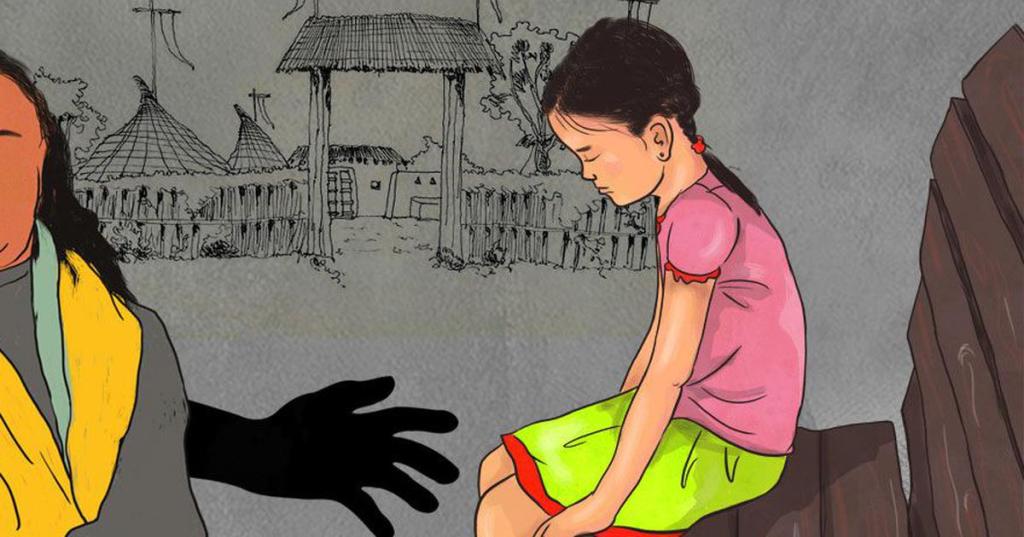
India has the largest number of child labour in the world. They are employed in industries and trade, including garments, footwear, brick kilns, hotels, and textile shops. Many children work in export oriented hazardous industries. Girls are often subjected to trafficking.

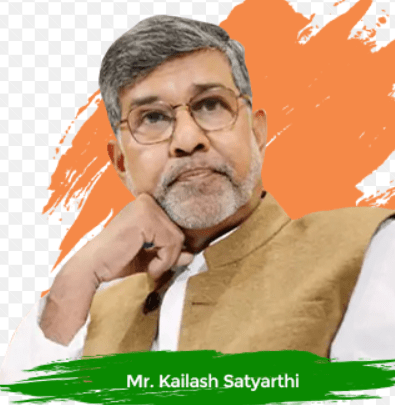
Kailash Satyarthi

Kailash Satyarthi is an Indian child right and education advocate and an activist against child labour. He founded the Bachpan Bachao Andolan- Save the Childhood in 1980 and has acted to protect the rights of more than 83,000 children from 144 countries. It is largely because of Satyarthi’s work and activism that the International Labour Organizations adopted Convention No. 182 on the worst forms of Child labour, which is now a principal guideline for governments around the world.

https://www.google.com/url?sa=i&url=https%3A%2F%2Fsatyarthi.org.in%2F&psig=AOvVaw0FH2um2lnVjx2oRAc0z_6N&ust=1625483078110000&source=images&cd=vfe&ved=0CAsQjhxqFwoTCJDalr2iyfECFQAAAAAdAAAAABAD

Human Rights

‘A right is not what someone gives you; it’s what no one can take from you.’

We need human rights for protection when our legal rights have been violated by the state or individuals, and to encourage justice and fairness within our societies.

Because of this widely accepted reason human rights are protected by raising both national and international awareness of human rights violations. This can help draw attention and resolve such situations, by creating moral pressure on the government.

Photo by cottonbro on Pexels.com

Constitutional Rights:

The Constitution of India provides for six Fundamental Rights:

  • Right to equality (Articles 14–18)
  • Right to freedom (Articles 19–22)
  • Right against exploitation (Articles 23–24)
  • Right to freedom of religion (Articles 25–28)
  • Cultural and educational rights (Articles 29–30)
  • Right to constitutional remedies (Article 32)

Chronology of events:

1989- Scheduled caste and scheduled tribe act was passed.

1993- National human rights commission established under human rights act.

2001- Supreme court passes extensive orders to implement the right to food.

2005- National Rural Employment Guarantee Act (NREGA) guarantees universal rights to employment.

Latest petitions in Supreme Court:

The Nirbhaya case- to ensure right against exploitation.

Cheap cancer drugs- to ensure right to life.

Curbing the sale of acid- to ensure the right against exploitation.

Photo by Belle Co on Pexels.com

The Hot Planet Story

Two frogs are playing in a pond, then suddenly, BAM! They are kidnapped and taken to a kitchen by a chef. The chef boils up a pot of water and throws one frog inside. Sensing danger, the frog jumps out of the pot and escapes. The chef tries a different strategy with the other frog. This time, he turns on the heat slowly so that the frog doesn’t realize that it is being cooked.

REST IN PEACE Froggy.

Are we not facing the same situation? Yes, Global Warming.

Photo by Pixabay on Pexels.com

Global warming is the increase in the average temperature of the earth. It is one of the greatest environmental challenges.

Global warming is caused due to many reasons, the primary one being human activity. Greenhouse effect is the main cause of global warming. A greenhouse is made of glass which helps the plants stay warm even when it is cold outside. Similarly, the greenhouse gases like methane and carbon dioxide act as an insulation to keep us warm. This is a natural process. But if more and more greenhouse gases enter the atmosphere, the earth becomes warmer rapidly. But what causes this?

Here we go again….. Human activity.

Over population

Deforestation

Burning of fossil fuels

Industrialization

All this leads to melting of glaciers which increases the sea level. This further leads to change in ecosystem. Rise in droughts, forest fires, hurricanes, and desertification are also caused due to global warming

Still, global warming remains to be a controversy, leading to many debates. Some people believe that global warming is just a natural cycle and the drastic climate changes have nothing to do with human activity. In my opinion, blaming the nature is not right. Since we are greedy and don’t want to fix the issue, we find such excuses.

Now moving on the solutions.

  • Spreading awareness, is a great step to fight against global warming, that is what this article is about, isn’t it?
  • Simple solutions like unplugging devices when not in use, carpooling, using LED lights and CFLs, planting trees and recycling can both save money and reduce our carbon footprint.
  • Using renewable energy sources, zero-carbon technologies like wind turbines, solar panels, and biomass boilers can be built to conserve energy.
  • Start-ups that develop such technologies should be encouraged and offered tax and loan incentives.

We can take such measures to protect our planet. Together we shall fight climate change and protect our dearest planet.

Photo by Olya Kobruseva on Pexels.com