Costing 101

Cost Accounting focuses on company’s total cost of production by assessing the variable and fixed costs at each step of production and selling. It is critical aspect of accounting as cost directly affects the revenue of the company and also helps in determining the pricing strategy of the product/service.

Unlike financial accounting which provides information to external users (Public, Government, Banks etc), Cost accounting provides vital information to the internal users (mainly management) for decision making.

Two main types of costs are Variable and Fixed costs. Fixed cost refers to the part of cost which does not vary or depend on the level of production. For example, Rent of office or factory. It has to be paid even when the facility is not being utilised or there is no production or sales. However, Variable cost varies according to the level of production. For example, labour wages or cost of raw material.

To understand costing better, let’s understand different elements it comprises of-

  • Cost of material consumed is the sum of all the cost spent to procure a raw material, store it till it gets consumed. All such costs are added with the actual cost of raw material purchased to arrive at the cost of materials consumed.
  • Employees Benefit expenses- The benefit provided to employees are summarised into four categories:
  • benefits in the short-term (benefits payable to employees shortly after they provide the service, e.g. a salary)
  • benefits in the long-term (such benefits may become payable long after the employees provide the service e.g. a long-service award)
  • benefits of post-employment (i.e. after they have retired from employment e.g. a pension)
  • termination benefits (those that would be payable if the employees were to be terminated before normal retirement age (e.g. a retrenchment package)  
  • Purchases of stock in trade, refers to all the purchases of finished goods that the company buys towards conducting its business.
  • Other Expenses are not directly related to the business but are ancillary in nature. It is of utmost importance and have to be accurately differentiated from the expenses, as per the prescribed guidelines and based on the nature of the business.
  • Amortisation and Depreciation expenses- Amortization is a method of spreading the cost of an intangible asset over a specific period of time, which is usually the course of its useful life. The goal in amortizing an asset is to match the expense of acquiring it with the revenue it generates. Depreciation is a method of spreading the cost of a tangible asset over a specified period of time, typically the asset’s useful life. The purpose of depreciation is to match the expense of obtaining an asset to the income it helps a company earn.

In order to reduce costs substantially which ultimately increases the revenue of the company, elements of the total costs need to be analysed and reduced, if possible. It helps in examining the costs step by step, stage of production wise which is an essential process to determine the price per unit and also determining the relationship between each cost and how it affects the Cost of goods sold and the net profit. These elements are grouped together on the basis of their similar nature and hence, it becomes easier to reduce cost element by element.

How to maintain your credit profile

Due to the pandemic, Income saving and consumption patterns have changed. Consumers are delaying high ticket size commitments like home loans, auto loans, lot of discretionary expenses like vacations etc.

The positive thing is that a lot of consumers are monitoring their credit profile and are becoming credit conscious. People are becoming more and more aware of the importance of maintaining their credit profile and keeping a check on their credit score. Nowadays, before a loan is granted, the bank or financial institutions assess the credit profile of the candidate to ensure that they are capable of paying it back and have a clean record.

As credit becomes easily available with time especially since credit cards gained popularity, many of us tend to procrastinate or delay the repayments according to our convenience but what many of us don’t know is that it impacts our credit profile and score.

Therefore, it is important to keep a track on our credit record and maintain a good credit score.

How to check your credit score?

One can check the credit score via a credit bureau such as TransUnion CIBIL, Experian, Equifax etc. TransUnion CIBIL is arguably the most popular provider of credit score in India. You can access the latest credit report by paying the prescribed fee on CIBIL website.

Credit score usually ranges from 300 and 850. A fair score is between 550 to 700 and a very good credit one ranges from 700 to 900. The higher the credit score, the higher will be your creditworthiness.

Let’s understand some credit basics.

  • CIBIL SCORE VS CIBIL RANK

A Cibil Score is a 3-digit numeric summary of a credit profile. Data of past 24 months of any kind of loan or credit card that has been taken by an individual in the past is compiled and using algorithms a number is generated. It lies between 300-900. The higher the score, the better.

For businesses there is Cibil Rank. It is derived from company credit report. Ranges from 10-1 and 1 is the best rank an entity can get. A lot of government schemes are dependent on cibil ranks. Quicker loan approvals and lower interest rates are provided by banks based on it as well.

  • Government is providing relief with schemes like Emergency Credit Line Guarantee Scheme, Atma Nirbhar Abhiyan, Moratorium Scheme by RBI etc. A lot of institutions are also directly educating consumers to encourage them to have a healthy repayment profile.
  • Moratorium scheme- Moratorium is the time period (earlier it was 3 months, now it is 6 months) where consumers will have an option to defer their payments for a future period. This is not a waiver it is a deferral with an interest. Hence, it is recommended to opt for it only if you truly need it as it will have an impact in the long run. Pay outstanding as soon as moratorium period ends so your credit score and report is clean.

How to stay Credit conscious?

  • Making timely payments to have a high credit score.
  • Save to Pay back
  • Continue to maintain the credit utilisation expense. Once lockdown opens, apply for new credit and moderation.
  • Monitoring the credit profile monthly to track any changes or frauds happening in your name or account using the alert facility.

Demonetisation- Pros & Cons

Demonetisation is a condition where in the Central Bank of a country withdraws the previous currency notes of certain denomination as the official mode of payment. It occurs when there is a change in national currency. The current form of money is removed from circulation and new notes are introduced in the market.

History of Demonetisation in India

The first wave of demonetisation in India occurred back in the year 1946 on the notes of Rs 1000 and Rs 10,000 which was done to stop unaccounted money. Out of 143 crores of money being circulated in the market only 134 crores were collected by the government and rest 9 crores were not exchanged hence demonetized. The government didn’t receive much profit and it turned out to be more like a currency conversion drive.

The second wave of demonetisation was seen during the year 1978 when the government decided to recall the reintroduced notes of Rs. 1000, Rs. 5000 and Rs. 10,000 from the market since the country was going through a rough time.

The third wave of demonetisation was in 2016.

2016 DEMONETISATION:

On 8th November 2016, the Prime Minister of India, Narendra Modi announced the demonetisation of existing higher denomination currency that is Rs. 500 and Rs. 1000 within four hours of time. It was also declared that new Rs. 500 and Rs. 2000 notes will be issued soon.

Aim: The main agenda of this act was to cut down the shadow economy and diminish the use of illicit and counterfeit cash used to fund illegal activities and terrorism.

India wanted to curb corruption, promote cashless transactions, promote digitalisation and increase transparency in all the legal transactions occurring within the country.

Implementation: 50 days of time was given to people to exchange their demonetized notes for the new notes at banks i.e. until 30th December 2016. But new notes couldn’t be printed fast enough and caused millions of Indians cashless or standing in queues for hours each day to receive only small sums of money.

The imposition of daily limits on cash withdrawals from ATMs, weekly limits on withdrawals from bank accounts and checking the source of cash deposits in the banks helped the government to carry out the process. Demonetisation caused prolonged shortage of cash in the weeks that followed and also caused a large disruption in the economy.

PROS

Majority of Indians would deny that there were no benefits derived from demonetisation. Only, the problem for general public increased. But this is not the complete truth.

  • Eradication of black money– It helped the government to track people who were having large sums of unaccounted cash. After demonetisation, they had only two options- either reduce it to zero or to deposit it in their bank accounts and pay taxes on them. It was the main motive and biggest advantage behind this step that it is going to affect the corrupt practices. The government claimed that large sums of black money were kept hidden by tax evaders and demonetisation has helped it uncover the huge amount of unaccounted cash. According to estimates made by RBI during the demonetisation drive, people had deposited more than rupees 3 lakh crores worth of black money in the bank accounts.
  • Reduction in illegal activities– Huge sum of money especially in 500 and 1000 denominations were used in several illegal activities like terrorism, money laundering, Naxalites, gambling and also inflating the prices of major assets of the economy. But, after this step there was shortage of funds for these organisations to run. So, this reduced the illegal activities occurring within India or outside, that was occurring with help of Indian currency.
  • Cashless economy– This step had made possible in transforming India into a cashless economy. The proportion of hard cash had reduced and with help of digital payment modes like- Paytm, credit cards, debit cards, etc made the transformation possible. It even increased the transparency in the financial sector.
  • Reduction in government liability– For those people, who choose not to disclose the money, now that money was worthless. Thus, it reduced the governments liability to that extent. It reduced the risk and liability of handling liquid cash as compared to soft money and was much easier than hard cash. As every currency is government’s liability to pay and with fall in hard currency circulation, it reduced the liability.
  • Closure of shell companies– After the ban, approximately 2.24 lakh companies were closed which did not do any work for 2 years. Also, 3 lakh directors were disqualified. The purpose of these firms was to evade taxes.
  • Rise in tax revenue– When people started depositing their unaccounted cash into their accounts, they had to pay a significant amount of tax penalties on that money and even other taxes had increased considerably. Different taxes had increased the tax revenue of government. And, this revenue was used towards the betterment of the society.

CONS

  • Fall in GDP– This action of the government has directly affected the growth of the cash driven economy of India. The GDP of India fell from 8.01% of 2015-16 to 7.11% of 2016-17. This was because of the less availability of cash. It effected the primary working of every industry like production and manufacturing, even the banking department as they could not lend loans to the citizens.
  • Daily wagers– A large part of Indian economy includes people working on the daily wage purpose. They lost their jobs and couldn’t meet their daily expenses.
  • Agriculture Industry– It has affected the agriculture industry as the farmers are not able to purchase fertilizers and seeds to harvest. Most of the Indian population is indulged in the agriculture sector. In the agriculture sector the transactions are on cash basis and due to demonetisation they faced a lot of problem.
  • It impacted all sectors– All sectors came to a halt temporarily. Even the stock market, the investors and started withdrawing money from it, by selling the temporarily slump in the market. The real estate business had a massive loss as it mostly worked on black money.

Conclusion

As mentioned above, the primary aim of demonetisation was to a) weed out black money and b) introduce and promote the concept of digitalisation as a preventive measure against corruption.

The government had estimated that a sum of 3 lakh crore or 20% of demonetised banknotes would be removed from circulation in the market. 

However, according to the 2018 report from the Reserve bank of India approximately 99.3% of the demonetised banknotes that is ₹15.30 lakh crore of the ₹15.41 lakh crore that had been demonetised, were deposited to the banking system. This implies that banknotes of worth ₹10,720 crore were not deposited.

Hence, analysists concluded that the government had failed to achieve the motive of eradicating black money from the market. However, it succeeded in promoting digital transactions and electronic payments. The shortage of cash led to a sudden increase in electronic payments, usage of m-wallets etc. By April 2018, it was observed that the number of digital transactions had doubled. Apps like Paytm, BHIM, GPay gained a lot of new users during this period. 

Moreover, an increase in the tax revenue was also observed but studies show that there hasn’t been any substantial rise in the number of tax payers or direct tax collection due to demonetisation.

In addition to this, the GDP fell from 7.5 to 5.7 by June 2017 as it was extremely difficult for all sectors of the economy to recover from the losses and hardships that resulted from the flawed implementation process.

Due to the unavailability of cash, all the manufacturing and service industries experienced an unforeseeable halt which led to a decrease in the industrial output. The agricultural sector took a huge hit as it was heavily dependent on cash for purchase of seeds and other resources which inevitably led to an increase in the prices of crops. Henceforth, the workers employed in these sectors also suffered. According to a report from Centre for Monitoring Indian Economy, 406.5 million were employed in September-December 2016. Post demonetisation, the number fell to 405 million in January-April 2017.

To conclude, Demonetisation was a bold move, although sudden and could have been a revolutionary move to combat corruption if implemented properly. The long-term aim of the government was to curb corruption and promote cashless transactions.

However, reports say that it failed to remove black money from the market. As a result of unavailability of cash, it succeeded in promoting cashless transactions but only for a short period of time.

Due to the flawed implementation process, the major contributors of the economy took a huge hit which some of the sectors still haven’t recovered from. Hence, we can say that the cons outweigh the pros and demonetisation failed not only as a measure taken to eradicate illegal practices in India but also caused major inconvenience to the general public and different sectors of the economy.

It could have been a huge success if a practical plan that dealt with all possible consequences was made beforehand as it affected all aspects and participants of the economy and hence, a back-up plan for all contingencies was a must. Also, the involvement of bankers and government officials in corrupted acts during the implementation of demonetisation slowed down the movement. Hence, diligent participation could have boosted the process.


Financing Decisions

Financing decisions are concerned with the amount of finance to be raised from various long-term sources of funds like, equity shares, preference shares, debentures, bank loans etc and its impact on the capital structure of the organisation.

It is one of the three main decisions of Financial Management – Investment decisions, Financing decisions and Dividend decisions.

Factors affecting financing decisions

While making financing decisions, one must focus on the composition of funds from various long-term sources. These decisions involve:

  1. Decision whether or not to use a combination of ownership and borrowed funds.
  2. Determining the ratio in which ownership and borrowed funds should be kept.

A firm should have an appropriate mix of debt as well as equity.

  • The disadvantage of having Debt is that it involves Financial Risk which is the risk of default on payment or interest on borrowed funds and the repayment of principle amount
  • However, tax benefit on interest payments of the debt reduces its cost, making it cheaper than equity.
  • In order to avail the benefits of debt wisely, the cost of debt should be less than the rate of return on the capital.
  • Shareholders’ funds have no fixed commitment in the aspects of repayment of capital or payment of returns.

Factors to be considered to make financing and capital structure decisions are listed below-

  1. Interest/dividend pay-out: Debt involves compulsory interest payments whereas there is no compulsion to pay dividend to equity shareholders. However, the company should also keep its dividend policy in mind, in case they prefer paying dividends in order to retain their shareholders.
  2. Tax deductibility– Interest payments are tax deductible which reduces its overall cost.
  3. Dilution of control– In case the existing shareholders want to retain the complete control of business then finance can be raised through borrowed funds or preference shares but when they are ready for dilution of control over business, equity shares can be used for raising finance.
  4. Risk and floatation costs: More risk is associated with borrowed funds as compared to owner’s fund as interest is paid on it and it is also repaid after a fixed period of time or on expiry of its tenure. The cost involved in issuing securities such as broker’s commission, underwriter’s fees, expenses on prospectus etc. Is called flotation cost. Higher the flotation cost, less attractive is the source of finance.
  5. Feasibility & Cash Flow position: In case the cash flow position of a company is good enough then it can easily use borrowed funds.
  6. Payment schedule: In case the company wants to go for debt, then the payment schedule, tenure and total costs (principal+interest) should be analysed and compared with other options. Longer the schedule, greater the interest so in case the schedule is too long, the terms should be modified or other financing options can be considered.

Different options and compositions of debt and shareholder’s fund can be analysed to find the one with the lowest weighted average cost (WACC). This way the company enjoys the tax benefit advantage of debt and non-compulsion of dividend payments advantage of equity.

However, it is important to analyse costs after factoring in the time value of money so the decision-maker gets a realistic picture of the cost of capital, on the basis of which, informed decisions can be made.

Factors affecting Job Analysis

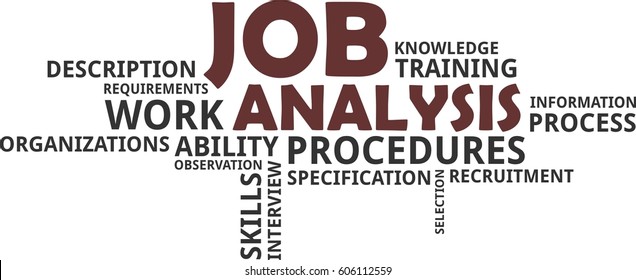
Job Analysis is a systematic exploration, study, and recording of a specific job’s responsibilities, duties, skills, accountabilities, work environment, and ability requirements. It helps in establishing the job’s worth to an organization. In other words, it measures the value and contribution of a job to the growth of the organization.

It has two components- Job Description and Job Specification. A job description is a job profile that describes the contents, environment, and condition of jobs. The job specification identifies the knowledge, skills, abilities needed to perform that task effectively.

Some of the common factors considered by various HR professionals while conducting Job analysis are-

  • Reporting channel/Work flow: To define reporting relationships and establish organisational structure
  • Role and Responsibilities of the employee and its scope/expectations
  • Information pertaining to size of the team the incumbent has to lead, if any
  • Strategic role
  • Employee Ability and Availability
  • Prior Knowledge and Experience
  • Company culture– To determine the behavioural qualities a candidate must have to be the right fit for the organisation
  • Geographical location of the employee
  • Information pertaining to the job from previous/existing employees
  • Time and dynamicity- Some HR professionals also think that the factors change according to the business environment and/or goals of the organisation and Job analysis is an ‘ongoing process’ as it evolves with the expectations of the job. For instance, according to one respondent, the focus of job analysis has shifted from qualitative and quantitative aspects to employee and company-oriented factors which results in collective holistic development.

The factors mentioned above can be divided into two categories to understand the elements and processes of Job Analysis in detail: Factors considered for preparing Job Description and Job Specifications

Factors that influence the preparation of Job Description and Job Specifications are very different due to the varying nature and objectives of the two processes. As Job description is task-oriented and Job Specification is people-oriented, it is vital to separate the factors to understand the value and significance of both the concepts.

Some of the main factors considered in the preparation of Job Description are: Ergonomics, Role and responsibilities, Organisational structure, Team size, Scope of the job, Key Result Areas, Size of the team under the employee, if any. All task-oriented factors considered during job analysis are utilised to prepare a concise and accurate job description to have a deeper understanding of the job and its significance and role in achieving the organisational roles.

However, all people-oriented factors like qualifications, prior knowledge and experience, geographical location, behavioural traits that are compatible with the work/company culture and ethic, soft skills, Training, values, special skills depending on the nature of the job, personality traits etc are considered while preparing Job specification. Job specifications are heavily dependent on the nature of the job and hence, differs from job to job. Therefore, Job Description influences the job specifications of the ideal employee required for the job.

Conclusion

In conclusion, it can be observed that the factors considered are either people-oriented or task-oriented depending on the dimensions or objectives of the job analysis. Moreover, one of the many factors considered while preparing Job Specifications also includes the Job Description.

Presently, most organisations tend to depend on job analysis to establish working relationships and organisation structure, define job responsibilities, compensate employees and to find and recruit the right fit in accordance with the employees’ and organisation’s goals and expectations.

Different types of Digital Marketing media

Digital marketing refers to advertising delivered through digital channels such as search engines, websites, social media, email, and mobile apps. Using these online media channels, digital marketing is the method by which companies endorse goods, services, and brands.

Nowadays, Digital Marketing is the most commonly used way of advertising and promoting goods and services and for good reason. Social Media has completely changed the A-Zs of Advertising. Digital Marketing offers it all- from insights into the customer’s engagement with the post, decrease in costs compared to traditional ways of marketing (tv, radio ads, billboards) and the ‘trend’ and ‘viral’ factor which, once taken advantage of, can help boost the sales of the company by a huge margin. Targeted emails and personalised ads to the target audience according to their taste and preferences compared to one ad designed for the general public (published in newspapers or played on tv/radio) is much more efficient and effective.

Moreover, as social media platforms gain more popularity and attracts more and more people, it guarantees more reach and views for the digital content/media, making it more efficient than traditional means.

There are three major types of digital media channels which are Owned, Paid and Earned media.

Owned media channel is controlled by the brand itself. For example, Instagram account of Netflix India. All the media shared on this channel is owned and developed by the company itself which is why it is not trusted and considered credible. There are no guarantees that it will attract consumers because communication from the company about its own products is not trustworthy.

However, some of its benefits include- It gives control over the content consumed and shared with the target audience. It is cost efficient because the company does not have to pay a third party to do the same. It is a long-term plan since its not based on time duration-based contract with any third party and it is not feedback or word of mouth that dies down with time.

Paid media channel is controlled by a third party who is paid to share content for the company. For example, Ads on Instagram, paid searches on google etc. This channel is in demand as social media platforms become business friendly day by day and this also gives control as the company approves and knows what is being shared and consumed by its target audience.

Some of its challenges are- This channel has a declining response rate as consumers are becoming more aware of such tactics and do not trust paid sources. Moreover, it has poor credibility because the third party is being paid to publish catchy and engaging content and it does not say anything about the quality of the product or service.

Earned media channel is the channel controlled by the customers. For example, Word of mouth, recommendations to friends and family, Trends and buzz etc. All media and feedback shared by customers publicly which can be positive or negative. The main benefit is that this channel is the most credible because these are the genuine feedbacks from customers who have used the product or service. If positive, it can also boost sales and increase market share by attracting new customers due to word of mouth. However, it does not give the company any control as it can be negative and damaging to the company’s reputation in that case.

1st July- Doctor’s Day

If the ongoing pandemic has taught us anything, it’s to appreciate, respect and value our strong-willed and hard working doctors and healthcare workers who have worked selflessly day and night beyond the call of duty to get our country through two deadly waves of the outbreak with whatever resources they had. Today, we celebrate and thank them for all that they do, without worrying about their own safety. As a nation, we are proud and grateful for our doctors and all front-line healthcare workers for giving their all- saving, treating and advising us and our loved ones.

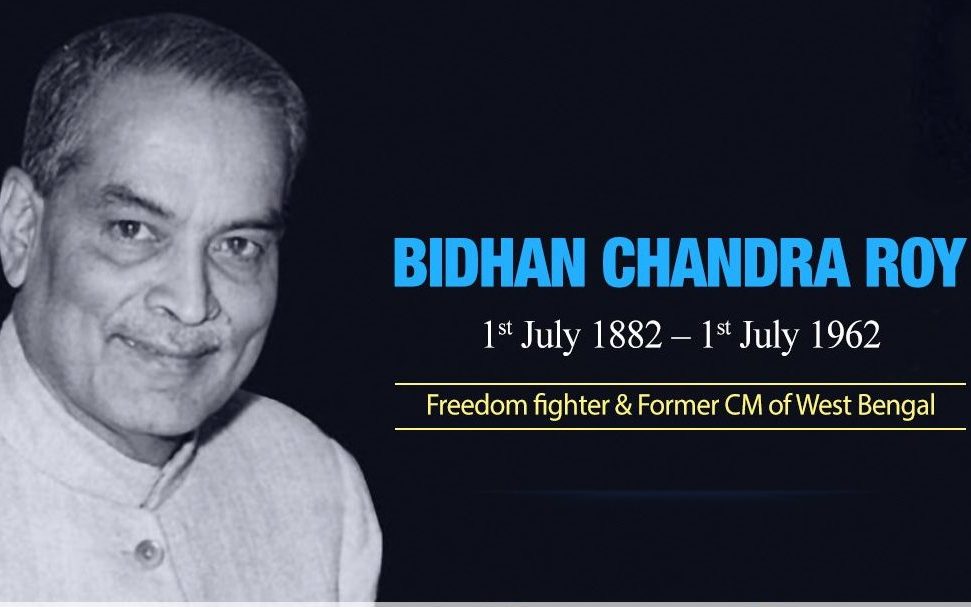
In India, Doctor’s Day is celebrated on 1st July to honour Dr. Bidhan Chandra Roy, a physician, philanthropist, social worker, freedom fighter, Bharat Ratna awardee and the former Chief Minister of West Bengal. He was born on 1st July, 1882 and died on 1st July, 1962. He, not only ensured availability of quality health services for common people at a critical period for India’s Independence, but also played a vital role in the creation of two prominent medical institutions- Indian Medical Association (1928) and Medical Council of India, of which he was the first President as well.

He also kickstarted the Indian Institute of Mental Health and opened Kolkata’s first postgraduate medical college. He also opened centres for women for social work and nursing training. The British Journal described Dr. Roy as “the first medical consultant in the subcontinent of India, who towered over his contemporaries in several fields. At his professional zenith, he may have had the largest consulting practice in the world, news of his visit to a city or even railway station bringing forth hordes of would-be patients.

Pre-Independence

Dr. Roy was born in Patna, Bihar. He studied Mathematics in Bihar and medicine from Calcutta Medical College. Later, he served as the Vice-Chancellor of the University of Calcutta. After his postgraduation from London in 1911, he became a member of the Royal College of Physicians (MRCP) and a Fellow of Royal College of Surgeons (FRCS). He is one of the few to have obtained MRCP and FRCS degrees simultaneously.

After returning to India, he joined Mahatma Gandhi’s Civil Disobedience movement and became his friend and personal physician. During Gandhi’s 21 day ‘self-purification’ fast in Pune, Dr. Roy was by his side and took care of him.

Post-Independence

After Independence, he became the Governor of Uttar Pradesh and shortly after that in 1948, he became the second Chief Minister of West of Bengal, which at the time was torn by communal violence and influx of refugees. However, West Bengal finally saw peace within three years under his stewardship. He also practiced medicine and treated patients during this time. He served as the Chief Minister of West Bengal for 14 years till he died on his birth date in 1962, aged 80. After his death, his house was donated to the public to run a nursing home.

In 1961, he was awarded the Bharat Ratna. B.C. Roy National award was instituted in 1976 to award work in the areas of politics, philosophy, medicine, science, literature and arts.

Service Business- the upcoming style of business

With Service business gaining popularity every day and changing the way business is done, more and more entrepreneurs are starting service-oriented businesses. Be it cloud storage, entertainment channels like Netflix, Prime, Hotstar etc, multi-service platforms like UrbanClap, now known as Urban Company which offers almost all services you could possibly need or even food and grocery delivery apps (Zomato, Big Basket), Service Business has made its way into every industry.

A decade ago, Service Business was limited to services like consultations, tuitions, banking services, financial services (agent, brokers and consultants), after-sale services, real estate, event management, etc. But with the advancement in technology and skills of new entrepreneurs over time, it has expanded tremendously.

However, the nature of service business and its operations, compared to manufacturing or other kinds of businesses is very different. For example, in a manufacturing business, the manufacturer or any employee of the company, does not have any relationship or direct contact with its customer (except customer care and salespeople). However, in most service businesses, communication and maintaining a direct relationship with the customer is very important.

Dimensions of Service

In order to successfully establish and grow a service-oriented business, it is necessary to understand its dimensions and analyse where your business lies in terms of the three dimensions- Service Package, Service Customisation and Customer contact.

a) Service Package (Nature)

Service Package refers to the nature of the service and the value it adds. This tells us which part of the operation/service requires more attention. For example, if a service is dependent on tangible activities like in the case of food/grocery delivery apps, more attention is paid to spend money on tangible assets. However, if the service is dependent on intangible activities like salon beauty services, training and retention of skilled employees and development of firm’s knowledge assets is more important.

b) Service Customization

Service Customization refers to the level of customization or standardization of the service. This gives us an insight into the kind of human resources required and the nature of operations to be followed. For example, if the service is more or less standardised like in the case of plumbing, employees/workers with more narrow skills can be hired and a standardised step by step approach can be followed.

However, if the service is customised according to the needs and demands of every customer like in case of a bakery that makes customised cakes, the operation becomes less predictable and more variable so the company needs highly skilled employees/workers. Such organisations compete on the degree of customisation offered instead of cost.

c) Customer Contact

Customer contact refers to the degree of contact the employees have with the customer which depends on the nature of the service. The degree of customer contact is divided into- Front-room and Back-room operations.

Front-room operations refer to the part of the service where the customer interfaces directly with the service organisation. Back-room operations refer to the part of the service where there’s no contact with the customer.

For example, getting a Netflix/Prime subscription is a back-room oriented service. So, the company does not need employees with people skills since there is no direct contact or communication involved in the service. On the other hand, any service available on Urban Company requires direct contact (front-room) with the customer and hence, the employees hired should know how to be pleasant and cater to the needs of the customer.

With the help of these dimensions of service business, one must analyse the position of their service business and make its human resources and operations related decisions accordingly.

How AI is transforming our lives

Artificial Intelligence has found an important place in our day to day lives. We might not realise it but it has surrounded and transformed almost all aspects of our lives. AI is a branch in computer science that deals with the intelligent behaviour of machines. It is an ingeniously simulated ability of a machine to imitate human behaviour and our conventional response patterns. This is made possible with specific algorithms that make the AI function in a specified scope of activities. This means that with AI, many of our everyday activities can now be carried out effectively by programmed machine technology.

Microsoft’s chief envisioner David Coplin saysAI will change how we relate to each other. I would argue that it will even change how we perceive what it means to be human.

Real-life examples

The use of AI in organizations, governments, security frameworks, energy and natural resource management, etc., is drastically on the rise. For example, artificial intelligence has been pointed at to possess the potential for more accurate medical practices. Thus, you can be sure of a more accurate surgical procedure using this framework than what is currently available.

Another example would be the most commonly used AI-oriented app nowadays- Google maps. Google maps uses AI to detect traffic and its causes, time taken to travel to the destination, calculate speed of the vehicle and display estimated time accordingly, suggest fastest route alternatives. It is a very helpful tool and everyone uses it during travel.

Similarly, apps like Uber and Ola also use AI to connect you to the closest driver, display estimated wait and travel time, calculate prices according to the time of the day, traffic and other factors etc.

It is also used in food delivery apps to assign the closest outlet of the restaurant you want to order from and to assign the closest delivery person, calculate estimated time of arrival of the food, keep track of the timely preparation and delivery of the food etc.

Another most commonly used example would be voice assistants like Siri, Cortana, Alexa and Google assistant. These are AI powered assistants that can perform any tasks given to them with the help of AI.

Another example would be AI used by entertainment channels like Netflix, Prime video and even YouTube to keep track of the content consumed by every user to determine their liked genres and taste in order to give recommendations to every user according to their taste and preferences.

Google Translate uses AI to help you translate text from a source language to the target one. The company has a lot of contributors across the globe, which means that any person in the world can contribute to Google Translate by entering some words like synonyms or anything else related to languages.

Most importantly, it is used by businesses for providing valuable insights. Using AI supplies them with information about customer behaviour, their preferences, and the history of their interactions with a company. Moreover, AI can be a real game-changer in how marketing and ads campaigns are being run today. For instance, personalized advertisements are a hit with various companies. Corporate giants as Facebook, Google, YouTube, have already been using ads powered by AI for targeting specific audiences.

Work-life balance in the present scenario

It is evident that like all things, advancement in technology also has its pros and cons. With time and technological advancements, employees all around the world become easily accessible even after work hours. Due to this, it has become very difficult for employees as well as their organisations to differentiate between work and life outside work, especially as the ‘work from home’ concept gains popularity due to the pandemic.

For some employees work begins even before they reach their workplace. They do not even get the opportunity to start the day they want to. Checking messages and making calls first thing in the morning can be very stressful. Some do not get to spend enough time with their children and family, due to the exhausiting demands of their jobs. For some, vacation isn’t really time off.

Work to live, not live to work

It is important for both the parties, the employees and their organisations to understand the ‘work to live, not live to work’ ideology. As an individual, the employee must not let their work define them. There are various other aspects of life that are equally important. It is crucial to maintain a balance and not overlook the other aspects even if work provides them with recognition, power, status or money.

Otherwise, one day, if they were to lose their jobs due to unforeseeable circumstances (the pandemic for example) or even retire, they wouldn’t be left with anything substantial like human connections, hobbies or personal interests. To conclude, an individual shouldn’t be dependant on their jobs to the extent that they feel lost if they were to lose it, no matter how passionate they are about their work. Balance is very important.

Nowadays, it is very easy to get lost in the race of establishing oneself and earning more. Due to this, one never realises that they reached their initial goal years ago. It is human nature to always want more. However, it is important to be grounded and introspect from time to time so it doesn’t become a never-ending process.

As an organisation, it is equally important to respect their employees’ boundaries and preach and implement a healthy work-life balance. Although technology makes it very easy to reach people, it is important to use it professionally and set some boundaries. This will also benefit the organisation in the long run as employees who are not overburdened and overwhelmed with work and have a good work-life balance with frequent days off or vacations in the year, tend to be more creative and energetic and more importantly, feel cared for.

Therefore, it will not only increase the performance and productivity of the employees of the organisation but also help it retain its employees.

It is extremely important for an employee to be well-rested, have a good social life outside work to give their 100% at work. Studies show that overwhelmed and overworked employees are less productive and creative. Fatigue might result in low morale and zeal and takes a toll on the mental and physical health of the employees of the organisation which would lead to high employee turnover rates.

An organisation should promote healthy work life balance and days off for their employees so the employees feel like an integral and valuable part/asset of the organisation. This would boost the organisational citizenship behaviour of its employees which would ultimately help the organisation retain its employees.

How to set Financial goals

Setting financial goals is essential for personal finance management and budgeting. In order to efficiently manage spending, savings and investments and be financially secure, one must set financial goals.

Being unprepared and spending mindlessly can be quite risky. One should be as prepared as they can be in case of emergencies or financial crises.

Moreover, saving and investing your earnings can help you grow your wealth and utilise your earnings in a profitable manner.

Before setting goals

Financial goals and objectives can vary from person to person depending on their income, investments, expenses, life stage/age, needs etc. Hence, it is important to assess the objective and duration of the goal by following the steps mentioned below-

  1. Identify starting point: Set a date for implementing the plan and its duration
  2. Set priorities: Identify your objectives; Are you saving to invest or to buy or to set up an emergency fund?
  3. Document your spending: Calculate your monthly expenditure. Analyse them and try to reduce them.
  4. Pay down your debt: Reduce your debt and pay it off first to reduce your interest expenses.
  5. Secure financial future: Implement the plan to become financially secure.

Most importantly, financial goals should be S.M.A.R.T – Specific, Measurable, Attainable, Relevant, Time-based.

Specific: Financial goals should be specific in terms of objective, time and amount.

Measurable: Goals should be measurable and expressed in monetary terms. For example, goal to be rich is not measurable as it is a subjective term. Hence, an amount limit suitable for every person should be set.

Attainable: A reasonable amount and time and limit should be set so it is possible to achieve them. For example, saving up to buy a car on a monthly salary of ₹30,000-₹40,000 within one year is not realistic and attainable.

Relevant: Every individual’s financial goal should be relevant to and in sync with their individual financial needs and objectives. For example, if a person wants to save up for retirement, they should focus on saving to invest in schemes specially designed for retirement planning.

Time-based: In order to achieve a goal, it should have an end period which motivates one to achieve it. They cannot be never ending as different stages of life have different financial requirements. At the end of the time period, one should evaluate and see if they were successful in achieving it or not.

Duration of Financial goals

As mentioned above, setting time-based goals is very important. Duration of each goal varies and is dependent on its nature and the income and expenses of the individual. For example, saving up to buy a TV should take between 3-6 months depending on the saving capacity of each individual. However, saving up for retirement takes years of planning, saving and investing.

Financial goals can be classified into Short-term, Mid-term and Long-term goals.

Short-term goals have a duration of 2 or less than 2 years. Example- Stick to weekly/monthly budget, reduce unnecessary expenses.

Mid-term goals have a duration of 2-years. Example- Build and diversify portfolio.

Long-term goals have a duration of more than 5 years. Example- Make a retirement plan and implement it.

A guide to take your business international

As Globalisation takes over the world, more and more businesses are expanding and opening their manufacturing units, branches, outlets, offices all over the globe. While some grow exponentially and expand their market, sales and customer base, some fail to get any response and incur huge promotional, travel, administration and financial costs.

This is why it is extremely crucial to form an entry strategy that suits the organisation. It is also important to assess the financial position and capacity of the organisation and to understand that International business gives delayed returns as spreading awareness, competing with the competitor’s product and building an International customer base takes time and incurs promotional costs.

Once the business is ready to enter the international market, there are several factors to be considered.

  1. Firstly, the organisation needs to conduct market research and choose the country and the specific locations where there is demand for their product/service.
  2. Secondly, assessing the culture, language of the country and city is also very important. The organisation can make the necessary changes (if any) to its product/service and its packaging and labelling accordingly.
  3. The last step is to form an entry strategy that suits the organisation and the market and implement the stategy.

Ways of entering an International Market

There are several ways to enter a market depending on the product/service reach preferred by the organisation and the financial capacity of the organisation.

  • Direct Exporting- In this method, the organisation directly sends its products, transfers its employees and workers to the location chosen. It involves huge setup, transportation and transfer costs. Therefore, this method is only used when the product that is being exported has a lot of demand in the new market and will definitely get a response from the target audience. For example, exporting machines to developing countries where there’s no manufacturing of such machines but a huge demand for the same.
  • Through a distributor- In this method, products are sold to distributors who are wholesale buyers. The distributor uses his own selling and pricing strategies to sell the product in the market.
  • Licensing- Through licensing, the organisation can share its technology, method and basic know how with local companies. However, through this method, the product is sold under the local companies’ name and brand so there is no scope of building an international brand and consumer base.
  • Contract Manufacturing– Through this method, the company pays a local manufacturing unit to manufacture their products by sharing their technology and design. It saves the cost of exporting or setting up a manufacturing unit abroad and is ideal for products that require large scale production.
  • Strategic Alliance- This method includes Mergers, Acquisitions and Joint Ventures. In Joint Ventures, two companies form another company to work as partners. For example, Hero Honda. In Mergers and Acquisitions, one company merges with or acquires another company. There is no formation of third company or new identity in this case. For example, Walmart acquired Flipkart.
  • Through an Overseas agent- Using this method, the company hires a local agent to make business relationships on behalf of the company. The agent acts as a sales representative who sells the products on behalf of the company and has no direct relationship with the customers. The agent gets commission on his sales. This is an effective method to save costs in case the organisation wants to test out the response of the foreign potential consumers or distribute their products on small scale without incurring huge costs.

5 courses every upcoming entrepreneur must do

In the current business environment, one must always be eager to adapt and learn new skills in order to survive and grow. Here’s a list of 5 courses a budding entrepreneur must do to flourish in the current environment, keeping in mind the trends and skills essential in the present scenario.

1. Digital Marketing

With businesses taking over social media platforms to increase their reach and improve their customer relations, Digital Marketing is the need of the hour. It is a brilliant way to interact, build and promote the brand. The traditional ways of advertising like print, radio and tv ads are not as effective as email marketing, targeted ads, paid searches, etc. It is the new way of doing business and every entrepreneur must know how to grow their business this way.

On some business-friendly platforms like Instagram and Facebook, one can also use analytical tools to know more about their audience like geographical location, age range, gender etc which can give helpful insights about the target audience of the business.

The course includes Social Media Marketing, Email Marketing, Search Engine Optimisation, Google ads and Google analytics.

2. Successful Negotiation: Essential Strategies and skills

Starting a new business requires efficient communication and negotiation skills. Whether it’s negotiating prices and contracts with vendors, suppliers or the customers, pitching the business plan to potential investors, communicating with the stakeholders of the company, it always comes in handy.

In order to grow a business, every entrepreneur should know how to negotiate and build profitable relationships for the business. This course not only improves the business communication skills of the entrepreneur but also, helps him/her in identifying the interests of the other party while negotiating which successfully helps them in finding a middle ground efficiently.

3. Start-up funding

The first step of officially starting a new business is getting funding, convincing investors, banks, financial institutions that the business plan is viable and has the potential to grow. It is important for an entrepreneur to work on his/her pitching skills in order to communicate effectively with the potential investors of the business. He/she should also know the process of getting the funding and the different sources and instruments he/she can select from according to the nature of the business and the funds required.

4. Business Modelling/Strategy

This course is not only essential for the success and future of the business but also needed to pitch the business plan to potential investors. The mere idea, concept and product/service is not enough to attract investors. Such investments generally involve huge amounts of seed capital and therefore, investors like to study the business model to assess the risk, returns, viability, market research analysis, cost structure of the business to determine its potential.

5. Brand Management

In a world where customer loyalty and retention are the priority, this course would help an entrepreneur learn how to retain and build a relationship with its customers. With every brand’s focus on customer relations, this will give the entrepreneur an edge over its competitors if applied effectively.

Customers value brands that are transparent, environment friendly and ones that value their customers and their feedback. Brand Management not only helps in retaining customers but also helps in building long-term relationships with them, thus establishing a stable and loyal consumer base.

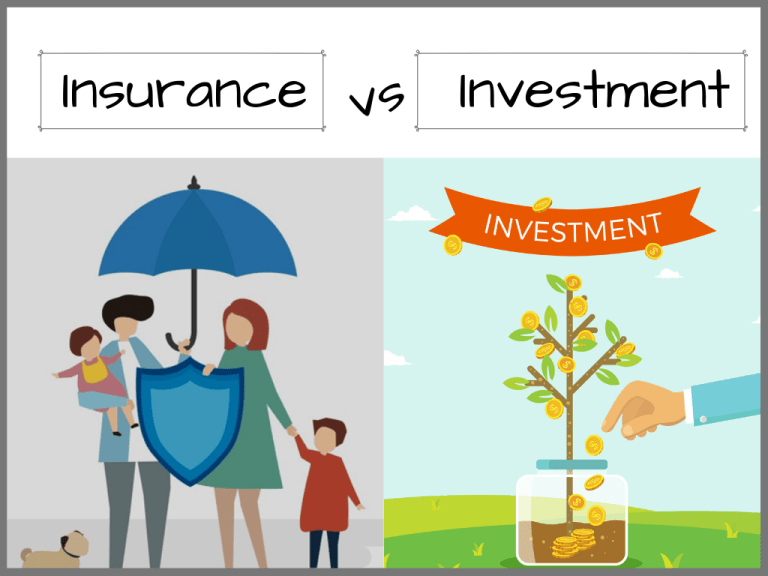
INSURANCE VS INVESTMENT

In today’s world, it is very easy to confuse Insurance with Investment. One might feel that he/she is investing in their future and decreasing their future financial burden because he/she purchased an insurance policy. Let’s take a look at the definition of insurance and investment.

Insurance refers to a contract or policy in which an individual or entity receives financial protection or reimbursement against losses. It protects the insured against risk of losses or damage.

Investment, on the other hand, refers to an asset or item acquired with the goal of generating income or appreciation. For example, real estate, mutual funds, shares etc.

With the increase in types of insurance policies and persuasive insurance sales representatives, people tend to think of insurance as investments. However, Insurance merely provides protection in the event of loss, which may or may not arise. In case of no loss or damage, sum total of all the insurance premium paid is profit for the insurance company.

On the other hand, the main purpose of an investment is to generate income by providing returns (dividends and interest) and/or capital gains (value appreciation; increase in price). Insurance does not provide any substantial returns. It merely provides reimbursement in the event of loss/damage and therefore, it is not an investment.

Do you need Insurance? If yes, what kind?

Insurance planning is essential to protect against different kinds of risks and to be financially prepared in case of loss or damage to life or property. However, it should not be used a means to invest.

There are different types of insurance which can be broadly classified into Personal, Property and Liability. There are three types of insurance that you must have to protect against risk, not as an investment: Health insurance, Term life insurance and Automobile insurance.

Health insurance is a must to ensure that in case of an accident or injury, hospital and medical bills don’t eat away your savings.

Term life insurance ensures that in case of death of the earning member of the family, the family has enough to survive for a substantial period of time. Term life insurance has a fixed period and hence, has a very low monthly premium with a decent coverage. However, if the policy expires and the insured is still alive, the insured does not get any amount back. So, this policy should only be taken by the earning member at the right life stage in case he/she does not own enough assets to leave behind for his/her family.

Automobile Insurance (third party) is mandated by the Government of India on the purchase of a vehicle and hence, every vehicle owner should have one.

Other types of insurances sold and bought in the name of ‘investment’ like Endowment plans, Money back policy and the new policy called Unit-linked insurance plans (ULIP) which allows you to invest in the stock market should be avoided at all costs.

It is much more profitable to invest in the market through mutual funds or investor’s Demat account than to do the same through insurance companies. The rate of return in the market is much higher and it doesn’t cost as much as Insurance.

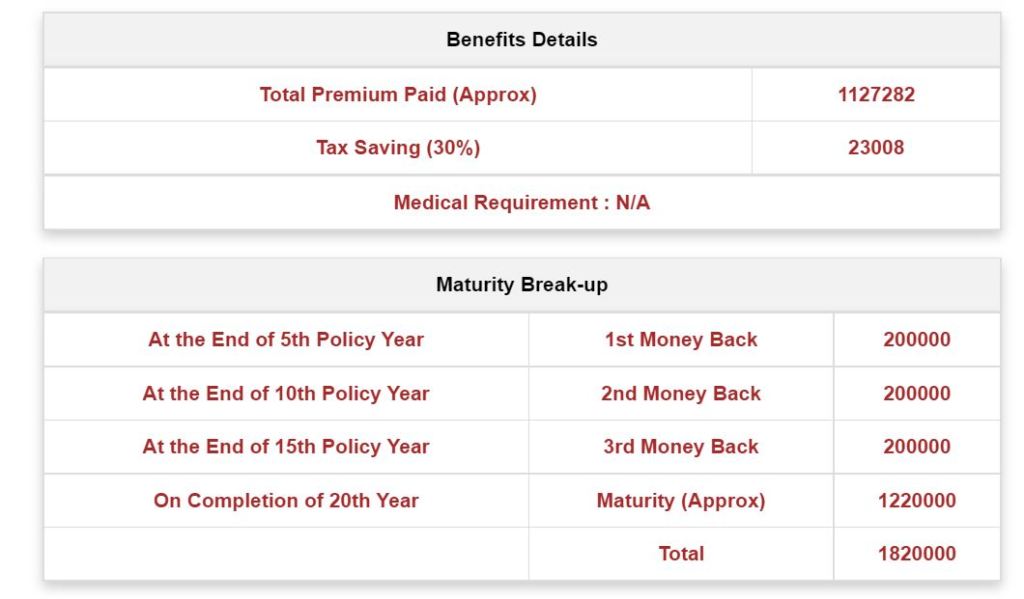
For example, if you buy Money Back insurance plan with a policy term of 20 years with ₹10,00,000 assured cover, the monthly premium calculated on LIC premium calculator comes out to be around ₹6300-6500 per month.

As calculated above, the total premium paid is ₹11,27,282 and the total amount received is ₹18,20,000. The total profit/return (approx.) is only ₹6,90,000 in 20 years. The return on investment (Return/Total Amount paid x 100) is only 61%.

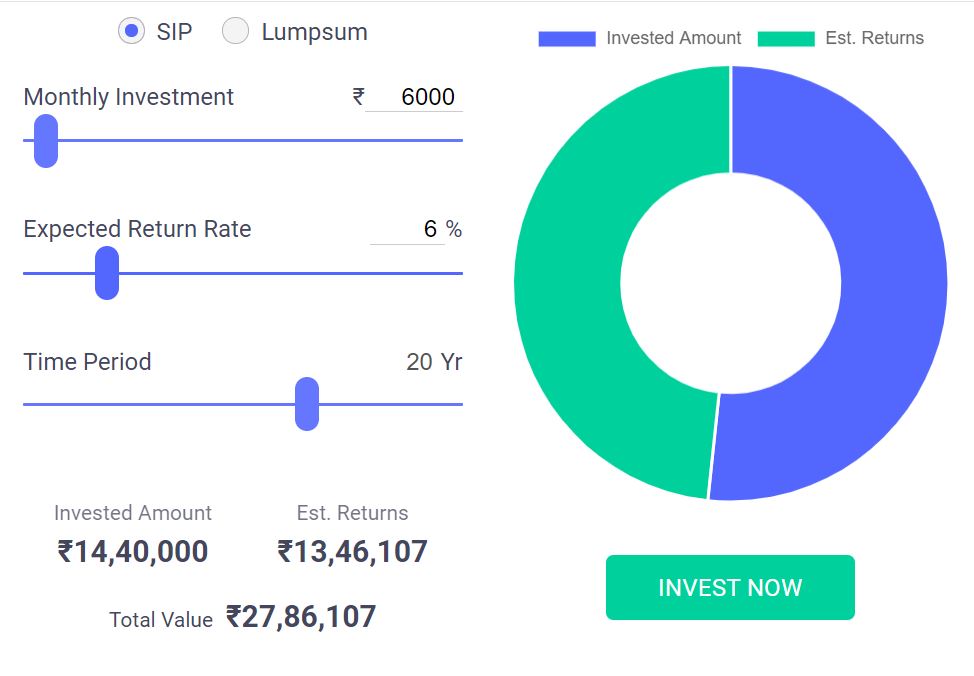
However, if the same amount is invested in SIP of any instrument with a return rate of just 6% for the same time period (20 years), the returns (calculated on Groww SIP calculator) are much higher.

₹6000 rupees invested monthly in any instrument with a return rate of only 6% for 20 years gives a return of ₹13,46,000 making the total value of the investment ₹27,86,000. The ROI (Return/Total Amount paid x 100) in this scenario is 93%.

Conclusion

Although Insurance is an essential part of Financial Planning to protect against different kinds of risks which varies from person to person, it should not be mixed with Investment. For greater returns and growth, investors should directly invest in the market or in any other instrument which suits their risk appetite and capacity.