The French Revolution (1789 -1799)

The French Revolution was a period of radical social and political upheaval that lasted from 1789 to 1799. It was a time of great change and transformation in France, as the old regime of absolute monarchy and aristocratic privilege was overthrown and replaced with a new system of democratic government and social equality.


Source – Pinterest.com

The causes of the French Revolution were many and varied, but they can be traced back to the economic, social, and political problems that France was facing in the late 18th century. The country was burdened with a heavy debt, which had been incurred from years of costly wars and lavish spending by the monarchy. This debt was exacerbated by a poor harvest in 1788, which led to widespread famine and starvation.

At the same time, there was growing discontent among the French people, who were unhappy with the way that the country was being run. The monarchy was seen as corrupt and ineffective, and the aristocracy was viewed as parasitic and out of touch with the needs of ordinary people.

The Revolution began in 1789, when a group of deputies from the Third Estate (the common people) gathered in Versailles to demand political representation and reform. When the king refused to listen to their demands, the people of Paris rose up in revolt, storming the Bastille prison on July 14, 1789.

The fall of the Bastille was a turning point in the Revolution, and it marked the beginning of a period of radical change and experimentation. Over the next few years, France was governed by a series of different regimes, as the country struggled to find a new system of government that would be fair and effective.

The early years of the Revolution were marked by a series of important reforms, including the abolition of feudalism and the establishment of a system of universal education. However, the Revolution was also marked by violence and bloodshed, as rival factions fought for control of the government and executed their opponents.

The most violent period of the Revolution was the Reign of Terror, which lasted from 1793 to 1794. During this time, thousands of people were arrested and executed on suspicion of being counter-revolutionaries. The leader of this period, Maximilien Robespierre, was eventually overthrown and executed himself in 1794, bringing an end to the Reign of Terror.

The Revolution came to an end in 1799, when Napoleon Bonaparte seized power in a coup d’etat and established the First French Empire. Although Napoleon was a product of the Revolution, he represented a return to authoritarian rule, and his reign was marked by military conquest and imperial expansion.

Overall, the French Revolution was a period of profound change and transformation in France. It marked the end of the old regime and the beginning of a new era of democratic government and social equality. However, the Revolution was also marked by violence and bloodshed, and its legacy continues to be debated and contested to this day.

Why developing countries are so poor?

Natural, economic and social resources are the major components of economic development. But it is observed that some countries have limited resources yet development has taken place, for e.g. Switzerland, Denmark, Japan, etc. This is mainly due to human efforts and advance technology. On the other hand some countries have lot of resources yet they are less developed. 

Source – Blogger

In these countries, the wealth is unevenly distributed among the people. Rich people have excessive wealth, which is continuously increasing, while the poor are becoming more poor. Most of the people in these countries are engaged in subsistence agriculture. It is associated with low productivity. Manufacturing and employment is low. The geographical distribution of the population is mostly rural, despite recent rapid urban growth. Due to high birth rate and death rate, the structure of the population has a high proportion of non-productive people under the age of fifteen. Due to poverty, people get insufficient and low quality food, therefore, there is a serious problem of malnutrition. Due to the type of food they get, their energy level is low and they develop diseases related to malnutrition. As a result, there is low life expectancy. Infant mortality rate is extremely high.

Most of the countries are facing environmental problems. Climate has a direct effect on human activities. Many developing countries are in regions where activity rates are reduced and the body is more prone to diseases, because of the hot and humid climate. Uncomfortable climate along with poverty, diseases, ignorance and poor diet has led to very less development.

The climate affects agriculture, transport and other economic activities, that influences the development of country. Tropical countries have frequent droughts and occasional heavy rainfall that result in erosion and leaching of soils. Extreme climatic conditions also affect transport facilities, especially roads, which are easily washed out. Similarly heat, dust and water can badly affect transport machinery such as vehicles or railway locomotives.

Natural resources are very important in the process of development, providing a base for industrial growth or earning foreign currency from their export. However, the distribution of the world’s energy resources, especially coal and oil is very uneven. Many developing countries lack the raw material. Whereas the developed countries grow their wealth and power with these resources. On the other hand, the potential for hydro-electric and solar-generated energy is quite considerable in many parts of these countries. For example, Africa possesses 40 per cent of the world’s hydro-electric power potential. The difficulty is to realize this potential.

Despite their importance, lack of resources is not a problem of underdevelopment, because countries like Denmark, Switzerland and Japan have achieved high levels of development on a very limited resource base. Resources are neutral and only can be useful, when it applies technology & will to use it. Many of the problems arising from climatic difficulties can also be solved by the use of medical facilities, pesticides, scientific farming practices and so on. Those countries with an abundance of natural resources certainly have much better prospects for development, than those which do not have them. But in the regions where natural resources are in abundance, but the region is socio- economically backward, such regions fails to take advantage of the favorable environment. Hence regions remain underdeveloped.

There is a serious shortage of capital in the developing countries to finance the establishment of industry, agricultural improvement, and transport systems and so on. The size of the domestic market in these countries is often not large enough to sustain industrial development, because the purchasing power of the consumer is too low. The problem is compounded by the fact that, it is extremely difficult for a developing country to break into international markets, where they have to compete with the advanced industrial producers of the developed world.

The infrastructure in the less developed countries of the world is poorly developed. Power supply, transport networks, industrial and commercial services, education facilities are the elements that form the framework for the economic activity to develop. Such facilities are very expensive to establish and they give only small returns. The economies of most developing countries are imbalanced and inefficient. Despite the fact that at least 50 to 90 per cent of employment is in agriculture. On the other hand, some primary commodities, such as oil or scarce minerals, are rapidly becoming expensive, so the poor countries cannot afford to buy them. For example, minerals such as Copper, Tin, Zinc, and fuels such as mineral oil have become very expensive. The developing countries may not be able to compete with the developed countries to buy them. It might be argued that, there is a vast hydroelectric power potential in the tropics, which will help to solve these problems, but such installations are very expensive.

Sri Ganesh Nazre

 Articles written by Sri Ganesh Nazre

1 Nature of Bhakti Literature and its contribution to Indian Culture https://track2training.com/2023/01/29/nature-of-bhakti-literature-and-its-contribution-to-indian-culture/
2 How is India an age-old friend of Sri Lanka? http://track2training.com/2023/01/30/how-india-is-an-age-old-friend-of-sri-lanka/
3 The Medieval Indian Temple Sculptures Representing The social life of those days https://track2training.com/2023/01/31/the-medieval-indian-temple-sculptures-representing-the-social-life-of-those-days/
4 Under what circumstances can the Financial Emergency be proclaimed by the President of India? https://track2training.com/2023/02/01/under-what-circumstances-can-the-financial-emergency-be-proclaimed-by-the-president-of-india/
5 Clarify how mid-eighteenth century India was beset with the spectre of a fragmented polity. https://track2training.com/2023/02/02/clarify-how-mid-eighteenth-century-india-was-beset-with-the-spectre-of-a-fragmented-polity/
6 challenges in pds in india https://track2training.com/2023/02/21/what-are-the-major-challenges-of-the-public-distribution-system-pds-in-india/
7 the main contributions of Gupta period and Chola period to Indian heritage and culture https://track2training.com/2023/02/23/the-main-contributions-of-the-gupta-period-and-chola-period-to-indian-heritage-and-culture/
8 Analyzing the salience of ‘sect’ in Indian society vis-a-vis caste, region, and religion https://track2training.com/2023/02/23/analyzing-the-salience-of-sect-in-indian-society-vis-a-vis-caste-region-and-religion/
9 The 5 methods used by the Farmers’ organizations to influence the policy-makers in India and how effective are these methods? https://track2training.com/2023/02/06/the-5-methods-used-by-the-farmers-organizations-to-influence-the-policy-makers-in-india-and-how-effective-are-these-methods/
10 How does the cryosphere affect global climate? https://track2training.com/2023/02/07/how-does-the-cryosphere-affect-global-climate/
11 Explore and evaluate the impact of ‘Work From Home’ on family relationships https://track2training.com/2023/02/15/exploration-and-evaluation-of-the-impact-of-work-from-home-on-family-relationships/
12 The forces that influence ocean currents and their role in the fishing industry of the world https://track2training.com/2023/02/23/the-forces-that-influence-ocean-currents-and-their-role-in-the-fishing-industry-of-the-world/
13 Are tolerance, assimilation and pluralism the key elements in the making of an Indian form of secularism? https://track2training.com/2023/02/23/are-tolerance-assimilation-and-pluralism-the-key-elements-in-the-making-of-an-indian-form-of-secularism/
14 How did Communalism manifest in Indian political scene? Explain the background of the passing of the momentous Pakistan Resolution. https://track2training.com/2023/02/23/how-did-communalism-manifest-in-the-indian-political-scene-explain-the-background-of-the-passing-of-the-momentous-pakistan-resolution/
15 Assess the contributions of Ishwarchandra Vidyasagar to the making of modern India. https://track2training.com/2023/02/23/assess-the-contributions-of-ishwarchandra-vidyasagar-to-the-making-of-modern-india/
16 “Latecomer” Industrial revolution in Japan involved certain factors that were markedly different from what west had experience. https://track2training.com/2023/02/23/latecomer-industrial-revolution-in-japan-involved-certain-factors-that-were-markedly-different-from-what-the-west-had-experienced/
17 Africa was chopped into states artificially created by accident of European competition. https://track2training.com/2023/02/25/how-was-africa-chopped-into-states-artificially-created-by-the-accident-of-european-competition/
18 Critically examine the effects of globalization on the aged population in India. https://track2training.com/2023/02/25/the-effects-of-globalization-on-the-aged-population-of-india/
19 How difficult would have been the achievement of Indian independence without Mahatma Gandhi? https://track2training.com/2023/02/25/indian-independence-without-mahatma-gandhi/
20 To what extend can Germany be held responsible for causing the two World Wars? https://track2training.com/2023/02/25/can-germany-be-held-responsible-for-causing-the-two-world-wars/
21 The economic significance of the discovery of oil in the Arctic Sea and its possible environmental consequences? https://track2training.com/2023/02/25/the-economic-significance-of-the-discovery-of-oil-in-the-arctic-sea-and-its-possible-environmental-consequences/
22 the role of women in the freedom struggle especially during the Gandhian phase https://track2training.com/2023/02/25/the-role-of-women-in-the-freedom-struggle-especially-during-the-gandhian-phase/
23 Characteristics and types of primary rocks https://track2training.com/2023/02/20/characteristics-and-types-of-primary-rocks/
24 Is inclusive growth possible under market economy ? State the significance of financial inclusion in achieving economic growth in India. https://track2training.com/2023/02/21/is-inclusive-growth-possible-in-a-market-economy-state-the-significance-of-financial-inclusion-in-achieving-economic-growth-in-india/
25 the differences in the approach of Subhash Chandra Bose and Mahatma Gandhi in the struggle for freedom https://track2training.com/2023/02/25/subhash-chandrabose-vs-mahatma-gandhi-in-the-struggle-for-indias-freedom/
26 Has the formation of linguistic states strengthened the cause of Indian unity? https://track2training.com/2023/02/27/has-the-formation-of-linguistic-states-strengthened-the-cause-of-indian-unity/
27 To what extent globalisation has influenced the core of cultural diversity in India? https://track2training.com/2023/02/26/to-what-extent-globalization-has-influenced-the-core-of-cultural-diversity-in-india/
28 the significance of the lion and bull figures in Indian mythology, art and architecture https://track2training.com/2023/02/27/the-significance-of-the-lion-and-bull-figures-in-indian-mythology-art-and-architecture/
29 Clean energy is the order of the day https://track2training.com/2023/02/26/how-clean-energy-is-the-order-of-the-day/
30 the role of the Vice –Presidents of India as the chairman of the Rajyasabha https://track2training.com/2023/02/27/the-role-of-the-vice-president-of-india-as-the-chairman-of-the-rajyasabha/

International Trade

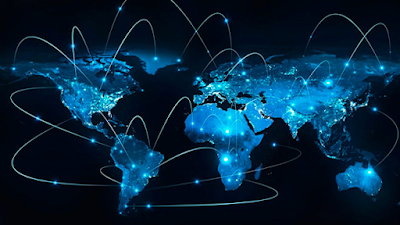
International Trade is the exchange of capital, goods and services between two countries. Certain countries produce more than what they require for their own internal consumption. Steppe and Prairie Plain regions in USA, Canada and Russia have a surplus production of wheat. The Middle East countries have surplus production of oil and the temperate forests have surplus forest products. Such surplus areas send their commodities to the countries having a demand for such products. Thus temperate wheat is send in many tropical countries of the world. Oil from the Middle East countries is sent to oil-deficit countries like Japan, India. Paper pulp is sent from Canada to European and Asian countries.

Source – https://blog.ipleaders.in/

Since, historical times, Kashmiri woolen shawls and carpets, from North India, spices and silk from South India and Chinaware from China were sent in the world market. At that time, international trade was carried out between different countries along the land routes. It was restricted only to the commodities which were light in weight and valuable. Due to modern means of water transport, fastest air cargo, growing production of agricultural commodities, minerals, manufactured goods, the modern international trade has grown to such a scale that it has become the base of the world economies. Economy of certain countries is entirely dependent on their exports. Economy of Middle East countries is based on their export of oil. On the other hand, industrial economy of Japan is dependent on the import of raw materials and export of manufactured goods.

The USA, Canada, Western Europe, Russia, Japan, South Korea and Australia are the leading countries with an advanced industrial economy. Diverse manufacturing industries are the basis of economy of these countries. These countries maintain their supremacy in manufacturing through researches and developing new technologies. The economy of the agricultural countries is dominated by commercial or subsistence agriculture. USA, Canada, Australia, Russia have a dominantly commercial agriculture, while China, India, south Asia have a dominantly subsistence type agriculture. Countries having commercial agriculture export their surplus production, while countries having subsistence agriculture consume most of their production locally.

Population plays an important role in the development of trade. Countries with a huge population such as China, India, Bangladesh etc, consume most of their production locally, and very little is left for export trade. On the other hand, less populated countries like Australia, Canada, Argentina, Russia etc. are able to export a big quantity of their production. The industrial countries have higher standards of living, promotes international trade. 

Industrialization, advanced transportation, globalization, multinational corporations, and outsourcing are all having a major impact on the international trade system. Increasing international trade is crucial to the continuance of globalization. Without international trade, nations would be limited to the goods and services produced within their own borders. International commodities are more costly than domestic trade because of long distance, tariffs, time costs, border delays etc.

Balance of trade 

In any type of exchange, the goods which are sold out of the country are the exports. The goods which are purchased from other countries are the imports. The volume of exports and imports determine the Balance of Trade. Balance of trade is the difference between the monetary value of exports and imports of output in an economy over a certain period. It is the relationship between a nation’s imports and exports. It is of three types,

a. When the value of imports is more than the value of the exports, it is known as negative balance of trade. A negative balance is referred to as a trade deficit.

b. When the value of exports is more than that of its imports, it is known as positive balance of trade. A positive balance is known as a trade surplus.

c. Balanced trade is the condition in which the value of exports and imports is more or less the same.

On the basis of the participating countries, international trade is divided into two types:

i) Bilateral trade– when it is carried out between two countries

ii) Multilateral trade -when it is carried out among many countries. Excluding light and valuable commodities, most of the international trade is carried out through water transport. The ships carrying cargo start and finish the journey at places which are known as ports. A port is a gateway to the land from the sea.

5 true stories prove multiple universes do exist!

 Would you believe me if I say parallel universes exist and are a ‘real’ thing? Well if no, I would request you to continue reading ahead. We have all come across the terms like parallel universes/ multiple universes several times in the fictional books that we read. But who knew that those stories weren’t just a myth or an old-wives’ tale. Here are 5 more real-life stories that will leave you dumbstruck.

Source – https://science.howstuffworks.com/

1. A guy at Tokyo International Airport who was supposed to be from a non-existing country

Allegedly, this man told customs he was in Japan for business, and had legitimate visa stamps, currency from multiple European countries, cheques from an unknown bank, and a driver’s license issued in Taured. They sent him to a hotel while things were sorted out, while two immigration officers stood outside of his hotel door. But when they went to check on him in the morning, he’d vanished. This was from 15 stories up, above a busy street, so escaping through a window was unlikely, if not impossible. The Tokyo Metropolitan Police Department searched, but never located the man from Taured again.

2. The green-skinned children who simply just appeared in Woolpit

Back in the 12th century, two children, a brother and sister, allegedly popped up in the village of Woolpit, in Suffolk, England. Both had greenish-colored skin, spoke an unknown language, wore bizarre clothing, and initially refused to eat any food other than raw beans. They were taken in, cared for, and eventually they adapted, developing a taste for food and losing the green hue in their skin. Shortly after, the boy became sick and died, but after learning to speak English, the girl explained that she and her brother were from a place where the sun didn’t shine bright, and it was perpetual twilight. She and her brother were there, herding their dad’s cattle, when they heard some loud noise, and were suddenly in a new place where they were eventually discovered, in Woolpit. The girl grew up and integrated herself into her new surroundings. Though it remained unknown how she and her brother got there, the girl went on to get married and live her life here, in a dimension that might not actually be her place of origin.

3. The cabin in the Markawasi Stone Forest that leads to a parallel dimension

One day, a woman and her friends were camping at a site near the mysterious forest, when they heard music coming from a small, stone cabin that was lit up by torches. They claimed to see people wearing 17th-century fashion dancing inside, and the curious woman was drawn to it, so she headed over and tried to enter. Before she could get inside, a friend pulled her away, and half of her body immediately became paralyzed — the half that had entered the cabin.
Some believe that the woman partially entered a dimensional gateway, and when she was pulled out, she experienced a shift that threw off her nervous system, resulting in her partial paralyzation.

4. The strange man who wound up shipwrecked in Germany from an unknown world

So this story goes, a peculiar guy popped up in a village, where he was picked up and questioned by authorities. The only comprehensible language he spoke was a broken variation of German, but he said his name was Jophar Vorin, and claimed to come from a part of the world known as Sakria. He conveyed that he was searching for his long-lost brother, whom he’d been separated from during a shipwreck. While he had geographical information regarding his home planet, such as five compartments known as Sakria, Aflar, Aslar, Auslar, and Euplar, he couldn’t trace his route on shore, and he would wind up living in Berlin, where he was a topic of discussion amongst the scientific, and simply curious, communities.


5. The universe in which the Beatles never broke up
In 2009, a man named James Richards was in Livermore California driving home from Turlock with his dog. He claims that when he pulled over to let the pup empty her bladder; she sprinted after a rabbit, and he followed her, but tripped, knocking himself unconscious. When James came to, he was next to an odd machine, in the company of a man named Jonas who claimed to have found his unconscious body while on a work trip for an interdimensional travel agency.
While they were together, Jonas and Richards wound up chatting about the pop culture in their respective universes, and discovered that not only did the Beatles also exist in this dimension, but they were all still alive and actively making music. Richards gained a cassette tape labeled “Everyday Chemistry,” which contained Beatles songs that never existed in our dimension. He even uploaded the songs to a website and called it TheBeatlesNeverBrokeUp.com

5 alarming signs that you might not be doing okay

Here is a small poem that represents the mind(thoughts) of a person dealing with anxiety or depression, 

I wake up everyday wishing,

my eyebags to not be heavier than my emotional baggage

and my room to not be messier,

than the thoughts inside my head

is this something that everyone

wishes for at my age?

or is it just me?

who stares at the ceiling every night

while lying on her bed


why does only the night sky see me cry?

why does my shadow just show up in daylight and not at night,

when I’m ready to embrace it all?

why my secrets, darker than the sky, seem deeper than the silence the night holds.

the silence comforts sometimes,

but sometimes it just creeps straight into every vein in my body,

I never wished for much,

but my thoughts to not be louder,

than the silence the night holds

– Sadhana K


How to Cope With Anxiety and Depression | Everyday Health

Source – https://www.thestatesman.com/

You know those feelings of general discontent, sadness, and hopelessness? If you have them, don’t ignore them. They could be signs of something much worse, like depression. Let’s check out the signs-

1. You feel fatigue and don’t sleep (or sleep too much)

Depression strips you of your energy and makes you feel lethargic. You stop doing things you enjoy because you feel exhausted, and begin sleeping excessively, or not sleeping at all (insomnia).

2. Your emotions are all over the place.

One moment, you’re feeling irritable and going off on someone in a full display of anger. The next, you’re crying. Depression can swing your moods uncontrollably.

3. Your topics of conversation have turned morbid.

Suicides rarely come without the symptoms that show up beforehand. Depressed people will often talk about it. If you’re in the company of a good friend who has flipped the morbid switch to “on” and is now talking about death and dying, stay close and monitor him. He may be on the doorstep of a suicide attempt.

4. Your outlook on life has done a 180.

Having a hopeless outlook on life is the most common symptom of depression. Associated feelings of worthlessness, self-hate, or inappropriate guilt may ride shotgun. You vocalize thoughts like “It’s all my fault,” and “What’s the point?”

5. You’ve lost interest in the things you enjoy.

Depression can rob you of the things you love, making you withdrawing from the very activities you once looked forward to — sports, socializing with friends, hobbies, etc.

What to do…

If depression has crept in, don’t despair. With professional help and a strong support system of loving family and friends, you can overcome it. Here’s what you can do:

  • Please sleep. Don’t set the alarm. Just sleep until you wake up.
  • Do not isolate yourself—find community and support.
  • Don’t internalize your feelings. Be totally present with them.
  • Express gratitude.
  • Journal your feelings daily to help release those negative emotions.
  • Lean on your faith, or something greater than you.
  • Rediscover the activities and hobbies that bring you peace, joy, and vitality.
  • Exercise daily. Fifteen minutes of cardio is all it takes.
  • Practice mindfulness.


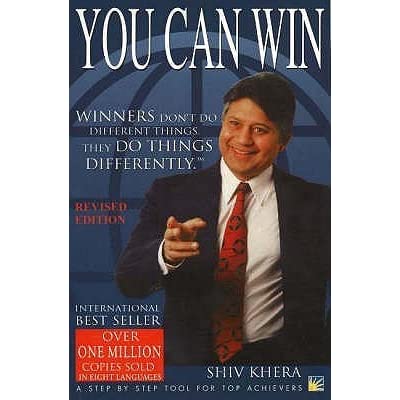
You Can Win – A step by step tool by achievers


Winners don’t do different things; they do things differently.”

YOU CAN WIN - SHIV KHERA Reviews, Summary, Story, Price, Online, Fiction,  Nonfiction

You Can Winis authored by Shiv Khera and was released in 1998. Since then, it has become an international bestseller. This book has been translated into sixteen languages and sold more than two million copies around the world. This book has a title in Hindi Jeet Aapki. The writer is well known as a motivational speaker, educator, activist, business consultant, entrepreneur, etc.

Both you and I want to win. This is a fact, as well as everyone’s heartfelt wish. The new revised edition of the book, titled ‘You Can Win,’ emphasizes of winning and focuses on what it takes to succeed. The book presents inspiring examples to follow, allowing one to create a triumphant, meaningful, and satisfying life. The book provides the appropriate orientation and adds ingredients for the suitable formulas needed for success in life. There are eleven chapters in this book.

The author provides the reader with a good attitude and sends the reader on the proper paths in life right from the start of the first chapter. In reality, the author aspires to have a positive outlook on life that will enable him or her to win and thrive. An optimistic outlook on life can aid in overcoming all obstacles in one’s path to achievement. He also suggests to the reader to achieve one’s goal in life, one must embark off on an effective action plan, too.

The author encourages the reader to develop confidence by practicing positive thinking in their daily lives. A cheerful outlook on life has the same effect as medicine. It heals and motivates one to continue on with one’s life. The remaining chapters focus on adopting a good attitude toward life, regardless of what obstacles may arise or what walks of life one may belong to. Self-esteem must be developed. This can be beneficial in a variety of situations. This can assist one in dealing with life’s obstacles. Personal growth, according to the author, is a critical component of life achievement. As a result, a few chapters in this book reflect on and emphasize personality traits, interpersonal skills, positive thinking, habits, and choosing appropriate life objectives.

To make it more fascinating, the writer incorporates moral stories and anecdotes into his works and explains them to the best of his ability. The morals of novels do indeed convince the reader that nothing is truly impossible in life. The most important thing in life is to develop the proper mindset and formula for success.

The author also underlines the importance of being proactive in order to control, rather than be governed by, events in life. He encourages the reader to transform their weaknesses into strengths by cultivating positive outlooks on life, applying positive strokes to oneself and others, and developing positive habits and character. The author also instructs the reader on how to develop mutual respect and loyal relationships with each other.

ICMR-2023: International Conference on Multidisciplinary Research – 2023

Dear Sir/Madam,

Greetings from ICMR 2023

The International Conference on Multidisciplinary Research-2023 will be held on 22nd and 23rd April 2023 at Virtual ModeThis multi-disciplinary research conference aims to provide an opportunity for academicians, researchers, scientists, and industry experts to present the results, in theory, methodology, and applications of different areas of Engineering Sciences and Social Sciences under one roof. It is a good platform for researchers to share and discuss their ideas and views with peers. Authors are asked to contribute to the conference by submitting articles/papers that demonstrate their research results, projects, innovations, surveying works, and experiences of an industry that define significant advances in the areas of Engineering, Sciences, Business, Architecture, Commerce, Computer Applications, Humanities, and Social Sciences. 

The ICMR – 2023 would offer several invited lectures from well-known speakers all over the world. We warmly welcome experts, academicians, scholars, and entrepreneurs to participate in this international academic exchange activity in the field of applied sciences. We hope that the ICMR-2023 outcome will lead to significant contributions to the knowledge base in these up-to-date scientific fields. All the accepted papers will be published in a special edition of Reputed Journals of UGC Care list/Scopus indexed/SCI indexed Journals.

Important Dates:

Paper Submission Deadline: 20 March 2023 (Extended) 

Acceptance Notification: 10 April 2023 (Extended) 

Last Date of Registration: 10 April 2023

For more details Visit Conference URL: https://icmr.edupub.org/

Submission Guidelines

Authors are invited to submit regular (full) papers for presentation at the conference, describing original, previously unpublished work, which is not currently under review by another conference, or journal. Regular papers should present novel perspectives within the general scope of the conference. Papers should not be more than 8 pages in length. Use ‘Times New Roman font, size 12, and single-column layout shall be uploaded via easy chair paper submission. Camera-ready papers can be submitted after acceptance using the guidelines given on the website.

Paper Submission Link: https://icmr.edupub.org/ or https://icmr.edupub.org/p/submission.html

Please encourage your peers, friends, researchers, seniors, subordinates, and students in your network to submit their quality submissions. All papers presented at the conference will be submitted for inclusion in the UGC Care/Scopus Indexed Journals and Conference Proceedings published as a book with ISBN.

Authors can also submit their papers through email at icmr2023@edupub.org

Paper Publication and Indexing

All submitted papers will be reviewed by technical committees of the conference (including a similarity plagiarism check). All the accepted and registered conference papers will be published in the Conference Proceedings with ISBNs and will be indexed by Google Scholar. All peer-reviewed and selected papers of the conference will be published in the following UGC Care / Scopus indexed / SCI indexed international journals with respect to their area of research. 

  1. Advances and Applications in Mathematical Sciences 
  2. International Journal of Mechanical Engineering 
  3. International Journal of Special Education
  4. NeuroQuantology 
  5. Seybold Report 
  6. International Journal of Early Childhood Special Education

Creating a ultimate chat bot

 What type of chatbot are you using? What color is your chatbot? just joking! Chatbot basically plays an important role or essential role in the upcoming future focusing on teenagers most. what does make us different and others the same? it’s a priority that we focus on slang language and its improving human and AI connection. Instead of grabbing every feature, we focus on college/school students and the primary goal is to make a reliable and student-friendly chatbot where they can learn and develop at the same time. 

Developer mode isn’t being provided by every other software whereas we provide it free of cost and let them develop apps with us.

Sakshi Raj

Articles written by Sakshi Raj


https://www.pen2print.org/2021/07/how-much-important-is-self-motivation.html

https://www.pen2print.org/2021/07/how-to-become-best-version-of-yourself.html

https://www.pen2print.org/2021/07/how-to-deal-with-stress-before-it.html

https://www.pen2print.org/2021/07/digital-era-challenges-and-opportunities.html

https://www.pen2print.org/2021/07/five-ways-how-you-can-keep-your-mind.html

https://www.pen2print.org/2021/07/how-to-use-linkedin-more-effectively.html

https://www.pen2print.org/2021/07/five-simple-steps-to-boost-your.html

https://www.pen2print.org/2021/07/the-evolution-of-hindi-cinema.html

https://www.pen2print.org/2021/07/is-third-wave-closer.html

https://www.pen2print.org/2021/07/social-media-friend-or-foe.html

https://www.pen2print.org/2021/07/human-beings-and-environment.html

https://www.pen2print.org/2021/07/is-your-body-getting-enough-protein.html

https://www.pen2print.org/2021/07/ms-dhoni-legend.html

https://www.pen2print.org/2021/07/cricket-not-just-game-in-india.html

https://www.pen2print.org/2023/01/climate-change.html

https://www.pen2print.org/2023/01/the-purpose-of-life-and-how-to-find-it.html

https://www.pen2print.org/2023/01/education-in-india.html

https://www.pen2print.org/2023/01/latest-agricultural-innovations.html

https://www.pen2print.org/2023/01/what-causes-depression.html

https://www.pen2print.org/2023/01/a-new-bangalore-start-up-hoovu-fresh.html

https://www.pen2print.org/2023/02/precision-farming-and-its-scope-in-india.html

https://www.pen2print.org/2023/02/tools-used-in-agriculture-to-protect.html

https://www.pen2print.org/2023/02/vertical-farming.html

https://www.pen2print.org/2023/02/what-do-you-mean-by-fear-of-failure.html

https://www.pen2print.org/2023/02/dragon-fruit-and-its-benefits.html

https://www.pen2print.org/2023/02/climate-smart-agriculture.html

https://www.pen2print.org/2023/02/climate-crisis-and-agriculture.html

https://www.pen2print.org/2023/02/changing-climate-and-its-impact.html

https://www.pen2print.org/2023/02/what-is-climate-smart-agriculture.html

https://www.pen2print.org/2023/02/sustainable-garden.html