National Webinar on Multidisciplinary and Holistic Education

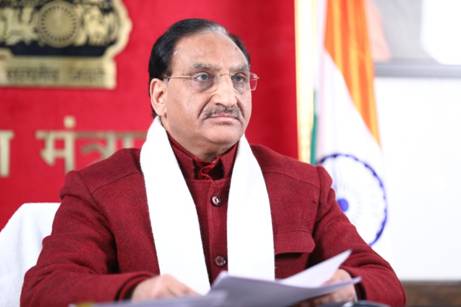
 As part of the celebration of one year of transformative reforms under National Education Policy, 2020, Government of India is organising a series of theme-based webinars on different aspects of National Education Policy, 2020. Multidisciplinary and Holistic Education being one of the biggest thrust area of NEP, University Grants Commission organised a National Webinar on Multidisciplinary and Holistic Education today. Minister of State for Education Dr. Subhas Sarkar delivered the address. Senior officials from Ministry of Education and University Grants Commission attended the Webinar.

National Webinar on Holistic and Multidisciplinary Education on 02.08.21 from 12:30PM onwards https://t.co/9xsRiYjYmw

— UGC INDIA (@ugc_india) August 2, 2021

Delivering the inaugural address, Minister of State for Education, Dr. Subhas Sarkar emphasised upon the long tradition of holistic and multidisciplinary learning, from the times of Takshashila and Nalanda. The Minister said, in ancient India, attention was given to overall personality development. He stressed upon the need to re-build the model of education where one is empowered in every aspect of life. Further elaborating on the Multidisciplinary Education, the Minister mentioned, now the student will not be limited by the boundaries of science, commerce and humanities. On holistic education, the Minister said 21st century skills like active learning, out of box thinking, critical thinking, effective communication, collaboration, technological skills and life skills must be developed in our learners. Dr. Sarkar also reminded the academia about their responsibility of giving wings to the aspirations of new generation. 

Shri Amit Khare, Secretary, Higher Education in his opening remarks shed light on the formulation and fundamentals of National Education Policy, 2020. Shri Khare focused on the role of NEP, 2020 in realising a self-reliant India and illustrated the role of collaboration among institutions, glue grants and inter section of disciplines in realising multidisciplinary education.

Prof. D.P. Singh, Chairman, UGC welcomed the Minister and other dignitaries. Stressing upon the vision of Swami Vivekanand in envisioning holistic perspective of education and stressed upon value-based education to learners. Prof. Singh during his concluding remarks highlighted different aspects of holistic education and flexibility through multiple entry-exit system.

The Webinar on Multidisciplinary and Holistic Education provided an opportunity to bring members of the committee on draft NEP, educationist, scientists and educational administrators on one platform. The first session of the Webinar was on the theme “Holistic Education” and was addressed by Prof. Rama Shankar Dubey, Vice Chancellor of Central University of Gujarat. Prof. Dubey focused on social and emotional literacy.  He also focused on assessment of student on high order skills, such as analysis, critical thinking and conceptual clarity to ensure better learning outcomes. 

Prof. M.K. Sridhar, Member, Committee for draft NEP and Member, UGC addressed the Webinar on the theme of “Multidisciplinary Education” in the second session. Prof. Sridhar provided an insight into the critical role of multidisciplinarity. He emphasised upon multidisciplinary education not as a replacement of existing disciplinary importance but as a supplement for having boundary crossing competencies along with deep competencies in one discipline among our students.

The thematic discussion moving on to the final session was on ‘Multiple Entry Exit through Academic Bank of Credit’ and featured Prof. V.K. Jain, Vice Chancellor, Tezpur University as the speaker. Prof.  Jain illustrated about qualification levels, credit requirements and other aspects of UGC Regulations on Academic Bank of Credits (ABC) and Guidelines for Multiple Entry-Exit System.

Prof. Nageshwar Rao, Vice Chancellor, IGNOU, Prof. Sunaina Singh, Vice Chancellor, Nalanda University, Prof. Badri Narayan, Director, G.B. Pant Social Science Institute, Prof. Anup Kumar Singh, Director General, Nirma University, Prof. Bhimaraya Metri, Director, IIM, Nagpur and Prof. Avinash Chandra Pandey, Director, IUAC made their remarks in different sessions. 

The Webinar was joined by academia, industry and Higher Education Institutions from across the country. Officers from different Ministry, UGC, AICTE and NCTE were also present in the Webinar.

Dissemination of the takeaways of the Webinar like competencies beyond discipline, innovative intervention of holistic education and features of multiple entry-exit and Academic Bank of Credits among the stakeholders will contribute in the realisation of the goals of NEP, 2020 in delivering holistic and multidisciplinary education and bringing in much needed flexibility into the higher education system.

Samagra Shiksha Scheme for School Education

 The Cabinet Committee on Economic Affairs, chaired by Prime Minister Shri Narendra Modi, has given its approval for continuation of the revised Samagra Shiksha Scheme for a period of five years i.e., from 2021-22 to 2025-26 with a total financial outlay of Rs.2,94,283.04 crore which includes Central share of Rs.1,85,398.32 crore.

Benefits:

The scheme covers 1.16 million schools, over 156 million students and 5.7 million Teachers of Govt. and Aided schools (from pre-primary to senior secondary level).

Details:

The Samagra Shiksha scheme is an integrated scheme for school education covering the entire gamut from pre-school to class XII. The scheme treats school education as a continuum and is in accordance with Sustainable Development Goal for Education (SDG-4). The scheme not only provides support for the implementation of the RTE Act but has also been aligned with the recommendations of NEP 2020 to ensure that all children have access to quality education with an equitable and inclusive classroom environment which should take care of their diverse background, multilingual needs, different academic abilities and make them active participants in the learning process.

The major interventions, across all levels of school education, proposed under the scheme are: (i) Universal Access including Infrastructure Development and Retention; (ii) Foundational Literacy and Numeracy, (iii) Gender and Equity; (iv) Inclusive Education; (v) Quality and Innovation; (vi) Financial support for Teacher Salary; (vii) Digital initiatives; (viii) RTE Entitlements including uniforms, textbooks etc.; (ix) Support for ECCE; (x) Vocational Education; (xi) Sports and Physical Education; (xii) Strengthening of Teacher Education and Training; (xiii) Monitoring; (xiv) Programme Management; and (xv) National Component.

Following new interventions have been incorporated in the revamped Samagra Shiksha based on the recommendations of the National Education Policy 2020:

  • In order to enhance the direct outreach of the scheme, all child centric interventions will be provided directly to the students through DBT mode on an IT based platform over a period of time.
  • The scheme will have an effective convergence architecture with various Ministries/ developmental agencies of the Centre and State Governments. The expansion of vocational education will be done in convergence with the Ministry of Skill Development and Entrepreneurship and other Ministries providing funding for Skills. The existing infrastructure of schools and ITIs and Polytechnics will be used to ensure optimum utilization of the facilities, not only for school going children but also for out of school children.
  • Provision of training of Master Trainers for training of Anganwadi workers and In-service teacher training for ECCE teachers.
  • Provision of upto Rs 500 per child for Teaching Learning Materials (TLM), indigenous toys and games, play based activities per annum for pre-primary sections in Government Schools.
  • NIPUN Bharat, a National Mission on Foundational Literacy and Numeracy to ensure that every child achieves the desired learning competencies in reading, writing and numeracy at the end of grade III and not later than grade V has been launched under the scheme with provision of TLM upto Rs 500 per child per annum, Rs 150 per teacher for teacher manuals and resources, Rs 10-20 lakh per district for assessment.
  • Specific   training   modules   under   NISHTHA  by NCERT to train Secondary teachers and Primary teachers.
  • Strengthening of infrastructure of schools from pre-primary to senior secondary, earlier pre-primary was excluded.
  • Incinerator and sanitary pad vending machines in all girls’ hostels.
  • Addition of new subjects instead of Stream in existing senior secondary schools.
  • Transport facility has been extended to secondary level @ upto Rs 6000 per annum.
  • For out of school children at 16 to 19 years of age, support will be provided to SC, ST, disabled children, upto Rs 2000 per child per grade to complete their secondary/senior secondary levels through NIOS/SOS.
  • Financial support for State Commission for Protection of Child Rights @ Rs 50 per elementary school in the state, for protection of child rights and safety.
  • Holistic, 360-degree, multi-dimensional report showing progress/ uniqueness of each learner in the cognitive, affective, and psychomotor domains will be introduced in the form of Holistic Progress Card (HPC).
  • Support for activities of PARAKH, a national assessment centre (Performance, Assessments, Review and Analysis of Knowledge for Holistic Development)
  • Additional Sports grant of upto Rs. 25000 to schools in case atleast 2 students of that school win a medal in Khelo India school games at the National level.
  • Provision for Bagless days, school complexes, internships with local artisans, curriculum and pedagogical reforms etc included.
  • A new component Appointment of Language Teacher has been added in the scheme- components of training of teachers and bilingual books and teaching learning material added, besides support for salary of teachers.
  • Provision made for all KGBVs to be upgraded to class XII.
  • Enhanced financial support for existing Stand-alone Girls’ Hostels for classes IX to XII (KGBV Type IV) of uptoRs 40 lakh per annum (earlier Rs 25 lakh per annum).
  • Training for 3 months for inculcating self-defence skills under ‘Rani Laxmibai Atma Raksha Prashikshan’ and amount increased from Rs 3000 to Rs 5000 per month.
  • Separate provision of stipend for CWSN girls @ Rs. 200 per month for 10 months, in addition to student component from pre-primary to senior secondary level.
  • Provision of annual identification camps for CWSN at block level @Rs. 10000 per camp and equipping of Block Resource centres for rehabilitation and special training of CWSN.
  • Provision for Establishment of New SCERT has been included and new DIETs in districts created upto 31st March 2020.
  • Setting up of assessment cell preferably at SCERT to conduct various achievement surveys, develop test materials & item banks, training of various stakeholders & test administration, data collection analysis and report generation, etc.
  • The academic support of BRCs and CRCs has been extended for pre-primary and Secondary level also.
  • Support   under   Vocational   Education   extended   to Government aided schools also in addition to Government Schools and grant/number of job roles/sections linked to enrolment and demand.
  • Provision of Classroom cum workshop for Vocational Education in schools serving as Hub for other schools in the neighbourhood. Provision of transport and assessment cost for schools serving as spokes has been made.
  • Provision of ICT labs, Smart classrooms including support for digital boards, smart classrooms, virtual classrooms and DTH channels have been provided.
  • Child tracking provision included for students of Government and Government aided schools
  • Support for Social Audit covering 20% of schools per year so that all schools are covered in a period of Five years.


Implementation Strategy and Targets:

The Scheme is implemented as a Centrally Sponsored Scheme through a single State Implementation Society (SIS) at the State level. At the National level, there is a Governing Council/Body headed by the Minister of Education and a Project Approval Board (PAB) headed by Secretary, Department of School Education and Literacy. The Governing Council/body will be empowered to modify financial and programmatic norms and approve the detailed guidelines for implementation within the overall Framework of the scheme. Such modifications will include innovations and interventions to improve the quality of school education.

In order to enhance the direct outreach of the scheme, all child centric interventions will be provided directly to the students through DBT mode on an IT based platform over a period of time.

The Scheme covers 1.16 million schools, over 156 million students and 5.7 million Teachers of Government and Aided schools (from pre-primary to senior secondary level) by involving all stakeholders of the school ecosystem i.e. Teachers, Teacher Educators, Students, Parents, Community, School Management Committees, SCERTs, DIETs, BITEs, Block Resource Persons, Cluster Resource Persons, Volunteers for providing quality, inclusive and equitable education. Further, the scheme will have an effective convergence architecture with various Ministries/ developmental agencies of the Centre and State Governments. As envisaged in NEP 2020, there will be a greater focus on imparting skills among the students. The expansion of vocational education will be done in convergence with the Ministry of Skill Development and Entrepreneurship and other Ministries providing funding for Skills. The existing infrastructure of schools and ITIs and Polytechnics will be used to ensure optimum utilization of the facilities, not only for school going children but also for out of school children.


Major Impacts:

The Scheme aims to universalize access to school education; to promote equity through the inclusion of disadvantaged groups and weaker sections, and to improve the quality of education across all levels of school education. The major objectives of the Scheme are to Support States and UTs in: 

  1. Implementing the recommendations of the National Education Policy 2020 (NEP 2020); 
  2. Implementation of Right of Children to Free and Compulsory Education (RTE) Act, 2009; 
  3. Early Childhood Care and Education; 
  4. Emphasis on Foundational Literacy and Numeracy; 
  5. Thrust on Holistic, Integrated, Inclusive and activity based Curriculum and Pedagogy to impart 21st century skills to the students; 
  6. Provision of quality education and enhancing learning outcomes of students; 
  7. Bridging Social and Gender Gaps in School Education; 
  8. Ensuring equity and inclusion at all levels of school education; 
  9. Strengthening and up-gradation of State Councils for Educational Research and Training (SCERTs)/State Institutes of Education and District Institutes for Education and Training (DIET) as nodal agency for teacher training; 
  10. Ensuring safe, secure and conducive learning environment and maintenance of standards in schooling provisions and 
  11. Promoting vocational education.


AtmaNirbhar Bharat:

Recognizing the crucial role of Foundational skills in the national development, it was announced under the ‘AtmaNirbhar Bharat’ campaign that a National Foundational Literacy and Numeracy Mission will be launched, for ensuring that every child in the country necessarily attains foundational literacy and numeracy in Grade 3 by 2026-27. In this context, “National Initiative for Proficiency in Reading with Understanding and Numeracy (NIPUN Bharat)” has been launched on 5th July 2021 under Samagra Shiksha.

Details and progress of scheme if already running:

The Scheme is being implemented as a Centrally Sponsored Scheme in partnership with State and UT Governments to support  the   States  and  UTs  in  universalizing  access  and improving quality of school education across the country. The achievements of Samagra Shiksha are as follows:


•      During 2018-2019 to 2020-2021, 1160 schools have been upgraded at Elementary, Secondary and Higher Secondary level, 54 new residential schools/ hostels have been opened, 41180 schools have been strengthened (including Additional classrooms), 13.51 lakh schools have been provided library facilities, 13.14 lakh schools have been provided sports equipment facility, 12633 schools have been covered under ICT & Digital initiatives, 5579 schools have been covered under vocational education, 783 KGBVs have been upgraded from class VIII to class X, 925 KGBVs have been upgraded from class VIII to class XII and 11562 separate girls toilets have been constructed.

•      In addition, during 2018-2019, 4.78 lakh out of school children have been provided special training at elementary level, 4.24 lakh children have been provided transport and escort facility, 16.76 lakh children have been covered under Section 12(l)(c) of the RTE Act, 6.96 cr children have been provided free uniforms, 8.72 cr children have been provided free textbooks at elementary level, 0.74 cr children have been provided remedial teaching, 14.58 lakh teachers have been trained, 69173 schools provided self defence training to girls, 3.79 lakh CWSN girls have been provided stipend and 23183 special educators have been provided financial assistance.

•      Also, during 2019-2020, 5.07 lakh out of school children have been provided special training at elementary level, 6.78 lakh children have been provided transport and escort facility, 21.58 lakh children have been covered under Section 12(l)(c) of the RTE Act, 6.89 cr children have been provided free uniforms, 8.78 cr children have been provided free textbooks at elementary level, 1.76 cr children have been provided remedial teaching, 28.84 lakh teachers have been trained, 166528 schools provided self defence training to girls, 3.22 lakh CWSN girls have been provided stipend and 24030 special educators have been provided financial assistance.

•      Also, during 2020-2021, 3.23 lakh out of school children have been provided special training at elementary level, 2.41 lakh children have been provided transport and escort facility, 32.67 lakh children have been covered under Section 12(l)(c) of the RTE Act, 6.57 cr children have been provided free uniforms, 8.84 cr children have been provided free textbooks at elementary level, 1.44 cr children have been provided remedial teaching, 14.32 lakh teachers have been trained, 81288 schools provided self defence training to girls, 3.52 lakh CWSN girls have been provided stipend and 22990 special educators have been provided financial assistance.


Background:

Union Budget, 2018-19 has announced that school education would be treated holistically and without segmentation from pre-primary to class XII. It is, in this context, that the Department launched the Integrated Scheme for School Education, Samagra Shiksha in 2018 by subsuming the erstwhile Centrally Sponsored Schemes of Sarva Shiksha Abhiyan (SSA), Rashtriya Madhyamik Shiksha Abhiyan (RMSA) and Teacher Education (TE). The scheme treats school education as a continuum and is in accordance with Sustainable Development Goal for Education (SDG-4). The scheme not only provides support for the implementation of the RTE Act but has also been aligned with the recommendations of NEP 2020 to ensure that all children have access to quality education with an equitable and inclusive classroom environment which should take care of their diverse background, multilingual needs, different academic abilities and make them active participants in the learning process.

*******

Introducing Indian Values in School Education

The National Council of Educational Research and Training (NCERT) has developed the National Curriculum Framework (NCF) 2005, which emphasizes on ethical development, inculcating the values, attitudes and skills required for living in harmony with oneself and with others.  NCERT has developed curriculum, syllabi, textbooks and other curricular materials for elementary and secondary stages, integrating different aspects of value education and at the same time providing adequate space to study the contents of different subjects. NCERT textbooks have integrated concerns related to environment, peace oriented values, gender, SC/ST Minority in all its textual materials and supplementary reading materials.  The module prepared on Pedagogy on Social Sciences at the elementary and secondary stage for NISHTHA Programme also attempts to inculcate Indian values through participatory approaches in the teaching and learning of Social Sciences. 

The National Education Policy (NEP), 2020 provides to include in the curriculum ethical reasoning, traditional Indian values and all basic human and Constitutional values (such as seva, ahimsa, swachchhata, satya, nishkam karma, shanti, sacrifice, tolerance, diversity, pluralism, righteous conduct, gender sensitivity, respect for elders, respect for all people and their inherent capabilities regardless of background, etc. The NEP, 2020 also provides that all curriculum and pedagogy, from the foundational stage onwards, will be redesigned to be strongly rooted in the Indian and local context and ethos in terms of culture, traditions, heritage, customs, language, philosophy, geography, ancient and contemporary knowledge, societal and scientific needs, indigenous and traditional ways of learning etc. – in order to ensure that education is maximally relatable, relevant, interesting, and effective for our students. 

The Ministry of Education through NCERT organizes Kala Utsav every year to promote indigenous arts and culture in education, by nurturing and showcasing the artistic talent of school students in the country. Kala Utsav is a unique celebration of its kind where students get an opportunity to understand, and celebrate cultural diversity at school, district, state and national levels and helps in creating awareness of our regional cultural heritage and its vibrant diversity among different stakeholders of education. Since Kala Utsav involves all schools of States and Union Territories (UTs), it covers Madhya Pradesh also. 

The “Ek Bharat Shrestha Bharat” programme, launched by the Hon’ble Prime Minister on Rashtriya Ekta Diwason 31st October, 2015 to commemorate the birth anniversary of Sardar Vallabbhai Patel, aims to celebrate the Unity in Diversity of our Nation,promote the spirit of national integration through a deep and structured engagement between all Indian States and UTs, and showcase the rich heritage and culture, customs and traditions of either State for enabling people to understand and appreciate the diversity that is India, thus fostering a sense of common identity. The States carry out activities to promote a sustained and structured cultural connect in the areas of language learning, culture, traditions & music, tourism & cuisine, sports and sharing of best practices, etc.The State of Madhya Pradesh is paired with the States of Manipur & Nagaland and students of these States are encouraged to learn about each other’s culture, Arts, etc., through activities in schools in accordance with the guidelines for the programme. 

University Grants Commission organises National Webinar on the 'Use of Technology in Education’

 To mark the completion of one year of transformative reforms under National Education Policy, 2020, Ministry of Education (MoE) is organising a series of theme-based webinars on various aspects of National Education Policy, 2020. Technology driven education being one of the major innovative thrust area of NEP, MoE and University Grants Commission organised a National Webinar on Use of Technology in Education today. Union Minister of Railways, Communication and Electronics & Information Technology Shri Ashwini Vaishnaw addressed dignitaries who joined from various parts of the country. 

In his inaugural address, Union Minister of Railways, Communications and Electronics & Information Technology Shri Ashwini Vaishnaw emphasised upon the need of using technology in education to make it available for all. He stressed upon the adaption of technology for smoothening the process of education. Antyodaya, being one of the major philosophies rooted in Indian culture, he mentioned various initiatives to help reach technology to the last person in the society. While talking about lifelong learning, he emphasized on bringing college campuses at the doorsteps of the learners. He pointed out several measures by the Government taken under the visionary leadership of Prime Minister Shri Narendra Modi to further enhance the connectivity, high speed internet, and means of communication with the use of advance technology.

Prof. D.P. Singh, Chairman, UGC in his address shed light on the multiple initiatives taken up by UGCto make the courses available on digital platforms. Prof. Singh highlighted SWAYAM, SWAYAM Prabha, NAD and other digital platforms which have brought learners in the mainstream of online education as part of UGC’s initiatives.

Smt. Anita Karwal, Secretary, School Education & Literacy said that the blueprint for national digital architecture for school education through which child can register and get linked to learning process which will be a digital record of his/her certificates, academic tracks.

Smt. Anita Karwal, Secretary, School Education& Literacy said that the blueprint for national digital architecture for school education through which child can register and get linked to learning process which will be a digital record of his/her certificates, academic tracks.


Chairing the first technical session on National Education Technology Forum, Shri S.D. Shibulal, Ex CEO & MD, Infosys addressed the participants on bridging the divide between technology and regular education.

Speaker of the session Shri Manoj Ahuja, Chairman, CBSE talked about ways to digitalize education through virtual labs, AR/VR, Gamification. Shri Sanjay Sarma, Professor, MIT, USA put forward the need to inculcate openness to adopt technologies. Prof. Partha Pratim Chakraborty, Deptt. of Computer Science, IIT Kharagpur concluded the session by focusing on creation of AI generated textbooks with the help of National Digital Library, digital twins, robot citizens.

The second session of webinar on the theme “Use of Technology for Operationalization of Academic Bank of Credits” was chairedby Prof. Bhushan Patwardhan, Former Vice Chairman, UGC. He threw light on how the Academic Bank of Credits is a flexible, revolutionary and forward-looking innovation in the National Education Policy, 2020.

Shri Abhishek Singh, CEO, MyGov talked about how Digilocker will facilitate the storage and transfer of Academic Bank of Credits. Prof. R.P. Tiwari, Vice Chancellor of Central University of Punjab emphasised on how the NEP will move from digital divide to digital provide. Prof. Rajnish Jain, Secretary, UGC gave insights on how the universities are spreading awareness among faculties and students about ABC and Multiple Entry & Exit.

The last session on MOOCS/Virtual University was chaired by Prof. Anil Sahasrabudhe, Chairman, AICTE. He spoke on the use of AI for personalized learnings with the help of digital toys especially in the field of school education.

Prof. Saroj Sharma, Chairman, NIOS stated how approx. 1 Crore people from rural areas have benefitted from the digital initiatives by the government. Prof. Andrew Thangaraj, Deptt. of Electrical Engineering, IIT Madras addressed the webinar on developing virtual + physical hybrid model of courses. Prof. P.D. Jose, Deptt. of Strategy Area, IIM Bangalore emphasised on creating world class universities leveraging technology to provide high-quality, cost-effective education to students across the world. Prof. Sreedhar Iyer, IIT Bombay concluded the session by providing insights on learner centric MOOCs.

Several academicians, higher education institutions, students, experts from industry and technical fields from all across the country took part in the webinar. Officers from different Ministries, UGC, AICTE and other premier institutions were also present in the webinar.

The key takeaways of the webinar were that of establishing a hybrid model of education with the blend of virtual and physical education. The National Education Policy, 2020 with use of technology will increase the Gross Enrolment Ratio, decrease the drop-out rate, improve student mobility, equity and quality of education for students as well faculties.

The webinar on the Use of Technology in Education created a space for academia, scholarsand higher education institutions across India to discuss ways about enhancing technological support in the realm of education in India.


******

Synergy between education and skills for making a future-ready workforce

 Addressing the CII’s virtual special plenary session on ‘Job Creation & Entrepreneurship – Way Ahead for Livelihood Generation’, Union Education and Skill Development Minister Shri Dharmendra Pradhan said that under the leadership of Prime Minister Shri Narendra Modi, the economy is growing at a rapid pace and the future of India is looking very promising. He added that building skill capacity is a key to enhance productivity and drive the economy ahead. 

Shri Pradhan highlighted that continuous efforts are being made to equip our youth with the 21st Century Skills. He said that as envisioned in the National Education Policy (NEP) -2020, the Government is working to create greater synergy between education and skills for making a future-ready workforce. NEP will contribute in creating a robust education ecosystem and eventually facilitating economic growth, he added.

The Minister informed that Educational institutions and skill development centers have been affected during the pandemic but Government ensured continuity of education by developing digital content at a large scale. He further informed that in the near future every village will be connected with high-speed Internet and these mass-scale digitization efforts are creating new education, skilling, and entrepreneurial ecosystems. 

Shri Pradhan stressed that teachers play an important role in building society and technology is reshaping society. With the greater advent of technology and changing society, our teachers need to be re-skilled and up-skilled, he added. 

Shri Pradhan urged that as we celebrate “Azaadi ka Amrut Mahotsav”, we must work together to make our youth future-ready who will lead India towards the goal of an Aatmanirbhar Bharat. He stated that with this goal, India is going to witness rapid economic growth and will become the engine of global growth. The Minister called upon the industry to contribute to this mission.

Shri Ajay Shriram, Chairman and Senior MD, DCM Shriram Ltd, Shri Chandrajit Banerjee, Director General, CII , Dr. Gayathri Vasudevan , Pratham Education Foundation and other industry experts attended the session.

*****

61st Foundation day of National Council of Educational Research and Training (NCERT)

 Union Minister for Education, Shri Dharmendra Pradhan will be addressing 61st Foundation Day of National Council of Educational Research and Training (NCERT)  tomorrow via video conferencing.. MoS (Education), Shri Subhas Sarkar and MoS (Education), Dr. Raj Kumar Ranjan Singh along with Sh. Santosh Kumar Sarangi, Addl. Secretary, DoSEL, Prof. Sridhar Srivastava, Director, NCERT and senior official of the Education Ministry and NCERT will also be present on the occasion.

As a premier national organisation the Council is committed towards promoting excellence, equity, inclusiveness and quality, in the arena of school education.  The significant activities of the Council, spanning six decades of its existence, covers research, development of curriculum, textual and training materials (both face-to-face and online), and supplementary readers, aim to meet the needs of teacher educators, teachers and students. The organisation has significantly contributed in all deliberations and consultations of the National Education Policy (NEP) 2020, organised at all levels including the grassroots. Significant initiatives were taken up in eliciting bench mark information on student’s achievements in all States and Union territories that was collected with the help of the National Achievement Survey (NAS),. Contributions were made in developing Learning Outcomes (LO’s) and in preparing e-contents in all subject areas covering all stages of school education, for concept clarification and better understanding of subjects. Another milestone of achievement included the preparation of ECCE Curriculum and guidelines. NCERT is presently working towards development of National Curriculum Framework for school education, early childhood care and education, adult education and teacher education. It is helping the States to develop their own State Curriculum Frameworks. During the pandemic time, NCERT developed Alternative Academic Calendar for students of all classes and subjects so that their learning is not affected when the schools are closed.

*****

MoE, AICTE and DPIIT organises ‘National Innovation Week’ from 10th – 16th January, 2022

 To commemorate 75th years of progressive India ‘Azadi Ka Amrit Mahotsav’, Ministry of Education (MoE), AICTE and Ministry of Commerce& Industry (DPIIT) are jointly organising ‘National Innovation Week’ from 10th – 16th Jan 2022. The innovation week is also the iconic week of Ministry of Education. This Innovation week will highlight various initiatives undertaken by these agencies to spread awareness to promote innovation and entrepreneurship in India. Renowned personalities gracing the occasion with there presence are Shri Sridhar Vembu, Founder, ZOHO Corporation, Dr. K. Radhakrishnan, Ex-Chairman, ISRO, Shri Ankit Agarwal, Founder & CEO, Phool, Smt. Arundhati Bhattacharya, Chairperson & CEO, Salesforce, Smt. Sri devi Pankajam, MD, Commonwealth Bank of Australia, Shri C V Raman, Chief Technology Officer, Maruti and many more

A 2 days long e- Symposium on ‘Building Innovation Ecosystem in Educational Institutions’ will be held on 11th and 12th January 2022 by the Ministry of Education. E-Symposium will be inaugurated by Shri Rajkumar Ranjan Singh Minister of State for Education on 11th Jan 2022 at 10.30 AM. Program will be held virtually and it will see huge participation from academic institutions, schools, industry, Start-up and investor community. 

From 10th January onwards, 75 innovative technologies selected from various programs such as National Innovation Contest, Smart India Hackathon, YUKTI2.0 and Toycathon conducted by the Ministry of Education will participate in e-exhibition and demonstrate their innovations. Alongside exhibition, there are full day activities scheduled for 11th and 12th Jan comprising of multiple key note sessions and panel discussions on emerging areas related to innovation and entrepreneurship in HEIs and schools.

Prof Anil D Sahasrabudhe, Chairman, All India Council for Technical Education (AICTE) said the Innovation week will inspire young innovators to solve the problems faced by society through constructive ideas and address upcoming challenges. Proposed symposium highlights key aspects for building innovation system like investment, mentoring etc. and we believe that this symposium will further encourage our educational institutes to focus on building innovation eco-system within their campuses. As India is witnessing an exponential growth in terms of number of Start-ups, concerted efforts to create holistic innovation culture will pave the way for making Atmanirbhar Bharat and a 5 trillion-dollar economy as envisioned by Prime Minister Shri Narendra Modi, he added.

Dr. Abhay Jere, Chief Innovation Officer, Innovation Cell, Ministry of Education said that the Innovation Week is an opportunity for all innovators to showcase their work and inspire the young minds to take their entrepreneurial journey more seriously so that India can emerge as a global Innovation and Start-ups hub. As Innovation Cell, we are under taking multiple Innovation, Entrepreneurship related initiative and through this symposium we would like to encourage our educational institutions to work closely with us so that a sustainable ecosystem is establish within the campus, he added.

Eminent industry leaders, emerging unicorn founder, investors and policy practitioners will join as key note speakers and panellists to share their views and perspective on different aspects of innovation and start-up. Special panel sessions consisting of panellists from early stage start-up founders, and student innovators will be held to motivate school kids and young minds to pursue innovation and entrepreneurship as career choice.

The program is aiming to sensitize and orient the stakeholders as part of innovation and Start-up ecosystem in academic institutions. 

*****


Sports-integrated learnings for students to adopt fitness as a lifelong attitude

 Key Highlight:

  • The nation-wide quiz will give a chance to compete on a national platform and an opportunity to win a total cash prize of more than Rs 3 crores for their schools
  • This Fit India Quiz is part of the central government’s ‘Azadi Ka Amrit Mahotsav’ initiative to celebrate 75 years of India’s Independence
  • Tokyo Olympics medalists Neeraj Chopra and P V Sindhu virtually joined the event

Union Minister of Education Shri Dharmendra Pradhan and Union Minister of Youth Affairs and Sports Shri Anurag Singh Thakur and launched the Fit India Quiz, which is the first-ever quiz on fitness and sports, in New Delhi today. Minister of State of Youth Affairs and Sports, Shri Nisith Pramanik also graced the launch event.  Tokyo Olympics medalists Neeraj Chopra and P V Sindhu virtually joined the event. A few school students also took part in an impromptu Quiz to launch the said initiative.

The nation-wide quiz is aimed at creating awareness about fitness and sports among school-going children, while giving them a chance to compete on a national platform and an opportunity to win a total cash prize of more than Rs  3 crores for their schools. This Fit India Quiz is part of the central government’s ‘Azadi Ka Amrit Mahotsav’ initiative to celebrate 75 years of India’s Independence and is designed to not just bring students from all states on to one platform, but also to involve them in a competition of mental skill and physical fitness.

Speaking on the occasion Shri Dharmendra Pradhan said that there is a strong interconnection between fitness and education. New Education Policy (NEP)-2020 gives special attention to sports-integrated learning for students to adopt fitness as a lifelong attitude as envisaged in the Fit India Movement. Shri Pradhan stated that COVID-19 pandemic has disrupted normal routines and the relevance of Fit India Movement has increased manifold. He said that Fit India Quiz will provide a national platform to students to showcase their knowledge about fitness & sports, create awareness about India’s rich sporting history, including indigenous sports, our sports heroes and how traditional Indian lifestyle activities hold the key to a Fit Life for all.

Speaking about the Fit India Quiz, Shri Thakur said, “Mental fitness is equally important to physical fitness. The Fit India Quiz will inculcate mental alertness at a very early age and the quiz is a perfect way to simultaneously enhance sports knowledge. India has a vast sporting history, along with our success at the Olympics; we’ll add momentum to the goal of building a sports culture in the country with the school students as its champions. A sense of competitiveness also build team character and team spirit. Prime Minister Narendra Modi has emphasised on holistic education and the importance of sports in our lives. His interaction with children has also built a stress free environment for students to learn and grow; the Fit India Quiz is aimed in this direction.” 

During his address MOS for YAS Shri Nisith Pramanik said that people of every age group have participated in the Fit India Mission and appealed to all schools to participate in Fit India quiz and make New India a Fit India.

Neeraj Chopra said that he is feeling very happy  that now we are thinking and doing so much about sports. It will  definitely motivate all students. P V Sindhu said that Fit India quiz is going to give a platform to students and she appealed to every student to participate in this quiz.

To participate in the quiz, the schools have will have to register on the link provided on the Fit India website between 1st September to 30th September 2021 and nominate their students who will take part in the preliminary round of the Quiz at the end of October.

The winners of the Preliminary Round will then take part in the State Round in the month of December and the winners of the state round will then go on to participate at the National level in January – February 2022. The Final round of the Quiz will be aired on Star Sports.

*******

Shikshak Parv 2021 to commence from 5th September

 Shri Santosh Kumar Sarangi, Additional Secretary, School Education, Shri R.C.Meena, Joint Secretary and Shri Vipin Kumar, Joint Secretary held a press conference on the upcoming National Award to Teachers and Shikshak Parv here today.

Shri Sarangi informed that in recognition of valuable contributions of our teachers and to take New Education Policy (NEP) 2020 a step forward, like the previous year this year too, the Department of School Education & Literacy has decided to celebrate Shikshak Parv-2021. Shikshak Parv 2021 will commence from 5th September, 2021 till 17th September through virtual mode, he said.

On vaccination drive to vaccinate more than 2 crore teachers, Shri Sarangi said that the vaccination progress in the states is being monitored by the Department of School Education and Literacy. This will also contribute to decisions pertaining to school reopening.

Shri Meena informed that President Shri Ram Nath Kovind will confer the awards to 44 Awardees through virtual mode on 5th September, 2021. A documentary film on each of the 44 Awardee Teachers will also be shown. He further informed that the National Awards to Teachers were first instituted in 1958 to recognize excellence and commitment of teachers in shaping the minds as well as future of the youth. The award was to accord public recognition to meritorious teachers working in elementary and secondary schools, he added.   

Shri Vipin Kumar informed that Prime Minister Shri Narendra Modi will be addressing the teachers, students, parents and stakeholders associated with education on 7th September, 2021 at 11 AM.  He also informed that Prime Minister will be launching five initiatives of the Department, that is, Indian Sign Language dictionary of 10,000 words, Talking Books (audio books for visually impaired), School Quality Assessment and Accreditation Framework (SQAAF) of CBSE, NISTHA teachers’ training programme for NIPUN Bharat, and Vidyanjali Portal (for facilitating education volunteers/donors/CSR contributors for school development). The conclave will be attended by Shri Dharmendra Pradhan, Union Minister for Education; Smt. Annpurna Devi, Minister of State for Education; Dr.Subhas Sarkar, Minister of State for Education and Dr.Rajkumar Ranjan Singh, Minister of State for Education along with senior officials of the Ministry.

Shri Vipin Kumar said that the inaugural conclave will be followed by webinars, discussions, presentations etc. upto 17th September, 2021 in which the educational practitioners from various schools of the country have been invited to share their experience, learnings and the roadmap ahead. It is noteworthy that teachers and practitioners from even remote schools will be speaking on issues relating quality and innovation in schools. The SCERT and DIETs in respective states will also be deliberating further on each of the webinars and suggesting the roadmap which will be consolidated by State SCERT. These will be shared with NCERT and provide inputs for curricular framework and teacher training modules, he said.

He highlighted that the theme of Webinars has been further segregated into nine sub-themes in the subsequent webinars such as Technology in Education: NDEAR, Foundational Literacy and Numeracy: A Pre-requisite to Learning and ECCE, Nurturing Inclusive Classrooms etc.  to highlight the best practices and initiatives which can be adopted by schools of India.

*****

R&D fair to create an enabling environment for cutting-edge research across the areas envisaged in NEP

 Union Education Minister Shri Dharmendra Pradhan chaired a virtual meeting with the Steering Committee constituted for organizing of the R&D fair of all Indian Institute of Technology (IIT).Minister of State for Education Shri Subhas Sarkar and Minister of State for Education, Shri Ranjan Kumar Singh; Shri Amit Khare, Secretary, Higher Education along with senior officials of the Ministry attended the meeting.

While addressing the participants, the Minister said that R&D Fair of all 23 IITs is scheduled to be held in second half of November, 2021 in commemoration of the 75thyear of Indian independence under the aegis of the Azaadi ka Amirt Mahotsav initiative. He further said the the fair will lead to better understanding and create awareness among Indian industry on the capabilities and the high technology readiness levels in the IITs.  

Shri Pradhan stated that this R&D fair will create an enabling environment for cutting-edge research across the areas envisaged in NEP. The collaborative initiative by 23 IITs with Indian industries on developing innovations for the Indian and global markets would facilitate ease of living and augment the investment by alumni and industries in futuristic research in emerging technologies.

The Minister suggested prioritizing the focus areas for thematic sessions on energy systems, communication tools, waste management, integration of traditional knowledge in structural and architecture, spatial research etc.

Ten themes have been identified in focused areas and 72 projects brought out by 23 IITs on these themes will be shortlisted by the Committee. After due scrutiny, these projects will be presented before the audience in the 2-day mega event. The audience for the event shall include partners from Indian Industry and global institutions, Faculties of various CFTIs, Scientists from DRDO, ISRO, CSIR and ICAR, Students and Youths and Research Scholars.

Dr Pawan Goenka, Chairman,  BoG IIT Madras; Dr BVR Mohan Reddy, Chairman,  IIT Hyderabad; Dr. K. Radhakrishan, Chairman, Standing Committee for IIT Council; Prof Virendra Kumar, Director, IIT KGP; Prof Bhaskar Ramamurthy, Director, IIT Madras; Prof Abhay Karandikar, Director, IIT, Kanpur; Prof Ramgopal Rao, Director, IIT Delhi; Prof T V Sitharam, Director, IIT Guwahati; Prof B.S.Murty, Director, IIT Hyderabad and Prof Subhasis Chowdhary, Director, IIT Bombay were present in the meeting. 

*****

Universities should promote learning in Indian languages & popularise the cultural heritage of India

 Union Education and Skill Development Minister Shri Dharmendra Pradhan today held a meeting with Vice Chancellors of Central Universities through video conferencing. Minister of State for Education Shri Subhash Sarkar, Secretary, Higher Education, ShriAmitKhare, Chairman UGC, Prof D P Singh and senior officials of the Ministry and UGC attended the meeting.

Addressing the participants, Shri Pradhan said that our universities are cradles of creativity, innovation and opportunities. The New Education Policy- 2020 will play a crucial role in placing India at the top of the emerging new world order and, as custodians of India’s destiny, our universities should fulfil their responsibilities outlined in the NEP.He stressed on making education a lot more vibrant & holistic and establishing India as a knowledge superpower through NEP.

The Minister said that our higher education institutions are key catalysts for promoting socio-economic development and for realising aspirations and national goals. The Minister appealed that universities should popularise and promote learning in Indian languages & cultural heritage of India.

Shri Pradhan encouraged Central Universities to work on mission-mode to fill-up the 6,000 vacant posts by October, 2021. He urged them to create a framework for alumni endowment.

Shri Pradhan expressed his happiness to learn about the best practices of Central Universities and on several matters of importance, including filling up of general and reserved vacancies, education during Covid19, online learning and status of NEP implementation.

The Minister exhorted the Universities to come with the strategies for making India fully literate, as well as to contribute helping the country to meet its Nutrition Challenge during ‘Poshan Month’ as a mark of AzadiKaAmrutMahotsav.

The VCs were also requested to encourage Sports in their Universities, thereby promoting a sporting culture in the country. The VCs were encouraged to make their students Job Creators by promoting innovation and research in their campuses.

The Minister thanked the VCs for their insights and valuable suggestions. He urged that as thought leaders, our central universities should assume pioneering roles in building capacities, initiating frameworks for implementation of Academic Bank of Credit, Multiple Entry & Exit, virtual universities and several other facets of the NEP from this academic year itself.

*****

Conclave of Shikshak Parv

 Prime Minister Shri Narendra Modi addressed the inaugural conclave of Shikshak Parv today via video conferencing. He also launched Indian Sign Language Dictionary (audio and text embedded sign language video for the hearing impaired, in conformity with Universal Design of Learning), Talking Books (audiobooks for the visually impaired), School Quality Assurance and Assessment Framework of CBSE, NISHTHA teachers’ training programme for NIPUN Bharat and Vidyanjali portal (for facilitating education volunteers/ donors/ CSR contributors for school development). The conclave was attended by Shri Dharmendra Pradhan, Union Minister for Education, Smt. Annpurna Devi, Minister of State for Education, Dr. Subhas Sarkar, Minister of State for Education, Dr. Rajkumar Ranjan Singh, Minister of State for Education and senior officials of the Ministry of Education.

Addressing the gathering, the Prime Minister congratulated the teachers who have received the National Award. He commended the contribution the teachers have made for the future of students in the country in difficult times. He said that today, on the occasion of Shikshak Parv, many new schemes have been started which are also important because the country is currently celebrating the Azadi ka Amrit Mahotsav. Taking new resolutions for how India will be after 100 years of independence. The Prime Minister praised students, teachers and the entire academic community for rising up to the challenge of pandemic and asked them to take forward the capabilities developed to deal with that difficult time. “If we are in the midst of a transformation period, fortunately, we also have modern and futuristic new National Education Policy”, he said.

The Prime Minister praised the contribution of academicians, experts, teachers, at every level of the formulation of the National Education Policy and its implementation. He urged everyone to take this participation to a new level and also to involve society in it. These transformations in the education sector are not just policy-based but also participation -based, he added.

The Prime Minister said ‘Vidyanjali 2.0’ is like a platform for the country’s resolve of ‘Sabka Prayas’ with ‘Sabka Saath, Sabka Vikas, Sabka Vishwas’. In this society, our private sector has to come forward and contribute to increasing the quality of education in government schools.

The Prime Minister said that in the last few years, public participation is again becoming the national character of India. In the last 6-7 years, due to the power of public participation, many things have been done in India, which were difficult to imagine earlier. When society does something together, then the desired results are assured, he said. The Prime Minister said that everyone, in whichever sphere of life, has a role in shaping the future of the youth. He recalled the stellar performance of our athletes in the recently concluded olympics paralympics. He expressed happiness that athletes have accepted his request that every player visit at least 75 schools during Azadi Ka Amrit mahotsav. This will inspire the students and many talented students will get encouragement to go forward in the field of sports, he said.

The Prime Minister said that for the progress of any country, education should not only be inclusive but should also be equitable. He added that National Digital Architecture i.e. N-DEAR is likely to play a major role in eradicating inequality in education and its modernization. N-DEAR will act as a ‘super-connect’ between various academic activities in the same way as UPI interface revolutionized the banking sector.  The country is making technology like Talking Books and Audiobooks a part of education. He said

School Quality Assessment and Assurance Framework (S.Q.A.A.F), which was operationalized today, would address the deficiency of the absence of a common scientific framework for dimensions like curricula, pedagogy, assessment, infrastructure, inclusive practices and governance process. SQAAF will help in bridging this inequality.

He added that in this rapidly changing era, our teachers also have to learn about new systems and techniques rapidly. He informed that the country is preparing its teachers for these changes through ‘Nishtha’ training programs.

The Prime Minister said Teachers of India not only meet any global standard, but they also have their special capital. This special capital, this special strength is the Indian culture within them. He said our teachers do not consider their work as a mere profession, teaching for them is marked by human empathy, a sacred moral duty. That is why we do not have a mere professional relationship between the teacher and the children, but a family relationship. And this relationship is for life, the Prime Minister added.

Speaking on the occasion Union Minister Shri Dharmendra Pradhan expressed his gratitude to the Prime Minister Shri Narendra Modi for sharing his vision and thoughts on New Education Policy 2020 and on India’s journey towards becoming a world leader in education. The Prime Minister himself launching multiple initiatives in the education sector and his regular interaction with the stakeholders reflect his commitment to foster an education system aligned with the aspirations of a 21st-century India, he added. Shri Pradhan said that the celebration of Shikshak Parv will encourage innovative practices to ensure not only spread of education at all levels but also to improve quality, institutionalise inclusive practices and enhance sustainability in the schools.

The theme of Shikshak Parv has been identified keeping in view three of the five pillars of Azadi Ka Amrit Mahotsav celebrations – Ideas@75, Actions@75 and Achievements@75 and looks at the practitioners of school education like Teachers, Principals, etc. to share their experiences on webinars based on the current year’s theme: “Quality and Sustainable Schools: Learnings from Schools in India”.

The inaugural conclave was followed by a technical session on the current year’s theme: “Quality and Sustainable Schools: Learnings from Schools in India” chaired by Dr. K. Kasturirangan, Chairman, National Education Policy Committee and Prof. J.S. Rajput Former Director, NCERT and other educationists. They shared their experiences during the conclave.

Till 17th September, webinars, discussions, presentations have been scheduled in which the educational practitioners from various schools of the country have been invited to share their experience, learnings and the roadmap ahead. It is noteworthy that teachers and practitioners from even remote schools will be speaking on issues relating quality and innovation in schools. The SCERT and DIETs in respective states will also be deliberating further on each of the webinars and suggesting the roadmap which will be consolidated by State SCERT.  

A large number of teachers, principals, students, parents and stakeholders attended the Shikshak Parv inaugural conclave and subsequent webinars from across the country.

*****

Webinar on Ensuring Inclusive Governance: Making Every Person Matter’

Ministry of Education and University Grants Commission (UGC) today organised a webinar on ‘Ensuring Inclusive Governance: Making Every Person Matter’, as part of the vision to provide quality education to all. Union Minister for Tribal Affairs Shri Arjun Munda addressed the webinar as a Chief guest. Secretary, Higher Education Shri Amit KhareChairman, UGC, Shri D.P. Singh; Joint Secretary, Higher Education, Smt. Neeta Prasad and senior officials of the Ministry were present on the occasion.

Speaking on the occasion, Shri Arjun Munda said that Eklavya Model Residential School (EMRS) Scheme is reflective of Prime Minister’s visionary approach towards inclusive education. EMRS provides access to education to the marginalized population in tribal regions, he added. Shri Munda highlighted that the National Education Policy 2020 which aims to ensure equity and inclusion has given a national perspective to education of tribals, and is a true manifest  of good governance. He also said that programmes like Digital India, SamagraShiksha, etc are facilitating students from tribal and rural areas to compete at the national level.

Shri Arjun Munda stressed on the importance of Self Governance with the spirit of SabkaSaath, SabkaVikaas, SabkaVishwas and SabkaPrayaas and said that the Prime Minister has given us this mantra with focus on people’s participation in achieving these ideals which is the basis of a true democracy.

The Minister reiterated that as we celebrate Azadi Ka Amrit Mahotsav, it should be our resolve to empower everyone to take advantage of opportunities  with our long -standing constitutional commitment to provide equal opportunities to all.

Shri Munda emphasised upon good governance, self-governance and inclusive governance leading to inclusive growth. Shri Munda also reminded the academia about their responsibility of giving wings to the aspirations of new generation, particularly the deprived one.

Shri Amit Khare shed light on the problems faced by students from deprived section of the society including, students from rural and tribal areas. Shri Khare stressed upon language problems being faced by the students. He emphasised on the need for promoting Hindi and regional languages so that no student should be left behind.

Prof. D.P. Singh, Chairman, UGC in his opening address reiterated the constitutional ideals of equality of status and opportunity as pivots of our democracy. He called upon the leaders of higher education institutions to make concerted effort towards good governance with specific focus on inclusiveness and strive to provide opportunity to all their constituents equally.

The Webinar on Ensuring Inclusive Governance: Making Every Person Matters provided an opportunity to bring academic leaders, educationist and administrators on one platform and was supported by Babasaheb Bhimrao Ambedkar University, Lucknow. The Vice Chancellor of the University, Prof. Sanjay Singh delivered the welcome address.Prof. Alok Rai, Vice Chancellor, University of Lucknow in his Keynote address reiterated students as fundamental to our education system. He underlined the issues being faced by students from all section of society and elaborated different issues of Women students, Divyang Students, Tribal Students, etc. Prof. Rai emphasised upon value creation and value addition for students from different background.

The Technical Session was chaired by Prof. Sushma Yadav, Former Vice-Chancellor, BhagatPhool Singh MahilaVishwavidyalaya, Sonepat and Member-UGC. Prof. M.M. Salunkhe, Vice-Chancellor, BharatiVidyapeeth, Pune, Prof. H.C.S. Rathore, Former Vice-Chancellor, Central University of South Bihar and Prof. BhimrayaMetri, Director, IIM Nagpur addressed the technical session.

*****


Universalisation of Quality Education through Digital Education

 Union Education Minister Shri Dharmendra Pradhan held a meeting on universalisation of quality education through digital education. Minister of State for Education Smt. Annapurna Devi, Smt Anita Karwal, Secretary, DoSE&L, Dr. T.P. Singh, DG, BISAG-N, Shri Shashi S. Vempati, CEO, Prasar Bharati and other officials from the Ministry of Education were also present in the meeting.

Discussion centred on leveraging satellite technology and internet to develop an integrated digital ecosystem. The Minister called for an innovative approach to leverage technology to further expand the existing platforms to cover all spectrums of School Education, Higher Education, Skill Development and Teachers training. He called for strengthening and expanding the existing Swayam Prabha Initiative and synergize initiatives like National Digital Education Architecture (NDEAR) and National Educational Technology Forum (NETF). Shri Pradhan stressed on the need to bridge digital divide and reach the unreached to bring greater inclusion in education.

The Minister said that a committee may be formed under Chairpersonship of Secretary, DoSE&L with senior officials from School Education, Higher Education, Ministry of Skill Development, Ministry of Electronics and Information Technology, Dept of Telecommunication, Prasar Bharti, Ministry of I&B, BISAG-N and Department of Space.


*****

National webinar on Strengthening Indian Languages for Holistic Educational Attainment

 Ministry of Education and University Grants Commission organised a national webinar on Strengthening Indian Languages for Holistic Educational Attainment today, as part of the webinar series on Good Governance being held from 17th September, 2021 to 7th October, 2021. Minister of State for Education Smt. Annapurna Devi was the Chief Guest for the webinar.

Addressing the inaugural session, Smt. Annapurna Devi talked about the vision of Prime Minister towards Atmanirbhar Bharat. She stressed that preservation and promotion of Indian languages is crucial for the unity and integrity of nation. She highlighted that Indian languages have not received their due attention and care, with the country losing over 220 languages in last 50 years alone. The Minister said that teaching and learning of Indian languages need to be integrated with school and higher education at every level.

Smt Annapurna Devi stated that the National Education Policy will act as a medium of connectivity between local to global by creating an opportunity for teaching-learning in regional dialects and Indian languages. Further, she mentioned that the nation’s development is possible only by strengthening and preserving our Indian languages. Smt Devi emphasised the importance to extend academic and social support to strengthen Indian languages for holistic development of the education sector including learners and teachers.

Shri Amit Khare, Secretary, Higher Education while addressing the webinar touched upon the benefits of learning in our own mother languages such as developing critical thinking, building better understanding of knowledge system, etc. Shri Khare elaborated the role of NEP to revive Indian languages that are being extinct..

The Webinar Strengthening Indian Languages for Holistic Educational Attainment provided a platform for eminent academicians, educationalists, administrators to explore future ways of providing deserving attention and efforts to Indian languages, dialects to holistic development of the learners.

Prof. Sachhidananda Joshi, Member Secretary, Indian Gandhi national Centre for the Arts in his keynote address urged upon changing our perception of Indian languages. Majority of the knowledge is conceived from the age of 0-6 years and this is a crucial period of educating the young minds in their mother languages, he added. He talked about the linkages between culture and education as the two being inseparable yet independent. He urged to accommodate different words from different languages to enrich our dictionaries and vocabularies.

Secretary (HE), Shri Amit Khare, Chairman, UGC Prof. D.P. Singh, senior officials from Ministry of Education and University Grants Commission attended the webinar.

The technical session was chaired by Prof. Balwant Jani, Chancellor, Dr. Hari Singh Gour University, Sagar. Prof. Sanjay Dwivedi, Director General, Indian Institute of Mass Communication, New Delhi; Prof. Hanuman Prasad Shukla, Pro-Vice Chancellor, Mahatma Gandhi Antarrashtriya Hindi Vishwavidyalaya, Wardha and Prof. R K.Pandey, Vice-Chancellor, Shri Lal Bahadur Shastri National Sanskrit University addressed various aspects of Indian languages at the session as experts.

*****