DRDO’s 500-bed COVID Care Hospital inaugurated in Haldwani, Uttarakhand

A 500-bed COVID Care Hospital set up by Defence Research and Development Organisation (DRDO) in Haldwani, was virtually inaugurated today by Uttarakhand Chief Minister Tirath Singh Rawat. This facility comprises 375 oxygen beds and 125 ICU beds with ventilators. With 100 per cent power backup, it is centrally air conditioned for all weather conditions.

Pathology laboratory, Pharmacy, X-Ray and ECG etc. are inherent part of the facility. The Centre will become fully operational from tomorrow. It has been dedicated and named after late General Bipin Chandra Joshi who belonged to Uttarakhand and was the 17th Chief of Indian Army.

Gujarat govt cancels state board exams for Class 12 students

The Gujarat government has cancelled the state board exams for Class 12 students. This decision has been taken at the state cabinet meeting held today in Gandhinagar. Announcing this decision, the state Education Minister Bhupendrasinh Chudasama said that this decision has been taken following the cancellation of CBSE Class 12th examination.

Mr. Chudasama said that a decision about conducting exams for Class 10 and Class 12 repeater students would be taken shortly. He said that the decision has been taken keeping in view the larger interest of more than 6 lakh students of Class 12th during the COVID-19 pandemic. Earlier, the Gujarat State Higher Secondary Education Board had announced the dates for Class 12th board examinations from July 1 to July 16. However, the examination has been cancelled soon after the central government’s decision to cancel the Class 12 board exams of CBSE.

3 wheeler auto drivers can now use 3 wheeler auto rickshaws for driving test for licence in Punjab

Punjab Transport Minister Razia Sultana, has announced that now 3 wheeler auto drivers can give the driving test for getting Driving License by using a 3 wheeler auto rickshaw. Earlier, three-wheeler drivers were tested on four-wheelers.

She also directed to all the Enforcement Authorities that if any three-wheeler driver has Driving License of Light Motor Vehicle he should not be harassed, because as per provisions of the Motor Vehicle Act 1988, the 3 wheeler auto rickshaw has been categorized into Light Motor Vehicle.

State Transport Commissioner Dr. Amarpal Singh said that instructions have been issued to the Licensing Authorities & Automated Driving Test Tracks of Punjab.

He said that the enforcement agencies have been instructed that a person producing a digital Driving License/Registration Certificate of vehicle and other documents in digital format on m Parivahan application of Union Ministry of Road Transport and Highways and DigiLocker app of Govt. of India, he/she is not required to produce the printed document, accordingly, all the enforcement staff should be sensitized.

Dr. Amarpal said that in case enforcement staff will not accept documents in digital format, a strict action would be taken

Meghalaya reports 24 deaths from COVID-19 complications in last 24 hours

n the last 24 hours, Meghalaya reported 24 deaths from COVID 19 complications; 13 from East Khasi Hills, six from West Jaintia Hills, two each from East Jaintia Hills and West Garo Hills and one from Ri Bhoi district. A statement from the Directorate of Health Services informed that the total number of COVID 19 fatalities in the State has reached 616.

The State also registered 711 recoveries tallying the total number of recovered cases to 29,578 while logging 532 fresh new cases in the last 24 hours. The number of active cases in Meghalaya has reached 6,403. So far 4,67,452 people have been vaccinated in the State.

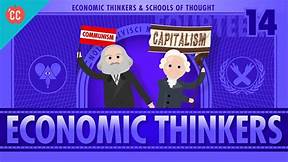
Economists from pre-classical to neo-classical era


Economics is a social science which studies interaction of people in markets. It is concerned with production, consumption, distribution and transfer of wealth from one individual or organization to another. It is a dynamic subject based on postulations and hypothesis. We have to modify its very aspects according to the situation in which it is applied. Classical, Keynesian and Neo-classical are regarded as the three major theories of economics. There were some notable pre-classical economists. 


Pre-classical economists:


William Petty: 

He is remembered for his contribution in the field of economic theory and is regarded as the founder of political economy and statistical method. His contribution to economics was his three most important theories namely- “The Treaties of taxes and contributions” -1662. “A track concerning money”- 1682 and “Discourses on political arithmetic”- 1660. 


John Law: (1671-1729) 

He is regarded as the man of practical affairs. He made important contribution to the theory of money. He made distinction between use value and market value of a commodity. He is regarded as the founder of subjected theory of value. Richard Cantillon: He was an economic thinker who wrote essay on “nature of commerce in general” which is regarded as the most systematic statement before Adam Smith’s Wealth of Nations. 


Sir David Hume: (1711-1776)

He was Philosopher, economist and was regarded as liberal mercantilist because of his advance economic theories. His work “Political discourses” collection of economic essays is regarded as most important. 


James Stuart: (1712-1780)

He was Chief English Mercantilist writer of 18th century. He wrote a book names “An enquiry into principles of political economy” – essay on science of domestic policy in free nations which focused mainly on aspects like population, agriculture, trade, industry, money, coin, interest, circulation, banks, exchange, public credit and taxes 


These were some important pre-classical economists who helped shape the foundation of other important economic theories. 


Classical economists: 

Adam Smith is regarded as the father of economics. His book “An enquiry into nature and causes of the wealth of nations (1776) is regarded as the very first book on classical economics. His concepts of supply side economics and supply side policies majorly focuses on the presence of invisible hand in markets. According to his theories markets can flourish without intervention from external authority which is government here. Invisible hand draws market forces into equilibrium. His theories very widely used before 1930s ‘The great economic’ depression. 

Other notable classical thinkers include – Jean Baptiste who propounded say’s law which states that supply creates its own demand (1803). David Ricardo who developed classical theory of comparative advantage in 1817, Labor theory of value and law of diminishing returns. Thomas Robert Malthus in 1798 wrote a book on “An essay on the principle of population”. John Stuart Mill propounded Utilitarianism in 1881. 


Keynesian economists: 

After 1930 John Maynard Keynes developed his economic theories which is regarded as Keynesian economics. His book on ‘The theory of employment, interest and money’ publish in 1936 was revolutionary. His theories mainly focuses on demand side economics. Government spending is critical factor to drive economy’s demand. Expansionary fiscal policy is regarded as main tool and was widely used after the great depression. Other Keynesian economists include: Dean Baker, Evsay domar, Wynne Godley and several other who found several new theories which gets its foundation from Keynesian economics. 


Neo- Classical economists: 

This theory focuses on supply and demand as driving forces behind production, pricing and consumption of goods and services. It emerged in 1900 to compete with other theories of classical economics.


The role of students in developing nation


 the ROLE OF STUDENTs IN BUILDING nation


It is a well-known fact that the youth of any country is a great asset. They are indeed the future of the country and represent it at every level. The role of youths in nation-building is more important than you might think. In other words, the intelligence and work of the youth will take the country on the pathway of success. As every citizen is equally responsible, the youth is too. They are the building blocks of a country.

Relation between ‘Student’ and ‘Nation’:

Previously, we have known that people can make their nation great with their thinking, dreaming, achieving. People are grown trees whereas students are seeds. A good seed gives a good tree, good tree gives good fruit. A student becomes a good citizen; a good citizen makes a better society.
The formula for great nation is “Good student–> virtuous society–>great nation”. A good student forms a virtuous society means which is graft-less, politically balanced, economically standard and stands on moral grounds. The nation with integrity stands forever.

The students are prospective heirs of nation. So they should be well equipped with sound moral, political and economical views. They are the pillars on which beautiful edifices will be built. Students must have these qualities- a) Desire to win b) Courage to do things c) Wisdom to understand and unravel the problems.

 The role of students in development of country

Students are vital organs of nation. They are future citizens, who can become “Nation’s most needed” categories i.e. producers, protectors, philosophers etc. Producers produce the needed items which may be related to food, electronic, engineering arenas etc. Protectors protect the nation. Philosophers guide the nation.

Apart from this, the student must play these acts of life to make the best nation.

1. Student as a Human Resource:

A nation for its existence basically needs food, cloth and shelter. Recently we have come to know that there is something left behind which is to be considered i.e. human resources. Every student must become a human resource to strengthen society and nation. Let us see the north-eastern countries which had turned into human resource countries.

A) Japan: It is a small country which may equal to two states of our country. It is a victim of “Little boy and Fat man”(Atomic bombs USA hurled on Hiroshima and Nagasaki) and lost 3.1 million people in Second World War. So many were laid on deathbed and lived devoid of organs. Even though, it is developed country because of its human resources who are maestros in making robots. Now Japan is international shop for robots.

B) China: It became supreme in the field of engineering. Recent inventions and masonry constructions shocked the world. Recent masonry constructions-A 36km Bay bridge on the sea, Tarmac road on Everest, Three Gorges dam etc. It became the factory of world. Nokia sets, Apple goods are manufactured here. It is just because their population turned into human resources.

2. Student as an Invigilator of Society:

Student must invigilate his environment. He must be active in every field. He should participate in politics also. According to Plato, “Education should be given up to 25 years at the elementary level and up to 35 years at the higher level. This is to cure mental malady by mental medicine. “If a student does not participate in every field, it will be turned into a river which has no flow. It will be house for algae, frogs and formidable insects.

The trend of Indian politics has turned into house politics. Indian democracy became ochlocracy and kleptocracy. A student must realize his onus to safeguard the nation. Ancient Greek model is an excellent model. Every young person must join the army. He has to do his service until 35 years. Then, he becomes a politician afterwards. When he retires, he becomes clergy. This is direct democracy. Student must know the possibilities and have influence on them.

3.Student as a Man of Erudition:

A student should get erudition through discipline. He should be helpful to the nation. He is one who can learn, challenge and achieve. A student must be a man of action rather than a dreamer. A student is young soldier who safeguards his nation. When he gets erudition, then only he can challenge ordeals. That is why IAS, IPS examinations are based on erudition.

4. Student as a Selfless Person:

Our nation became corrupted because of selfishness. There is no justice without graft. This should be revoked. For every innovation, real person behind it should be honored. A student must be selfless and teach and lead other students. This forms a group which can lead to a better society which gives best nation.

5.Student as a Bridge:

Student must be a bridge between present generation and past generation. He must take suggestions from pre-generation and guide the post generation. This will help to secure the knowledge and growth of nation.

Conclusion:

Leaders are not borne, but they are made. For this, student life is appropriate stage. Hitler, who harbored hatred towards Jews in his student life, made him notorious. The persons who had hard-working as weapon in their student life, they were turned into great personalities. Student is a vital organ for the development of society and nation. He has to incorporate all the above mentioned principles in life.


Unlock process to begin today in Madhya Pradesh and Uttar Pradesh

In Uttar Pradesh, the unlock process of Corona curfew will start in a phased manner from today across 61 districts. State government had yesterday decided to lift the covid curfew with certain guidelines but weekend covid curfew will continue to remain throughout the state. The covid curfew will continue in 14 districts that have more than 600 active cases.

In the remaining 61 districts, shops will be allowed to open with strict safety protocols from 7 am to 7 pm. Night curfew will continue in the whole state. Yesterday Sonbhadra, Deoria, Baghpat, Prayagraj, Bijnore and Moradabad were added to the earlier list due to the declining number of active cases in these districts.

However, there  are 14 districts where no relaxation has been permitted by the government. These are Meerut, Lucknow, Saharanpur, Varanasi, Ghaziabad, Gorakhpur, Muzaffarnagar, Bareilly, Gautam Buddh Nagar, Bulandshahr, Jhansi, Lakhimpur-Khiri, Jaunpur and Ghazipur. The Chief Minister said that if cases rise above 600 in any district the relaxation in corona curfew will end automatically.

After nearly two months of lock-down, Madhya Pradesh is being

Karnataka CM appreciates yeoman service rendered by staff nurses working with Covid patients

Karnataka Chief Minister B S Yediyurappa has appreciated the yeoman service rendered by staff nurses working with the Covid patients across the state. He held a virtual interaction with the staff nurses working in the district hospitals across the state yesterday. He acknowledged the valuable contribution of the nurses during this adverse situation by remaining away from their families for days together. AIR correspondent reports that there are 21,574 staff nurses working in various Government hospitals across the state.

Chief Minister asked the nurses on their working conditions and safety protocols being followed. He informed Santosh of Bidar medical college that the risk allowance given to health department staff will be extended to medical colleges staff too.

Waheeda of Wenlock hospital asked the Chief Minister to provide vaccine to their families too. Nurse Renuka Gugihaal who lost her husband recently was consoled by the Chief Minister. Shashikala of S N R hospital said that efforts should be made to infuse confidence in the Covid patients who are emotionally disturbed. Shwetha of Harihar general hospital said that the staff are disturbed by the incidents of deaths and agony of Covid patients and need counselling facilities.

Under Pradhan Mantri Gareeb Kalyan Bima Yojana the family of the deceased nurses is being paid 50 lakh rupees. The state government pays 8000 rupees Covid allowance to the nurses apart from the salary.

COVID-19 recovery rate rises to 97 % in Bihar

In Bihar, over six lakh 85 thousand people have so far recovered from Corona. State’s recovery rate has risen to 97 per cent, while the test positivity rate has declined to 1.10 per cent. Covid cases in all districts are less than one hundred cases except Patna.

The number of active cases is also decreasing and presently stands at 16 thousand 235. One thousand 113 fresh COVID cases were reported in the state during the last 24 hours and three thousand 196 people recovered yesterday. Over one crore four lakh 34 thousand people have been vaccinated in the state so far

India’s Foreign policy under Jawaharlal Nehru


A country’s foreign policy is determined by its history, geographical position and the time in which it is undertaken. Geopolitics plays a very dominant role in shaping its foreign policies. India’s foreign policy was first nurtured by Jawaharlal Nehru, post- independent India’s Prime minister. It was fostered at the time when the world was busy contending from imperialist and capitalist and had growing influence of socialist and democratic institutions.

The Indian National Congress in as early as 1920s made a resolution conveying its aspiration to establish cooperation with neighboring countries. But the internal situation of that time did not permit them to develop international relations. Even before independence Indian leaders contentiously extended their support to many liberalized nations in their struggle against imperialist nations, they fought against various issues like racism, capitalism, freedom, equality and participated in various conference at the international level.

After independence India took devisive steps to establish friendly relations with other countries. India started establishing its foreign relations by exchanging ambassadors with USA, USSR, China and some other countries. India followed the path of non- alignment, its focus was majorly on peaceful coexistence. Nehru was quite realistic to recognize that economic strength was central to stability and social coherence of the country. Strengthening the country’s economy would even mean a stable guaranteed security and viability. Jawaharlal Nehru concentrated on the construction of heavy industries like steel mills, engineering and infrastructure projects.


Bengal CM refuses to release chief secretary; request PM to rescind transfer order

The West Bengal Government requested the centre to rescind the latest order regarding transfer of its Chief Secretary Alapan Bandyopadhyay on the normal date of his superannuation. In a letter sent to the Prime Minister this morning, Chief Minister Mamata Banerjee informed that the state government cannot release its Chief Secretary at this critical hour.

Maharashtra deputy CM virtually inaugurates drive-in vaccination centre in Hadapsar area of Pune

Maharashtra, a drive-in vaccination centre in Hadapsar area of Pune was virtually inaugurated by deputy chief minister Ajit Pawar. The drive-in vaccination centre will cater to elderly and divyangs. Pune leads in the vaccination drive in the state. Kolhapur guardian minister, Satej Patil has asked the concerned authorities to prepare the list of students below 18 years having co-morbidities in eight days.

Mr. Patil also said that one hour counselling sessions of students should be done by teachers online to allay fear among them. He said to fight the possible third wave of COVID-19 teachers, parents and health machinery should come together, adding that a protocol will be prepared in the next four days listing out the measures to take care of kids and students. The Maharashtra Government has facilitated walk-in vaccination of students studying abroad. Accordingly, arrangements have been made at three vaccination centres of the Mumbai civic body. Meanwhile, borders of districts and corporations having more than 20 percent positivity L will be totally closed and no person will be allowed to enter or exit from such districts.

Nashik district authority to take help of local dialects of tribals to facilitate COVID-19 vaccination drive

In Maharashtra’s Nashik, the district authority has been taking help of local dialects of the tribals to clear apprehensions and to facilitate the COVID-19 vaccination drive.

Nashik zilla parishad’s chief executive officer, Leena Bansod said that there have been  certain misconceptions among tribals regarding the vaccination drive. Hence, she said, the district authority has been making use of local dialects of the tribals to create awareness on the benefits of taking the vaccine against COVID-19.

Ms. Bansod further said that audio-video clips have been made in these local dialects to create awareness

Meghalaya records 408 new COVID19 cases

In Meghalaya, the number of active cases is on a steady decline as the State recorded 408 fresh new cases against 977 recoveries in the last 24 hours. Directorate of Health Services in a statement said that the number of total active cases stands at 6913 while that of recovered cases has reached 28,107. In the last 24 hours, 14 deaths were reported; nine from East Khasi Hills district, two from Ri Bhoi district and one each from South West Garo Hills, South West Khasi Hills and West Jaintia Hills districts. The total number of COVID 19 fatalities in Meghalaya has reached 578 out of which the maximum number of deaths has been recorded from East Khasi Hills district with 469 deaths followed by West Jaintia Hills district with 38 fatalities and West Garo Hills district with 26 deaths.

Gujarat records 1871 new cases of COVID-19 in last 24 hours

Gujarat has recorded 1871 new cases of COVID 19 yesterday. According to the state health department, 5146 patients recovered during the last 24 hours and were discharged from the hospitals.

Total 7 lakh 62 thousand 670 patients have recovered from Covid19 in Gujarat till now. The recovery rate further improved and reached up to 94.40 percent. Maximum 237 new cases of Covid19 reported from Ahmedabad. Vadodara recorded 216 new cases, while Surat recorded 139 new cases. 25 patients lost their lives yesterday. With these, the death toll due to Covid19 in the state has reached up to 9815.  Gujarat has now 35 thousand 403 active cases at present, out of which 521 patients are on ventilator. 1 lakh 83 thousand 70 persons have been vaccinated in the state yesterday.