The utterly butterly delicious story of Amul

Over the years, Amul, one of the most beloved brands of our country, has become the taste of India, just as its tagline claims. Every Indian millennial has grown up listening to the jingles of its many dairy products, and the Amul girl, the brand’s mascot in the polka-dotted dress, has become a nostalgia-evoking symbol. Amul has truly come a long way since its founding in 1946.

The beginning

Amul was formed as a part of a cooperative movement against Polson Dairy in Anand, Gujarat, which procured milk from local farmers of Kaira District at very low rates and sold it to the then Bombay government. Everyone except the farmers benefited from this trade. The farmers took their plea to Sardar Patel, who had advocated farmers’ cooperatives since 1942. The result was the formation of the Kaira District Co-operative Milk Producers’ Union Limited in Anand.

The union started pasteurising milk produced by a handful of farmers for the Bombay Milk Scheme and grew to 432 farmers by the end of 1948. The rapid growth led to problems including excess production that the Bombay Milk Scheme couldn’t accommodate. To solve this issue, a plant was set up to process all that extra milk into products such as milk powder and butter.

Amul is born

The late Dr. Verghese Kurien, rightly called the Milkman of India, was Amul’s true architect. His journey at Amul began in 1949 when he arrived in Anand to manage a dairy as a government employee. He went from helping farmers repair machinery to revolutionising India’s dairy industry with the White Revolution (or Operation Flood), the largest dairy development programme in the world.

The new dairy with the milk processing plant was ready for operation in October 1955, the year that also saw a breakthrough in dairy technology —buffalo milk was processed to make products for the first time in the world. The word ‘Amul’, derived from ‘Amulya’, which means ‘precious’ or ‘priceless’ in Sanskrit, was used to market the range of milk products developed by the Kaira Union. It is also an acronym for Anand Milk Union Ltd.

Dr Kurien had a vision. He wanted to offer small-scale dairy farmers quality-control units and centralised marketing, which were missing at the time in the dairy economy. Thus, the Gujarat Cooperative Milk Marketing Federation (GCMMF) was created in 1973 to market milk and all milk products produced by six district cooperative unions in Gujarat. GCMMF is the largest exporter of dairy products in India and Amul is the umbrella for all of its products.

Awards, accolades, and a global presence

Over the years, Amul, together with GCMMF, has won numerous awards. Some of these include the Rajiv Gandhi National Quality Award, 1999; the Golden Trophy for Outstanding Export Performance, 2009-10; Best Marketing Campaign, 2014; and World Dairy Innovation Award, among many others. Amul earned recognition all over the world when GCMMF  introduced it on the Global Dairy Trade (GDT) platform, where only the six top dairy players across the world sell their products.

More than a mere slogan

Amul’s famous slogan, which is now a part of its logo, was created in 1994 by Shri Kanon Krishna of a Mumbai-based advertising agency called Advertising and Sales Promotion (ASP). According to Amul, the Taste of India slogan is more than just corporate positioning or advertising jargon. This slogan lends meaning to the brand’s never-ending commitment to taking quality food and products to the rural man, which he otherwise couldn’t have afforded.

The Butter Girl

Amul did not always have the round-eyed moppet as its mascot. The Butter Girl was born in 1966 when Sylvester daCunha, the then MD of the advertising agency handling Amul butter’s account, created her for its campaign. It was a pleasant change from the dull, corporate ads that the previous agency had come up with. Being a seasoned marketer himself, Dr Kurien gave daCunha complete creative freedom to create and release the ads without taking the company’s permission. 30 years later, the Utterly Butterly Girl still wins hearts wherever she is, whether on a billboard or on the packet of butter.

Amul is not just a brand; it is also a movement that represents farmers’ economic freedom. The name is now a household term that is here to stay, and the chubby-cheeked Amul girl will continue to cast a spell on the public.

Greed vs Generosity: Which Gives a Better Competitive Advantage?

Many people think that in the professional world, selfishness and greed are the characteristics that pay dividends. But the truth is, excepting win-lose situations, that the most successful people in the medium and long term are those who are the most generous in their business and personal lives.

Ambition is a desire to take on more than you can realistically accomplish, to constantly strive for improvement, to grow both personally and professionally, and, of course, the desire to generate more income. However there comes a time when ambition crosses a line, and when that happens it becomes greed. Greed is the desire to chew more than you can eat, a desire that distracts you from realistically possible goals. Greed is wanting to get more than what you have actually earned, obtaining maximum profit at minimum cost, or as an old adage has it: “Grasp all, lose all.”

Today there is an abundance of courses and books on finance, limitless knowledge on hand with a simple click. But to know what is right, to subdue the pirates of greed and to follow your trading plan- this is another story. People who look for easy money invariably find that there is no such thing, paying a heavy price for this lesson. Ego, vanity, and revenge play a part, causing people to fail on their trading accounts. This is one of the factors that explains why people might not fall into the exclusive 10% that ‘win’, and find themselves one of the 90% that lose.

Literature and film are full of greedy and stingy characters, and the moral of films like ‘A Christmas Carol’ or ‘The Wolf of Wall Street’ is always the same: the fate of the greedy is heartbreaking. Their addiction to work means that they live a lonely life, and their search for wealth means that at the end of their lives, they have only the sober memory of their friends from the Stock Exchange.

GIVE AND TAKE

People do not realize that giving without expecting something in return could be a competitive advantage, as well as making ones outlook more positive. Studies have shown that the most successful people are generous. At least this is the affirmation of Adam Grant, a psychologist and professor at Wharton and author of “Give and Take”.

A generous person builds bigger and stronger networks, improves communication with their existing contacts, and also finds it easier to interact with people outside of their core network- this gives them access to new contacts and valuable sources of information. Generous people inspire in others a predisposition, or positive receptivity, to reconnect with them, as well as a greater willingness to collaborate.

Moreover, being a giver encourages persistence because givers are able to enthusiastically motivate people, inspiring confidence, because they are liberal with praise. They create a generally positive environment. Talent is important, but the most important factor in success is persistence. And what’s even more interesting is that being a giver has an energizing effect that increases levels of happiness.

According to Bill Williams, famous trader and writer of “Trading Chaos”, people with a ‘giving’ mindset enjoy more happiness and success. For example, later in his career Bill always traded two accounts, one for himself and one for his charities. The charity account always made more money, even though he traded using the same method with both accounts. In the charity account he never veered from his strategy, while in his own account he would sometimes take a trade based on a “feel”, or get in a trade before the actual signal. This shows us the importance of sticking to a plan, but also the importance of being a ‘giver’.

Giving distracts us from our problems, adds meaning to our lives and helps us feel valued by others. This explains why avidity and egoism are the trader’s worst enemy. Having a benevolent mindset while trading helps the trader to increase performance. Happy people earn more money on average, score higher yields, make better decisions and contribute more to their organizations. Furthermore, traders who are givers are at the top of the most successful trading operations.

THE GREED EFFECT

Focusing only on money results in the ‘greedy effect’, something that all professional traders know. In fact, one of the most common pieces of (rarely followed) advice that newbies receive is to shift their focus from trade results to the trading process, analyzing and following the rules of their trading system. Another suggestion is to start reasoning in pips and ticks instead of dollars. This reduces the greedy mindset and develops a more reliable attitude.

However we can make a further effort to improve our performance by shifting our focus to be more generous. One example is trading for charitable purposes like the aforementioned Bill Williams, another could be simply committing a small part of your monthly or annual profit to microcredits, which promote a world of stability and self-sufficiency, key to overcoming poverty.

Material things can be recovered, but feelings of guilt, helplessness and loneliness cannot be solved with money. If humans would be more understanding of and generous to others, the world would be a very different place. And that is why those who practice generosity, making it part of their daily lives, experience an uplifting of their mental and emotional state, and are generally filled with more satisfaction in their professional and personal lives.

In conclusion, we see that generous people are the most successful in their daily trading performance for the reasons described above. Having a giving mindset helps professionals become part of that exclusive group, the 10% of winners.

Anger

Anger is one of the basic human emotions, as elemental as happiness, sadness, anxiety or disgust. These emotions are tied to basic survival and were honed over the course of human history. Anger is related to the “fight, flight, or freeze” response of the sympathetic nervous system, it prepares humans to fight. But fighting doesn’t necessarily mean throwing punches. It might motivate communities to combat injustice by changing laws or enforcing new norms.

Of course, anger too easily or frequently mobilized can undermine relationships or damage physical health in the long term. Prolonged release of the stress hormones that accompany anger can destroy neurons in areas of the brain associated with judgment and short term memory and weaken the immune system. For those who struggle with chronic anger, or for those who only experience occasional outbursts, learning skills to identify and navigate this powerful emotion can lead to growth and change.

What causes anger?

The question of why some shrug off annoyances while others explode in rage is a fascinating one. One model of anger, put forth by psychologist Jerry Deffenbacher, posits that anger results from a combination of the trigger event, the qualities of the individual, and the individual’s appraisal of the situation.

The trigger is the event that provokes anger, such as being cut off in traffic or yelled at by a parent. The qualities of the individual include personality traits, such as narcissism, competitiveness, and low tolerance for frustration, and the pre-anger state, like levels of anxiety or exhaustion. Perhaps most importantly is cognitive appraisal—appraising a situation as blameworthy, unjustified, punishable, etc. The combination of these components determines why and if people get mad.

How can I manage my anger?

If you are often carried away by anger, it can be helpful to understand the patterns that trigger you. It’s possible to intervene at different points along the way to deal with anger effectively.

1. Sleep: Sleep deprivation makes it harder to control angry impulses, so regular, healthy sleep can prevent you from being provoked.

2. Consider alternative interpretations: And ask yourself what evidence you have to support your angering interpretation. Consider different perspectives.

3. Take deep breaths: Take long, slow, deep breaths, using the diaphragm rather than the chest.

4. Avoid the “catharsis myth”: Venting anger, acting with aggression, and viewing aggressive content does not tend to release anger effectively.

5. Know that it’s ok to get mad: If you have been wronged, treated unfairly, or provoked, you should get angry, but express it assertively instead of aggressively.

How can I manage anger that’s warranted?

In cases of warranted anger, such as a coworker who never contributes to collaborative projects, you may want to use a different set of anger management tips. In those situations:

1. Distance yourself from the angering situation. This will help you stop ruminating and develop a clear path forward.

2. Dedicate time to thinking about how to solve the root problem so it doesn’t occur again.

3. Express your anger assertively, with a solutions-oriented approach, rather than aggressively.

The Little Albert Experiment

The Little Albert experiment was a famous psychology experiment conducted by behaviorist John B. Watson and graduate student Rosalie Rayner.

The participant in the experiment was a child that Watson and Rayner called “Albert B.” but is known popularly today as Little Albert. When Little Albert was 9 months old, Watson and Rayner exposed him to a series of stimuli including a white rat, a rabbit, a monkey, masks, and burning newspapers and observed the boy’s reactions.

The boy initially showed no fear of any of the objects he was shown.

The next time Albert was exposed to the rat, Watson made a loud noise by hitting a metal pipe with a hammer. Naturally, the child began to cry after hearing the loud noise. After repeatedly pairing the white rat with the loud noise, Albert began to expect a frightening noise whenever he saw the white rate. Soon, Albert began to cry simply after seeing the rat.

Watson and Rayner wrote: “The instant the rat was shown, the baby began to cry. Almost instantly he turned sharply to the left, fell over on [his] left side, raised himself on all fours and began to crawl away so rapidly that he was caught with difficulty before reaching the edge of the table.” After conditioning, Albert feared not just the white rat, but a wide variety of similar white objects as well. His fear included other furry objects including Raynor’s fur coat and Watson wearing a Santa Claus beard.

While the experiment is one of psychology’s most famous and is included in nearly every introductory psychology course it is widely criticized for several reasons. First, the experimental design and process were not carefully constructed. Watson and Rayner did not develop an objective means to evaluate Albert’s reactions, instead of relying on their own subjective interpretations. The experiment also raises many ethical concerns. Little Albert was harmed during this experiment—he left the experiment with a previously nonexistent fear. By today’s standards, the Little Albert experiment would not be allowed.

The question of what happened to Little Albert has long been one of psychology’s mysteries. Before Watson and Rayner could attempt to “cure” Little Albert, he and his mother moved away. Some envisioned the boy growing into a man with a strange phobia of white, furry objects.

The true identity and fate of the boy known as Little Albert was discovered. As reported in American Psychologist, a seven-year search led by psychologist Hall P. Beck led to the discovery. After tracking down and locating the original experiments and the real identity of the boy’s mother, it was suggested that Little Albert was actually a boy named Douglas Merritte.

The story does not have a happy ending, however. Douglas died at the age of six on May 10, 1925, of hydrocephalus (a build-up of fluid in his brain), which he had suffered from since birth. “Our search of seven years was longer than the little boy’s life,” Beck wrote of the discovery.

In 2012, Beck and Alan J. Fridlund reported that Douglas was not the healthy, normal child Watson described in his 1920 experiment.

They presented convincing evidence that Watson knew about and deliberately concealed the boy’s neurological condition. These findings not only cast a shadow over Watson’s legacy, but they also deepened the ethical and moral issues of this well-known experiment.

In 2014, doubt was cast over Beck and Fridlund’s findings when researchers presented evidence that a boy by the name of William Barger was the real Little Albert. Barger was born on the same day as Merritte to a wet-nurse who worked at the same hospital as Merritte’s mother. While his first name was William, he was known his entire life by his middle name, Albert.

While experts continue to debate the true identity of the boy at the center of Watson’s experiment, there is little doubt that Little Albert left a lasting impression on the field of psychology.

,

Math 2.0 day

Today is math 2.0 day, but what exactly does that even mean?.With or without knowing we all use math several times every single day. The subject is also important for the advancement of technology. And thus, to celebrate the combination of maths and technology, Math 2.0 Day is celebrated on July 8. Read on to know other details.

Imagine the way the world used to be viewed! Math as known to be important but not thought to be something you could make a living at and the rising tide of technology was considered a fad! Math 2.0 Day reminds us that technology is here to stay!

Every year, Math 2.0 Day is celebrated on July 8. The day is observed to highlight the importance of the combination of maths and technology. The day was formed to celebrate the achievement made through the combination of maths and technology. Math 2.0 Day also helps to educate the masses about the benefits of maths and technology. Without maths and technology, it would have been impossible for us to achieve the various entertainment mediums we have now.

History of Math 2.0 Day

In 2009, the Math Interest Group formed Math 2.0 Day. Math is extremely important for the advancement of science, technology and education.Math 2.0 Day is a celebration of the blending of technology and mathematics. For a lot of us, math wasn’t a favorite subject, we’d spend the entire period staring at the equations and wondering what sort of livid madman designed these torture chambers on paper. Ultimately, however, we realized that math is utterly indispensable in our modern world. If you’ve ever wondered who uses math in their day to day careers, you aren’t alone and we have some answers for you.

Programmers deal with mathematics every day, as it’s the framework upon which all computer operations are formed. Everything from the order of operations to quadratic equations is necessary to make even the simplest program. Scientists are one of the biggest users of mathematics, whether they’re calculating the statistical variance of their data or figuring out how much to add to their chemistry experiment, it’s involved at every step.

One presumes you live in a house, drive a car, or operate a computer? The engineers responsible for designing those things so that they work, and especially in the case of the house, use math to ensure it doesn’t come crumbling down on your head. Math 2.0 day celebrates all these mathematical heroes and more.

How to celebrate Math 2.0 Day

If you’re like me, you probably have your old math books from college laying around. I suggest busting them open and studying them again. Who knows, in the intervening years you may have secretly developed a love for those dancing numbers. If not, make sure that you stop by those people who use math every day and thank them for doing the work so you don’ thave to.Mathematics is one of the most important fields in the world today, and just about everything we know and love is built on its back.

Asset Bubble

What Is a Bubble?

A bubble is an economic cycle that is characterized by the rapid escalation of market value, particularly in the price of assets. This fast inflation is followed by a quick decrease in value, or a contraction, that is sometimes referred to as a “crash” or a “bubble burst. Typically, a bubble is created by a surge in asset prices that is driven by exuberant market behavior. During a bubble, assets typically trade at a price, or within a price range, that greatly exceeds the asset’s intrinsic value (the price does not align with the fundamentals of the asset).The cause of bubbles is disputed by economists; some economists even disagree that bubbles occur at all (on the basis that asset prices frequently deviate from their intrinsic value). However, bubbles are usually only identified and studied in retrospect, after a massive drop in prices occurs.

How a Bubble Works

An economic bubble occurs any time that the price of a good rises far above the item’s real value. Bubbles are typically attributed to a change in investor behavior, although what causes this change in behavior is debated. Bubbles in equities markets and economies cause resources to be transferred to areas of rapid growth. At the end of a bubble, resources are moved again, causing prices to deflate.

The Japanese economy experienced a bubble in the 1980s after the country’s banks were partially deregulated. This caused a huge surge in the prices of real estate and stock prices. The dot-com boom, also called the dot-com bubble, was a stock market bubble in the late 1990s. It was characterized by excessive speculation in Internet-related companies. During the dot-com boom, people bought technology stocks at high prices—believing they could sell them at a higher price—until confidence was lost and a large market correction occurred.

The research of American economist Hyman P. Minsky helps to explain the development of financial instability and provides one explanation of the characteristics of financial crises. Through his research, Minsky identified five stages in a typical credit cycle. While his theories went largely under-the-radar for many decades, the subprime mortgage crisis of 2008 renewed interest in his formulations, which also help to explain some of the patterns of a bubble.

Displacement

This stage takes place when investors start to notice a new paradigm, like a new product or technology, or historically low interest rates. This can be basically anything that gets their attention. 

Boom

Prices start to rise. Then, they get even more momentum as more investors enter the market. This sets up the stage for the boom. There is an overall sense of failing to jump in, causing even more people to start buying assets. 

Euphoria

When euphoria hits and asset prices skyrocket, it could be said that caution on the part of investors is mostly thrown out the window. 

Profit-Taking

Figuring out when the bubble will burst isn’t easy; once a bubble has burst, it will not inflate again. But anyone who can identify the early warning signs will make money by selling off positions. 

Panic

Asset prices change course and drop (sometimes as rapidly as they rose). Investors want to liquidate them at any price. Asset prices decline as supply outshines demand. 

Types of learners and how to engage them

  1. Auditory and Musical learners

To engage a social learner, encourage both group collaboration and presentation. Consider:

  • Roleplaying historical events or works of literature
  • Collaborating on maths problems
  • Working as a class on comprehension questions

Auditory learners like to hear solutions and examples explained to them, and may gravitate towards music subjects and group learning as a way to understand information. Auditory learners often have a high aptitude for distinguishing notes and tones in music and speech.

Qualities often associated with auditory learners include:

  • Possessing a ‘good ear’ for music and tones
  • May be distractible
  • Likes to talk to self / others / hum / sing

Auditory learners might say words out loud or hum tones to better learn them. This strategy is key for keeping musical learners engaged in class lessons.

How to engage them?

If you’re a music teacher, you’re in luck. Auditory learners will be engaged from start to finish. For other subjects however, engaging aural learners requires some tact and forethought.

The key here is your voice (and the voice of your students). Write down something on the whiteboard, then read it out loud. Work on your delivery so you can express learning material in interesting and engaging tones. Similarly, encourage your students to read back their own notes to themselves (and the class). Hearing the sound of their own voice and the voices of others is engaging to auditory learners, but it can be a great learning tool for students of all types.

Other strategies you can try include:

  • Recording lessons for later listening and reference
  • Encouraging auditory listeners to ‘teach others’ verbally
  • Seating them away from distractions

2. Visual and Spatial learner

Visual learners like diagrams, drawing out concepts, charts and processes. They learn by looking at visual concepts, creating them, and watching other people create them. Visual learners might be organised or creative in their application, and find things like colours and shapes useful.

Visual learners often possess the following qualities:

  • Habitual doodlers / drawers
  • Observant
  • Not easily distracted
  • Enjoys planning
  • Prefers visual instructions

How to engage them?

To engage a visual learner in the classroom you’ll want to include elements like maps, diagrams and imagery. If you have a projector, try to include relevant images to go along with the course content. In geography and history, maps are helpful, while for maths and logic, go with diagrams.

Charts, images and diagrams will aid most students, so catering to visual learners doesn’t mean you have to ignore other types. When it comes to self-driven learning, encourage the spatially aware to sketch out their ideas, create mind maps and flowcharts. It should probably come to them naturally, but a bit of prompting can always help.

Other tactics you can use include:

  • Sitting visual learners near the front
  • Using colour codes and cues
  • Encouraging note taking and recopying notes during study

3. Verbal learner

Verbal learning includes both writing and speaking. Verbal learners might have a preference for reading and writing, word games and poems. Verbal learners know the meanings of a broad category of words, can use them effectively, and actively seek out new words to add to their repertoire.

Some qualities associated with verbal learners include:

  • Intellectual
  • Bookworm
  • Good story teller

Verbal learners often seek out careers in journalism and writing, administration, law and politics.

How to engage them?

Verbal learners will want to write down notes, talk about concepts and potentially present them as well. The trick with verbal learners is knowing what adjacent types of learning apply to them – are they an outgoing or more introspective verbal learner? Some may lean more to talking, while others to reading and writing. Try to cater to preference while also using their verbal abilities to push personal boundaries every once in awhile.

4. Logical and Mahematical learners

Perhaps unsurprisingly, mathematical learners err towards careers in programming, accountancy, science, research and other number and pattern-orientated careers. Some qualities associated with mathematical learners include:

  • Pattern recognition
  • Good with numbers
  • Predisposition towards grouping and classification

How to engage them?

Mathematical learners will greatly appreciate any type of learning that logically explains the subject at hand. For maths, that’s easy. For other subjects, it requires some effort and planning:

  • History and geography: Try to include statistics and classification taxonomy in your lesson plans.
  • Literature: Ask your students “What category of book is this?” Or in poetry, have them learn the meters and explain them to other students.
  • Music: Teach both musical instrument classification (woodwind etc) and the mathematical relationships between notes.
  • Art: A good starting point is the colour wheel and the effects of combining different colours.

With logical students, always look to incorporate a system. If you’re unsure, include the students in the development of that system. They’ll benefit from it greatly.

5. Physical and Kinaesthetic learner

Commonly called hands-on learners, kinesthetics prefer to physically engage with the materials of the subject matter. Some qualities associated with physical learners include:

  • Preference to ‘get their hands dirty’
  • Energetic, may drum fingers or shake legs
  • Action-orientated and outgoing
  • May de-prioritise reading and writing

Physical learners represent about 50% of the population,and gravitate towards careers with lots of hands on work like emergency services, physical education and sports.

How to engage them?

Channeling the energy and excitability of physical learners is key to offering a good lesson. Taking breaks so they can move around can help, but so can encouraging role play and movement within the lesson itself. Physical interaction is also important. The use of props and models will greatly benefit a kinaesthetic learner. Give them something to grab onto and they’ll process information much better than from a book or whiteboard.

Other strategies to engage physical learners include:

  • Encouraging movement during study (don’t punish them for fidgeting)
  • Decluttering desks and surfaces so they can focus on learning

6. Social and Interpersonal learner

Social learners show preference towards groups and collaboration. Some, but not all, will gravitate towards leadership within a group. Some of the qualities often associated with this type of learner include:

  • Extraverted
  • Good communicator
  • Sensitive and empathetic

It’s important for educators to understand that not all social learners are extraverted or highly communicative, and that they can also be visual, auditory, verbal, logical or physical learners. The interpersonal aspect perhaps better describes the settings in which they are most comfortable, rather than how they absorb information.

As such, teachers should be cognisant of the breadth of variation between different types of social learners. For example, social doesn’t strictly mean verbal. Some social learners prefer to listen in a group setting, rather than on their own.

How to engage them?

Interpersonal learners like to ‘do’ and to ‘share’. This can sometimes lead to distraction for other students who are more intrapersonal in their learning habits. To prevent this, try to channel social learners into providing value to the group, giving them tasks that use their energy usefully, with a focus on empathy for their classmates.

7. Social and Intrapersonal learner

Solitary learners can be visual, auditory, physical, verbal or logical learners. Fulfilling all the needs of the solitary student will ensure they are fully engaged. Some of the qualities often associated with this type of learner include:

  • Independent
  • Introspective
  • Private

Intrapersonal learners may gravitate towards careers with a lot of self determination or motivation, as well as solitary workloads. Think:

  • Researchers
  • Writers and authors
  • Programmers and coders

How to engage them?

In a classroom environment it can sometimes be difficult to engage a solitary learner. They might sit silently in the back of the classroom, only to ace the exam at the end of semester. For the educator, it’s important to engage them during class. Provide visual materials, books and learning aids. Designate quiet areas, and collaborate with defined sharing time so the solitary learner can feel adequately prepared.

Mixed learning approach

With large classrooms, it’s not always easy to personalise lessons, but using a mixed learning approach throughout coursework can help you cater to each type of learning style. You may decide to focus on a particular learning type each lesson, or incorporate multiple strategies within each lesson. The most important element is first recognising the differences in student learning – the rest will flow from there.


Bear Market

What Is a Bear Market?

A bear market is when a market experiences prolonged price declines. It typically describes a condition in which securities prices fall 20% or more from recent highs amid widespread pessimism and negative investor sentiment.

Bear markets are often associated with declines in an overall market,  but individual securities or commodities can also be considered to be in a bear market if they experience a decline of 20% or more over a sustained period of time—typically two months or more. Bear markets also may accompany general economic downturns such as a recession. Bear markets may be contrasted with upward-trending bull markets.

Understanding Bear Markets

Stock prices generally reflect future expectations of cash flows and profits from companies. As growth prospects wane, and expectations are dashed, prices of stocks can decline. Herd behavior, fear, and a rush to protect downside losses can lead to prolonged periods of depressed asset prices.

One definition of a bear market says markets are in bear territory when stocks, on average, fall at least 20% off their high. But 20% is an arbitrary number, just as a 10% decline is an arbitrary benchmark for a correction. Another definition of a bear market is when investors are more risk-averse than risk-seeking. This kind of bear market can last for months or years as investors shun speculation in favor of boring, sure bets.

The causes of a bear market often vary, but in general, a weak or slowing or sluggish economy will bring with it a bear market. The signs of a weak or slowing economy are typically low employment, low disposable income, weak productivity, and a drop in business profits. In addition, any intervention by the government in the economy can also trigger a bear market.

For example, changes in the tax rate or in the federal funds rate can lead to a bear market. Similarly, a drop in investor confidence may also signal the onset of a bear market. When investors believe something is about to happen, they will take action—in this case, selling off shares to avoid losses. 

Bear markets can last for multiple years or just several weeks. A secular bear market can last anywhere from 10 to 20 years and is characterized by below-average returns on a sustained basis. There may be rallies within secular bear markets where stocks or indexes rally for a period, but the gains are not sustained, and prices revert to lower levels. A cyclical bear market, on the other hand, can last anywhere from a few weeks to several months.

The U.S. major market indexes were close to bear market territory on December 24, 2018, falling just shy of a 20% drawdown. More recently, major indexes including the S&P 500 and Dow Jones Industrial Average fell sharply into bear market territory between March 11 and March 12, 2020. Prior to that, the last prolonged bear market in the United States occurred between 2007 and 2009 during the Financial crisis and lasted for roughly 17 months. The S&P 500 lost 50% of its value during that time.

In February 2020, global stocks entered a sudden bear market in the wake of the global coronavirus pandemic, sending the DJIA down 38% from its all-time high on February 12 (29,568.77) to a low on March 23 (18,213.65) in just over one month. However, both the S&P 500 and the Nasdaq 100 made new highs by August 2020.

Bull Market

What is a Bull Market?

A bull market is the condition of a financial market in which prices are rising or are expected to rise. The term “bull market” is most often used to refer to the stock market but can be applied to anything that is traded, such as bonds, real estate, currencies, and commodities.

Because prices of securities rise and fall essentially continuously during trading, the term “bull market” is typically reserved for extended periods in which a large portion of security prices are rising. Bull markets tend to last for months or even years.

Understanding Bull Markets

Bull markets are characterized by optimism, investor confidence, and expectations that strong results should continue for an extended period of time. It is difficult to predict consistently when the trends in the market might change. Part of the difficulty is that psychological effects and speculation may sometimes play a large role in the markets.

There is no specific and universal metric used to identify a bull market. Nonetheless, perhaps the most common definition of a bull market is a situation in which stock prices rise by 20%, usually after a drop of 20% and before a second 20% decline. Since bull markets are difficult to predict, analysts can typically only recognize this phenomenon after it has happened. A notable bull market in recent history was the period between 2003 and 2007. During this time, the S&P 500 increased by a significant margin after a previous decline; as the 2008 financial crisis took effect, major declines occurred again after the bull market run.

Characteristics of a Bull Market

Bull markets generally take place when the economy is strengthening or when it is already strong. They tend to happen in line with strong Gross Domestic Product (GDP),and a drop in unemployment and will often coincide with a rise in corporate profits. Investor confidence will also tend to climb throughout a bull market period. The overall demand for stocks will be positive, along with the overall tone of the market. In addition, there will be a general increase in the amount of IPO activity during bull markets.

Notably, some of the factors above are more easily quantifiable than others. While corporate profits and unemployment are quantifiable, it can be more difficult to gauge the general tone of market commentary, for instance. Supply and demand for securities will seesaw: supply will be weak while demand will be strong. Investors will be eager to buy securities, while few will be willing to sell. In a bull market, investors are more willing to take part in the (stock) market in order to gain profits.

Bull vs. Bear Markets

The opposite of a bull market is a bear market, which is characterized by falling prices and typically shrouded in pessimism. The commonly held belief about the origin of these terms suggests that the use of “bull” and “bear” to describe markets comes from the way the animals attack their opponents. A bull thrusts its horns up into the air, while a bear swipes its paws downward. These actions are metaphors for the movement of a market. If the trend is up, it’s a bull market. If the trend is down, it’s a bear market.

Bull and bear markets often coincide with the economic cycle, which consists of four phases: expansion, peak, contraction, and trough. he onset of a bull market is often a leading indicator of economic expansion. Because public sentiment about future economic conditions drives stock prices, the market frequently rises even before broader economic measures, such as gross domestic product (GDP) growth, begin to tick up. Likewise, bear markets usually set in before economic contraction takes hold. A look back at a typical U.S. recession reveals a falling stock market several months ahead of GDP decline.

How to Take Advantage of a Bull Market

Investors who want to benefit from a bull market should buy early in order to take advantage of rising prices and sell them when they’ve reached their peak. Although it is hard to determine when the bottom and peak will take place, most losses will be minimal and are usually temporary. Below, we’ll explore several prominent strategies investors utilize during bull market periods. However, because it is difficult to assess the state of the market as it exists currently, these strategies involve at least some degree of risk as well.

Buy and Hold

One of the most basic strategies in investing is the process of buying a particular security and holding onto it, potentially to sell it at a later date. This strategy necessarily involves confidence on the part of the investor: why hold onto a security unless you expect its price to rise? For this reason, the optimism that comes along with bull markets helps to fuel the buy and hold approach.

Increased Buy and Hold

Increased buy and hold is a variation on the straightforward buy and hold strategy, and it involves additional risk. The premise behind the increased buy and hold approach is that an investor will continue to add to his or her holdings in a particular security so long as it continues to increase in price. One common method for increasing holdings suggests that an investor will buy an additional fixed quantity of shares for every increase in stock price of a pre-set amount.

Retracement Additions

A retracement is a brief period in which the general trend in a security’s price is reversed. Even during a bull market, it’s unlikely that stock prices will only ascend. Rather, there are likely to be shorter periods of time in which small dips occur as well, even as the general trend continues upward. Some investors watch for retracements within a bull market and move to buy during these periods. The thinking behind this strategy is that, presuming that the bull market continues, the price of the security in question will quickly move back up, retroactively providing the investor with a discounted purchase price.

Full Swing Trading

Perhaps the most aggressive way of attempting to capitalize on a bull market is the process known as full swing trading. Investors utilizing this strategy will take very active roles, using short-selling and other techniques to attempt to squeeze out maximum gains as shifts occur within the context of a larger bull market.

Bandwagon Effect

What Is the Bandwagon Effect?

The bandwagon effect is a psychological phenomenon in which people do something primarily because other people are doing it, regardless of their own beliefs, which they may ignore or override. This tendency of people to align their beliefs and behaviors with those of a group is also called a herd mentality. The term “bandwagon effect” originates from politics but has wide implications commonly seen in consumer behavior and investment activities. This phenomenon can be seen during bull markets and the growth of asset bubbles.

Understanding the Bandwagon Effect

The bandwagon effect arises from psychological, sociological, and, to some extent, economic factors. People like to be on the winning team and they like to signal their social identity. Economically, some amount of bandwagon effect can make sense, in that it allows people to economize on the costs of gathering information by relying on the knowledge and opinions of others. The bandwagon effect permeates many aspects of life, from stock markets to clothing trends to sports fandom.

Politics

In politics, the bandwagon effect might cause citizens to vote for the person who appears to have more popular support because they want to belong to the majority. The term “bandwagon” refers to a wagon that carries a band through a parade. During the 19th century, an entertainer named Dan Rice traveled the country campaigning for President Zachary Taylor. Rice’s bandwagon was the centerpiece of his campaign events, and he encouraged those in the crowd to “jump on the bandwagon” and support Taylor. By the early 20th century, bandwagons were commonplace in political campaigns, and “jump on the bandwagon” had become a derogatory term used to describe the social phenomenon of wanting to be part of the majority, even when it means going against one’s principles or beliefs.

Consumer Behavior

Consumers often economize on the cost of gathering information and evaluating the quality of consumer goods by relying on the opinions and purchasing behavior of other consumers. To some extent, this is a beneficial and useful tendency; if other people’s preferences are similar, their consumption decisions are rational, and they have accurate information about the relative quality of available consumer goods, then it makes perfect sense to follow their lead and effectively outsource the cost of gathering information to someone else.

However, this kind of bandwagon effect can create a problem in that it gives every consumer an incentive to free ride on the information and preferences of other consumers. To the extent that it leads to a situation where information regarding consumer products might be underproduced, or produced solely or mostly by marketers, it can be criticized. For example, people might buy a new electronic item because of its popularity, regardless of whether they need it, can afford it, or even really want it.

Bandwagon effects in consumption can also be related to conspicuous consumption, where consumers buy expensive products as a signal of economic status. 

Investment and Finance

Investing and financial markets can be especially vulnerable to bandwagon effects because not only will the same kind of social, psychological, and information-economizing factors occur, but additionally the prices of assets tend to rise as more people jump on the bandwagon. This can create a positive feedback loop of rising prices and increased demand for an asset, related to George Soros’ concept of reflexivity.

For example, during the dotcom bubble of the late 1990s, dozens of tech startups emerged that had no viable business plans, no products or services ready to bring to market, and in many cases, nothing more than a name (usually something tech-sounding with “.com” or “.net” as a suffix). Despite lacking in vision and scope, these companies attracted millions of investment dollars in large part due to the bandwagon effect.

Minimalism

What is Minimalism?

Minimalism is defined as a design or style in which the simplest and fewest elements are used to create the maximum effect. Minimalism had its origins in the arts—with the artwork featuring simple lines, only a few colors, and careful placement of those lines and colors. More recently, it has become representative of a lifestyle that aims to remove clutter from all facets of life. 

Minimalism is all about owning only what adds value and meaning to your life (as well as the lives of the people you care about) and removing the rest. It’s about removing the clutter and using your time and energy for the things that remain. We only have a certain amount of energy, time, and space in our lives. In order to make the most of it, we must be intentional about how we’re living each day.

There are many different approaches to minimalism, but it’s really just a tool to help you prioritize what’s important in your life.

Joshua Becker of Becoming Minimalist offers this definition: “Minimalism is the intentional promotion of the things that bring you joy and the removal of those that do not.” It might be called simple living, tiny living, intentional living, and a myriad of other things—but there is at least one common thread: the idea of curating the things we own to best reflect our priorities and vision for our lives.

If the idea of minimalism sounds intimidating to you or if you’ve seen some images and thought, “that’s a nice idea, but I’d never want to live like that,” don’t worry. You can benefit from applying minimalism in your life whether you live in a tiny home, suburban house, or a mansion. You can use minimalism as a guiding philosophy and customize based on what works best for you.

Common Misconceptions of Minimalism

Contrary to what some people think, there aren’t any actual rules to minimalism. There’s no official board of minimalism to determine whether or not you’re doing minimalism right. Minimalism truly looks different for everyone.

You don’t have to own below a certain number of items. You can still have nice things, and no, you don’t need to get rid of your favorite collection—whether it’s books, shoes, or music. Minimalism doesn’t have to look like white-walled, modern and sparse homes you’ve probably seen in magazines and videos, a common minimalism mistake. Minimalism is also not a one and done project. It is a a continual practice to ensure everything in our lives is working for us in our vision, not against us. Its used over the years to make substantial changes in our careers, home, lifestyle, buying behaviors, etc.

Everyone can benefit from applying the principles of minimalism to their lives. It’s a process of removing distractions and things that no longer add value to our lives.

Why Minimalism Is An Effective Tool For Living An Intentional Life?

In the end, minimalism is less about owning fewer items and more about actively making choices on what kind of things truly matter to you.

We exist in a society that creates false value on owning more stuff and having no time to use them much. The constant pursuit of bigger and better is an endless cycle. There will always be a nicer car to buy, a bigger boat, a larger home, and or a faster private jet. Did you know that there’s a website for billionaires to shop? Yeah. It never ends.

It may seem like an overwhelming challenge at first, but as you untangle the life you built around owning more things, you’ll find the stress disappearing and the world starting to slow down. Those choices you make will begin to build a muscle that will fundamentally change the way you live your life.

Behavioural Economics

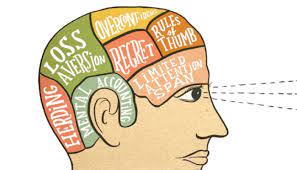
In an ideal world, people would always make optimal decisions that provide them with the greatest benefit and satisfaction. In economics, rational choice theory states that when humans are presented with various options under the conditions of scarcity , they would choose the option that maximizes their individual satisfaction. This theory assumes that people, given their preferences and constraints, are capable of making rational decisions by effectively weighing the costs and benefits of each option available to them. The final decision made will be the best choice for the individual. The rational person has self-control and is unmoved by emotions and external factors and, hence, knows what is best for himself. Alas behavioral economics explains that humans are not rational and are incapable of making good decisions.

Behavioral Economics is the study of psychology as it relates to the economic decision-making processes of individuals and institutions. Behavioral economics draws on psychology and economics to explore why people sometimes make irrational decisions, and why and how their behavior does not follow the predictions of economic models. Decisions such as how much to pay for a cup of coffee, whether to go to graduate school, whether to pursue a healthy lifestyle, how much to contribute towards retirement, etc. are the sorts of decisions that most people make at some point in their lives. Behavioral economics seeks to explain why an individual decided to go for choice A, instead of choice B.

Because humans are emotional and easily distracted beings, they make decisions that are not in their self-interest. For example, according to the rational choice theory, if Charles wants to lose weight and is equipped with information about the number of calories available in each edible product, he will opt only for the food products with minimal calories. Behavioral economics states that even if Charles wants to lose weight and sets his mind on eating healthy food going forward, his end behavior will be subject to cognitive bias, emotions, and social influences. If a commercial on TV advertises a brand of ice cream at an attractive price and quotes that all human beings need 2,000 calories a day to function effectively after all, the mouth-watering ice cream image, price, and seemingly valid statistics may lead Charles to fall into the sweet temptation and fall off of the weight loss bandwagon, showing his lack of self-control.

Randomised Controlled Trial

The 2019 Nobel Prize in Economic Sciences was awarded to Abhijit Banerjee and Esther Duflo, who currently work at the Massachusetts Institute of Technology, and Michael Kremer of Harvard University. The Prize committee noted that these economists “introduced a new approach to obtaining reliable answers about the best ways to fight global poverty.” The new Nobel laureates are considered to be instrumental in using randomised controlled trials to test the effectiveness of various policy interventions to alleviate poverty.

So what is randomised control trial?

A randomised controlled trial is an experiment that is designed to isolate the influence that a certain intervention or variable has on an outcome or event. A social science researcher who wants to find the effect that employing more teachers in schools has on children’s learning outcomes, for instance, can conduct a randomised controlled trial to find the answer. The use of randomised controlled trials as a research tool was largely limited to fields such as biomedical sciences where the effectiveness of various drugs was gauged using this technique. Mr. Banerjee, Ms. Duflo and Mr. Kremer, however, applied RCT to the field of economics beginning in the 1990s. Mr. Kremer first used the technique to study the impact that free meals and books had on learning in Kenyan schools. Mr. Banerjee and Ms. Duflo later conducted similar experiments in India.

Why is randomised controlled trial so popular?

At any point in time, there are multiple factors that work in tandem to influence various social events. RCTs allow economists and other social science researchers to isolate the individual impact that a certain factor alone has on the overall event. For instance, to measure the impact that hiring more teachers can have on children’s learning, researchers must control for the effect that other factors such as intelligence, nutrition, climate, economic and social status etc., which may also influence learning outcomes to various degrees, have on the final event.Randomised controlled trials promise to overcome this problem through the use of randomly picked samples. Using these random samples researchers can then conduct experiments by carefully varying appropriate variables to find out the impact of these individual variables on the final event.

What are some criticisms of randomised controlled trials?

A popular critic of randomised controlled trials is economist Angus Deaton, who won the economics Nobel Prize in 2015. Mr. Deaton has contended in his works, including a paper titled “Understanding and misunderstanding randomised control trials” that simply choosing samples for an RCT experiment in a random manner does not really make these samples identical in their many characteristics.

While two randomly chosen samples might turn out to be similar in some cases, he argued, there are greater chances that most samples are not really similar to each other. Other economists have also contended that randomised controlled trials are more suited for research in the physical sciences where it may be easier to carry out controlled experiments. They argue that social science research, including research in the field of development economics, may be inherently unsuited for such controlled research since it may be humanly impossible to control for multiple factors that may influence social events.

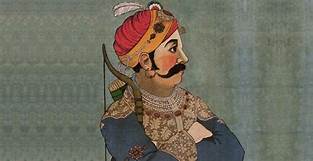
The Great Prithviraj Chauhan

Prithviraja III, famous as Prithviraj Chauhan, was one of the greatest Rajput rulers. He controlled many parts of the present-day Rajasthan, Haryana, Delhi, Uttar Pradesh, and Madhya Pradesh. Known for his valor, Prithviraj Chauhan is often praised as a brave Indian king, who stood up against the invasion of Muslim rulers. He is widely known as a warrior king and is credited for resisting the Muslim invaders with all his might. His defeat at the ‘Second battle of Tarain’ (1192) is considered as a key moment in the history of India as it opened the gates for Muslim invaders to rule the northern parts of India. Prithviraj is considered to be the greatest warrior of India, and also one of the greatest in the world. He succeeded to the throne of Ajmer at the age of thirteen, in 1179,when his father died in a battle. His grandfather Angam, ruler of Delhi, declared him heir to the throne of Delhi after hearing about his courage and bravery. He once killed a lion on his own without any weapon. He was known as the warrior king. Chauhan was the last independent Hindu king, before Hemu, to sit upon the throne of Delhi. He succeeded to the throne in 1169 CE at the age of 20, and ruled from the twin capitals of Ajmer and Delhi.

Early Life

According to ‘Prithviraja Vijaya,’ Prithviraj Chauhan had mastered as many as six languages. Another eulogistic poem, Prithviraj Raso, claims that Prithviraj was well-versed in many subjects, including mathematics, medicine, history, military, philosophy, painting, and theology. Both Prithviraj Raso and Prithviraja Vijaya state that Prithviraj was well-versed in archery as well. Other medieval biographies also suggest that Prithviraj Chauhan was educated well and was an intelligent boy right from his childhood. They also state that as a kid, Prithviraj displayed keen interest in warfare and was hence able to quickly learn some of the most difficult military skills quite early.

 Early Reign

Prithviraj ascended the throne when he was just 11 years old after the death of his father, Someshvara, in 1177 CE. At the time of his coronation, the young ruler had inherited a kingdom that extended from Sthanvishvara in the north to Mewar in the south. Since Prithviraj was still a minor when he ascended the throne, his mother, Karpuradevi, was made his regent. Karpuradevi, who was assisted by a regency council, managed the administration of the kingdom during Prithviraj’s early years as the king. During Prithviraj’s early reign, the young king was assisted by a couple of ministers, who find mention in ‘Prithviraja Vijaya.’ The poem states that Chief Minister Kadambavasa was an able administrator, who was devoted to the king. It also states that Kadambavasa played an important role in many of Prithviraj’s victories during the early years of his reign. Another important minister who served in the court of Prithviraj during this time was Bhuvanaikamalla, a paternal uncle of Karpuradevi. Prithviraja Vijaya describes Bhuvanaikamalla as a valiant general.

Conflicts with Hindu Rulers

Nagarjuna – Nagarjuna was Prithviraj’s cousin and had revolted against the coronation of Prithviraj Chauhan. In an attempt to seek revenge and to flaunt his authority over the kingdom, Nagarjuna had captured the fort of Gudapura. Prithviraj proved his military prowess by besieging Gudapura. It was among the earliest military achievements of Prithviraj.

Bhadanakas – After suppressing his cousin Nagarjuna’s revolt, Prithviraj turned towards the neighboring kingdom of the Bhadanakas. Since Bhadanakas often posed the threat of capturing the area around present-day Delhi, which belonged to Chahamana dynasty, Prithviraj decided to annihilate the nearby kingdom.

Chandelas of Jejakabhukti – According to certain inscriptions in Madanpur, Prithviraj defeated Paramardi, a powerful Chandela king, in 1182 CE. Prithviraj’s victory against the Chandelas increased the number of his enemies and also forced the Chandelas to join forces with the Gahadavalas.

Chaulukyas of Gujarat – Though the conflict between Prithviraj’s kingdom and the Chaulukyas of Gujarat finds mention in history, many references made in Prithviraj Raso seem to be unreliable, given the exaggerated nature of the poem. However, a few reliable sources do mention about a peace treaty between Bhima II of the Chaulukyas and Prithviraj Chauhan, which implies that the two kingdoms were at war.

Gahadavalas of Kannauj – According to a popular legend from Prithviraja Vijaya, Ain-i-Akbari, and Surjana-Charita, Prithviraj Chauhan came in conflict with another powerful king, Jayachandra, who ruled the Gahadavala kingdom. The legend has it that Prithviraj eloped with Jayachandra’s daughter Samyogita (Samyukta) in a rather dramatic manner. Since the incident is mentioned in three reliable sources, historians R. B. Singh and Dasharatha Sharma say that there might be some truth in the story, though it is largely viewed as a mere legend.

Battles of Tarain

A massive territory to the west of the Chahamana dynasty was ruled by Muhammad of Ghor, who wanted to expand his empire towards the east. In order to do so, Muhammad of Ghor had to defeat Prithviraj Chauhan and hence, he waged a war against the Chahamanas. Though many legends claim that Prithviraj and Muhammad of Ghor fought many battles, historians confirm that at least two battles were fought between the two. Since they were fought near the town of Tarain, they later came to be known as ‘Battles of Tarain.’

Death

After capturing Prithviraj Chauhan, Muhammad of Ghor reinstated him as a Ghurid vassal. This theory is supported by the fact that coins issued by Prithviraj after the battle of Tarain had his own name on one side and Muhammad’s name on the other. According to several sources, Prithviraj was later killed by Muhammad of Ghor for treason. However, the exact nature of the treason differs from one source to another.

Green Economics

Over the past five years or so the issue of climate change has moved from a peripheral concern of scientists and environmentalists to being a central issue in global policy making. It was the realization that the way our economy operates is causing pollution on a scale that threatens our very survival that first motivated the development of a green approach to the economy. We are in an era of declining oil supplies and increased competition for those that
remain. This raises concerns about the future of an economy that is entirely dependent on oil and a wider recognition of the importance of using our limited resources wisely. This was the other motivation for the development of green economics. In addition, green economists have been concerned about the way an economic system based on competition has led to widening inequalities between rich and poor on a global as well as a national scale, and the inevitable tension and conflict this inequality generates.

Green economics is a methodology of economics that supports the harmonious interaction between humans and nature and attempts to meet the needs of both simultaneously. Green economic theories encompass a wide range of ideas all dealing with the interconnected relationship between people and the environment. Green economists assert that the basis for all economic decisions should be in some way tied to the ecosystem, and that natural capital, such as water, gold, natural gas, silver, or oil, etc. and ecological services have economic value.

The term green economics is a broad one but it encompasses any theory that views the economy as a component of the environment in which it is based. The United Nations Environment Program(UNEP) defines a green economy as “low carbon, resource efficient, and socially inclusive.” As such, green economists generally take a broad and holistic approach to understanding and modeling economies, paying as much attention to the natural resources that fuel the economy as they do to the way the economy itself functions.

While the idea of an equitable economy powered by renewable energy sources is alluring, green economics has its share of critics. They claim that green economics’ attempts to decouple economic growth from environmental destruction have not been very successful. Most economic growth has occurred on the back of non-renewable technologies and energy sources. Weaning the world, especially developing economies, from them requires effort and has not been an entirely successful endeavor. The emphasis on green jobs as a social justice solution is also fallacious, according to some. The raw material for green energy in several cases comes from rare earth minerals mined in inhospitable conditions by workers who are paid cheaply. An example of this is electric car maker Tesla, whose car batteries are made using raw materials mined from Congo, a region wracked by civil war. Another criticism of green economics is that it is focused on a technological approach to solutions and, consequently, its market is dominated by companies with access to the technology.