AGNI CLASS OF MISSILES

• Agni-1, Agni-2, Agni-3, Agni-4, Agni-5 and Agni-P.

• Designed & developed by DRDO.

• Family of medium to intercontinental range
ballistic missiles.

• can be fired from road- and rail-mobile launchers.

• powered by solid propellants.

• Agni-1 to Agni-5 – product of the Integrated Guided Missile Development Project (IGMDP).

• Inducted into Services to act as deterrence & meet the country’s security requirements – credible deterrence against China and Pakistan.

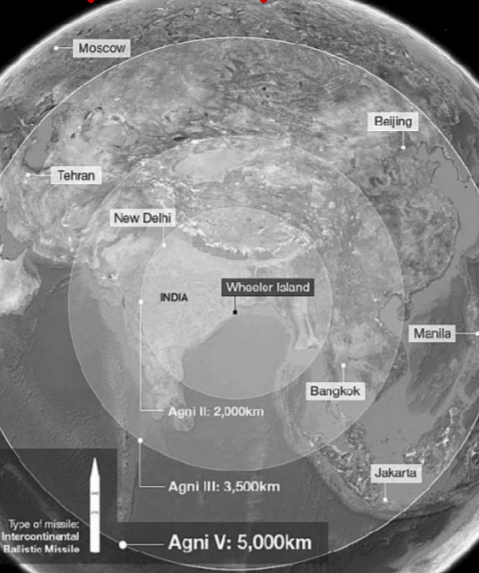
Agni missile range on map, source-Indiasnucleartraids pdf

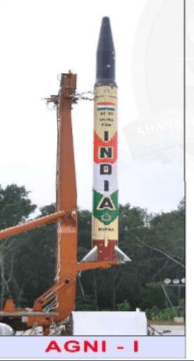
Agni-1

• medium-range ballistic missile – range of 700-800 km. • weight – 12 tonnes; length – 15 meters.

• capable of carrying a conventional payload of
1,000 kg or a nuclear warhead at a speed of
2.5 km/s.

• operational with the
Strategic Force Command
of Indian Army.

Source- http://www.drdo.gov.in

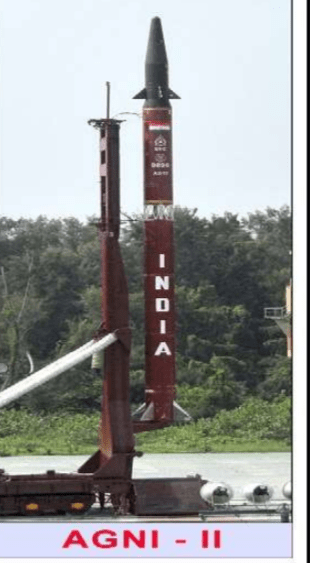
Agni-2

• surface-to-surface nuclear-
capable missile.

• Intermediate-Range Ballistic Missile (IRBM) – capable to cover the range of 2,000- 2,500 km.

• length is 20 meters, with the diameter of 1 meter.

• weight – 18 tonnes.

• 2 stages – solid propellant in
both of its stages.

Source- http://www.drdo.gov.in

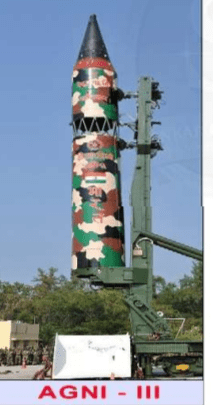
Agni-3

• It is an IRBM – range of 2500-3,000 km.

• powerful solid propellant in its both stages.

• can carry a warhead of 1.5 tonnes.

• claimed that the missile’s circular error probable
(CEP) lies within of 40
meters – most accurate
and deadliest strategic
ballistic missiles of range
class in the world.

Source- http://www.drdo.gov.in

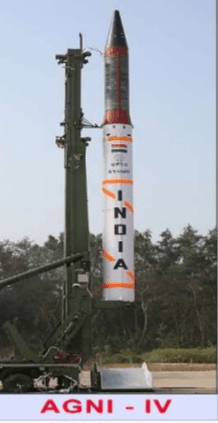
Agni-4

• range of 3500-4000km.

• earlier termed as Agni II
prime

• can carry a warhead of 1
tonne.

• two-stage missile.

• length is 20 meters and
launch weight is about 17
tonnes

Source- http://www.drdo.gov.in

Agni-5

• intercontinental surface-to-surface ballistic missile.

• India’s first ICBM.

• range – more than 5,000 km

• long-range

• Length – 17.5 m; weight – 50
tonnes.

• 3 propulsion stages.

• can carry a warhead weighing more than a tonne. • uses a canister launch missile system or Canisterisation of missile.

Canisterisation of missile

• warheads are pre-mated to the delivery vehicle and kept sealed for storage and transport.

• provides increased readiness – shorter
response time with an ability to launch in “just a few minutes”.

• provides necessary operational flexibility to
the forces.

• enhances missile longevity – protects the solid fuel from the elements.

Agni-P missiles

• successfully test-fired.

• new-generation advanced variant of Agni class of missiles – advanced
version of the ‘Agni-1’ missile.

• designed and developed by DRDO.

• will strengthen India’s credible deterrence capabilities.

Features:
 Nuclear-capable ballistic missile.
 Canisterised missile.
 range – between 1,000 and 2,000 kms.
 surface to a surface missile that can
carry a payload of around 1,000 Kg or a nuclear warhead.
 two-stage missile – composite rocket motors.
 guidance systems equipped with electromechanical actuators.
 solid-fuelled weapon system – state-of- the-art navigation system.
 Can be fired from road and rail-mobile launchers.
 complete technology upgrade in every way possible – improved parameters, manoeuvring and accuracy.
 sleek missile that weighs less than its previous variant – due to the integration of new technologies.

CONSTITUTIONAL BODIES IN INDIA

What is a Constitutional Body?

1. Those bodies whose formation is prescribed by the Indian Constitution itself are known as Constitutional Bodies.

2.They derive their powers and authority from the Indian Constitution.

3. A constitutional amendment is often required to change any powers or functions related to such bodies.

List of Constitutional Bodies in India

  1. ATTORNEY GENERAL OF INDIA

● Article 76 of the Constitution provides for the Attorney General of India.

● He is considered the highest law officer in the country.

● He is appointed by the president and holds office during his pleasure.

● A person who is qualified to be appointed as the judge of the Supreme Court is eligible for the office of Attorney General of India.

Duties of AG:

• To advise the government on the legal matters referred to him by the president.

• To appear on behalf of the GOI in SC in all the cases concerning the government.

• To represent GOI in the references made by the president to the SC under Article 143.

• To appear in HC in the cases concerning GOI when required.

Rights of AG:

• AG has the right to audience in all the courts in the territory of India.

• He has the right to speak and take part in the parliamentary proceedings. However, he doesn’t enjoy the right to vote.

• All the privileges and immunities available to a member of parliament are granted to the AG

2. COMPTROLLER AND AUDITOR GENERAL OF INDIA

● Article 148 of the Constitution provides for an independent office of Comptroller and Auditor General of india.

• CAG is considered as the guardian of the public purse. Along with the Supreme Court, the Election Commission, and the Union Public Service Commission, the office of CAG is treated as one of the bulwarks of the democratic system.

Appointment:

• President of India appoints CAG by a warrant under his hand and seal.

• He holds office for a period of six years or up to the age of 65 years, whichever is earlier.

• CAG can be removed from his office in the same manner as a judge of the Supreme Court.

Independence:

● CAG is provided with the security of tenure.

• His rights cannot be altered to his disadvantage after his appointment.

• All the expenses of the office of CAG are charged on the Consolidated Fund of India.

• His salary is equal to that of a judge of the Supreme Court.

Duties:

● The duties and powers of CAG are mentioned in article 149 of the Constitution.

• All the accounts related to the expenses from the Consolidated Fund of India, Consolidated Fund of the States, and Union Territories are audited by CAG.

● Also, the expenditure from Contingency Fund and Public Account of India and States are audited by CAG.

• CAG acts as a guide, friend, and philosopher of the Public Accounts Committee.

● All the receipts and expenditure of bodies financed from the central or state revenue are also audited by CAG.

• The audits of any other body as and when requested by the President or Governor are audited by CAG.

• Three reports are submitted by CAG to the President. They are:

(1) Audit report on appropriation accounts

(2) Audit report on finance accounts

(3) Audit report on public undertakings

Role of CAG:

• The office of CAG secures the accountability of the executive to the Parliament in the sphere of financial administration.

• The CAG acts as an agent of the Parliament and is responsible only to the Parliament.

● Along with legal and regulatory audits, CAG also conducts propriety audits.

3.ADVOCATE GENERAL OF THE STATE

● Article 165 of the Constitution provides for Advocate General for the states.

● He is considered the highest law officer in the state.

● The Advocate General is appointed by the governor and holds the office during his pleasure.

• A person qualified to be appointed as a judge of a high court is eligible for the office of Advocate General.

Duties and Rights of Advocate General:

• To advise the government of the state on the matters referred to him by the governor.

• To discharge those functions conferred upon him by the Constitution of India.

• He has the right to speak and take part in the proceedings of both the houses of the state legislature. However, he doesn’t enjoy the right to vote.

4. STATE FINANCE COMMISSION

● The governor of a state shall, after every five years, constitute a finance commission.

• Articles 243-1 and 243-Y deal with the formation of this body.

• The composition, qualifications of members, and the manner of their selection is decided by the concerned state legislature.

Functions:

● The distribution of the net proceeds of taxes, tolls, and fees between the state and local bodies.

• The determination of such taxes, duties, and tolls to be assigned to local bodies.

The grants-in-aid to be given to the local bodies from the consolidated fund of the state.

• Measures to be taken for improving the financial position of local bodies.

●Any other matter referred to the commission by the governor of the state.

5.STATE ELECTION COMMISSION

• The elections to the panchayats and municipalities are looked after by the State Election Commission.

● Articles 243-K and 243-ZA deal with the elections to the rural and urban local bodies.

● SEC consists of a state election commissioner who is appointed by the governor.

• The removal of the state election commissioner is the same as that of a judge of the state high court.

6.DISTRICT PLANNING COMMITTEE

• A district planning committee is constituted and given the task to consolidate the plans of both panchayats and municipalities.

• It prepares a draft development plan for the district.

• Article 243-ZD deals with the committee for district planning.

• The composition, manner of election of chairperson and members is decided by the state legislature.

● Four-fifths of the committee are elected by the elected members of panchayats and municipalities.

• The representation of these members is proportional to the ratio of the rural and urban population in the district.

• In preparing the plan, DPC should consider the following:

  1. Matters of common interest between the rural and urban local bodies regarding sharing of resources, infrastructure development, and conservation of environment.
  2. Extent and type of resources available.

7. METROPOLITAN PLANNING COMMITTEE

• A metropolitan planning committee is constituted for every metropolitan area.

• Article 243 -ZE deals with the committee for metropolitan planning.

• The composition, manner of election of chairpersons and members, functions, etc are decided by the concerned state legislature.

There are many other bodies also ….

DIABETES MELLITUS

• Chronic health condition – a metabolic disorder –
hyperglycemia.

• High blood glucose (blood sugar) level either due to
inadequate insulin production or the body’s
cells do not respond
properly to insulin or both.
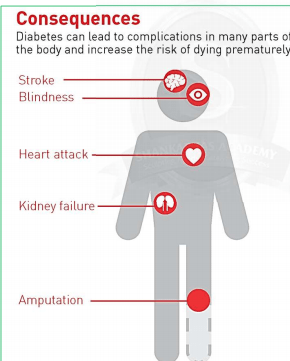
 Over time leads to serious damage to nerves, blood vessels – heart disease, vision
loss, & kidney disease etc.

Source- made by canvas

• No cure – can only be controlled.
 Treatment of diabetes:
 Diet
 Physical activity
 Lowering of blood glucose
 Lowering the levels of other known risk factors that
damage blood vessels.

• Precaution – losing weight, eating healthy food, and being active.

WHO:
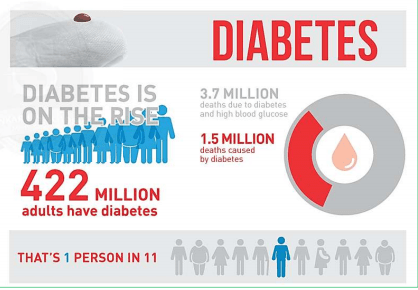
 In 2014 – 422 million people worldwide have diabetes.
 Majority living in low- and middle-income countries – India, Bangladesh, Bhutan, Pakistan, Sri Lanka, Philippines and Indonesia.
 Diabetes directly attributed to 1.6 million deaths each year.
 Deaths from diabetes increased by 70% globally between 2000 and 2019.
 80% rise in deaths among males.

My self made

• India – among the top 10 countries – second with
69.2 million people with diabetes.

• Global Non-Communicable Disease targets
 Globally agreed target to halt the rise in diabetes and obesity by 2025.

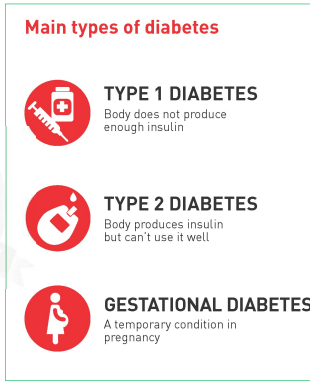
Gestational diabetes

• Impaired Glucose Tolerance (IGT) with onset or first recognition during pregnancy.

• Pregnant women without a previous diagnosis of
diabetes develop a high blood glucose level

. • Author – pregnancy is a diabetogenic stress.

• Usually goes away after baby is born.

Issues

 May lead to Type 2 diabetes.
 Women with it are at increased risk of complications during pregnancy and at delivery.
 Women and their children – increased risk of Type 2 diabetes in the future.
 Other health risks
 These conditions contribute to high maternal and new born morbidity
and mortality.

OPED article

• Women of Indian (South Asian) origin – considered
to be at highest risk of gestational diabetes.
 International Diabetes Federation – up to 25%
of pregnancies in South Asia may be affected by
hyperglycemia in pregnancy.
 India – 10% in rural areas and 30% in urban areas.

• Public awareness is very less.

• Low awareness and capacity within the health
systems for testing and providing care – despite
the availability of national guidelines and diagnosis
and management of gestational diabetes by MoHFW.
• Suggestion – implement the
recommendation of Diabetes Study Group of India, the Federation of Obstetric and
Gynaecological Societies of India and the South Asia Initiative for Diabetes In
Pregnancy.
 Observe a National Gestational Diabetes
Awareness Day on March 10 – birthday of Dr. V. Seshiah, service and contributed to the field of diabetes and
pregnancy for more than 40 years.

INTERNATIONAL ATOMIC ENERGY AGENCY

IAEA • International organization -promote the
peaceful use of nuclear energy.

• Inhibits the use of nuclear energy for any military purpose.

• Autonomous organization – 29 July 1957.

• Established independently of the United Nations
-IAEA Statute.

• Still reports -United Nations General Assembly
and Security Council.

Offices

• Headquarters – Vienna, Austria.

• Regional Safeguards Offices- Toronto, Canada,
and in Tokyo, Japan.

• Liaison offices -New York City, United States, and in Geneva, Switzerland.

• Laboratories and research centers.

Significance

• Intergovernmental forum for scientific and technical co-operation -peaceful use of nuclear technology and nuclear power.

• Development of peaceful applications of nuclear
energy and science and technology.

• Provide international safeguards against misuse
of nuclear technology and nuclear materials.

• Promote nuclear safety (radiation protection)
and nuclear security standards and their
implementation.

Members.

• IAEA – 173 member (April 2021).

• India became a member in 1957 itself.

INTEREST RATES issues

News:

Quarterly reset of interest rates on small savings schemes is due on June 30.

Small savings schemes

• A set of saving instruments launched by the Government of India.

Examples: Public Provident Fund (PPF), National Savings Certificates (NSCs), the Senior Citizens Savings Scheme (SCSS), and the Sukanya Samriddhi Scheme etc.

• Popular with fixed income investors- offer much higher
interest rates than bank fixed deposits.

Lowering of interest rates .

• Will help the government reduce costs- will hurt senior
citizens and the middle-class. • Common people already suffer from inflation.
• Retail inflation was 6.2% through 2020- 21.
 Inflation is expected to stay around 5.5%-6% through 2021-22.

• Rising inflation, declining savings rates and loss of income- disastrous.

• Fall in small savings rate- discourage small investors.
 Small savings- a key source of financing the government deficit.
 In 2021-22, borrowings through small savings- pegged at Rs 3.91 lakh crore.
Public Provident Fund (PPF).

• Introduced in 1968- to mobilize small saving in the form of investment, coupled with a return on it

• Interest earned on the

Public Provident Fund
is tax-free.

• Tenure: for 15 years and can be extended for 5 years.

• Subscriber can make one withdrawal during a FY after five years excluding the year of account opening.

• Amount of withdrawal- up to 50% of balance at the credit at the end of 4th preceding year/at the end of preceding year, whichever
is lower.

COUNTERING THE NEXT WAVE of covid -19

News

• State preparedness to manage the possible third wave of Covid-19 .

• Provides a real time analysis of data – few
suggestions and strategies for effective management
Delhi Administration’s policy responses .

In January 2021 – first wave subsides – the need for hospitalisation of covid-19 patients fell drastically.
 Delhi administration was using less than 20% of its bed capacity.

• In February 2021 – Delhi Government reduced the bed capacity to the level of just above 5,000
• In March 2021 – health system collapsed – increase in the number of covid-19 cases hit by the second wave of pandemic.

In April 2021 – bed occupancy went from 33%
to over 90%
 Government – increased its bed capacity – could not keep pace with the rise in covid
cases .

In May 2021 – utilisation of government hospital beds went rapidly back to 30%
 Many other areas in the country were experiencing a rise in cases.

Inference

• COVID-19 waves require the health infrastructure to be elastic .

• Demand for COVID-19-specific health infrastructure is spatially varied – health
capacity at a fixed location will not be sufficient.

• Conveys the difficulty that several administrations in the country face
 Hard to increase the capacity in response to the kind of surge – in April 2021
 Key health infrastructures don’t exist in all areas in our country

Real time analysis of data .

• 145 districts – accounted for 75% of the cases during the 1st wave – Same accounted
for up to 80% of cases during the 2nd wave.
Permanently at risk Districts – districts that were hit by the 1st wave, affected in the 2nd wave to a greater extent
 Population size, density and mobility make them prone to rapid spread.
 Need reserve capacity and resources to be expanded – prevent any risk associated
with possible 3rd wave

Suggestions

• Mobility framework – capacity to move healthcare facilities from one area to another
 Identify what resources can be moved – based on mobility costs and supply elasticity.

• Policy innovations in three areas
 Personnel management – Inducting trained final year medicine and nursing students – Rehiring of retired medical personnel – use
paramedical workers
 Resources with high mobility costs need to be evenly distributed – ensure equity in access in poorly served areas
 Spatial equity
 Expanding the health infrastructure covering all regions
 Providing accessibility through enhanced regional and area connectivity .

• Leads to sharing of resources within the country – reduces inaccessibility and
inequity.
• Efficiency of resource-sharing increases with the
area of coverage.
 States or districts – benefits of resource sharing is larger – coordinate and build trust
among themselves.

• Greater institutional coordination for a long run is
necessary
 Bodies such as the National Disaster Management Authority and the NITI Aayog could play a vital role.

Geophysical phenomena -PLATE TECTONICS THEORY

• 300 Mya – two great landmasses

• Laurasia – N.P

• Gondwanaland – S.P. – India (without the Himalayas) ; S. America ; Africa ; Australia.

• 200 Mya – Gondwanaland broke up and the land masses started drifting.

• India – moved northward – position across the equator about 50 Mya.

• Movement – further northward and collided
with northern Asia which gave rise to the present Himalayan mountains.

• Indian climate – Monsoon type .

• Evolution of monsoon climate in India is not fully understood.

• Monsoon – a tropical phenomenon

• First appeared –entering the subtropical belt of the southern hemisphere .

• Research – monsoon system dates back to about 25 million years.
• Fossil leaves : morphological characters were analyzed
 Deccan Volcanic Province
 East Garo Hills of Meghalaya
 Gurha mine in Rajasthan
 Makum Coalfield in Assam collected.

• Fossils – different geological ages like 65, 57,
54, and 25 Mya.

• Note : Morphological characters of leaves get
altered according to the prevailing weather
and climatic conditions.

Study of the fossil leaves.

• Dated back – 65, 57, 54, and 25 Mya .

• Adapted – Australian type of monsoon and not the current Indian monsoon system.

• Fossil sites had warm climates – 16.3–21.3 degrees C.

• High rainfall between 191.6 cm to 232 cm

• India – only subcontinent to have crossed from the southern hemisphere to the northern hemisphere.

• Aim – better understanding
 Evolution of Indian monsoons
 Role in the evolution of biodiversity hot spots
⮚ Help in the conservation of modern biodiversity hot spots
⮚ The future monsoon prediction

DETECTING THE UNIFIED CALL OF BLACK HOLES

Gravitational Waves

• An invisible, incredibly fast ripple in space- travel at the speed of light and squeeze and stretch anything in their path as they pass by.

• Albert Einstein’s prediction: When two bodies,
such as planets or stars, orbit each other- could cause ripples in space.

• Most powerful gravitational waves are created when objects move at very high speeds.

• Events that could cause a gravitational wave are:
 When a star explodes; When two big stars orbit each other; When two black holes orbit each other and merge.
• Sometimes, these events only cause small, weak
gravitational waves- hard to detect.

• 2015: Scientists detected gravitational waves
for the very first time- using LIGO.
 Happened when two black holes crashed
into one another- happened almost 1.3 billion years ago.

Laser Interferometer Gravitational-Wave
Observatory (LIGO)

• Made up of two observatories- one in Louisiana and one in Washington.

• Each observatory has two long “arms”: each more than 4 kilometres long.

• When a gravitational wave passes by Earth, it squeezes and stretches space- detected by LIGO.

• A passing gravitational wave causes the length of the arms to change slightly.

• Uses lasers, mirrors, and extremely sensitive instruments to detect these tiny changes.

IndIGO (Indian Initiative in Gravitational-wave
Observations)

• An initiative to set up advanced experimental
facilities, with appropriate theoretical and computational support, for a multi-institutional Indian national project in gravitational-wave astronomy.

• IndIGO plans on gravitational-wave astronomy related to the LIGO-India project.
LIGO-India Project.

• A planned advanced gravitational-wave detector to be located in India.
• To be built and operated in collaboration with the LIGO USA and its international partner Australia, Germany and the UK.

• Scheduled for completion in 2024- will be built in the Hingoli District of Maharashtra state in
western India.

JET AIRWAYS ISSUE

• Factors that led to the issue:
 2015 – Jet acquired Air sahara – with huge price – led to huge loses.
 Competition from low budget airlines like Indigo, Go-air.
 Rising fuel prices.

• Debt – ₹8,000 crore to lessors, suppliers, pilots and oil companies.

• Lenders were searching for prospective buyers.

• Denied ₹400 crore as emergency fund – later
it was jet grounded.
• A Resolution Plan: rehabilitation plan for a
Corporate Debtor (CD) going in insolvency.
 Section 5 (26) of IBC 2016 – “Resolution plan means a plan proposed by resolution
applicant for insolvency resolution of the corporate debtor as a going concern in
accordance with Part II”
• Mandatory contents of the resolution plan:
Financial creditors and Operational creditors.
 Financial creditors: relationship with the entity is a pure financial contract – loan or a debt security.
 Operational creditors – liability from a transaction on operations.

• Committee of creditors (CoC) is set up – comprising of financial creditors.
 Appoint a resolution personal/ professional.

• Resolution personal
 Appointed by CoC
 Presents a resolution plan to the CoC
 CoC must approve a resolution plan.
 Resolution process must be
completed within 180 days – may be extended by a period of up to 90 days after NCLT’s approval.

Jet Airways Resolution Plan.

• Mumbai Bench of the NCLT has approved it.

• Resolution plan from a consortium.
 UAE-based businessman Murari Lal Jalan and U.K.- based Kalrock Capital. • Details
 Total claims – ₹15,432 crore
 Jalan-Kalrock consortium – to pay creditors & banks – ₹1,183 crore over a 5 period.
 First tranche of ₹280 crore – paid in cash after 180 days of the new promoters taking ownership of the jet airline.

 Second instalment of ₹195 crore – paid in next 730 days.
 Balance – paid through a mix of cash, proceeds generated from the sale of assets and annual cash flows generated by airline.
 Stock the distribution
 Banks – 9.5%
 Consortium – 89.79%
 Employees – 0.5%
 Public shareholding – 0.21% • Challenge – Getting the slots back for the jet airlines is going to be difficult and expensive.

Airways

CLUES FROM METEORITE TO EARTH’S MANTLE

News

• Meteorite fell near the town of Kamargaon in Assam in the year 2015 .

• Studying this meteorite and its minerals – may give new clues about the Earth’s lower mantle.

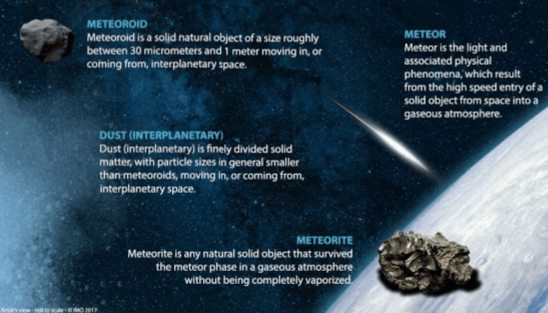
Meteorite

Meteoroids – space rocks that range in size from dust grains to small asteroids.
 Pieces of larger bodies that have been broken – from comets, asteroids, Moon and other planets.
 Rocky, metallic, or combinations of rock and metal.

Meteors – meteoroids that enter Earth’s or another planet’s atmosphere, at high speed and burn up.

Meteorite – if meteoroid survives its trip through the atmosphere and hits the ground.

Asteroids

• Rocky, airless remains – left
over from the early formation of our solar system – 4.6 billion years ago.

• Sometimes called minor planets

• Small, rocky objects that orbit the sun.

• Much smaller than planets. • Most of them live in the main asteroid belt.

Trojans – asteroids that exist behind Jupiter.

Near Earth Objects – Asteroids that come close
to Earth.

Main Asteroid belt

• Region between the orbits of Mars and Jupiter.

• Contains between 1.1 and 1.9 million asteroids larger than 1 kilometer in diameter. • Reason for existence of such large numbers of rocky bodies
 Gravity of newly formed Jupiter – caused the small bodies to collide with one
another, fragmenting them.

Source of image – http://www.imo.net

INDO -GREECE RELATIONS

Joint press release issued by India-Greece

• During the recent visit of External Affairs Minister to Greece.

  1. Both sides discussed the recent developments pertaining to the
    Eastern Mediterranean, Cyprus and Libya.
  2. Both sides agreed that the rule of law and respect for sovereignty and territorial integrity are fundamental principles of international relations that must be observed by all.
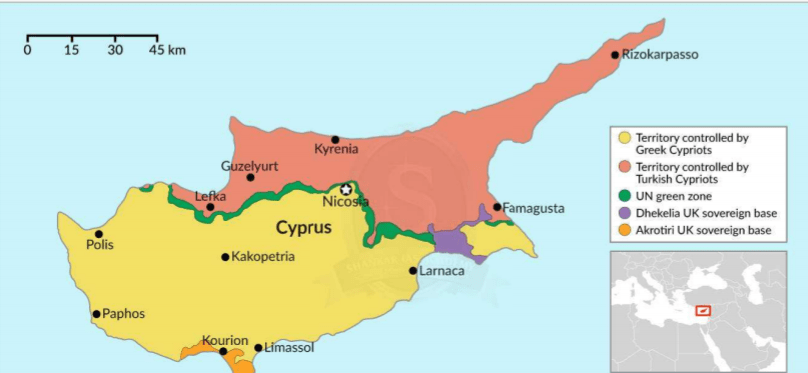
Greece map

Cyprus

• Former British colony – became independent in 1960.

  1. • Tensions between the Greek Cypriot majority and Turkish Cypriot minority communities.
  2. • 1974 – military intervention/invasion from Turkey – soon controlled more than one-third of the island.
  3. • Turkey alleged that Greek Cypriots of planning to carry out ethnic cleansing – to drive out Turkish Cypriots.
  4. • 1983 – Turkish Cypriot administered area declared itself as the “Turkish Republic of Northern Cyprus”recognized only by Turkey.
  5. • Movements in the south to unify the entire island as one region and to bring under Republic of Cyprus. • Call for unifying Republic of Cyprus with
    Greece – Turkey’s interest is to prevent any progress in the efforts towards such
    realization.

News

• Condition in Republic of Cyprus has become tense.
 Turkey’s plan to mark the anniversary of July 1974 invasion of the island by Turkish forces.

• Turkish President Recep Tayyip Erdogan is expected to visit Northern Cyprus – to
celebrate the birth of the northern Turkish Cypriot entity.

23 Million Women Drop Out Of School Every Year When They Start Menstruating In India

In India, 23 million girls drop out of school early when they start menstruating and many of them end up facing acute health problems

1.71% adolescent girls in India remain unaware of menstruation .

2.Menstruation is a rarely discussed topic in homes and schools in India.

3.Since 2010, the government has stepped up to address menstrual hygiene.

It was the occasion of an annual function at a secondary school in Rajasthan’s Dholpur district in May 2017. Manoj Kumar, the district health officer was one of the dignitaries invited to the function. While giving a short speech on the importance of education, Mr Kumar noticed the alarmingly low number of girls present in the crowd of school students. On enquiring further, he was told that many girls drop out of school on reaching the sixth or seventh standard as they reach puberty. In a remote district like Dholpur, a primary school is barely equipped with a functional toilet, let alone something as essential as sanitary napkin dispensers. But more than the infrastructure for young girls in Dholpur, like millions of others in districts, towns and cities across India, menstruation remains a biological event shrouded in mystery and taboo, not to be spoken about openly.

355 million is the number of menstruating women in India, accounting for nearly 30 per cent of the country’s population. Menstruation continues to be a subject of gender disparity in India. Myths about menstruation are largely prevalent, forcing many girls to drop out of school early or be ostracised for the duration of their menstrual cycle every month. A 2014 report by the NGO Dasra titled Spot On! found that nearly 23 million girls drop out of school annually due to lack of proper menstrual hygiene management facilities, which include availability of sanitary napkins and logical awareness of menstruation. The report also came up with some startling numbers. 70 per cent of mothers with menstruating daughters considered menstruation as dirty and 71 per cent adolescent girls remained unaware of menstruation till menarche. A 2014 UNICEF report pointed out that in Tamil Nadu, 79 per cent girls and women were unaware of menstrual hygiene practices. The percentage was 66% in Uttar Pradesh, 56% in Rajasthan and 51% in West Bengal.

Lack of Awareness

Lack of awareness makes for a major problem in India’s menstrual hygiene scenario. Indian Council for Medical Research’s 2011-12 report stated that only 38 per cent menstruating girls in India spoke to their mothers about menstruation. Many mothers were themselves unaware what menstruation was, how it was to be explained to a teenager and what practices could be considered as menstrual hygiene management. Schools were not very helpful either as schools in rural areas refrained from discussing menstrual hygiene. A 2015 survey by the Ministry of Education found that in 63% schools in villages, teachers never discussed menstruation and how to deal with it in a hygienic manner.

Lack of Sanitary Napkins and Adequate Facilities

In a city, availing a sanitary napkin for a woman aware of menstrual hygiene is a normalised process. Not only are sanitary napkins available in pharmacies and grocery stores in cities, they are commercialised via advertisements so that they are treated as any other product. In rural areas, sanitary napkins are found with difficulty. Most girls rely on home-grown or other readily available material, the latter often being unhygienic and unsanitary. Only 2 to 3 per cent women in rural India are estimated to use sanitary napkins. The lack of demand results in storekeepers not stocking up on sanitary pads. This results in women resorting to unhygienic practices during their menstrual cycle, such as filling up old socks with sand and tying them around waists to absorb menstrual blood, or taking up old pieces of cloth and using them to absorb blood. Such methods increase chances of infection and hinder the day-to-day task of a woman on her period.

Impact on Women’s Health

Surveys by the Ministry of Health in 2002, 2005, 2008 and 2012 found out that most problems related to menstrual hygiene in India are preventable, but are not due to low awareness and poor menstrual hygiene management. This resulted in development of some serious ailments for adolescent girls. Roughly 120 million menstruating adolescents in India experience menstrual dysfunctions, affecting their normal daily chores. Nearly 60,000 cases of cervical cancer deaths are reported every year from India, two-third of which are due to poor menstrual hygiene.

Other health problems associated with menstrual hygiene like anaemia, prolonged or short periods, infections of reproductive tracts, as well as psychological problems such as anxiety, embarrassment and shame.

Government Schemes On Menstrual Hygiene

From a ban on advertisements on sanitary napkins in 1990, to a full-fledged feature film, PadMan, on a low-cost sanitary napkin entrepreneur in 2018, India has indeed come a long way. It was eight years back in 2010, when the Ministry of Health and Family Welfare launched the Freeday Pad Scheme, a pilot project to provide sanitary napkins at subsidised rates for rural girls. The scheme was launched in 152 districts across 20 states and sanitary napkins were sold to adolescent girls at the rate of Rs. 6 per pack of six napkins by Accredited Social Health Activists (ASHAs). The estimated cost for the entire scheme was Rs 70 crore.

A year later, the Union government launched the SABLA scheme across 2015 districts in the country. The scheme aimed at improving health conditions for adolescent girls with menstrual hygiene as an important component. Two years later, under the then ongoing Nirmal Bharat Abhiyan, focus on menstrual hygiene was added as a key component of the sanitation mission. In 2014, the Union government launched the Rashtriya Kishor Swashthya Karyakram, aimed at improving the health and hygiene of an estimated 243 million adolescents. Menstrual hygiene was also included as an integral part of the programme.

Under the ongoing Swachh Bharat Abhiyan, menstrual hygiene has been given high importance. The Swachh Bharat (Gramin) guidelines explicitly state that funds allocated for information, education and communication (IEC) maybe spent on bettering awareness on menstrual hygiene in villages. Adequate knowledge of menstrual hygiene and development of local sanitary napkin manufacturing units is encouraged by Swachh Bharat Mission (rural) and self-help groups are to help in propagating such efforts.

Recently, Union Minister for Drinking Water and Sanitation Uma Bharti said that sanitary napkin, similar to a toilet, is a right of every woman. Reiterating that menstrual hygiene was a key concern for the ministry, Ms Bharti at a recent press conference said that she spoke to Union Minister for Textile Smriti Irani and Union Minister for Woman and Child Development Maneka Gandhi on making affordable sanitary napkins available to women in rural areas.

Looking Ahead: An India With Proper Menstrual Hygiene

“The myths and taboos surrounding menstruation need to be broken down effectively before schemes and incentives make their way to make life better for menstruating women,” said a WaterAid India official.

Conditions for menstruating women in India can only improve when awareness on menstrual hygiene is spread. IEC on menstrual hygiene, under Swachh Bharat Abhiyan or any other state scheme must educate women across all ages on what menstruation is and why the taboos surrounding it do tremendous harm. Simultaneously, sanitary napkins must be provided to menstruating women to ensure that they do not fall prey to age old unhygienic traditions of using cloth, soil or sand. It must be remembered that 88% of India’s menstruating women do not use sanitary napkins. Making sanitary napkins available to over 300 million women and ensuring that they do use these will be a herculean task, and can only be achieved with due cooperation all stakeholders and proper coordination between them to improve the status menstrual hygiene in India.

Central Bureau of Investigation (CBI)

Central Bureau of Investigation

• Origin as Special Police Establishment (SPE) – set up in 1941.

• Purpose: Investigate bribery and corruption in
transactions with the War & Supply Department of India during World War II.

Delhi Special Police Establishment (DPSE) Act,1946

• Transferred the superintendence of the SPE to the Home Department.

• Jurisdiction of the DPSE:
 Extended to all the Union Territories.
 Could be extended to the States with the
consent of the State Government.

• 1963 Home Ministry resolution: SPE became the
Central Bureau of Investigation (CBI)

• Purpose: To investigate
 Serious crimes related to Defence of India, corruption in high places, serious fraud etc.
 Hoarding, black marketing and profiteering in essential commodities.

• At present, employees of public sector undertakings come under CBI purview.

• 1969 nationalisation of the banks: employees of Public Sector Banks come under the ambit of the CBI.
• Superintendence of CBI:
 Central Vigilance Commission (CVC) – for
investigation of offences under the Prevention
of Corruption Act, 1988.
 Department of Personnel & Training (DOPT) in the Ministry of Personnel, Pension & Grievance -for all other matters.

Three divisions of CBI:

Anti-Corruption Division
 Investigates cases under the Prevention of Corruption Act, 1988.
 Against public officials and the employees of Central Govt, PSUs, Bodies controlled by the GoI etc.

• Economic Offences Division
 Investigates major financial scams and serious economic frauds.
 Crimes related to Fake Indian Currency Notes, Bank Frauds and Cyber Crime.

Special Crimes Division
 Investigates serious, sensational and organized crime under the IPC and other laws.
 Based on the requests of State Govts or on the orders of the SC and High Courts.
• CBI needs the prior consent of State to exercise of powers and jurisdiction in the State.
 SC and HCs can order investigation without the consent of the state.

FATF

Financial Action Task Force (FATF)

• Global money laundering and terrorist financing
watchdog.

• Established by the 1989 G-7 Summit held in Paris.

• An inter-governmental body- sets international
standards to prevent illegal activities and the harm they cause.

• Works to generate the necessary political will- for
national legislative and regulatory reforms.

• Commitment by more than 200 countries and jurisdictions- to implement FATFRecommendations/FATF Standards.

• Also works to stop funding for weapons of mass destruction.
• Monitors countries to ensure they implement the
Standards effectively.

• Membership: 37 member jurisdictions and 2 regional organisations- including India. Jurisdictions under increased monitoring .

• Work with FATF to counter money laundering, terrorist financing, and proliferation financing.

• Committed to resolve the identified strategic deficiencies within agreed timeframes.

• Referred to as the “grey list”.

• Those failing to address these issues after a specific time- listed under ‘black list’.

 Greylisted countries- Pakistan, Mauritius, Myanmar, Syria etc.
 Blacklisted countries- North Korea and Iran.
Implications of being greylisted/black listed:
 Squeeze the country’s economy- harder to meet its foreign financing needs.
 Future borrowings from international organisations (IMF)- would be difficult.
 Downgrade the country’s debt ratings- difficult to tap into the international bond
markets
 Discourage foreign investors and companies to
do business in the country.

INS vikraant

• Named after its predecessor – procured career.
 India’s first Majestic Class aircraft carrier
 Formerly called Hercules – acquired from Britain in 1957
 commissioned in 1961 as INS Vikrant
 1997 – decommissioned .

• First airbase reinforced warship of India .

• Also known as Indigenous Aircraft Carrier 1 (IAC-1).

• IAC boasts nearly 75% indigenous content.

• Informally called INS Vikrant 2.

• Currently under construction and conducting trials by Cochin Shipyard Limited in Kochi, Kerala

Specification

• Weighs up to 40,000 tonnes • Can carry up to 40 aircraft.

• To operate MiG-29K fighter aircraft, Kamov-31 Air Early Warning Helicopters, the soon-to-be-inducted MH-60R multi-role helicopter, and the indigenously manufactured Advanced Light Helicopters.

• Third air craft career INS Vishaal – expected to be commissioned in 2030.

Project Sea bird

• Largest naval infrastructure project for
India .

• 3 billion dollar programme. • Upon completion- largest naval base on the west coast and also the largest naval
base east of the Suez Canal.

• Project sea bird: project for creation of a naval base at Karwar on the west coast of India.

• Aims at providing fleet support and maintenance
of warships.

• Will be able to support several major warships and at least 30 vessels submarines and yard crafts .

• Naval Air Base will also have a maintenance
section.

• Totally spread across over 11,000 acres .

• Located on hilly terrain along the coast and by reclaiming the part of sea.