Religion in 21st Century: Survival or Revival

Ever Since the history of mankind religion existed although their purposes differ in many ways. The first religion that came into existence as of known today is the Hinduism, we understand this from different Vedas which were said to existent from around the 5th CE. From the very beginning of religion, there was a structured system keeping different people at different levels giving them no space to breath or escape. This system was widely prevalent and as communications and technologies grew more people started to adopt it, keeping the structure rigid to cross. Not just Hinduism but religions such as Islamism, Christianity, Judaism and the list is exhaustive in terms of their structural and rigid norms which only favors a certain category of people. 

The question here we have to ask is that, what has changed so much in religion that now everyone and anyone is following it? How the human beings who believed in Science could believe in religion after all these decades? The answers to these questions are very simple and unbelievable. “Not much” is the best answer to the first question. Religion has remained the same across times, across thousands of years even when human beings evolved and became better and best versions of themselves. Even when human beings could fly, they choose to believe in religion, Why?

Answering these questions would need us to go through lots of facts and understanding of not just how religion have adapted and changed mankind but also about human behaviors too. Human beings are creatures with a mind which cannot always be rational. Even though we outsmart the whole animal kingdom with our brain, it is the very thing which makes us lose our rational and believe in things which might not even have any sources or valid resources to back with. 

Human beings simply were taught to believe in a divine power which will save them through prayers, donations and disturbing sacrifices. These people were groomed from a very young age to believe in it, that even when we don’t know we unintentionally call out god’s name, like it was stuck to our tongues. Dogmatic beings wrote scriptures which have no valid evidence or sustainable outcome to begin with, and these were forced upon children from a very young age, not giving them the choice of becoming who they want to be devoid of their religious identity so much that even before someone could find their own selves, they learn their religious identity completely nullifying who we actually are. 

People chose to believe in lies when truths are bitter, this can be deciphering the fact that people need someone to always save them, to always cry for help, to always turn for beliefs and if one day someone argues that this is not real with evidence or facts resonating their statements, human beings won’t believe it as such or their rationality won’t be a match to their savior who they haven’t seen or which science have no answer too. 

These patterns in human behavior’s make it impossible for religion to fade away from peoples lives. Although this cannot be said for everyone. Recently there has been a decline in the number of people actively following religion, people have come to grasps with certain loopholes in them and calling them out for more people to come out of the trances they were forced to believe in. Most of who are actively calling them out are women who were forced into always being the submissive gender throughout all the religions across the world. The sufferers were always women, wailing women depicted across pictures stereotyping their roles as potential nurturers and never letting them out of their cycle. Women were forced into crowd control actively pursued by these religions, always putting the burden on women. 

Different Feminist movements took into terms these issues and addressed them in various waves, making people and specifically women of their rights. This led to a downfall in the religious followers of many religions across the globe. Added to this was the problem with many religions believing in law of the nature and condemning homosexual relations. This put many religions at a potential risk of losing their followers. Religion wasn’t ready to let their walls down and accommodate people and factions into them. They held their walls so high that it choked its own people and these people turned against each other, questioning the viability of the religion.
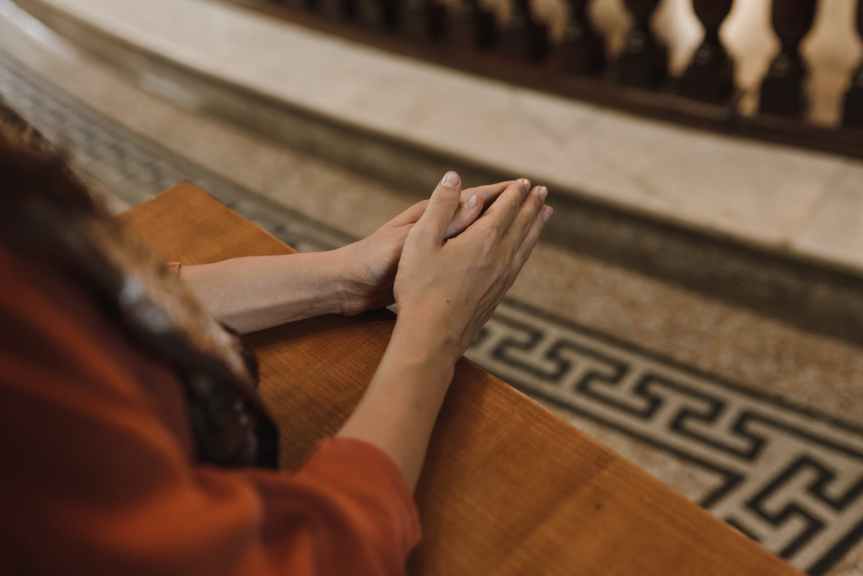
Will we be better off without religion?

This essay focuses the critical review of the debate on ‘whether we will be better off without religion’. The debate is between two very famous scholars in religious studies, Raza Azlam who is an author of the book called ‘God: A human history and the other a physicist and atheist Lawrence Krauss. Both of them hold two very different opinions as to how religion affects people emotionally and morally while holding the same opinions on matters of religious violence and influence of it in the society. 

The debate begins with Raza talking about how religion is both good and bad because its man-made institution and how we are inherently attached to it like a second skin. He moves on to lay the floor for faith and discussion to be discussed as two concrete elements so that it becomes easier to debate on a concrete premise. Raza also talks about how we cannot separate religion as an entity from people’s life as it has become a part of who we are and its so much of an identity to people. He also brings into account that the fact the religion causes conflicts, wars and no other entity does this is completely flawed since people go to war for various other reasons too by quoting the example of world wars. And also, how we shouldn’t categorise Islam as violent force inherently since violence is found in all religions not just a specific one.

On the other hand, Lawrence talks about the idea of accepting reality and how important it is to believe in something that is true and you have facts and evidences on. He completely takes over the idea of Raza talking about divine power by asking him how such a human made institution can proclaim such statements. He talks about how people aren’t identifying themselves with religions as they used to before and even people who do aren’t even aware of the basic doctrines.  He questions the idea of God in life and what exactly is the purpose of god or how it has actually helped the world. He brings in an important argument of how people’s morality is connected to religion and they aren’t ready to let go of the wrong side of it.

What is fundamentally wrong about this debate was that it failed to reach a consensus or give us a basic idea of which would be the best option, the idea of the debate was to understand if religion is needed or not and this was something that wasn’t addressed at the end of the debate. Problems of individual identity and group identity weren’t discussed in wide scope and questions based on the scared use of Quran and Bible addressed to Raza did not really have a concrete answer. In so many ways questions of absolutism was also not answered by Lawrence. Both the sides failed to grasp the fundamentals of the debate taking it to extremes

Reasonable Pluralism

The world we live in today consists of people belonging to different religions, castes, places, people who speak different languages, have differing political opinions and the list goes on. Human beings are unique in their thinking as well as the way they express their thoughts. They are inherently different so many ways and sometimes conflicts can arise between people due to this. But having difference of opinion always does not necessarily mean it is bad or it can end up in conflicts, it can sometimes give insight into how differently and parallelly things work in the other paradine. 

This can result in Political Liberalism, where people are more attentive and acceptable of other people’s religion and are not ethnocentric. This is what John Rawls talks about, he brings in the idea of Political Liberalism where he claims that people who are reasonable would have a liberal approach towards the differing views. And hence the idea that conflicts or fights will happen between people because of their differences is flawed. 

People who hold different comprehensive doctrines can only be acceptable of others differences if they are reasonable. This is what Rawls point out in his study, he says that people living in a society, if they are reasonable people and rational in thinking and attitudes. 

Rawls talks about ‘Reasonable Pluralism’ where people are accommodative of other people’s differences and views. Even though people are inherently different and have different ideas and beliefs people choose to understand them and let this not cause a divide between them. It instead made people more accommodative of these changes and will make them more cosmopolitan in approach. 

This is how Political Liberalism comes into play, people who are liberal and rational tend to understand these diversities and learn to be more adaptive of these differences. This is termed as overlapping consensus. A term used to define the consensus between people having different opinions and view points but are still accommodative of each other. Rawls believed that this would only happen if people were reasonable enough to understand these differences in its moral sense. 

Although this idea behind Rawls is really good, the problem here is that he only takes into account the reasonable citizens. He never accounts for people whose thinking lies beyond reasonable one. Hence, we cannot really say if this is applicable to everyone in the state. Flawless his theory was but it failed to capture people with different perspectives and opinions as different from the crowd of reasonable people. This is one of the major problems which has gone unanswered.

FARMER’S PROTEST IN PRECISE

One of the recent controversies that has been part of 2020 was the recently passed farmers bill. Ever since the passing of the bill, many farmers have assembled in large number in Delhi to show their disagreement towards the passing of the bill. Farmers have been upfront with their protest showing solidarity together against the passing of the bill.

The following are the bills passed by the Government of India


The Farmers Trade and Commerce (Promotion and Facilitation) Bill 2020


This bill allows farmers to sell their produce to anyone another than the government. It gives farmers a choice on who sell their produce to, whether they want to sell to the government or third party. Earlier the government bought produce from the farmers under the Agricultural Product Market Committee (APMC).


The Farmers (Empowerment and Protection) Agreement on Price Assurance and Farm Services Bill 2020

This bill talks about setting up a framework for contract farming. In this a farmer and a buyer can make a contract even before the farmer makes the produce. The goods can be trades outside the premises of the APMC (Agricultural Produce Market Committee)

The Essential Commodities (Amendment) Bill 2020

This act allows inter-state and intra-state trade of farmers produce by eliminating the government in between. A third party can involve in the business.

These were the three new bills passed by the government. They stand as controversial because the farmers feel that it would eliminate the concept of MSP.

Concept of MSP

MSP stands for minimum support price. This price is offered by the government to the farmers on buying the produce. Government for ages have taken produce from the farmers under MSP and subsidised it and sold it to the people. This made it easy for both the people as well as the farmers. With the assurance of the MSP the farmers could rely on the government even in the times of a bad crop or drought situation. They were sure of the MSP but now this is not the case as seen by many farmers. With the introduction of the bill the farmers are scared that the government has withdrawn the MSP and instead bought in Contract farming.   

Problems with the Bill as perceived by the Farmers 

Farmers are afraid that they will be cheated with the coming of this bill. They feel that the government has withdrawn the MSP and put them in danger. Farmers have been gathering in Delhi ever since the passing of the bill. They have assembled in huge numbers trying to give it all they got and asking the government to take back the bill. The government has responded with saying that they have no intentions of withdrawing the MSP and all they hoped for were the welfare of the farming community and the people. 

Like the two sides of a coin, this bills also have their flip side, the farmers believe that they can be easily tricked into any kind of traps with the contract farming by legal clauses. These powerful companies can easily manipulate and exploit the farmers as they wish. But the government says otherwise, they believe that with the coming of contract farming in India there will be a huge profit as well as private investments. 

This act also allows the trade of produce to other states without MSP, this has caused problems too because this will enlarge the gap between the rich and the poor farmers. It will create a gap which cannot be closed and will only widen with the passage of time.

Protests across India

Farmers have been protesting about these bills ever since it was passed and the government has initiated talks with the farmers where they were assured of the fact that the MSP won’t be cut off.

This protest has turned into a massive one where farmers had even blocked roads to Delhi. They also observed a strike on December 8 as part of their dissent all across India. The idea of protesting without the usage of violence enshrines as a part of our Right to Freedom but there have been insights of violence too.  As many as 31 organisations are said to be taking their stand against the bill, most of them are protesting against the first bill in fear of the removal of MSP. There have almost been 5 rounds of talks which had failed. Home Minister Amit Shah had called for a restructuring of the bill but the farmers have said no, they wanted to the full bill to be rolled back. Farmers have threatened to expand the protests by closing the Delhi –Jaipur Highway, capturing Reliance malls and capturing toll plazas.

There have been a series of misunderstandings that needs to be understood and changed for both the government and the farmers to put an end to this issue, only then the true essence of a democracy will prevail.

Have we all forgotten Hathras Rape case ?

A very prominent example of how caste have its root in Indian Society is the recent Hathras Case. The case brings into limelight the issues of pollution and purity of the caste system which has prevailed in the Indian society from centuries before. The idea of caste and stratification had been existent in India since the times of Varna system. And till date this system has not faded in India especially for the lower classes. As you go higher in the system of stratification the more the chances of caste system fading out.

The case of Hathras throws light on the cruel side of patriarchy and caste system. A 19 year old Dalit girl was gangraped by 4 men. Men belonging to the upper caste. This issue talks about two different aspects. One is the aspect of the caste system about how the women was from a lower caste and the men from a higher one. While the second aspect is about the system of patriarch, which has been ruling India ever since the beginning of times. The case had a lot of controversies attached to it, the police investigating it even claimed that ​the girl was not raped. To top with all of this the body of the girl was cremated by the police itself without seeking the permission of the family. The girl was not given dignity in her life and death too. 

The policemen investigating the crime were adamant about denying that the girl was raped and kept on blaming the victim rather than investigating about the circumstances leading to her inhuman death. Even the media who tried to tell the truth were also manhandled. This shows the cruel side of how money and power can win over the justice and victims. The case gained its momentum because of how the girl was cruelly killed and denied dignity in her death too. This was possible mainly because the men were of higher caste yielding power to control manpower as they wish. The roots of caste system and patriarchy is deeply connected. 

Something that we see very common in India is the justice served to the rape victims. The daily raising numbers are worrisome. And the delayed justice acts as a barrier for many victims to even file a case. So many of these problems are connected and erasing of one system can always diminish or erase the other one too.

Is McDonald’s a Monopoly?

A firm is said to be a monopoly if it is the only sole vendor of its item and its item doesn’t have any close substitutes, for instance, McDonald’s. The factors like government license, ownership of resources, copyright and patent, and high starting cost makes McDonald a solitary dealer of goods. Every one of these factors limit the passage of the other sellers onto this market. It also possesses some information that is not known to other sellers.

McDonald’s is a commonly used example of monopolistic competition. Monopolistic competition signifies the variety in the products available in the market. Though they have similar products they are yet different from each other in various aspects. McDonald’s have divided them products in different varieties and have many outlets and dine ins too. There are many other similar ones in the competition like KFC, Subway, Burger King etc. All of these are a similar kind of food chain and serve fast food itself yet their very basics are differently structured.

This makes the entity the single seller in the market controller as well as the price maker. They maximize their profit by deciding the price of the product that is to be sold and by determining the quantity of the equivalent. Also, McDonald’s charge different prices from different customers for the same product called ‘Price discrimination’ as this entity aims for profit maximization. 

A very significant quality of McDonald’s is the fact that wherever they put up an outlet they always go with the native cuisine and have so many options. People love their menu because of their varieties without posing a close substitute from other entities. McDonald’s has made use of non-price competition for their growth too. Though they have similar products they are yet different from each other in various aspects.

A GOD WHO HATES WOMEN

I had chosen to write about Dr. Majid Rafizadeh’s phenomenal novel ‘  A God Who Hates Women’. It is a beautiful yet tragically moving story of a women caught in a patriarchal household. It takes us back to the times when women were seen as commodities sold off in markets. Choice was a word that women could not even imagine. The story highlights the life of the authors mother, how she lived through oppression. This story forms around the background of a civil war. The novels throw light on the cruelties faced by women in a patriarchal society. The story begins with a short background of how the authors grandmother was born. It later shows the birth of the authors mother which turned out to be a disgrace for her own mother, since she expected a baby boy. The story continues with the atrocities faced by his mother at her own home and how she was forcefully married to a man who abused her at all chances he got. The irony of which the book talks about is the cruel side of patriarchy, how women carry it down more than men. 

The name of the book also seems to bring out the story, about how the religion and its god were cruel to women. The people of the religion went to extreme ends to make sure that the rules of the religion are followed, sometimes inhumane practices were also used.

Religion and politics were not treated as two different entities by the people of Syria, Iran and Iraq. They had held religion so much close to their heart, that it was even involved in their politics. Political decisions were made in the name of god. People were abused in inhumane ways in the name of religion. It shows quite a different side of how far our modernity and education has not evolved in countries like these. Citizens of the nations could never really trust one leader to be liberated from his religious entity, each leader had their own approach to religion and people were forced to select someone who was less cruel than the other. The question of a good and humane leader was out of choice. 

The book is set in the backdrop of a series of political tension in Syria and Iran. The author and his family have moved from Syria to Iran a couple of times and the book shows the difference in the culture in both the countries vividly. The book shows how much political leaders are influenced by religion and how they kill people cruelly who goes against them, the authors father was one such victim. Maybe the author might have also got the influence from his father, but in a much better way. The author was the founder of an organization on human rights which reported cases of human cruelty. The authors father has a very interesting character, he on one side focuses on how modern our thinking should be in various aspects of life except in the equal treatment of womenas he had always abused his wife. His character was rather paradoxical. 

But one of the most important things that the book has left out is that it hasn’t brought into consideration the larger issues faced by the people. The author has merely had an interview with the close members of his family and friends. And so, we cannot really say that the book speaks about the whole of Syria. After certain parts of time in the book, it fails to show the feelings of Amira, the authors mother. How she felt about religion, her passion and how she lied to herself to live for her children. The authors life has been glossed over for most parts and it talks in the perspective of the author while the book was about his mother. 

The major concept the book focuses is on the patriarchy and how it has broken down the women of the household. Book spoke about how women were cut off from the world of pleasure and desire, forced into submission. Another novel aspect of the book is that it also talks about men abusing younger boys. Young boys were raped by elderly men in the remote areas of Iran

The book is set in a time when abuse was seen very common. People dominated over the weaker ones and religion was to be respected and those who don’t respect religion were also abused too. It is set in a completely different timeline with reference to religion or equality between men and women. But we cannot completely say that patriarchy has been wiped out from our modern-day world. Across the timelines we had only grown one step closer to lower its impact on the people. 

We might live in a secular world today but that does not mean that each and everyone among us are cosmopolitans in nature. But one thing that has drastically changed is the number of people who believes that women are to be respected and given equal rights as men. They believe that Women must not only be seen as homemakers but also as potential doctors, engineers, civil servants and all the more. This change in perspective had given rise to many feminist movements across the world. There are almost 3 waves of feminism, where each wave concentrated on the various aspects of a women’s lifestyle.  The world we live in as become so much more complicated with the passage of time; one person is not solely now identified with his/her religious aspects but with things they would want to relate too. Identities matter a lot in the world we live in, these identities connect us with similar people so to share the same feelings and aspirations. 

Something that we can always find common in all the stories we hear are the sufferings of women and not men, why was women just seen as fragile and homemakers? The ones that needed to stay at home and look after the children? Weren’t we equal beings with different biological systems? Why wasn’t marital rape unlawful in countries across the world? Why were people so focused on their religious identities? Why didn’t time make a difference in the modernization of the Asian countries? These were a few of the questions which kept disturbing my mind. I hope one day comes where women will be as free as men. A world where we all are equals. 


India – |||

Colonial data recorded by the census officials are more like violence, where Indians are continuously finding troubles and combusting into violence and the British officials tirelessly working on to keep peace. But in return, the census is mostly replete of the references to shared sacred spaces, mixed congregation, common goods and a general laxity and catholicity of religion. (The Historian and Indian Census , p. 63)

For instance, in the reading of ‘The Shepard’ by Ashfaq Ahmad set back the story during the 1930s and 1940s , where  towards the end it describes about the communal riots as the independence for the country drew nearer. People during those time were not acceptable of the other religious identities especially when it comes to Hindus and Muslims. Instead of accepting people belonging to the other religious identity, they only tried to show off their identities over one another, which ended up creating communal violence.

So, in conclusion, the categorization of Hindu, Muslim and Sikh were all an outcome of Census, in which the British officials made religion as a fundamental category to be mapped. The Census which was conceptualized and institutionalized in India, became clear while studying the census of Punjab between 1858 and 1921. (The Historian and Indian Census , p. 45)

Hinduism was seen as a native religion of India and Islam as a foreign religion. This made the British officials to see them to be fundamentally opposite to each other and later conducted the census marking the religion as a fundamental category further leading it into the communal riots which we can see in the short story of ‘The Shepard’ in the nineteenth century.

Therefore, it was the religious identity that played a pivotal part in creating the political identities as a result of the census.So, in a way religious identity are interconnected with political character taking outline of our chief Narendra Modi starting late we can see how the religious identity expectscritical part in impacting the political character influencing the Hindu majority share portion of resident to transform into the political figure.

Stories of India – ||

India which was considered to be the land of many nations and varying races should understand its population based on their ethnographic, communal and geographic distinction which is not an easy task. In a country like India, National identity has consistently been a part of human life both socially and personally ever since the beginning of ancient history. During the nineteenth century, Punjab became a source of the study of religious identity because of their ethnographic and histories of the local population. Britishers viewed the conflict in the state of Punjab during the colonial period as the result of the deep-seated religious hostility. (The Historian and Indian Census , p. 41)


The historical backdrop of Punjab can be seen driving constantly from Cultural variety and heterogeneity to an expanding fixation on network limits. The Census of Punjab was directed to build up a comprehension of population but it turned out to be understanding the religious identities which later resulted in the partition and turned out to be a political identity. In the minds of Census officials, Punjab society was highly organized on religion and it could be understood in terms of religion. (The Historian and Indian Census , p. 43)The census made strict character more impossible to miss and it turned into the establishment for expanding religion between networks for admittance to employment, education and political representation.

India the rulers of Mughals and maharaja, they made efforts to understand their territories. By mapping and measuring under their control of revenue process, however they didn’t lead any known Census of individual, though they generally acknowledge the identity.

But the census by the Britishers conducted turned to create more communal issues mainly in the urban spaces and religious identities began to dominate the urban politics as these censuses only concentrated their records on religion apart from the survey conducted in 1851. This was despite the fact that in mid nineteenth century when Britain strict alliance made a serious difference between Anglicans, protesters and Catholics had been seen separated from one another since the time of reformation. (The Historian and Indian Census , p. 46)

India 🇮🇳

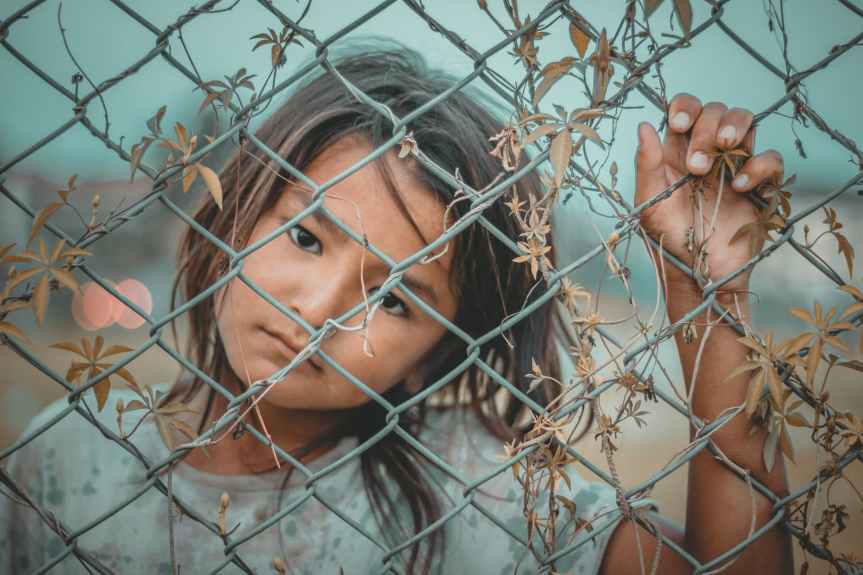
One of the most heart-breaking things about India is the varied difference in the way a child is brought up. Not everyone gets to live in luxury or middle class but in utter poverty. We see how children mature very fast in such circumstances; we see how they are not able to enjoy the simple pleasures of life like any other kid does. They do not have huge dreams but a very simple one that is to go to sleep with some food in their stomach. Unlike us, they aren’t taught to dream because of their situations at home.

Here we can see a fine line of differences between born as rich and poor. Education has become a luxury for the poor people. Even though our constitution guarantees that Education is a must for every one and that no one should be discriminated on the basis of caste, sex, race, religion or anything of sorts. Even though such cases exist in India, only a few like these are addressed. There are some sections of the society who do not have access to some of the basic necessities like the tribal people. They are kept away from the mainstream due to their way of living and culture. 

Such a basic necessity like Education is so hard for a section of India’s population to access, it shows how much as a country we are lacking due to the lack of interest from the government as well as the society. We can see the divide between who can afford to go to school and not.

So many factors are behind such a complex issue like poverty, gender inequalities, superstitions, vicious circle, forced to work due to lack of money. If we have to bring a change to this system then we have to eradicate all these problems together. Bringing such changes to India is a huge task and not just the government but also the people has to work their way through this.

Happiness and Virtue!

t is believed that if we do something hoping for the sake of its own good will, then it will be in a realm of ultimate good. People shouldn’t be doing something good because they want something out of it, but for the sake of the good will only they should do it. When people do attain the ultimate good, its usually ends there with the end as its highlight. Aristotle has remarked that politics is what governs everything in life, we can’t find an activity around us that does not involve politics. All the sciences have politics in them and so the end of such sciences is the end of politics too.

Aristotle thinks that happiness can only be chosen in itself and not any other principles. It can only be attained directly, and there is no short cut or other way around it. We do something for various pleasures and wants in life but we want happiness for its own sake. Man, always want to be the best in everything they can achieve, this is with their soul’s conformity. It is always aligned with their certain principles and man always sets standards he wants to achieve. If he achieves these certain elements with the full passion he had put in to for its result, then he has attained his virtue. 

Happiness is an action that is to be lived well and achieved justly. It shouldn’t be deceived or cheated because only if you put the most efficient of work and passion, it can be achieved. Then only it becomes a virtue. It should be lived well to the virtue of the conformity. People aren’t born happy, but they find happiness on their journey of life. It is an activity throughout a person’s life achieved over time. Happiness is something that we gather across our life, through our experiences. It is not something that can be bought with. It is the result of certain actions attached with virtue.

Virtue is of two types o Intellectualo Moral 

Intellectual focuses on the intelligence, theoretical and wisdom of the virtue while the moral part focuses on kindness and generosity. No man should be less of one of the virtues. Both the virtues are important to lead a life. No man should be void of practical wisdom nor intelligence. Intellectual virtue is acquired though learning and training. You acquire it through your experiences and you learn new things on your way. While Moral virtues are attained out of habit(ethos).

Practical wisdom comes under the intellectual virtue, it is about the wisdom that one gains over a course of time in life. It is not something that you can learn while attending a class nor a seminar but it is something that you attain while learning life and adjusting to different circumstances in life. At each stage of our life, we come across different circumstances where we learn and become the better versions of ourselves. 

Political Wisdom and Practical Wisdom: Even though they are similar in some ways their core aspect is quite different. Political wisdom completely deals with the politics and legislation and it is quite different from Practical wisdom because it revolves around one’s thoughts. Political wisdom is different from the other one since we cannot have one’s views on making laws for the citizens. 

Political wisdom and Deliberation: Deliberation in action is quite a slow process, it is about investigating the whole picture and finding the end result through the right means. It requires calculation and proper understanding unlike guessing which goes quite quickly.

Practical wisdom is important in one’s life to make fair and good choices, to act in accordance with the goodwill of all and oneself. It is to achieve virtue in its highest form with a rational beginning for the end. 

Unlike any other we attain virtue only by practice, just like how an artist’s paints or a writer writes, we can only achieve virtue by putting it into practice. This is where the role of a lawgiver comes in, he is said to inculcate the good habits into its citizens. This is the duty of a good lawgiver. Accordingly, Aristotle believes more in the moral aspects which are to be attained over habits in one’s course of life. 

Virtue is highly associated with pleasure and pain in one’s life. A man must go through both pain and pleasure from the start of their childhood, then and then only they will be able to achieve true virtue. The right amount of pleasure and pain in certain circumstances lead to whether it was morally right or wrong. Pleasure should be attained at the right time and not the wrong one so as to develop. If pain is attained at a wrong time then it will only led to deterioration of the character and will not achieve virtue.

What do you think is globalisation?

Something which caught my attention across all the classes I had was the striking connections between the advantages and disadvantages of globalization. It stopped me  to think of the kind of world we live in. 

People living in the 21st century had turned around the whole concept of globalization with the coming of inventions and technologies. It now connected every single thing in a whole new level. Not just commodities but culture and lifestyles are also exchanged between the people. With these advantages came the disadvantages. People made use of technology with religious fundamentalism making us go way back in time.

The Modern Era came with the cosmopolitan outlook among people and everyone was more secular. People left behind the conservative outlook towards life and were more adapting and absorbing. Or so we thought, because globalization spread the stereotypes of one place to another. Religious identities also were spread among people. A very bad effect of globalization was the spread of terrorism among the nations.

Now terrorists groups could make use of the technology to make large connections around the world, this has resulted in lots of attacks in different places. With the good side of technological advancements came this very bad side. 

People have turned a blind eye to this twisted fact, a very common say that if something has a good side, there definitely will be a bad side. For a minute where we believed that people had changed from being ethnocentric, we directly get a blow from various examples like this.

|Complexities in life |

Complexities and complications in life makes us who we are today. If it isn’t for the experience’s and complex situations that we had undergone we wouldn’t have become who we are today. This essay focuses on how these complexities make our life beautiful. I would like guide you down to a very different lane of thoughts about life. These complex thoughts can only be learned and understood with examples and real-life situation in order for us to comprehend it. Referring to the idea of addressing the twisted and complicated side of globalization, Manfred B Steger made us understand some of these complexities. 

Sometimes we find ourselves at crosswords with different situations which are hard to simplify. An example of this is how Cameron Russell talks about how she if living a life most of us would want to grab at the first chance we get yet how unhappy she is with it. These are the complex situations where we stop to think of how happy we are and content with our lives even when we have no wealth or fame. Happiness instead of becoming a choice then become an unattainable option. 

‘Is google making us stupid’ is an article by Nicholas Carrwhich focuses on how complex the system of google working is, there are two sides to the story. One, where we completely rely on google to learn while the other google making us stupid. It is pretty paradoxical if I put it that way but it is quite true too. I would like to unravel such complex thoughts in my essay. 


The Paradox in Life 

Our lives aren’t compromised of simplicities nor they want to be easily defined. From the flip side of romanticizing sadness to people actually being able to relate to it, we have come across some complex dimensions a human brain can adapt too. We are social beings kept locked away in our homes for the past 8 months, imagine the irony. People learn new thoughts and possibilities and eventually life only through socialization but what happens when they are cut off from the world completely. They forget to live life as it was before. They forget about how beautiful life was before this pandemic struck. How we all loved the little complex moments and shared the joy in it.

The word ‘Love’ has different pronunciations and spellings in different places yet it shares the same feelings wherever it is expressed. Love cannot be limited to just your partners affection, love is also when your mother buys you, your favorite dress or when your father cooks your favorite dish. Love cannot be reduced to a specific section of people because love is omnipresent. And if shared brings a lot of joy. But this cannot be said about the way humans treat each other. 

People aren’t always filled with love and happiness but also emotions like anger, sadness, regret, guilt and jealousy. They are sometimes driven by these complex emotions which sometimes can result in unpredicted circumstances and we learn from them. We learn from our mistakes every time we commit one, everyday we are learning, evolving, changing into a better version of ourselves because of these complexities. 

In Steger’s text on globalization we had come across a very twisted side of how the interconnectedness of the world has resulted in many tragedies rather than the advantages. The world has become so progressed yet it has not let go of its secular roots and stereotypes. One of the after product of this globalization is the internet. People make use of the most popular search engine ‘Google’. Yes, google makes us look smart and earns us good grades but at the same time it makes us lose the ability to concentrate and read, it reduces our concentration span and it makes us reduce the amount of knowledge we could have acquired through reading a book. So, think about it? Are we really becoming smart? 

These thoughts I have put forward were for you to realize how complexities that stay out of our normal thinking could easily make us know the world in another perspective. Looking at things from one point of view is quite biased and subjective. Learning to view through the objectivize path requires wide reading as said by Ann Morgan. She had set on a voyage for reading a book from all the countries across the world. It is a beautiful yet complex mission which if attained can make her quite a knowledgeable person. Someone with wide reading capabilities know how important it is to acknowledge the little things in life and live in the moment. 

Writing conclusions for an essay with such a variety perspective is quite a challenge, because it isn’t about a specific topic nor about an unchanging entity. It is about the situations and experiences where we learn to be a better person and it is no easy challenge. My examples of how I see the world can be very different from yours but it does not make it any smaller. We all are part of something as huge as the milky way. We have yet to find out so many things in the world, but we should always learn to embrace the complex moments and the beauty in our lives.

My year reading a book from every country in the world | Ann Morgan |

Something which kept me quite on to the edge was the reading journey taken up by Ann Morgan. It was quite wonderful of her to take up such a wonderful opportunity. As someone who loved to read I felt myself more closer to her perspective. I was able to identify myself with her and the way she spoke and carried herself, the more I noticed, the more I realized her idea of the world. 

The fact that we can understand a person by looking at their book shelf was a quite a point, Because we are what we read upon. What we encounter and read enhance us. They make us who we are. The socialization and books make us realize our potential. A good book is worth a good friend because it moulds you into a better version of yourself.

Reading about various things under the sun and not just sticking to one genre is very important for a reader. He/she must be ready to break the barriers and go beyond their comfort zone because it is only when we explore, we learn about the unknown and hidden and the voiceless. These are very important, because what the world need is a good reader because a good reader knows the world better than anyone else. The person will be objective and not subjective. A good reader knows the bias and learns to be impartial and be more open to the world. They know the  difference between empathy and sympathy. 

What Ann Morgan stresses again is that fact that if we need something so badly, then the whole world will be with us. Just like how Paulo Coelho said in Alchemist that if we really want something then the whole world will conspire. She brings in and stress some long forgotten words and values. 

I hope that more people realize the value of reading in their lives and learn to be better people and change the nation and break away from the stereotypes.

#404 Justice not found

Something which scares me most of the time is how unsafe I can be while simply walking on the road, how long can I ignore those stares and snarky comments passed around the way. If I am asked what I would do a day without men, all I would name are the simplest pleasures a man has in his life. Walking around in clothes of my choice, taking midnight strolls and speak my mind out without being judged. I do not hold a battle against all men, because not all men are the same. I wouldn’t want to simply stereotype the whole gender for the mistakes of a few but what I would want is a safe place where men can understand and feel what it is to be like a woman. To understand how helpless, she would in broad daylight and dark nights by herself, because then for once men will not be men for having power over women, men would be men who see women as an equal.


The rape culture has been so normalized that we have all forgotten how toxic of a society are we living in now. People mostly men and women belonging to village areas still consider that rape happens with the consent of the girl and most importantly they do not know the meaning of the word consent and how much important it is in a relationship. Education should begin from the roots, especially in villages from where most of the population migrate in search of work to cities. Spreading awareness of how important it is to be equal as a man is so much important. Every time someone put up a story or a status with hashtags, can we only do this much for justice. These days ensuring justice for rapists has made the lady of wisdom blinded. Rapists roam around in the streets while the victims and their family live with humility, it leads me to question the sanity of society. India was a country built upon so many values which can no longer be found. #404 Justice not found