PISCICULTURE

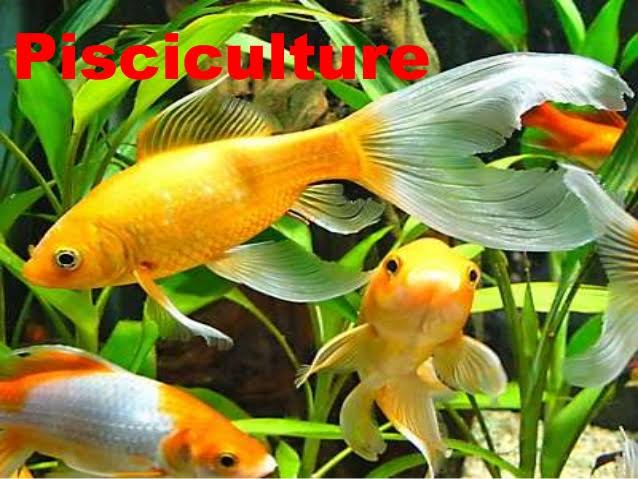
Pisciculture or Fish culture is the process of breeding and rearing of fishes in ponds, reservoirs (dams), lakes, rivers and paddy fields. It is the farming of economically important fishes under controlled conditions.
Types of Fish Culture

Extensive fish culture

Culture of fishes in large areas with low stocking density and natural feeding.

Intensive fish culture

Culture of fishes in small areas with high stocking density and providing artificial feed to increase production.

Monoculture

It is the culture of single type of fish in a water body. It is also called mono species culture.

Polyculture

It is the culture of more than one type of fish in a water body. It is also called composite fish culture.

Integrated fish farming

It is the culture of fishes along with agricultural crops or animal husbandry farming, Rearing of fish along with paddy, poultry, cattle, pig and ducks.
Types of Ponds for Fish Culture

Fish farm requires different types of pond for the various developmental stages of fish growth. They are given below:

Breeding pond

Healthy and sexually mature male and female fishes are collected and introduced in this pond for breeding. The eggs released by the female are fertilized by the sperm and fertilized eggs float in water as frothy mass.

Hatching pits

The fertilized eggs are transferred to hatching pits or hatching hapas for hatching.

Nursery ponds

The hatchlings are transferred from hatching pits after 2 to 7 days. The hatchlings grow into fry and are cultured in these ponds for about 60 days with proper feeding till they reach 2 – 2.5 cm in length.
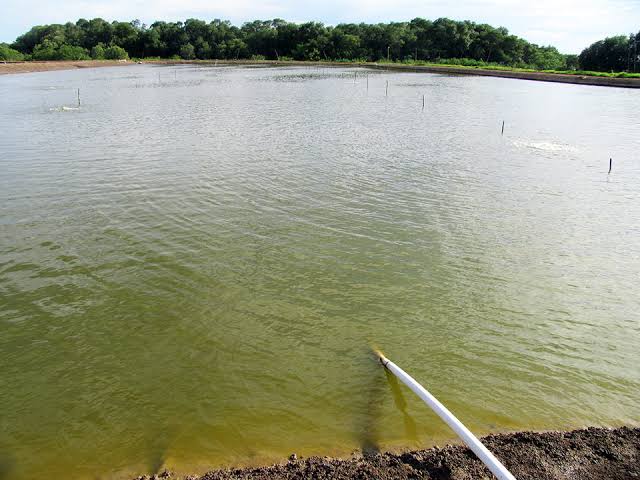
Rearing ponds

Rearing ponds are used to culture the fry. The fish fry are transferred from nursery pond to rearing ponds and are maintained for about three months till they reach 10 to 15 cm in length. In these rearing ponds the fry develops into fingerlings.

Stocking pond

The stocking pond is also called as culture pond or production pond. These ponds are used to rear fingerlings upto the marketable size.

HORTICULTURE

Horticulture is a branch of agriculture that deals with cultivation of fruits, vegetables and ornamental plants. Horticulture is the science and art of the development, sustainable production, marketing and use of high-value, intensively cultivated food and ornamental plants.

They are four main classes of Horticulture
✓Pomology (fruit farming)
✓Olericulture (vegetable farming)
✓Floriculture (flower farming)
✓Landscape gardening

Pomology (fruit farming)

The term pomology is derived from the latin word ‘pomum’ means fruit and ‘logy’ means study. It deals with development, enhancement of fruit quality, cultivation techniques, regulation of production periods and reduction of production cost of fruits.

Olericulture (vegetable farming)

Olericulture is the science of growing vegetables. Vegetable farming can be classified into:
✓Kitchen or Nutrition gardening
✓Commercial gardening
✓Vegetable forcing

Kitchen gardening

Kitchen gardening is growing of vegetables in small scale at household. e.g. Beans, Cabbage, Lady’s finger, Tomato, Brinjal, Carrot, Spinach etc.

Commercial gardening

It is the production of vegetables in large scale to be sold in markets.

Vegetable forcing

It is the method of growing vegetables in buildings, green houses, cold farms or under other artificial growing conditions. It is the most intensive type of vegetable growing. e.g. Cabbage, Tomato, Brinjal etc.

Green House or Poly House

It is a framed structure covered with transparent material to grow crops under partiality or fully controlled environmental conditions to get optimum growth and productivity. It is the fastest growing sector in the agriculture worldwide.
Floriculture (Flower farming)

Floriculture is the art of cultivation of flowering and ornamental plants in garden for beauty of floristry. It is concerned with growing traditional flowers, cut flowers, bedding plants, foliage potted plants, arboriculture trees, turf grass for beautification and value added products like essential oils, pharmaceutical and nutraceutical compounds.

Landscape Gardening

Landscape horticulture is the study of designing and constructing landscapes in homes, business firms and public areas to imitate natural scenery.

APICULTURE

Apiculture is the rearing of honey bee for honey. It is also called Bee keeping. It is a profitable rural based industry. Honey bees are domesticated by farmers to produce honey.

Types of Honey Bee

There are three types of individuals in an honey bee colony namely the queen bee, the drones and the worker bees.

Queen Bee

The queen is the largest member and the fertile female of the colony. They are formed from fertile eggs. The queen is responsible for laying eggs in a colony.

Drones

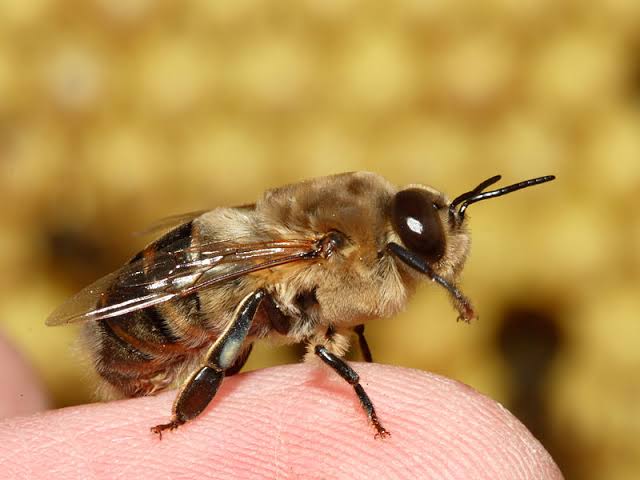
They are the fertile males. They develop from unfertilized eggs. They are larger than the workers and smaller than the queens. Their main function is to fertilize the eggs produced by the queen.

Worker Bees

They are sterile female bees and are the smallest members of the colony. Their function is to collect honey, look after the young ones, clean the comb, defend the hive and maintain the temperature of the bee hive.

Varieties of Honey Bee

Indigenous varieties
✓Apis dorsata (Rock bee or Wild bee)
✓Apis florea (Little bee)
✓Apis indica (Indian bee)

Exotic varieties
✓Apis mellifera (Italian bee)
✓Apis adamsoni (African bee)

Structure of Bee Comb

The comb of the bees is formed mainly by the secretion of the wax glands present in the abdomen of the worker bee. A comb is a vertical sheet of wax with double layer of hexagonal cells.

Formation of Honey

The honey bees suck the nectar from various flowers. The nectar passes to the honey sac. In the honey sac, sucrose present in the nectar mixes with acidic secretion and by enzymatic action it is converted into honey which is stored in the special chambers of the hive.

Quality of honey depends upon the flowers available to the bees for nectar and pollen collection.

Products from Honey Bee

Honey bees are used in the production of honey and bee wax. Other useful products obtained from honey bees are bee pollen, royal jelly, propolis and bee venom.

Uses of Honey

✓Honey has an antiseptic and antibacterial property. It is a blood purifier.
✓It helps in building up of haemoglobin content in the blood.
✓It prevents cough, cold, fever and relieves sore throat.
✓It is a remedy for ulcers of tongue, stomach and intestine.

WATER CYCLE

Water cycle or hydrological cycle is the continuous movement of water on earth. In this process, water moves from one reservoir to another by processes such as evaporation, sublimation, transpiration, condensation, precipitation, surface runoff and infiltration, during which water converts itself to various forms like liquid, solid and vapour.

Evaporation

Evaporation is a type of vaporization, where liquid is converted to gas before reaching its boiling point. Water evaporates from the surface of the earth and water bodies such as the oceans, seas, lakes, ponds and rivers.

Sublimation

Sublimation is conversion of solid to gas, without passing through the intermediate liquid phase. Ice sheets and ice caps from north and south poles, and icecaps on mountains, get converted into water vapour directly, without converting into liquid.

Transpiration

Transpiration is the process by which plants release water vapour into the atmosphere through stomata in leaves and stems.

Condensation

Condensation is the changing of gas phase into liquid phase and is the reverse of vaporisation. At higher altitudes, the temperature is low. The water vapour present there condenses to form very tiny particles of water droplets. These particles come close together to form clouds and fog.

Precipitation

Due to change in wind or temperature, clouds combine to make bigger droplets, and pour down as precipitation (rain). Precipitation includes drizzle, rain, snow and hail.

Run off

As the water pours down, it runs over the surface of earth. Runoff water combines to form channels, rivers, lakes and ends up into seas and oceans.

Infiltration

Some of the precipitated water moves deep into the soil. Then it moves down and increase the ground water level.

Percolation

Some of the precipitated water flows through soil and porous or fractured rock.

Infiltration and percolation are two related but different processes describing the movement of water through soil.

Human impacts on water cycle

Major human activities affecting the water cycle on land are urbanisation, dumping of plastic waste on land and into water, polluting water bodies and deforestation.

INVERTEBRATE

Phylum Porifera
(Pore bearers)

These are multicellular, non-motile aquatic organisms, commonly called as sponges. Body is perforated with many pores called ostia. Water enters into the body through ostia and leads to a canal system. It circulates water throughout the body and carries food, oxygen. The body wall contains spicules, which form the skeletal framework. Reproduction is by both asexual and sexual methods. e.g- Euplectella, Sycon.

Phylum Coelenterata
(Cnidaria)

Coelenterates are aquatic organisms, mostly marine and few fresh water forms. They are multicellular, radially symmetrical animals with two layers. The tentacles bear stinging cells called cnidoblast or nematocyst. They reproduce both asexually and sexually. e.g. Hydra, Jellyfish.

Phylum Platyhelminthes
(Flat worms)

They are bilaterally symmetrical, triploblastic, acoelomate (without body cavity) animals. Most of them are parasitic in nature. Suckers and hooks help the animal to attach itself to the body of the host. Excretion occurs by specialized cells called flame cells. e.g- Liverfluke, Tapeworm.

Phylum Aschelminthes
(Round worms)

Aschelminthes are bilaterally symmetrical, triploblastic animals. The body cavity is a pseudocoelom. They exist as free-living soil forms or as parasites. The body is round and pointed at both the ends. It is unsegmented and covered by thin cuticle. e.g. Ascaris, Wuchereria.

Phylum Annelida
(Segmented worms)

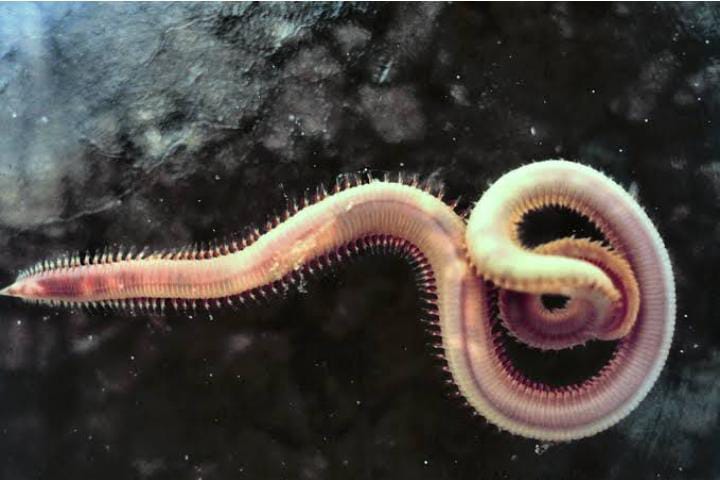
These are bilaterally symmetrical, triploblastic, first true coelomate animals with organ-system grade of organization. Body is extremely divided into segments called metameres joined by ring like structures called annuli. e.g. Earthworm, Leech.

Phylum Arthropoda
(Animals with jointed legs)

They are bilaterally symmetrical, triploblastic and coelomate animals. They can be found in all types of habitats–land, water and soil. They have jointed limbs. The body is segmented into three regions–Head, Thorax and Abdomen. e.g. Prawn, Crab.

Phylum Hemichordata

Hemichordata is bilaterally symmetrical, triploblastic and coelomate animals. They are exclusively marine animals. They can be solitary or in colonies. Hemichordata have a true body cavity or coelom. e.g. Balanoglossus (Acorn worms).

INTERNATIONAL SPACE STATION

ISS is a large spacecraft which can house astronauts. It goes around in low Earth orbit at approximately 400 km distance. It is also a science laboratory. Its very first part was placed in orbit in 1998 and its core construction was completed by 2011. It is the largest man-made object in space which can also be seen from the Earth through the naked eye. The first human crew went to the ISS in 2000. Ever since that, it has never been unoccupied by humans. At any given instant, at least six humans will be present in the ISS. According to the current plan, ISS will be operated until 2024, with a possible extension until 2028. After that, it could be deorbited, or recycled for future space stations.

Benefits of ISS

According to NASA, the following are some of the ways in which the ISS is already benefitting us or will benefit us in the future.

Supporting water-purification efforts

Using the technology developed for the ISS, areas having water scarcity can gain access to advanced water filtration and purification systems. The water recovery system (WRS) and the oxygen generation system (OGS) developed for the ISS have already saved a village in Iraq fry being deserted due to lack of clean water.

Eye tracking technology

The Eye Tracking Device, built for a microgravity experiment, has proved ideal to be used in many laser surgeries. Also, eye tracking technology is helping disabled people with limited movement and speech. For example, a kid who has severe disability in body movements can use his eye-movements alone and do routine tasks and lead an independent life.

Robotic arms and surgeries

Robotic arms developed for research in the ISS are providing significant help to the surgeons in removing inoperable tumours (e.g. brain tumours) and taking biopsies with great accuracies. Its inventors say that the robot could take biopsies with remarkable precision and consistency.

Apart from the above-mentioned applications, there are many other ways in which the researches that take place in the ISS are helpful. They are: development of improved vaccines, breast cancer detection and treatment, ultrasound machines for remote regions etc,.

ISS and International Cooperation

As great as the ISS’ scientific achievements are, no less in accomplishment is the international co-operation which resulted in the construction of the ISS. An international collaboration of five different space agencies of 16 countries provides, maintains and operates the ISS. They are: NASA (USA), Roskosmos (Russia), ESA (Europe), JAXA (Japan) and CSA (Canada). Belgium, Brazil, Denmark, France, Germany, Italy, Holland, Norway, Spain, Sweden, Switzerland and the UK are also part of the consortium.

THE SOLAR SYSTEM

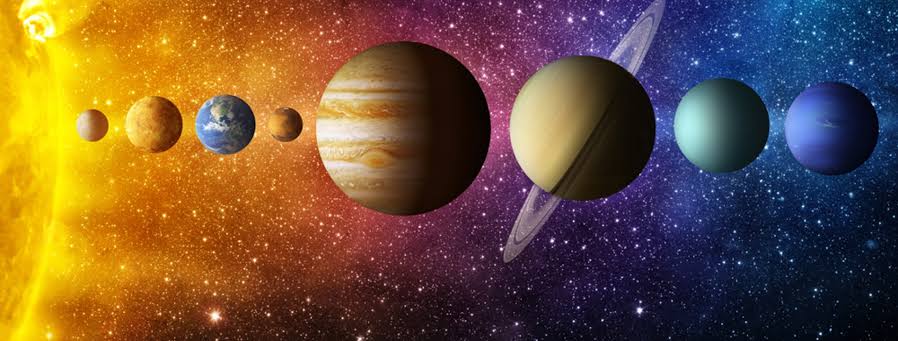
Sun and the celestial bodies which revolve around it form the solar system. It consists of large number of bodies such as planets, comets, asteroids and meteors. The gravitational force of attraction between the Sun and these objects keep them revolving around it.

The Sun

The Sun is a star which is located at the center of our solar system. It is a yellow dwarf star that gives off different types of energy such as infra-red energy (heat), ultraviolet light, radio waves and light.It gives off energy as electromagnetic radiation. It also gives off a stream of particles, which reaches Earth as “solar wind”.

Formation of the Sun

The Sun and the rest of the solar system formed from a giant, rotating cloud of gas and dust called a solar nebula about 4.5 billion years ago. As the nebula collapsed because of its overwhelming gravity, it spun faster and flattened into a disk.

Planets

A planet revolves around the Sun along a definite curved path which is called an orbit. It is elliptical. The time taken by a planet to complete one revolution is called its period of revolution.
The four planets grouped together in the inner solar system are Mercury, Venus, Earth and Mars. They are called inner planets.
The four large planets Jupiter, Saturn, Uranus and Neptune spread out in the outer solar system and slowly orbit the Sun are called outer planets.

Mercury

Mercury is a rocky planet nearest to the Sun. It is very hot during day but very cold at night. Mercury can be easily observed thorough telescope than naked eye since it is very faint and small. It always appears in the eastern horizon or western horizon of the sky.

Venus

Venus is a special planet from the sun, almost the same size as the Earth. It is the hottest planet in solar system. After our moon, it is the brightest heavenly body in our night sky. This planet spins in the opposite direction to all other planets. So, unlike Earth, the Sun rises in the west and sets in the east here. Venus can be seen clearly through naked eye. It always appears in the horizon of eastern or western sky.

The Earth

The Earth where we live is the only planet in the solar system which supports life. Due to its right distance from the sun it has the right temperature, the presence of water and suitable atmosphere and a blanket of ozone. All these have made continuation of life possible on the Earth. From space, the Earth appears bluish green due to the reflection of light from water and land mass on its surface.

Mars

The first planet outside the orbit of the Earth is Mars. It appears slightly reddish and therefore it is also called the red planet. It has two small natural satellites (Deimos and Phobos).

Jupiter

Jupiter is called as Giant planet. It is the largest of all planets (about 11 times larger and 318 times heavier than Earth). It has 3 rings and 65 moons. Its moon Ganymede is the largest moon of our solar system.

Saturn

Known for its bright shiny rings, Saturn appears yellowish in colour. It is the second biggest and a giant gas planet in the outer solar system. At least 60 moons are present – the largest being Titan. Titan is the only moon in the solar system with clouds. Having least density of all ( 30 times less than Earth), this planet is so light.

Uranus

Uranus is a cold gas giant and it can be seen only with the help of large telescope. It has a greatly tilted axis of rotation. As a result, in its orbital motion it appears to roll on its side. Due to its peculiar tilt, it has the longest summers and winters each lasting 42 years.

Neptune

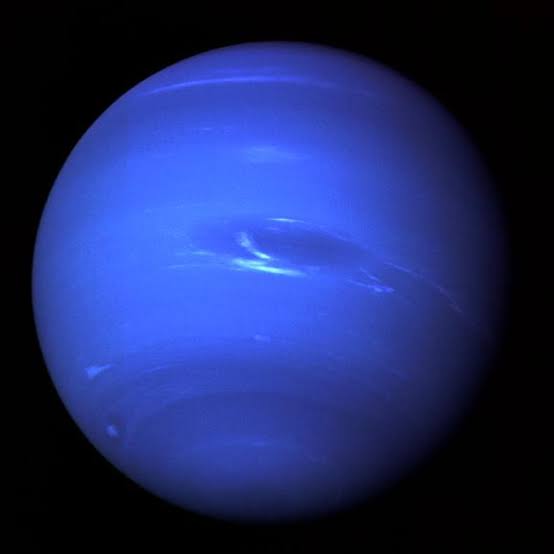
It appears as Greenish star. It is the eighth planet from the Sun and is the windiest planet. Every 248 years, Pluto crosses its orbit. This situation continues for 20 years. It has 13 moons – Triton being the largest. Triton is the only moon in the solar system that moves in the opposite direction to the direction in which its planet spins.

SEASONS AND CLOTHING

Why do we need clothes?

Clothes keep us warm in winter and cool in summer.
In summer, we wear clothes made of cotton. In winter, we wear clothes made of wool or very thick material.
During rainy season, we wear raincoats or use umbrellas which are made of different kinds of cloth.

How are clothes made?

We make different kinds of clothes using different materials. These materials are got from plants and animals.

Cotton

Cotton clothes are made from cotton. Cotton is got from cotton plant.

Cotton is the white hair of the cotton seeds. This hair is used to make cloth.

Silk

The silk worm makes itself a home by covering itself with silk. This cover is made by a secretion from the mouth of the silk worm. This is used to make silk.

Wool

Wool is the hair covering the body of the sheep. The hair is cut and used to make woollen clothes.

Leather and Fur

Leather is skin of animals. It is also used for making clothes.

Fur is the hair of some animals like cats, rabbits, moles, stoat etc. Clothes made of fur are very costly. In very cold places, fur and leather clothes are used. Eskimos living in polar regions wear clothes made of fur and leather only. In other cold countries also, fur clothes are worn. Leather clothes are worn clothes for fashion also.

Other materials

We also make clothes with poly cotton, polyester, terry-cotton and nylon. They are not made from natural materials. They are made of chemical substances. They are light and dry easily when washed.

People belonging to different countries wear clothes made of different materials.

SAFETY RULES

When we are careful with fire , electricity and chemicals we will be safe.

We have to follow certain simple rules. These rules are called safety rules.

Let us see some of the rules to be followed

Don’t play with fire

Be careful when you have to light a stove with a match stick.

Be careful while using blades or knives

Use a sharpener to sharpen pencil. Don’t use a blade and knife. You may cut your fingers, if you are not careful.

While putting on switches be very careful

Don’t touch any open wire or open socket. If you touch an open wire or socket, you may get an electric shock. Don’t touch a switch with wet fingers.

Don’t drink anything from a bottle without finding out what is in it

Sometimes kerosene or phenyl will be stored in empty water bottles. So make sure what is inside the bottle.

Don’t peep into wells

Don’t bathe in a pond which is very deep. If you don’t know swimming, don’t bathe in a river.

Follow traffic rules

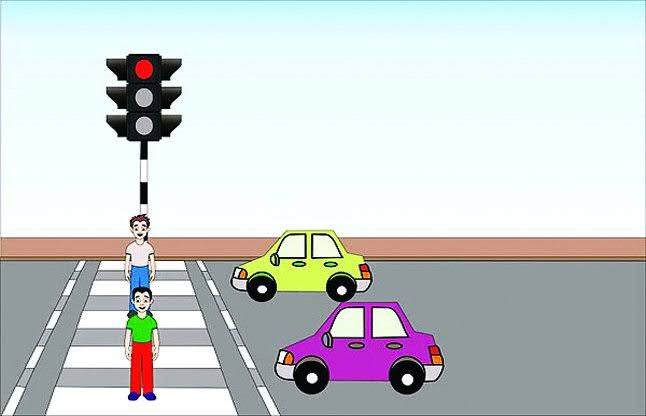
While crossing the road, use the zebra crossing. Cross the road only when the picture of a walking man is seen in the light. Anyone driving a vehicle has to stop if the traffic light is red and get ready when it is yellow and start when it is green. If we do not follow traffic rules, we will meet with accident. Don’t put your head or hand outside the window while in a car or train.

Don’t get into or get out off a moving vehicle. If you do so, you may fall down.

FIRST AID

When a person is injured, the treatment given immediately is called first aid.
First aid can save people who meet with accidents. Everyone has to learn first aid.
After giving first aid, the patient must be taken to a hospital.

First aid refers to the emergency or immediate care you should provide when a person is injured or ill until full medical treatment is available. For minor conditions, first aid care may be enough. The decision to act appropriately with first aid can mean the difference between life and death.

The five main aims of first aid are to:

✓Preserve life.
✓Prevent the escalation of illness or injury.
✓Promote recovery.
✓Provide pain relief.
✓Protect the unconscious.

First Aid Kit

A first aid kit is a collection of supplies and equipment that is used to give medical treatment. There is a wide variation in the contents of first aid kits based on the knowledge and experience of those putting it together, the differing first aid requirements of the area where it may be used and variations in legislation or regulation in a given area.

Cuts

When there is bleeding due to a cut from a blade or knife, tie the wound with a clean wet cloth and take the person to a hospital. Don’t tie tightly.

Bleeding from nose

Apply a wet cloth to the nose to stop bleeding. If the bleeding doesn’t stop take the patient to a doctor.

Wounds

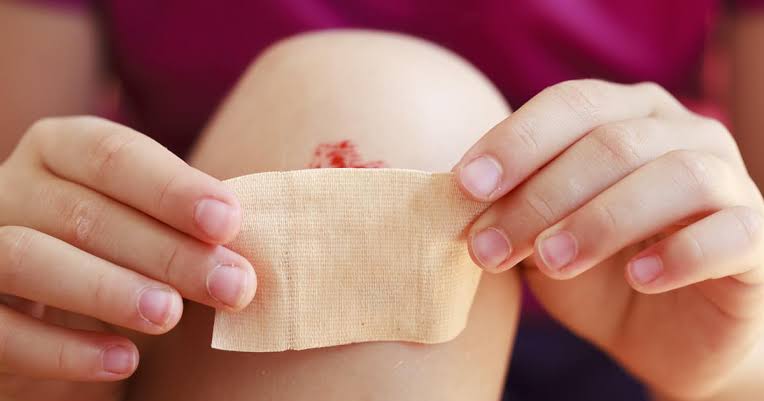
For a wound due to a fall or due to hitting against something, clean the wound by wiping it with clean, wet cotton or cotton cloth. Then clean it with dettol. Put some antiseptic ointment, put a gauge over it and cover it with a cloth. Take the person to a doctor if necessary.

Burns

When there is a wound due to fire, wash the wound gently in cold water. Apply antiseptic cream. Then see a doctor.

Swelling

When a person falls and gets hurt, there is a swelling of some part. Put ice on the swelling, swollen part will be less painful. Don’t bend or use force on the part which is swollen. Only if a bone is broken, there will be a swelling. So the person should be taken to a doctor as soon as possible.

Electric Shock

A person who receives an electric shock should not be touched immediately. The main switch should be put off. Then move the person away and make him comfortable. Give him a coffee or tea to drink. Take him to a doctor if necessary.

Political Parties

Political parties are an essential part of democracy. Parties are the link between government and the people.

Meaning of Political Party

A political party is an organisation formed by a group of people with a certain ideology and agenda to contest elections and hold power in the government. A political party has three components: a leader, active members and the followers.

Types of a Party System

There are three of party system in the world namely.
✓Single – party system in which one ruling party exists and no opposition is permitted. China, Cuba, the former USSR (Union of Soviet Socialist Republics ) are the examples for the single – party system.
✓Two – party system in which only two major parties exist, for example, USA, UK.
✓Multi – party system in which there are more than two political parties, for example, India, Sri Lanka, France and Italy.

Types of Political Parties

Political parties in India are classified according to their area of influence into two main types: ✓national and ✓state parties.

National Parties

A party which is recognised as a state party in at least four states is recognised as a national party. Every party in the country has to register with the Election Commission while the Commission treats all the parties equally. It offers some special facilities to state and national parties. These parties are given a unique symbol. Only the official candidate of the party can use that election symbol. In 2017, there were seven recognised national parties.

State Parties

Other than the seven national parties, most of the major parties of the country are classified by the Election Commission as ‘state parties’. These are commonly referred to as regional parties. A party is recognised as a state party by the Election Commission of India based on certain percentage of votes secured or a certain number of seats won in the Assembly or Lok Sabha elections.

Recognition to the Parties

For getting recognition as ‘national party’, a party has to fulfill any one of the following criteria:
✓At least 6% votes in at least four states and members to the Lok Sabha.
✓In the election of Lok Sabha, at least 2% members from at least three states are elected to Lok Sabha.
✓Recognition as a state party at least four states.

Functions of Political Parties

☆ Parties form and run the government.
☆ Parties shape public opinion. They raise and highlights issues of importance.
☆ Parties function as the useful link between people and the government machinery.

Role of Opposition Parties in a Democracy

In a democracy, there may be a two-party system like in the USA or a multi-party system like in India and France. The ruling party may have to received the mandate of the majority people and the Opposition party represented the remaining people.

DEMOCRACY

Meaning of Democracy

Democracy is a system of government in which the supreme power is vested in the people of a country and people elect their representatives either directly or indirectly through fair and free elections, which are usually held periodically.

Definition

According to Mahatma Gandhi, “True democracy cannot be worked by twenty men sitting at the centre. It has to be worked from below by the people of every village”.

Salient Features of Democracy

✓Elected representatives of people and final decision-making power to the representatives.
✓Free and fair elections.
✓Voting right is with equal value to those who have attained the age of 18.
✓Fundamental rights and protection of individual freedom.

Evolution of Democracy

Democracy began 2,500 years ago in some of the city-states of ancient Greece. It is important to know that democratic institutions existed in India as early as the Vedic period. Chanakya’s Arthashastra tells us that in ancient India, an autonomous village community was the basic unit of the local government. During the later chola period ancient Tamil Nadu, Kudavolai system was a very notable and unique feature of the village administration of the Cholas. The evolution towards a democracy is represented by the following values: freedom, equality, fraternity, accountability, transparency and trust.

Forms of Democratic government

Types of Democracy

There are two types of democracies
✓Direct democracy
✓Indirect (representative) democracy

Direct Democracy

When the people themselves directly express their will on public affairs, the type of government is called pure or direct democracy.
Example: Ancient Greek city-states, Switzerland

Indirect Democracy

When the people express their will on public affairs, through their elected representatives, the type of government is called Indirect or representative democracy.

Democracy in India

India has a parliamentary form of democracy. The Indian Parliament comprises the elected representatives of people and makes the laws for the country. The participation of people in the decision making and the consent of citizens are the two important elements of the parliamentary form of government in India.

India is the largest democratic country in the world. Democracy in India works on five basic principles. These are sovereign, socialist, secular, democratic, republic.

Election in India

India has a quasi-federal government, with elected representatives at the federal, state and local levels. The general elections are conducted by the Election Commission of India. At the national level, the president of India, appoints the Prime Minister, who enjoys majority in the Lok Sabha, the lower house of the Parliament of India.

The First Elections in Democratic India

General elections to the first Lok Sabha since independence were held in India between 25 October 1951 and 21 February 1952. The Indian National Congress emerged victorious by winning 364 of the 489 seats. Jawaharlal Nehru became the first democratically elected Prime Minister of the country.

Indicators of Economic Development

The major indicators to measure the level of economic development are
✓Net National Product (NNP)
✓Per Capita Income (PCI)
✓Purchasing Power Parity (PPP)
✓Human Development Index (HDI)

Net National Product

The Net National Product (NNP) is considered as a true measure of national output. It is also known as national income. A rise in per capita income means an increase in aggregate real output. Hence, this is a better indicator than national income for measuring development.

For measuring a country’s development, its income is considered to be one of the most important factors. Countries with higher income are considered to be more developed than those with lesser income. So, income itself is considered to be one of the indicators of economic development.

Per Capita Income

However, for comparing the development of various countries, total income is not satisfactory measure. Since countries have different populations, comparing total income will not be suggestive of what an average person is likely to earn, as people in one country are better off than others in a different country? The average income is calculated by dividing the country’s total income by its total population. The average income is also called per capita income. Calculations on the per capita income of all countries are calculated only in the US dollar in order to compare International level.

Purchasing Power Parity

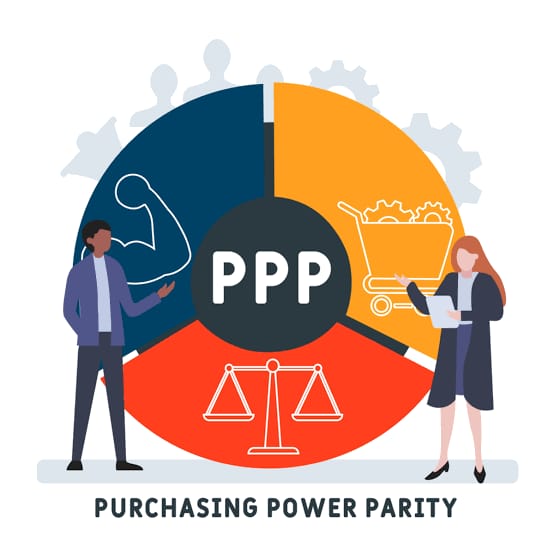
Purchasing power parity is defined as the number of units of a country’s currency required to buy the same amount of goods and services in the domestic market as one dollar would buy in the US

The technique of purchasing power parity allows us to estimate what exchange between two currencies is needed to express the accurate purchasing power of the two currencies in the respective countries. Recently, India became the third largest economy in terms of PPP. China became the largest defeating the US to the second position.

Human Development

Human resource is necessary for the progress of any country. The term ‘human resources’ refers to the collective abilities of people, which can be utilised in the production sector.

Human resource development means the development of a person’s physical and mental abilities through education, health care and training. Therefore, investment in education and health of people can result in a high rate of returns in the future for a country. For example, if a child is invested with good education and health, he or she may turn to be very productive in future in the form of higher earnings and greater contribution to the society. Human Development Index (HDI) which indicates all round development of the people in the society.

In the past, economists believed that the rate of economic growth of nations could be increased only by increasing investment in physical capital. But they have realised over time that investment in human capital is as important as investment in physical capital.

Forms of Government

The governance of nations differs significantly based on who has power. There are different forms of government.
✓Aristocracy
✓Monarchy
✓Autocracy
✓Oligarchy
✓Theocracy
✓Democracy
✓Republic

Aristocracy

A form of government in which power is in the hands of a small previleged ruling class (nobels).
Example: United Kingdom, Spain

Monarchy

A system of government in which one person reigns supreme, usually a king or queen (constitutional monarchy).
Example: Bhutan, Oman, Qatar

Autocracy

A system of government by one person with absolute power.
Example: North Korea, Saudi Arabia

Oligarchy

A small group of people having control of a country or organisation.
Example: Former Soviet Union, China, Venezuela, North Korea

Theocracy

A system of government in which religious doctrines form the basis of government headed by a priest who rules in the name of God or proclaims himself as a God.
Example: Vatican

Democracy

A system of government in which eligible members in the population vote to elect their elected representatives, and the party or individual who obtains the majority votes forms the government.
Example: India, USA, France

Republic

A state in which supreme power is held by the people and their elected representatives and which has an elected or nominated President rather than a monarch.
Example: India, Australia

VOLCANOES

A volcano is a vent or an opening on the surface of the Earth crust, through which hot solid, liquid and gaseous materials (Magma) erupt out to the surface from the Earth’s interior. Magma rises up and ejects on the surface as Lava. Volcanoes are also formed when plates move apart.

Volcanoes generally have the following major components. They are

Magma chamber – a large pool of liquid rock found beneath the surface of the Earth.

Vents – an opening serving as an outlet for air, smoke, fumes, magma etc.

Volcanic cone – a landform built by the magma ejected from the vent in the shape of a cone.

Crater – a bowl shaped depression found at the top of the volcano through which the magma flows out.

Based on the periodicity of eruptions, volcanoes are classified into
✓Active volcano
✓Dormant volcano
✓Extinct volcano

Active Volcano

Active volcanoes are those which constantly eject volcanic lava, gases and fragmented materials. eg. Mount St. Helens in the United States.

Dormant Volcano

Volcanoes that do not show any sign of volcanic activity for a long period of time are known as dormant volcanoes. Sometimes there may be a sudden explosion which may cause unimaginable loss to life and property eg. Mt. Fuji, Japan

Extinct Volcano

When a volcano permanently stops its volcanic activity, then it is called as extinct or dead volcano eg. Mt. Kilimanjaro, Tanzania.

Volcanoes can also be classified based on their structure and composition as composite volcano, shield volcano and dome volcano

Composite Volcano

Composite volcano, also known as strata volcano, is a conical volcano built by many layers of hardened lava, pumice and volcanic ash. These are commonly found in the Pacific Ocean Eg. Mt. Fuji, Japan

Volcanic Dome

A lava dome or volcanic dome is roughly a circular mound formed due to the slow ejection of viscous lava from a volcano. As the lava is rich in silica with intense viscosity, it is prevented from flowing far from its vent. Eg. Paricutin, Mexico

Shield Volcano

Shield volcanoes are formed by intense viscous lava.
These are shallow depositions with gently sloping sides. Hence the lava flows out in all directions to create a shield. Eg. Mauna Loa, Hawaii