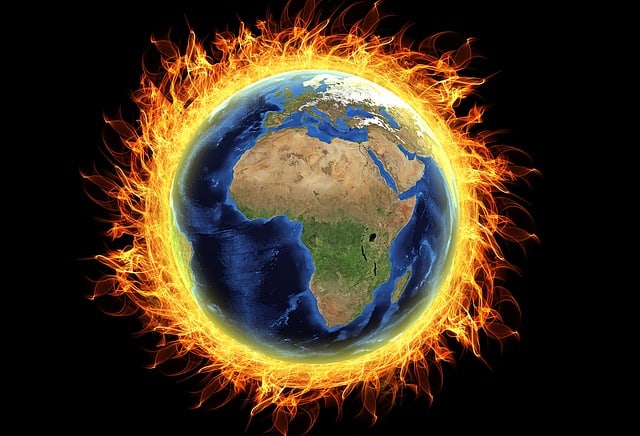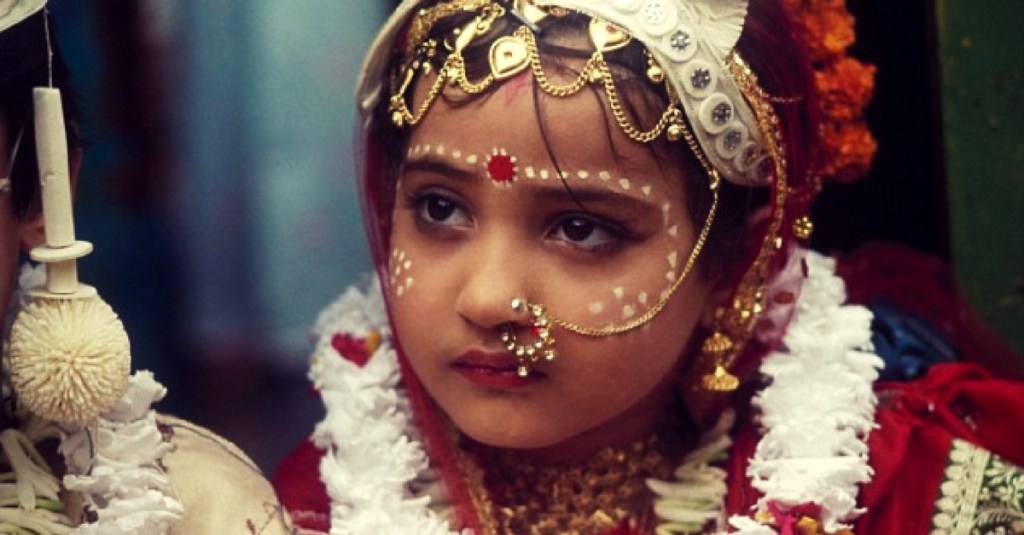
ENVIORMENTAL DEGRADATION

We are living in the 21st century, where infrastructure, services, and technology are developing with rapid speed. It's the era where everything is possible just on one click with the help of machines and high data speed. Everything can be accessed and monitored on a monitor.
As the time is passing, the population is increasing, people are shifting from rural to urban areas which is increasing urbanization, construction of multistorey buildings, development of transportation services, increase in industries and growth of industrialization.
No doubt all these developments, in one or the other way, are contributing to the growth of the nation, it's economy and GDP, but what about the pain and problems our environment is facing with these developments?
As urbanization is increasing day by day, especially if we talk in the context of India, this is causing a burden on the resources of urban areas, people are migrating to cities which means rural people don't want to practice agriculture, which will lead to less production of food grains. If population increases day by day and production will be less, this will ultimately lead to starvation of food in the country.
Moreover, people are moving in search of jobs and a high standard of living from rural to urban areas which is increasing the number of unemployed people in India, especially in urban areas.
When people travel from rural to urban areas they need shelter to live and due to which the forests are being cleared so fast. Urbanization leads to an increase in deforestation which harms the environment.

Deforestation leads to decrease of oxygen concentration in the environment, which is the basic need of every human. Secondly, it leads to soil erosion as the root of trees holds on the soil at one place, thirdly cutting down trees directly leads to increase in temperature and makes the environment warm.
Increase in industries on one hand leads to the growth of the nation, and provides employment to many people, but on the other hand it harms the environment so badly.
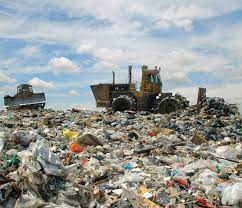
Industrialization shares a large proportion in degradation of the environment. It makes air impure, water dirty and improper waste management.
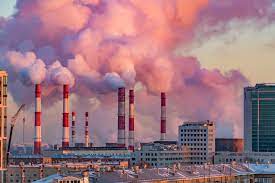
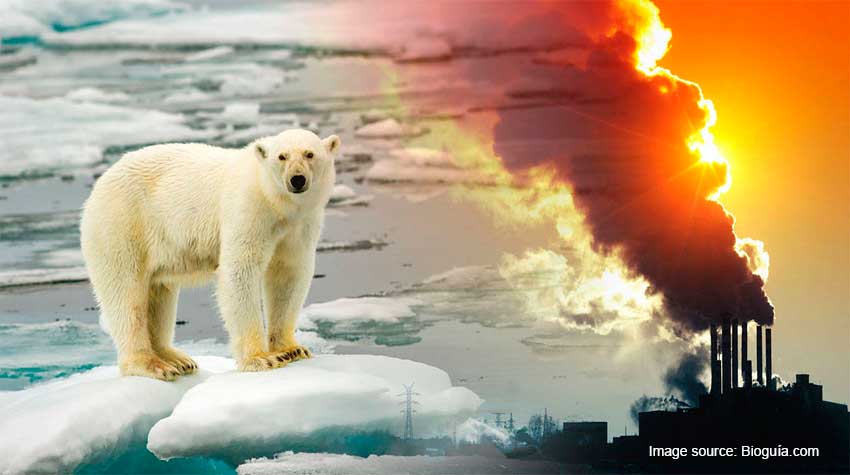
Industries release black smoke which ultimately mixes with the air in the environment, pollutes it and the same air every human breathes, which causes problems in the respiratory systems of people.
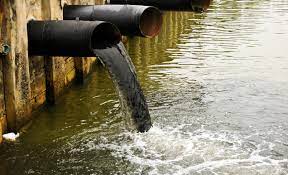
The waste water of industries which contains plenty of impurities in it is discharged in fresh water bodies and pollutes it which further gives birth to the diseases which are caused by drinking contaminated water. Although nowadays industries have adopted the system of waste water management. Various power plants have been built where wastewater is treated and cleaned and then discharged into several water bodies in order to control water pollution.
As the countries are developing, the services are also developing for a good standard of living, transportation services have accelerated with high speed in the last few decades. The development of roads and railways have made inaccessible places accessible. People used to walk to kedarnath and vaishnav devi, but now it's possible to go by vehicles because roads are built by cutting down hills.
In the hilly terrain areas, it was hard to provide goods and services because of no roads and routes but again by breaking hills roads were made which has made transportation easy in those areas.

Of course this seems good to listen to, but the process through which these hills are broken down is by explosions in those areas. It leads to landslides so rapidly, any moment the rocks can fall down leading to the loss of life and property.
Mountains always behave like a barrier. For instance if a glacier melts and water comes down towards the plain areas, mountains stop them, but due to this hill cutting those rocks have become weak and hence cannot handle the pressure of flowing water and erodes along with the fast flow and hence causes flooding in many of the areas in the plains.

Technology is developing and hence the production of machineries is also developing. The standard of living is slowly rising. People have started using such kinds of household gadgets which improve the quality of their life and save time too. For example, refrigerators and microwave ovens, the gas which is filled in the compressor of refrigerators and various other machines directly affects the ozone layer of the earth, a layer which prevents the ultraviolet rays of sun from entering into the earth's atmosphere.

Scientists have found that this ozone layer of earth is being depleted day by day due to increase in temperature and if this goes on, a day will come when it will become extinct and what will happen next is even hard to imagine.
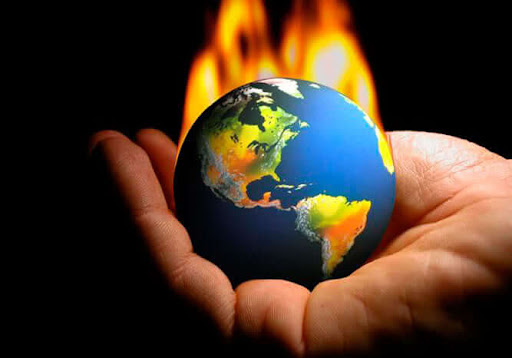
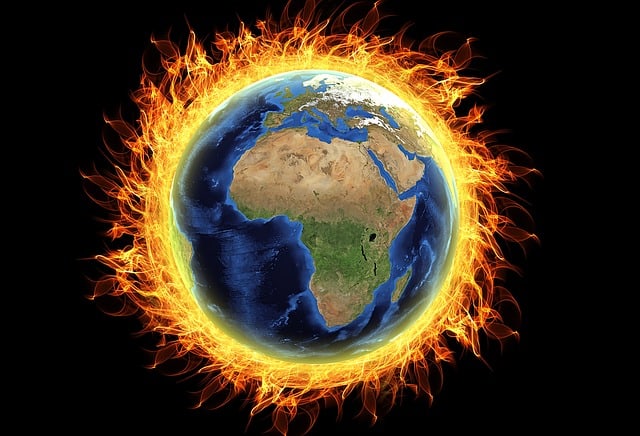
Degradation of the environment is a topic of global concern. Global warming is increasing day per day which leads to an increase in the temperature of the earth and melting of glaciers. Keeping this in mind the whole world has come together to control this degradation. The matter was taken to the United Nations and the United Nation Environment Program was started by its first director on June 5 1972.

Many organizations were built world wide on different sub parts of environment degradation such as WWF, Conservation International, International Union for Conservation of Nature, Fauna and Flora international and many more. These organizations are working together to save the environment.
Every country is responsible in one way or the other for the degrading conditions of the environment, but I feel that a country with a large population is far more responsible, for example India. India has a population of 130 crores. Almost every individual needs food, shelter, water, air and various other resources he/she will use. If such a large number of the population lives together and doesn't give a damn about the environment, it's going to degrade and that is obvious.
If the population increases, the shelters will increase, garbage and waste will increase, and resources and trees will decrease.
Now the question arises: are nations and individual countries responsible for saving the environment? The nation is made up of whom? Every individual, and hence each and every citizen living on this planet is responsible for the degradation of the environment, and it's the duty of every individual to save it, neither of nation nor of any organization.
A human is so selfish in nature. He only knows how to use and throw. He doesn't want to take any responsibility and also does not consider his duty towards saving the environment. Even if so many organizations start working. NGOs start working to save the environment. Ultimately the condition of the environment will improve when every individual will feel concerned towards their environment on their own. When nobody will force him to do it, then only the environment can be saved. When every individual will practice some etiquettes in his daily life then only the environment can be saved because each drop makes up the ocean.
Everything in this world has pros and cons. On one hand the development of technology and standard of living of people are increasing, on the other hand it's affecting the environment badly. Why? Because we have ignored the second factor. We have created an imbalance. We are over focusing on development not on the harmful results it is causing.
Development is necessary for human life. Development is proof that we humans are intelligent, but an intelligent human knows by balancing his life he becomes smart and a smart human can do sustainable development. Let us be smart. Let's have the same concern and concentration on environmental problems as on development, then only we can save our mother earth.
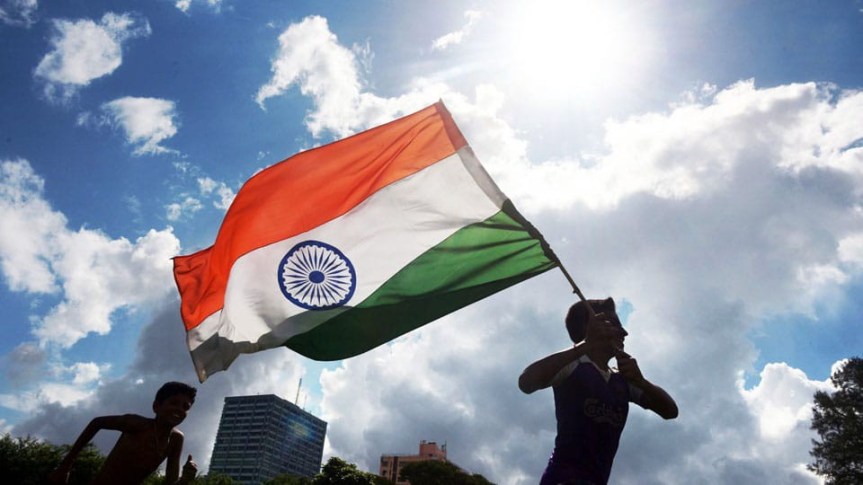

MEANING OF REAL PATRIOTISM

On July 24, 2021 Mirabai Chanu brought silver to India, in weightlifting in Tokyo Olympics 2021. Again on August 1 2021 PV Sindhu brought Bronze to India in Badminton. Again on August 01 2021 Indian Hockey team defeated England by 3-1. Isn't that a proud moment for all Indians. Of course it is.
There are so many facts on which every Indian can be proud. India is rich in historic and cultural heritage. India has many achievements in the fields of sports, science, culture, natural beauty and many more. India has innumerable achievements in defense, in democracy, in dealing with neighborhood problems, helping other small nations, maintaining international relations.
No doubt India is one of the most developing nations, emerging worldwide as a force to reckon with. And we are all very proud of it.
Who doesn't love his country? Of course everyone does.
We celebrate 15th August as our independence day, 26th January as our republic day, 2nd October as Gandhi Jayanti and many more days which are dedicated to the country, to show the feeling of patriotism and love towards our Nation. But is celebrating these festivals the only way to show our patriotism? Or to feel patriotic?
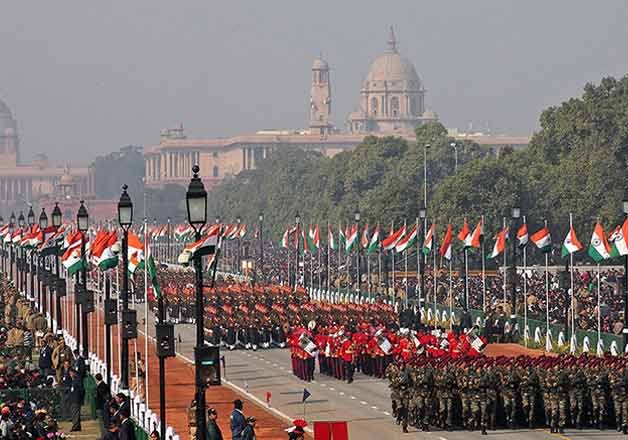
Every year on independence day a huge and long parade marches from Rashtra Pati Bhawan to India Gate in New Delhi, where the President receives the salute from the parade. All the three defence teams Army, Navy and Air Force show it's glory and strength.
Whenever the PM addresses the nation he makes us count on the finger all developments , progress and improvements the nation has done under their government. Everyone in this country either wants to be an IAS, IPS or wants to join the Army, Navy and Air force to serve the nation, to develop the nation. This is where they feel that they are patriots.
Is the circumference of patriotism limited to this point of view? Is this the only thing which makes a person a real patriot?
It is said that criticism forces you to become a better version of yourself. For success, working on our weak points is required. I also believe that when you love someone, you try to figure out it's flaws and weak points and start improving on them because you want to see it become better to be successful.
The above mentioned case is with the nation too. Of course it's true that nobody is perfect and so is the nation. Even the most developed nations may be weak in some fields, but they might not impact the country's development and hence they are a developed nation.
Loving a country, being a patriot doesn't mean that one can ignore it's flaws, one cannot listen to anything against it. One cannot be a patriot by always praising the nation.
A real patriot is one who listens to the criticism and tries to improve the condition such that no one can criticize again. He is the one who points out the flaw, tries to make society aware about it and tries to fix it.
Development happens step by step in an order. The first and foremost fact is that a nation is made up of society. Society is made up of every individual. Hence what's important is the development of the individual which will automatically lead to the development of the nation.
Indian society and Indian culture is weak in many aspects whether Indians and Indian society accepts it or not. It doesn't matter how much India achieved fame and name all over the world, as long as we have poverty, illiteracy, unemployment, poor standard of living, and backward thinking of society.
The ideological disputes, the disputes over religion, discrimination between the sections of society, these are all hurting our nation. Who says "I am an Indian, I have no religion"? Very few people. Everybody takes pride in being an upper class brahman, a devotee of Shiva, a follower of Ambedkar. Everybody is proud of their caste and religion. Does patriotism exist here?
When Manushi Chillar, Sushmita Sen, Priyanka Chopra win the title of Miss world and Miss Universe, everyone becomes a patriot. When Mary Kom, Geeta phogat Mirabai Chanu, Sania Nehwal, PV Sindhu, Vishwanathan Anand bring trophies and medals to the nation, everyone becomes a patriot to take credit. No doubt it's a moment to be proud but you cannot be a true patriot if you can't see other factors in which the nation is weak.
It's not easy to be a real patriot by looking at the shortcomings of a nation, and working on it. It's easy to be a patriot but it's not that easy to be a real and genuine patriot. Patriotism doesn't mean only appreciation of the nation in front of others. It's the one that determines how much you accept the real situation of the country and how much evil you can remove from its roots.

ADVANCE VERSION OF CHILD MARRIAGE IN INDIA

Earlier India was one of the most backward countries. No doubt it was rich in resources and rich metals like Gold and diamond and hence was known as 'Golden Sparrow'.
Since it was not so developed, the society and thinking of people was also backward. Most of the population lived in the remote areas and hence circumference of their development was restricted.
Whenever a society is in the phase of underdevelopment, the section which suffers the most is the women class.
Women in India till today, despite this much development, are suffering and considered as a burden by many.
In the ancient period when Marwari rulers were ruling in some parts of the country, and the Mughals arrived, the Sati system was prevalent in the society.
Under the Sati system if a husband dies while fighting a war, or even by natural death, a wife too has to die with her husband. She has no right to live life further. She would sacrifice herself by jumping into the bowl of fire or on his funeral pyre.
After man, woman cannot live, she has to end her life. How can one be brutal towards someone? Sometimes if any of the woman didn’t want to die she was forced by the society to commit suicide.
Women were forced to live in the house to serve the family under purdah. She wasn't allowed to eat first, or along with the family members.
Today women themselves have adopted this system as their culture. They won't eat food until their husband does. That time it may be done forcefully, but today they have adapted it.
Women in one or the other way have to suffer a lot, because society has put so many rules and regulations on the women, from which they cannot come out. The system of Indian society is so dominating today even on the literate women.
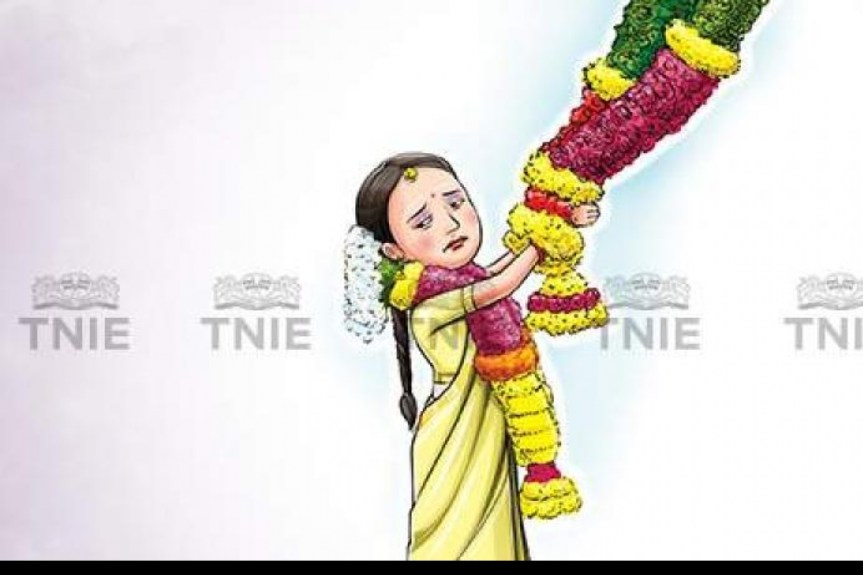
Earlier child marriage was so normal. Every second girl was married at the age of 10-15 years. It didn't matter how old the boy was, he may have been a 35 year old man.
Education was not a priority in earlier times. Girls were not sent to school to receive education and hence at the age of 10 they were taught to work at home and then get married.
A time came when the Sati system was abolished from the society, which was a relief for the women section, but still she was never relieved.
When a girl after child marriage or a woman becomes a widow, again she was given a life worse than jailer. She was imprisoned in a room with a beam of sunlight. She was offered food separately. She had to live alone. She was neither allowed to meet anyone nor allowed to attend any family function. She wasn't allowed to marry another man, if she wanted to. The remaining entire life she had to live like she had no existence in the society.
This was the system made by the people of the society and everyone forced each other to follow it. What if someone doesn't follow it who the hell they are to beat, or to implement rules and regulations on anyone? This is what every individual needs to think about.
This was the system of the ancient period and slowly the thinking towards widows improved. The system of child marriage was also abolished, but as the history is the evidence that, Indian society cannot leave it's roots no matter how much it develops and adopts western culture.
Now the society has brought a new culture to the market. People don't do child marriages of their girls. They do child engagement in which at the age of puberty she is booked for a man or a boy. This becomes a symbol that the girl is now eligible for marriage. She is stopped from going to school. She learns the household chores and isn't allowed to come out of the house until she gets married.
After a few years as soon as she is near the legal age of getting married, they get married. Did anything change? No. Despite laws in the Constitution nothing changed. The only difference is they follow the criteria of legal age. The basic rights are still not given. The system continues to be the same.
The above mentioned case is in one section of society which I have seen first hand. There can be many other sections which are unknown where girls might be facing worse conditions than this.
Whenever a girl is born in the family, the first thought that comes in the mind of the members specially parents is how we will get her married. In India people worship goddesses, but when they come to know the gender of the baby in the womb and if it's a girl they decides for abortion. The level of hypocrisy is too high.
No matter how educated a family is, how much society says that women are equal to men, no matter how many laws and privileges given to a woman, except few parents , all say that we have to get our girl married. They consider their girl as a burden, not everybody but the majority. Parents work, earn and save because they have to get their two girls married. It doesn't matter how capable the girl is, at the end they just have to get her married. Is marriage the sole purpose of life? I wonder.
We are saying that the standard of women has improved. As compared to earlier times, it has improved a lot. But the true development is only when every woman and every section of society enjoys equal rights to that of man, not only in the field of education and basic rights but the equality at ground level, in behavior, in consideration and in preferences.
The ancient roots of evil society are very strong in India. We have adapted that evil system as our culture and don't want to rise above it. We are proud of our culture rather than questioning it. If we don't follow our culture and do something different, it is said that we are being influenced by the western culture.
The roots are too deep and strong. It would need centuries to uproot them. The struggle is so long and hard that not everyone wants to fight.

PROBLEMS FACED BY INDIA DURING VACCINATION

Before 2020, the world was normal and happy. At the end of 2019 and in the beginning of 2020, the most dangerous virus emerged worldwide named as covid-19.
It's a kind of virus with symptoms of normal fever, cold, cough and headache. On the surface, they seem to be so normal. However, their impacts are so severe. It's a life taking virus which damages the lungs, causes breathing problems and degrades the immune system.
The very first case of this virus in the world was found in Wuhan city of China. As it is a virus and thus transmits from one body to another through air.
The first wave was very harsh. In order to control the spread of virus and save the lives of people, most of the countries decided to put a lockdown nationwide. People were suggested to wear masks if for essential things they need to go out. Social distancing was preferred for safety.
Coronavirus is a unique and new virus found on the earth. There was no treatment available to contain its spread. It's a virus which cannot be killed, one can only make it effortless by being vaccinated against it, as of polio and other deadly viruses.
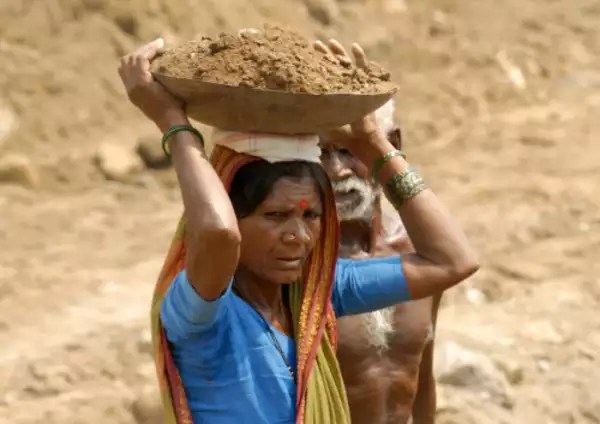
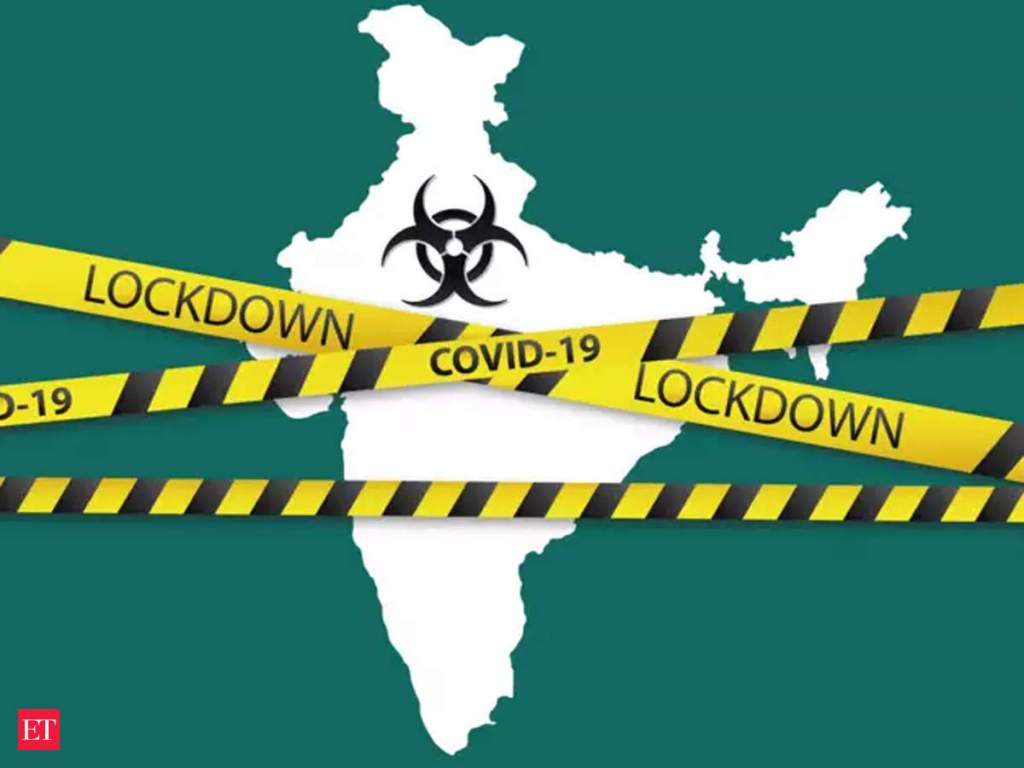
India too faced this phase of coronavirus and implemented a lockdown. The first wave for India was not very severe. There were few cases in the month of March 2020, and lockdown was imposed.
Lockdown was the only solution. Restriction on people gathering was the only solution until a vaccine was being developed by the various nations. Entire world was struggling to make a vaccine. India was also doing the same.
In India, after December 2020, when vaccination was about to be released to people, India faced its worst ever wave of coronavirus in the months of March - May 2021.
Thousands of people lost their lives. India was unable to manage the supply of oxygen for the people suffering from the virus. Hospitals did not have beds for the treatment of people. Hospitals refused to admit people. Many people lost their family members and loved ones. One by one, a member of the family was going into the death's mouth due to this virus.
It became hard for India to manage the situation. To save people during the first lockdown India became critical. It faced so much economic loss. GDP fell, and the development of the nation almost stopped. Many people lost their jobs. Hence this time it was very difficult to impose a lockdown again. India has to manage its economy and boost it up again.
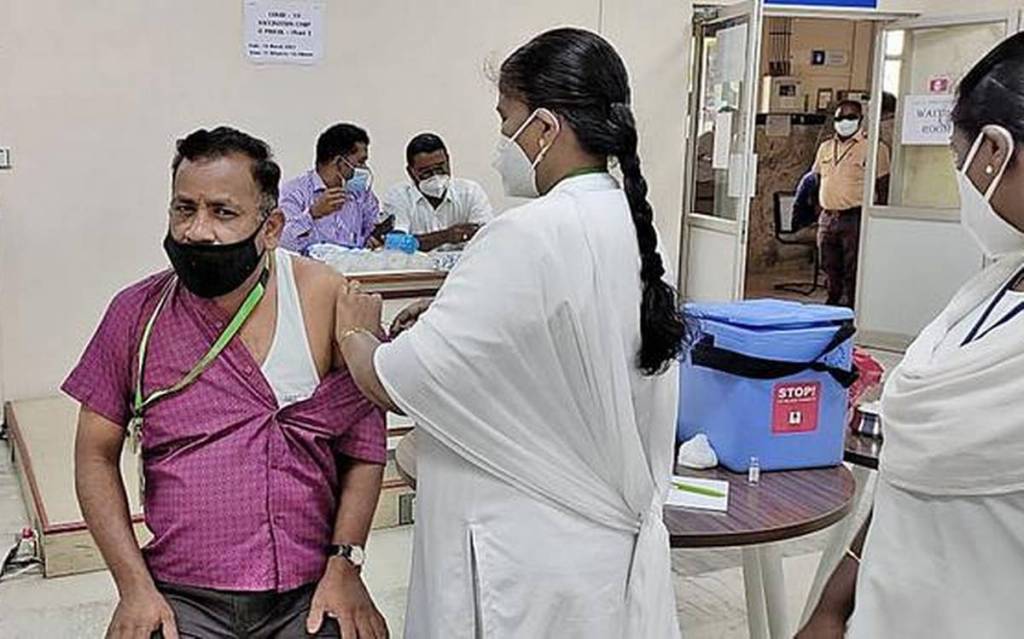
Anyhow India managed and coped up with the second wave of virus and by that time vaccines were also available in the country. The government announced that people will be vaccinated.
Earlier the government announced that people of old age i.e above 45 will be getting vaccinated for free. One has to do online registration and can get vaccines in any part of the country.
People of old age in India are less in number and hence vaccination was done smoothly for this age group. Both the doses.
From May 1 2021, India announced a vaccination program for people above 18 years old . 70% of India’s population is young. In the beginning, it was easy to get vaccination in both urban and rural areas with the help of online registration.
In the month of June, one day PM Modi addressed the nation and announced that people will get vaccination without registration in various health camps for free of cost and that's where the problem arose.
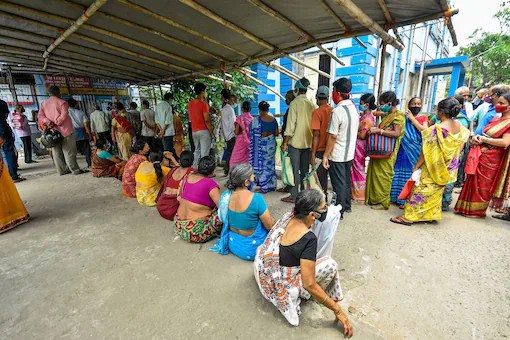
The number of people being vaccinated was huge and the number of doses was so low. People stood in long queues for getting vaccinations.
Hardly 2-3 camps were established by the government in the nearby area. Places allotted for vaccination did not receive any vaccine. One who wanted to get a vaccine had to run door to door searching for camps and vaccines.
Even if they reached the camp they had to stand in the long queue. When their turn came, the vaccine was out of stock. The person again has to wait for the next day. Entire day goes to waste.
Poor people who earn daily wages and don't have knowledge of technology and are unable to do registration have to wait long and waste their day on a daily basis. How hard it would be for them to be vaccinated. Though several NGOs and organizations worked and are still working to help this section of people.
Fraud is in the blood of some people, specifically if we talk about Indians, at the time when people were fighting between life and death due to viruses, many people did black marketing of vaccine doses and injections. Hospital charges in lakhs for admitting the patient. People sold water filling in vaccine tubes. How can someone do business and play with someone's life at the time when each and every person was struggling in one or other way.
Spreading rumours is another problem of Indian society. People said that after taking vaccine doses a person can die, he/she can lose his eyes, his/her nervous system can get damaged and many more.
Even literate people were thinking the same and were not ready to get vaccinations. Many people who are illiterate and are from remote areas started beating and throwing stones towards nurses and doctors who went to vaccinate them.
People jump in well, hide inside the houses, harm the health workers because they feel vaccination will take away the life of themselves and their children. Still there are many who think the same and still aren't vaccinated.
On an average, we see India faced so many problems and is still facing the problem of being vaccinated, but still it is moving towards success in this campaign. People are getting vaccinated. Problems are still coming in the path but as so many people are already done with their first dose it has now again begun to run smoothly. Let's hope that this goes on.
Vaccination is one of the best solutions to fight this virus. It's very important for everyone to get vaccinated for their own and other's health and safety. Hence this program should continue without any barrier and that's the main responsibility of the government.

THREAT TO DEMOCRACY

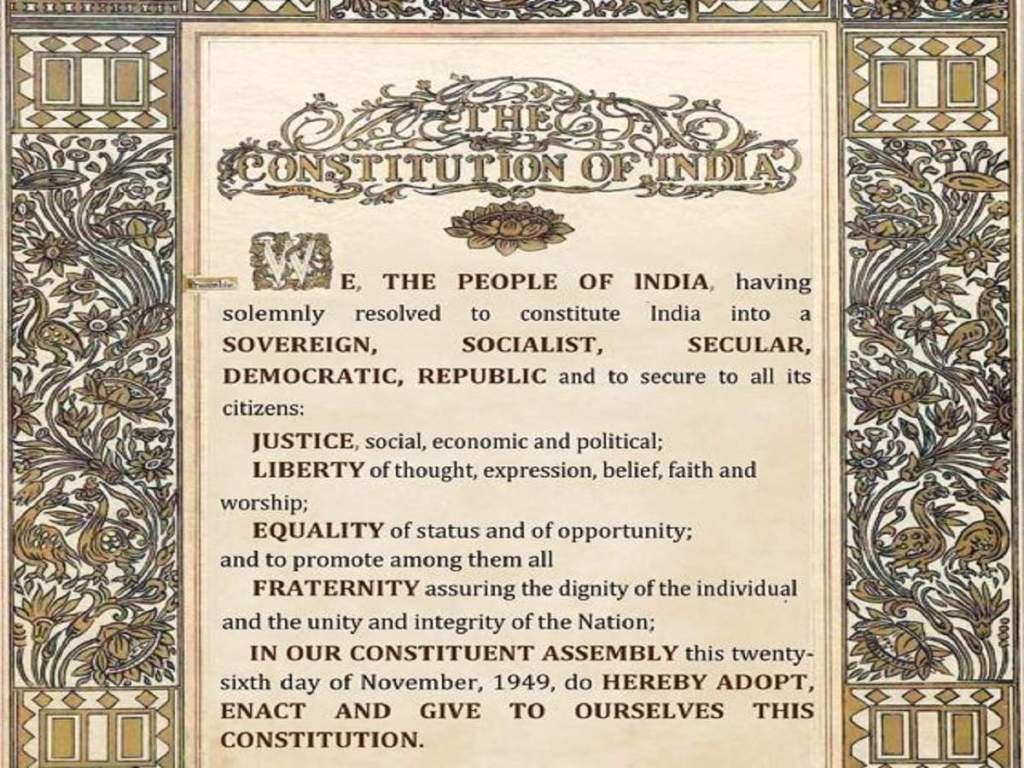
India is one of the largest democracies in the world. It has one of the longest written Constitutions. It has the largest judiciary and is known for unity in diversity.
Preamble mentions that India is the sovereign, socialist, secular, democratic and republic. It talks about equality, justice and harmony among the people of the nation.
Again India is the largest democracy of the world as here all the leaders and representatives are elected by the people of India and for the people of India through voting. People can elect any eligible representative as their leaders who work for people's welfare.
How nice it feels to hear the above mentioned facts? Doesn't that seem to be a full fledged India where each and every person under the shed of the Constitution would be enjoying their right? But the sad thing is that's not the reality and truth.
From the bird's eye view it seems to be so settled and perfect but deep inside how messy it is, it's hard to mention.
Despite having the right to equality there are many who don't get it. Despite the right to education there are many who aren't allowed to be educated. Despite having the right to speech there are so many whose voice is suppressed still.
There are many rights mentioned in the Constitution. There are many who don't enjoy these rights as the system of society doesn't allow it.
Along with these basic rights, Indian Constitution provides special privilege to backwards classes of the society, and women, but in reality do they gain equal status? No, they don't.
There are still many people who behave inhumane towards people. For them democracy and freedom don't matter. Sometimes parents don't give basic rights to their children. Husbands don't give it to their wife. Father to his daughter. The Constitution and democracy could give basic rights but what about real rights? Not everybody gets this in the Indian society.
Let's say for instance, if anybody faces a fraud or crime or theft there are uncountable laws mentioned in the Constitution against the crime. Various punishments have been mentioned under different laws for the one who commits any crime. But who enforces them? Nobody.
No one files complaints against the crime and criminal. Officers are not ready to accept those FIRs. Luckily, if anyone writes the complaint no action is taken. If an action is taken, the criminal can easily bribe and get a bail.
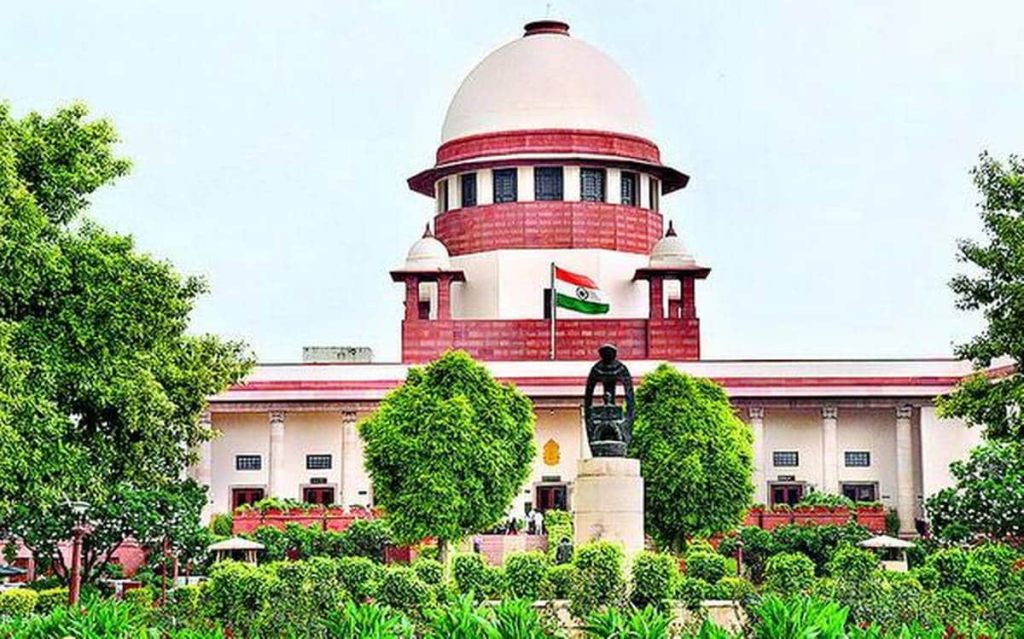
In India, courts work with the speed of a tortoise. Lakhs of cases are still kept pending in the major courts of district and nation. Everyday, so many people go to the police stations and courts with the hope of getting justice but they never get it as mentioned in the Constitution.
In India, the main reason why girls don't feel comfortable to go out, or work night jobs is because people here make them feel unsafe. Though when one looks from afar, a person might be feeling that there are so many measures and privileges given for the security of a lady, but the thing is it's only mentioned. In reality they are not given.
When a girl is raped, or faces acid attack, she has to fight for her right with the pain for years. Sometimes her parents have to fight for 10 years for their daughter's rights even after her death. Nirbhaya is the best example.
In the judiciary system, the justice giving pattern in India is so pathetic that here people have to struggle.
For getting a signature in a government office one has to cover hundreds of tables.
The baic brick of democracy is electing representatives by the vote of the people. Do they win by honestly contesting the election? Of course not.
Politicians try to influence people for the vote by making false promises. They offer various schemes for the farmers and poor section of the society so that they could get major votes. They purchase votes by offering money. Everyone in politics has two faces. One that is shown publicly, and one that is hidden.
Everyone uses democracy for their own power. The welfare of people isn't their motive.
Corruption in India is at its highest peak which kills the major factor of democracy i.e transparency between the people and the leader. They serve their own ends under the guise of the welfare, justice and development of people. They just need power of position.
No doubt, India provides so much freedom of speech and expression, to travel and live, and adopt every religion as compared to other countries like North Korea, China etc. The ground reality for many is even worse than that. The country is providing freedom but the people of India aren't providing to each other.
Democratic form of government is the best form of government in all existing forms. It's good to hear that we live in one of the largest democracies in the world.
Those in power are abusing democracy. If this continues and no attention is given towards choosing the right leader and government, one day this democracy will turn into a monarchy in India.

MAGIC OF PILGRIMAGE ON PEOPLE

India is the land of culture and religion. Here religion has influenced living style, life as well as mentality.
Though India has a diverse culture also known as 'unity in diversity.’ People of diverse cultures and religions live with a single citizenship under one Constitution.
Majority of the population in India follows Hinduism. It is believed that in ancient times Hindu people used to live here. Later Mughals and other people arrived here and spread their religion.
Though constitutionally, India gives right to every religion, when one observes these things from a bird’s eye view, Indian people and their diversity seems to be so much united and hormonal but at the core every religion wants to be superior. People fight and kill each other in the name of religion.
In every religion whether it is Hinduism, Christianity, Muslim or Jainism, pilgrimage has its own importance. It is said that people travel to various places where their God lived, took birth and spent their life. By doing this they earn virtue and their souls get a place in the so-called heaven.
In India, there are around two million temples, and each year the number increases substantially. This data is just of Hinduism. There are many places of worship for different religions in India.
People here everyday visit a lot of temples to worship God. Some people travel as they have taken a vow in the name of a particular God.
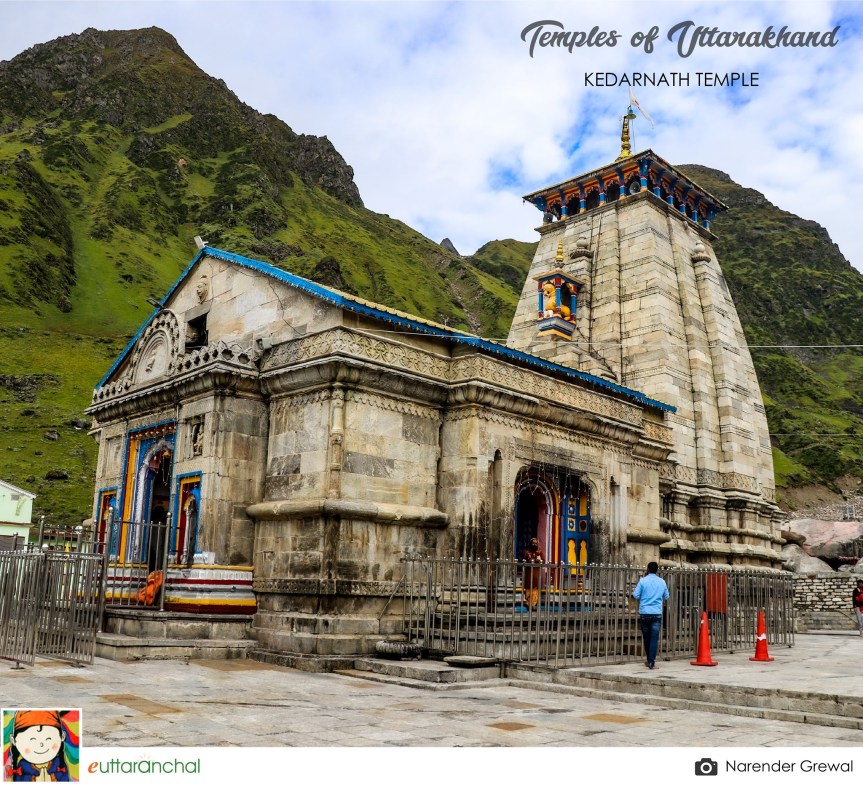
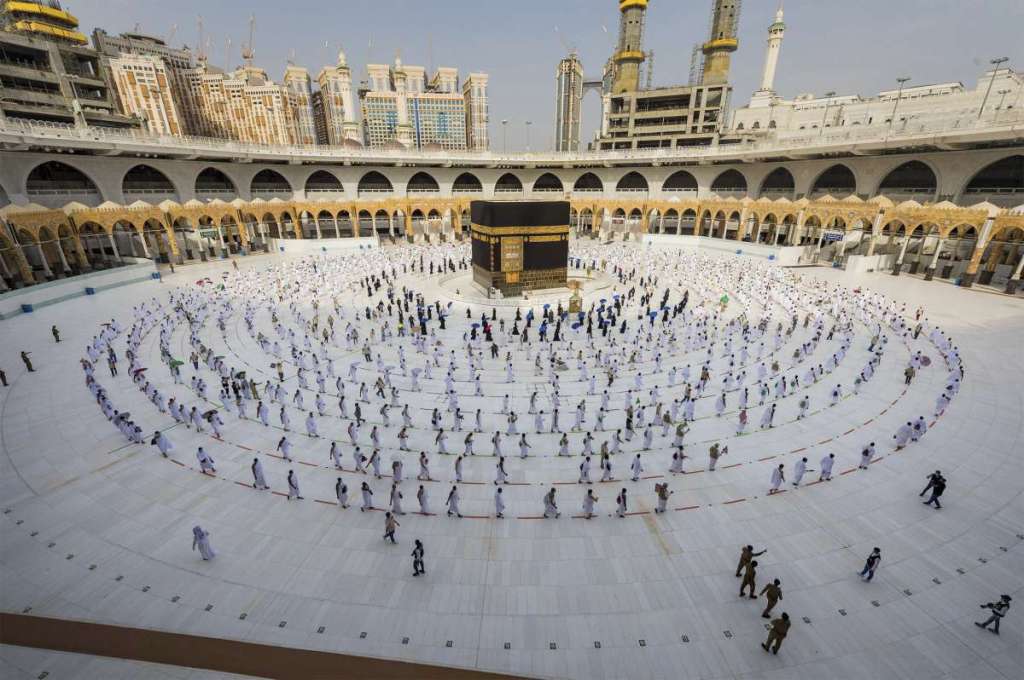
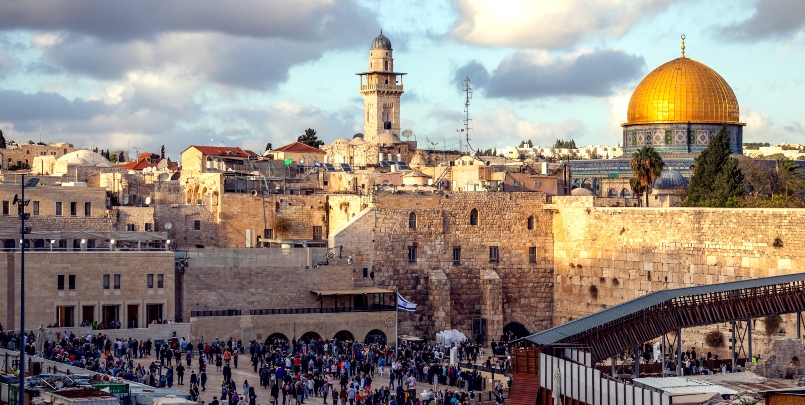
Varanasi, Tirupati, Balaji, Dwarka, Puri, Badrinath, Kedarnath, Amaranth, Ujjain are such cities for Hindus. Mecca and Madina for Muslims. Jerusalem for Christians. Thousands of people visit these cities on a daily basis.
Of course there is nothing bad about visiting places, not even temples. When you visit any place, you explore it, you learn about it and can remember its importance very easily. Travelling makes you know about the world so easily.
But the problem here is with which feeling or by thinking you are travelling, or you are visiting a particular place.
It's worthless to travel to a place of worship with some motive, in the hope that the visit will fulfil your wish. You don't visit it for the love of God. You visit him for your own benefit. Your selfish nature makes you visit there and name it as admiration for God.
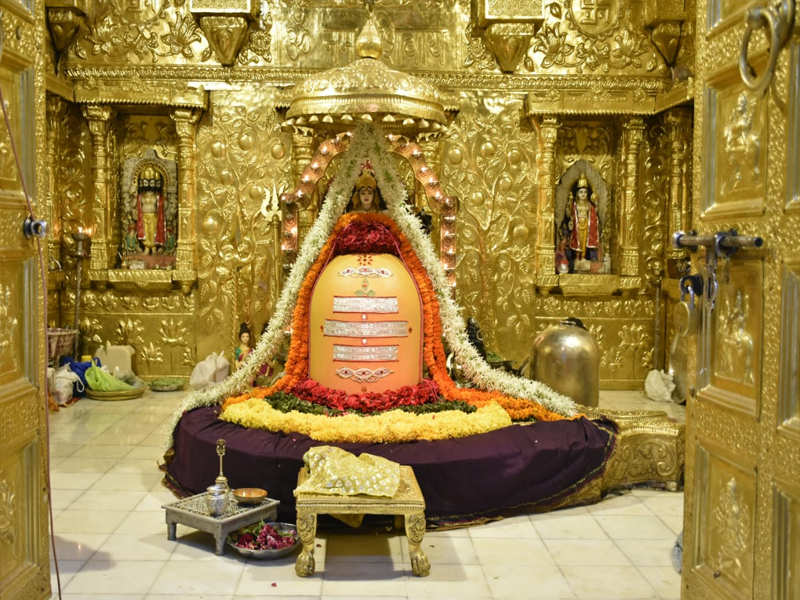
How illogical is pilgrimage? Whether God exists in any corner of this universe is uncertain. People don't have faith in God. They have blind faith in their statues. They believe that visiting and worshipping these statues will solve their problems, will make their lives happy. Whatever they want they will get.. Which never happens.
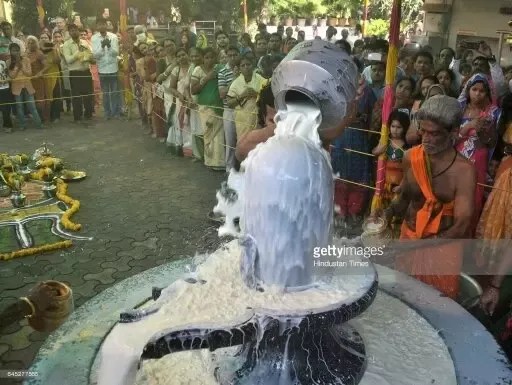
For once let's believe that God exists, and he loves its devotees. Does a loving person ask you to remain hungry? Does he become angry if you don't do what you said? Does he ask you to give him a bath with milk and other stuff? Does he ask to donate money for him? Does he ask to stand in the queue to meet him? Does he ask you to offer coconut? No, of course not.
When one visits a big temple, let's say Badrinath or Kedarnath. Huge number of people have to wait in long queues, where the assistant of a particular God i.e pandit, manages how long he/she can worship, from where to enter, whether to touch the statue or not. The irony is there is a VIP quota for visiting the statue. One who has a VIP pass can visit God soon.
I wonder how the same God can have different status? Kedarnath's Lord shiva is God of bigger status rather than the one in the temple near you. If one can find the same God nearby, what's the point of going to Kedarnath, just because it is said that visiting Kedarnath fulfills your wish.
People give their everything when they visit their God's place. In Mathura people crawl around the Govardhan Parvat. People donate their hair at Tirupati in the name of a vow they have taken.
It's hard to make people understand this is just a business practiced by owners or associations who built temples. A person will not give a penny extra to the one who sells vegetables day and night. They would bargain with him, but whenever they will visit the temple, especially one which is famous, they would give several rupees unnecessarily to the pandit or in the name of adonation.
People here donate money in thousands and lakhs for building temples. Today also in India not every class of people are allowed to enter temples. The time is fixed when God's statue will be visible and when it will not.
Visiting these places is good only when you don't have any expectation of return after visiting there. It's better to give money to one who earns by working hard rather than wasting it here and there. Every year people donate tonnes of gold and lakhs of money to these temples.
Even if one has faith in God he/she should know that giving bribe to God is injustice to their faith. If God exists he would never demand this.
No doubt temples are the shelter for many poors. These temples provide meals to the poor. Giving food to someone is the source of pleasure to so many but offering gold and huge money which goes in the pocket of wrong people is again injustice.
It's not like that only Hindu community has fake faith in pilgrimage. Each and every religion has the same condition in other countries too.

EDUCATION SYSTEM IN INDIA

The current literacy rate of India is 64.8% in which state of Kerala has highest i.e 96.2% and least is of state of Bihar i.e 46.2%. In the ancient times education was not given much importance as feeding the stomach was far more important. At that time, either land owners, King's ministers or Brahmans were the only ones who were educated.
In India, during ancient times, the system of Varna was practiced. Entire society was divided into 4 sections: Brahaman, Kshatriya, Vaishya, Shudra. Brahmans were considered the superior ones, as they were assumed to be intelligent and knowledgeable in the society. Shudras were considered as the lowest of all and were made to feel left out from the society. They and their children weren't allowed to enter the village among other upper sections. Brahaman pandits used to teach only to the prince.
Later when the Varna system was abolished, due to poverty, people were unable to give education to their children. Only rich landlords and farmers could afford education for their children.
As time passed, India got independence from Britishers, and the government of independent India started to focus and upgrade the education system of India. It tried to uplift the literacy rate of India. As India was newly independent and lakhs of people were killed at the time of Partition, people were starving for food. The focal point of the government was to remove poverty and increase the production of grains in the country. Until the 4th five-year plan (1969-1974), improving education facilities was the second priority of the government.
Later after the emergency, in 1975, the education system began to improve. Government schools were built so that poor people could send their children to school with no fees. All sections of people could get education. Most of the people were from agriculture background and used to work in farming. In order to earn more income they wanted every member of the family to engage in work. And so they avoided sending their kids to school.
Decades passed and after 1990 the system of education improved, areas of study improved, standards of universities and schools improved, living standards of families improved. People started to afford education for their children in private schools. However, there are many children who are unable to go to school, especially girls despite a fundamental right mentioned in the Article 21 of Indian Constitution i.e right to education.
As people started to go to school and colleges, a time has come when people don’t go to school for knowledge. They want qualification certificate and a degree which gives them a sign of being literate
When the education system was built it revolved around exams. Pass or fail. I doesn't matter how a child passed, what amount of knowledge he gained? Did he explore anything on his own? Did he learn something to bring change in society as well as within himself? Only the bundles of sheets of homeworks were increased, and personality was still down. No doubt co-curricular activities are practised in Indian schools for personality development, but somewhere they are unsuccessful to find hidden talents of a child as they lack opportunities in many fields.
Whatever you teach a child from the beginning, he adapts it for his entire life. In childhood, from kindergarten, you start testing them, giving them grades and numbers and promoting them to the next class. From here the child starts thinking that he has to get good marks, so that he can be promoted to the next class. He can get that certificate of promotion. This is what every second student here does. They focus on numbers. It's not necessary that you are not a merit student so you have less knowledge. Sometimes low grade students turn out to be geniuses. As a single sheet of paper cannot decide your future and cannot declare your personality.
Along with this mentality of students, teachers who get job of teaching not only in government school, colleges and universities but also in government also have the mentality that no matter what you have taught to your children, doesn't matter even if you have taught or not, you just have to give them a number and grade because this reduces their burden as well this satisfies the student. Core knowledge, personality and perfection are not a priority here.
Now the problem arises when no proper input is given inside the brain of a student, but output is expected and the level of examination conducted is of a genius level.
Secondly corruption in India is practiced at its peak. Everyone wants a government job and hence bribes and political power are used for recruiting ineligible candidates due to which deserving ones who can manage well, who can think well, who can administer well fall behind.
Of course it's not true that each and every college adopts the same system. The nation is developing because many intelligent and deserving candidates are working in the fields of IT and space, but the sad thing is that at most of the places in India this type of wrong teaching and learning techniques are prevalent.
Earlier people were not aware of all the jobs and various examinations to qualify for those jobs. Also not everyone completed an undergraduate level degree and hence competition for jobs was least. But since awareness increased, facilities increased, technology increased the level of competition for jobs has raised to its peak.
In India if something has been amended it takes decades for its implementation. Let's say the NEW EDUCATION POLICY declared by the Modi government last year. It's hard to say when it's going to be implemented in the nation. That's a great challenge.
Another important thing which is lacking in the Indian education system is that children cannot decide their career on their own. They don't know what they have to do and what is their goal. Even if they set a goal here, they aren't dedicated towards it and keep on wasting years and years upon it and contribute to the increasing unemployment faced by the country.
In India, parents decide what their child is going to be, which subject he is going to choose, what degree he is going to pursue, what job he will do, which exam he will take and till when he will study. Independence of taking career decisions is not given here to the children and somewhere the child himself is responsible for their failure in career. Not earning a single penny and giving time to useless education is such nonsense.
No doubt that India is developing in every field. It's going ahead. It has given so much to the world. It has given birth to many geniuses and still it gives. It's also not necessary that every single child becomes a successful person of the nation, but India has a bad record on overall average. Literacy level and employment level needs to be increased, because the country is built by the members of the nation. Good level of employment leads to development of the nation and true knowledge leads to self development which is the most important thing in human life.

SOCIAL MEDIA FRAUD

This is the era of the 21st century, the era of technology, advancement and growth, digitalization has reached its peak.
Earlier technology was bare minimum. No electricity. No transportation. No watch. No television. No radio or any other means of communication.
In order to send a message in the very ancient period it is said that pigeons were used. It would take months for a message to reach as messages were sent with the help of messengers. Further development came. Postal system was created which was quite faster than those messengers.
As time passed, people and technology developed, computers were invented, systems of typing and faxing were invented through which sending messages became much quicker.
Further after 2000's when Remote sensing and GIS developed, launching of Satellites developed, Internet facilities developed, system of e-mail facilities developed, and sending messages became the game of a few seconds. As time passed Google search engine came into existence after Yahoo. As mobile phones developed the Short Message Service(SMS) became far easier and faster. Social networking sites developed in which we can frequently send messages and can communicate live.
It's the universal truth that even the bestest thing in this world has its own disadvantages. Let's say love, which is the most beautiful thing, has its own drawbacks. Similarly non-development of technology as well as the development of technology has their flaws. Another truth is that people in India don't want to work. They want to earn money without struggling. They either beg or use their smart, intellectual and intelligent mind in doing frauds. They want to make money by cheating others.
On one hand technology is becoming a boon in the sense of quickness and comfort. On the other hand it is a boon for those ethical hackers. These people play with the psychology of people, they study the mindset of people and accordingly they plan to cheat on them and grab money from them.
They take help of links, messages and email through which they can lure people. They send random emails giving their identity as a manager of any foreign company. They invoke greed in people as being a lucky winner or a jackpot winner of crores of rupees. One who gets caught in their trap, they ask them to deposit huge amounts of money as service tax, transaction fees, conversion fees before transferring money, which they never send. These types of hackers operate these cells from some remote areas. Some people, even literate ones get caught in the trap of greed invoked by these hackers.
Secondly, phishing is a type of online fraud done by hackers, through sending links. If a person clicks on the link the account and the phone goes in control of the hacker. They can withdraw all the money without the owner's consent. Sometimes they behave as a worker in a bank, by saying that they want to renew their accounts and ask OTP (one time password) from them. They build a person's trust by giving them all the general information of their bank account.
On social media too people do too many frauds by offering jobs, money, gold and many other items by which even a mature and literate person becomes a prey of these hackers.
The bad thing is they have no fear of anybody. If someone identifies them, they are fearless, they continue to cheat because they consider people as dumb.
Another, more sad thing is that when a person faces such kind of fraud he looks forward to police and crime branch but officers over there don't give a damn to these complaints. They don't even notice it. They don't take any actions against these hackers, which makes them more confident and strong on whatever they are doing and that's the reason they have no fear.
Another reason is the government has the least focus on such big issues of the country.
I agree that despite this much awareness, because of people's dumbness and greed, people get caught in these traps, but somewhere I feel that the government is failing to spread awareness and in taking actions against it. Many people who face these frauds are the ones who are in need of money, and hence they get caught in a trap. Many of them earn every penny with great efforts and by giving blood and sweat.
This is a very serious problem of theft on the internet, which is going to become a bigger problem for the people of the country, as technology advances. Hackers and their way of hacking is also getting advanced.
The Internet, technology and advancement are for making our life easy. One should use it smartly, because it depends on us whether we make this advancement of technology as a bane or boon for ourselves.

GLOBAL WARMING

Climate change” and “global warming” are often used interchangeably but have distinct meanings. Similarly, the terms "weather" and "climate" are sometimes confused, though they refer to events with broadly different spatial- and timescales.
Global warming is the long-term heating of Earth’s climate system observed since the pre-industrial period (between 1850 and 1900) due to human activities, primarily fossil fuel burning, which increases heat-trapping greenhouse gas levels in Earth’s atmosphere. The term is frequently used interchangeably with the term climate change, though the latter refers to both human- and naturally produced warming and the effects it has on our planet. It is most commonly measured as the average increase in Earth’s global surface temperature.
Since the pre-industrial period, human activities are estimated to have increased Earth’s global average temperature by about 1 degree Celsius (1.8 degrees Fahrenheit), a number that is currently increasing by 0.2 degrees Celsius (0.36 degrees Fahrenheit) per decade. Most of the current warming trend is extremely likely (greater than 95 percent probability) the result of human activity since the 1950s and is proceeding at an unprecedented rate over decades to millennia.
Changes observed in Earth’s climate since the early 20th century are primarily driven by human activities, particularly fossil fuel burning, which increases heat-trapping greenhouse gas levels in Earth’s atmosphere, raising Earth’s average surface temperature. These human-produced temperature increases are commonly referred to as global warming. Natural processes can also contribute to climate change, including internal variability (e.g., cyclical ocean patterns like El Niño, La Niña and the Pacific Decadal Oscillation) and external forcings (e.g., volcanic activity, changes in the Sun’s energy output, variations in Earth’s orbit).
Scientists use observations from the ground, air and space, along with theoretical models, to monitor and study past, present and future climate change. Climate data records provide evidence of climate change key indicators, such as global land and ocean temperature increases; rising sea levels; ice loss at Earth’s poles and in mountain glaciers; frequency and severity changes in extreme weather such as hurricanes, heat waves, wildfires, droughts, floods and precipitation; and cloud and vegetation cover changes, to name but a few.
Climate change is a long-term change in the average weather patterns that have come to define Earth’s local, regional and global climates. These changes have a broad range of observed effects that are synonymous with the term.
Since the Industrial Revolution, the global annual temperature has increased in total by a little more than 1 degree Celsius, or about 2 degrees Fahrenheit. Between 1880—the year that accurate recordkeeping began—and 1980, it rose on average by 0.07 degrees Celsius (0.13 degrees Fahrenheit) every 10 years. Since 1981, however, the rate of increase has more than doubled: For the last 40 years, we’ve seen the global annual temperature rise by 0.18 degrees Celsius, or 0.32 degrees Fahrenheit, per decade.
The result? A planet that has never been hotter. Nine of the 10 warmest years since 1880 have occurred since 2005—and the 5 warmest years on record have all occurred since 2015. Climate change deniers have argued that there has been a “pause” or a “slowdown” in rising global temperatures, but numerous studies, including a 2018 paper published in the journal Environmental Research Letters, have disproved this claim. The impacts of global warming are already harming people around the world.
Now climate scientists have concluded that we must limit global warming to 1.5 degrees Celsius by 2040 if we are to avoid a future in which everyday life around the world is marked by its worst, most devastating effects: the extreme droughts, wildfires, floods, tropical storms, and other disasters that we refer to collectively as climate change. These effects are felt by all people in one way or another but are experienced most acutely by the underprivileged, the economically marginalized, and people of color, for whom climate change is often a key driver of poverty, displacement, hunger, and social unrest.
Global warming occurs when carbon dioxide (CO2) and other air pollutants collect in the atmosphere and absorb sunlight and solar radiation that have bounced off the earth’s surface. Normally this radiation would escape into space, but these pollutants, which can last for years to centuries in the atmosphere, trap the heat and cause the planet to get hotter. These heat-trapping pollutants—specifically carbon dioxide, methane, nitrous oxide, water vapor, and synthetic fluorinated gases—are known as greenhouse gases, and their impact is called the greenhouse effect.
In 2015, for example, scientists concluded that a lengthy drought in California—the state’s worst water shortage in 1,200 years—had been intensified by 15 to 20 percent by global warming. They also said the odds of similar droughts happening in the future had roughly doubled over the past century. And in 2016, the National Academies of Science, Engineering, and Medicine announced that we can now confidently attribute some extreme weather events, like heat waves, droughts, and heavy precipitation, directly to climate change.
The earth’s ocean temperatures are getting warmer, too—which means that tropical storms can pick up more energy. In other words, global warming has the ability to turn a category 3 storm into a more dangerous category 4 storm. In fact, scientists have found that the frequency of North Atlantic hurricanes has increased since the early 1980s, as has the number of storms that reach categories 4 and 5. The 2020 Atlantic hurricane season included a record-breaking 30 tropical storms, 6 major hurricanes, and 13 hurricanes altogether. With increased intensity come increased damage and death. The United States saw an unprecedented 22 weather and climate disasters that caused at least a billion dollars’ worth of damage in 2020, but 2017 was the costliest on record and among the deadliest as well: Taken together, that year's tropical storms (including Hurricanes Harvey, Irma, and Maria) caused nearly $300 billion in damage and led to more than 3,300 fatalities.
Global warming can be controlled by Replacing one regular light bulb with a compact fluorescent light bulb will save 150 pounds of carbon dioxide a year. Walk, bike, carpool or take mass transit more often. You'll save one pound of carbon dioxide for every mile you don't drive! You can save 2,400 pounds of carbon dioxide per year by recycling just half of your household waste. A single tree will absorb one ton of carbon dioxide over its lifetime.
The most important is concern within ourselves.

CONDITION OF WOMEN IN MODERN WORLD

A woman is the fuel of this world. This world would have stopped if female gender didn't exist. She is an important factor in the cycle of birth and rebirth. It's an unknown secret how the first man and woman came into this world.

From suffering a menstrual cycle for more than half of her life, to being a mother and feeding a child, her role is difficult. It's not difficult because she is a woman. It's difficult because society gave her the status that she is a woman and she is beneath man. She never gave herself that or any other identity.
From sati to the present situation, it's easy to say that the condition of women has improved in society. We can say that it has improved in the field of education and few more. Not in every field. Very few.
The only improvement is that earlier people harassed women openly. They considered them as inferior. There were no laws for upliftment of women. Now there are laws, but not implemented. Neither at that time women revolted, raised voice against violence and harassment of their rights, nor do they revolt today.
I think somewhere women themselves may be responsible for their own poor condition. When you see the same behavior being repeated again and again, you start believing that to be the truth. The same is true with women. Specifically in India. It doesn't matter how much you have developed, your society has developed, standards of living have improved, women are always told that they are inferior and always behind men. This is called the domination of the system. A woman at some point considers herself that she is only meant to give birth to a child, feed the child and her family, even if she is highly educated. She has to cook food along with her job. There is nothing bad in doing so but society doesn't appreciate it. For them it's her responsibility and the woman has to manage both.

The development of the standards of women is a long term war. It's an irony that on one hand the status of women is improving, they are coming forward in every field, they are exploring themselves, they are becoming equal to men, but all this is limited to only a very few women. Total female population according to the 2020 census is 620 million. Barely 10% of women would be having full freedom and liberty to live, love and express it.

Even if the government, law and NGOs are trying to improve the status of women, society does not want to cooperate. Somewhere women too don't want to change the status quo. They would continue feeding family, children and parents. She considers it her responsibility because of love and affection. I am also caught in this dilemma, despite knowing my own rights. How can love and affection be a trap of deteriorating yourself? The best example is women.
India is a country where 70% of the population lives in remote areas or in villages. Most of the people here are either poor or middle class. If the condition of women has improved, it is only for the women of higher class or of middle class that too not completely as equal to man.
Even in higher, middle and lower classes the condition of a large number of women is so harsh that it's hard to express. The ground reality is that women still have no value in society. Men easily dominate them.
I have seen that the girls, when they attain the age of 12-14 get either engaged or married to someone whom they have not even met, nor seen. In this 21st century, after the engagement, these young kiddo girls aren't allowed to come out of the home. They are forced to go hungry and fast for their husbands to be. They live almost a married woman's life at such an early age.
Domestic violence is very much prevalent in India. Women are still beaten by their husbands. Not only the women living in rural areas and uneducated, domestic violence is tolerated by the working women, those who are educated and are married in rich families.
Love marriage, inter-caste marriage is still a sin, which society declared. Girls cannot take decisions on their own. They cannot have a voice of their own. How can one control someone's life so badly?
It's easy to say one must raise a voice for the rights. It is very hard for women in India to convince herself to do so. She could be educated, she could be employed, but what about her freedom? She is controlled financially and emotionally.
Love and affection are the worst trap in which women throw themselves so badly. In the name of respect she gives rights to her husband, her father, her mother, her elders, her in-laws etc. She might feel that they are older and she must obey them. There is a difference between obeying and controlling. People in India take respect and loyalty for granted. They think that they can control a person. If she doesn't get controlled, she doesn't become a puppet, she is not an ideal woman, daughter, sister, wife, daughter in law and all other relationships.
She is important because she is going to give birth to another generation. She doesn't deserve love, respect and freedom simultaneously. If one in many does something against the rules of society she gets tortured even by her family members and beloved. Here's where she feels that all care about the society and status is fake. It's the system which dominates.
It will take centuries for women’s conditions to get better.. Sometimes what you see is not the truth, and what's true cannot be seen. You can just feel how hard it is, especially in Indian society, to play the role of a woman. Despite being a form of goddess to whom every single person praises daily, people abuse each other in her name only by taking the name of a woman i.e mother and sister. Hypocrisy is so strong in people of India.

Problems during travelling in India

 No Doubt that some places in India are beautiful to live and to travel. India has very good places in terms of nature, history, paintings and architecture.

This is all about travelling in the sense of tourism, going on a trip of 8-10 days, residing in a hotel etc . Is travelling all about visiting  places for a few days? Is travelling limited to tourism?
India is a country, where everything is available at walking distance, every single street, even the remote one has at least 2 small or big grocery shops. People do not need to travel even one mile distances for groceries.
One reason behind that is people cannot afford a car, not even a scooter or bike. It's hard for them to walk every day for such essentials. Secondly, most people in India are daily wagers. People do not purchase anything in bulk. They purchase loose items as per the daily need, as labour here get daily wages. In short, people have low income and are daily wage earners.
All the facts mentioned above are the reasons why public transportation in India is so prompt. People prefer public vehicles for travelling not only long distances but also short distances of 5 kms.
Travelling even 5km is not an easy task here.  As a large population depends on public transportation, facilities here are at least as per the ratio of people. India always tries to uplift itself in terms of technology, but due to inefficiency in the government, results are not always successful. If a person books a train, the app doesn't work. If a person books for a car, it's inaccessible. There is no fixed rate to travel which is fixed by the government. The bus owners demand as per their wish.
I believe that life of every creature on this earth is valuable, but in India life has no value. You can save yourself from viruses and health issues, but what about accidents on the road, in a bus, in a train, on the street? What about the untrained drivers who can mess up the lives of 30-50 people in one moment? What about illegal driving? What about the driving of children under 18? What about drinking and driving? What about not wearing seat belts and helmets? What about overspeeding?
While travelling you always have a sword hanging upon you, either you travel in a bus, car or any means of transportation. Anytime, anything can happen. There is no security of life, luggage and other things. How uncertain life and travelling is here?
If such incidents happen to you, it's not even useful to complain. In this country, bribes and politics are so dominant. Laws are only made to show democracy, to show efforts made by the government to reduce crimes. No one here wants to work for the service of people and country. All people need is money and less work.
If you complain about any crime or a person who is a threat to your life, that person can bribe an inspector, and no one is going to listen to you, you will just revolve around the police station and courts.
Life is so precious, and travelling is a day to day necessity. It's good to travel with public vehicle since, one, everyone cannot afford personal vehicles, two, it will decrease traffic and pollution, but the government should take care of safety as its responsibility. Every individual should also be responsible for each other's safety on the basis of humanity.
No one should be so hard-hearted that threatening someone's life is so easy, and you have no regret for your actions. If by mistake you have hurt someone you can't face yourself. I don't know how someone can kill, end someone's life intentionally? How can someone feel proud in killing someone, murdering someone.
I wonder if life is really so cheap here. It's uncertain.

ISSUE OF STATUS IN INDIAN SOCIETY

Everyone in this world tries hard to earn a living. According to his income he lives, arranges best facilities for himself and the family. 
From the day a person is born he is born normal.  Until and unless parents don't feed with a silver spoon since childhood. When he dies, he dies with an image that he had made on his own. Some become rich, and some can just have two meals a day. It's all about how one deals with life. 
While giving the theory of state, a great political thinker Aristotle, stated that in this world neither everyone can be rich nor everyone can be poor. The imbalance in the standard of living is naturally created by the universe for the survival and functioning of the society. 
Aristotle supported slavery theory on the ground that being slave or working under someone's supervision doesn't mean he/she is inferior than you, or his/her work is inferior, or is of low standard. If he/she is providing you his service doesn't mean he is beneath you and liable to be your slave. According to him every work deserves respect. No work should be considered inferior, also not the man who is doing that work. 
Whether it's human nature or it's the culture of Indian society, or the morality of a country like India is so weak, that every single person wants to be supreme over others, wants to rule, wants to overpower. Everyone fights for power. 
In India since ancient times kings ruled over its people. India was ruled by Britishers.  Labourers were ruled by their owners and zamindars. History is full of this horrible culture. 
After Independence, under the facade of democracy, leaders ruled and are still ruling over its people. We are a democracy just in name. Reality is quite different. The ground reality is very brutal.  Money is power, and power is money. High standard of living matters. One who cannot afford a good living, good house, good clothes, good accessories, good amenities are considered as inferior by those who have the money. 
One who has money can easily purchase a person's respect. He feels entitled to order him. 
Respect should come from the people around him by his behavior, his attitude, and his actions. Not because he holds a special post in an office or a government. 
At the same time we appreciate all the journalists, actors, actresses, singers, dancers for their skills and abilities. But they should not take it to their heads and consider themselves superior over the fans. 
A person who is lacking in something is the thing he tries to show off the most. Sometimes a person has nothing but just because everyone has treated him like the most important person he considers himself superior and center of importance among others. 
In India, status of work matters a lot. If you have no good job, no money, no power you have no value in society, and your surroundings. A person who has power, can slap you, can kill you. 
In India it's too easy to rape, get jailed, give bribe and get bail. It's easy to commit a crime, it's easy to get a position at an officer level. On one hand for the poor it's hard to earn and on the other hand it's easy to give lakhs of money to be spared from the law. Law is made just for powerless, middle class, moneyless persons. Not for the rich. 
India is the country where clothes, money and a glass of whiskey matters. Nature, love and equality are ignored. It is a country where democracy exists in an undemocratic way, Equality exists in a non-equal way. 
Only few are able to touch the height of success and remain grounded, believe in real equality, not have ego and pride, remain down to earth, consider everyone as human, and eager to help each other. 
Money, position, post, and luxury cannot define success. What matters is your behavior, your knowledge, your moral, your nature. This is how people remember you, how you behaved, how you treated people around you. This makes you immortal in the memories of people you met in your life. 

Superstition in Hinduism

Religion in India is very dominant over its people. People have blind trust and faith in the religion and it's practices. In India people can get killed, and people can kill for their religion.
From the day a person is born to the day he dies, he lives his entire life superstitiously. If he tries to make any progress, the fear of sin, God etc will stop him.

Indian society is a male dominated society. It doesn't matter what the standard of living of a particular person is, still his thinking and actions somewhere supports that pillar. I believe the rise in population of India is due to the desire for a baby boy instead of a girl. Here it is believed that if you keep a vow to any of the Gods and seek for a boy child, that couple would definitely get it. Sometimes by luck they get a boy and this increases the faith and belief in vows.
People make a deal with God that if I get this job I will give you this. If my son recovers soon, I will come and give you this. There are thousands of ways in which people bribe God for their own good. Even if God existed, he would never need anything as he is supreme.
It is believed that skipping one meal in a week is good for health, but here in the Hindu religion, keeping fast is to appease God, who doesn't exist. Keeping fast also doesn't mean to eat nothing, one could eat fruits and various other stuff which is not made up of wheat and all. How can a person be so selfish? Even if he is not eating, he is keeping a vow, he is doing this for his own benefit.
Before marriage it's not important to see whether a girl and boy love each other, like each other or understand each other. It's ok if thinking doesn't match, matching a horoscope is far more necessary and important. If something is going wrong between the couple after marriage it is because of the bad position and conditions of various planets in space. It's really hard to make people understand that the universe is one, the position of various planets is fixed in the orbits, how could it affect a man sitting on the earth? How can one relate to this craziness? It's really strange and shocking to see this behavior of a growing and developing society.
When a person dies and is taken for funeral, only boys can burn the dead body of his/her mother or father. Girls are not not allowed to go to the cremation grounds. This is not because they know the scientific reason, it's because they are girls.
Girls aren't allowed to enter the temple of Lord Hanuman because he never married. On one hand they worship him and on the other hand he wasn't married so girls cannot touch his statue.
People believe in the fact that ghosts exist in this world. Many claim that they have seen souls, only bad souls which eat a person at once or take him away. Where do those souls take them? No one knows. The level of Dumbness is hard to express in words. In this world no soul exists. The human body is like a machine with an additional feature of feelings, emotions and capability to think high. Heart is the engine, which pumps throughout life, the day that engine stops working, the machine is of no use. It's a kind of machine that if engine fails once it's impossible to repair it. With the body all emotions, all functions stop working. That's the end. Nobody can restart and can make it work in the form of ghosts or souls. All the evil and angels exist and live inside you and end with you.
When people worse than ghosts exist in front of your eyes openly, what's the need of bad souls which only comes in night and darkness? To trouble you? Vibes of people matter that can be evil or god.
Menstruation is one of the natural processes which every girl has to face after the age of 12 till 45-50. It's a very beautiful process created by the universe, for reproduction, and to create your young ones. In a girl’s body,  eggs exist which she lays over the membrane of blood in her ovary duct. Every month that membrane of blood waits for the sperm to fuse which later becomes a foetus and becomes a child. When the egg doesn't receive any sperm that layer breaks down and blood comes out of the body every month, which causes pain and various other problems to a girl.
However, due to superstitions, a lot of stigma is attached to this beautiful process. Girl is forced to be singled out by barring her from entering temples and kitchens, to name a few places. It is so humiliating to know that everyone now knows you are having periods. This is a private thing, there is no reason to make it public, and a point of discussion.
India is one of the major emerging and growing countries of the world. On one hand it is going towards westernization in terms of technology, culture and standard of living and on the other hand at ground reality it is stuck to the same old mentality.There are infinite examples to give upon these superstitious behavior of the people . Majorly in Hindu religion. For real development and progress Indian society has to rise above all these, that only will lead to real development and progress. 

DETERIORATING CONDITIONS OF INDIAN LITERATURE

India was not only a golden sparrow in the terms of treasure but it was also in the terms of art and literature। India has a very prosperous name in the fields of mathematics, astrology, science and many more. All the evidence is in the books written by various scholars of ancient time. This means that India has its roots very deep in the field of art and literature. 
Earlier, technology was not  advanced, there was no availability of televisions, phones and internet. Hence, people read books, newspapers, magazines etc.  From there the value of art and literature began to start. People were always fond of reading. Many used to wait for a week very eagerly for magazines like champak and others. The knowledge you get from literature is unforgettable. Poems and authors were liked and loved widely by the readers. 
The drive for freedom and independence was a result of people sharing poems and articles. Gandhiji, Bhagat Singh and many other freedom fighters motivated Indians to fight against Britishers with the help of articles and poems. There was an era when writings and writers had a great influence on society. There are many more examples which shows the importance of literature in Indian history. 
After independence, cinema and theatre began to develop in the country. Black and white television was introduced. Films were shot and played in theaters. Of course, there was a time when cinemas influenced the people greatly. People loved songs, movies and cinemas but the value of art and literature was at the same level. Movies of those time dealt with social problems, culture and status. However, movies were rarely seen. 
There was only one television in the village. And that too in the home of the richest man of the village. Reading book was quite cheaper than seeing cinemas. 
Times changed, era changed, situation changed and the field of interest changed. The internet became accessible very easily, people started spending more time on social media and other stuff. A time came when people became so fond of browsing the internet. They started using it in such a manner that it turned into a disadvantage to the entire society. The interest in art and literature vanished.  Authors and poets became lost. No identity, no attention was given to the authors, poets and their writings. 
People are getting attracted towards dance and music. No doubt! Dance and music are one of the most beautiful form of art which provides pleasure to the soul. Earlier too people were fond of music and dance, India is a land of unique diversity in various dance forms and various ragas of music. It's a beautiful thing to get attracted towards dance and music, but the sadness is that people are getting attracted towards bad music, item songs and dances which doesn't maintain the dignity of society.  Today every second song talks about women's body, insults women in one or the other way, and the reality is that people are loving it and encouraging such non social stuff. 
Today, people are ready to see a full movie of 3 hours, listen to a song of 5 minutes, and spend hours and hours on YouTube and various other social networking sites, but who is ready to read a few lines of a poet, an article of a writer? Of course no one.  No one has time to read or to understand the literature.  People are neither interested in reading early literature nor today's. 
Society, as well as the government, doesn't provide a good platform to authors, poets, speakers and litterateurs. For instance, there is a platform for upcoming poets and writers in school and colleges. What happens after college? After completing studies there is no platform for one who writes as a passion. On the social networking platform, people in their contacts are not at all interested in their writings. It is not even seen, especially by the young generation. A few in thousands are there who bother about it. 
For dancers, there is Dance India Dance. For singers,  there is Indian Idol. For various other artists such as painter, actor, mimicry etc, there is India Got Talent. What about poets, writers, speakers and debaters? Just kavi sammelans. None of them given an identity at national level except for a very few. 
No proper platform is given to these talented folks in India or anywhere in the world. Government too does not take any initiative. 
This will ruin the literature so badly, it's identity is going to be lost soon and the coming generation will have no idea about literature. 
Every talent is great, whether it is dance, music or writing. People should appreciate everything, and all artists must get equal platforms.

LIVING WITH PARENTS

Here, if god exists, then Parents are it's another form of course! Parents are a beautiful gift to everyone on this earth, they are the one who bring us into this world, feed us, care for us and develop us.
Since childhood we live with our parents, we do schooling living with them, we learn from them. Aren't we lucky? We have parents who are with us. Many people in this world are either orphans since childhood or sometimes in certain circumstances they are not able live with their parents. Of course, we are lucky.
Normally after spending 17 years with parents under one roof, a time comes when a child becomes an adult, becomes mature, capable and responsible.
Till the age of 17 a child is in need of parents in order to survive, to develop, to gain basic maturity. But at or after 18 he/she doesn't need help of parents, he/she is capable of moving out in the world where he/she can learn, understand and survive on his/her own. This makes him/her a real survivor and an intellectual person. Unless he/she fails, he/she will not learn, cannot grow. This makes a child an adult.
In Indian society neither parents are ready to let go of their children after 18 to live on their own, nor children want to be independent from their parents. Children want freedom of their own, will of their own and decisions of their own, but they want to be economically dependent, don't want to earn money for themselves. Since, parents are feeding their adult child they want to control him/her in every means, they want their child to live according to them, they want to decide when their child will go, where he/she will go, whether he/she can go or not and many more things. Parents name it as the concern, love, affection and worry towards their children but it's hard to make them understand that the time has gone for being concerned, it's time to teach them to be concerned for themselves. So both parent and their children are responsible equally for this system.  
Parents should neither blame themselves if their children fail, nor credit themselves as for the success of their child.  Children too should neither blame nor credit their parents for anything they are achieving and facing. This change is very much in need to be accepted by Indian parents, not because we have to adopt western culture, or it's not that by doing this we are promoting western culture but the reality is here's where development starts, a child becomes capable of decision making for himself/herself.
Children after 18 should distance themselves from their parents, should make their dependency on parents minimum, should study as well as earn their living. This makes them self reliant, allows them to explore themselves, can learn from the challenges and difficulties and the most importantly they gain experiences from life which makes them a better person. All want to be free and live their life according to their own will and that is the real way of living. Nobody should control anyone after a certain age, not even parents.
After 18 somewhere and at some point the thinking, behavior and characters of parents and children do not match. Very rarely, parents in India are able to adjust themselves according to the time and it's demand. Most of the parents impose their mentality and thinking upon their child, because they are feeding him/her. Generation gap after 18 keeps on increasing because a child becomes mature and gains the capability to think and to understand everything, he/she can decide what's wrong and right for him/her.
When a child reaches at the age of 18 and parents at 38-40, neither a child is in need of parents from that point, nor parents are in need of their children. For parents, that's the time where they can live their life without worries.  For children, that's the time where he/she can grow, can settle himself/ herself, and can be a responsible person.
Parents in India should not take the right of children to choose their life partners too. Marriage is a sensitive topic. It should be left to children to find their own partner and marry on their own. Parents should not take the burden of getting their children married. Life can be as easy as one wants. Parents create a dilemma for themselves by taking unnecessary responsibilities of their children even if their kid is able to do that. Therefore it's better not to be a burden on the parents and should do all the stuffs on your own, for self development
When an individual turns 40-50 and their parents turns 75-80 in age, there's where again child and parents should live together under one roof, because after that age, parents need children, also it's the responsibility of children to take care of their parents at old age, spend time with them. 
Living with parents should be according to the need and demand of time and conditions. When both parents and children are not in need of each other they should not be together. This doesn't decrease love and affection towards each other because love is enormous.  Distance increases the value of love.
Then, life becomes beautiful and perfect without harming each other's freedom and thinking.