Indian museum

A VIRTUAL TOUR 

Let go on a virtual tour of the Indian museum which is situated in Kolkata. Due to pandemic, it is not possible to go there for a visit. The Indian museum was founded in 1814 at the Kolkata. Indian museum is the earliest and largest multipurpose museum not only in the Indian subcontinent but also in Asia-Pacific region of the world. With the foundation of the Indian museum in 1814, the museum movement started roiling in India and through the years from then got a new fillip and great momentum.

The history of the origin and the growth of the Indian Museum is one of the remarkable events towards the development of heritages and culture of India.

The museum has rare collection of antiques, armour and ornaments, fossils, skeleton, mummies and Mughal painting.

Lamp tradition in India 

Lamp tradition is an important part of Indian tradition. It is identified as the Deepam in southern and diya in north. The Indian museum consist different types of lamps which belongs to different region, culture, tradition and countries. The lamp could be made up of clay, metal, glass, brass, gold and other material. Their designs varies and each lamp had own signature size, pattern and shapes.

Bhudha early life stages, mediation and the last stage of his life

The museum is also consists the masterpieces of the Bhuddhist Art from different part of the Indian sub-continent. The exhibition traveled different countries such as japan, china, Singapore and New Delhi and had a great success. The objects showed in the exhibition are related to life of the Bhuddha early stage. The museum had stupas or pillars of the Bhuddha’s early life. The whole scenes depicted on the pillars by the carving methods. The pillars showed how was devi  Maya gives birth to Bhudha with the help of sala tree. The people around are craved. The sculpture is a fine specimen of the late Gandhara art and a superbly graphic representation of the legend. During the mediation different mudras are beautifully craved with the name and introduction.

The bhudha is seated in the attiude of the meditation. There is a prominent urnaon his forehead and a large nimbus behind. The person who made this masterpiece might be had very fine skills about hid art. It worked over each and every sense of art. 

In the last stage of his life Bhudha spend his time in u.p and it is last sculpture of the bhudh where he is surrounded by the five people. This masterpiece is known as the Mahaparinirvana. 

Virtual exhibition 

Saktirupena- It is an exposition on mother goddess in Indian art. This art showed the value of women in the Indian culture. I thought the exhibition showed the different form of the women somewhere they are fully covered and on other they are without clothes (yakishs). They also craved and draw goddess with lotus and killing asuras. The sculpture made up of metal (gold, silver), wooden, brass, and rocks. They are mainly craved over the materials. They have different types of coins with the expression on goddess which made up by the different king at their ruling times. Faces & Masks of Devi Durga, bhudhhist  goddess (Tara), figures of jamuna, Anupurana, gajalakshmi and many more godsess. 

Textile traditions in India: North Eastern Region

Here we learnt about the different group and their textile of the north eastern region.  Their motifs, methods of weaving, materials and design are related to the culture, belifes and the environment.  Wrapper, coat, moona bag, pani gamcha, headdress, kakat-Bandha, phalli, reshwa and others are the products which is the made up by them. The colors they mostly used their creation are black, white, red, yellow, green and blue.

Ananya 

It was celebration on the occasion of the women day. It is significant the role of women in various fields from the remote past. Coinage was the one of medium of propagating the ruling authority example kumaradevi coinage. The sync show that how the powerful women rules their dynasties and position or the love of her husband to her example – nurjahnan with jhangir. Painting is another field where women artist also owned their position such as mrs. Sunayani devi.  Their painting are always had relevance with the epic or religious book because they read that books and they might be not allowed to go outside so they paint what they known. The bronze busts are also included in this collection. The busts are related to different women who worked for the society at their regions or the ladies who belong to different places.

The virtual tour was quite interesting and learning bases. We learnt many of the things. It would be help us in developing our pedagogy skills. I wish to visit manually in the museum.

Science in education

Article

Abstract

Necessity is the mother of invention. When there is need, invention or discoveries take place. In this article we are going to discuss the history of science, different scholars, evolution theories and pedagogical aspects of science. 

Key points:

  • History of science and it’s evolution from the 5th century to the 21st century.
  • Scholars and their field of work
  • Evolution in theories 
  • Nature of science and philosophers 
  • Need of teaching and the pedagogies for the nature of science.

Introduction:

The history of science included evolution and new inventions of science. History of science showed progress in the process of thoughts and followed the vision. The nature of science consists of its systemized empirical facts and inferences, concepts, laws and theories. We discussed the theories of different philosophers and their facts. The pedagogies & curriculum of science should be more student-centric and focus on learning more about the environment.

History of science

The evolution of science in history is slow and dramatic. There were many  scholars like: Aryabhata, Pythagoras, chanakya, alhazen, Giordano Bruno, Galileo, Issac newton, jagadish chandtra bose, Prafulla Chandra Ray, Dr. mahendra lal sircar, C.V raman, Jamsetji and many other. They all have a vision to develop scientific temper in society. Nalanda university is the first great university in recorded history. The philosophers stand by the facts and give the proven reason about their theory. The mission and vision of the science in history to develop in society demolish the misconception and find new methods.

Nature of science & philosopher

What is the nature of science and its implication in the education system?  The thinker’s aimed to develop clear criteria to distinguish science from pseudoscience. He focused that the cognitive practices of scientist is thought dimension to understand nature of science. The evolution of the science also included in the nature of science. The science is growing and brings changes in itself. He also discussed the danger to humanity by science –based weapon of mass destruction. He put the light over the current consensus of science in which he described observations are not neutral, they are theory-laden. Observations determine the correct theory. 

Needs of teaching science 

It is also important to understand why we need to teach and or learn science and what to teach? 

So we need to learn science because science seeks to describe and explain the physical world based on empirical evidence. Science contains methods and approaches which help to lead to new inventions and discoveries. Scientific knowledge helps us as students to revise new evidence, theories and research. It also helps us to make scientific temperament in society and things more reasonable and justified.

Pedagogies for nature of science and curriculum

The pedagogies for the nature of science should be inquiry based. The teacher should encourage the students to develop curiosity so they can think and inquire. History of science – how the theories come into existence, how the idea comes in the theorist mind- could help them to understand the concept easily, for example the history of gravity and Sir Isaac Newton.

The curriculum should be less subjective and bookish. More day to day experiences should be included which leads to inductive thoughts. The curriculum should be more based on research, not comprehensives. 

Conclusion 

  • Evolution of science has changed throughout the years..
  • Development of scientific temperament in society is the vision of the scientists and philosophers of science.
  • Nature of science always brings changes in itself.
  • The pedagogy for nature of science should be inquiry and history based approach.
  • The curriculum must be more related with daily life and research based.

Intellectual disability

INTELLECTUAL DISABILITY

Abstract

One of the tenth person in the world have some kind of disorder related to the intellectual disability. This disability are in different form -mild to profound. In this article we are going to discuss about the intellectual ability, it cause and diagnosed.

Introduction.

Some child are slow learner. They learn the things very late but they do. But when the child is not able to perform the milestone of their age it could be matter of rethink. The child could have some kind of intellectual disability.

Intellectual disability, formerly labeled “mental retardation,” is defined by the Individuals with Disabilities Education Act (IDEA) as “significantly subaverage general intellectual functioning, existing concurrently [at the same time] with deficits in adaptive behavior and manifested during the developmental period.

Intellectual disability has limitations in two areas-

  • Intellectual functioning- in this a person’s ability to learn reason make decisions and solve problems can be affected. The intellectual function is also known as IQ.
  • Adaptive behavior- in these day-to-day life skills can be affected as communication, taking care of yourself, and interacting with others.

 Sign of Intellectual disability in children-

  • Difficulty in rolling over,  walking late,  sitting up, crawling. trouble in talking , Feeding themselves, problem-solving and logical thinking. Other problems can be a mood disorder, autism, motor skills, anxiety, etc.

  Cause-

  • Genetic conditions

intellectual disability could be gentic. One of the both parents have same disability such as Down syndrome and Fragile X syndrome which  innated in the offspring. 

  • Problem during pregnancy and childbirth

Due ro some complicaion during the  pregency or birth, the brain’s nerve get damage or lack of oxygen.  This cause the intellectual disability in the child 

  • Illness or injury

Sometime child suffer from high fever, measles and head injuries could be the reason of intellectual disability.

  • Environmental influence: 

Environment of the mother during pergnancy or after birth the tension environment of home leads intellectual disability.

  • None of the above-  in some cases children who are facing this disability the cause is unknown.

 Prevention-

  • Time to time ultrasound during pregnancy.

During the pregnancy mother should be go for ultrasound time to time and take care of her health. 

  • Not drink during pregnancy,  parental care,  taking a parental vitamin.- 

Drinking, smoking and drugs during the pregancy leads multiple complication and fetal alochol syndrome in the child. The would be mother should ignoure the alcohol during pregnancy and take vitamin and mineral which are required in brain development of child.

  • Vaccinated against certain infections And diseases.

The mother and new born should be properly vaccinated againsr the certain infection and disease. Some virus directly attacked on brain and brain nerves (measles). It is important that child is vaccinated so the anti-bodies can support immune system of the child.

  • Genetic testing if there is a history of a genetic disorder in families.

The parents should go with the history of the family. If their is such cases in their family they must consult to doctor to prevent the child from the same disability.

 Diagnosed-

  • Through testing like blood tests, urine tests,  imagining tests, etc.
  • Counseling with parents and children for testing intelligence and behavior.

 Services-

  • Early Intervention Program-  speech therapy,  occupational therapy,  Physical therapy, family counseling training, nutrition services.
  • Disabilities Education Act-  special schools.  parents and educators work together to create an individualized education program (IEP).

Conclusion

The intellectual disability is known as mental retardation. It could be mild or profound. ID could be gentic or cause of illiness and injuires. Diagnosed is really simple. We need to watch out the behaviour of the child and consult to expert.

Rich dad poor dad : review

Book Review


Name of the Book: Rich Dad Poor Dad
Name of the Author: Robert Kiyosaki
Publisher: Plata Publishing; Second edition (11 April 2017)
Language: English
Originally published: 1997
Pages: 336
Genres: Personal finance, Economics, Non-fiction

About Robert Kiyosaki
Robert Kiyosaki is an American businessman who founded Rich Global LLC and the Rich Dad Company. The latter focuses on private financial education through the mediums of books, videos, and speeches. He is also the author of over 26 books, including this book.
Introduction
Rich Dad Poor Dad has been called the number one personal finance book of all time. Robert Kiyosaki illustrates the mindsets and beliefs that define those who become wealthy. He contrasts these mindsets with those who are poor. In this book, Robert’s example of a poor man was his dad, while the rich man was Robert’s financial mentor. Robert’s father was a genius, while his mentor didn’t even finish eighth grade. The only meaningful difference was their mindset.
Summary
Education & two perspective
In this book Kiyosaki believes that an individuals attitude towards money and their tendency to be richer or poorer can be traced back to the education they receive at home. Parents are responsible for teaching the fundamentals of finances as it’s not something that schools focus on. Kiyosaki explains that this education at home is the driver behind the rich getting richer, the poor getting poorer and the middle class continues to struggle with constant debt. He believes that the considerable debt that countries face is a result of politicians and government officials having very little education on money, yet being in a position of power.
Robert Kiyosaki emphasizes six key points through out the book. These points — which differentiate between his “poor” dad (his real dad) and the “rich” dad that helped him understand business and become wealthy — are:
The rich don’t work for money
The importance of financial literacy
Minding your own business
Taxes and corporations
The rich invent money
The need to work to learn and not to work for money
Good Points in this Book
Flawed Educational System
As Robert mentions many times in the book, our traditional educational system is flawed. Our education system is designed primarily to create employees and could be a negative influence for an entrepreneur. As Kiyosaki mentions, he’s not suggesting that people skip higher education; he’s suggesting higher education does not assist with “street smarts.” Financial literacy is something that is rarely discussed in school, and if it is discussed, it is only at basic levels. Based upon my personal background, I’ve made this a personal focus and will make sure my children are well educated in this subject.
Strong Points:
The original idea of the book Rich Dad,Poor Dad, and also the extremely effective presentation of educational financial concepts are not as simple as they seem.
An incredibly motivating book inspired by the personal experience of the author, who is himself a millionaire,
Weak Points:
A certain lack of detail in some areas mentioned by the author is regrettable.
As he says himself, his books are motivational tools, not books by a financial expert.
Why I chose this book
This book teaches us many important lessons which apply in our daily life. In this book Robert describes how you can get started in your journey towards financial education and wealth which was not included in any bookbook in easy language.
My Learning from this book
I learned many important things from this book that is:

  • Choose your friends carefully: Don’t choose your friends based on how much money they have. That said, you should be careful about being around cynics or people who don’t like talking about money. They will rub off on you. Do your best to learn from people who support you, teach you, and make you a better person.
  • Pay yourself first: If you don’t do this, you’ll find nothing left to pay yourself. This is an essential shift in mentality.
  • Assets buy luxuries: Don’t buy a luxury until you have created an asset that pays for it.
  • Teach, and you shall receive: The more you teach people, the more you will learn.
  • Look for new ideas: Read books on different subjects and learn from them.
  • Be willing to learn: Learn every skill you can. Never assume you are already knowledgeable enough on a topic.
  • Learn from history: Study successful people from the past and emulate them.
  • Action always beats inaction: If you are not sure what to do, you should just do it. Imperfect action is better than perfect inaction
  • Conclusion- Rich Dad, Poor Dad is an extraordinary book, in the literal sense. I cannot fully express how much this book transformed my vision of money and most especially my perception of wealth. Before I read this book part of me was convinced that all “rich people” were born that way. That you needed to have money to get rich and that the only solution was to join the rat race, although that is not what I called it at the time. Nowadays, I am firmly convinced that you can learn how to become rich and that financial freedom is a realistic goal if you move towards it methodically and patiently.
  • The poor and the middle class work for money. The rich have money work for them.Fear is what keeps people in jobs that they don’t enjoy. Assets and liabilities are different. Assets generate money whereas liabilities suck up your money.A rich man’s perspective is that your income is a direct result of your assets, not your job. Therefore you need to commit to investing in the right assets.
    In order to be rich, you need to have a decent financial IQ. This is made up of considerable knowledge in accounting, investing, understanding markets, and the law. Rich people “groom” their children so that they can have a complete understanding of business operations and how the family manage their finances. Management skills that should be taught include managing cash flow, managing systems and managing other people.
    Reference
    Rich Dad Poor Dad Book by Robert Kiyosaki

Understanding gender- review

Title of the book: Understanding Gender 

Author: Kamla Bhasin 

Publisher:  Women Unlimited

Year of Publication: 2003 

Kamla Bhasin was born in 1946 and grew up in Rajasthan, India. She received a BA at Maharani’s College in Jaipur and an MA in Economics at Rajasthan University. In addition, she studied Sociology of Development for four semesters at Muenster University in West Germany. Bhasin’s work focuses on gender, education, human development, media, human rights, and peace. In particular, Bhasin acts as a tireless advocate for Indian and South Asian women and their right to equality.

The author, Kamla Bashin in his book Understanding gender talk about the concept of gender in feminism discourse deals with such difficult questions as the relationship between gender and women; the difference between ‘women and development’ and ‘gender and development; gender and patriarchy; and how religion, caste, and class affect gender. Bashin tries to bring light on the aspect which many people are not aware of and tries to serve reality to them. 

Gender and sex are misunderstood, as the same thing but the concept of gender us to share that sex is one thing, but gender is quite another. Everyone is born male or female and our sex can be determined by our genitalia, but the social and cultural packaging that is done for girls and boys from birth onwards is gendering. As in our society discrimination starts right away from the birth of a child if a baby boy is born then there will be decorated with blue balloons in room and many celebrations conducted on the other hand for baby girl pink balloon is preferred And there is no celebration and rituals necessarily conducted. As we can see that how gender is associated with even colors.

The author tries to readers to understand that there is nothing they do that men cannot do or that men can do and women cannot. Sex is universal but gender keeps changing according to the time and place For example middle-class girl may be limited to home or school while a tribal girl may roam around in the jungles freely. 

Every society prescribed different roles for both the gender as dresses in some societies. Women are made to cover their body from top to toe including their faces, while men are allowed to wear according to their comfort. Attributes in most society’s women are accepted to be soft, caring, and obedient while men are accepted to be strong. Another one is roles and responsibilities’ men are considered the head of the family all the decisions are controlled by him while women are trained to do household chores and look after the children. This shows the lack of education, employment.

Issues like language also gendered have been highlighted by the author. Language is patriarchal and reflects gender biases and inequalities as men can use the words they want but women are always advised to use soft words. For example words of abuse with sexual connotation mostly used by men but if women do the same then it is not considered good. Another example the words like a nurse, secretary, nursery teacher always assumed to be women whereas boss, pilot, manager, politician, etc refers to men.  It shows that public spaces and jobs continue to be dominated by men.

Bashin tries to cover patriarchy as an issue as its means male domination. Patriarchy is not the same everywhere it is different in every situation. For example, patriarchy was not the same in our grandmother’s time; it is different for tribal women and upper-caste Hindu women, for the women in the USA and women in India.  Women’s work never considers as worth because their work doesn’t count in the economic growth of the country so society mention it is worthless and it strengthens the modes of production and economic system in which women play very little roles. Therefore in reality it is women’s relationship to work and property which determines their status.

She points out that separation between private and public challenges the inequality and conflict within the household. The divide between the domestic and public sphere also creates a problem for women who take up jobs outside the home. Words like gender oppression and gender subordination. She explains that gender oppression does not mean women’s oppression; although because women are generally the ones who are subordinate, it is assumed that gender oppression and gender subordination refers to them. 

 The author tries to highlight the Developmental program leading to marginalization of women mostly major credit of agriculture field were given to males and little income activities like papad and pickle making, sewing allotted to female this is nothing but myths about masculine and feminine.

Male control over women’s reproduction and sexuality made for the world-historic defeat of the mother right. Further, the position of the middle-class women is much worse than that of working class women because middle-class women themselves are property; they are merely the carrier and producers of babies.

How “women and development” change into “gender and development” she discussed many factors under it like the difference between men and women’s achievement and participation are as a result of socially constructed gender role rather than of biological difference

A large number of women and men all over the world have made a different kind effort at different levels to change patriarchal thinking, attitude, structure, and organization some examples: – School curriculum has been analyzed and made more gender-sensitive, many laws are made, NGOs for help, etc.

 The author concludes the book by saying that gender equality requires each one of us, man and woman to look into ourselves and overcome our negative male and female qualities.

This book according to me is a good read for everyone; it is a perfect combination of reality and humor. The author has dealt with various sensitive issues like gender, patriarchy, to make understand people by giving examples and situations which can be relatable for many. Bashin leaves no stone unturned in making people understand the sensitivity of the issue and the most touching thing of this book which I feel it also talks about the pressure faced by men in our society. One thing which I felt was lacking is including the third gender (transgender) their problems and difficulties also can be talked about. This book tries to give a real picture of what happens in society.

References 

Bashin, K. (2003). Understanding gender. New Delhi: Women Unlimited

Cruelty of science

Use of human in experiments

In science experiments the use of humans are also included. Many experiments are directly performed on humans without thinking about the results.

 In January 1944, a 17-year-old Navy seaman named Nathan Schnurman volunteered to test protective clothing for the Navy. Following orders, he donned a gas mask and special clothes and was escorted into a 10-foot by 10-foot chamber, which was then locked from the outside. Sulfur mustard and Lewisite, poisonous gasses used in chemical weapons, were released into the chamber and, for one hour each day for five days, the seaman sat in this noxious vapor. On the final day, he became nauseous, his eyes and throat began to burn, and he asked twice to leave the chamber. Both times he was told he needed to remain until the experiment was complete. Ultimately Schnurman collapsed into unconsciousness and went into cardiac arrest. When he awoke, he had painful blisters on most of his body. He was not given any medical treatment and was ordered to never speak about what he experienced under the threat of being tried for treason. For 49 years these experiments were unknown to the public.

This is one of the examples which show how an experiment ruined a young life.While he was feeling sick still the scientist asked him to stay unless the experiment completed. The poisonous gas made him die slowly for five consecutive days. And when he got blisters on his body, they didn’t provide him medical facility. This show how the some scientist only think about their benefits. Not all the experiment are beneficial for society they perform that experiment to earn money and power. The science should works on ethnics and morals not for power and wealth. 

A widespread ethical problem, although one that has not yet received much attention, is raised by the development of new pharmaceuticals. All new drugs are tested on human volunteers. There is, of course, no way subjects can be fully apprised of the risks in advance, as that is what the tests purport to determine. This situation is generally considered acceptable, provided volunteers give “informed” consent. Many of the drugs under development today, however, offer little clinical benefit beyond those available from existing treatments. Many are developed simply to create a patentable variation on an existing drug. It is easy to justify asking informed, consenting individuals to risk limited harm in order to develop new drug therapies for a condition from which they are suffering or for which existing treatments are inadequate. The same may not apply when the drug being tested offers no new benefits to the subjects because they are healthy volunteers, or when the drug offers no significant benefits to anyone because it is essentially a copy of an existing drugs.

Necessity is the mother of invention but sometimes some practical company works unnecessary over the drugs for increasing their demands and profit in market. Sometimes the drugs work with animals but not fitted for humans… but the scientist doesn’t care about the person they want their result. Beyond this there are many other examples of using humans as the subject in experiments. During COVID 19, many countries used their vaccines directly on humans which caused the death of them. Science should work according to the needs of society, not for power and wealth.

Unnecessary and questionable human experimentation is not limited to pharmaceutical development. In experiments at the National Institutes of Health (NIH), a genetically engineered human growth hormone (hGH) is injected into healthy short children. Consent is obtained from parents and affirmed by the children themselves. The children receive 156 injections each year in the hope of becoming taller.

Growth hormone is clearly indicated for hormone-deficient children who would otherwise remain extremely short. This experiment also brings a bad impact on children Physical as well psychological condition.

This experiment is also the reason for human trafficking and other crimes against the human.

But we need to protect the people to use as the subject in the scientific experiments against theirs wills or if they participated in such kind of experiment there should be some rule or law must followed by the scientist or that company who performed that test on human.

 To protect people participating in medical research, the  government decades ago put in place strict rules on the conduct of human experiments.

Now the Department of Health and Human Services is proposing a major revision of these regulations, known collectively as the Common Rule. It’s the first change proposed in nearly a quarter-century.

In India, the drug controller general  of India regulated the human as the subject of an experiment. If any department finds the need to perform any experiment over then they need to take permission from the department.  If the department found flaws in the experiment only then they provide their approval.

References

  • Frank C. Conahan of the National Security and International Affairs Division of the General Accounting Office, reporting to the Subcommittee of the House Committee on Government Operations.
  • Flieger K. Testing drugs in people. U.S. Food and Drug Administration. September 10, 1997.
  • U.S. General Accounting Office. FDA Drug Review: Postapproval Risks 1976-85. U.S. General Accounting Office, Washington, D.C., 1990.
  • MedWatch, U.S. Food and Drug Administration. Labeling changes related to drug safety. U.S. Food and Drug Administration Home Page; http://www.fda.gov/medwatch/safety.htm. September 10, 1997.

Taree zameen pr

REVIEW

Theme -Education 

Title of the movie-Tare zameen pr

Duration -120 minutes

Director -Amir khan & Amol Gupta

cast

Amir khan, Darsheel safary and girija oak

Protagonist

The movie is about a boy named as Ishan Awashti, who found the difficulties in writing and reading. He is a creative boy who had his own sight to understand the world. He is not good in academics. He always found the words running when he tried to read them.  The eight year old loved his family. His brother and mother are always support him but his father wants to prepare him for the race of life. The conception for protagonist in the society (school & home) is that he lazy, trouble maker and rebellious. No one try to find out the struggles of that boy. He always compared on the basis of academic. 

Attitude of parents  family member and friends

The attitude of parents towards their child is always loving and caring. In this movie, the mother of ishan   also loved him very much. She always supports him and help in studies. She cares about him day and night. His mother’s tried to help him and never judge him or compare him with siblings. 

Whereas his father, is always compare him with his sibling. He wanted his child to studies well and cope up with the world. when the school suggest him to out the ishan in some special school he get angry and decided to take out the enrolment of ishan from the current school and enrolled in him a boarding school. His father doesn’t want to accept that his son can have any such kind of problems.

The bonding of ishan and his brother youhan was really good. He always support and love him. He cares about his little brother and tried to engage him studies at his level.

Ishan have only one friend in boarding school, Rajan. He is the only person who found that ishan have a different perspective to understand the things. 

Attitude and role of teachers 

The attitude of teachers toward ishan was not good at all. They always ishan found as trouble maker and messy student. They don’t try to listens his side. According to them, he doesn’t want to learns the things and write them proper way. The teachers are follows traditional method of teaching. They consider the life as the race and school as the training campus. Being teachers they have a different perspective for differently abled children. They called ishan – a trouble maker and abnormal. This movie also focus that the teachers have a mindset that all the children with disabilities should be placed in special and isolation from other children.

Nikumbh (Amir) able to understand the problem of ishan and trying to create a special bond with him. He always tried to motivate ishan directly and indirectly. He found his own childhood in ishan and trying to help him. 

Educational implication

  • The movie shows the traditional method of teaching. In traditional teaching, the teacher decided what to make the read and learn to the student, even in arts class teacher asked them to draw what they have drawn on blackboard.
  •  In traditional teaching, the students consider as the blank board. But need to the student also matters in teaching. What we teach is not enough, what they understand is important.
  • The teacher should have patience and try to find the reason behind the action of students.
  • It is responsibility of a teacher to calm the every curiosity of students.
  • There should be spread the awareness about the inclusive education.
  • The school should involve the parents in educational activities.
  • The teacher should help the children if they found something wrong with the children.
  • There should be a healthy competition in school.
  • The child should not be judges on their academics.
  • The school should try to boast up the self -esteem of students.

Reflection 

‘Tare zameen pr this movie is about the needs of children and methods of teaching in the school. The movie is focus over the methods of teaching in school. While watching the movie I found that the tradition method of teaching focuses on academic more than overall development whereas the modern method of teaching focuses over the participants of students and make them understand the concept behind the topic. 

The movie shows the two types of teachers, one who have willing to understand children and wants to help them not only academics levels but also emotional and personal problems. This is the time when the teachers, parents and society have to understand that only academics can’t help the children but the overall development of child is important.

The movie focuses on inclusion of the education. The perspective of seen the children with the disabilities is really pathetic. More us we see them as the good for thing which shows that are only qualified not educated. Inclusive education gives the opportunity to other children for making positive approach for the children with disabilities. We have to understand the children with disabilities are not different from us, they are just differently abled they don’t need our sympathy, what they need is just a positive and better environment where they can learn, read and write.

……………………

Money management

Abstract

Money management helps one to control expenses and save the money for other purposes. Money management is a healthy habit. In this article we are going to know why money management is important and how it affects the different classes of society. 

Introduction

Earlier our ancestors usually said if we spent our money on unnecessary Mata laxmi ( Devi of wealth) would leave your house. They basically advise the next generation to manage the money. Today the words might change but the habit of managing money is considered a good habit. 

Nowadays the rich become richer and the poor become poorer. The reason could be many of this situation but the factor affect the all reason is money management 

Our society divided into three part basically: 

  • High or luxury class – This class has a luxurious lifestyle. They are mainly tycoons, businessmen, ministers , doctors and high ranking government officials. 
  • Middle class- This class has a normal lifestyle. They have to earn to feed themselves and get education and pay taxes. They are mainly teachers, low ranking government officials, professors and monthly paid workers.
  • Low class- This class usually wagers who work on a daily basis for their daily bread butter.

Here the point should be noted that high class people live their life without any financial difficulties. Lower class know that they have to work and eat on a daily basis but the middle class people have to pay tax, need to work hard to reach high class and couldn’t complain when they compare their lives to the lower class.  

For this, Money management is a way to make a balance point. 

What is money management? 

Money management is a science as well as an art of organising money to fulfil the needs of an individual or group. The process includes spending, investing and budgeting the capital. 

Importance of money management

We always get advice that watch over the expenditure, don’t buy unnecessary things, do investment, prepare a budget of your expenses and save money on a regular basis. 

  • To get the future goal

We all have some major goals in our life. That goal needs a large amount of money to complete. A higher class person’s major goals could be buying more firms or luxurious items. A lower class and  a middle class person have different goals such as building a home, children’s marriages and their own lifetime security. A lower class person could not put such efforts but a middle class person has to put efforts to make an image in society. They borrow the money from legal and illegal methods to match the status of higher class. It leads them to the grave of loan. Money management can help all the classes to reach their goals. If they watch over their expenses and save money on a regular basis they could attain their future goals. 

  • Managing risk

Money management also gives support to managing the risk. Life is unpredictable. We don’t know what could be next. So it is important that we have enough savings to manage that risk. 

  • Help in saving

Money management also helps in saving money for the future. When you make a budget of your expenses, you get an idea where you spent more and less. You try to find an alternative and reduce your expenditure. That you know how much and from where you can save the money.

  • Bring more opportunities

Good opportunities need a good amount of money. As we know today every skill furnishing classes are so expensive. In the competence world we need to learn new skills everyday. If We want to grab opportunities we need to be financially strong. Money  management helps us to bring more opportunities to reach our goals.

Many times we think about how the rich become richer and the poor become poorer. Do they have their own bank or government supporting them? Are rich people not giving the appropriate amount of wages? Is it because of unequal distribution of resources? 

The answer of all is a live example- Dheerubhai ambani. His father was a middle class person but he built an emperor for his sons. He made it possible because he knew the management of money. He invests, saves and expands his money by analysing, rethinking and with a backup plan. After him his son mukesh ambani and his son also follow the same path. In their case we can say children learn managing the art of money from their family. 

Poor or lower class people thought that only higher education can help their child to become rich or upgrade their living standard. But when the child is not introduced to the term management how could they learn financial management? 

The middle class people have knowledge about money management but they never implicate such terms in their lives. They are dependent on loans for their further needs. 

So it is important that schools need to involve such subjects which could make a brief understanding of money management at primary to higher levels of education. There should be some activities in the curriculum which provoke the student to learn money management. Most of the well educated people don’t know the basic rules of investment. They don’t know because they never get a chance to do so. It is a high to make awareness among the people about the money management. 

IGNITED MINDS – Unleashing the power within India

BOOK REVIEW

Author ​​-Dr. APJ Abdul Kalam

Language​ – English 

Copies sold-​ Over 1 Million 

No. of pages – ​​189 

Publication -​​Penguin books 

Year of publication ​- 2002 

It’s been three years since we lost the Missile Man of India, one of the most celebrated Indian scientists of this era. Even though the man himself, Dr. A P J Abdul Kala​    m, left us, his works​    and his writings are still present with us to guide and re-shape this rising India. 

Dr.Kalam is a man who needs no introduction. He spent the bulk of his career in the prestigious Indian government organizations ISRO,​ and DRDO and also served as the 11th President of​    India. 

So in his book ‘IGNITED MINDS’, he has talked a lot about it. “Ignited Minds” revolves around the topic of transforming India’s mentality by inciting the blossoming youth to take action. The book ruminates on a lot of topics but starts with the most important one – peace of mind. Without it, no country can soar to new heights, and as a result, stagnation will prevail. 

He has dedicated ignited minds to an intermediate school child, named Snehal Thakkar, whom he met at a school and while talking to the students, a question had come up: ‘who is our​    enemy?’ He recalled that many answers came up, but the answer on which all agreed came from​    her ‘our enemy is poverty​. It is the root cause of our problems and should be the object of our​    fight, not our own. The small book contains dynamic and original ideas, examines attitudes afflicting the Indians and presents prescriptions for the rapid growth of India to enable the country to emerge as a developed country. 

Big Picture, Coordination, and Inclusiveness- an aspect that was heavily and regularly cited in the book was that Dr.Kalam felt a lot of institutions work separately instead of moving together with a common goal in mind. He cited several examples for this. One of them was the lack or absence of any industries, which can use steel as the input material and convert them to finished products, around the Bokaro steel plant in Jharkhand. If the State and Central governments could have coordinated and industrialized this area in a coordinated manner, the created steel can be transported to nearby industries in a quick time, for a cheaper cost and overall, give us a finished product with a quick turnaround. It helps in the development of this area and also with getting a finished product at a better price. The lack of this inclusiveness is not doing India any favors. 

Connectivity - expanding on the idea that India should look to achieve the status of a developed country with urgency, he looks at the current rate of urbanization. He says that the way to become a developed country is not via its populace abandoning villages and migrating to the cities. He says that we should try to emulate and provide similar facilities, like those available in the cities, in the villages. The biggest problem for overcoming this obstacle is the lack of connectivity or transportation facilities between the villages and their nearby cities. He suggests that nearby villages must be pooled up and roads or highways should be built between this pool and the nearby city. He goes on to say that once this problem is solved, and once people get similar facilities as cities at their doorstep, no one will be interested in migrating away from their original homes. 

Determination​ -Dr. Abdul Kalam explained that the conviction, the drive to live with freedom is what energized an entire generation of Indians. He says that the current generation of Millennials should yearn to live in a developed nation with a similar zeal. He feels that this is what will provide the acceleration for the country’s development. 

Education - For India to become the next superpower that it is expected to be, manpower is the biggest requirement. Dr.Kalam believes that it is possible only by achieving 100% literacy. He feels that at the same time that India improves her higher education facilities by establishing more research-oriented organizations, she should also improve her primary school facilities which will enable and give a direction to the younger generation during their initiation itself. 

Value Addition- Dr.Kalam says that India is a country that is blessed with so much variety w.r.t. minerals and raw materials. But as long as India concentrates on just extracting and exporting the low-income raw material, he says that India is not going to take huge steps w.r.t. development. For this, he gives us the example of beryllium diaphragms which are used in missiles. When India was taking its baby steps towards missile development, a committee was formed to procure the necessary beryllium diaphragms. For this, the committee approached a certain company from the US but they had backed out at the last minute citing the US government’s objection to the export of any parts which can be used in missiles. The startling observation that Dr.Kalam’s team made during this phase was that the raw material, Beryllium was being mined in India and exported to Japan. Japan purifies it and later sends it to the US where the final product is being manufactured. The difference in the price of the finished product to the price of the raw material is huge and due to the absence of the industry making the final product, India is losing a huge amount of income. So, without any value addition, India is just exporting all the raw materials for a dead cheap price and making a net loss when they are importing the final product. 

The above are only a few points made by Dr.Kalam in this excellent book. It’s not a very long read and something that should be picked up by all non-fiction book lovers who want to understand the current challenges that India as a country is facing. 

Conclusion 

The nation consists of people and with their effort, a nation can accomplish all it​ could ever want. Motivating India’s youth especially is the central theme of Ignited minds. 

Ignited Minds is all about breaking away from the forces that would prefer selling cheap labor and raw materials and providing a large market for goods and services of other nations. It is about developing that conviction in ourselves and discarding the things that hold us back. 

Reflection

Dreams are the raw materials of actions. Dreams initiate thoughts and thoughts result in actions. Children are the architects of the future of our country. They can transform dreams into realities through hard work and determination. The outcomes of these realities will bring peace, prosperity, strength, and bliss to our nation. 

To ignite the minds of the children of our country, APJ Abdul Kalam has emphasized motivating them by giving examples of great minds that had worked hard in their respective fields to transform their dreams into realities. He has met thousands of teachers, school children, scientists, saints, and industrialists to take up different issues and themes. 

His main focus lies in education. He has urged the children to integrate spirituality with education. Education without spirituality is like a man without ambition. Each one of us must become aware of our capabilities. One should try to achieve one’s higher self to achieve in life. 

Vision ignites the mind. This Abdul Kalam has successfully explained by citing examples of a few great scientists and teachers such as Dr.Vikram Sarabhai, Aryabhatta, Prof. Satish Dhawan, and Dr.VergheseKurien who have excelled in their respective fields of science and academics and have made our country achieve great heights. 

Kalam has urged the Indian people to unite and work together to take our country to soar heights. He has cited examples of great leaders who irrespective of their religion work hand in hand with people of different faiths for the development of our nation. 

To progress in life one should work in a planned and systematic manner. Kalam urges the people to use the resources efficiently and implement their policies and programs into a mission mode to succeed. He has, in his book, emphasized motivating the youths to unleash the powers of their minds to transform their dreams into realities. 

The beauty of this book lies in the fact that, while emphasizing the technology development​    of the nation to make India stand in the elite group of developed Nations of the author also drew attention to the social and cultural aspect. The author mentioned how spiritual education along with knowledge can create wonders.  

The book talks about how one should Integrate our cultural and social values with modern​    thinking. The enthusiasm of youth. This integration will produce potential leaders, role models for tomorrow who will have integrity, respect, and the thought of “Nation comes first” embedded in their hearts and minds.  

National gallery of modern art

A virtual tour 

During the pandemic, our department arranged a virtual tour of the National Gallery of Modern Art, New Delhi, India. Mr. Ganguly S took us to the virtual tour of the NGMA. He discussed the aim and objective of the NGMA. The art is preserved in the gallery from the 1850s. He also discussed how they develop and maintain the gallery art. He also shared information about a specialized library of books, periodicals, photographs and other audio visual materials. NGMA has also organized lectures, seminars and conference. They also encourage higher studies and research in the field of art and its different areas such as art criticism, art appreciation, museology and the inter-relation of visual and performing arts. NGMA helps people to understand the work of our great artists, their works and share the story of their arts. 

The NGMA was inaugurated by the late former vice- President of India Dr. S Radhakrishanan in the presence of former Prime Minister Pandit Jawaharlal Nehru and artist and art lover of the city on March 29, 1954. NAGMA’s inauguration was marked by an exhibition of sculptures. Debi Parsad Roy Chowdhary, Ramkinkar Baji, Sankho chaudhari, Dhanraj Bhagat, Sarbari Roy chowdhary and others were present at the time of inauguration.

The art collection of the NGMA is vast and eclectic. The 17,000 works within it testify to a rich and resplendent past even as they pay tribute to the present. Much care was lavished in the building up of a modern and contemporary collection. The collection of Raja Ravi Verma, Abanindranath Tagore (old master), amrita sher-gil and Rabindranath tagore and et ul (modernists artists) are displayed here. The contemporary art is also included in the gallery by different artists. Landmark paintings of M.F hussain, tyeb mehta’s santiniketan triptych were entered in the NGEMA’s collection in the 90s. The art work of NGMA was obtained through purchase, permanent loans and gifts. 

The virtual tour were really interesting and informative. We learn so much about modern art, artists and preservation of art material for a long time. It was really interesting to know about the facts of NGMA. We learn about the preservation of painting and the story behind the painting. The whole museum is divided according to the themes. The arrangement of the showcase was so allegiant. There is also a library which consists of the written works and sculptures there. It was really good to see how long the journey of our  art is.  The beauty is innate in the painting and also speaks of the evolution in painting and storage. The gallery had many paintings there for such a long time.   The storage techniques are different with the needs of the arts. They also offer diplomas and courses in the gallery. Many PhD students and professors arranged    seminars there. 

 The experience of the virtual tour was really useful. During the pandemic we missed our  real tour but  it was also work. It gives us ideas to work with the online mood. Hope, so we are going to have an actual walk of NGMA soon. 

GENDER AND EDUCATION


Abstract

 This article aims to documented and understand how education is not an easy task for girls mainly in poor families. We talk about the various major issues revolving around the high dropout rates amongst girls in India. And many initiatives by the government to strengthen the education system of India.

Introduction

Education is the single most important factor to ensure gender equality and empowerment. But, gender inequality in education is a persistent problem in Indian society- especially for girls residing in rural areas, belonging to lower socioeconomic backgrounds, and lower castes. India has succeeded in many ways to address the educational inequalities- like moving towards universal school enrollments and coming up with educational policies based on gender. However, education gaps still exist.

And gender is not only about males and females but it is also about the third gender called transgender. They also faced much discrimination regarding education as they are not much appreciated in studies.

Gender education gaps 

According to census 2011, a person above 7 years is considered literate if he/she can read and write in any language with understanding. A person is not considered literate if he/she can only read but cannot write. The Census also states that it is not necessary that a person should have received formal learning or minimum education to be considered literate. 

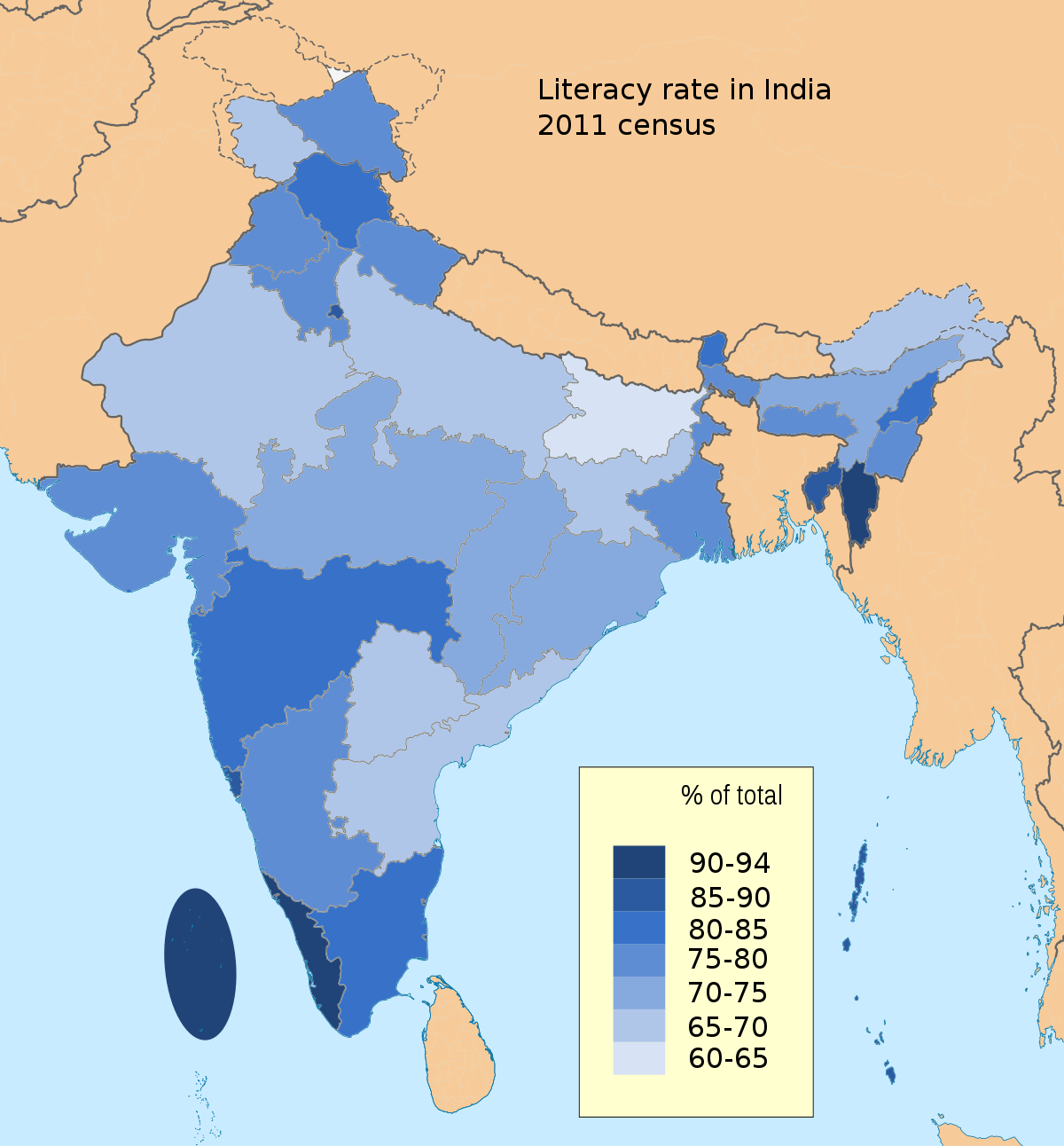
Women constitute 48.5% of the country’s population. According to Census 2011, the female literacy rate is only 64.64% (as opposed to the male literacy rate of 80.89%) of the total female population of India, with Kerala being at the highest with 91.98% rate, and, Bihar and Rajasthan being at the lowest levels with 53.33% and 52.66% respectively 

Indian women having the most illiteracy rates in Asia as there is discrimination among girls and boy child among most of the Indian families as they don’t allow girls for higher education some due to patriarchy and some due to economic crises, the huge gender gap in enrolment for science subjects, the value of quality in school, etc.

Following are the major issues revolving around the high dropout rates amongst girls in India:

  • Poverty

Poverty happens to be the single biggest cause of illiteracy in India and a precursor to all other effects. In a poor family, girls are the main victims; they are malnourished and are denied the opportunity of better education. The poor parents are unable to afford the education of their children. It is very difficult for them to meet the daily expenses. In such a situation they cannot buy textbooks, pencils, erasers, etc., and pay school fees. Even if they can afford to educate one child, the son would always be preferred over the daughter. . Illiteracy and poverty go together because they are similar expressions of lack of access to resources in society.

  • Poor school facilities

Inadequate school facilities can sometimes serve as a deterrent for the girl child’s participation in formal schooling. 

Lack of basic sanitation and privacy is driving girls out of school. According to UDISE 2013-14 data for the Swachh Bharat Swachh Vidyalaya mission, 9.27% of schools in the entire country do not have a separate toilet for girl students, while 8.03% of toilets are dysfunctional. The lack of water, inadequate sanitation, unhygienic common or separate toilets, and absence of separate toilets for girls reflect in their extremely low attendance in schools.

  • Lack of Transport

Some villages do not have schools and the students need to travel long distances to study. This is also one of the main reasons behind female illiteracy as the family does not find it safe for girls to travel such long distances every day. Due to staggered habitations, children are forced to travel more than 3 km. Thus, the daughters are usually discouraged due to unsafe environments and the fear of sexual harassment and violence on way.

  • Patriarchy

Patriarchy refers to a system of society in which men hold the power and women are largely excluded from it. The normality of covert forms of discrimination, and how everyday form of oppression determine institutional spaces, present a great challenge for women and girls to negotiate spaces and rights in public life. Patriarchy sees women as nothing more than domestic workers, which in turn discourages them right at a young age, to not pursue education and rather help in cooking, washing, and other household chores- which they are meant to do at later stages of life; after marriage as well. Thus, parental reluctance to educate girls is a huge factor inhibiting their access to education.

  • Lack of teachers

Girls are more likely to attend schools if they have female teachers. Girls are more comfortable and more local with female staff, thus are found to be active in focusing and participating in the learning process. Also, the parents – especially in rural areas- are hesitant to send their daughters to schools that majorly have male teachers. The dearth of female teachers is a concerning issue. Nearly all committees and commissions that have looked into illiteracy have recommended increased recruitment of female teachers.

  • Household chores 

Fixed school hours do not suit many girls in rural areas; as they are required to lend a helping hand at household chores, at farms, and fields during those hours. Girls are even expected to take care of their younger siblings, while their parents are out on their daily wage. This is one of the causes of the low participation of girls in education. The enrolment rates of girls and their retention can be improved if the schools offer flexible hours. Flexible school timings have been tried in Rajasthan under the Shiksha Karmi Project and Lok Jumbish, and the results are quite encouraging.

  • Sexual Harassment and Violence

Parents often complain about the security issues of girls attending schools. Instances of abduction, rape, and molestation of girls dampen the enthusiasm of girls and their parents in pursuing education beyond a particular age; thereafter they are bound to sit at home and save their chastity.

  • Early marriage:

The patriarchal society still endorses the idea of pubescent marriages of girls. Most child marriage involves underage women, many of whom are in poor socio-economic conditions. Jharkhand is the state with the highest child marriage rates in India. 

  • Menarche and Menstruation:

A national study by AC Nielsen and NGO Plan India in 2012 found that lack of facilities causes widespread absenteeism each month, stating that girls miss an average of 50 days of school each year because of menstruation. It also found that 23% of girls in India drop out of school when they hit puberty.

The Government of India has taken many initiatives to strengthen the education system of India.

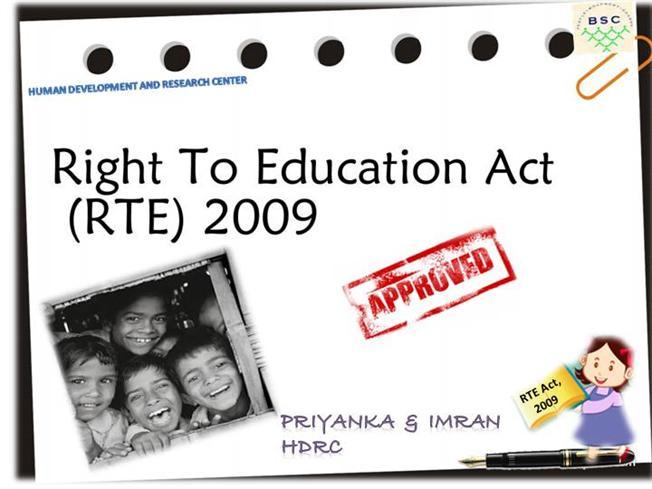
The major centrally sponsored schemes are the Sarva Shiksha Abhiyan (SSA), National Program for Education of Girls at Elementary Education (NPEGEL), Midday Meal Scheme, Right to Education (RTE) Act, Beti Bachao, Beti Padhao,  Kasturba Gandhi Balika Vidyalaya, etc to improve the educational situation of India but somewhere we are still lacking behind and more work is needed to improve the quality of education in India, as well as the condition of girls, is more worst than boys in case of education as they are getting the equity, not equality.

Conclusion 

A women’s life is better when she is educated as she can take her own decision not dependent on others as this study shows that still, the literacy rate is low of women more work is needed to be done to improve the condition.

References

  1. .https://www.thehindu.com/opinion/open-page/gender-equity-in-education/article31600127.ece
  2. http://www.create-rpc.org/pdf_documents/PTA18.pdf
  3. http://www.jcreview.com/fulltext/197-1582715201.pdf
  4. Bashin, K. (2003). Understanding gender. New Delhi: Women Unlimited

Education and literacy 

Source- Google scholar

Review of journal

Date of issue

Vol.1, 7October ,2013(IJRSML)ISSN;2321-2853

Author-Dr. Navichandra R. shah Assistant professor Dept. of Economics, Saurashtra university, Gujarat

Reference 

Literacy Rate in India

Link: http://www.raijmr.com

Key point

  • Statistics of literacy in India.
  • Importance of literacy at individual and society level.
  • Census from 1991 to 2018.
  • Literacy in British Rule after independence. 
  • Government policies to accelerate literacy.

Introduction 

India’s demographic occupied 2nd rank among the world’s populated countries. 

As census 2011 shows the percentage of population of India, there is a huge percentage of young age. The literacy rate of India was 74.04%. It might look good as the statistics, but the truth is behind the numbers. The numbers vary from state to state.

In this journal a significant relationship shows between literacy and economics.  Development is the main aspect of a nation to progress. Literacy is not only important for individuals, it’s also important at community level. 

At earliest, literacy refers solely to the ability to read and write; but the United Nations Educational scientific and cultural organization (UNESCO) define the literacy as the ability to identify, understand, interpret, create, communicate, compute and use printed and written materials associated with varying context. 

 Importance of literacy for an individual

The answer can be found in the following points:

  • Literacy involves a continuum process of learning.
  • To achieve their goal.
  • To interact in society and contribute to society.
  •  To develop their knowledge and potential.
  • Attainment of universal primary education is one of the Millennium development goals of the United Nations to be achieved by the year 2015.
  • Literacy level and educational attainment are vital indicators of development.

The numbers of literate and illiterate persons were 778,454 and 272,950,015 respectively (census 2011). In this census of 2011, children below age 5 are considered illiterates.

Censuses since 1991

The research paper shows the rate of literacy of India from 1901 to 2011. The data is very old, but it is to show the change in literacy rate. According to the research paper, the involvement of women is very less in compare of men. There could be many reasons. But as the time passed, involvement of women in education and literacy increased drastically. Whereas we can see that male education and literacy also increase. 

Literacy during British Rule

In the pre-colonial era, there were Gurukulss where education was  provided to the children. Between 1881-82 and 1946-47, the number of English schools grew from 82,916 to 134866. Literacy rate in accordance to British in India rose from 3.2% in1881 to 7.2% in1931 and 12.2%in 1947.

Literacy after independence

During independence the literacy rate was 12.2%. After independence, the current government had to plan the educational module, there was a huge number of people who were illiterate and the need for a quality education was a must. Since 1947, India has always worked actively in the education sector.

Step taken by the government in accelerating education planning in India

To accelerate the literacy, Indian Government take many initiates;

  • Universal Elementary Education for all.
  • Right to free and compulsory education, 2010
  • Sarav shiksha abhiyan, 2002
  •  Directive principle of state (article 45)
  • National Literacy Mission,1998
  • Manthan sampoorana vikas kender,2008

Key finding

  • The literacy gap between male and females.
  • Difference in the form of number between the after and before independence about literacy.
  • The numbers show that the fewer female participants are female in literacy. 
  • Interrelation between development, literacy and education.
  • Accelerating education by the step taken by the government.

Critic

The data is too old and the interrelation between literacy and development is not clear. The Reason behind the low literacy is not given. In The census of 2011, children below age 5 are considered illiterates but children are still learning how we can consider them illiterate, the author should use some different term for children below age 5.

Reflection 

The journal was written in 2013and the data used is old which couldn’t show the current situation of literacy and education. As I can read, in this paper the terms of literacy and education are similar, meanwhile there is a huge difference between the two terms.

The author tries to show the interrelation between literacy and economics. The author doesn’t give any specific term which can justify his statement.

Literacy can help to attain development. I agree, the more literate person can make a smooth environment. Their writing and reading capabilities can help them to save themselves from anti -social elements, but we are living in a web era where everything becomes online. During the pandemic, we are not going outside, that time our life fully depends on the web world.

While reading the article some questions hit me. I want to discuss over that 

  • Is literacy enough to attain the economic goal and development? If yes, why do we need degrees?
  • Can a literate person consider him/herself as educated? If yes, then what term should I use for a degree holder person? If not, then how can we motivate them to gain more knowledge and become educated?
  • What guidelines can help an individual to understand the difference between the literate and educated person?

We need to focus on the overall development of an individual because an individual is a building block of a society and nation.

Dalit Women- The Unheard Voice

Introduction

The article presents an analytical overview of the complexities of system violence that Dalit women face in India today through qualitative and quantitative data analysis of 50 Dalit women’s narrative of violence across 4 States Andhra Pradesh Bihar Tamil Nadu Uttar Pradesh in this article illustrated the wider traits and patterns of different forms and manifestations of violence against the Little Women within both the general community and the family from state and non-state across of different gender caste and social economics grouping occurring between 1999 and 2004 examination of the divergent world views of the victim-survivor and perpetrators ravel the casual factors of conflict and violence, as well as the various rights being denied to delete women in the course of violence analysis of the lip women vulnerability of to violence their assertations courage and resilience to survive violence and struggle for justice, are considered.

 violence against women in India in the journal is structured by the relationship of power embedded in systematic caste class and gender discrimination. Dalit women is there of the class caste and gender hierarchies resulting in social exclusion decide dominant discourages of Dalit women sexual availability their criminal nature and their inherent inequality with other women and when serve to legitimize and exacerbate  violence against them Dalit women in India Today number  85.017  million or approx 48 8% of total Dalit  population  together with their mail counterpart constituent  a sizable social group that continues to suffer decent and work-based discrimination untouchability practices  and violence arising out of the caste system historically the lips have been excluded from social economic cultural Civil and political rights untouchability practices based on nation of Delhi supposed impurity operate as a tool for the social exclusion and Exploration of this community and their social and religiously legitimized  mechanism for denying this community their fundamental rights hence Dalit women are more likely Two-phase collective and public thread for x of social violence then-dominant caste woman who tends to be subjected to violence more within family due to strict controls over their sexuality and freedom of movement.

 Dalit women appear to young illiterate daily wage agricultural labor surviving on less than rupees 3000 a year married in her teenage years she lives with her husband and in-laws in a kutcha hut that they own.  illiteracy a condition suffered by 68.6%  of the women,  not only renders women at a disadvantage in terms of employment and economics and political employment in the context of overt violence, but it also facilitated the culture of impunity enjoyed by perpetrators combined with a lack of legal knowledge in literacy leaves The Little Women at the mercy of offer indifferent or hostile police, or panchayat leaders, enabling perpetrators to escape legal repercussions for their crimes.

 daily wage agriculture labor and casual labor are the sources of livelihood for the render.  The Little Women are physically accessible in open public spaces with the dominant caste Mel supervision considering both the locals of violence for example ( agricultural fields footpaths).  and the social status of perpetrators for example( landlords,  labor contractors)  the women’s contributed to their vulnerability as the target of violence.

 the implication of early marriage of Dalit women lies in profound physical psychological and social effects on women marrying and beginning cycles of childbirth immediately after they attain puberty,  violence in the general community is one of the factors that encourage parents to marry their daughters early.  early marriage is seen as insurance against the possibility of rape and the profound social stigma attached to it.  this prevalent attitude is summed up is by the mother of a Dalit girl raped at the age of 12 years.

 Economics disenfranchisement –  reflected in the extremely low annual income, landlessness, and prevalence of unskilled daily wage labor among the women-  also Makes Dalit Women vulnerable to violence desperate economic straits compel Dalit women to borrow money from money lenders and take up agriculture and domestic work for dominant caste landowners and householders. these moneylenders, landowners, and householders then frequently exploit the Dalit women position of economic dependence to extract unpaid labor sex, and resistance is answered with violence.

Conclusion

Dalit, also known as the untouchables in India, where caste, class, gender matter more than humanity. At least 10 Dalit women are raped per day, and their vulnerability to rape has increased by 44% in the last 10 years. Also, Indian mainstream media often ignore stories about women belonging to marginalized communities. Caste-based violence is quite common but it does not receive coverage in upper-caste the dominated newsrooms it is common for Dalit villages to be burnt down for the Cops to refuse a post mortem for women who has been raped For the local administration and upper caste people to suppress cases filled by Dalit people.

As a consequence of gender caste and class inequalities, Dalit women and girls are subjected to multiple forms of subjugation,  exploitation, and oppression. sexual violence, including rape and gang rape, has been perpetrated against them by men from the dominant caste as a mechanism that reinforces India’s deeply entrenched structural hierarchies. The issue of making a woman deals with the conditioning and socialization of women in society and their representation is done in the world of literature media popular culture or anywhere else. where one focuses on the society of Dalit among Dalits. Dalit Women fight oppression in Solidarity with other marginalized groups.

Reference

Click to access TheSituationOfDalitRuralWomen.pdf

https://vc.bridgew.edu/cgi/viewcontent.cgi?article=2332&context=jiws

Click to access Background_Manorama.pdf

https://www.researchgate.net/publication/286239018_Societal_Status_of_Dalit_Women_in_India

https://www.researchgate.net/publication/281403668_Dalit_women_life-narratives_and_literature_as_experience

https://idl-bnc-idrc.dspacedirect.org/bitstream/handle/10625/44146/130560.pdf?sequence=1&isAllowed=y

Review of International Reading Literacy Study (PIRLS)

Review 

Reading literacy 

Source – Google scholar

Date – August 2004

Author 

Ina v.s, Ann M.kennedy, Miachel O Martin ,Maraian Sainsbury

(International Association for the Evaluation of Educational Achievement).

Reference 

PIRLS 2006 assessment framework and specifications

The study was conducted in 2004 under the supervision of IEA (International Association for the Evaluation of Educational Achievement).

The study is consists four parts:

  • Overview of IEA’s PIRLS Assessment.
  • PIRLS Reading Purposes and Processes of Reading Comprehension.
  • Contexts for Learning to Read.
  • Assessment Design and Specifications

Reading is the first step to being literate. Reading is a multifaceted process involving word recognition comprehension, fluency and motivation. For the development of a country it is really important to have literacy.

The PIRL also have a look over the improvement of reading and literacy achievement around the world. IEA was founded in 1959 and its main purpose was focusing on educational policies all over the world.

Reading abilities are important for the progress of one individual. Reading skill is the basis for the upcoming education. It is not about language. Reading literacy helps to grow ones personally and professionally and prepare for communication with the world. The PIRL conducts a framework which is revised every five years, to help to understand the achievement of children across the world in reading literacy.

PRIL defines reading literacy and its importance in IEA framework 2001. Readers are regarded as actively constructing meaning and as knowing effective reading strategies and how to reflect on reading.

Reading literacy also brings changes in the behavior and attitude including the construction of meaning from a variety of text and behavior which is going to support lifelong reading. It helps the children to develop a positive attitude, self-confidence and gain valuable experiences with the help of different texts. Reading literacy establishes an individual/reader as a member of a literate community.

The process of comprehension and purpose of reading are two elements which help to understand the importance of reading literacy. The process of comprehension helps the reader to examine their understanding and adjust their approach. 

The texts could vary on the basis of length, complexity, abstractness of idea and structures. Readers not only get information from the content but also focus on relevance to the question posed. It makes straightforward inference about the ideas and information. The purposes of reading are

  1. Reading for literacy experience.
  2. Reading to acquire and use information.

The context of reading literacy is also important. There are contexts which impact on the reading of children such as school, home, community, national and international. 

The study also focuses on assessing/evaluating the children on the basis of their reading literacy. They focus not to put a burden on the student so they provide a comprehension to evaluate.

Reflection 

The article had old data and its focuses on reading literacy only. But I feel the writer should focus on the other aspects too. How reading literacy influenced the other aspects of literacy? The whole study is conducted over the fourth class students. The fourth class students were literally very small to answer the questions. I think the writer can involve more people of different ages because a child is still in the learning process so they can answer the question with their cognitive ability. According to me, the writer should consider the people who have left their studies or continue their study or have interest in studying and fulfilling their desire by reading the texts. We can get better results from them too. 

The four parts are very well explained by the writers. The study consists of the appendix, research and questionnaires. The questionnaire consisted of multiple choice, short and long questions. 

In the end there is Comparison between the Progress in International Reading Literacy Study (PIRLS) and the Programme for International Student Assessment (PISA). 

Digital literacy in India

Abstract 

Digital literacy is for a developing country like India. Digital literacy brings independence of easy accessibility of the internet among the people of urban as well as rural areas. The article discusses the need for digital literacy.

Keywords: digital literacy, need of digital literacy.

Introduction 

During the COVID-19 we all completely depended on the internet. Due to the safety of the people, the governments of different nations opposed the lockdown. Knowledge of the web world became a boon for an individual during this tough time. But we are also facing the challenges of accessibility of the internet. People are not aware or lack knowledge about using the internet. In India 26.8% of the population is not literate and they are suffering a lot due to lack of knowledge of the internet (census of 2011). Digital literacy is easy and helps every person. We all have smart phones and they consist of all the applications and are illiterate, literate and well qualified. Now we need to focus on how we can uplift digital literacy in rural as well as urban areas. 

Digital literacy:

As the word literacy implies, it involves some kind of basic knowledge or the ability to use the digital medium. However, digital literacy encompasses more than just knowledge of how to use the internet.

The ability of accessing the internet and using different applications to communicate, evaluate, create, share and deal with the information. It is not only about having knowledge about application and also the method of dealing technology with ethics.

The American Library Association’s digital-literacy task force offers this definition: “Digital literacy is the ability to use information and communication technologies to find, evaluate, create, and communicate information, requiring both cognitive and technical skills.

In India, across over 6,50,000 villages and 2,50,000 panchayats represented by 3 million panchayat members. Approx 40% population is living below poverty line, illiteracy rate is more than 25-30% and digital literacy is almost non-existent among more than 90% of India’s population.

Need of digital literacy

  • To enhance the digital skills: In India, a good number of the population lives in villages and small towns. They have technology but they don’t know how to use that technology for the betterment of their lives. Digital literacy helps to learn the access to technology efficiency.
  • To ensure security from online frauds: Sometimes people are not aware about online frauds. Especially, elderly, women and children are especially easy targets to become prey. Digital literacy helps them to learn to avoid this kind of fraud.
  • To increase the rate of using online banking: India is a developing country. Having knowledge of online banking and transition is important. India launched many applications such as BHIM and UMANG. Digital literacy helps an individual to access these applications and go cashless.
  • Education purpose: Rising invasion of digital media in the society pushes the need for digital literacy among students. So there is a great need for educating the power of the digital medium so students can play a vital role in defining their ability to succeed both in academic and personal life.
  • Digital citizenship: Digital literacy is one component of being a digital citizen – a person who is responsible for how they utilize technology to interact with the world around them.
  • Pedagogy:  It is up to us educators to decipher the best methods for teaching digital literacy and to help the students become fluent in this new type of literacy.

Opportunities of digital literacy 

  • Help in inclusion: Digital literacy helps in inclusion of people of different backgrounds. During COVID-19, the internet helps to reach the help of needy people. Digital literacy inclusive growth by enabling access to education, healthcare and government services to all the citizens of the country. People can get better advice on health services. Those who can’t afford school/ colleges can get a chance at an online education.
  • Less consumption of time: Opening accounts in banks, submitting bills and fees was a time consuming work but after digitalization the things got easier and became less time consuming.
  • It can help small businesses. People can use online tools to expand their business.
  • It can play a key role in GDP growth. According to analysts, digital India could boost GDP up to $1 trillion by 2025. According to a World Bank report a 10% increase in mobile and broadband penetration increases  in capita GDP by 0.81% and 1.31% respectively in developing countries (World bank report 2017).
  • Once the change is brought it could change the Indian education system, with all the Gram Panchayats having access to the internet will provide access to different teaching aids and materials and empower everyone and increase the literacy levels in the country.

Challenges of digital literacy

  •  Slow internet: The daily internet speed, as well as Wi-Fi hotspots, is slow as compared to other developed nations. In India the connectivity of the internet is not reachable in some places due to geographical background. 
  • Hurdle of small and medium scale industry: Most of the small and medium scale industry has to struggle a lot for adapting to the new modern technology. They are not aware about the terms and conditions of the online business or they don’t want to switch their method of trading.
  • Limited capability of entry-level smartphones for smooth internet access.
  • Unskilled labours: In India there is a lack of skilled manpower in the field of digital technology. They don’t know how to run applications and use them for their betterment.
  • Awareness about digital crime: To look for about one million cybersecurity experts to check and monitor the growing menace of digital crime.
  • Lack of user education: Users are not aware how to use technology or they are limited to Facebook and What-app. There is a need for digital literacy. It helps them to take the first step towards using technology.

Government initiatives:

  • National digital literacy mission: It was launched in 2012 by the Indian government to uplift the digital skills in rural India as well as urban areas. It is also known as the digital saksharta Abhiyan
Our Services – Reynard
  • Digital India was launched by the Prime Minister of India Narendra Modi on 1 July 2015, with an objective of connecting rural areas with high-speed Internet networks and improving digital literacy.
  • NASSCOM is working with SAP India to set up 25 new centres across the country to add to the 75 that already exist. These are the main vehicles of implementation of NDLM.

Conclusion:

Digital literacy is important for India because India is a developing country and we need to focus on sustainable development. According to a survey there is 90% digital literacy in India which is more than actual literacy that shows people are more aware about the web world. The need for digital literacy is really important. There are many challenges and opportunities. NDLM,  NASSCOM and digital India there are some schemes which help in upliftment of digital literacy. 

References