Is Social media becoming curse?

Social networking was often used as a symbol of modern growth every now and then. It has come in an attempt to enable our country and our people to rise to great heights..However we humans still fail to understand the effective use of these social media platforms.Where the very technology is meant to connect us , divides us.It’s going down from becoming a social media benevolence to being a bane. And it’s just because of us humans who lead to destroying this tremendous usage of technology by being the devil and bringing birth to a future of darkness.

Lets take example of trending social apps such as Facebook , whatsapp ,  Instagram, twitter etcWhen anyone isn’t identified in either of these sociable sites, much of our human mindset will be to condemn them because they’re not in the social networking realm, and it’s the degree of which we’re now fascinated with it because it’s now too evident to us, even though their pitfalls are often overlooked..These social media sites have over one billion active users per day, filled with millions of post-uploads and stories per hour.Although others are attempting to build artificial intelligence by granting machines the ability to think like humans, here humans themselves are being regulated like machines by impulses to lose interest and caring for the same.

I said earlier that these sites are becoming bane by contributing to make us lazier. So much lazier that now we’re not even trying to remember anyone’s birthdays or many important dates because we’re indirectly getting to know about it from these sites..So that’s what weakens our bonds with others. people don’t even think any social gatherings, they just end such interactions on Facebook, video chat or voice calls, etc., so they’re totally losing the human touch in shared culture..Infact now in visiting some tourist or religious sites have often lost natural harmony and moment of joy and during that period people are so inshowoff these sites in social places that they are still not involved in learning the real past, tradition and speciality of such locations..We have ignored the true value of sharing time with loved ones. This causes us interact with others miles away and forget the person right next to us. Not creating positive interactions.t just making people so addictive just to keep connection with those who doesnt even matter or stay for us for too long.People have been such a seeker of popularity that they can do anything just to receive people’s views, followers and tweets.This triggered a increase in depression by endless similarities that we create in our minds regarding our lives, about the lives of others depending on what they share on their social media. Of course people only post the positive aspects, and perfectly posed/calculated shots, so things appear to be perfect.

People whose business actually runs through social media are being used wisely, while young people whose age is to build a career and learn life lessons are being seen wasting a lot of time on social media.

Humans should know how to allow good and successful usage of these networking media, such as connecting with those people who genuinely lead to creating jobs in our life through being motivation rather than toxic. Simply by being concentrated, diligent, self-conscious and never forgetting to calculate the influence on society rather than just popularity.

Diamonds

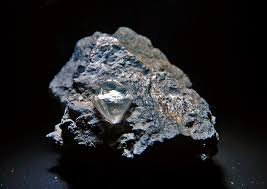
Diamond is an allotrope of Carbon and also the most precious gemstone of all times. There are other fun facts that make diamonds more fascinating.

  1. Diamond is known as the symbol for strength, courage and invincibility.
  2. The heaviest diamond ever discovered was of weight 3106 carats.
  3. On an average, a diamond loses 50% of its weight when it cut and polished.
  4. It is the hardest natural substance.
  5. Most of the diamonds found in nature are one to three billion years old.
  6. Diamonds were first discovered in India and then Brazil.
  7. The ashes of a loved one can be turned into man-made diamond and can be cherished for life.
  8. At fifty light years from Earth, there is a diamond in the sky named Lucy.
  9. Diamonds are not always colourless. Very rare diamonds are found in nature who having shaded of red, yellow, blue, pink, brown, orange, black and green.
  10. 1.5 million nanoparticles of diamond can be found in a candles flame.

Right to education in India

India has the largest student population in the world with over 13.5cr pupils in primary education followed by China at over 12.1cr pupils at this level. With a literacy rate of 61% India ranks a disappointing 172nd on this front. Educating such a large population is not only an expensive task but also a very difficult one. Of the nearly 200 million children in the 6 to 14 age group, more than half do not complete eight years of elementary education, as never enrolled or dropouts. Of those who do complete eight years of schooling, the achievement levels of a large percentage, in language and mathematics, is unacceptably low.

Problems to be sought out:

Firstly, there is the problem of access. School education is simply unavailable to the vast number of children in the country. During the last few decades, there has been some progress in improving enrolment. The gross enrolment ratio (GER) from Classes I to VIII was 94.9 per cent and from Classes I to XII, 77 per cent. Even these enrolment figures are generally rigged and exaggerated for various administrative and political purposes. Moreover, the attendance has generally been found to be at least 25 per cent below enrolment and the drop-out rate from Classes I to X was 61.6 per cent; and in a State like Bihar it was above 75 per cent. Among those who drop out, the percentage of children belonging to the
Scheduled Castes in the country as a whole was 70.6 and of the Scheduled Tribes, 78.5. In Bihar, the figure was close to 90 per cent for both the categories. The net result is that a sizeable percentage, as much as 30 per cent, of children in the school-going age in India are out of school; the percentage is as high as 50 in Bihar (1.5 crores out of three crore children in the school going age-group).
Only 53 per cent of all habitations have a primary school On an average, an upper primary school is 3 km away in 22 percent of habitations More than 50 percent of the girls in the country do not enrol in schools When working outside the family, children put in an average of 21 hours of labour per week, at the cost of education 60 million children are thought to be child labourers. More than 35 million children in the 6-14 age group are out of school Only 45.8 percent girls complete education in rural areas as compared to 66.3 percent boys. In urban areas, 66.3 percent girls complete education as opposed to 80.3 per cent boys.

Necessity of compulsory education:


In essence, a citizen is only free when he can make a meaningful challenge to his fellow citizens or Government’s attempt to curtail his natural freedom. For this to happen, he needs a certain degree of education. Without it, a citizen may never come to know of his other rights; nor would he have the resources to adequately enforce them.
The Supreme Court has explained why education should be compulsory. A free educated citizen could meaningfully exercise his political rights, discharge social responsibilities satisfactorily and develop a spirit of tolerance and reform. Therefore, education is compulsory. Primary education to the children, in particular, to the poor, weaker sections, Dalits and Tribes and minorities is mandatory. The basic education and employment-oriented vocational education should be imparted so as to retrieve them from poverty and, thus, develop basic abilities to live a meaningful life, the principal means and primary duty of the State for stability for the democracy, social integration and to eliminate social tensions.

Article 21 of Indian Constitution


Education is one of the basic elements, for the success of democratic system of any Government. An educated citizen may choose better representatives, to form the Government. Education provides human dignity to a person, to develop himself as well as contribute towards the development of his country. The framers of our constitution realising the importance of education, impose a duty on the State under Article 45, as one of the Directive Principles of State Policy, to provide free education to all children until they complete the age of 14 years, within 10 years from the commencement of the Constitution. The object was to abolish illiteracy from the country. It was expected that the elected Governments of the country would honestly implement this directive. But, this right was not recognised by many of the States. The Hon’ble Supreme Court held that right to free education falls in the ambit of “right to life” enshrined by Article 21 of the Constitution.

Unfortunately, that goal of the Constitution imposed by Article 45, could not be achieved within 10 years but succeeded after five decades, in the form of Constitution (86th Amendment) Act, 2002. By this Amendment, Article 21A was inserted in Part III, providing free and compulsory education to the children between the age of 6 to 14 years. Even after the lapse of around six decades of independence, illiteracy has a high ratio in the country.
With intense public pressure, government relented to introduce Right to Education Bill in December 2002 and introduced 86th Amendment Act (2002) via Article 21A (Part III) “The State shall provide free and compulsory education to all children of the age of 6 to 14 years in such manner as the state may, by law, determine”. Thereby the fundamental right given in Article 21 was diluted by excluding children aged 0-6 years from the purview of the Bill, thereby depriving around 170 million children below six years of their right to education. The original Right to Education Bill, 2002 was rigorously debated and several modifications were ultimately introduced in the parliament in 2009. The RTE Act provides the legislative framework for Universalisation of Elementary Education (UEE). The bill was adopted after 8 years of intense and sustained pressure by civil society organizations.
The citizen of the this country have a fundamental right to education and it flows from Article 21. This right is, however, not an absolute right. Its content and parameters have to be determined in the light of Articles 45 and 41. In other words, every child/citizen of this country has a right to free education until he completes the age of 14 years. Thereafter his right to education is subject to the limits of economic capacity and development of the State.
Right to education is not stated expressly as a Fundamental Right in Part III of the Constitution of India, However, having regard to the fundamental significance of education to the life of an individual and the nation, right to education is implicit in and flows from the right to life guaranteed by Article 21. That the right to education has been treated as one of transcendental importance in the life of an individual is recognised all over the world. Without education being provided to the citizens of this country, the objectives set forth in the preamble to the Constitution cannot be achieved. The Constitution would fail.


Right to free education is fundamental right from six to fourteen years of age:


Of late, in the year 2002 after 52 years of the enforcement of the Constitution, the Parliament has made the fundamental right to education, free and compulsory for the children of the age 6 to 14 years by Constitution (86th Amendment) Act, 2002. This Amendment has inserted Article 21A and clause (k) in Article 51A with the substitution of Article 45 of the Constitution.
The RTE Act requires surveys that will monitor all neighbourhoods, identify children requiring education, and set up facilities for providing it. The World Bank education specialist for India, Sam Carlson, has observed: “The RTE Act is the first legislation in the world that puts the responsibility of ensuring enrolment, attendance and completion on the Government. It is the parents’ responsibility to send the children to schools in the US and other countries.”

The Right to Education of persons with disabilities until 18 years of age is laid down under a separate legislation – the Persons with Disabilities Act. A number of other provisions regarding improvement of school infrastructure, teacher-student ratio and faculty are made in the Act.
The Central and the State Governments shall have concurrent responsibility for providing funds for carrying out the provisions of this Act. This Act is an essential step towards improving each child’s accessibility to secondary and higher education. The Act also contains specific provisions for disadvantaged groups, such as child labourers, migrant children, children with special needs, or those who have a disadvantage owing to social, cultural, economical, geographical, linguistic, gender or any such factor. With the implementation of this Act, it is also expected that issues of school drop out, out-of-school children, quality of education and availability of trained teachers would be addressed in the short to medium term plans.

The enforcement of the Right to Education Act (External website that opens in a new window) brings the country closer to achieving the objectives and mission of the Millennium Development Goals (MDGs) and Education for All (EFA) and hence is a historic step taken by the Government of India.

The Right to education act lays down the norms and standards related to:


Pupil Teacher Ratios (PTRs), Buildings and infrastructure, School-working days, teacher-working hours.
It had a clause for “No Detention Policy” which has been removed under The Right of Children to Free and Compulsory Education (Amendment) Act, 2019.
It also provides for prohibition of deployment of teachers for noneducational work, other than decennial census, elections to local authority, state legislatures and parliament, and disaster relief.
It provides for the appointment of teachers with the requisite entry and academic qualifications.
It prohibits Physical punishment and mental harassment, Screening procedures for admission of children, Capitation fee, Private tuition by teacher Running of schools without recognition.
It focuses on making the child free of fear, trauma and anxiety through a system of child friendly and child centred learning.

Benefits of Right to Education Act, 2009

RTE has been a part of the directive principles of the State Policy under Article 45 of the Constitution, which is part of Chapter 4 of the Constitution. And rights in Chapter 4 are not enforceable. For the first time in the history of India we have made this right enforceable by putting it in Chapter 3 of the Constitution as Article 21. This entitles children to have the right to education enforced as a fundamental right.

Right to compulsory education:
The word ‘compulsion’ is not to be related to the student or the parents. Parents cannot be penalized for being too poor to send their children to school. The word, ‘compulsion’ has to be understood in relation to the State and the obligation of the State to provide for free education.


The Supreme Court has held that so many children drop out of, or are, absent from, school before they turn fourteen, “free education” alone cannot solve the problem. The current patchwork of laws on compulsory education is insufficient. Monetary fines do not go far enough to ensure that Article 21A is upheld. The Statement of Objects and Reasons for Article 21A states that the Constitution of India in a Directive Principle contained in Article 45, has made a provision for free and compulsory education for all children up to the age of fourteen years within ten years of promulgation of the Constitution. We could not achieve this goal even after 50 years of adoption of this provision. The task of providing education to all children in this age group gained momentum after the National Policy of Education (NPE) was announced in 1986. The Government of India, in partnership with the State Governments, has made strenuous efforts to fulfil this mandate and though significant improvements were seen in various education indicators, the ultimate goal of providing universal and quality education still remains unfulfilled. In order to fulfil this goal, it is felt that an explicit provision.

Every generation looks up to the next generation with the hope that they shall build up a nation better than the present. Therefore education which empowers the future generation should always be the main concern for any nation. It is now an undisputed fact that right to education can be realized on a national level only through compulsory education, or better say, through free compulsory primary education. However due to the widespread poverty and various prejudices in the society, the efforts to develop an educational system in India with full access, equality and quality of education has not been achieved. The inability to check the dropout rates among the marginalized sections of the population is another cause of worry.


Cabinet approves the extension of Pradhan Mantri Garib Kalyan Anna Yojana till November 2020

This scheme help many of people in this crisis, to at least not suffer from hunger. With this central government scheme state government also help needy. Everyone is helping to each other because in this situation every one is trapped or suffer from this situation. In this pandemic mostly affected person is daily wages worker who are totally depend on their daily earnings for their needs, but right know situation is not good they can’t earn daily. So government try to help them. At least they do not suffer from her.

Under the government launched scheme 203 lakh tonnes of grains will be distributed among 81 crore people for the next five months, from July to November 2020.

The Union Cabinet chaired by Prime Minister Narendra Modi has approved the extension of Pradhan Mantri Garib Kalyan Anna Yojana for another five months, from July to November 2020.

Under the government launched scheme 203 lakh tonnes of grains will be distributed among 81 crore people for the next five months. The step to extend the scheme was announced by PM Modi on June 30, 2020.

The Union Minister Prakash Javadekar while announcing the approval of extension mentioned that it is the biggest program in the world that will run for eight months and will include every section of the society.

• The approval for the extension of Pradhan Mantri Garib Kalyan Anna Yojana is in view of the need for continuous support to needy and poor.

• 120 lakh ton grains were used for the distribution of grains in the last three months and now, 203 lakh tons of grains will be given in the coming five months

• The approval for the extension of Pradhan Mantri Garib Kalyan Anna Yojana is in view of the need for continuous support to needy and poor.

• 120 lakh ton grains were used for the distribution of grains in the last three months and now, 203 lakh tons of grains will be given in the coming five months.

Union Minister Prakash Javadekar also informed that the cabinet has approved the extension of the time limit for availing free cylinders under the Ujjwala scheme for three months.

He added that 7 crore 40 lakh women were registered under Ujjwala Scheme and they were promised three free cylinders. The validity to avail those free cylinders has been extended till September 2020 so that they can enjoy the benefits of the scheme. The total cost will be Rs. 13,500 crore.

The story of a depressed Teen

I don’t know why am I failing everytime. Is it my overconfidence or lack of confidence. I don’t have a luck or I have a bad luck. Every exam I gave till now is a failure. It’s definitely my lack of work and trying nothing and waiting for the luck. If I can’t do then, it’s better if I hope for the luck, but I can do if I wanna do but still I do nothing and blame it on luck.

I am too depressed to hear it and trying to be happy but my mind is revolving around it. I can’t do anything from moving on. If it’s one failure then it would be easier but failure after failure is hitting me back without time for me to recover. My mother tried to figure out that I am sad even though I tried to cover my face up. That’s what may be true love meant. My heart is aching and I can’t believe the fact that I failed and I am slowly loosing confidence in me and reaching to a fatal state.

I have no one to tell and trying to reduce my pain by writing here. I am hoping to regain my confidence back because that’s only thing that make us sustain in this cruel world. I had thought of many times to work hard and it remained as a thought itself. Lot of failures had surrounded me and the test that I attempted are merely a train of failures. I blame it on luck and again stopped to work hard. I realised that the only thing that I had to do is hard work and there is no short cut.

I have a fear of failure and if I fail then I can easily blame it to some other reason and escape from that blame on me. If I can’t work then I don’t get a work. All these days I believed in luck by working nothing. I will work because I never saw these many failures. If I couldn’t work now then definitely I will loose my confidence and will treat me as a failure. Hope atleast I will work from now. Hope I would have a better future if I work in a featured manner.

Superstition

  • By Tushar Soni

“Superstition is the death of a thinking mind”.


The interpretation of the ‘superstition’ dictionary is a more credible belief, an irrational fear of irreverence or misunderstanding, misunderstood ‘. It is completely unsatisfactory, because it fails to put proper emphasis on the catastrophic effects of beliefs and beliefs on the lives of large numbers of people worldwide – even today. Superstitions do nothing, but they can hurt. It can destroy the lives of those who find a fortress upon him.
Superstitions come from ancient animism that can be described as false religion. While all major world religions have some element of superstition about them, especially at the beginning, their basic teachings are rooted in the personal leadership they create and in all cases tend to set one’s soul and mind free of fear and prejudice. The animism, however – still being adopted in tropical Africa and remote parts of Asia – is completely different. It is based on the false notion that every element of nature has its familiar spirit, and in order to live in harmony with nature, the individual is committed to pleasing the owner of false gods. Life becomes a series of ‘restricted boundaries’ and there can be no hope of improvement, because those minds suffer from this abuse daily and nightly. What are some of these effects? Here are a few examples.

Many ancient peoples engage in fear of the dark. Jews in biblical times and Native Americans in the 19th century were victims of alien robbers. many thousands were killed because they refused to offend the ‘night winds’ by fighting back in the dark. Toda, in a tropical region of Africa, caused much animosity in the remote forest villages because of superstition. The fertility beliefs and rituals of women’s and teenage pregnancy and adolescence undermine the meaning – and all of this is done to confirm the ‘production’ of a man and the ‘man’ of man, as a need for the right spirit. Citizens who are extremely intelligent and less scared, raise money by fearing their own people, by dropping out the necessary donations and making the necessary ceremony – all for the sake of making money. The town can easily believe in the policies– not only by paying taxes, but also because people are afraid to take reasonable steps to improve their situation for fear of offending the spirits. When a new line of fish was built near Accra in Ghana as part of a lucrative development program, locals spend thousands of pounds of sacrifices to enrich the local ‘sea gods,’ for fear their catch will be poor.

But countries with European and Asian countries have their own superstitions, are presented as myths, or exploited as financial rackets by infidels. Some are harmless, or some can seriously damage someone’s ignorance of life or damage it to their pocket. an event that the Germans use their ‘black’, ‘hot’ myth to ensure good behavior for their children on Christmas. children are told that sweating is going all over the house before Christmas and it will hit any disabled child! Most British superstitions are harmless. Most people won’t walk down the stairs – it’s either because they think the ladder might go down or the painter to lift his jar! Many British people ‘touch the wood’ when they find themselves asserting in a negative way that it is impossible – perhaps because the trees were so important to British magic. And too many people, if they spill salt, throw some on their left shoulders. The vision says that it gets in the eyes of demons. and no doubt the Chinese, Malays and Indians have many similar habits. None of these are particularly harmful – but there are some superstitions that can be harmful.

At best , superstition is no more than eccentricity at worst, a dangerous threat to serene and untrammeled living. Most of it belong to our dim ancestry, and as the human race evolves, so will superstition decrease, and, in the end, disappear.

Benefits of being a Bibliophile

A bibliophile is someone who is a voracious reader of different types of books. Someone who considers themselves as a biblical should be able to read books of different genres by different authors without discrimination whatsoever. Bibliophiles have a better understanding of life and read more to know the perks of being a bibliophile.

1. Increases knowledge

The habit of reading books can help enhance one’s intellectual capabilities to look at things in different ways. People who have fascination towards reading books are more likely to be thoughtful and have better knowledge about things than others who seldom read books or do not read anything except what is prescribed to them. Reading books of different authors and of different genres can enhance one’s knowledge and they tend to be well informed about things which eventually enhances their self confidence in a huge way.

2. Makes you more empathetic

Reading various books can help one to have a better and vivid understanding of different things which helps them have a better ethical and moral value system. It boosts their intellectual power and helps them become more empathetic towards others around them. People often fail to realize the gravity of situations like war, pandemic, political disruptions and so on but if someone happens to read a few books on these subjects, they will definitely have a far better understanding of the situation as a whole. Therefore it can be said that the habit of reading books helps us have a macroeconomic understanding of the world.

3. Makes you tolerant

The habit of reading helps people to become more tolerant. It makes us understand and accept the fact that each individual has their own way of thinking and looking at things which is not necessarily similar to the other individuals. Reading helps us accept this fact that people will have different perspectives of looking at things and that is absolutely normal unless it hurts anyone’s feelings and sentiments. Literature, specifically plays a huge role in making us aware of the fact that no matter how diverse our world is we have to tolerant enough to let others express their view points without hesitation for every one is different and that is normal. There can never be a single definition of what “normal” is. It is something that books help us understand.

4. Stress management

Many do not realize it but reading can actually be one of the best excercises to take a break and relax after a whole day of monotonous work. Reading therefore can be a good relaxing experience for many who find solace in reading and it brings them peace and harmony. Considering the current situation of the world it is not hard to guess the hardships and difficulties each individual has to go through on a daily basis which leads to traumatic stressful situations. However, reading, specifically on a daily basis can actually end up being an exercise to reduce stress from our lives. It controls the anxiety level and maintains a healthy equilibrium that helps in having a better stress free lifestyle.

-Suvasree Bandyopadhyay

Are you really a feminist?

It goes long back in time when women were treated inferior to man. It was in 1848 when the first feminism movement took place, where both men and women rallied for the rights of women. In its early stage such moments focused on bringing women equal to men. But now, as time has passed, feminists focus on justice and equality for all genders. There are feminists and then there are pseudo feminists. Pseudo feminist is a person who claims to be a feminist yet they ignore the whole point of it i.e. equality.  They talk about treating women better than man, which is not the point of feminism. There is a very thin line between a feminist and a pseudo feminist. A feminist will say, everyone can do whatever they want  but a pseudo feminist will say I am a women I won’t do this work. A feminist  talks about equality for all genders but a pseudo feminist will say women deserve more respect. Many people on social media don’t know the real meaning of feminism and in turn they end up being a pseudo feminist.  Respect can’t be gained on the basis of gender, it has to be earned. Because of pseudo feminists, the real feminists are called upon and are questioned. Also, because of this the real issues are sometimes  left unattended and unnoticed.

Internet plays an important role in all this. As we all know, information spreads faster on the web. People start believing what the majority of the people are saying but it’s not always true. This leads to the spread of wrong information and harmful outcomes.  Most of them think feminism is about choice of clothes and choice of whoever they want to talk to, but its more than that.  If a women likes to cook and take care of her house, it’s okay, this doesn’t mean that she is forced to do it or that she’s a slave. Also, if a man wants to do these same things, it’s okay, it’s what he wants to do. Job, work, tasks need not be gender based. People should be allowed to do whatever they want to. All this can be solved with a little bit of knowledge and sense.

Hypocrisy

On April 10, 2020 a 27 year old M.phil student from Jamia Millia Islamia, Safoora Zargar was booked under UAPA ( Unlawful Activities Prevention Act ), for her alleged role in North-East Delhi riots which took place on February 23, 2020 in which more than 50 people were killed. She was associated with Jamia Coordination Committee (JCC) and was part of the Anti – Citizenship Amendment Act protests organised by University Students in December and January.


On April 10, 2020 she was arrested and on April 21, 2020 her bail was rejected even though she was pregnant and was reportedly suffering from Poly Cystic Ovarian Disorder.


Safoora came into limelight after three weeks of her arrest when #SafooraZargar started trending on twitter. This trend started after BJP Leader Kapil Mishra tweeted saying not to connect her pregnancy with him in response to a tweet which said protesters like Safoora are denied bail and people who incited hate are enjoying freedom, and after that what happened on Twitter is a clear picture of the Indian Society and their treatment towards women. Her child who hasn’t entered the world was abused brutally and was called a bastard’s child. She was given contraceptive advices on Twitter and many more derogatory slangs were used for her.


Safoora was portrayed as an unmarried pregnant woman even though she is married since 2018 was a result of IT Cell’s hard work. The people who preached feminism a few days back were doing analysis of her character like anything. You can’t match their hypocrisy level because one day they will share stories of ‘BoisLockerRoom’ on their Instagram stories and the other day they don’t give a woman the liberty to conceive in a way she wants.


On one hand her name was maligned on social media for ridiculous reasons, on the other hand she was denied bail stating various baseless resons.


On June 4, 2020 her bail plea was rejected by Additional Session Judge of Patiala House Courts, on the grounds of
‘Prima facie evidence to show there was conspiracy’. While dismissing the bail petition, Judge Dharmendra Rana said:
“When you choose to play with embers, you cannot blame the wind to have carried the spark a bit too far and spread the fire. The acts and inflammatory speeches of the co-conspirators are admissible u/s 10 of the Indian Evidence even against the applicant/accused.”


The reliance of the court on metaphors rather than on law clearly shows the inability of the authorities in proving the accused as guilty.


When a judge uses metaphor instead of law to justify his decision then it’s high time we should realise that we need to reconsider our entire judicial system.


On June 23, 2020 finally she was granted bail by the Delhi High Court on humanitarian grounds.
Based on the Centre’s concession, a bench of Justice Rajiv Shakhdher granted regular bail to Safoora on furnishing a personal bond of ₹10k and on the following conditions:
• She should not indulge in activities she is being investigated for.
• She should refrain from hampering investigation.
• She has to take the permission of the concerned court before leaving the territory of Delhi.
• She has to get in touch with the Investigating Officer once in every 15 days through a phone call.


This whole process took more than 2 months, the courts didn’t even took the present scenario of the pandemic into consideration and prisoned a pregnant woman without strong evidences shows the insensitiveness of the Indian System towards a pregnant woman.

India will have an Important role in scaling up vaccine production: PM Modi.

As the whole world is waiting for discovery of corona virus , the next big challenge in front of world is large scale production of vaccine so that it is feasible to common man.India is going to play major role in vaccine production as it has past experience as well as skilled doctors. India is responsible for providing 2/3 of world’s children with vaccine.

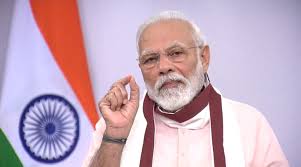
Prime Minister Narendra Modi, in his inaugural address at the India Global Week 2020, said that India will play an important role in developing and in scaling up production of the vaccine once it is discovered.

“Vaccines made in India are responsible for 2/3rd of the vaccine needs of the world’s children. Today also our companies are active in international efforts for development and production of vaccine. I’m certain that India will have an important role in developing and in scaling up production of the vaccine once it is discovered,” PM Modi said.

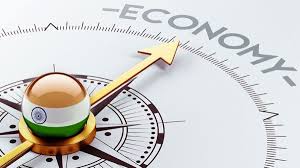
Speaking on India’s economy, PM Modi said, “India remains one of the most open economies in the world. We are laying a red carpet for all global companies to come and establish their presence in India. Very few countries will offer the kind of opportunities India does today.”

“The pandemic has once again shown that India’s pharma industry is an asset not just for India but for the entire world. It has played a leading role in reducing the cost of medicines, especially for developing countries,” the Prime Minister said.

He also further said that India will lead world in the path of revival post corona virus pandemic in terms of economic as well social development.India is power house of young talents may it be technological or scientific or doctors field.

World over, you have seen the contribution of India’s talent-force. Who can forget the Indian tech industry & tech professionals. They have been showing the way for decades. India is a power-house of talent that is eager to contribute. In these times, it is natural to talk about revival. It is equally natural to link global revival and India. There is faith that the story of global revival will have India playing a leading role,” PM Modi said.

Hope there will be discovery of vaccine soon and life comes back on track.

How India’s Rising Political Presence Led China’s Backpedal.

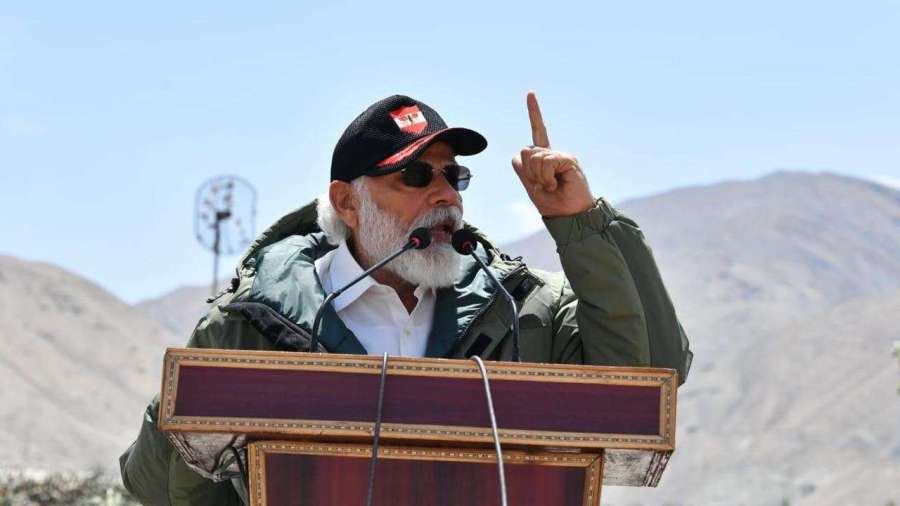
PM Modi addressing soldiers in Ladakh

Making an apparent hit at china, Prime Minister Narendra Modi on Friday said the age of expansionism is over and added that the new age of development is here.

“Age of expansionism is over and this is the age of development. History is witness that expansionist forces have either lost or were forced to turn back,” Modi said addressing soldiers in Ladakh’s Nimmoo. However, the Prime Minister did not mention China at all in his address to the soldiers.

The remark comes amidst the on-going tension between India and China at Line of Actual Control in the eastern Ladakh. In a violent brawl between forces almost 20 Indian soldiers were martyred in the Galwan Valley on June 15 midnight when Chinese troops attempted to unilaterally change the status quo during the de-escalation.

The Prime Minister also said that the people of Ladakh have rejected every attempt to create separatism in the region.

“Ladakh is the head of the country. This is the symbol of pride for the 130 crore citizens of India. This land belongs to the people who are willing to make the ultimate sacrifice for the country… Every attempt to create separatism in the region was rejected by the nationalist people of Ladakh,” Modi said.

He further added, “We are the same people who pray to the flute playing Lord Krishna, but we are also the same people who idealise and following the same Lord Krishna who carries the Sudarshan Chakra”. The two countries, India and China have been involved in talks to ease the on-going border dispute since last month.

Praising the bravery displayed by the soldiers, the Prime Minister said: “The bravery that you and your compatriots showed, a message has gone to the world about India’s strength.”

“Your courage is higher than the heights where you are posted today,” he added.

“Atmanirbhar Bharat ka sankalp aapke tyag, balidan, pursharth ke karan aur bhi mazbut hai,”(The vision of self-dependent India gets strengthened from your sacrifice and courage),” the Prime Minister said.

During Prime Minister’s address the soldiers were observed maintaining social distance amid pandemic.

PM Modi on Friday made a surprise visit to Ladakh and was briefed by senior officers at Nimmoo amid ongoing tension with China. The Prime Minister was accompanied by Army Chief General Manoj Mukund Naravane and Chief of Defence Staff (CDS) General Bipin Rawat.

He reached Nimmoo, early in the morning and interacted with Army, Air Force and ITBP personnel. Located at 11,000 feet, this is among the tough terrains, surrounded by Zanskar range and on the banks of the Indus. Prime Minister Modi Also performed Prayer rituals at the Holy Indus River.

The idea of India started its journey with high moral values (non-violence, democracy, people rights) and since 1947 we’ve indulge into many wars, conflicts being internal or external both resolved with democratic path. This path of Democracy is extremely hard, to pass one reform bill in the parliament of India could take years, as we all (Indians) know it’s quite hard to please the majority, though for good things. This does make progress of India slow but what wonder it does is the trust and believe it seeds among the rest of the Nations in the world. World would definitely prefer a democratic nation when compared to a communist country. Democracy has always been a safer place to live in and contributes zero threat to the world’s security and safety. This further boosts India’s take on becoming a reliable superpower to which world can trust.

The days of expansionism are apparently turning fade with the rising support for India’s stand at border disputes with China. The world now knows that the new India would never compromise on its national integrity and would never step back from its own territory. The recent aggressive response of Indian Army at the Galwan with close to 43 casualties on the Chinese side was a true representation of its new mood of hitting harder. The government of India following a straight path of “No Compromise” shows its rising diplomatic presence at global politics.

Indeed, a lot has changed since 1962’s Indo-China war. India in 2020 is much technically advanced than ever before. India is the biggest influencer of information technology, it is Indians who are providing software strength to major Chinese IT firms since China so far had focused only on manufacturing leading into a hardware oriented industry.

Apart from IT, India’s military might had boosted exponentially with more weapon, warheads and war machine imports, India is also focused on indigenous weapons, thus reducing the foreign imports and reliability.

Taking military strength, China does seem upper handed while looking at numbers. India has an approximate of 1.3 Million active armed personnel and China has close to 2.1 Million of armed personnel. Yet, strategically China is helpless. Surrounded with 14 neighbouring nations China could never risk putting all of its force on to the west, this will leave East China (China’s Densely Populated and Economy Region) in a huge threat from Japan, USA and other Nations.

India with complete command over Indian Ocean reflects threat to China’s trade route to the Gulf countries. India is able to improve its political position in the global community by making more of friends and forming strong business ties that works two ways, equally.

Treadmills: a torture device?

Treadmill, a machine that can be seen in any gym one steps into regardless of the country one stays in. Treadmill has become an iconic exercise when it comes to the gym. The constant thud underneath your feet. The constrained space. The monotony of going nowhere fast. Feeling like hours have gone by as you slog on it, but in reality, mere minutes have passed by. Running on a treadmill can certainly feel like torture, but did you know it was originally used for that very purpose. Its true the now easy to access treadmill was once used to torture and get troublesome inmates into line.

Photo by Polina Tankilevitch on Pexels.com

In the 1800’s, treadmills were created to punish English prisoners. It was at a time when the English prison system was abysmally bad. Execution and deportations were usually the punishment of choice and those who were locked away faced hours of solitude in tiny confined filthy cells. So social movements led by religious groups, philanthropists and celebrities like Charles Dickens sought to change these dire conditions that the inmates faced and tried to reform the prisoners and prison system. When the movement succeeded, entire prisons were remodelled and new forms of rehabilitations, such as the treadmill were introduced. Invented by an English engineer, Sir William Cubitt in 1818 the original version was vastly different than the commercial ones we know today. Prisoners stepped on 24 spokes pf a large paddle wheel. As the wheel turned, the prisoner was forced to keep stepping up in order to reduce the risk of falling down, similar to modern stepper machines. Meanwhile the rotation of the wheel made gears pump water, crush grain and power mills, which is where the name Treadmill originated. These devices were seen as a fantastic way to whip the prisoners into shape with the added benefit of powering the mills helped rebuild a British economy that was devastated by the Napoleonic wars. It was win-win situation for everyone except of course the prisoners. It is estimated, on an average that the prisoners spent around six hours or so a day on treadmills which can be an equivalent of 5000 to 14000 feet a day which is roughly climbing Mount Everest to its halfway point. They did so five days a week with little food to energize themselves with. Cubitt’s idea quickly spread across the British Empire and America. And within a decade of its creation over 50 English prisons boasted a treadmill and America also quickly surmounted to a similar amount. Unsurprisingly the exertion combined with the poor nutrition being provided saw any prisoners suffering from breakdowns and injuries but unfortunately prison guards did not seem to care. In 1894, New York prison guard James Hardie credited the device to have taming his most boisterous of inmates claiming that the monotonous steadiness, not its severity is what terrorized the inmates. The treadmills lasted in England until the late 19th century, when they were banned for being excessively cruel under the Prison Act of 1898.

Soon the torture device returned with a vengeance, this time targeting the unsuspecting public. In 1911, a treadmill patent was registered in the US and by 1952 was thrust into limelight with the model that we are so familiar with. As an easy and convenient way to improve aerobic fitness, it soon gained a lot of familiarity in the exercise business.            

Thus is the tale of the torture device that soon became a staple in every corner of gyms and exercise squares.

IT’S ALL ABOUT TECHNOLOGY

Welcome everyone today my topic is about Technology. So, you can see that now technology became a daily part of our life. Technology has changed our lives in many ways, like development in economics, or helps us to gain knowledge on machines or anything. As technology has advantages but also have disadvantaged to like influencing the value of society or deplete natural resources. Like it said, everything in the world has advantages and disadvantages likewise technology comforts our life, but internally it’s also causing disadvantage to us.

So what is the exact definition for technology? So technology is nothing but the sum of techniques used for production or services for our development. In current times we people produce desired products to solve our problems or fulfill the need for ourselves. The main problem caused by technology is unemployment. As we know that in every company and factory or any workplace the machines have been set up to finish the work fast and easy, so by using machines

the labor is having many problems so this leading to unemployment. Also, because of technology, there are social sites which are a very common problem in youngsters nowadays as it is increasing loneliness and depression among themselves. However, we should always remember that innovations had been made for our help not to make victims of technology. It always depends on how do we are going to use technology. The way we use the technology we get benefits in that way.

So how we should use the technology that will not harm us? There are some thoughts on how we can use technology without hurting ourselves or others.

First, the main point and most important point is we should use the right technology because this decision impact whether technology is a blessing or a curse to our productivity.

The second way is using automation tools as it can reduce more than half of our efforts that we are doing manually.

Third use the technology when you need it most because if we always use technology we will get dependent on it, and we will always seek help from technology.

Fourth point use your calendar app for organizing your time of using technology. For example, if I am social sites most of the time then, I should reduce the use of social sites as it has a slow and severe impact.

Hence, there are many details but these details are most valuable.

In the last, I want to say that it depends on us do we need to depend on technology or not. On the one hand, if it can save a life it can also take life. Thank you for reading my article I hope to find it useful and enjoyed it.

Please let me know in the comment what you think about technology. Thank you and have a nice day.

Breaking News: UP gangster Vikas Dubey arrested from Mahakal temple in Ujjain, Madhya pradesh.

Uttar Pradesh gangster Vikas Dubey, accused of killing eight policemen last week, was arrested from a temple in Madhya Pradesh after a nearly week-long chase involving the police across three states. Vikas Dubey was caught in Ujjain around the same time two of his aides were killed in separate encounters in UP. His closest aide, Aman Dubey, was killed yesterday.

Bihar police congratulated MP police for arresting Vikas Dubey.

Vikas Dubey was spotted at Mahakal temple around 8 am, according to the police. He was buying prayer offerings to take inside the temple when the shopkeeper recognized him and reportedly alerted security guards. When he emerged from the temple, the guards questioned him.

He first produced a fake ID card of a much younger man. When prodded further, he hit out at the guards, who dragged him to the police station.

Main Vikas Dubey hoon, Kanpur wala,” he shouted out, when he was beaten while being taken to the police van.

“It is a big success for the police, Vikas Dubey is a cruel killer. The entire Madhya Pradesh police force was on alert. He has been arrested from Ujjain Mahakal temple. We have informed Uttar Pradesh Police,” said Narottam Mishra, Madhya Pradesh Minister.

Dubey – charged in 60 criminal cases including murder, kidnapping, extortion and rioting – had allegedly been alerted to the raid by local policemen and had set up an ambush. When the policemen reached the village, Dubey and his men, armed with AK-47s, fired from rooftops.

UP police is informed about the arrest. However many say that it was planned surrender by Vikas Dubey who allegedly went to temple and made people see him. It is very positive for the state though.

Chess – the game that spanned millennia

Chess, a brilliant pass time to hone and develop out mental acumen, has been in our lives for more than a millennium. Chess is a two-player strategy board game played on a checkered board with 64 squares arranged in an 8×8 grid. Played by millions of people worldwide. However, it was not always the same kind of game that it is now, it has evolved immensely from the time that it was made. Over roughly one and a half millennia of its existence, chess has become a tool of military strategy, a metaphor for human affairs and a benchmark of genius. While our earliest records of chess are from the 7th century, legend has it that it was actually originated at sometime in the 6th century. So how did it start and evolve to the game enjoyed by so many today.

Photo by George Becker on Pexels.com

Supposedly when the youngest prince of the Gupta empire was killed in battle, his brother devised a way to represent the scene to his grieving mother. Set on an 8×8 ashtapada board used for other popular pastimes, a new game emerged with two new features, different rules for moving different pieces on the board and a single king whose fate decided the outcome of the game. The game originally called chaturanga, a Sanskrit word for four divisions was soon popularised and spread to Sassanid Persia and acquired its current name and terminology – “chess” derived from “shah” meaning “king” and “checkmate” from “shah mat” which means “the king is helpless”. After the 7th century Islamic conquest of Persia, chess got introduced to the Arab world. Thus, transcending its role as a tactical simulation and becoming a rich source of poetic imagery. Diplomats and courtiers used chess terms to describe political power, even ruling caliphs became avid players and historian al-Mas’udi considered the game a testament to human free will compared to the games of chance. Medieval trade along the silk road carried the game to east and south east Asia, where many local variants developed. In china, chess pieces were placed at intersections of board squares rather than inside them as in the native strategy game of Go. In the Mongol times, chess saw an 11×10 board with safe square called citadels while in japan shogi developed where captured pieces could be used by an opposing player. But it was really in Europe that the game acquired its modern form. By 1000 AD, the game had become a part of courtly education with chess becoming an allegory for different classes with different functions. At the same time church remained suspicious of games. Moralists cautioned against devoting too much time to it with chess even briefly being banned in France. Yet the game proliferated and the 15th century saw it cohering into the form we know today. With the enlightenment era, the game moved from royal courts to coffee houses. Chess was now seen as an expression for creativity, encouraging bold moves and dramatic plays. This “romantic” style of play reached its peak in the immortal game of 1851 which is hailed as the most dramatic and game so far.  With the emergence of formal competitive play in the 19th century, it saw the dramatic flair being squashed under the strategic calculation that the era had brought forth. This chess took on a new geopolitical stance with the Soviet Union dominating the rest of the century by devoting great resources to cultivate chess talent. But a player emerged who truly upset the Russian dominance and it wasn’t even human. The IBM computer called Deep blue triumphed over Garry Kasparov in 1997 and hailed the emergence of chess software with AI so advanced as to beat human players with ease.

However, these machines are the products of human ingenuity and the same ingenuity can perhaps help us get out of the apparent checkmate.