Good news for workers Shivbhojan thali to continue for 3 more months at just Rs5 in Maharastra.

Maharashtra government is taking every possible decisions to make sure that basic needs of poor and needy people are met. Government is ensuring the protection of all people of the state by taking many good decisions. One such decision is of providing meal at just Rs 5 named as Shivbhojan Thali. This is helping many workers who have lost their work due to lockdown and poor people in the state.

The subsidized ‘Shivbhojan’ meal will continue to be available at Rs 5 for another three months, the Maharashtra government decided on Wednesday. The scheme to provide affordable ‘thali’ (meal) to the poor at Rs 10 was launched by the Shiv Sena-led government in January.

In April, the government announced that it will be available at Rs 5 in view of the distress caused by the corona virus crisis.

Orange card holders are also getting subsidized food grains in this corona period.

The cabinet also gave its nod to a proposal to provide subsidized food grains to Above Poverty Line (APL) Orange ration card-holders for July and August, the release said. It also decided to rename the Ministry of Skill Development and Entrepreneurship as the Ministry of Skill Development, Employment and Entrepreneurship.

At present over one lakh thalis or meals are sold every day. Since its launch on January 26, over one crore people have benefited from the scheme, said an official release.

Maharashtra is seeing surge in corona cases, thus it is very important that below poverty line (BPL) people are least exposed to the virus and stop spread of corona virus.

Cyber Crime: How to tackle it?

INTRODUCTION

The past two decades have witnessed an invasion of technology in almost all the spheres of human life. This has led to an increased dependency on technology. Thanks to information technology,the world has made paradigm shifts from the offline to online domain. Everything,from banking,stock exchange,healthcare, education can be controlled and monitored using technology. But as there are two sides of a coin, technology has also two sides of it i.e. pros and cons. One of the major cons of technology is cyber Crime.

What is cyber Crime?

Cyber Crime is a crime in which the computer is the object of the crime such as hacking, phishing and spamming or is used as a tool to commit an offence such as child pornography,hate crime etc. Cyber criminals may use technology to access personal information, business trade secrets or use the internet for malicious activities such as online monitoring of another person’s activities, unauthorized users who can access their personal and sensitive information.

A person who gains unauthorized access to the system is known as a hacker. Theft involves the download of copyrighted material by violating the copyrights. In the case of electronic funds transfer crime , a person illegally gains access to another person’s bank details and this may lead to financial losses. E- mail bombing involves sending a large number of mails over the network in order to crash th server. A very common cyber Crime act is sending the virus as an attachment via mails. This virus can be used to extract the data from the system and jeopardize it in some cases.

Victims of cyber Crime

National and international financial institutions , banks and security agencies fall victim to the cyber criminals. In many cases,they have to pay a lot of money to the criminals in order to prevent the misuse of their data .The social media is driving the world crazy. But,at the same time,it has become a breeding ground and platform for cyber Crime. Thanks to the sharing culture of social media ,people tend to share a lot over the social media platforms. This information is used by cyber criminals personal and sensitive information of other which can be late later misused on. The impostors create fake social media platforms and post misleading information about the concerned person. This commonly happens with public figures and is an intention to malign and harm the image of the person.

Necessary steps to secure one’s own account

  • People need to be very careful about their acquaintances and the degree to which they divulge in their personal information on social media. It is best to stay away and not accept invites,as well as requests from unknown people.
  • One should avoid sharing personal information such as passwords with anyone. The password needs to be strong enough so that the hacker cannot crack them. In order to increase the strength of password, one can make use of alpha- numeric values and special symbols. In fact,one needs to make sure that there is never a common password for all accounts.
  • It is best to refrain from clicking on the pop ups and unknown website links. One needs to make sure that all the transaction that happen online needs to take place through a secured gateway. One must abstain from saving the bank account details on the websites. The mails which make claims about winning a prize money are malicious and must be ignored. A good – quality antivirus software must be installed on the device.
  • E- mail service provides as well as many other online platforms ,have started multi- step verification process in order to secure the user’s account.

Law against this crime is not strong enough

The biggest concern with regards to cyber Crime is that it gets tough to uncover the identitybof the criminal. A skill law enforcing agency is required to deal with this crime. The Information Technology Act,2000 passed by Indian government deals with the domain of cyber crime. But this act has certain loopholes that need to be plugged in order to strengthen the cyber security. Besides,it is important for the government to create awareness among the people about the exponentially rising cyber crime and ways to deal with it.

LIBERALISM, DEMOCRACY AND GOVERNMENT

ABSTRACT

The concept of a liberal state and a liberal democracy, mandated through a constitution is considered to be one of the fundamental and best systems of governance for any country, whether developed or developing. Liberalism deals with the idea of liberty and individualism that helps a country to prosper in its public sphere. Protection of rights and freedoms of its citizens is prioritized by most democratic countries as dissent among its citizens could lead to chaos and upheaval in the state. A liberal democratic state is commanded by a constitution that lays down the framework for the proper functioning of a government. Inclusion of minority communities along with the general public helps to facilitate a better result in the decision-making process regarding policies, as the interests of all the groups are kept in mind, throughout the discussion. This leads to better implementation of plans and schemes and increases the overall satisfaction of the people. 

A liberal state helps to keep a check in the balance of powers among the various organs of the government, so that no organ exercises its powers to intervene in the functioning of the other body. Separation of powers is considered as one of the essential elements of a liberal state. 

The constitution lays down rules and regulations that help maintain law and order, ensure national security and directs on the upliftment of the interest of its people. 

A liberal democratic government focuses that the will of the people is adhered to and regarded while making decisions on behalf of a general mass. 

It can be said that the three topics are interrelated and simultaneously co-exist with each other.

WHAT IS LIBERALISM?

The concept of liberalism has differing interpretations and values across the various societies in the world. For some it is a mark of ambivalence, the ideologically imperative of living a realistically contented life in democratic states or involves the logic of capitalism or a descent into moral relativism. According to Duncan Bell[1], liberalism has been contradicted in many ways: as an embattled vanguard project and constitutive of modernity itself, political philosophy and a hegemonic mode of governmentality, the justificatory ideology of unrestrained capitalism and the richest ideological resources for its limitations (political theory, vol. 42, no.6). Liberals have always supported the idea of a welfare state, the necessity of enforcing social justice, the propagation of sovereignty and its supremacy, global redistribution of wealth and demolition of inequalities that are prevalent in the modern society —with their main emphasis being that the power should rest in the hands of the people. 

WHAT IS A GOVERNMENT?

A government is a system or unit of people who come together to rule over a particular society after being elected by the general public, in the form of their representatives, and help facilitate and administers public policy, and exercises political, executive and sovereign functions through customs, institutions and law within a state[2]. A government should be based on decentralization of power –in economic, politics and public policy. This could be done through

— resting greater powers with the local authorities, increasing the autonomy and reducing the intervention of the government in the private sector undertakings and promotion of enterprise.  

Enforcing and safeguarding the rights of individual’s, based on the rule of law, is a premier responsibility of a government. “A free society is a better society, so long as the people have the resources and opportunities to make the best of their lives.” (Nick Clegg)[3]

WHAT IS DEMOCRACY?

Democracy is commonly associated with the ideas of liberalism. A liberal democracy is that form of a government where the will of the people is balanced, by their elected representatives, and within this limited government, the authorities are expected to garner respect for civil rights and liberties. Values of accountability among the leaders to the citizens, transparency in the decision-making process, an open government with free and fair elections, codification of the constitution and a check on the balance of powers of the separate organs of the government are sanctioned by the liberals.[4]Politicians in power are expected to be responsible and be liable for their actions and decisions regarding any public policy or any provisions that could have an impact on the society, overall. The representative government, moderated by the constitution, is required to promote the protection of fundamental rights and freedoms of individuals as well as uplifting the rights of minorities against the will of the majority.[5]

THE LIBERAL STATE

A liberal state is often considered to be opposite to that of the theories of conservatism, authoritarianism and totalitarianism. In a liberal state, the intervention of the government administration is restricted and controlled, providing a medium for the expression of freedom of speech, opinion and interests of the people. Any restriction or conservatism adopted by the government is considered to be drawback, in the view of liberals, leading to the slow-down of an individual’s development and inherent qualities. several theories regarding a liberal state have been debated and formulated among the self-declared liberals. According to them, the doctrine of jurisdiction forms an indispensable characteristic of a liberal state. Its main theme is related to the limitation of area of power and authority exercised by the state. The state is not superior to other institutions but only substandard to them in their respective fields. It is one of the many social institutions and should not exert its dominion over other areas where it lacks its jurisdiction.

The state should respect and provide for fair and equal treatment to all its subjects, unless proven guilty of any crime. Proper rules and procedures established by law should be adhered to, irrespective of the status of the person being dealt with, to uphold the sovereignty of law. 

The core principle of a liberal state is the distribution of the power and authority among the various levels in a society so that the power is not concentrated or exploited by a select group of individuals, such as the aristocrats and the bureaucrats. This principle is founded on Lord Acton’smaxim that “Power corrupts: power corrupts power absolutely”. “It is by minimizing the concentration of power in any one centre and by setting up many alternative, counterbalancing centres of power, that the standard of “everything open and above board” is more nearly attained and opportunities for corruption are minimized.”[6]

FEATURES OF A LIBERAL STATE

A liberal state has several unique features which help it to distinguish from that of an authoritarian and totalitarian rule. Some features of a liberal state are as follows:

  1. A liberal state always adopts a liberal approach towards the citizens. It predominantly concentrates on granting rights and privileges to all individuals justifiably. It ensures that if any discrimination is being carried out, it should be in accordance with the general interest of the body politic and not directed towards a particular individual. It places an obligation on the authority of the state to ensure the progress and growth of the individuals. 
  2. A liberal state consists of a diversity of organisations and institutions co-existing with each other. These interest groups are engaged in cooperation and conflict among themselves and under any circumstances, the liberal state is not intended to impose any conditions upon the activities of these groups. Pluralism of ideas and organisation are encouraged in a liberal state. 
  3. A liberal state adopts the idea of neutrality among these groups. Due to the presence of several organisations, clash of interests and conflicts among them is considered to be inevitable. During such a time, the state upholds the policy of neutrality, by not favouring any class or group, although being aware about the clash of opinions and interests. A liberal state brings about frequent reforms in its political sphere, thus, being called a reformist state. 
  4. Accountability and consent are one of the most important factors that help in the smooth functioning of a liberal state. the decisions, activities and policies of the state is not final until is approved and by the general public. The welfare of the people is let to be decided by the people themselves. 
  5. A liberal state embraces diversity of ideas, views and interests of the various existing groups. It is against the idea of one state. It encourages competition through constitutional, legal and democratic ways.
  6. A liberal state is often called a pluralist state as it promotes plurality of ideas and views. The state assists the participation of several political parties and promotes their philosophies of acquiring power. While one party attains majority and rules over its subjects, the opposition party plays a key role in helping to find the defects in the administration and policies of the ruling party. Through this way, a check on the powers of the leaders is maintained. 
  7. A liberal state is a limited state with the separation of power as its major feature. No organ of the government can interfere in the functions of the other organs. These rules of separation of power were prescribed by Montesquieu in his book “The Spirit of The Laws”.

DEVELOPMENT OF LIBERAL STATE

THOMAS HOBBES

The exact emergence of a liberal state cannot by correctly stated but instances of the ideologies of a liberal state can be found in the works of Thomas Hobbes, an Enlightenment Philosopher who lived from 1585-1679, notably in his works –De due (1642)and the Leviathan (1651). These works are said to lay the foundation for a liberal state. 

According to Hobbes, man lived in an imaginary place called the state of nature. He describes them to be naturally vain and selfish. They perceive things according to how it  affects their own self-interest rather than how it affected the interests of others.  Hobbessays that “if any two men desire the same thing, which nevertheless they cannot both enjoy, the become enemies;…and from this indifference of one another, there is no way for any man to secure himself so reasonable as anticipation, that is, by force or wiles to master the persons of all men he can, so long till he sees no other power great enough to endanger him.”

The state of nature was in a state of anticipation of war, living under the fear that someone will harm you for something that is in your possession to satisfy their wants. It was a state of competition between man for the limited resources available on the earth, to ensure their sustenance. Hobbes considers man’s life to “solitary, poor, nasty, brutish and short.”

Hobbes after describing his state of nature, defines the basic right of man’s liberty “to use his own power, as he will himself, for the preservation of his own nature.” Man in order preserve his life in this competition and seek peace with the other man, enters into a contract agreeing that he will “lay down this right to all things, and be contended with so much liberty against other men, as he would allow other men against himself.”

Due to the persisting selfish and partial nature of man, the contract came to an end. It occurred to the people that an impartial third party is necessary so that justice is provided according to the terms of the contract and nor according to the interest of the one party. Hobbes calls the third party a commonwealth, a Leviathan or Mortal God.

In his understanding, a government must have real and absolute power, that it must be an unchallenged arbiter of disputes involving violation of the contracts between individuals, and they should not protect the “special interest” of its citizens, and thus be neutral in all aspects. Once a contract is made, it cannot be reformed, the sovereign cannot forfeit his power, no one can question his decisions and that the sovereign has all the power to make and administer laws. This power given to the sovereign is not meant for taking away the liberty of the people but only to facilitate what they are supposed to do for the general good of the people. 

In conclusion, Hobbes’s Leviathan provides a liberty to man from the state of nature, a situation where a constant threat of being invaded and harmed by others limits one’s freedom. The government helps to bring this situation under control by making available the freedom the citizen’s need from each other[7].(Kahl, 1995)

JOHN LOCKE

John Locke (1632-1704) is one of the most influential enlightenment thinker and commonly known as the “Father of Liberalism”. He developed a theoretical framework for a liberal state and laid down doctrines that helped establish a liberal state. 

LOCKE’S DOCTRINE OF A LIBERAL STATE:

  1. According to Locke’s, consent is the essential element of a liberal state. A contract formed between the civil society is based on the consent of all men. 
  2. In a modern liberal state, the principle of majority opinion  is to be strictly followed while administering the state or body politic.
  3. The terms and conditions of the contract entered by the free consent of men should be strictly adhered and any failure would result in the removal of council or those in authority, directly by the people.
  4. The state or the government cannot evade the responsibility of enforcing and protecting the right to life, liberty and property, which form a part of the basic rights of the citizens. According to Locke, thepeople of the state of nature because of the non-existence of proper authority and clear law, could not enjoy the right to life, liberty and property and this stimulated them to form a state.
  5. Locke claims that the authority should discharge its responsibility strictly in accordance with the constitution of law.
  6.  Locke supported the idea of revolution stating that “people will revolt if the authority fails to act in accordance with the terms of contract.” He supported the Bill of Right and Settlement of 1688, as it imposed constitutional limitation s upon the powers of the crown in England.
  7. Locke’s state is a fiduciary trust and the core idea of trust is its powers are which very limited by the terms contained in the trust. A liberal state is to some extent a trust which performs certain duties and functions. No person has the power to disrupt the rules of the trust.
  8. Philosophers are of the opinion that Locke gave more priority to society than state. He considered a society to be pre-political and not pre-social. The society had no political functions but possessed all social features. Society came before the state and hence, is more important than the state. Today, all the protectors of liberal state think in such manner. It can be said that Locke offered coherent defence of liberal state (Ruth W. Grant, 2010).[8]

CONSTITUTIONALISM

Constitutionalism is often linked with the political ideologies of John Locke and the founders of the American republic. The idea of constitutionalism states that the government can and should be legally limited in power, and that its authority or legitimacy depends on its observing these limitations (Will, 2018).[9]

In democracies, constitution consists of provisions that determine the political, legal and social structures by which society is to be governed. Constitutional provisions are therefore, considered to be fundamental law. In modern democracies, the government has been divided into the executive, legislative and the judiciary, in order to keep the powers and functions of these bodies separate so that they work independently but simultaneously maintain their autonomy. A constitution is a legal and moral framework that that sets a limitation to the these powers while also representing the will of the people, derived through their consensus.

Constitutionalism has a variety of meaning but most generally it is associated as “a complex of ideas, attitudes, and patterns of behaviour elaborating the principle that the authority of government derives from and is limited by a body of fundamental law”. According to political scientist and constitutional scholar David FellmanIt may be said that the touchstone of constitutionalism is the concept of limited government under a higher law.

The antithesis of constitutionalism is despotism. A government loses its authority if it goes beyond its authority and legitimacy. To preserve the basic rights of individuals, constitution should pervade with the concept of constitutionalism, with inbuilt restrictions on the powers given by it to the governmental organs.

FEATURES OF CONSTITUTIONALISM

ENTRENCHMENT

According to most theorists, another important feature of constitutionalism is that the norms imposing limits upon government power must be in some way, and to some degree, be entrenched, either legally or by way of constitutional convention.[10]

For instance, the institutions of government, whose powers are constitutionally limited, must not be at liberty to change the limits at their freedom. Entrenchment facilitates a degree of stability and predictability over time— a specific aspiration of constitutional regimes. It also fulfils the criteria for the requirement of a constitutionally limited government. If a government institution were to be entitled, at its discretion, to change the terms of its constitutional limitations, a question would arise whether there would be any such limitations, in reality. 

WRITTENNESS

According to certain scholars, unless the constitutional norms are enshrined in a written document, they cease to exist to hold any official power (e.g., Rubenfeld 1998). Through citing the example of the constitution of the United Kingdom, many accept the unwritten constitution but one must be careful there, nevertheless. Though the constitution of UK is not as illustrative as the American Constitution and its Bill of Rights, it still contains a number of written provisions that have formed the central element of its constitution. The Magna Carta, which was signed by King John in 1215 C.E., is one of the earliest document of the British Constitution, while others include The Petition of Right (1628) and the Bill of Rights (1689). Moreover, common law contains certain principles of constitutional limitations that are overtly cited in landmark cases concerning the limits of government power. Unwritten provisions and conventions tend to be less precise and more open to interpretation, change and ultimately avoidance than compared to the written ones. However, long standing social rules and conventions are often accurate and precise but are often they can be subjected to re-interpretation, alteration and elimination, which in case of a written constitution, cannot be reformed so easily.[11]

ELEMENTS OF CONSTITUTIONALISM

The elements of constitutionalism as defined by Louis Henkinare as follows:

  1. Government according to the constitution
  2. Separation of powers
  3. Sovereignty of the people and democratic government
  4. Constitutional review
  5. Independent judiciary
  6. Limited government subject to individual rights
  7. Controlling the police
  8. Civilian control of the military 
  9. No state power or very limited circumscribed state power

LIBERAL DEMOCRACY

A liberal democracy is a representative form of government where the representatives are elected by the people, to make decisions regarding public policy subject to the rule of law, regulated by a constitution that lays emphasis on the protection of rights and freedoms of individuals. Such democracies are characterized by tolerance and pluralism. Widely conflicting political views and opinions are allowed to co-exist and compete for political powers on a democratic basis. Periodic elections are held where opportunity is provided to parties with differing views to achieve political power, in a democratic setting. 

Liberals support a system of checks and balances of powers. The drafting of the constitution of America was influenced by idea of liberal figures like James Madison who argues in favour of separation of powers in order to avoid problems that were faced in the during the “old” regime. Montesquieu expresses the views of separation of powers that “power should be a check to power.” In a democracy, the uneducated population get a chance to dominate the enlightened views of the educated elite. John Locke argued that the right to vote should be limited to those with property so that they might defend themselves against a government acting on behalf of the masses. Locke’s argument was later incorporated in the slogan for the American of independence— “No taxation without representation.” Modern day liberals are of the opinion that the rights of minority groups should be protected and safeguarded through effective legislative measure and the constitution. 

Liberal democracy holds a significant benefit for humanity as it prevents democracies from fighting with each other as they are fearful of electoral consequences. A democracy helps an individual to play a full part in the political organisation of the country. Liberal like John Stuart Mill argue that democratic participation enables and promotes the development of the individual. He considers such a system best for ensuring maximum happiness for the greatest number. A liberal democracy promotes stability within the society where all groups have the opportunity to express their values and beliefs.[12]

RECENT UPDATES

India has always been a hotspot for debates and discussion when its government is questioned regarding its public policies and propagandas. One such issue that has been debated and discussed in the Indian parliament since the break of independence is the status of Jammu and Kashmir as a part of India. On 5thAugust, 2019, the Government of India removed the special status provided to the state of Jammu and Kashmir, through article 370, and merged it among the other states in the country. The retraction of article 370 caused wide spread upheaval and chaos but it also opened the doors to further development in the isolated state. Jammu and Kashmir has been recognised as a Union Territory and will have its own assembly. 

Now, the so-called-mainland Indians could invest in land and buy property in the state which was previously barred due to the special provisions of article 370. The government can now include the citizens of the state into its developmental policies and schemes. The liberty of the people of the state of J&K is enhanced, especially women, as they will be able to retain their right to their property, even if they marry an individual from a different state. This has led to a democratic set up in the state along with more freedom and liberty to its people, which is the main focus of a liberal state. 

CONCLUSION

From the above discussed issues, a conclusion can be drawn from the fact that the concept of a liberal state, constitutionalism and liberal democracy are interrelated in various spheres. It is almost possible to say that one cannot exist without the other. A liberal state focuses on the liberty and freedom of an individual and safeguards its citizens from the tyrannical rule of the government. The constitution mandates that the rule of law is followed and the rights of the citizens are not restricted or violated in any form. A liberal democracy emphasises on equal representation from various communities in the government and providing what is appreciated as the will of the people. With these ideologies, several countries are taking the path of a liberal democratic state since the wishes and interests of its people should be the top most priority for a state to flourish. 

Bibliography

Bloor, K. (n.d.). tutor2u. Retrieved from https://www.tutor2u.net/politics/reference/liberal-democracy-liberalism

liberal democracy . (2007). Retrieved from https://www.cs.mcgill.ca/~rwest/wikispeedia/wpcd/wp/l/Liberal_democracy.htm

Civil Service India. (n.d.). Retrieved from Concern Infotech Pvt. Ltd: https://www.civilserviceindia.com/subject/Political-Science/notes/theories-of-the-state-liberal.html

Kahl, J. (1995). Thomas Hobbes and the Seeds of Liberalism.Ashland, Ohio: Ashbrook.

Wilkins, K. (2014). Hobbesian Liberalism: A Study of Proto- Liberal Ideas in Leviathan.CLA Journal 2.

Kahl, J. (n.d.). Thomas Hobbes and the Seeds of .

Kahl, J. (1995). Thomas Hobbes and the Seeds of Liberalism.Res Publica.

Theories of the state: Liberal. (n.d.). Retrieved from Concern Infotech Pvt. Ltd: https://www.civilserviceindia.com/subject/Political-Science/notes/theories-of-the-state-liberal.html

Will, W. (2018). Constitutionalism. Retrieved from The Stanford Encyclopedia of Philosophy (Spring 2018 Edition): <https://plato.stanford.edu/archives/spr2018/entries/constitutionalism/&gt;

dhanapa, k. (n.d.). Constitutionalism. Retrieved from Legal Service India: http://www.legalserviceindia.com&nbsp;

Bloor, K. (n.d.). Liberal Democracy (Liberalism). Retrieved from tutor2u: https://www.tutor2u.net/politics/reference/liberal-democracy-liberalism

Dahl, R. A. (2020, january 10). DEMOCRACY. Retrieved from Encyclopedia Britannica: https://www.britannica.com/topic/democracy/Democratic-institutions


[1]Bell, Duncan. “What Is Liberalism?” Political Theory, vol. 42, no. 6, 2014, pp. 682–715., http://www.jstor.org/stable/24571524. Accessed 2 Feb. 2020.

[2]http://www.businessdictionary.com

[3]  Clegg, Nick. Liberalism in government, 16thJuly 2010.

[4]

Bloor, K. (n.d.). tutor2u. Retrieved from https://www.tutor2u.net/politics/reference/liberal-democracy-liberalism

[5]liberal democracy . (2007). Retrieved from https://www.cs.mcgill.ca/~rwest/wikispeedia/wpcd/wp/l/Liberal_democracy.htm

[6] Civil Service India. (n.d.). Retrieved from Concern Infotech Pvt. Ltd: https://www.civilserviceindia.com/subject/Political-Science/notes/theories-of-the-state-liberal.html

[7]Kahl, J. (1995). Thomas Hobbes and the Seeds of Liberalism.Res Publica. 

Wilkins, K. (2014). Hobbesian Liberalism: A Study of Proto- Liberal Ideas in Leviathan.CLA Journal 2

[8]Theories of the state: Liberal. (n.d.). Retrieved from Concern Infotech Pvt. Ltd: https://www.civilserviceindia.com/subject/Political-Science/notes/theories-of-the-state-liberal.html

Huyler, J. (1997). Was Locke a Liberal? The Independent Review,1(4), 523-542. Retrieved February 10, 2020, from http://www.jstor.org/stable/24560783

[9]Will, W. (2018). Constitutionalism. Retrieved from The Stanford Encyclopedia of Philosophy (Spring 2018 Edition): <https://plato.stanford.edu/archives/spr2018/entries/constitutionalism/&gt;

[10]Constitutional conventions are explored in Section 6. Although entrenchment is an almost universal characteristic of modern constitutions, and although one could plausibly argue that it is practically desirable, it may not be absolutely necessary. Some constitutional norms are ordinary statutes amenable to introduction and change byordinary legislative procedures. Indeed, some constitutions are almost wholly statutory, e.g., the constitution of New Zealand.

[11]dhanapa, k. (n.d.). Constitutionalism. Retrieved from Legal Service India: http://www.legalserviceindia.com

[12]Bloor, K. (n.d.). Liberal Democracy (Liberalism). Retrieved from tutor2u: https://www.tutor2u.net/politics/reference/liberal-democracy-liberalism

Dahl, R. A. (2020, january 10). DEMOCRACY. Retrieved from Encyclopedia Britannica: https://www.britannica.com/topic/democracy/Democratic-institutions
Alice in Wonderland Syndrome

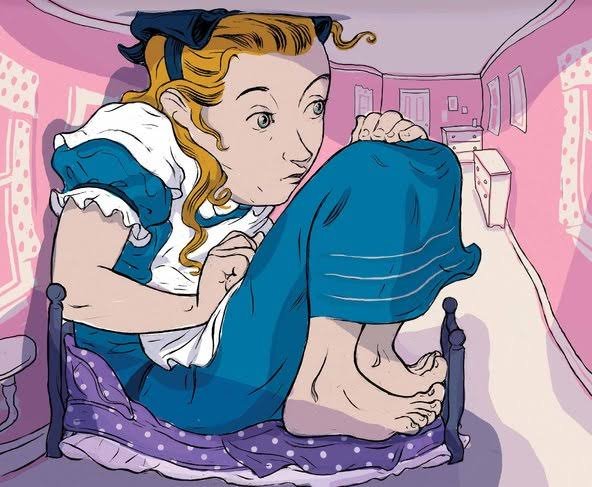
All of us must have heard the story Alice in Wonderland but did you know that there’s a rare syndrome named after the story?

Introduction

A change is how your brain perceives an environment or how your body looks is what Alice in Wonderland Syndrome (AIWS) about.

It’s a rare condition that causes temporary episodes of distorted perception and disorientation. In this condition people might feel smaller or larger than they actually are. People also feel there surroundings coming closer to them or moving further away than they really are.

This syndrome affects your senses of vision, touch and hearing. Time may seem to pass slower or faster than it really is. In other words, people lose sense of time.

Symptoms experienced during an episode and time period.

The time till which an episode of AIWS lasts may vary from person to person and also the type of episodes experienced vary. For some people an episode may last for some minutes while for others it may last for about an hour.
The common symptoms experienced during an episode are as follows:

  1. Migraine
  2. Perceptual distortion
  3. Time distortion
  4. Sound distortion
  5. Numb limbs or loss of coordination

Causes

What causes people to have AIWS is not yet clear.

According to a review in 2016, the most common cause appears to be migraines and viral infections that lead to this syndrome. A study found out that about 33% people going through this syndrome had infections. Other 6% had head trauma and migraines but more than half of the cases had no known causes.

Researchers also have suggested that unusual electrical activity in the brain results in abnormal blood flow to the parts of the brain that process environment and visual perception.

AIWS gets better overtime and rarely causes any complications or problems.

Treatment

Unfortunately there is no direct treatment for AIWS. If the syndrome results from migraines, the migraines are treated by the doctors or if an infection is the cause antiviral agents are prescribed.

If the cause is unknown and if an adult or a child experiences the episodes of this syndrome, all you can do is to wait for the episode to pass and to reassure them that it’s not harmful.

Alice in Wonderland Syndrome is also known as Todd’s syndrome as it was named by an English Psychiatrist, John Todd in 1955.

Should Reservation system be removed from India?

  • By Tushar Soni

Reservations in Indian law are a form of affirmative action whereby percentages of seats are held in public institutions, in partnerships with public works, in national government departments and in all public and private educational institutions, excluding religious / linguistic minorities Educational, professional and backward communities and organised Catch and Cities improperly in these services and institutions. The principle of restoration is also extended to Scheduled Castes and Scheduled Tribes to be represented in the Indian Parliament.


Reasons behind the Idea:
The basic idea of ​​the provision of reservations by the state is the subordinate representation of the parties identified as contributing to the Indian caste system. After India gained independence, the Indian Constitution listed other existing groups such as Scheduled Plans (SC) and Scheduled Plans (ST).


Constitutional bodies believe that, as a result of the caste system, SCs and STs were historically oppressed and deprived of equal respect and opportunity in Indian society and consequently were represented in the country’s building activities.


The Constitution laid down 15% and 7.5% of vacancies in state-funded educational institutions and public / private sector jobs, as the final number of SC and ST subscribers respectively for a period of five years, was subsequently reviewed.


Current Status:
After introducing the provision of reservations once, it was in line with the banking and subsequent governments and the Indian Parliament extended over this period, without any free and impartial review. Later, reservations were introduced to other sections as well.


The Supreme Court’s decision that the reservation shall not exceed 50% (which would violate the equal access guaranteed by the Constitution) has put the claim on hold. The central government of India maintains 27% of higher education, and individual states may enact additional booking legislation. Reservations in most provinces are 50%, but other Indian states like Rajasthan have suggested 68% of reservations including 14% reservations for top job and education providers.


However, there are laws of the country that exceed this limit by 50% and are suspended in high court. For example, the Caste-based subscription fraction stands at 69% and applies to about 87% of the population of Tamil Nadu.

Arguments Offered by Supporters of Reservation:
a. Booking is a political necessity in India


b. Although booking strategies do this to the detriment of the quality of education, Affirmative Action has helped many if not everyone from the professional and / or underrepresented communities grow and hold senior positions in the world’s leading industry.


c. Although reservations do this to the detriment of quality, they are required to provide social justice to those who have been widely discriminated against and inappropriate for their human rights.


d. Meritocracy means nothing but equality. First of all, all people must be brought to the same level, whether they raise one category or lower one, regardless of their eligibility.

e. Bookings slow down the process of “Transfer enrichment and return to poverty”.

Conclusion:

The booking issue is always the result of a disagreement between the reserved and the non-reserved sections of the community. While spare parts, keep arguing with the offer, the most demanding sections from the spare parts do not know how to benefit from the offer or whether there are any offers.


On the contrary, the cream-coloured layer in the middle of the same section enjoys special privileges in the name of reservations and political parties support vote banks. There is no doubt that booking is a good option, just as it is an appropriate discriminatory option for the benefit of the meek and returning economists, but the public is inclined to harm society and guarantee the rights of others at the expense of the other political ends, as is the case with the current situation, and should be abolished, as soon as possible.

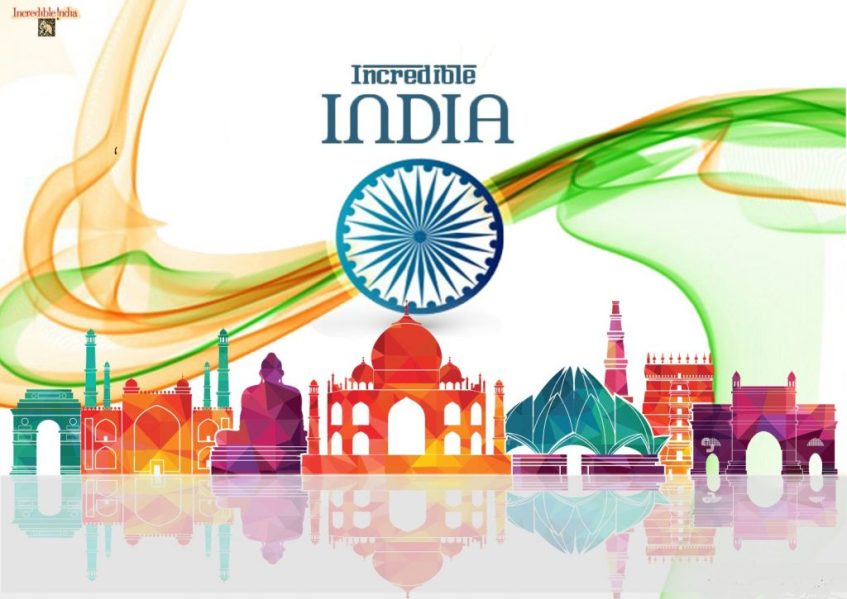
India and Its Vibrant Heritage

India

India, among few nations who are fortunate of having an age old culture had been through hundreds of transitions in the Era. One of the oldest civilizations with Rich dynasties that had some flamboyant emperors who ruled with an idea of Nation building and on the other side it had some infamous emperors too. History tells us more about what we lost and what we are left with and it’s never too late to know more of India’s heritage.

The picture of Today’s India is that of an upcoming and developing nation. Indeed, India has leaped many boundaries in various sectors being science, technology and commerce in the recent past, yet India never neglected its creative and genius arts of knowledge. One among them is the science of medical practice distinct from western medicinal practice. Wondering what is it? Well, this the science of Ayurveda that uses a distinct form of medicine made purely of herbs and natural weeds, that can cure any ailment of the world. Ayurveda has also been mentioned in the Ancient Indian epics like Ramayana. Even today, when the advanced medical concepts have reached to new heights, people strongly believe in this alternative method of treatment for its multifarious qualities.

Monuments of India

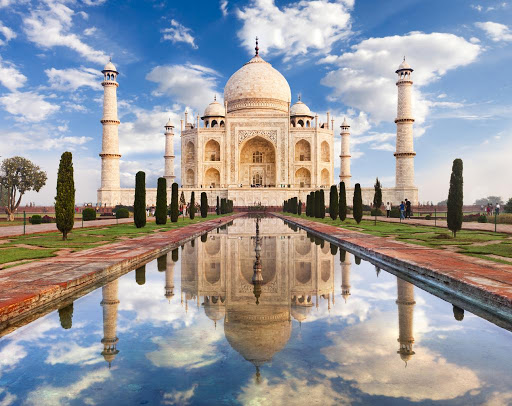
The TajMahal Front.

TajMahal

The only one of its kind across the world, the TajMahal is a sheer form of poetry engraved in compiled up pure white marbles. A construction that took almost 22 years and labor force of more than 20,000 this monument is listed in the seven wonders of the world and India is could not be imagined without this gorgeous art of human civil work. This monument was said to be built in the memory of empress Arjumand Bano Begum, popularly known as Mumtaz Mahal by the then Mughal Emperor Shahjahan.The construction of Taj Mahal was started in A.D. 1632 and completed at the end of 1648 A.D. For seventeen years, twenty thousand workmen are said to be employed on it daily, for their accommodation a small town, named after the deceased empress-‘Mumtazabad’, now known as Taj Ganj, was built adjacent to it.

The Ajanta and Ellora Temple

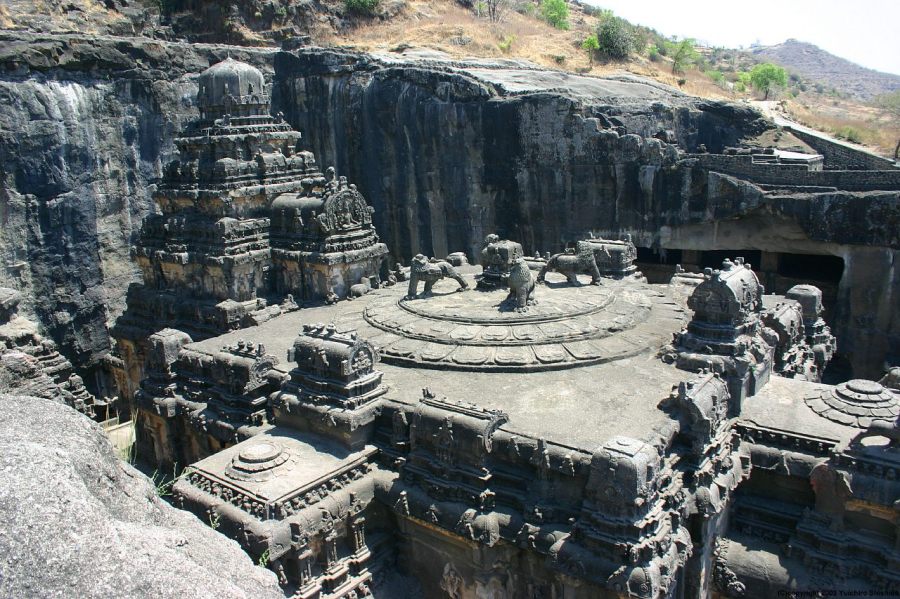
Ajanta & Ellora Caves

An unmatched surge of artistic excellence is the paintings and sculptures in the caves of Ajanta and Ellora. Beginning with the 2nd century B.C., and continuing into the 6th century A.D., these Buddhist and Jain caves are stone crafted, hence seem quite meditative and exude a divine energy and power.

These marvelously crafted temples, paintings and idols are definitely only one of its kinds.

Located at 107 Km from the Aurangabad city of Indian State Maharashtra, this monument strongly resembles the astonishing ancient Indian Technology. These rock-crafted singular structures Ajanta nestled in a panoramic gorge, in the form of a gigantic crafted mountain. Ajanta is among the finest examples of some of the earliest Buddhist architecture, cave paintings and sculptures, having a total of 29 caves. These caves comprise of Buddhist shrines and monasteries dedicated to Lord Buddha were predominantly used by monks to meditate or spread Buddha’s teachings. Among the most interesting paintings are the Jataka tales, illustrating diverse stories relating to the previous incarnations of the Buddha as Bodhisattava, a saintly being who is destined to become the Buddha. The cave temples and monasteries at Ellora, excavated out of the vertical face of an Landform, are 26 km north of Aurangabad. Sculptors, inspired by Buddhism, Jainism and Hinduism, created elaborate rock carvings. Extending in a linear arrangement, the 34 caves contain Buddhist Chaityas or halls of worship, Viharas or monasteries and Hindu and Jain temples. Spanning a period of about 600 years between the 5th and 11th century A.D., the earliest excavation here is of the Dhumar Lena (Cave 29). The most astonishing excavation is, without doubt, that of the magnificent Kailasa Temple (Cave 16) which is the largest monolithic structure in the world. Known as Verul in ancient times, it has continuously attracted pilgrims through the centuries to the present day.

Sri HarMandir Sahib

Golden Temple

Sri Harmandir Sahib, also referred  as  Sri Darbar Sahib or Golden Temple located in Amritsar (Punjab), is the most sacred temple for Sikhs. This temple spreads Sikhism’s message of tolerance and acceptance through its architecture that has incorporated symbols from other religions. The Sikhs and people of other religions from all over the world, visit Sri Amritsar and to pay obeisance at Sri Harmandir Sahib in their prayers. Guru Arjan Sahib, the fifth Nanak contributed the idea of forming holy place as a center of religion for all followers of Sikhism. Guru Arjan Sahib got its foundation laid by a Muslim saint Hazrat Mian Mir ji of Lahore in December 1588. The construction work was supervised by Guru Arjan Sahib himself and he was assisted by the prominent Sikh personalities like Baba Budha ji, Bhai Gurdas ji, Bhai Sahlo ji and many other devoted Sikhs. Sri Harmandir Sahib, is built on a 67ft. square platform in the centre of the Sarovar (tank). The temple itself is 40.5ft. square. It has a door each on the East, West, North and South. The Darshani Deori (an arch) stands at the shore end of the causeway. The doorframe of the arch is about 10ft in height and 8ft 6inches in breadth. The door panels are decorated in artistic style. It opens on to the causeway or bridge that leads to the main building of Sri Harmandir Sahib. It is 202 feet in length and 21 feet in width. The bridge is connected with the 13 feet wide ‘Pardakshna’ (circumambulatory path). It runs around the main shrine and it leads to the ‘Har ki Paure’ (steps of God). On the first floor of ‘Har ki Paure’, there is continuous reading of Guru Granth Sahib.

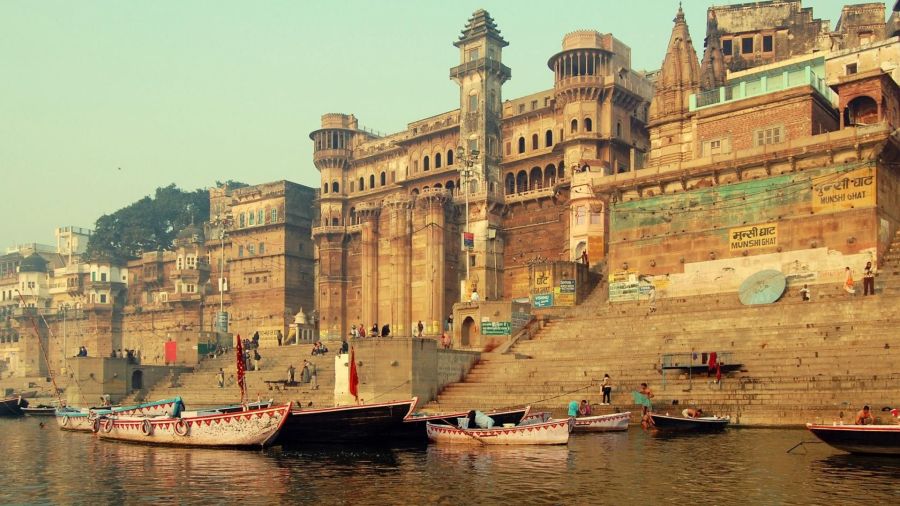
Indian Holy River Ganga in Munshi Ghat, Varanasi.

India as Nation

India as Nation has its own shortcomings and its people are narrowing them, no doubt on that. Yet one should keep in mind that every nation, with this I literally mean every possible nation in this world is surrounded with some or other sort of troubles. The only thing is, from far we see that everything’s alright but when explore it ourselves, we realize the actual situation. India is growing technically and it is in path of becoming global tech center. Indian Space Research Organization is breaking Records after Records, be it launching 104 satellites (maximum satellites in the world at a time) or be it the mission of mars (MOM) with a surprising budget of just 450 Cr., yet making it possible to reach on Mars’s orbit and successfully performing the programmed operations. Rightly said by Former American President J.F. Kennedy “ask not what your country can do for you — ask what you can do for your country”.

Stop Running and face it

Having to have isn’t having. Try hard to have what you want. Escaping is not a solution because everytime the only thing you do is keep running. Stop for a while if you wanna stop forever. The solution isn’t escaping, it’s facing it. Afraiding for a while is so much better than afraiding forever. Stop once and for all. Take it, if you have a chance to proove yourself then make it. Don’t fake it, try to make it. Till then keep on struggling.

Result is a process if struggling. Don’t be afraid because the life isn’t to be afraid of. There are n number of options. You may not live the life you wanted but you can live. At the end everyone lives. No one remembers our marks or our job because the people who had existed also should die. You live your life without fearing. Living your own life and fearing isn’t living. Face it, if you can’t try it, try it, try it. But don’t escape from it.

Giving a slap to the person isn’t a big deal. But the slap to the heart is much more stronger. Your success should wake them and make them sleepless. Remember everyone will have a day. The only thing you should do is keep on working. Struggle make struggling easy. Learn to struggle because it is what, at the end of the day keeps smile on our face. Beleive yourself, because it’s the least that you could do for yourself. Have a zeal and enthusiasm to push yourself and to make youself. Never be over confident else your confidence will be over.

Having a nice day isn’t so nice because there is nothing intresting about it. Having a day where you struggle and struggle to make your work done and the things you keep on doing will make you cross every obstacle possible and make you feel low is something that you never forget and the day will be remembered. Wish to have a such day because that is what makes you and make your day. Having comfortable life is so boring. Keeping struggle yourself makes you even struggle more and if any struggle comes in your way, it becomes easier for you to tackle. Reaching a position isn’t important but the way you reach makes your worth.

Start the stopped and stop the started if you don’t want to stop. Keep on doing, if you think you can’t, show that you can. Show yourself what you are capable of. Don’t underestimate yourself. You can push yourself whatever extent you can. The only thing that that you should do is believing yourself. Don’t hope for miracles, because hoping makes it expected. They all happen all of sudden. Keep pushing yourself in the struggle and keep on struggling because there’s no ending to it.

Covid-19 vaccine can be expected by end of 2020:Serum Institute of India.

Chief Executive Officer of the Pune-based Serum Institute Of India (SII) Adar Poonawalla on Monday said the company is expecting the vaccine for COVID-19 to be ready by the year-end.

The Institute has partnered with British-Swedish drugmaker AstraZeneca to manufacture and supply the vaccine being developed by the University of Oxford under which the SII will supply over a billion doses of vaccine in India, and to other developing and under-developed countries.

However, the approval for the vaccine from the Drug Controller General of India is still awaited.

The institute is expecting to get approval in next six months.The Oxford COVID-19 vaccine trial is currently in its Phase 3 or human trial stage, and will be administered to around 8,000 people in the U.K.

chief executive Poonawalla said while referring to another vaccine candidate from India ie Covaxin of Bharat Biotech, that the company is in no hurry to produce vaccine without proper actions and tests for safety and efficacy.Once they are confident about vaccine, they would launch the vaccine but that would be still 6 months away.

However Bharat Biotech is also confident about its candidate vaccine named Covaxin and has started phase-1 human trials enrolling about 375 patients for test. It is very unlikely that Corona vaccine to be out for masses before or on 15 August, despite the letter of ICMR since human trials may take up to 6-8 months to complete even after conducting only important tests and checks.

It is very positive for the country that we are seeing candidates for vaccine which are in human trials.The vaccine developed in country will be great opportunity for Indian institutes to once again lead the world in pandemic situation.

Significance of Advertisements in the Newspaper Industries.

The fact with which we are very much acquainted that advertisements play an integral part in any business aspects organizations or corporate houses and industries as well, whether it be for the popularity of any specific organization or for getting the adequate sponsorships. Likewise same occurs in the case of newspaper industries and thus it can never be expected that only the editorials are responsible for the existence of a newspaper rather to take it upto the mark and for its survival it should have the strategies to capture the maket by making its fame first, then only the newspaper industry will get enough advertisements for the sustainability in the world where like mushrooms the number of emerging media houses are coming up resulting in an absolute cut throat competition and this condition will increase with time.

When we talk about advertisements in the newspaper industry how can we skip to mention about the revenue collection and how it has been proven that advertisers are like vitamins for our industry. Because advertisements bring 3/4th of the revenue to a newspaper house. The newspaper organization gets advertisements from both government and private sectors. Every minute space in the publication are sold at a very high cost that the deficit in the revenue is totally covered up and at the same time it brings a huge profit. Both classified and display ads are published in a newspaper, which brings a lot of revenue to the organisation.

Beyond this, there are specifically various types of newspaper advertisements for enhancing the marketing strategies of a newspaper industry – Classified(both text & display)Ads, Business Card Ads, Insert Ads, Coupons, Spotlight Ads, Frills/Flyers, Folding, Informational Ads, Sale Ads, and Full page Jacket Display Ads.

Another vital part of earning the revenue is to emphasis on the Opportunity To See (OTS). Position of the advertisements is very important as it gives the readers a good visibility and accordingly the charges are even differ largely. The classified ads ( both text and display) helps the newspaper industries to earn more revenue and at the same time, it saves time and spaces of the publication. Thus we can conclude that advertisements are essential to run a newspaper house efficiently with enormous profit and popularity.

COOL GADGETS

Hello everyone today we will know some cool gadgets which are really fantastic with the work and with wonderful feature. Now a days with increase of technology new gadgets are coming to the market which improving our day to day life.

Let’s get started!

1.TILE PRO TRACKER WITH REPLACEABLE BATTERY:-

This is a small device which helps you to find your lost devices.It has a bluetooth range of 400 feet.When you forgot your gadget it will give you remainder to that you have left that there.It comes with replaceable battery which last for a year after you activate the tracker so no worries of charging you can easily change the battery and also it comes in white and black color.

2.PACK DESIGN TECH POUCH:-

This is made in stylish and exceptionally for tech gadgets for frequent traveler.Its exterior is crafted with nylon with a waterproof finish.It has enough pockets to keep all type tech gadgets in the pouch.It comes in Black and Sage green color.

3.PHILIPS SOMNEO SLEEP AND WAKE-UP LIGHT:-

This comes in elegant and and feature-packed sleep and wake-up light with life-altering powers. It can stimulate can simulate a natural sunrise and sunset, play a plethora of soothing sounds, and even charge a smartphone via a built-in USB port. The light is clinically proven to improve sleep and help users feel more refreshed when they wake up.

4.HP Sprocket Select Portable Photo Printer:-

It is a stylish gadget that’s capable of printing 2.3-by-3.4-inch photos on Zero Ink Paper.You can edit photos before printing with Sprocket’s mobile app. There’s even an option to interact with the prints in augmented reality.

5.MOPHIE 3 IN 1 WIRELESS CHARGING PAD:-

The elegant charging pad supports fast iPhone charging. The product is backed by an excellent 2-year warranty.The mophie 3-in-1 wireless charging pad is the ultimate product for Apple hardware users. The accessory will charge your Apple Watch alongside your iPhone and AirPods.

6.Belkin Sound Form Elite Hi- Fi Smart Speaker + Wireless Charger:-

The Belkin Sound Form Elite Hi-Fi smart speaker will not only entertain you with amazing sound, but also wireless charge your smartphone.They include the ability to deliver grin-inducing bass without any unnecessary vibrations.

So this are some are some cool tech gadgets. I hope you like it.Let me know which one you find interesting gadget.

Thank you for reading my article and have a nice day!

Life is Beautiful

Once a man asked his life “what do you want? You want to be happy or sad, face the struggles of life or just sit at home and live a lavish life? His life answered, live with me the way you want, I am beautiful in every way, I will teach you a lesson in every highs and lows, I will never be stationary, I will always change, will always bring a new definition infront of you, it’s upto you whether you want to live it fulfilling your every dream or have regrets as you will take your last breath.

Once I was travelling somewhere with my parents, as my car stopped at a red light I saw a poor family with four members living in their small tin hut on the footpath, they did not seem in a good condition, their clothes were rugged with cracked heels and dirty hands, but they seemed happy, I could see their shining smiles with sparkling eyes on their faces, I could not catch a glimpse of sadness, I don’t know why but maybe their definition of living a life was just living it happily with their children in peace.

I still remember every minute detail about that family because they taught me something, that life is short and we should always live it happily. Some find their happiness in big things, some in small, some in achieving their dream and some with incomplete dreams, but we all should be happy and should live without regrets. We all should be grateful to God for every single moment of our life, stop crying, stop criticising it, I know there are problems, such problems that I can’t even think of, but I can only ask you to stay positive and always keep a hope that one day sun will rise from the west and will shower all it’s bright rays on you.

Think of it, what stories will you tell your coming generation, that you have led a life which consisted of only sadness and despair, no positivity, no happy days. Wake up with a smile everyday, pray and think positive , that yes today will be good day, I am not scared of any virus, I will work hard everyday inorder to achieve my dreams and be a happy person.

Think positive, Work hard and Repeat.

THE NEVER ENDING STRUGGLE OF TERRORISM

Time to time, they carry out terrorist acts to remind people of the fear they want them to live in. Consequently, there are roughly 100 terrorist cells that are operating in India. They have to an extent successfully created an atmosphere of tension amongst the citizens. Terrorism impacts the country gravely and has dangerous repercussions.

Impact of Terrorism in India
As discussed earlier, terrorism has a major impact on any country. When we look at a developing country like India, it is all the more harmful. Firstly, it creates a state of panic amongst the citizens. The bomb blasts or firing impacts the mental health of people. This causes the untimely death of various citizens or leaves them handicapped. The anxiety and fear one has to live in restrict their way of living to a great extent.

Moreover, terrorism has a major impact on the tourism industry. As tourists avoid visiting places that are vulnerable to terrorist attacks, the tourism industry faces a blow. India is a country that earns a lot of its revenue from tourism. When these attacks happen, they cause fear amongst the tourists as well. The ones planning to visit cancel their trips. Similarly, the ones staying presently shorten their trip and leave.

Agencies such as the FBI, the US DOD and the US DOS realize the need to define terrorism. While each definition is a bit different, they do have constant themes. These themes include involving premeditation terrorist acts which are motivated by some political or social agenda, terrorists generally target non-combatants or civilians and are generally sub-national or clandestine groups. The configuration of terrorist groups is generally dependent on one’s environment, relationship with the state, motivation and/or goals.

History of Terrorism
The history of modern terrorism began with the French revolution and has evolved ever since. The most common causes or roots of terrorism include civilizations or culture clashes, globalization, religion, Israeli-Palestinian conflict, or the Russian invasion of Afghanistan. More personal or individual-based reasons for terrorism are frustration, deprivation, negative identity, narcissistic rage, and/or moral disengagement.

Five Types of Terrorism
You will need to be familiar with the five types of terrorism.

State-Sponsored terrorism, which consists of terrorist acts on a state or government by a state or government.
Dissent terrorism, which are terrorist groups which have rebelled against their government.
Terrorists and the Left and Right, which are groups rooted in political ideology.
Religious terrorism, which are terrorist groups which are extremely religiously motivated and
Criminal Terrorism, which are terrorists acts used to aid in crime and criminal profit.

Furthermore, terrorist attacks create a sense of doubt in the foreign investors of India. After all, who would want to invest in a country prone to terrorism? They avoid the risk and instead opt for safer alternatives. This causes a huge blow to the business of India depending on the economic situations.

Terrorism, the calculated use of violence to create a general climate of fear in a population and thereby to bring about a particular political objective. Terrorism has been practiced by political organizations with both rightist and leftist objectives, by nationalistic and religious groups, by revolutionaries, and even by state institutions such as armies, intelligence services, and police.

Terrorism is not legally defined in all jurisdictions; the statutes that do exist, however, generally share some common elements. Terrorism involves the use or threat of violence and seeks to create fear, not just within the direct victims but among a wide audience. The degree to which it relies on fear distinguishes terrorism from both conventional and guerrilla warfare. Although conventional military forces invariably engage in psychological warfare against the enemy, their principal means of victory is strength of arms. Similarly, guerrilla forces, which often rely on acts of terror and other forms of propaganda, aim at military victory and occasionally succeed (e.g., the Viet Cong in Vietnam and the Khmer Rouge in Cambodia). Terrorism proper is thus the calculated use of violence to generate fear, and thereby to achieve political goals, when direct military victory is not possible. This has led some social scientists to refer to guerrilla warfare as the “weapon of the weak” and terrorism as the “weapon of the weakest.”

In order to attract and maintain the publicity necessary to generate widespread fear, terrorists must engage in increasingly dramatic, violent, and high-profile attacks. These have included hijackings, hostage takings, kidnappings, mass shootings, car bombings, and, frequently, suicide bombings. Although apparently random, the victims and locations of terrorist attacks often are carefully selected for their shock value. Schools, shopping centres, bus and train stations, and restaurants and nightclubs have been targeted both because they attract large crowds and because they are places with which members of the civilian population are familiar and in which they feel at ease. The goal of terrorism generally is to destroy the public’s sense of security in the places most familiar to them. Major targets sometimes also include buildings or other locations that are important economic or political symbols, such as embassies or military installations. The hope of the terrorist is that the sense of terror these acts engender will induce the population to pressure political leaders toward a specific political end.

Since the 20th century, ideology and political opportunism have led a number of countries to engage in international terrorism, often under the guise of supporting movements of national liberation. (Hence, it became a common saying that “One man’s terrorist is another man’s freedom fighter.”) The distinction between terrorism and other forms of political violence became blurred—particularly as many guerrilla groups often employed terrorist tactics—and issues of jurisdiction and legality were similarly obscured.

These problems have led some social scientists to adopt a definition of terrorism based not on criminality but on the fact that the victims of terrorist violence are most often innocent civilians. Even this definition is flexible, however, and on occasion it has been expanded to include various other factors, such as that terrorist acts are clandestine or surreptitious and that terrorist acts are intended to create an overwhelming sense of fear.

In the late 20th century, the term ecoterrorism was used to describe acts of environmental destruction committed in order to further a political goal or as an act of war, such as the burning of Kuwaiti oil wells by the Iraqi army during the Persian Gulf War. The term also was applied to certain environmentally benign though criminal acts, such as the spiking of lumber trees, intended to disrupt or prevent activities allegedly harmful to the environment.

Heading for INTERVIEWS!

undefined

Many of us come up with a situation when we are uneasy or nervous before facing an interview. Considering an interview round as just an interaction strategy makes it much easier rather than considering it as a test session. However, the job interview generally comes before the hiring decision.

 The second you open up!

From opening up your mug till vote of thanks you are under consideration of the interviewers. Before communication starts, you are judged by your appearance. The way you are dressed, the way you walk, every gesture counts. Communication is known as the key asset while moving forward from college to the workplace. The moment you open and start a conversation, you start saying about yourself even without asking. The way you communicate, listen to everything clarifies your personality, whether you are capable of the job or not. Also, the ability to respond within the given duration is analyzed.

Interpersonal demonstrations like verbal expression, for example, pauses, pitch rate and nonverbal mode for example hand movements, smile, body direction are of high importance during an interview. 

Skills matter a lot but..

Yes, skills do matter a lot but before disclosing abilities, what we uncover is the way we speak. Even if you have adequate grades once you act lethargic and uninterested, the interviewers won’t lose a chance to give the opportunity to others. This eventually means everyone wants an active person both towards the profession and team. 

“All our dreams can come true if we have the courage to pursue them”. —Walt Disney

General traits like mental ability, personality, interest, goals, and values also affect the process of selection. Apart from communication experiential factors like training, education, and experience background also impact the productivity of an individual within an organization. 

How to prepare?

Proper outfit- Torn, threads coming out, wrinkled clothing can come across as not overlooking about the responsibility. Make sure clothes are properly ironed and look professional.

Manage your pitch- It’s really necessary that you do not sound too stinging. Neither too loud nor too quiet, just smooth.

Going through most asked questions- Studying the most asked questions and preparing with a friend with confidence can help you exceed.

No commonly used words- Avoid using common words, enhancing your vocabulary will add up extra points.

Planning.

The inadequacy of proper planning for an interview is the biggest fault. Giving ample time for preparation is considered adequate. Furthermore, too much pre-planning is equally toxic. Answering ratified questions will make the interviewer know that you are just reciting your answers. 

Support given by nodding head is greatly beneficial. The interviewer considers their questions as tools and the key to these tools are the answers given by an interviewee. Sarcasm, comedy, and over-sharing should be avoided. 

Integrity and Interview

INTEGRITY- A crucial characteristic that employers look for in candidates during and after the hiring procedure. You need integrity and a strong moral dignity to connect with associates and clients. Employers want to hire candidates who not only have experience and skills but also have the ethical standing to represent their company in the best way they can.

Make the interviewer know the trustworthy, productive, and efficient side of your personality. 🙂

So buckle up and be confident!

Earn bucks, and stop being anxious

Maharashtra govt to recruit 10,000 constables to ease work stress of police force in wake of corona crisis.

There has been lot of pressure on police force in such hard times especially in Maharashtra which is worst hit state in India.In the wake of this crisis, state government has decided to recruit as many as 10,000 new police constables to make situations under control. This is very crucial decision taken by government as state is now seeing huge surge in active corona cases. There are now 2 lakh 17 thousand case in the state with almost 10,000 deaths. Nearly 6-10 thousands new cases are seen per day.

According to an official statement, the decision was taken during a meeting presided over by Pawar at the Mantralaya, which was attended by state Home Minister Anil Deshmukh and senior officials.

“A decision has been taken to recruit 10,000 personnel in the police shipai (constable) category to strengthen law and order in the state and reduce work stress on the force,” the statement quoted Pawar as saying.

 A meeting had taken place under the chairmanship of Ajit Pawar in which these two decisions were taken by the committee comprises of state’s Home Minister Anil Deshmukh, Additional Chief Secretary (Home) Sitaram Kunte, Additional Chief Secretary of Finance department Manoj Saumik and other concern officials of Home & Revenue department. Maharashtra Police DIG Subodh Jaiswal and SRPF’s Additional DG Archana Tyagi were present in the meeting.

The decision will help youths from urban and rural areas to serve for the country. The recruitment process will be conducted without violating social distancing norms. The process is assured to be completed till the year end.

Moreover, 1,384 posts can be created within the ladies’s battalion and the recruitment can be accomplished in three phases, by filling 461 posts in every stage, the deputy chief minister mentioned within the assertion. 

Peace

A man may have a home, possessions, a charming family, and yet find all these things ashy to his taste because he has been outstripped in the marathon race by some other runners to the golden tape line. It is not that he does not possess enough for his wants but that others possess more. It is the more that haunts him, makes him deprecate himself, and minimize his real achievements. This is the cancer eating away at his serenity.
The time has come when a man must say to himself: “I am no longer going to be interested in how much more power or wealth another man possesses so long as I can attain enough for the dignity and security of my family and myself. I am going to break through this vicious circle which always asks the question of life in a comparative degree: ‘Who is bigger?’ ‘Who is richer?’ ‘Who has more?’ I am going to set my goals for myself rather than borrow them from others. I will strive to achieve a mature attitude toward success which is ambition for growth and accomplishment, real accomplishment rather than spurious, decorative, and vanity filled acquisition. I refuse any longer to destroy my peace of mind by striving after wind, and I will judge myself in the scale of goodness and culture as well as in the balance of silver and gold.”
Such a man is on the road to avoiding the neurotic materialism of our age. He is like the poet who does not tear himself to pieces because his sonnet is not equal to that of Shakespeare. He is like the musician who does not always despise his little fugue because it lacks the magic of Bach. He is like the poet or musician who learns to accept himself and to be happy with his own growth from year to year rather than paralyze his gifted pen or his talented ear by contrast with the giants and the immortals.
Psychology will help religion to diminish the worship of the golden calf among men as it aids men to become free of their over excessive demands upon themselves. When, instead of the pathological race for more houses and jewels, cars and refrigerators, bonds and stocks . . . . when, instead of seeking these fictitious goals, men learn a certain modesty about things and become genuinely contented with their real contributions and achievements – only then is serenity achieved. Only when we harness our own creative energies to goals which are of our own adult choice, not imposed upon us by the compulsions of unresolved childhood competition, can we call ourselves mature and happy.


By Joseph Loth Liebman


Taken from Light from many lamps by Lillian Eichler Watson.